Flame-colored chanterelle
Craterellus ignicolorsyn. Cantharellus ignicolor, Cantharellus tubaeformis var. ignicolor, Craterellus lutescens var. ignicolor
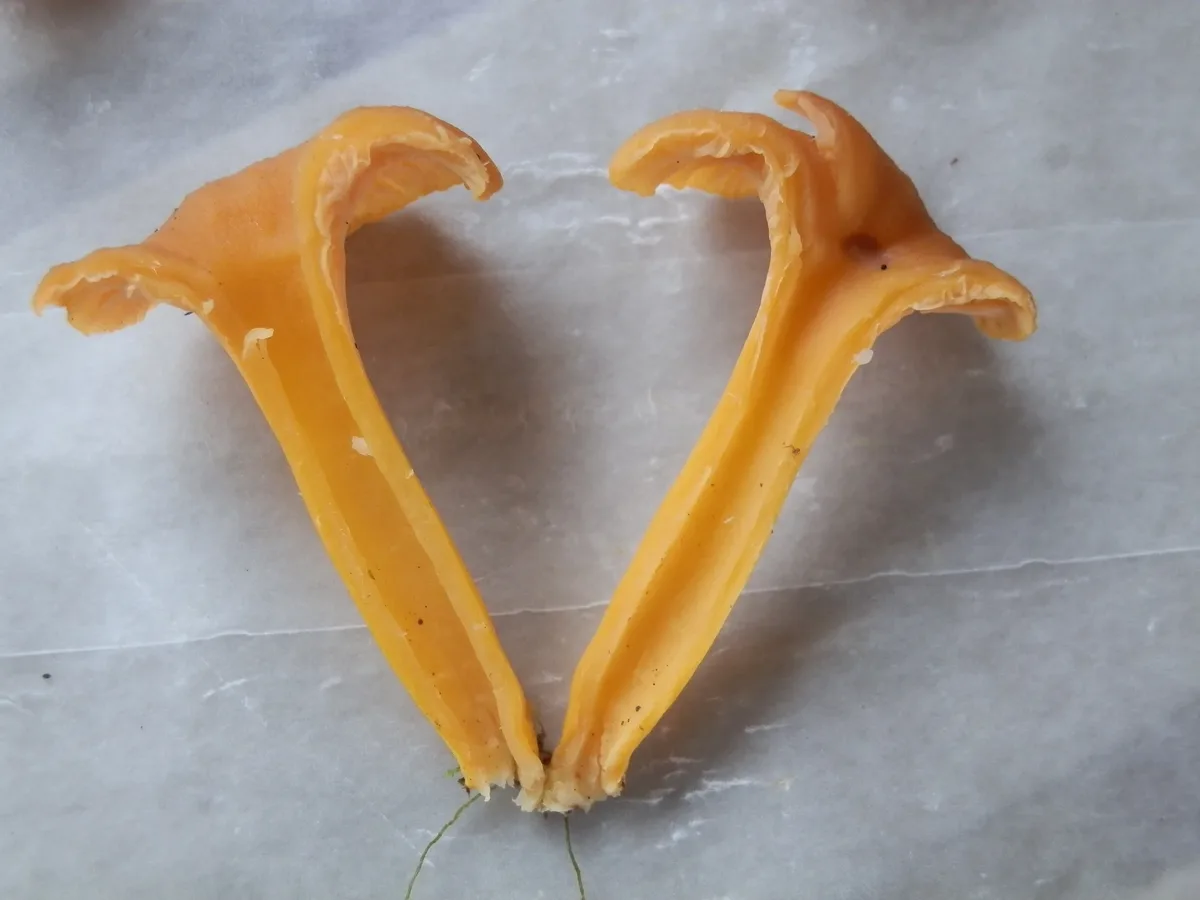 © pinonbistro (CC BY-SA 4.0)
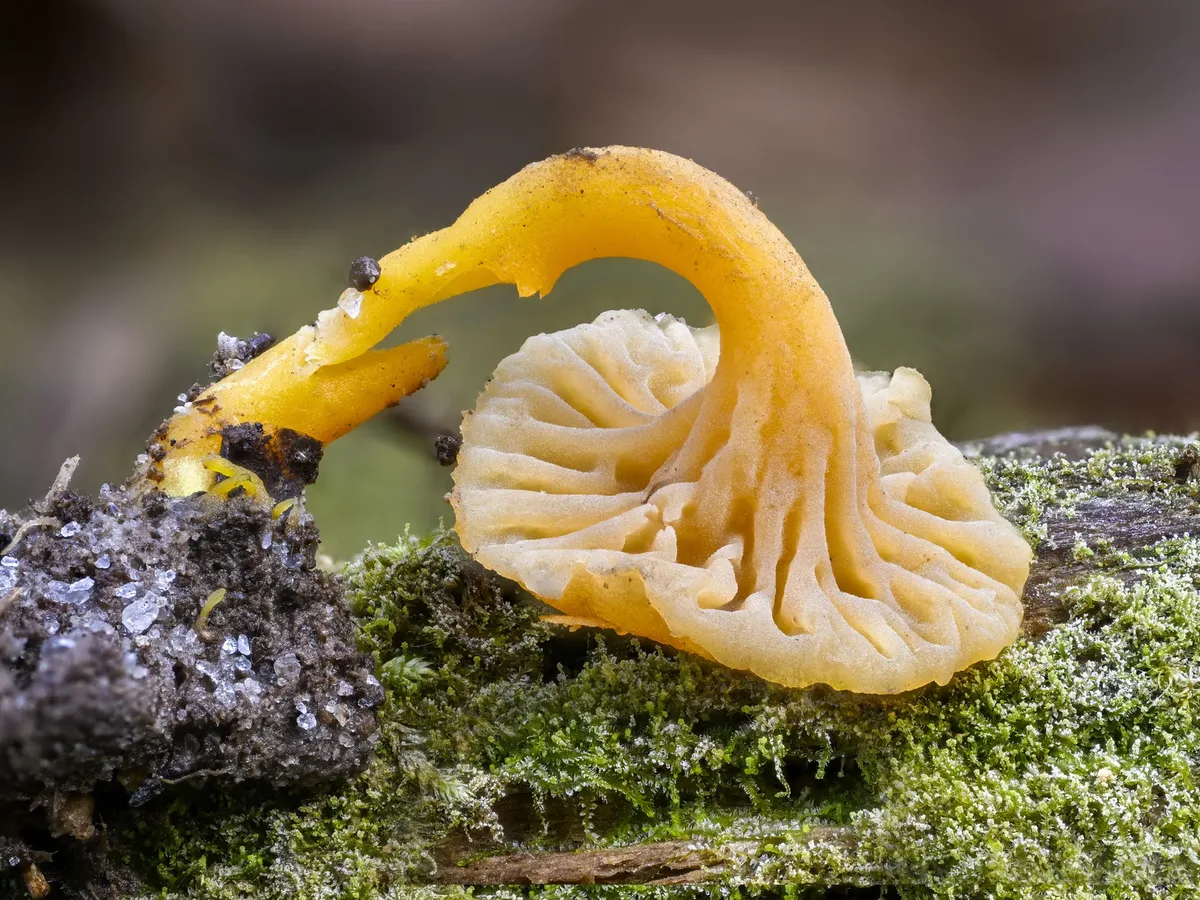 © Alan Rockefeller (CC BY 4.0)
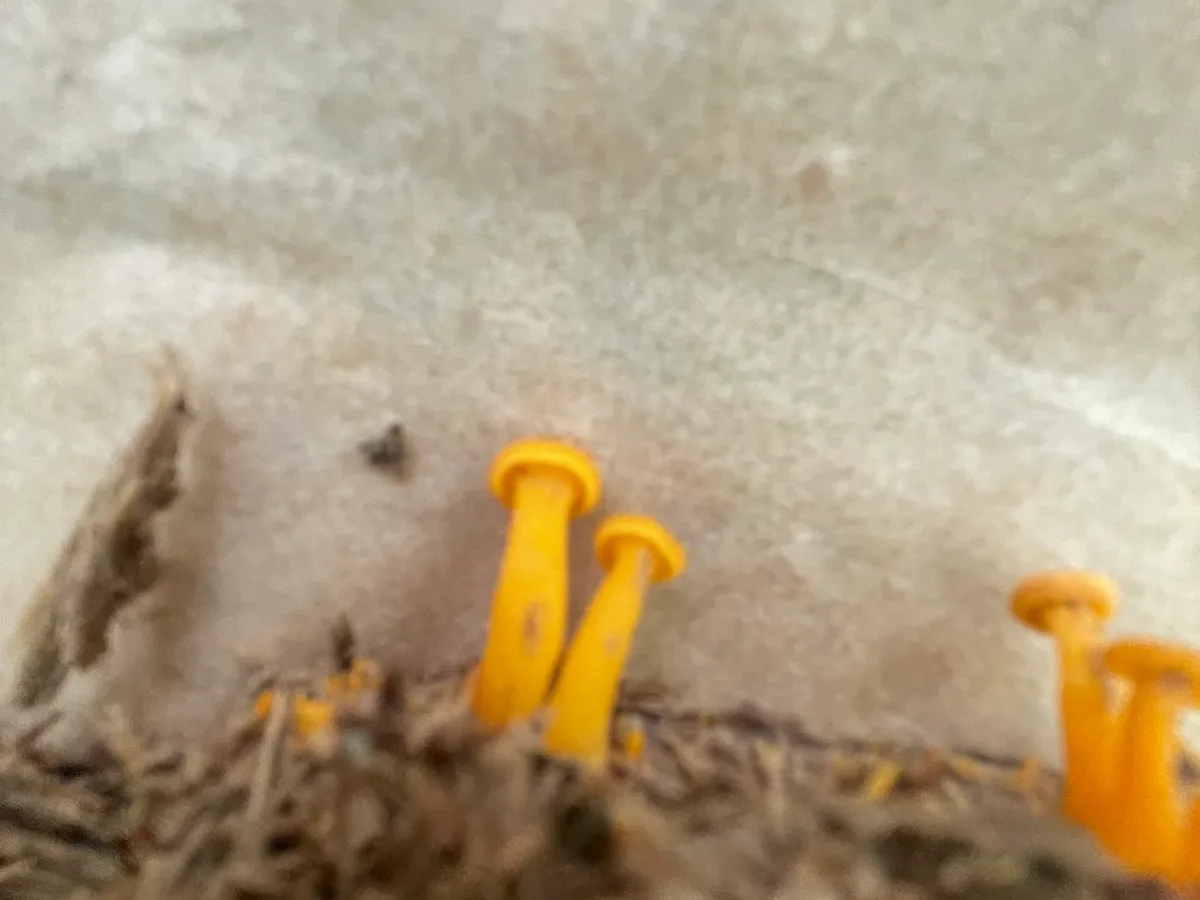 seekermush (CC0)
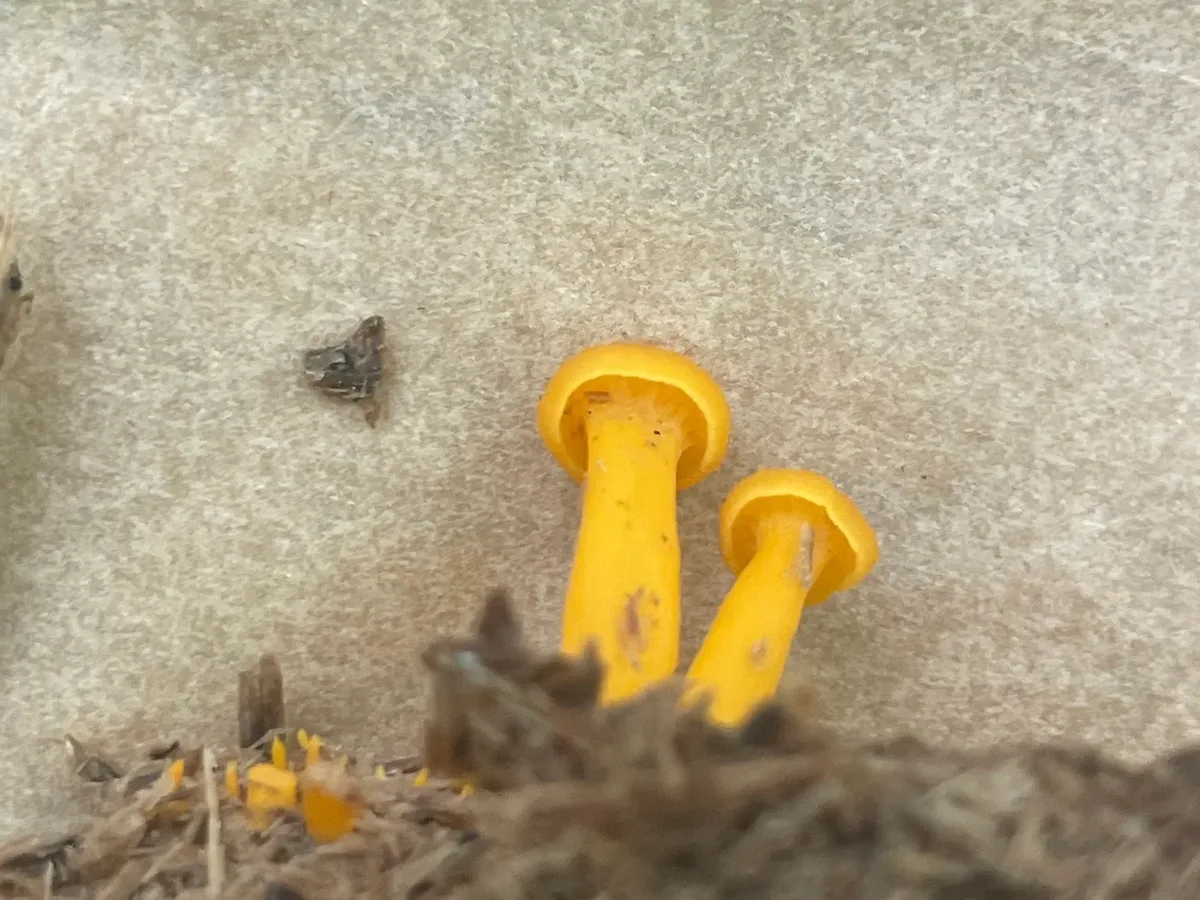 seekermush (CC0)
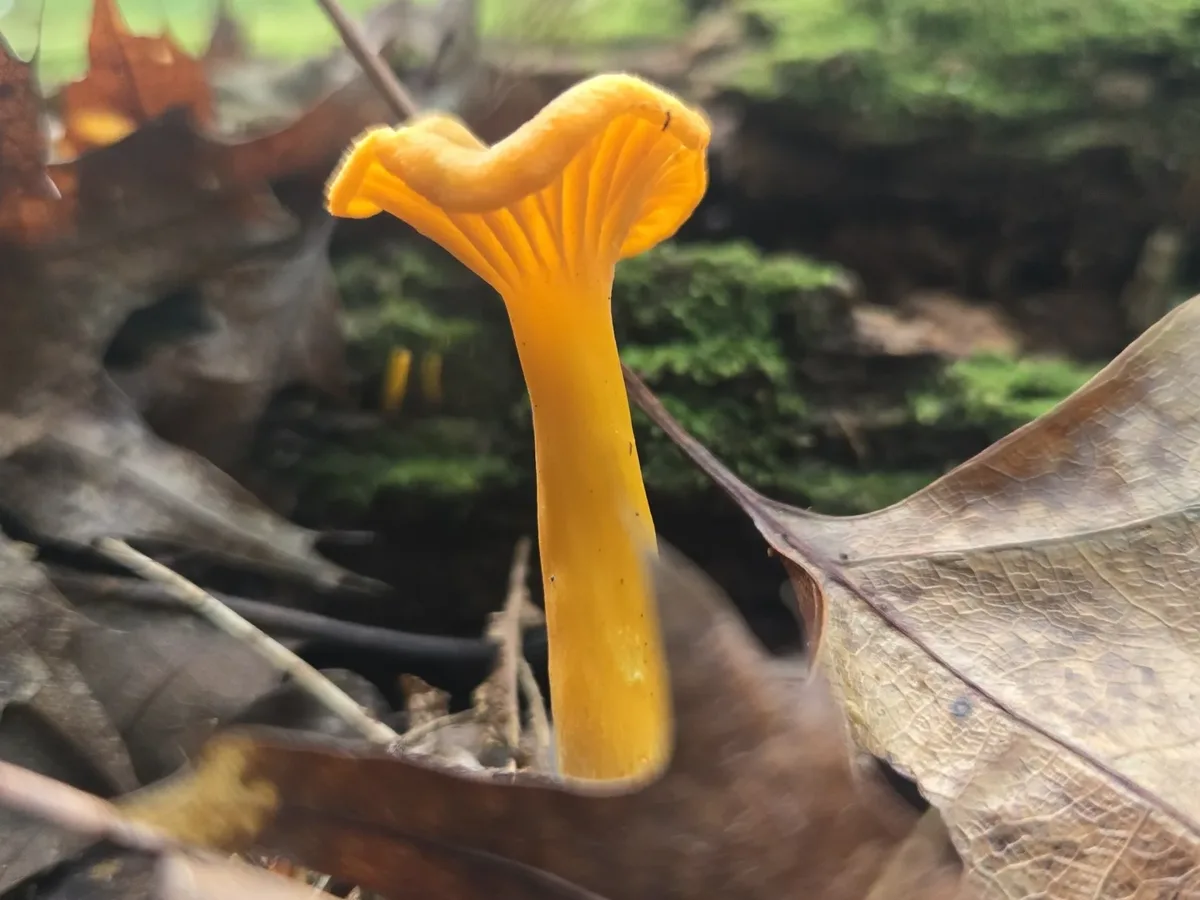 © Ben Gruhot (CC BY)
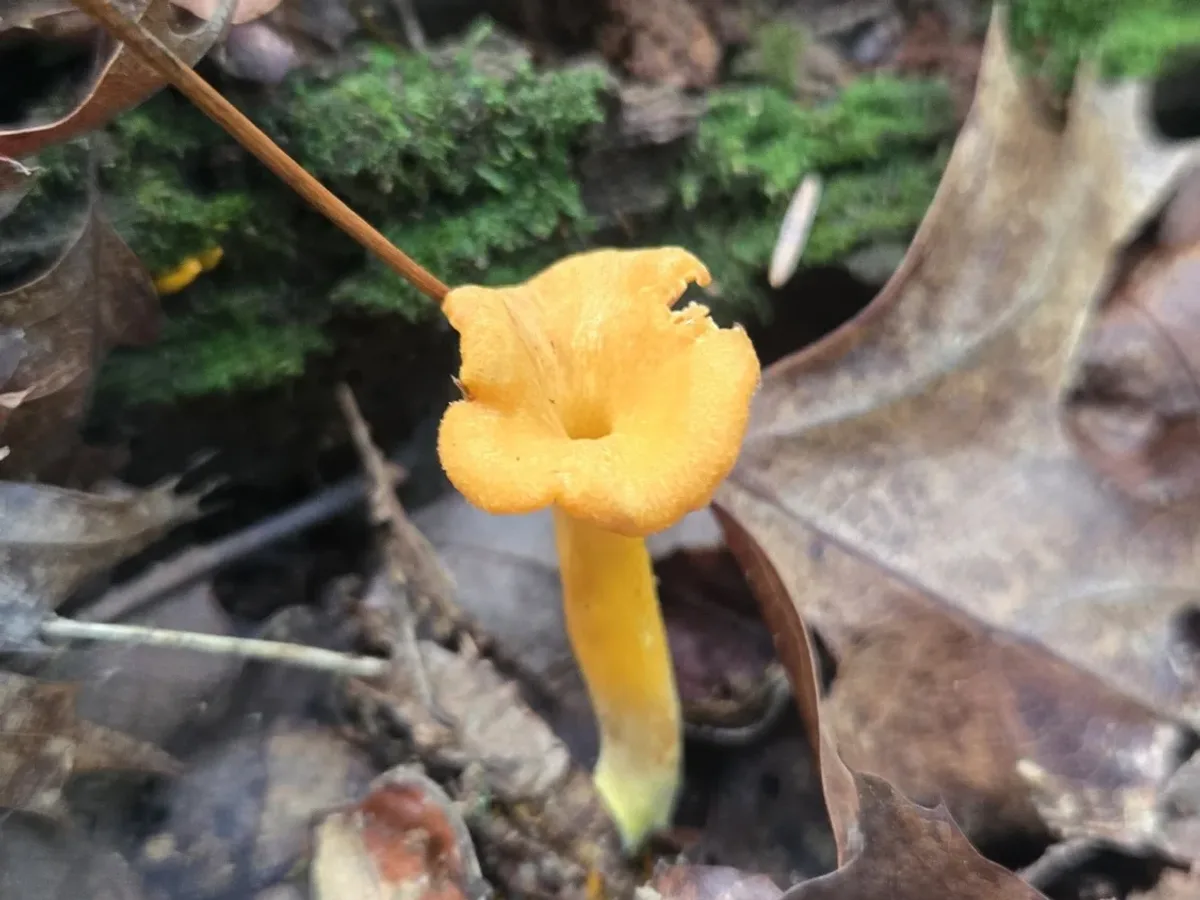 © Ben Gruhot (CC BY)
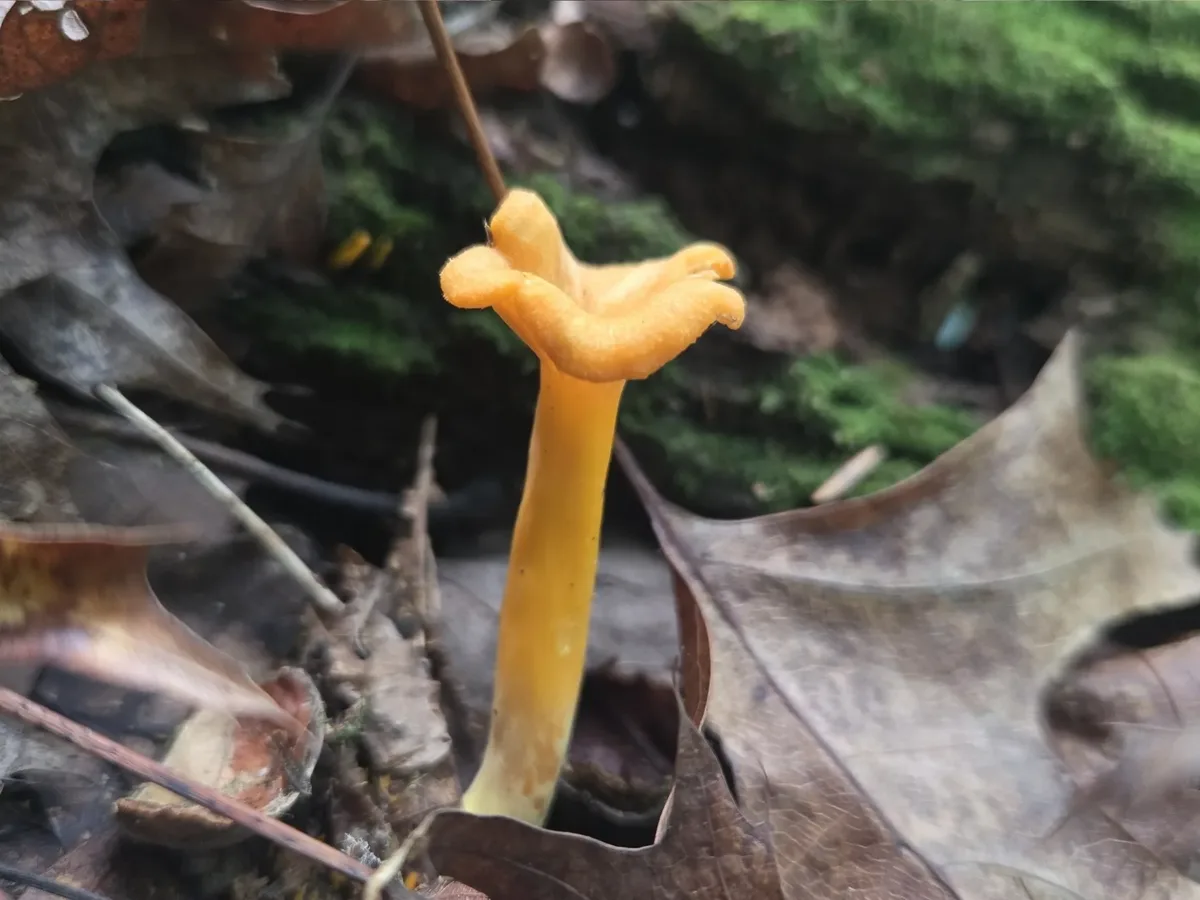 © Ben Gruhot (CC BY)
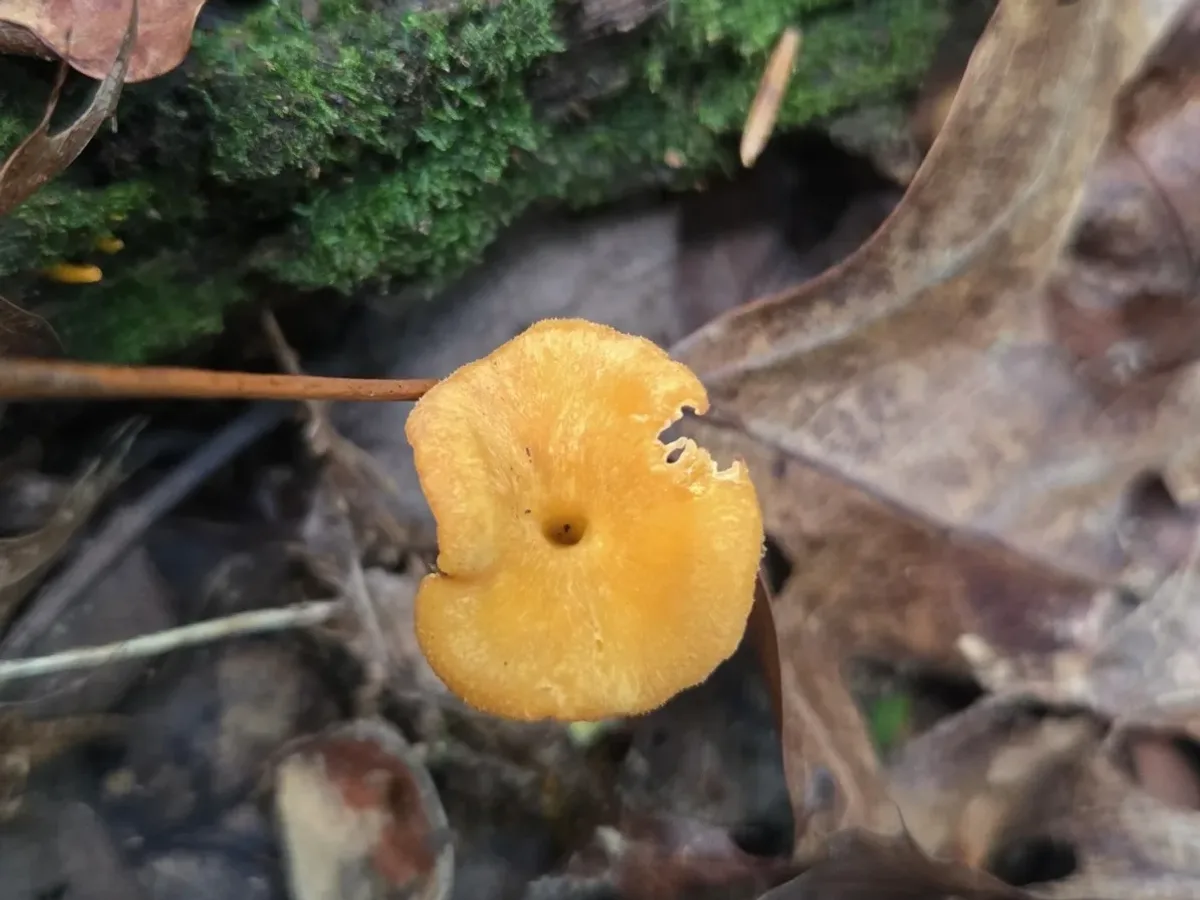 © Ben Gruhot (CC BY)
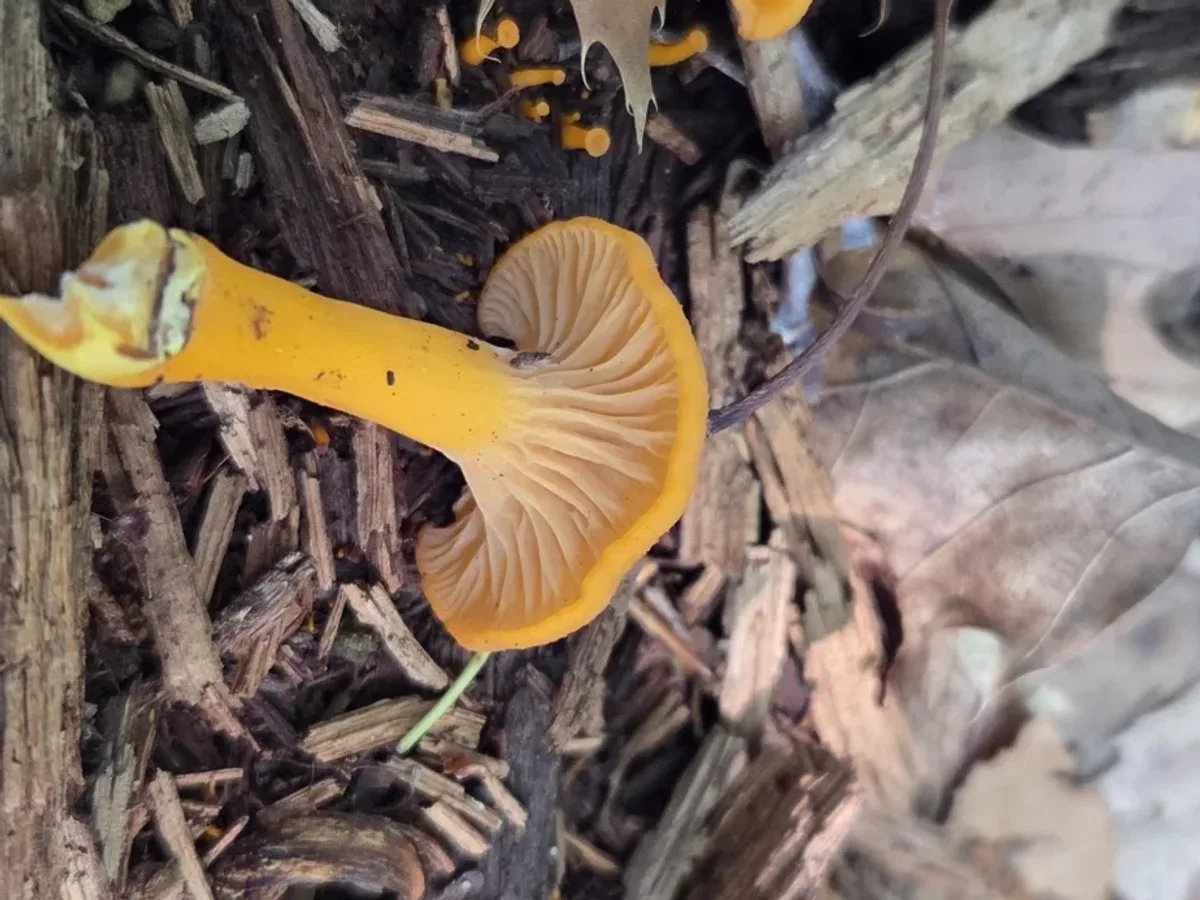 © WF_MI (CC BY)
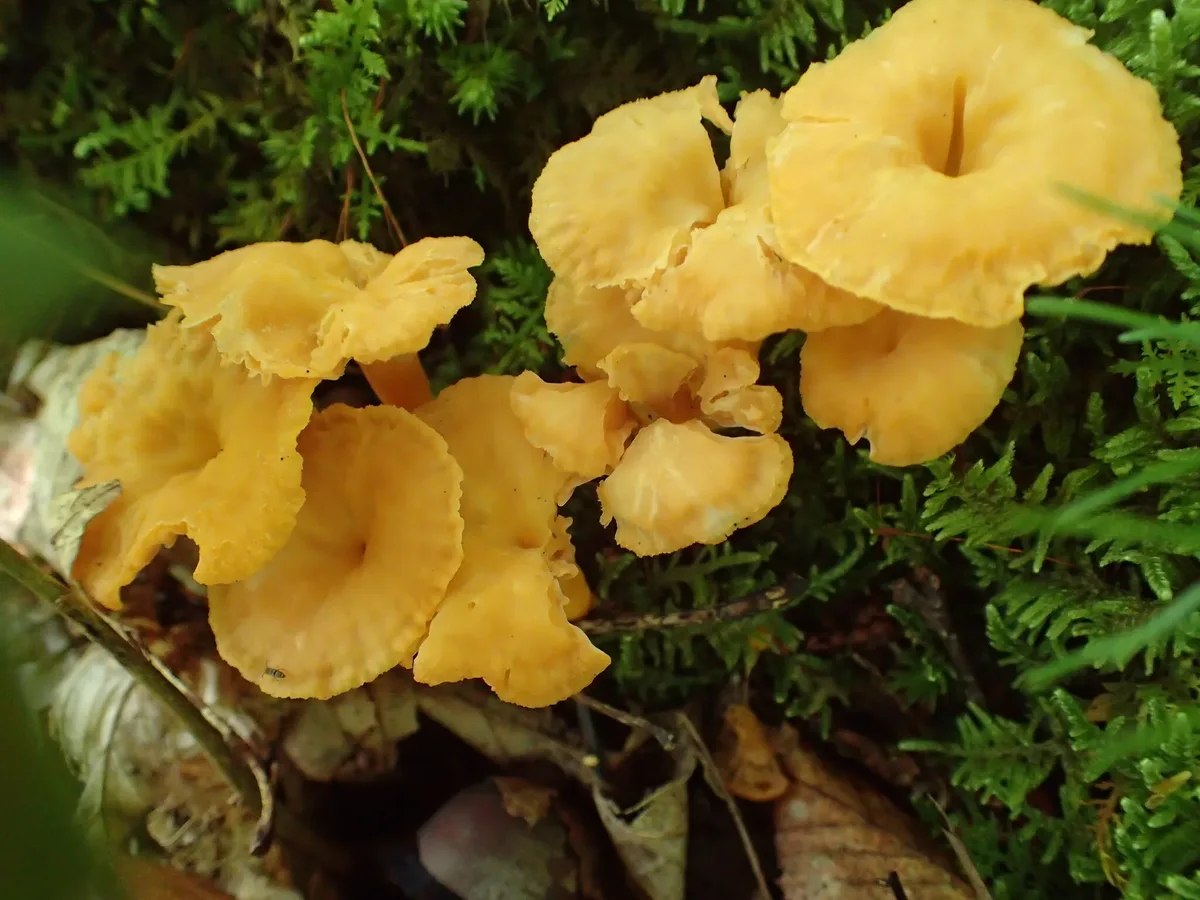 Trix Niernberger (CC0)
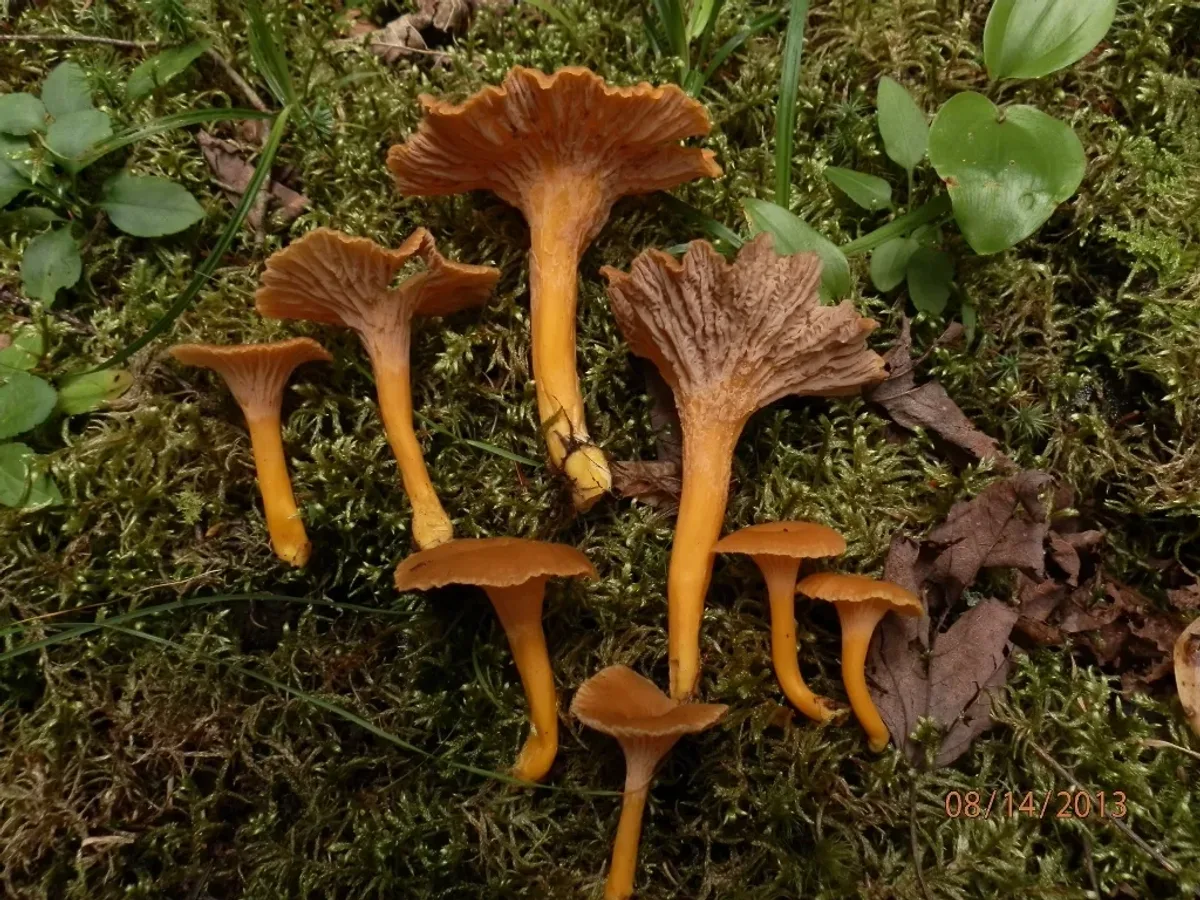 © pinonbistro (CC BY-SA 4.0)© pinonbistro (CC BY-SA 4.0)© Alan Rockefeller (CC BY 4.0)
One of the best mushrooms you can bring home - once you are certain of the identification.
How to recognise it
Cap
The flame-colored chanterelle earns its name: the cap glows vivid flame-orange to bright golden-amber, making it one of the more striking finds on the autumn forest floor.
It starts out slightly convex and quickly opens into a broad, irregular funnel with a wavy, lobed margin that often splits in older specimens.
The surface is smooth and dry, and that intense orange holds up even as the cap ages - noticeably more saturated than the brownish yellowfoot (C. tubaeformis), and comparable in fire to C. lutescens, though ignicolor tends slightly deeper or more reddish-orange.
Gills
Flip it over and you'll find the hallmark of all true chanterelles: not gills but shallow, blunt, irregularly forking ridges in pale cream-yellow, running well down onto the stem.
These vein-like false gills are fundamentally different from the thin, crowded, blade-like true gills of Omphalotus or Hygrophoropsis - that difference is the key safety check.
Stem
The stem is hollow all the way through (slice it lengthwise to confirm), bright orange-yellow, without any ring or basal cup.
Flesh
The flesh is thin, cream to pale yellow, and carries a mild fruity-apricot scent. Spore print: white.
Where & when it grows
Habitat
Like all chanterelles, C. ignicolor is ectomycorrhizal - its mycelium lives in an intimate partnership with the roots of forest trees, exchanging nutrients in a relationship that can persist for years. That bond means it cannot be cultivated and will only fruit where the right trees and soil conditions exist together.
In eastern North America it favors moist mixed forest with a combination of oaks, beeches, and conifers like eastern hemlock or white pine, especially in spots where soil moisture lingers:
- Stream banks
- Concave slopes
- North-facing hillsides
- Areas blanketed by moss or deep leaf litter
It's less tightly tied to boreal spruce-moss forest than C. lutescens, and turns up across a broader range of temperate woodland types. Soil is typically acidic (pH 4.5-6) and rich in organic matter.
Your best chances are in older, undisturbed forest patches where mycorrhizal networks have had time to develop - second-growth or heavily managed woodland rarely produces the same abundance.
When
In eastern North America the season runs July through November, with the main flush in August-October.
Early fruiting can appear in wet July weather across the Appalachians and Mid-Atlantic; further north in the Great Lakes and New England it typically peaks in September-October.
Unlike the summer chanterelle, which thrives in hot, humid high-summer conditions, C. ignicolor tends to prefer the cooler, moister rhythm of late summer and early autumn. It persists well into the season and can shrug off mild overnight frosts.
The most productive strategy is to revisit known sites 7-14 days after a sustained rainfall event (25-40 mm over a week or two), once temperatures have settled back into a comfortable moderate range.
How it grows
Fruits gregariously to scattered, sometimes appearing in loose troops of dozens across a small area - a satisfying find when the conditions align.
Individual fruiting bodies develop slowly and hold their condition well under cool, moist weather, a week or more of good picking at a productive site.
The mycorrhizal mycelium lives on year after year underground, and the same spots can produce reliably across many seasons, though annual yield shifts considerably with how the rainfall falls.
The hollow stem makes each fruiting body lighter than it looks; in prolonged wet spells they can become waterlogged and soft. In warm conditions the hollow interior sometimes harbors fly larvae, though cooler autumn temperatures keep this largely in check.
Fruiting conditions
Responds to cumulative rainfall over 1-2 weeks rather than single large rain events; soil should remain consistently moist. Fruiting is favored when soil temperatures drop from summer highs into the 10-18 °C range in late summer to autumn. Flushes typically emerge 7-14 days after adequate rainfall, with the best crops following cool, wet spells in August and September in eastern North America.
Look-alikes
The most important safety distinction for C. ignicolor is from Omphalotus illudens (jack-o'-lantern mushroom), a toxic orange species of eastern North America. Omphalotus illudens differs at every point:
- True thin, crowded, blade-like gills (not blunt vein-like ridges)
- Grows in dense clumps or clusters at the base of hardwood trees or from buried wood
- Solid (not hollow) stem
- Emits a rank or unpleasant odor
- Bioluminesces faintly in complete darkness
None of these features apply to C. ignicolor - but the superficial resemblance in color and general funnel shape makes this a critical comparison for new foragers.
Hygrophoropsis aurantiaca (false chanterelle) is another orange funnel-shaped species: it has true, crowded, thin gills (not ridges), a solid stem, a more uniform deep orange color throughout including the gills, and a somewhat sweet but unpleasant odor. It causes gastrointestinal upset.
Cantharellus cinnabarinus (cinnabar chanterelle) is similar in color but is typically smaller, more reddish-vermilion or cinnabar-red rather than orange-yellow to flame, with more distinctly forking ridges and a tendency to grow in deciduous oak woodland. C. cinnabarinus is edible and choice.
Craterellus lutescens (golden chanterelle) is very closely related and similar in appearance but is more commonly associated with deep sphagnum-moss spruce forest. It tends to be slightly paler golden-orange rather than flame-orange, and the two species have overlapping distributions. Both are edible and choice.
Craterellus tubaeformis (yellowfoot) is related but has a distinctly brownish-grey to dark umber-brown cap and greyish ridges, making it much less likely to be confused once the difference in cap color is noted.
Similar orange to reddish-orange color but typically smaller, more distinctly cinnabar-red or vermilion than flame-orange, with well-developed forking ridges and deciduous oak woodland habitat. Edible and choice; mix-ups have no safety consequence but are worth noting for accurate records.
Has true thin, crowded, blade-like gills (not ridges or wrinkles), a solid (not hollow) stem, a more uniform deep orange color throughout including the flesh and gills, and a somewhat sweet-unpleasant odor. Usually slightly larger and more deeply orange overall. Causes gastrointestinal upset; do not eat.
Very closely related; C. lutescens tends to be paler golden-orange rather than flame-orange and is more tightly associated with boreal spruce-moss forest. Both are edible and choice; distinguishing them is an academic exercise with no safety implication.
Has true thin, crowded, blade-like gills (not blunt vein-like ridges), grows in dense clusters at the base of hardwood trees or from buried roots, has a solid (not hollow) stem, emits a rank or unpleasant odor, and bioluminesces faintly in complete darkness. Orange coloring is similar but growth habit, true gills, and cluster base distinguish it clearly. Causes severe gastrointestinal illness; do not eat.
Cap is brownish-grey to dark umber, not orange or flame-colored; underside ridges are grey-lilac to grey-yellow. Stem hollow but less vividly orange. Edible and choice; cap color makes confusion unlikely once the difference is noted.
In the kitchen
Picking & cleaning
Cut the stem cleanly at or just above the soil with a knife, or gently twist it free - both methods work as long as you do not disturb the mycelium or the developing buttons that may be just below the litter nearby.
Rough pulling can tear through the fragile underground network and damage what would have been next week's flush.
The thin flesh and hollow stem are more delicate than they look; carry picks loosely in a wide, shallow basket so they do not crush each other. Trim soil and debris from the stem base in the field.
Take time to search the surrounding leaf litter carefully - in moist sites the fruiting bodies sometimes sit just below the surface, easy to miss.
Leave some mature individuals standing to spore; it is simple stewardship of a spot you want to return to.
Cooking
A genuinely fine edible with the delicate fruity-apricot aroma shared by the chanterelle family.
The thin flesh and small size mean these mushrooms cook quickly - sauté gently in butter over medium heat until just tender, 3-5 minutes.
They excel in simple preparations that let the flavor speak:
- Buttered with shallots and thyme on toast
- Folded into scrambled eggs
- Stirred into pasta or risotto
- Used as a garnish for fish or poultry
The flavor is mild and elegant, and high heat or prolonged cooking can dissipate the fruity aroma, so restraint is advised.
C. ignicolor can be dried successfully - the hollow structure allows rapid moisture loss - and rehydrated dried specimens intensify in aroma, making them useful for sauces, soups, and stocks in winter. They can also be frozen after a brief sauté.
Their small size makes them appealing served whole. Do not eat raw; brief cooking improves digestibility and flavor.
Good to know
Craterellus ignicolor has no documented toxicity and is a well-regarded edible species wherever it is found.
Confirmed identification requires all of the following:
- 1Vivid flame-orange to orange-yellow cap with a funnel or trumpet shape.
- 2Blunt, vein-like, forking false ridges on the underside - NOT thin, crowded, blade-like gills.
- 3Hollow stem throughout (verify by slicing).
- 4Fruity-apricot odor, not rank or unpleasant.
- 5Scattered growth from forest litter, NOT dense clusters from a wood base.
The false-gills versus true-gills distinction is the single most important safety criterion. If the underside shows thin, crowded, blade-like gills rather than shallow, blunt, forking ridges, do not eat the specimen - it may be an Omphalotus or Hygrophoropsis.
Beginners should always cross-section the stem to confirm it is hollow, compare with photographs of Omphalotus illudens, and ideally have an experienced forager confirm their first few finds.
A reference guide - never an edibility guarantee. When in doubt, leave it out.