Violet webcap
Cortinarius violaceussyn. Agaricus violaceus L., Cortinarius violaceus var. violaceus
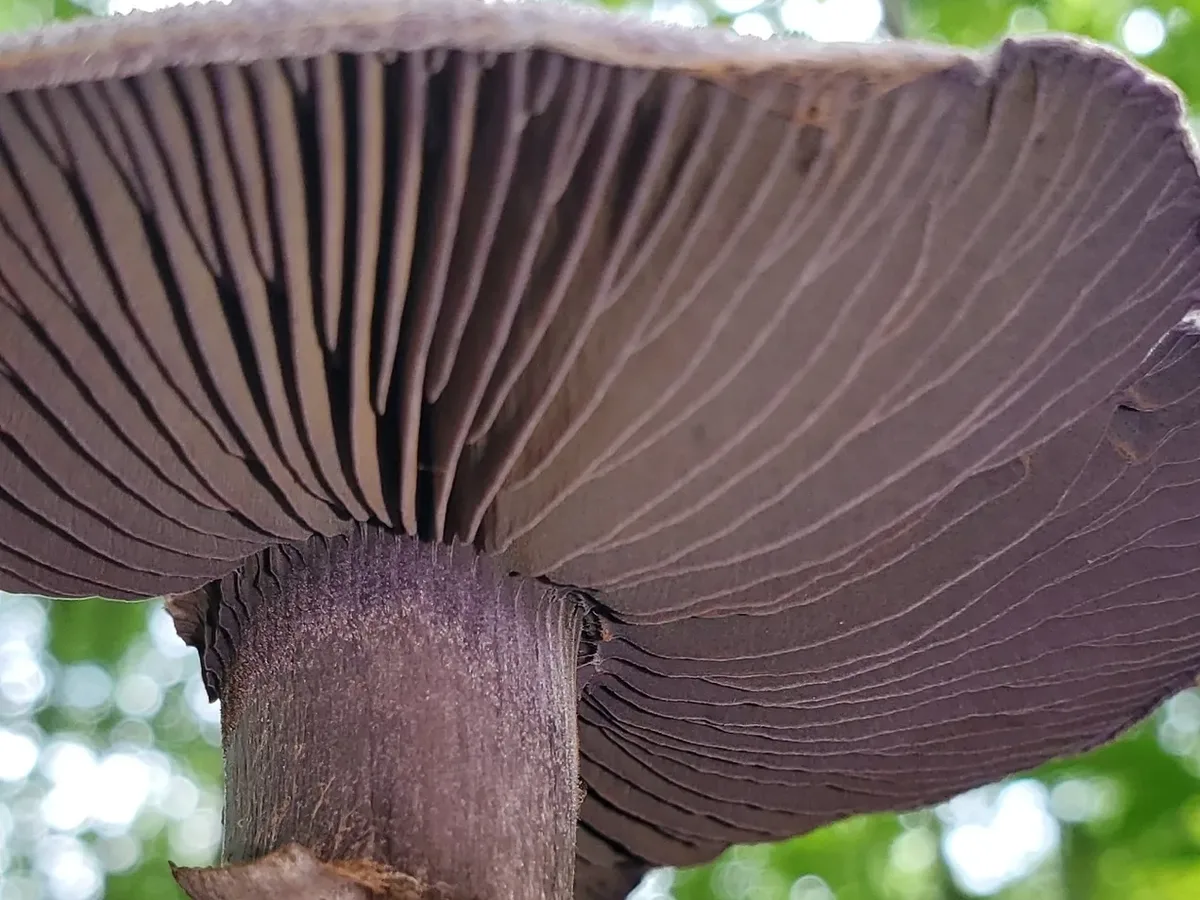 © Ghostomelon (CC BY 4.0)
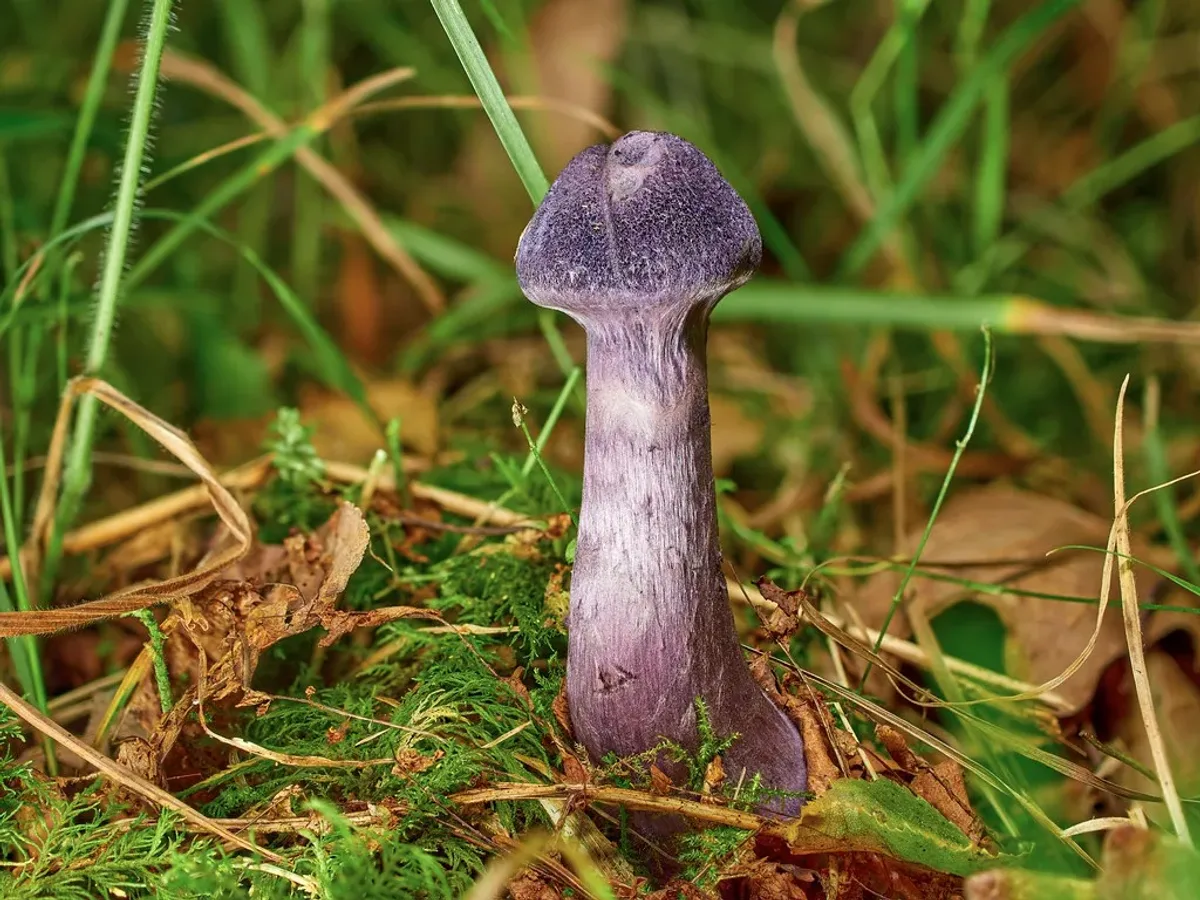 © Lukas Large (CC BY-SA 2.0)
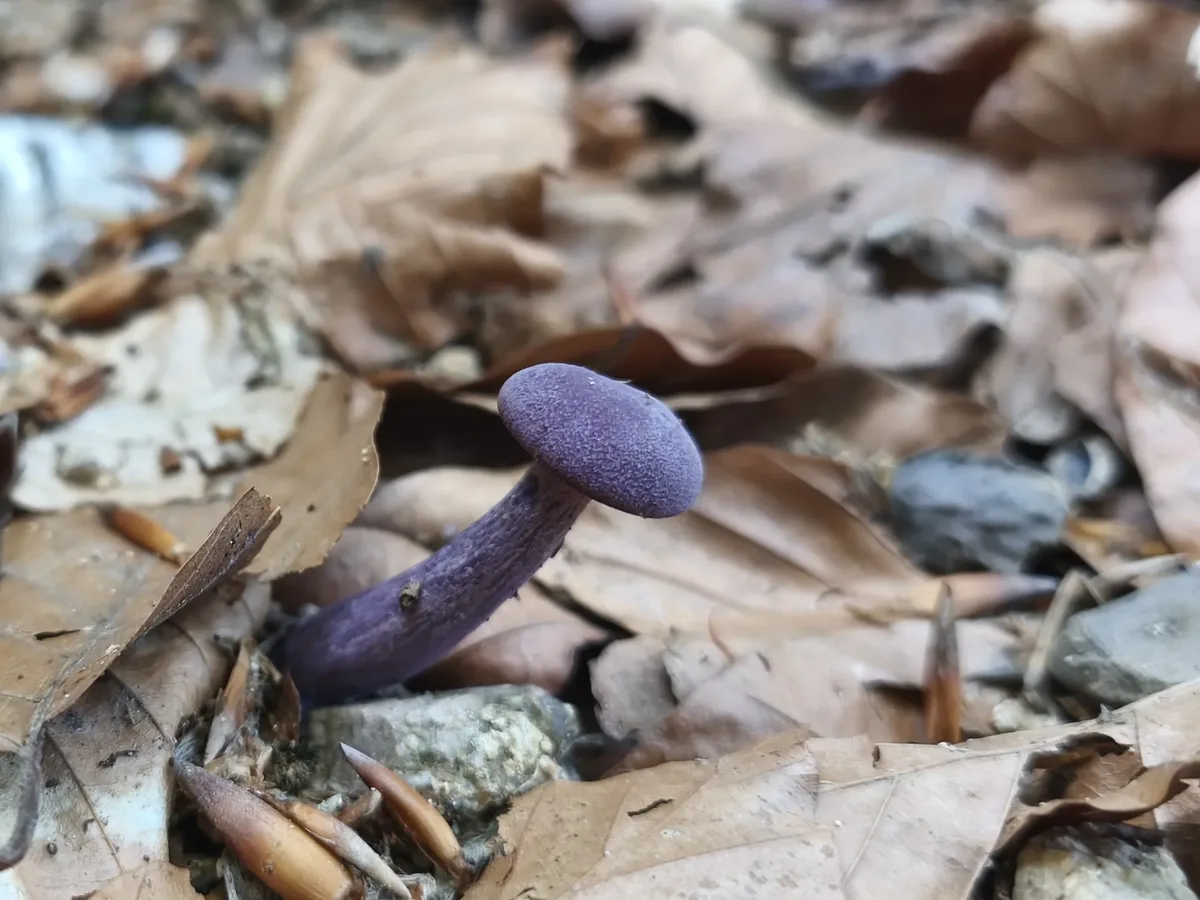 © Dmitry Petrov (CC BY)
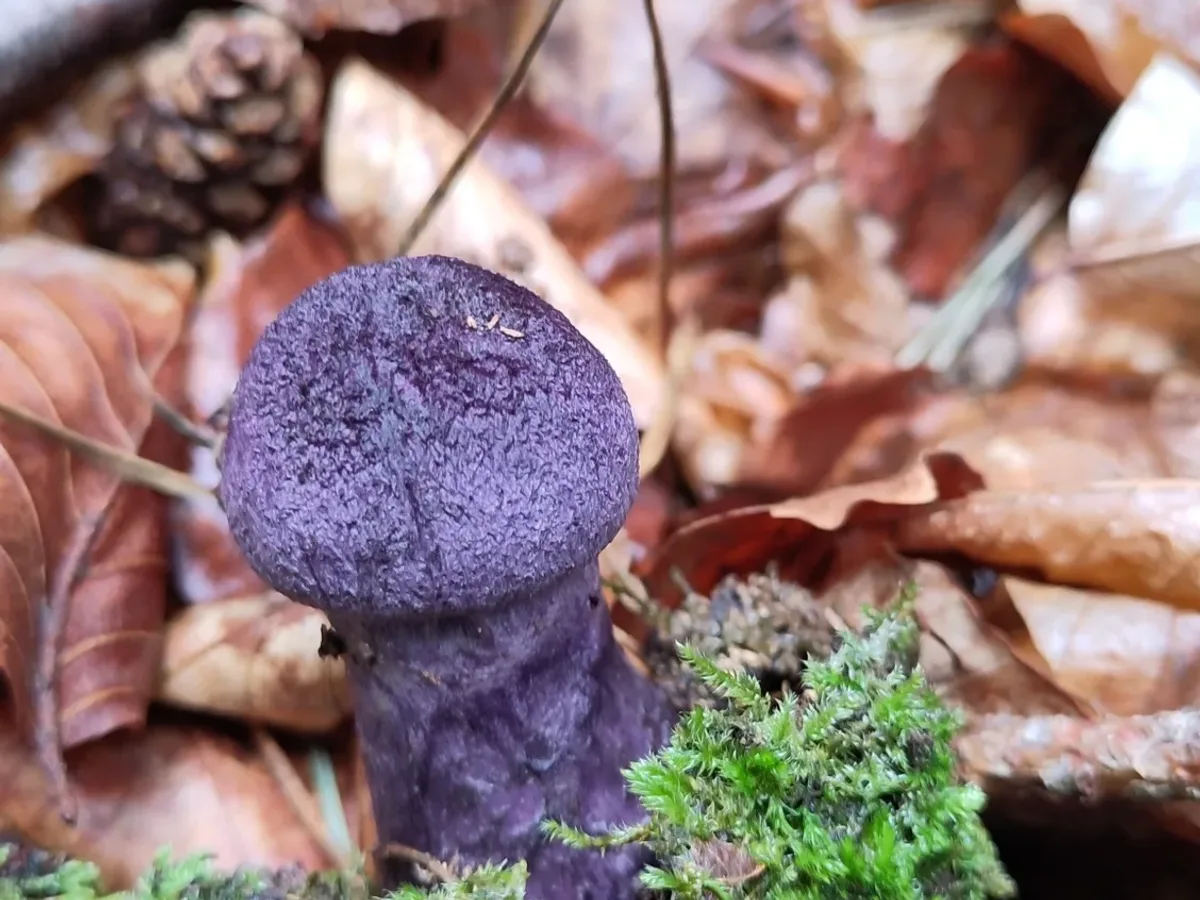 Fabian Graubereich (CC0)
 Erin Springinotic (CC0)
 © Signe Vrålstad (CC BY)
 © Siv Moen (CC BY)
 © nbasargin (CC BY 4.0)© Ghostomelon (CC BY 4.0)© Lukas Large (CC BY-SA 2.0)
Good to eat, once you have identified it with certainty and cooked it through.
Never eat a mushroom you are not 100% sure of - check the look-alikes below, and always cook wild mushrooms.
How to recognise it
Few mushrooms announce themselves as plainly as Cortinarius violaceus - it is simply, deeply, entirely violet.
Cap
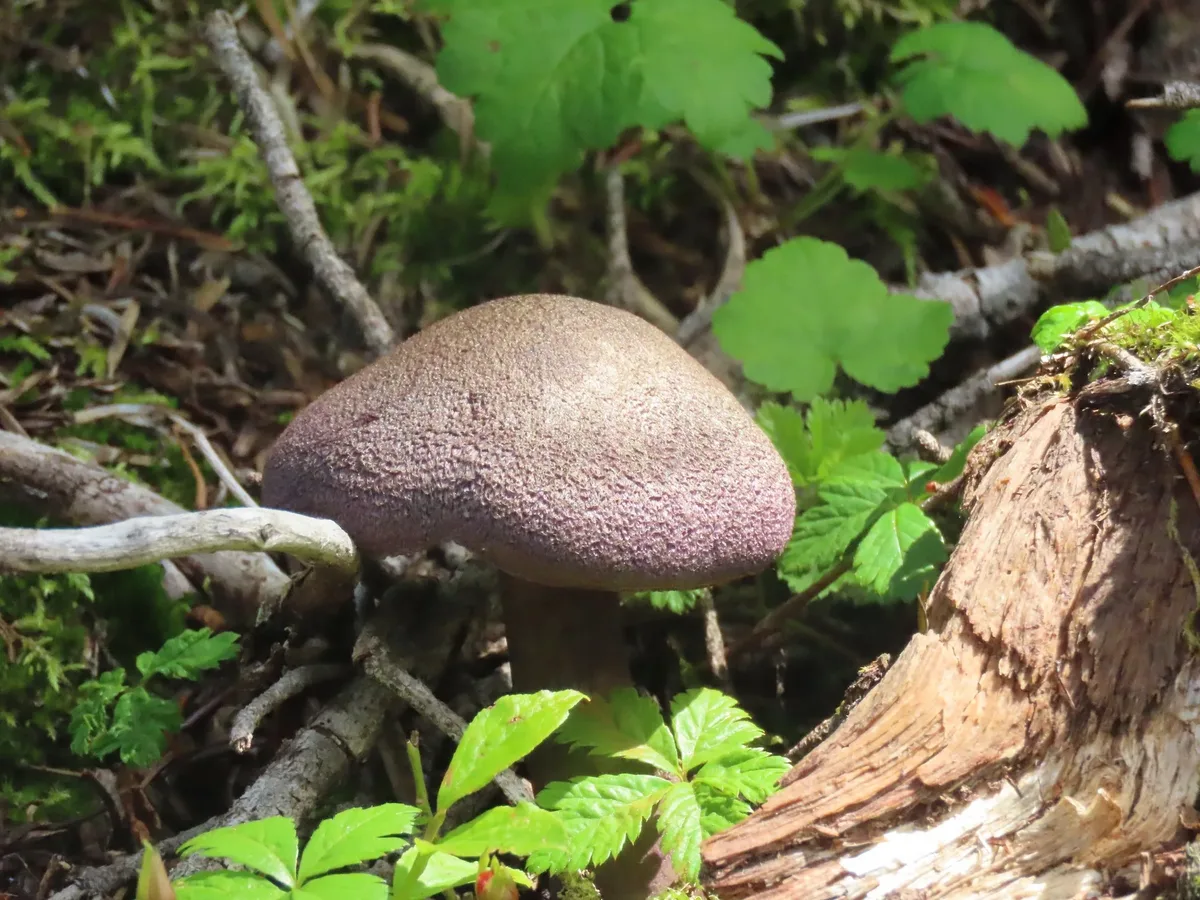
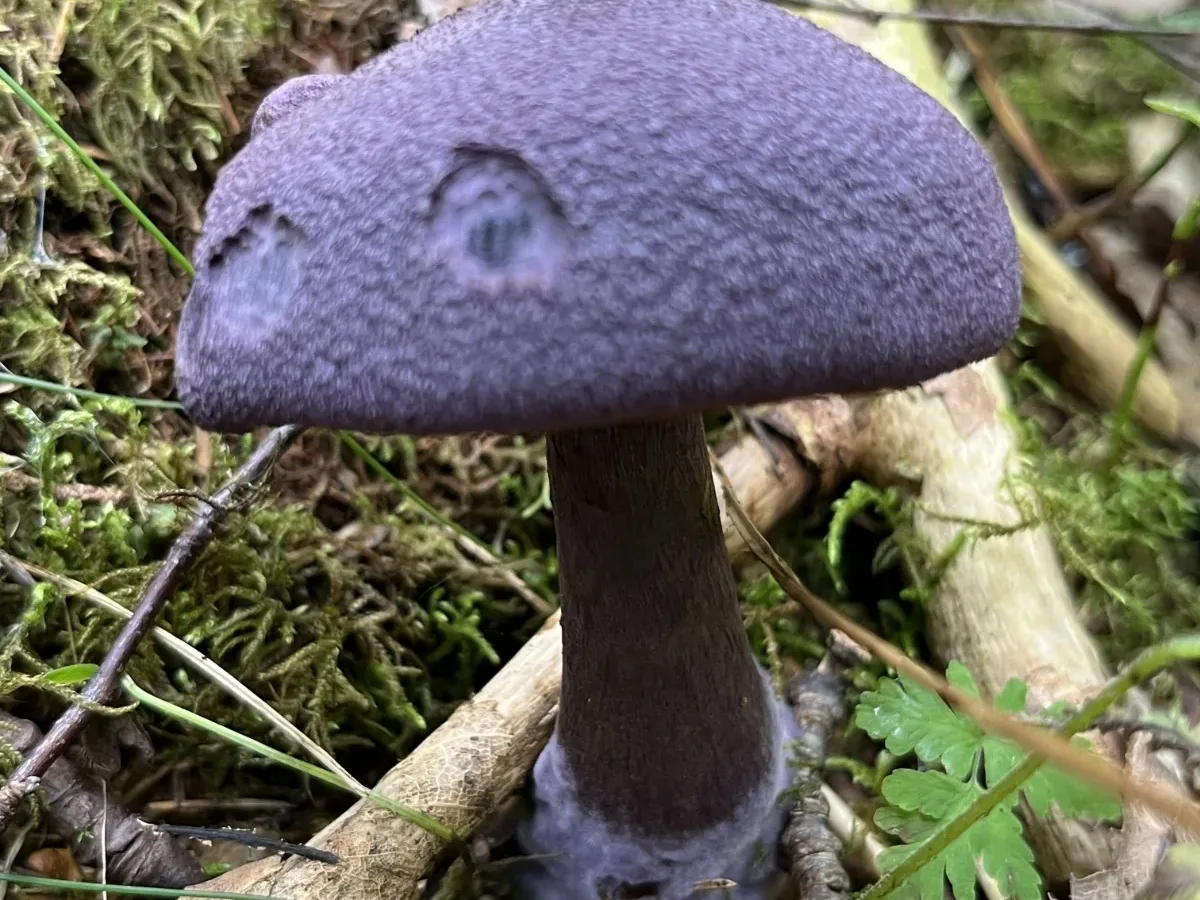
The cap measures 6-15 cm, convex at first and later broadly umbonate or nearly flat. It is clothed throughout in recurved violet squamules that give the surface a dry, velvet-pile texture.
Gills
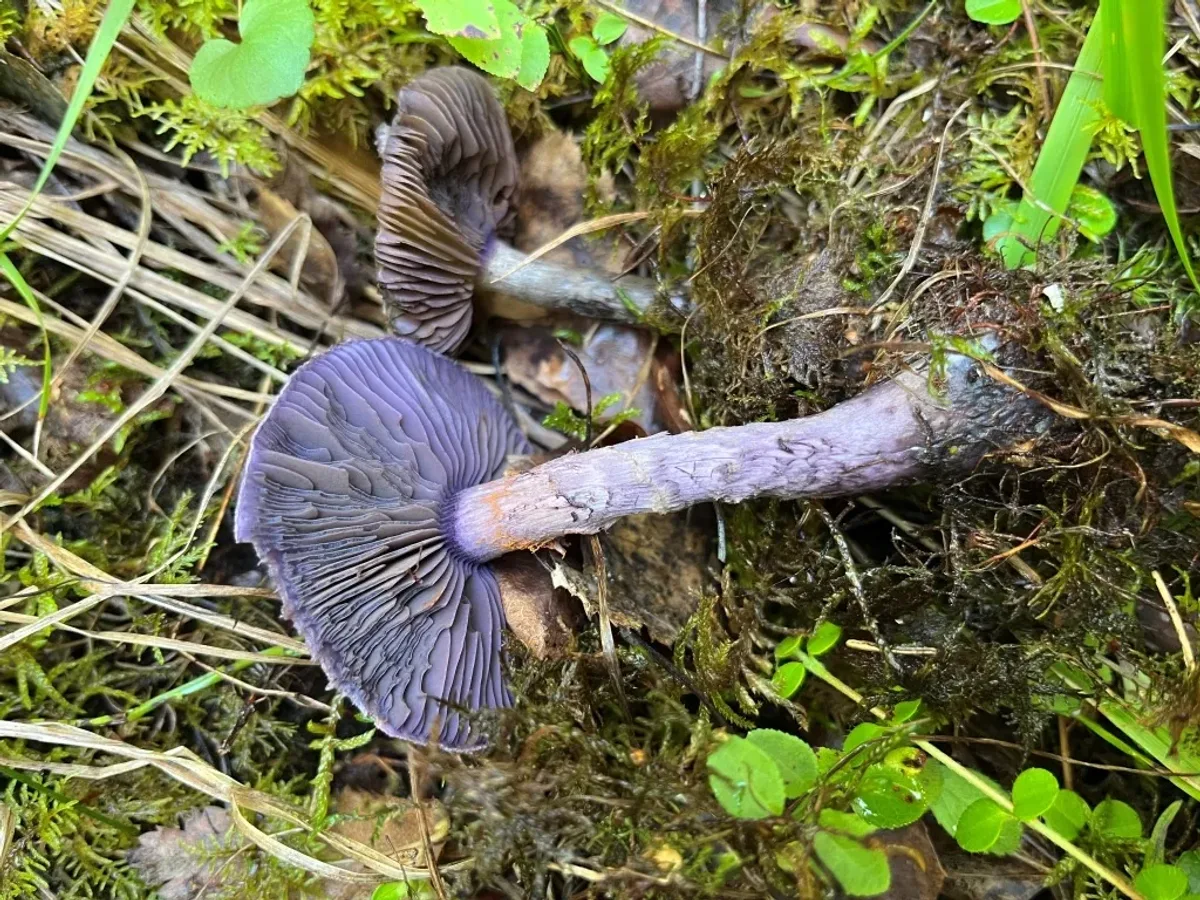
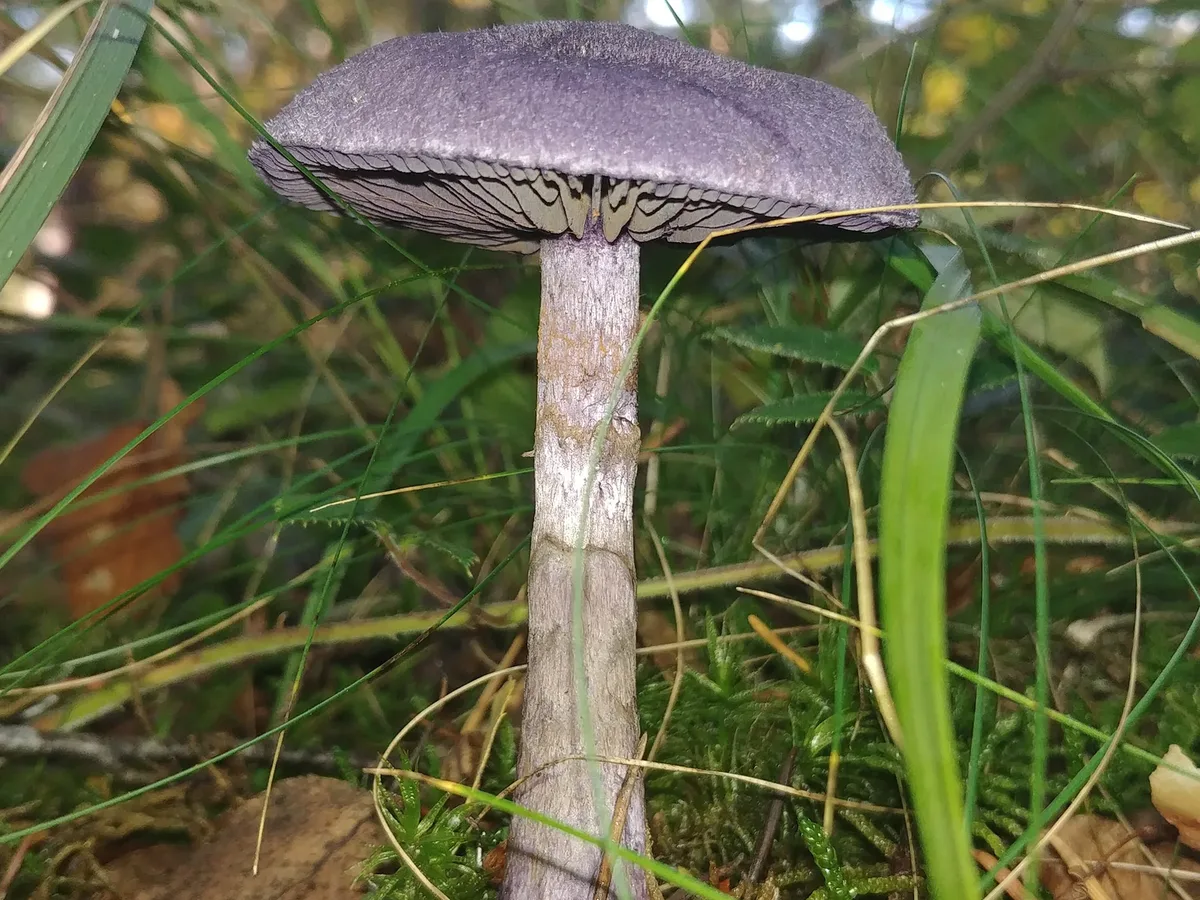
Young gills are a rich dark violet; as the spores ripen they shift to rusty brown, and that colour change is itself a useful clue.
Stem
The stem is robust and club-shaped at the base, solidly violet-fleshed, and in youth is wrapped in a conspicuous cobweb-like cortina of the same deep violet hue. After spore dispersal the cortina collapses to a vague rust-stained band on the stem.
Flesh
Flesh cut across is violet throughout and stays that way - it does not discolour on cutting.
Spore print rusty cinnamon-brown. Spores broadly ellipsoid, coarsely warted, 12-17 × 8-10 µm.
Where & when it grows
Habitat
This species is a faithful indicator of old, undisturbed forest with well-developed mycorrhizal networks.
In Scandinavia and northern Europe it is most frequent in mature boreal mixed forests combining Norway spruce, Scots pine, and birch with a bilberry understory. In central Europe it can occur under beech and oak on acidic soils.
It is never found on recently established plantations and is considered a biodiversity indicator in many national forest assessments.
Growth is strictly solitary or in widely scattered small groups; large flushes are exceptional.
The soil is typically deep, moist, acidic humus. It fruits on flat or gently sloping ground, often near streams or in sheltered depressions where moisture and leaf litter accumulate.
When
Fruit bodies appear from August to October in the Nordic region, peaking in September. In more southern parts of its range (central Europe, the Pacific Northwest) the season may extend into November.
Appearance is irregular from year to year; suitable sites may produce nothing for several consecutive seasons, then yield small clusters.
The species takes many years to colonise a new site because it requires a long-established mycorrhizal relationship.
How it grows
Cortinarius violaceus is a strictly mycorrhizal fungus, meaning its life is inseparable from the roots of its host trees. Underground, its mycelium threads through the soil and wraps the fine root-tips of spruce, pine, or birch in a sheath - a partnership that takes years, sometimes decades, to fully establish.
- The tree gains minerals drawn from the wider soil.
- The fungus gains sugars produced by the tree's leaves.
Neither thrives without the other. This is why the violet webcap is found only in mature, undisturbed forest where those relationships have had time to deepen: recent plantations hold nothing for it.
Fruit bodies appear singly or in small scattered groups of two to four, emerging from deep humus, and the mycelial network itself remains hidden. Spores disperse on air currents and must land in exactly the right soil, near exactly the right host, to germinate.
Fruiting conditions
Requires sustained autumn moisture and cooling soil temperatures. Fruiting is irregular and rarely correlated with a single rain event; long-term mycelial readiness in mature forest is the primary determinant. Warm dry autumns suppress fruiting entirely.
Look-alikes
The key safety concern in this genus is avoiding deadly nephrotoxic species, particularly Cortinarius rubellus and Cortinarius orellanus. Both are present in the same boreal and temperate habitats and both contain the deadly orellanine toxin.
Neither of these has the uniform deep violet coloration of C. violaceus:
- C. rubellus is orange-red to tawny-brown.
- C. orellanus is foxy-red to orange-brown.
Both show warm brown or rusty tones, not violet-black.
The violet coloration of C. violaceus is so extreme and unusual that confusion in good light is unlikely for an experienced observer, but poor lighting in dense forest or faded dry specimens can reduce the violet tones.
Other violet look-alikes:
- Cortinarius hercynicus (sometimes treated as a variety of C. violaceus) is nearly identical in appearance and equally edible.
- Cortinarius caeruleus is smaller, paler blue-violet, grows under broadleaves especially beech and oak, and has a less scaly cap.
- Cortinarius anomalus is blue-lilac on cap and gills but soon loses violet tones and is smaller.
- Laccaria amethystina (the amethyst deceiver) is smaller, with gills that remain deep violet-purple, but it has white spores and lacks a cortina entirely - a fundamental structural difference.
Always check for the cortina (cobweb veil), clavate stem base, rusty-brown spore print, and fully violet cap scales before harvesting any violet Cortinarius.
Foxy-orange to orange-brown cap, dry and finely scaly; stem ochre to orange-brown. Completely lacks the deep violet-black coloration of C. violaceus. Also contains orellanine. Grows under deciduous trees (oak, birch) in central Europe.
Orange-red to tawny-brown cap and stem with warm rusty tones throughout - never deep violet. Contains orellanine; causes fatal delayed kidney failure. Should never be confused with the uniformly dark violet C. violaceus in good light, but check cap colour carefully in dark forest.
Blue-lilac coloration soon fades to grey-brown; smaller with a thinner stem; not strongly velvety-scaly. Not edible. Distinguished by fading colour and smaller stature.
Smaller, paler blue-violet (not deep violet-black), with a smoother cap lacking the pronounced dark scales of C. violaceus. Grows strictly under beech and oak; not considered edible and may cause mild GI upset.
Very similar to C. violaceus - sometimes treated as a subspecies. Grows predominantly under conifers (spruce, pine) in montane zones. Equally edible. Distinguished mainly by molecular and minor macro characters; for practical purposes identical.
Amethyst deceiver: much smaller (1-5 cm cap), pale lilac-violet fading to buff when dry, widely spaced thick gills that stay violet-purple; white spore print; no cortina; no clavate stem base. Structurally completely different from Cortinarius.
In the kitchen
Picking & cleaning
The violet webcap is edible and was more commonly eaten historically than today - current collections are often avoided because of the high risk of confusion with deadly Cortinarius species among beginners.
If harvesting:
- pick only large, clearly violet specimens from confirmed old-growth forest habitat
- take the whole fruit body including the stem base so the clavate shape and violet stem colour can be verified
- keep specimens separate from other collections
Because it is considered declining and a biodiversity indicator in several countries (red-listed in parts of Scandinavia and central Europe), foragers should exercise restraint and take no more than a small number of specimens. Do not strip all individuals from a single site.
Cooking
The flavour is mild and pleasant - faintly sweet, with a hint of something farinaceous - and the texture is firm enough to hold up well in the pan.
It is best sautéed in butter with garlic and parsley, or folded into a mixed forest mushroom dish where it adds body and a subtle depth.
Be prepared for the colour to disappear: that spectacular violet fades to grey-brown in the heat, so there is no visual payoff at the table.
Pat the cap scales dry before cooking, as they hold moisture. Do not eat raw.
Good to know
Cortinarius violaceus itself does not contain orellanine or other known nephrotoxic compounds and has a long record of safe consumption.
However, extreme caution is warranted in this genus as a whole. The Cortinarius genus contains some of the world's most dangerous mushrooms, including C. rubellus and C. orellanus, which cause delayed kidney failure (orellanine syndrome) that may not be apparent for 2-3 weeks after ingestion and can be fatal.
Beginner foragers should not collect any Cortinarius species for the table.
Even experienced collectors should double-check every feature:
- the deeply violet, velvety-scaled cap
- violet gills turning rusty brown
- club-shaped violet stem
- violet flesh
- rusty-brown spore print
Any specimen with warm brown, orange, or rusty tones on the cap should be discarded. When in doubt, leave it out.
A reference guide - never an edibility guarantee. When in doubt, leave it out.