Splendid webcap
Cortinarius splendenssyn. Phlegmacium splendens (Rob. Henry) M.M. Moser, Cortinarius splendens Rob. Henry
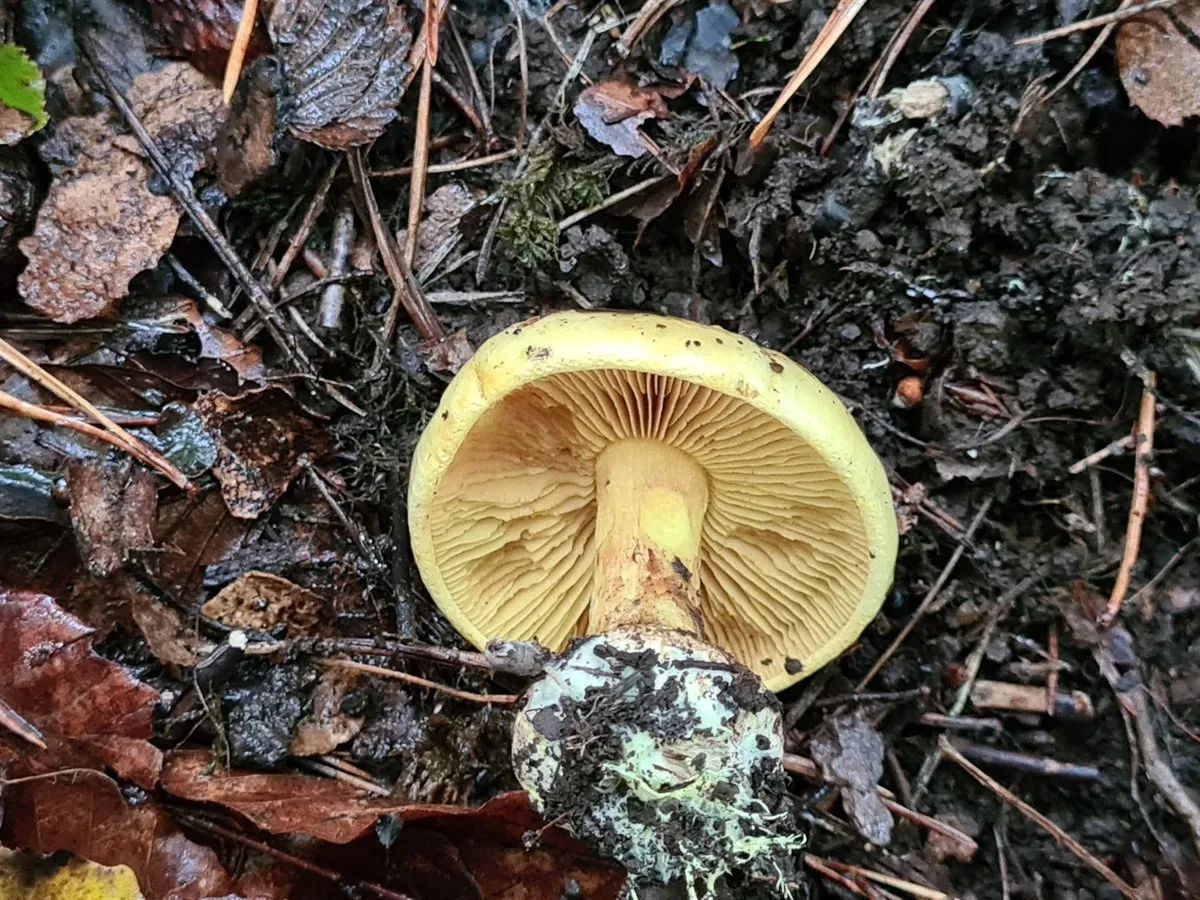 © Inger Kristoffersen (CC BY)
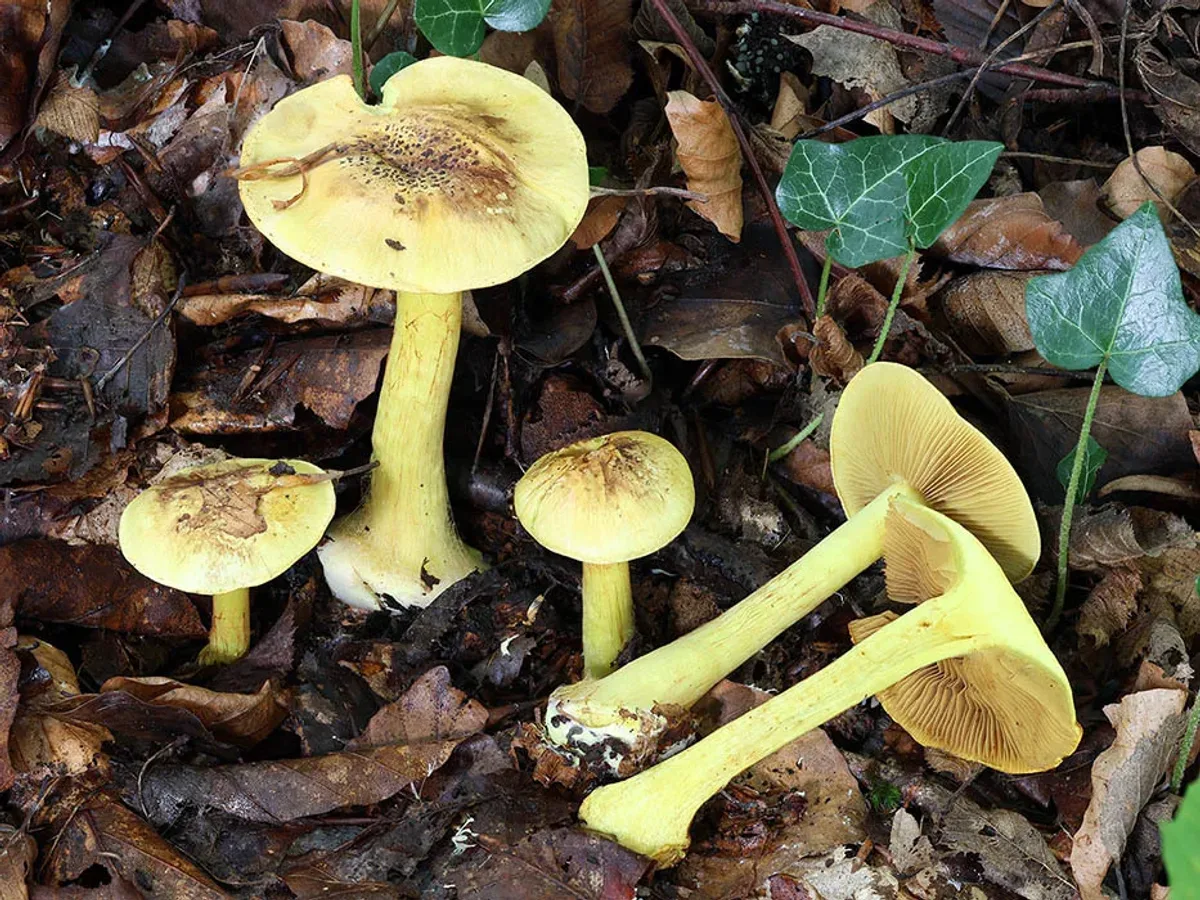 © Daniel Ghyselinck (CC BY)
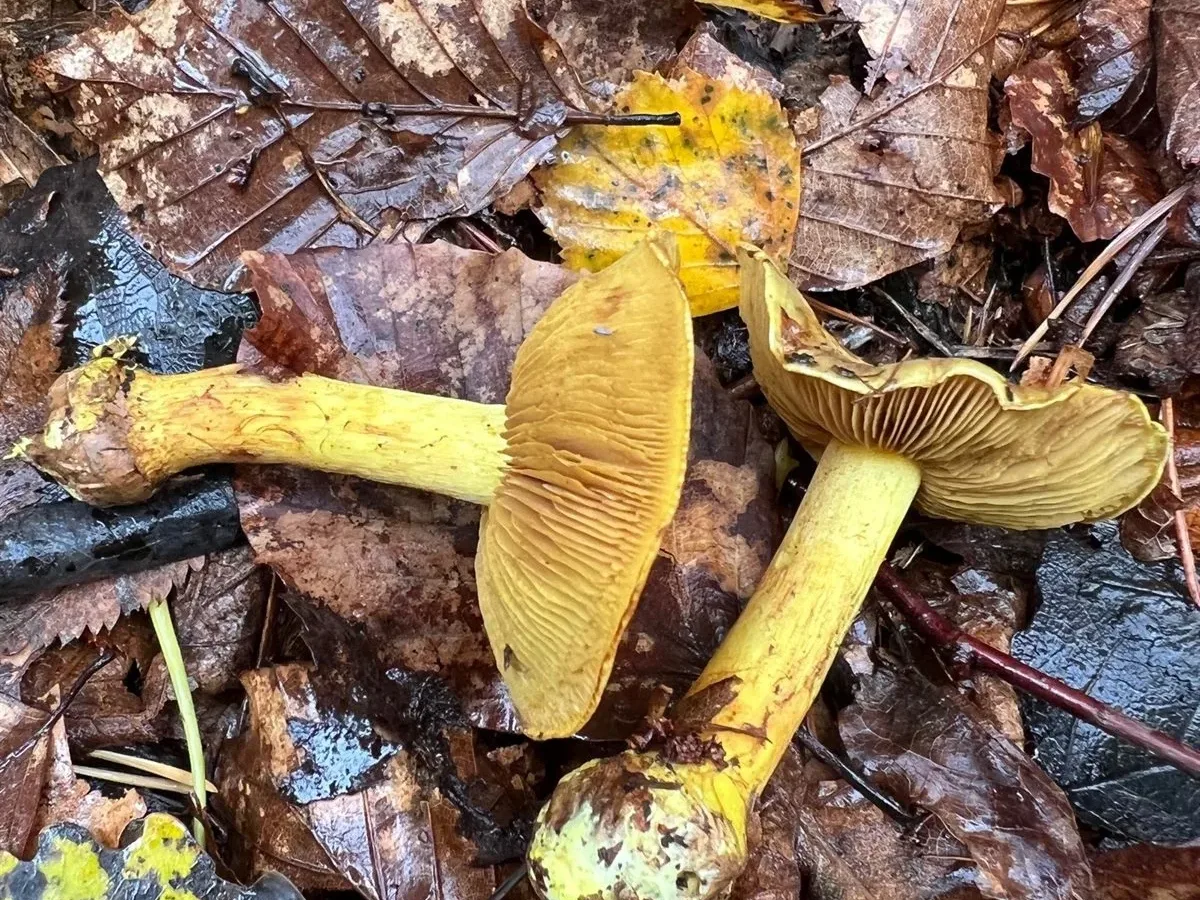 © Rune Solvang (CC BY)
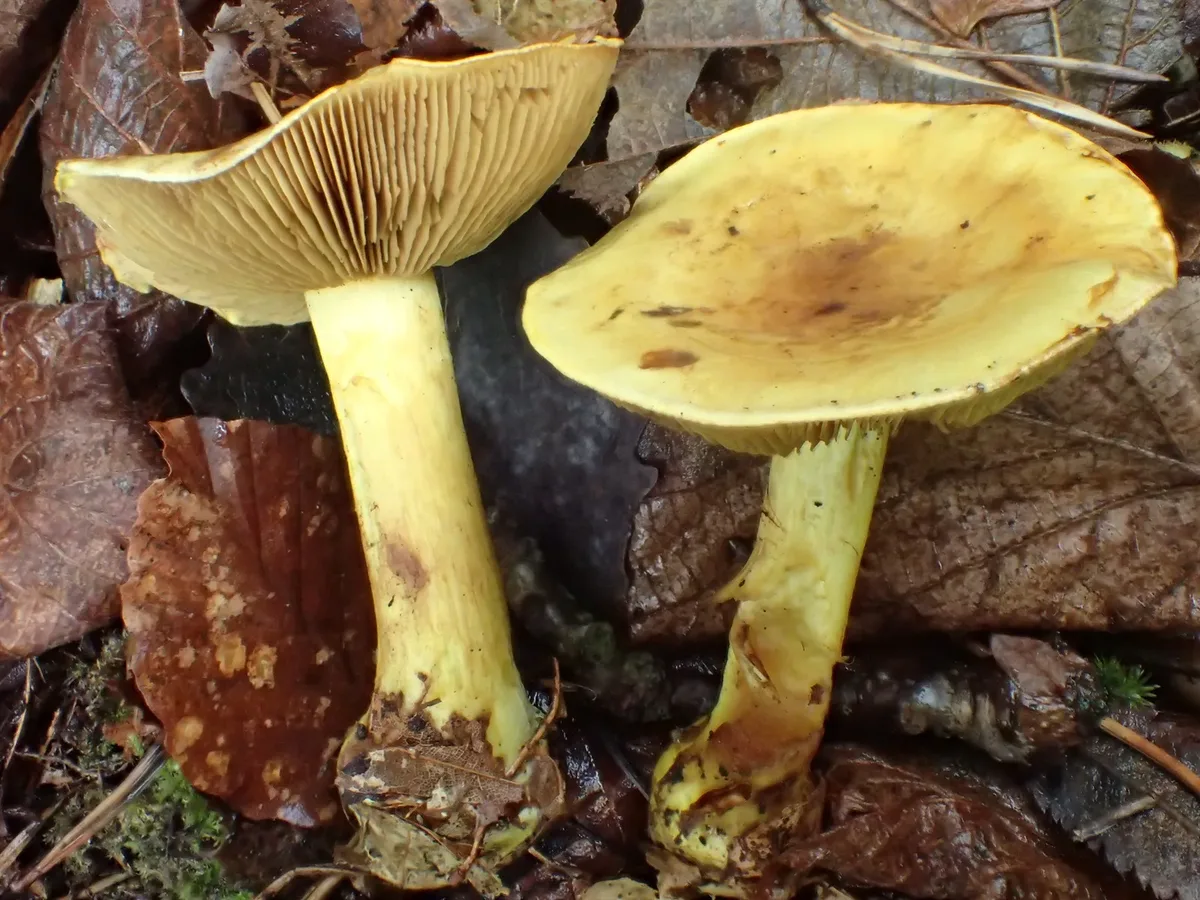 © Per Marstad (CC BY)
 © Inger Kristoffersen (CC BY)
 © Inger Kristoffersen (CC BY)© Inger Kristoffersen (CC BY)© Daniel Ghyselinck (CC BY)
Toxic - and the most serious cases can be fatal. Never eat it, and wash your hands after handling.
Never eat a mushroom you are not 100% sure of - check the look-alikes below, and always cook wild mushrooms.
How to recognise it
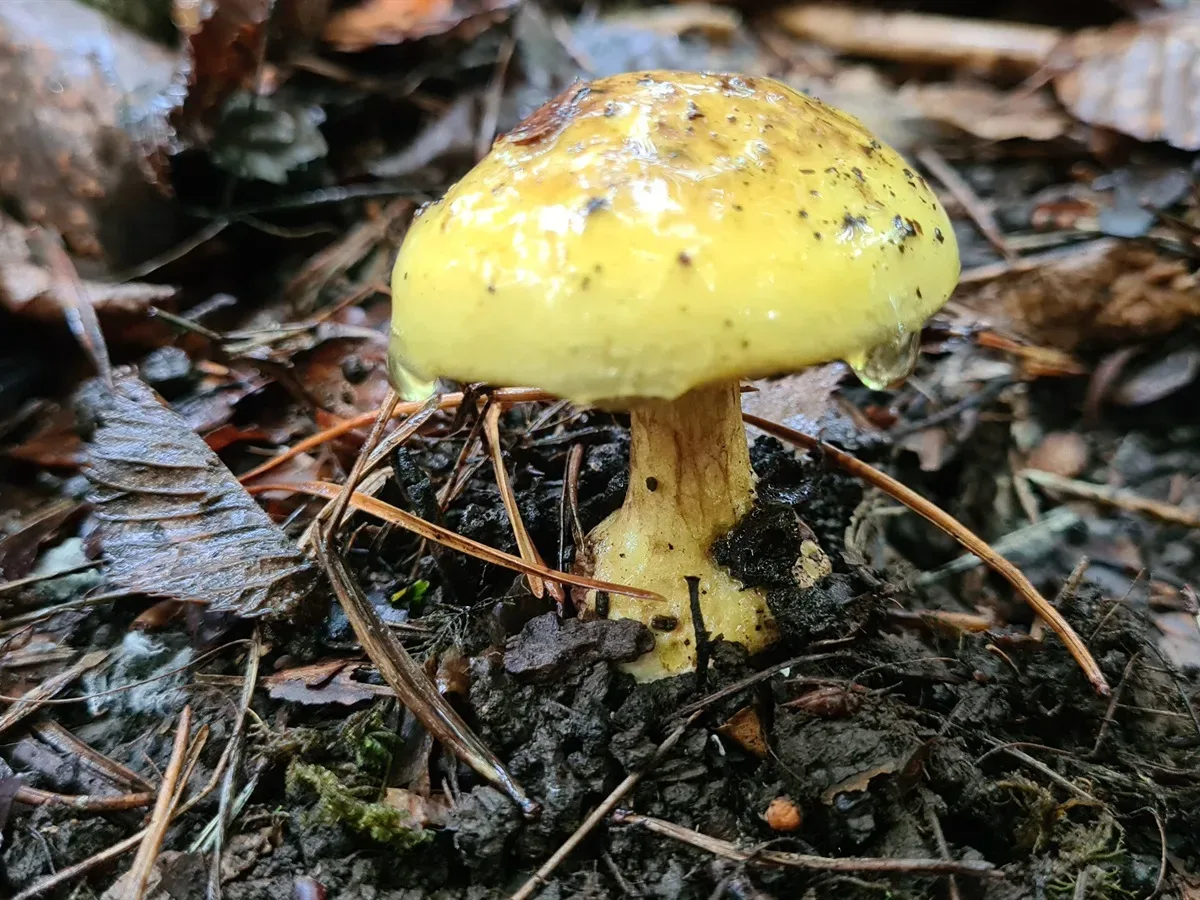
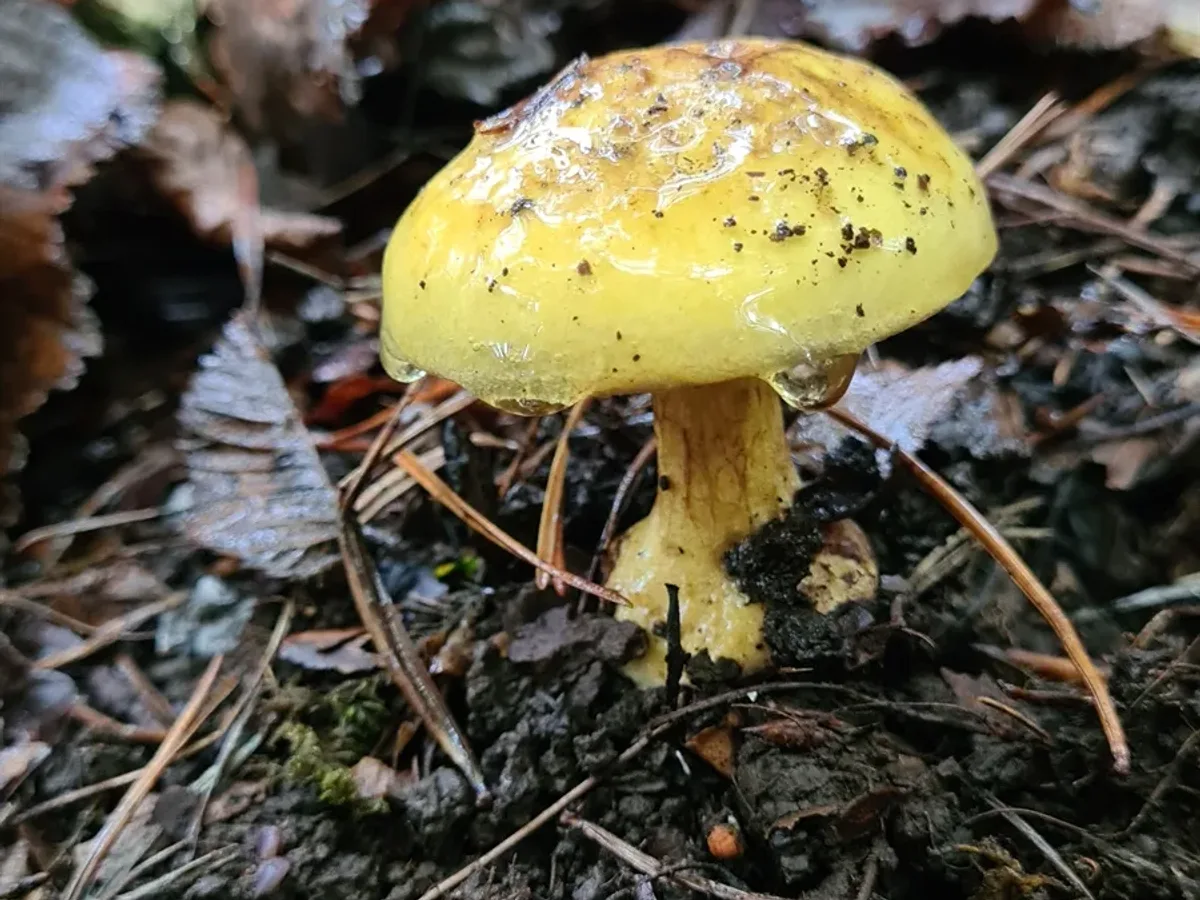
The Splendid webcap is visually striking in the worst possible way - a clean, almost polished lemon-yellow to golden-yellow mushroom that looks genuinely appealing on the forest floor.
Cap
The broadly convex cap, 5-12 cm wide, becomes nearly flat with age and has a glutinous surface when moist that catches the light and makes the whole cap gleam.
The colour ranges from bright lemon-yellow to golden-yellow, purer and brighter than the tawny-orange of many webcap relatives, typically a little paler at the margin and faintly more ochre at the centre in older specimens.
Gills
Young gills are a matching pale yellow - an important early feature to look for - and only darken to rusty cinnamon-brown as spores mature and dust the cap. Spore print is rusty brown; spores are ellipsoid and clearly warted.
Stem
The stem is characteristically club-shaped, widening into a rounded, swollen base, and is solidly pale yellow with fine fibrous strands on the surface.
When the mushroom is young, you can see the cortina: the delicate, cobweb-like partial veil of pale yellow threads that is the hallmark of all Cortinarius species. This veil breaks as the cap expands and leaves only a faint zone on the stem, progressively stained ochre to rusty brown by falling spores.
Flesh
The flesh throughout is pale yellow, firm, and does not change colour on cutting.
Smell & taste
Smell is faint - mildly radish-like or slightly sweet.
Why it's dangerous
Cortinarius splendens is one of the most dangerous mushrooms in European woodland - not merely because it is toxic, but because it is yellow, attractive, and superficially resembles edible species, and because its toxin has a uniquely long delay before symptoms appear.
Unlike Amanita phalloides, where symptoms emerge within hours, C. splendens poisoning may not be recognized for days or weeks. There is no antidote to orellanine.
Anyone who has consumed a yellow webcap - or any Cortinarius species of uncertain identity - should seek emergency medical attention immediately, without waiting for symptoms. Medical staff should be informed of the potential orellanine exposure so that renal function can be monitored over several weeks.
This species must never be eaten under any circumstances. Its bright attractive colour makes it especially dangerous for inexperienced foragers who may mistake it for a choice edible yellow mushroom.
Toxin
Cortinarius splendens contains orellanine (also spelled orellanin), a highly stable, water-soluble bicyclic dipyridine N-oxide compound. It is one of the most insidiously dangerous fungal toxins known.
Orellanine causes progressive destruction of kidney proximal tubule cells and leads to chronic interstitial nephritis. The compound is heat-stable, is not destroyed by cooking, drying, or any domestic food preparation, and is not inactivated by stomach acid.
A critical and life-threatening characteristic is its extreme latency: symptoms typically do not appear until 2 to 14 days after ingestion - sometimes as long as 3 weeks - by which time irreversible kidney damage is already established.
This long delay means victims often cannot recall what they ate, and may not receive appropriate medical treatment (renal monitoring and supportive care) until damage is severe.
Death or permanent kidney failure requiring dialysis or transplantation has resulted from ingestion of Cortinarius species containing orellanine.
Symptoms
The initial latent phase after ingestion of orellanine-containing species spans 2-14 days with no or only minor symptoms, which is what makes this poisoning so uniquely dangerous.
Early non-specific symptoms, when they appear, include:
- intense thirst (polydipsia)
- increased or decreased urination
- fatigue
- headache
- nausea
- a burning sensation in the flanks
As kidney function deteriorates, oliguria (reduced urine) or anuria, back pain, and general malaise develop. Blood tests reveal rising creatinine and urea indicating renal failure.
If untreated or caught late, the outcome can be permanent end-stage renal disease requiring long-term dialysis or kidney transplantation. The delay between consumption and symptom onset means that by the time a patient presents to hospital, significant nephrotoxic damage has already occurred.
Prognosis depends heavily on how quickly orellanine poisoning is suspected and renal function monitoring begins - any suspicion of ingesting a Cortinarius species warrants immediate hospital admission and renal function testing even in the absence of symptoms.
Staying safe
Cortinarius splendens is absolutely not for consumption. It should not be picked, tasted, or used for any purpose other than observation and photography.
Even handling the fruit body and subsequently touching the mouth could theoretically introduce toxin, so hands should be washed after handling. The toxin orellanine cannot be removed by cooking, drying, pickling, or any home preparation method.
If you find a bright-yellow, shiny-capped mushroom under lime or beech trees in autumn in Europe and are not 100% certain of the species, do not eat it. The devastating and delayed nature of orellanine poisoning means that by the time you realize something is wrong, serious kidney damage may already be irreversible.
Always apply the strict rule: if you are not absolutely certain that a Cortinarius species is edible and that the identification is correct, treat it as deadly and leave it alone.
Where & when it grows
Habitat
This species is strongly calcicolous - it thrives on alkaline or neutral soils derived from chalk, limestone, or marl, which is one of its most useful identification clues.
It is most consistently found under lime trees (Tilia species) and beech in parkland, old avenues, and mature deciduous forest where these trees grow on base-rich ground. Oak and hornbeam are also recorded hosts on suitable soils.
The association with lime (linden) trees is particularly telling: a bright-yellow, shiny-capped webcap growing under linden in a park or old mixed woodland is a combination that should always trigger caution. It tends to grow singly or in small loosely scattered groups rather than in dense clusters.
Soil type is a useful supporting clue - yellow webcaps found on acidic heathland with conifers are less likely to be C. splendens, though related species in the same dangerous group can occur in those settings too.
When
Fruit bodies appear from late summer into autumn, with the main flush running from late August through October and occasionally holding on into November in warm, mild years. Fruiting is tied to the arrival of autumn: cooling soil temperatures after the first good autumn rains trigger the mycelium to push up fruit bodies.
Regional timing varies:
- Southern range (France, northern Iberia, northern Italy): the season may open a little earlier, in September with warm rains.
- Central Europe: productive fruiting is generally concentrated in September and early October.
In dry autumns the species may barely appear at all; in wet ones it can fruit reliably for several weeks.
How it grows
Cortinarius splendens is strictly ectomycorrhizal with deciduous trees, forming root partnerships with lime and beech that develop over many years. The mycelium lives unseen in the soil through spring and summer, woven into the fine roots of its host trees in a relationship that may persist for decades.
Fruit bodies emerge directly from the soil or leaf litter when autumn conditions are right - cooling temperatures and adequate soil moisture together act as the trigger.
Because this partnership requires established, mature trees, the species is absent from young plantations and recently disturbed woodland. It fruits singly or in small loosely grouped clusters, never in the dense trooping masses of some woodland species.
Fruiting conditions
Fruiting is triggered by cooling autumn temperatures combined with adequate soil moisture from September rain. The species is ectomycorrhizal and requires established mature host trees; it does not respond to single brief rain events alone but rather to sustained autumnal conditions with soil cooling below about 15°C. Dry autumns strongly suppress fruiting.
Look-alikes
The primary confusion risks for Cortinarius splendens are other yellow to golden-yellow mushrooms in deciduous woodland.
Dangerous yellow webcap confusions:
- Cortinarius triumphans (the birch webcap) - one of the most common dangerous confusions: also yellow with a glutinous cap and clavate stem, but grows exclusively under birch on acidic soils and has distinct pale-yellow concentric girdles of veil remnants on the lower stem. Considered edible when young, but this identification must be absolutely certain.
- Cortinarius variegatus - similarly yellow with a slimy cap, grows under beech and oak, and is recorded as edible, but the identification distinction from C. splendens is subtle and unreliable in the field.
- Cortinarius aureofulvus and related golden-yellow Phlegmacium species - present similar confusion risks.
- Cortinarius citrinus and C. flavovirens - yellower species also in this complex.
All of these distinctions are too microscopically and chemically fine for safe field separation without expert guidance. The practical conclusion is that all yellow glutinous-capped webcaps found under deciduous trees must be treated as potentially C. splendens and avoided.
Other yellow mushrooms that are structurally distinct:
- Phaeolepiota aurea (golden scalycap) - distinctly different in structure, with a scaly cap and ring, growing on disturbed ground, and lacking a glutinous surface.
- Suillus granulatus (granulated bolete) - has pores rather than gills and a completely different structure.
- Hygrophorus hypothejus - yellow-olive and slippery, but grows under pine and has decurrent gills.
None of these are easily confused with C. splendens by anyone familiar with Cortinarius structure, but beginners may conflate 'yellow slimy cap in deciduous woodland' across genera.
Another golden-yellow Phlegmacium species in deciduous woodland. Not consistently distinguishable from C. splendens by macroscopic features alone. Microscopic spore measurements and habitat are required. Treat as equally dangerous in the field.
A lemon-yellow species in the same Phlegmacium group, sometimes synonymised with or treated alongside C. splendens in older literature. The toxicological status of closely related yellow Phlegmacium species in this complex is poorly characterised and none should be consumed. Separation in the field is unreliable without expert mycological help.
Also bright yellow with a glutinous cap and clavate stem, but grows exclusively under birch on acidic soils (not lime or beech), and has distinctive pale-yellow concentric veil-girdles ringing the lower part of the stem - C. splendens lacks these persistent girdles. Host tree and soil type are the most reliable separation characters, but this distinction is not safe enough for inexperienced foragers: both should be avoided if uncertain.
Similar yellow, glutinous-capped webcap growing under beech and oak; recorded as edible but distinguishing it from C. splendens in the field is unreliable without expert examination. The risk of fatal orellanine poisoning from misidentification means this separation should not be attempted by non-experts. Avoid all yellow slimy webcaps under beech unless identified by a specialist.
Golden-yellow scaly cap with a prominent ring and a dry, mealy-granular surface - not glutinous. Grows on disturbed ground, roadsides, and forest edges rather than being strictly mycorrhizal under specific trees. Has gills but lacks the cobweb cortina; the ring is membranous and well-formed. Very different structure from C. splendens once both are examined carefully.
A reference guide - never an edibility guarantee. When in doubt, leave it out.