Mustard skinhead
Cortinarius sinapicolor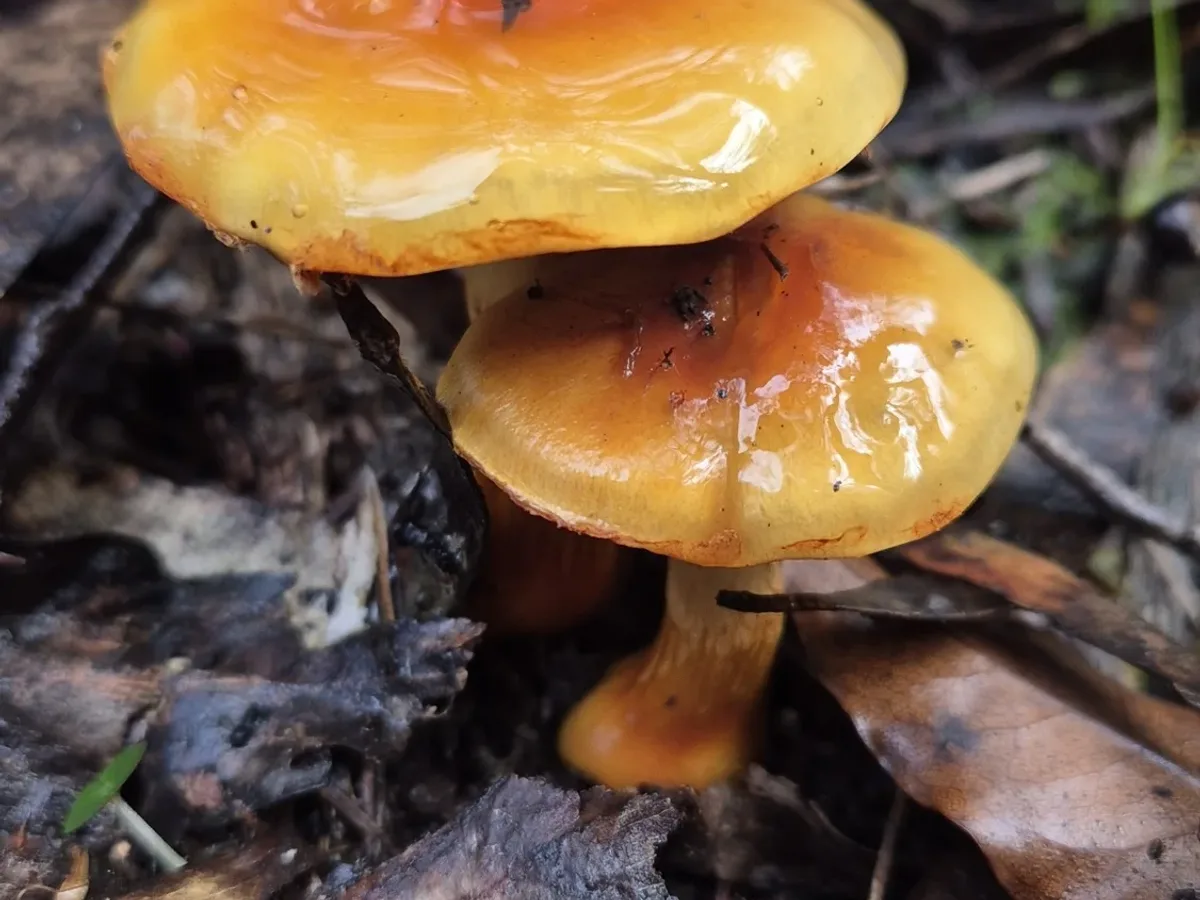 Eileen Laidlaw (CC0)
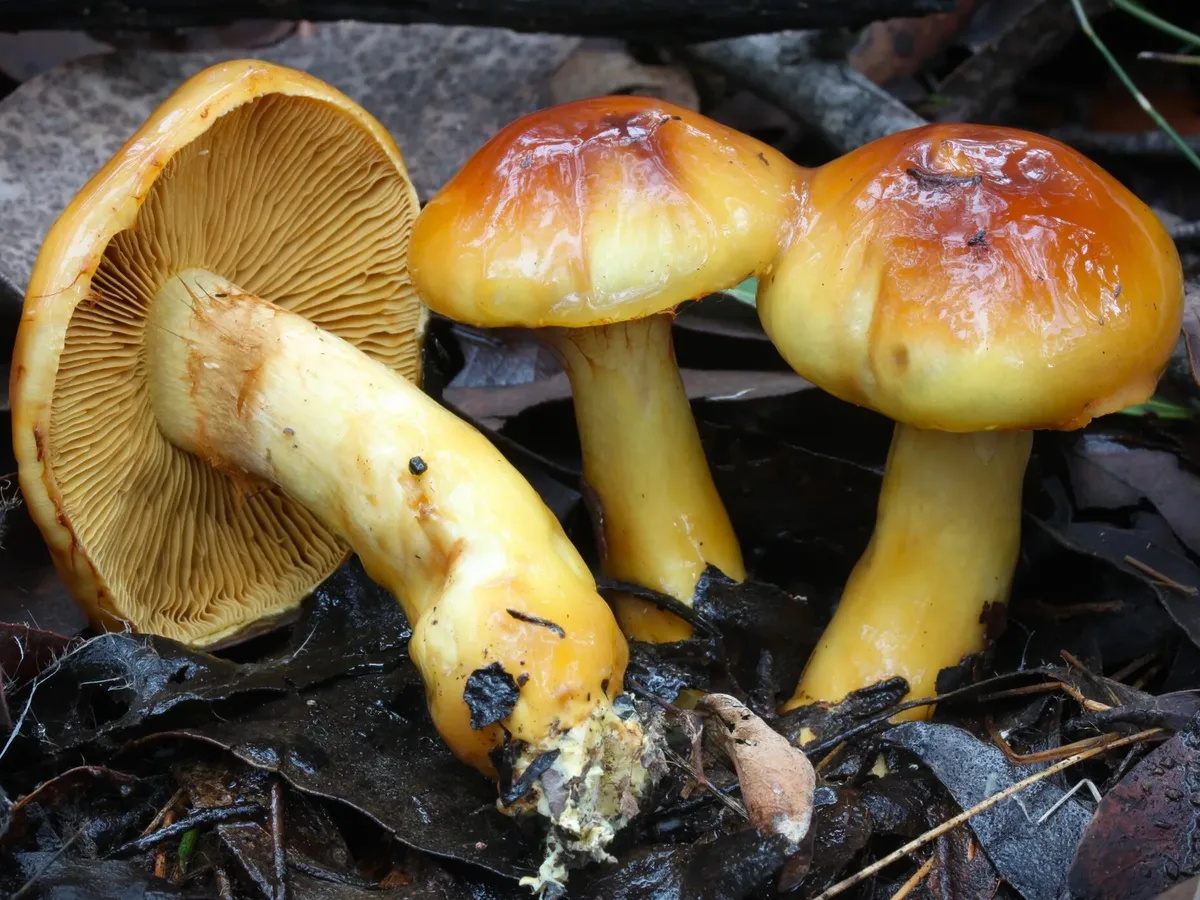 © Beau Meister (CC BY)
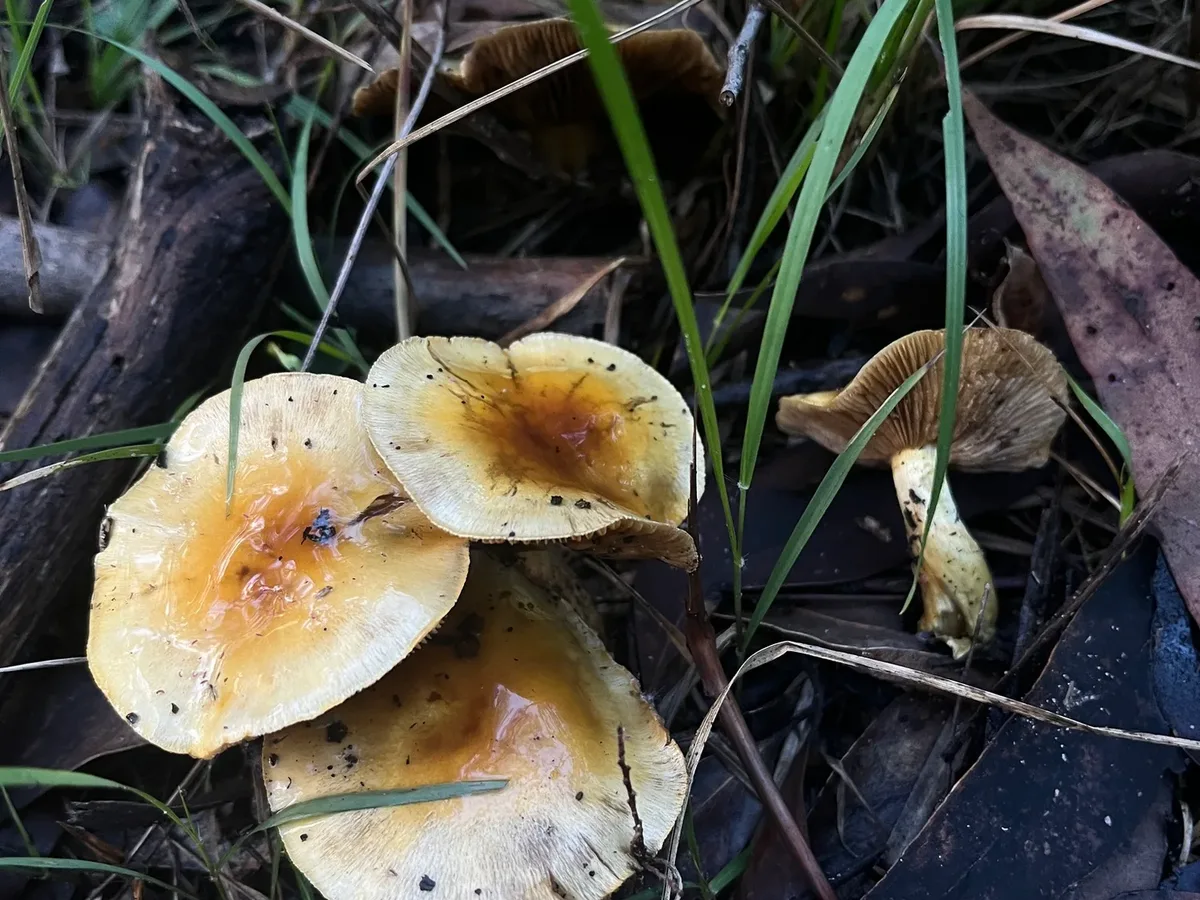 © Todd Huang (CC BY)
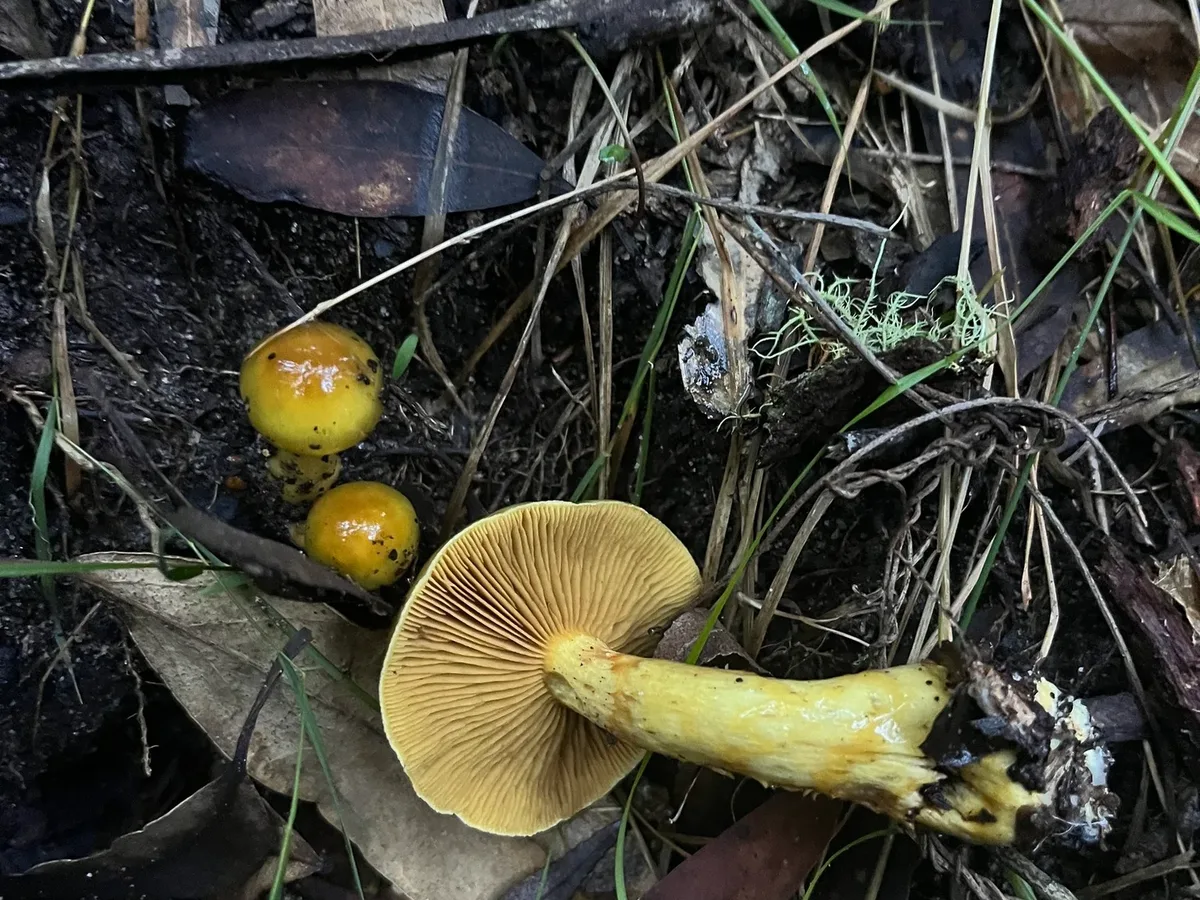 © Todd Huang (CC BY)
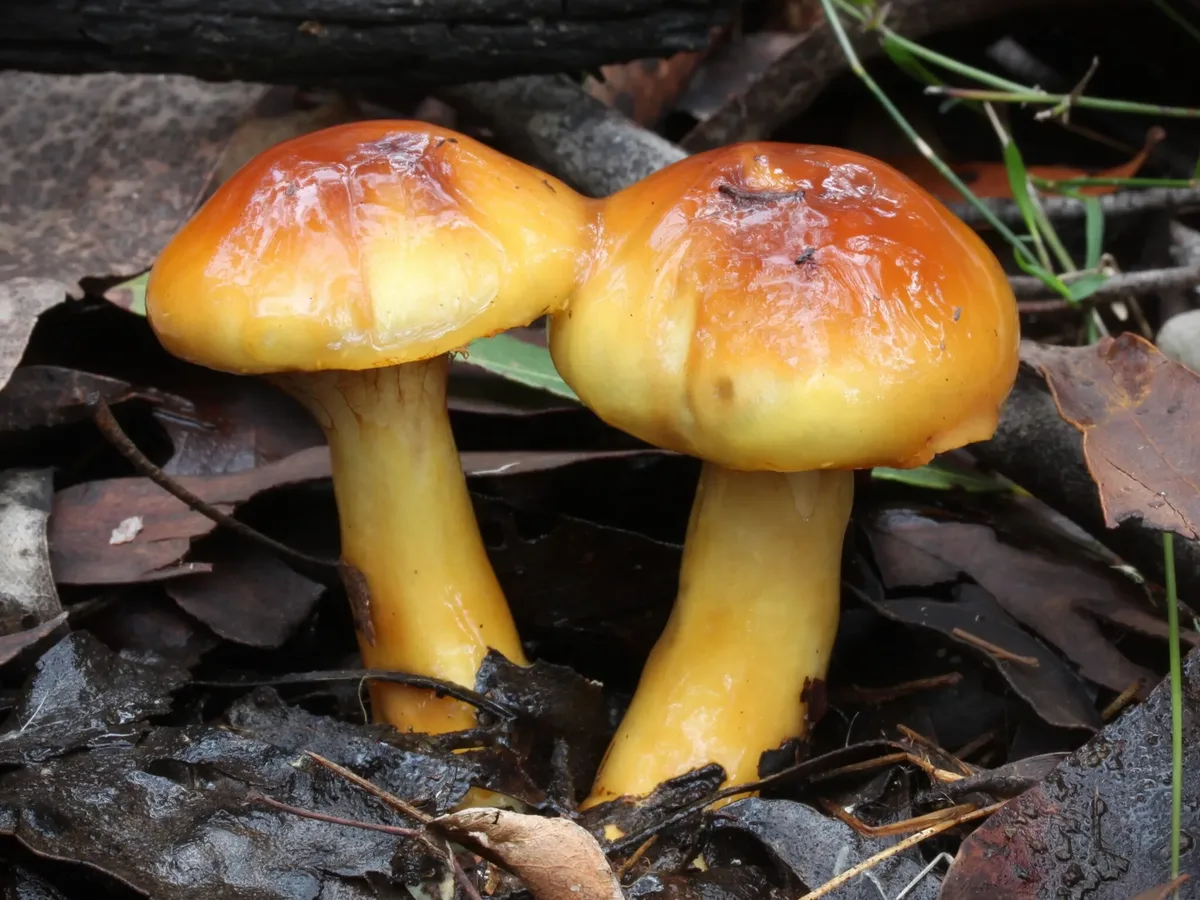 © Beau Meister (CC BY)
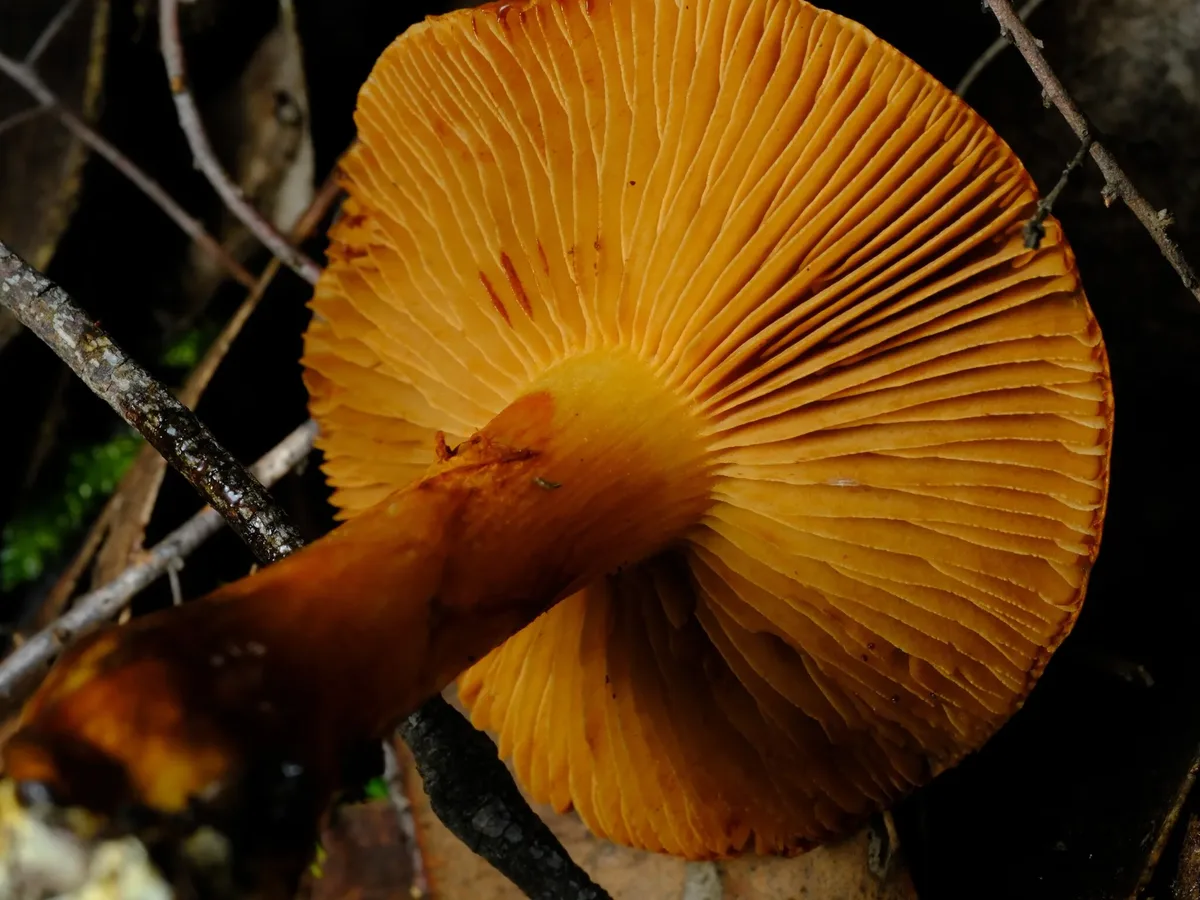 © Peter Crowcroft (CC BY)
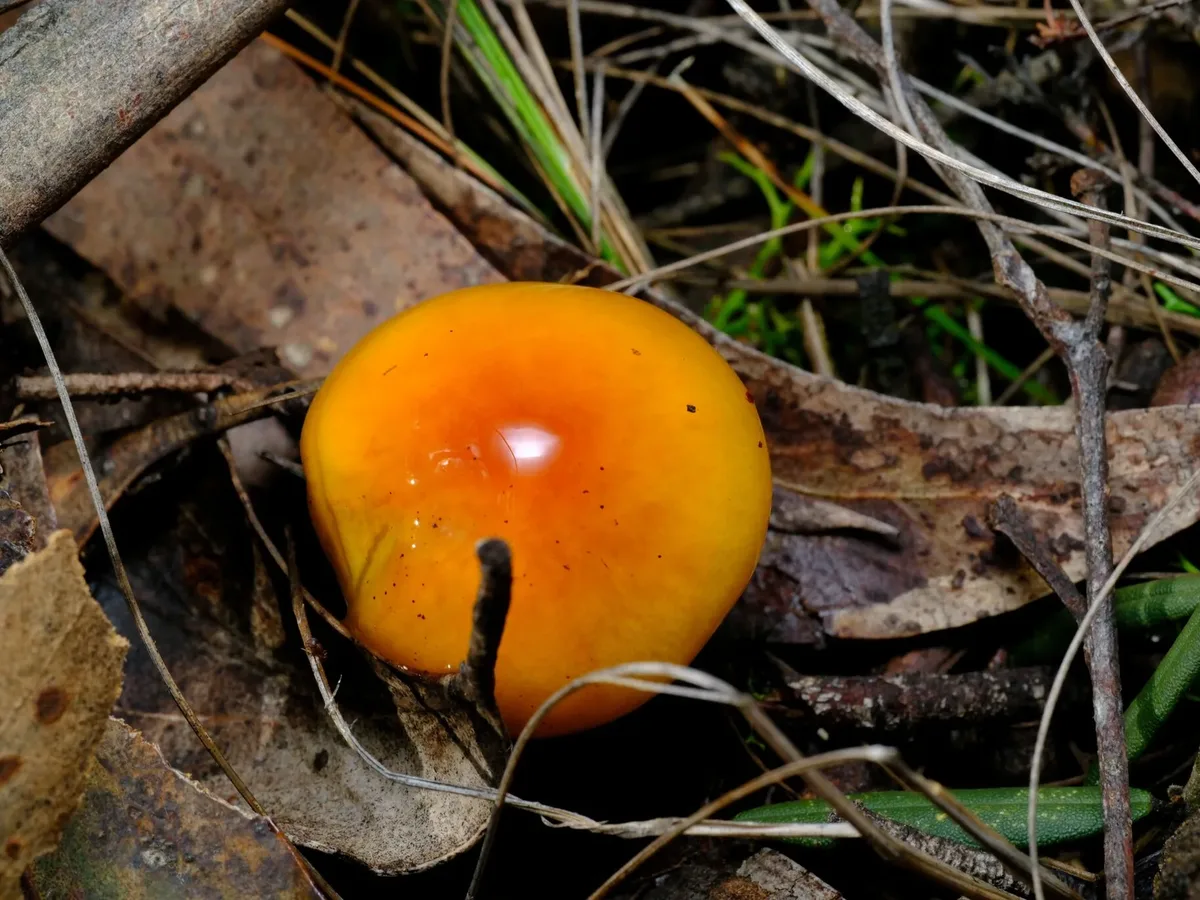 © Peter Crowcroft (CC BY)Eileen Laidlaw (CC0)© Beau Meister (CC BY)
Toxic - and the most serious cases can be fatal. Never eat it, and wash your hands after handling.
Never eat a mushroom you are not 100% sure of - check the look-alikes below, and always cook wild mushrooms.
How to recognise it
The name says it all: sinapicolor is Latin for mustard-coloured, and the cap really does carry that distinctive yellow-ochre to golden-brown hue.
Cap
Vivid and slick when wet, it turns duller and slightly paler once it dries. In wet conditions the surface is genuinely glutinous, sticky enough to pick up leaf debris. The cap opens convex and settles into a broadly umbonate shape, rarely fully flat.
Gills
Gills start pale ochre-buff in young specimens and gradually shift to the characteristic rust-cinnamon-brown that marks every Cortinarius as the spores ripen.
Stem
The stem is pale yellowish to ochre with a silky, fibrillose surface and a slightly swollen, club-shaped base.
The most important field feature to confirm you are looking at a Cortinarius is the cortina: a fine cobwebby veil of threads spanning from the cap margin to the upper stem in fresh, young specimens. In C. sinapicolor it is whitish to pale ochre.
As the cap expands the cortina breaks apart, but it leaves a telltale rust-brown dusting on the upper stem where falling spores accumulate - a mark that persists long after the threads themselves have gone.
The spore print is rust-brown, another genus-defining character. No other slimy-capped ochre mushroom in Australasian native forest combines a cortina remnant zone on the stem with a rust-brown spore print.
Why it's dangerous
POTENTIALLY FATAL. Any Cortinarius in Australasian native forest should be treated as a potentially deadly species capable of causing irreversible kidney failure.
Confirmed deadly Australian webcaps (C. archeri, C. australiensis) fruit in the same habitat and season as C. sinapicolor and may co-occur at the same sites.
The extreme latency of orellanine poisoning - up to three weeks - means that by the time a victim presents to hospital, substantial kidney damage may already be established, and the treating team must work backwards to identify the cause from a meal eaten weeks earlier.
There is no antidote. The risk-to-benefit ratio for eating any Australasian Cortinarius species is unacceptable; this species should be photographed and left in place.
Toxin
Orellanine (presumptive, based on genus and geographic range).
Orellanine is a polypyridine N-oxide compound that acts as a selective nephrotoxin, damaging the proximal tubule cells of the kidneys through generation of reactive oxygen species and interference with cellular metabolism.
It is heat-stable and not inactivated by cooking. Related compounds orelline and orellinine may co-occur.
The attribution of orellanine to C. sinapicolor specifically is based on its membership in the Cortinarius genus in a geographic region where multiple confirmed orellanine-bearing species occur in identical habitats - the precautionary principle fully justifies treating this species as carrying the same toxin until exclusion is demonstrated analytically.
Symptoms
Orellanine nephrotoxicity follows a characteristically long and deceptive latency period of 2 days to 3 weeks between ingestion and the onset of symptoms.
This delay is longer than for most other mushroom toxins and is the principal reason orellanine poisonings are so dangerous: by the time kidney damage manifests, the patient has typically forgotten or dismissed the meal, making diagnosis extremely difficult.
Early symptoms include intense thirst, frequent urination, nausea, headache, and a burning sensation in the mouth and throat.
These progress to vomiting, muscle pain, severe fatigue, and eventually reduced urinary output (oliguria) as kidney function deteriorates.
In severe cases, acute renal failure requiring haemodialysis and, in the worst outcomes, permanent kidney failure requiring long-term dialysis or transplantation, may result. There is no specific antidote.
Staying safe
DO NOT EAT. Cortinarius sinapicolor is a webcap (Cortinarius) occurring in Australasian native forests where confirmed deadly orellanine-bearing species are present.
The genus Cortinarius in Australia and New Zealand contains multiple species with documented and suspected orellanine nephrotoxicity. Until C. sinapicolor has been comprehensively tested across its entire range, the only safe assumption is that it carries the same risk as its confirmed deadly congeners.
Orellanine poisoning is particularly treacherous because of its delayed onset: symptoms of kidney failure may not appear until 2 days to 3 weeks after ingestion.
If you have consumed any Cortinarius species in the past three weeks and are experiencing unusual thirst, reduced urination, nausea, or fatigue, seek emergency medical care immediately and inform the treating team.
- Australia: Poisons Information Centre 13 11 26
- New Zealand: National Poisons Centre 0800 POISON (0800 764 766)
Where & when it grows
Habitat
Cortinarius sinapicolor lives in genuine partnership with its host trees, threaded into the root tips of Nothofagus and eucalypts through a mycorrhizal relationship that has likely run for longer than any individual fruiting body has existed.
It cannot grow without a living host and will never be found in open grassland, compost, or rotting wood.
The characteristic setting is deep leaf litter and moist humus beneath a closed native-forest canopy - often on slopes or gully margins that hold moisture well after rain.
Because the underground network persists between seasons, fruiting bodies may reappear at the same spot year after year, a sign of the stable web beneath the surface. This tight link to undisturbed native forest means the species is not encountered outside genuine native bush.
When
A southern hemisphere autumn species, fruiting broadly from March through June with peak abundance in April and May.
The trigger is the arrival of sustained autumn rain combined with cooling soil temperatures - typically after 20 mm or more of rainfall over one to two weeks once soils drop below about 15 °C.
Expect a lag of one to two weeks between that rain event and the appearance of mature fruit bodies.
The season does not extend into summer; hot, dry conditions stop fruiting entirely. In the high-rainfall montane forests of New Zealand's South Island and Tasmania, fruiting can occasionally push into June or early July.
How it grows
Fruit bodies appear singly or in small scattered groups rather than in dense clusters.
Young buttons are enclosed by both an outer universal veil - which may leave faint ochre patches at the cap margin and stem base - and the inner cobwebby cortina.
Growth is relatively unhurried compared to many saprotrophic fungi, reflecting the mycorrhizal lifestyle: nutrients are translocated from the host tree rather than drawn directly from the substrate.
Fruiting conditions
Southern Hemisphere autumn species; fruiting triggered by sustained autumn rainfall (20+ mm over 14 days) and falling soil temperatures below 15 °C, with a 7-14 day lag before mature fruit bodies appear. Peak April-May in New Zealand and southeastern Australia. Derived from standard Cortinarius ecology and the known season.
Look-alikes
Several species present realistic confusion risks.
The most dangerous confusion is with other viscid-capped Cortinarius species in the same habitat, particularly C. australiensis and C. archeri - both confirmed orellanine-bearing species capable of causing permanent kidney failure or death.
Among non-Cortinarius confusion:
- The slippery jacks (Suillus spp.) can appear superficially similar in colour but have pores (not gills) on the underside and are typically associated with introduced pines.
- Hygrophorus species can be yellowish and viscid but are typically smaller, slimmer, and have waxy, widely spaced gills without a cortina.
- Some Phaeocollybia species are ochre-brown and viscid but have deeply rooting stems and occur in different microhabitats.
The definitive features that identify any webcap:
- 1Rust-brown spore print
- 2Remnant cortina zone on upper stem
- 3Mycorrhizal native-forest habitat
Any ochre-yellow, slimy-capped, gilled mushroom bearing these three features in Australasian native bush must be treated as potentially deadly.
Confirmed deadly orellanine-bearing Australasian species distinguished by its deep violet-purple coloration. Less likely to be confused with the mustard-yellow C. sinapicolor, but both share the rust-brown spore print, cortina remnants, native-forest habitat, and autumn season. Both are deadly. Any Cortinarius in Australasian native bush must be treated as potentially fatal.
A closely related Australasian webcap confirmed to contain orellanine. May appear similar in ochre-buff to pale violet-brown tones; distinguished from C. sinapicolor by less pronounced mustard-yellow cap coloration and often more violet hues when young. Both share the rust-brown spore print and cortina remnants. In the field, species-level separation is not reliably possible without microscopy. Both must be treated as deadly.
Australasia hosts a large diversity of Cortinarius species, many undescribed or poorly characterised toxicologically. All share the rust-brown spore print and cortina character. Species-level identification within the genus requires microscopy and in many cases molecular analysis. All Cortinarius in Australasian native forest must be treated as potentially deadly regardless of colour or morphology.
A yellow-capped, viscid Hygrophorus associated with larch (Larix). Shares the slimy ochre-yellow cap but has widely spaced, waxy, decurrent gills (never rusty-brown at maturity), a white spore print, no cortina, and is associated with Larix trees rather than native Australasian forest. A white spore print and the absence of any cobwebby cortina zone are the decisive separating features.
Suillus species are boletes with a spongy pore layer on the underside of the cap instead of gills - this single feature immediately rules out any Cortinarius confusion. Suillus is typically associated with introduced pine plantations, not native Nothofagus or eucalypt forest. The glutinous cap of S. luteus may superficially resemble a wet Cortinarius, but the pore surface and pine habitat separate them absolutely.
A reference guide - never an edibility guarantee. When in doubt, leave it out.