Elegant blue webcap
Cortinarius rotundisporussyn. Cortinarius rotundisporus Cleland & Cheel
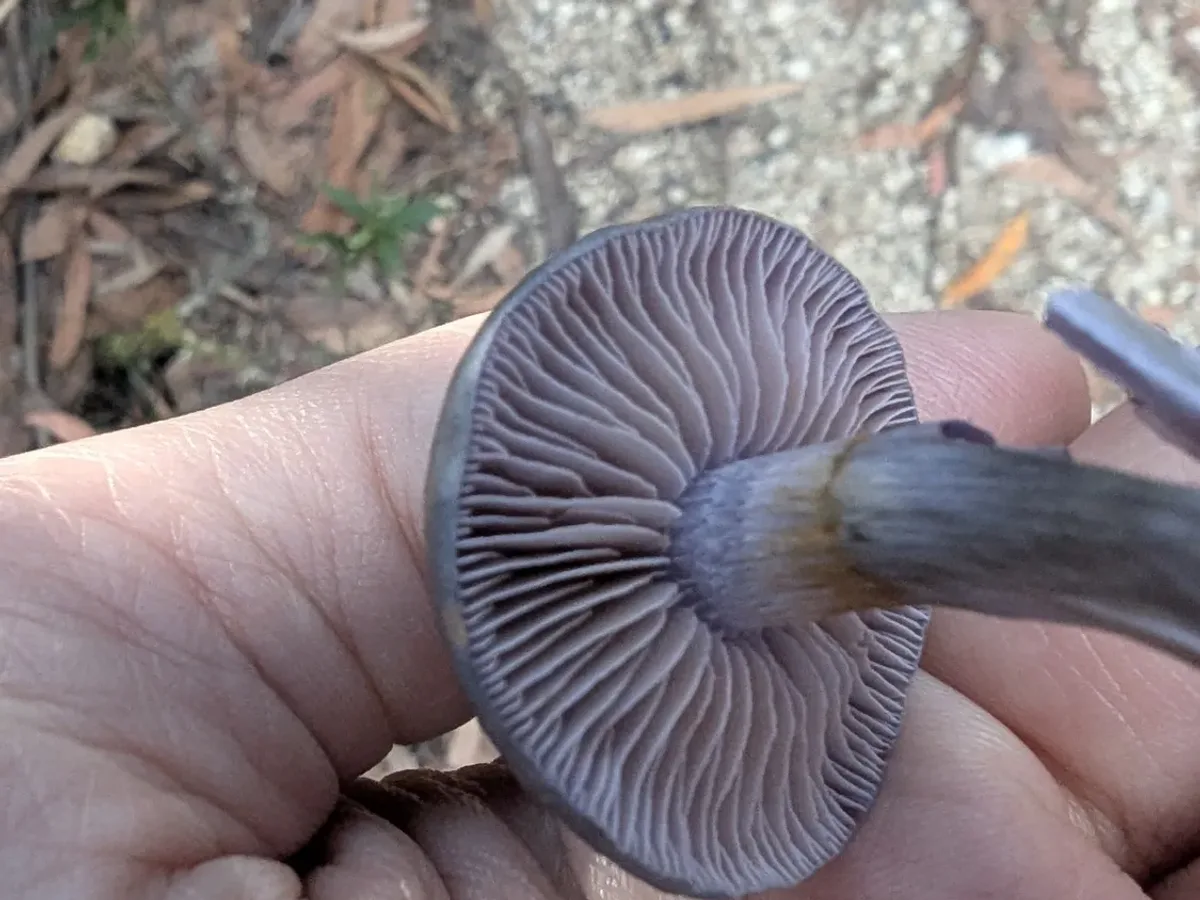 © Alesha Teitzel (CC BY)
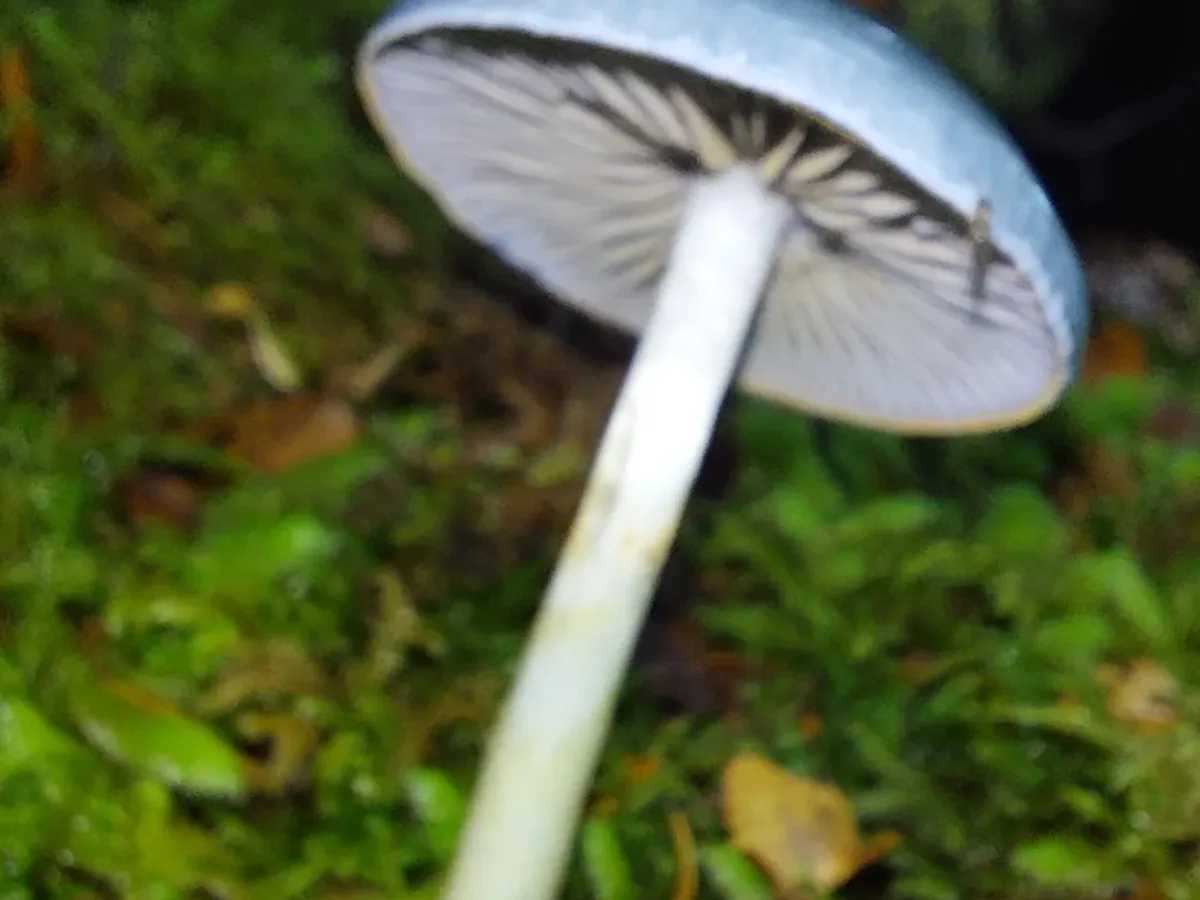 © Brendan Costello (CC BY)
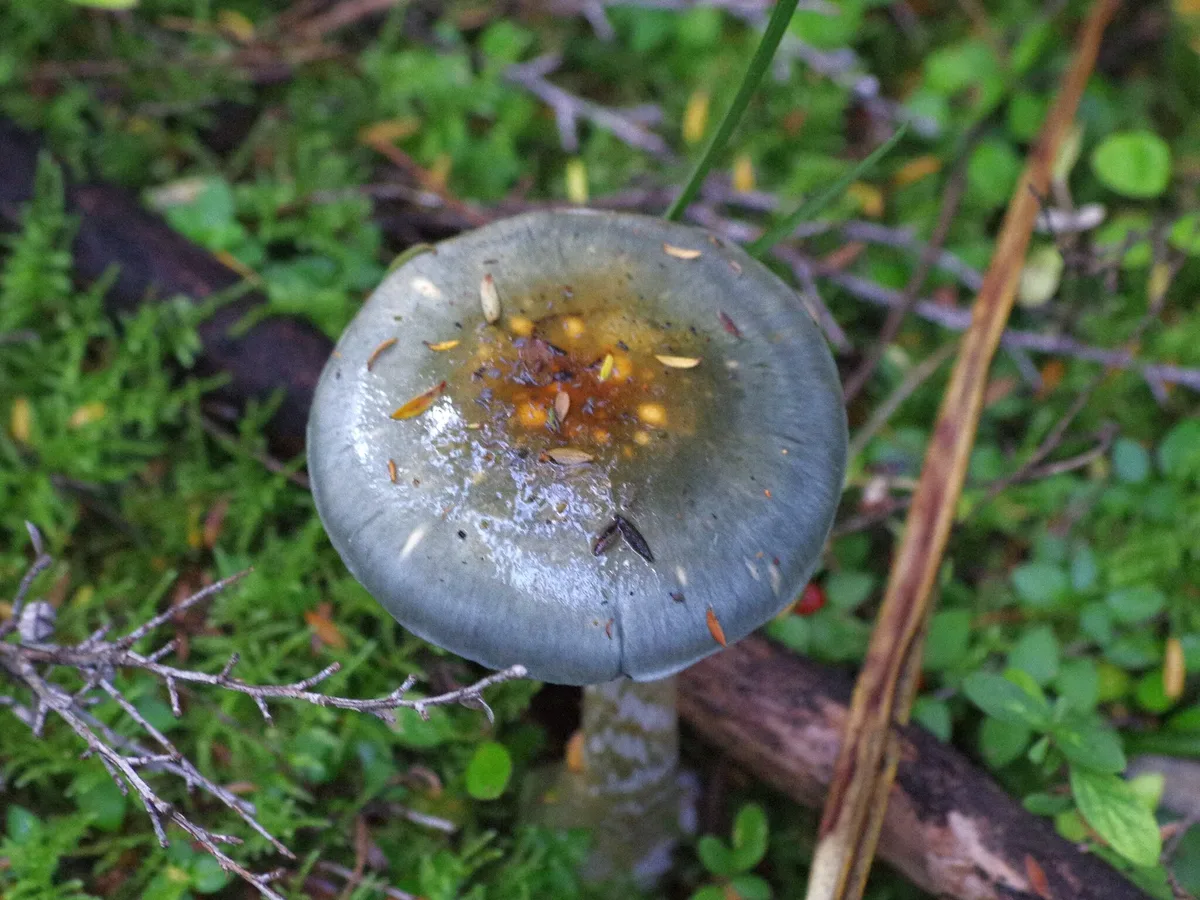 © Stewart Armstrong (CC BY)
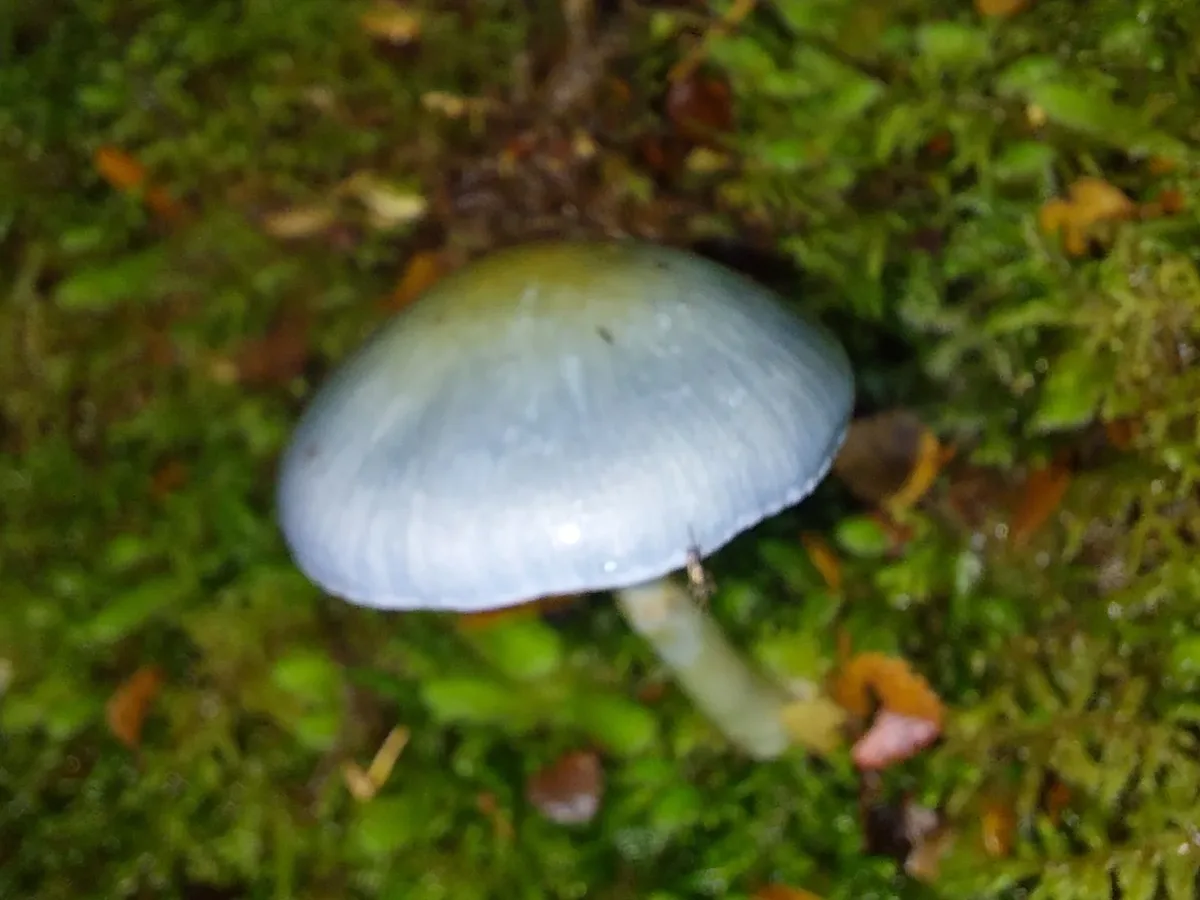 © Brendan Costello (CC BY)
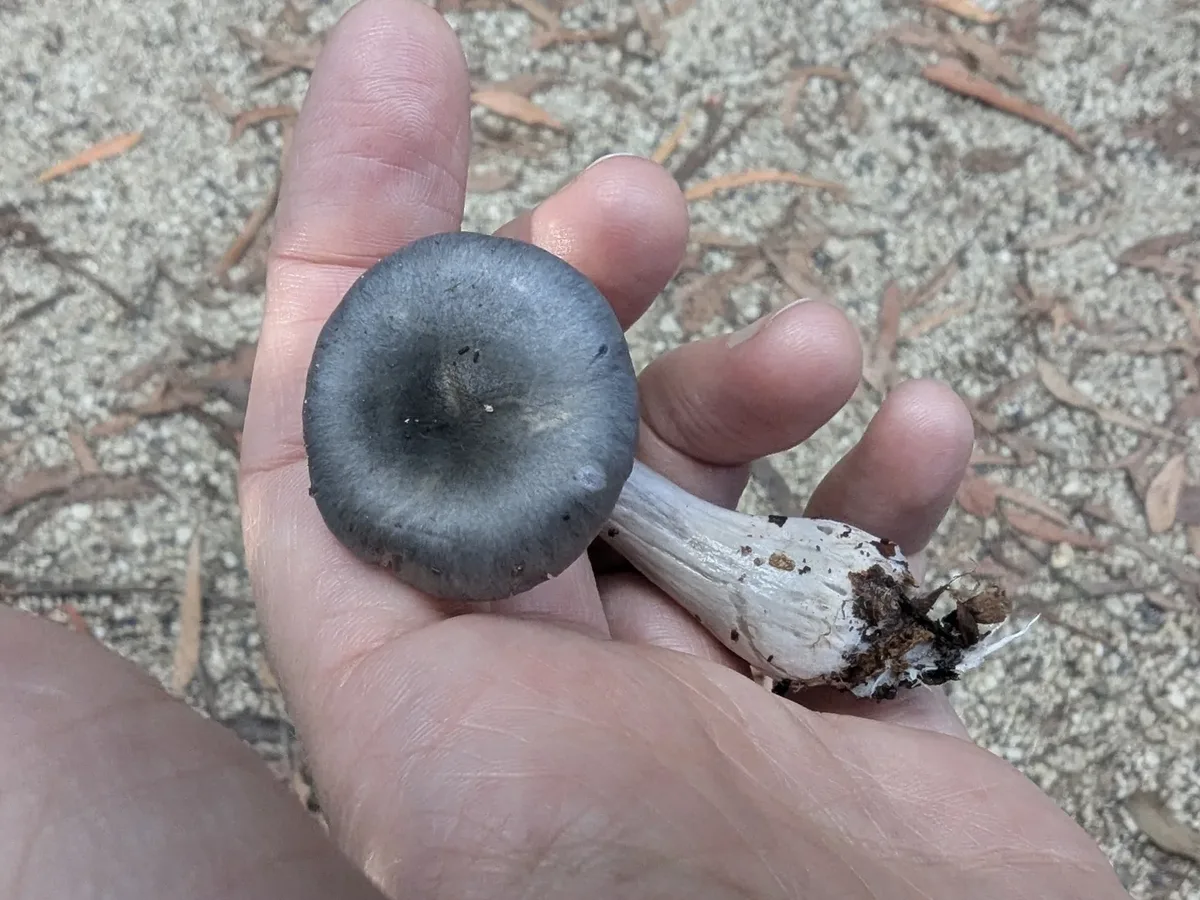 © Alesha Teitzel (CC BY)
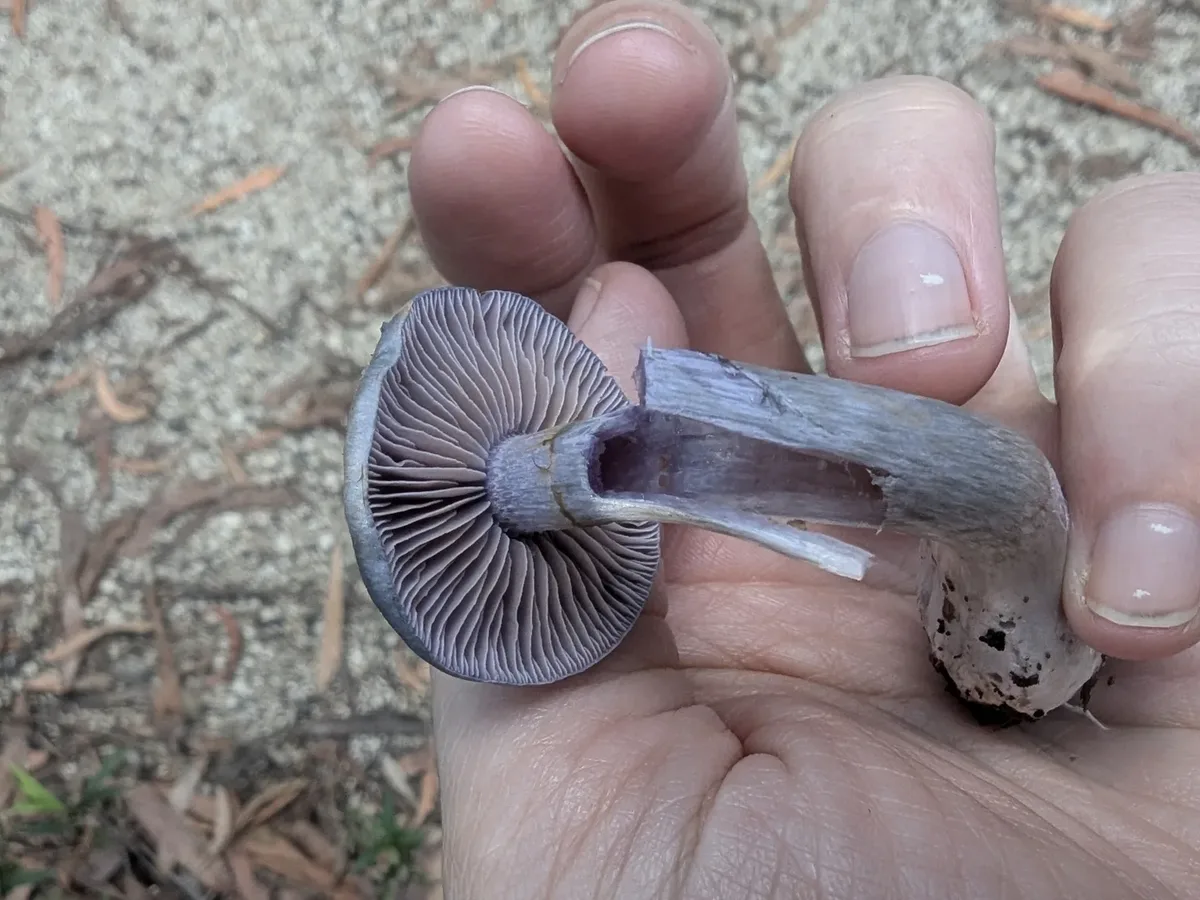 © Alesha Teitzel (CC BY)© Alesha Teitzel (CC BY)© Brendan Costello (CC BY)
Toxic - and the most serious cases can be fatal. Never eat it, and wash your hands after handling.
Never eat a mushroom you are not 100% sure of - check the look-alikes below, and always cook wild mushrooms.
How to recognise it
Cortinarius rotundisporus is distinguished among Australian webcaps by a conspicuous blue to violet-blue coloration of the cap and stem when fresh, combined with the characteristic genus features of a cobwebby cortina and a rusty-brown spore print.
Cap
The cap progresses from a tight hemisphere to broadly convex or nearly flat. The blue-violet surface colour - most vivid in young specimens - fades to dull blue-grey or brownish-lilac with age and drying.
Gills
The gills begin violet-blue and reliably transform to rusty cinnamon-brown as spore maturation proceeds, which is a hallmark of the entire Cortinarius genus: any gilled mushroom with a rusty-brown spore print and cobwebby partial veil is a webcap.
Stem
The stem is fibrillose and blue-violet. The cobweb-like cortina is most visible in young specimens, stretched between the cap margin and upper stem; its collapsed remnant leaves the diagnostic rust-stained zone on the stem.
Flesh
Flesh is pale violet to bluish-white and does not bleed or change colour when cut.
The specific epithet refers to the notably rounded spores (broadly ellipsoid to subglobose), a microscopic character relevant to expert-level identification.
Why it's dangerous
FATAL. Cortinarius rotundisporus must be treated as a deadly poisonous mushroom.
The Australasian Cortinarius complex is documented to contain orellanine-class nephrotoxins, and no reliable method exists in the field to distinguish toxic from non-toxic webcaps.
The extreme latency period of orellanine poisoning means that significant kidney damage has typically accumulated before any symptoms point to the cause.
There is no specific antidote to orellanine; treatment is supportive care and haemodialysis, and in severe cases kidney transplantation has been required.
The combination of high toxin potency, heat stability, and long latency makes this among the most dangerous classes of mushroom poison known.
If ingestion of any Cortinarius is suspected - even weeks previously - emergency medical care must be sought immediately without waiting for symptoms.
Toxin
Cortinarius rotundisporus is treated as an orellanine-bearing webcap, consistent with the known toxicology of Australasian Cortinarius species.
Orellanine (a polypyridine N-oxide nephrotoxin) has been confirmed in multiple Australian and New Zealand Cortinarius species, including the closely related C. archeri and C. australiensis. It is heat-stable and is not destroyed by any standard cooking or food preparation method.
In the body it undergoes metabolic conversion to nordihydroorellanine and related compounds that produce selective destruction of renal proximal tubule cells, leading to progressive and potentially irreversible kidney failure.
The specific analytical toxin data for C. rotundisporus are limited in the published literature. But the precautionary principle - universally adopted by mycological authorities for Australasian Cortinarius species - mandates treating it as carrying full orellanine-class risk.
Symptoms
Orellanine nephrotoxicity is characterised by a severely delayed onset. The latent period between ingestion and the appearance of symptoms is typically 2 to 3 weeks, with a documented range of a few days to over a month.
This extreme delay is the defining and most treacherous characteristic of orellanine poisoning: the victim may feel entirely well for weeks, during which time progressive renal tubular necrosis is developing asymptomatically.
When symptoms eventually emerge they include:
- intense thirst
- increased urination progressing to decreased urination
- nausea
- vomiting
- headache
- severe fatigue
- lower back or flank pain
- anorexia
These progress to frank signs of acute kidney injury and, if untreated, end-stage renal failure.
The delay in onset also severely complicates diagnosis, because physicians may not be told about a mushroom meal consumed several weeks previously.
Staying safe
DO NOT EAT. Cortinarius rotundisporus is a deadly poisonous species.
Its orellanine-class toxin is heat-stable and not inactivated by cooking, drying, freezing, or any other food preparation technique.
The latency of up to three or more weeks before symptoms appear makes it uniquely dangerous: a forager can eat this mushroom, feel fine for weeks, and not recognise the causal link when kidney failure eventually begins.
If any Cortinarius has been consumed - or even handled with bare hands and then touched food - seek emergency medical advice from a poisons centre without waiting for symptoms:
- In Australia, contact the Poisons Information Centre (13 11 26).
- In New Zealand, contact the National Poisons Centre (0800 764 766).
Never collect, taste, or experiment with any violet or blue webcap-type mushroom in Australasian native forest.
Where & when it grows
Habitat
This species is an obligate ectomycorrhizal partner of native southeastern Australian and New Zealand trees.
In mainland Australia it fruits primarily beneath Eucalyptus and Corymbia species in moist sclerophyll forest, particularly in tall open forests with well-developed litter layers.
In Tasmania and New Zealand it may associate with Nothofagus (southern beech) in montane and cool-temperate zones.
Its habitat is always undisturbed or lightly disturbed native bush - it does not colonise introduced plantations, recently cleared regrowth, or gardens. The soil is typically acidic and rich in organic matter.
A violet or blue webcap found in native Australian forest should be assumed to be this or a closely related dangerous species until definitively identified by a specialist.
When
Fruiting occurs in the Southern Hemisphere autumn and early winter, broadly from March to July, with the peak typically in April-May.
The fruiting trigger is the arrival of significant autumn rainfall combined with cooling soil temperatures as summer heat dissipates. Practically, fruiting tends to follow 20-30 mm of rain over a one- to two-week period when soil temperatures are falling through the 10-16 °C range.
In wetter mountain environments and in New Zealand, fruiting can persist into June or July. The species is not found in summer.
How it grows
As an obligate ectomycorrhizal species, Cortinarius rotundisporus cannot grow without a living host tree. It forms a long-term underground mycelial network with host tree roots.
Fruiting bodies emerge from this established mycelium, appearing singly or in small scattered groups - typically one to five at a time at any given site. Dense clustering is not characteristic.
Because the mycelial network is perennial, the same location may produce fruit bodies in multiple successive years under suitable conditions.
The visible mushroom is only the reproductive structure; the underground fungal-tree partnership accounts for the bulk of the organism's biomass and longevity.
Fruiting conditions
Southern Hemisphere autumn species. Fruiting triggered by post-summer cooling (soil temperatures falling below ~16 °C) combined with substantial autumn rainfall (20+ mm over 14 days). Typical flush lag 10-21 days after triggering rain event. Peak April-May; may extend to June-July at wetter or higher-altitude sites.
Look-alikes
The most dangerous confusion is with other Cortinarius species in the same habitat. Violet-blue webcaps including C. archeri (confirmed deadly, orellanine) share the same habitat, season, coloration, and rusty-brown spore print.
Expert mycological analysis, not field identification, is required to distinguish them reliably, and all carry equivalent risk.
Other violet-toned mushrooms can be told apart by clear features:
- Laccaria amethystina (amethyst deceiver), edible, is also violet-purple but is dramatically smaller (cap 1-5 cm), has a white spore print (not rusty brown), lacks any cortina entirely, and has widely spaced, thick, waxy gills that retain their purple colour at maturity without browning - these are absolute distinguishing features. The absence of a cobwebby cortina and the white spore print rule out Cortinarius completely.
- Various Inocybe species may be pale violet to lilac but are typically smaller, lack the blue-violet tones, and produce brownish (not rusty-orange) spore prints.
- Gymnopilus species share the rusty spore print and cortina but are yellow-orange to tawny rather than blue-violet.
No colour variant of any safe edible species reliably matches a blue-violet Cortinarius in Australasian native forest.
C. archeri is similarly violet-purple to blue-violet in the same native Australian and New Zealand forest habitat and season. Both species have rusty-brown spore prints and cobwebby cortinae. Confirmed to contain orellanine. Field separation of these two species is extremely difficult and carries no practical safety benefit: both are deadly and must be avoided entirely.
C. australiensis overlaps in habitat and season, tending toward paler ochre-brown to violet-brown rather than the distinctive blue tones of C. rotundisporus, but colour variation within both species makes field separation unreliable. Both carry orellanine-class risk. Treat any webcap in the relevant habitat as potentially deadly.
Numerous Australian and New Zealand Cortinarius species share violet, blue, or lilac coloration with a rusty-brown spore print and cobwebby cortina. The majority have not been fully characterised toxicologically. Given the confirmed orellanine content of multiple Australasian species in this genus, all such webcaps in native Australasian forest must be treated as deadly. Species-level identification requires microscopy and chemical analysis by a specialist.
Much smaller overall (cap 1-5 cm), with a white spore print rather than rusty brown, widely spaced thick waxy gills that remain purple at maturity without developing rust-brown tones, and absolutely no cobwebby cortina at any stage of development. These three features - white spore print, persistent purple gills, no cortina - absolutely exclude Cortinarius. L. amethystina is edible, but any confusion with a blue Cortinarius would be potentially fatal; always confirm all three separating features before eating any purple mushroom in native Australasian forest.
A reference guide - never an edibility guarantee. When in doubt, leave it out.