Cortinarius pseudoxiphidipus
Cortinarius pseudoxiphidipus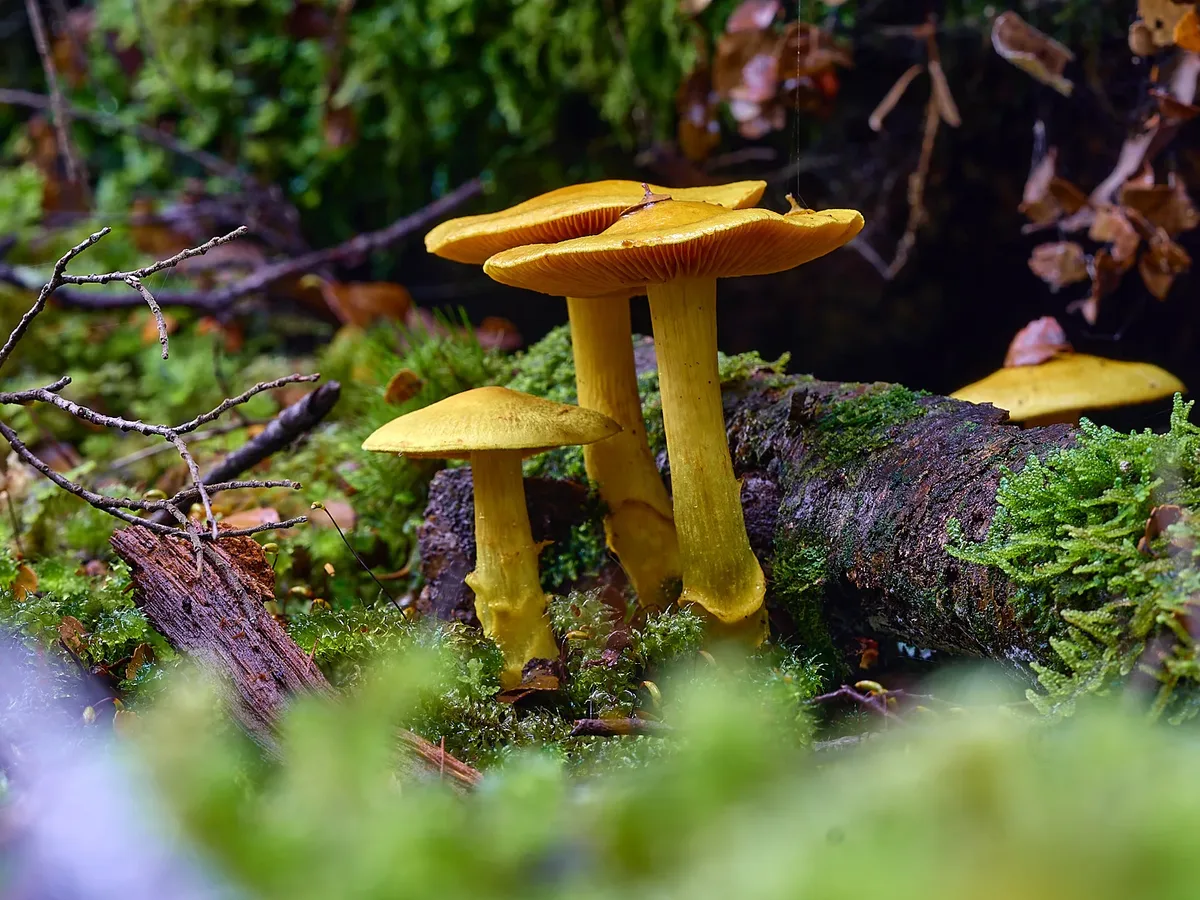 Atlas of Living Australia (CC0)
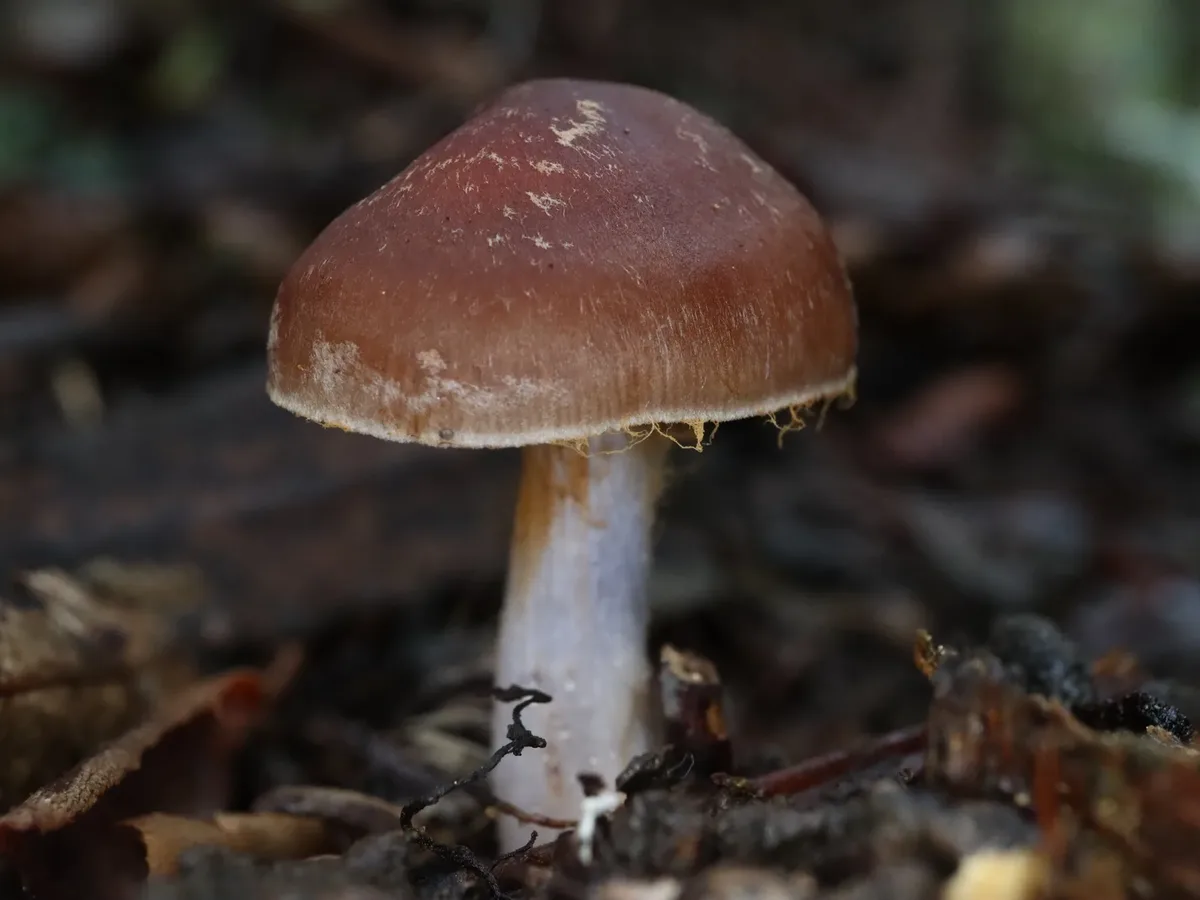 Atlas of Living Australia (CC0)
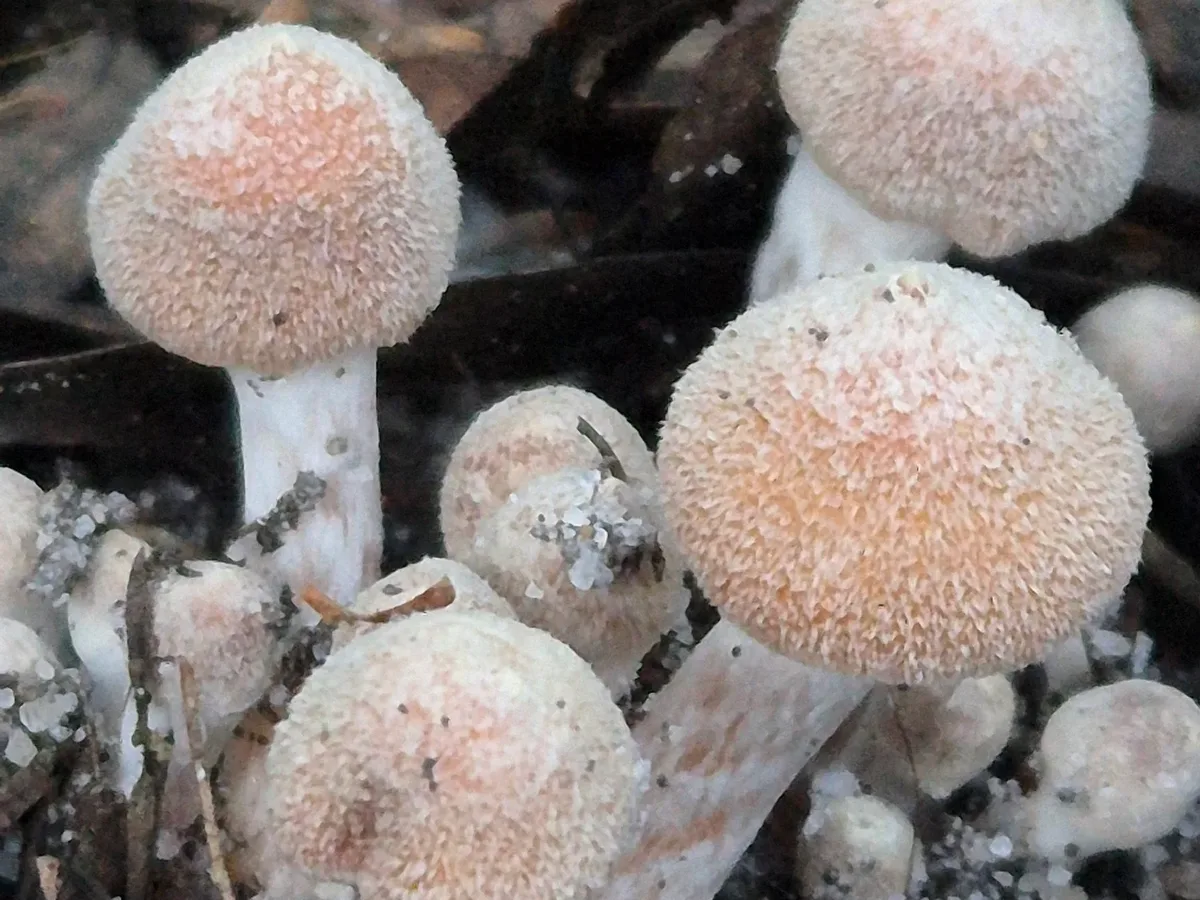 Atlas of Living Australia (CC0)Atlas of Living Australia (CC0)Atlas of Living Australia (CC0)
Edible only with the right preparation - or safe for some people but not others. Learn the caveats first.
Never eat a mushroom you are not 100% sure of - check the look-alikes below, and always cook wild mushrooms.
How to recognise it
Cortinarius pseudoxiphidipus is a medium-sized webcap typical of the Cortinarius genus in its fundamental architecture: the hallmark cobwebby cortina (partial veil), rusty-brown spore print, and fleshy gills that begin pale and mature progressively to rust-cinnamon brown as spores develop.
The cap surface ranges from tawny-ochre to pale cinnamon-brown, and young fresh specimens may show faint lilac or violet tints near the margin - a colour hint that can mislead a forager seeking primarily colourful webcaps, since it places this species in a visually ambiguous intermediate zone between violet webcaps and brown-capped ones.
The name 'pseudoxiphidipus' reflects its resemblance to Cortinarius xiphidipus, a related species, and confirms that even specialists working in the field recognised the potential for confusion within this group.
The cortina is most visible in young, button-stage specimens as fine silvery-buff threads; it collapses and may only leave a faint rust ring-stain on the upper stem by the time a forager handles a mature specimen.
The flesh is pale and does not change colour or exude latex when cut.
Three features together identify this as a Cortinarius beyond reasonable doubt:
- 1Rust-brown spore print
- 2Cobwebby cortina remnant
- 3Moist, fleshy habit without gills decurrent down the stem
Why it's dangerous
Cortinarius pseudoxiphidipus must not be consumed. Its toxicology is incompletely studied, and genus-level risk from orellanine is a credible and serious possibility.
In South America, the Cortinarius flora of Nothofagus forests is among the least toxicologically characterised groups of agaric fungi in any region with significant human mushroom foraging.
There is no antidote to orellanine; severe orellanine poisoning has required kidney dialysis and transplantation in documented cases involving related species.
Consuming any South American Cortinarius because a specific toxin has not been confirmed for that species is a dangerous logical error: absence of documentation is not evidence of safety.
If ingestion of any webcap is suspected, contact emergency medical services and a poisons centre immediately, even if feeling well - do not wait for symptoms.
Toxin
No specific toxin has been confirmed for Cortinarius pseudoxiphidipus in the published mycological or toxicological literature.
However, this species belongs to the genus Cortinarius, the largest genus of agaric fungi, which contains several confirmed nephrotoxic species. Their toxicity arises from orellanine, a polypyridine N-oxide compound that selectively destroys renal tubular cells.
Orellanine has been confirmed in Cortinarius species from the same Nothofagus forest biome in Australasia (C. archeri, C. australiensis) - forests that share a deep Gondwanan ancestry with the South American Nothofagus forests.
The South American Cortinarius flora is substantially understudied, and the toxin profile of most South American webcaps remains unknown.
The precautionary consensus among medical mycologists is that any unscreened Cortinarius must be presumed to carry potential nephrotoxic risk until the contrary is demonstrated. There is no reliable field method to distinguish nephrotoxic from non-nephrotoxic webcaps.
Symptoms
If orellanine-class compounds are present - as is plausible but unconfirmed for this species - the characteristic symptom profile is a severely delayed nephrotoxic syndrome. Ingestion is followed by a latent period of 2-3 weeks (range: a few days to over a month) of apparent good health, after which signs of acute renal injury emerge.
Those signs include:
- Intense thirst
- Polyuria progressing to oliguria
- Nausea
- Vomiting
- Severe fatigue
- Headache
- Flank pain
The extreme delay between ingestion and symptom onset is the most medically dangerous feature, as the patient and treating physician may not make the causal connection.
Even if the specific toxin for C. pseudoxiphidipus differs, other webcap-related GI irritants or uncharacterised compounds could cause acute gastrointestinal distress, and no symptom pattern can be assumed safe.
Staying safe
DO NOT EAT Cortinarius pseudoxiphidipus. Do not eat any unidentified Cortinarius species from South American Nothofagus forests.
The genus carries well-documented risk of potentially irreversible kidney failure from orellanine-class nephrotoxins, and the South American species in this forest type have not been adequately screened.
If any webcap has been consumed, seek emergency medical advice from a poison centre immediately, even if feeling well - the key danger of orellanine poisoning is that serious organ damage can be accumulating silently for weeks before any symptoms appear.
Poison centre contacts:
- In Chile: CITUC (Centro de Información Toxicológica, Pontificia Universidad Católica de Chile)
- In Argentina: Centro Nacional de Intoxicaciones
Do not wait for symptoms before calling.
Where & when it grows
Habitat
This species is an obligate ectomycorrhizal partner of Nothofagus trees in the southern cone temperate forests of Chile and Argentina.
The Nothofagus forest biome of southern South America is one of the southernmost temperate forests on Earth - analogous ecologically to New Zealand's beech forests - and hosts a rich endemic Cortinarius flora that is still incompletely documented.
Cortinarius pseudoxiphidipus occupies the cool, shaded interior of Nothofagus forests at mid to subalpine elevations, on moist acidic soils under deep leaf litter.
It does not grow in disturbed habitat, plantation monocultures, or parks: it requires established, living Nothofagus root systems with a mature mycelial network.
Finding this species therefore implies one is within functionally intact native forest, which has important implications for safety - other undescribed or poorly characterised Cortinarius species sharing the same habitat may be visually similar and potentially more toxic.
When
Fruiting follows the pattern common to ectomycorrhizal species in cool-temperate austral forests: it is an autumn mushroom, emerging in March through June as the austral summer warmth declines.
The primary fruiting trigger is the intersection of cooling soil temperatures (falling below roughly 14-16 °C) and significant autumn rainfall events that rehydrate the forest soil after the relatively drier summer.
In practice, a flush typically begins 10-20 days after 20-30 mm of autumn rain, once soil temperatures have stabilised in the 8-14 °C range.
At higher Andean elevations, the season may be compressed toward April-May; in wetter coastal Valdivian forest, fruiting can begin in March or persist into June.
The species is absent in summer (too warm, too dry) and does not fruit under winter snow.
How it grows
As a mycorrhizal species, Cortinarius pseudoxiphidipus is entirely dependent on living Nothofagus host trees for its nutrition. The fungus and tree exchange mineral nutrients and photosynthetically derived sugars via interlocking root-tip structures (ectomycorrhizae), forming a long-term partnership.
The perennial mycelial network persists underground across years, and visible fruiting bodies are the reproductive output of this network rather than the organism itself.
Fruit bodies emerge singly or in small scattered groups of two to six, rarely forming dense clusters. The same site can produce fruit bodies in successive years under suitable autumn conditions.
Because the mycelium is integrated into the tree root system, the species cannot be transplanted, farmed, or cultivated outside of intact forest.
Fruiting conditions
Southern Hemisphere autumn species; fruiting triggered by post-summer soil cooling (below ~15 °C) combined with 20+ mm of autumn rainfall over 14 days. Typical flush lag 10-20 days after triggering event. Peak late March through May; may extend to June at higher elevations or in wetter coastal Valdivian forest zones.
Look-alikes
Within Nothofagus forest, the most significant confusions are with other Cortinarius species that share the habitat and season. Those occurring in South American Nothofagus forests include several in the sections Phlegmacium, Telamonia, and Dermocybe, many of which are poorly characterised or undescribed.
Any tawny, ochre, or brownish-capped mushroom with a cobwebby cortina and rusty spore print in this habitat is a webcap, and the entire group should be considered suspect.
More broadly, other genera can cause confusion:
- Gymnopilus species share a rusty spore print and a faint ring-zone but tend toward vivid orange-yellow to tawny tones, and grow on wood or woody debris rather than living tree roots.
- Hebeloma species - soapy-smelling, often with a mealy odour - lack the cortina and produce pale brown rather than vivid rust-brown spore prints.
- Inocybe species are typically smaller and more fibrillose, produce pale brownish spore prints, and carry their own toxicity (muscarine).
None of these groups are safe alternatives.
Multiple Cortinarius species co-occur in South American Nothofagus forests, sharing the rusty-brown spore print and cobwebby cortina that define the genus. Many are poorly characterised and their toxicity is unknown. In the closely related Nothofagus forests of Australasia, confirmed orellanine-bearing webcaps (C. archeri, C. australiensis) are present; the South American flora shares a Gondwanan lineage that makes orellanine-bearing species a realistic possibility. Any tawny or brown webcap in this habitat should be treated as potentially deadly until comprehensively screened.
Inocybe species in the same region tend to be smaller, more strongly fibrillose-striate on the cap, lack the slimy or moist cap surface typical of Phlegmacium-type Cortinarius in wet weather, and produce a dull pale brown rather than vivid rust-orange spore print. Many Inocybe species contain muscarine and are toxic. Neither Inocybe nor Cortinarius species should be collected for food.
Hebeloma species found in the same Nothofagus habitat have a pale clay-brown to ochre cap similar in colour, but lack the true cobwebby cortina of Cortinarius (they may have a slight veil that leaves droplets on the gill edges rather than threads), emit a distinctive soapy, mealy, or radish-like odour, and produce a pale dirty-brown spore print rather than vivid rust-orange. Hebeloma species are themselves toxic and should not be consumed.
Gymnopilus junonius and related species share the rust-coloured spore print and a partial veil ring zone, but grow on dead wood or woody buried debris rather than emerging from Nothofagus root zones, tend to yellow-orange to tawny-golden rather than ochre-brown, are typically more robust, and in South America may contain psilocybin-type hallucinogens (a different toxin class). The woody substrate is the most reliable separating feature; Cortinarius pseudoxiphidipus does not grow from wood.
A reference guide - never an edibility guarantee. When in doubt, leave it out.