Cortinarius persplendidus
Cortinarius persplendidus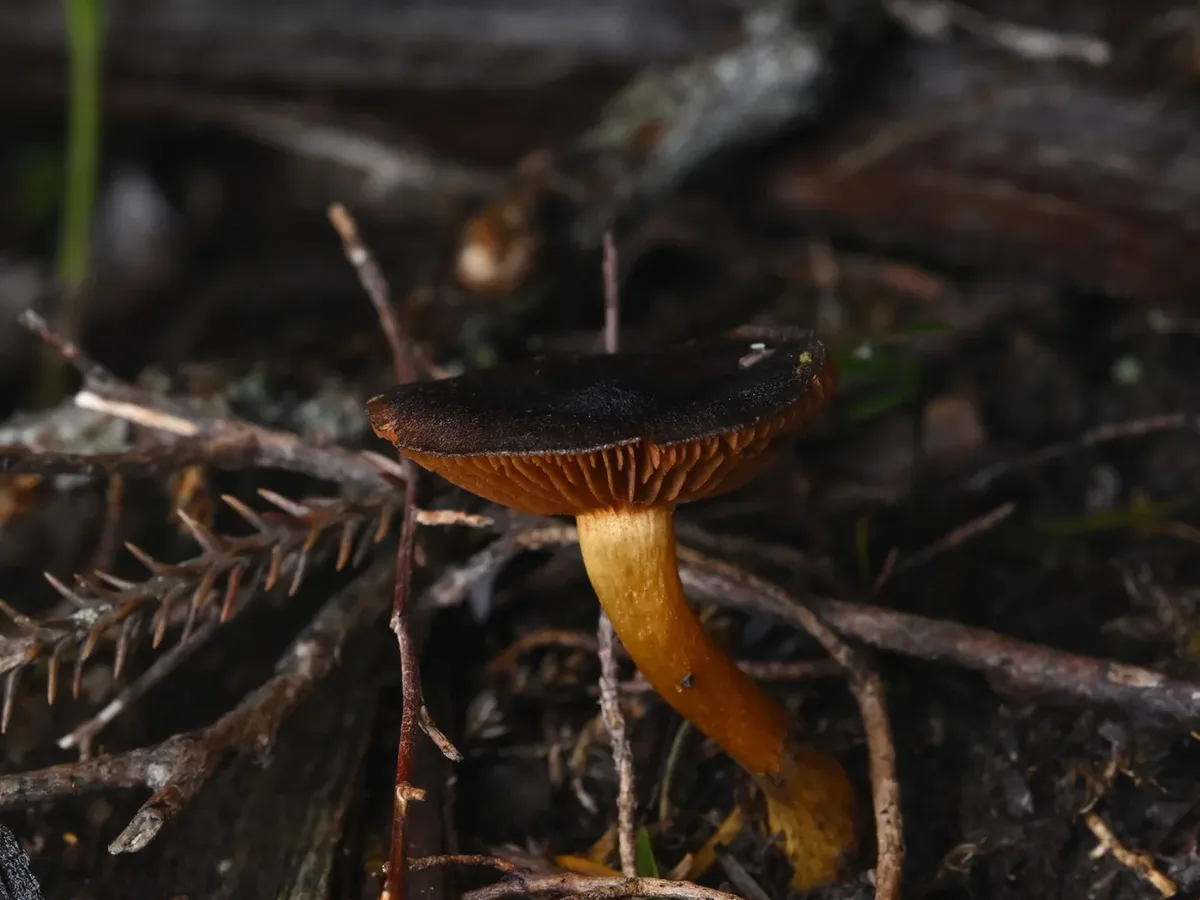 © Saryu Mae 前 朝琉 (CC BY)
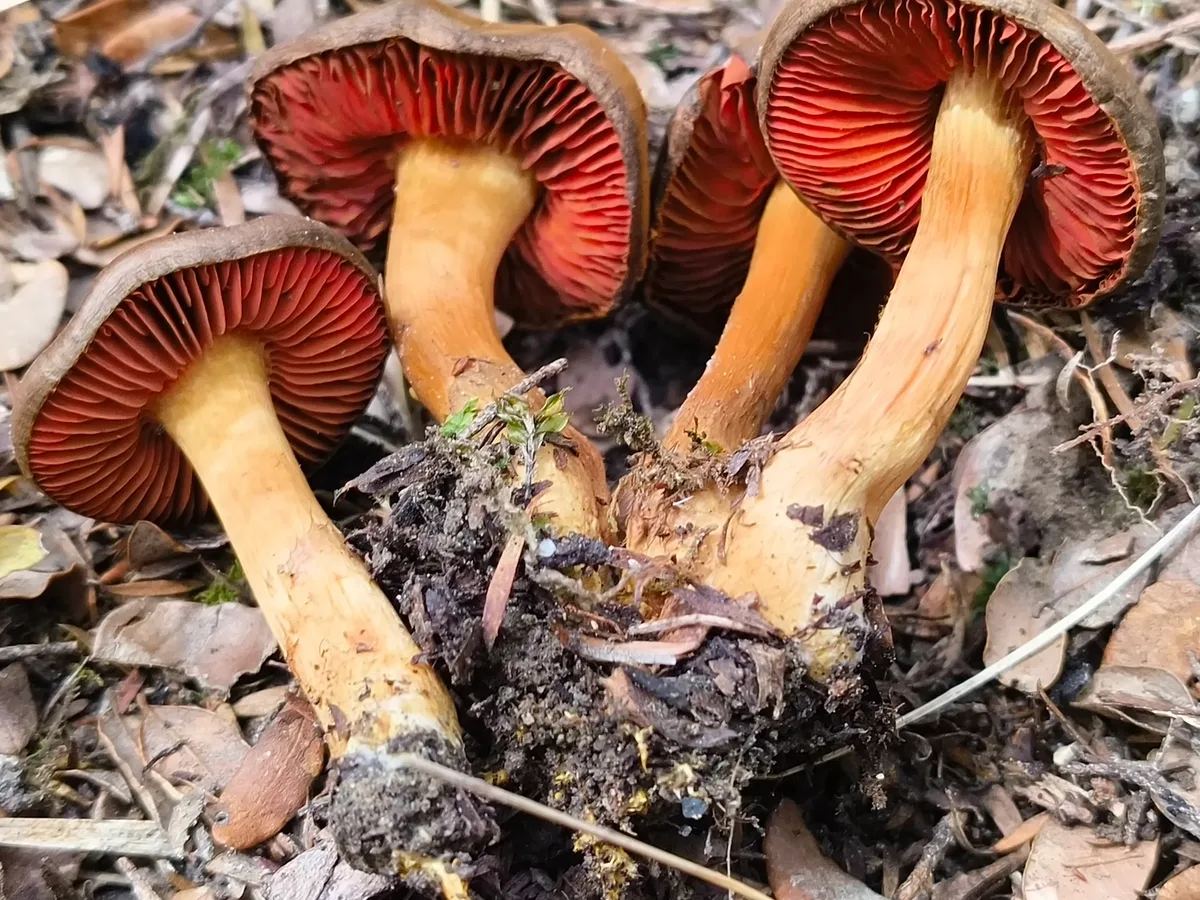 © Zac (CC BY)
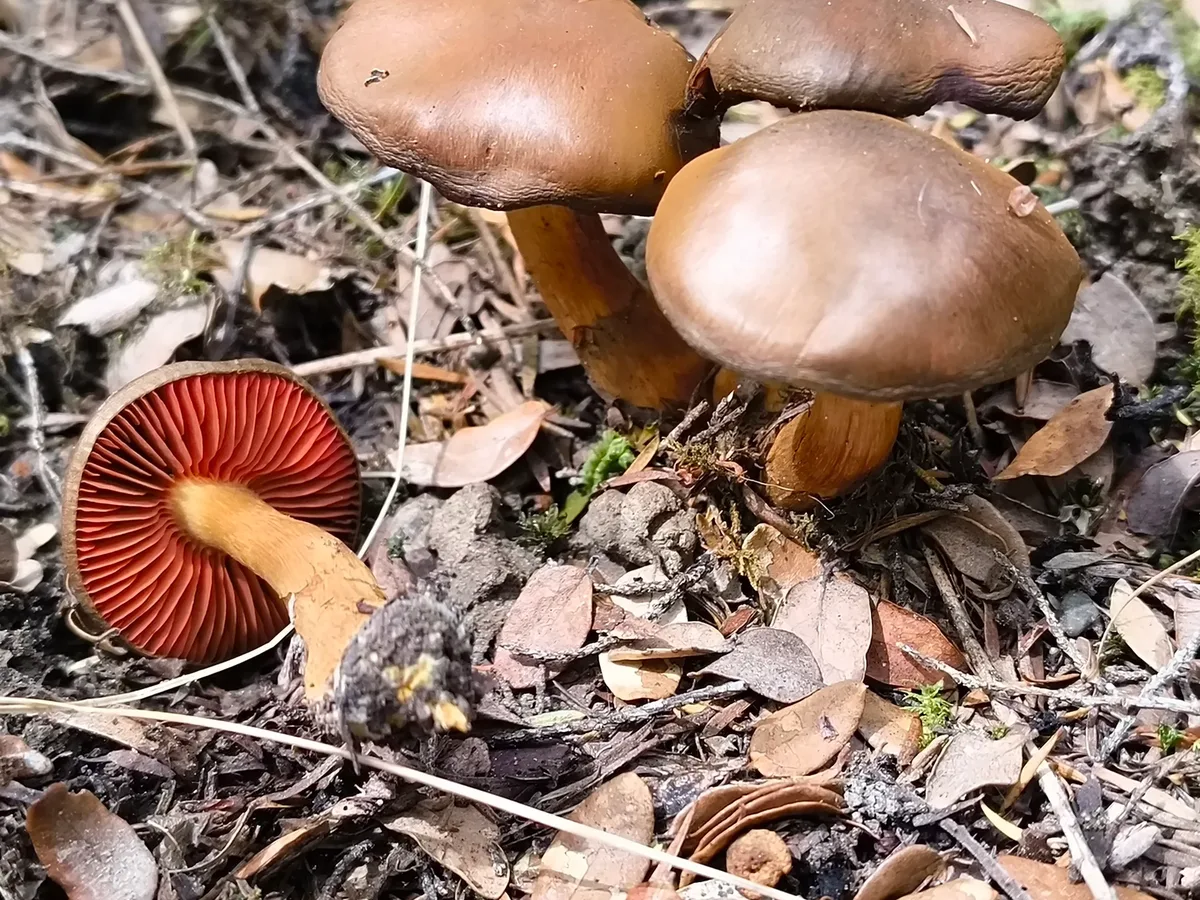 © Zac (CC BY)
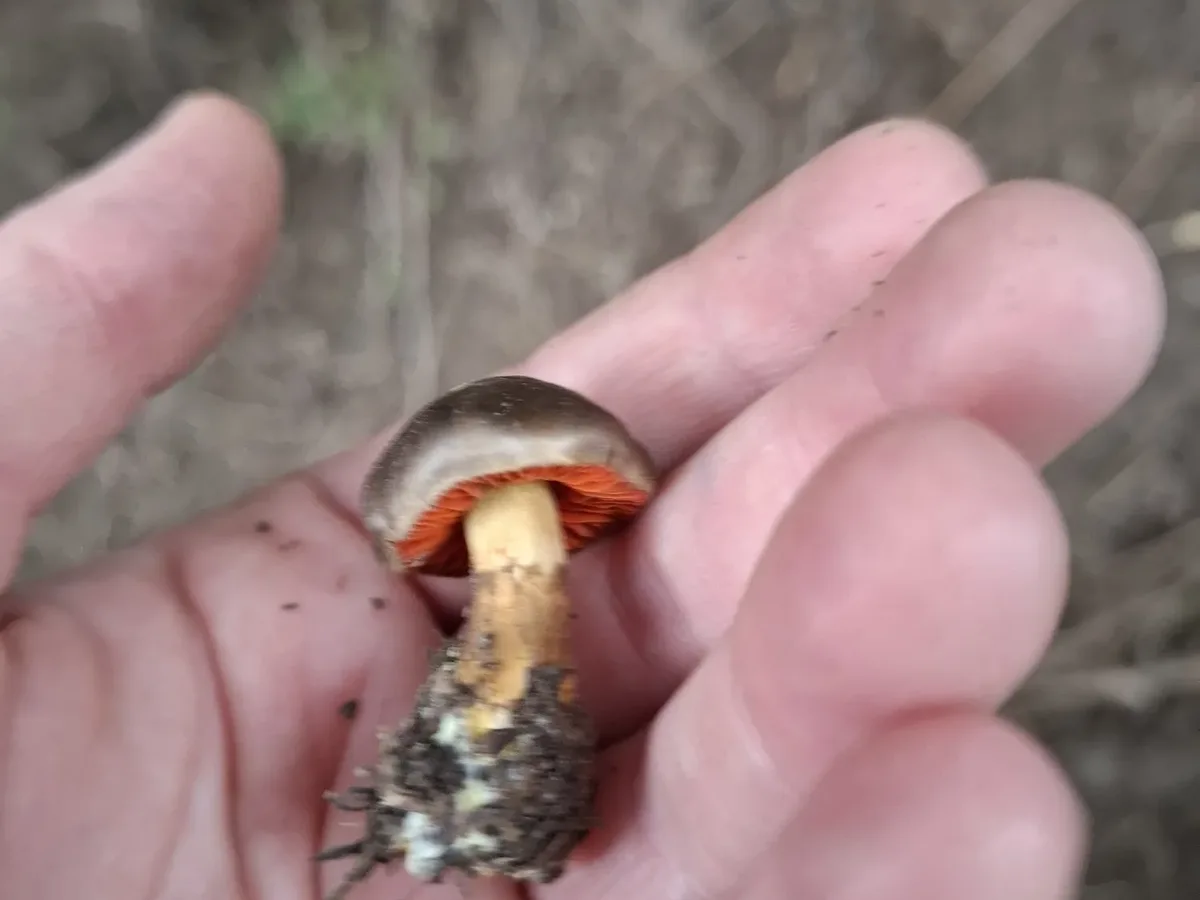 Ilaria La Bianca (CC0)
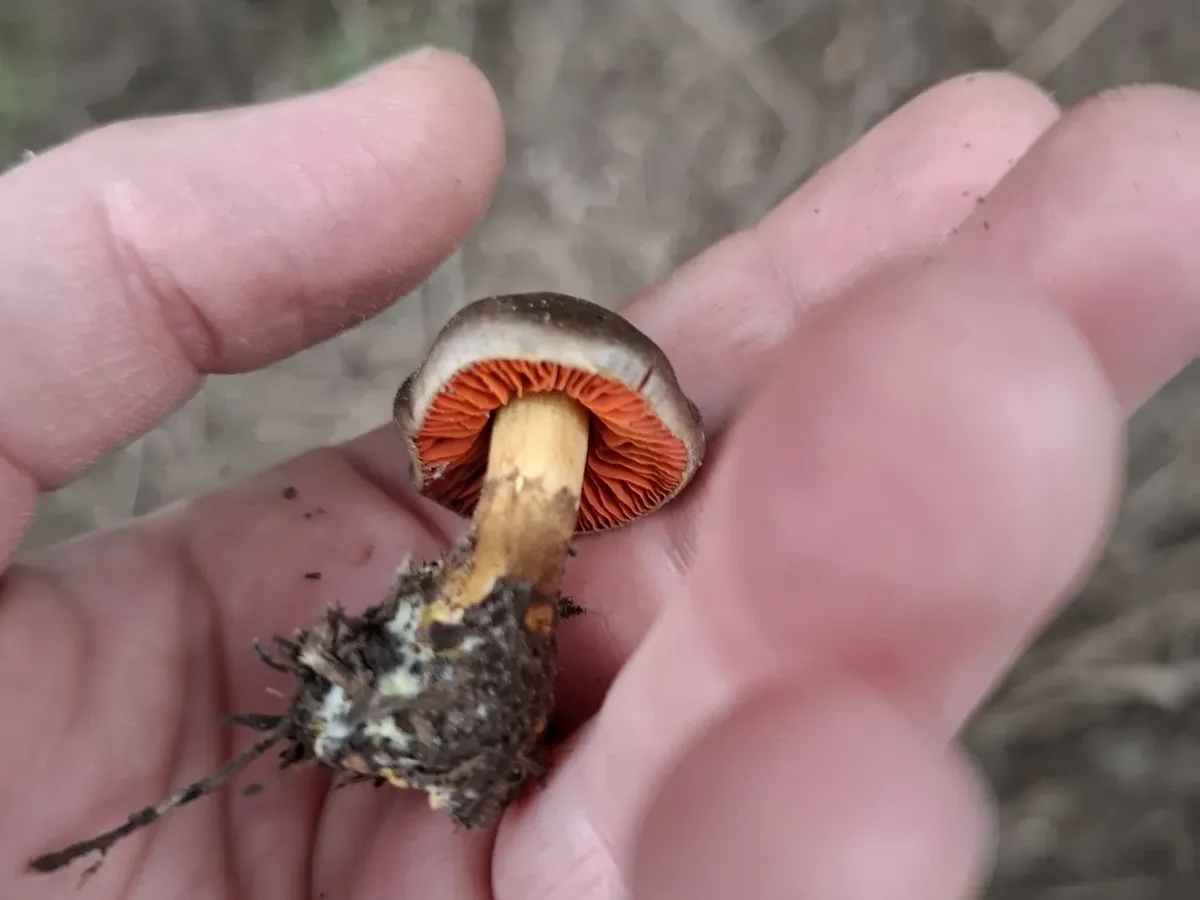 Ilaria La Bianca (CC0)
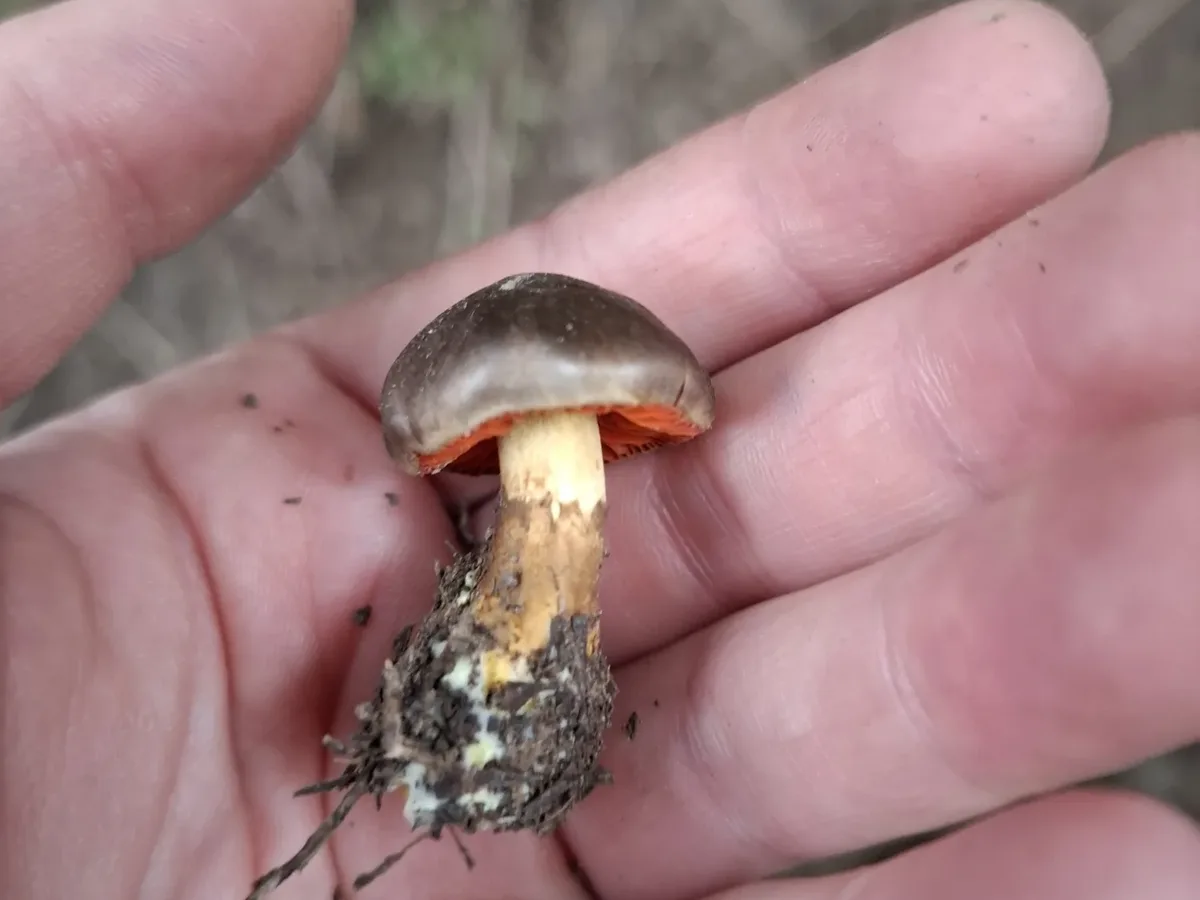 Ilaria La Bianca (CC0)© Saryu Mae 前 朝琉 (CC BY)© Zac (CC BY)
Toxic - and the most serious cases can be fatal. Never eat it, and wash your hands after handling.
Never eat a mushroom you are not 100% sure of - check the look-alikes below, and always cook wild mushrooms.
How to recognise it
Cap
Cap 5-12 cm across, convex when young and expanding to broadly umbonate or plane. Surface distinctly viscid and shining when moist - a key feature of the Phlegmacium subgenus.
Vivid violet-purple to deep bluish-violet at first, fading to pale lavender or lilac-buff from the centre outward as it dries or ages.
Gills
Gills adnate to sinuate, moderately crowded, initially pale violet then progressively rust-brown as spores mature.
Spore print rust-brown to ochre-brown; this warm rusty colour distinguishes Cortinarius from most other gilled fungi found in the same habitat.
Stem
Stem 6-14 cm tall, cylindrical to slightly club-shaped, fibrillose, pale violet with silky streaks.
The cortina - the genus's defining cobweb veil - is pale violet to whitish in young specimens and leaves rust-brown ring-zone remnants on the upper stem after collapsing.
Flesh
Flesh firm, pale violet in cap and upper stem, not bluing or reddening when cut.
Why it's dangerous
The greatest danger of orellanine-class Cortinarius species lies in the long and variable latency period between ingestion and the onset of recognisable symptoms.
Victims frequently have no memory of eating a mushroom by the time nephrotoxicity is diagnosed, and the window for supportive treatment is narrow.
The vivid violet-purple colouration of C. persplendidus may make it appear distinctive and memorable, but this same quality may give inexperienced collectors a false sense of confidence in identification.
There is no specific antidote for orellanine poisoning; treatment is supportive and may include haemodialysis.
Fatal outcomes have been documented for closely related species in Europe and North America.
Toxin
Orellanine and related orelline-type bipyridine N-oxides are selective nephrotoxins. They cause irreversible damage to the kidney's proximal tubule cells via free-radical oxidative mechanisms.
These compounds are widely distributed across Cortinarius subgenus Phlegmacium and related subgenera.
While species-specific analytical data for C. persplendidus is sparse in the published literature, the precautionary principle applied across the Australian Cortinarius complex means it must be treated as carrying equivalent nephrotoxic risk to the confirmed deadly European and New World species.
Symptoms
Orellanine poisoning has a characteristically deceptive latent period of 2 days to 3 weeks, during which the victim feels well or only mildly unwell.
When symptoms emerge, they include:
- Intense, unquenchable thirst
- Frequent urination (or, in severe cases, reduced urine output as kidneys fail)
- Nausea
- Vomiting
- Headache
- Fatigue
- A burning sensation in the mouth and throat
These progress to acute tubulointerstitial nephritis and potentially acute tubular necrosis.
A significant proportion of documented orellanine poisoning cases worldwide require long-term dialysis; some require kidney transplantation.
Staying safe
Treat as a deadly orellanine-class webcap. Numerous Cortinarius species in the Phlegmacium subgenus from Australia and worldwide have been found to contain orellanine and its analogues.
The danger is compounded by the genus's characteristic delayed-onset toxicity: there may be no symptoms for 2 days to 3 weeks after ingestion. By the time kidney damage is recognised, it may be irreversible.
If you have eaten or are unsure whether you have eaten any Australian Cortinarius species, seek emergency medical care immediately and call the Poisons Information Centre:
- Australia: 13 11 26
- New Zealand: 0800 POISON / 0800 764 766
Where & when it grows
Habitat
Ectomycorrhizal partner of native Eucalyptus in southeastern Australian sclerophyll forests, particularly moist montane and foothill eucalypt woodland in Victoria and adjacent areas.
Found singly or in small scattered groups in deep, moist leaf litter beneath eucalypt canopy.
The species is entirely dependent on a living eucalypt host and will not be found in open grassland, compost heaps, or among introduced trees.
When
Fruits in Southern Hemisphere autumn and early winter, typically March through June.
Peak flushes appear in April and May, coaxed out by sustained autumn rainfall and steadily cooling soil - the kind of damp, cooling weeks that follow Easter in Victoria.
Outside this window the species retreats entirely; it will not be found in spring or summer.
How it grows
Like all webcaps, this species lives in close partnership with its host tree - in this case native eucalypts - exchanging soil minerals for the sugars the tree fixes from sunlight.
That relationship is forged underground, where a perennial mycelium threads through leaf litter and soil, sometimes maintaining the same root network for decades. What surfaces each autumn is only the small visible tip of that long-running collaboration.
Fruiting bodies appear singly or in loose scattered groups from the litter layer, not in dense clusters or on wood.
Fruiting conditions
Fruits in Southern Hemisphere autumn after rain events with falling soil temperatures. Parameters derived from known seasonal ecology of southeastern Australian eucalypt-forest Cortinarius and standard Phlegmacium fruiting ecology.
Look-alikes
Several other native Australian Cortinarius species share the viscid violet cap of C. persplendidus, including other Phlegmacium-type webcaps documented from southeastern eucalypt forests.
- Cortinarius archeri: the violet colouration and viscid surface also superficially resemble it. It likewise bears a rich violet colour on cap and gills, and is covered separately in this library.
- Lepista nuda (wood blewit): non-specialist foragers may confuse the species with this edible purple-capped fungus. But L. nuda lacks the viscid cap, grows among leaf litter in a different manner, and critically has a lilac-pink (not rust-brown) spore print - the spore print colour is the definitive and rapid test.
- Russula species: some collectors from non-Australian backgrounds may associate the vivid purple with violet-toned edible Russula species. But Russula species are completely dry-capped, brittle-gilled (gills snap cleanly rather than flexing), and have a white to cream spore print.
Another vivid violet Australian webcap occurring in eucalypt forests, C. archeri is covered separately in this library and is likewise potentially deadly. The two species share violet colouration, rust-brown spore print, and cortina remnants. Species-level separation requires careful microscopy of spore size and ornamentation, and even experts rely on laboratory analysis. The practical safety rule is the same: all violet-purple webcaps in Australian native forest should be treated as deadly.
Some Russula species have violet to purple caps and grow in mycorrhizal forests, but they are structurally distinct: Russula gills and flesh are brittle and granular, snapping cleanly when bent rather than flexing, the cap is completely dry, there is no cortina and no cortina remnant on the stem, and the spore print is white to cream (never rust-brown). The entire stem anatomy of Russula is different - it lacks the fibrillose silky texture and cortina zone of Cortinarius.
Lepista nuda has a broadly similar violet-lilac overall colour but differs critically in several ways: its cap is dry rather than viscid, its gills are pale pinkish-lilac rather than rust-brown at maturity, and its spore print is pale pink to lilac-pink - not the rust-brown that is diagnostic for Cortinarius. Wood blewit also typically grows in disturbed habitats, compost heaps, gardens, and mixed woodland rather than native Australian eucalypt forest. Always take a spore print before eating any violet-coloured gilled mushroom.
A reference guide - never an edibility guarantee. When in doubt, leave it out.