Saffron webcap
Cortinarius malicoriussyn. Dermocybe malicorius, Cortinarius malicorius var. malicorius
 © Alan Rockefeller (CC BY 4.0)
 © Tatiana Strus (CC BY 4.0)
 © Manuela Fiorini (CC BY)
 © Manuela Fiorini (CC BY)
 © Manuela Fiorini (CC BY)
 © Tupu Vuorinen (CC BY)
 © Tupu Vuorinen (CC BY)
 © Jessica Williams (CC BY)
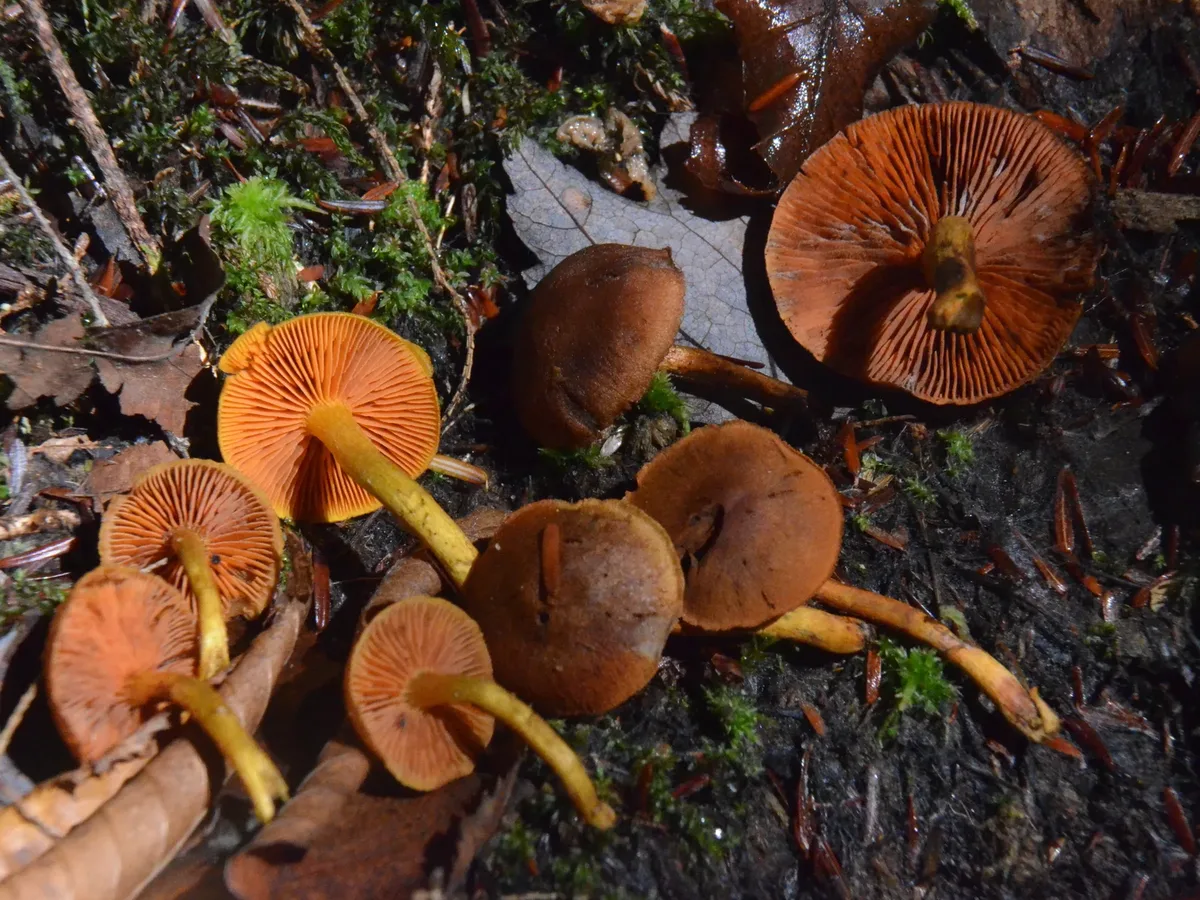 © Jessica Williams (CC BY)
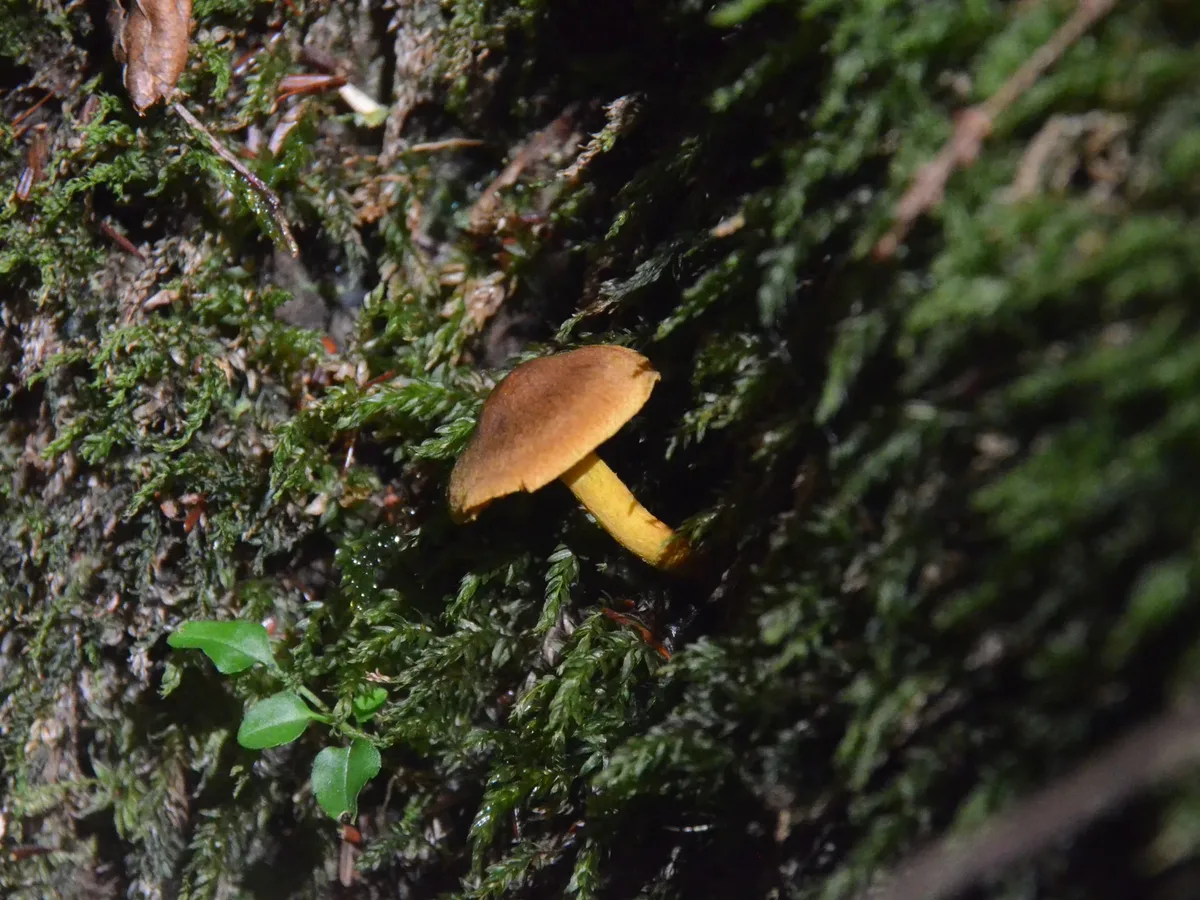 © Jessica Williams (CC BY)
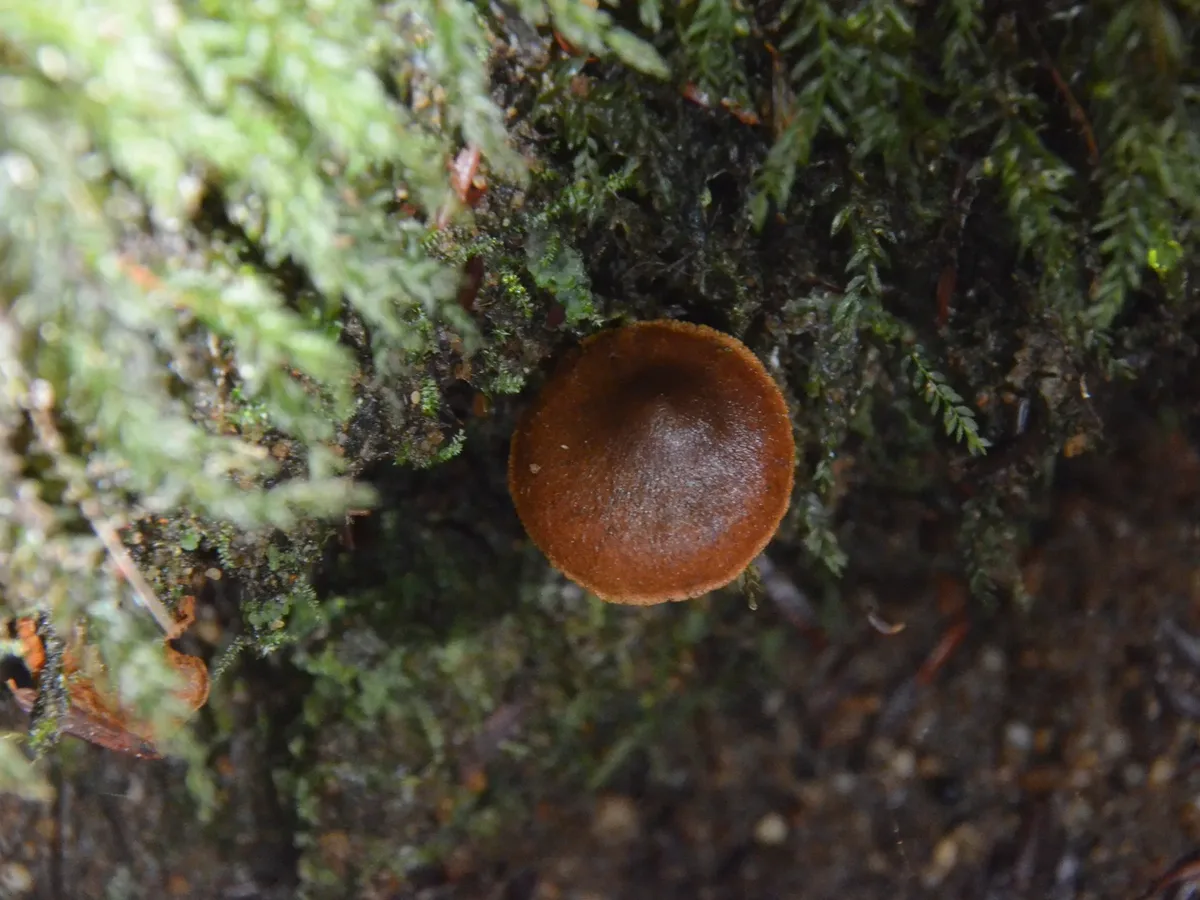 © Jessica Williams (CC BY)
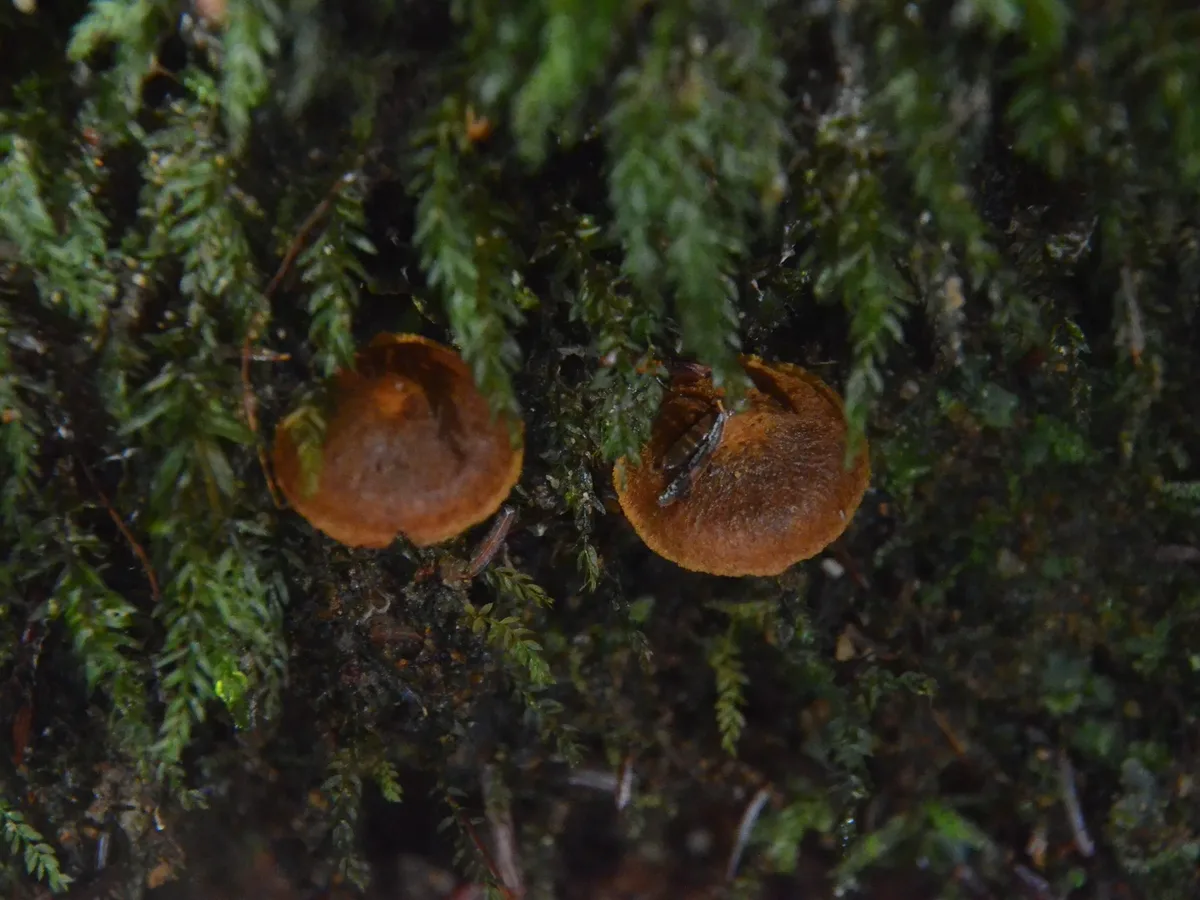 © Jessica Williams (CC BY)© Alan Rockefeller (CC BY 4.0)© Tatiana Strus (CC BY 4.0)
Edible only with the right preparation - or safe for some people but not others. Learn the caveats first.
Never eat a mushroom you are not 100% sure of - check the look-alikes below, and always cook wild mushrooms.
How to recognise it
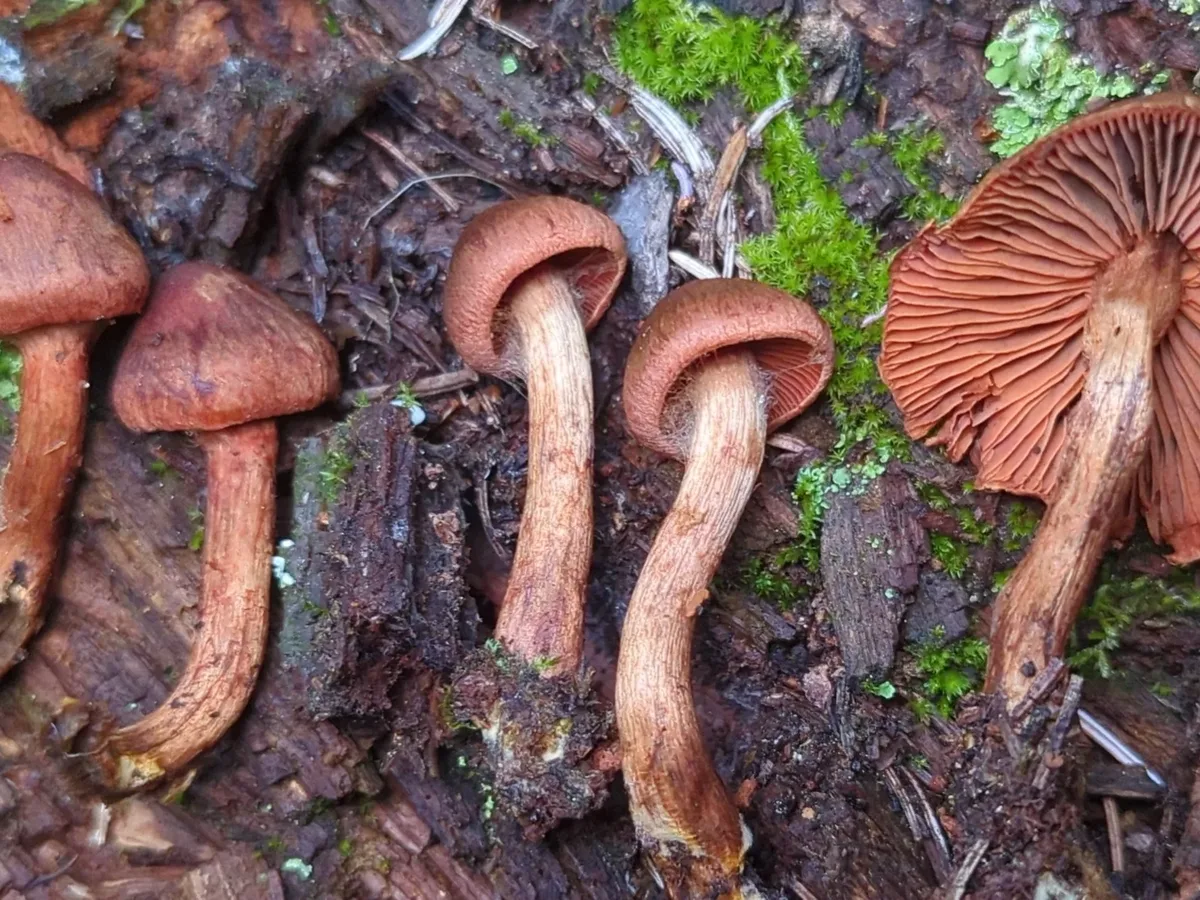
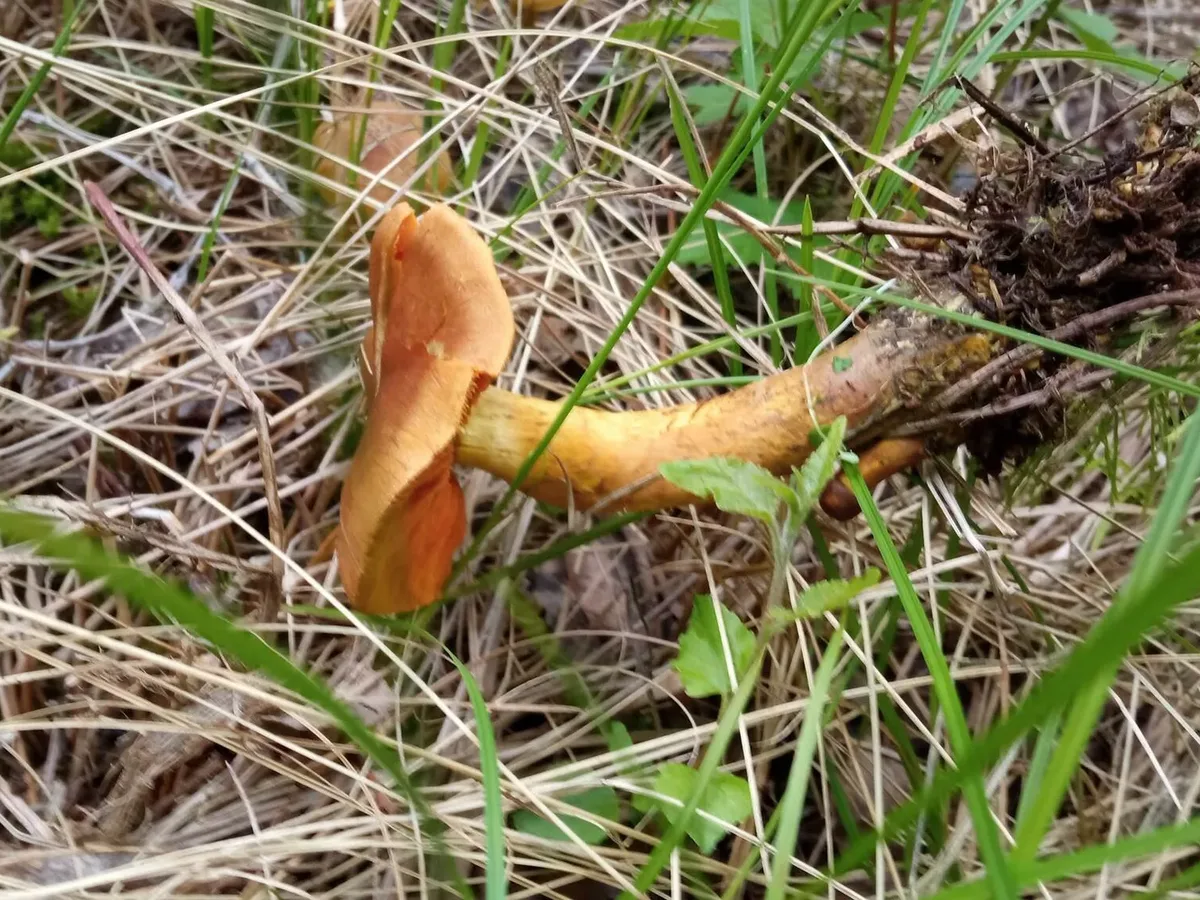
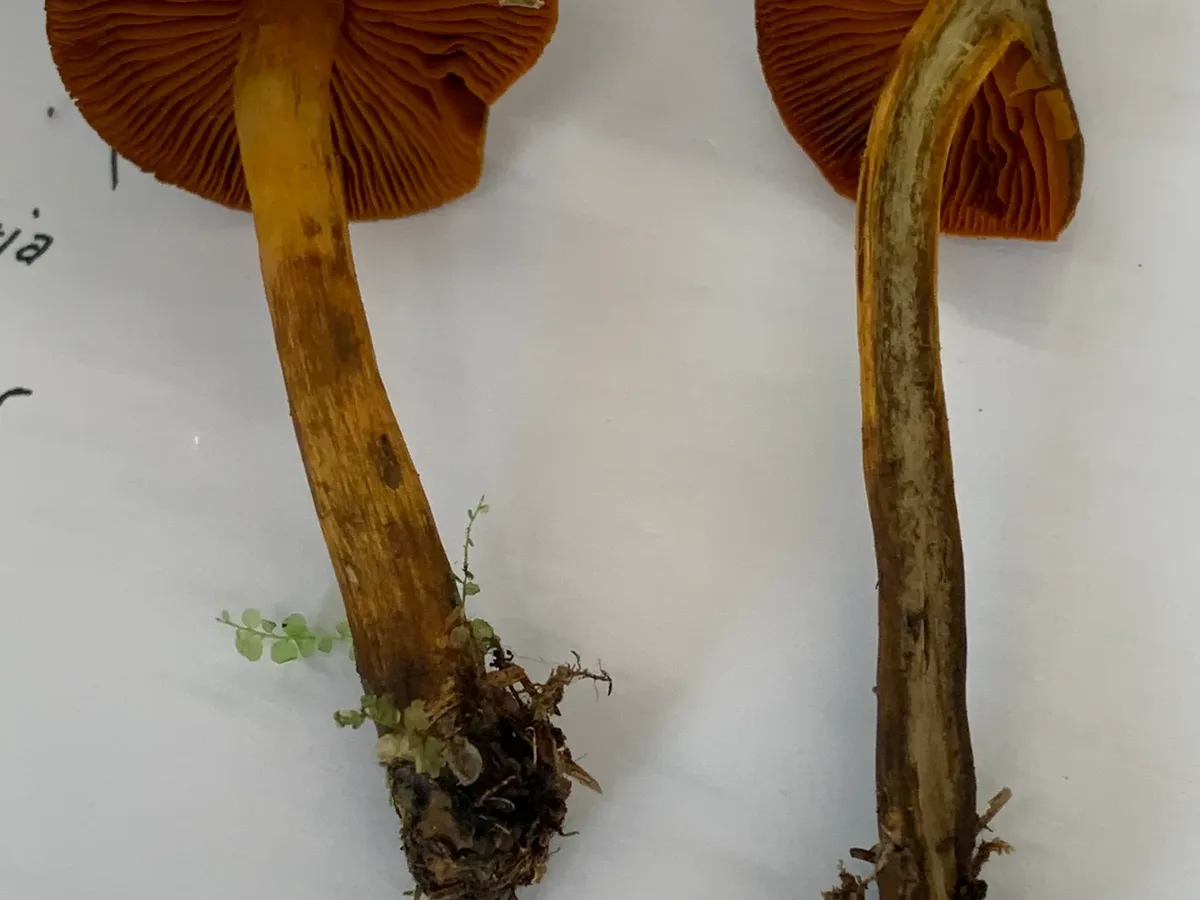
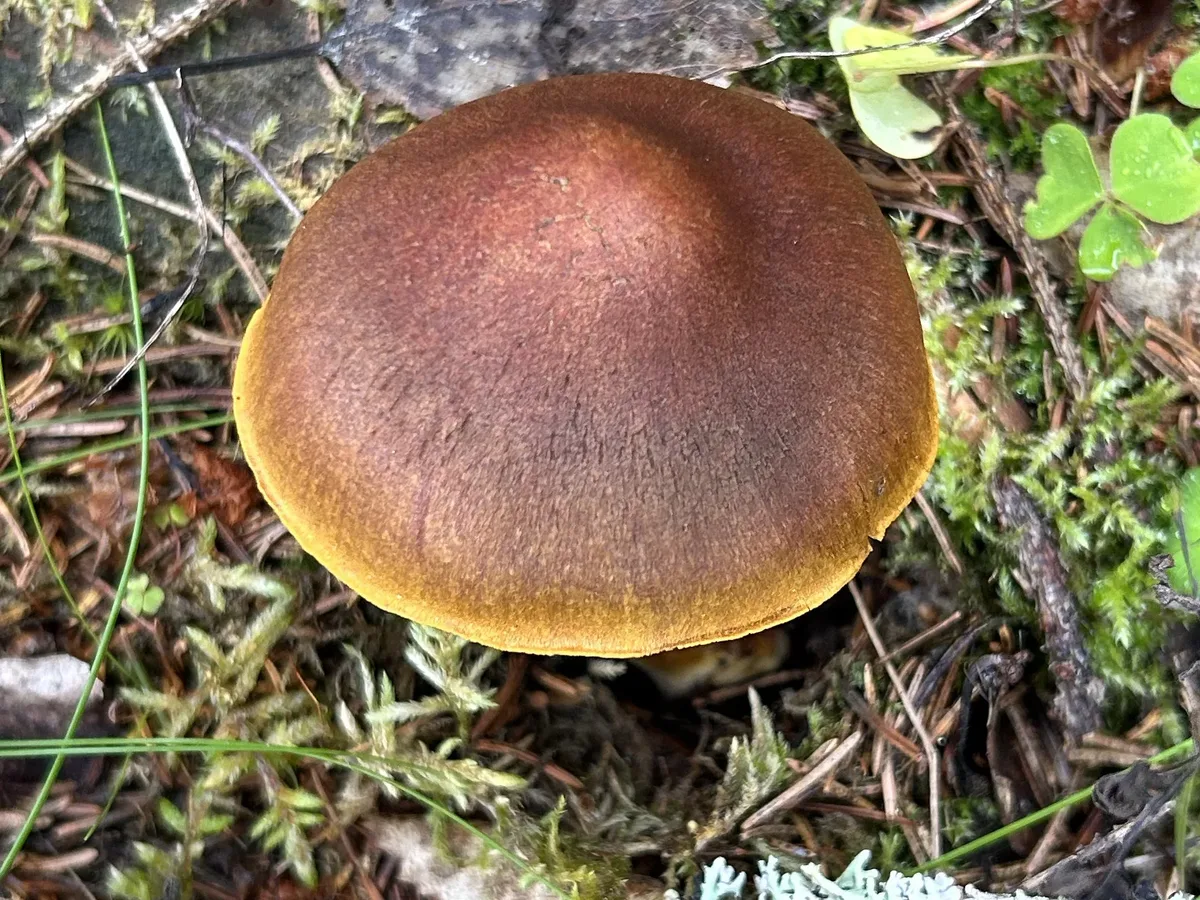
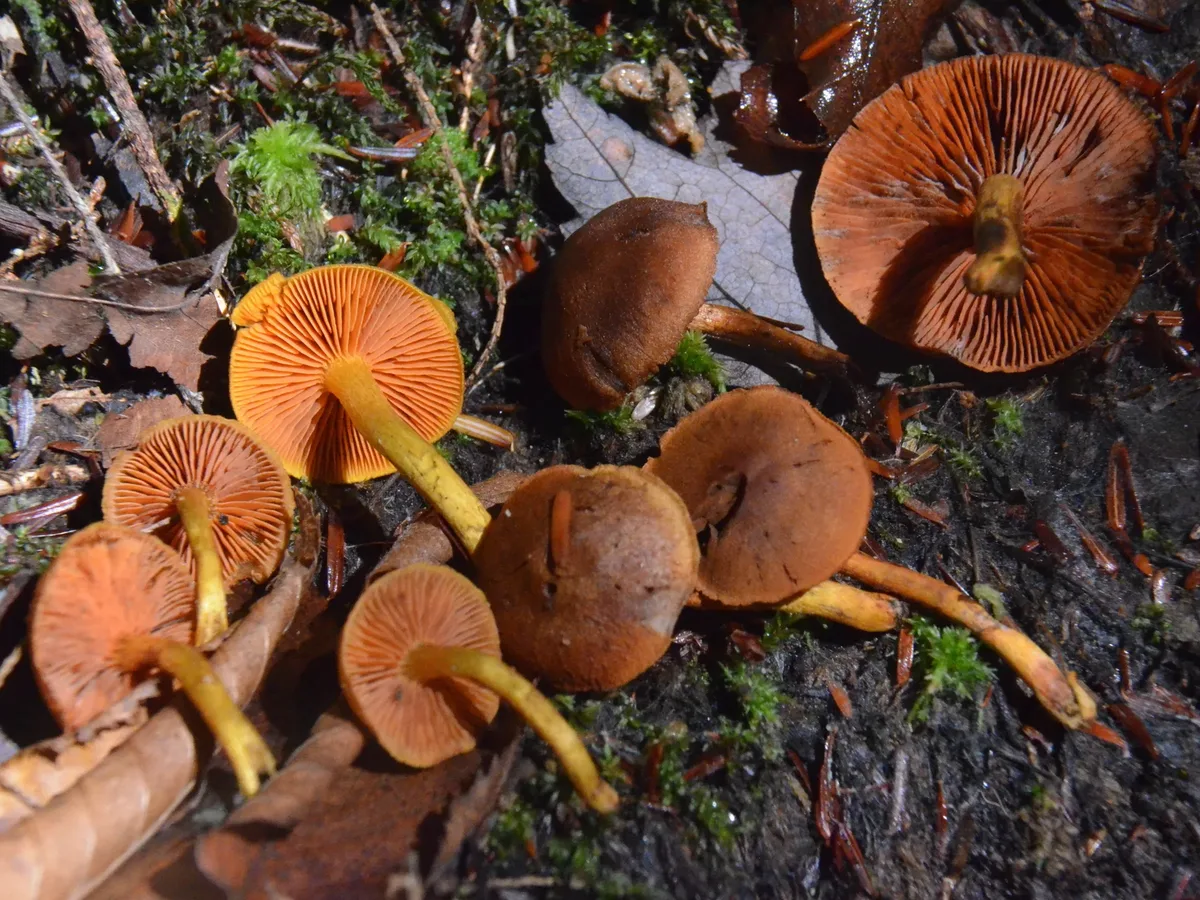
What makes the saffron webcap so striking is the uniformity of its colour: cap, gills, and stem all share the same vivid saffron-orange to rust-orange tone, as if the whole fruitbody were dipped in warm ochre. Few small forest mushrooms are so consistently and deeply coloured from top to bottom.
Cap
The cap opens from a convex dome with an inrolled margin and gradually broadens to a low umbo. The surface is dry and fibrous, never slimy.
Gills
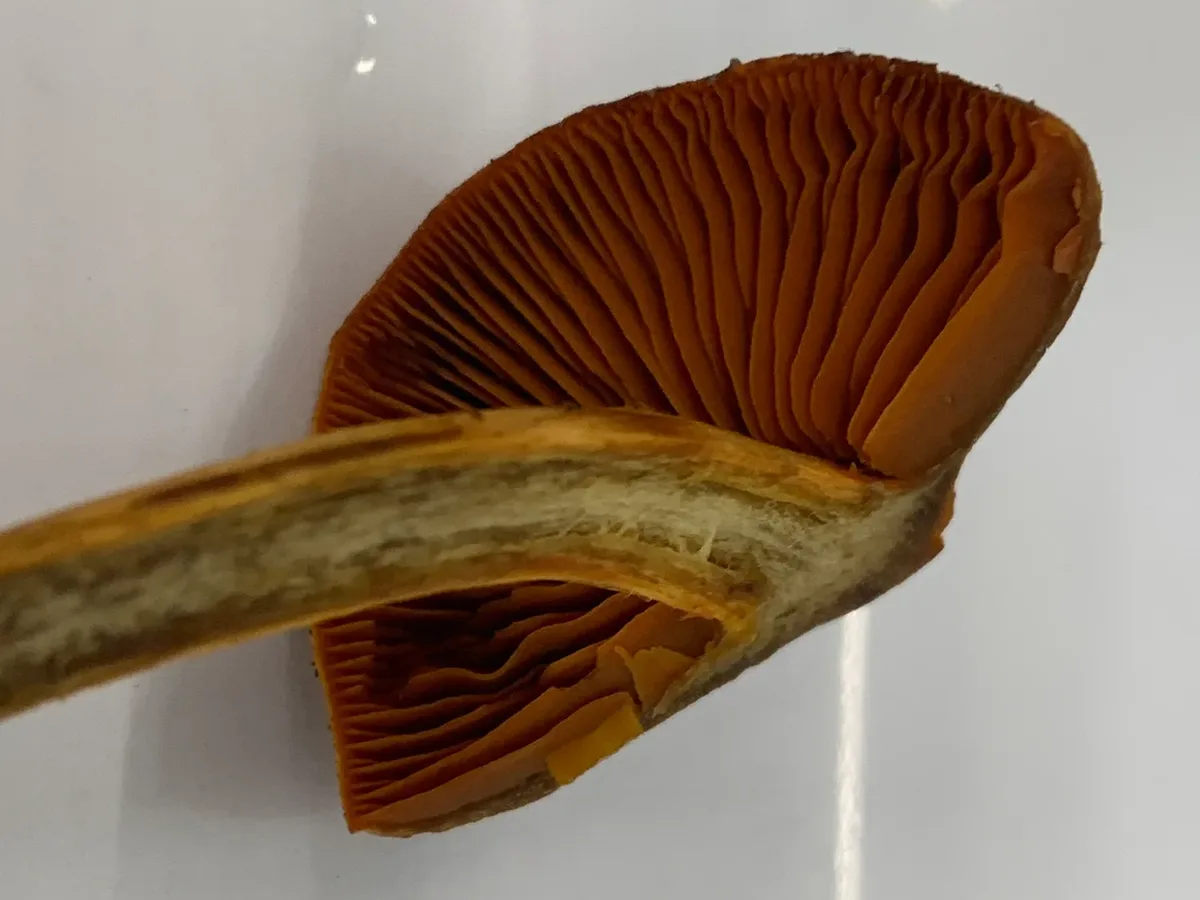
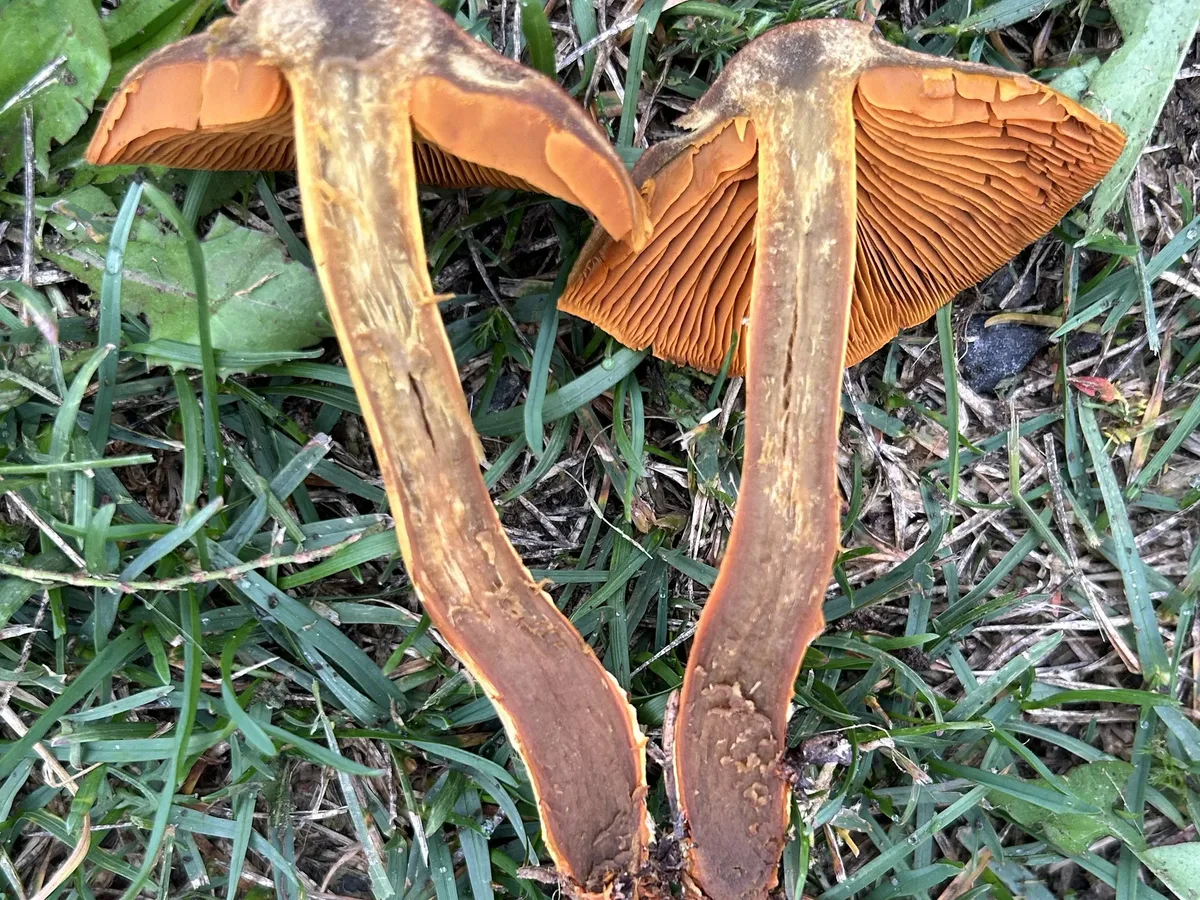
The gills are crowded and narrow, holding that same orange right through to maturity. Spore print rust-brown, as in all Cortinarius species.
Stem
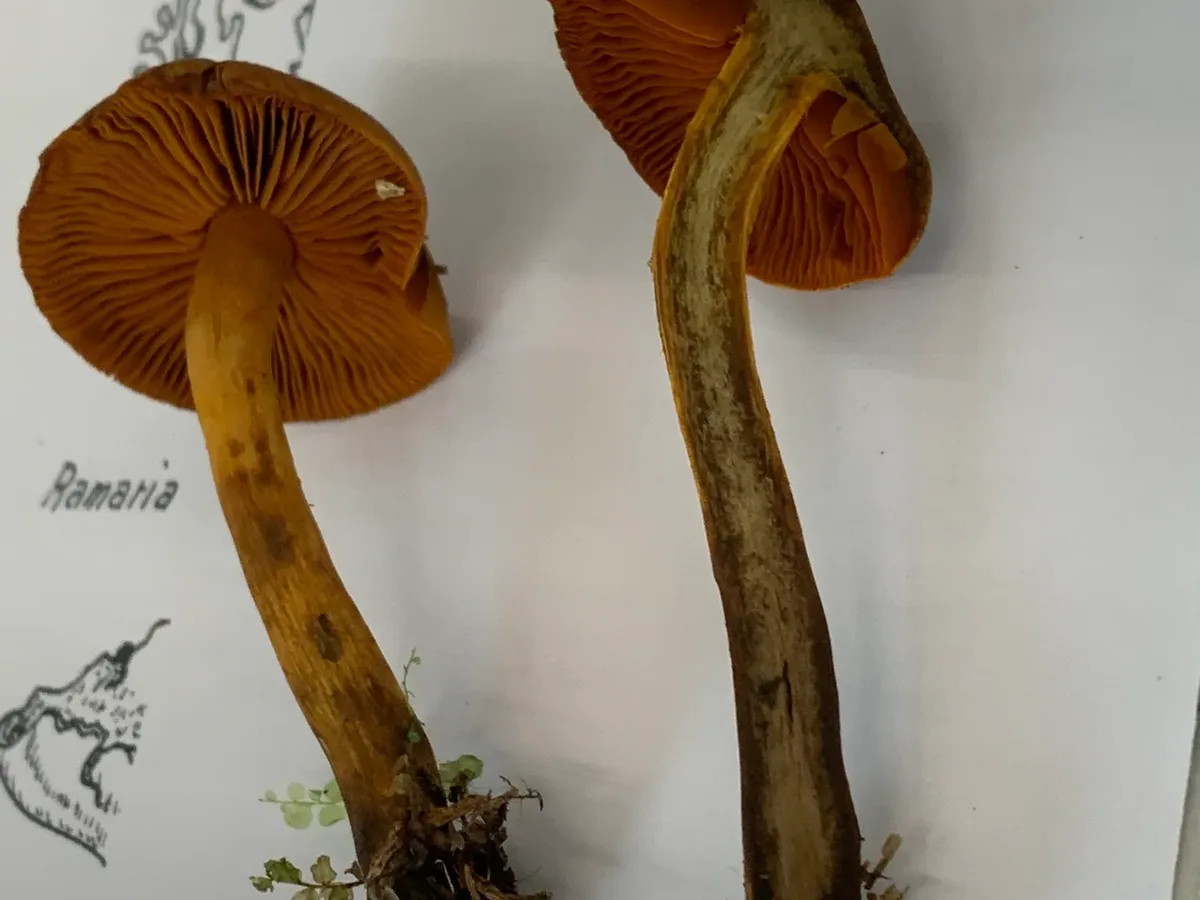
Look closely at the upper stem and you will see faint fibrous bands - the ghostly remnants of the cortina, the fine cobweb-like veil that gives all webcaps their name, here tinted orange like everything else.
Flesh
Cut the stem and the orange continues all the way through the flesh; there is no bluing, no reddening, just consistent warm pigment.
Smell & taste
The smell is faint, sometimes faintly radish-like or neutral earthy.
Why it's dangerous
Not itself classified as a lethal species, but effectively extremely dangerous in the field because it shares habitat, season, and general appearance with Cortinarius rubellus (orellanine, delayed kidney failure).
Any identification error in this group can be fatal.
Treat all Cortinarius species in conifer forest with caution. The saffron webcap is a useful reminder that orange colour in webcaps is not a safety signal.
Toxin
Anthraquinone pigments (dermocybin, emodin-type compounds) are the primary characterised chemical constituents and are suspected GI irritants.
Whether C. malicorius contains any orellanine or related bipyridyl nephrotoxins is definitively established only for related species such as C. rubellus. Its own toxicological profile is treated conservatively as gastrointestinal-irritant.
The potential for confusion with an orellanine-containing species makes this mushroom as dangerous in practice as a deadly species.
Symptoms
If ingested, gastrointestinal symptoms can be expected within 30 minutes to a few hours:
- nausea
- vomiting
- abdominal cramps
- diarrhoea
If there is any possibility that a Cortinarius species from this habitat was consumed, seek medical attention immediately and inform the treating clinician of the orellanine risk from co-occurring species. Kidney function should be monitored for at least two weeks.
Staying safe
Never eat any small orange-to-red-gilled mushroom found in conifer forest without expert verification.
The saffron webcap is itself poisonous (GI irritant; anthraquinone pigments are suspected contributors), but the greater danger is confusion with Cortinarius rubellus, one of Scandinavia's deadliest mushrooms.
Orellanine, the toxin in C. rubellus, causes delayed kidney failure: symptoms may not appear for 2-14 days after ingestion, by which point the damage can be irreversible. There is no antidote.
If there is any doubt, do not eat the mushroom.
In Sweden, poisonings from Cortinarius species occur every year; a significant proportion of documented cases result in permanent kidney damage.
The rule is simple: if you cannot identify it with certainty, leave it.
Where & when it grows
Habitat
Found exclusively in coniferous woodland, forming mycorrhizal associations with Norway spruce and Scots pine.
In Scandinavia it is most reliably found in old-growth or semi-old spruce forest with deep moss and needle-litter layers.
It tolerates somewhat moist conditions and is frequently found near Sphagnum mats or at the edges where open boggy ground meets closed forest.
Unlike some Cortinarius species, it is not a specialist of calcareous soils; it thrives on the acidic, iron-poor, humus-rich podzols typical of Scandinavian boreal forest.
When
Fruits from late August through October across most of its Nordic range, peaking in weeks 36-41 (early September to mid-October).
These are the same weeks when mature spruce forest comes alive with the autumn flush - and when the deadly Cortinarius rubellus and the much-loved funnel chanterelle (Craterellus tubaeformis) are also out, often growing just metres apart in the same moss and needle duff.
That temporal and spatial overlap - three very different mushrooms sharing a forest, a season, and a superficially similar small-and-orange appearance - is the core reason C. malicorius demands attention even though it is not itself the deadliest species in the group.
How it grows
Appears singly or in small scattered groups of 2-8 fruitbodies, sometimes forming short arcs in needle duff. It is not a clustered or bunched species.
Fruiting follows the classic autumn pattern of boreal mycorrhizal fungi:
- moderate rain (at least 15-20 mm over 10-14 days)
- after soil temperatures dip below roughly 12 °C
- a lag of 7-14 days before fruitbodies push through the litter
Like many webcaps, the mycelium may thread the same patch of spruce roots for years, returning reliably to the same spots each autumn. Flushes may recur after further rain events until hard frost ends the season.
Fruiting conditions
Classic boreal autumn mycorrhizal flush: moderate rainfall (at least 15 mm over 10-14 days) after soil cools below roughly 12 degrees C triggers fruiting, with a 1-2 week lag. Flushes repeat with further autumn rain events until hard frost ends the season, typically November in southern Scandinavia and late October further north.
Look-alikes
The two most important lookalikes are:
- 1Cortinarius rubellus (deadly webcap), which is deadly due to orellanine: it tends to be slightly more reddish-brown and has a pointed umbo when young, but in worn or mature specimens the colour difference is subtle, and both species share the same spruce-forest habitat and season. C. rubellus has widely spaced, thick gills whereas C. malicorius has crowded narrow gills, one of the most reliable separating features, though it requires careful examination.
- 2Cortinarius cinnamomeus (cinnamon webcap) is closely related and similarly orange, also inedible; it differs by having more uniformly cinnamon-brown to yellowish-olive tones and occurs in both conifer and mixed woodland.
- 3The funnel chanterelle (Craterellus tubaeformis) grows in the same moss-and-needle-litter habitat and can be collected in the same basket; it differs decisively by its ridged (not bladed) undersurface, hollow stem, and lack of a cortina or rust-brown spore print.
- 4Cortinarius sanguineus (blood-red webcap) is similar in subgenus but redder; also inedible.
C. rubellus is more reddish-brown to brick-red rather than saffron-orange; it has a distinctly pointed umbo when young and widely spaced, thick gills, whereas C. malicorius has crowded, narrow gills. Both share spruce-forest habitat and autumn season. Any uncertainty means do not eat.
Also contains orellanine and is deadly. C. orellanus is more orange-brown, prefers broadleaved or mixed woodland (oak, beech) in central and southern Europe, and is less common in the boreal spruce forest where C. malicorius dominates. Both must be absolutely avoided.
Deeper blood-red to crimson on all surfaces including flesh; C. malicorius is a warmer saffron-orange. Both belong to Dermocybe subgenus and both are inedible.
Very closely related and similarly orange-brown; C. cinnamomeus tends toward more cinnamon-yellow to olive-buff tones and occurs in both conifer and mixed woodland. Also inedible. Separation is often academic since both are poisonous and to be avoided.
Grows in the same moss-and-needle-litter habitat at the same season. Tell apart by the ridged (not bladed) undersurface, hollow stem, and absence of a rust-brown spore print or cortina. The funnel chanterelle is edible; sloppy harvesting in shared habitat is a common cause of Scandinavian webcap poisonings.
A reference guide - never an edibility guarantee. When in doubt, leave it out.