Lemon webcap
Cortinarius limoniussyn. Agaricus limonius Fr., Dermocybe limonia (Fr.) M.M. Moser, Cortinarius limonius var. limonius
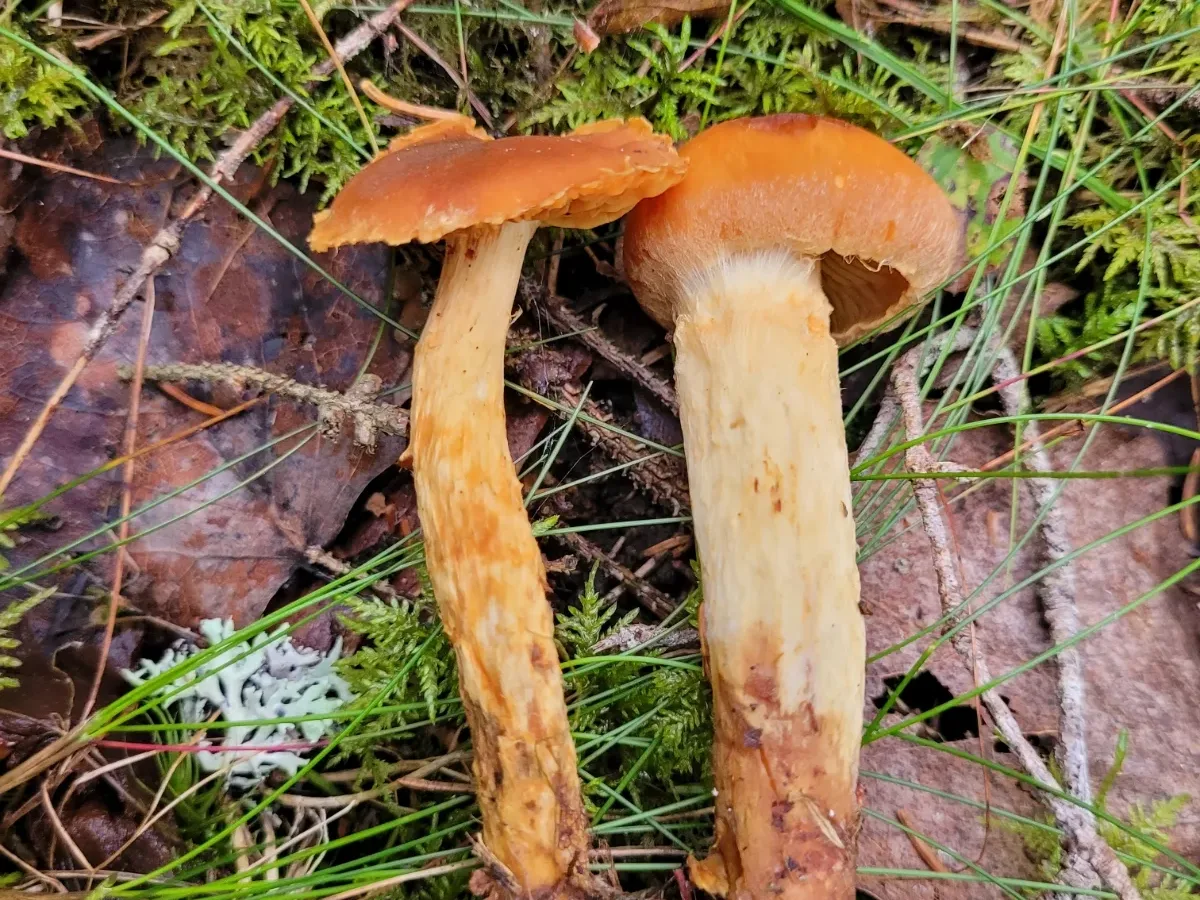 © Ellen Christensen (CC BY)
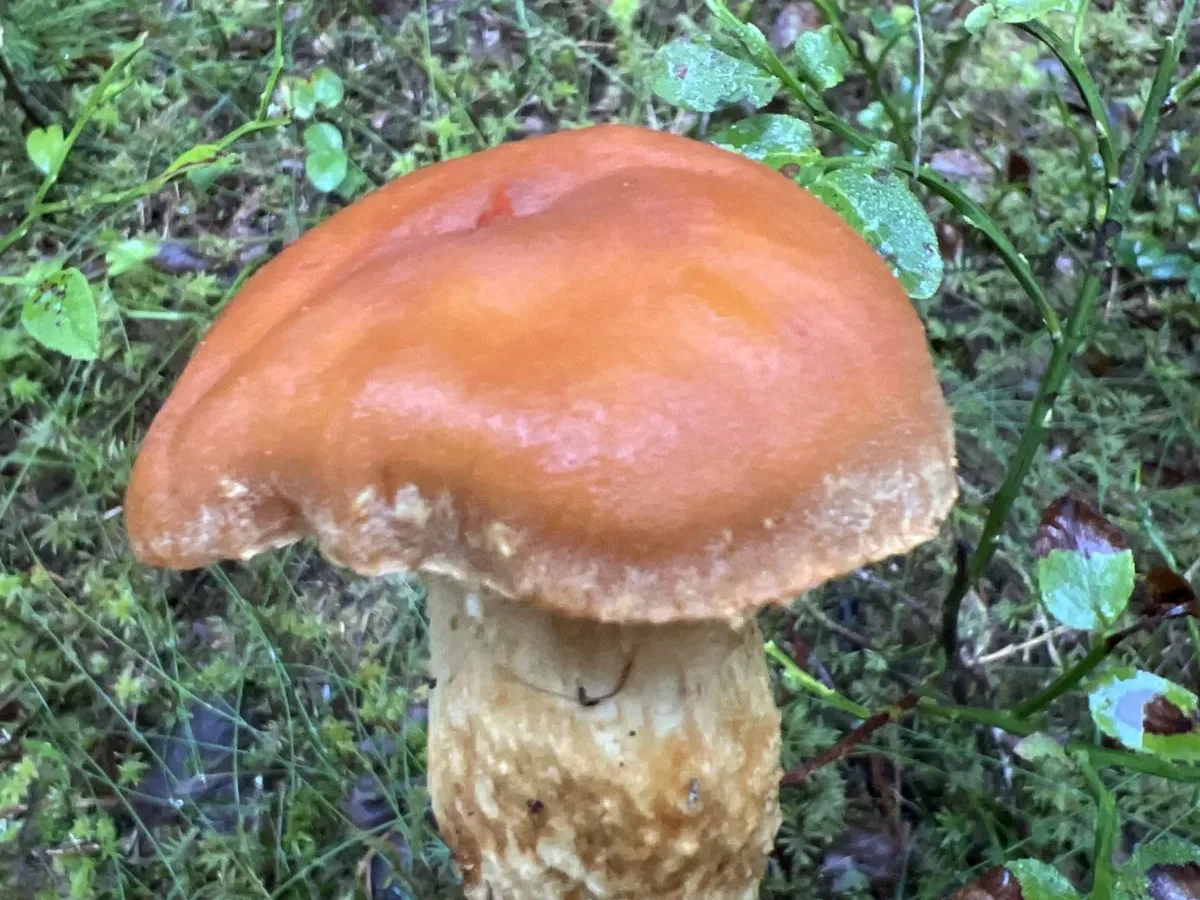 © Ulrik Andreassen (CC BY)
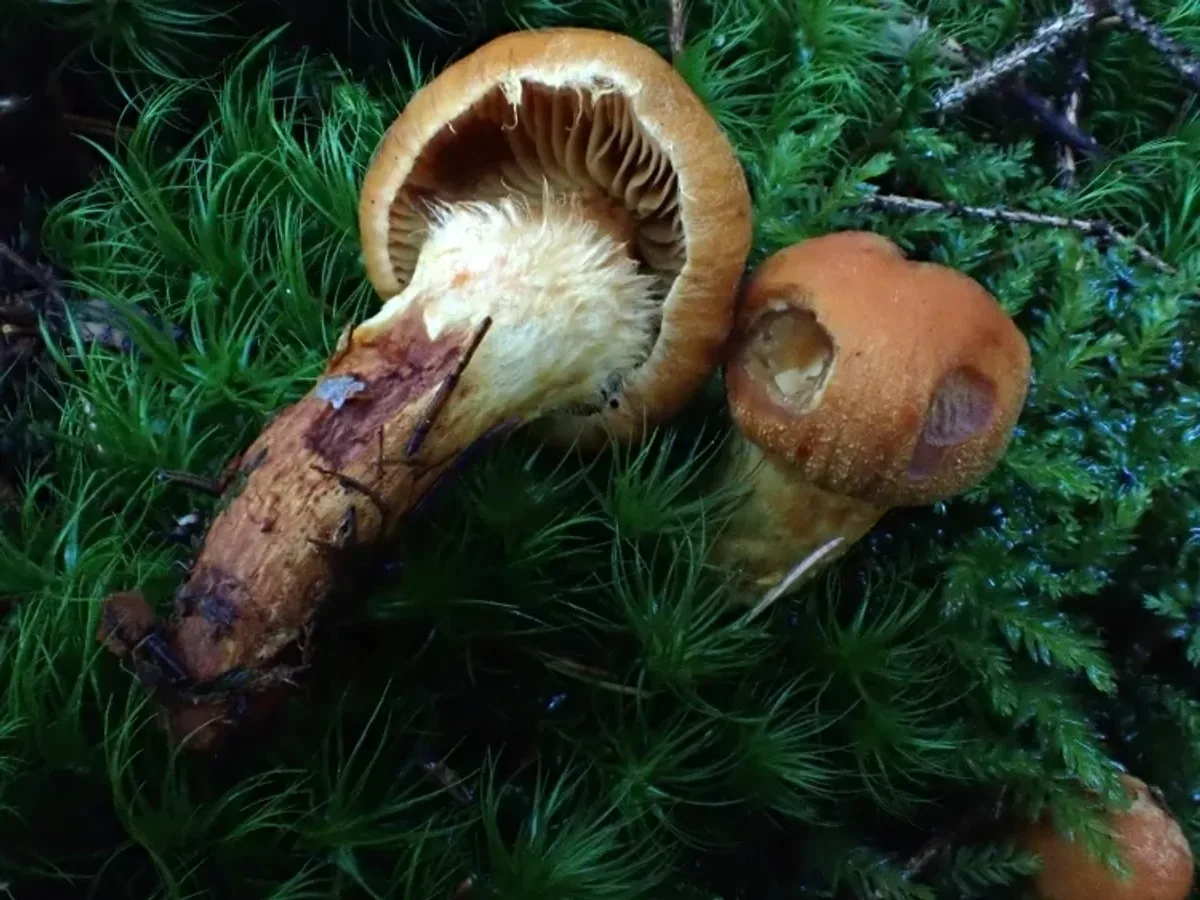 © Morten Pettersen (CC BY)
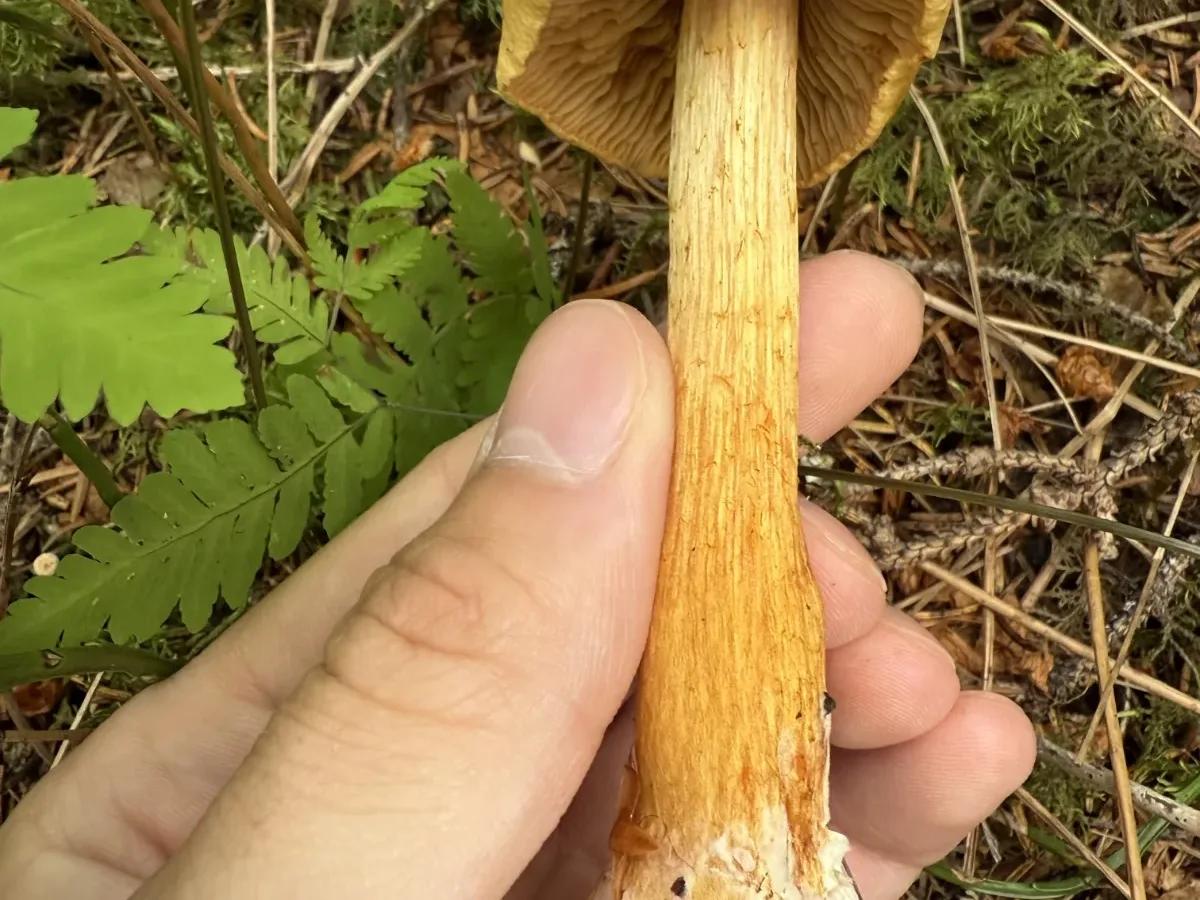 © Magnus Vandbakk (CC BY-SA)
 © Magnus Vandbakk (CC BY-SA)
 © Magnus Vandbakk (CC BY-SA)
 © Ulrik Andreassen (CC BY)
 © Ulrik Andreassen (CC BY)
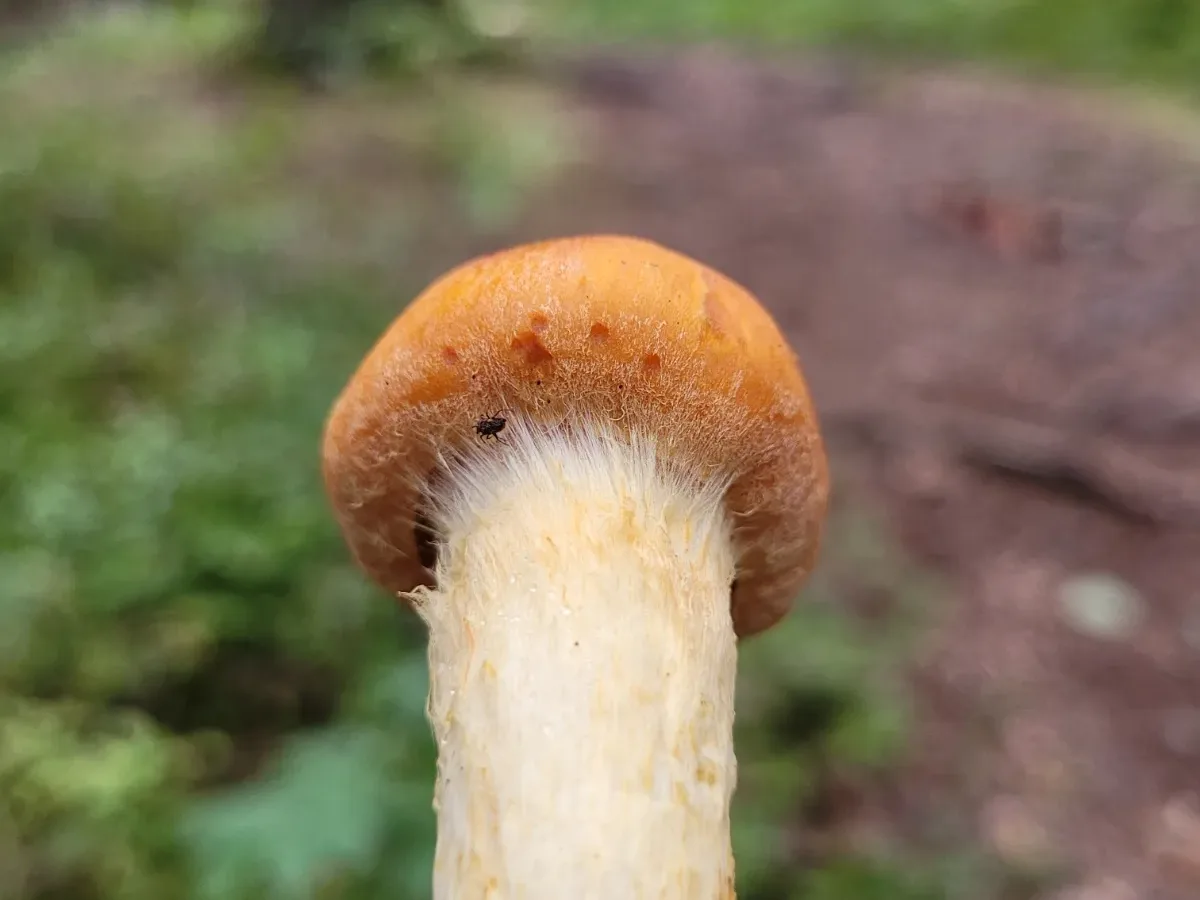 © Ellen Christensen (CC BY)© Ellen Christensen (CC BY)© Ulrik Andreassen (CC BY)
Toxic - and the most serious cases can be fatal. Never eat it, and wash your hands after handling.
Never eat a mushroom you are not 100% sure of - check the look-alikes below, and always cook wild mushrooms.
How to recognise it
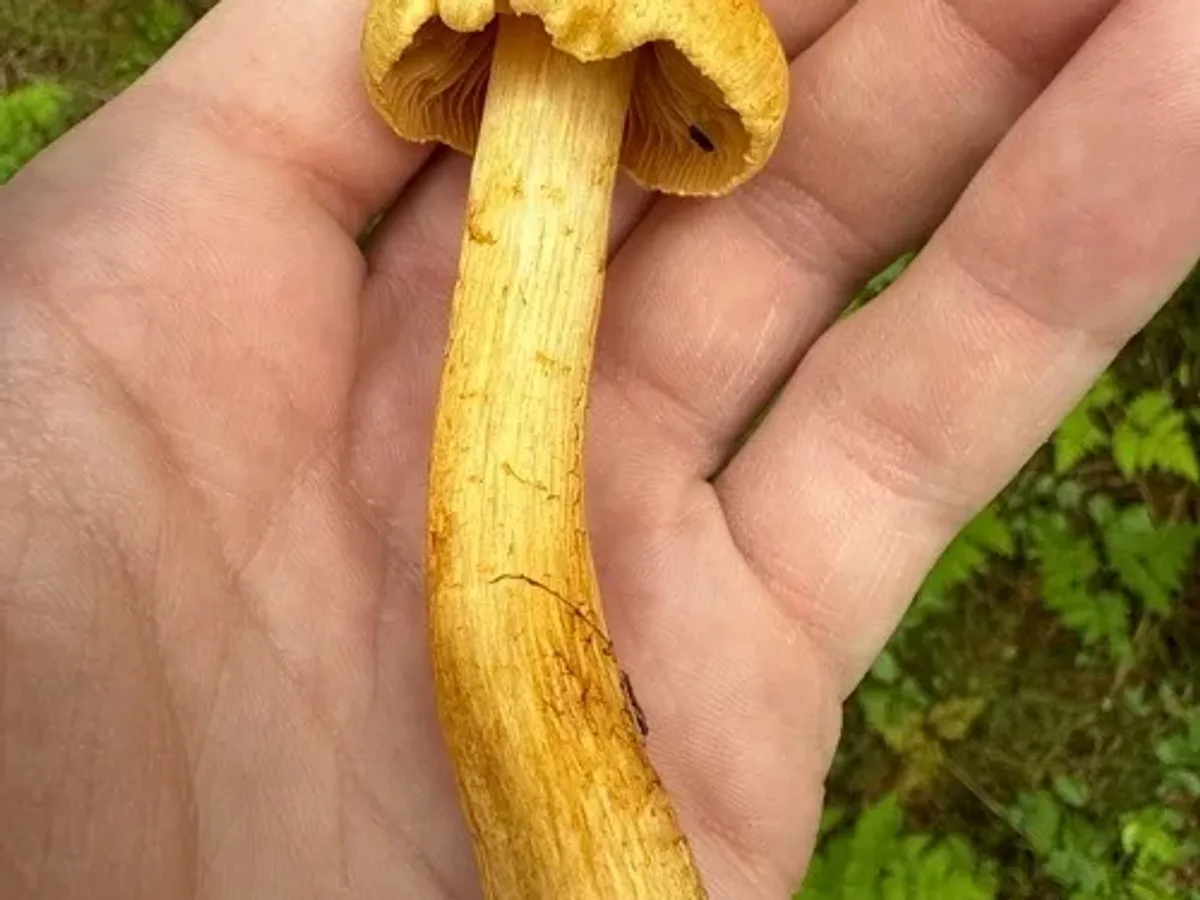
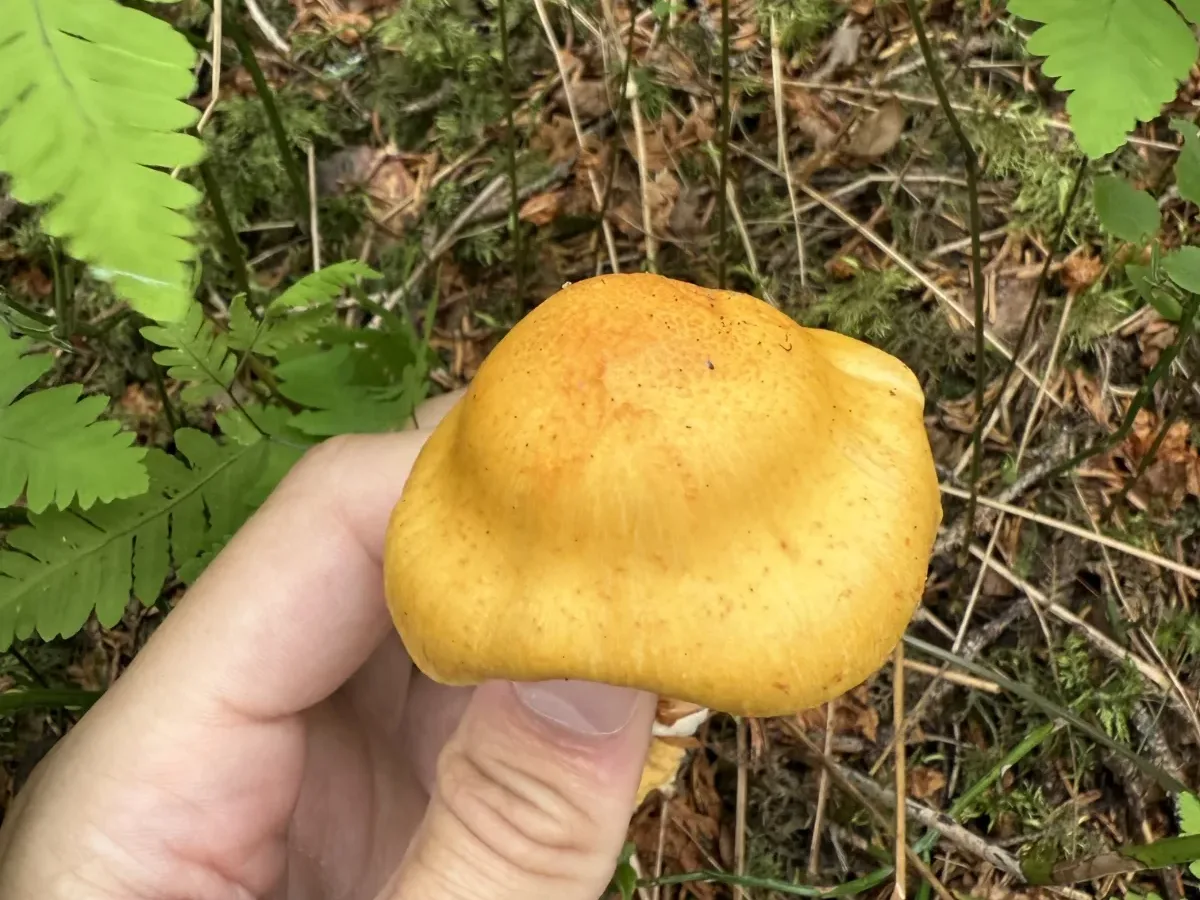
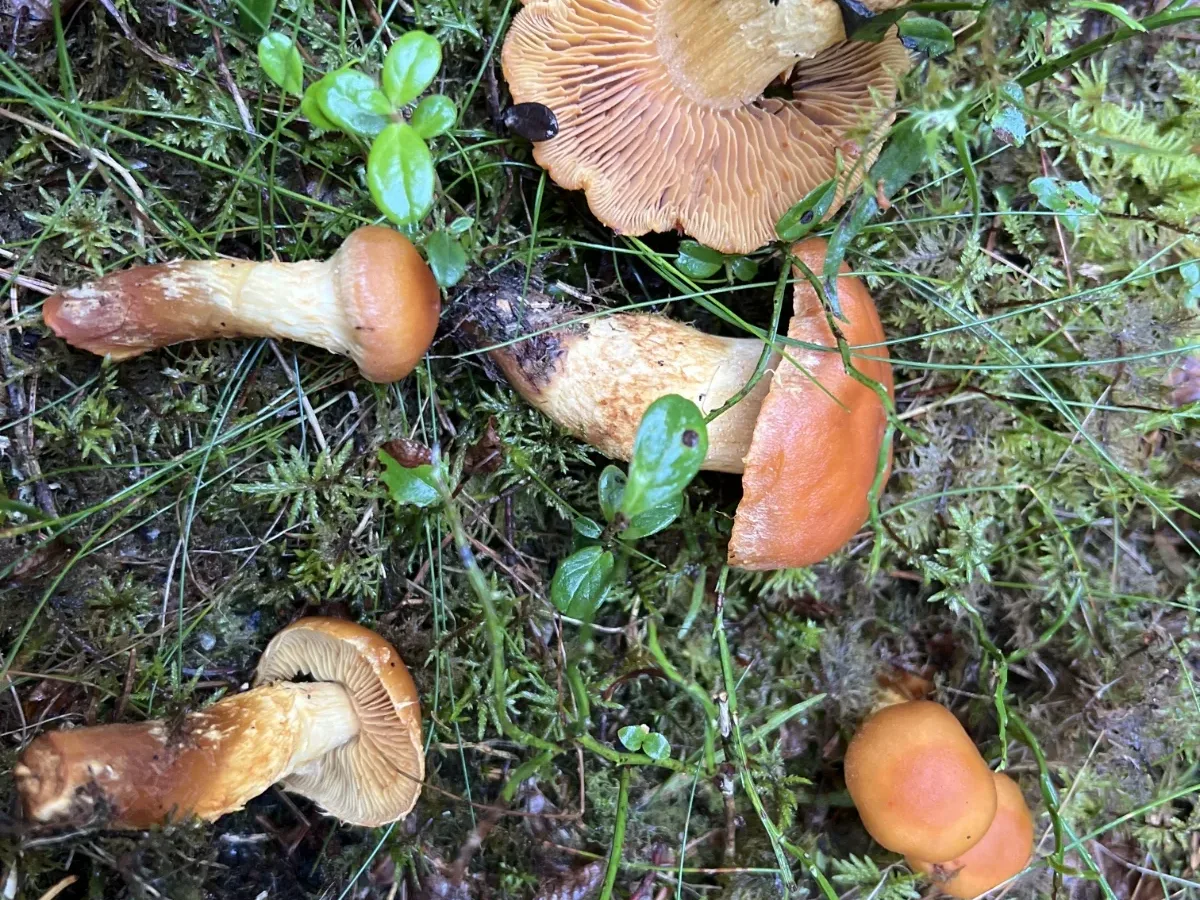
Among the deadly webcaps, Cortinarius limonius stands out for the wrong reasons: it is genuinely beautiful. Cap, gills, stem, and flesh are all the same clear lemon-yellow to chrome-yellow, brightest at the margin and deepening toward orange-ochre at the cap centre as the mushroom matures.
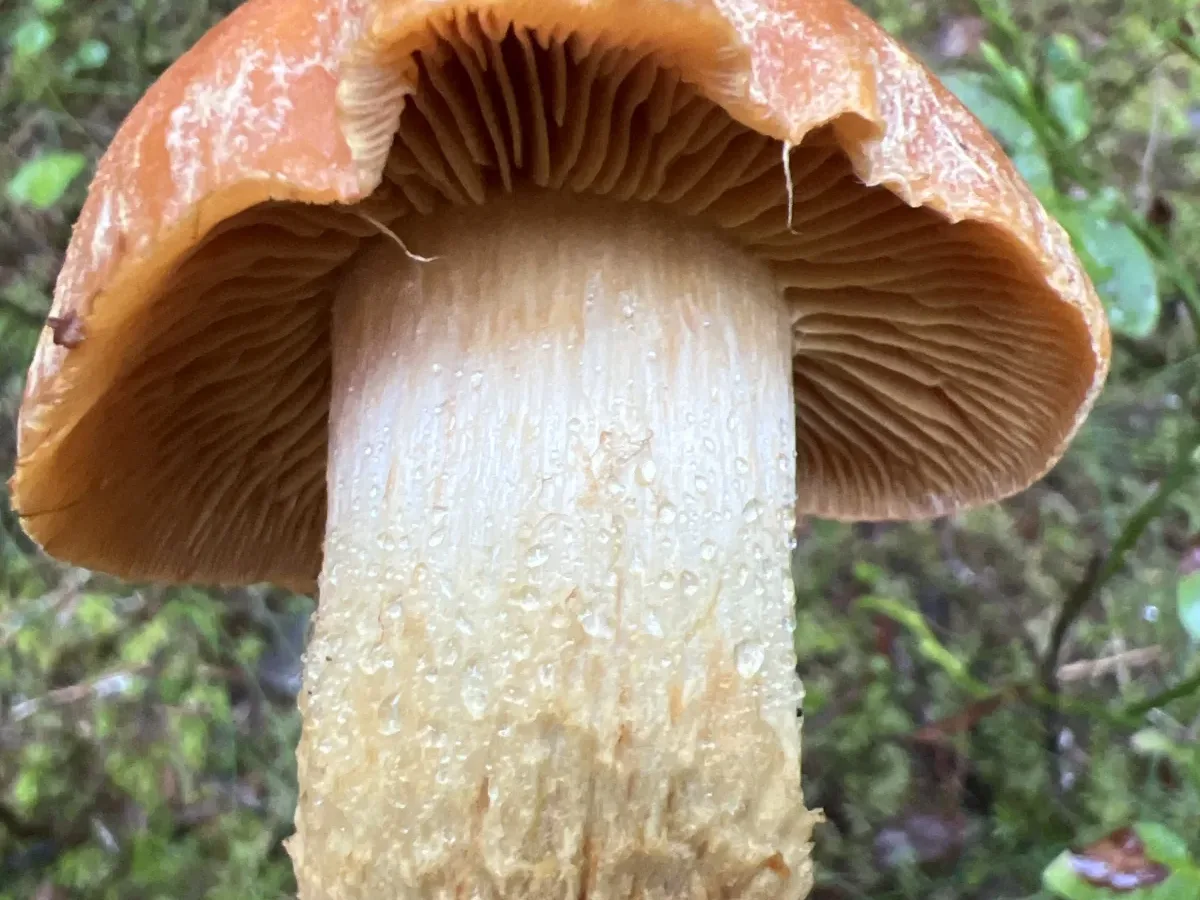
The young gills are a vivid saffron-yellow; they gradually take on rusty tones as the large cinnamon-brown spores ripen - a visual countdown written in colour.
Look closely at the stem and you will see the collapsed cobweb veil, the cortina, leaving untidy ochre-yellow girdle bands in the upper portion. That cobweb - so fine it can be mistaken for silk - is the mark of the entire Cortinarius genus, and in this family it is always reason for caution.
The flesh is uniformly yellow and firm, unchanged by cutting or air.
Take a spore print: it comes out rusty cinnamon-brown, as it does for every Cortinarius. The attractive colour is not a safety signal - several of the most dangerous species in this genus are also the most vividly coloured.
Why it's dangerous
Cortinarius limonius is a deadly mushroom. The orellanine it contains causes one of the most insidious forms of mushroom poisoning known: the long delay between ingestion and symptoms routinely means the cause goes unrecognised, diagnosis is delayed, and irreversible kidney destruction is the outcome.
Clinicians may not connect a patient's renal failure to a mushroom meal eaten four weeks prior unless specifically prompted. There is no antidote and no way to reverse established renal damage.
The attractive yellow colour of C. limonius makes it particularly hazardous - it does not look dangerous, and it grows alongside desirable edibles.
If this species - or any unknown yellow-gilled, rusty-spored mushroom from conifer forest - has been eaten, seek emergency medical attention immediately, even if feeling well. Do not wait for symptoms.
Toxin
Orellanine (orellanin), a heat-stable, water-soluble bipyridyl-N,N-dioxide nephrotoxin.
Chemically robust, it survives without meaningful degradation:
- boiling
- frying
- drying
- freezing
- acidic pickling
It causes selective oxidative damage to the epithelial cells lining the renal tubules. The mechanism involves generation of reactive oxygen species in kidney tissue, resulting in tubular necrosis that may progress to chronic interstitial nephritis or end-stage renal disease.
No safe dose threshold is known.
Symptoms
Symptoms typically appear 2 to 6 weeks after ingestion - the defining and most dangerous feature of orellanine poisoning.
Initial symptoms include:
- persistent intense thirst (polydipsia)
- excessive urination followed by decreasing urine output (oliguria)
- fatigue
- headache
- nausea
- vomiting
- burning or aching pain in the lower back and flanks corresponding to the kidneys
As renal failure progresses:
- oedema
- hypertension
- rapidly rising serum creatinine and blood urea nitrogen
A significant proportion of patients develop chronic renal insufficiency or end-stage renal disease requiring permanent dialysis or kidney transplantation. Some patients present subclinically, with insidious decline in renal function over weeks to months before a crisis.
Staying safe
Cortinarius limonius contains orellanine (sometimes spelled orellanin), the same heat-stable nephrotoxic bipyridyl-N,N-dioxide compound found in C. orellanus, C. rubellus, and C. gentilis. Orellanine is not broken down or rendered safe by any cooking, boiling, drying, pickling, or other food preparation method.
The most dangerous property of orellanine is its extremely delayed onset of symptoms - typically 2 to 6 weeks after ingestion, and occasionally up to 8 weeks. Because the connection between a mushroom meal and subsequent illness is so easily missed after such a long delay, orellanine poisoning is frequently misdiagnosed or diagnosed very late.
By the time a patient presents with symptoms - intense thirst, fatigue, back pain, nausea, and declining urinary output - significant and potentially irreversible renal tubular damage has already occurred.
Treatment is purely supportive; a proportion of patients require long-term dialysis or kidney transplantation, and deaths are documented. A single meal is sufficient to cause life-altering kidney damage.
If orellanine poisoning is even suspected - including weeks after a mushroom meal - emergency medical attention is essential. Contact a poisons centre and bring a photograph or specimen if available.
Where & when it grows
Habitat
Cortinarius limonius is a creature of mature, undisturbed boreal conifer forest. It threads its mycorrhizal roots through the humus beneath dense stands of Norway spruce and Scots pine, most reliably where a thick carpet of feather moss or bilberry understory signals an old, well-established wood with acidic, moisture-retaining soils.
It does not colonise recently planted or disturbed forest. In central Europe it shifts upslope into montane spruce and fir stands, typically above 600 m.
Fruit bodies appear singly or in loose groups of two to five. These are the same damp, mossy conifer hollows where funnel chanterelles and bay boletes flourish - the overlap with sought-after edibles in identical microhabitats is a primary reason foragers encounter it.
When
In the Nordic region, fruit bodies appear from late August and peak through September into early October. This tracks the general rhythm of boreal Cortinarius: late-summer onset tied to the first sustained autumn rains and the cooling of the soil after summer warmth breaks.
In years with a prolonged warm, dry autumn, fruiting is sparse or absent.
The season of two to three months falls squarely in the busiest period for foraging funnel chanterelles and other autumn species. Fruit bodies deteriorate quickly in frost and are rarely found in good condition after the first hard ground frost.
How it grows
Cortinarius limonius is strictly ectomycorrhizal, spending most of its life as a web of fine threads woven through the humus and root zones of conifers.
The relationship with its host trees - principally Norway spruce and Scots pine - must develop over years before fruit bodies can form. This is why the species is essentially absent from young plantations and only appears reliably in mature, undisturbed stands.
When conditions are right, the mushrooms emerge singly from the moss or needle litter - never from wood. The spores disperse passively on the autumn air.
Fruiting conditions
Requires sustained autumn rainfall and cooling soil temperatures in boreal conifer forest. Fruiting season overlaps with prime chanterelle and bolete foraging, increasing incidental encounter risk. Established mycorrhizal networks in mature forest are prerequisite; absent from young plantations.
Look-alikes
The primary danger of Cortinarius limonius is its striking colour: bright yellow caps in the forest floor are conspicuous and may be picked by foragers who assume that a colourful mushroom found alongside known edibles is safe. The worst confusion scenario is with edible yellow or orange-capped species growing in the same habitat.
- Chanterelles (Cantharellus cibarius) are the most commonly confused group - both are yellow and occur in similar forest types - but chanterelles have blunt, forking, vein-like false gills (not true blade gills), flesh that does not show rusty-brown gills, a white to pale yellow spore print (never rusty), and no cobweb partial veil.
- Cortinarius rubellus (deadly webcap) is a close relative also containing orellanine and similarly deadly, typically more reddish-orange to tawny than yellow.
- Cortinarius orellanus (fool's webcap) is more orange-brown to foxy-red and favours deciduous forest but has range overlap.
- Cortinarius splendens is another bright yellow to sulphur-yellow Cortinarius in conifer forest, also considered deadly or highly toxic with orellanine-like compounds.
- Dermocybe sanguinea (blood-red webcap, not deadly but poisonous) is a vivid red-capped, red-gilled close relative from conifer forest that will not be confused with yellow specimens.
- Hygrocybe species (waxcaps) may be yellow and vivid but grow in grassland, not dense conifer forest, have waxy gills, white spore prints, and no cortina.
The yellow girdle-bands of cortinal remnants on the stem - and the rusty spore print - are the key features that place any candidate firmly in Cortinarius, where extreme caution must apply.
Cortinarius gentilis is a smaller, more drab cinnamon-brown Cortinarius of the same boreal conifer habitats, also deadly with orellanine, distinguished by its ochraceous-brown (not lemon-yellow) cap and yellow cortinal girdle bands on an otherwise brown stem. Less likely to be confused with C. limonius due to colour difference, but both occupy identical ecological niches and are equally lethal.
Cortinarius rubellus is a close and equally deadly relative containing orellanine. It tends to be more reddish-orange to tawny-orange than the clear lemon-yellow of C. limonius, with a distinctively acute pointed umbo that persists into maturity. Both grow in boreal conifer forest and share the same orellanine toxin. Both are deadly; neither should be eaten under any circumstances.
Cortinarius orellanus is foxy-orange to reddish-brown, growing primarily in deciduous oak and birch forest. It also contains orellanine and is equally deadly. Distinguished from C. limonius by its darker orange-brown (not lemon-yellow) coloration and its preference for broadleaved forest. Range overlap exists in southern Scandinavia and central Europe.
Cortinarius splendens is also a bright chrome-yellow to sulphur-yellow Cortinarius of conifer forest and is considered deadly or severely toxic (orellanine suspected and/or high levels of cortinarins). It is very similar in colour to C. limonius and equally dangerous. The two species are distinguished mainly by microscopic features and subtle macroscopic differences in the shape and colour of the cortinal remnants; field separation is unreliable, and both must be avoided.
Cantharellus cibarius is egg-yolk yellow to orange-yellow and shares conifer-mixed forest habitats, making it the most important confusion to rule out. The chanterelle has blunt, forking, vein-like false gills (ridges, not true blade gills) on its underside, a white to pale yellow spore print (never rusty-brown), white to pale yellow flesh, no cobweb cortina veil, and an apricot-like smell. Cortinarius limonius has true blade gills that are yellow then rusty, a rusty-brown spore print, and yellow cortinal remnant bands on the stem. These features are definitive - check the underside of every yellow mushroom.
Hypholoma fasciculare is sulphur-yellow with a bitter taste, growing in dense clusters on or near rotting stumps and wood debris, never from soil. It has a ring zone (not a cobweb cortina), greenish to purple-brown gills, and a dark purple-brown spore print. Despite being poisonous and not edible, it differs fundamentally from C. limonius in growth habit (clustered on wood), gill colour, and spore print colour. The cluster-on-wood habit immediately distinguishes it.
A reference guide - never an edibility guarantee. When in doubt, leave it out.