Cortinarius lebre
Cortinarius lebre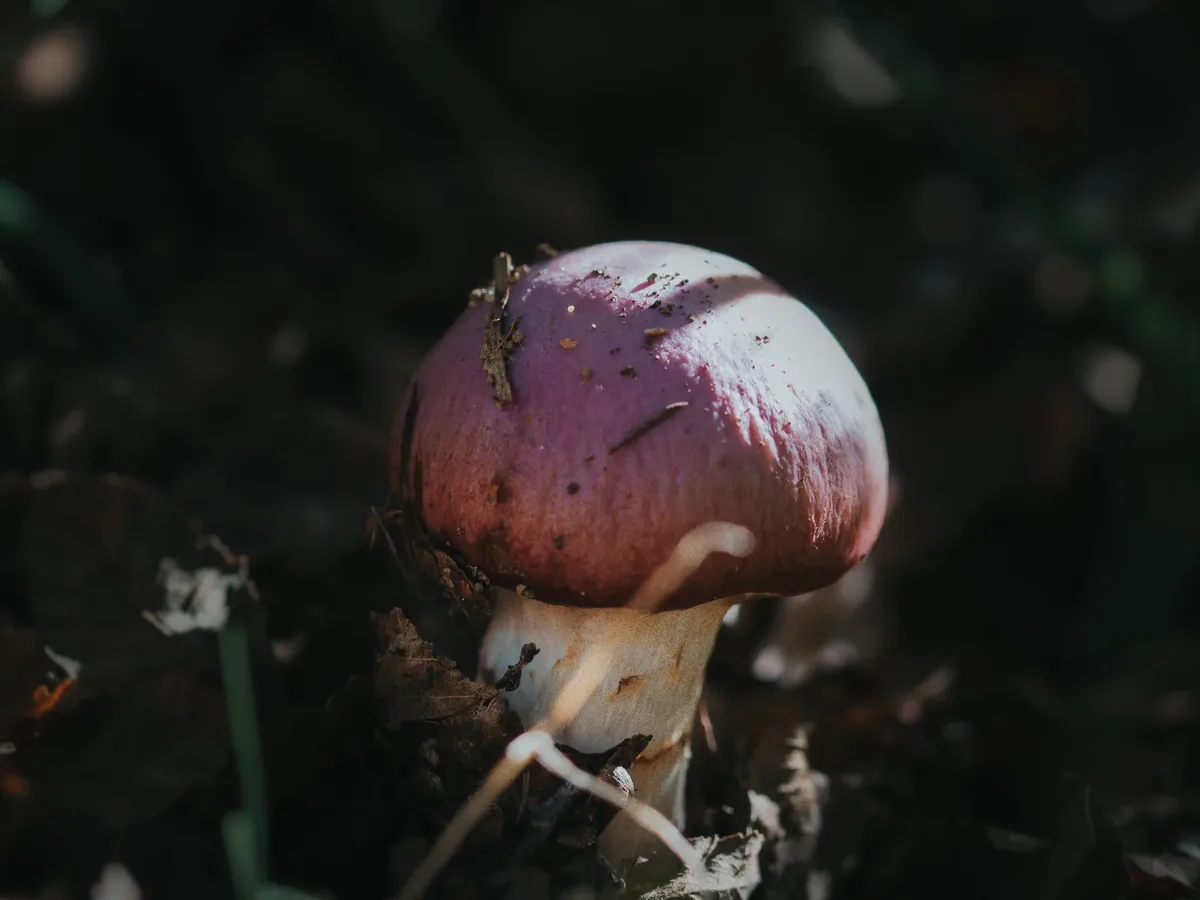 © Francia Álvarez (CC BY 4.0)
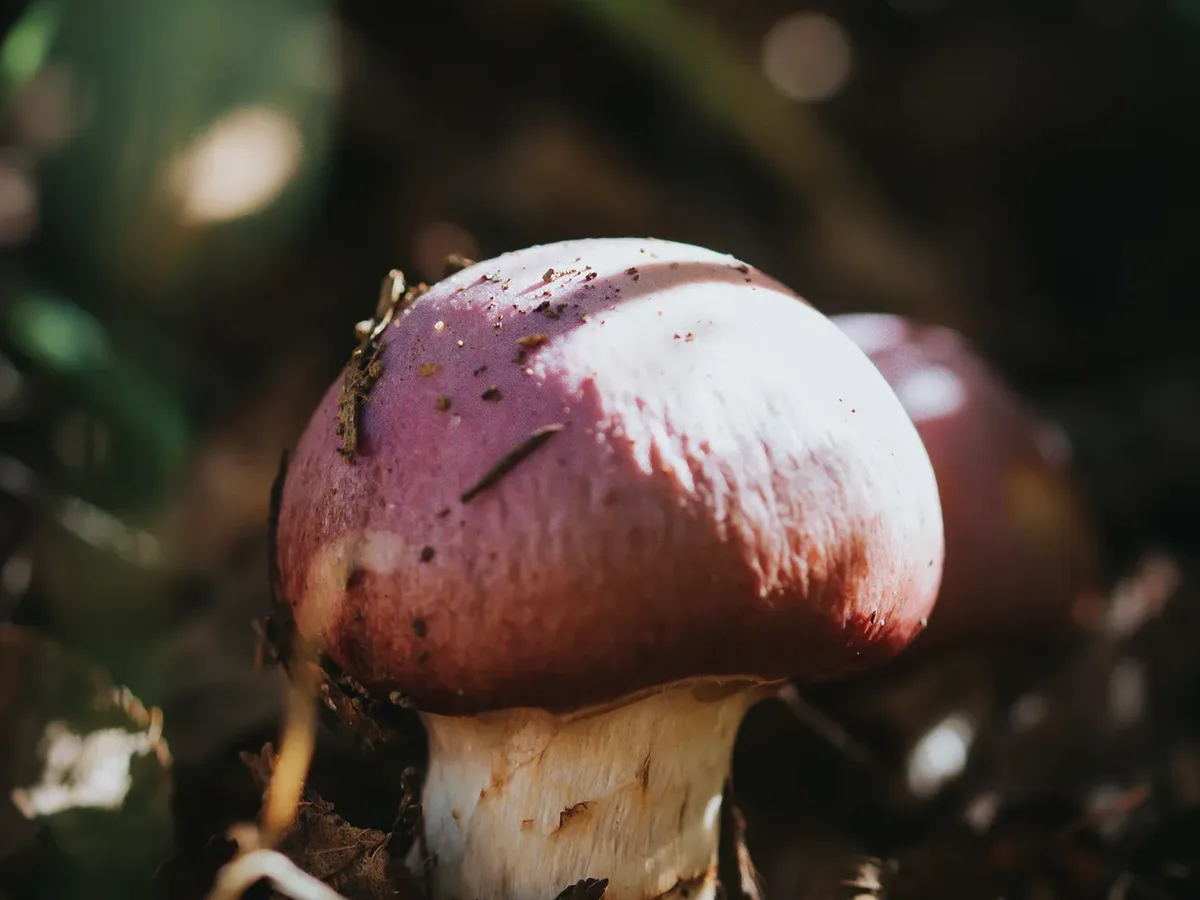 © Francia Álvarez (CC BY 4.0)
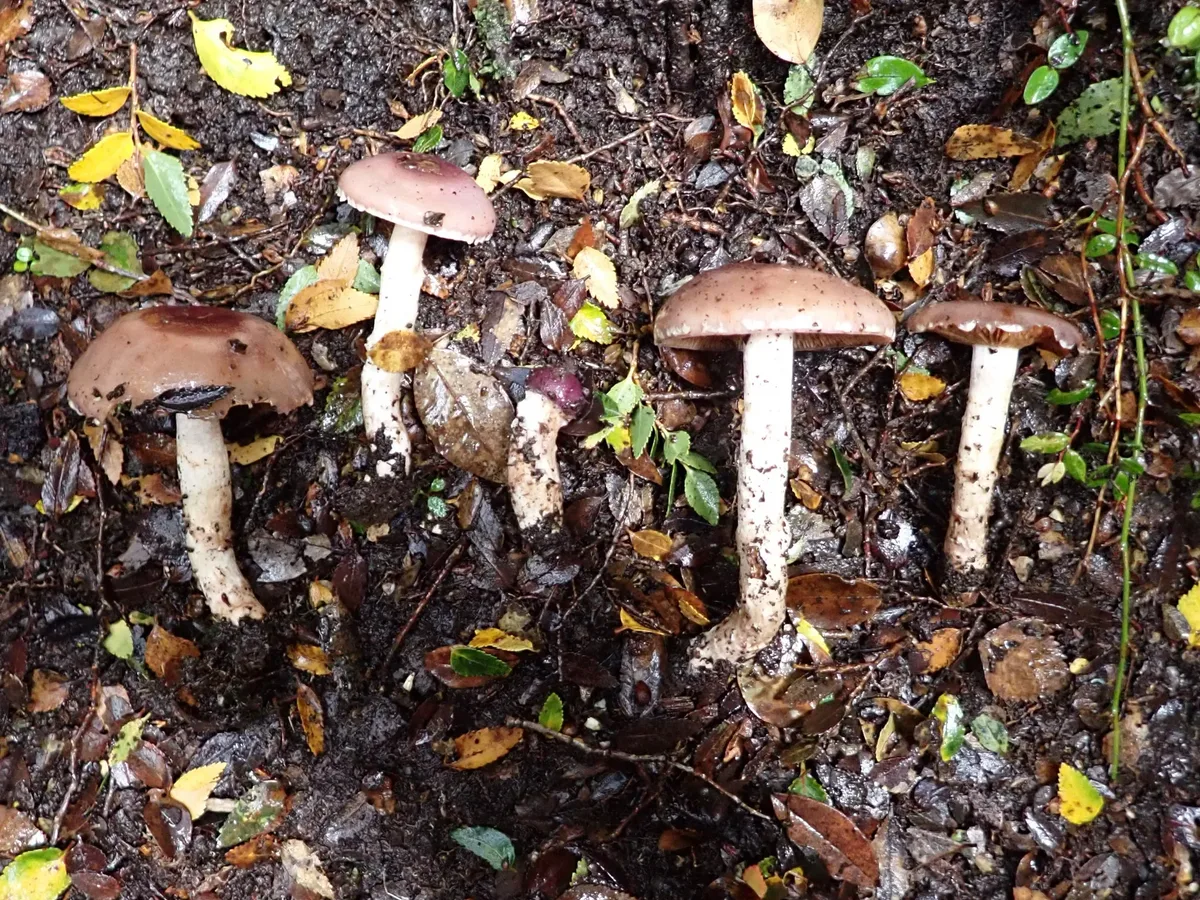 © Cristian Riquelme (CC BY)
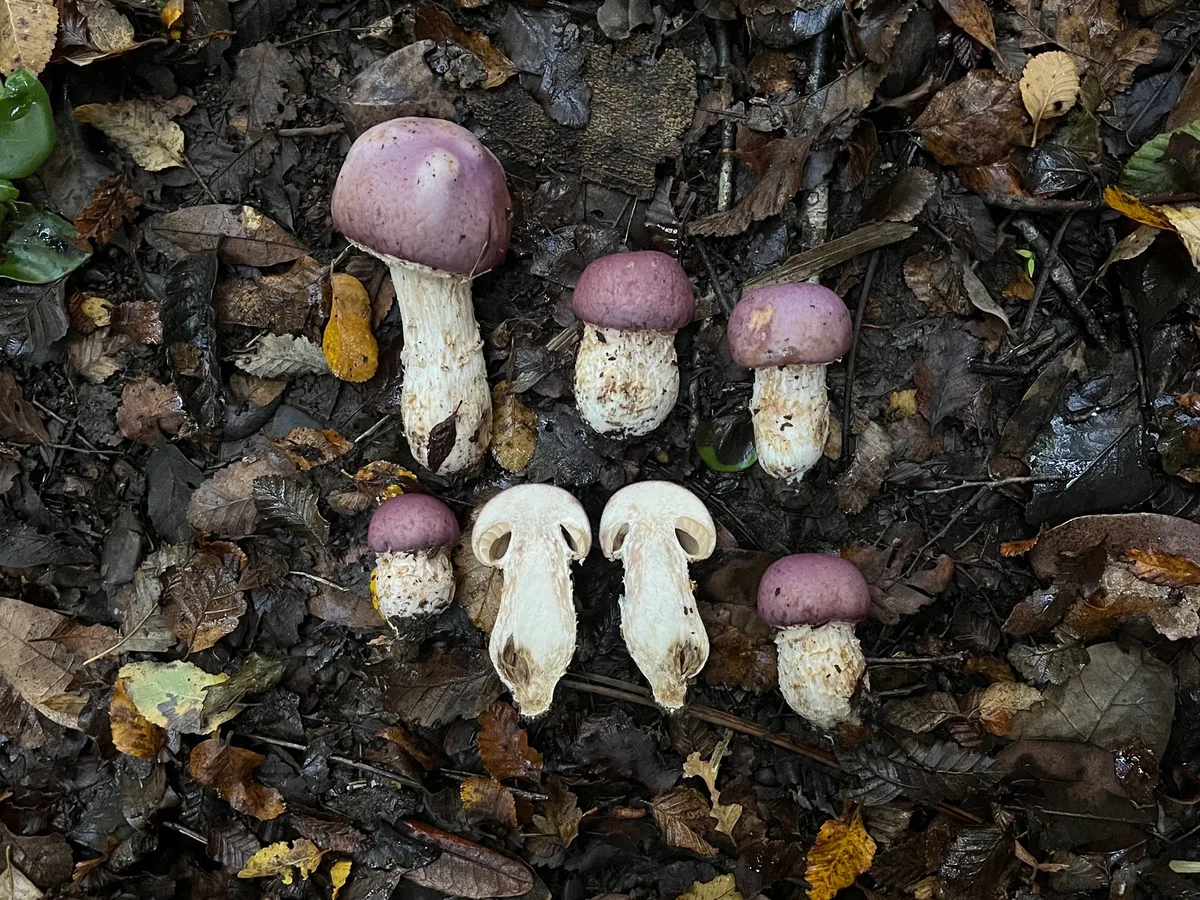 © Cristian Riquelme (CC BY)
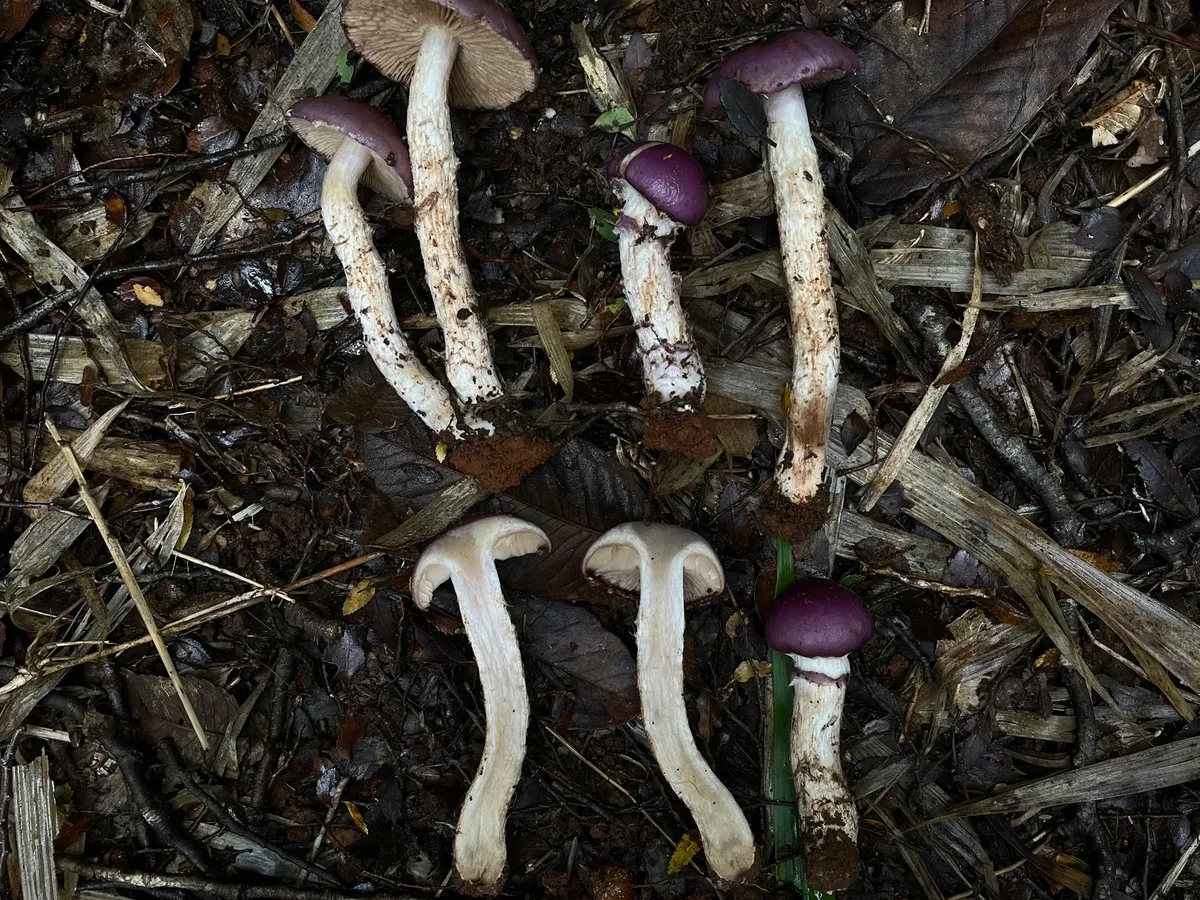 © Cristian Riquelme (CC BY)
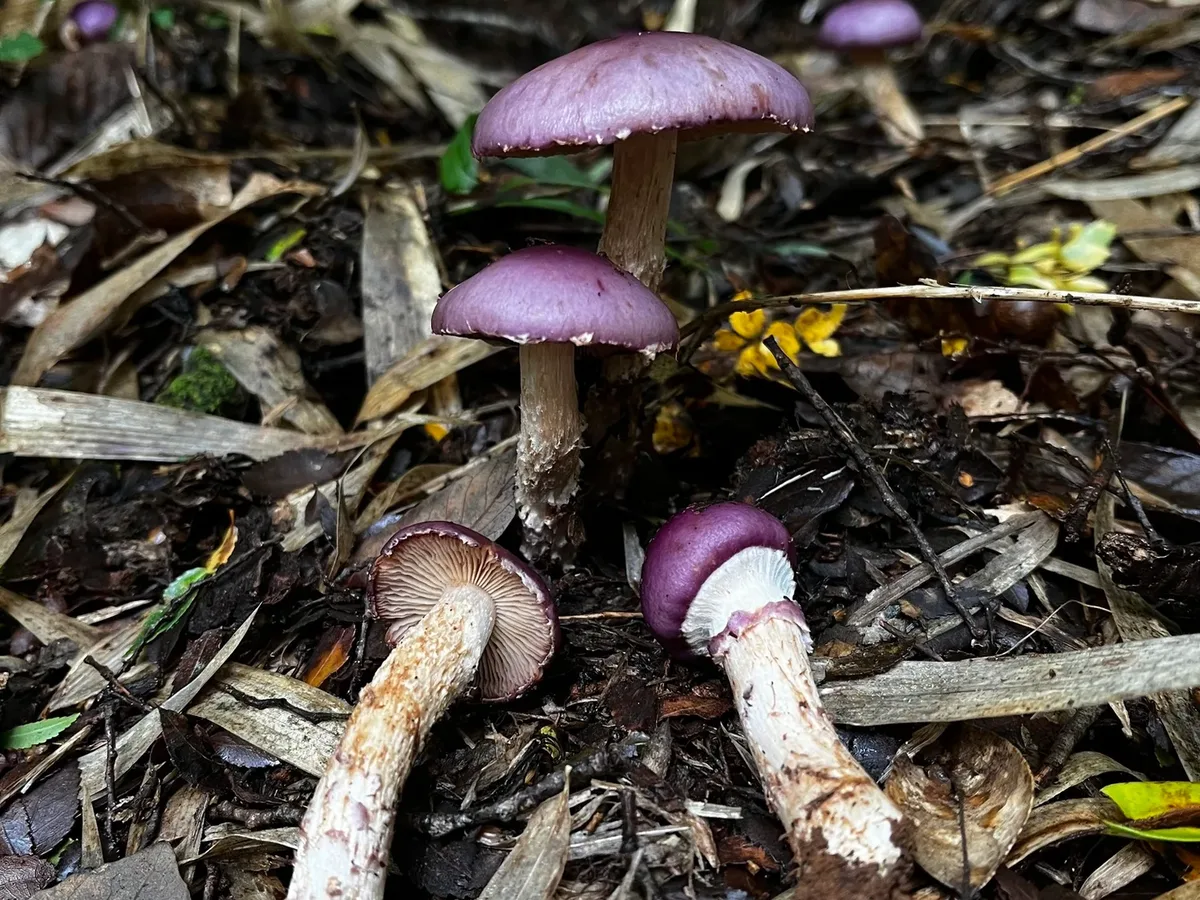 © Pablo Silva (CC BY)
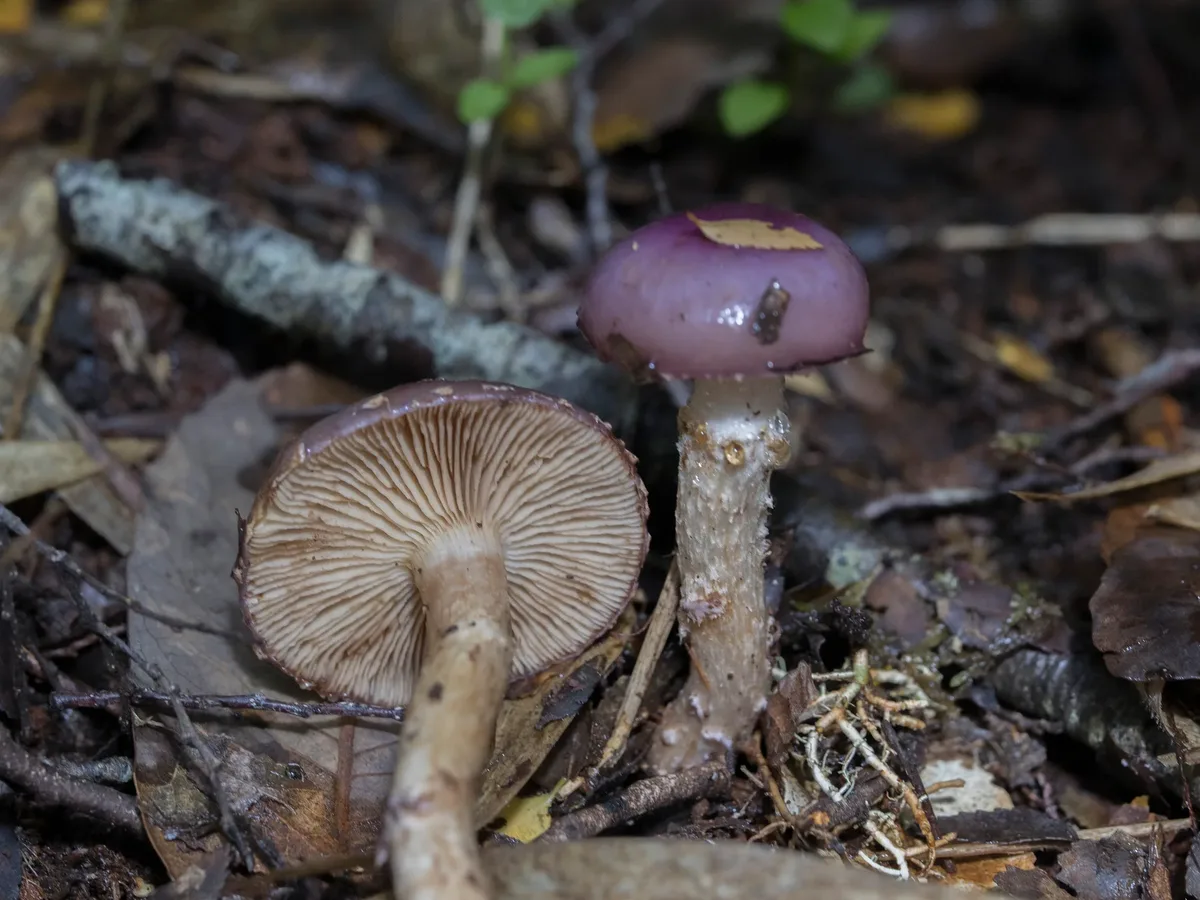 © Pablo Silva (CC BY)
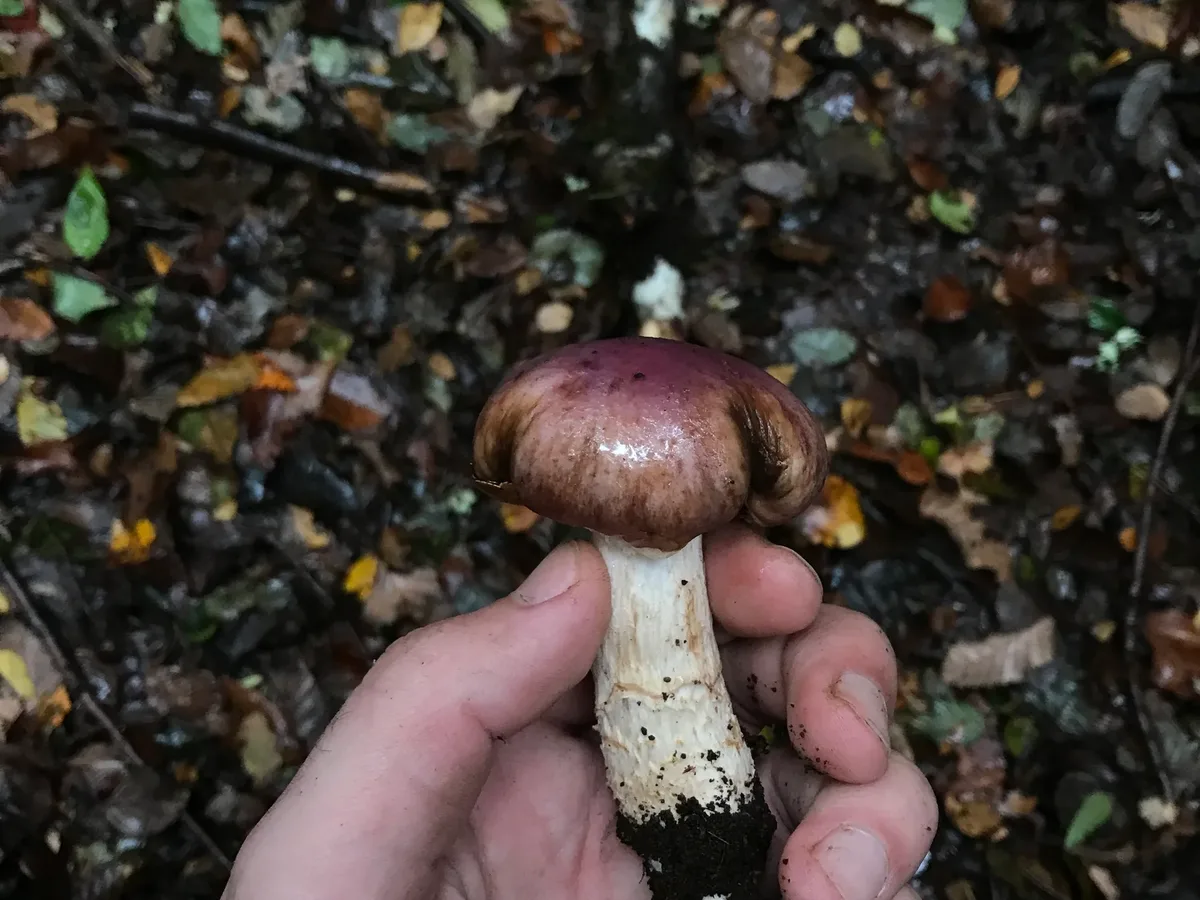 © Cristian Riquelme (CC BY)
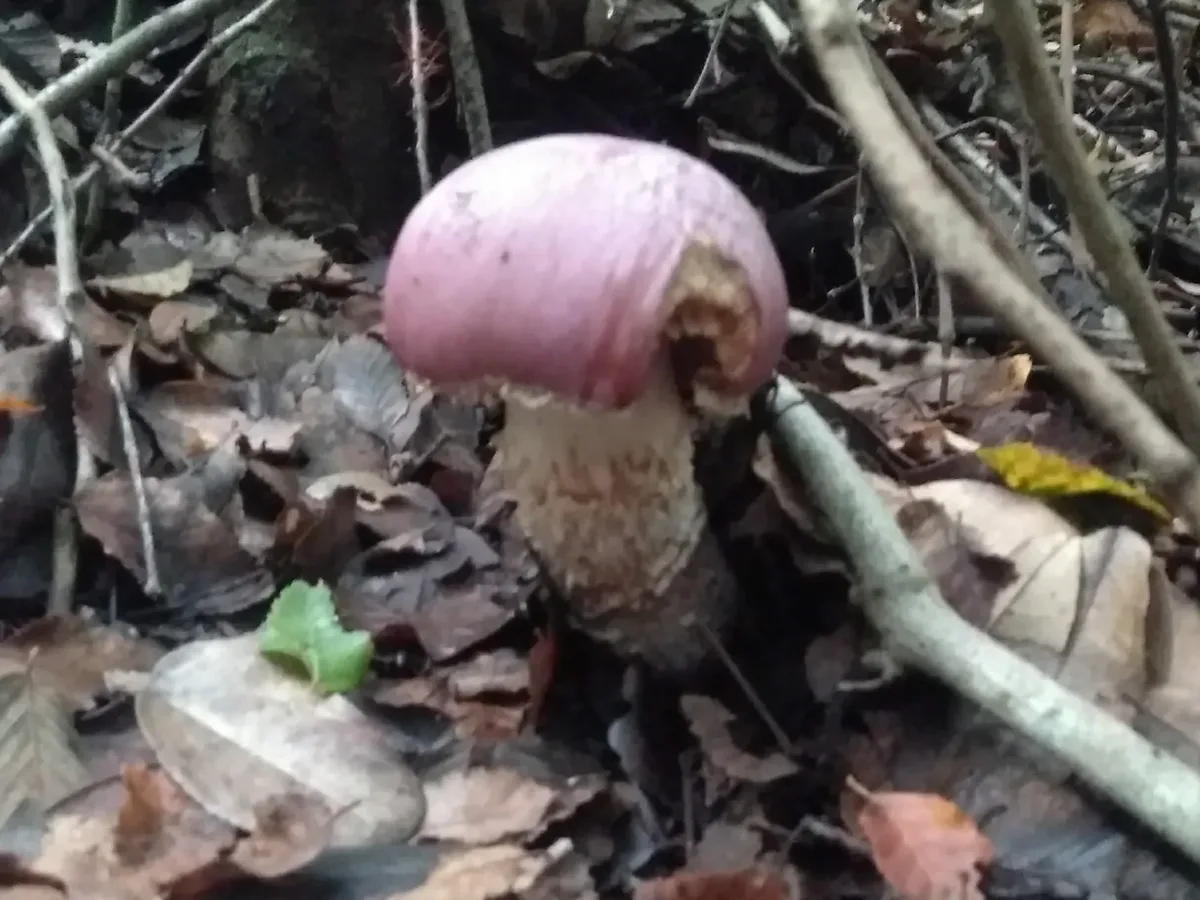 © Cristian Riquelme (CC BY)
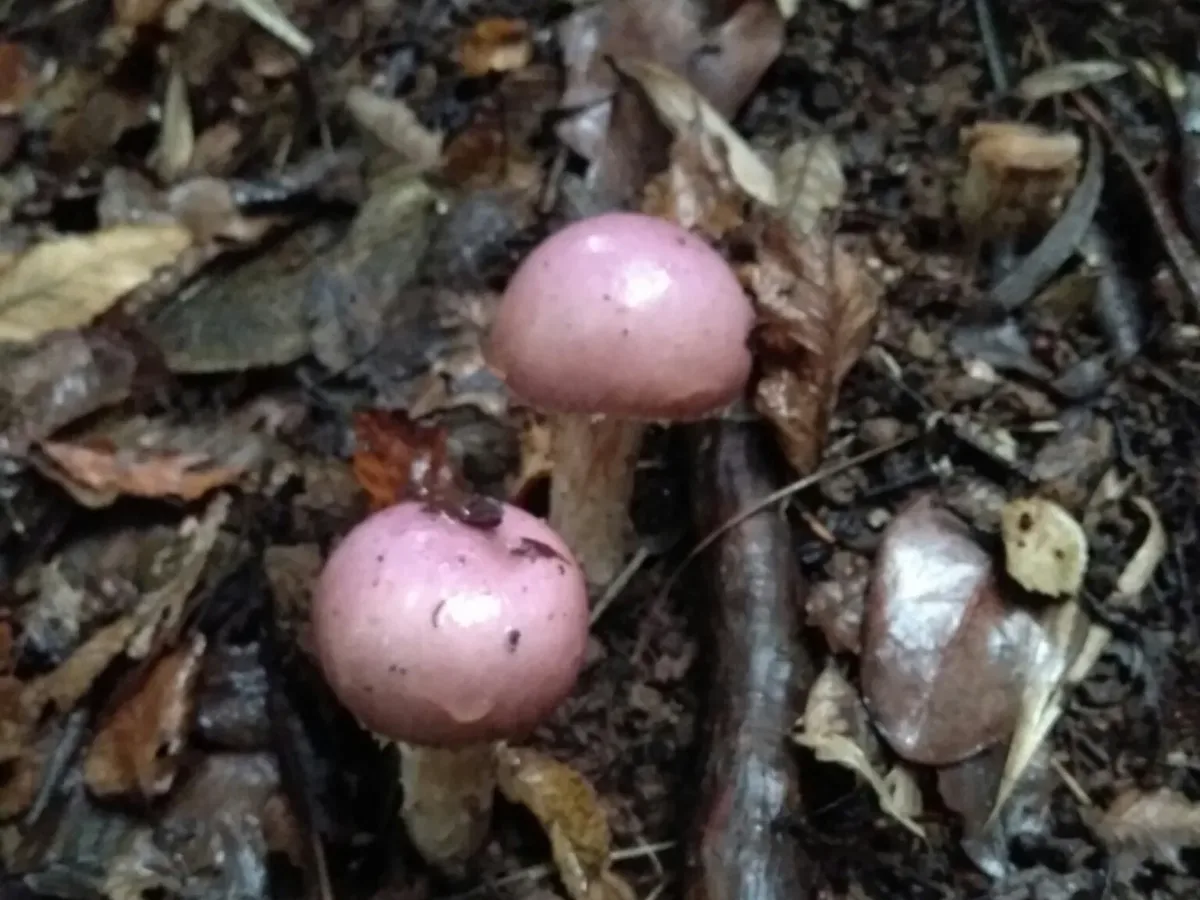 © Cristian Riquelme (CC BY)© Francia Álvarez (CC BY 4.0)© Francia Álvarez (CC BY 4.0)
Edible only with the right preparation - or safe for some people but not others. Learn the caveats first.
Never eat a mushroom you are not 100% sure of - check the look-alikes below, and always cook wild mushrooms.
How to recognise it
Cortinarius lebre is a medium to large mushroom in the Phlegmacium group - the viscid webcaps.
Cap
The cap is 5-12 cm across, convex when young and broadening to plane or slightly umbonate at maturity, with a persistently incurved margin in youth.
The surface is viscid to slimy in wet conditions, smooth, and ochre-buff to tawny-orange or pale cinnamon-brown, often with an olivaceous hue at the centre.
Gills
The gills are adnate to sinuate, fairly crowded, and go through a striking colour shift as the mushroom ages: starting pale lilac-grey or faintly violet (from pigments in the young mycelium), they warm through clay-brown to a deep rusty cinnamon-brown as the spores ripen.
Spore print: rusty brown.
Stem
The stipe is 5-10 cm tall and 1.5-3 cm thick, club-shaped to cylindrical with a distinctly swollen or marginate base - a hallmark of the Phlegmacium group - whitish to pale buff, sometimes with faint violet tones near the apex.
In young specimens you can see the cortina: a delicate cobweb of threads connecting cap margin to stipe that gives the whole genus Cortinarius its name. As it collapses it leaves a rusty-brown zone on the stipe from deposited spores.
Flesh
Flesh is firm and white to pale buff throughout, without distinctive odour, or with a faint earthy or radish-like smell.
Why it's dangerous
Potentially fatal through progressive kidney failure.
The extreme latency of symptoms makes this among the most clinically dangerous mushroom poisoning syndromes, as medical treatment begins very late.
Even partial exposures may cause permanent renal damage. There is no specific antidote.
Toxin
The primary concern is orellanin (and related orelline/orellinine compounds), the nephrotoxic bipyridine-N-oxide found in numerous Cortinarius species. It is heat-stable and is not destroyed by cooking.
It works by inhibiting protein synthesis in renal tubular cells, causing progressive renal tubular necrosis.
Because orellanin poisoning has a diagnostic latency period of 2-21 days (sometimes up to 3 weeks), victims often do not associate their kidney failure with mushroom ingestion.
C. lebre has not been definitively confirmed to contain orellanin, but its phylogenetic placement in Phlegmacium and the documented nephrotoxicity across this clade demands precautionary classification.
Symptoms
If orellanin poisoning occurs, initial symptoms are delayed. Early signs (1-3 weeks post-ingestion) include:
- flu-like malaise
- thirst
- excessive urination or reduced urination
- nausea
- back/flank pain
Progressive renal failure follows, potentially requiring dialysis or kidney transplant.
The delay between ingestion and symptom onset is critical - by the time symptoms appear, the toxin has already caused significant renal damage.
Seek emergency medical care immediately if orellanin poisoning is suspected, even days after eating a Cortinarius mushroom.
Staying safe
Treat as toxic. Cortinarius lebre has not been confirmed safe to eat by any credible mycological authority.
The genus Cortinarius contains some of the world's most dangerous mushrooms. Orellanin-bearing species (such as C. rubellus and C. orellanus) cause delayed nephrotoxic syndrome (orellanismus), characterised by irreversible kidney failure that may not manifest until 2-21 days after eating.
Even species initially described as 'non-toxic' in this genus have later been found to cause kidney damage or contain low-level toxins.
The lack of any established culinary use for C. lebre, combined with the inherent danger of the Phlegmacium group, means no responsible guide can recommend it.
If you find a viscid-capped, rusty-spored mushroom under Nothofagus in Patagonia - leave it.
Where & when it grows
Habitat
Cortinarius lebre grows in the Andean-Patagonian temperate rainforest of southern Chile and adjacent Argentina - a humid belt of ancient Nothofagus (southern beech) woodland that has no real equivalent elsewhere in the world.
It is strictly ectomycorrhizal, meaning its underground mycelium is woven into the roots of its host trees in a partnership that may persist for many years. The mushroom you see is just the tip of a much larger living network.
It fruits on the ground in leaf litter, humus, and mossy soil beneath Nothofagus obliqua, N. dombeyi, N. pumilio, N. antarctica, and N. alpina, often in humid ravines and valley-bottom forest.
Because it depends entirely on Nothofagus as a mycorrhizal partner, it will not be found in plantations of exotic trees or in any forest lacking southern beech.
When
Fruits in Southern Hemisphere autumn, from late summer (February) through early winter (June), peaking from March to May as temperatures cool and autumn rains move through the Andes.
Like other Phlegmacium webcaps, fruiting responds to the combination of declining soil temperature and sustained soil moisture. It is not a simple flush-after-rain species but takes time to push its fruiting bodies up from the root zone.
How it grows
Ectomycorrhizal. Fruits singly or in small scattered groups on the ground beneath Nothofagus trees, never in tight clusters.
The mushroom is an expression of a subterranean partnership: the mycelium threads through the forest floor, exchanging minerals and water with the tree's roots, and only when conditions are right does it send up the visible fruiting body.
Fruiting conditions
Estimates derived from typical Phlegmacium webcap ecology: mycorrhizal species in temperate southern beech forest, fruiting in response to autumn temperature drop and soil moisture increase. The longer flush lag (10-21 days) reflects the slow mycorrhizal fruiting body development typical of Cortinarius compared to saprotrophic species.
Look-alikes
Several other Cortinarius species occur in the same Nothofagus forests and share a superficially similar appearance, including confirmed deadly species such as Cortinarius rubellus and Cortinarius orellanus (which, though principally European, have close relatives in Nothofagus forests globally).
Within South America, the genus is diverse and incompletely studied. Numerous undescribed or recently described Cortinarius species share the viscid cap, rusty spore print, and bulbous stipe.
Edible species that could be confused include Cortinarius caperatus (Gypsy mushroom), which occurs in the Northern Hemisphere but whose general form (viscid cap, ring-zone on stipe, pale gills aging to rust) can mislead beginners.
The pale lilac initial gill colour can superficially resemble edible Lepista (blewit) species, but Lepista lacks the cortina and rusty brown spore print.
Any webcap with a rusty spore print and cobweb veil should be treated as potentially toxic.
The original orellanin-bearing species. More tawny-orange with a dry (not viscid) cap and fibrillate surface; gills widely spaced. Primarily a European species under oak and beech, but the broader complex of related species in South America demands equal caution.
C. rubellus is a confirmed orellanin-bearing deadly species. It is similarly tawny-orange to rusty-brown with a viscid cap and rusty spore print. It differs from C. lebre in its more conical cap, drier stipe, and association with conifers (spruce, pine) in the Northern Hemisphere - but closely related and potentially indistinguishable Nothofagus-associated Cortinarius in South America may carry the same toxin. Never use these differences to declare a specimen safe.
The South American Cortinarius flora is incompletely documented. Many viscid-capped, rusty-spored webcaps under Nothofagus remain undescribed or have only recently been named. Some almost certainly contain orellanin. No field character reliably distinguishes toxic from non-toxic Phlegmacium; chemical testing or DNA barcoding is required. Treat all as potentially deadly.
An edible Northern Hemisphere species sometimes sought by experienced foragers. It has a characteristic wrinkled-silky cap, a ring (annulus) rather than a mere cortinal zone on the stipe, and white (not viscid) cap surface. It occurs in boreal and montane Europe and North America, not in South America - any South American 'caperatus-like' webcap should not be assumed to be the same species or equally safe.
Wood blewit also has lilac-tinted gills when young, but it lacks the cobweb cortina entirely, has a non-viscid cap, a pinkish-buff (not rusty) spore print, and a distinctive sweet, perfumed smell. Any rusty-brown spore print rules out Lepista.
A reference guide - never an edibility guarantee. When in doubt, leave it out.