Broad webcap
Cortinarius latussyn. Cortinarius latus (Pers.) Fr., Agaricus latus Pers., Phlegmacium latum (Pers.) Wünsche
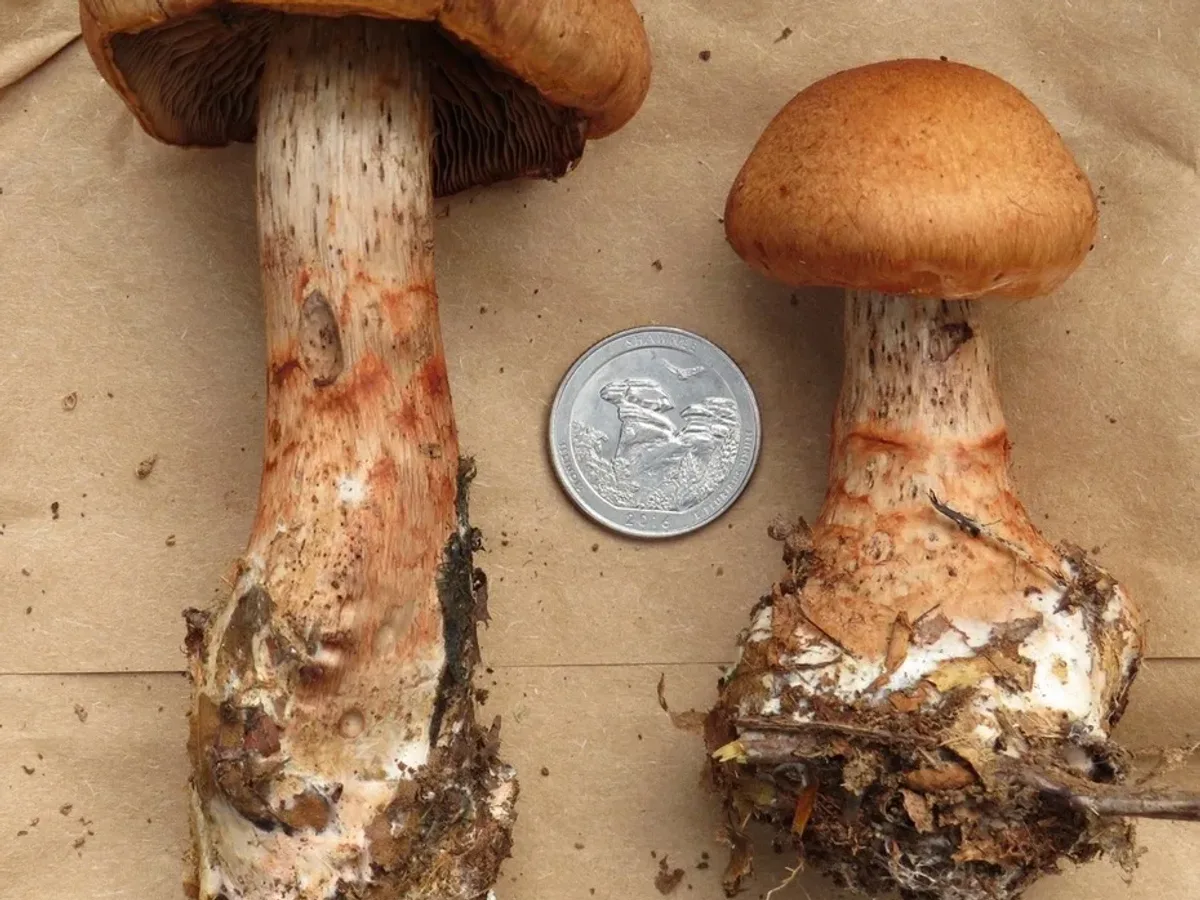 © (c) Deana Tempest Thomas, some rights reserved (CC BY) (CC BY)
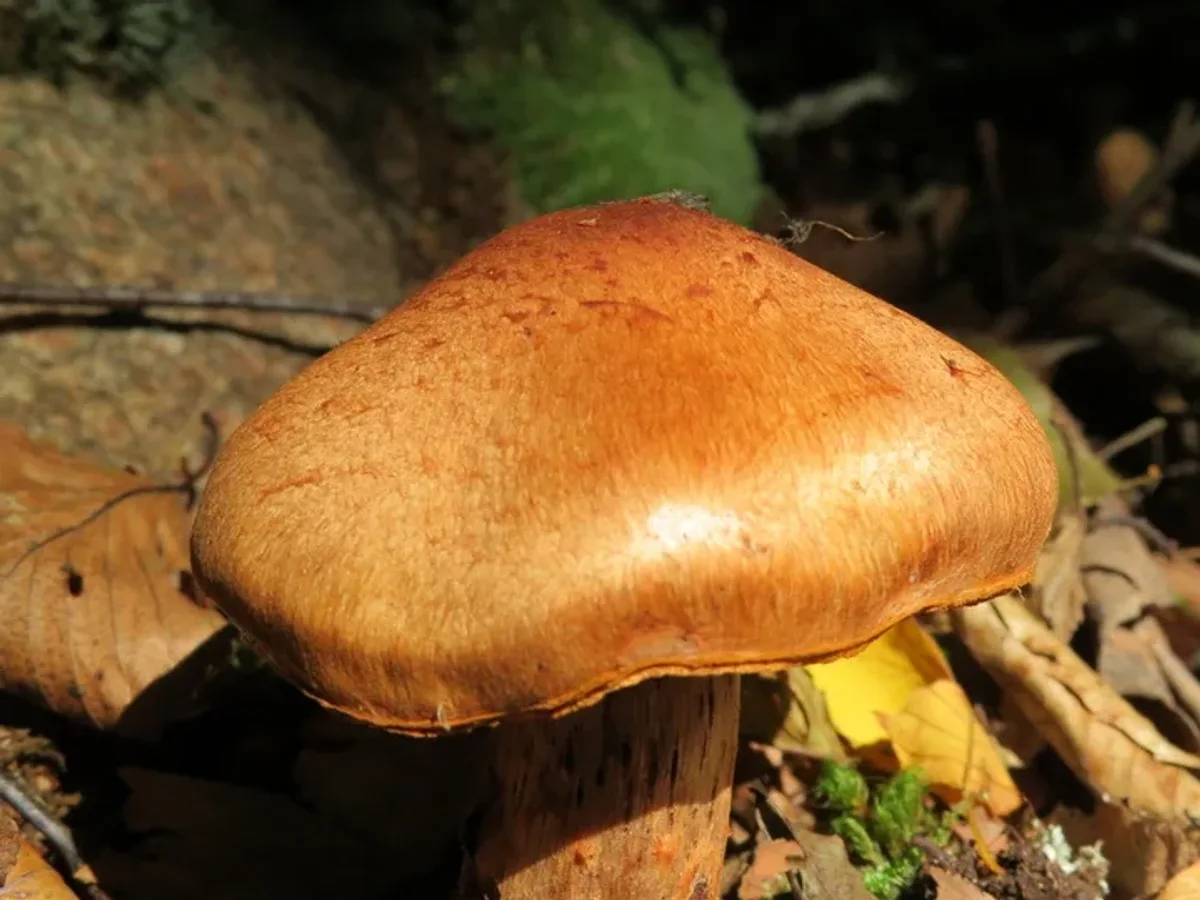 © (c) Deana Tempest Thomas, some rights reserved (CC BY) (CC BY)
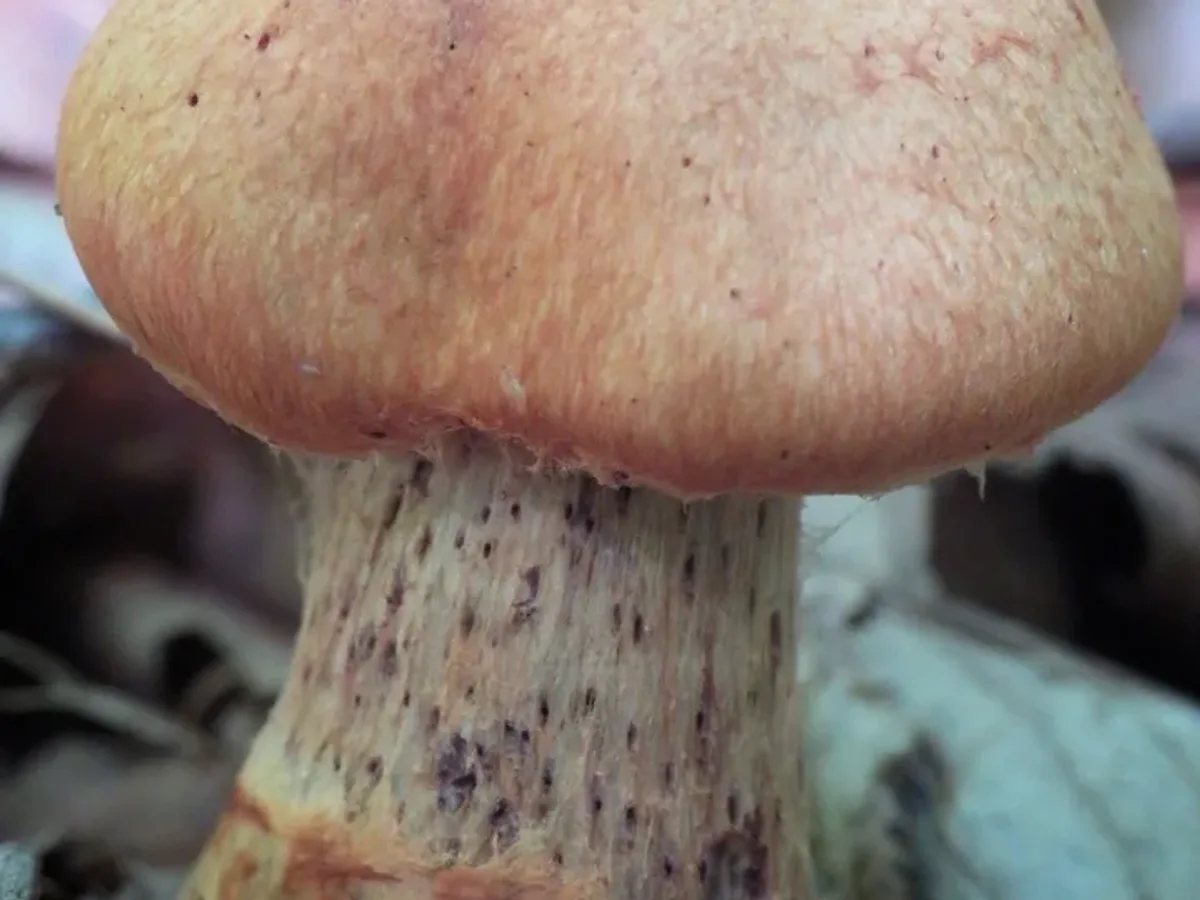 © (c) Deana Tempest Thomas, some rights reserved (CC BY) (CC BY)
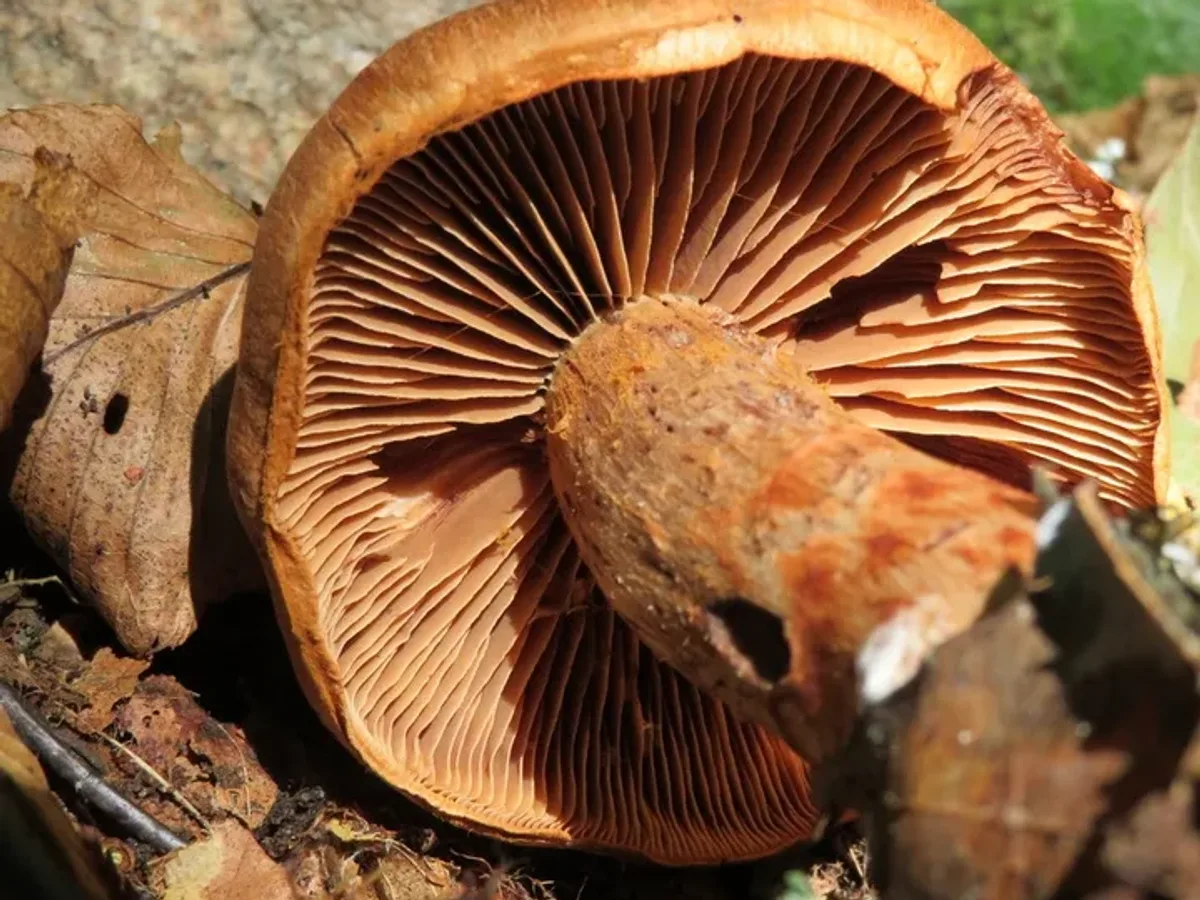 © (c) Deana Tempest Thomas, some rights reserved (CC BY) (CC BY)
 © (c) Deana Tempest Thomas, some rights reserved (CC BY) (CC BY)© (c) Deana Tempest Thomas, some rights reserved (CC BY) (CC BY)© (c) Deana Tempest Thomas, some rights reserved (CC BY) (CC BY)
Edible only with the right preparation - or safe for some people but not others. Learn the caveats first.
Never eat a mushroom you are not 100% sure of - check the look-alikes below, and always cook wild mushrooms.
How to recognise it
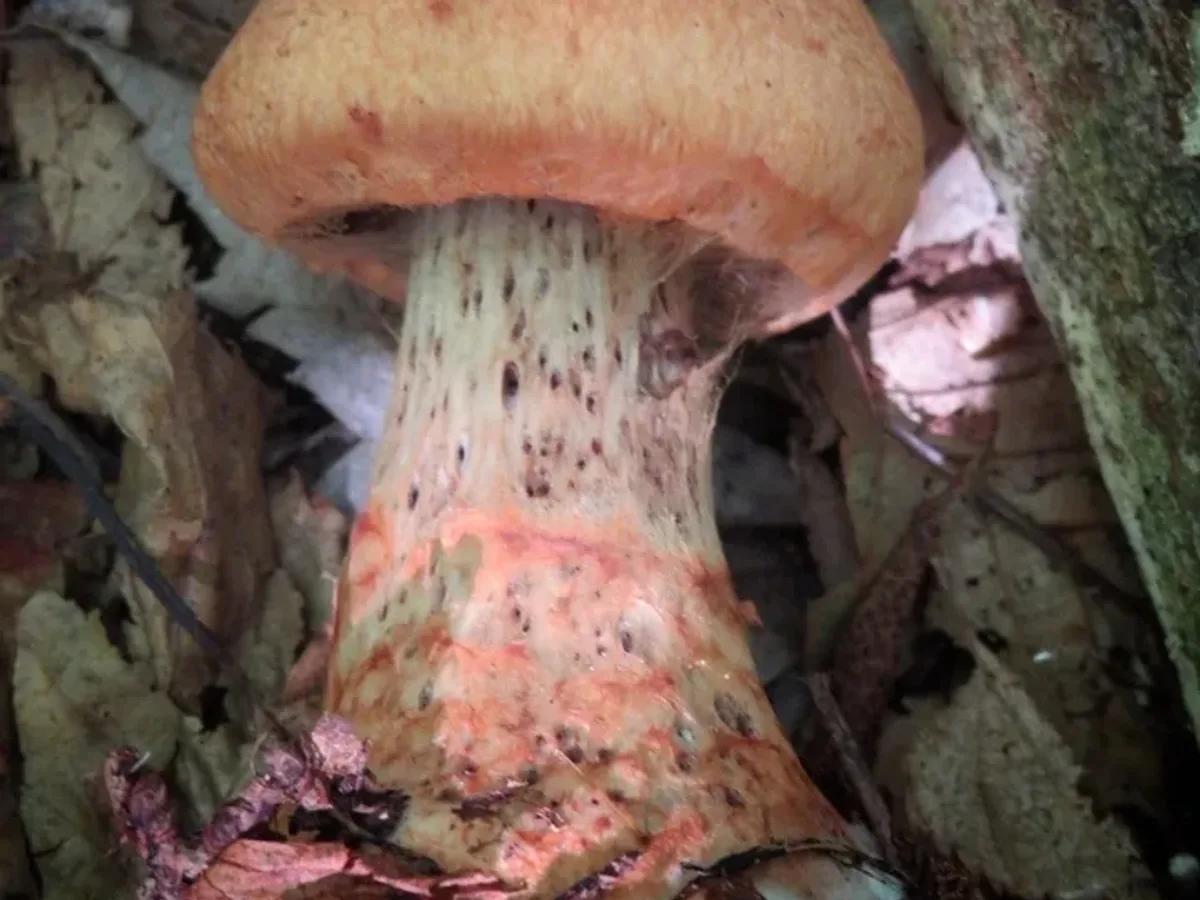
Cortinarius latus is a large, stout, viscid-capped webcap whose most distinctive features are its relatively broad pale greyish-lilac to buff cap, its conspicuously swollen bulbous stem base, and the pale violet tinge visible in fresh young specimens.
Cap
The cap begins hemispherical, up to 12 cm across in mature specimens, and expands to broadly flat. The surface is distinctly glutinous or viscid when wet, which helps identify it as a Phlegmacium-group Cortinarius.
The colour is deceptively variable: young caps show a clear pale lilac or violet-grey wash that fades as the specimen matures, leaving an undistinguished buff to ochre-grey cap that blends into the leaf litter. This colour shift is important - a dried or aged specimen loses the violet tinge that is its most attractive character.
Gills
The gills are pale violet when fresh, becoming rusty-brown with spore deposit.
The rusty-brown spore print is shared by all Cortinarius species and is the most reliable single field character to confirm genus-level identification. Combined with the slimy cap and bulbous base, it places a specimen firmly in the Phlegmacium group of Cortinarius.
Stem
The robust, frequently bulbous stem is silky-fibrillose and pale lilac to whitish.
Why it's dangerous
Moderate-to-high danger, primarily from misidentification. Cortinarius latus itself is classified as non-lethally toxic to suspect, but it grows in the same autumn deciduous woodland as confirmed deadly orellanine-bearing webcaps (notably Cortinarius splendens and Cortinarius orellanus) that cause irreversible renal failure.
A forager who misidentifies C. splendens as C. latus and eats it faces a potentially fatal outcome. Even a correct identification of C. latus does not make consumption safe, as its full toxicological profile remains uncharacterised.
Do not consume. If consumption has occurred, contact a Poison Control Centre immediately and specify that a Cortinarius species was involved.
Toxin
Toxicity of Cortinarius latus is inadequately characterised. No orellanine - the bicyclic dipyridine responsible for delayed renal failure in C. orellanus and C. rubellus - has been confirmed in C. latus at toxicologically significant levels.
The species belongs to the Phlegmacium section of Cortinarius, several members of which produce gastrointestinal-irritant compounds of uncertain identity. Some Phlegmacium species are also suspected of producing low-potency nephrotoxins distinct from orellanine.
The toxin responsible for reported gastrointestinal illness after ingestion of C. latus has not been isolated or identified in the published literature.
Symptoms
Reported toxic effects following ingestion of suspected Cortinarius latus are primarily gastrointestinal, typically beginning within 1-4 hours of consumption:
- Nausea
- Vomiting
- Abdominal cramping
- Diarrhoea
Symptoms are generally self-limiting and resolve without specific medical treatment.
Because orellanine-type renal toxicity (which presents with a symptom-free latent period of 2-21 days before kidney pain, polyuria, and renal failure) cannot be completely excluded for all Phlegmacium species, any person who has consumed a misidentified or uncertain Cortinarius species and develops urinary symptoms, back pain, or fatigue within three weeks should seek immediate medical attention and report the consumption.
Retain a sample or photograph of the consumed mushroom for medical identification.
Staying safe
The toxicity of Cortinarius latus is imprecisely characterised. The species belongs to the large Phlegmacium section of Cortinarius, a group that includes both harmless-seeming and seriously toxic members.
C. latus is not known to cause orellanine-type delayed renal failure at the level of C. orellanus or C. rubellus, but some Phlegmacium species produce gastrointestinal-irritant compounds and possibly other nephrotoxic substances at lower potency. Reports of gastrointestinal illness after ingestion of suspected C. latus exist in the European mycological literature, though systematic toxicological data are lacking.
The prudent position - adopted by all major European field guides - is to treat C. latus as inedible and suspect, in the same way that all unidentified Cortinarius species should be treated.
Given that the genus contains several of the world's most dangerous mushrooms (including orellanine-bearing species that cause permanent renal failure years after ingestion), any uncertainty in identifying a Cortinarius species to confirmed safe status should resolve toward avoidance. The risk of misidentification with a deadly Cortinarius in the same habitat is real and documented.
Where & when it grows
Habitat
Cortinarius latus is a mycorrhizal partner of mature deciduous trees, preferring beech, oak, and hornbeam across European and temperate Asian forests. Associations with Castanopsis and temperate Quercus are recorded from montane East Asia, where populations occur at mid elevations in mixed forest alongside Tricholoma, Russula, and Lactarius.
It favours humus-rich soils and does better on calcareous or base-enriched ground than on strongly acidic substrates. Being tied to mature root networks, it is absent from young plantations and heavily disturbed forest - it belongs to the kind of old, layered woodland that takes generations to establish.
Look for it among deep leaf litter in October, emerging singly or in small scattered groups. The slimy cap catches fallen debris, so a litter-plastered surface rather than a clean one is normal and worth noticing.
When
Cortinarius latus is an autumn species across all of its range. In European and temperate Asian forests it fruits from late August through November, peaking in September and October.
Fruiting is driven by the shift from summer drought to autumn rain, combined with cooling soil temperatures - the classic trigger for much of the autumn woodland flush. At montane elevations in East and Southeast Asia, fruiting can begin in late summer as temperatures drop earlier with altitude.
Like most webcaps, individual fruit bodies are persistent and can stand intact for two to three weeks if the weather is kind. It does not fruit in spring.
How it grows
Cortinarius latus lives most of its life underground. An invisible mycelium threads through the humus and mineral soil in quiet partnership with the fine roots of host trees - an arrangement that can persist for decades in undisturbed forest, the fungus supplying minerals while the tree feeds it sugars.
The fruit bodies we see are just its brief above-ground moment: stout, solitary mushrooms or loose small groups pushing up through leaf litter, never clustered on wood.
How generously it fruits in any given autumn depends heavily on the year's rainfall - in a dry year even a thriving mycelial network may produce nothing at all. A mature specimen is large enough to be conspicuous, though the buff-grey cap blends into the litter until you are nearly on top of it.
Fruiting conditions
Requires autumn rainfall following late-summer drought combined with declining soil temperatures below approximately 15 °C. Typical of calcareous or moderately fertile deciduous woodland. In East Asian montane forests the season extends from late summer as temperatures cool at elevation. Established mycorrhizal networks in mature forest are required; not found in young or heavily disturbed stands.
Look-alikes
Cortinarius latus can be confused in both directions - with deadly Cortinarius relatives on one side and with the edible wood blewit on the other, which makes it a particularly hazardous species to encounter in the field.
- Cortinarius splendens (deadly splendid webcap) - the most dangerous confusion. It grows in similar beech and oak woodland in autumn and also has a swollen bulbous stem and a viscid cap, differing primarily in its intensely yellow cap colour and yellow gills. In overcast light or in stained old specimens the yellow of C. splendens can appear ochre.
- Cortinarius orellanus (fool's webcap) - though not viscid-capped, is deadly and found in the same woodland type; its tawny-orange dry cap contrasts with the grey-buff viscid cap of C. latus.
- Lepista nuda (wood blewit) - edible, and can be confused with young pale-violet C. latus because both have violet-lilac gills and occur in deciduous leaf litter in autumn. The critical differences are that Lepista nuda has a pinkish-buff non-viscid cap, pinkish spore print (not rusty-brown), lacks a cortina, lacks a swollen bulbous stem base, and has a distinctive sweet floral perfume.
- Various large pale Cortinarius species in the Phlegmacium group (including C. varius, C. caerulescens) are broadly similar in appearance.
Cortinarius orellanus is a deadly orellanine-containing species found in similar oak and beech woodland in autumn. Its cap is dry and tawny-orange to brick-red - not viscid and not pale grey-buff like C. latus - but both share the rusty-brown spore print, cobwebby cortina, and deciduous forest habitat. C. orellanus is not viscid and lacks the bulbous stem base of C. latus; however, encounters with both in the same stand are possible and both are lethal.
Cortinarius splendens is deadly (orellanine) and grows in similar beech and oak woodland in autumn. It is distinguished by its intensely chrome-yellow to golden-yellow cap and yellow-tinged flesh - but in indirect light or old/faded specimens, the yellow can look ochre-buff and superficially resemble C. latus. The slimy viscid cap, bulbous stem, and autumn deciduous-woodland habitat are shared. Any yellow-capped viscid Cortinarius with a swollen base must be assumed deadly.
Cortinarius caerulescens has a pale ochre to buff viscid cap and distinctly blue-violet gills when young - the intensity of the blue-violet is greater than in C. latus. Both grow under beech and oak; both are inedible. The distinction is mycological, not foraging-critical: treat all Phlegmacium-group Cortinarius as inedible.
Cortinarius varius is a closely related Phlegmacium-group webcap with a tawny-orange to ochre viscid cap and pale violet gills and stem - the cap colour is warmer and more orange than the grey-buff cap of C. latus. C. varius is not confirmed deadly but is treated as inedible by European authorities; both species occur in similar habitats under spruce and beech. The distinction matters for documentation but not for foraging: neither should be eaten.
Young Cortinarius latus with fresh violet-lilac gills and a pale cap might be confused with Lepista nuda (wood blewit), an edible species also found in deciduous leaf litter in autumn. Critical distinctions: Lepista nuda has a dry, non-viscid cap; a pinkish to pale buff spore print (not rusty-brown); no cortina (cobwebby veil); no bulbous swollen stem base; and a distinctive sweet, floral, anise-like fragrance. C. latus has a slimy cap when wet, a rusty-brown spore print, and a cortina leaving rust-coloured veil fragments on the stem.
A reference guide - never an edibility guarantee. When in doubt, leave it out.