Conifer webcap
Cortinarius gentilissyn. Agaricus gentilis Fr., Dermocybe gentilis (Fr.) Wünsche, Cortinarius caninus var. gentilis
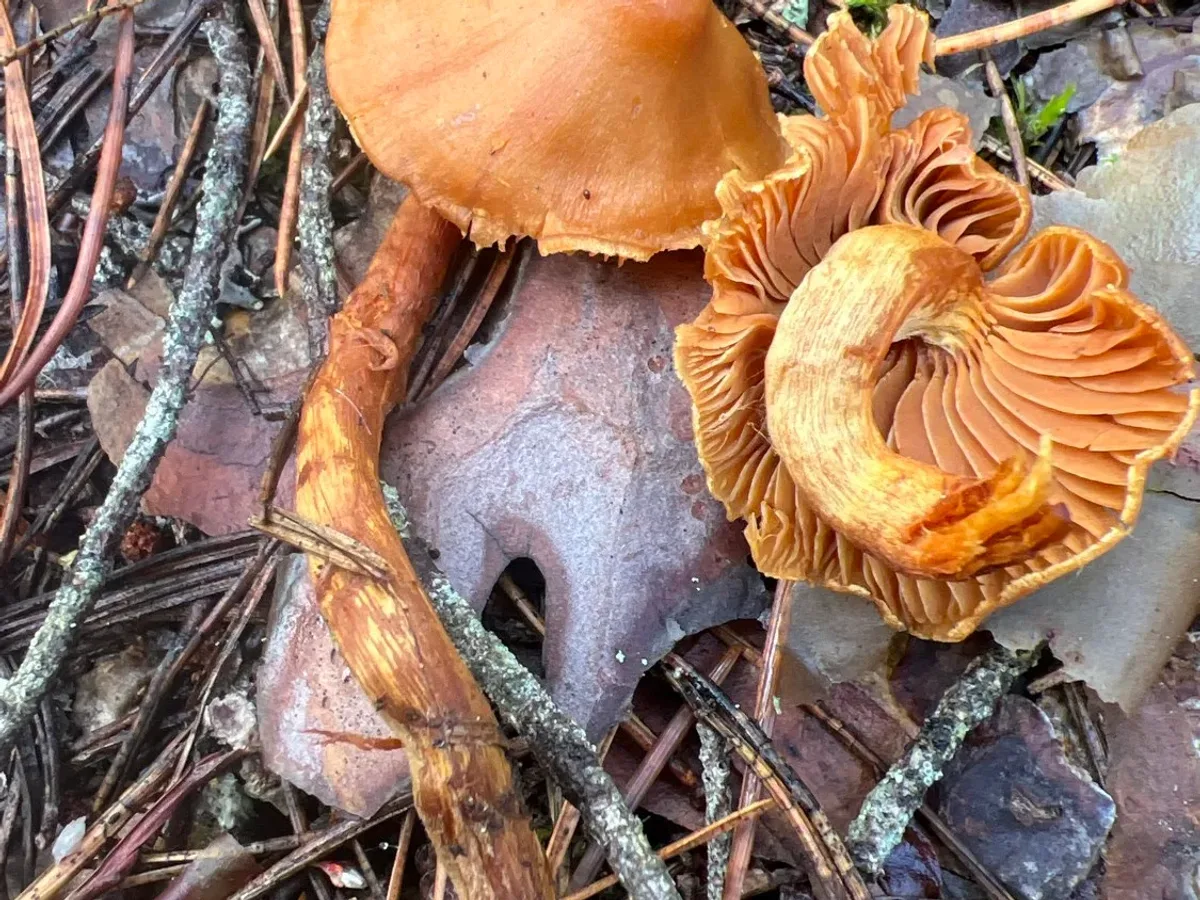 © Leila S. Berg (CC BY)
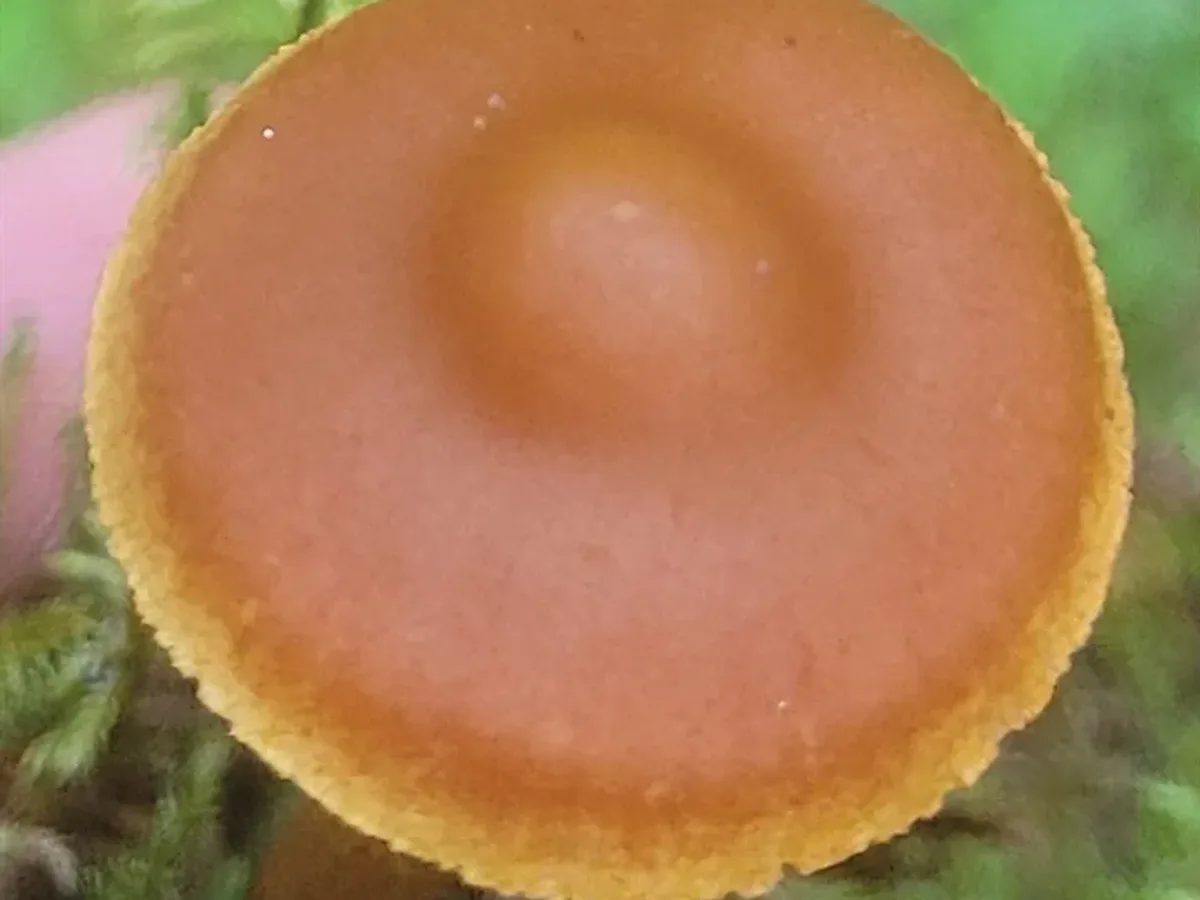 © Terje Bjerkan (CC BY)
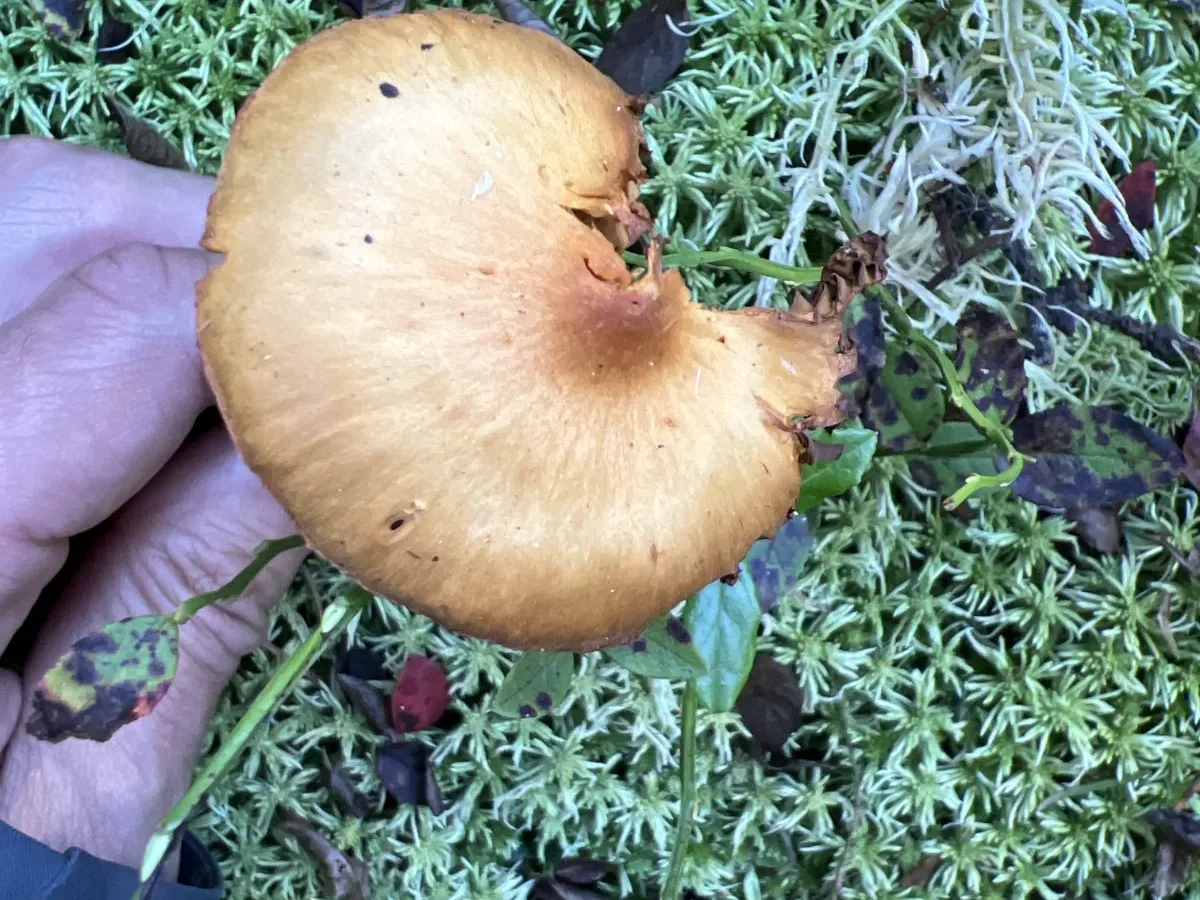 © Ulrik Andreassen (CC BY)
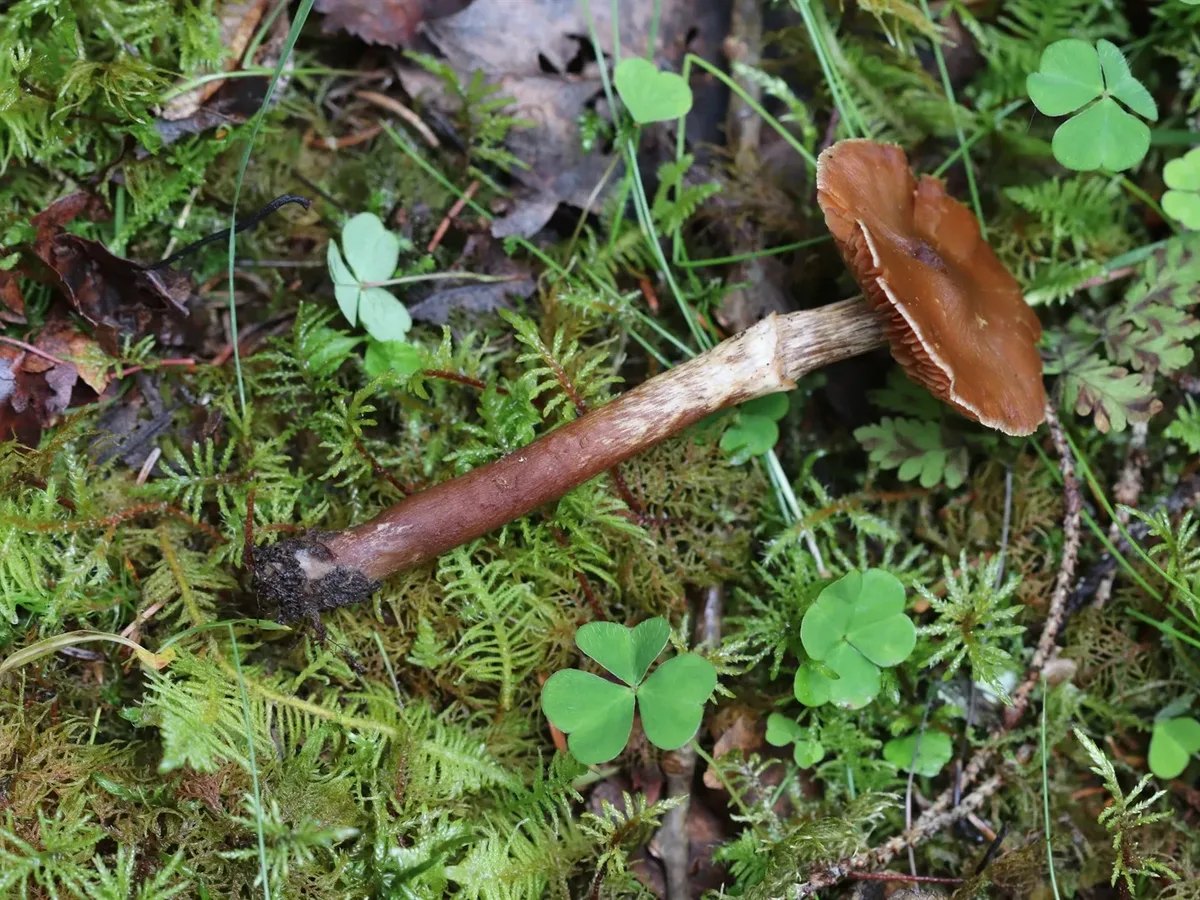 © Rob van Kruining (CC BY)
 © Rob van Kruining (CC BY)
 © Liv Åm (CC BY)
 © Morten Pettersen (CC BY)© Leila S. Berg (CC BY)© Terje Bjerkan (CC BY)
Toxic - and the most serious cases can be fatal. Never eat it, and wash your hands after handling.
Never eat a mushroom you are not 100% sure of - check the look-alikes below, and always cook wild mushrooms.
How to recognise it
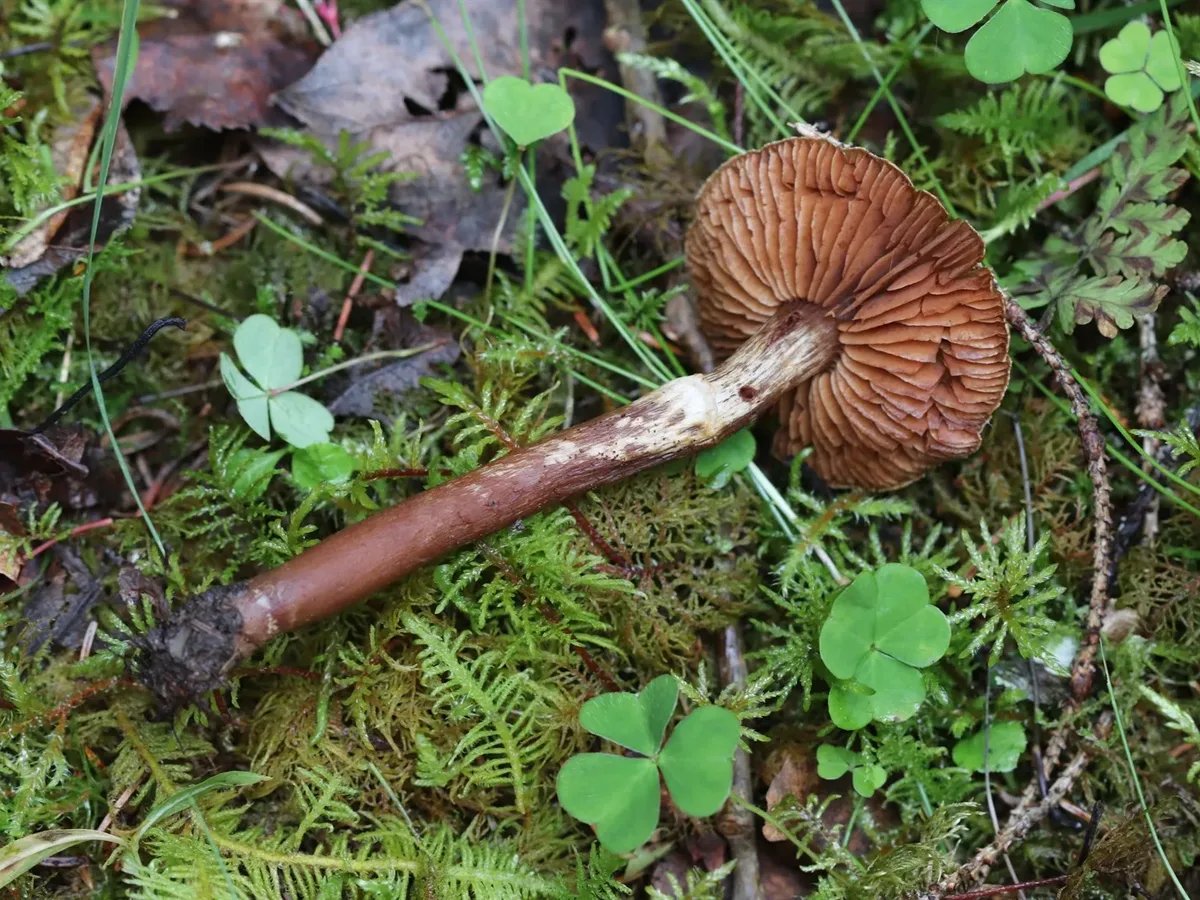
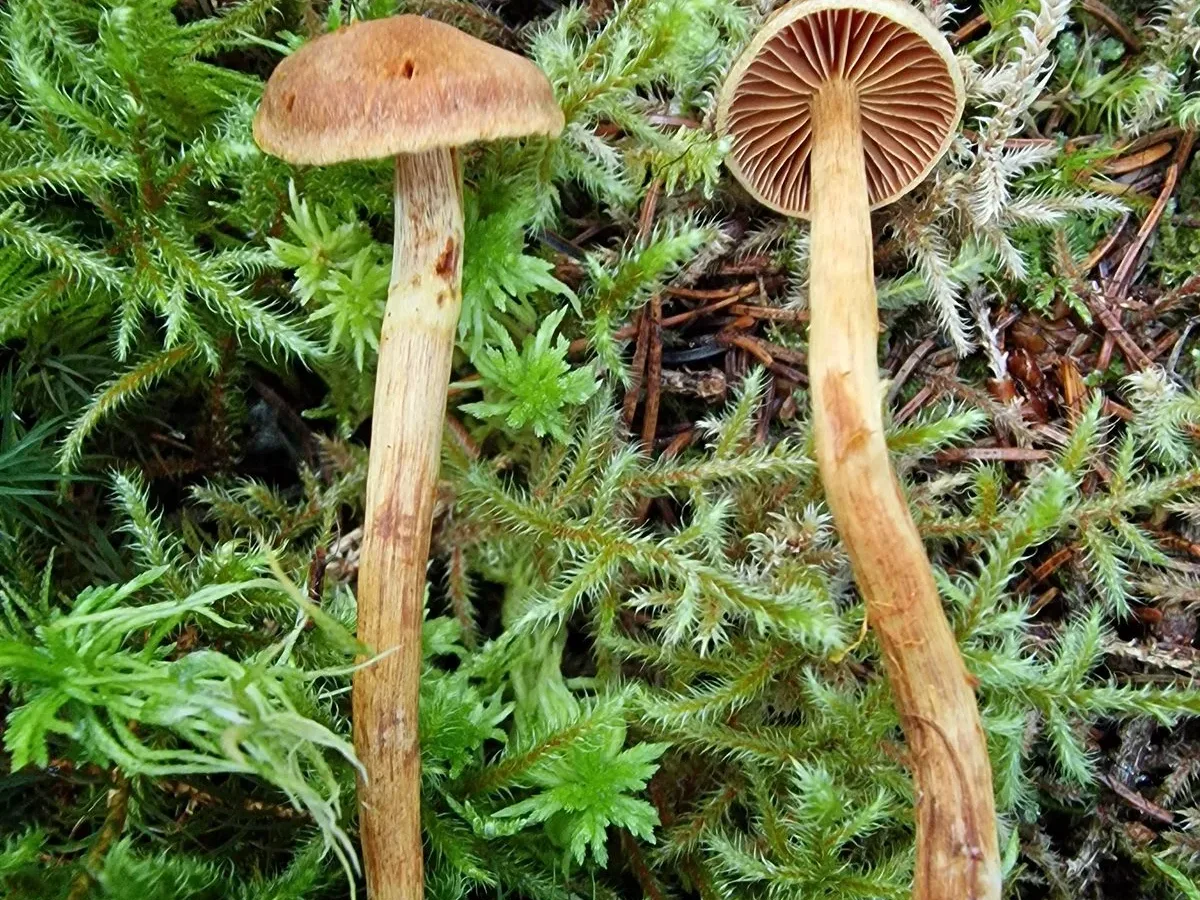
Cortinarius gentilis is a small, slender, brownish webcap that lacks the dramatic coloration of many dangerous species - and therein lies much of its danger. It does not stand out in the moss of a conifer forest.
Cap
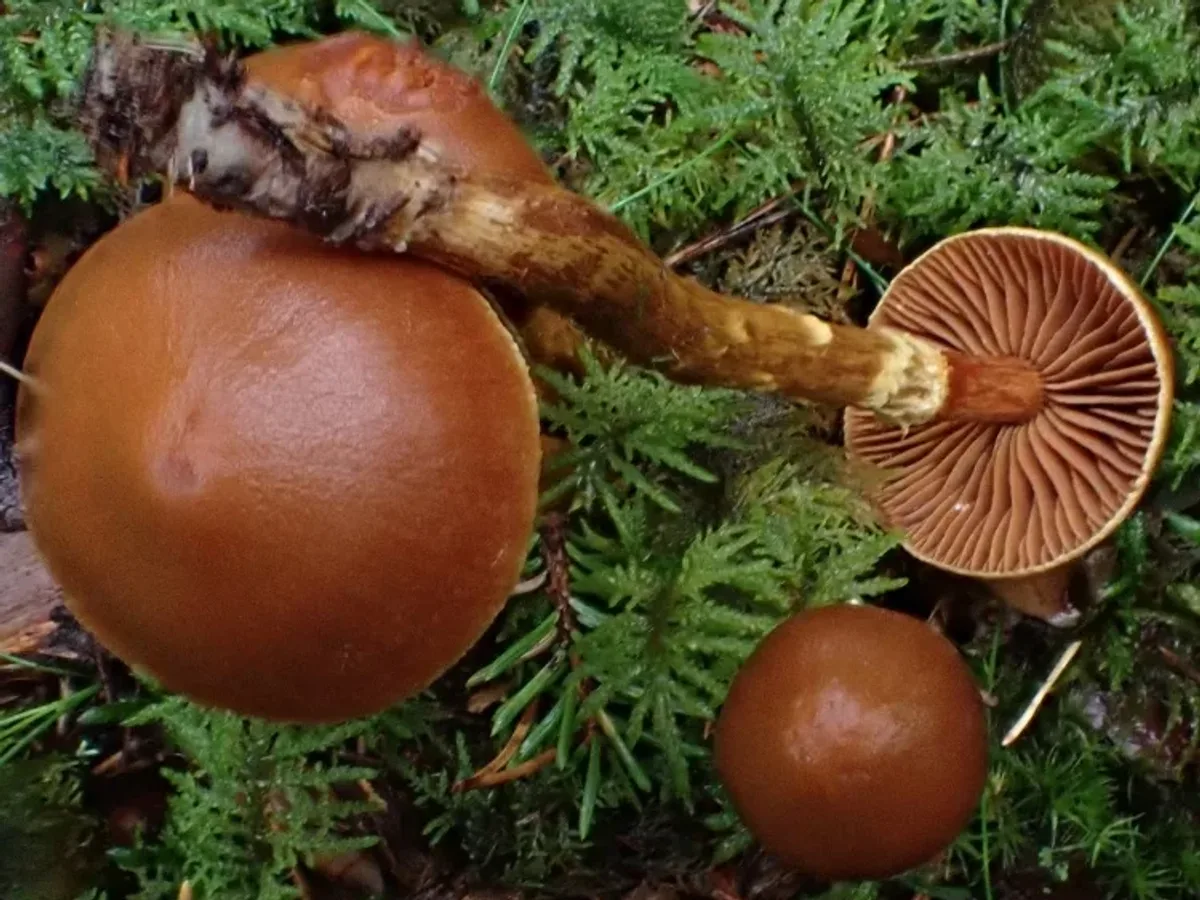
2-5 cm broad, convex to broadly umbonate, coloured a dull ochraceous-brown to tawny-cinnamon, with a dry, finely silky or fibrillose surface.
Stem
The most characteristic macroscopic feature is the pale yellow to sulphur-yellow bands or girdles on the cinnamon-brown stem - remnants of the cortina (partial veil) that gird the stem like rings.
These bands are fragile and may be incomplete or weathered away in older or wet specimens, removing the one visual cue that might distinguish it.
Gills / Pores
Gills are cinnamon to rusty-brown, moderately crowded. The rusty-brown spore print is shared with all Cortinarius species and should trigger immediate caution.
Flesh
Cinnamon-brown throughout.
Smell & taste
Faintly earthy or radish-like.
Why it's dangerous
Cortinarius gentilis is a deadly mushroom.
Orellanine poisoning is among the most insidious forms of mushroom toxicity. The long delay between ingestion and symptoms means the cause is routinely not identified, treatment is delayed, and irreversible organ damage is the likely outcome.
If orellanine poisoning is suspected - even weeks after a mushroom meal:
- Seek emergency medical attention immediately.
- Bring a photograph or specimen if possible.
- Contact a poison control centre.
There is no antidote and no way to reverse established kidney damage. The mortality rate is lower than amatoxin poisoning, but the rate of permanent kidney injury is high.
Toxin
Orellanine (orellanin) is a heat-stable, water-soluble bipyridyl-N,N-dioxide nephrotoxin. The mushroom may also contain cortinarin compounds.
The toxin persists through cooking, boiling, drying, and freezing.
Dose-response is variable: individual susceptibility differs, and small amounts may cause less damage in some individuals. But no safe threshold is established.
Symptoms
Symptoms appear 2-6 weeks after ingestion - the onset delay is the key diagnostic feature.
Initial symptoms:
- Persistent intense thirst, excessive urination, then oliguria (reduced urine output).
- Accompanied by fatigue, headache, nausea, vomiting, and burning or aching pain in the lower back and flanks.
As renal failure progresses: oedema, hypertension, rising creatinine and urea.
Some patients present acutely ill requiring dialysis within weeks of exposure; others have subclinical progression. A significant proportion develop chronic renal insufficiency or end-stage renal disease.
Staying safe
Cortinarius gentilis contains orellanine (sometimes spelled orellanin), a nephrotoxic bipyridyl compound also found in C. orellanus and C. rubellus. Orellanine is stable to heat, drying, and cooking - no preparation removes the poison. The mechanism of toxicity is oxidative damage to kidney tubule cells.
The critical and life-threatening feature of orellanine poisoning is its delayed onset: symptoms typically do not appear for 2 to 3 weeks after ingestion, and in some cases up to 6 weeks. By the time a patient feels ill - with symptoms of thirst, fatigue, nausea, back pain, and reduced urination - significant kidney damage has already occurred.
Because the delay is so long, the connection between eating mushrooms and illness is often not made by the patient or even the treating physician, delaying diagnosis further.
Treatment is supportive. A proportion of orellanine-poisoned patients progress to permanent renal failure requiring long-term dialysis or kidney transplantation, and fatalities occur. There is no antidote.
A single meal is sufficient to cause life-altering or fatal kidney damage.
Where & when it grows
Habitat
This species is a faithful inhabitant of mature, damp, mossy coniferous forest in the boreal zone. In Scandinavia it is most often encountered in spruce-dominated forest or mixed spruce-pine stands with a bilberry and moss understory.
It is genuinely at home in the same habitats as valuable edibles such as funnel chanterelles (Craterellus tubaeformis), bay boletes (Imleria badia), and parasol mushrooms, which is why mixing errors occur.
It grows singly or in small scattered groups, often half-hidden among sphagnum or feather mosses on acidic ground. The damp, sheltered microsites it prefers - stream edges, north-facing slopes, dense canopy shade - are exactly the sites where funnel chanterelles also thrive, making habitat alone unreliable as a separating character.
When
Cortinarius gentilis appears from late August through October in the Nordic region, with peak abundance in September and early October. That is exactly the same window as the funnel chanterelle harvest, which is the primary reason mix-ins happen.
The fruit bodies surface only when autumn arrives in earnest: a stretch of rain after summer dryness, followed by cooling soil temperatures.
In warm, dry autumns the species may barely fruit at all; in wet, cool ones it can be widespread. It does not fruit in spring.
How it grows
Cortinarius gentilis is strictly ectomycorrhizal, bound to the roots of conifers - principally spruce and pine. The partnership can persist for years beneath the surface, the mycelium threading silently through humus and moss long before any fruit body appears.
When conditions align, the small caps emerge directly from the needle litter or sphagnum - solitary or loosely scattered, often flush with the ground. It does not grow on wood (unlike Galerina marginata).
Fruit bodies are easy to miss: small, drab, and at home in the visual noise of a mossy forest floor. The species is a faithful presence in undisturbed mature boreal forest once established.
Fruiting conditions
Requires autumn rainfall and cooling soil temperatures in boreal conifer forest. Fruiting coincides with the prime funnel chanterelle season, which is the primary context for accidental encounters. Warm, dry autumns suppress fruiting. Mature forest with established mycorrhizal networks is required.
Look-alikes
The key confusion risk for Cortinarius gentilis is not a classic 'lookalike pair' scenario - it is a small, drab, easily overlooked species that foragers encounter incidentally while gathering other species.
- Craterellus tubaeformis (funnel chanterelle / trumpet chanterelle): the most dangerous confusion, with C. gentilis growing intermingled in the same mossy conifer forest habitat. The funnel chanterelle has a deeply funnel-shaped cap, hollow stem, and distinctive forking ridges (not true gills) on the underside - but harried foragers sometimes grab without looking.
- Galerina marginata (funeral bell): another small, brown, rusty-gilled species growing in the same forests (though G. marginata typically grows on wood).
- Kuehneromyces mutabilis (sheathed woodtuft): an edible species with some superficial similarity - it grows in dense clusters on stumps, has a distinctive two-toned hygrophanous cap, and a scaly stem below a fragile ring.
- Cortinarius rubellus (deadly webcap): smaller specimens are closely related and overlap in habitat, also containing orellanine.
- Various Inocybe and Hebeloma species: share similar colouration and conifer habitats.
The yellow cortinal bands on the stem are the most useful field character for C. gentilis specifically, but their absence does not clear a specimen.
Cortinarius rubellus is a close relative also containing orellanine and equally deadly. C. rubellus tends to be more reddish-tawny-orange and has a distinctively conical to pointed cap umbo that persists into maturity - more acutely pointed than the rounded umbo of C. gentilis. Both are deadly and the distinction is academic for foragers: neither should ever be consumed.
Funeral bell is also a small, brown, rusty-spored mushroom of conifer forests, and is one of the most dangerous mushrooms in the world due to amatoxin content. Galerina marginata typically grows on rotting wood (logs, stumps, buried wood), often in dense tufts, and has a fragile membranous ring on the stem. Cortinarius gentilis grows from soil and moss, never from wood, and its veil remnants form yellow horizontal bands rather than a true membranous ring. Both are deadly, so the distinction matters mainly for preventing both poisonings - never confuse either for any edible species.
The funnel chanterelle shares the same mossy conifer forest habitat exactly, making mix-ins possible when foraging carelessly. Craterellus tubaeformis has a deeply funnel-shaped to vase-shaped cap with a central hole, a hollow yellowish stem, and forking ridge-like false gills (not true blade gills) on the underside of the cap. Cortinarius gentilis has a convex to umbonate cap, a solid stem with yellow cortinal bands, and true gills that are cinnamon-brown and blade-like. Inspect every stem and underside when harvesting funnel chanterelles in late season.
Sheathed woodtuft is an edible species superficially similar in colour - honey-brown to tawny - but grows exclusively in dense tufts on decaying wood (stumps, logs), never from soil. The cap is strongly hygrophanous (two-toned, drying paler from centre outward), the stem has a distinct scaly zone below a fragile ring, and clusters may have dozens of fruit bodies. Cortinarius gentilis grows singly from mossy soil, never on wood, lacks a scaly stem zone, and has yellow cortinal girdles rather than a ring.
Many Inocybe species are small, brown-capped, and grow in similar conifer forest habitats. They are generally poisonous (muscarine) rather than deadly, but should never be eaten. Inocybe species typically have a more strongly fibrillose-splitting cap, whitish to pale gills that later become clay-brown (not rusty-cinnamon), and a characteristic spermatic or earthy smell. The yellow cortinal girdles of C. gentilis are absent from Inocybe.
A reference guide - never an edibility guarantee. When in doubt, leave it out.