Cinnamon webcap
Cortinarius cinnamomeussyn. Agaricus cinnamomeus L., Dermocybe cinnamomea (L.) Wünsche, Cortinarius cinnamomeus var. cinnamomeus
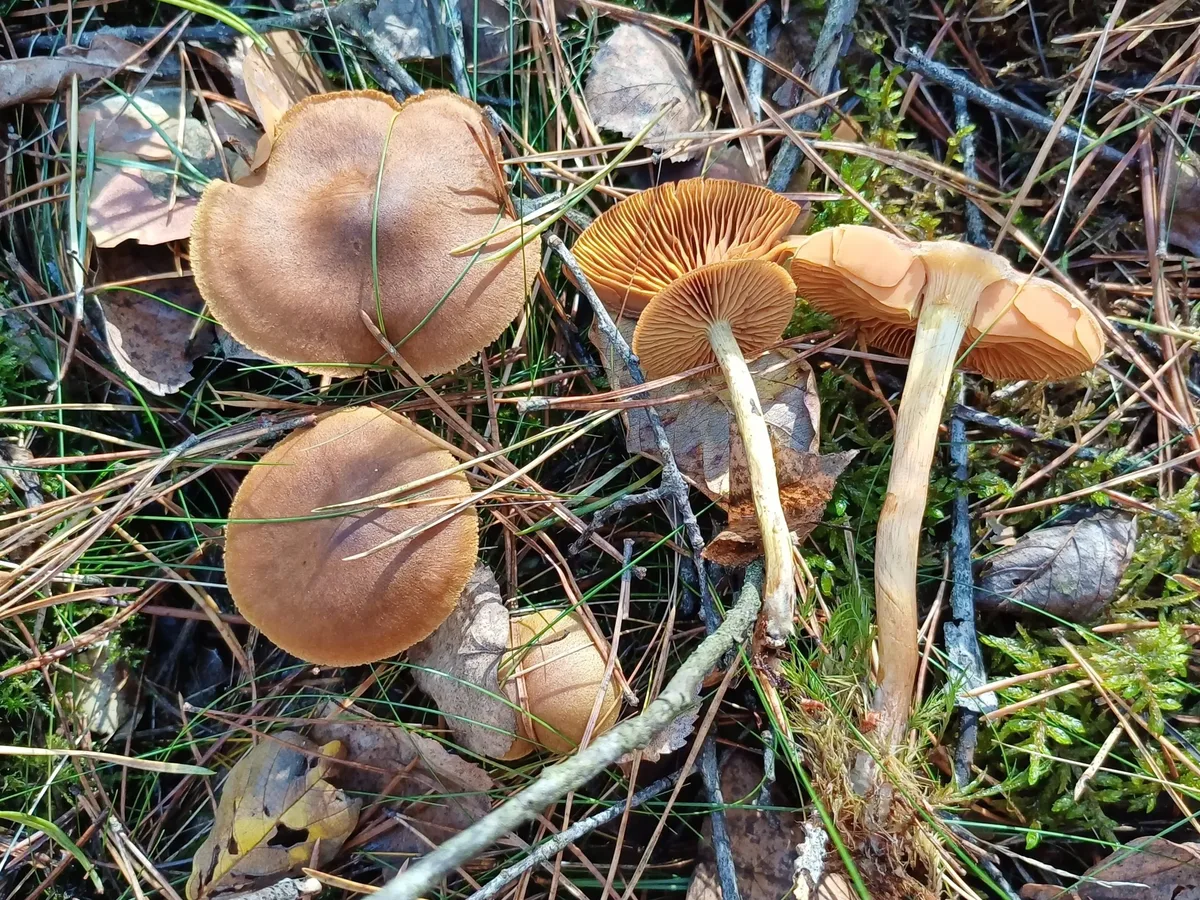 © Ewa Olchanowska (CC BY 4.0)
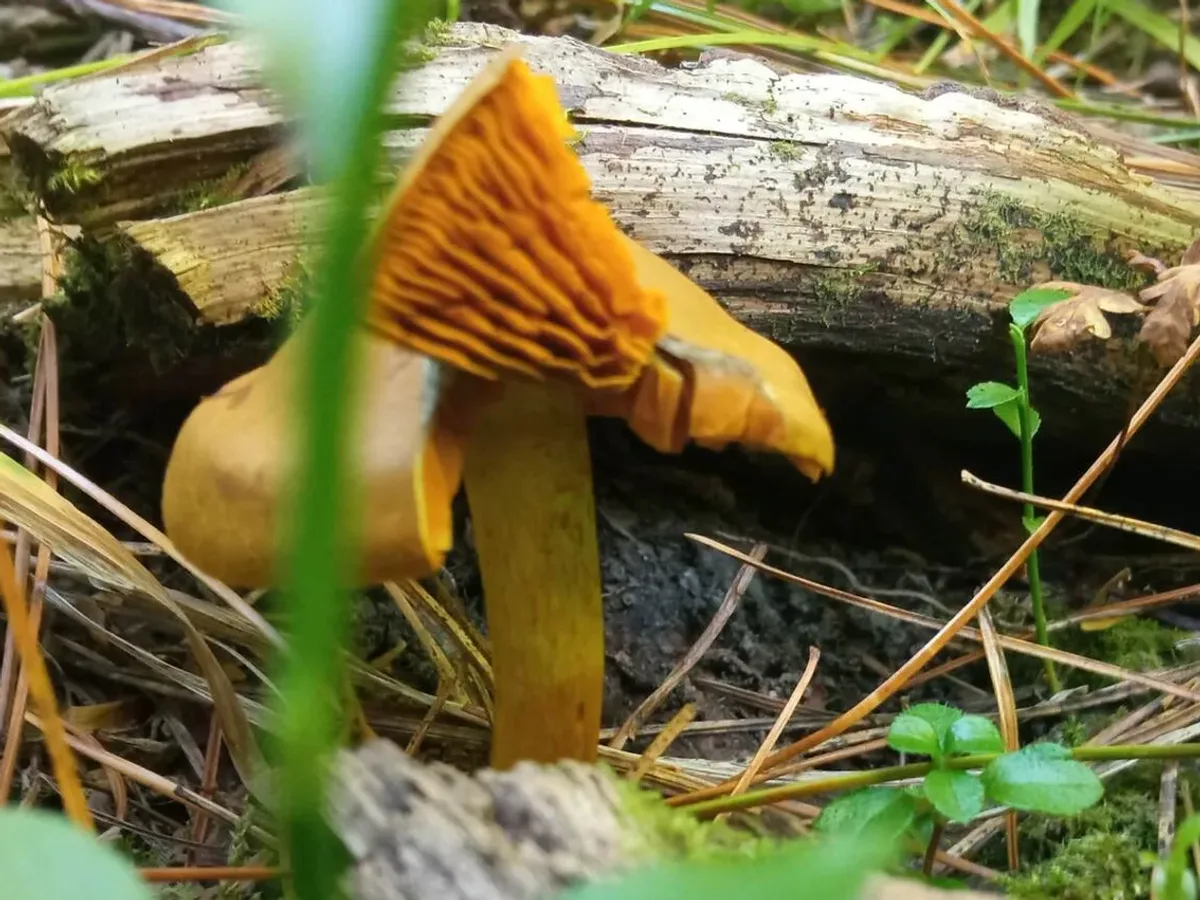 © Tatiana Strus (CC BY 4.0)
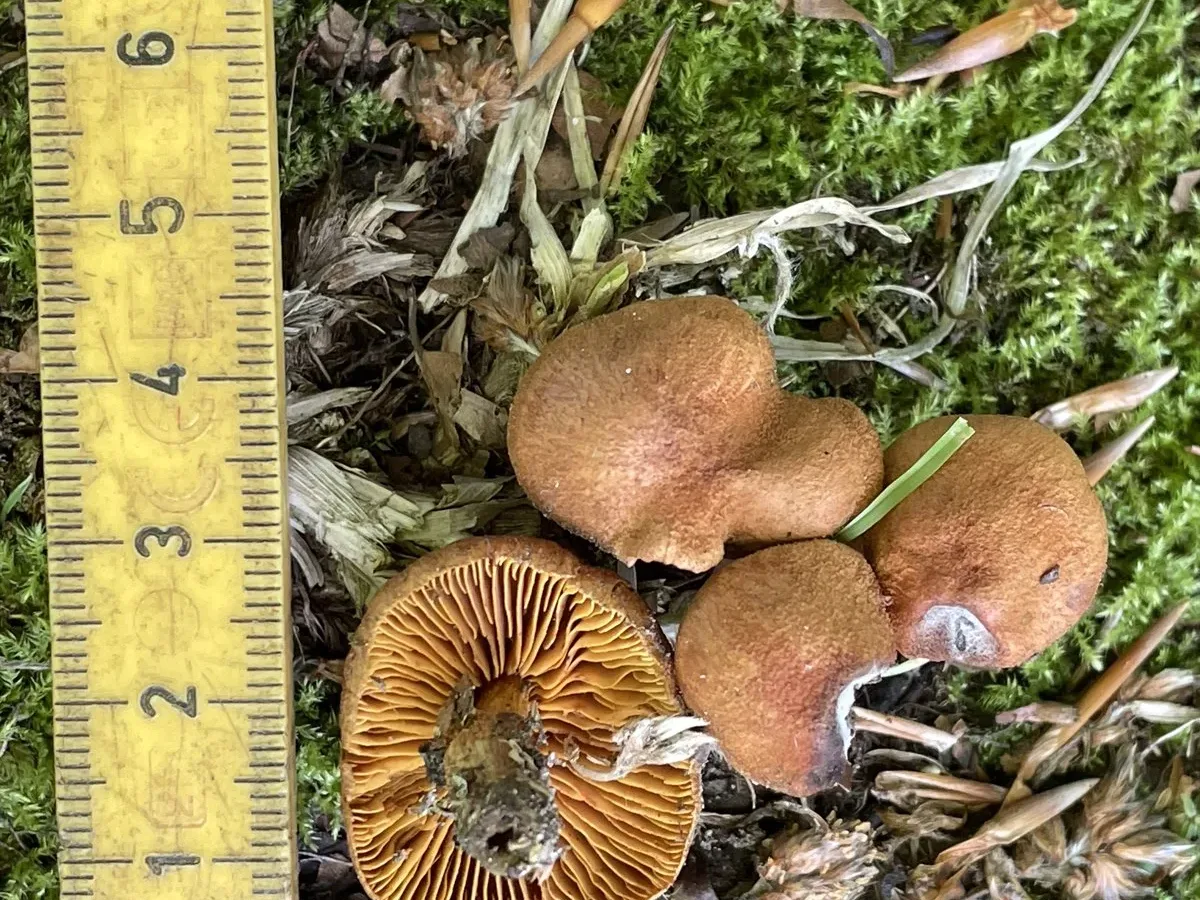 © Bjørn Eidhammer (CC BY)
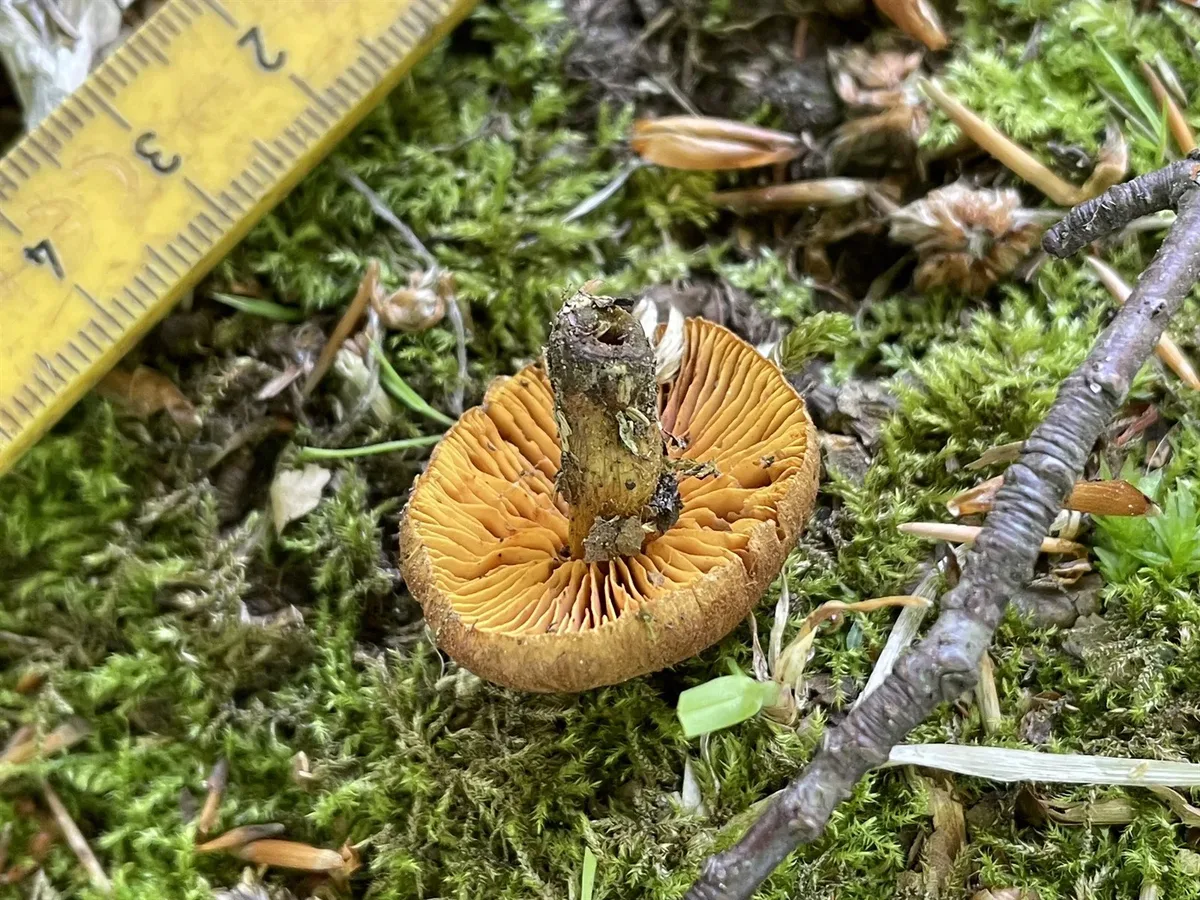 © Bjørn Eidhammer (CC BY)
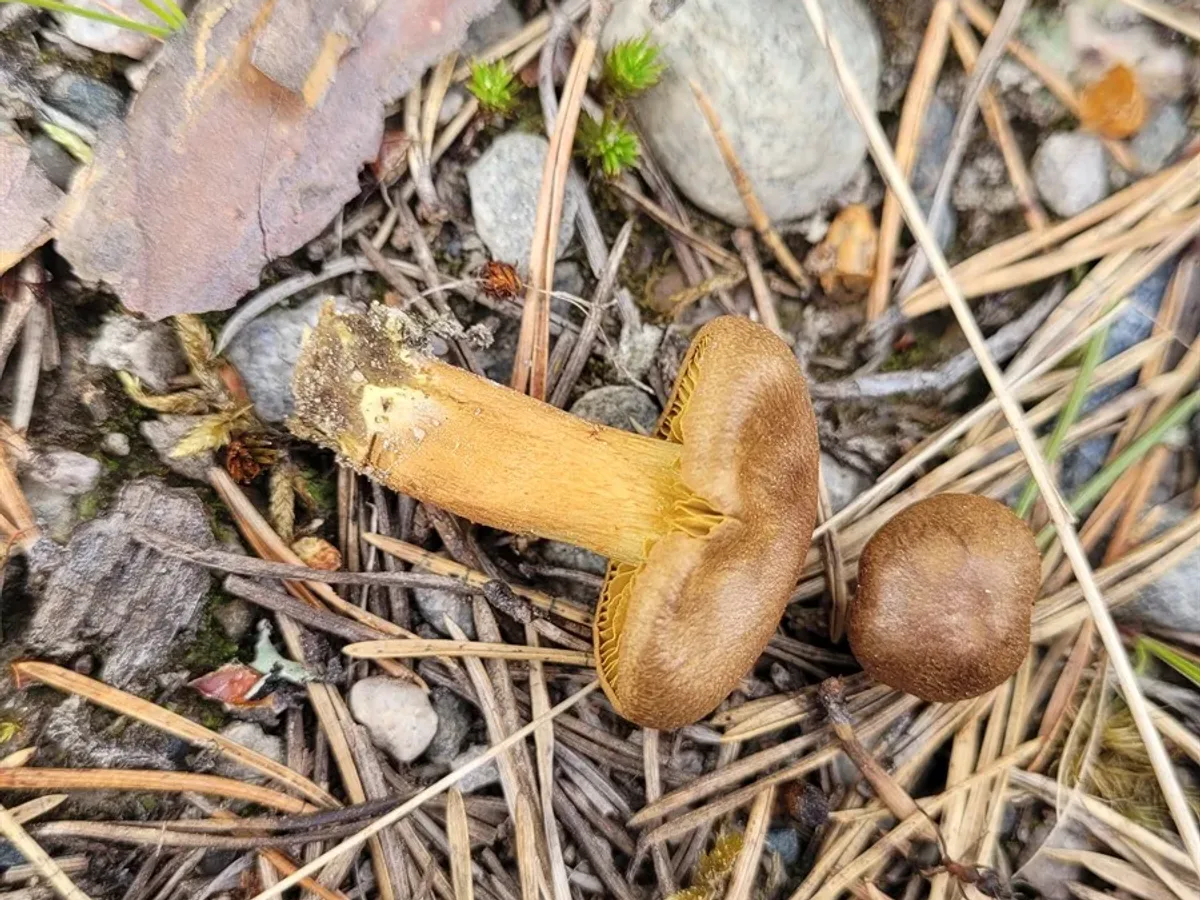 © Terje Bjerkan (CC BY)
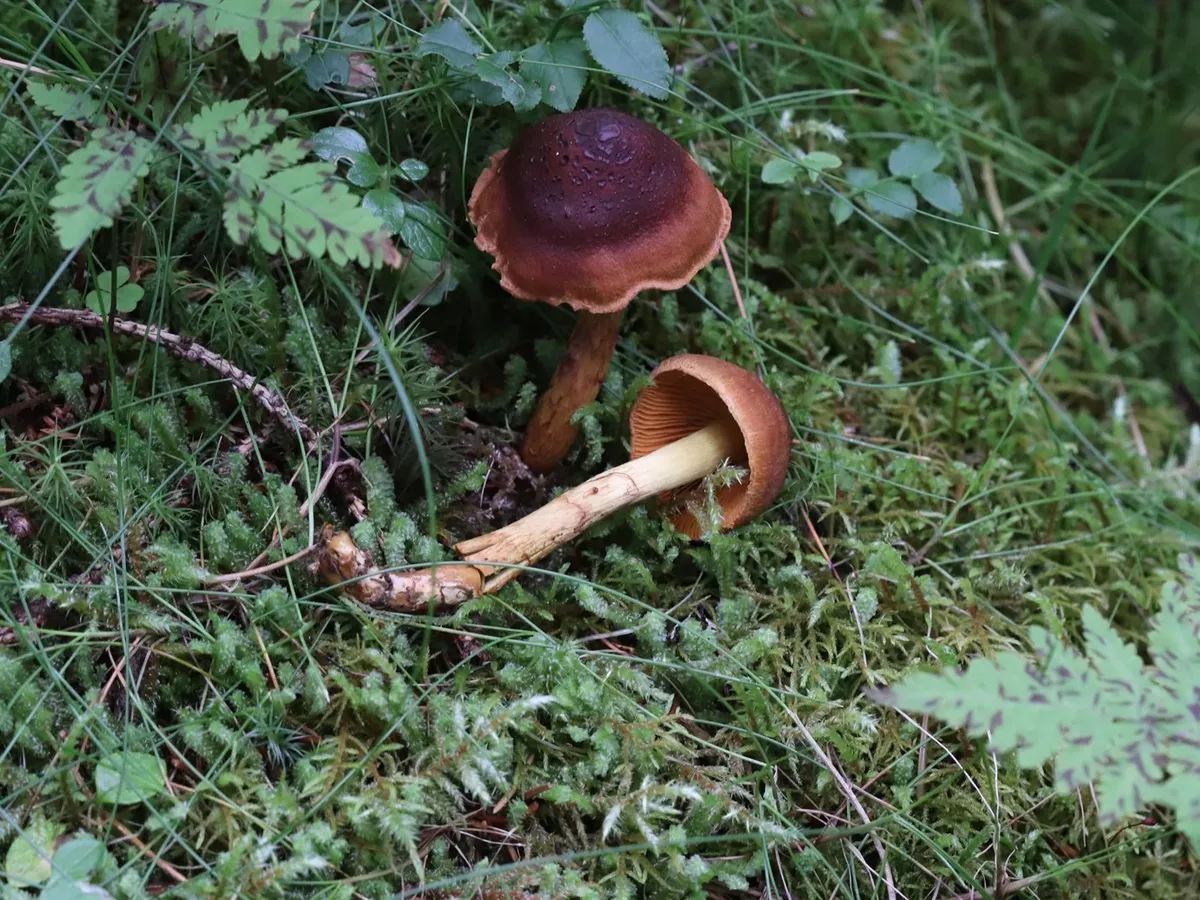 © Rob van Kruining (CC BY)
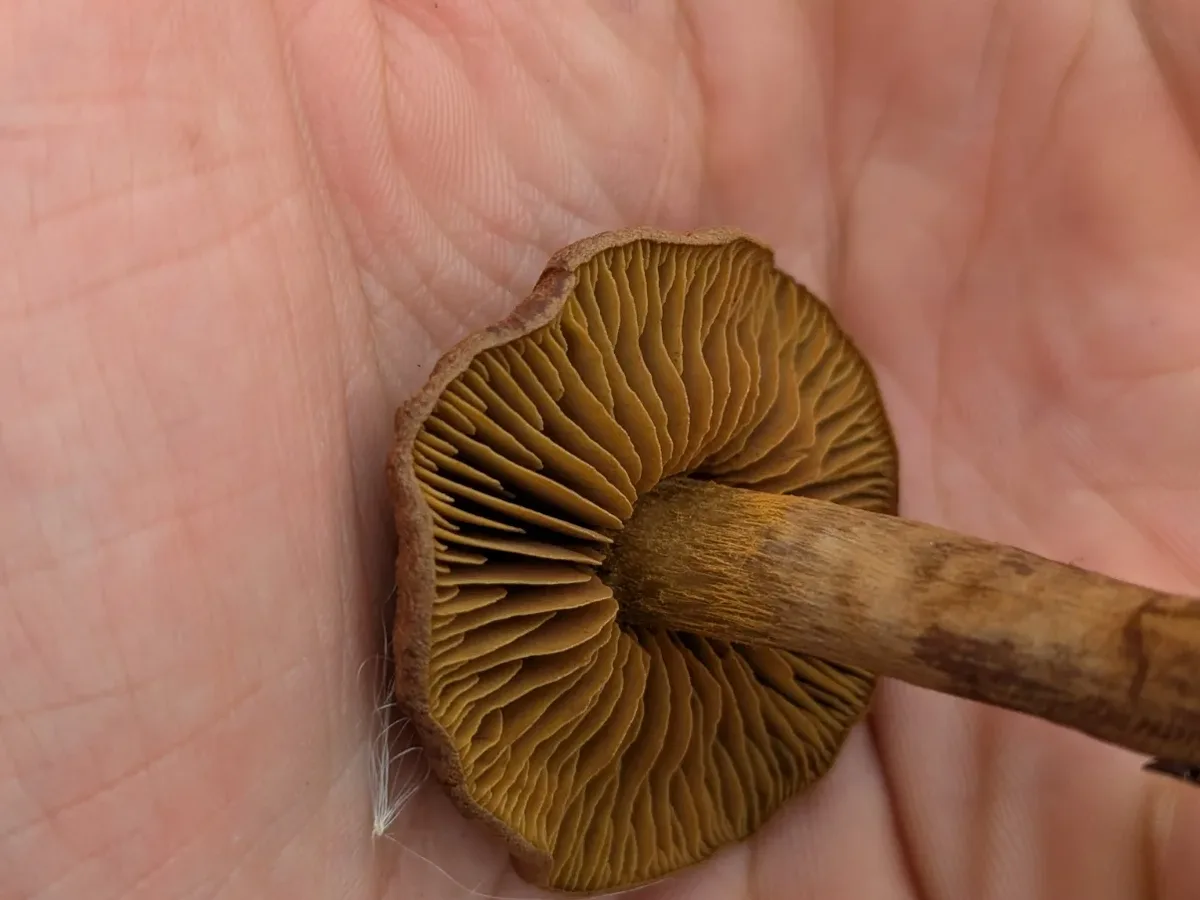 © Ole Christian Hagestad (CC BY)
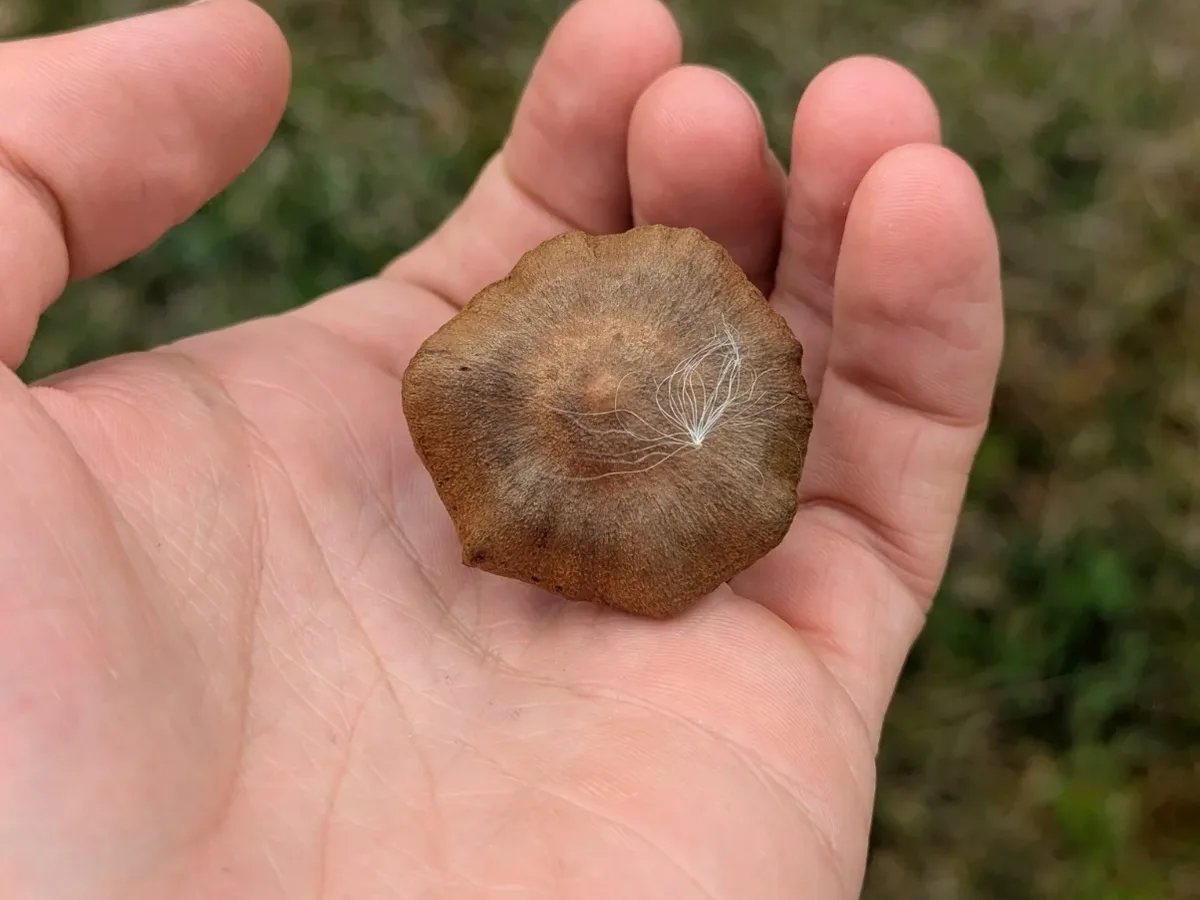 © Ole Christian Hagestad (CC BY)
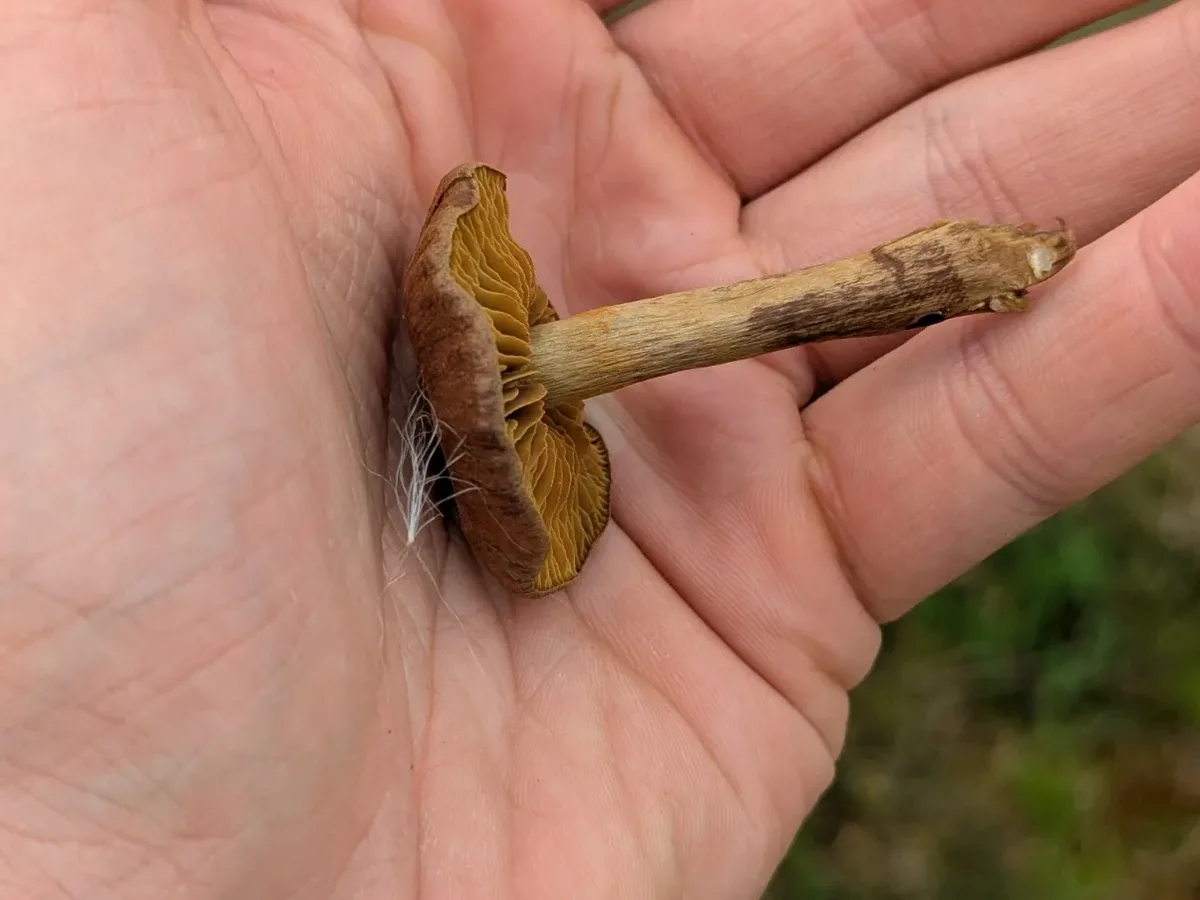 © Ole Christian Hagestad (CC BY)
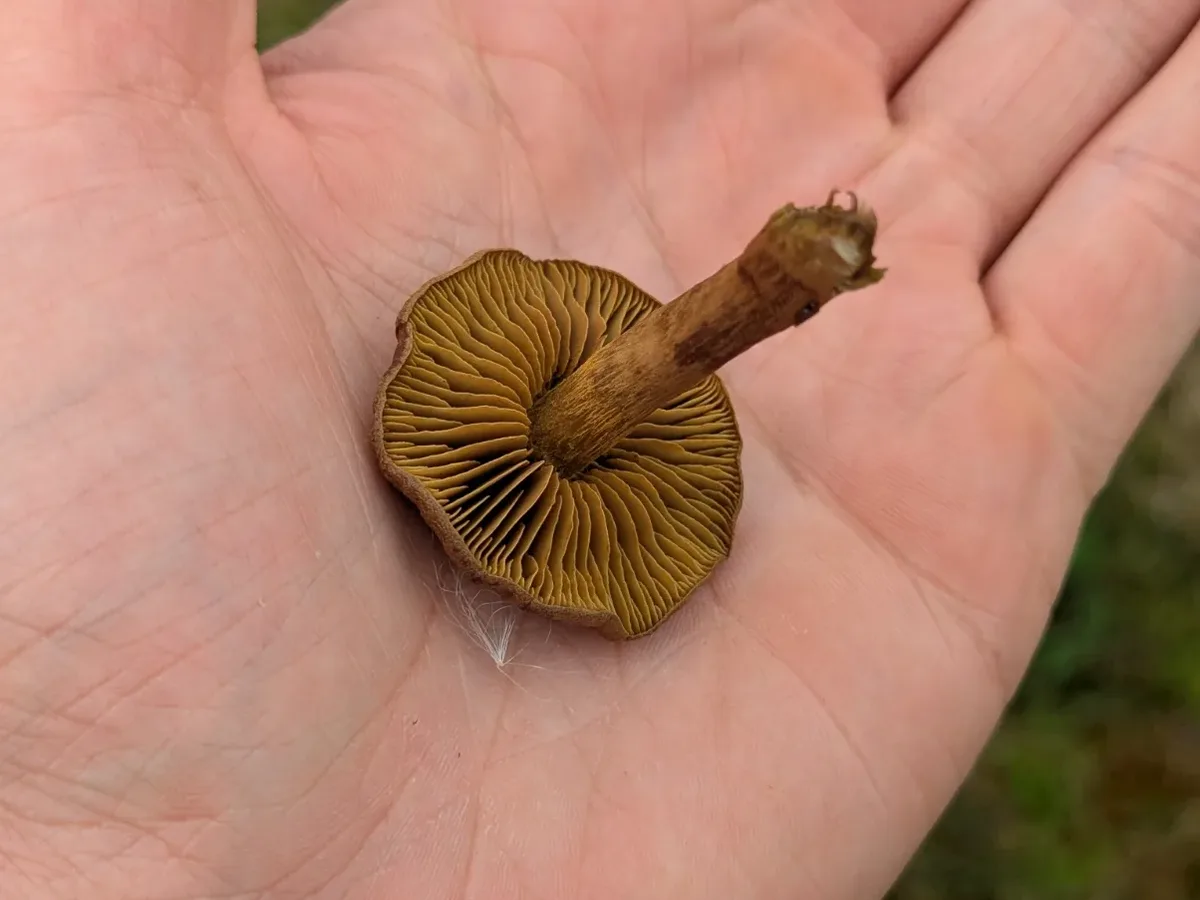 © Ole Christian Hagestad (CC BY)
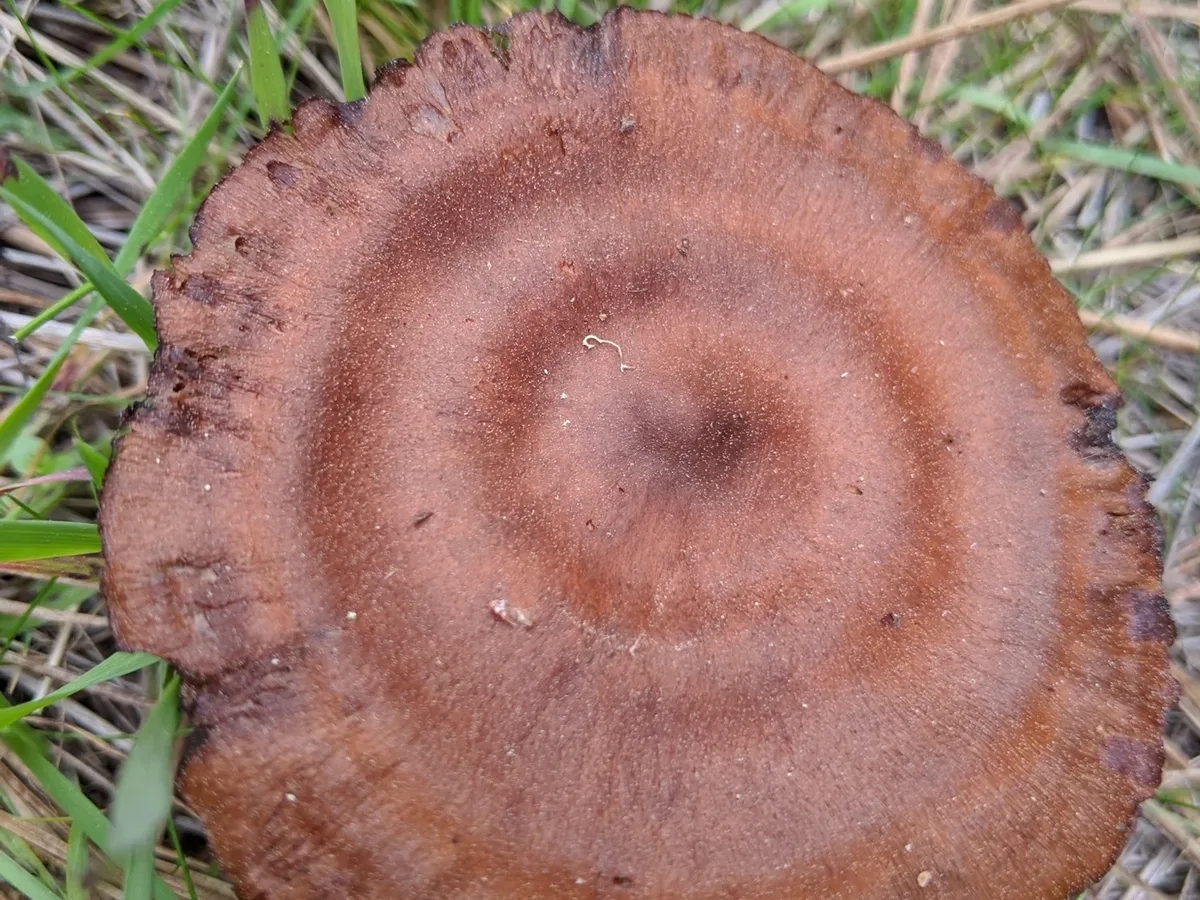 Alex Heyman (CC0)© Ewa Olchanowska (CC BY 4.0)© Tatiana Strus (CC BY 4.0)
Edible only with the right preparation - or safe for some people but not others. Learn the caveats first.
Never eat a mushroom you are not 100% sure of - check the look-alikes below, and always cook wild mushrooms.
How to recognise it
Cortinarius cinnamomeus is a slender, modest-looking webcap. Its most important diagnostic feature is its brightly coloured gills, which contrast markedly with the olive-brown to cinnamon-brown cap. The spore print is rusty brown, and the small ellipsoid spores are finely warted.
Cap
2-6 cm, convex to broadly umbonate, with a dry, fibrillose-silky surface and colours ranging from olive-yellow through ochre-cinnamon to rusty-brown. The entire fruitbody often has a yellowish-olivaceous tone rather than a purely warm cinnamon-brown, which helps separate it from some related species.
Gills
Vivid yellow to olive-yellow or greenish-yellow when young. In older specimens they fade from yellow to a rusty-ochre, making identification more difficult - fresh, young specimens with clearly yellow gills are far easier to identify confidently.
Stem
Slender and pale yellow to olive-yellow, with a faint cortina zone visible as rust-stained fibrils after spore dispersal.
Flesh
Thin, yellowish, and does not change colour on cutting.
Why it's dangerous
Cortinarius cinnamomeus is classified as toxic and must not be eaten. Its confirmed toxins are anthraquinone pigments that cause gastro-intestinal irritation and potentially hepatotoxic effects, and the full toxicological profile is incompletely characterised.
While this species has not been analytically confirmed to contain the orellanine nephrotoxin responsible for the most severe Cortinarius poisonings (fatal kidney failure requiring dialysis or transplantation), this distinction does not reduce the practical danger to foragers.
The species grows directly alongside confirmed orellanine-containing relatives - Cortinarius semisanguineus, C. sanguineus, C. gentilis, and C. rubellus - in the same forest habitat. Misidentification of any of these as C. cinnamomeus (or vice versa) is a realistic risk even for experienced foragers.
Any collection or consumption of mushrooms from this group carries the risk of inadvertent ingestion of a species capable of causing fatal nephrotoxicity. The only safe rule is to avoid eating all Cortinarius species from this group entirely.
If accidental ingestion of any webcap is suspected, seek medical attention promptly and bring a sample or photograph of the mushroom consumed.
Toxin
The confirmed toxins in Cortinarius cinnamomeus are anthraquinone pigments - polyhydroxyanthraquinone compounds including:
- dermatocybins (dermatocybin, 7-chlorodermatocybin, and related derivatives)
- emodin-type anthraquinones such as cinnamomein
These highly coloured, lipophilic compounds are responsible for the characteristic yellow-olive to cinnamon pigmentation of the fruitbody, and are the primary known toxic constituents. Anthraquinones in this group act as irritants to the gastrointestinal mucosa and may have hepatotoxic effects at higher doses.
Orellanine - the bipyridine N,N'-dioxide nephrotoxin confirmed in Cortinarius rubellus, C. orellanus, C. semisanguineus, and several other webcaps - has not been analytically confirmed in C. cinnamomeus by current published literature. Attributing orellanine-type nephrotoxicity to this species is not supported by the available evidence.
The full toxicological profile remains incompletely characterised: it is possible that additional irritant or toxic compounds are present that have not yet been identified.
Symptoms
Poisoning from Cortinarius cinnamomeus is expected to follow an anthraquinone-type toxidrome rather than the delayed orellanine nephrotoxicity seen with C. rubellus and C. orellanus. Onset of symptoms is relatively prompt compared to orellanine poisoning - typically within a few hours of ingestion.
Expected symptoms reflect the gastro-intestinal irritant action of the anthraquinone compounds:
- nausea
- vomiting
- abdominal cramps
- diarrhoea
At higher doses or in sensitive individuals, potential hepatotoxic effects (elevated liver enzymes, abdominal discomfort in the right upper quadrant) may occur, consistent with the known hepatotoxic potential of emodin-class anthraquinones.
Symptoms are typically self-limiting in mild exposures with supportive care (hydration, electrolyte replacement), but medical assessment should be sought after any ingestion because the full toxicological profile is not fully characterised and individual responses may vary.
Unlike orellanine poisoning, the fatal delayed nephrotoxicity, irreversible kidney damage, and need for dialysis or transplantation are not established consequences specific to C. cinnamomeus itself - those outcomes are associated with confirmed orellanine-bearing species in the same genus.
Staying safe
Cortinarius cinnamomeus is a toxic species that must never be eaten. It contains anthraquinone pigments - chiefly dermatocybin-type compounds and emodin-related anthraquinones - that are responsible for its toxicity.
These are different in mechanism and severity from the orellanine nephrotoxin found in closely related species such as Cortinarius rubellus and C. orellanus. C. cinnamomeus has not been analytically confirmed to contain orellanine, and the specific fatal delayed nephrotoxicity associated with orellanine-type poisoning should not be attributed to this species directly.
However, this does not make it safe: anthraquinone poisoning causes gastro-intestinal illness, and the full toxicological picture of this species is not fully characterised.
Crucially, C. cinnamomeus grows directly alongside several confirmed orellanine-bearing species (C. semisanguineus, C. sanguineus, C. gentilis, C. rubellus) in the same boreal forest habitats. Anyone who picks and eats what they believe to be C. cinnamomeus may simultaneously or unknowingly ingest one of these deadly relatives.
That makes the practical safety rule identical: treat the entire group as deadly and never eat any of them. No Cortinarius species in the Dermocybe group should be consumed under any circumstances.
Where & when it grows
Habitat
This species is a classic inhabitant of boreal and montane coniferous forest, predominantly forming mycorrhizal associations with Norway spruce and Scots pine across northern and central Europe. It is one of the most frequently encountered Dermocybe-group webcaps in Scandinavia, particularly in moist, acidic spruce and pine forest with a well-developed moss layer.
It favours sheltered, humid microsites - forest floors carpeted with Sphagnum moss, near streams, or in depressions where moisture persists. It also occurs, less commonly, in birch-dominated woodland at higher altitudes or latitudes.
In Nordic forests it often grows alongside other boreal fungi including Cortinarius rubellus and Galerina marginata, both of which are deadly - this co-occurrence with lethal lookalikes is a significant safety hazard.
The species can fruit in small troops and may appear locally abundant in good years.
When
In Scandinavia and northern Europe, the cinnamon webcap fruits from late August through October, peaking in September and early October at the height of the boreal autumn mushroom season.
It shares its trigger with many beloved forest fungi - cooling air and soil temperatures after sustained late-summer rain - which is precisely why it appears alongside chanterelles, boletes, and other species that foragers actively seek.
In warmer or more southerly parts of its range, fruiting can stretch into November. Year-to-year abundance varies considerably; a dry late summer typically means a sparse showing.
How it grows
Strictly mycorrhizal, forming long-term ectomycorrhizal partnerships with coniferous and birch hosts. The organism lives year-round as a thread-like mycelial network woven through the soil and tree roots - patient, invisible, and potentially decades old.
The fruitbodies we see are only its brief above-ground expression: small scattered caps pushing up from acidic humus and moss, often with the stem base buried in deep Sphagnum.
Intact, mature forest is essential; the species does not persist in disturbed or fragmented woodland. It is not rare and can be locally plentiful in suitable spruce and pine forest in good years.
Fruiting conditions
Autumn-fruiting mycorrhizal species; triggered by cooling soil temperatures and sustained rainfall in late summer and early autumn. Fruiting corresponds to the general boreal autumn flush (September-October in Scandinavia). Warm dry autumns suppress fruiting; cool wet Augusts can bring forward the season.
Look-alikes
Cortinarius cinnamomeus must be distinguished from several closely related webcaps, some of which are equally or even more dangerous, and from superficially similar edible species that share its habitat. The most important comparisons are:
- Cortinarius sanguineus (Bloodred webcap) is very similar but has deep blood-red to brick-red gills and flesh and a darker cap - also deadly (orellanine).
- Cortinarius semisanguineus (Surprise webcap) is particularly deceptive: it has an olive-brown to cinnamon cap that closely resembles C. cinnamomeus but with bright blood-red gills (not yellow) - also deadly.
- Cortinarius gentilis (Deadly cinnamon webcap) is more uniformly rust-orange to cinnamon, with gills quickly becoming rust-coloured, and lacks the yellow gills of fresh C. cinnamomeus - deadly.
- Cortinarius rubellus (Deadly webcap) has an overall warmer rust-orange to tawny-red tone and a more conical cap - deadly.
None of these relatives are safe to eat.
Two edible or harmless species share the habitat but are readily separated:
- Craterellus tubaeformis (funnel chanterelle) shares boreal coniferous forest habitat but is immediately distinguished by its false gills (blunt, forking ridges rather than true knife-edge gills), hollow stem, and lack of a cortina.
- Kuehneromyces mutabilis (sheathed woodtuft) grows on wood and has a skirt-like ring on the stem, never a cobweb cortina.
Any small to medium autumn mushroom in coniferous forest with rusty-brown spores, a cobweb veil, and cinnamon-brown colouring should be treated as a dangerous Cortinarius unless definitively proved otherwise.
Entire fruitbody (cap, gills, stem, flesh) deep blood-red to brick-red throughout - much darker and more uniformly red than C. cinnamomeus. Also deadly, containing orellanine. Grows in similar coniferous forest habitats.
More uniformly rust-orange to warm cinnamon throughout; gills quickly become rust-coloured with little of the yellow tint seen in fresh C. cinnamomeus; smaller and more slender. Also deadly with orellanine.
Warmer rust-orange to tawny-red overall, with a distinctly conical cap shape even in maturity, and yellowish zigzag bands on the stem from the veil. Gills rust-orange-brown without the yellow tone of fresh C. cinnamomeus. Equally deadly.
Cap olive-brown to cinnamon, very similar to C. cinnamomeus, but gills are deep blood-red (not yellow) - a striking contrast. Also contains orellanine and is deadly. The red gills are the key distinguishing mark; both are dangerous.
Shares boreal coniferous forest habitat and olive-brown tones, making accidental confusion possible at a glance. Distinguished by: false gills (blunt, forking, vein-like ridges rather than true knife-edge gills), hollow stem visible when cut, no cobweb cortina, white spore print. A safe and excellent edible.
Grows in clusters on dead wood or buried roots; has a membranous skirt ring on the stem (not a cobweb cortina); hygrophanous two-toned cap; gills adnate, pale brown to cinnamon. An edible species sometimes occurring in similar autumn forest habitat.
A reference guide - never an edibility guarantee. When in doubt, leave it out.