Gypsy mushroom
Cortinarius caperatussyn. Rozites caperatus, Pholiota caperata, Rozites ridibunda
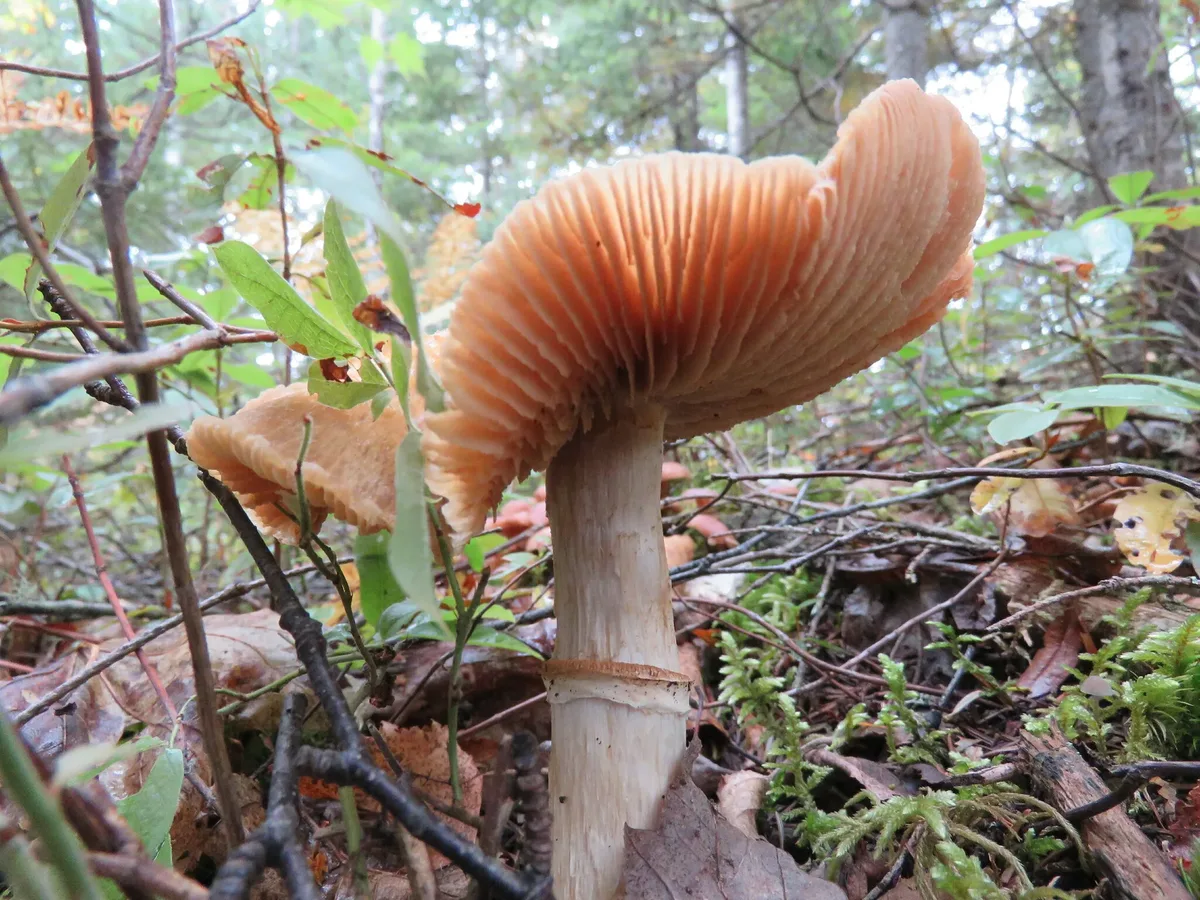 © Barry Cottam (CC BY 4.0)
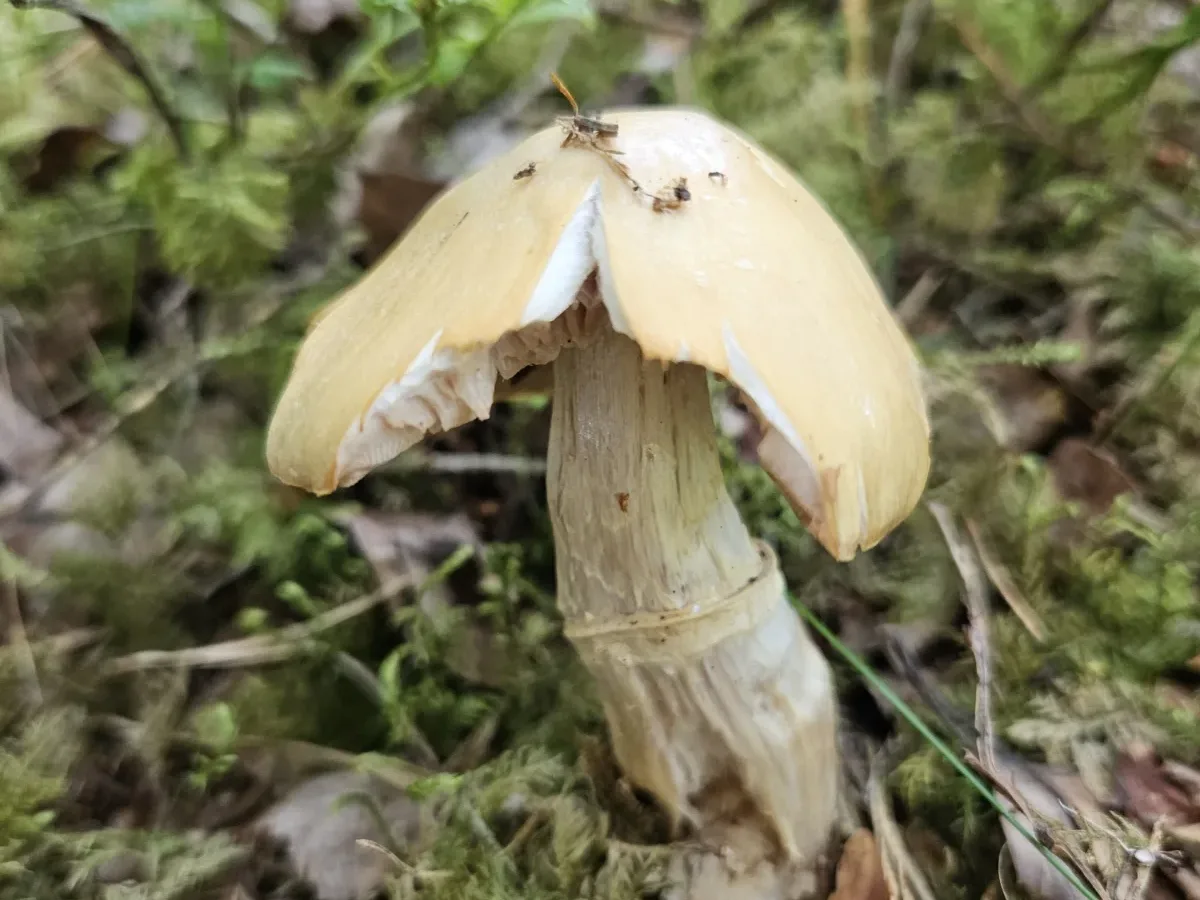 © Bente Rian (CC BY)
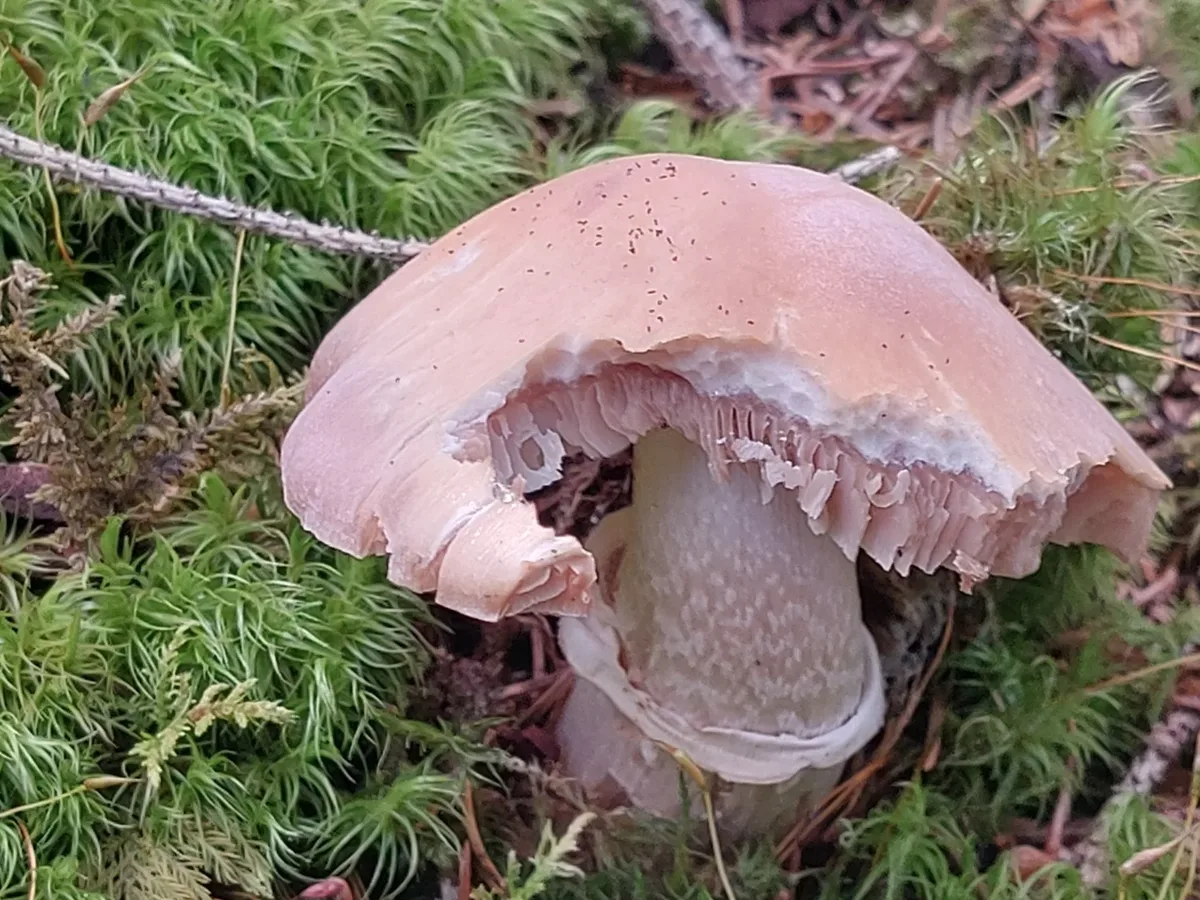 © vcpd (CC BY-SA)
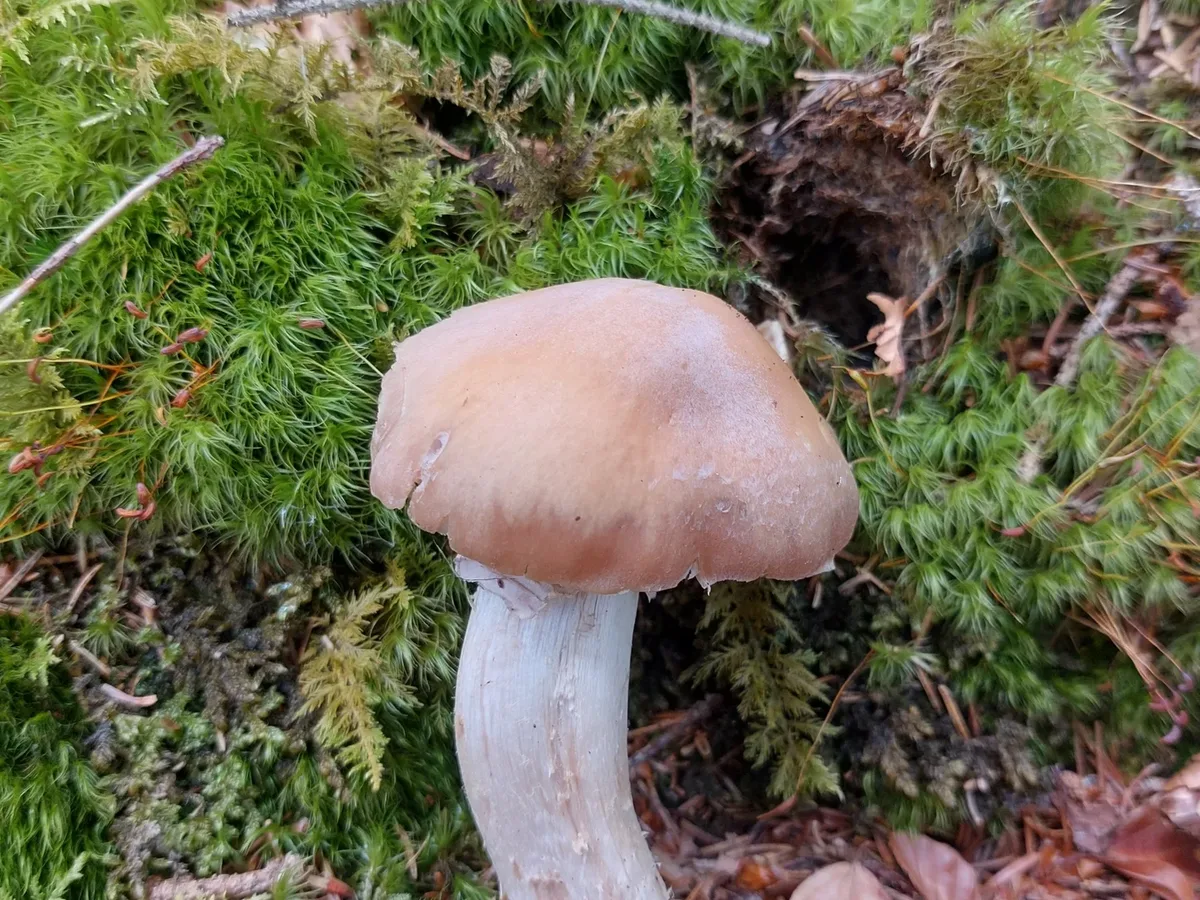 © vcpd (CC BY-SA)
 © vcpd (CC BY-SA)
 © Tessa Frenay (CC BY)
 © Manuela Fiorini (CC BY)
 © Manuela Fiorini (CC BY)
 © Manuela Fiorini (CC BY)
 © Manuela Fiorini (CC BY)
 © Manuela Fiorini (CC BY)
 © Barry Cottam (CC BY 4.0)© Barry Cottam (CC BY 4.0)© Bente Rian (CC BY)
Good to eat, once you have identified it with certainty and cooked it through.
Never eat a mushroom you are not 100% sure of - check the look-alikes below, and always cook wild mushrooms.
How to recognise it
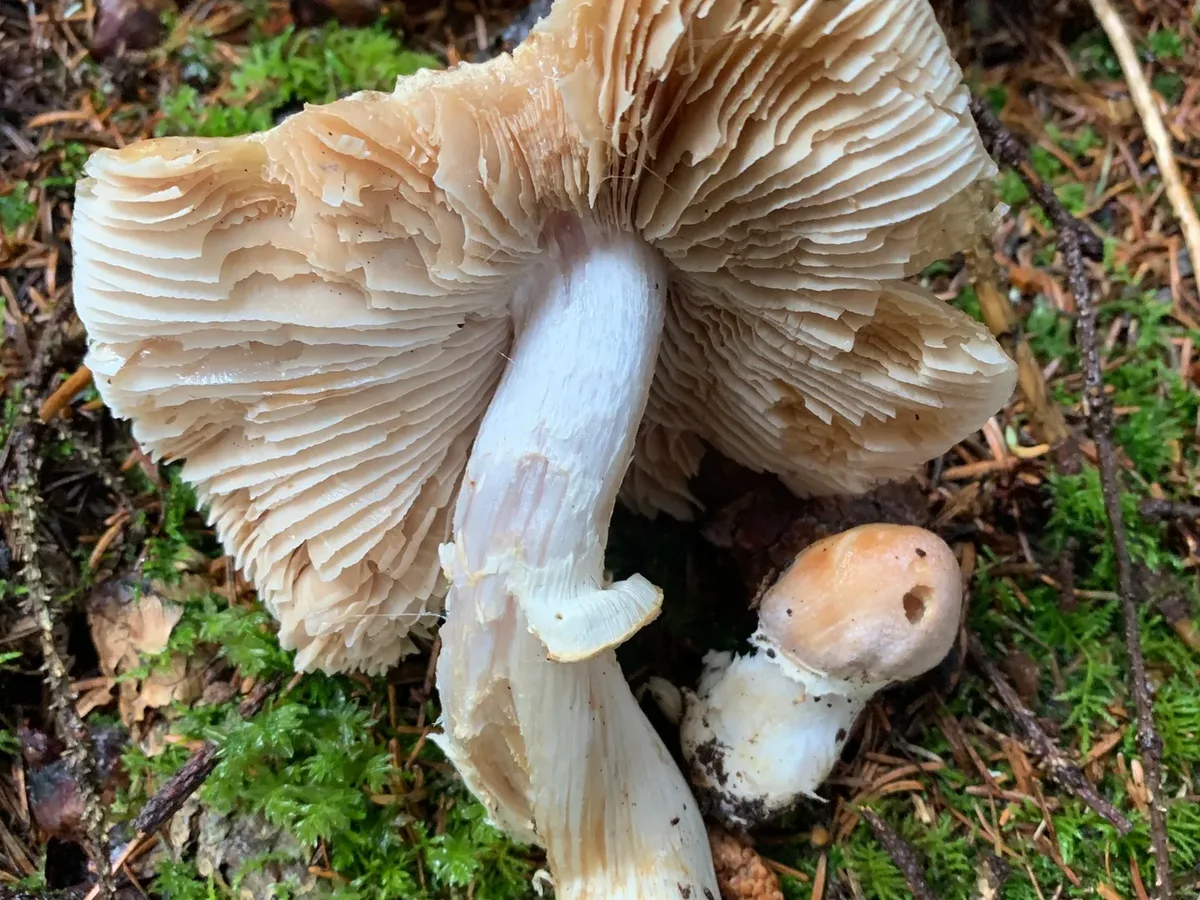
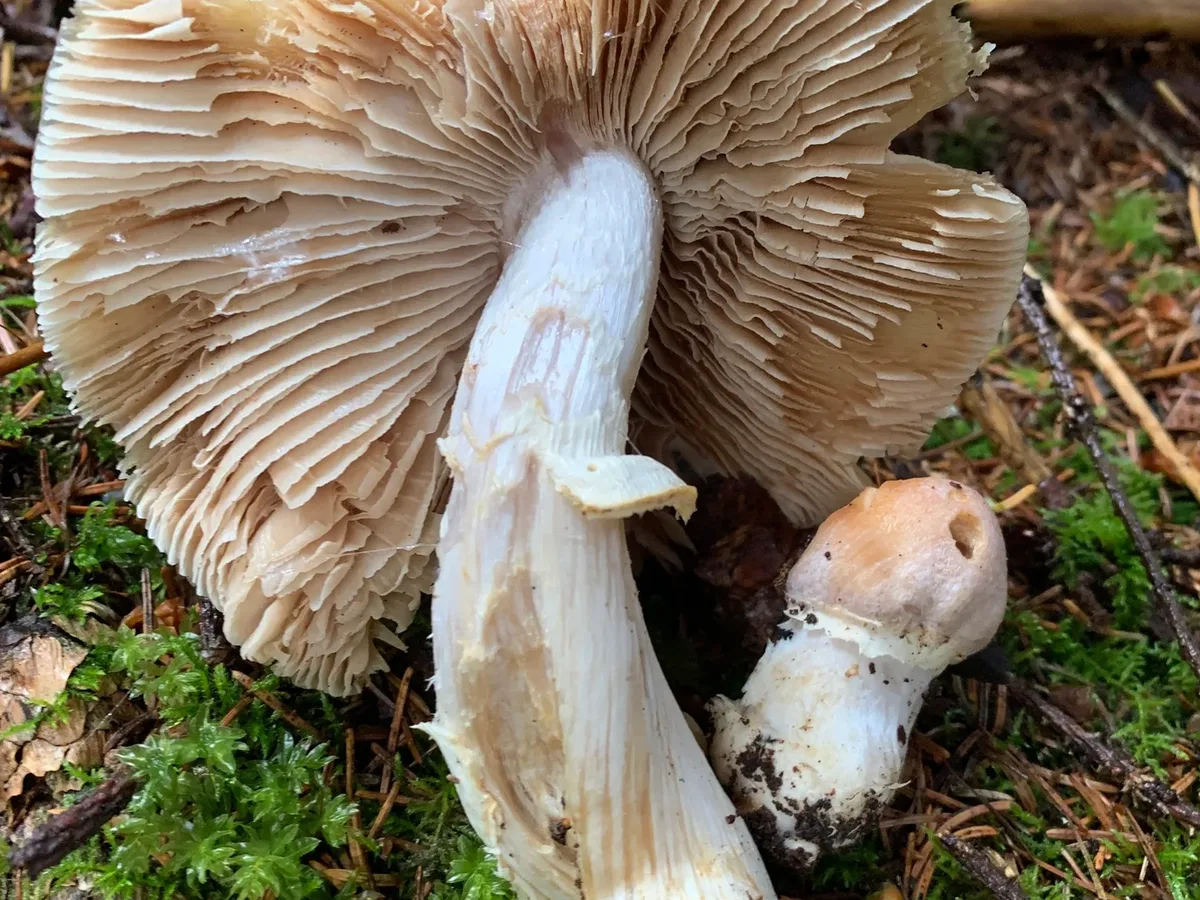
The Gypsy mushroom has a look all of its own - and one feature that sets it apart from almost every other Cortinarius is the true membranous ring on its stem.
Where its relatives carry only a flimsy, cobwebby cortina that soon disappears, this species develops a proper, persistent, skirt-like annulus in the upper third of the stem. That ring is your most important field check.
Cap
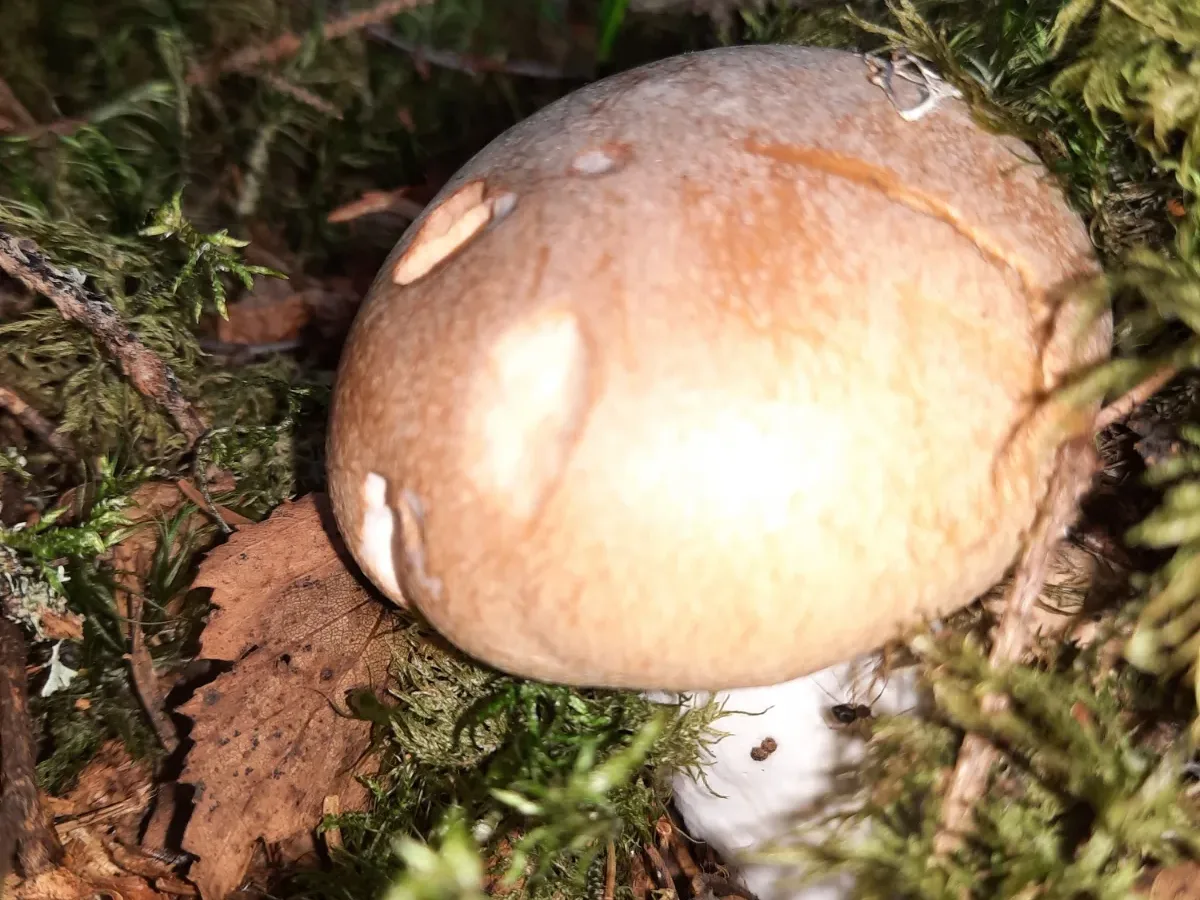
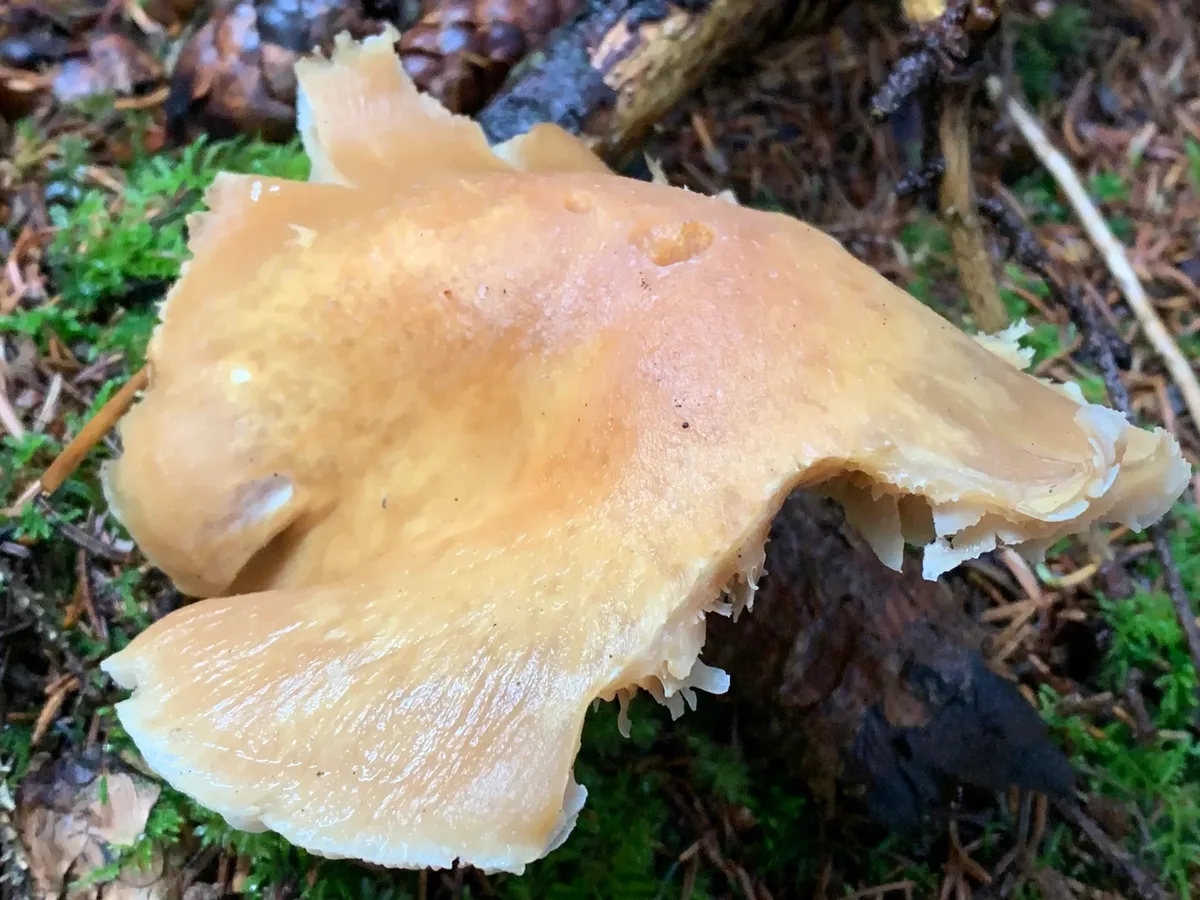
The cap begins as a pale egg-shaped button wrapped in whitish veil tissue and slowly expands to broadly bell-shaped, then nearly flat with a low, rounded central hump.
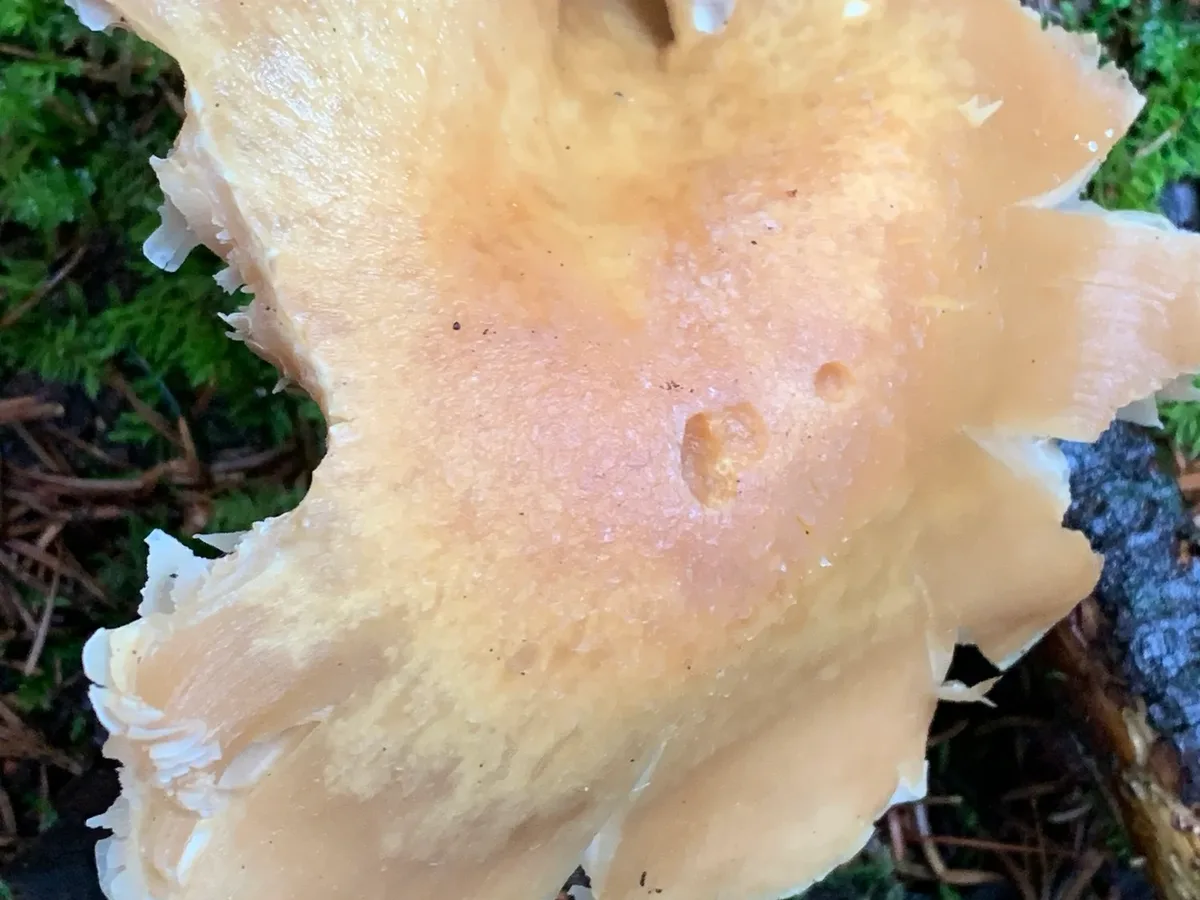
The surface stays distinctly wrinkled-rugose even at full size and keeps a frosted, rime-like dusting at the centre - remnants of that universal veil. Colour runs from pale straw-yellow through warm ochre to honey-brown, usually darkest at the centre.
Gills
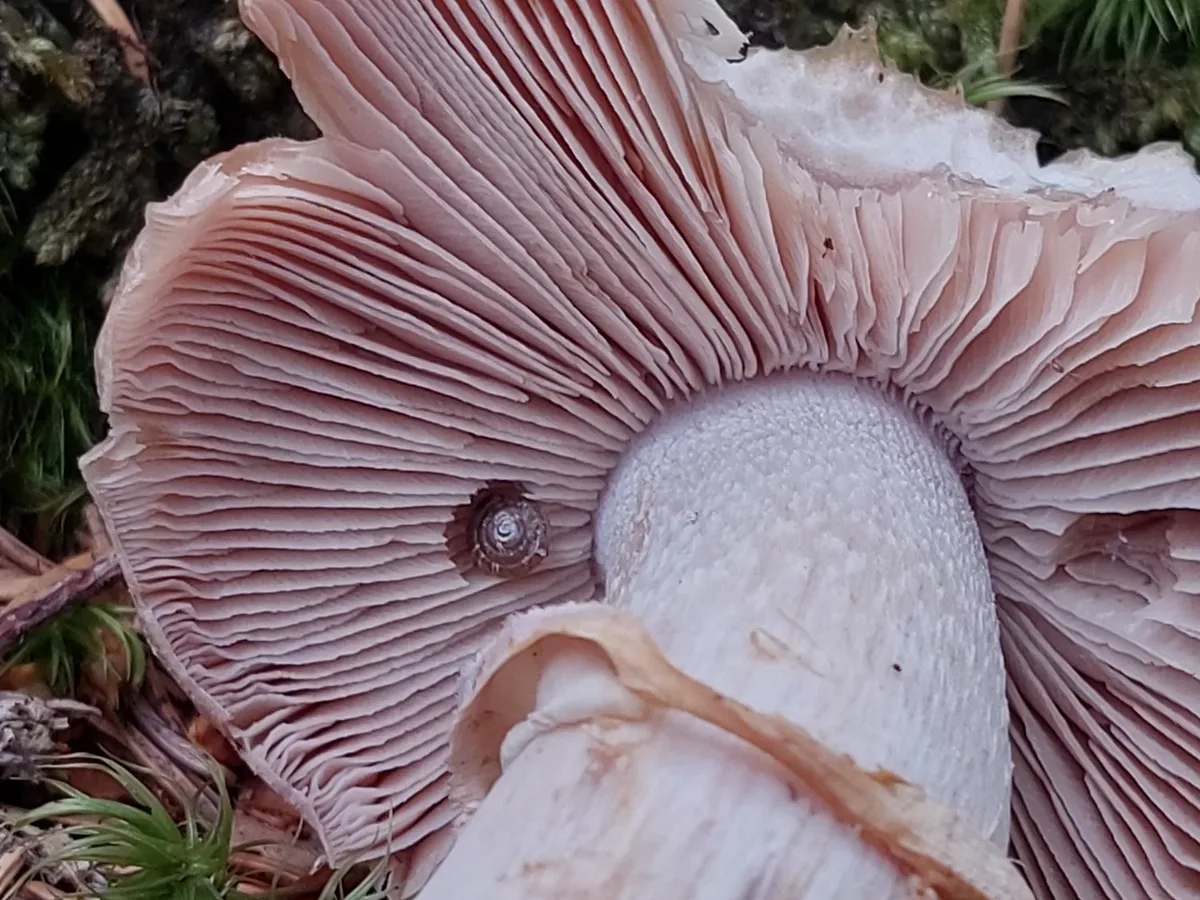
Gills are adnate to sinuate, crowded, and start out pale clay-buff before ripening to a clear rust-cinnamon as the spores mature.
Spore print cinnamon to rusty brown. Under the microscope the spores are distinctly warted (verrucose) - an additional diagnostic if confirmation is needed.
Stem
The stem is firm and whitish to pale buff, fibrillose below the ring.
Flesh
The flesh is white and does not change colour when cut.
Smell & taste
The scent is mild, faintly earthy or slightly radish-like.
Where & when it grows
Habitat
Cortinarius caperatus is a mycorrhizal species that threads its mycelium through the roots of coniferous trees, forming underground partnerships that may persist for many years.
It is most at home in acidic, well-drained, nutrient-poor soils beneath Scots pine (Pinus sylvestris) and Norway spruce (Picea abies) across the boreal zone.
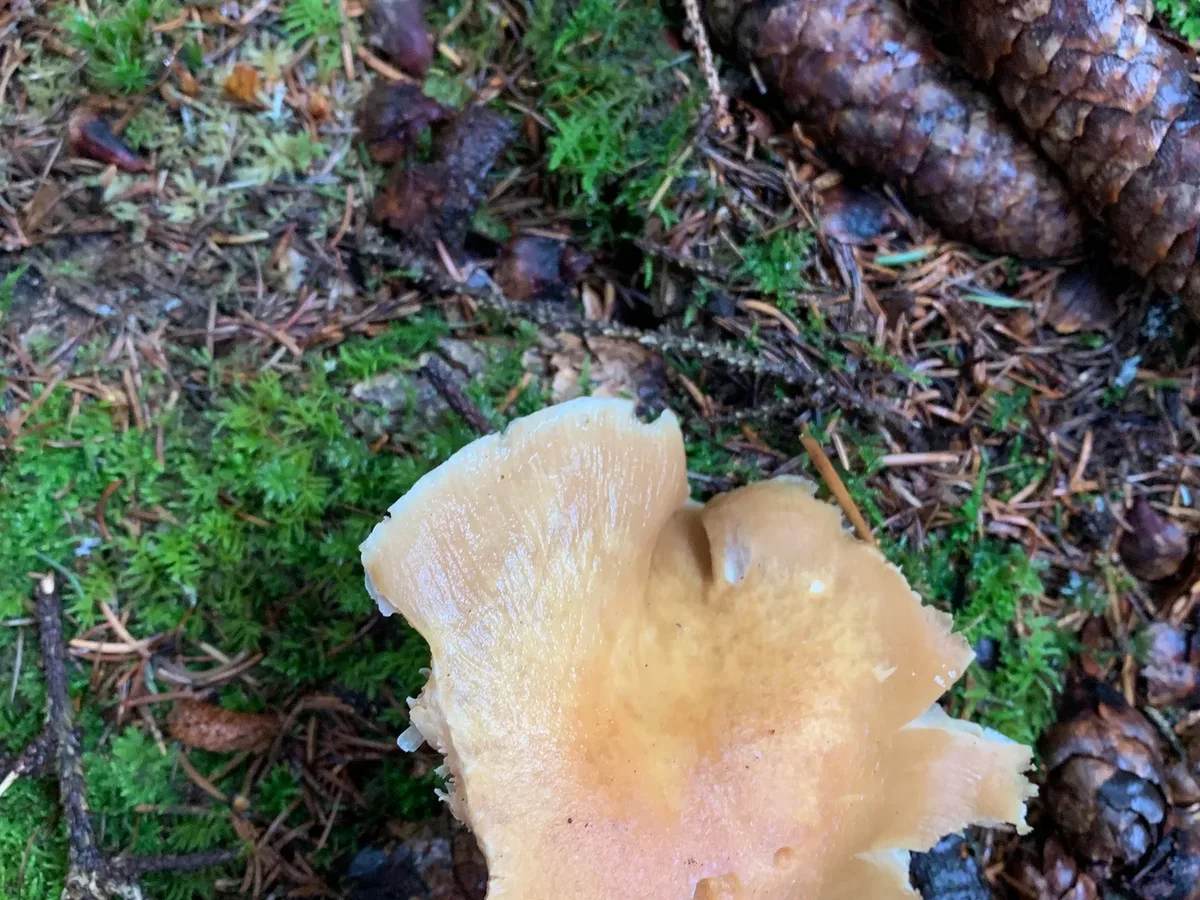
Look for it on mossy forest floors where blueberry-bilberry (Vaccinium myrtillus) heath and lichen-rich ground are the understorey - particularly where reindeer moss lichens (Cladonia spp.) carpet the spaces between tree roots.
In central European mountains it extends into spruce and fir forests and occasionally grows under beech.
Fruitbodies appear singly or scattered, sometimes in loose groups, but never in the tight clusters you get from wood-rotting species.
It is not a forest-edge mushroom and is rarely found on disturbed ground - it prefers the quieter interior of old, undisturbed forest.
When
The Gypsy mushroom is an autumn species at heart. Across Scandinavia and northern Europe it begins to push up in late July or August and keeps fruiting through October and, in mild years, into November.
The peak window in Nordic forests typically falls in the second half of August through September and early October - a period that coincides with the bilberry harvest and the broad flush of boreal autumn fungi.
In montane central European forests, where the season is longer, fruiting can start as early as June at lower altitudes and stretch to the first hard frosts. It is often one of the last productive edible species still worth collecting as the forest season winds down.
How it grows
Fruitbodies push up from the mossy substrate as small, rounded egg-like buttons wrapped in whitish universal veil tissue.
Over a few days they expand steadily. The veil breaks to leave the characteristic frosted bloom on the cap surface and contributes material to the ring on the stem.
The partial veil persists as a clearly formed, membranous ring - not a whisper of cobweb, but a proper skirt - and this is a key diagnostic you can see and feel in the field.
Plants emerge singly or scattered across the forest floor; you are unlikely to find them in tight groups.
Fruiting conditions
Fruiting triggered by mid-late summer rain events following soil cooling; in boreal Scandinavia flush typically 7-14 days after 20+ mm rainfall when soil temperatures fall below 15 °C. Peak season closely tracks the bilberry harvest period in Nordic forests.
Look-alikes
The most dangerous confusion is with deadly webcap species, particularly Cortinarius rubellus (deadly) and Cortinarius orellanus (deadly), which cause orellanine nephrotoxicity - a delayed kidney-destroying syndrome with onset ranging from 2-3 days up to 3 weeks after ingestion that may prove fatal. Both species can occur in boreal pine and mixed forests.
The critical distinction is that C. caperatus has a persistent, well-formed membranous ring (annulus) on the stem, while true Cortinarius species have only a silky, cobwebby cortina that typically leaves only a faint rusty zone on the stem and disappears with age.
The Gypsy mushroom's cap is also distinctly wrinkled-rugose and frosted in a way not seen in most Cortinarius species.
Never collect based on colour or size alone.
- Cortinarius rubellus: an orange-brick to tawny cap that is not wrinkled or frosted, lacks a proper ring, and has a cortina visible in young specimens.
- Cortinarius orellanus: dry, orange-ochre to fox-red, with a radiate-fibrillose cap surface, no membranous ring, and a cortina; it is most strongly associated with oak and birch in western and central Europe but can also occur in mixed forests.
- Pholiota squarrosa (inedible, causes gastrointestinal upset): also has a ring but is much more scaly-squarrose on both cap and stem, grows in dense clusters at the base of deciduous trees, and has a strongly pungent garlic-like or earthy smell.
- Pholiota aurivella: another scaly pholiota that might be confused, but again it grows clustered on wood and lacks the wrinkled frosted cap.
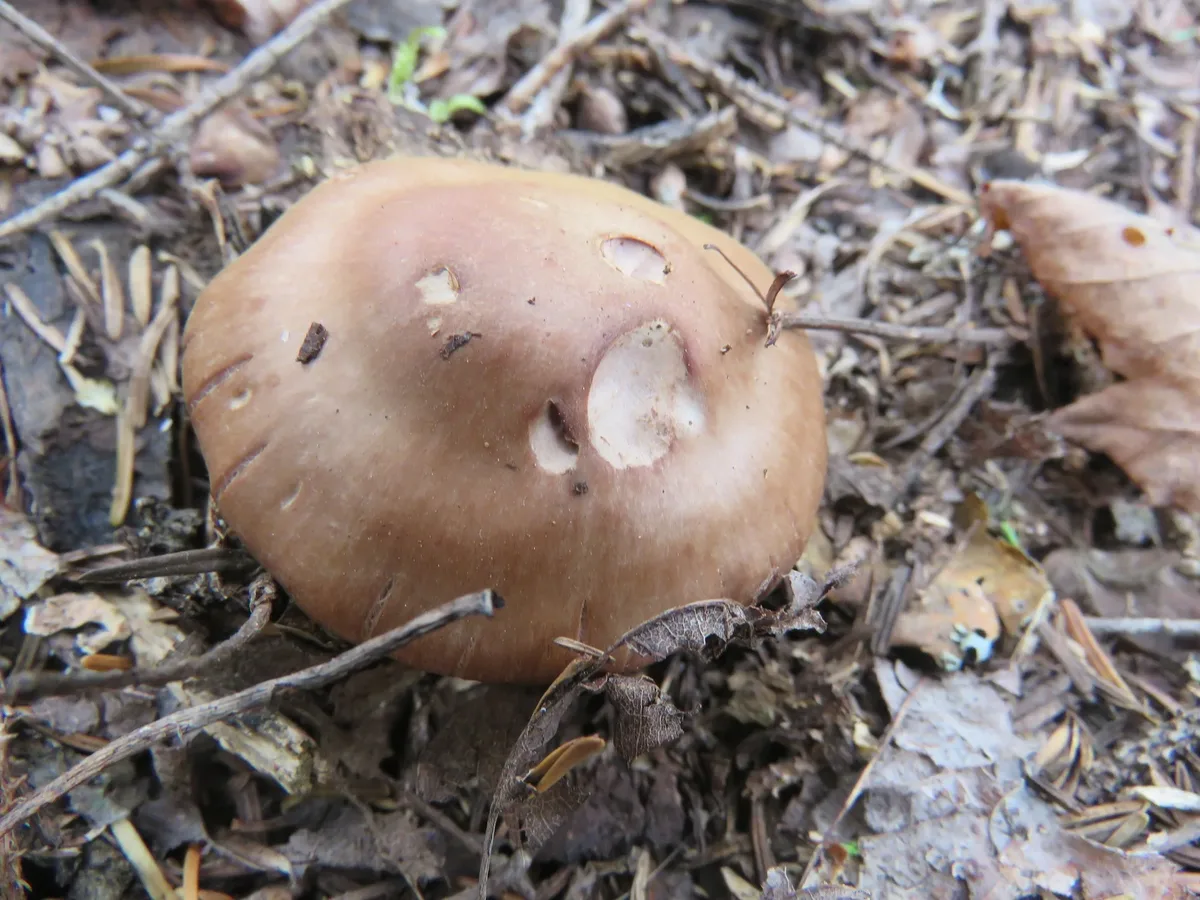
- Inocybe species: share the rusty spore print but are smaller, have no ring, and smell strongly and unpleasantly mealy or spermatic; several Inocybe species contain muscarine and some have caused fatalities - never treat this genus as harmless.
- Hebeloma species: also brownish with brown spore prints but lack the ring and frosted cap, and smell strongly of radish.
Orange-brick to tawny dry cap, fibrillose-radiate surface, no membranous ring - only a transient cobwebby cortina leaving a faint rusty belt on stem; does NOT have the frosted, wrinkled cap of C. caperatus. Causes fatal orellanine nephrotoxicity with onset typically 2-3 days to 3 weeks after ingestion.
Much smaller; cap fibrillose-radiate but not wrinkled-frosted; no ring; strong spermatic or earthy smell; rusty-brown spore print. Several species contain muscarine and some have caused human fatalities (notably Inocybe erubescens). Never treat this genus as harmless.
Fox-red to orange-ochre, distinctly dry, radiate-fibrillose cap; no membranous ring, only remnants of cortina; most strongly associated with oak and birch in western/central Europe but also occurs in mixed forests. Cap not wrinkled or frosted. Causes orellanine nephrotoxicity identical to C. rubellus, with onset typically 2-3 days to 3 weeks after ingestion.
Slimy cap, no membranous ring, only cortina; inedible and toxic; causes gastrointestinal upset.
Slimy golden-yellow cap with sparse dark scales; grows in clusters on trunks of living or dead broadleaved trees; inedible, gastrointestinal irritant.
Densely covered in coarse recurved scales on both cap and stem; grows in dense clusters at base of living deciduous trees; strong, pungent, garlic-like smell; causes gastrointestinal upset.
In the kitchen
Picking & cleaning
- Harvest firm, fresh specimens with the ring intact to aid identification.
- Use a knife and brush away debris; avoid digging up the mycelium.
- Pick only fully expanded caps where the rust-brown gills are clearly visible and the spore colour is apparent.
- Leave old, water-logged, or maggot-riddled specimens.
Because the ring (annulus) is an essential identification feature, take care not to handle the stem so roughly that the ring is destroyed before inspection.
Check every specimen individually - dangerous lookalikes share the same habitat.
Cooking
The Gypsy mushroom is prized as a table mushroom across Scandinavia and northern Europe, with a mild, pleasant flavour and firm, white flesh that holds its texture well during cooking.
It must always be cooked thoroughly - do not eat raw, as raw consumption can cause gastrointestinal upset.
- Excellent sautéed in butter with onion, salt, and fresh herbs.
- A popular choice for mushroom soups, stews, risotto, and cream sauces.
- Pairs well with game and elk dishes.
- Larger caps can be stuffed and baked.
- Dries well and retains good flavour when reconstituted, making it valuable for the larder.
Unlike many autumn mushrooms it is not notably astringent or bitter.
Pre-boiling and discarding the water before final cooking is recommended by cautious foragers and reduces any residual irritants.
Good to know
IMPORTANT - the Gypsy mushroom shares boreal pine and mixed forest habitat with two of the most dangerous webcap species in Europe: Cortinarius rubellus and Cortinarius orellanus.
Both cause orellanine nephrotoxicity, a delayed kidney-destroying syndrome with onset typically 2-3 days to 3 weeks after ingestion that may prove fatal or leave permanent kidney damage.
The critical safety check for C. caperatus is the presence of a persistent, membranous, skirt-like ring on the stem. No dangerous lookalike has this feature.
- If the ring is absent or only a cobwebby veil remnant is present, do NOT eat the mushroom.
- Always examine the ring, the wrinkled-frosted cap, and the habitat carefully.
- Confirm a rust-brown (not white, black, or pink) spore print.
- The Gypsy mushroom must always be cooked before eating - do not consume raw.
When in doubt, leave it out. Never collect unknown Cortinarius-relatives for the table.
A reference guide - never an edibility guarantee. When in doubt, leave it out.