Stately webcap
Cortinarius callisteussyn. Agaricus callisteus Fr., Phlegmacium callisteum (Fr.) Wünsche, Cortinarius callisteus (Fr.) Fr.
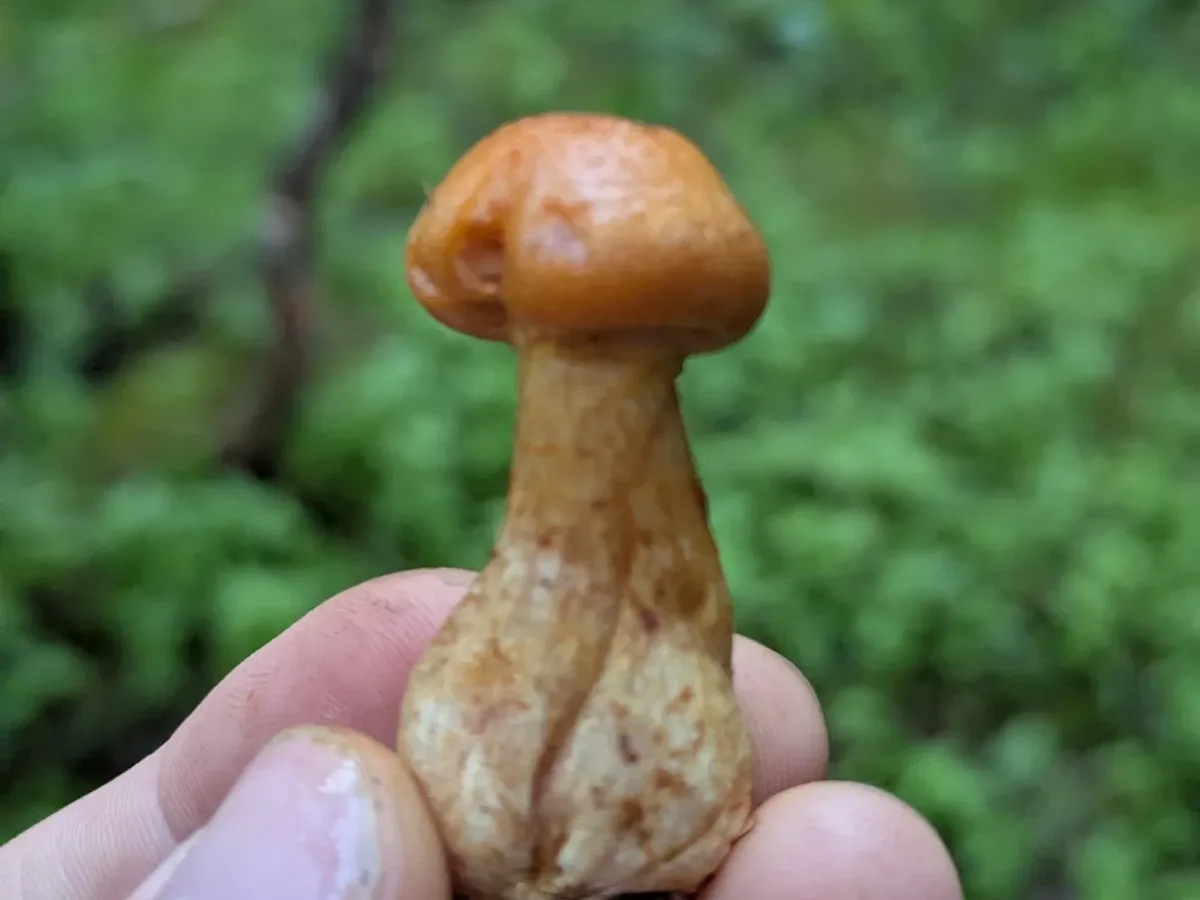 © Ole Christian Hagestad (CC BY)
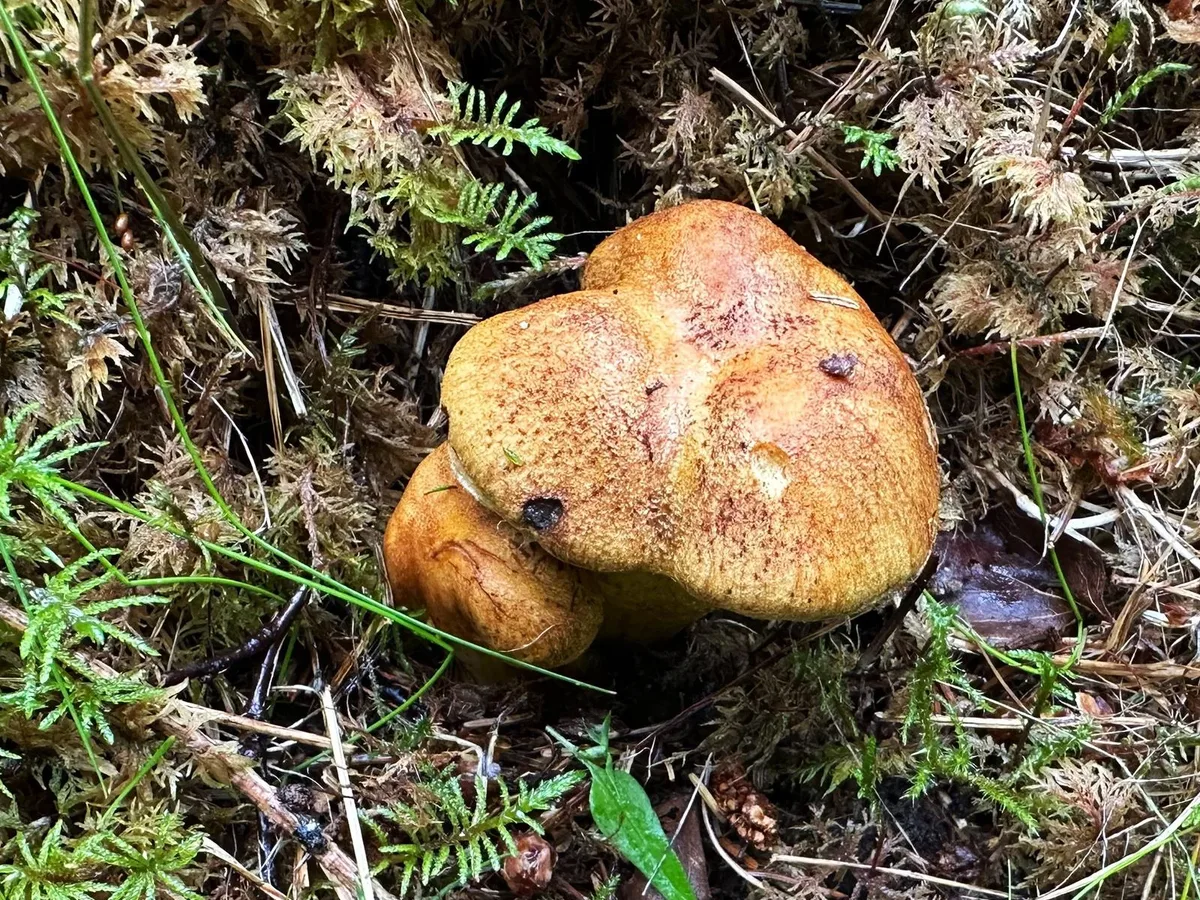 © Johan Sirnes (CC BY)
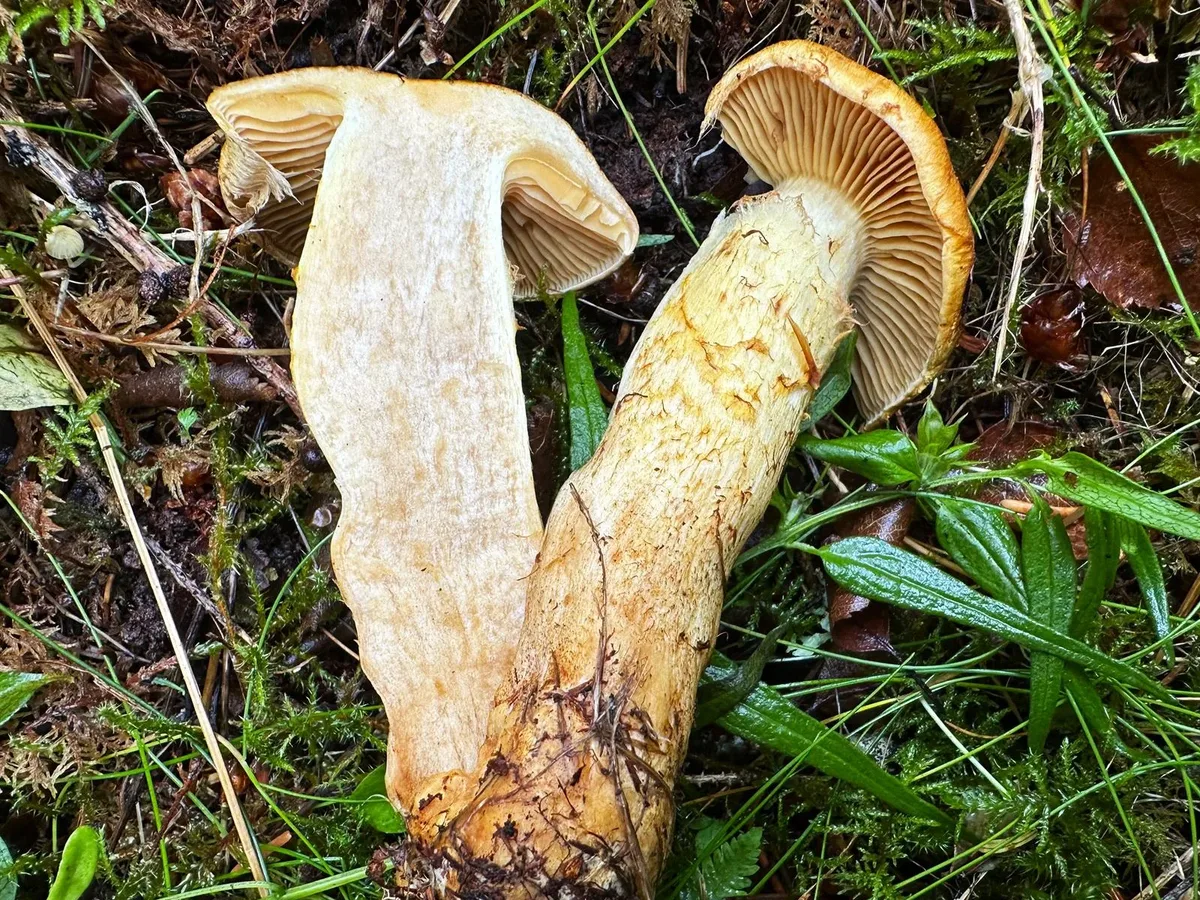 © Johan Sirnes (CC BY)
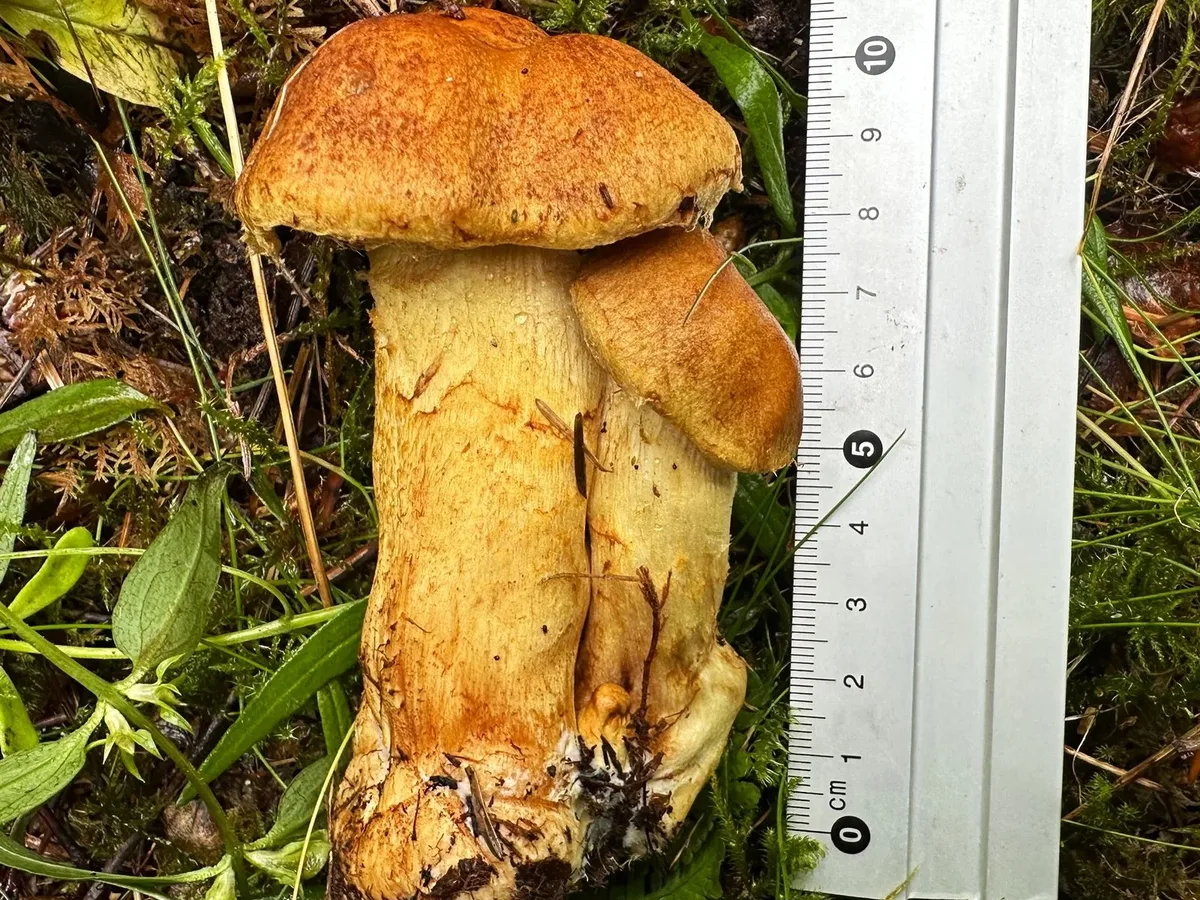 © Johan Sirnes (CC BY)
 © Johan Sirnes (CC BY)
 © Ole Christian Hagestad (CC BY)© Ole Christian Hagestad (CC BY)© Johan Sirnes (CC BY)
Toxic - and the most serious cases can be fatal. Never eat it, and wash your hands after handling.
Never eat a mushroom you are not 100% sure of - check the look-alikes below, and always cook wild mushrooms.
How to recognise it
Cortinarius callisteus is a substantial, solidly built webcap. Its most immediate impression is the combination of a warm cinnamon-buff glutinous cap and a stout, club-shaped stem ringed by pale veil girdles.
Cap
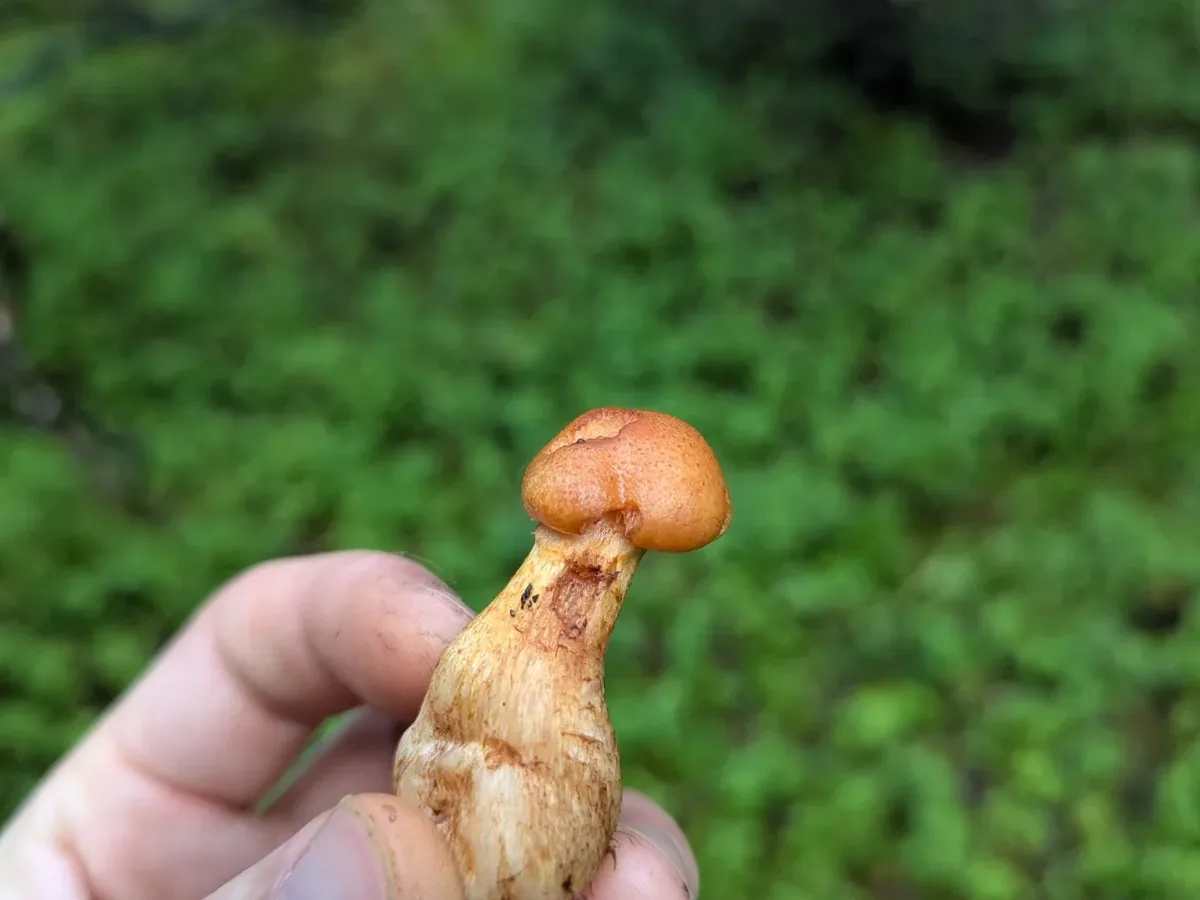
The cap opens from a broad convex dome and settles into a nearly flat disc with a subtle central umbo, reaching 5-12 cm - large enough to command attention in the forest litter.
Its surface is distinctly sticky when wet, one of the defining attributes of the Phlegmacium subgenus: run a finger across a moist cap and the glutinous coating clings to the skin, quite different from the merely moist texture of many other forest mushrooms.
The warm tawny-ochre to cinnamon-brown colour is concentrated at the centre, fading to a paler buff toward the edge, and dries to a duller ochre in old or dry weather specimens.
Gills
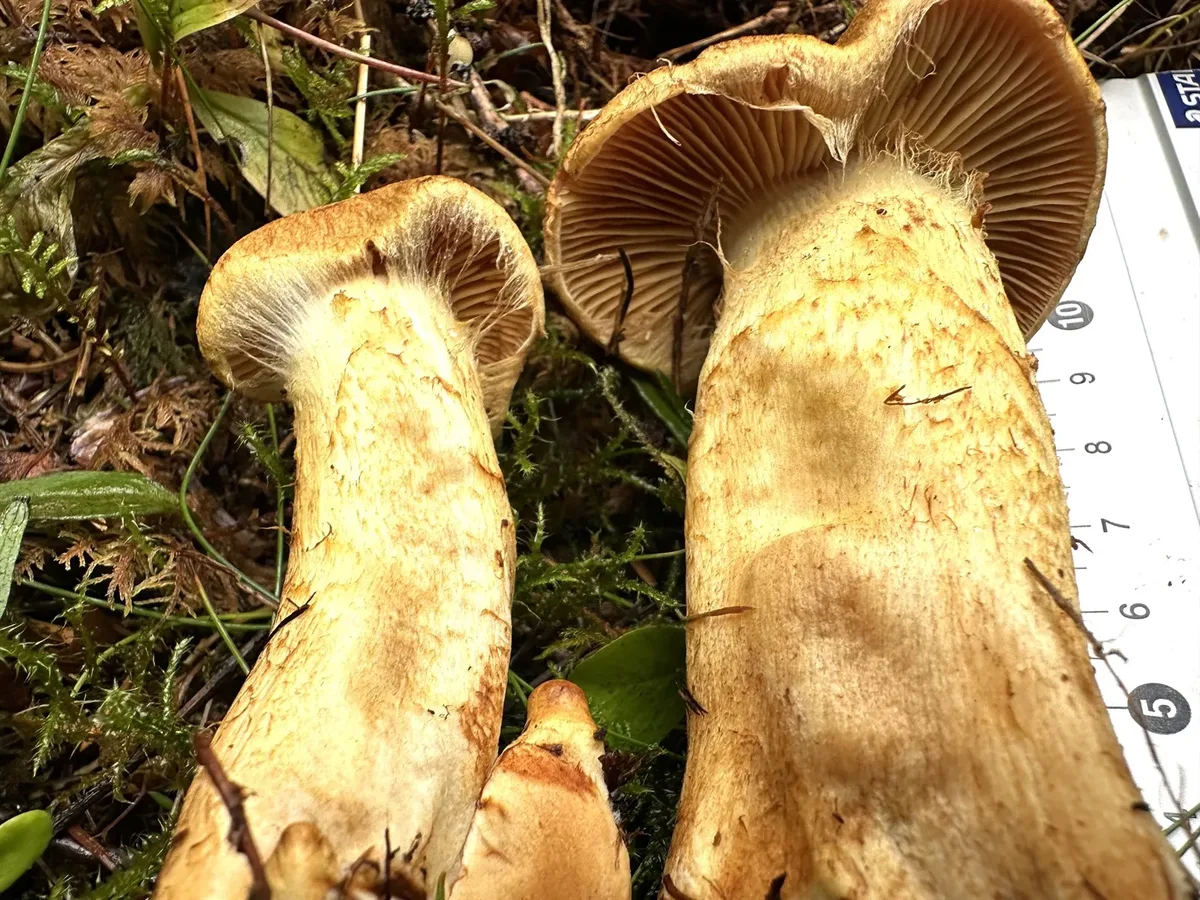
The gills start pale yellow and reliably darken to rusty cinnamon-brown as the spores ripen - this gill-colour transformation is a genus-wide hallmark and provides a built-in developmental signal.
Stem
The stem is a key identification feature: it is stout and notably swollen at the base, solidly pale ochre-yellow to buff, and carries horizontal belt-like girdles of pale veil tissue in its lower portion - the collapsed remnants of the white cortina.
That cobweb, conspicuous in young specimens as fine threads stretching from stem to cap margin, confirms genus membership the moment you see it.
Flesh
Flesh is white to pale cream, firm, and unchanging on cutting.
Smell & taste
The smell is mild and slightly earthy.
The spore print, left overnight, comes out a characteristic rust-brown.
Why it's dangerous
FATAL. Cortinarius callisteus must be treated as a deadly poisonous mushroom. The orellanine-class toxin it bears is heat-stable, irreversible in its kidney effects, and insidious in its timeline.
The delay of several weeks between ingestion and onset of symptoms means the vital connection between a mushroom meal and a developing kidney emergency is consistently missed - both by the victim and by clinicians not familiar with this class of poisoning.
There is no antidote to orellanine, and treatment is limited to supportive care and, in severe cases, renal replacement therapy. Even a modest ingested quantity can trigger irreversible nephrotoxic damage.
If consumption of any Cortinarius species from Southern Hemisphere pine forest is suspected - including a meal eaten weeks previously - emergency medical care must be sought immediately without waiting for symptoms to develop.
- In New Zealand, call the National Poisons Centre on 0800 764 766.
- In Australia, call the Poisons Information Centre on 13 11 26.
Toxin
Cortinarius callisteus is treated as an orellanine-bearing species, consistent with confirmed data from closely related Phlegmacium-group webcaps.
Orellanine is a highly stable polypyridine N-oxide nephrotoxin. It causes progressive selective destruction of renal proximal tubule cells by generating reactive oxygen species within kidney tissue.
The compound is chemically robust. It is:
- not hydrolysed by stomach acid
- not decomposed by cooking heat
- not leached out by water during boiling
In animal and clinical studies, orellanine causes a characteristic delayed progression from exposure to overt renal failure over one to eight weeks.
The toxin is present throughout the fruit body, including flesh, gills, and stem; no part is safe.
C. callisteus and its close relatives also contain cortinarins (anthraquinone pigments), which may contribute additional irritant effects, but orellanine is the primary life-threatening compound.
Symptoms
Orellanine poisoning follows a characteristic and uniquely treacherous course. After ingestion there is typically a latent period of 2 to 8 weeks - occasionally as long as 3 months in rare documented cases - during which the victim may feel entirely well or experience only mild nausea and fatigue that pass without alarm.
Throughout this latent phase, orellanine is steadily destroying the epithelial lining of the kidney tubules, and the renal damage accumulates without producing obvious symptoms.
When symptoms eventually declare themselves, they include:
- intense polydipsia (insatiable thirst)
- polyuria then oliguria (first increased then decreased urine production)
- progressive fatigue and weakness
- nausea
- vomiting
- burning pain in the lumbar region and flanks
- headache
- anorexia
These reflect advancing acute kidney injury. If untreated, the injury progresses to end-stage renal disease; a proportion of documented orellanine victims have required long-term dialysis or kidney transplantation.
Death is documented in cases of delayed diagnosis or large ingested quantities. The cruel hallmark of orellanine poisoning - the weeks-long delay before symptoms - is the reason diagnosis is so often missed and why medical outcomes are frequently poor.
Staying safe
DO NOT EAT. Cortinarius callisteus is a deadly species and must never be collected or consumed.
Three factors make it exceptionally dangerous:
- a heat-stable toxin that cannot be removed by any cooking method
- an extreme latency period that delays recognition of poisoning
- the absence of any antidote
In pine plantation forests in Australia and New Zealand - environments where foraged mushrooms are sometimes sought - the stately webcap is a credible risk for any forager who cannot identify it with certainty at expert level.
If you have any reason to believe this or any Cortinarius has been consumed, contact a poisons centre immediately and provide as much information as possible about the mushroom, including photographs or a sample if available.
Do not wait for symptoms to appear: the latency of orellanine poisoning means that waiting for symptoms is waiting for kidney failure that may already be irreversible.
Where & when it grows
Habitat
The stately webcap is strictly ectomycorrhizal - it forms a partnership with living tree roots and cannot exist without a host.
In Australia and New Zealand it is most reliably found in Pinus radiata plantation forest, where European mycorrhizal fungi introduced alongside their host trees have established thriving populations. New Zealand's extensive radiata pine plantations from Northland down to Canterbury provide a primary habitat; southeastern Australia's plantation forests in Victoria and New South Wales are a secondary range.
In these plantation settings it fruits in the needle litter beneath closed-canopy pine stands, typically on well-drained hillside soils. The species appears to follow its host tree: where pine was planted and European fungal inoculum arrived, it established.
Undisturbed native Australian eucalypt or podocarp forest is not its typical home, though taxonomic confusion with morphologically similar Australasian Cortinarius species means records require careful verification.
The forest floor context - thick needle litter, closed pine canopy, acidic sandy or loamy soil - is almost diagnostic for this species in the Southern Hemisphere.
When
In Australia and New Zealand, fruiting takes place through the Southern Hemisphere autumn and early winter, broadly March through July. The peak flush is typically in April and May, when summer warmth has fully dissipated and autumn rains have begun to penetrate the soil.
The biological trigger is a combination of soil temperature cooling - ideally into the 8-14 °C range - and sustained rainfall of at least 20-25 mm over a 10-14 day period. The fruiting bodies then emerge 10-21 days after the triggering moisture event.
Wetter or higher-altitude sites may continue producing into June or early July.
In its native European range the timing shifts to Northern Hemisphere autumn: August through November, peaking in September and October. The same fundamental physiological signals apply - cooling autumn soil temperatures after summer, adequate moisture - simply offset by six months.
How it grows
As an obligate ectomycorrhizal species, C. callisteus exists primarily as an invisible web of fine fungal threads (hyphae) woven through the soil and host tree roots. The fruit bodies that emerge in autumn represent only the reproductive tip of a much larger and longer-lived organism.
A single mycelial network established beneath a plantation pine stand may persist for decades, sending up fruit bodies each year the conditions are suitable. Fruit bodies emerge singly or in small scattered groups, rarely more than a handful at one site at a time.
The visible mushroom matures over one to two weeks before collapsing; by then the spores have already been shed into the air.
Because the mycelial network is perennial, experienced foragers may return to the same patch beneath the same trees year after year - which is exactly the kind of repeated exposure that can lead to cumulative poisoning if the species is misidentified as edible.
Fruiting conditions
Southern Hemisphere fruiting: triggered by post-summer cooling of soil below approximately 14 °C combined with sustained autumn rainfall (20+ mm over 14 days). Typical flush lag 10-21 days. Peak April-May; may extend to July at wetter higher-altitude sites. Northern Hemisphere (European range): same triggers but September-October peak.
Look-alikes
In Southern Hemisphere pine plantation forest the most important lookalike confusion is with other brown to ochre-capped Cortinarius species occupying the same habitat.
- Cortinarius australiensis and related Australasian Phlegmacium-group webcaps share similar colouring, habitat, and season; all carry equivalent risk in the absence of definitive expert identification.
- Cortinarius triumphans (birch webcap) is sometimes considered edible in European literature and could theoretically occur under introduced birch in NZ. It has a similar glutinous cap but distinctly yellow concentric girdles on the lower stem, associates specifically with birch rather than pine, and should not be eaten by anyone uncertain about identification in a Southern Hemisphere context.
- Pholiota squarrosa (shaggy scalycap) is tawny-ochre and could attract a cursory glance in the same forest floor context, but it grows in dense clusters on or at the base of dead or living wood, has a dry scaly cap surface (never glutinous), no cortina, and a well-formed membranous ring - structurally completely different once examined.
- Various Hebeloma species (poisonous) are ochre to buff-capped with a radish smell and white to pale brown gills, never with the typical Cortinarius combination of glutinous cap, cobweb cortina, and rust-brown spore print.
The two features that place a mushroom definitively in Cortinarius - and therefore in the dangerous category - are the rust-brown spore print and the cobweb-like partial veil. Both must be checked on any unknown candidate before any other assessment is made.
Native Australasian Phlegmacium-group webcaps including C. australiensis overlap in habitat, season, and general brown-ochre colouration. They are indistinguishable from C. callisteus by macroscopic features alone, and all carry equivalent risk. Modern Australian mycology treats all large glutinous-capped Cortinarius in native and plantation forest as potentially deadly.
C. triumphans has a similarly glutinous tawny-ochre to pale yellow cap with a clavate stem, but its lower stem is distinctively decorated with prominent yellow concentric girdles formed by the veil remnants - more pronounced than in C. callisteus. It associates specifically with birch (not pine) and is considered edible by some European authors, but the distinction from C. callisteus and from toxic relatives in the same group is too subtle for safe field separation in a Southern Hemisphere context where both species may co-occur under exotic trees.
A smaller Dermocybe-subgenus webcap with an entirely dry (never glutinous) cinnamon to olive-yellow cap, crowded vivid orange to olive-yellow gills, and a slender stem without a swollen base. Distinguished from C. callisteus by the dry cap, smaller size, slender build, and vivid gill colour. C. cinnamomeus is inedible and should itself not be eaten.
Grows in dense clusters on pine stumps and woody debris; cap pale buff to tawny with a dry surface; gills smoky grey rather than rusty-orange; spore print purple-brown rather than rust-cinnamon; no cortina. The clustered habit on wood, grey gills, and purple-brown spore print make separation straightforward.
Pholiota squarrosa is tawny-ochre with a dry, densely scaly cap (never glutinous), grows in dense clusters at the base of living or dead wood (not from soil), has a membranous ring rather than a cortina, and produces a brown rather than rusty-orange spore print. The cluster-on-wood growth habit immediately distinguishes it from C. callisteus, which always fruits from soil as a mycorrhizal species.
A reference guide - never an edibility guarantee. When in doubt, leave it out.