Green skinhead
Cortinarius austrovenetus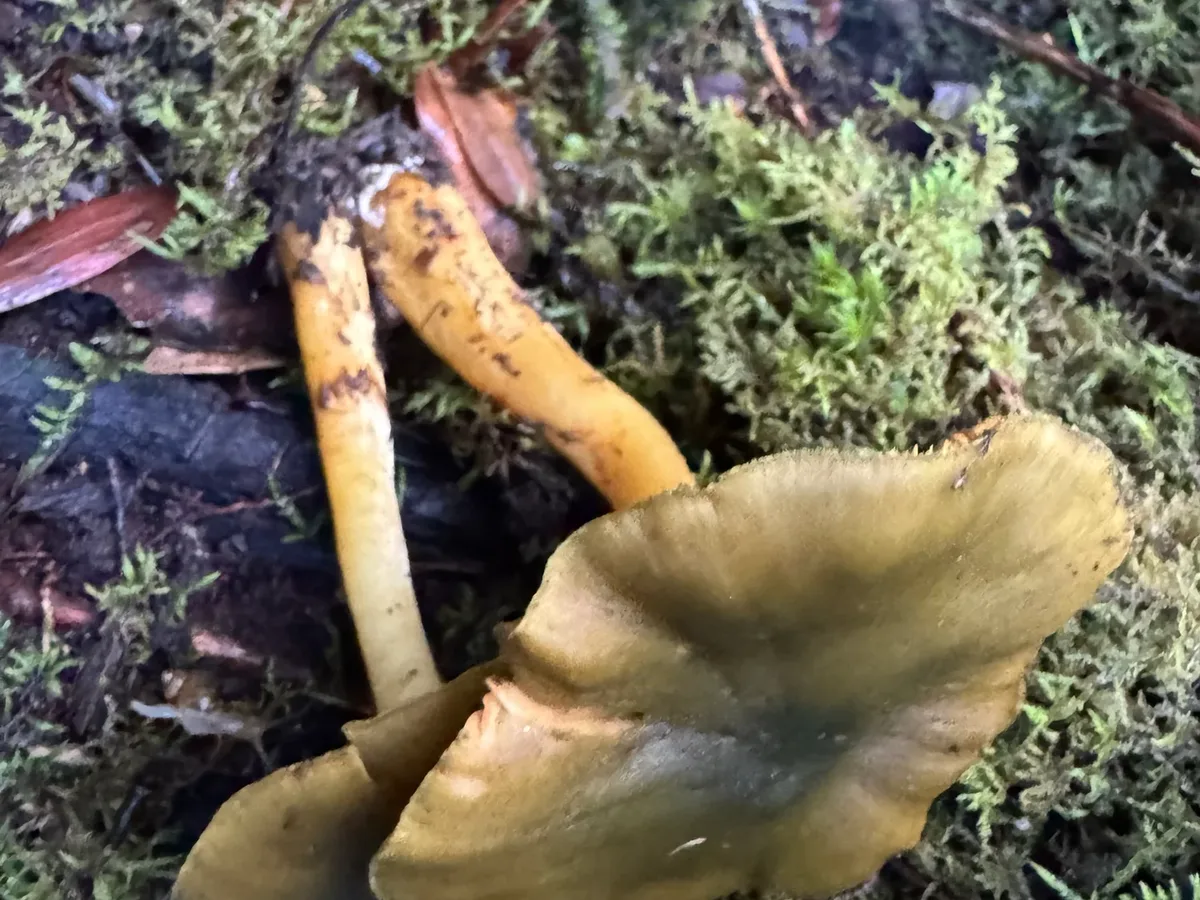 © brandon_hewitt (CC BY)
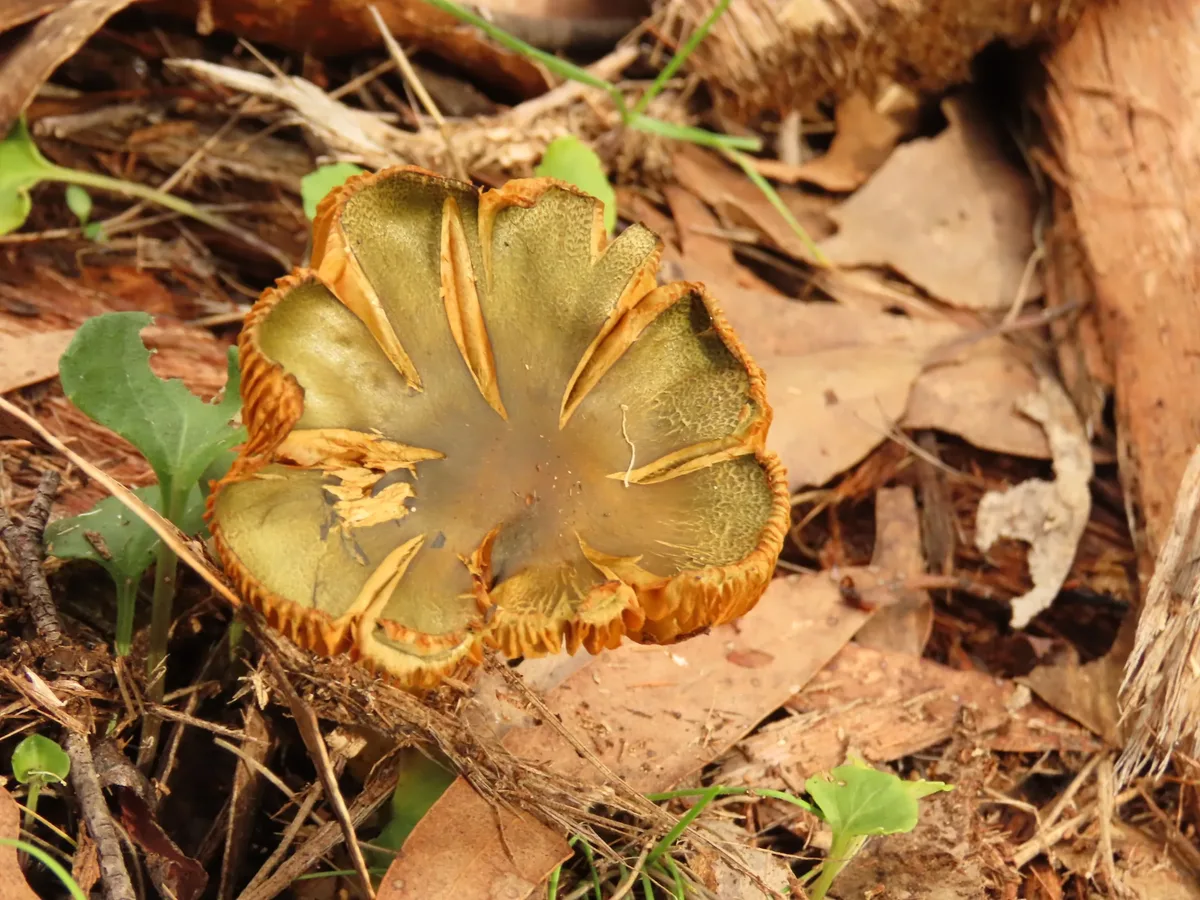 © Elspeth Swan (CC BY)
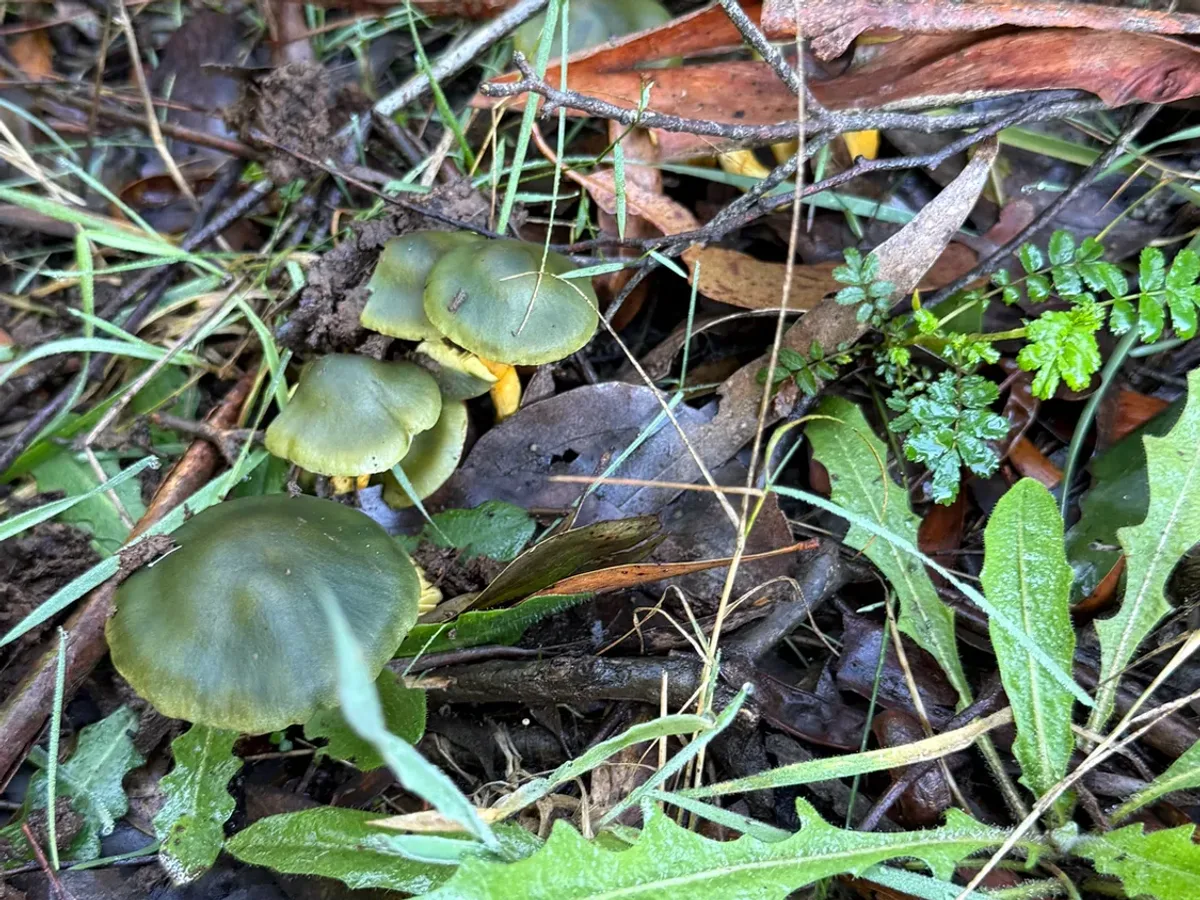 © Lukas Krug (CC BY)
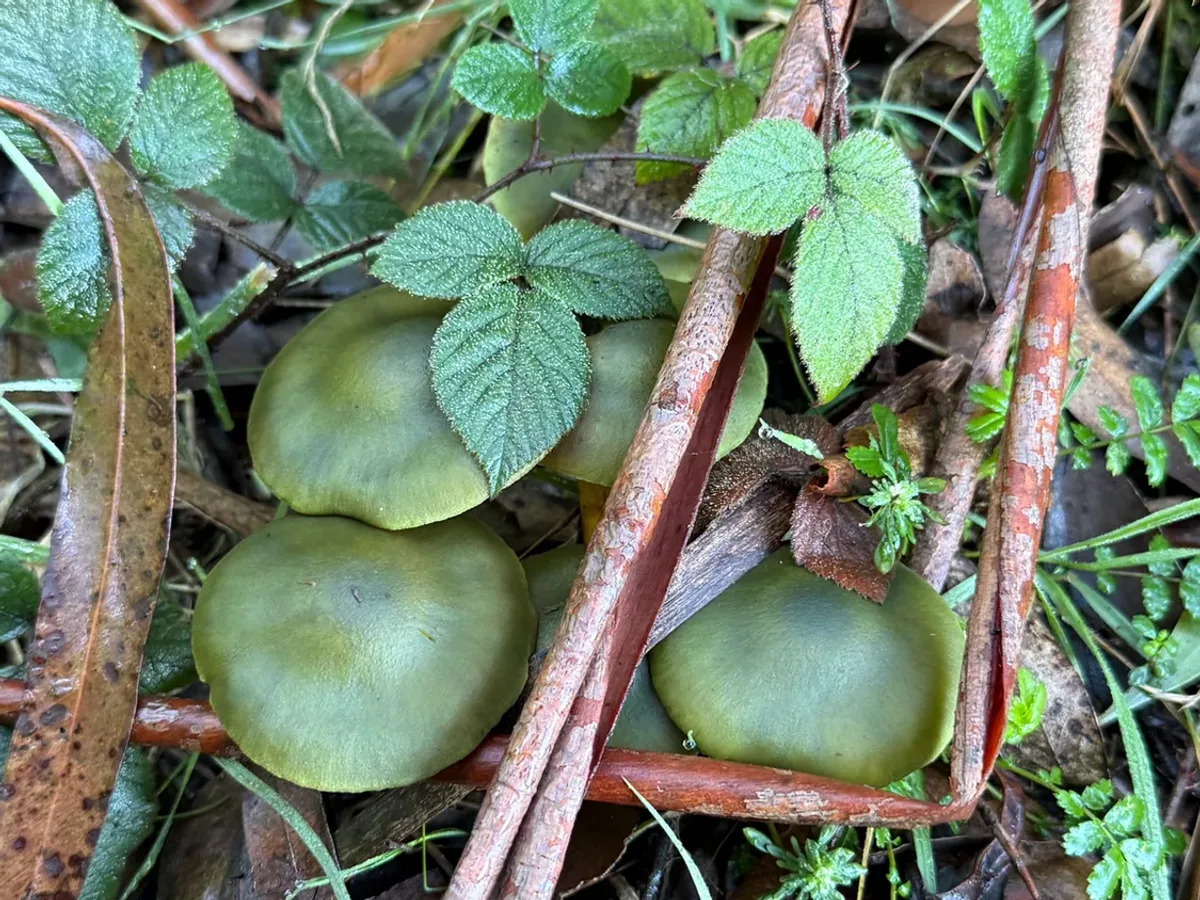 © Lukas Krug (CC BY)
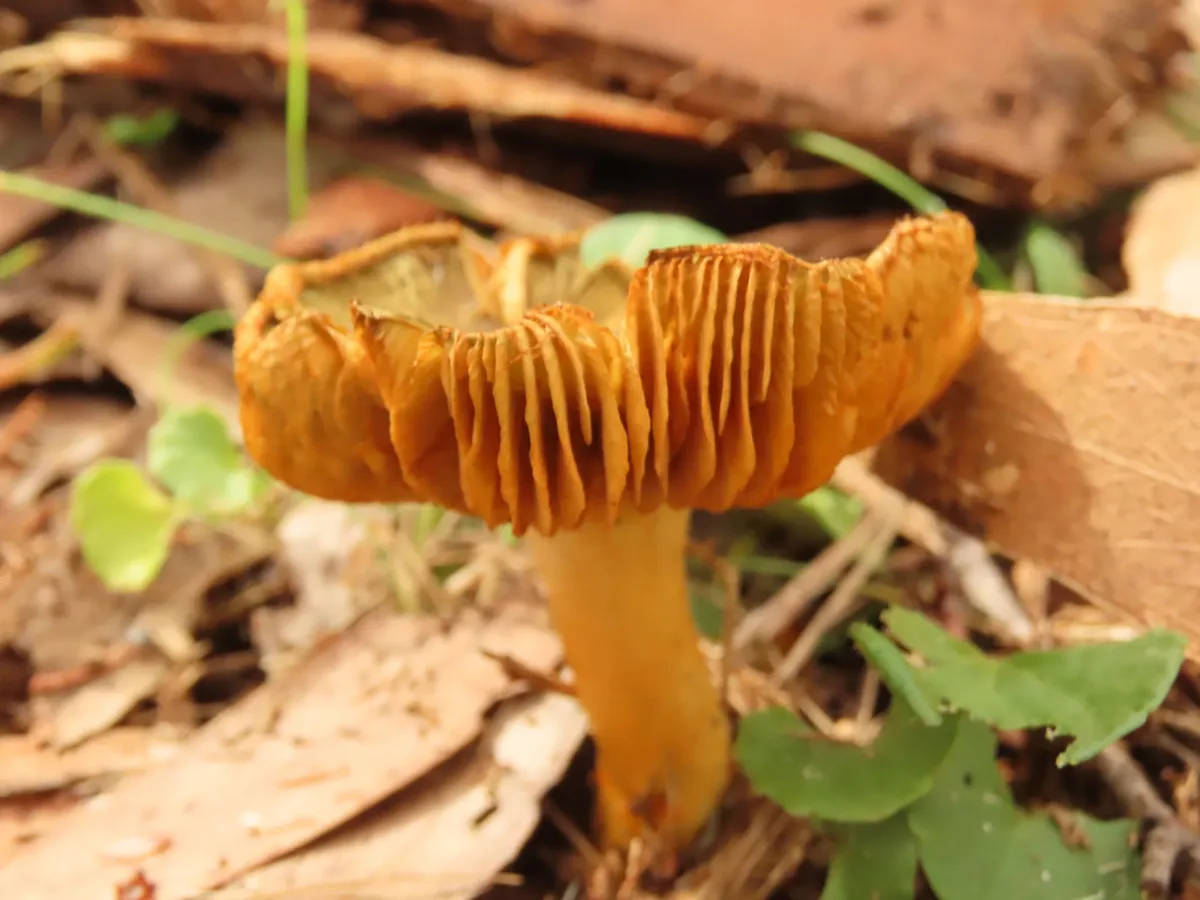 © Elspeth Swan (CC BY)
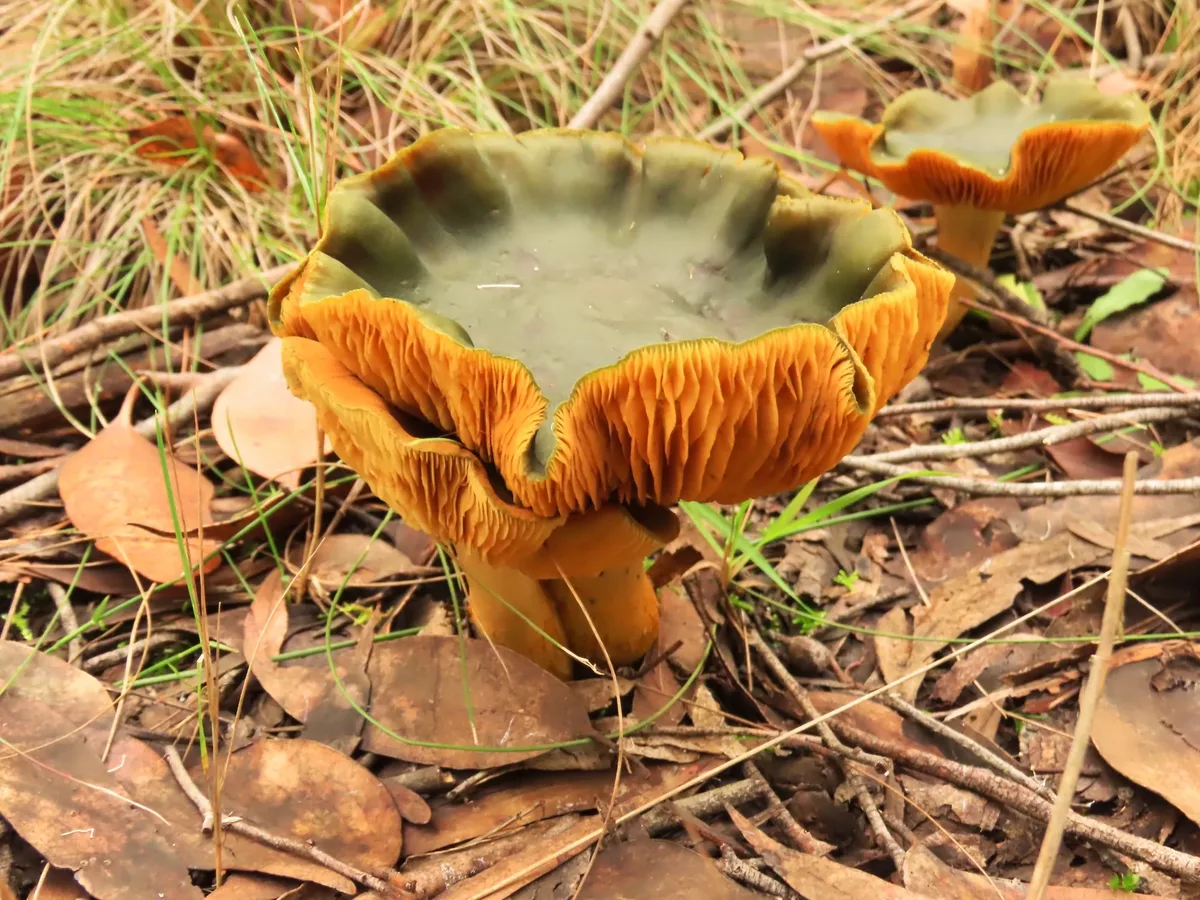 © Elspeth Swan (CC BY)
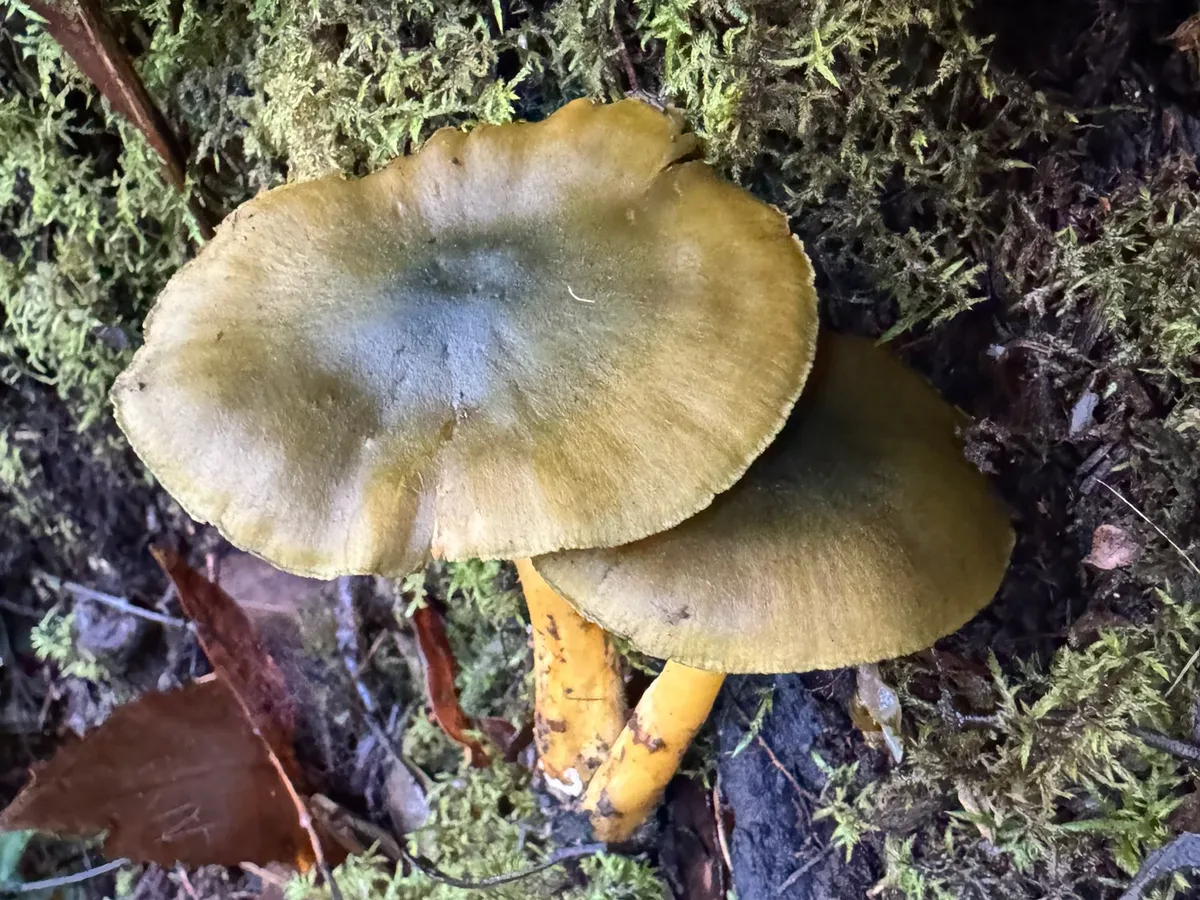 © brandon_hewitt (CC BY)
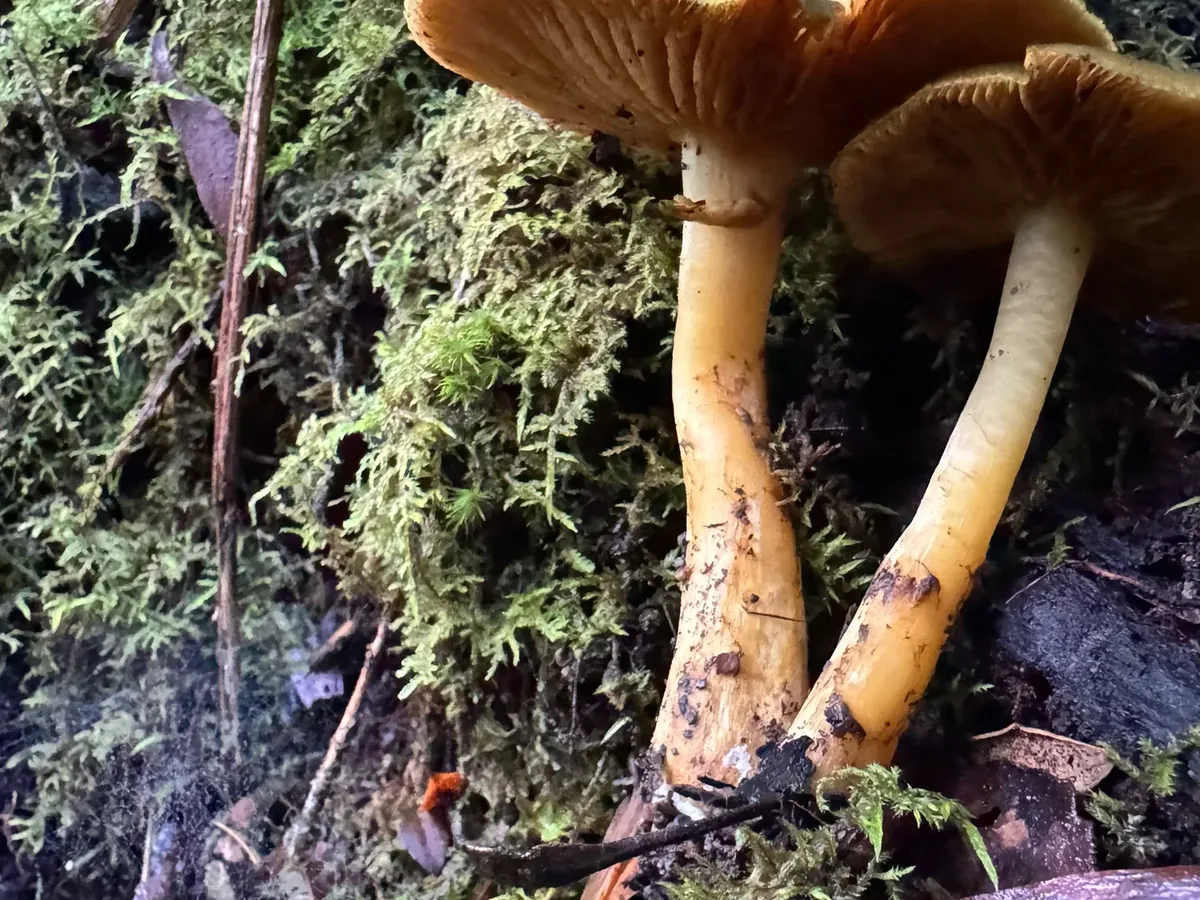 © brandon_hewitt (CC BY)© brandon_hewitt (CC BY)© Elspeth Swan (CC BY)
Toxic - and the most serious cases can be fatal. Never eat it, and wash your hands after handling.
Never eat a mushroom you are not 100% sure of - check the look-alikes below, and always cook wild mushrooms.
How to recognise it
Cap
Cap 3-9 cm, convex to broadly umbonate, smooth and dry to slightly viscid.
The defining feature is colour: fresh young caps are a striking blue-green to teal - a vivid verdigris hue unusual among gilled fungi.
The colour fades progressively to olive-green, yellowish-green and dull ochre as the cap dries and ages, so old specimens can look very different from fresh ones.
Gills
Gills adnate, moderately crowded, initially pale grey-violet to olive-tinged, turning rust-brown as spores ripen.
The rust-brown spore print is a critical diagnostic feature and should be confirmed on white paper.
Stem
Stem 5-12 cm, cylindrical to slightly clavate, fibrillose, whitish to pale olive, sometimes with a violet flush at the apex.
The cortina - the fine cobweb partial veil that marks all Cortinarius species - shows as delicate threads between cap margin and upper stem in young specimens; it collapses quickly and leaves rust-brown fibre remnants on the upper stem at maturity.
Why it's dangerous
Orellanine-bearing Cortinarius species are among the most dangerous mushrooms in the world, not because of acute toxicity but because the poisoning masquerades as ordinary illness for days to weeks.
By the time renal failure is diagnosed, the window for effective intervention has often narrowed substantially.
The distinctive green colouration of C. austrovenetus may make it more attractive to curious collectors than drab brown webcaps, compounding the risk.
The lack of Australian case series data (due in part to the relatively recent formal description of the species) does not reduce the danger - all Australian Cortinarius species must be treated as carrying full orellanine-class risk.
There is no antidote; treatment is supportive and may include corticosteroids to reduce inflammation and renal replacement therapy.
Toxin
Orellanine (and potentially related orelline and cortinarin compounds), a bipyridine-N-oxide nephrotoxin.
It acts as a selective toxin targeting proximal tubule cells of the kidney, where it generates reactive oxygen species and disrupts cellular metabolism, ultimately causing tubular necrosis.
The toxin is absorbed slowly from the gastrointestinal tract and accumulates in renal tissue, explaining the characteristic long delay before symptom onset.
Chemical analyses have confirmed orellanine in numerous Cortinarius species globally; the Australian Cortinarius complex is presumed to share this toxicological profile.
Symptoms
The defining clinical feature of orellanine poisoning is its exceptionally long latent period - typically 2 days to 3 weeks - during which the victim may feel entirely well or only experience mild nausea and headache.
When symptoms emerge they include:
- intense thirst
- excessive urination (then diminishing urine output as kidneys fail)
- nausea
- vomiting
- generalised fatigue
- headache
- a burning or painful sensation in the flanks and lower back corresponding to renal inflammation
Without treatment, progression leads to acute interstitial nephritis, acute tubular necrosis, and acute renal failure.
A significant proportion of documented cases in Europe have required long-term dialysis; some have required kidney transplantation.
Staying safe
Never eat any Cortinarius species from native Australian forest.
The genus is known to contain orellanine, a potent nephrotoxin, across many of its species; the Australian species complex has not been fully analysed but must be assumed to carry equivalent risk to the European deadly webcaps (C. orellanus, C. rubellus).
Orellanine is particularly insidious because of its extremely long latency period: victims may feel well or only mildly unwell for 2 days to 3 weeks after ingestion, during which time irreversible kidney damage is progressing.
If any Cortinarius ingestion is suspected, seek emergency medical attention immediately, even if the person feels well.
Contact the Australian Poisons Information Centre: 13 11 26.
Where & when it grows
Habitat
Ectomycorrhizal with native southeastern Australian trees, growing in intimate partnership with:
- Eucalyptus roots in moist sclerophyll and montane forest
- Nothofagus cunninghamii in cool temperate rainforest
The range covers the ranges of Victoria (Central Highlands, Otways, alpine foothills), Tasmania, parts of southern New South Wales and the ACT.
Appears singly or in loose scatter on the forest floor, nestled in deep leaf litter and duff beneath mature host trees on moist, loamy soils.
When
Southern Hemisphere autumn and early winter, March through June, with fruiting most reliable in April and May.
Fruiting bodies emerge after significant autumn rainfall once soil temperatures drop into the 8-14 °C range typical of the southeast Australian highlands - a fungus that waits out the dry summer underground and re-emerges when the cool rains finally arrive.
How it grows
Obligate ectomycorrhizal partner of host trees; cannot grow without a living root network.
Forms intimate associations with Eucalyptus and Nothofagus roots in undisturbed or lightly disturbed native forest.
Fruiting bodies appear singly or in loose small groups, not in dense clusters.
The mycelium persists perennially and produces sporocarps each autumn when conditions are suitable.
Fruiting conditions
Fruits in Southern Hemisphere autumn after meaningful rain events once soil temperatures fall into the 8-15 °C range. Conservative estimates derived from the known April-May peak season and standard Cortinarius ecology in southeastern Australian montane and moist sclerophyll forest.
Look-alikes
The vivid green cap makes fresh specimens distinctive among Australian Cortinarius species, but faded or dried specimens become olive or ochre and may resemble other brownish webcaps.
Several other Cortinarius species occur in the same habitats and share the rust-brown spore print and cortina remnants - all should be treated as equally dangerous.
Greenish-capped species from other genera that might cause confusion include:
- Stropharia aeruginosa (verdigris roundhead) - a moist, slimy cap with greenish scaly veil remnants, but a dark purple-brown spore print and lacks a cortina.
- Certain Pholiota species - a scaly-slimy cap and ring but a similarly rusty spore print; however Pholiota grows on wood, not on soil in forest.
The rust-brown spore print and cobweb cortina remnants of Cortinarius are the definitive differentiating features.
Numerous other Cortinarius species occur in southeastern Australian native forest, sharing the same rust-brown spore print, cobweb cortina remnants, and mycorrhizal forest habitat. Some (e.g. the brownish C. australiensis) lack the vivid green colouration but the species boundaries within this genus in Australia are not fully resolved. All should be treated as equally deadly. The genus is identified by rust-brown spore print + cobweb cortina + mycorrhizal forest habitat; species-level distinction requires microscopy and chemical analysis beyond field capability.
Some Pholiota species have olive to greenish-brown slimy caps and similarly rusty-brown spore prints, which can cause superficial confusion. However, Pholiota always grows on wood (dead stumps, logs, buried wood roots) and never on bare forest soil; it has a persistent ring on the stem and typically a more densely scaly cap surface. Cortinarius austrovenetus grows terrestrially and has a cortina remnant rather than a distinct membranous ring.
Stropharia aeruginosa shares a vivid blue-green cap colouration but has a slimy (viscid), scaly cap covered with whitish veil remnants, a ring on the stem, and a dark purple-brown to black-brown spore print - never the rust-brown print of Cortinarius. It also has a ring (not a cobweb cortina) and no rust-brown fibre remnants on the stem. In Australia, S. aeruginosa is uncommon and mostly confined to disturbed or garden habitats with wood chips, not native forest. If the spore print is rust-brown and the veil remnants are cobweb-like rather than a distinct ring, it is Cortinarius.
A reference guide - never an edibility guarantee. When in doubt, leave it out.