Orange-Red Webcap
Cortinarius aurantiorufus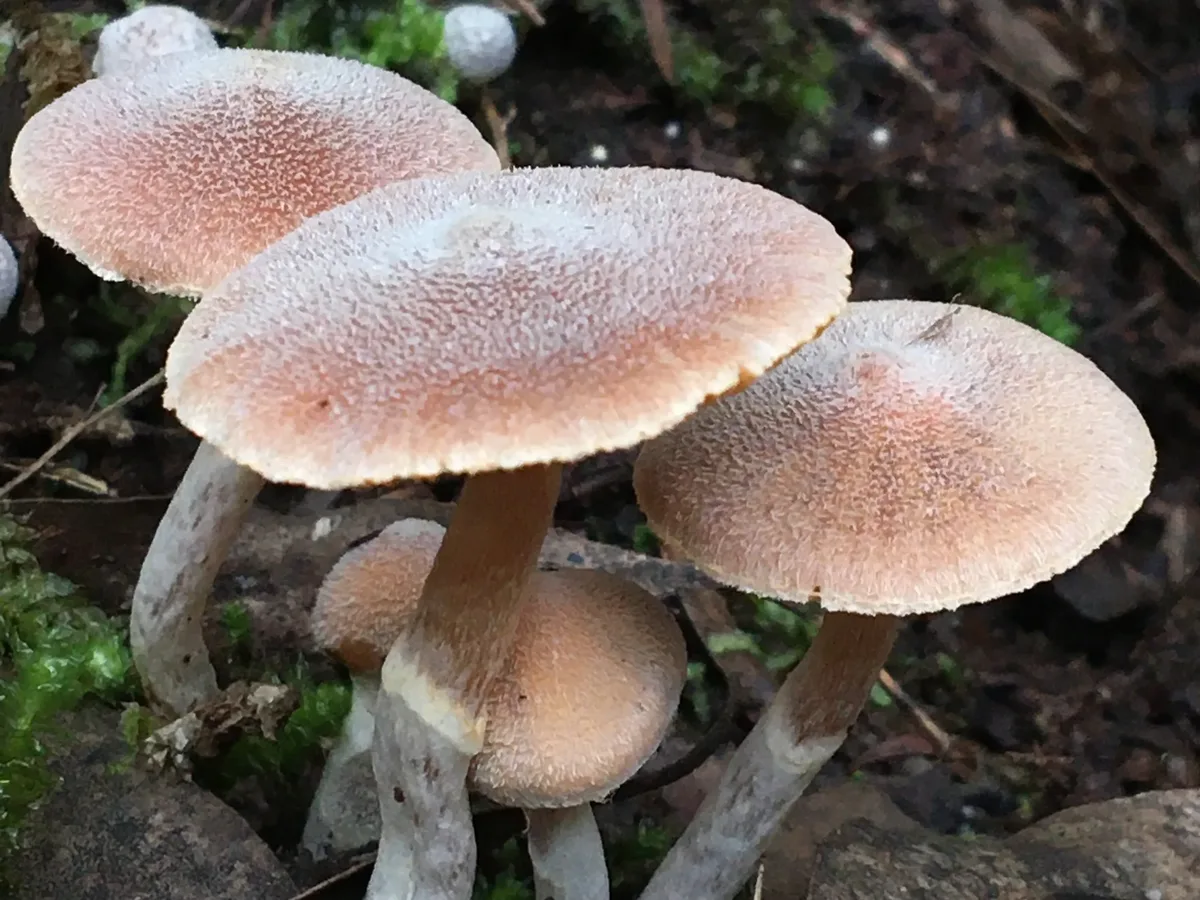 Atlas of Living Australia (CC0)
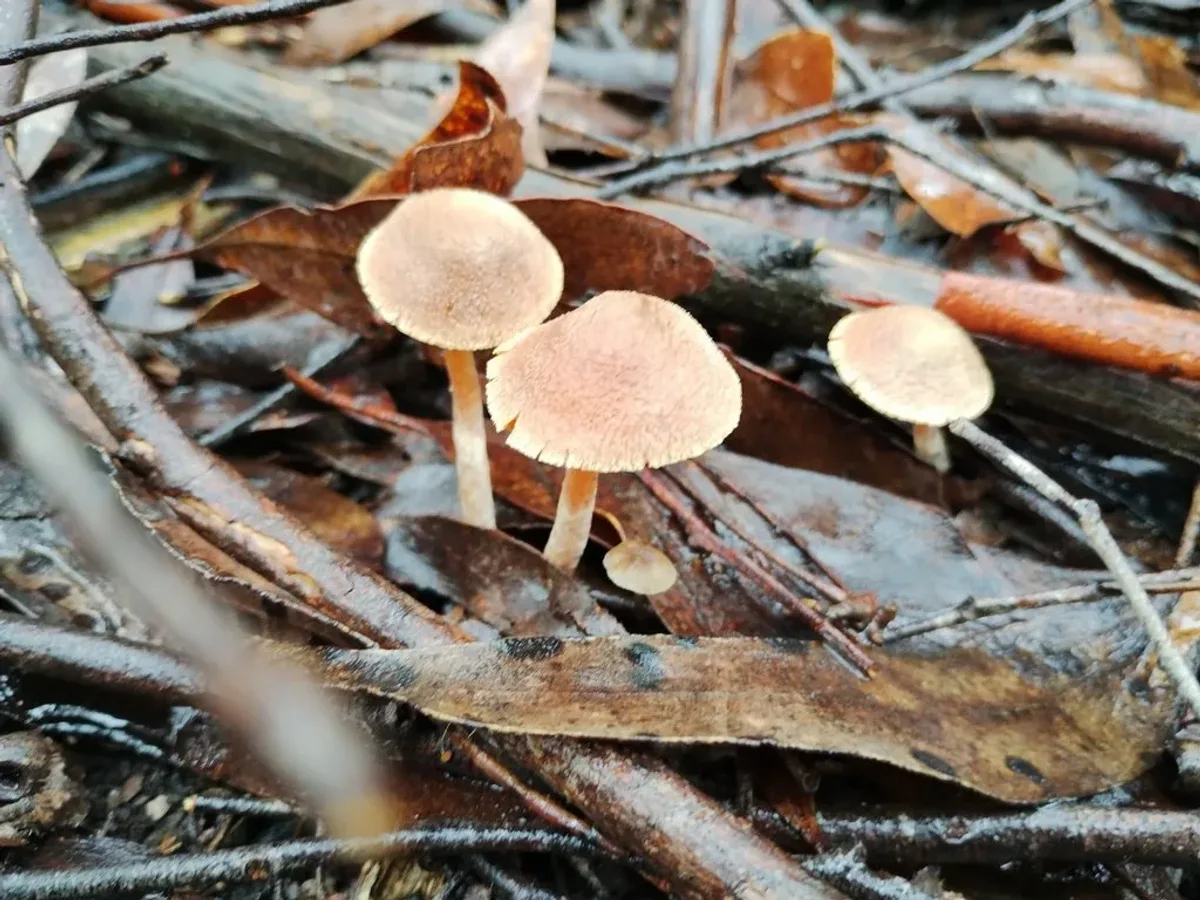 Atlas of Living Australia (CC0)
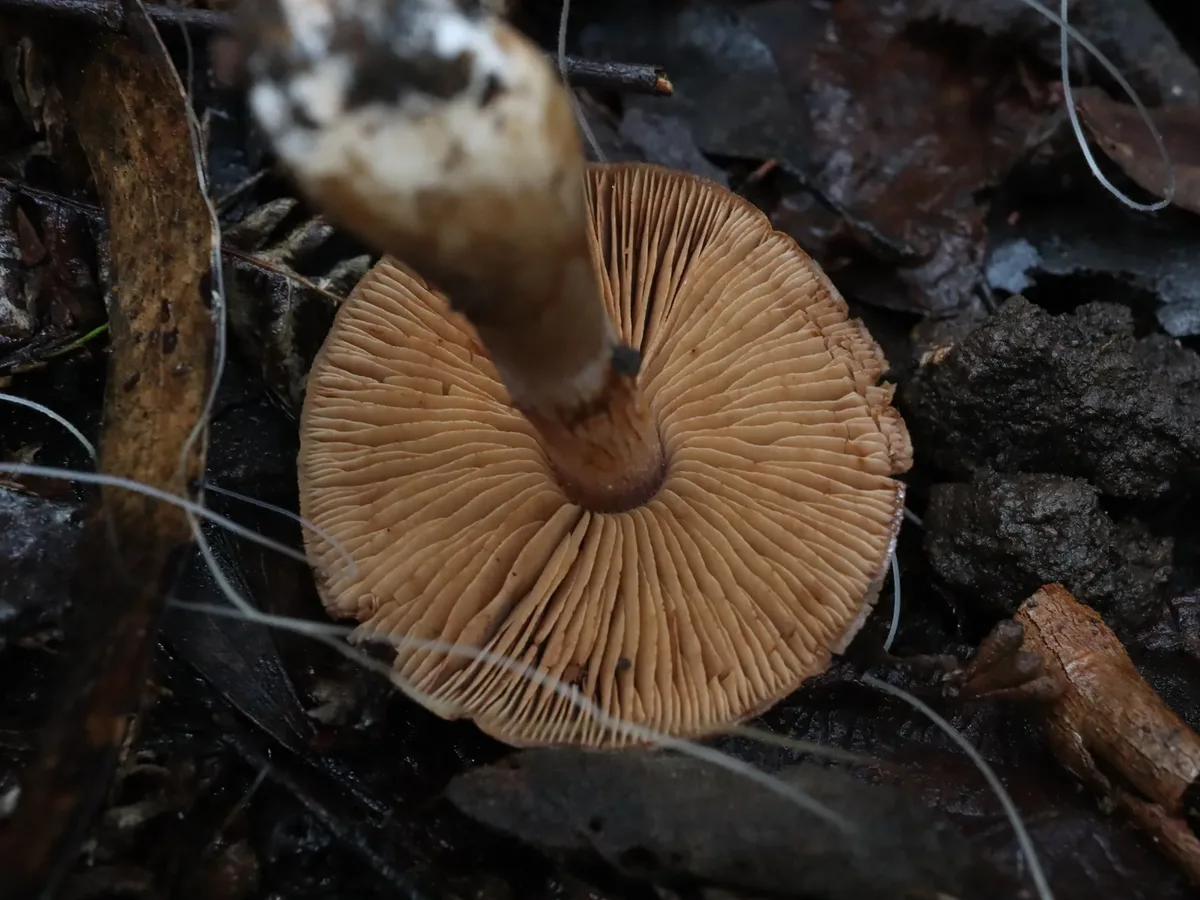 Atlas of Living Australia (CC0)Atlas of Living Australia (CC0)Atlas of Living Australia (CC0)
Toxic - and the most serious cases can be fatal. Never eat it, and wash your hands after handling.
Never eat a mushroom you are not 100% sure of - check the look-alikes below, and always cook wild mushrooms.
How to recognise it
Cortinarius aurantiorufus is recognisable within the South American webcap flora by its distinctly orange-red to rufous-orange cap combined with the defining Cortinarius features: a cobwebby partial veil (cortina) when young, and a rusty-brown spore print at maturity.
Cap
The cap surface is viscid to glutinous in wet weather - characteristic of subgenus Phlegmacium - and loses its sheen in dry conditions, fading toward orange-brown or tawny.
Gills
The gills transition from pale ochre-orange in youth to deep cinnamon-rust as spores ripen, a hallmark of the entire genus: any mushroom with a rusty-brown spore print and fine cobwebby partial veil is a webcap, and no webcap should be eaten without unambiguous expert verification.
Stem
The rust-stained ring zone on the stem - the collapsed remnant of the cortina - is a key diagnostic marker in the field.
Flesh
The flesh is pale ochre, non-reactive (does not change colour on cutting), and has a faint radish-like or neutral smell that is not particularly distinctive.
Microscopic characters (finely warted ellipsoid spores, approximately 8-11 × 5-6.5 µm) are needed to confirm identification at the species level.
Why it's dangerous
Potentially serious. Cortinarius aurantiorufus must be treated as a harmful and potentially dangerous mushroom.
While its full toxin profile is unconfirmed, it belongs to a genus that contains some of the most dangerous nephrotoxic poisons known, and no reliable field method distinguishes nephrotoxic from non-nephrotoxic webcap species.
The species is not used as food in any documented regional culinary tradition, and there is no established safe preparation method. Additionally, it occurs in the same habitat as other Cortinarius species whose toxicology is similarly uncharacterised or confirmed as harmful.
If ingestion of any Cortinarius is suspected, seek immediate advice from a regional poison information centre without waiting for symptoms:
- Brazil: Centro de Assistência Toxicológica (CEATOX), or 0800 722 6001
- Argentina: Centro Nacional de Intoxicaciones, 0800 333 0160
- Chile: CITUC, +56 2 2635 3800
Toxin
The specific toxin chemistry of Cortinarius aurantiorufus has not been comprehensively characterised in the published scientific literature.
Within the Cortinarius genus - which comprises thousands of species globally - toxicological profiles are highly variable, including:
- orellanine (a polypyridine N-oxide nephrotoxin causing irreversible kidney damage)
- uncharacterised gastrointestinal irritants
- various secondary metabolites, including dermocybein-type anthraquinone pigments
In South America, multiple Cortinarius species have been implicated in gastrointestinal illness and, in some cases, renal complications following ingestion.
Because orellanine-type nephrotoxicity cannot be excluded for any uncharacterised Cortinarius species in this region, and because orellanine is heat-stable and not destroyed by any cooking method, the species must be treated as potentially nephrotoxic until full analytical characterisation is available.
The precautionary principle is mandatory here: the consequences of orellanine poisoning (renal failure, potential need for dialysis or transplant) are severe and irreversible.
Symptoms
If gastrointestinal irritants are present: nausea, vomiting, abdominal cramps, and diarrhoea beginning one to three hours after ingestion, typically resolving within 24 hours with supportive care.
If orellanine-type compounds are present: the latent period before symptoms is 2-3 weeks (range: days to over a month), during which the victim may feel entirely well while progressive renal tubular necrosis develops.
Delayed symptoms include intense thirst, polyuria progressing to oliguria, nausea, lower back pain, severe fatigue, and ultimately signs of acute kidney injury.
The extended latency is the most dangerous characteristic - victims and clinicians may fail to connect a mushroom meal consumed weeks earlier to the onset of renal failure.
Any person who has eaten an unidentified Cortinarius should contact a poison centre immediately, regardless of whether they feel well.
Staying safe
DO NOT EAT. Cortinarius aurantiorufus is not a food species. It has no established culinary use, no documented safe preparation, and belongs to a genus with a well-documented history of causing serious kidney damage across multiple continents.
The viscid orange-red cap and rusty spore print are characteristic enough for a practised observer to recognise the genus in the field - and recognising it as a Cortinarius is reason enough to leave it completely alone.
If any webcap-type mushroom has been consumed, contact a regional poison information centre immediately: do not wait for symptoms, as the most serious Cortinarius toxins have delayed onset of weeks.
Never handle these mushrooms without washing hands thoroughly afterwards, and never allow them to contaminate food or other foraged species in the same container.
Where & when it grows
Habitat
This species is an obligate ectomycorrhizal partner dependent on living native forest trees.
In South America it is primarily associated with Nothofagus (southern beech) forests of the Andes and sub-Andean zones in Argentina and Chile, and with subtropical Atlantic Forest elements in southern Brazil. These habitats share deep, organic, often acidic soils in forests that have not been recently cleared or heavily disturbed.
The species does not colonise grassland, agricultural land, or the open understory of secondary growth. It may also appear in plantations of introduced ectomycorrhizal trees (Eucalyptus, Quercus), where it can occasionally form associations with the introduced hosts.
Finding the species in pristine native Nothofagus forest is more reliable than in introduced plantations.
When
Fruiting follows the Southern Hemisphere autumn pattern - triggered by post-summer cooling and the onset of significant autumn rainfall.
The typical fruiting window runs from March to July, with peak activity in April through June when soil temperatures fall through the 8-15 °C range and cumulative rainfall recharges the soil moisture profile.
A lag of approximately 10-20 days between triggering rainfall and visible mushroom emergence is typical for ectomycorrhizal webcaps.
At higher Andean sites fruiting can extend into July as temperatures continue to fall. The species is absent in the warm, dry summer months.
How it grows
As a mycorrhizal species, Cortinarius aurantiorufus is inseparable from its host tree roots and cannot complete its life cycle without a living tree partner.
The underground mycelial network, established over many seasons, is the functional organism; the visible mushroom is only the short-lived reproductive structure.
Fruiting bodies appear singly or in small scattered groups of two to five, emerging from the leaf litter and humus close to the base of host trees. Dense clusters are not typical.
The same site may produce fruit bodies across multiple consecutive years under appropriate seasonal conditions, as the mycelial network is perennial. A single flush typically lasts five to ten days before the caps begin to decay.
Fruiting conditions
Southern Hemisphere autumn species. Fruiting triggered by post-summer soil cooling (below ~15 °C) combined with significant autumn rainfall (20+ mm over 14 days). Flush lag 10-20 days after triggering rainfall event. Peak April-June; may extend into July at higher Andean elevations.
Look-alikes
The primary dangerous confusion in South American forests is with other Cortinarius species sharing the same orange, rufous, or tawny coloration.
Several Cortinarius species in the Andean Nothofagus zone - including members of the subgenera Phlegmacium, Dermocybe, and Telamonia - can appear similarly coloured and broadly similar in stature, and distinguishing them in the field is not reliably possible without microscopy and chemical analysis. Some of these related species may carry orellanine-type nephrotoxins.
Outside the genus, confusion is possible with several distinct species:
- Gymnopilus junonius (spectacular rustgill): also has a prominent ring (but a true membranous ring, not a cortina ring zone), tawny-orange to golden coloration, and a rusty spore print. However, Gymnopilus typically grows on wood or at the base of dead trees and has a much more pronounced, persistent ring than the wispy ring zone left by a cortina.
- Phaeolepiota aurea (golden false pholiota): has a more granular-powdery cap surface, a stout mealy stem, and grows in disturbed ground or meadows rather than forest interiors.
- Several Pholiota species (scalycaps): share a rusty spore print and a ring but have distinctly scaly cap surfaces and lack the viscid glutinous cap of a Phlegmacium-type Cortinarius.
None of these should be mistaken for the subject species by a careful observer, but all reinforce the lesson: a rusty-spore-print mushroom with a cobwebby partial veil in a South American forest is a webcap and must be treated with full caution.
Numerous South American Cortinarius species in subgenera Phlegmacium, Dermocybe, and Telamonia share orange, rufous, or tawny coloration, a viscid or fibrillose cap, cobwebby cortina, rusty spore print, and ectomycorrhizal habit. Several have uncharacterised toxicology and some are confirmed or suspected nephrotoxic. Species-level separation requires microscopy and chemical analysis; all such webcaps in South American native forests should be treated as potentially deadly.
Cortinarius rubellus (syn. C. speciosissimus) is a confirmed orellanine-bearing deadly species with an orange-red to rufous-brown cap, found in northern hemisphere conifer forests but representing the archetype of the orange deadly webcap. While not native to South America, it illustrates that orange-red coloration in Cortinarius is directly associated with orellanine nephrotoxicity in this colour group globally. Any similar species in South America must be treated with equivalent caution.
Pholiota species share a rusty to yellow-brown spore print and a ring, but have distinctly scaly cap surfaces (dry to slimy but with visible fibrous or granular scales), grow on wood or buried wood (not in mycorrhizal soil), and lack the cobwebby cortina entirely - their ring is a true membranous structure. Pholiota species cause gastrointestinal upset but are not confirmed nephrotoxic.
Gymnopilus junonius has a similar tawny-orange to golden-yellow coloration and rusty spore print, but grows on wood or at the base of dead or dying trees (saprotrophic, not mycorrhizal), has a true membranous ring rather than the cobwebby cortina ring zone of Cortinarius, and the cap surface is typically dry and scaly rather than viscid. Its flesh may have a bitter taste from psilocybin-related compounds, but it is not a confirmed deadly species. The wood-growing habit is the clearest field distinction.
A reference guide - never an edibility guarantee. When in doubt, leave it out.