Red-Banded Webcap
Cortinarius armillatussyn. Agaricus armillatus Fr., Cortinarius haematochelis (Bull.) Fr., Telamonia armillata (Fr.) Wünsche
 © Ole Christian Hagestad (CC BY)
 © Ellen Christensen (CC BY)
 © Ellen Christensen (CC BY)
 © Ellen Christensen (CC BY)
 © Ellen Christensen (CC BY)
 © Marte Kristoffersen (CC BY)
 © Marte Kristoffersen (CC BY)
 © Marte Kristoffersen (CC BY)
 © Marte Kristoffersen (CC BY)
 © Ole Christian Hagestad (CC BY)© Ole Christian Hagestad (CC BY)© Ellen Christensen (CC BY)
Not poisonous, but not worth eating - too tough, bitter, or bland for the pot.
Never eat a mushroom you are not 100% sure of - check the look-alikes below, and always cook wild mushrooms.
How to recognise it
Cortinarius armillatus is immediately recognisable - if you look at the stem.
Cap
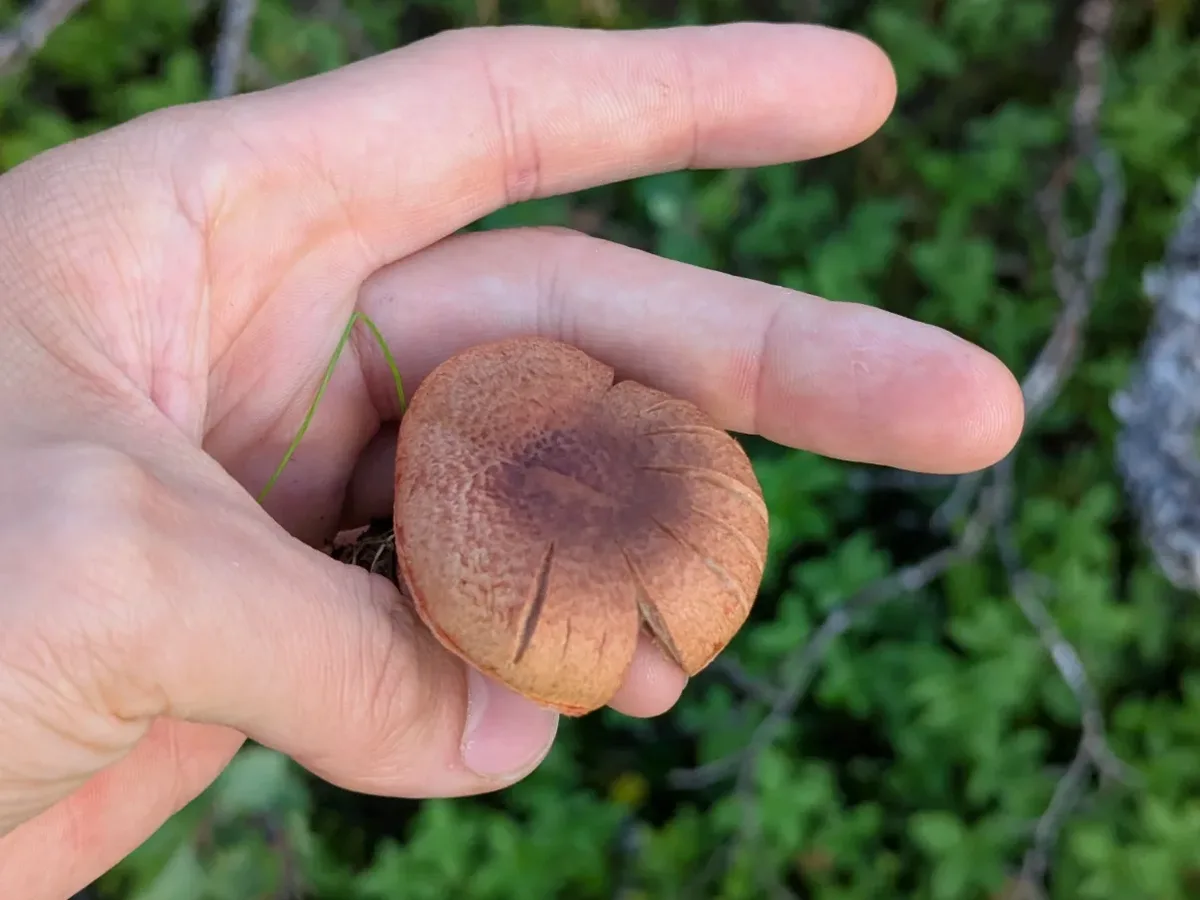
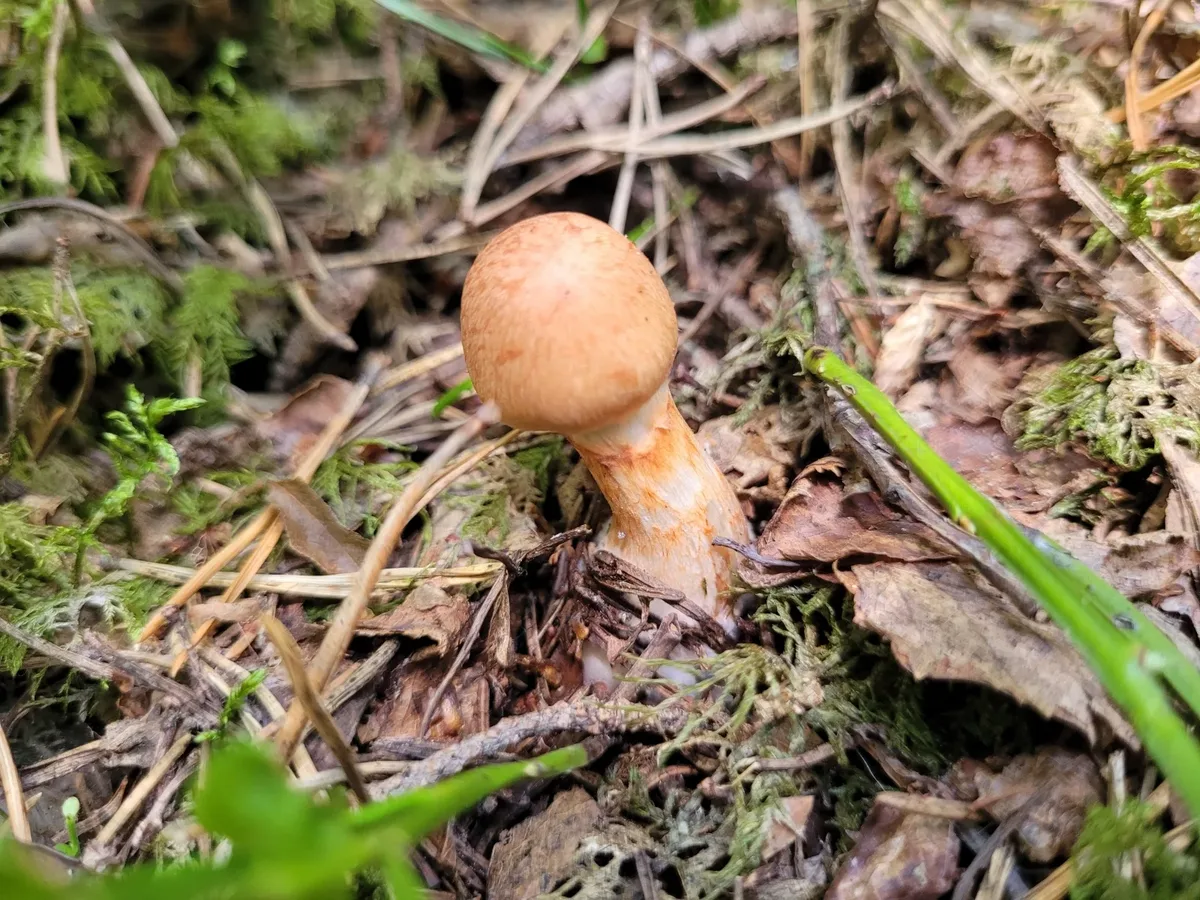
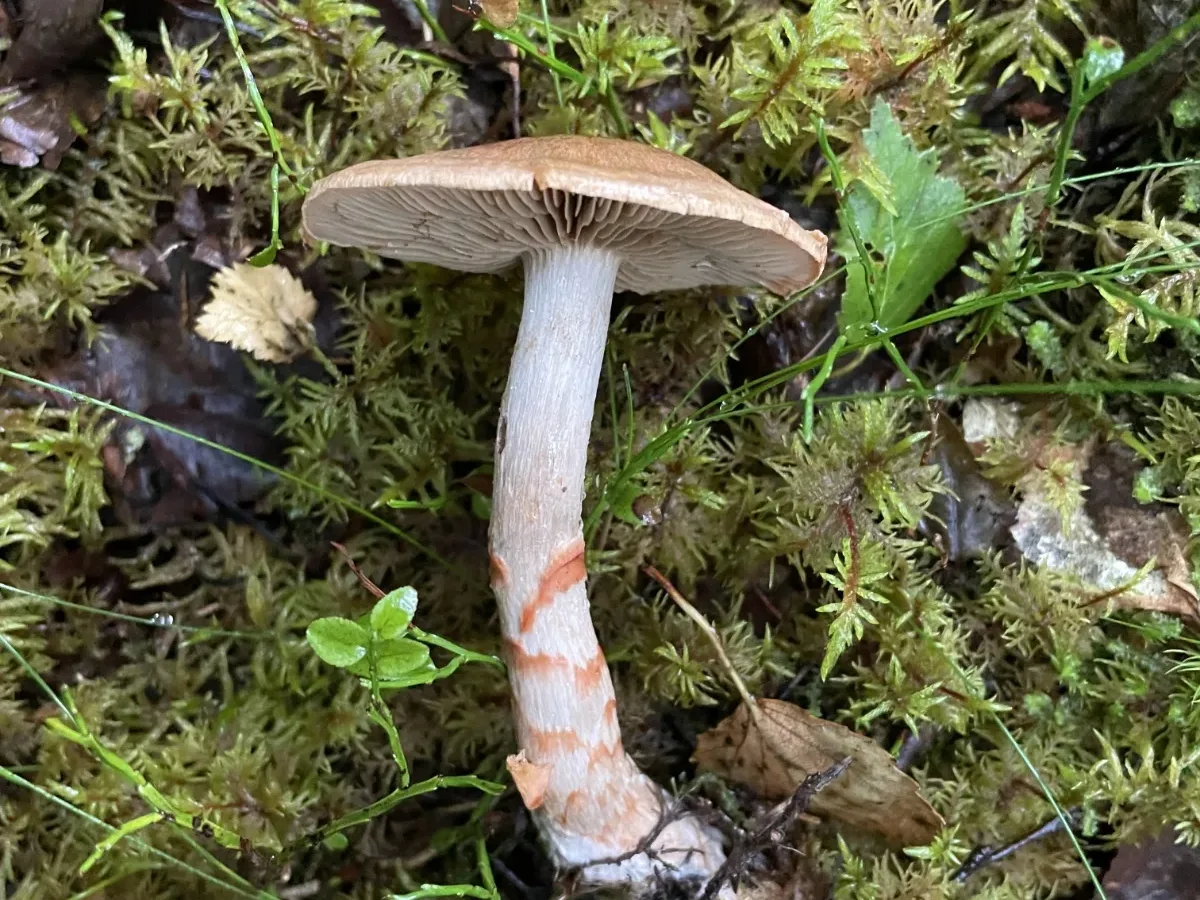
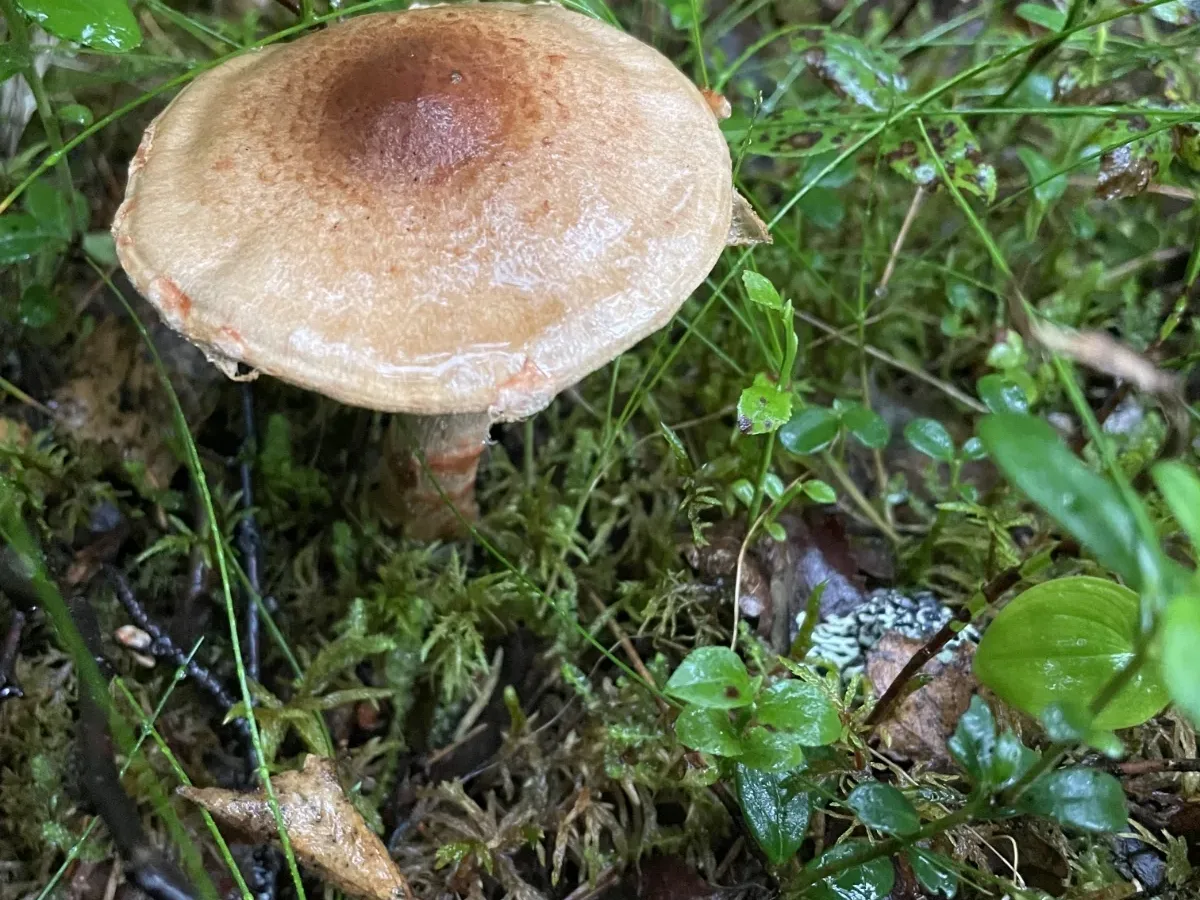
A fairly ordinary brick-red to chestnut-brown, convex to broadly umbonate, with a dry fibrillose surface that could belong to any number of common webcaps.
Stem
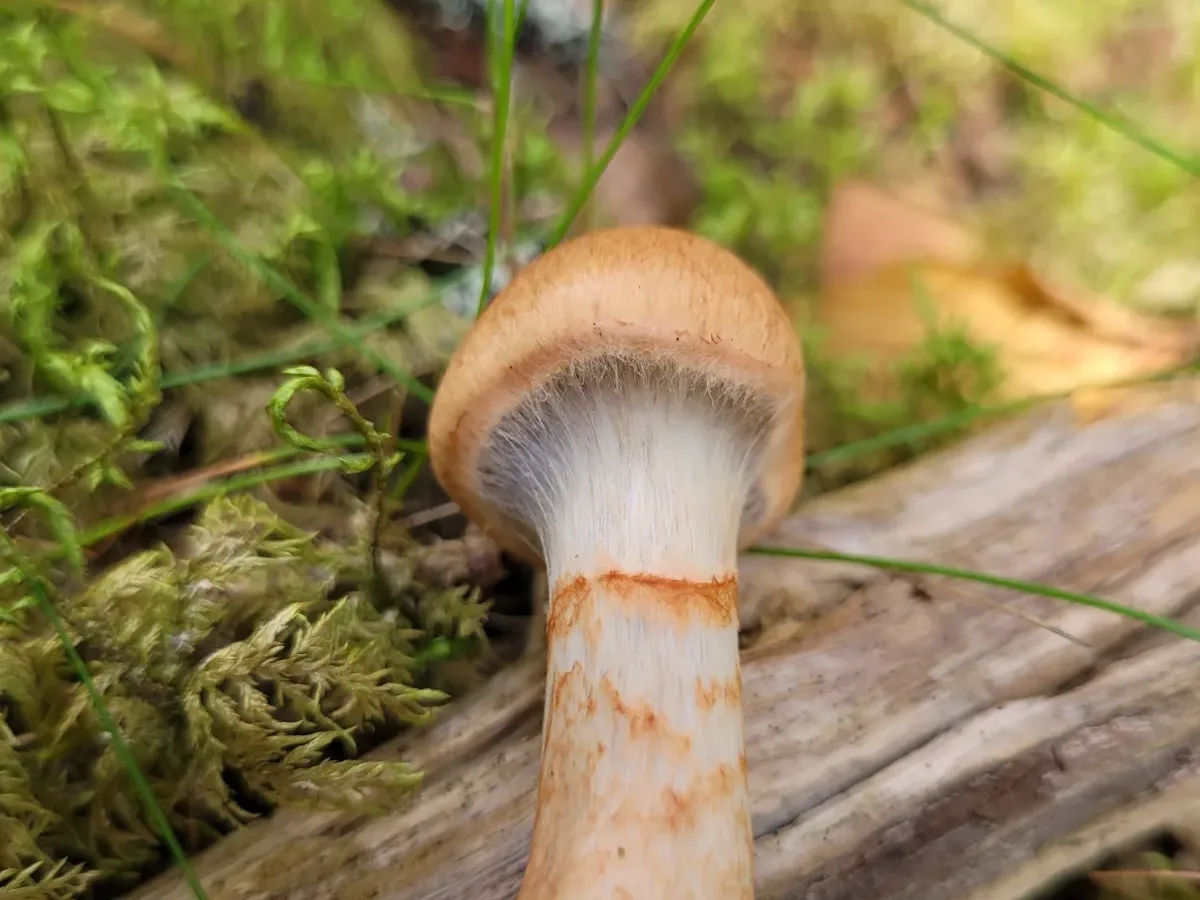
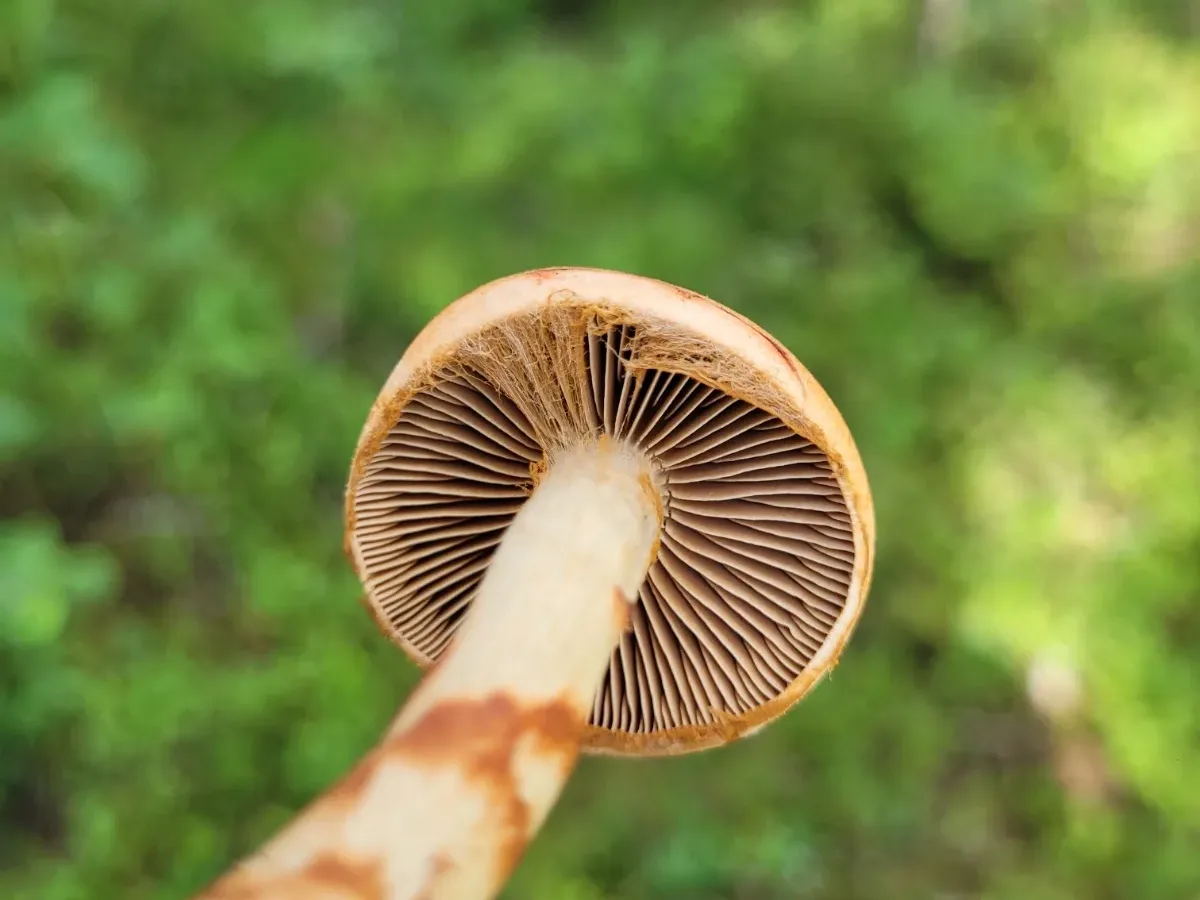
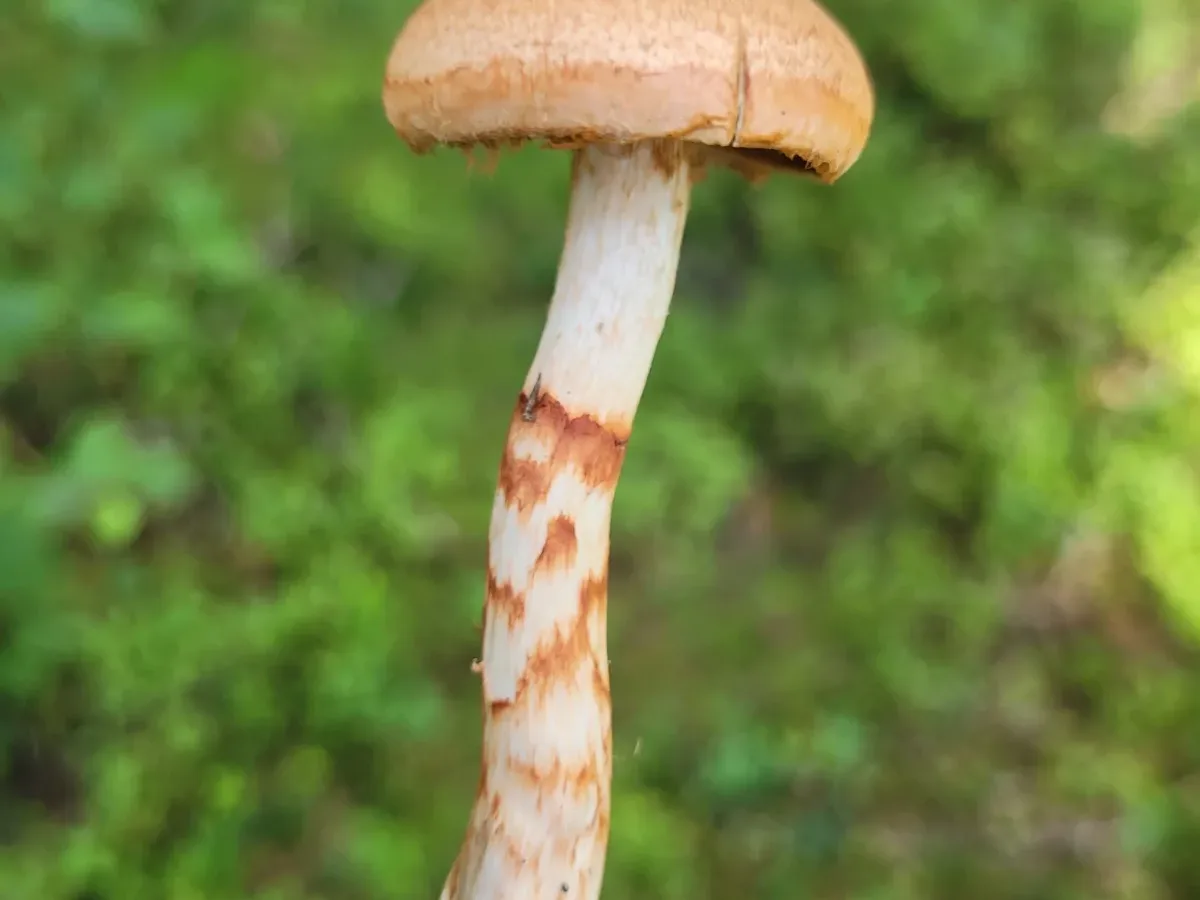
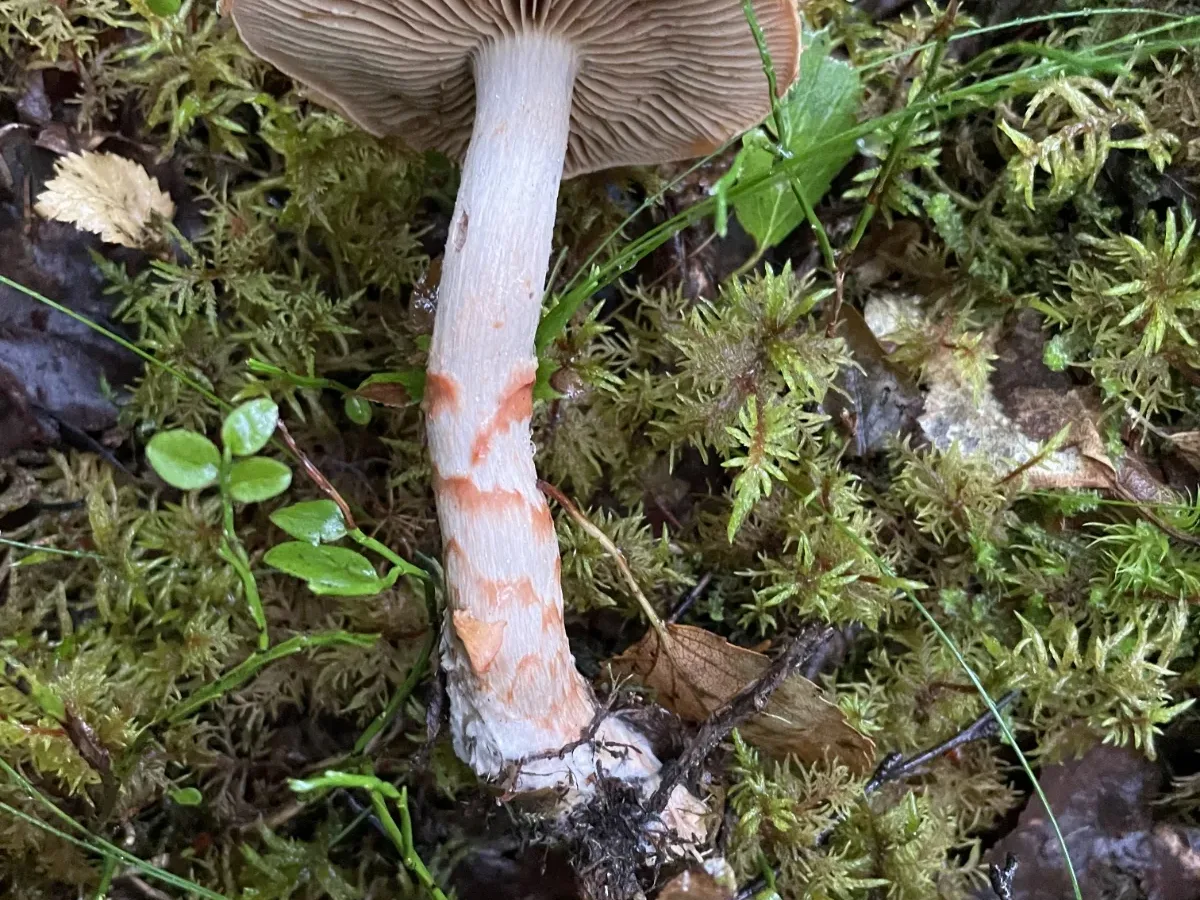
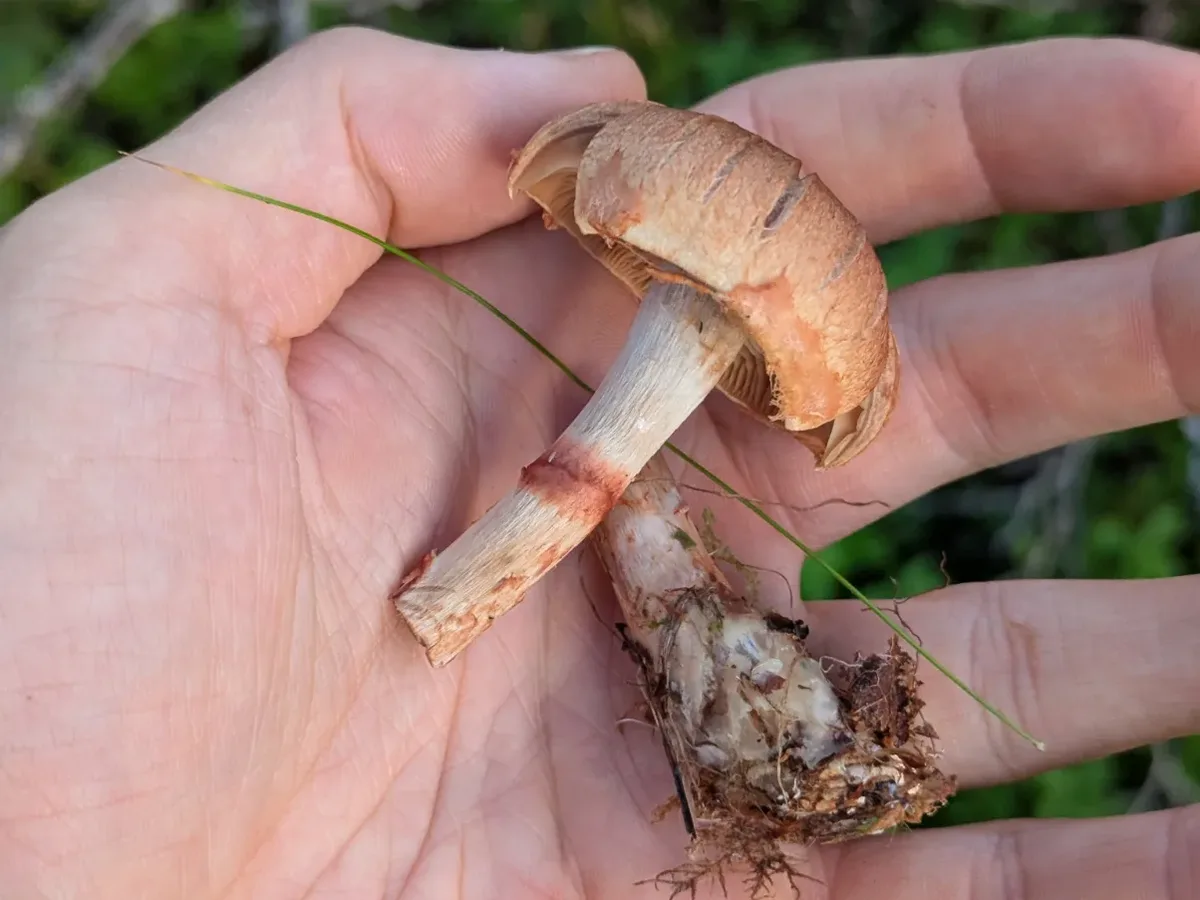
Slide your gaze down the stem and the species announces itself: two, three, or even four vivid orange-red to blood-red concentric rings encircle the stem in the lower half, standing out like painted bracelets against the paler fibrillose background.
These rings are collapsed and stained remnants of the original cobweb cortina - the ephemeral web-like partial veil that connects the cap margin to the stem in young Cortinarius specimens and leaves its mark as spores ripen and stain it rusty-red.
In old specimens the bands may fade or become obscured by soil or weathering; check young, fresh fruit bodies for this feature in its full clarity.
Gills
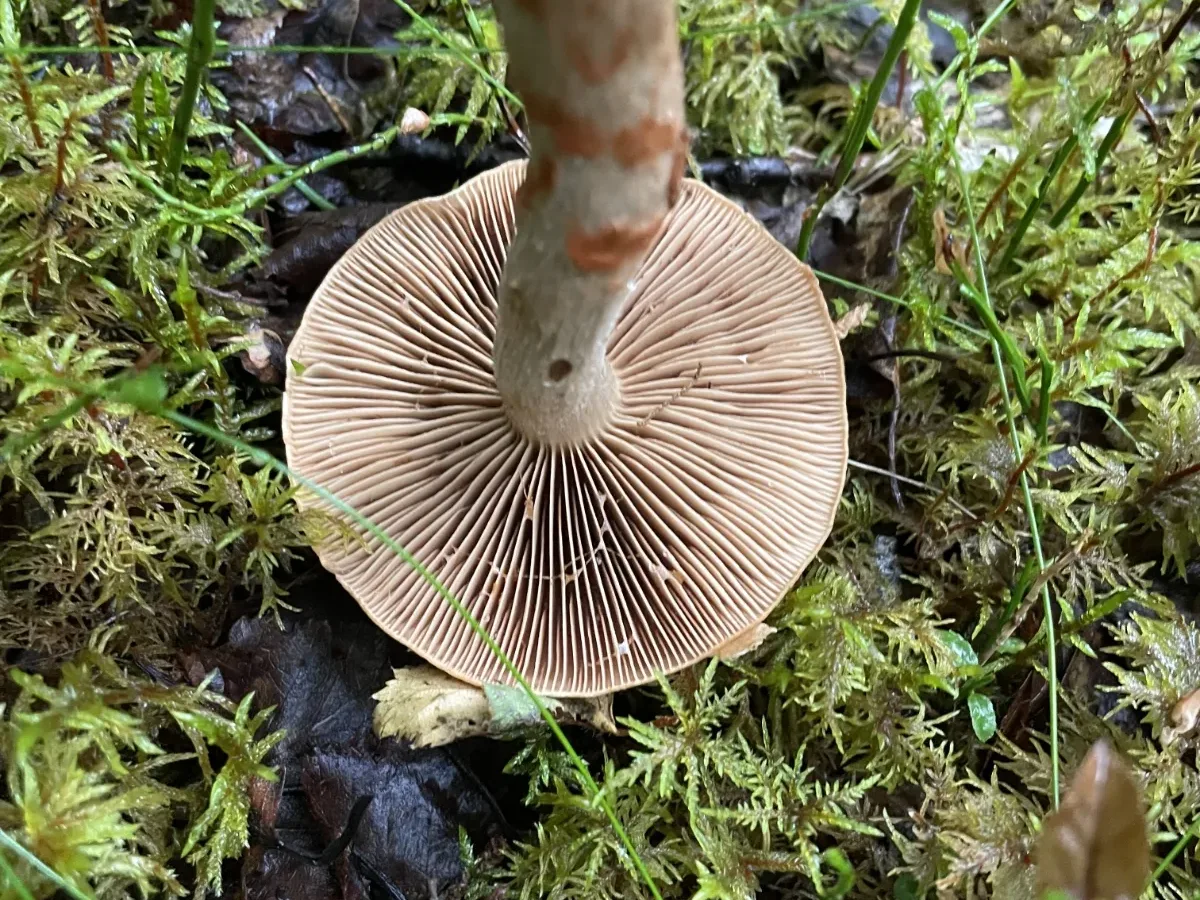
The gills follow the usual Cortinarius progression: pale clay to cinnamon when young, deepening to a thoroughly rusty cinnamon-brown with spore maturity. The spore print is rusty cinnamon-brown.
Flesh
Firm and pale buff without any colour change on cutting.
The total impression is of a medium to large brown-capped mushroom with a tall, banded stem emerging from moist birch-edge habitat - and those red bands are the character that matters.
Where & when it grows
Habitat
Cortinarius armillatus is a birch specialist, and its most reliable habitat clue is often the trees, not the soil.
Look for it at the wet margins of birch woodland:
- where the trees thin out toward bog edges, stream banks, and wet hollows
- where sphagnum or sedge encroaches at the base of the birch trunks
- where the soil is dark, peaty, and stays moist through the summer
In the Pacific Northwest, river birch corridors and wet low-altitude forest edge are the primary search zones.
In Scandinavia and northern Europe it is a classic species of birch carr - that distinctive, rather atmospheric habitat of small birches and mossy tussocks growing in shallow peat.
It does not follow birch into dry, upland settings; the moisture connection is strong and consistent.
Finding this species is a reliable indication of a well-established, mycorrhizally active birch stand with undisturbed soil structure. It will not appear in recently planted birch, disturbed ground, or gardens.
When
In the Pacific Northwest, C. armillatus fruits from late August through October, with peak abundance in September-October after the first substantial autumn rains break the summer dry period.
The fruiting trigger is the arrival of extended cool and rainy weather, typically when 15-25 mm of rain fall over a 10-14-day period and soil temperatures drop into the 8-14 °C range.
In Scandinavia and the UK, the equivalent window is September-October, tracking the boreal autumn mushroom pulse.
The species is reliably an autumn species and is essentially absent from spring. A good September rain event in established birch bog habitat is the most productive time to search.
How it grows
As a strict ectomycorrhizal partner of birch, Cortinarius armillatus invests years in building a subsurface mycelial network before fruiting bodies appear.
The underground partnership exchanges photosynthate from the birch for minerals and water from the soil - a genuinely mutual relationship underpinning the nutrition of both partners.
Fruit bodies emerge singly or in small groups of two to five from the soil surface or through moss, never from wood. Because the mycelium is perennial, the same site may produce fruit bodies in multiple consecutive years under suitable autumn conditions.
The mushroom itself - cap, stem, and gills - is only the temporary reproductive structure launched to disperse spores; the organism's centre of gravity is the invisible network below.
Fruiting conditions
Triggered by the first sustained autumn rainfall breaking the summer dry period, combined with soil temperatures cooling below ~14 °C. In the Pacific Northwest, this typically aligns with the September-October rainy season onset. Requires established ectomycorrhizal network in mature birch stands; absent from young or disturbed birch.
Look-alikes
The most dangerous confusion scenario involves deadly orellanine-containing webcaps that share birch-edge and mixed-forest habitat in the Pacific Northwest and across the northern range.
- Cortinarius rubellus (deadly webcap) is perhaps the most critical lookalike: orange-red to tawny-brick in the same moist conifer and mixed-forest habitats, with a distinctly acute, pointed umbo, and an ochre-yellow cortina that leaves some banding on the stem - though its bands are typically less vivid, less numerous, and more yellow-orange than the distinctive blood-red rings of C. armillatus. It contains orellanine and is one of the most lethal mushrooms in the temperate world.
- Cortinarius orellanus (fool's webcap) is foxy orange-brown, grows primarily in deciduous oak and birch forest in Europe, has a dry scaly cap, and produces stem girdle remnants in subdued ochre tones - the vivid red bands of C. armillatus are absent, but a hasty glance could create confusion.
- Cortinarius testacea and related cinnamon-brown Telamonia-group webcaps share the same habitat and general appearance but lack the striking red girdle bands; most are undescribed as to precise toxicity and should be avoided.
- Within the Pacific Northwest, various undescribed or incompletely characterised Cortinarius species with brownish caps and banded stems occur; none should be eaten.
The red-banded stem of C. armillatus is genuinely distinctive when the banding is fresh and vivid, but faded or weathered specimens narrow the gap with dangerous relatives.
Why it matters
Moderate-to-high danger from lookalike confusion.
The species itself is not documented as lethally toxic. But its resemblance to confirmed deadly orellanine-containing webcaps in the same habitats, combined with incomplete toxicological characterisation, places any collection in an unacceptably risky category.
The genus-level orellanine risk applies as a precautionary principle.
Any Cortinarius that has been consumed and cannot be identified with 100% expert certainty should be treated as a medical emergency.
Cortinarius rubellus is orange-red to tawny-brick, with a distinctively pointed, acute umbo that persists into maturity - more tapered and conical than the broadly umbonate or flat cap of C. armillatus. Its cortinal girdle bands on the stem are yellow-ochre to ochre-brown in tone, not the vivid blood-red to scarlet of C. armillatus. Grows in boreal conifer and mixed forest (spruce, pine) as well as birch habitat. Contains orellanine; causes fatal delayed kidney failure with onset 2-6 weeks after ingestion. Any confusion is potentially lethal - do not eat any specimen with uncertain stem-band colour.
Cortinarius orellanus is foxy-orange to orange-brown with a dry, radially fibrous-scaly cap surface and ochre-orange gills. Its cortinal remnants on the stem are pale ochre-yellow to orange, never the intense blood-red banding of C. armillatus. Grows primarily under oak and birch in central European deciduous forest; overlap occurs in southern Scandinavia and the UK. Contains orellanine; equally deadly. The absence of vivid red stem rings and the warm orange-brown (not chestnut-brick) cap colour distinguish it from C. armillatus, but weathered or faded specimens of both should be treated with full orellanine caution.
Cortinarius triumphans (golden webcap) is a large, yellow to ochre-yellow Phlegmacium-group webcap with a distinctly slimy-viscid cap in moist conditions, growing under birch. It shares the birch-edge habitat but differs substantially: the cap is yellow-ochre (not brick-red), the cap is glutinous when wet (not dry and fibrillose), and the stem girdle bands are pale ochre-yellow, not the vivid orange-red rings of C. armillatus. Listed as edible in some references but requires careful verification; not as dangerous as the orellanine-containing relatives.
Much smaller (cap 2-6 cm), with an entirely cinnamon-yellow to olive-yellow cap and strikingly cinnamon-yellow gills that remain yellow at gill edges even when maturing. Stem slender and similarly cinnamon-yellow without vivid red bands. Grows under conifers and birch. Contains uncharacterised compounds and is not edible, but is not confirmed as an orellanine-containing deadly species. Distinguished from C. armillatus by small size, yellow gills, and absence of red stem girdles.
Many small to medium Cortinarius species in the Telamonia group share the red-brown cap, fibrillose stem, and birch habitat of C. armillatus. Most can be distinguished by the absence of vivid red cortinal girdle rings - their stem bands, if present, are pale buff to brown. Separation to species level requires microscopy. None are confirmed as edible; all should be treated as inedible at minimum. The combination of a chestnut-brown cap and 2-4 brilliant orange-red rings on the lower stem uniquely characterises C. armillatus within this group.
In the kitchen
Picking & cleaning
Cortinarius armillatus is not collected for food and should not be picked for the table.
It is considered inedible in all standard mycological references due to an unpleasant, bitter or acrid taste, and its full toxicological profile within this notoriously complex genus has not been comprehensively characterised.
More importantly, the red-banded stem - while distinctive - requires careful assessment in the field, and lookalike species in the same habitats include confirmed deadly nephrotoxic webcaps. No forager's basket benefit justifies the risk of error in this genus.
If handling specimens for photographic documentation, use care around the eyes and wash hands after handling. Never place Cortinarius specimens in the same container as edible species.
Good to know
Cortinarius armillatus has not been confirmed to contain orellanine in peer-reviewed chemical studies, and there is no established record of serious poisoning directly attributed to it.
However, it is consistently classified as inedible in European and North American mycological literature, and the broader genus context demands serious caution.
Cortinarius is the largest genus of agaric fungi and includes some of the most lethal species known to humanity. Orellanine-syndrome mushrooms such as C. rubellus and C. orellanus cause irreversible renal failure with onset delayed by two to three weeks after ingestion.
The difficulty of reliably separating C. armillatus from dangerous congeners in the field - particularly when specimens are old, faded, or freshness is uncertain - means the practical risk is real.
The absence of confirmed toxicity is not the same as confirmed safety; comprehensive toxicological screening across the geographic range of this species has not been done.
Do not eat Cortinarius armillatus.
If any Cortinarius has been eaten by mistake and species identity is uncertain, contact a poisons centre immediately, even if feeling well. Orellanine symptoms can be entirely absent for two to six weeks while renal destruction progresses.
- In North America, call the Poison Control Center: 1-800-222-1222.
- In the UK: 111 or NHS Poisons Information Service.
- In Scandinavia: local poison information centres.
A reference guide - never an edibility guarantee. When in doubt, leave it out.