Archer's webcap
Cortinarius archerisyn. Cortinarius archeri (Berk.) Sacc., Dermocybe archeri
 © Todd Huang (CC BY)
 © Matthew Lincoln (CC BY)
 © Matthew Lincoln (CC BY)
 © Matthew Lincoln (CC BY)
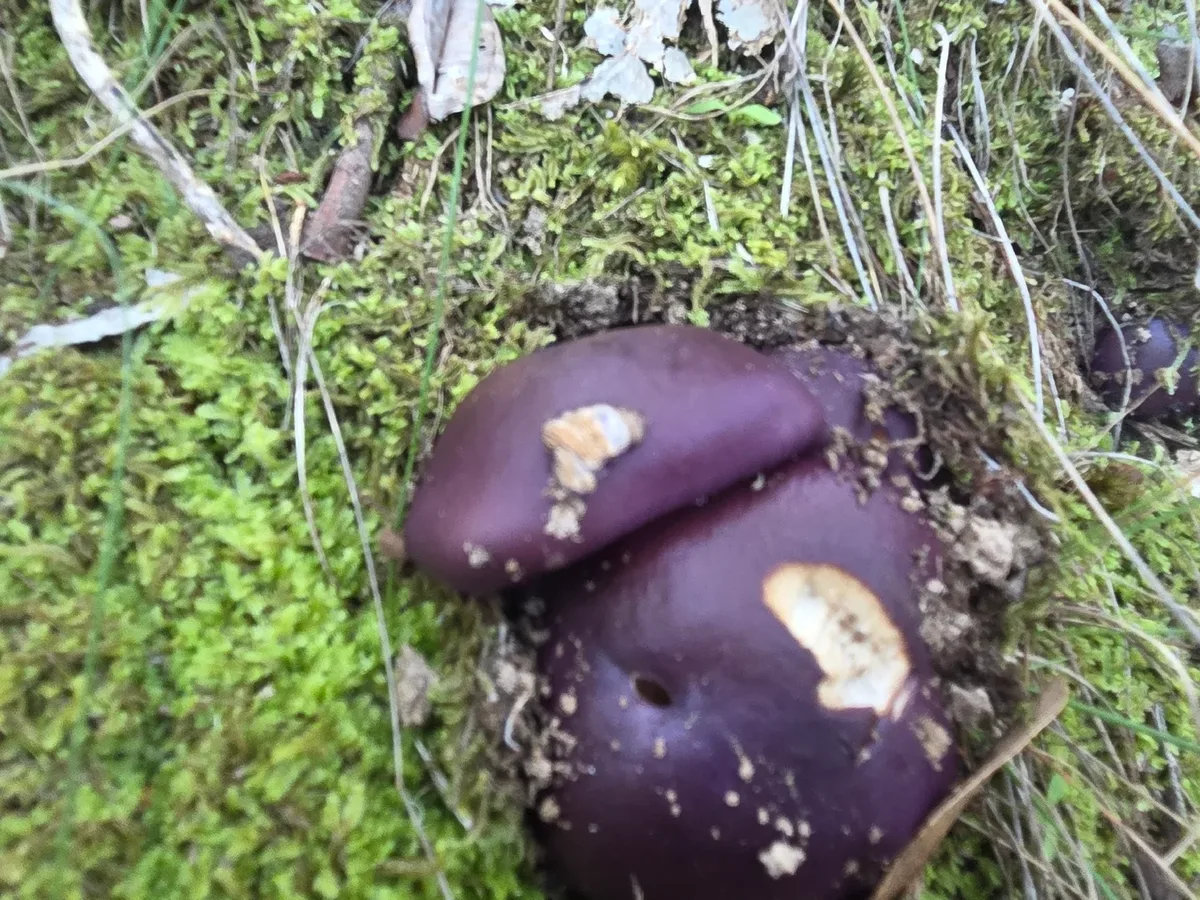 © Matthew Lincoln (CC BY)
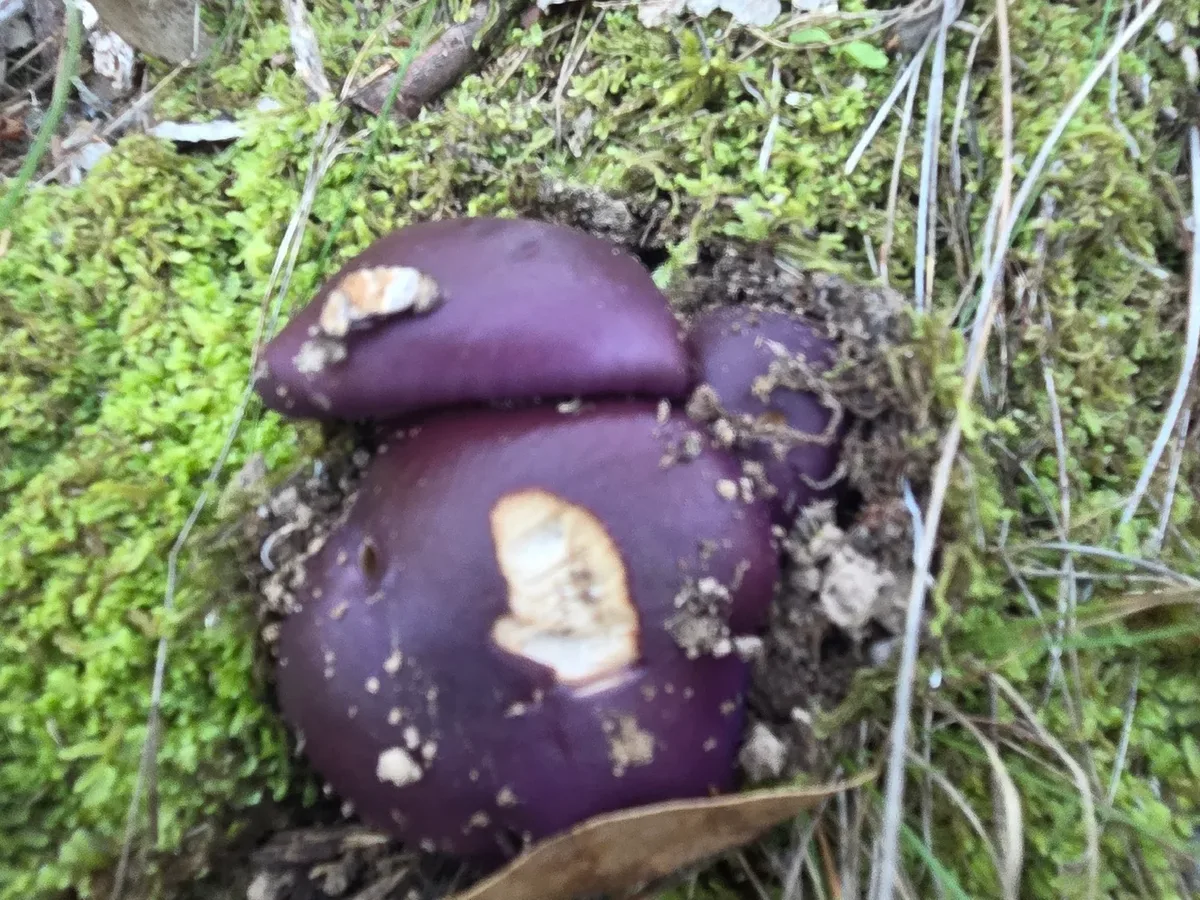 © Matthew Lincoln (CC BY)
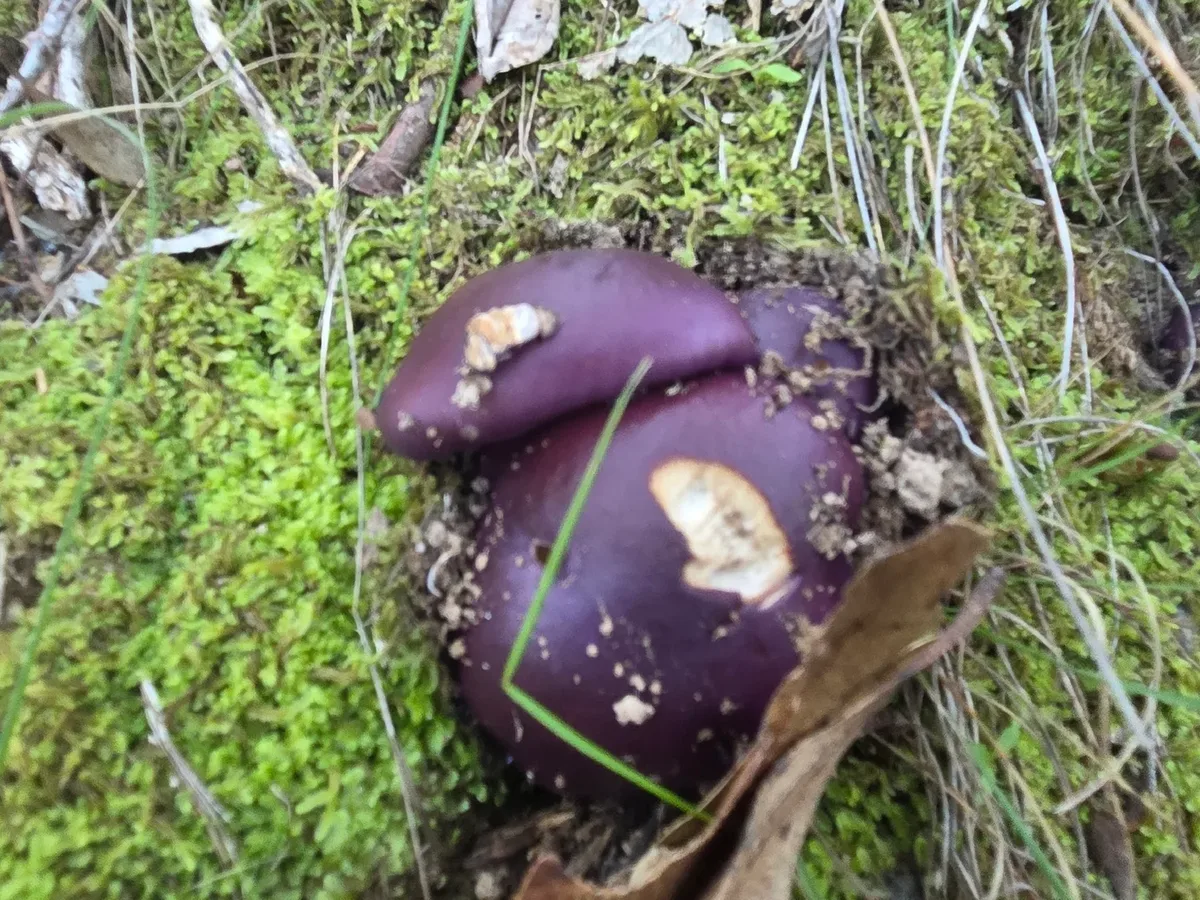 © Matthew Lincoln (CC BY)© Todd Huang (CC BY)© Matthew Lincoln (CC BY)
Toxic - and the most serious cases can be fatal. Never eat it, and wash your hands after handling.
Never eat a mushroom you are not 100% sure of - check the look-alikes below, and always cook wild mushrooms.
How to recognise it
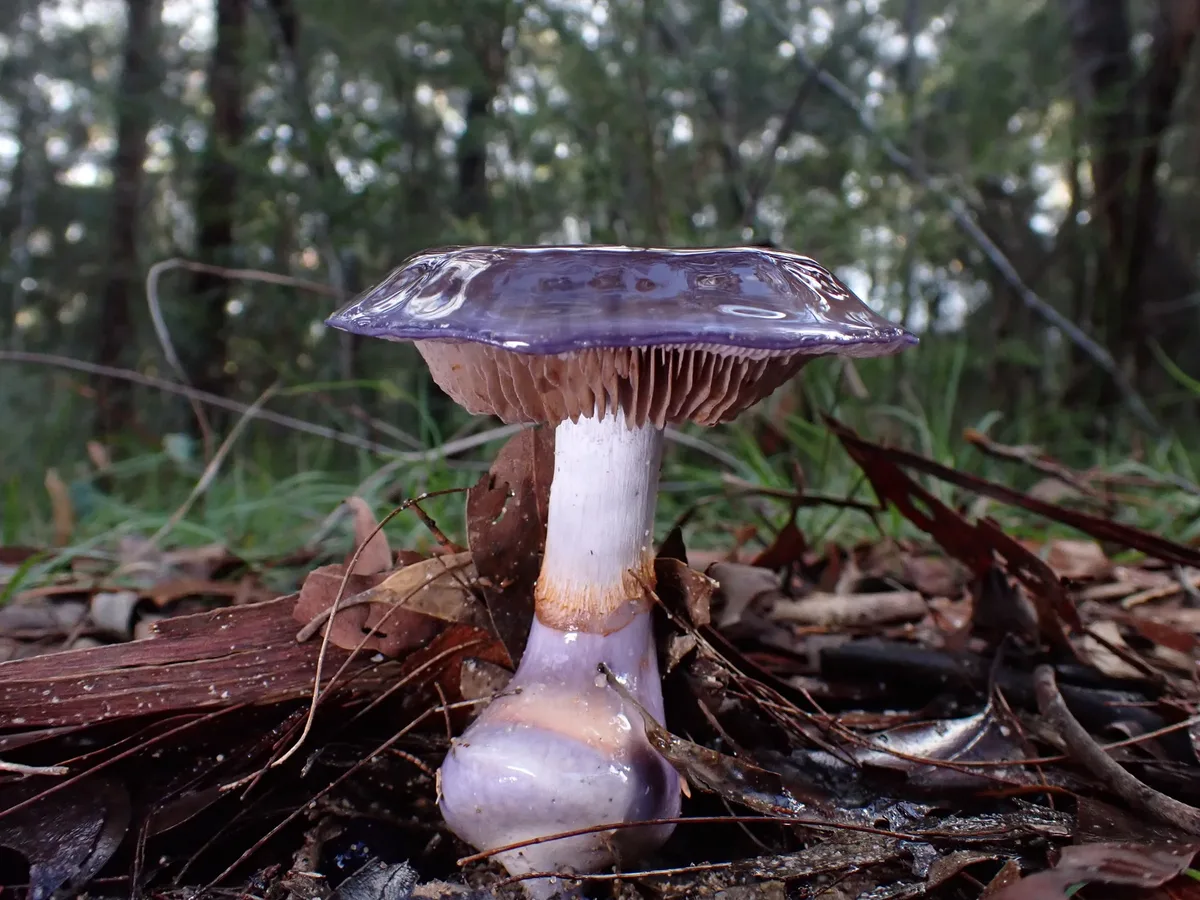
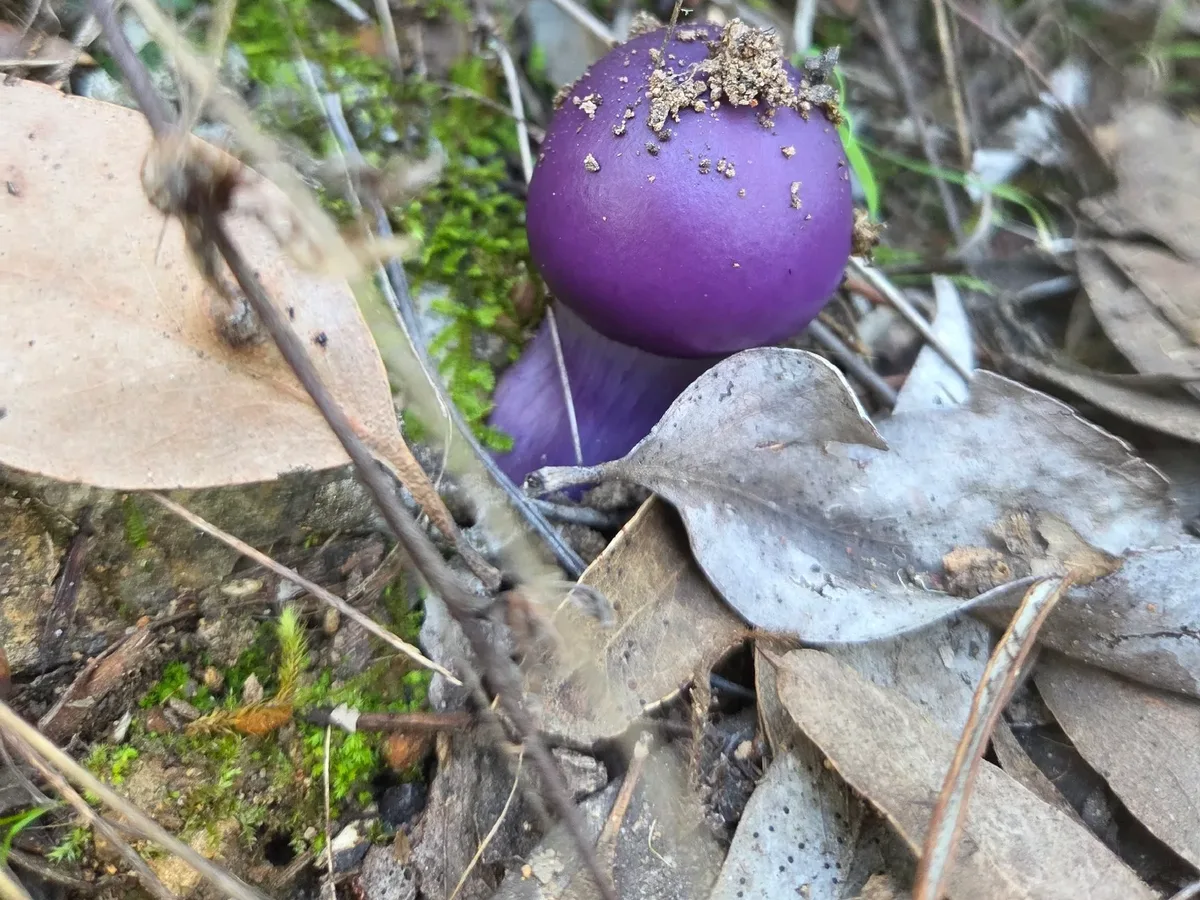
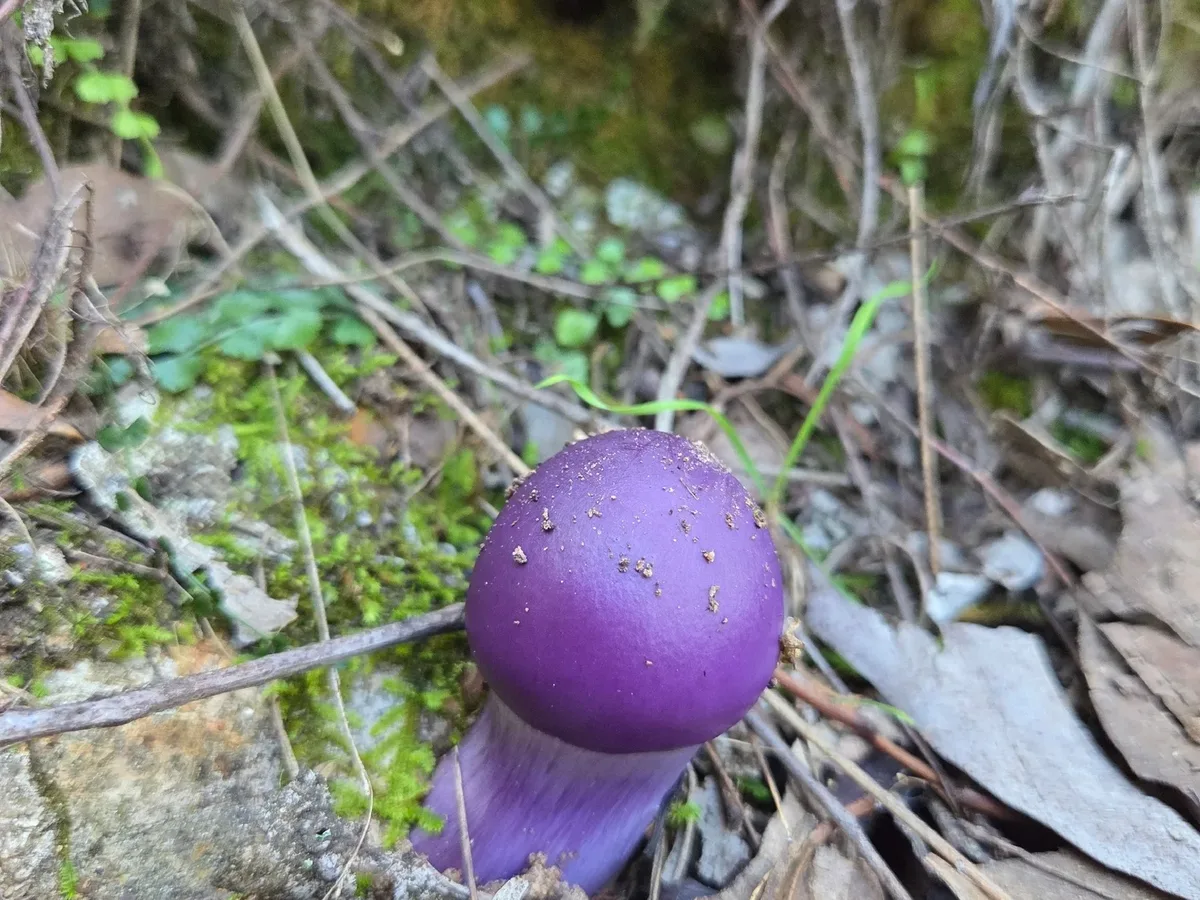
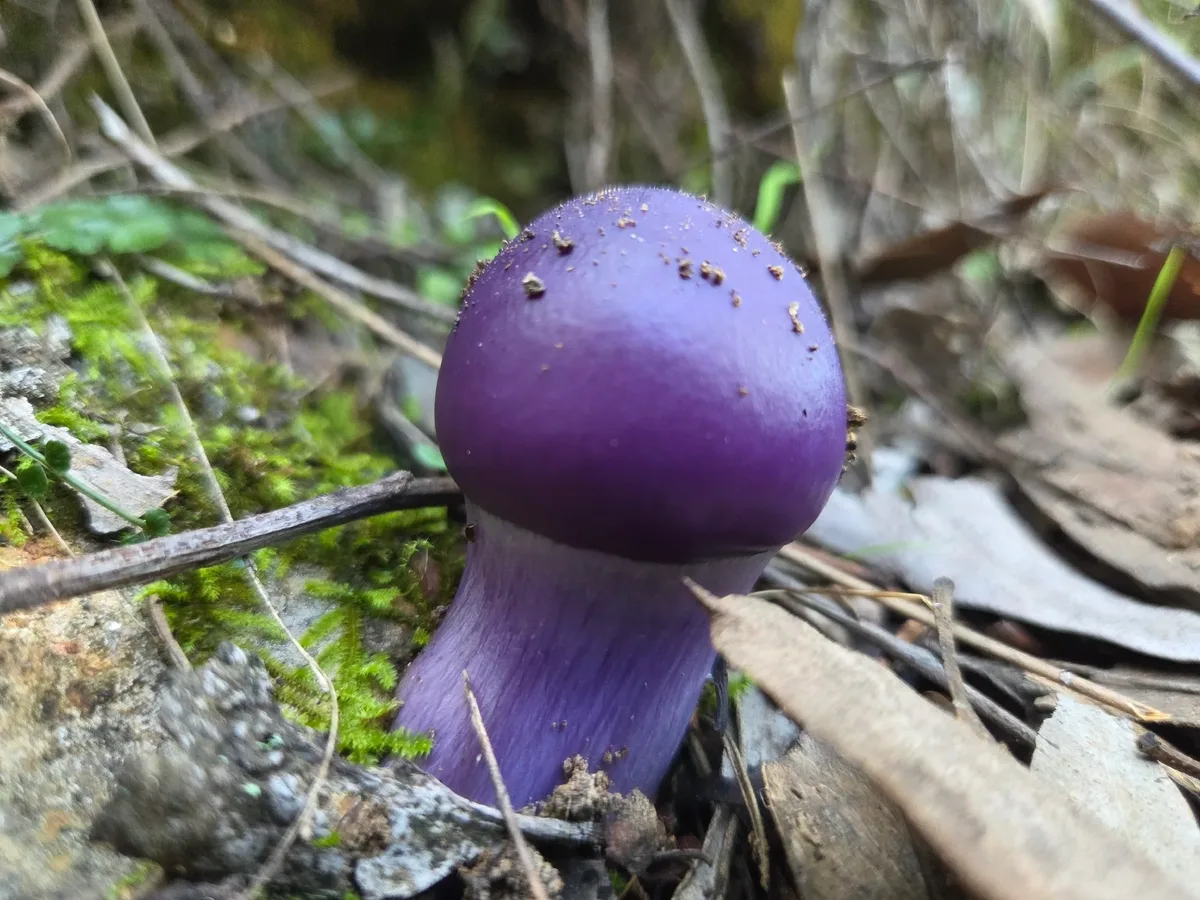
Cortinarius archeri is a strikingly attractive mushroom distinguished by its deep violet-purple to lilac coloration throughout the cap, gills, and stem when young.
Cap
The cap is initially conical to bell-shaped, expanding to broadly convex or nearly flat with a low umbo. The dry, silky-fibrillose surface carries intense violet hues that may fade toward reddish-lilac or brownish-purple with age and drying.
Gills
The gills begin deep violet-purple and transition to a rusty cinnamon-brown as the spores mature - this colour change from purple-violet to rusty brown is a characteristic shared across the Cortinarius genus and reflects spore development. The spore print is the rusty brown typical of the entire Cortinarius genus.
Stem
The stem is fibrillose and purple, bearing a conspicuous violet cobwebby cortina in young specimens that collapses with age to leave a faint rusty-stained ring-zone.
Flesh
Flesh is violet throughout and does not change colour on cutting.
This purple coloration, while beautiful, must never be mistaken for a sign of safety - it does not distinguish this deadly species from superficially similar but harmless purple fungi.
Why it's dangerous
FATAL. Cortinarius archeri is one of the most dangerous mushrooms in Australia and New Zealand.
There is no antidote to orellanine poisoning and no specific medical treatment beyond supportive care and dialysis.
The extreme delay before symptoms appear means that diagnosis is almost always delayed, often until after significant renal damage has occurred.
Medical attention should be sought immediately if consumption of any Cortinarius species is suspected - do not wait for symptoms to appear.
Any purple or violet Cortinarius found in Australian or New Zealand native bush should be treated as potentially deadly. Do not collect, taste, or handle any suspect specimen.
Toxin
Cortinarius archeri contains orellanine (orellanin), a polypyridine N-oxide nephrotoxin first characterised from the European deadly webcap Cortinarius orellanus.
Orellanine is heat-stable and is not destroyed by cooking, drying, or other standard food preparation.
In the body it is converted to nordihydroorellanine and related metabolites that cause selective tubular necrosis of the kidneys. The toxin is excreted slowly, meaning renal damage accumulates.
C. archeri was confirmed as a cause of severe human poisonings in Australia and New Zealand, including cases that resulted in permanent kidney damage and required dialysis or kidney transplantation.
Symptoms
Orellanine nephrotoxicity from C. archeri is characterised by a dangerously long latency period - typically 2-3 weeks (range: 4 days to 3 weeks or more) between ingestion and the appearance of symptoms.
This extreme delay is the defining danger of orellanine poisoning: a person has usually discarded the mushroom, forgotten the meal, or even consumed subsequent meals before symptoms emerge, making diagnosis very difficult.
Initial symptoms include intense thirst, frequent urination, then progressively nausea, vomiting, headache, muscle pain, and severe fatigue.
As renal damage progresses, urinary output decreases (oliguria) and signs of renal failure develop.
Without aggressive medical intervention - including haemodialysis - the poisoning can be fatal, and survivors may sustain permanent kidney damage requiring long-term dialysis or transplantation.
Staying safe
DO NOT EAT. Cortinarius archeri is a deadly poisonous mushroom responsible for severe and sometimes fatal cases of kidney failure in Australia and New Zealand.
The orellanine it contains is heat-stable - cooking does not render it safe.
The latency period of several weeks before symptoms appear is particularly treacherous because it breaks the link between the meal and the illness in the patient's mind.
Any forager who has consumed a purple webcap-type mushroom in Australian or New Zealand native bush in the past three weeks and is experiencing unexplained thirst, fatigue, or kidney pain must seek emergency medical care immediately and inform the treating team of the potential Cortinarius exposure.
Never collect violet or purple Cortinarius species in Australasia for any purpose other than photography.
Where & when it grows
Habitat
This species is an ectomycorrhizal partner of native Australian and New Zealand forest trees, primarily eucalypts (Eucalyptus and related genera) in southeastern Australia and Nothofagus (southern beech) in New Zealand and montane Tasmania.
It is characteristic of undisturbed or lightly disturbed native forest with a stable mycorrhizal community, and does not typically establish in plantations or heavily modified landscapes.
Fruiting bodies emerge from humus-rich soil among leaf litter and moss, singly or in small scattered groups.
The species does not occur in association with introduced European conifers or exotic plantation species, making habitat a useful secondary cross-check: a purple Cortinarius found deep in native bush under eucalypts or Nothofagus is highly likely to be C. archeri or an equally dangerous close relative.
When
Fruiting runs through the southern-hemisphere autumn and into early winter - broadly March to July - with the peak in April and May.
After the long dry heat of summer, it is cooling soil temperatures and returning rain that wake the mycelium into fruiting. A sustained spell of 20 mm or more over two weeks, with soil temperatures dropping below around 15 °C, is typically what triggers a flush.
In New Zealand the season generally runs April to June. In southeastern Australia (Victoria, Tasmania) the timing is similar, and in wet mountain gullies fruiting can stretch into July.
How it grows
Cortinarius archeri develops as a classic agaric: the fruit body expands from a button enclosed in violet fibrillose veil tissue, with the cortina visible as a dramatic cobwebby skirt connecting the cap margin to the upper stem.
As the cap expands and the gills mature, the cortina tears and collapses.
Growth is typically solitary or scattered, not clustered. Single fruit bodies or small groups of two to five are the norm.
The mycelium is long-lived and forms a stable relationship with host tree roots; the same mycelial network may fruit at the same site across multiple years.
Fruiting conditions
Southern-hemisphere autumn species; fruiting triggered by post-summer rainfall and cooling soil temperatures, typically 10-21 days after sustained rain (20+ mm over 14 days) when soil temperatures fall below 15 °C. Peak April-May in southeastern Australia and New Zealand. Fruiting is irregular year to year and closely tied to the stability of the long-established mycorrhizal network.
Look-alikes
The primary confusion risk is with Laccaria amethystina (amethyst deceiver), a genuinely edible species that is also purple-violet and occurs in similar forest habitats in Australia and New Zealand.
However, Laccaria amethystina:
- is substantially smaller (cap 1-5 cm)
- lacks any cobwebby cortina
- produces a white spore print (not rusty brown)
- has widely spaced, thick, waxy-looking gills that remain purple even in maturity
The absence of a cortina and the white spore print are absolute separating features.
Cortinarius archeri can also be confused with other native Cortinarius species, many of which are equally poorly studied toxicologically and should all be treated as potentially deadly.
Gymnopilus species (none edible) may share the purple-tinged habitat but typically have yellow-orange tones and a bitter taste.
Crepidotus, Pholiota, and small purple Inocybe-relatives may superficially resemble young specimens but all lack the full purple coloration.
For any purple Cortinarius-type mushroom in Australasian native bush, the safe assumption is that it is deadly until proven otherwise by a qualified mycologist.
Many Australian and New Zealand Cortinarius species are closely related to C. archeri and share its purple coloration and rusty spore print. Most have not been fully characterised toxicologically, and several are confirmed or strongly suspected to contain orellanine. Treat all violet Cortinarius in Australasian native forest as deadly.
Much smaller (cap 1-5 cm), widely spaced thick violet gills that remain purple through maturity, white spore print (not rusty brown), no cobwebby cortina whatsoever, fades to buff when dry. Edible, but confusion with C. archeri could be fatal - always confirm white spore print and absence of cortina before eating any purple mushroom.
Typically yellow to orange-brown rather than violet; rusty-orange spore print; bitter taste; contains psilocybin-like or styrylpyrone toxins and is not edible. Shares the rusty spore print and cortina but lacks the violet coloration.
A reference guide - never an edibility guarantee. When in doubt, leave it out.