Cortinarius abnormis
Cortinarius abnormis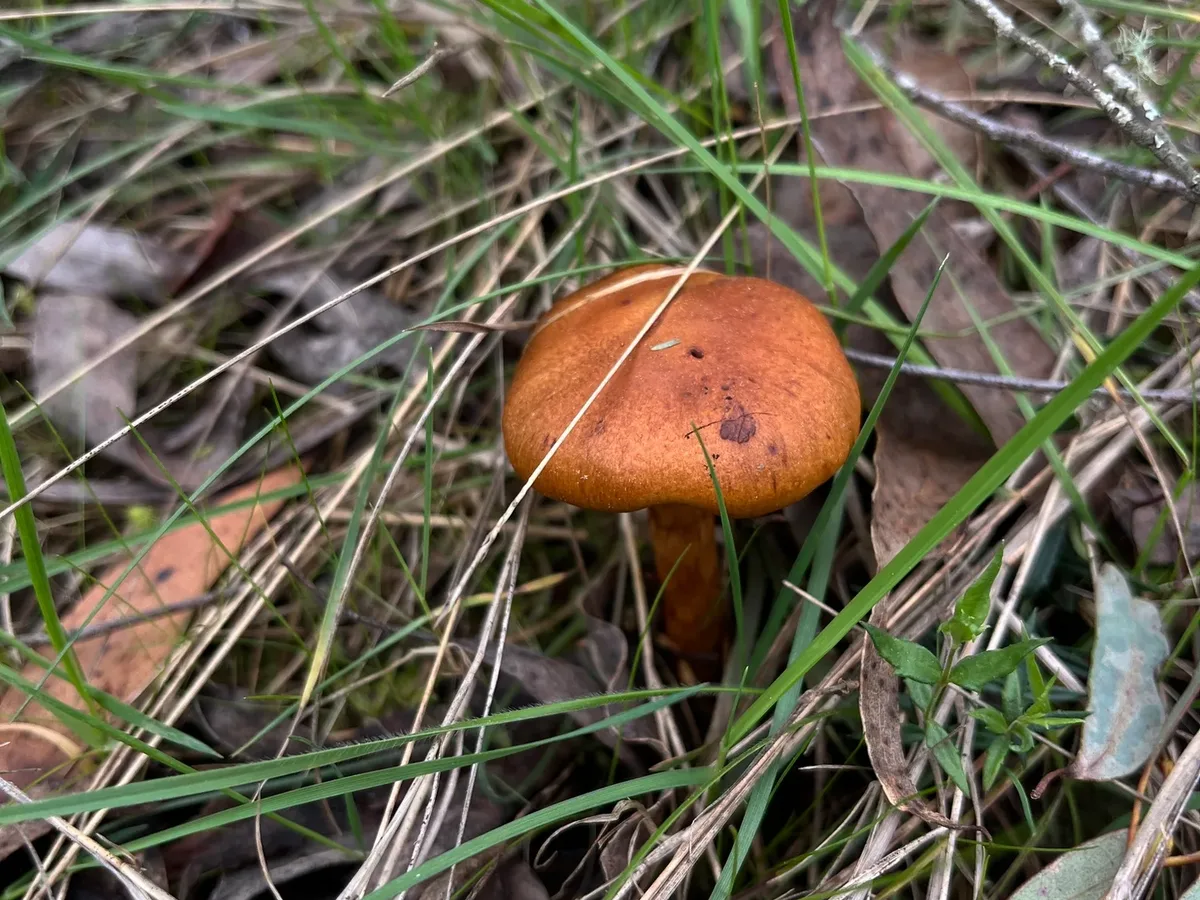 © Todd Huang (CC BY)
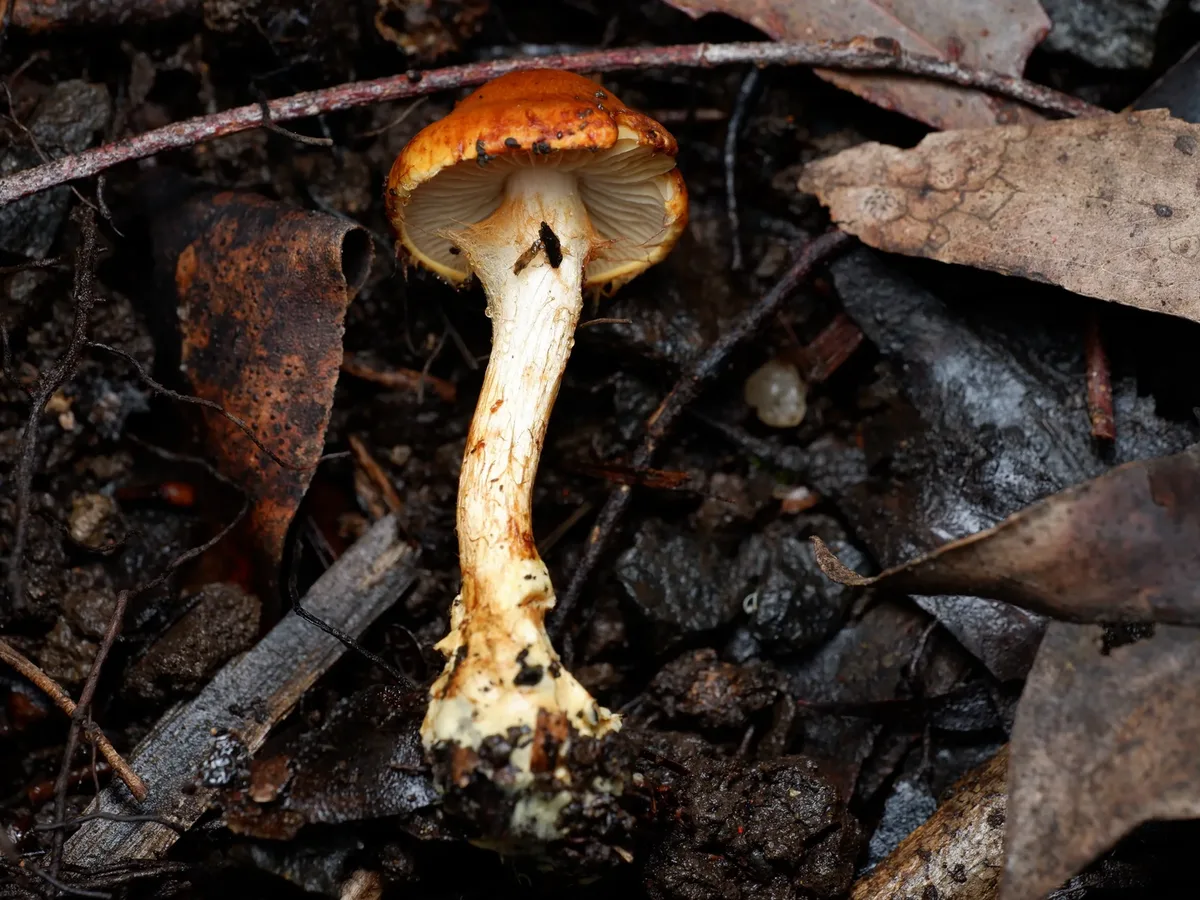 © Heather Merrylees (CC BY)
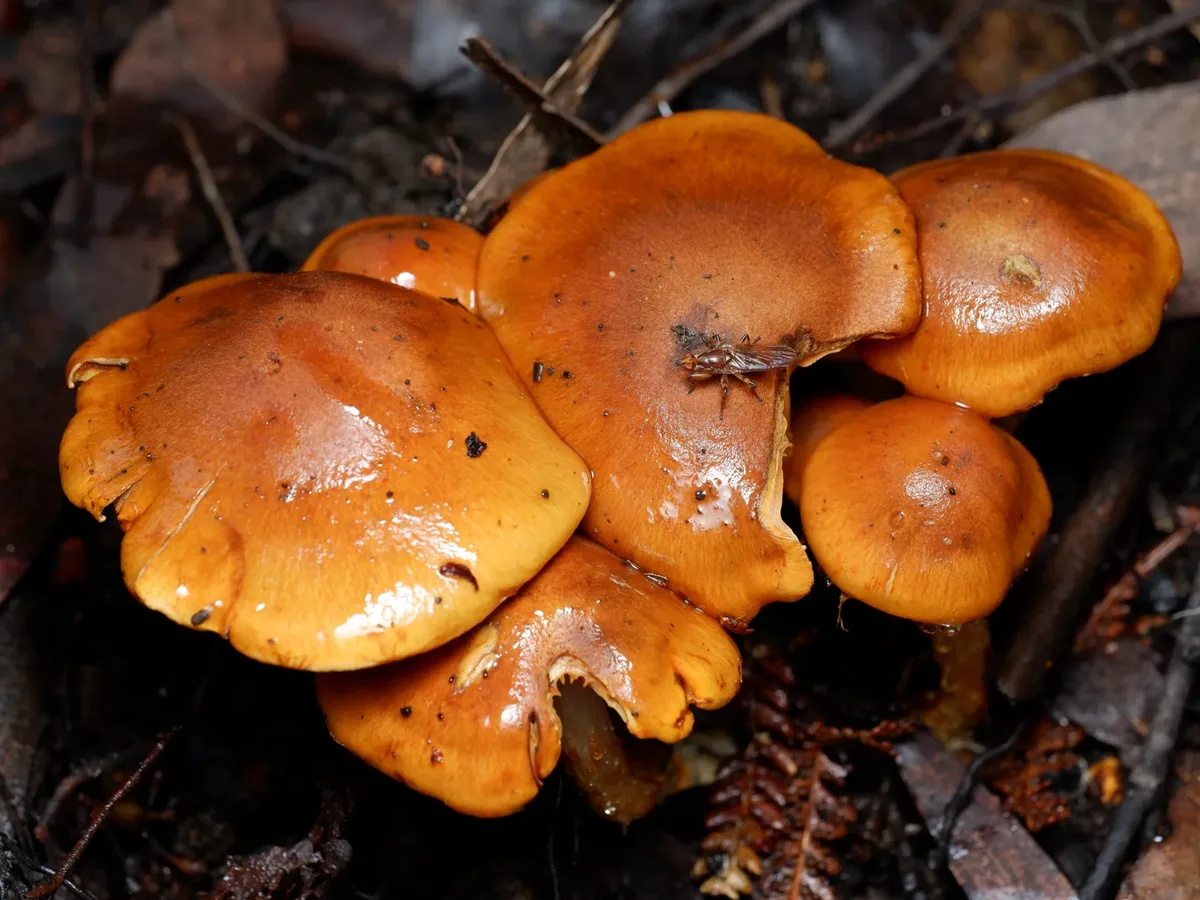 © Heather Merrylees (CC BY)
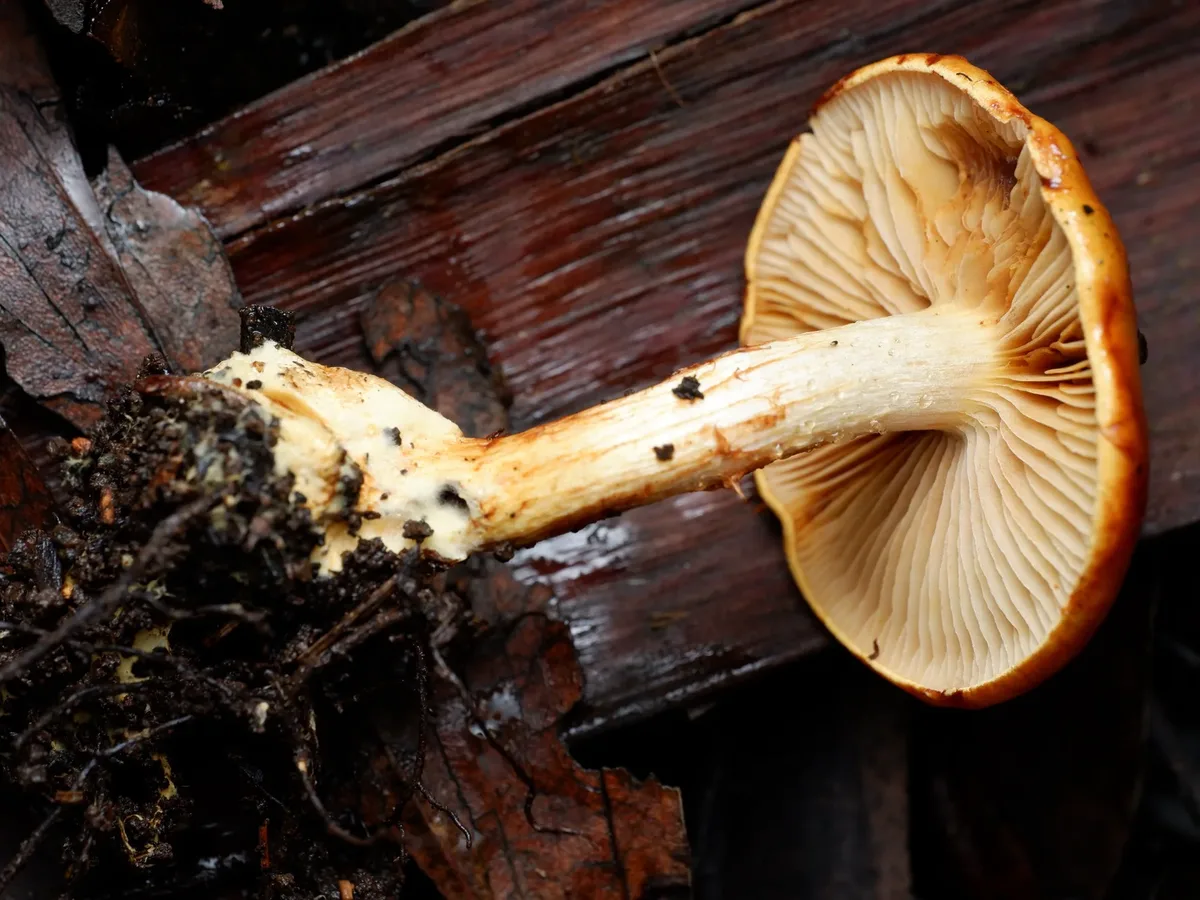 © Heather Merrylees (CC BY)
 © Heather Merrylees (CC BY)
 © grampianshiker (CC BY)
 © grampianshiker (CC BY)
 © Todd Huang (CC BY)© Todd Huang (CC BY)© Heather Merrylees (CC BY)
Toxic - and the most serious cases can be fatal. Never eat it, and wash your hands after handling.
Never eat a mushroom you are not 100% sure of - check the look-alikes below, and always cook wild mushrooms.
How to recognise it
Cap
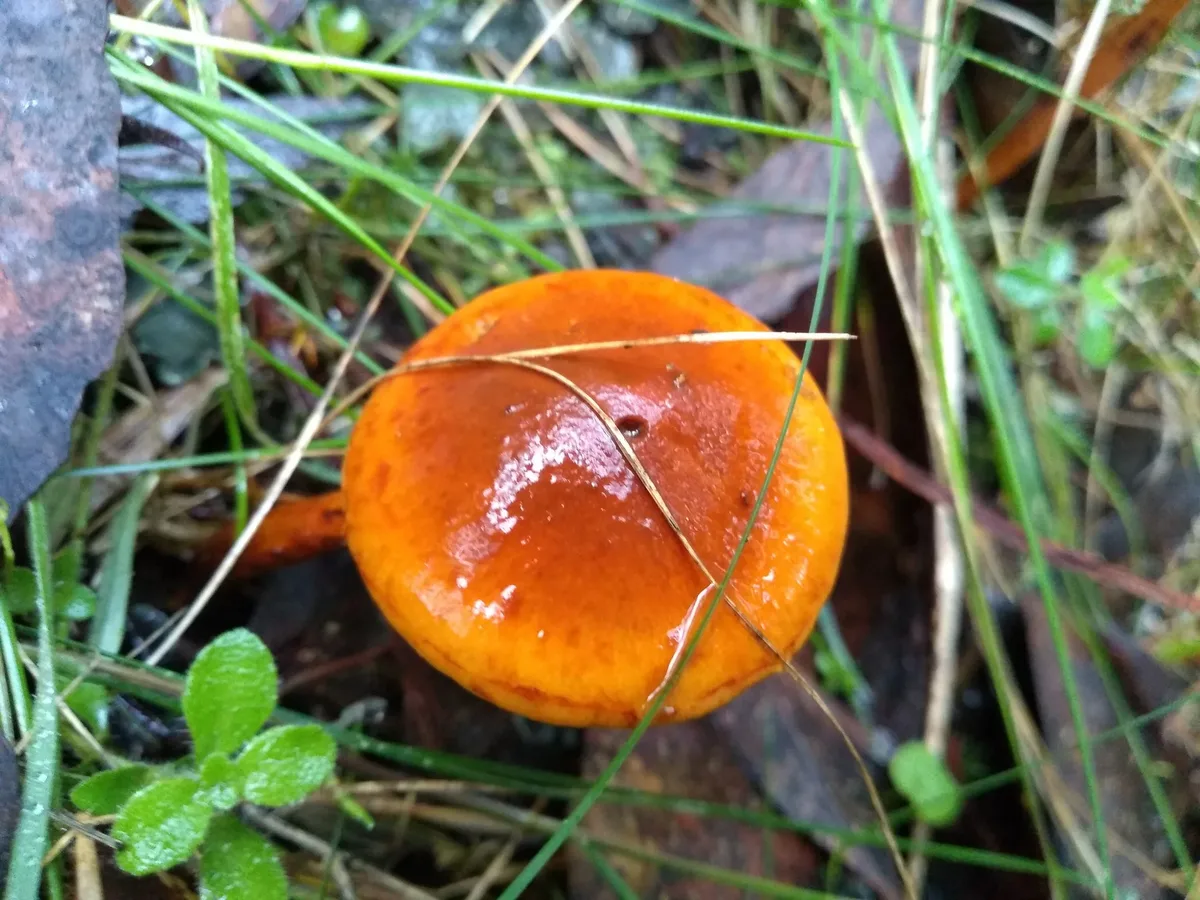
Cap 3-8 cm across, convex then broadly umbonate, dry to slightly moist and fibrillose, ochre-brown to tawny brown, sometimes with faint olivaceous tones in youth, fading to pale buff-brown with age.
Gills
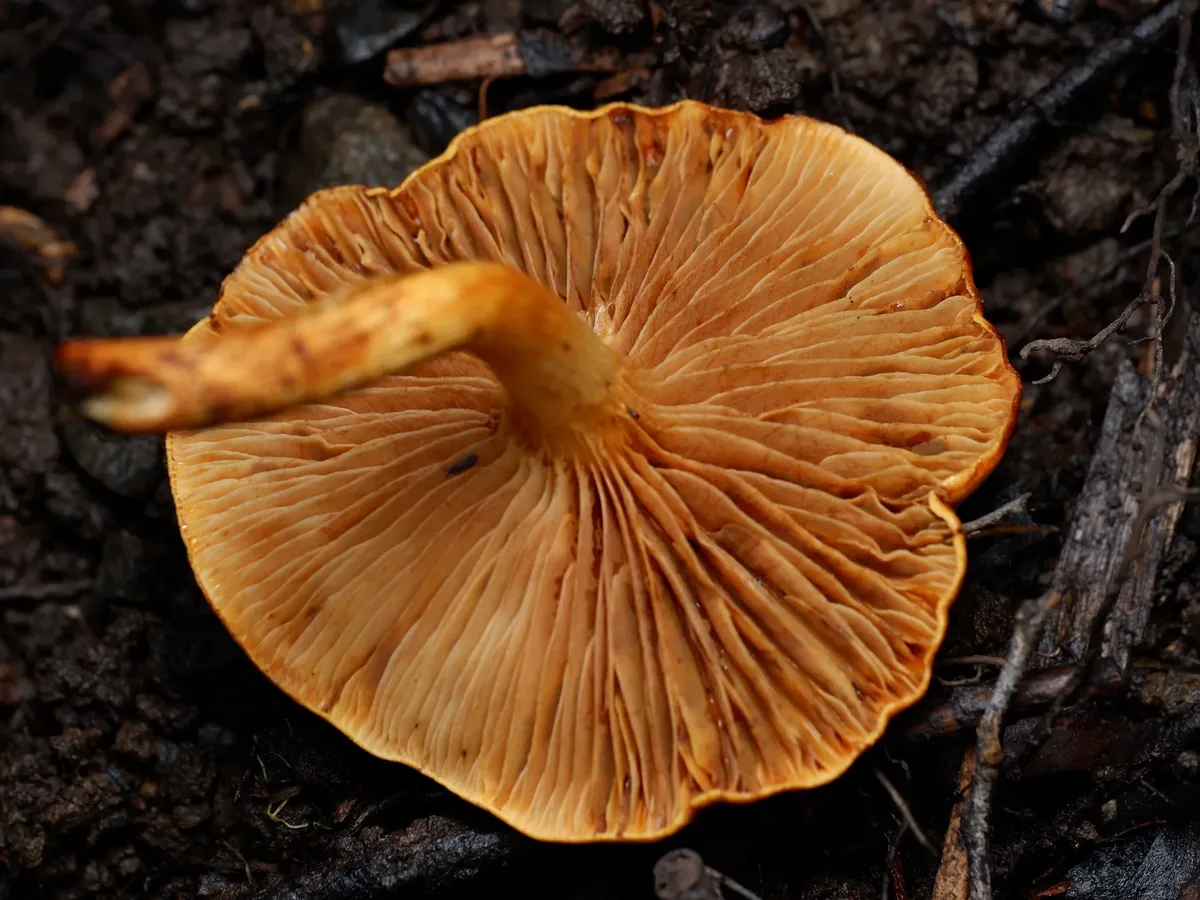
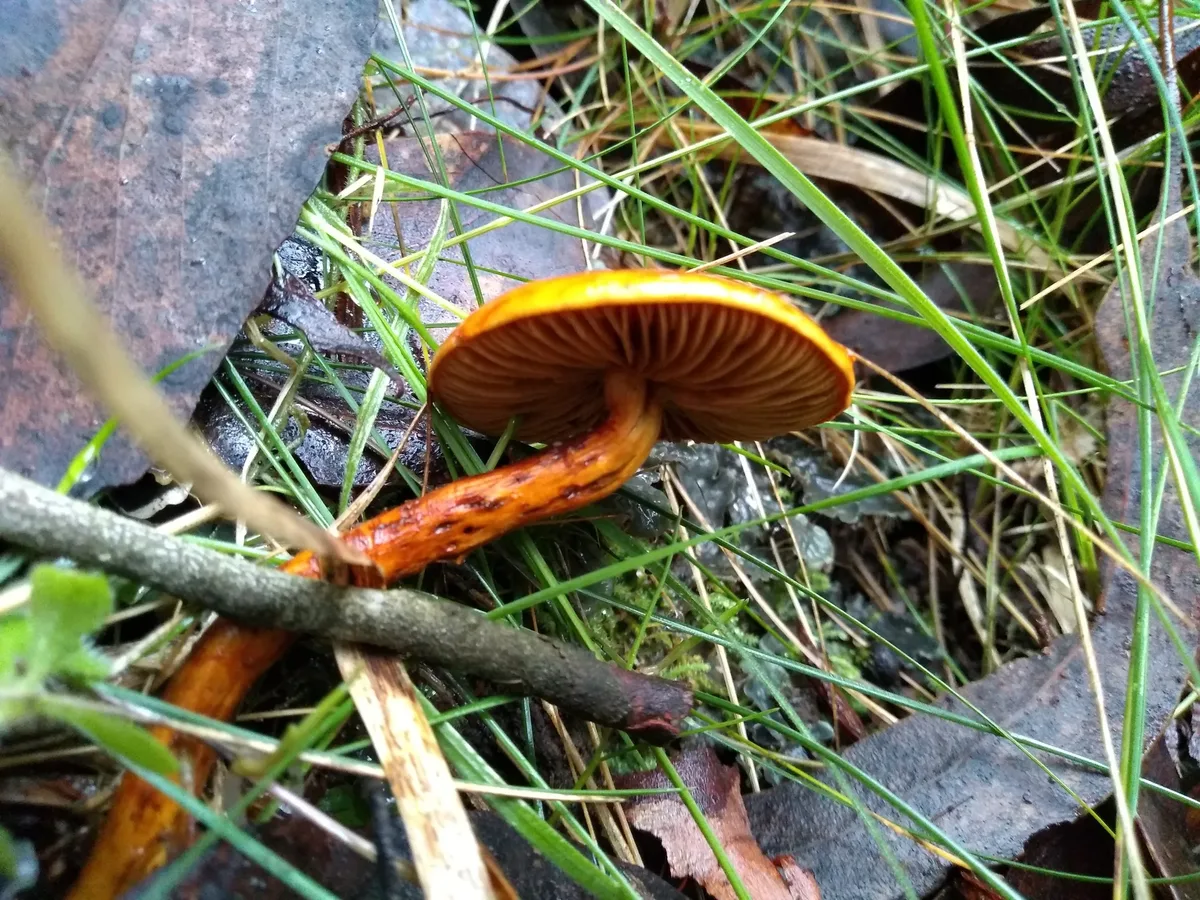
Gills adnate, moderately crowded, pale brownish-buff to cinnamon at first, developing full rust-brown colouration as the spore mass matures; gill edges remain slightly paler.
Stem
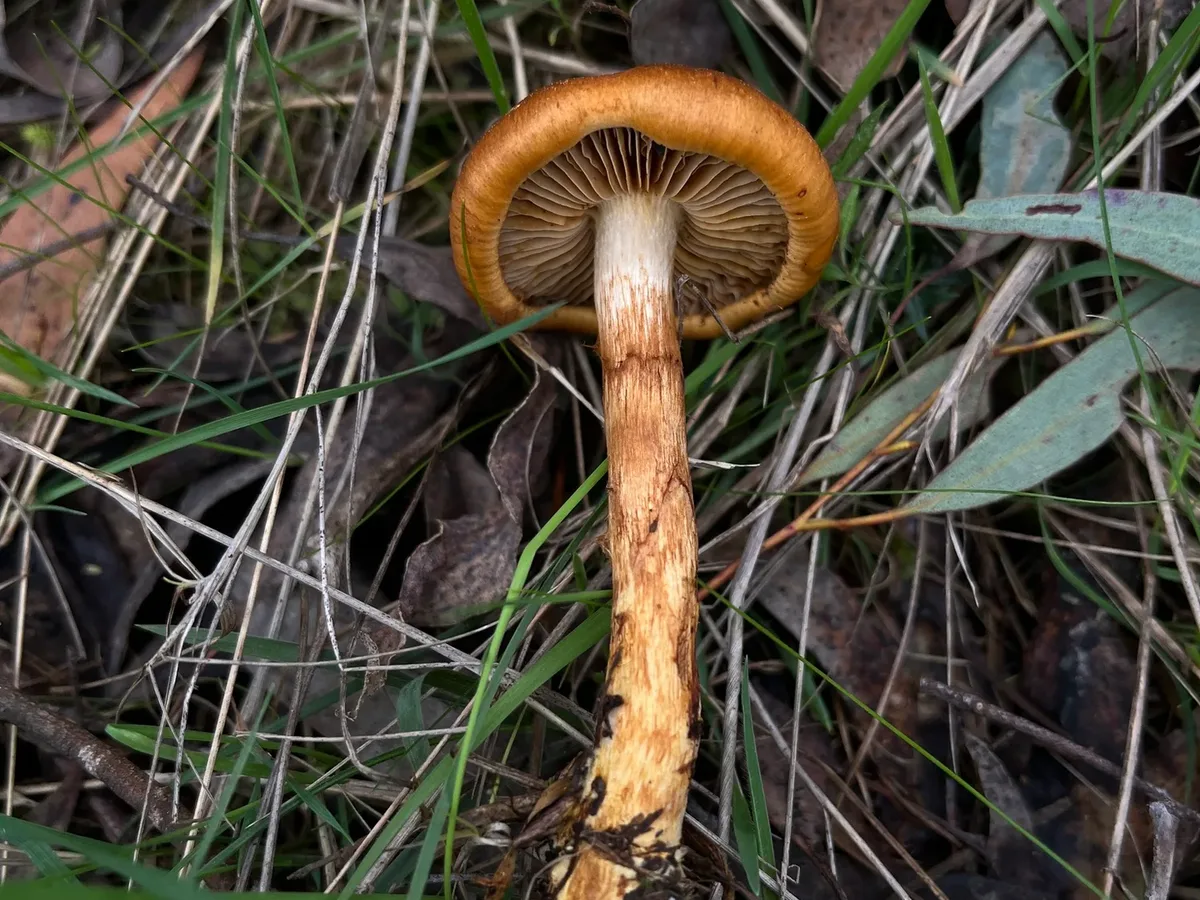
Stem 5-10 cm tall, 0.8-2 cm thick, cylindrical to clavate, fibrillose-silky, pale brownish.
The cortina is the genus-defining feature: a cobweb-fine partial veil of whitish to pale tawny threads visible bridging the gap between cap margin and upper stem in young, unexpanded fruitbodies.
As the cap expands the cortina collapses and is quickly obscured, but it leaves a conspicuous rust-brown ring-zone on the upper stem from deposited spores - look for this band even on older specimens.
Flesh
Flesh firm, pallid buff, no distinctive odour.
Spore print rust-brown to cinnamon-brown, the most reliable single field character: pick up a fresh cap, place gill-side down on paper for 30-60 minutes and look for a rust-brown deposit.
Why it's dangerous
Orellanine-type webcaps are considered among the most dangerous mushroom toxins because the delay between ingestion and clinical presentation consistently leads to misdiagnosis and delayed treatment.
Unlike amatoxin poisoning, where symptoms within 6-24 hours prompt rapid medical assessment, orellanine victims often have no reason to seek medical care until renal failure is already advanced.
There is no specific antidote or chelating agent for orellanine; management is entirely supportive (fluid balance, dialysis).
The prognosis correlates directly with the amount ingested and how quickly renal support is initiated - early diagnosis and nephrology referral are critical.
Cortinarius abnormis, like all ochre-to-tawny-brown Australian webcaps, must be treated as a species capable of causing fatal or life-altering kidney failure.
Toxin
The principal toxin in orellanine-bearing Cortinarius species is orellanine (3,3',4,4'-tetrahydroxy-2,2'-bipyridine N,N'-dioxide), a bipyridine N-oxide compound that acts as a potent nephrotoxin.
It selectively destroys the proximal tubule cells of the kidney through a mechanism involving free-radical generation and disruption of cellular metabolism.
Orellanine is chemically stable and survives all normal food-preparation processes.
While orellanine has been analytically confirmed in European species such as C. orellanus and C. rubellus, the Australian Cortinarius complex has been found to contain the same or closely related compounds. All native Australian webcaps in the ochre-brown to tawny-brown spectrum should be treated as carrying equivalent nephrotoxic risk.
Symptoms
Orellanine poisoning is characterised by a prolonged and deceptive latent period of 2 days to 3 weeks (occasionally longer), during which the patient may feel entirely well or experience only mild non-specific symptoms.
When the renal phase begins, symptoms include:
- intense polydipsia (thirst)
- polyuria or oliguria (increased or decreased urination)
- back and flank pain
- nausea
- vomiting
- headache
These progress to acute interstitial nephritis and acute tubular necrosis, manifesting as rising creatinine and urea levels.
A significant proportion of confirmed orellanine poisoning cases documented in European literature required dialysis; some required permanent renal replacement therapy or kidney transplantation.
The extreme latency is clinically treacherous because the patient cannot link their current renal symptoms to a meal eaten 1-3 weeks earlier without specific questioning.
Staying safe
Never consume any Cortinarius species from Australian native forest.
The orellanine nephrotoxin documented in numerous Australian and European webcap species acts through an exceptionally dangerous mechanism:
- no taste warning
- no immediate illness
- a latent period of 2 days to 3 weeks before symptoms appear
By the time the victim notices renal symptoms, serious irreversible kidney damage may already have occurred.
If any Cortinarius ingestion is suspected, seek emergency medical care immediately and call the Poisons Information Centre (Australia: 13 11 26). Do not wait for symptoms.
Where & when it grows
Habitat
At home in the native Australian sclerophyll forests and woodland of the southeast - Victoria, New South Wales, and Tasmania - where it grows in quiet partnership with Eucalyptus and related native trees.
Look for it in:
- moist, sheltered gullies
- south-facing slopes
- spots where autumn leaf litter has built up deeply over the soil
Fruiting bodies appear singly or in loosely scattered groups, never the dense tufted clusters you might see with wood-rotting species like Hypholoma or Galerina.
When
A Southern Hemisphere autumn mushroom, fruiting from March through to early winter in June.
The peak window falls in April-May, once the post-Easter rains have soaked deep into the soil and temperatures have eased back into the 8-15 °C range.
It is absent in summer and spring.
How it grows
Cortinarius abnormis lives as an obligate ectomycorrhizal partner of native Australian trees - it cannot complete its life cycle without a living host root system.
Below ground, its mycelium sheaths the fine rootlets of Eucalyptus and kin, threading through the soil for years entirely out of sight.
The fruiting bodies emerge only when autumn rains and cooling temperatures align; the rest of the time, the fungus persists invisibly, woven into the fabric of the forest floor.
Fruiting conditions
Autumn fruiting triggered by seasonal rainfall and declining soil temperatures in southeastern Australian forest. Estimates derived from known season and standard Cortinarius ecology in temperate-cool climates.
Look-alikes
Numerous other native Australian Cortinarius species share essentially identical macroscopic features - ochre to tawny-brown caps, rust-brown spore prints, fibrillose stems with cortina remnants - and cannot be separated from C. abnormis without microscopy and, in many cases, chemical analysis.
The specific epithet 'abnormis' refers to morphological features considered unusual relative to typical webcap forms, but these subtle differences are not reliably observable in field conditions.
More dangerous confusion risks include edible species that superficially resemble brown gilled mushrooms:
- Agaricus species in open ground
- Suillus (slippery jacks) in pine plantations
- Honey fungus (Armillaria) in woodland
In each case the rust-brown spore print and the cortina (or its remnant ring-zone) immediately identify a Cortinarius and exclude safe species.
Dozens of native Australian Cortinarius species share virtually identical macroscopic features with C. abnormis. The same ochre-to-tawny-brown cap colours, rust-brown spore print, fibrillose stem, and cortina remnants appear across the entire group. Species-level separation requires microscopy (spore size and ornamentation, cystidia) and often chemical analysis. For practical purposes, all members of this group carry equal orellanine-type nephrotoxic risk and should be treated identically: do not collect, do not consume.
Agaricus species have pink then dark chocolate-brown gills (never rust-brown) and a dark brown spore print. They grow in open grassland and pasture, not native forest. They have no cortina and no rust-brown ring-zone on the stem. If the gills show any rust-brown colour and a fibrillose ring-zone is present on the stem, it is not Agaricus.
Armillaria species grow in dense clusters at the base of living or dead trees or from buried wood, have a pale cream to tan spore print (not rust-brown), and show a robust white membranous ring (annulus) on the stem rather than the cobweb-fine cortina of Cortinarius. The honey-coloured scaly cap and dense clustered growth are characteristic.
Suillus and other boletes bear a spongy pore layer on the underside of the cap rather than gills. Any brown-capped mushroom with true gills in native Australian forest is not Suillus. Suillus species are also associated with introduced pine plantations, not native eucalypt forest.
A reference guide - never an edibility guarantee. When in doubt, leave it out.