Scarlet Caterpillar Club
Cordyceps militarissyn. Clavaria militaris, Sphaeria militaris, Torrubia militaris, Cordyceps militaris var. militaris
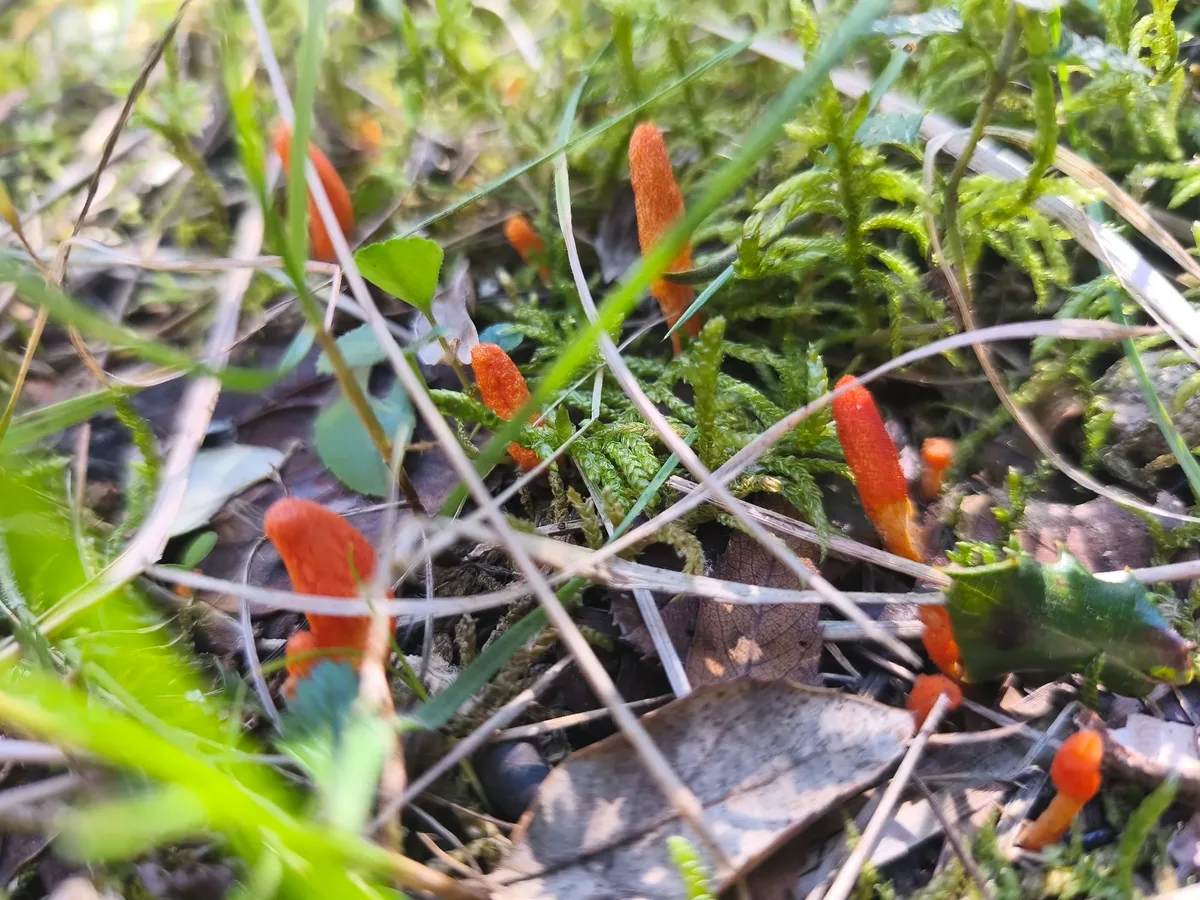 © victor laborde (CC BY)
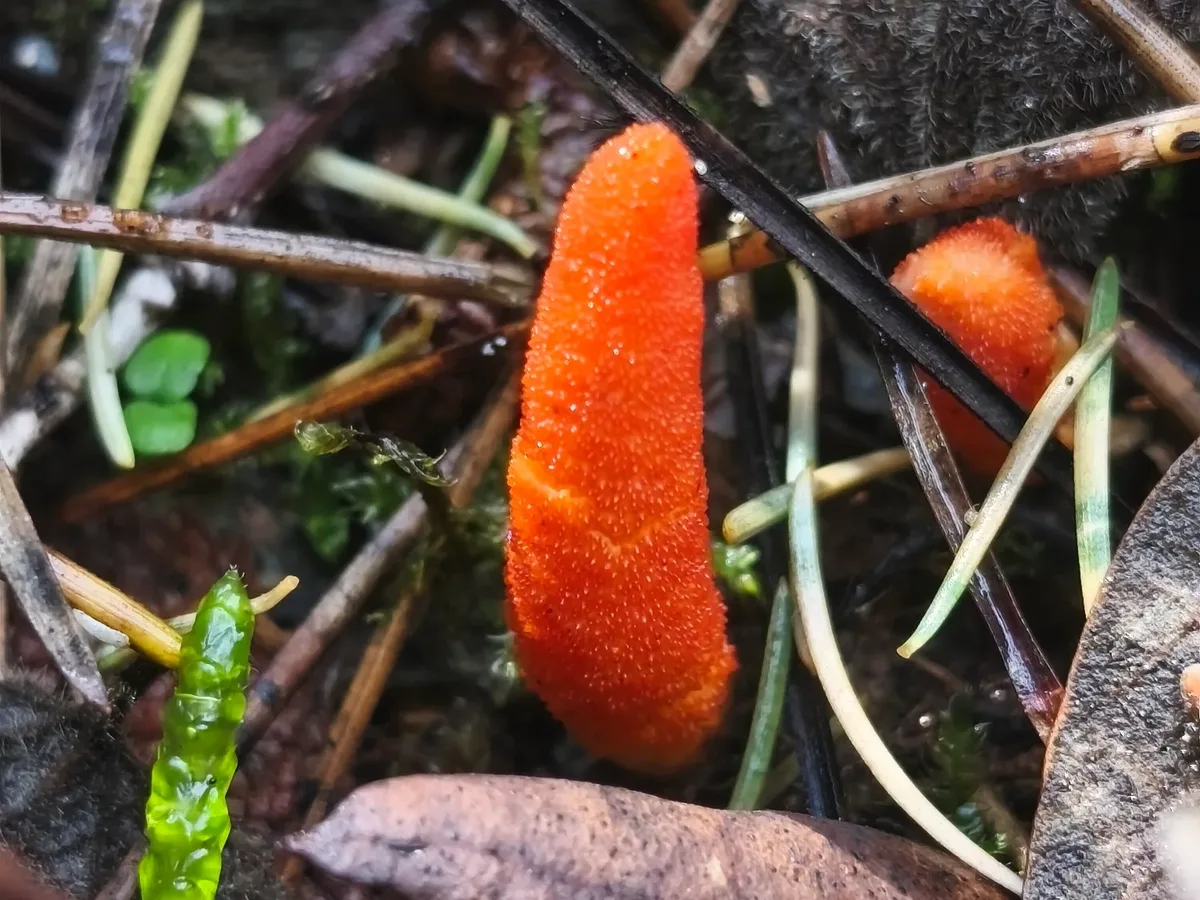 © victor laborde (CC BY)
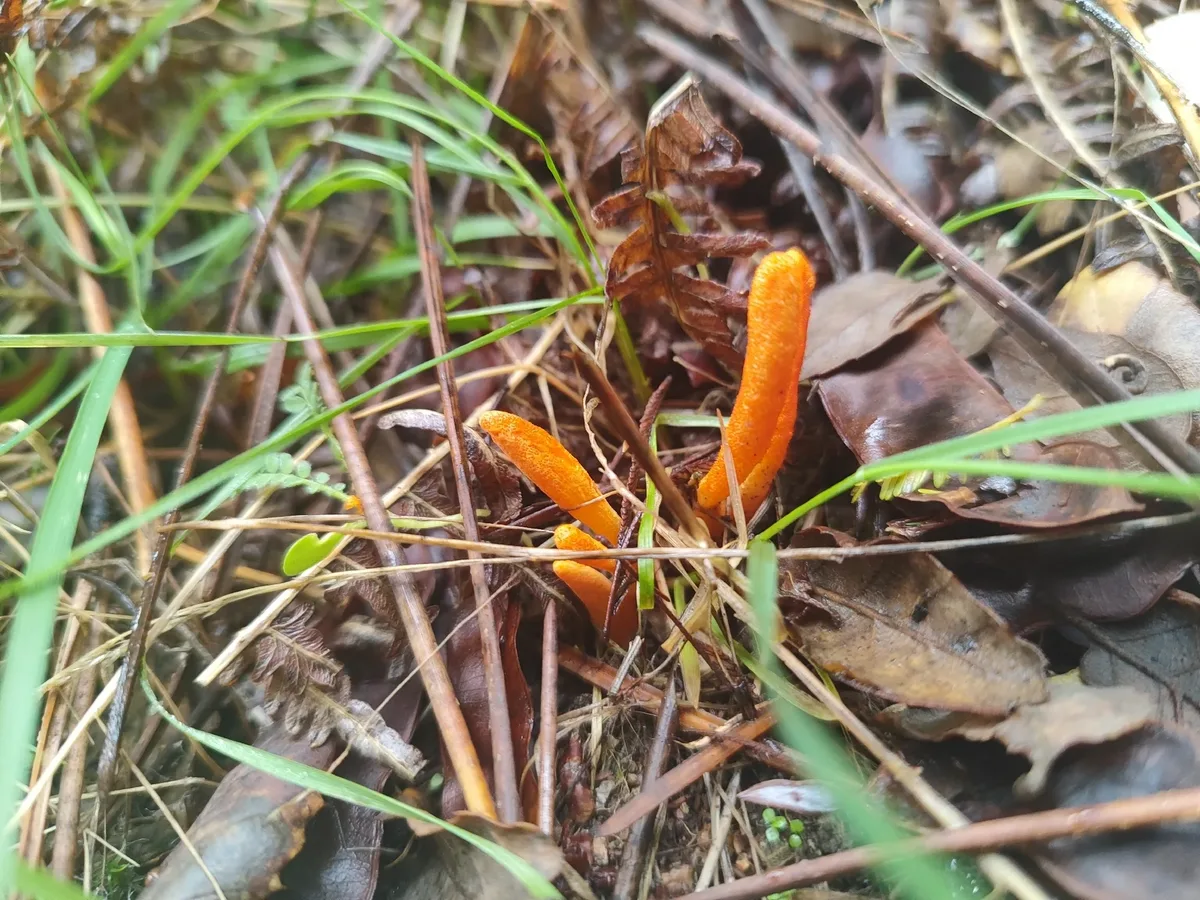 © João Lima (CC BY)
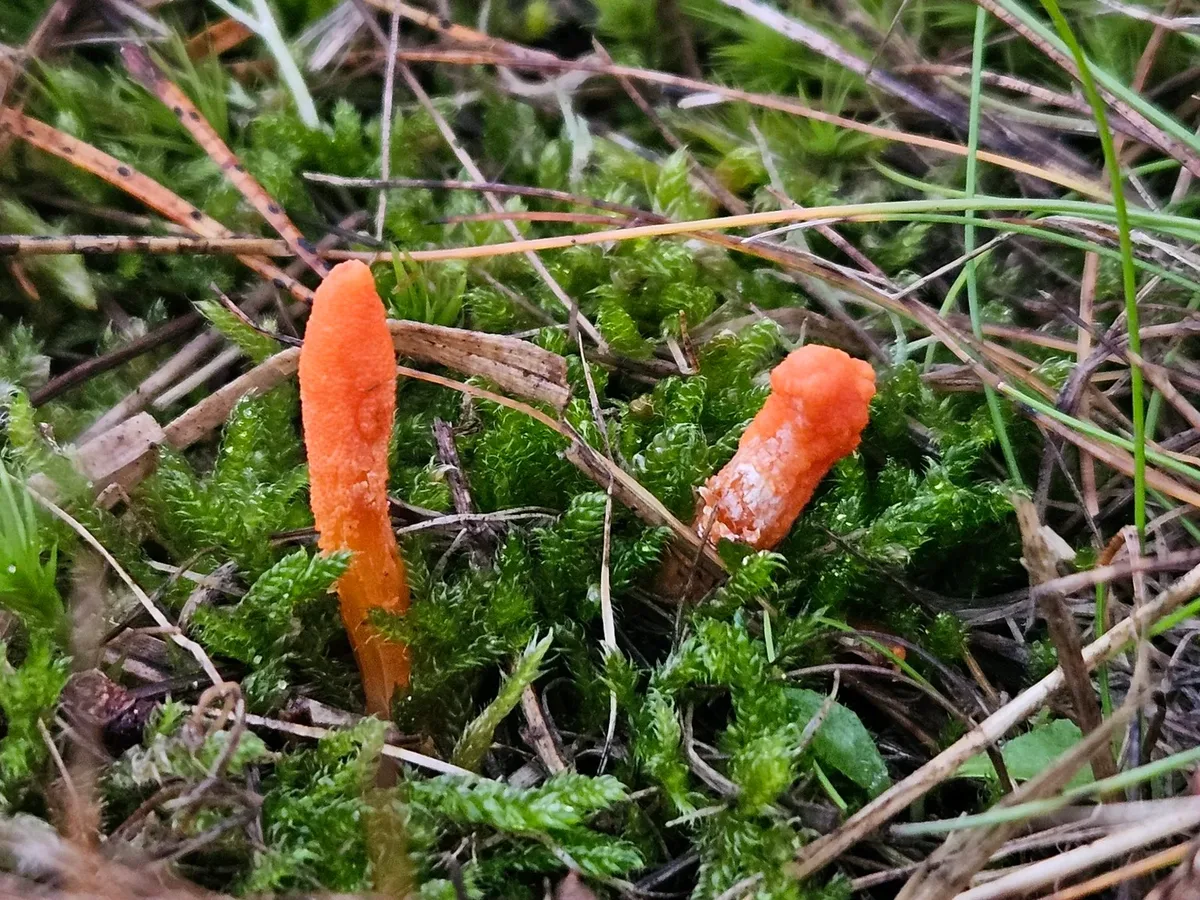 © Unknown (CC BY)
 © considerthelilies (CC BY)
 © victor laborde (CC BY)
 © victor laborde (CC BY)
 © victor laborde (CC BY)© victor laborde (CC BY)© victor laborde (CC BY)
Good to eat, once you have identified it with certainty and cooked it through.
How to recognise it
Cordyceps militaris is one of the most biologically extraordinary organisms a forager is likely to encounter - not because of great size or camouflage, but because of the story written into its form.
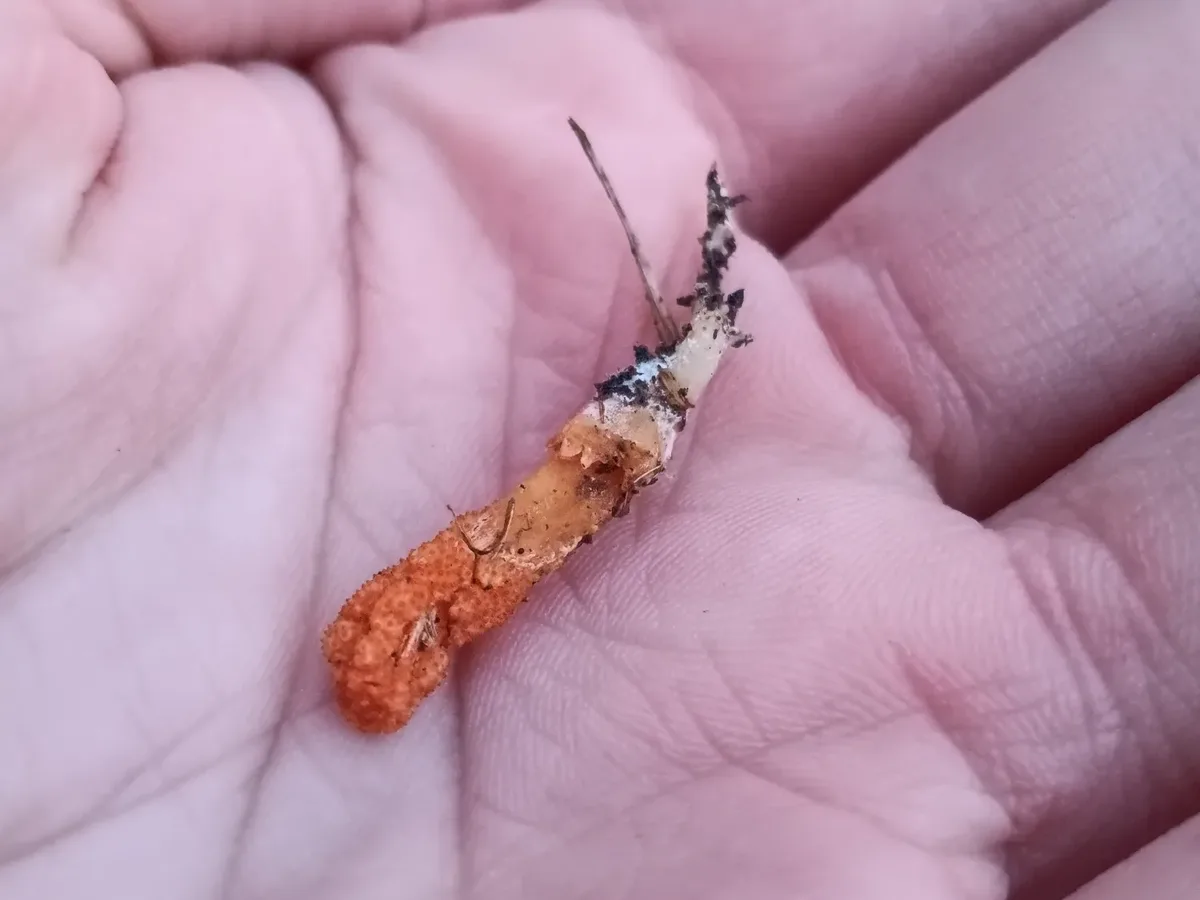
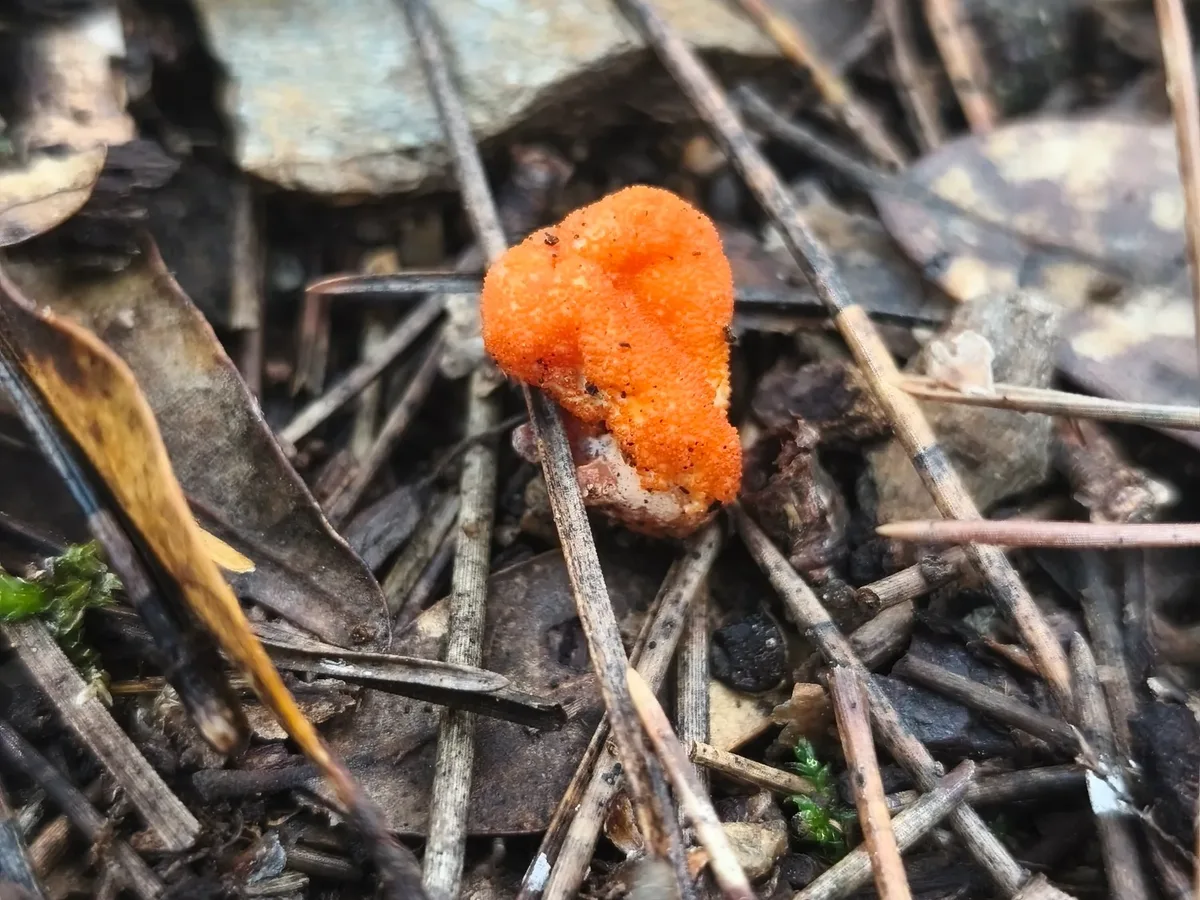
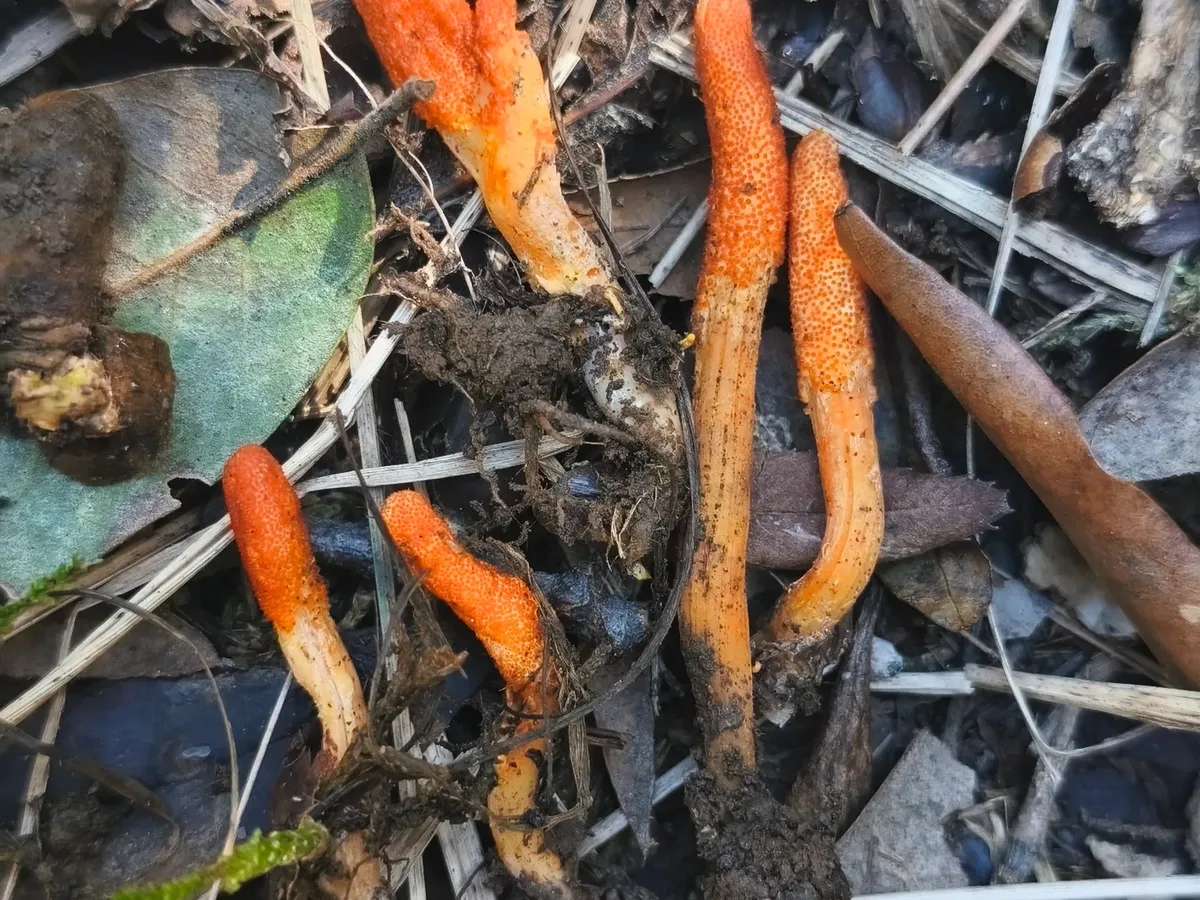
What you see is a vivid orange to orange-red club, 2-8 cm tall and only a few millimetres wide, erupting from the soil or leaf litter. There are no gills, no cap, no ring, no volva - none of the familiar landmarks of a typical mushroom.
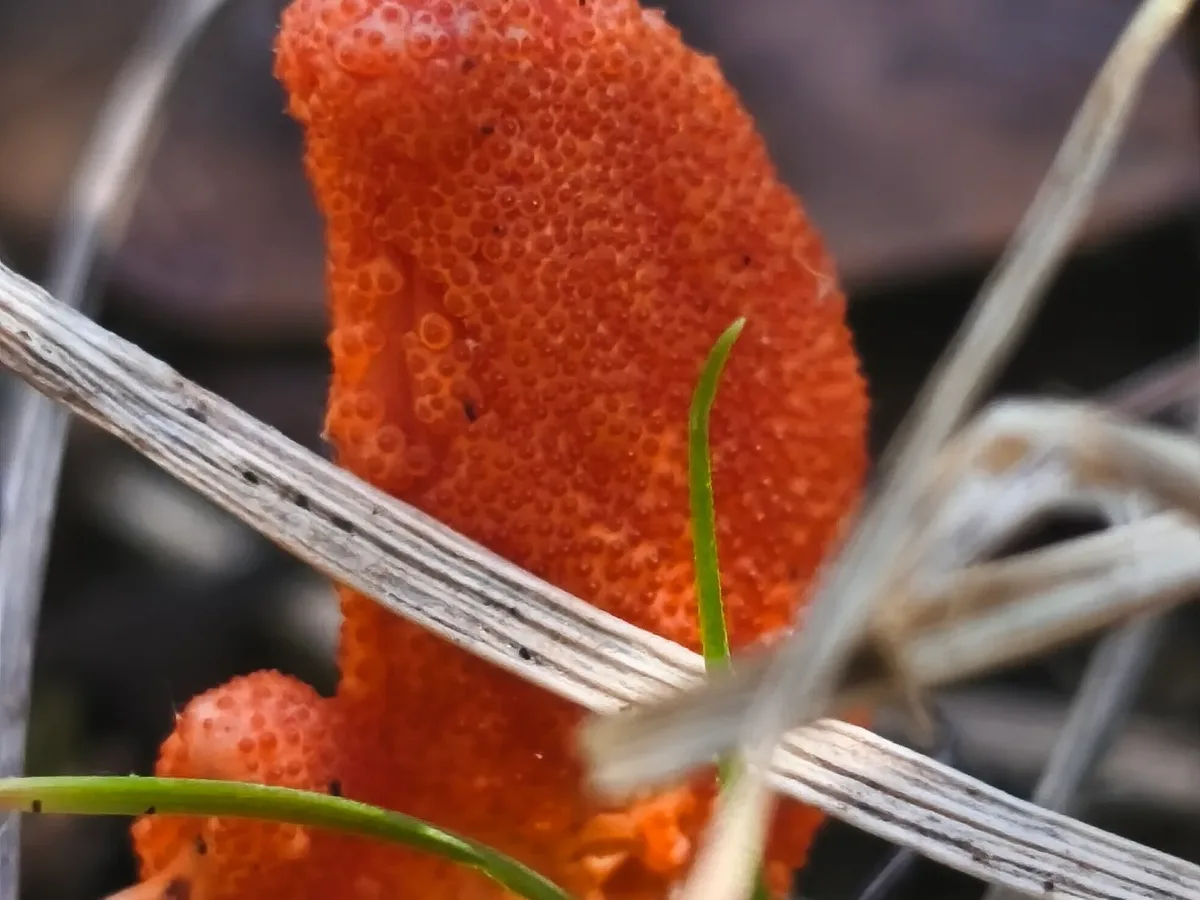
Instead, the upper swollen portion (capitulum) is blanketed in tiny sunken flask-shaped chambers (perithecia) whose openings (ostioles) appear under a hand lens as subtle raised dots across the surface, giving the otherwise smooth-looking orange club a finely granular texture. The lower stipe portion is slightly narrower and often paler.
Follow the stroma downward into the substrate and you will always find the host - a shrivelled, mummified insect pupa or larva, its body consumed and replaced by fungal mycelium, now serving only as the launching pad for these luminous orange spears.
Wild specimens are invariably slim and club-shaped; the commercial product sold in markets is often slightly fatter and more clavate, grown on enriched grain substrates rather than insect bodies, but otherwise similar in appearance.
Where & when it grows
Habitat
Cordyceps militaris is an entomopathogenic (insect-killing) fungus, which means its ecological role is completely different from any mycorrhizal or saprotrophic mushroom.
The mycelium begins its life cycle by infecting a living insect larva or pupa, most commonly a moth caterpillar that has burrowed into soil to pupate. The infection gradually replaces the host tissues; eventually the insect dies, and the now-mummified body becomes the substrate from which the stroma erupts - typically when autumn soil conditions (cool temperatures, adequate moisture) are met.
Because of this biology, C. militaris is not found under specific trees or in specific soil types per se, but wherever its insect hosts occur in sufficient numbers. That means damp, humus-rich woodland and forest floor habitats - deciduous and mixed forests, forest edges, grassy clearings within woodland - where moth populations are high and the soil is soft enough for pupation.
In East Asia it is widespread from temperate northern China and Japan through the Korean peninsula and into higher-elevation habitats across Southeast Asia. In Europe and North America it is also native but less often collected.
The tiny stroma protruding from bare-looking soil is easy to miss; slow, careful walking with eyes close to the ground is needed. Excavating the base reveals the insect host and clinches identification.
When
Wild Cordyceps militaris fruits predominantly in late summer and autumn, from roughly August through November across its temperate and subalpine range, peaking in September and October.
The timing is governed by two converging events:
- 1the completion of the insect host's pupal stage in the soil (which occurs after the summer larval period)
- 2the arrival of the cooler, wetter conditions of early autumn that trigger stroma production
A late summer rain event after a period of warmth can initiate a flush of stromata appearing within one to two weeks. In colder or higher-altitude sites the season compresses into September-October; at lower altitudes in warmer regions it may extend into November.
Commercially cultivated C. militaris is available year-round, which has dramatically increased its culinary and medicinal accessibility. In subtropical Southeast Asia, wild fruiting may shift seasonally to follow the coolest and wettest months of the local climate.
How it grows
Cordyceps militaris is not a decomposer or root-partner - it is a parasite. A single infected pupa may produce one stroma or a small cluster of several (1-5) from different points on the body. The stroma grows slowly over several weeks, hardening as it matures.
Because the insect host body is finite and eventually exhausted, the fungus must produce spores and colonise new hosts to persist. Long-range dispersal is by the thread-like ascospores ejected from the perithecia, or by asexual conidia.
In the right habitat, multiple hosts at slightly different stages can produce a micro-patch of orange clubs of varying heights and ages. The timing and density of wild fruitings vary considerably between years, driven by the year's insect population density and the autumn weather pattern.
Fruiting conditions
Stroma production is triggered by the cooling and moistening of soil in late summer and early autumn, after the host insect pupae have been fully colonised. A rainfall event of 20+ mm over the preceding two weeks, combined with soil temperatures between 8-20 °C (typical of September-October in temperate East Asia), promotes emergence. The relatively long lag (7-21 days) reflects both the slow final growth of the stroma and the delayed response to soil moisture at depth where the insect host is buried. Warm, dry autumns delay or suppress fruiting entirely.
Look-alikes
Cordyceps militaris is quite distinctive in context - a vivid orange club attached to a mummified insect - but out of context (broken off at the base, or dried) it could be confused with a small coral fungus or club fungus. The most likely confusion in the field, particularly for inexperienced foragers, is with other orange or reddish club fungi.
- Clavulinopsis helvola and related species are golden-yellow to egg-yellow clubs growing from soil rather than insects; they lack perithecia on the surface.
- Multiclavula species are similarly club-like but grow on algae-crusted soil, bark, or wood.
- Hypocrea/Trichoderma stromata (other pyrenomycetes) can produce small orange to greenish pustules on dead wood but are not club-shaped.
None of these lookalikes have ever caused documented serious toxicity, and none is ever associated with a mummified insect host. If you cannot confirm a mummified insect at the base of the stroma, do not identify it as C. militaris.
Related Cordyceps and Ophiocordyceps species on other insect hosts are similarly non-toxic but are generally much rarer and less well studied.
Black to dark brown club-like ascomycetes growing from soil or among mosses. Colour alone distinguishes them: earthtongues are dark, never orange. No insect host. They are ascomycetes like Cordyceps but in a completely different family. Not toxic; edibility unknown but generally not collected.
Forms clusters of slender, spindle-shaped, smooth yellow to egg-yellow clubs 4-10 cm tall, growing directly from soil among grass or in woodland - never from an insect host. Lacks the raised perithecial dots on the surface and is uniformly brighter yellow rather than orange-red. No mummified insect at the base. Edible but of little culinary value; not toxic.
Ophiocordyceps sinensis (Himalayan caterpillar fungus, dongchongxiacao in Chinese) is the far more valuable traditional medicinal species of the Tibetan plateau - it parasitises ghost moth larvae (Thitarodes spp.) at high altitude (3000-5000 m). It differs from C. militaris in its larger, darker (brown to olive-black) stroma, its specific caterpillar host, and its extremely restricted high-altitude Himalayan range. Other Cordyceps-family species (Isaria/Cordyceps tenuipes, C. heteropoda, etc.) parasitise different insect hosts and may have orange, white, or cream stromata; none are known to be toxic. The key field rule is the same for all: always confirm the insect host.
A small, solitary or scattered, egg-yellow to pale orange-yellow club, 2-6 cm tall, growing from soil or humus in grassland or open woodland. Smooth surface without perithecial texture; no insect host. Slightly more orange than some specimens but never the vivid scarlet-orange of C. militaris capitulum. Not toxic.
In the kitchen
Picking & cleaning
Wild Cordyceps militaris stromata are small and slender. Gently lever out the entire structure including the buried insect body using a knife tip or narrow tool, rather than snapping the stroma at soil level. The intact host body is not just a curiosity; it confirms identification.
Clean gently with a soft dry brush; the delicate stroma is easily crushed. Because wild specimens are slender and light, meaningful quantities require many individuals.
Note that wild collecting of Cordyceps species has placed severe commercial pressure on the far more expensive Ophiocordyceps sinensis (Himalayan caterpillar fungus, a different species). C. militaris is now widely and sustainably cultivated, so foraging wild C. militaris for personal use is benign, but consider leaving the majority in place to complete spore dispersal.
Commercial supply is overwhelmingly from cultivation - the farm-grown product is the same species and contains the same active compounds.
Cooking
In culinary use, Cordyceps militaris is prized more for its functional properties and cultural significance than as a standalone gourmet ingredient. The flavour is mild, slightly earthy and faintly sweet, the texture gently firm and slightly chewy.
It is most commonly used in broths and soups, where it imparts a subtle, savoury depth. In China it frequently appears in nourishing slow-simmered soups with chicken, pork ribs, or duck, along with other tonic ingredients such as goji berries, jujubes, and huang qi (Astragalus). In Korea it is used in rice dishes, teas, and as an ingredient in health tonics.
Whole dried stromata are rehydrated in warm water before use; fresh or fresh-dried cultivated product can be added directly to hot liquid. The orange colour is striking and holds reasonably well in soup.
Because the stroma is slender, it is used whole or broken into sections rather than chopped. Powder and extract forms are widely available commercially.
It can also be briefly stir-fried in oil with garlic and other aromatics as a side dish, or incorporated into rice. As always, cook wild-harvested specimens thoroughly before consuming.
Good to know
Cordyceps militaris has a long history of safe consumption in East Asia, particularly China and Korea, where it has been used both as a food ingredient and a functional health supplement.
No confirmed reports of acute toxicity from properly identified C. militaris exist in the scientific literature at culinary doses. The bioactive compound cordycepin (3'-deoxyadenosine) and polysaccharides present in C. militaris are the subject of extensive pharmacological research but are not acutely toxic at the levels present in food quantities.
As with any novel food, individuals taking prescription anticoagulants or immunosuppressants should consult a physician before consuming large or supplement-level doses, as cordycepin has documented biological activity.
No deadly lookalikes are known for this species when the defining character - attachment to a mummified insect host - is confirmed. Never consume any Cordyceps-type fungus where the insect host cannot be confirmed, as misidentification with toxic club or coral fungi, though unlikely, cannot then be excluded.
A reference guide - never an edibility guarantee. When in doubt, leave it out.