Common Inkcap
Coprinopsis atramentariasyn. Coprinus atramentarius, Agaricus atramentarius, Coprinus atramentarius var. atramentarius
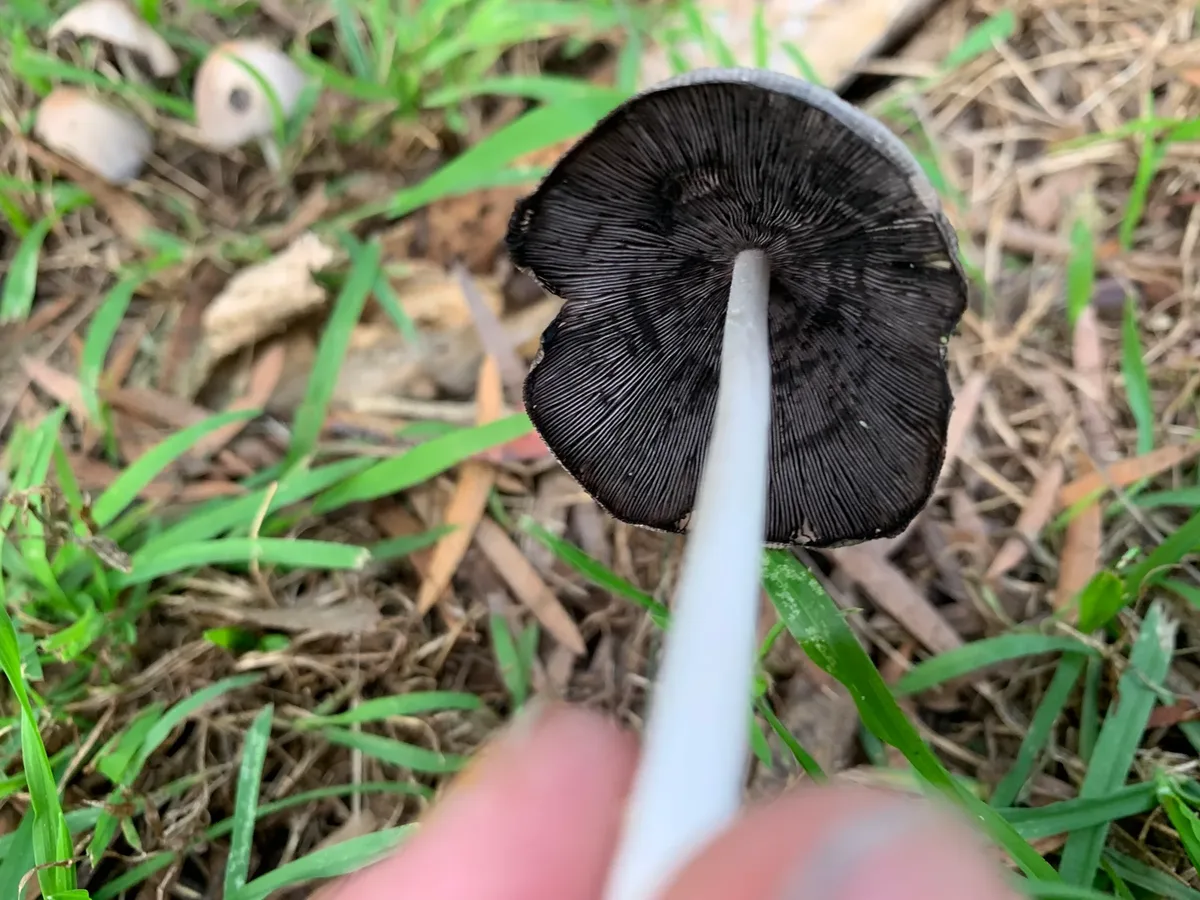 © Lukas Clews (CC BY 4.0)
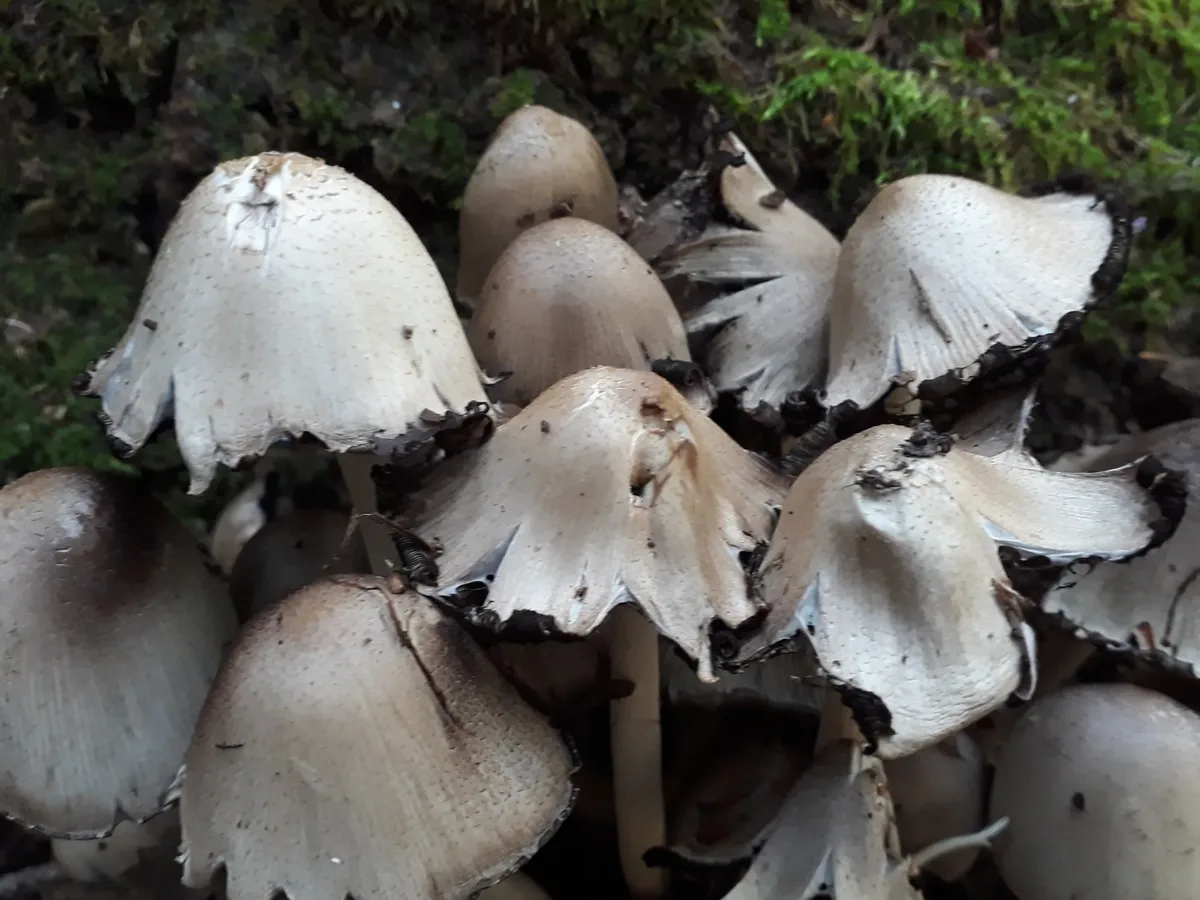 © helen_golubeva (CC BY 4.0)
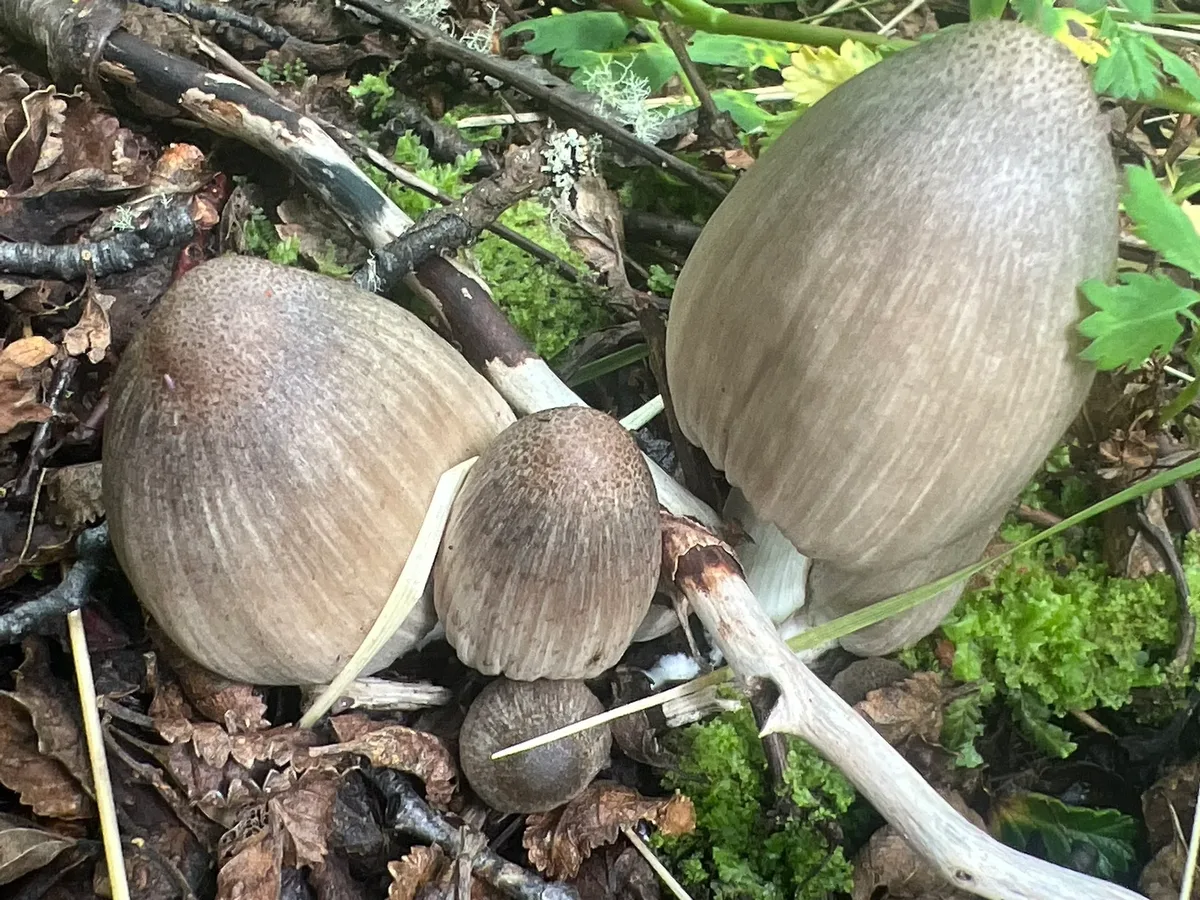 © Andy Jordan (CC BY)
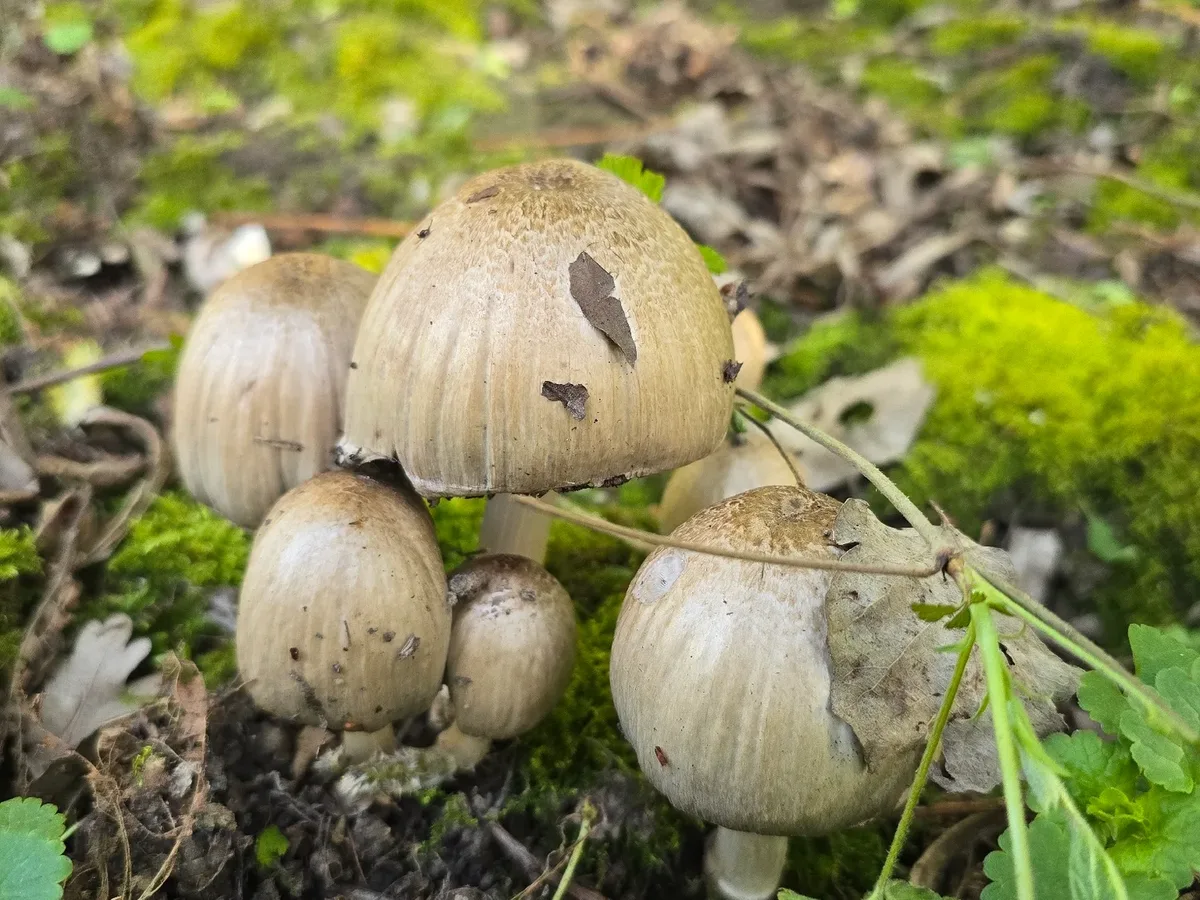 © Iona (CC BY)
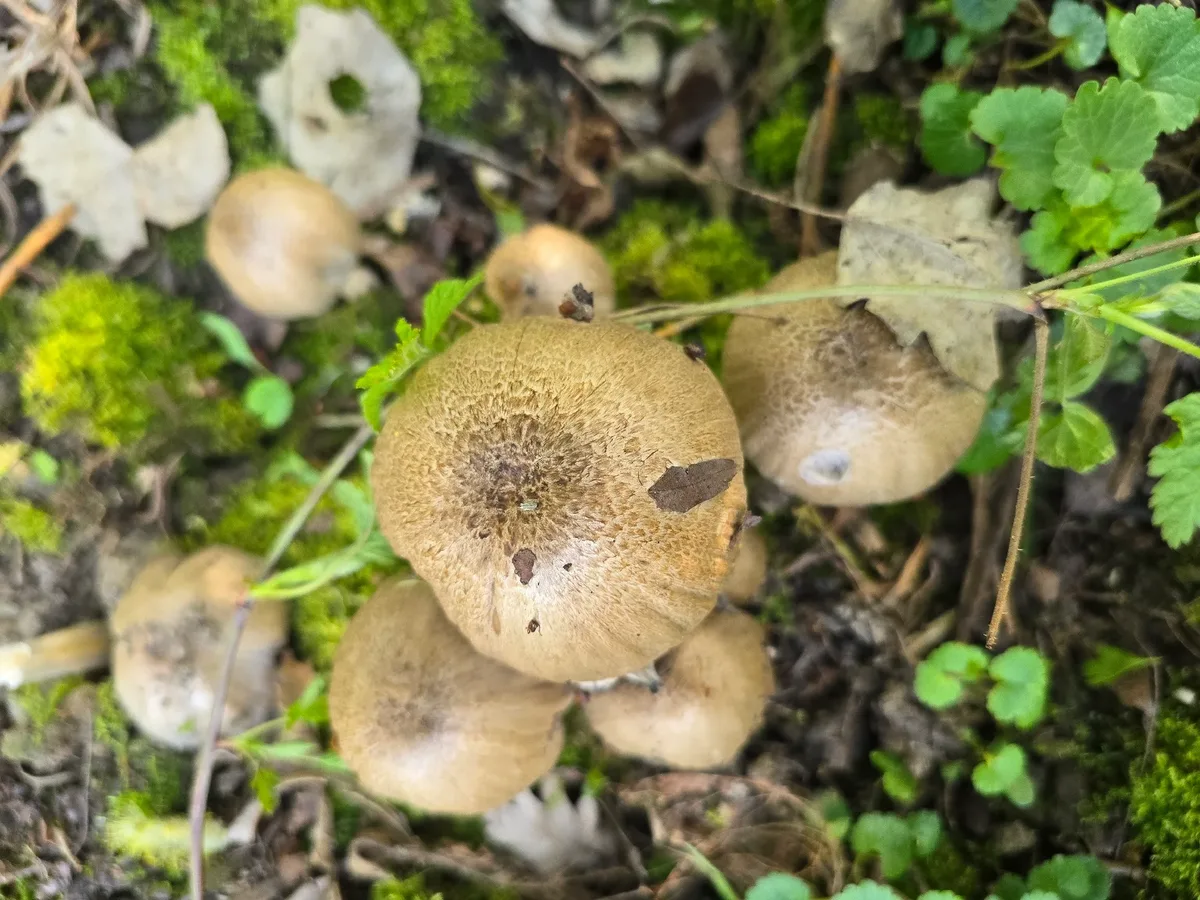 © Iona (CC BY)
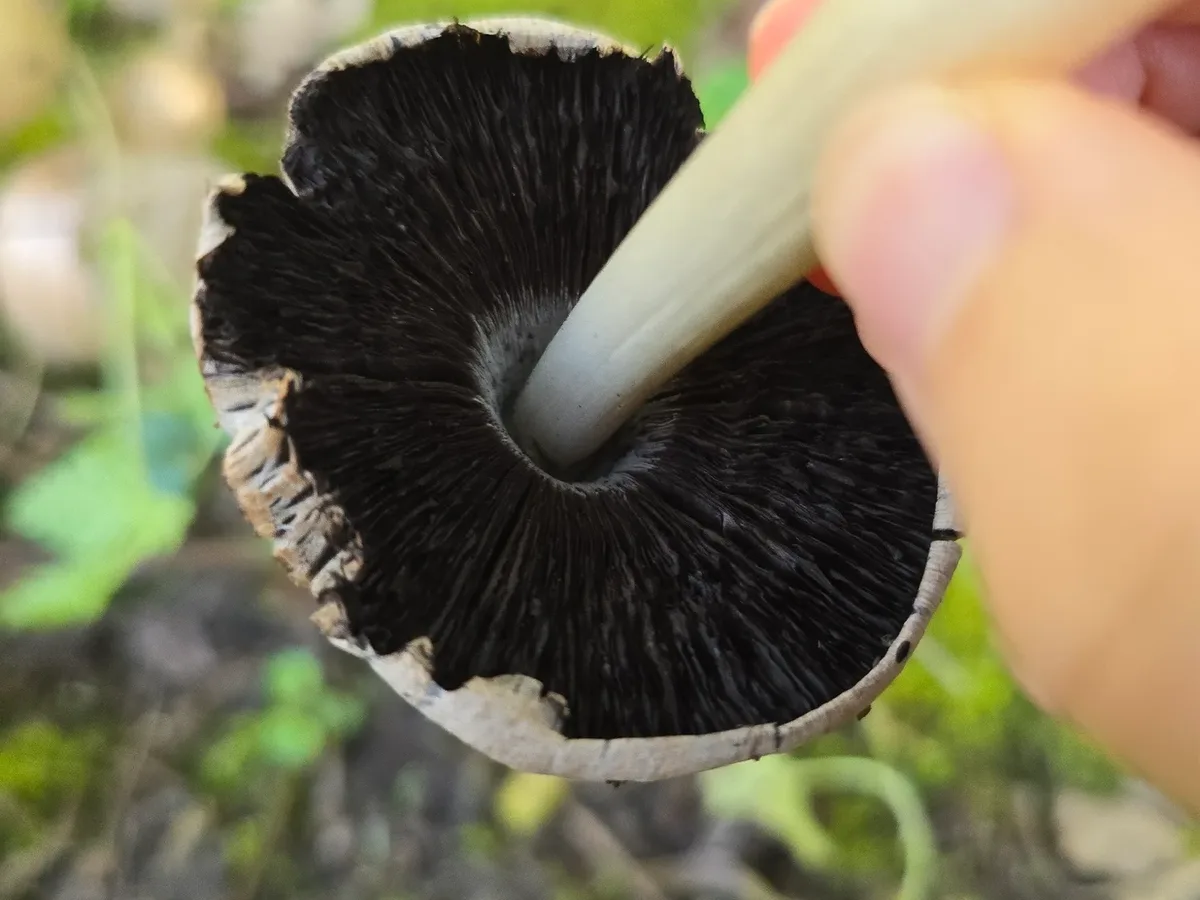 © Iona (CC BY)
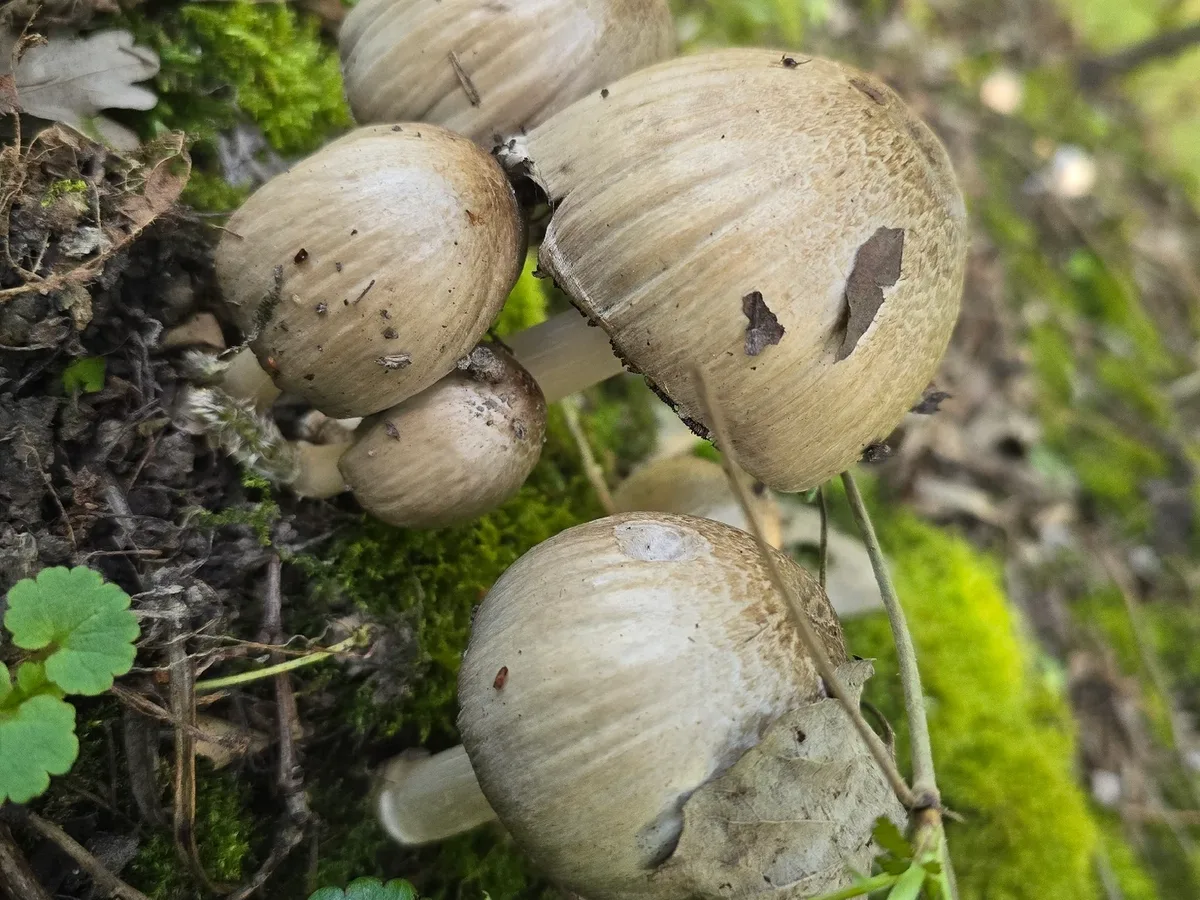 © Iona (CC BY)
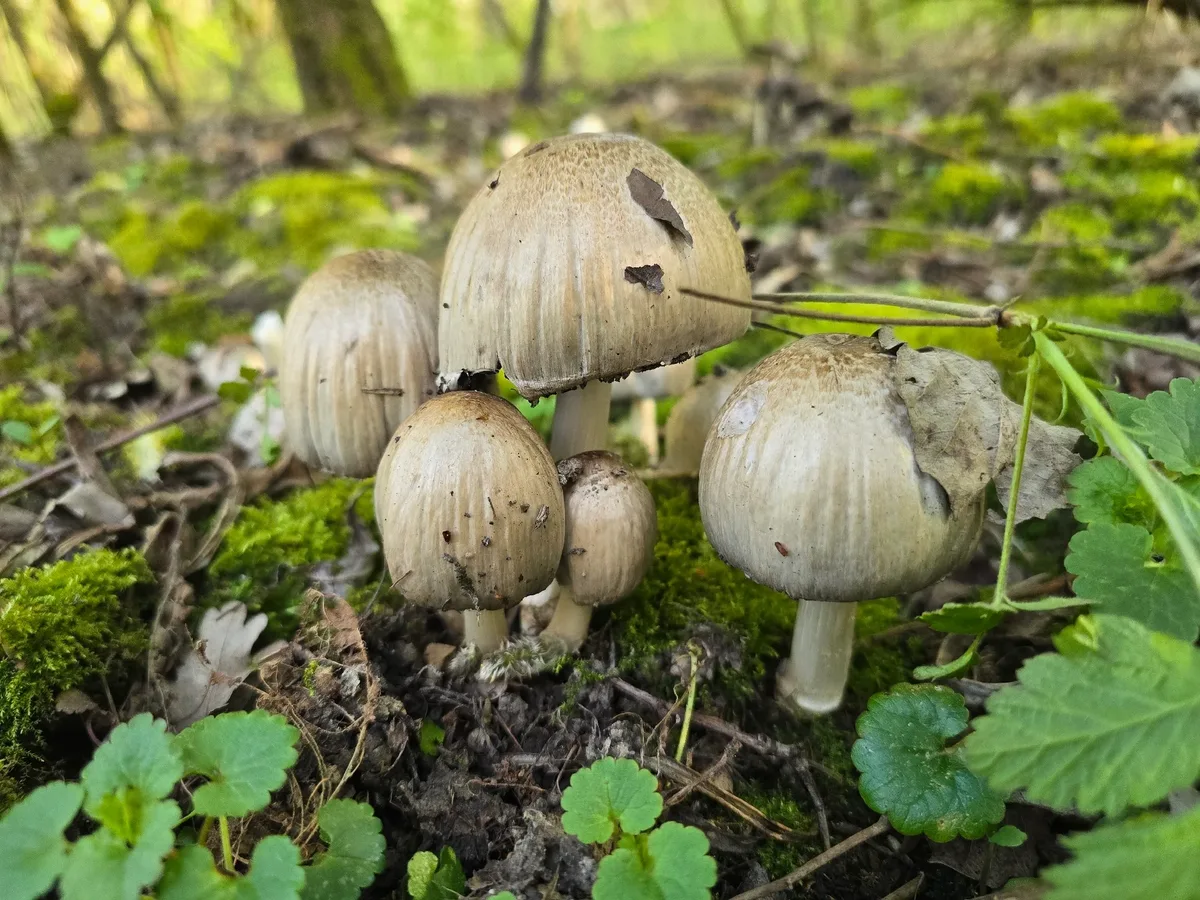 © Iona (CC BY)
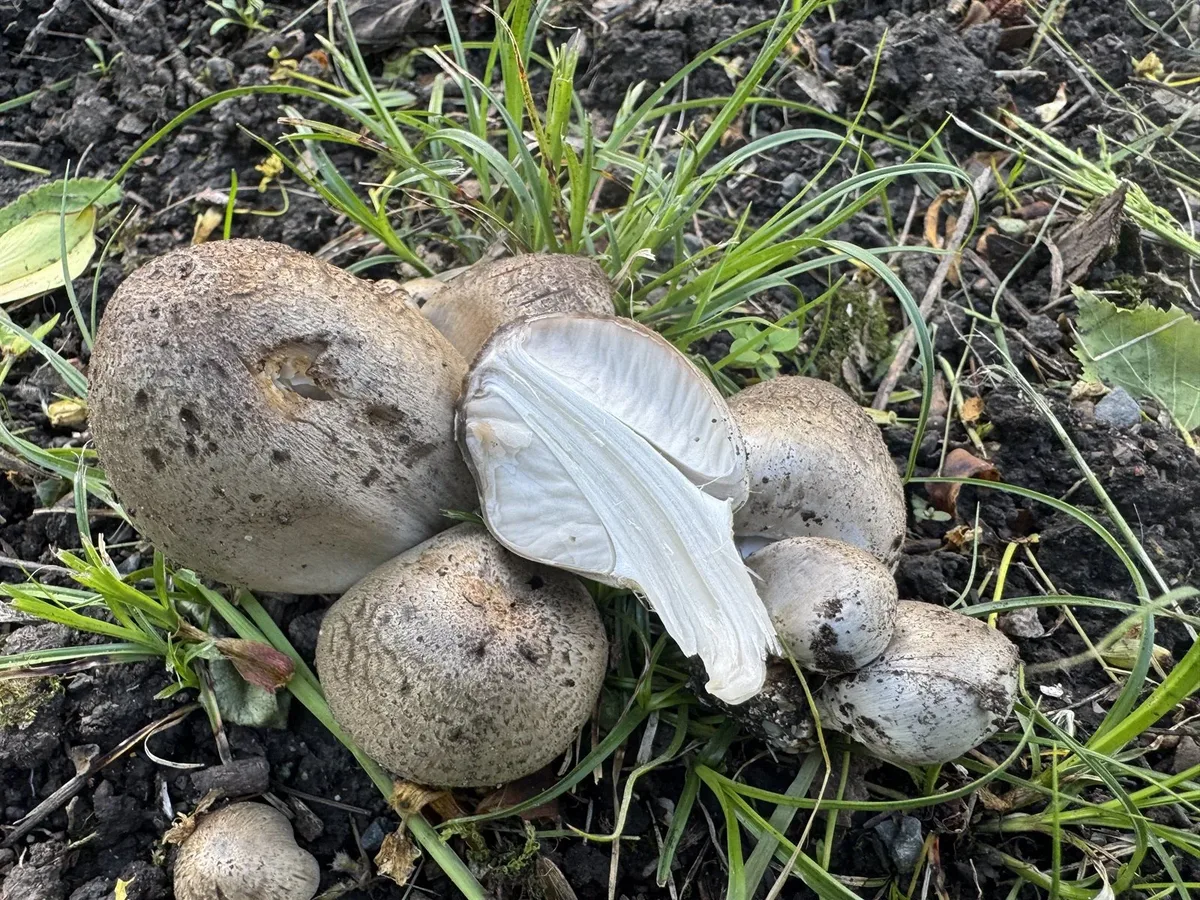 © Marianne Moe (CC BY)
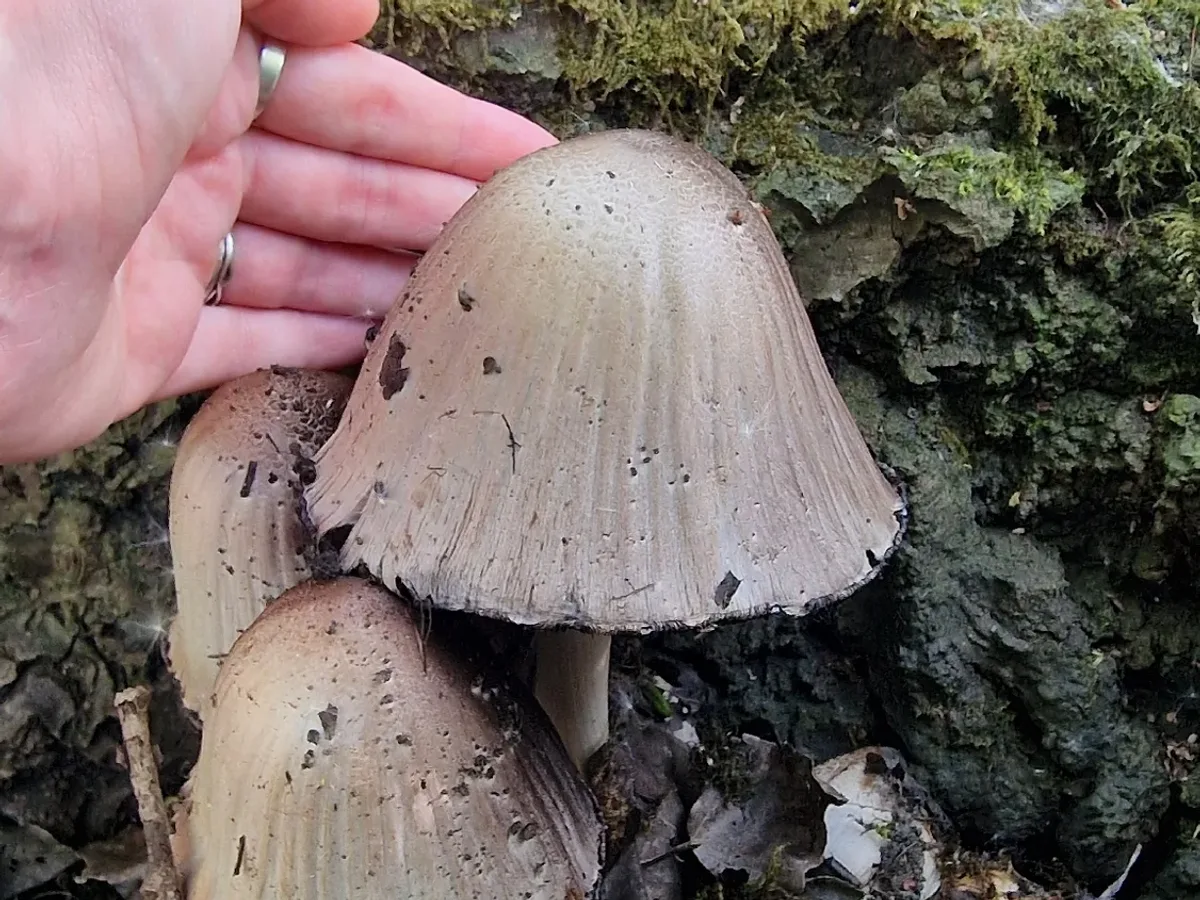 Rosie (CC0)
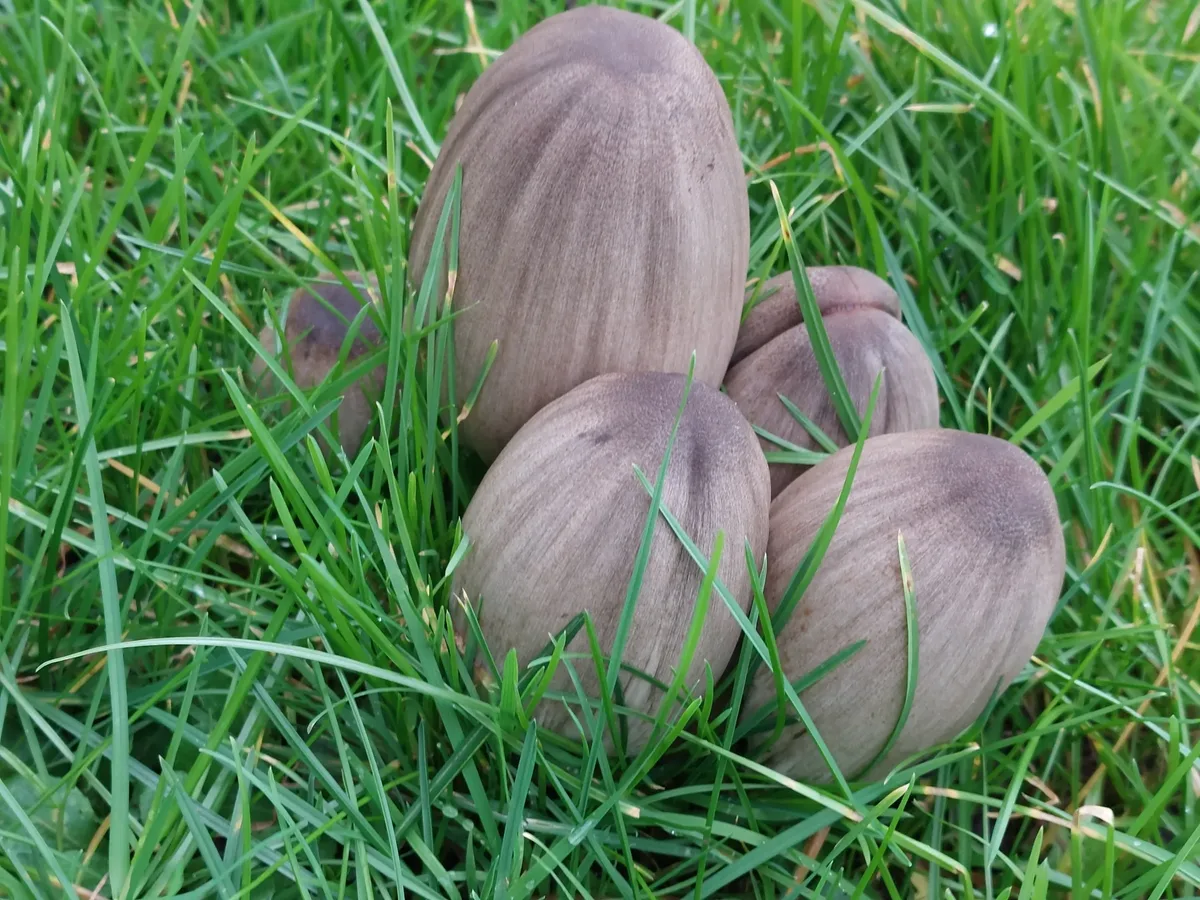 © Jennifer Woollin (CC BY)
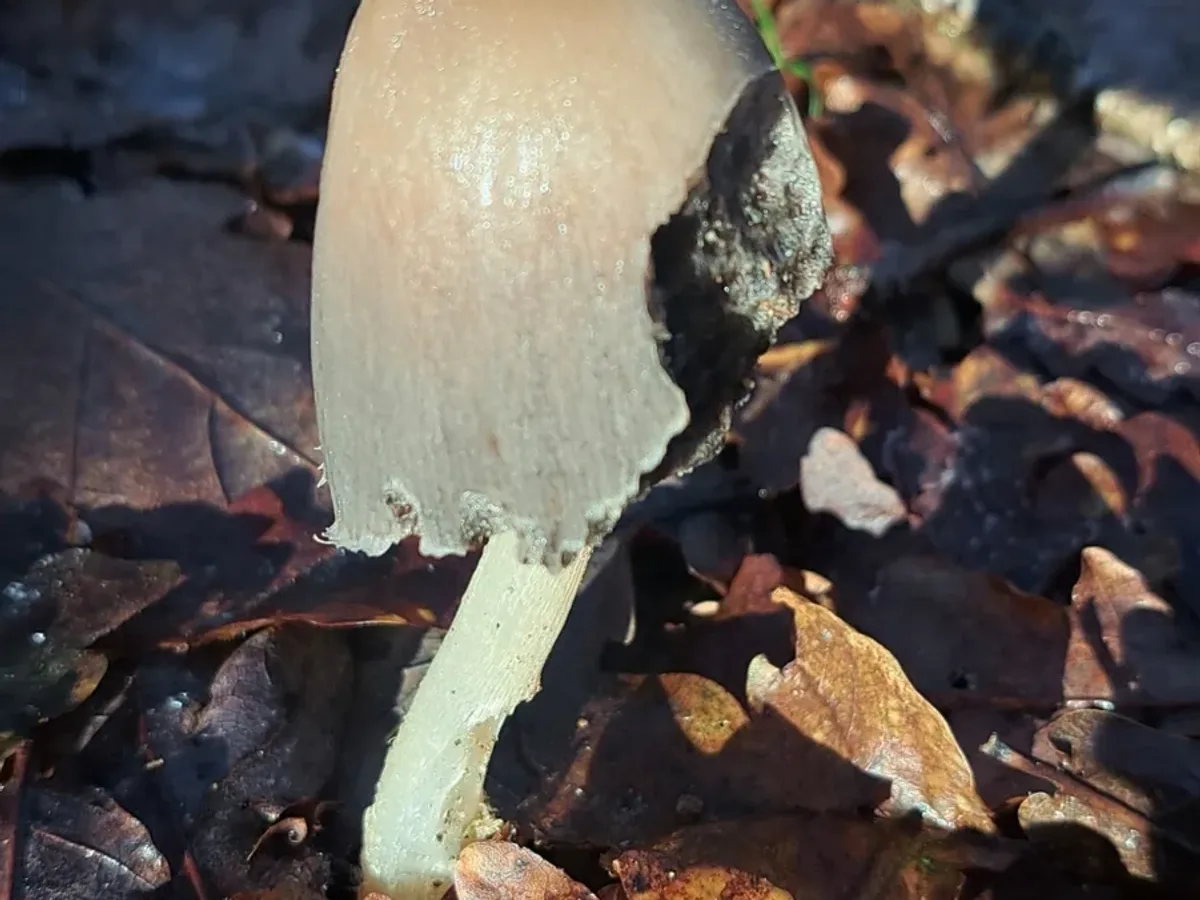 Katie Harrison (CC0)© Lukas Clews (CC BY 4.0)© helen_golubeva (CC BY 4.0)
Edible only with the right preparation - or safe for some people but not others. Learn the caveats first.
How to recognise it
The Common Inkcap is a grey, pleated mushroom that grows in dense tufts and does something few fungi attempt: it destroys itself on purpose.
Cap
Fresh caps are egg- to bell-shaped, 3-7 cm (occasionally to 10 cm), pale to mid grey with an ochre or tan flush over the centre, and dusted with fine flattened brown veil scales when young. The cap surface is distinctly pleated and grooved.
As the mushroom matures, the thin margin splits and recurves, and the cap dissolves from the rim inward into a black, ink-like fluid - a process called deliquescence or autodigestion that is the mushroom's own method of releasing spores. Watch one over a day and you can witness the entire cap transform from pale grey to black liquid.
Gills
The gills start white, pass through greyish-lilac, and end as ink.
Stem
The stem is 7-17 cm long, white, smooth, hollow and noticeably brittle, with a small, easily-overlooked ridge or ring-zone low down - all that remains of a thin veil; there is no cup or volva at the base.
Flesh
Flesh is thin, pale and fragile, with no strong smell. Spore print black.
Why it's dangerous
Not a deadly mushroom: the disulfiram-like reaction is generally self-limiting and full recovery is the rule, with no well-documented fatalities from the alcohol reaction in otherwise healthy people.
However it can be genuinely severe and distressing, and the cardiovascular effects (hypotension, tachycardia, palpitations) carry more risk for people with heart disease or who drink heavily.
The hazard is insidious because the alcohol need not be taken with the meal - drinking any alcohol for several days before or after eating the mushroom can set it off, and the victim may not connect the two.
Seek medical care for severe or prolonged reactions, especially if there is chest pain, breathing difficulty or fainting.
Toxin
Contains coprine, an amino-acid derivative (a glutamine conjugate). After ingestion coprine is metabolised to 1-aminocyclopropanol, which irreversibly inhibits the enzyme aldehyde dehydrogenase.
Aldehyde dehydrogenase normally breaks down acetaldehyde, the toxic intermediate produced when the body metabolises ethanol. With the enzyme blocked, drinking alcohol causes acetaldehyde to accumulate - the same mechanism exploited by the anti-alcohol drug disulfiram (Antabuse).
Coprine is heat-stable, so cooking the mushroom does not make it safe to combine with alcohol. The mushroom is harmless when eaten without any alcohol; the toxin only manifests in the presence of ethanol.
Symptoms
The coprine-alcohol reaction begins quickly, typically within about 20-30 minutes (range roughly 5-120 minutes) of drinking alcohol after having eaten the mushroom.
Symptoms include:
- marked flushing and reddening of the face, neck and upper torso
- throbbing headache
- a metallic taste
- nausea and vomiting
- sweating
- rapid heartbeat (tachycardia)
- palpitations
- dizziness and a feeling of malaise
In more severe cases there can be a fall in blood pressure, shortness of breath and tingling in the limbs.
Episodes usually subside on their own within a few hours but can persist for up to a day, and because enzyme inhibition is prolonged the reaction can recur with any further alcohol over the following days.
Staying safe
This mushroom is edible to many people on its own but causes a disulfiram-like (Antabuse-like) toxic reaction when combined with alcohol - hence the old name Tippler's Bane.
The reaction can be triggered by alcohol consumed for several days (up to around three days) before or after eating the mushroom, and cooking does not remove the toxin.
Because of this it is best regarded as a mushroom to avoid for most foragers. It must never be eaten by anyone who:
- has had, or may have, any alcohol within a multi-day window
- takes medicines or tonics containing alcohol
- is unsure of their own sensitivity
The reaction, while alarming, is generally self-limiting and not normally fatal in healthy adults, but it can be severe and frightening and warrants medical attention.
- Never taste-test raw
- Never eat specimens that have begun to blacken or liquefy
- Confirm identity carefully before considering any inkcap
Where & when it grows
Habitat
A ground-disturbance specialist found across the temperate Northern Hemisphere and introduced widely elsewhere.
It is a wood-rotting saprotroph that fruits in clustered tufts from buried wood, old roots and dead stumps, and on rich, trampled or cultivated ground:
- garden borders
- lawns
- compost heaps
- wood-chip mulch
- path edges
- roadsides
- ditches
- urban waste ground
- the edges of broadleaf woodland
Because it feeds on dead organic matter rather than partnering with a living tree, it has no specific host tree and turns up readily in man-made habitats.
When
Fruits chiefly from late spring to late autumn (roughly May to November in temperate zones), with a strong peak in early to mid autumn.
As an opportunistic decomposer of disturbed ground it does not need a forest season to trigger it: tufts appear within a few days of soaking rain through much of the year, and mild winters can bring out additional flushes.
Individual clusters are short-lived, dissolving to ink within a day or two of opening.
How it grows
Grows gregariously in tight, often connate clusters of several to many caps arising from a shared buried base of dead wood or roots.
New caps push up in successive waves after rain, so a single spot can produce repeated flushes over a season.
Each fruit body is genuinely short-lived: rather than dropping spores passively, the mushroom actively digests its own gills and cap from the base up, liquefying the tissue into an inky fluid that carries the spores away from the cluster.
The whole process - from fresh pale button to pooled black liquid - typically takes 24-48 hours.
Fruiting conditions
Opportunistic saprotroph of disturbed ground; tufts flush a few days after soaking rain across a wide temperature range, not tied to a specific forest season.
Look-alikes
The most important confusion for a forager is with the edible Shaggy Mane / Shaggy Inkcap, Coprinus comatus - a tall, cylindrical, white, shaggy-scaled mushroom with a movable ring, quite different from this short, grey, smooth, grooved species. Importantly, C. comatus is not associated with the alcohol reaction.
Among other inkcaps:
- Coprinopsis insignis - very similar in stature and habit, and carries the same coprine toxin (separated reliably only by its warted/rough spores under a microscope).
- The Magpie Inkcap (Coprinopsis picacea) - larger, with a dark cap broken by white veil patches.
- Mica Cap (Coprinellus micaceus) and Coprinellus / Coprinopsis lagopus-type species - smaller, tan to grey-brown and clad in granular or woolly veil.
Members of Psathyrella and Panaeolus can share a blackish spore print and grey-brown caps but do not deliquesce, while Bolbitius deliquesces somewhat but gives a rusty-brown print.
None of the close lookalikes is deadly, but several inkcaps share the coprine alcohol reaction, so treat the whole grey-inkcap group with the same caution.
Can have grey-brown caps and a dark spore print but do NOT deliquesce into ink and have a more fragile, often striate-margined cap; gills stay intact rather than dissolving.
Larger, with a dark blackish cap broken up by bold white veil patches giving a magpie pattern; usually solitary in leaf litter rather than tightly clustered.
Smaller and more tan to honey-brown, the young cap dusted with glistening mica-like granules; clusters on and around stumps. Lacks the grey colour and brown flattened scales of the Common Inkcap.
Very similar grey, tufted habit and also contains coprine, so equally unsafe with alcohol. Reliably separated only microscopically by its warted/rough spores (C. atramentaria has smooth spores).
Tall, cylindrical, white, conspicuously shaggy-scaled cap with a movable ring; quite unlike the short, smooth, grey, grooved Common Inkcap. Edible and choice, and crucially it does NOT cause the coprine alcohol reaction.
A reference guide - never an edibility guarantee. When in doubt, leave it out.