Hairy cup fungus
Cookeina tricholomasyn. Peziza tricholoma, Lachnea tricholoma, Trichoscypha tricholoma, Sarcoscypha tricholoma, Plicaria tricholoma
 Jean-Paul Boerekamps (CC0)
 © Rob Felix (CC BY)
 © jlsnaddon (CC BY)
 © Rob Felix (CC BY)
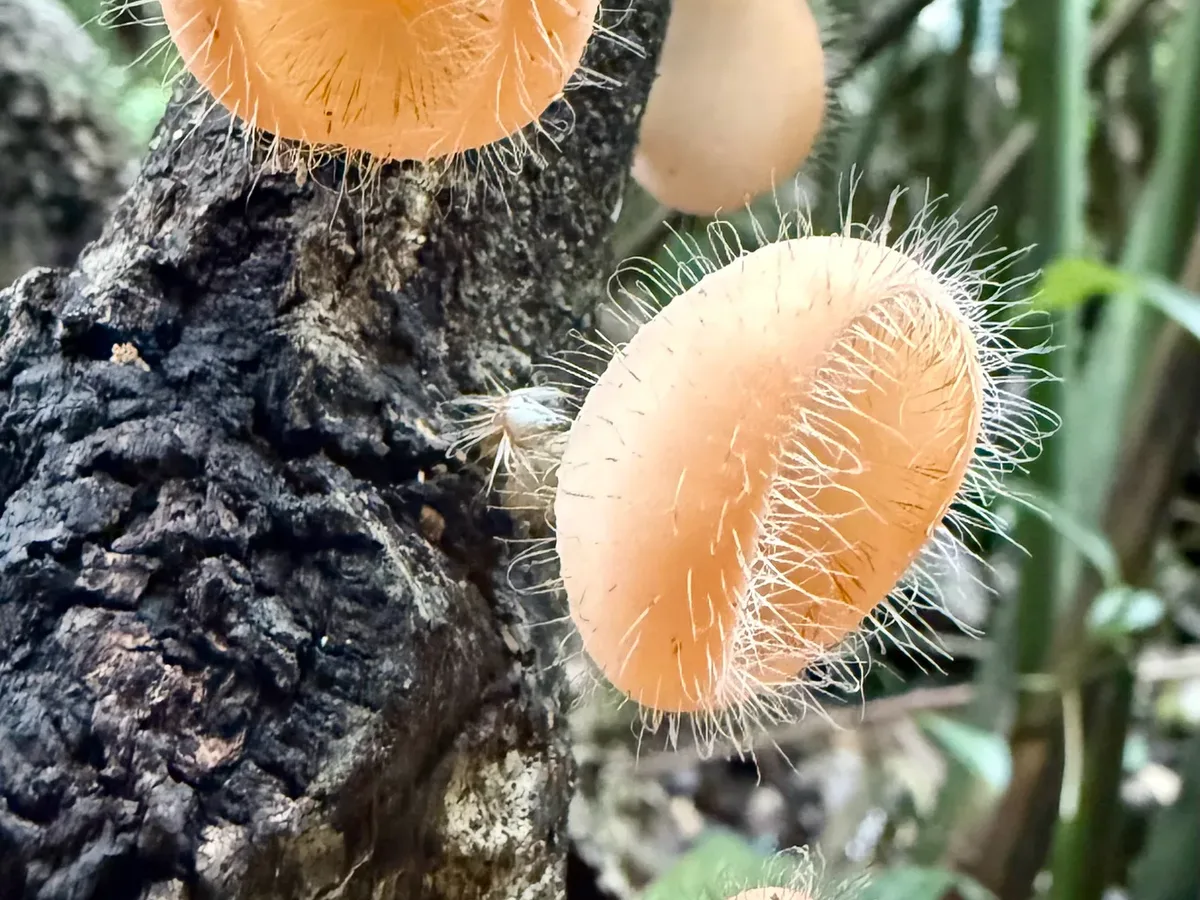 © Rob Felix (CC BY)
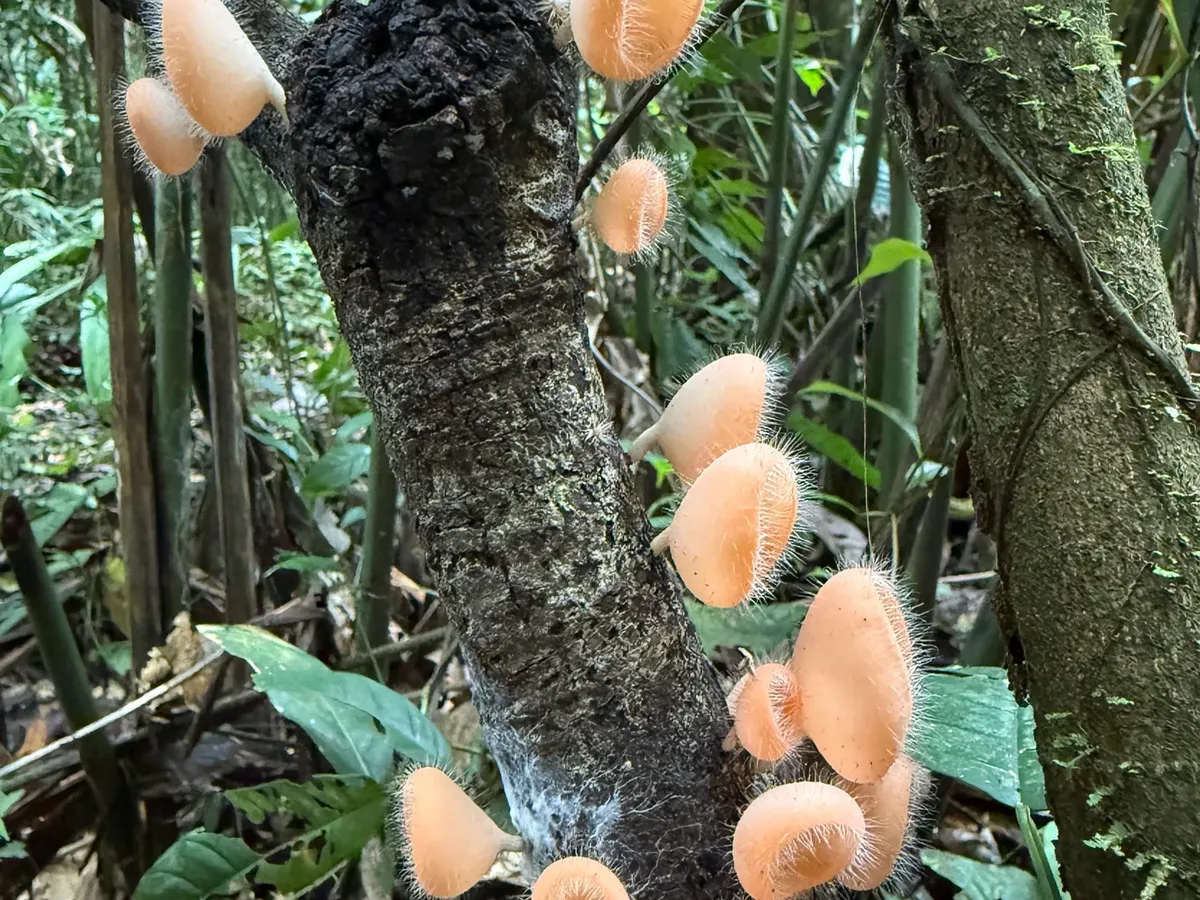 © Rob Felix (CC BY)
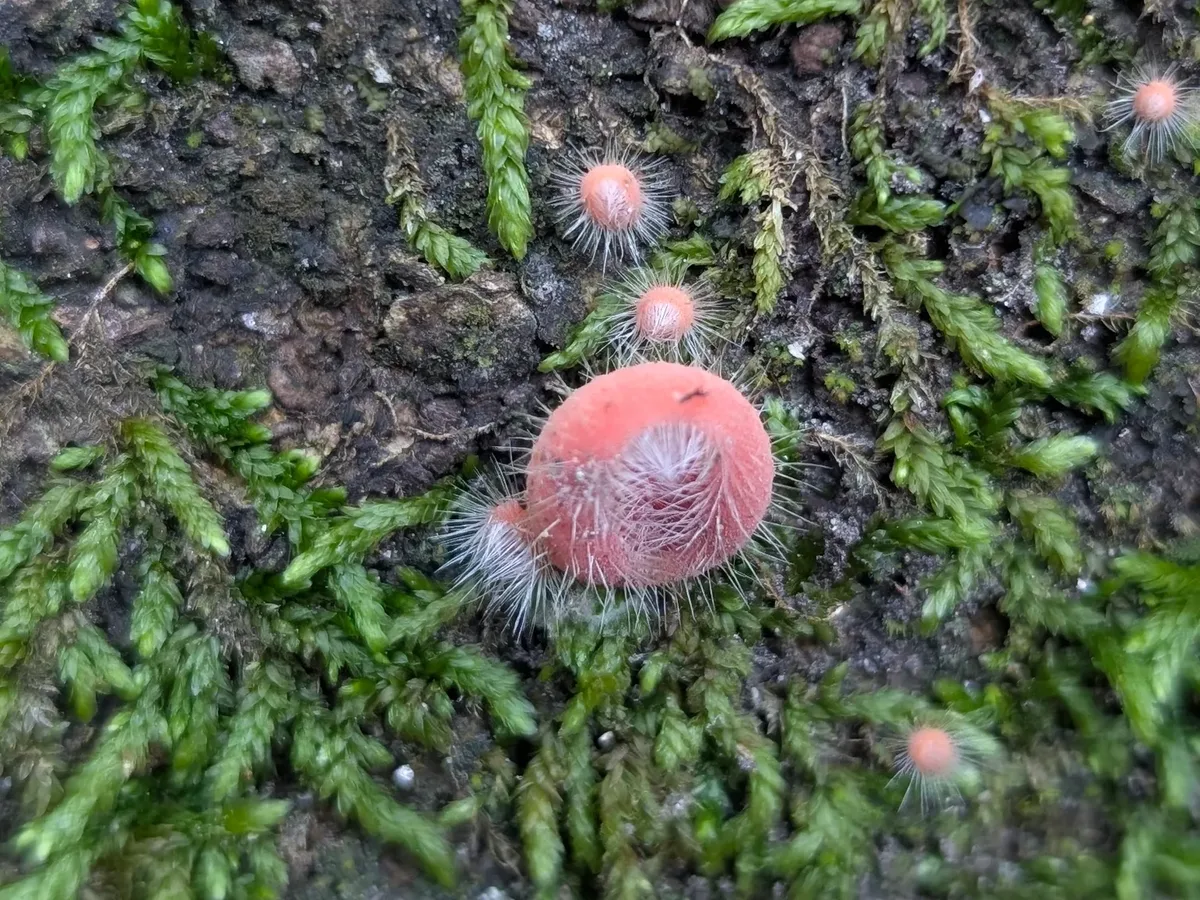 Lauren Bosch (CC0)
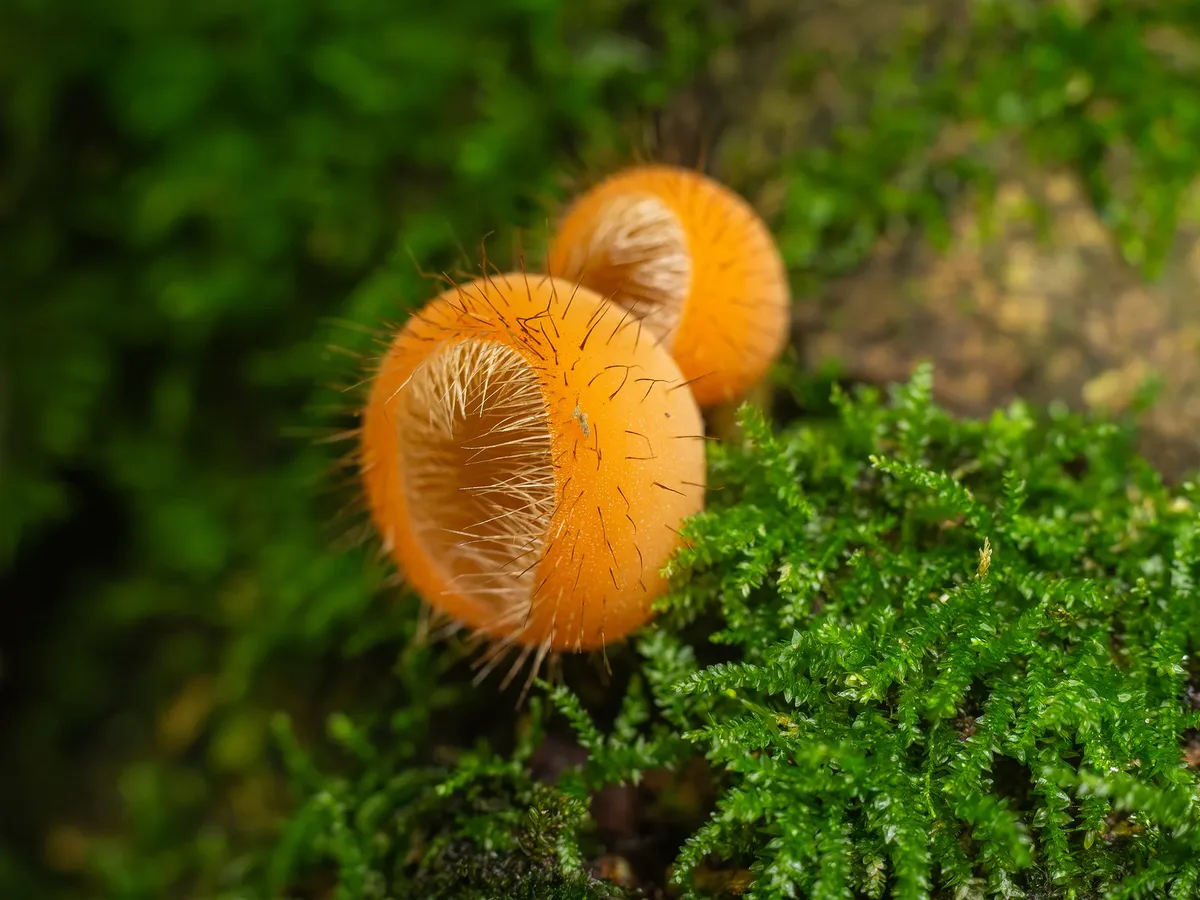 © Denis Zabin (CC BY)
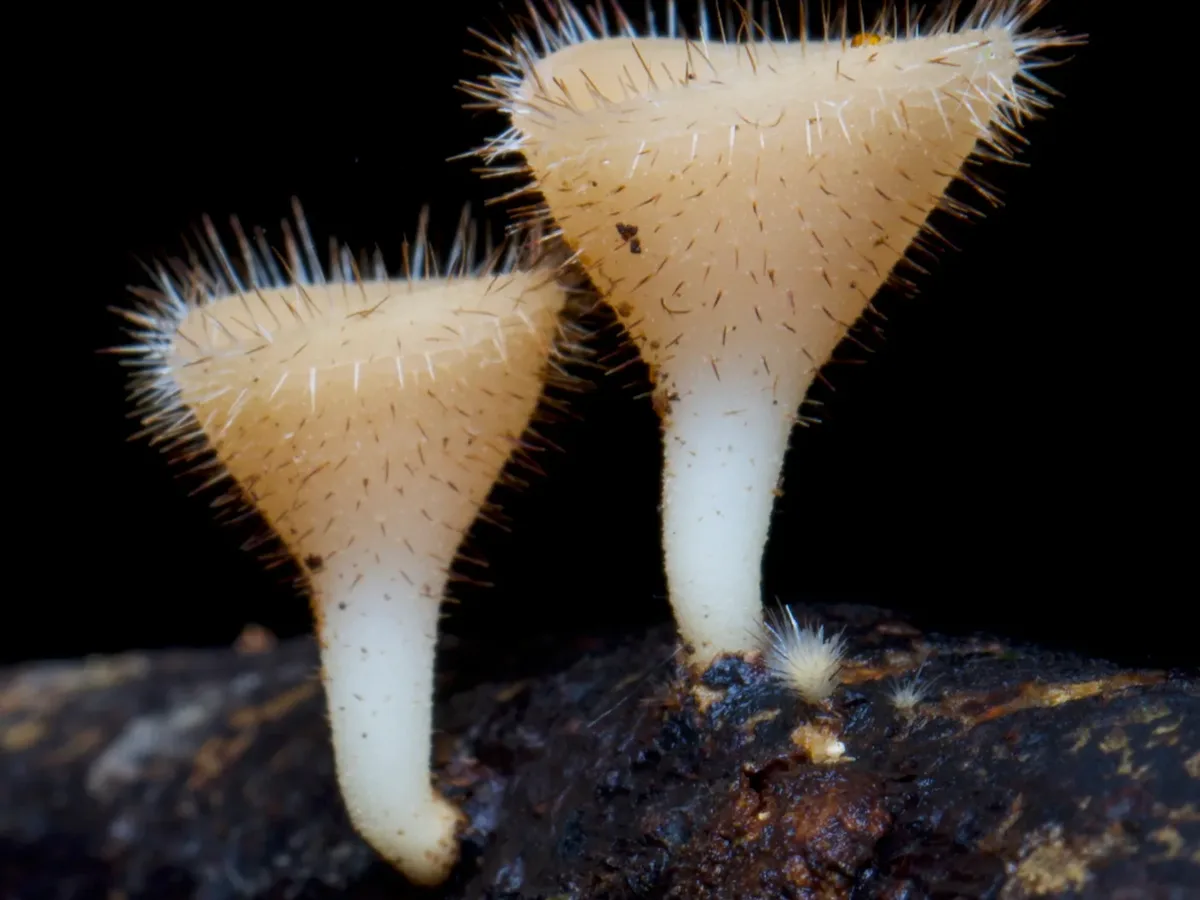 © Brian Gratwicke (CC BY)
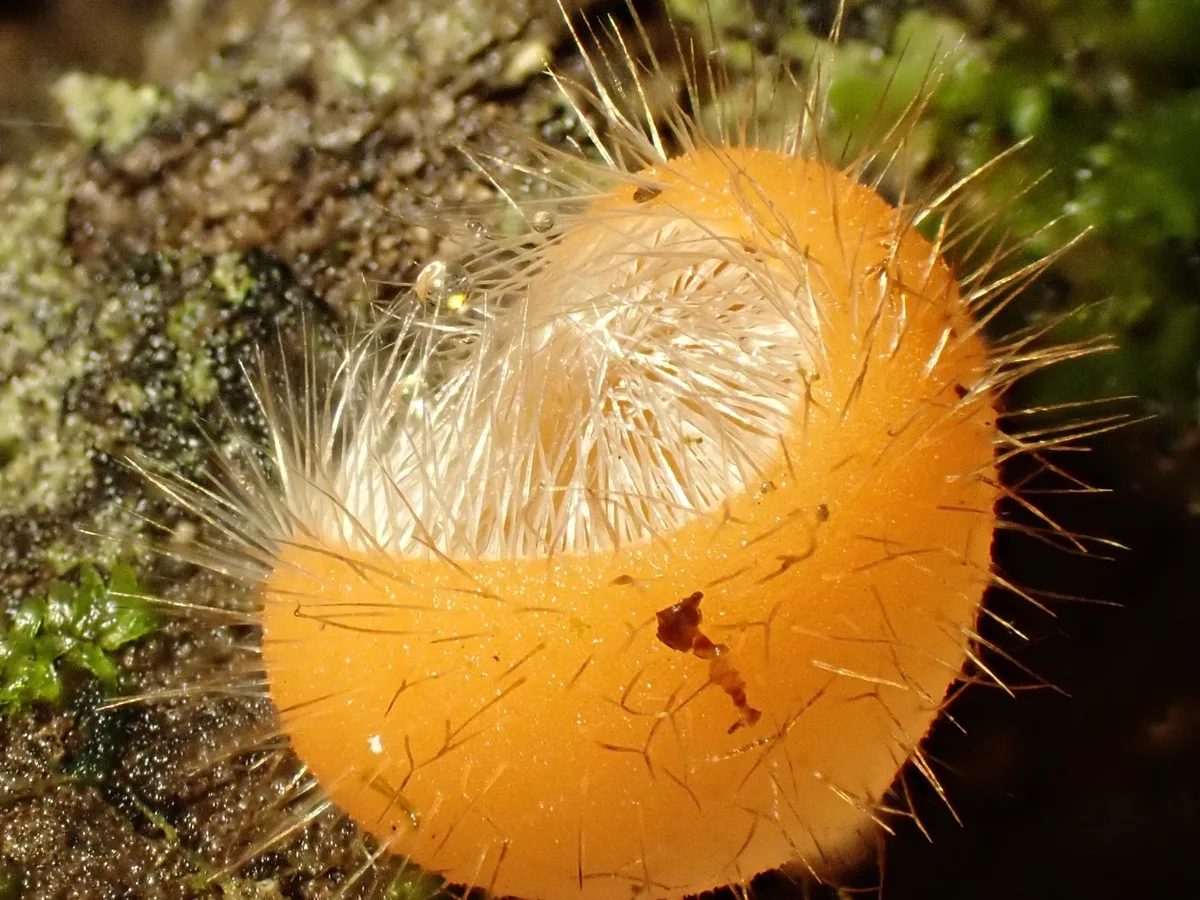 Jean-Paul Boerekamps (CC0)Jean-Paul Boerekamps (CC0)© Rob Felix (CC BY)
Edible only with the right preparation - or safe for some people but not others. Learn the caveats first.
How to recognise it
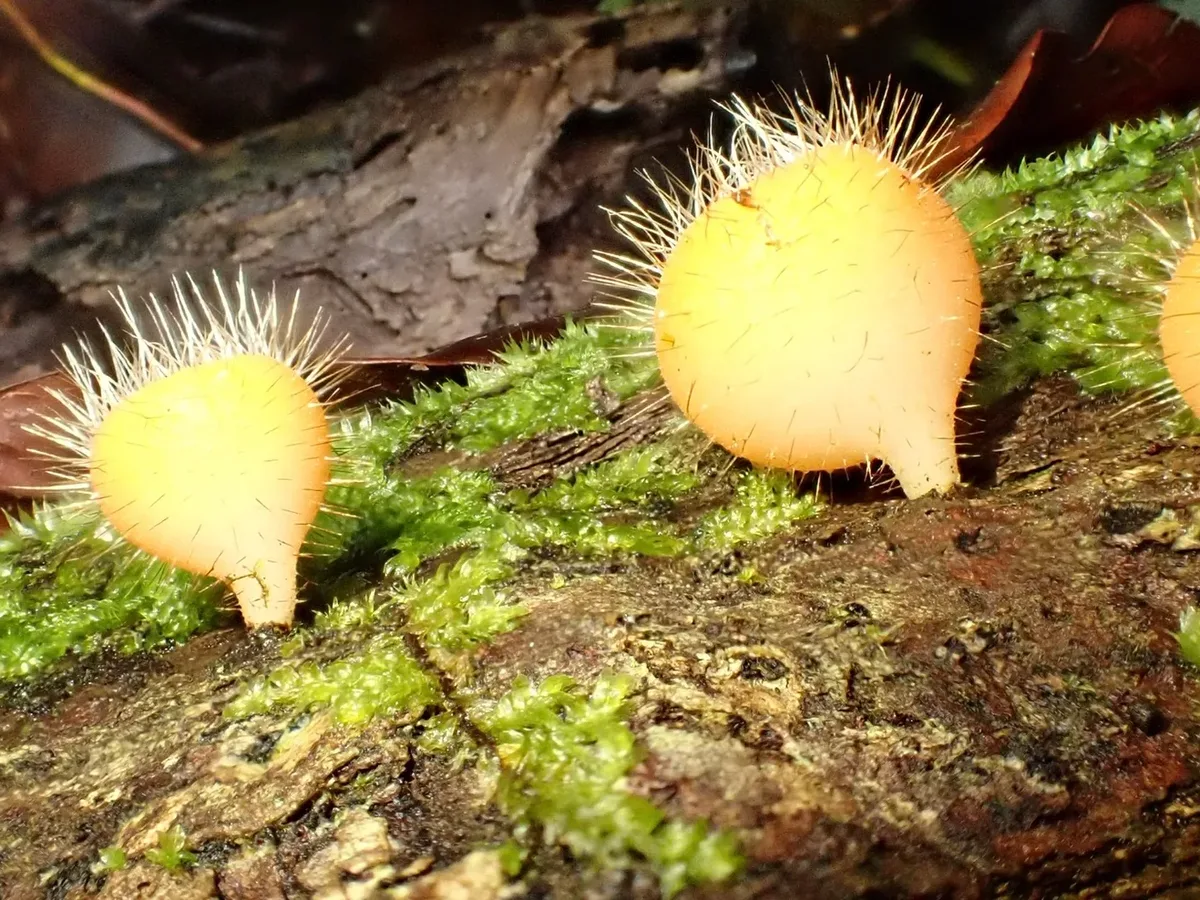
Cookeina tricholoma is one of the more distinctive and visually appealing cup fungi of the tropical forest. Learning to read its one truly diagnostic feature - the conspicuously hair-fringed rim - makes field identification satisfying rather than ambiguous.
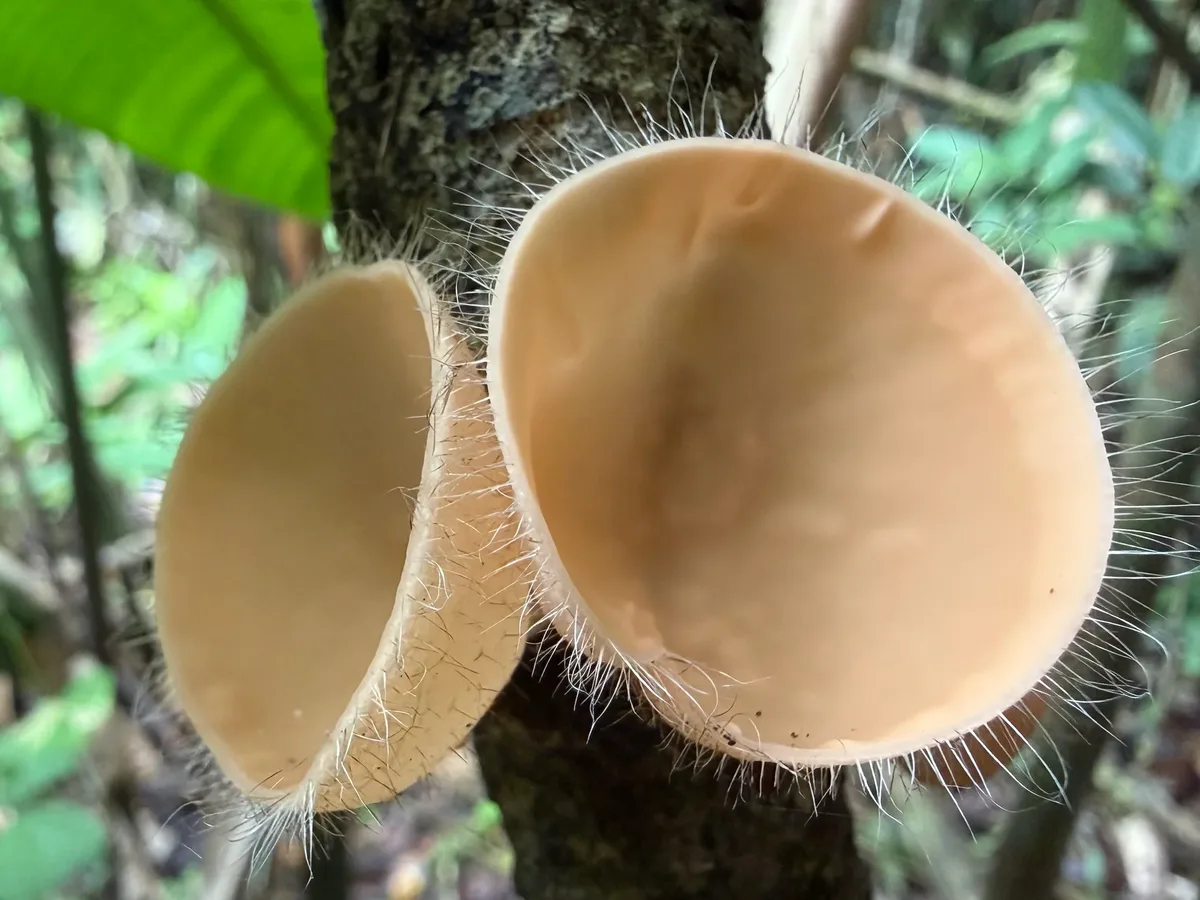
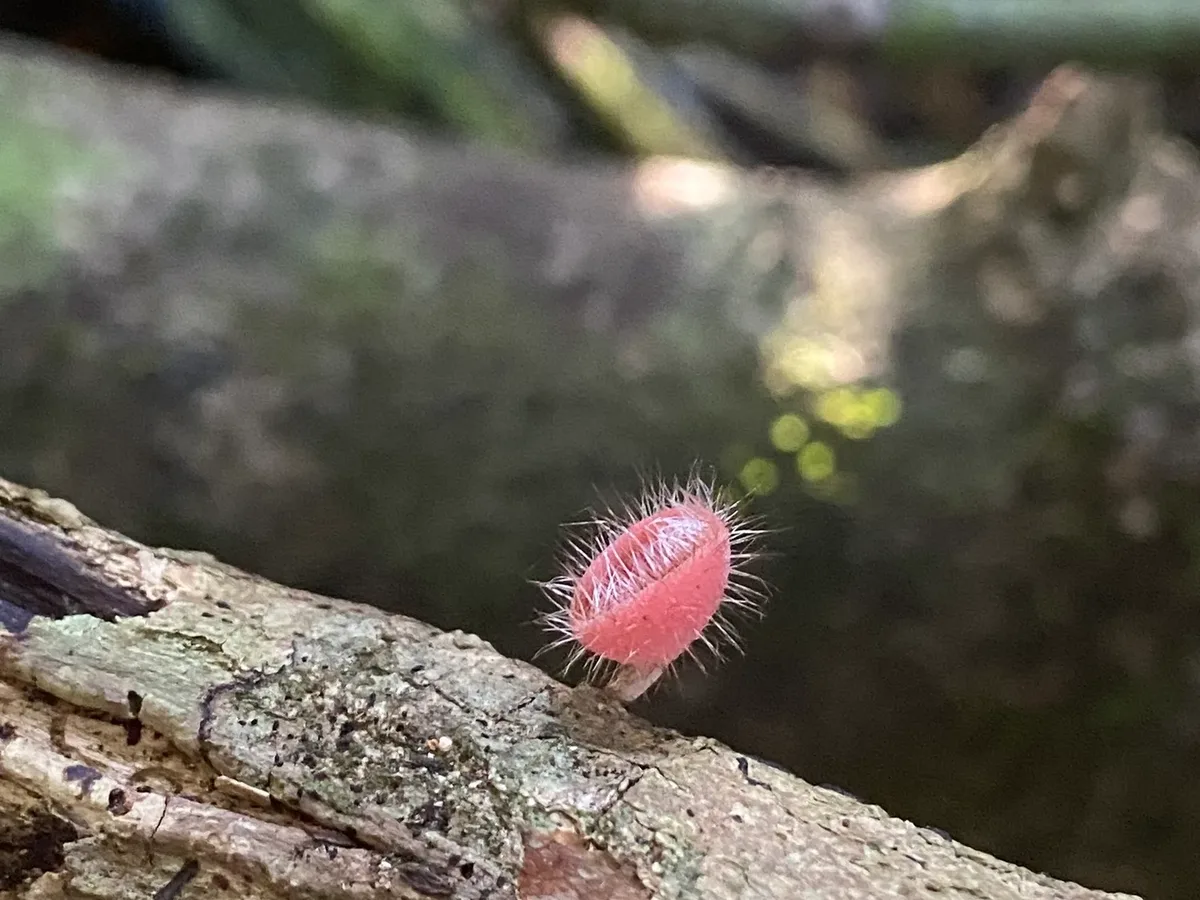
The fruitbody is a cup or shallow bowl, typically 1-5 cm across, elevated on a well-defined white stalk. The inner surface is smooth and softly coloured: pale pink, salmon-pink, rose, or a gentle peach-orange, like the inside of a seashell.
By itself that colour is not diagnostic - the closely related C. sulcipes is similarly coloured.
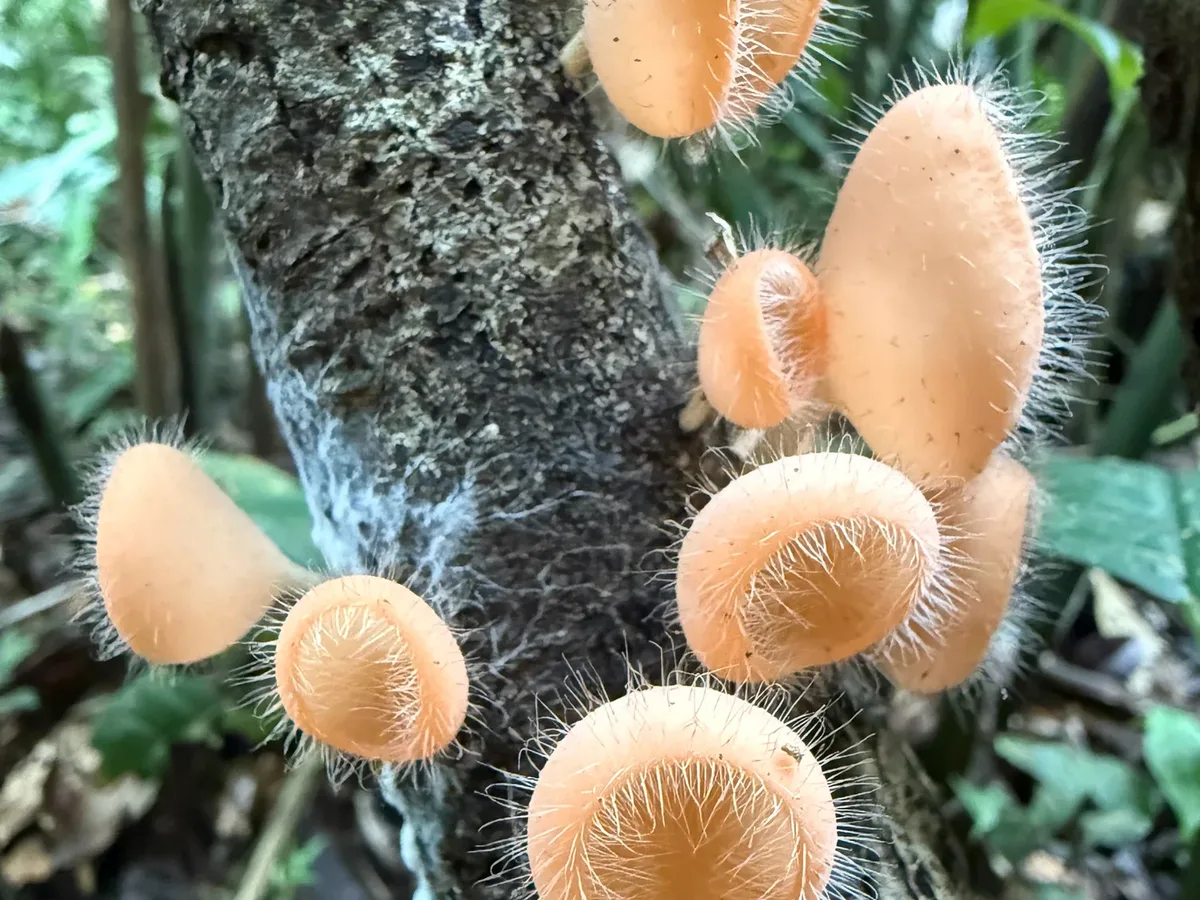
The outer surface is densely hairy, which is typical of the genus, but in C. tricholoma many of those hairs are long enough to project visibly beyond the cup rim, forming a delicate but unmistakable fringe that gives the cup a ruffled, eyelash-like border. This projecting fringe is the feature to look for in the field.
The stalk is smooth or only very faintly grooved - definitely not the deep, prominent longitudinal furrows seen on C. sulcipes.
Young cups are deeply goblet-shaped; older ones flatten to a shallow bowl with a wavy, sometimes lobed margin.
Flesh throughout is thin, fragile, and waxy, white on cross-section. No ring, volva, or gills of any kind.
Spore print white; spores under the microscope are large (26-38 µm), elongate-ellipsoidal, smooth, hyaline, and packed with multiple tiny oil droplets.
Where & when it grows
Habitat
This species is a humid-forest specialist with a strong preference for shaded, persistently moist environments.
It is a saprotroph - its mycelium digests the cellulose and lignin of dead hardwood, colonising fallen logs, large branches, and woody stumps in tropical and subtropical forest.
The fruiting cups appear on the outer surface of the wood, often on the shaded underside of a log or on the flanks of a branch where moisture is retained longest.
It can appear wherever suitable woody substrate and consistent warmth and humidity align:
- lowland rainforest
- riverine forest along stream banks
- humid montane forest up to about 1 500 m
Secondary forest and forest edges with fallen timber are productive habitats; bare, sun-exposed, or dry wood rarely yields it.
The distribution centres on Southeast Asia - Thailand, Vietnam, Laos, Malaysia, Indonesia, the Philippines - and extends into southern China, South Asia (India, Sri Lanka), tropical Pacific islands, and sporadically into tropical East Africa and the Neotropics.
When
Cookeina tricholoma does not recognise seasons in the temperate sense. What it tracks is water.
In equatorial zones without a meaningful dry season - much of the Malay Archipelago, parts of Borneo, coastal Papua New Guinea - it can fruit in any month, popping up within days of rain soaking into suitable wood.
In the monsoonal climates of mainland Southeast Asia and South Asia, which have a clear wet season and a pronounced dry season, fruiting concentrates in the months when rain is reliable and abundant, then largely ceases during the dry months.
In practice, a productive fallen log in the right forest can yield multiple successive crops of cups through a wet season. Individual fruitbodies are short-lived - a few days of good weather before they wither, dry, or become waterlogged and collapse - but replacement crops emerge quickly under continuing wet conditions.
How it grows
As an ascomycete, Cookeina tricholoma produces open, cup-shaped fruitbodies (apothecia) rather than the enclosed caps and gills of agaric fungi.
Most of the fungus's life is spent invisibly, as a cobweb-fine mycelium threading through the interior of dead hardwood and quietly dismantling the wood's structural polymers.
When moisture and temperature trigger fruiting, the apothecia push through the wood surface and expand over one to three days.
Fruitbodies appear:
- singly
- in small scattered groups
- occasionally in loose clusters of several cups from a single piece of wood
The inner surface - the hymenium - is packed with elongated asci, each containing eight spores.
When mature, the asci forcibly discharge spores through a small operculum (lid) at the tip, sometimes producing a faint visible puff of 'smoke' when the cup is disturbed. This active discharge is characteristic of operculate ascomycetes and helps the spores reach air currents for dispersal.
Fruiting conditions
Tropical species with no cold requirement. Fruiting is triggered primarily by rainfall maintaining high substrate moisture in decaying hardwood. In equatorial zones with year-round rainfall, fruiting is continuous. In monsoon climates, fruiting tracks the wet season closely. The short flush lag (3-9 days from rain event to visible cups) reflects the warm temperatures that accelerate mycelial activation in the substrate. Does not fruit during prolonged dry spells.
Look-alikes
The most important lookalike is Cookeina sulcipes, the Tropical elf cup, which is essentially identical at a glance. The distinction lies in two features:
- 1the stalk of C. sulcipes is prominently grooved or ribbed lengthwise (sulcipes = furrowed stalk), whereas C. tricholoma has a smooth or only faintly textured stalk
- 2the hairs of C. tricholoma project distinctly beyond the cup margin as a visible fringe, a character less pronounced or absent in C. sulcipes
Both are reported edible when cooked in the same regional food traditions, so confusion between them carries no safety risk.
Other related species in this assemblage:
- Cookeina speciosa is a third related species with a wider, flatter cup, often brighter orange interior, and a shorter stouter stalk.
- Phillipsia domingensis shares similar tropical hardwood habitat but has a vivid scarlet to orange-red inner surface and lacks the conspicuous hairy outer surface.
None of the realistic lookalikes in this tropical cup-fungus assemblage is toxic or deadly.
Confusion with dangerous agaric species (Amanita, Galerina) is essentially impossible given the completely different morphology: no gills, no cap-and-stalk agaric structure, no ring, no volva.
A third Cookeina with a wider, flatter, more open apothecium (often 3-8 cm across) that expands to a nearly plane disc with age. Interior often a brighter, deeper orange or orange-pink rather than the pale pink to salmon of C. tricholoma. Stalk shorter, stouter, and with less pronounced outer hairs. Outer surface hairy but without the distinctive projecting fringe at the margin. Not known to be toxic; edibility similar to other Cookeina.
A related pantropical cup fungus that favours similar dead hardwood habitat. Distinguished by its vivid scarlet to orange-red inner surface - far more intensely coloured than the pale pink of C. tricholoma - and by its outer surface, which is smooth or only finely granular, never conspicuously hairy or fringed. The stalk is very short or virtually absent. Not known to be toxic.
A temperate (not tropical) scarlet-red cup fungus on dead hardwood; habitat overlap is minimal since Sarcoscypha coccinea fruits in late winter and early spring in cool temperate forests. If encountered in the same region, the intense scarlet-red inner surface (vs. pale pink to salmon), the much smaller outer hairs (not projecting as a fringe), and the cool-season fruiting separate it cleanly from C. tricholoma. Not toxic.
Extremely similar stalked pink cup fungus growing on the same tropical hardwood substrate and often collected alongside C. tricholoma. The key distinction is the stalk: C. sulcipes has a prominently furrowed or ribbed stalk (sulcipes = furrowed stalk), easily felt and seen; C. tricholoma has a smooth or only faintly textured stalk. Additionally, the projecting hair fringe at the cup margin is more pronounced in C. tricholoma. Both are reportedly edible when cooked in the same regional food traditions, so mistaking one for the other carries no safety risk - this is an identification point of mycological interest, not a safety concern.
In the kitchen
Picking & cleaning
Cookeina tricholoma is harvested and eaten in several Southeast Asian countries, particularly Thailand, Laos, and Vietnam, where it appears in forest markets alongside other wild fungi.
Pick cups when they are young to medium-aged - firm, well-formed, and with the inner surface still intact and moist. Older cups that have become waterlogged, slimy, or whose margins have collapsed and darkened are past their best and should be left.
The cups detach cleanly from the log with a gentle twist at the base of the stalk. Because the flesh is thin and watery, cups crush easily; a rigid container is preferable to a plastic bag.
Deterioration after picking is rapid in warm humid conditions: refrigerate as soon as possible and cook the same day. Do not eat raw.
Harvest only from intact, uncontaminated tropical forest, away from roadsides, mining sites, or other polluted environments, since wood-rotting fungi can accumulate heavy metals from contaminated substrates.
Cooking
Where eaten, Cookeina tricholoma is cooked simply and quickly, in keeping with its delicate, thin-fleshed nature.
Rinse the cups gently in clean water to remove debris from the hairy outer surface, which can trap leaf fragments and soil.
- Stir-frying with oil, garlic, fish sauce, and chilli is the most common preparation in Thailand and Laos.
- The cups also work well added to clear soups and hot-sour broths in the final minutes of cooking, contributing a soft, slightly gelatinous texture.
Flavour is mild and earthy - not assertive - so the fungus functions as a textural element that absorbs surrounding seasonings rather than as a dominant flavour.
Avoid prolonged boiling or high-heat cooking, as the thin flesh collapses quickly and the soft pink colour bleaches to grey-white. Brief cooking over moderate heat preserves texture better.
Yields per excursion are typically modest; these are forest treasures encountered rather than reliably harvested in bulk.
Good to know
Cookeina tricholoma has a documented history of consumption in Southeast Asian forest food traditions and is not known to contain recognised fungal toxins.
That said, the evidence base for tropical cup fungi is considerably thinner than for well-studied temperate edibles, and there are no large-scale clinical edibility studies.
It must always be cooked before eating. Raw or undercooked cup fungi of this group can cause gastrointestinal discomfort in some individuals, and there is no established tradition of eating them raw.
The edibility tier is 'caution' for three compounding reasons:
- 1cooking is obligatory
- 2formal toxicological study is lacking
- 3individual tolerance varies, and first-time consumption of any novel tropical fungus warrants care
The practical risk for a healthy adult eating cooked specimens in moderate amounts is considered low.
No deadly lookalikes exist in the morphological group - cup fungi of this form are not confused with any known lethally toxic species. If in any doubt about identification, do not eat.
A reference guide - never an edibility guarantee. When in doubt, leave it out.