Tropical elf cup
Cookeina sulcipessyn. Peziza sulcipes, Peziza cookei, Calycella sulcipes, Sarcoscypha sulcipes, Lachnea sulcipes
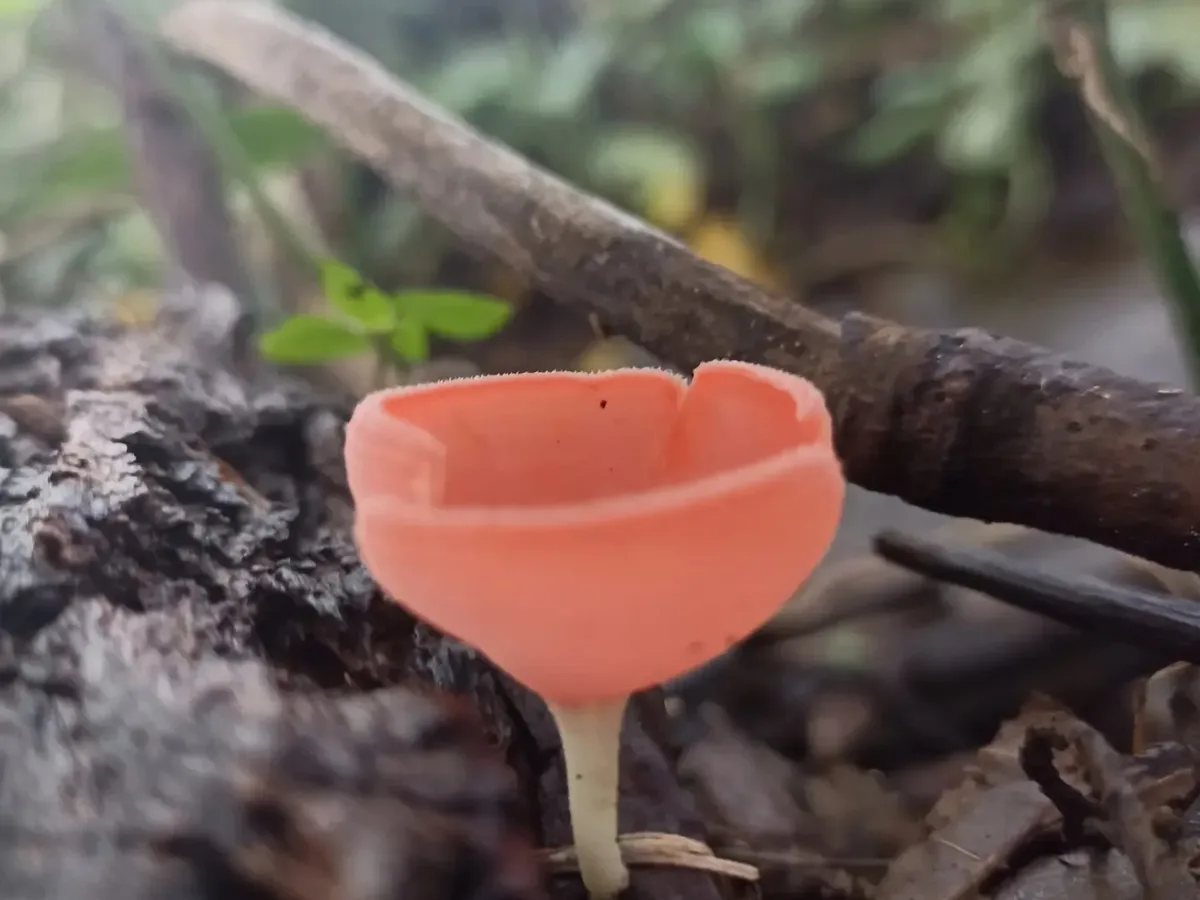 © Patricia Serrano (CC BY 4.0)
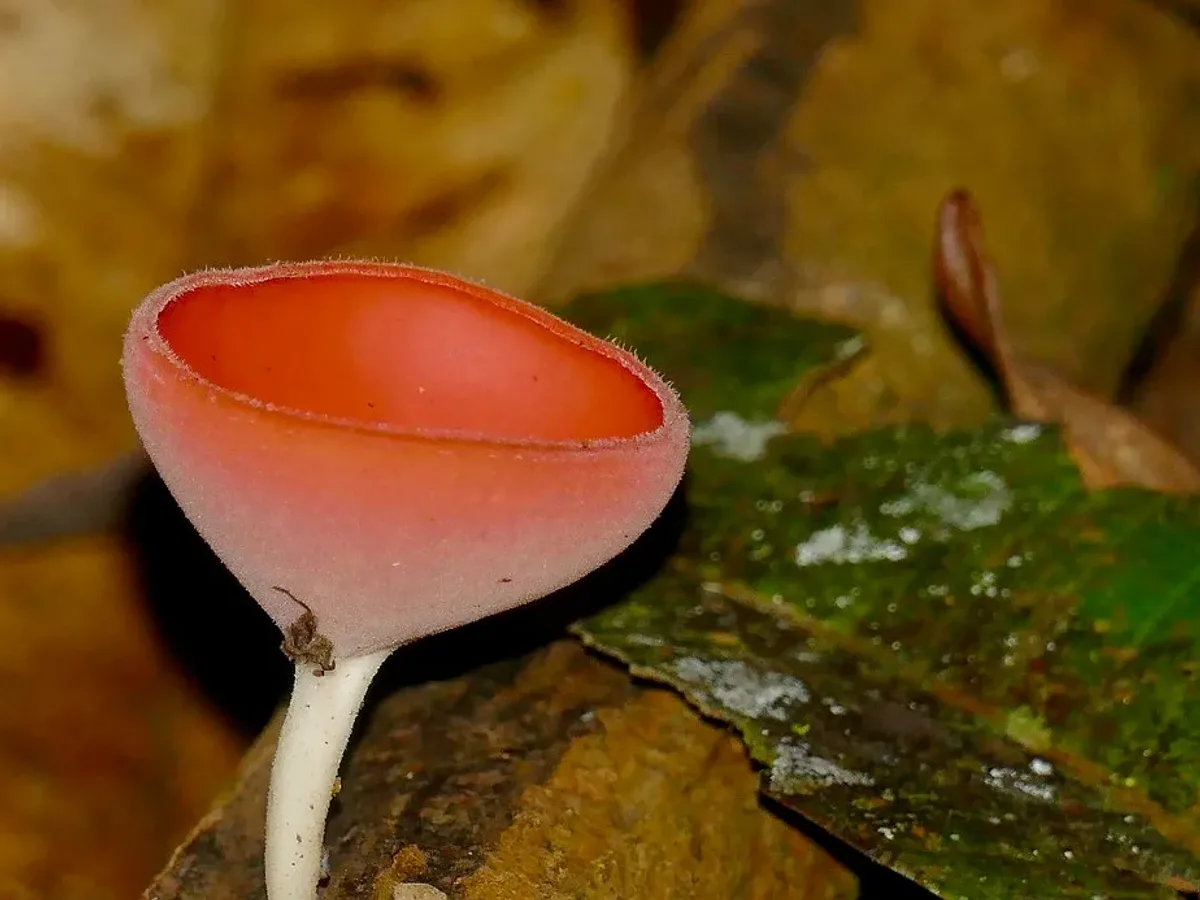 © Bernard DUPONT (CC BY-SA 2.0)
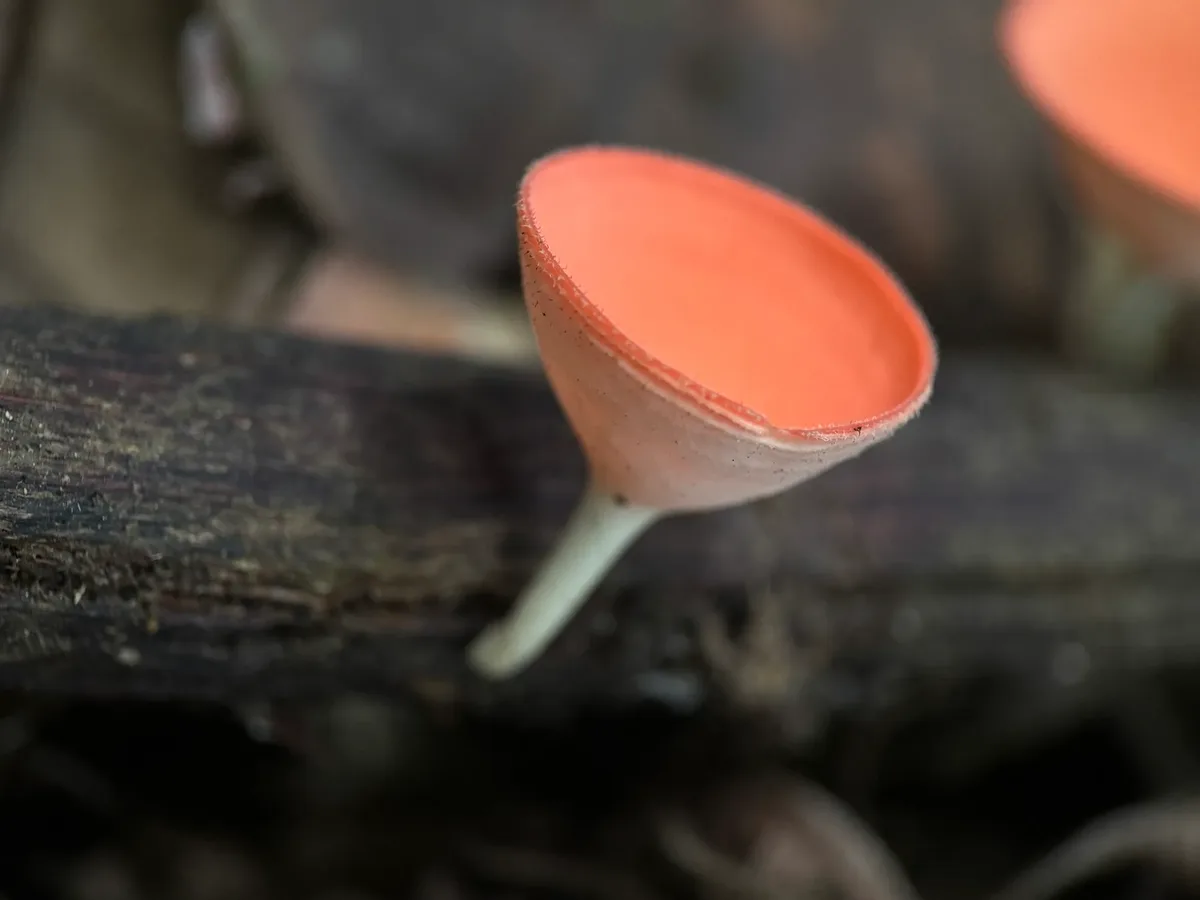 © Bea Leiderman (CC BY)
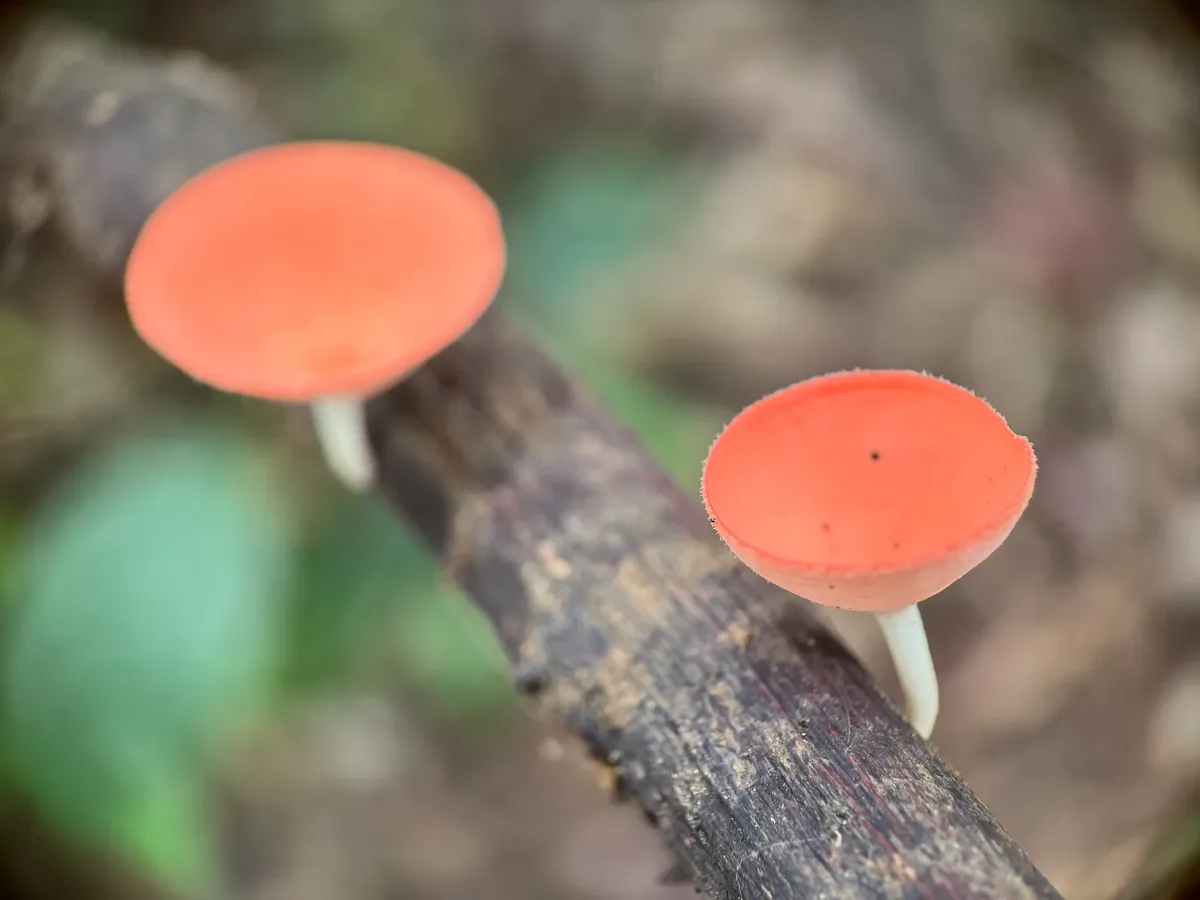 © Bea Leiderman (CC BY)
 © Bea Leiderman (CC BY)
 © Bea Leiderman (CC BY)
 © Nolan Exe (CC BY)
 © Nolan Exe (CC BY)
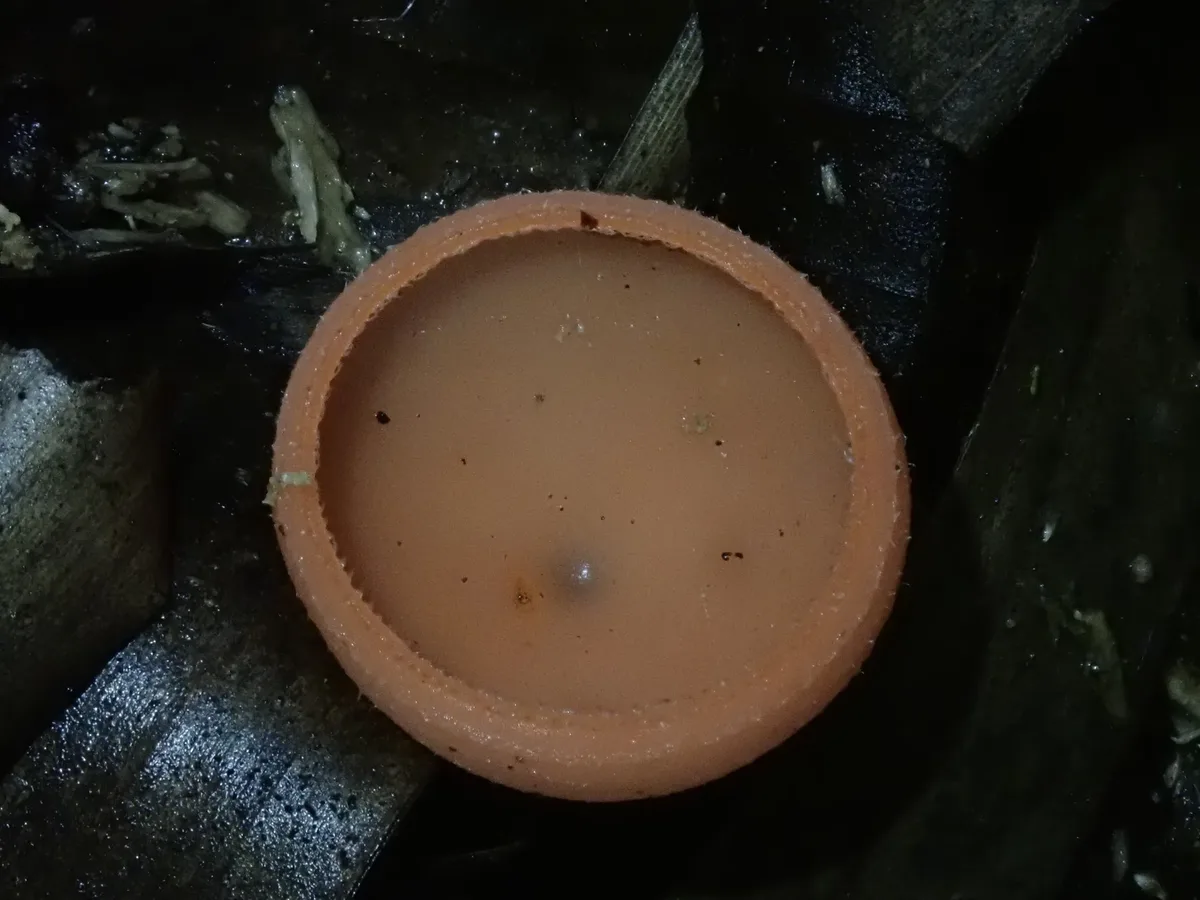 © Nolan Exe (CC BY)
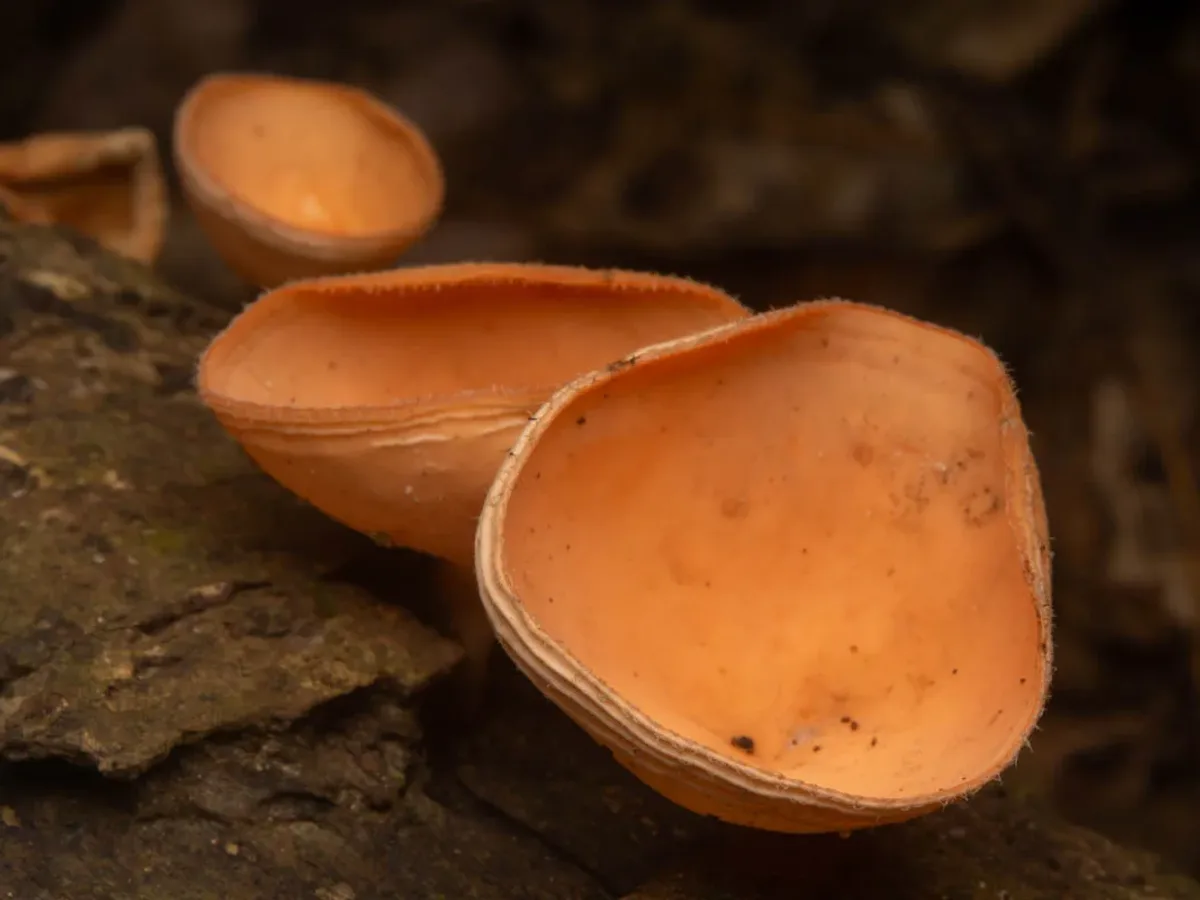 © Jeremy Jones (CC BY)© Patricia Serrano (CC BY 4.0)© Bernard DUPONT (CC BY-SA 2.0)
Edible only with the right preparation - or safe for some people but not others. Learn the caveats first.
How to recognise it
Cookeina sulcipes is one of the most eye-catching cup fungi of the tropical forest floor.
Cap
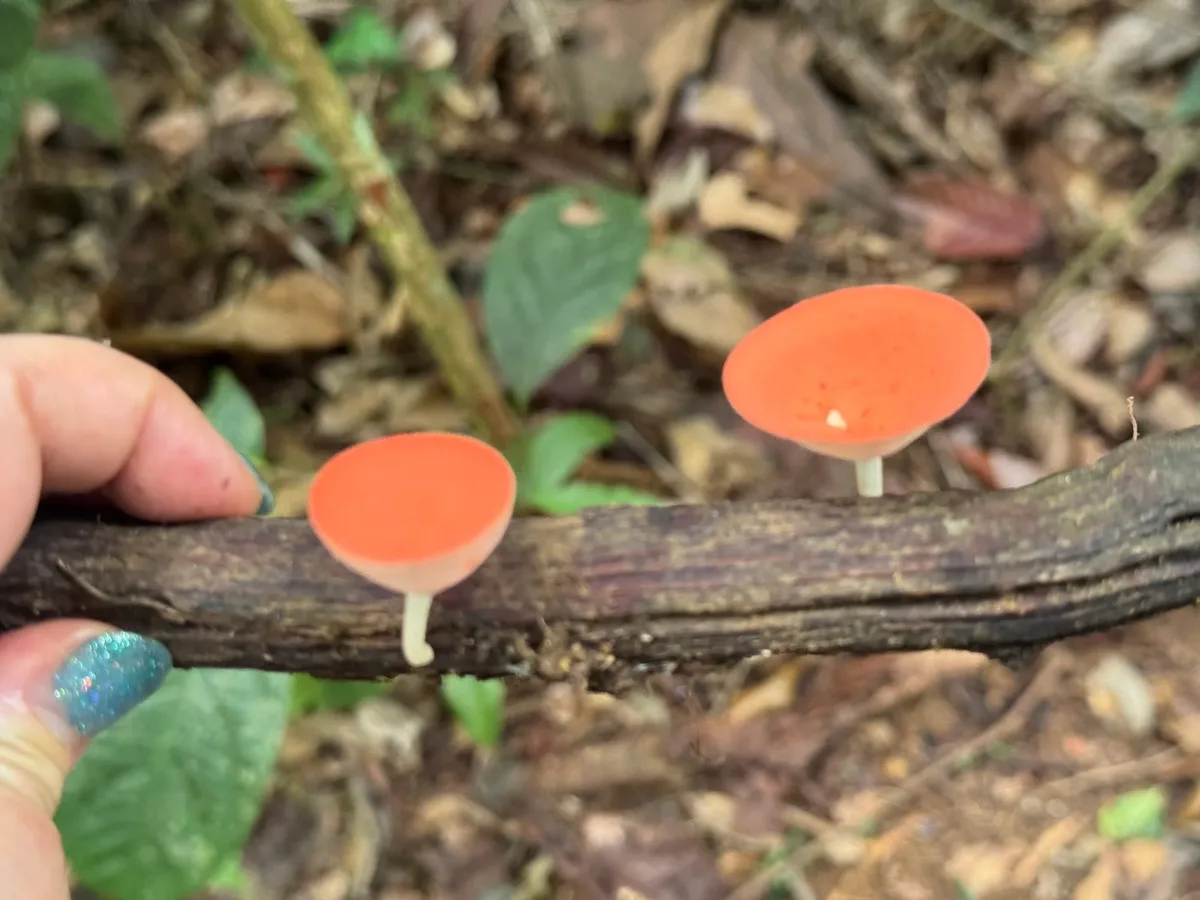
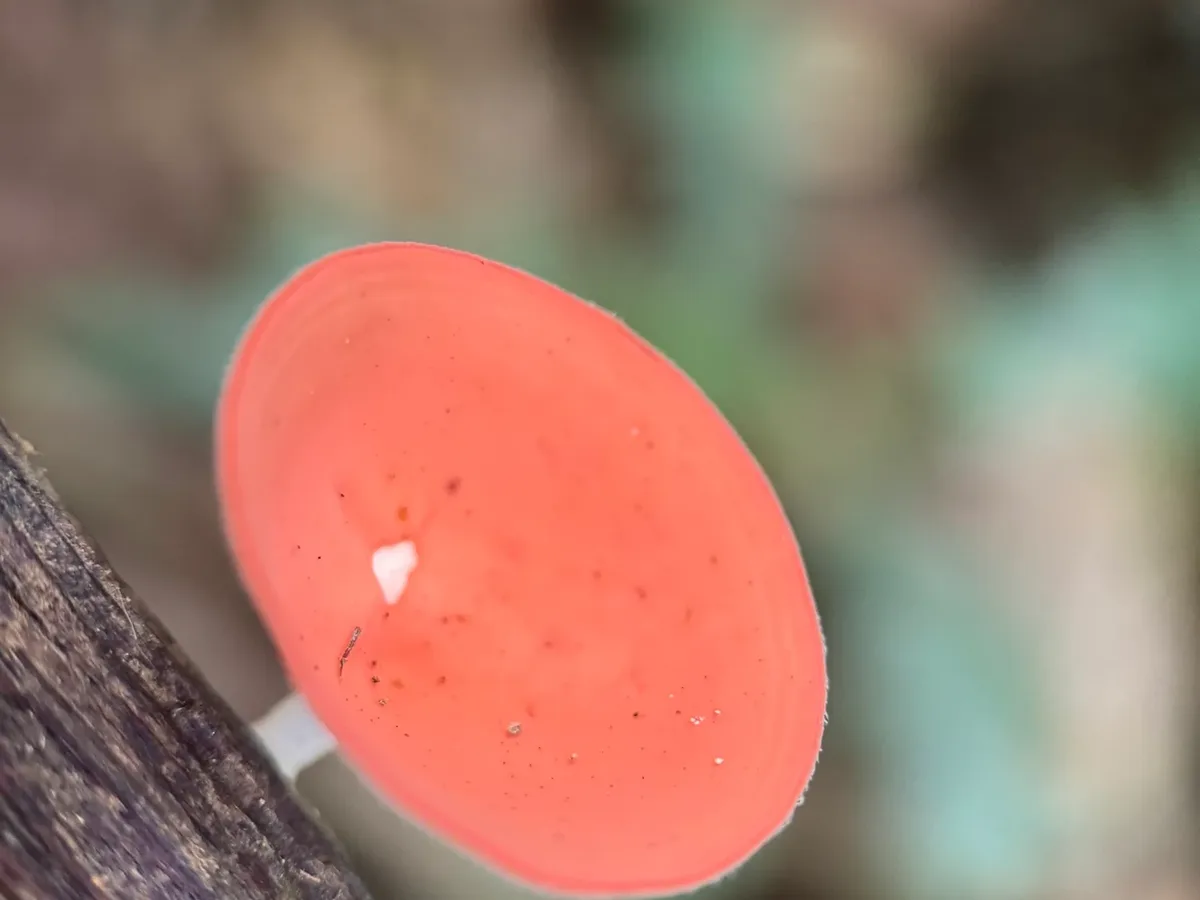
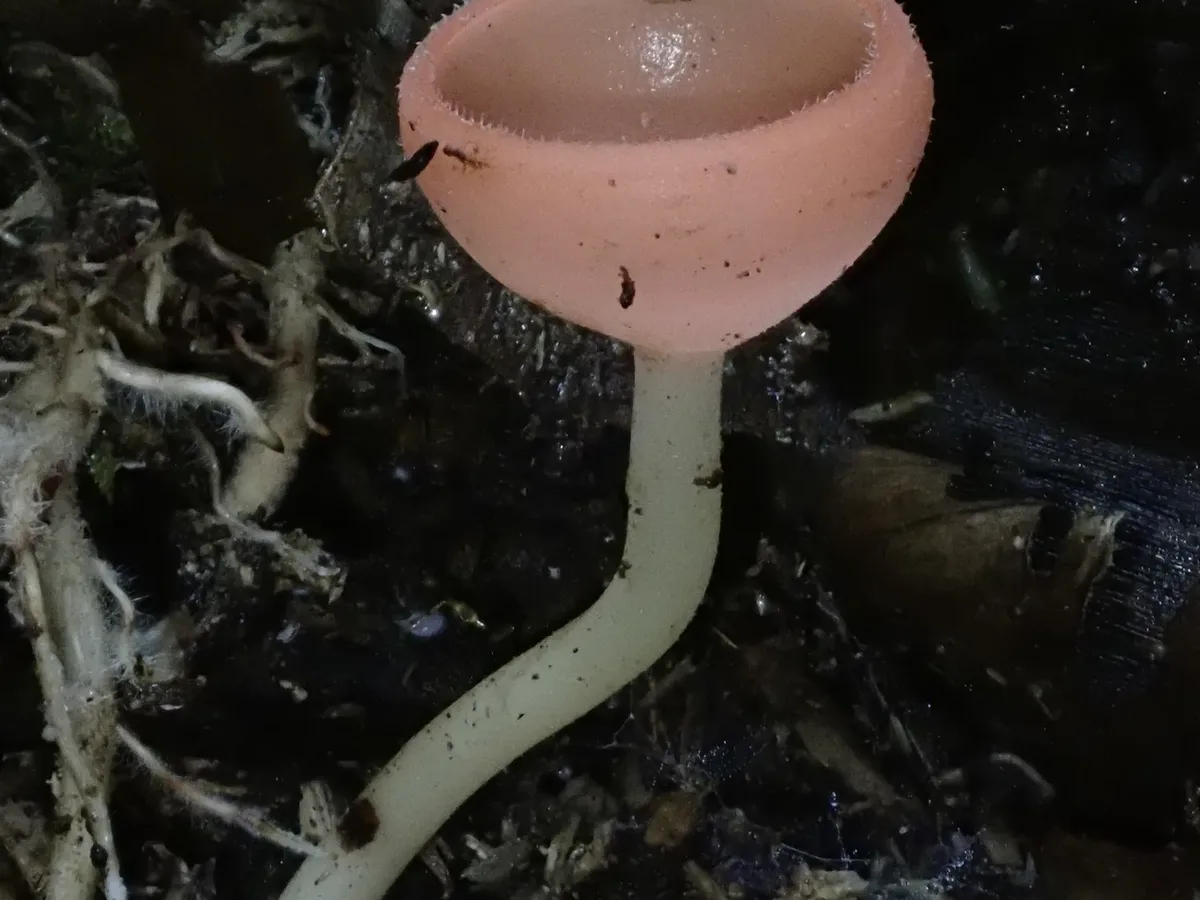
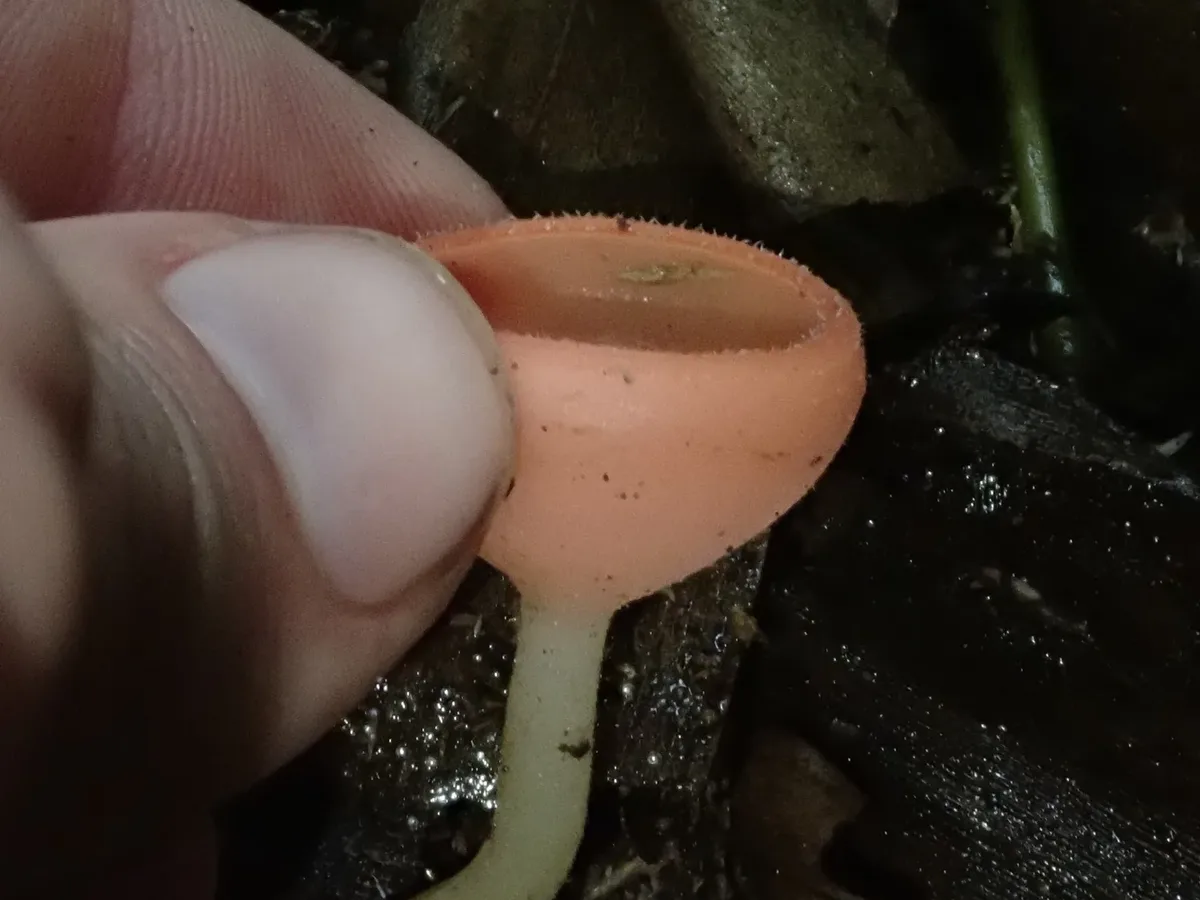
The fruitbody is a cup or goblet, typically 1-6 cm across, held on a distinct, well-developed stalk - this combination of cup plus substantial stalk is immediately useful for identification within the pantropical Cookeina genus.
The inner (hymenial) surface is smooth, pale pink to salmon, rose-pink, or soft orange-pink; it does not approach the intense scarlet of the temperate Sarcoscypha.
Young cups are deep and goblet-shaped, older ones shallower. The margin may become wavy and lobed.
Stem
The outer surface and stalk are densely and conspicuously woolly, covered in coarse, shaggy white hairs that are easily visible without magnification and give the fruitbody a frosted or woolly appearance.
The stalk is notably ribbed or grooved lengthwise - the epithet sulcipes refers precisely to this furrowed stalk - which distinguishes this species from the closely related Cookeina tricholoma, which has a smoother stalk.
Flesh
Flesh is thin, waxy, fragile, and white throughout. No ring, volva, or gills.
Spores are large (25-40 µm long), elongate-ellipsoidal, hyaline, smooth, and multiguttulate.
Where & when it grows
Habitat
Cookeina sulcipes is a tropical and subtropical saprotroph, decomposing dead hardwood on the forest floor.
It is characteristic of shaded, humid tropical forest: lowland rainforest, gallery forest along riverbanks, humid montane forest margins, and secondary forest where fallen logs and coarse woody debris are abundant.
It favours partially decayed hardwood trunks and large branches where the bark is still intact but the wood is softening; it is much less often found on very advanced rot or on conifer wood.
Good moisture is essential - the cups are fragile and quickly dry out in direct sun. It is absent from open savanna and arid woodland.
In sub-Saharan Africa it is most frequently reported from West and Central Africa (Congo Basin, West African rainforest zone) and East African coastal and montane forests, but records exist across the continent wherever humid forest persists. Also widespread in Southeast Asia, tropical Australia, and the Neotropics.
When
In equatorial regions without a pronounced dry season, Cookeina sulcipes fruits essentially year-round, provided rainfall is adequate - it follows the rain, not the calendar. New cups can flush within days of heavy rain soaking into decaying wood.
In seasonal tropical climates with a distinct wet and dry season, the fungus largely disappears during dry spells and rebounds quickly once the rains return.
At higher elevations in montane tropical forest, fruiting concentrates in the wetter, slightly cooler part of the year.
Individual fruitbodies are short-lived - a few days to perhaps two weeks - but new crops replace them continuously through wet weather.
How it grows
Cookeina sulcipes is an ascomycete that spends most of its life invisible, as mycelium threading through dead hardwood and slowly digesting cellulose and lignin.
The fruitbodies that appear on the log surface are apothecia - open, cup-shaped structures that expose the spore-bearing layer (hymenium) directly to the air, rather than enclosing it as mushrooms do. They emerge singly, scattered, or in small groups of two to six from a single log or branch.
When the cups are mature, the asci discharge their eight spores in a coordinated puff - sometimes visible as a faint dusty cloud rising above the cup when disturbed by a breeze or a raindrop.
Spores travel by air currents, insects, and water splash, which helps explain why this species has spread so widely across the tropics.
Fruiting conditions
Tropical species with no cold requirement. Fruiting is triggered by adequate rainfall maintaining moisture in decaying wood. In equatorial regions with year-round rainfall, fruiting is continuous. In seasonal tropical climates, fruiting closely tracks the wet season onset. Short flush lag reflects the warm temperatures that accelerate mycelial activation. Does not fruit in prolonged dry spells.
Look-alikes
Within the genus Cookeina, the most important lookalike is Cookeina tricholoma, which shares the same general appearance - a stalked pink-to-salmon cup with hairy outer surface and stalk - but whose stalk is smooth or only slightly ribbed, not prominently furrowed.
Additionally, C. tricholoma tends to have longer, more slender hairs on the outer surface that can project beyond the cup margin as a fringe. Separation in the field can be subtle, and expert mycologists sometimes disagree on the boundary between the two species; both are reported as edible in the same regional food traditions.
Cookeina speciosa is a third related species with a larger, flatter cup, often brighter orange or orange-pink interior, and a shorter, stouter stalk.
None of these Cookeina species is known to be toxic. No deadly lookalikes are known within this tropical cup-fungus assemblage.
Confusion with dangerous species (e.g. deadly Galerina, amatoxin-containing Amanita) is essentially impossible given the completely different form - no gills, no cap-and-stalk agaric morphology, no ring or volva.
Another tropical Cookeina with a larger, more shallowly cup-shaped to nearly flat apothecium. Interior often brighter orange or orange-pink rather than pale pink to salmon. Stalk shorter and stouter than C. sulcipes and only faintly ribbed. Outer surface hairy but hairs less densely woolly. Shares the same general saprotrophic habitat. Not known to be toxic.
A related pantropical cup fungus with a vivid scarlet to orange-red interior - much more intensely coloured than the pink of C. sulcipes. Lacks the prominent hairy outer surface of Cookeina. Stalk very short or absent. Found on similar dead hardwood in tropical forests. Not known to be toxic.
Small orange-red cup fungi found on dead conifer wood, mostly in temperate zones rather than the tropics. Stalked but with a smooth outer surface, lacking the conspicuous wool of Cookeina. In tropical forest overlap is minimal. Not toxic.
Extremely similar stalked pink cup fungus growing on the same tropical hardwood substrate. The key difference is the stalk: C. sulcipes has a prominently furrowed (ribbed) stalk; C. tricholoma has a smooth or only weakly ribbed stalk. C. tricholoma may also have longer hairs that project visibly beyond the cup margin as a distinct fringe. Both species are reported as edible when cooked in the same regional traditions. Separation can be difficult in worn or older specimens.
In the kitchen
Picking & cleaning
Cookeina sulcipes is eaten in parts of tropical Africa, Southeast Asia (especially Thailand, Laos, and Indonesia), and Latin America.
It is most commonly collected when cups are young and firm - older, waterlogged specimens become slimy and unpleasant. The cups break away from the log cleanly with a gentle twist.
Yields are modest; a productive log may produce a dozen to a few dozen cups at once. The fruitbodies are fragile and should be transported in a rigid container to prevent crushing.
They deteriorate rapidly in hot conditions and should be cooked the day they are picked. Do not eat raw.
Collect only from clean, uncontaminated forest environments well away from industrial or mining pollution, as wood-rotting fungi can bioaccumulate heavy metals from contaminated substrate.
Cooking
Where eaten, Cookeina sulcipes is typically prepared simply. The cups are rinsed briefly to remove debris (they hold water easily due to the cup shape), then stir-fried with oil, garlic, and seasoning, or added to soups, curries, and stews. In Thailand and Laos they appear in hot-sour broths.
The texture is delicate - firm when young but softening with heat. Flavour is mild, slightly woody or earthy, without strong taste of its own; it absorbs surrounding flavours well.
Do not overcook, as the thin cups collapse quickly. Some cooks blanch them briefly in boiling water before the main cooking step.
Because fruitbodies are fragile and thin-fleshed, they work better as a textural and visual element than as a main ingredient. Use moderate quantities and ensure thorough cooking.
Good to know
Cookeina sulcipes has a long history of consumption in multiple tropical regions and is not known to contain recognised toxins.
However, it should always be cooked before eating - raw consumption of cup fungi can cause gastrointestinal discomfort in some individuals, and there are no established traditions of eating this species raw.
Some authorities caution that edibility data for tropical fungi is incomplete relative to temperate species, and individual reactions may vary.
The classification is 'caution' because:
- 1thorough cooking is required;
- 2edibility has been formally documented only in certain regional traditions, not across its full range;
- 3some individuals may react to novel fungi even when a species is generally considered safe.
The risk profile is low for a healthy adult eating cooked specimens in moderate amounts, but the cautious stance is appropriate given the limits of documentation.
No deadly lookalikes exist in this morphological group.
A reference guide - never an edibility guarantee. When in doubt, leave it out.