Fool's Conecap
Conocybe filarissyn. Pholiotina filaris, Pholiotina rugosa, Conocybe rugosa, Galera filaris, Conocybe togularis (misapplied), Pholiotina togularis (misapplied)
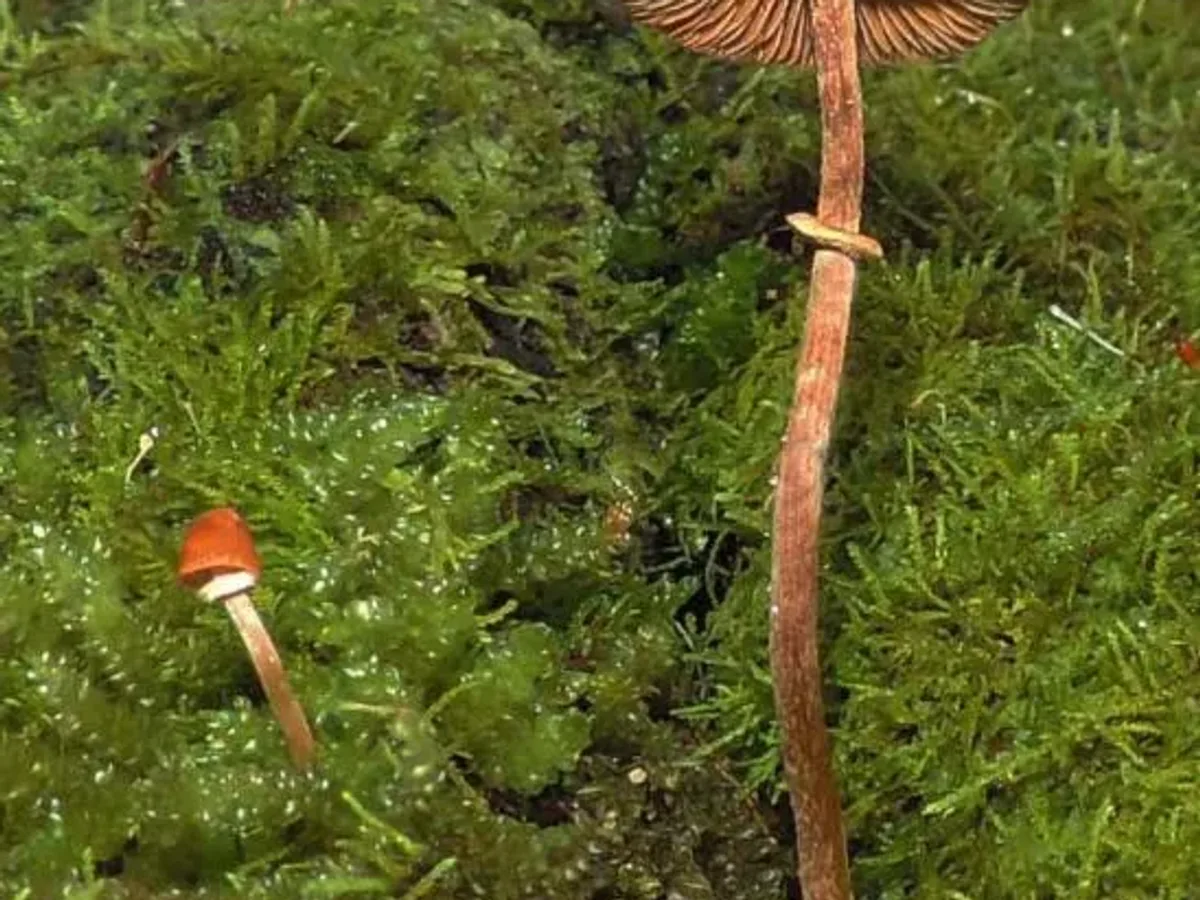 © Richard Hartland (CC BY)
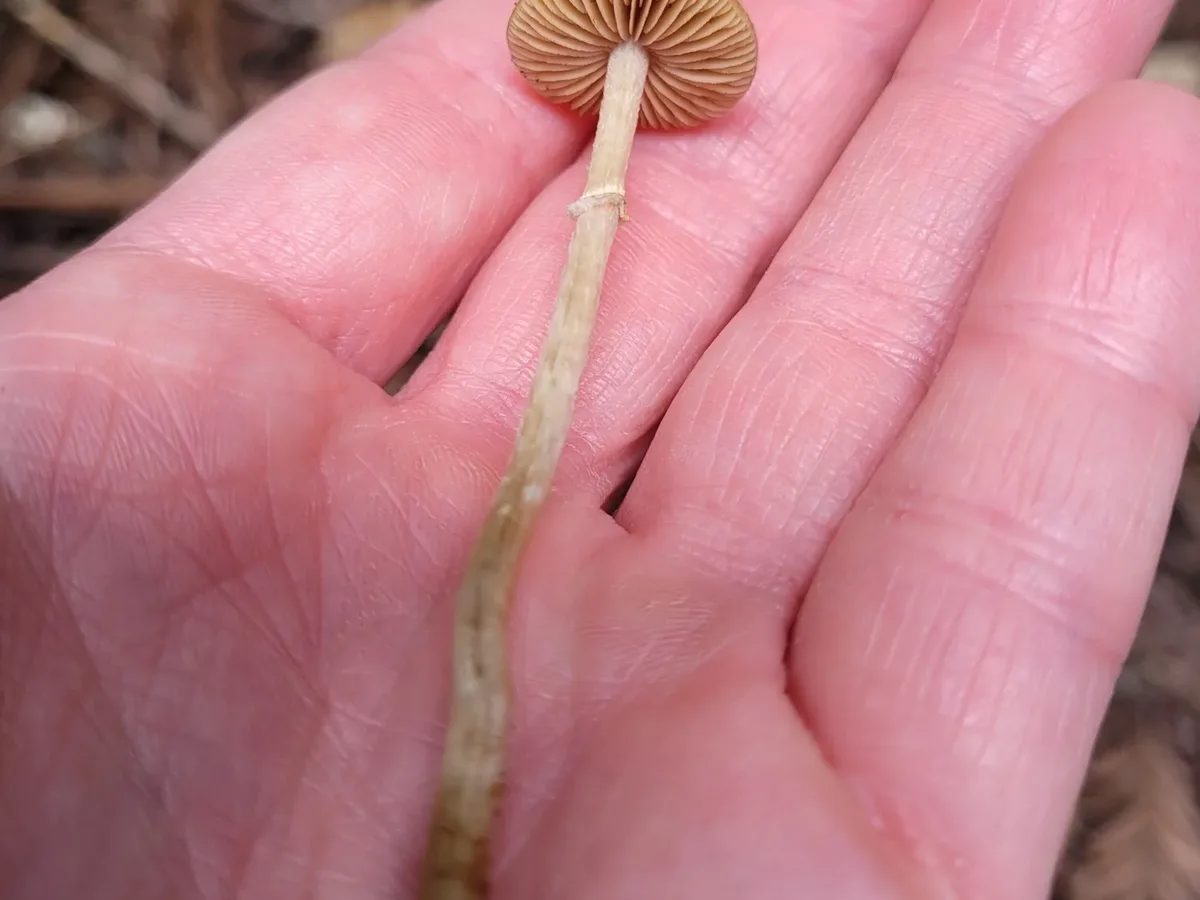 © Mandy Hackney (CC BY)
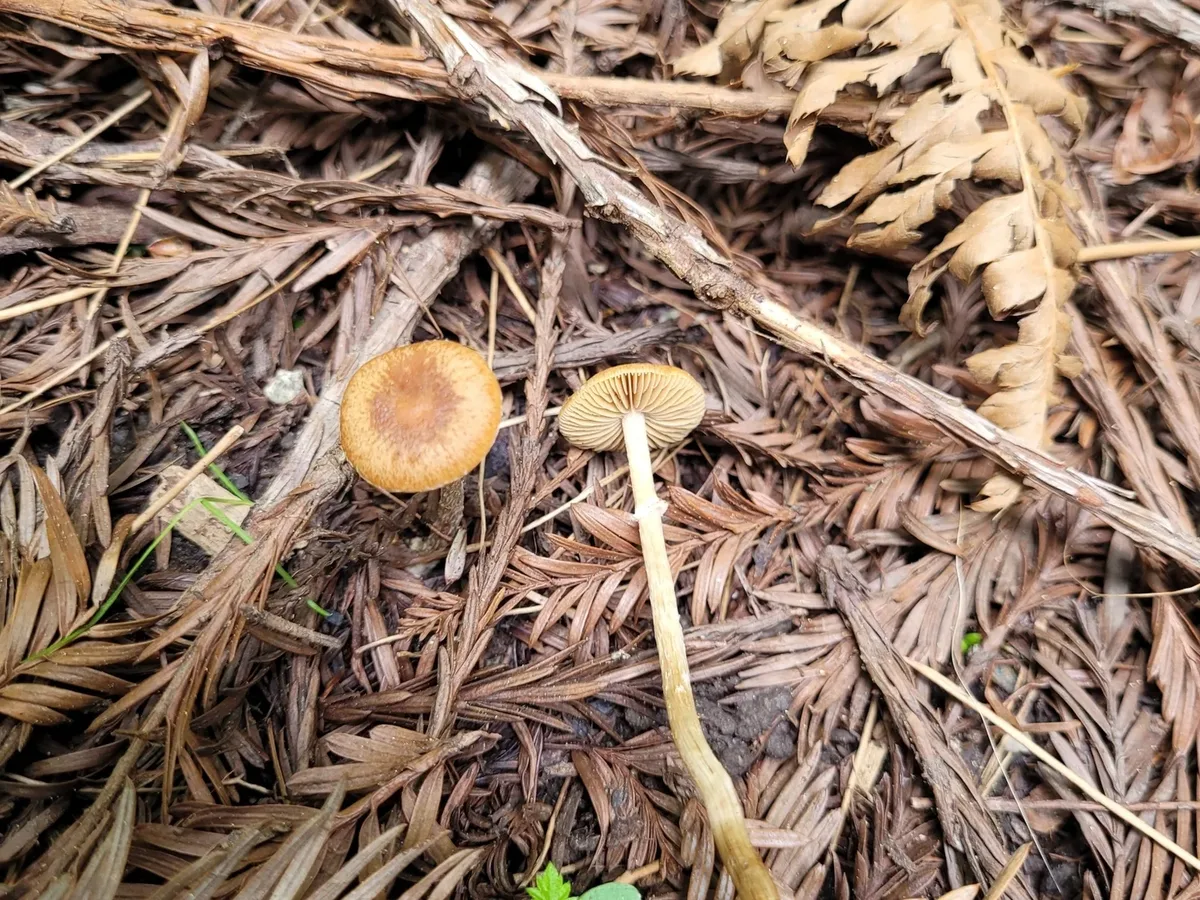 © Mandy Hackney (CC BY)© Richard Hartland (CC BY)© Mandy Hackney (CC BY)
Toxic - and the most serious cases can be fatal. Never eat it, and wash your hands after handling.
Never eat a mushroom you are not 100% sure of - check the look-alikes below, and always cook wild mushrooms.
How to recognise it
Conocybe filaris (also treated as Pholiotina rugosa in some classifications) is one of the plainest mushrooms you will ever see - a small, drab little brown mushroom no bigger than a coin, easy to step over without a second glance.
Cap
The cap is 0.5-2.5 cm across, starting as a sharp cone or bell and gradually flattening to broadly convex or nearly flat with a low central bump.
It is hygrophanous: a warm cinnamon to rusty tawny brown when fresh, drying to a quieter dull tan or ochre-buff, usually two-toned with a darker centre. The margin is frequently finely lined or wrinkled.
Gills
Gills are close and pale clay-brown, ripening to a dull rusty cinnamon as the spores mature, with minutely fringed paler edges.
Stem
The stem is thin (1-3 mm), 2-7 cm tall, brittle, pale brown and finely longitudinally striate.
The defining feature - and the thing to look for in any small lawn mushroom - is a thin, persistent, membranous ring (annulus) on the stem, set at or above the midpoint, whose upper surface is often delicately grooved; the stem above it usually stains rusty cinnamon from falling spores.
Spore print rusty brown. Under the microscope, the smooth, thick-walled, ellipsoid spores carry a distinct germ pore, which helps separate it from most other small lawn species.
Why it's dangerous
Amatoxin poisoning is a medical EMERGENCY. Because symptom onset is delayed 6 hours or more, do not wait to 'see how it goes' - anyone who may have eaten this or any small brown lawn/wood mushroom should go to hospital at once.
Bring a sample of the mushroom (and any vomit, if collected) for identification.
Treatment is supportive and intensive:
- aggressive rehydration
- activated charcoal if early
- silibinin (milk-thistle silymarin) and high-dose penicillin or N-acetylcysteine where used
- repeated bloods
- consideration of liver transplantation in severe cases
Early presentation dramatically improves survival; late presentation can be fatal.
Toxin
The lethal agents are amatoxins - bicyclic octapeptide cyclopeptides, principally alpha-amanitin and beta-amanitin.
Amatoxins are potent inhibitors of RNA polymerase II, halting messenger-RNA synthesis and therefore protein production in cells.
The liver and kidneys, with their high metabolic and filtration activity, are the primary targets, leading to massive hepatocellular necrosis and acute liver (and often renal) failure.
The toxins are heat-stable and water-soluble, so normal food preparation offers no protection. Conocybe filaris is one of the very few small lawn mushrooms known to carry these toxins.
Symptoms
Classic amatoxin poisoning follows a deceptive three-phase course.
- 1PHASE 1 (latent, ~6-24 hours after ingestion - dangerously delayed): violent cholera-like gastroenteritis with severe watery diarrhoea, vomiting, abdominal cramps and dehydration.
- 2PHASE 2 (false recovery, ~24-72 hours): symptoms ease and the victim seems to improve, while liver and kidney damage silently advances.
- 3PHASE 3 (organ failure, ~3-6+ days): jaundice, coagulopathy, hypoglycaemia, encephalopathy and progressive hepatic and renal failure, potentially fatal.
The long delay before symptoms means the link to the meal is easily missed and treatment is dangerously postponed.
Staying safe
TREAT AS LETHAL. Conocybe filaris contains the same amatoxins (alpha-amanitin and related cyclopeptides) responsible for deaths from the Death Cap (Amanita phalloides) and Funeral Bell (Galerina marginata).
A single small fruitbody can contain a clinically significant dose; reported amatoxin concentrations rival those of the Death Cap by weight.
Children and pets are at particular risk because the mushroom grows in lawns and gardens.
There is no safe culinary use, no reliable home test, and cooking, drying or freezing does NOT destroy the toxin. Do not taste even a fragment.
If ingestion is suspected, seek emergency medical care immediately and, if possible, retain a specimen for identification.
Where & when it grows
Habitat
This is a grassland and disturbed-ground decomposer, not a woodland mushroom.
Look for it in mown lawns, garden turf, parks, playing fields, golf courses, mossy banks, mulch, woodchip, roadside grass and pasture edges - fertile, moist, often irrigated ground.
Its strong association with managed lawns and gardens is exactly why it is so dangerous: it grows where people, pets and children are, and where novices pick small brown mushrooms thinking they might be harmless or even a magic mushroom.
When
Fruiting runs from early summer into late autumn (roughly June to November in the temperate Northern Hemisphere), with a pronounced peak in late summer and autumn.
Fruitbodies appear in small troops a few days after warm rain or lawn watering and are short-lived.
In mild and irrigated climates it can be encountered across most of the year.
How it grows
A saprotrophic species living on dead grass roots, thatch, humus, moss and woody debris in turf.
It fruits scattered to gregariously (sometimes in small clusters or arcs) directly from the soil among grass.
It is not mycorrhizal and forms no fixed association with trees, though it may appear at grassy woodland edges. Fruitbodies are delicate and decay quickly.
Fruiting conditions
A warm-season lawn decomposer that flushes a few days after rain or irrigation once soil is warm; values are typical preferences, not thresholds.
Look-alikes
The deadly danger is twofold.
- 1It is confused with edible/medicinal lawn and dung species and, infamously, with hallucinogenic Psilocybe (especially Psilocybe semilanceata, the Liberty Cap, and ringed wood/woodchip Psilocybe such as P. cyanescens) by those hunting 'magic mushrooms' - a confusion that has killed. Psilocybe bruise blue-green and have a purplish-black to chocolate spore print, whereas C. filaris never bruises blue and has a RUSTY-brown spore print and rusty gills.
- 2It resembles many harmless ringless conecaps (other Conocybe), the ringed Pholiotina species, Galerina, Agrocybe and Bolbitius. Most ordinary Conocybe lack a true membranous ring; the persistent ring plus rusty spores is the key combination.
Note that the equally deadly Galerina marginata (Funeral Bell) is a close ecological cousin - also small, brown, ringed and amatoxin-bearing - but typically grows on wood/woodchip rather than open turf.
Reliable separation of these small brown mushrooms requires a spore print and often a microscope; field separation alone is unsafe.
Both are small, brown, ringed and contain the same deadly amatoxins. Galerina marginata typically grows clustered on dead wood, logs and woodchip rather than open lawn, and has a slightly larger, more honey-brown cap. Both are lethal, so distinguishing them matters only for the record - neither is ever edible.
Closely related ringed conecaps in the Pholiotina group are essentially the same deadly, amatoxin-bearing taxon under different names; modern treatments often regard C. filaris as conspecific with Pholiotina rugosa/Pholiotina filaris. Treat all small ringed rusty-spored conecaps as deadly.
Agrocybe species also grow in grass, mulch and gardens and can be ringed, but are generally larger and fleshier with a duller brown to clay spore print and a more robust stem. Size, sturdier build and habitat help, but small specimens are easily confused - use a spore print.
The single most dangerous confusion: people hunting Psilocybe in lawns mistake C. filaris for them, with fatal results. Psilocybe bruise blue-green where damaged, have a dark purplish-brown to blackish spore print and dark gills, and the Liberty Cap has a sharply pointed nipple-like cap and NO membranous ring. C. filaris never bruises blue, has a rusty-brown spore print and rusty gills, and bears a persistent membranous ring on the stem.
Conocybe apala (the Milky Conecap) and many other ordinary lawn Conocybe are fragile and rusty-spored like C. filaris but LACK a true persistent membranous ring on the stem. The presence of a clear ring should immediately flag the deadly C. filaris. None of these tiny conecaps are worth eating regardless.
A common lawn/dung species with a bright yellow, slimy, very fragile cap that quickly collapses; it has rusty spores but no membranous ring and a more vivid, viscid cap, distinguishing it from the duller, ringed C. filaris.
A reference guide - never an edibility guarantee. When in doubt, leave it out.