The miller
Clitopilus prunulussyn. Agaricus prunulus, Paxillus prunulus, Clitopilus orcella var. prunulus
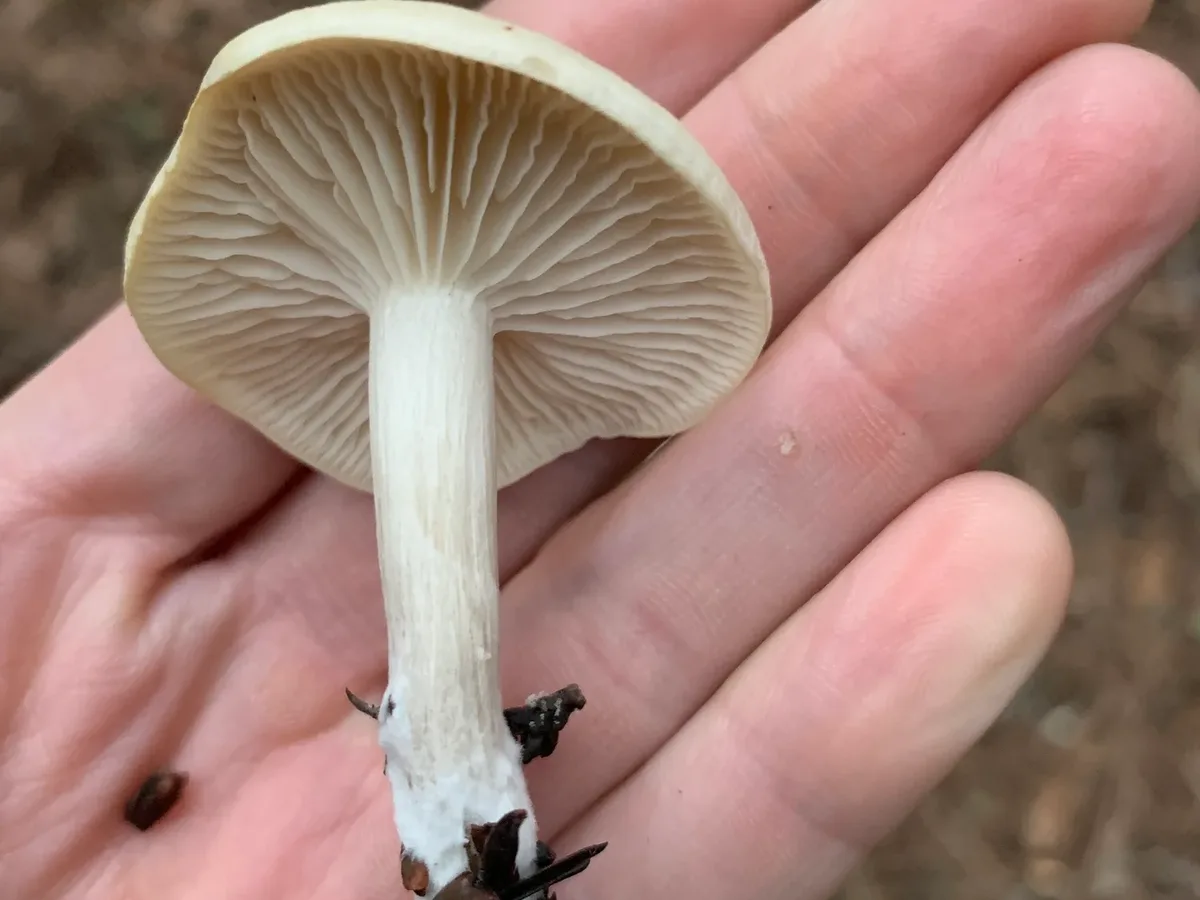 © Michele Wiseman (CC BY 4.0)
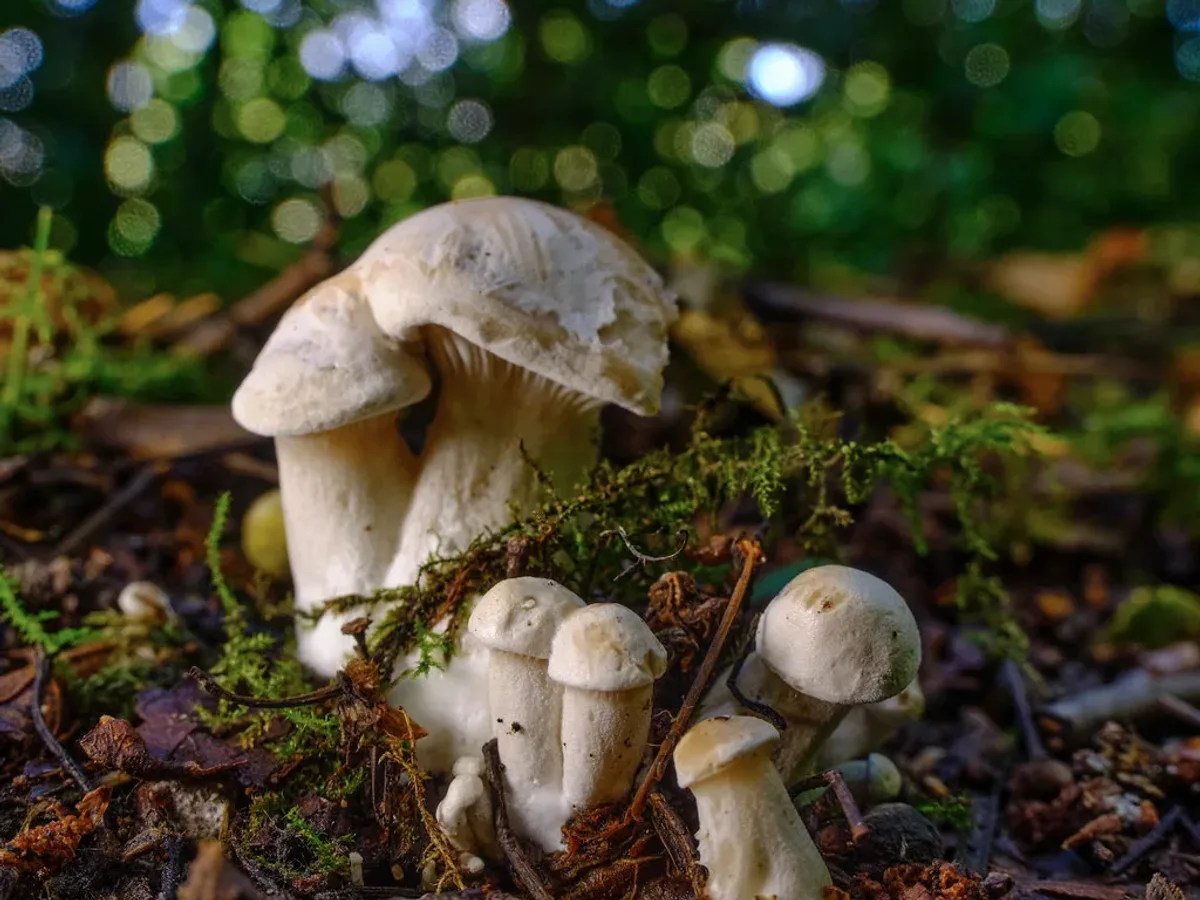 © Lukas Large (CC BY-SA 2.0)
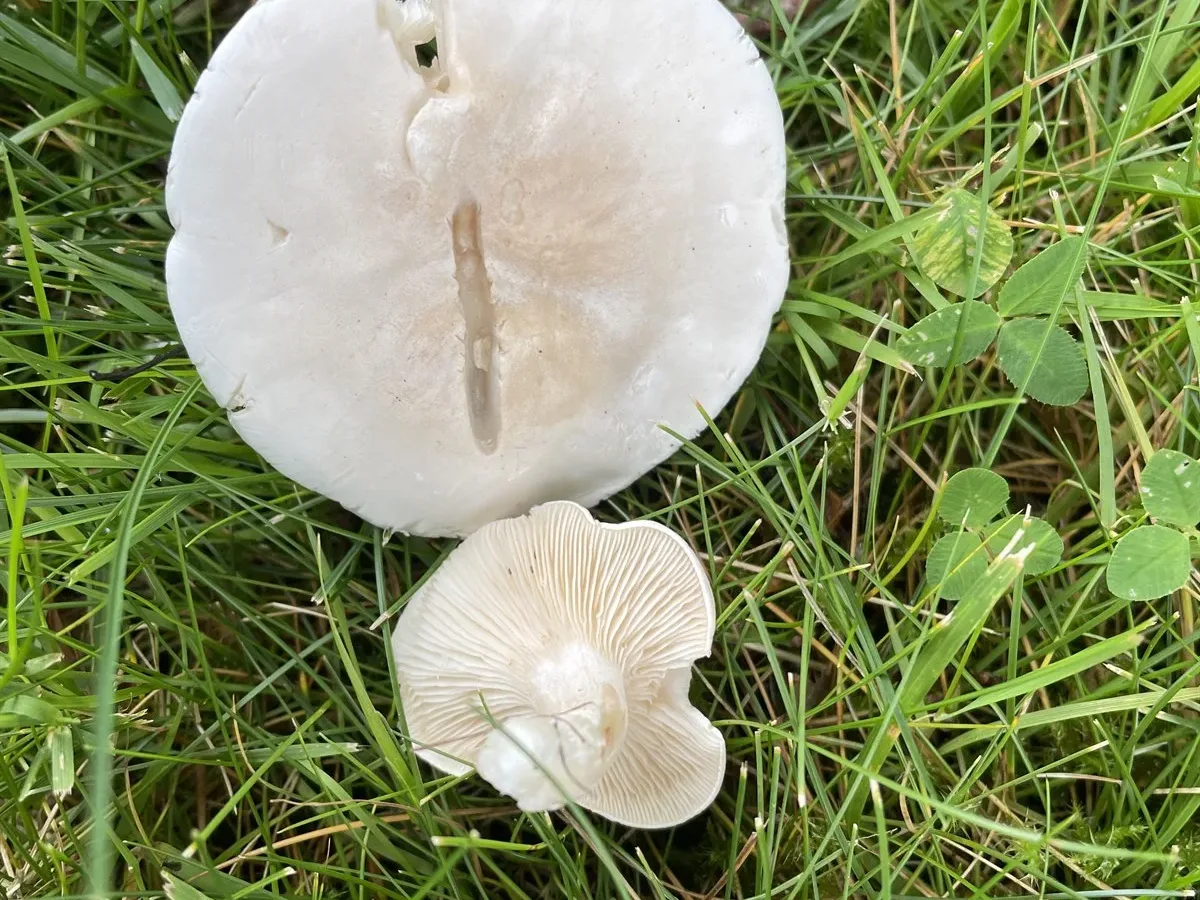 © Bjørn Eidhammer (CC BY)
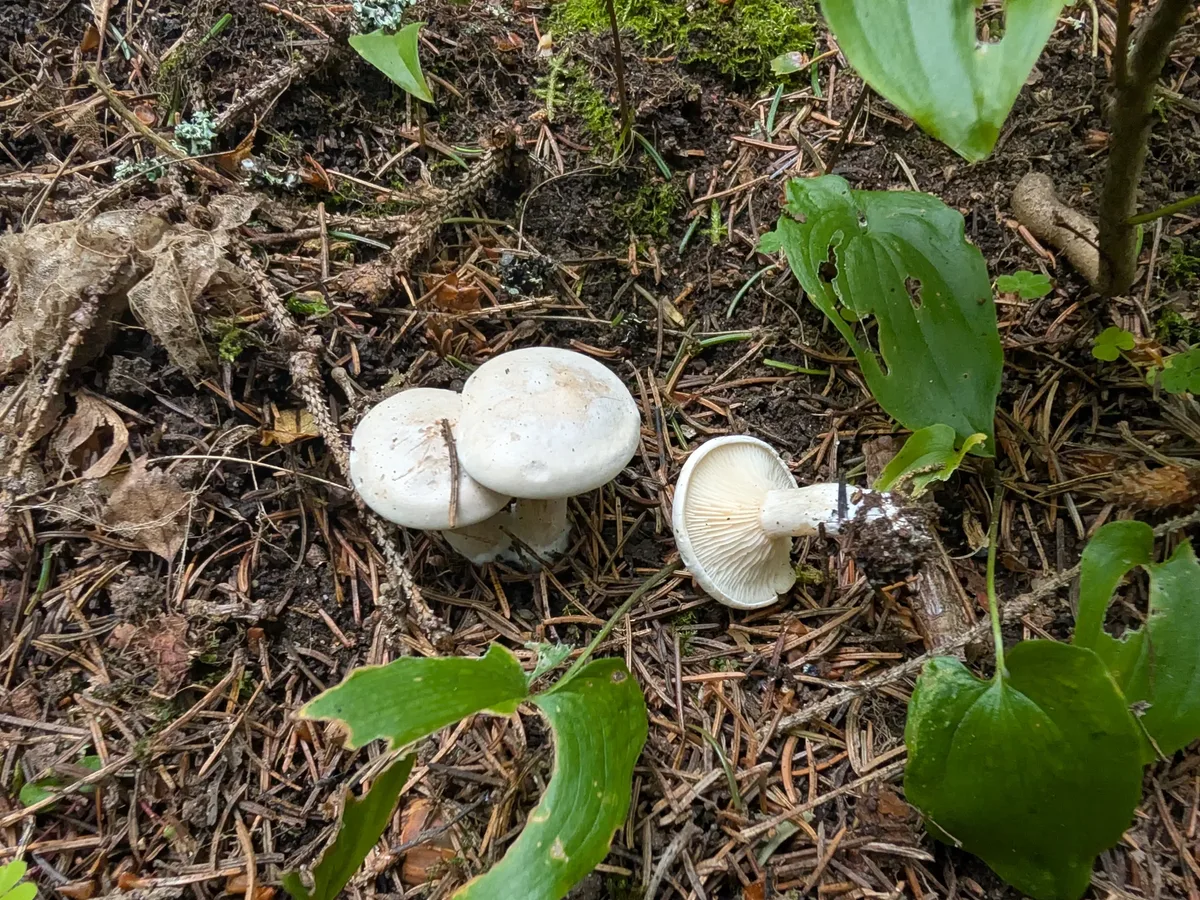 © Petri Roponen (CC BY-SA)
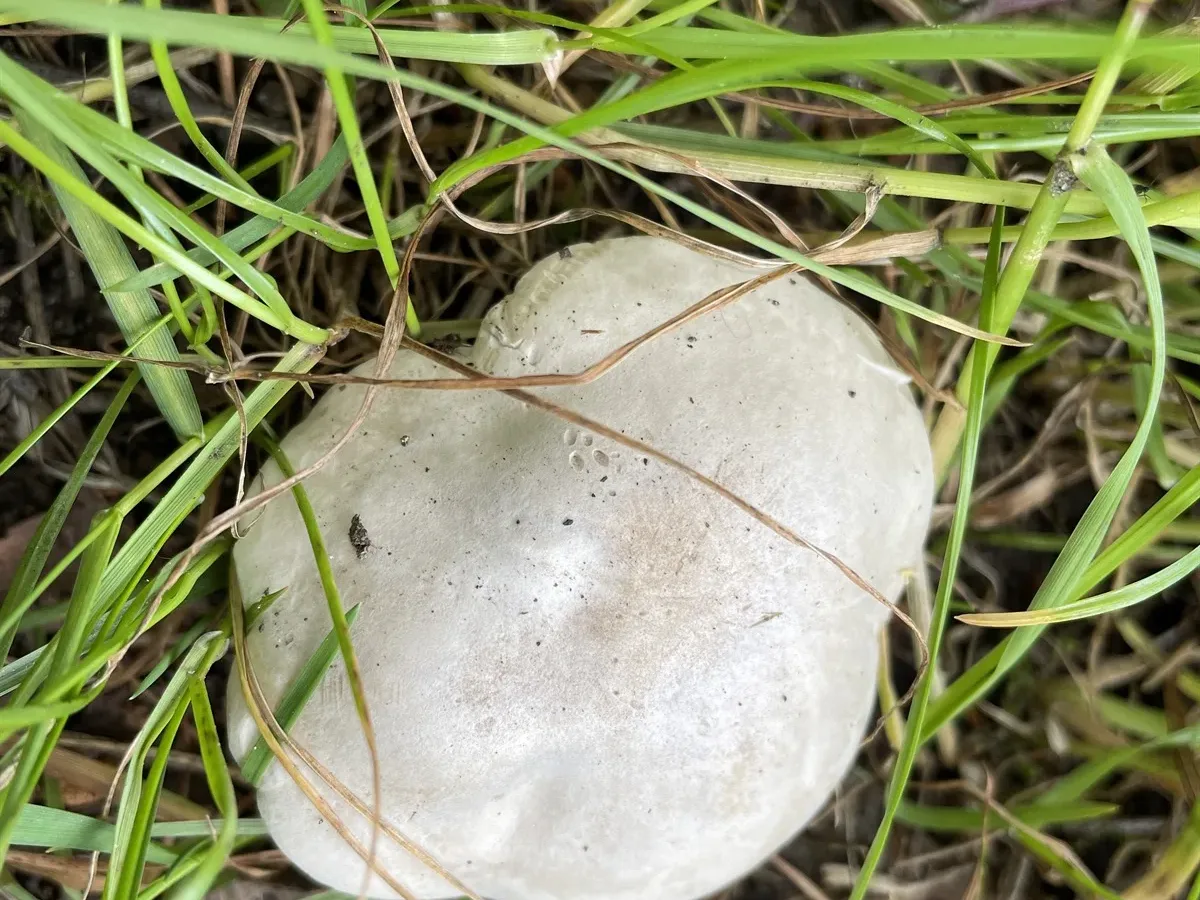 © Bjørn Eidhammer (CC BY)
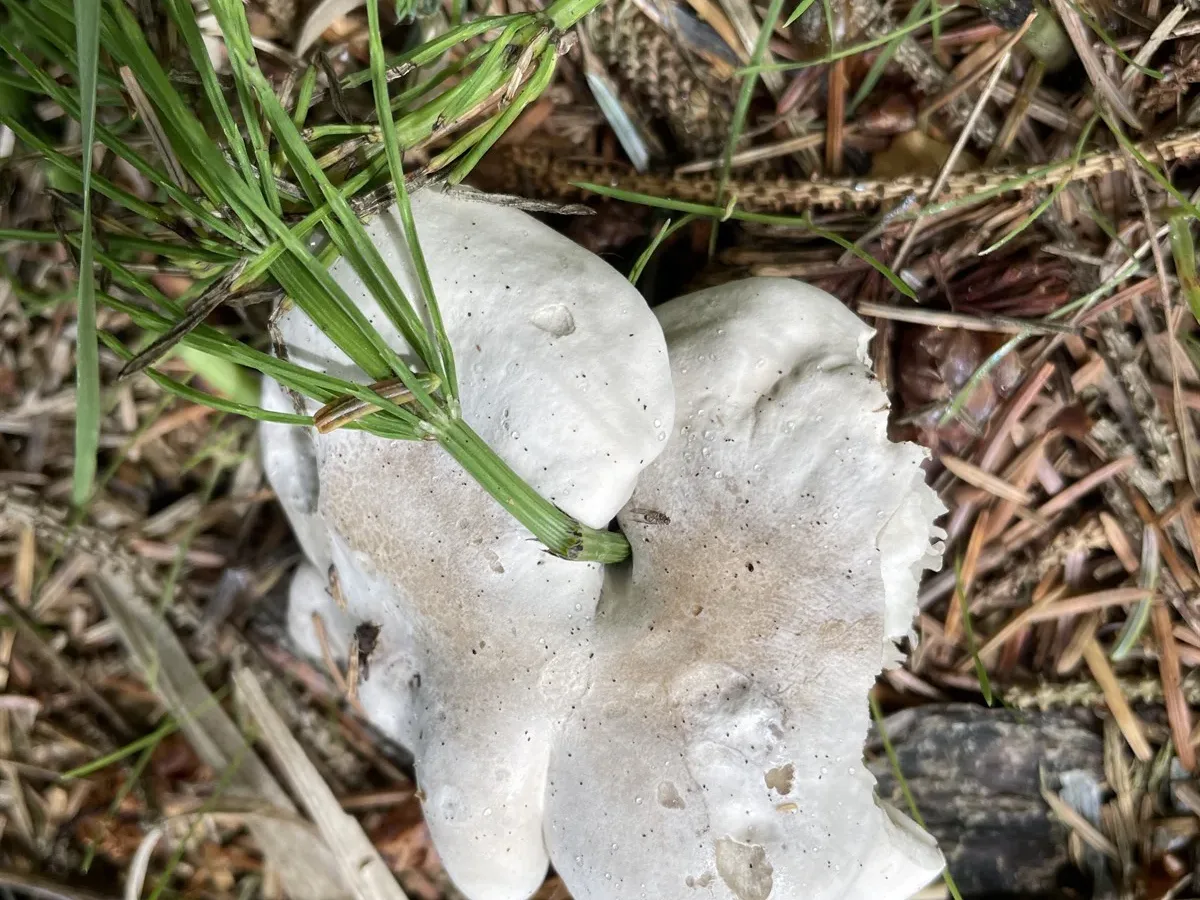 © Bjørn Eidhammer (CC BY)
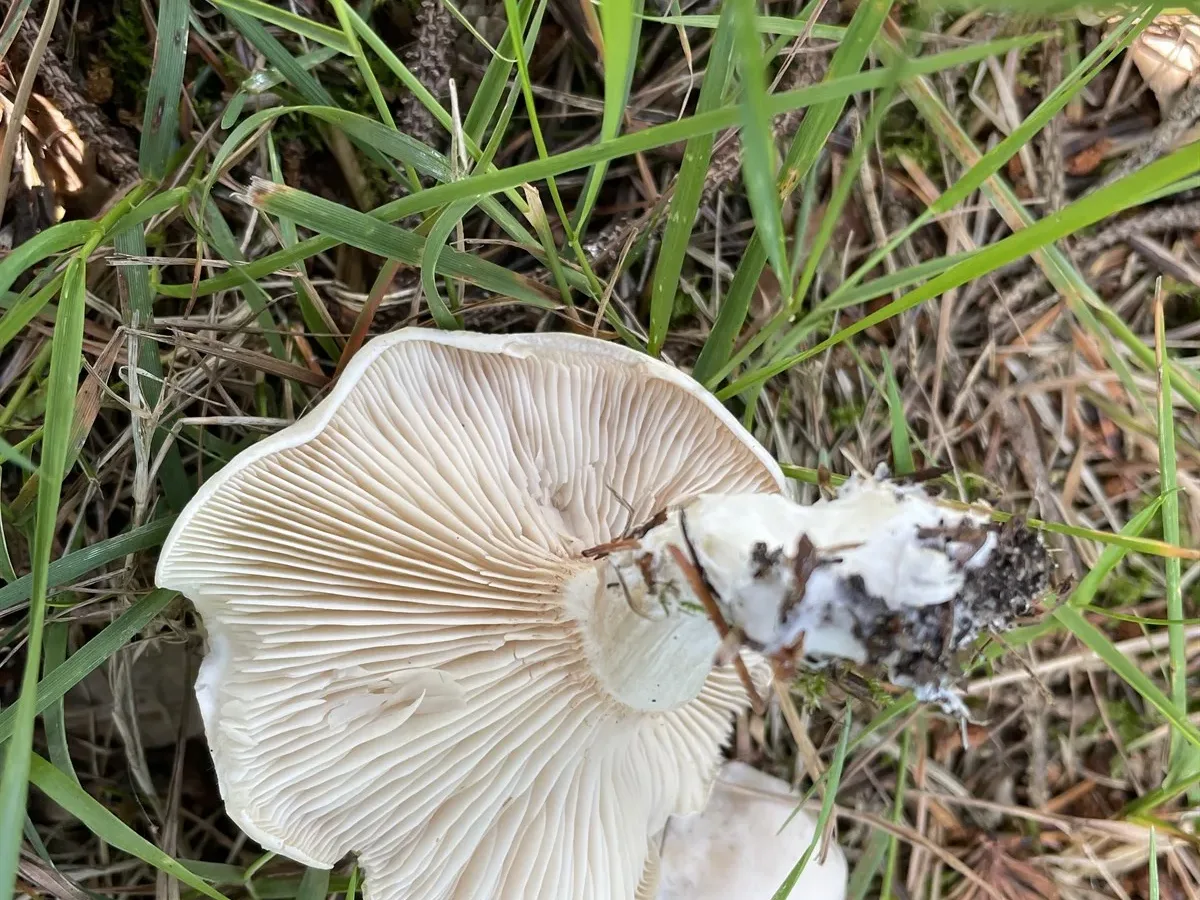 © Bjørn Eidhammer (CC BY)
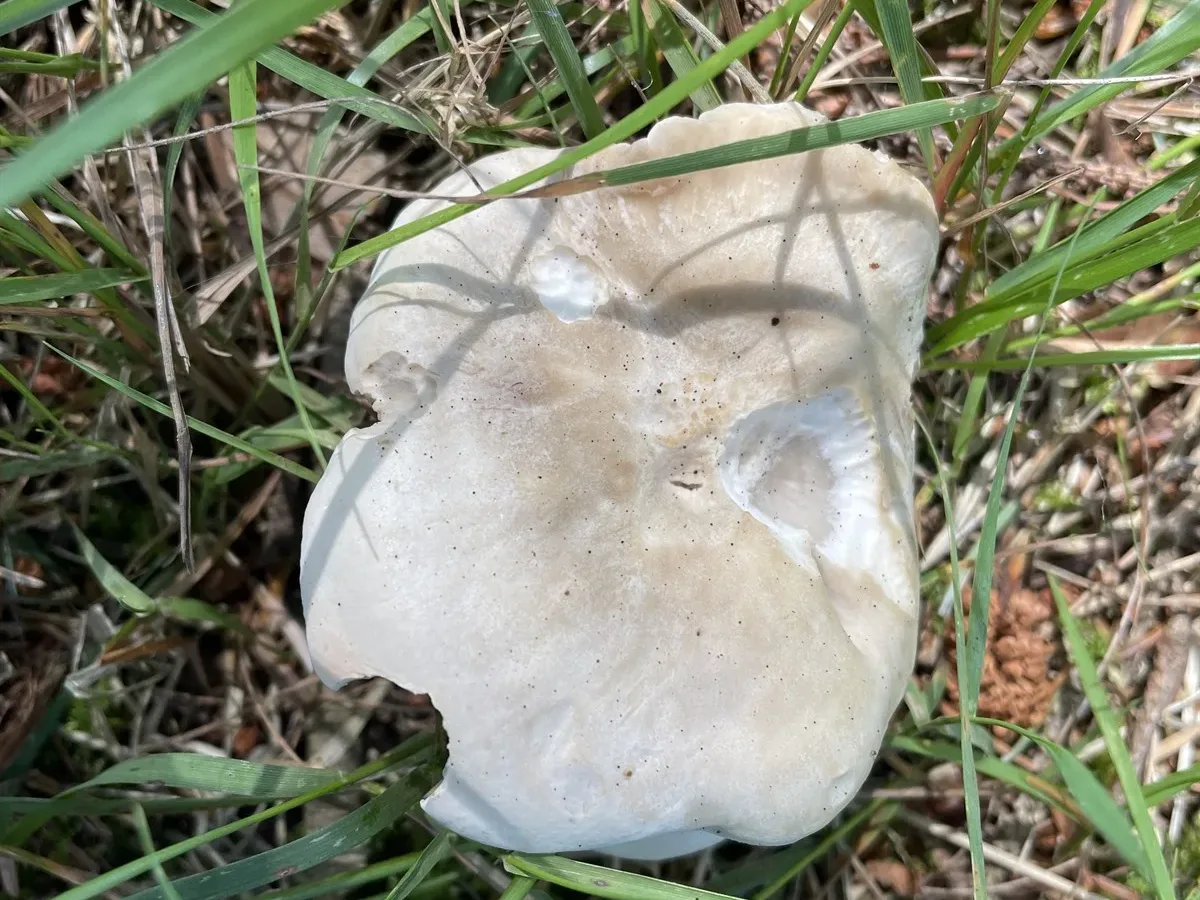 © Bjørn Eidhammer (CC BY)
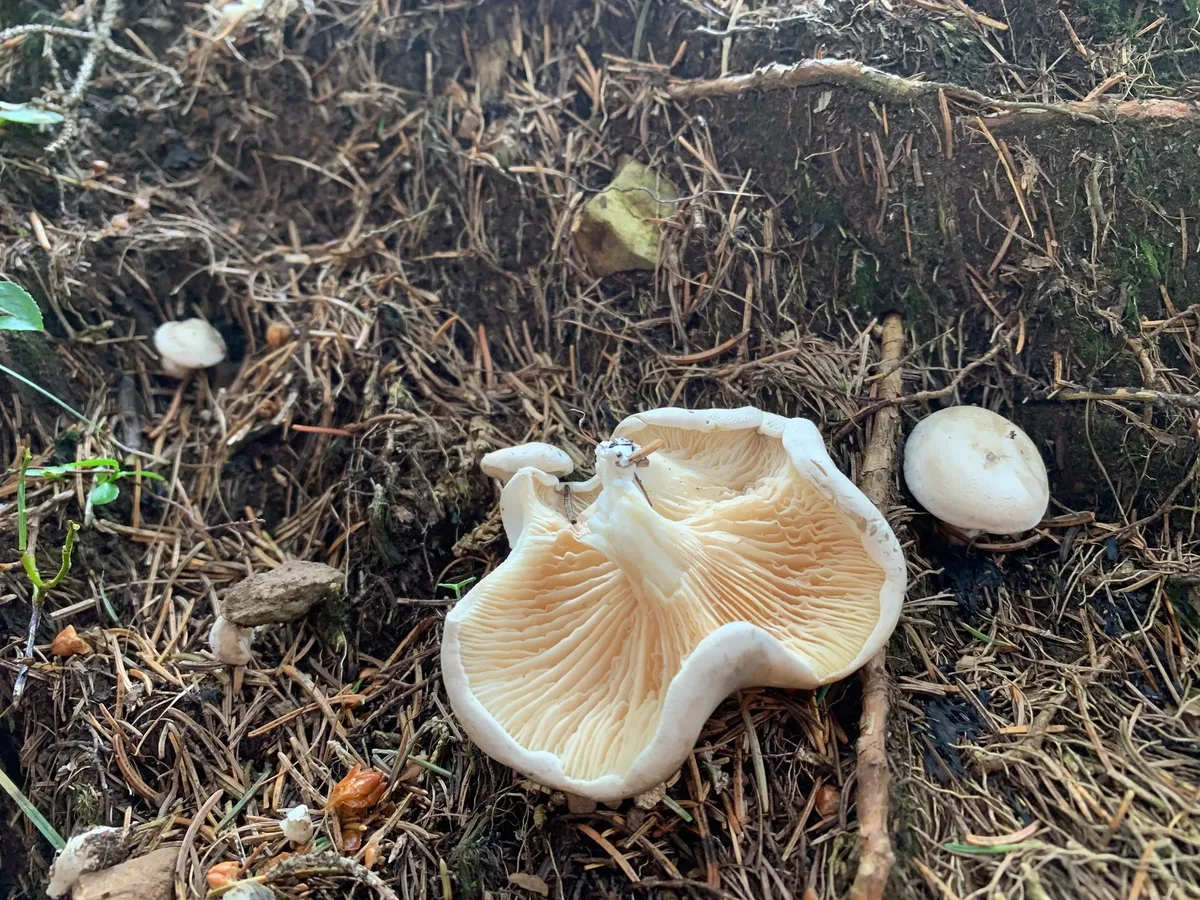 © Manuela Fiorini (CC BY)
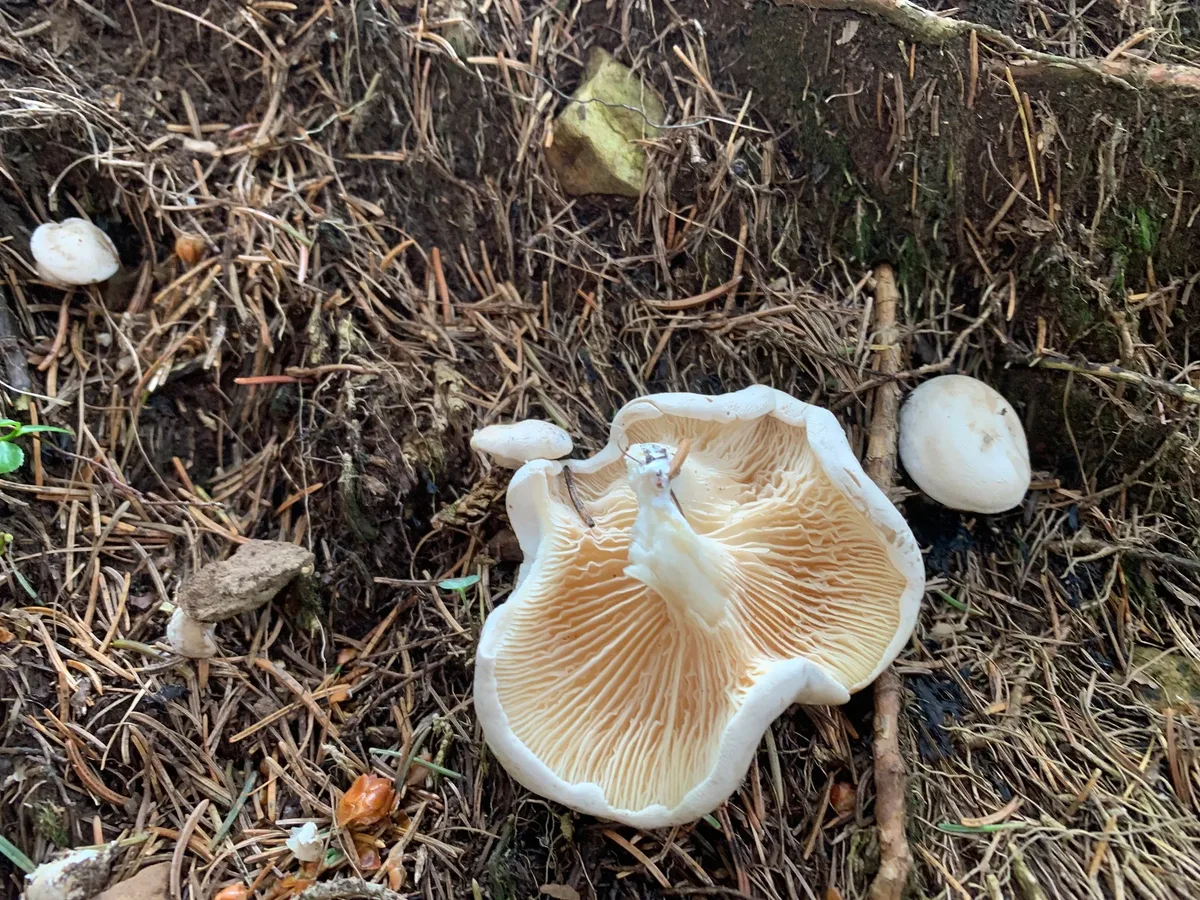 © Manuela Fiorini (CC BY)
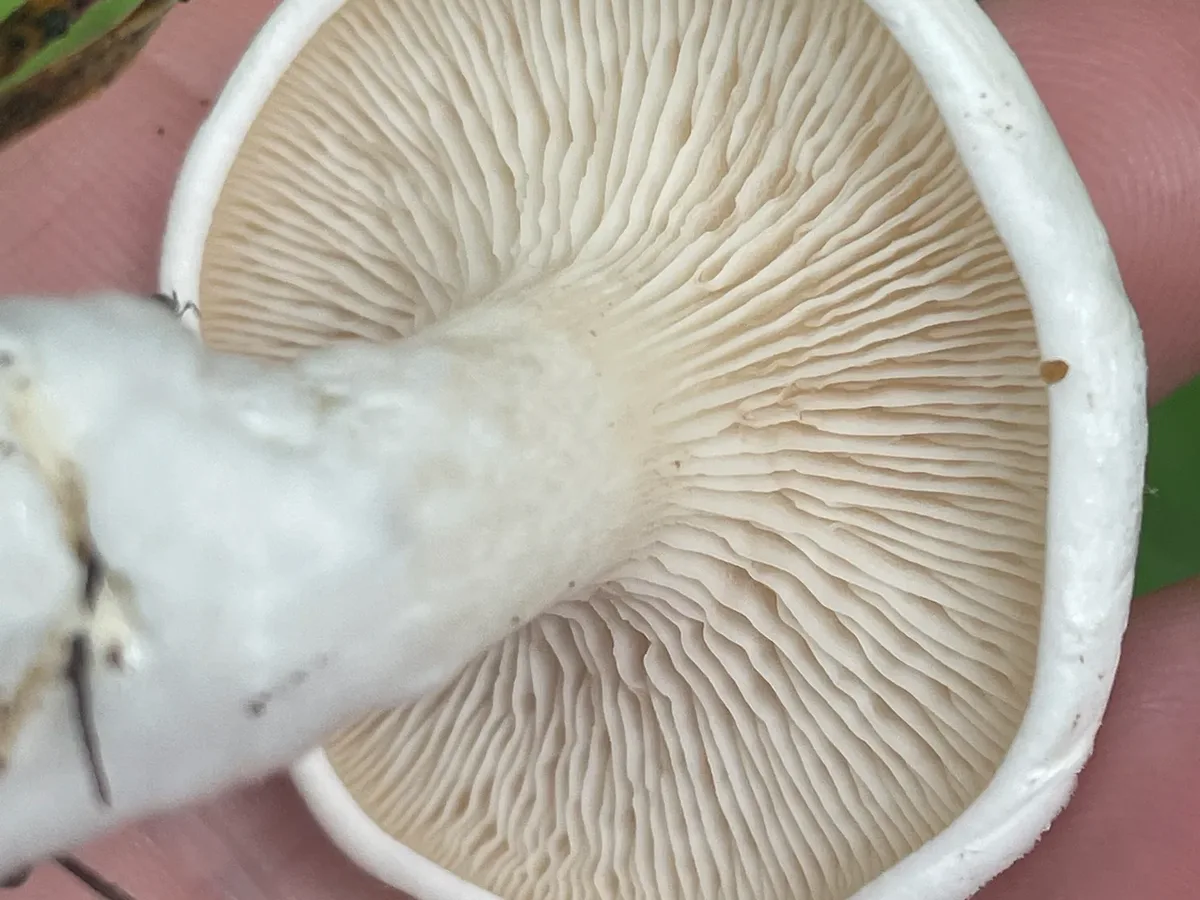 © fernium (CC BY)© Michele Wiseman (CC BY 4.0)© Lukas Large (CC BY-SA 2.0)
Good to eat, once you have identified it with certainty and cooked it through.
Never eat a mushroom you are not 100% sure of - check the look-alikes below, and always cook wild mushrooms.
How to recognise it
The miller is a medium to large, fleshy, white to cream-coloured mushroom with a look of quiet substance - solid, unhurried, and distinctly its own thing.
Cap
Young caps are rounded-convex with the margin so tightly inrolled it almost touches the gills. With age the cap gradually flattens, then develops a central depression, eventually becoming shallowly funnel-shaped.
The margin stays irregularly wavy and lobed throughout - a small but useful detail to notice.
The cap surface is dry, smooth, and matt, never slimy: white to cream-white or very pale greyish-beige, occasionally with a faint buff flush at the centre. There is no ring, no volva, no surface scaling.
Gills
The gills are the standout feature. They run well down the stem (deeply decurrent), are exceptionally densely crowded and narrow, forking repeatedly near the stem, and start white before slowly turning a distinct pale pink as the spores ripen.
That pink tint is diagnostic - and easy to spot even before you take a spore print. The spore print itself confirms it: a clear pale salmon-pink to flesh-pink, not white, not brown, not purple-black.
Spores under a microscope are ellipsoidal with characteristic longitudinal ribs (6-8 ridges), 9-14 × 5-7 µm, pink in deposit.
Stem
The stem is robust and solid - 2-7 cm tall and 1-3 cm wide - white to cream, sometimes slightly off-centre on the cap, smooth to finely powdery, without a ring or skirt.
Flesh
The flesh is thick, firm, and white throughout, with no colour change when cut.
Smell & taste
The smell is the character that makes this species unmistakable: a strong, penetrating, floury-mealy scent - like fresh bread dough, raw flour, or cucumber - detectable even before you crouch down. The taste mirrors it.
Where & when it grows
Habitat
The miller is a saprotrophic species, living by quietly breaking down humus and leaf litter rather than partnering with tree roots.
It tends to favour the in-between places - woodland edges, rides and footpaths through forest, grassy clearings where the canopy opens, or meadows and pastures that sit just alongside trees. It prefers calcareous or mildly alkaline, humus-rich soils but is not strictly confined to chalk.
Regional trees:
- In central Europe it turns up most often under beech, oak, and hornbeam.
- In northern Europe, at mixed birch-spruce forest edges.
- Around the Mediterranean, under oak and pine woodland margins.
It will appear in parkland, old orchards, and cemetery edges where large trees are present. It grows strictly from mineral soil, never from wood.
When
The main fruiting season in temperate Europe runs from late July through November. The best flushes typically appear August through October, after warm, humid late-summer conditions and a good soaking of rain. Warmth followed by moisture is the reliable trigger.
Regional timing varies:
- In Scandinavia the season compresses toward August-September.
- Around the Mediterranean it can stretch into November or early December.
Spring fruitings have been recorded in warm years but are unusual. The species may come up solitarily, in scattered groups, or occasionally in loose fairy rings.
How it grows
As a saprotroph, the miller earns its living breaking down humus and leaf litter in woodland soil - a quiet, steady role it shares with countless other forest fungi.
Fruiting bodies emerge singly or in small scattered groups. Loose arcs can develop where the underground mycelium has expanded concentrically over time, though full rings are less common.
Growth is unhurried compared with fast-decomposing species, and the mushroom will persist for several days in cool weather before softening.
Young specimens with tightly inrolled margins are considered best for the table.
Fruiting conditions
Responds to warm late-summer and early-autumn rainfall after a dry period; soil temperatures between 10-16 °C are optimal for the main flush. Lag of 7-14 days after significant rain is typical.
Look-alikes
The miller has several dangerous lookalikes, the most serious of which is Clitocybe dealbata (ivory funnel / sweating mushroom), which is deadly-poisonous due to muscarine. Compared with the miller, C. dealbata:
- is smaller (cap 2-6 cm)
- has a more uniformly white cap that may carry a faint mealy smell, but much weaker
- has gills that are only slightly decurrent and remain white (never pink)
- has a white spore print (NOT pink)
- has a slender, non-robust stem
Clitocybe rivulosa (fool's funnel) is widely treated as a synonym of C. dealbata and carries the same muscarinic risk. Always confirm the pink spore print from C. prunulus before eating.
Clitocybe nebularis (clouded funnel) is larger and grey-brown with a faint mealy smell, but gills are barely decurrent, cream-white, and spore print is white to pale cream. Edibility of C. nebularis is disputed and it causes gastrointestinal upsets in many people.
Lepista nuda (wood blewit) and Lepista saeva (field blewit) are superficially similar but have distinctly lilac to violet tinged gills, stems, and flesh, and a fruity rather than mealy smell; spore print pink.
Entoloma sinuatum (lead poisoner) is a serious toxic lookalike: cap whitish to cream, large fleshy mushroom, but gills are sinuate (not decurrent), become distinctly salmon-pink with age, and the smell is mealy - the dangerous similarity in smell is well documented. E. sinuatum causes severe gastrointestinal poisoning. Key distinction: gills of E. sinuatum are not decurrent and are more deeply pink; spore print deeper pink-red; stem is grey-white and not as robust.
Agaricus species are ruled out by the absence of a ring and the decurrent, pink gills.
With age and in drought conditions, old pale specimens of Clitocybe gibba (common funnel) can superficially resemble the miller but have very thin, crowded decurrent gills, strongly hollow stems, a buff-ochraceous colouring, and no mealy smell - spore print white.
Smaller (cap 2-6 cm vs 5-15 cm), cap remains flat to only slightly depressed, gills barely to shallowly decurrent and remain white (never pink), stem slender, spore print WHITE not pink, mealy smell absent or very faint, grows in open grassland and grassy path edges; contains deadly muscarine. C. rivulosa (fool's funnel) is widely treated as a synonym and presents the same risk.
Larger, cap grey-brown to buff-grey, gills barely decurrent and cream-white (never pink), spore print white to pale cream, smell faintly mealy but not as strong; causes gastrointestinal distress in many people
Much thinner-fleshed, cap pale tan-buff (not white), stem hollow and narrow, no mealy smell, spore print white
Cap buff to brown, gills white to pale cream (not decurrent), stem distinctly violet-flushed, fruity smell not mealy, spore print pale pink
Large fleshy white mushroom with a mealy smell - a dangerous overlap - but gills are sinuate (notched/free near stem, never truly decurrent), turn deeper salmon-pink than the miller, and spore print is deeper angular-pink; causes severe gastrointestinal poisoning
Gills, stem, and flesh all show distinct lilac to violet colouring; fruity vinous smell rather than mealy; spore print pink-lilac; found in deeper woodland litter
In the kitchen
Picking & cleaning
Collect young to medium-aged specimens with the margin still inrolled or only partially flattened - flesh is firmest and flavour most pronounced at this stage. Older, funnel-shaped individuals with pink gills visible at a distance are still edible but soften more rapidly.
Cut cleanly at the base with a knife; the stem base contains useful identification information (solid, not hollow) and should be checked in the field.
Wipe clean with a brush; avoid washing if possible.
Do not harvest without confident identification: the CRITICAL requirement is confirming both the pink spore print and the strong mealy smell together before collecting.
The species does not store well; use within one to two days.
Cooking
The miller is a well-regarded edible mushroom with a strong, distinctive mealy-floury flavour that intensifies with cooking. The flavour is assertive and not universally liked; it pairs well with eggs, cream sauces, risotto, and white meats, where its pronounced character contributes depth rather than competing.
Sauté sliced caps in butter over medium-high heat until the liquid released has evaporated and the flesh is golden; the mealy smell mellows on cooking into a pleasant savoury quality.
It works well in pasta sauces, omelettes, and as a component of mixed mushroom dishes. Some sources recommend blanching briefly before use to moderate the mealy intensity.
Do not eat raw; cook thoroughly.
Good to know
CRITICAL SAFETY NOTE: the miller must never be collected without confirming two features simultaneously:
- a strong mealy-floury smell
- a pink spore print
The deadly Clitocybe dealbata and related muscarine-containing species occupy the same habitat and stage of growth, are superficially similar in colour and shape, and may co-occur. Because C. dealbata is smaller it could be mistaken for a young specimen of the miller.
Additionally the toxic Entoloma sinuatum shares the mealy smell and can grow in similar habitats.
The pink spore print is the most reliable single differentiator from the deadly Clitocybe species (which have white prints). But the whole constellation of characters must be confirmed together:
- deep decurrent gills
- robust solid stem
- inrolled young margin
- pink spore print
Beginners should avoid this species entirely until under expert guidance. Do not eat raw; cook thoroughly.
A reference guide - never an edibility guarantee. When in doubt, leave it out.