Frosty funnel
Clitocybe phyllophilasyn. Agaricus phyllophilus, Clitocybe cerussata, Clitocybe phyllophila var. phyllophila, Omphalia cerussata
 © Michel Langeveld (CC BY 4.0)
 © Per Marstad (CC BY)
 © Marte Kristoffersen (CC BY)
 © Marte Kristoffersen (CC BY)
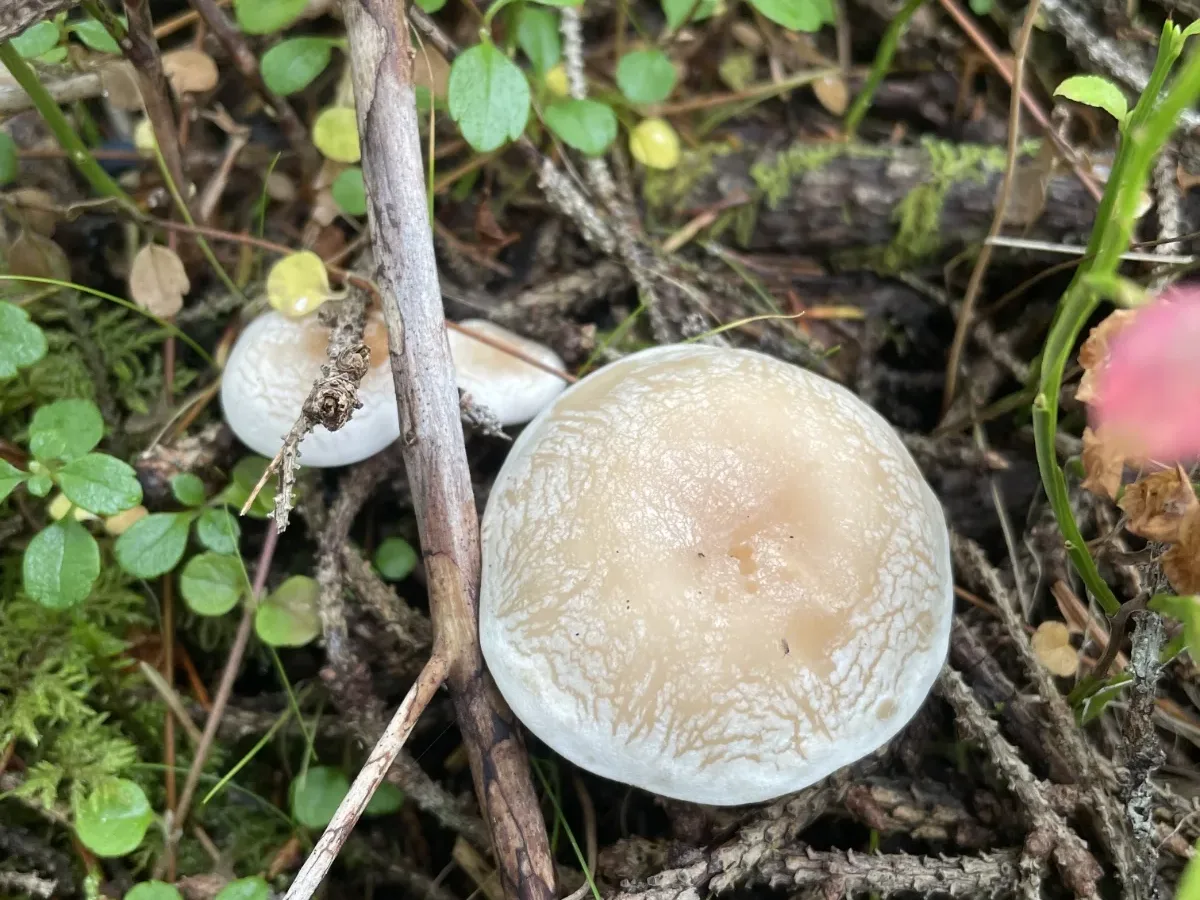 © Marte Kristoffersen (CC BY)
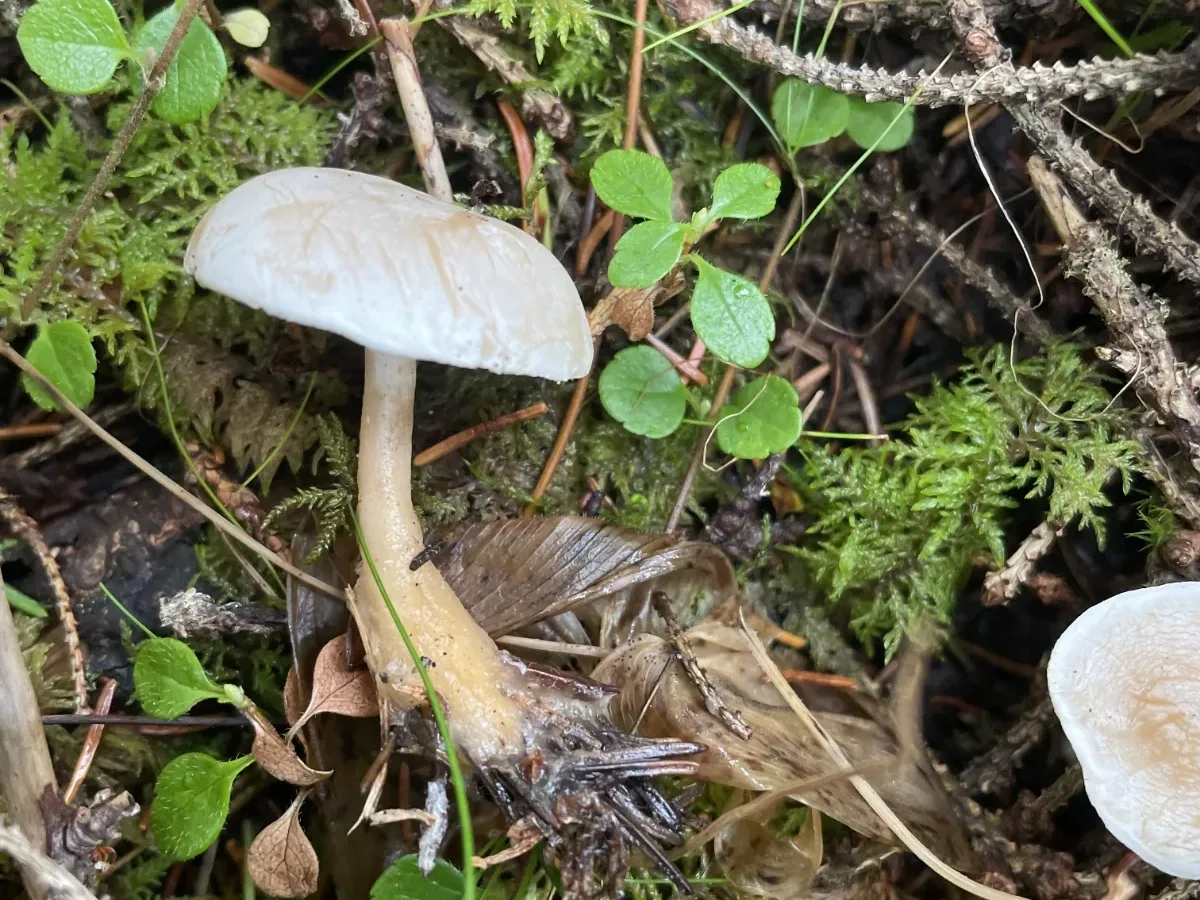 © Marte Kristoffersen (CC BY)
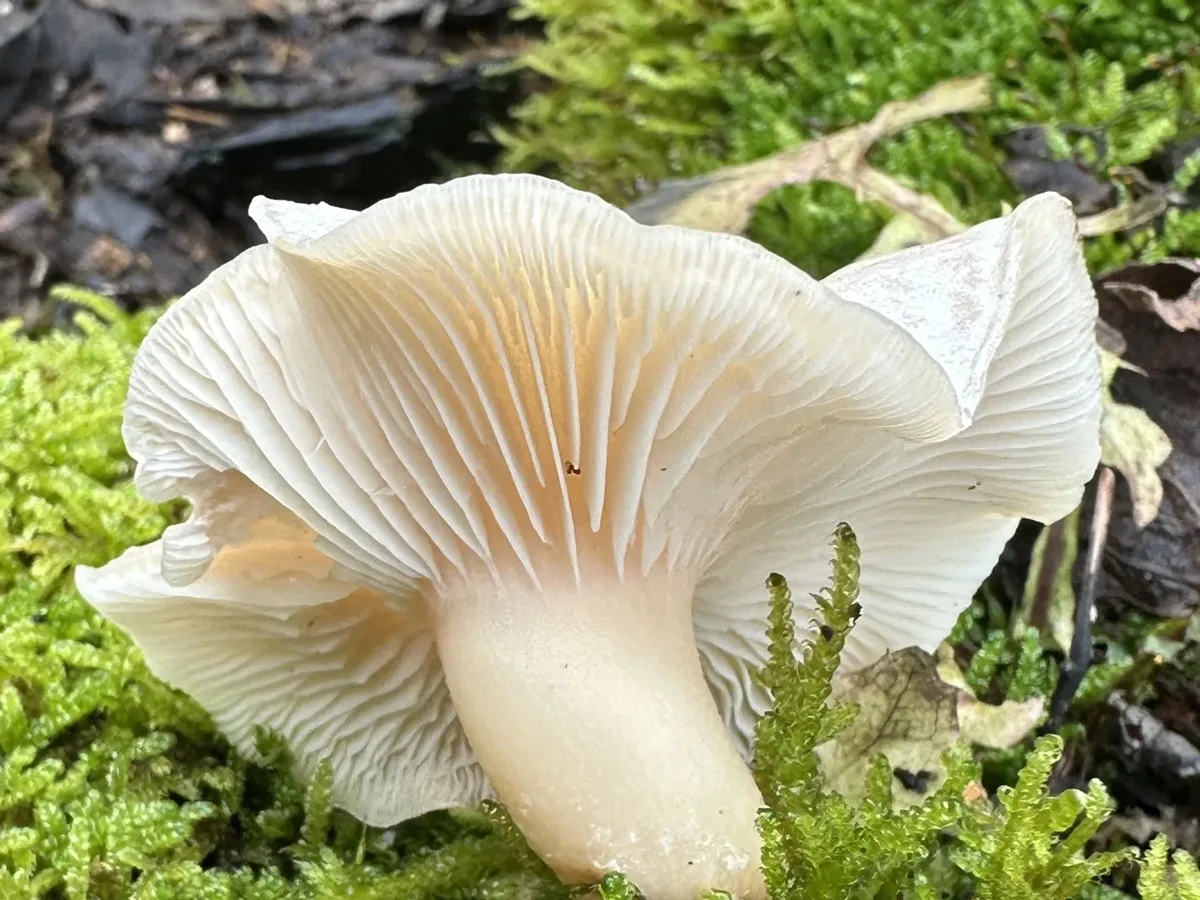 © Ola Vestre (CC BY)
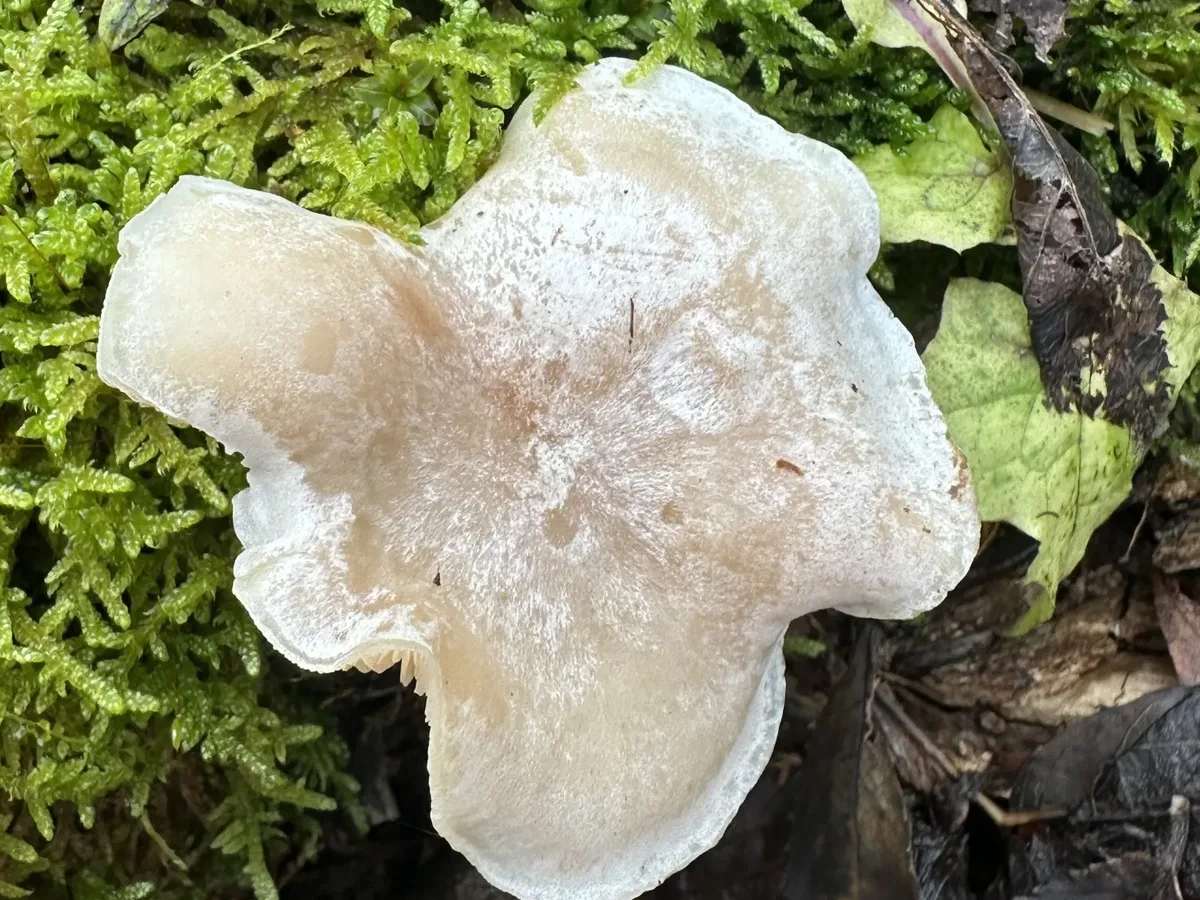 © Ola Vestre (CC BY)
 © Kirsti Anne Mandal (CC BY)
 © gailhampshire (CC BY 2.0)© Michel Langeveld (CC BY 4.0)© Per Marstad (CC BY)
Edible only with the right preparation - or safe for some people but not others. Learn the caveats first.
How to recognise it
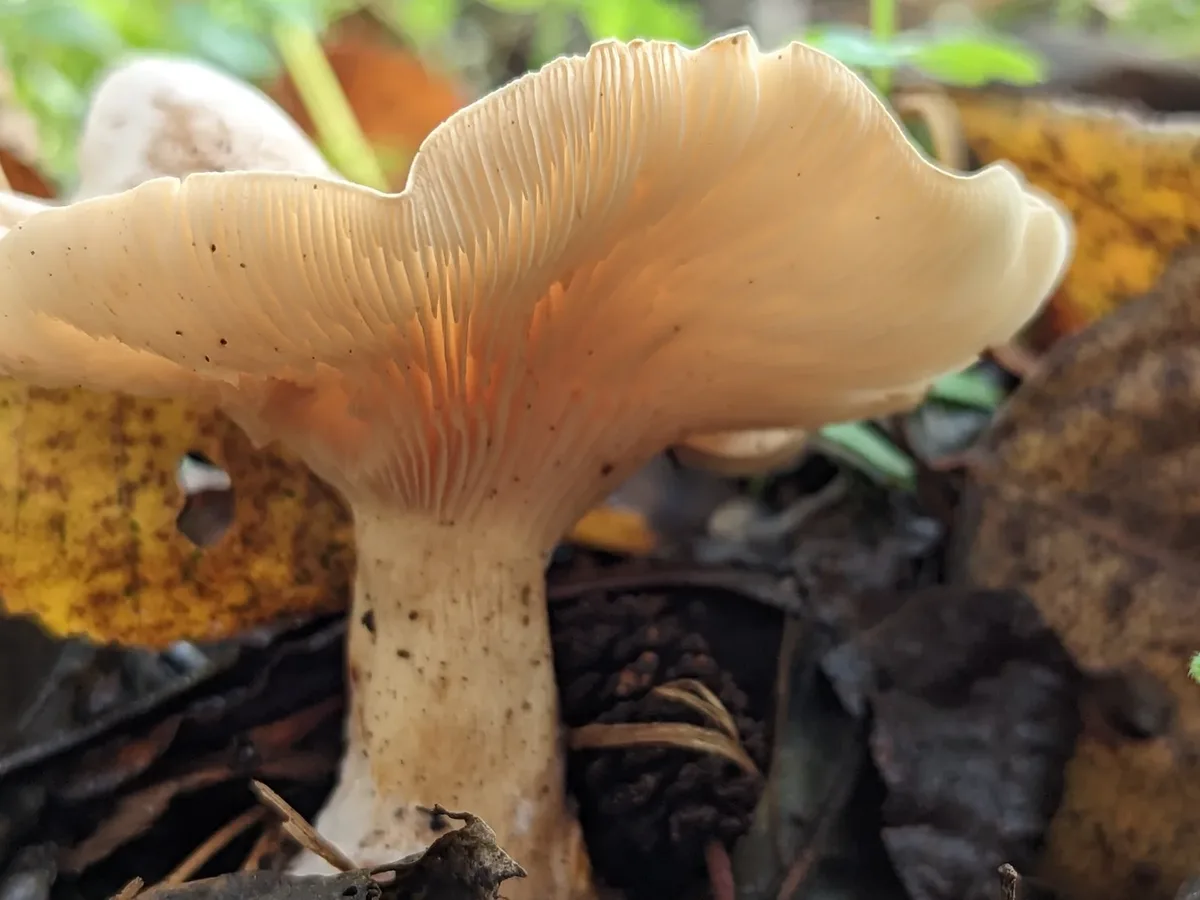
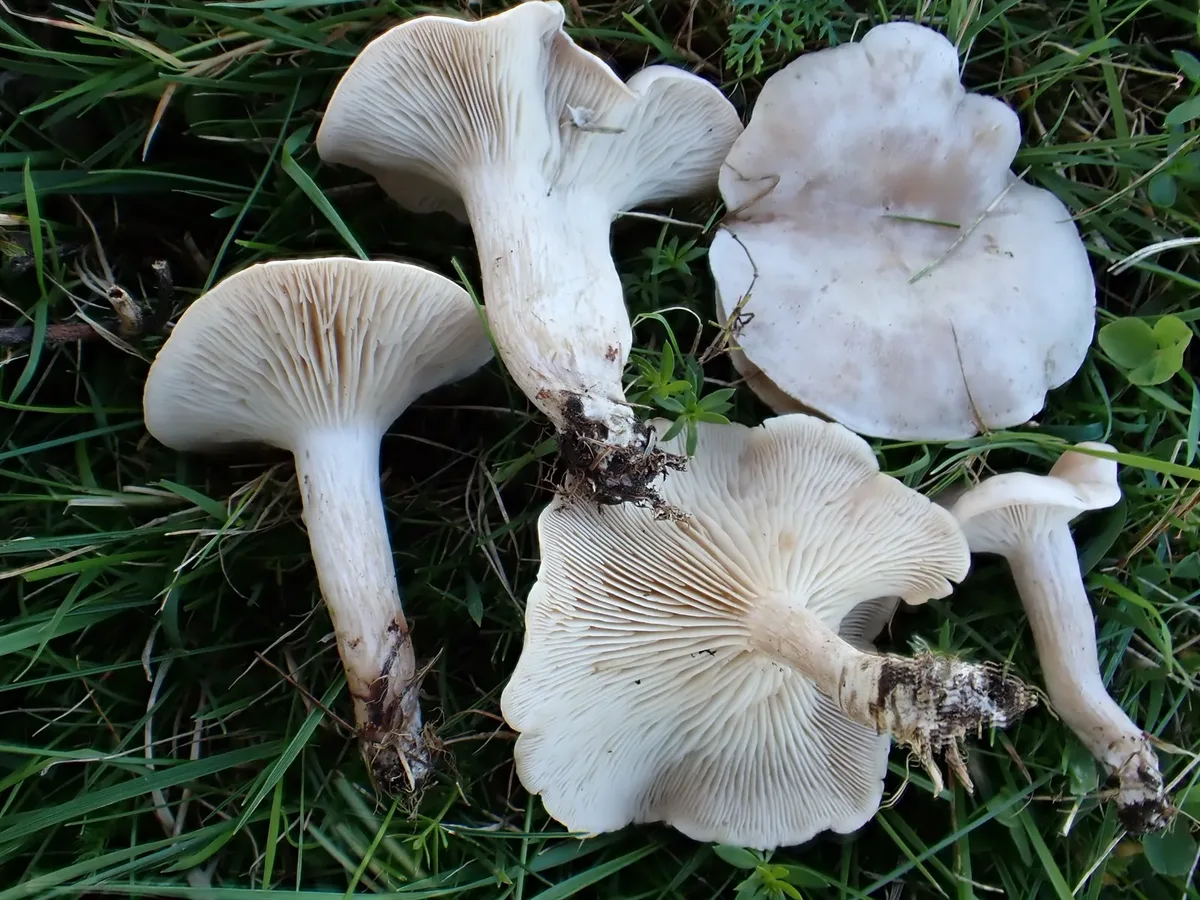
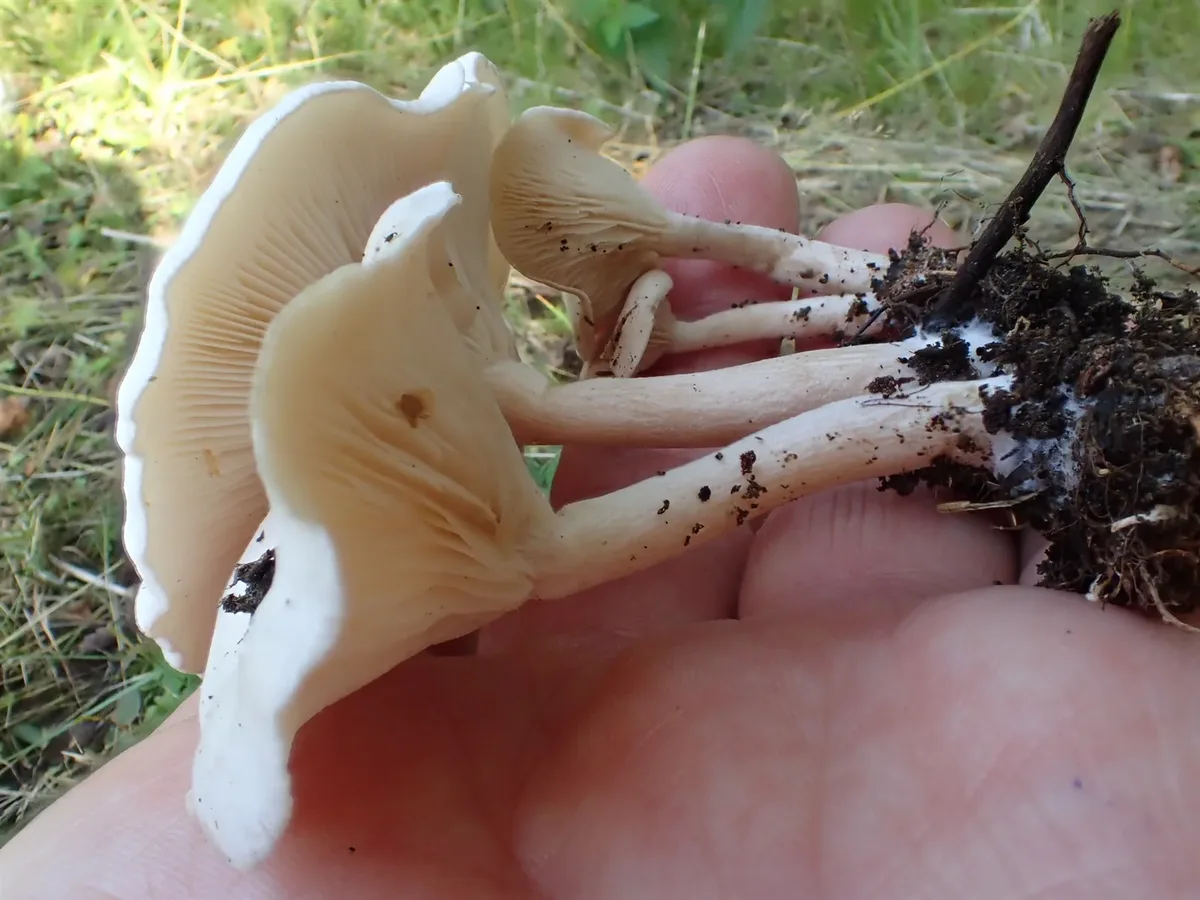
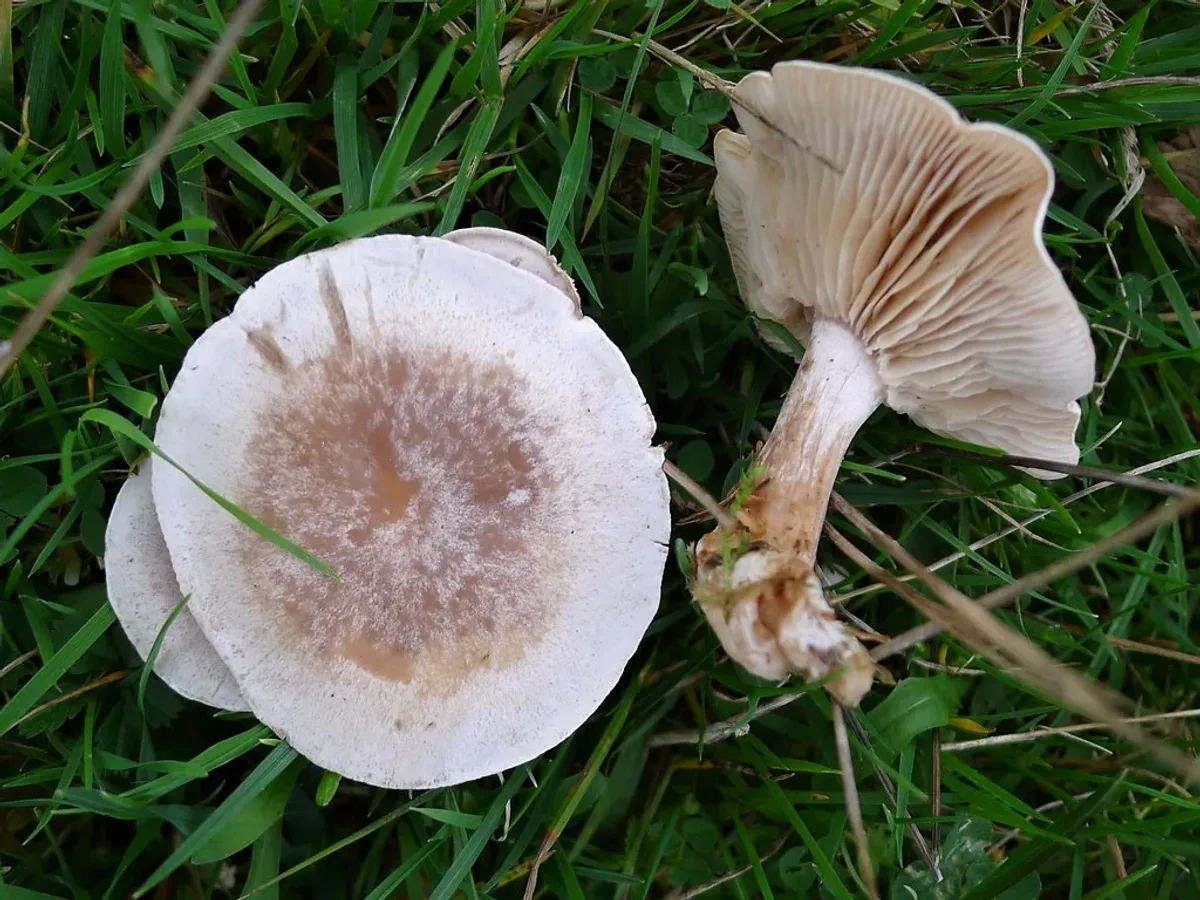
Clitocybe phyllophila is a deceptively plain and attractive mushroom: a pure-white to ivory funnel with a finely frosted cap surface that can look almost powdered or crystalline in dry conditions - hence 'frosty funnel'.
Cap
The cap is 3-8 cm across and follows the classic Clitocybe development from convex with an inrolled margin to broadly flattened and then shallowly to moderately funnelled.
The surface stays dry and smooth, though the frosted bloom may wash off in wet weather.
Gills
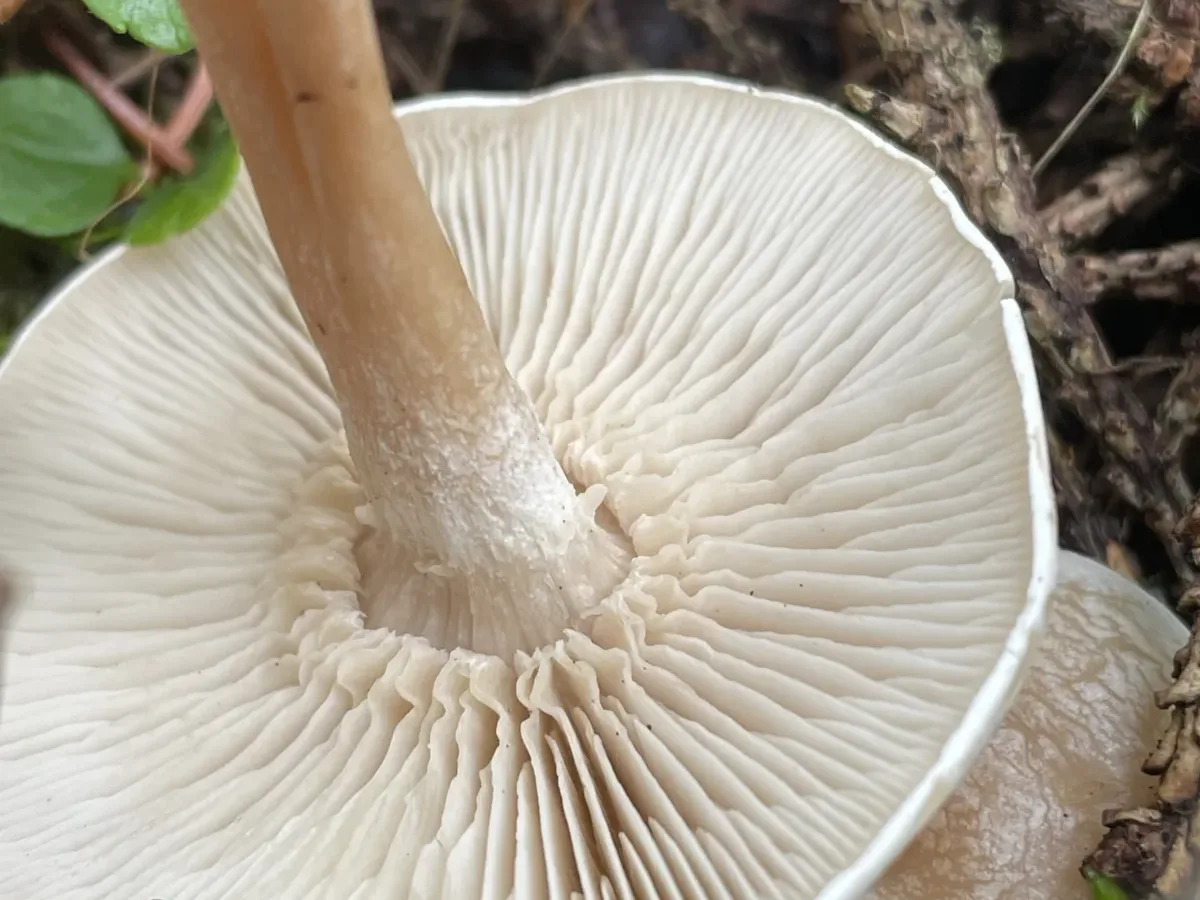
The gills are white, very closely packed and distinctly decurrent - running down the stem in a V-profile typical of the genus.
Stem
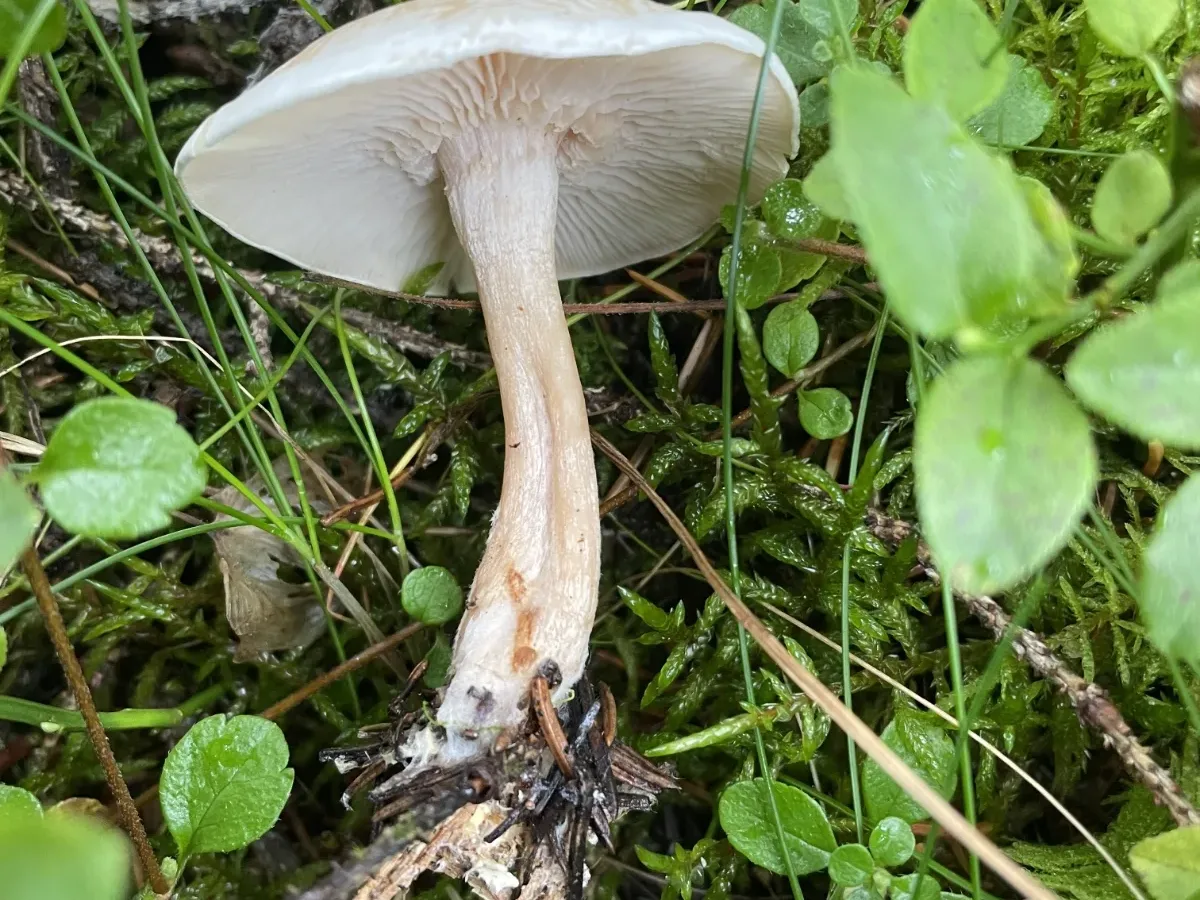
The stem is slender and white, usually with a faint cottony coating at the base.
The overall impression in the field is of a clean, innocent-looking small white mushroom nestling in autumn leaves - which is precisely what makes it hazardous: it carries enough muscarine to cause serious cholinergic poisoning.
A spore print is white, which does not help distinguish it from edible white-spored lookalikes, so careful attention to the combination of decurrent gills, frosty surface and litter habitat is essential.
Why it's dangerous
The main hazard of Clitocybe phyllophila is misidentification: it is a visually innocuous white mushroom that shares its habitat and season with edible species.
The muscarinic syndrome it causes is unpleasant and can be alarming - particularly the profuse sweating, bradycardia and visual disturbance - but is rarely fatal when treated.
The critical action is to seek medical attention promptly, because the short latency (symptoms within 30-120 minutes) combined with the distinctive cholinergic picture allows rapid diagnosis, and atropine works quickly.
Eating a large quantity before symptoms are recognised, or failing to seek medical care, increases the risk.
Because muscarine is not destroyed by cooking, no amount of preparation makes this species safe.
Toxin
Clitocybe phyllophila contains muscarine, a quaternary ammonium compound that is a potent agonist of muscarinic acetylcholine receptors.
Muscarine is heat-stable and is not destroyed by cooking, drying or other preparation.
It acts on the parasympathetic nervous system, producing the classic SLUDGE (Salivation, Lacrimation, Urination, Defecation, GI distress, Emesis) and bronchospasm syndrome.
The muscarine content of C. phyllophila is comparable to other toxic small white Clitocybe species such as C. dealbata.
Symptoms
Symptoms of muscarinic poisoning appear rapidly, typically within 15-30 minutes to 2 hours of ingestion (the short latency is itself a diagnostic clue).
The classic muscarinic syndrome includes:
- profuse sweating
- increased salivation and lacrimation (tearing)
- abdominal cramps
- nausea, vomiting, diarrhoea
- blurred vision (due to miosis and reduced accommodation)
- bradycardia (slowed heart rate)
- in severe cases, bronchospasm and hypotension
Severity is dose-dependent.
Recovery with supportive care is usual, and the specific antidote atropine (an anticholinergic) is highly effective at reversing muscarinic effects.
Fatalities are rare in developed countries with prompt medical access but have been recorded in historical and resource-limited settings.
Staying safe
Clitocybe phyllophila is a muscarine-containing poisonous mushroom and must never be eaten.
The muscarine content is sufficient to produce the classic cholinergic (muscarinic) syndrome, and even small quantities can cause significant distress.
The main practical danger is confusion with edible white funnels - particularly because the species looks innocuous and clean. Any small white funnel with crowded decurrent gills from autumn leaf litter should be assumed poisonous until positively identified otherwise.
Beginners and intermediate foragers alike should leave all small white funnels alone unless they can positively confirm the identity of an edible species (such as Clitopilus prunulus, which has a pink spore print).
Where & when it grows
Habitat
This species earns its living as a litter decomposer, drawing nutrition from the accumulated dead leaves, needles and woody debris of the woodland floor rather than from living tree roots.
It is most at home in beech and oak leaf litter in deciduous woodland, but turns up equally in mixed and coniferous plantations, parkland, hedgerows and mature gardens - anywhere that organic litter builds up undisturbed.
The fungus is typically gregarious, appearing in scattered groups, small troops or loose partial arcs in the leaf layer.
Because the mycelium persists in the litter from one year to the next, the same damp corner of a wood tends to produce fruitbodies reliably every autumn.
It does not form the sweeping fairy rings of Clitocybe nebularis, but those gentle arcs in the leaf layer are a recurring signature of its presence.
When
A classic autumn mushroom of the Northern Hemisphere.
The first fruitbodies appear as early as late August, prompted by cooling nights and the first autumn rains. The main flush runs through September and October in step with deciduous leaf fall, then tapers through November.
The species handles a light surface frost without difficulty.
Because it shares its season - and its habitat - with many other white and cream funnels, careful identification matters more in autumn, not less.
How it grows
Clitocybe phyllophila fruits from a buried mycelial network that threads through the litter and duff layer, quietly breaking down dead plant material and returning nutrients to the soil.
After a spell of damp autumnal weather the fruitbodies push up gregariously - a group that seems to appear from nowhere in a matter of days.
The mycelium is perennial, which is why the same shaded corner of a wood reliably yields mushrooms year after year.
There are no dramatic fairy rings here, but a diffuse, recurring patch in the leaf litter is a tell-tale sign that this fungus has made the site its own.
Fruiting conditions
Fruits in cool, damp autumn conditions as leaf litter accumulates; relatively shallow flush-lag compared to mycorrhizal species because it is a litter saprotroph with readily available substrate. Tolerates light frost.
Look-alikes
Several white-gilled funnels and related mushrooms share the litter habitat and can be confused with Clitocybe phyllophila.
- Clitocybe dealbata (ivory funnel / sweating mushroom) is the most important comparison - similarly white and muscarine-rich. It is generally slightly smaller and has a less frosted, more silky cap and a faint sweetish smell, but the two species overlap and both are poisonous; field separation is important mainly for the student, not the table.
- Clitopilus prunulus (sweetbread mushroom) is an edible grey-white funnel of similar habitat with strongly decurrent gills. It is reliably separated by its consistently grey-tinged (never pure white) cap, strongly mealy fresh-flour smell and pink spore print as it ages.
- Clitocybe nebularis (clouded funnel) is much larger (cap 6-20 cm), grey rather than white, and shares the same habitat but is distinguishable by size and colour alone.
- The Snowy waxcap Hygrocybe virginea is smaller, more fragile, with waxy gills and lacks the decurrent, crowded gill pattern.
Any small white funnel-shaped mushroom with decurrent crowded gills in autumn leaf litter must be treated with caution and positively identified before eating.
Much larger (cap 6-20 cm vs. 3-8 cm), the cap is cloud-grey to ash-grey rather than white, and it has a strong, distinctive mealy-sickly smell. Also a caution species but in a different size class - separation is usually straightforward.
Also muscarine-containing and poisonous. Clitocybe dealbata is generally slightly smaller (2-5 cm), the cap surface is more silky-smooth than frosted, and it has a faint sweetish smell. Both species are poisonous - knowing which of the two you have does not change the outcome. The key lesson is that all small white funnels with decurrent gills in litter must be treated with great caution.
Small and white but belongs to a completely different ecological guild (waxcap grasslands and old meadows, not woodland leaf litter). The gills are waxy, widely spaced and not strongly decurrent; the whole mushroom has a fragile, translucent quality. Not poisonous.
An edible species that can be confused with muscarinic white funnels including C. phyllophila. Clitopilus prunulus differs critically: its cap is consistently grey to greyish-white (never pure white), it has a very strong and distinctive fresh-flour / mealy smell, and its spore print turns pink as the gills age. The pink spore print is the most reliable separator. Never eat a white funnel without checking the spore print colour.
Larger (cap 5-15 cm), pale buff to cream rather than pure white, with a deep funnel and a characteristic small central umbo (boss) in the cap centre. Tall, stout stem. Edible and choice, but must be positively confirmed. The buff colour and umbo are useful markers.
A reference guide - never an edibility guarantee. When in doubt, leave it out.