Chicken run funnel
Clitocybe phaeophthalmasyn. Agaricus phaeophthalmus, Clitocybe hydrogramma, Clitocybe inornata, Lepista phaeophthalma
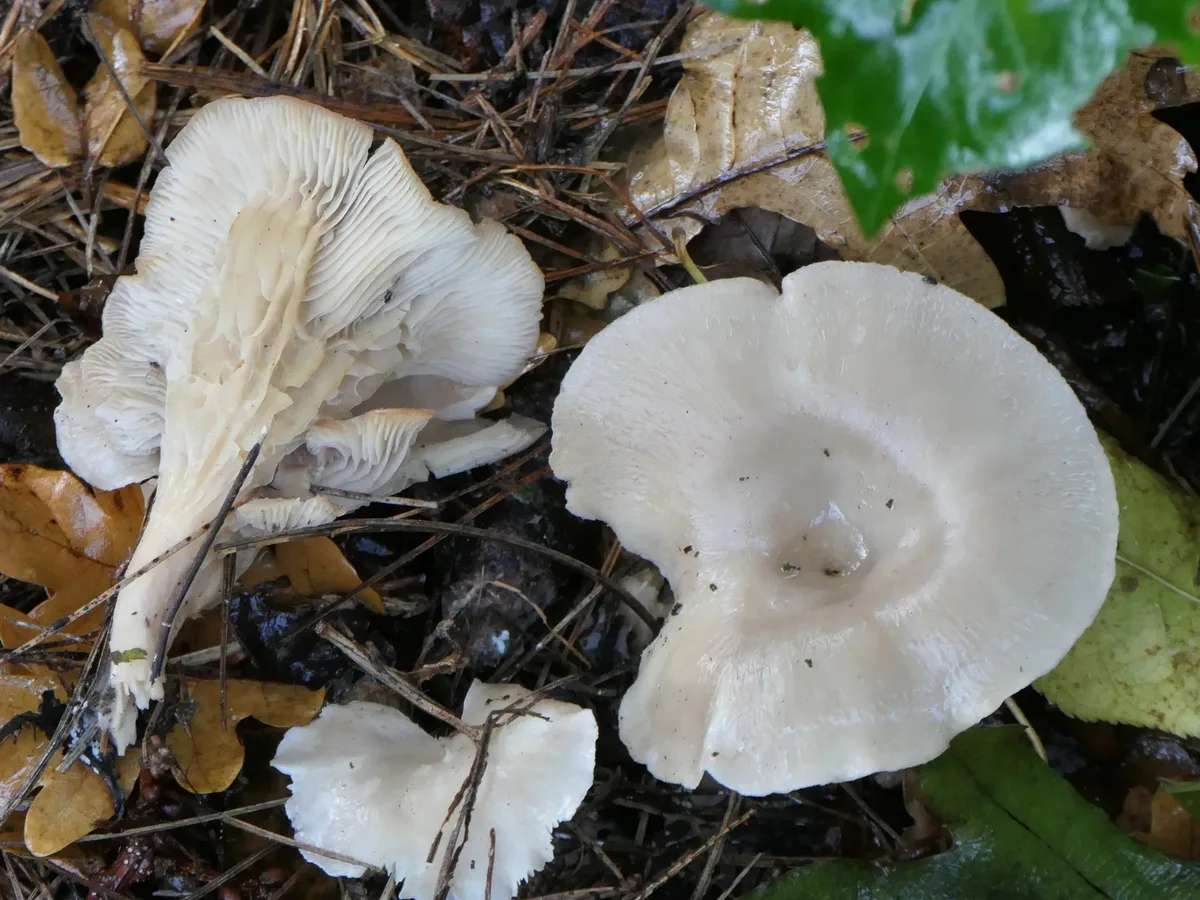 hhkaaks (CC0)
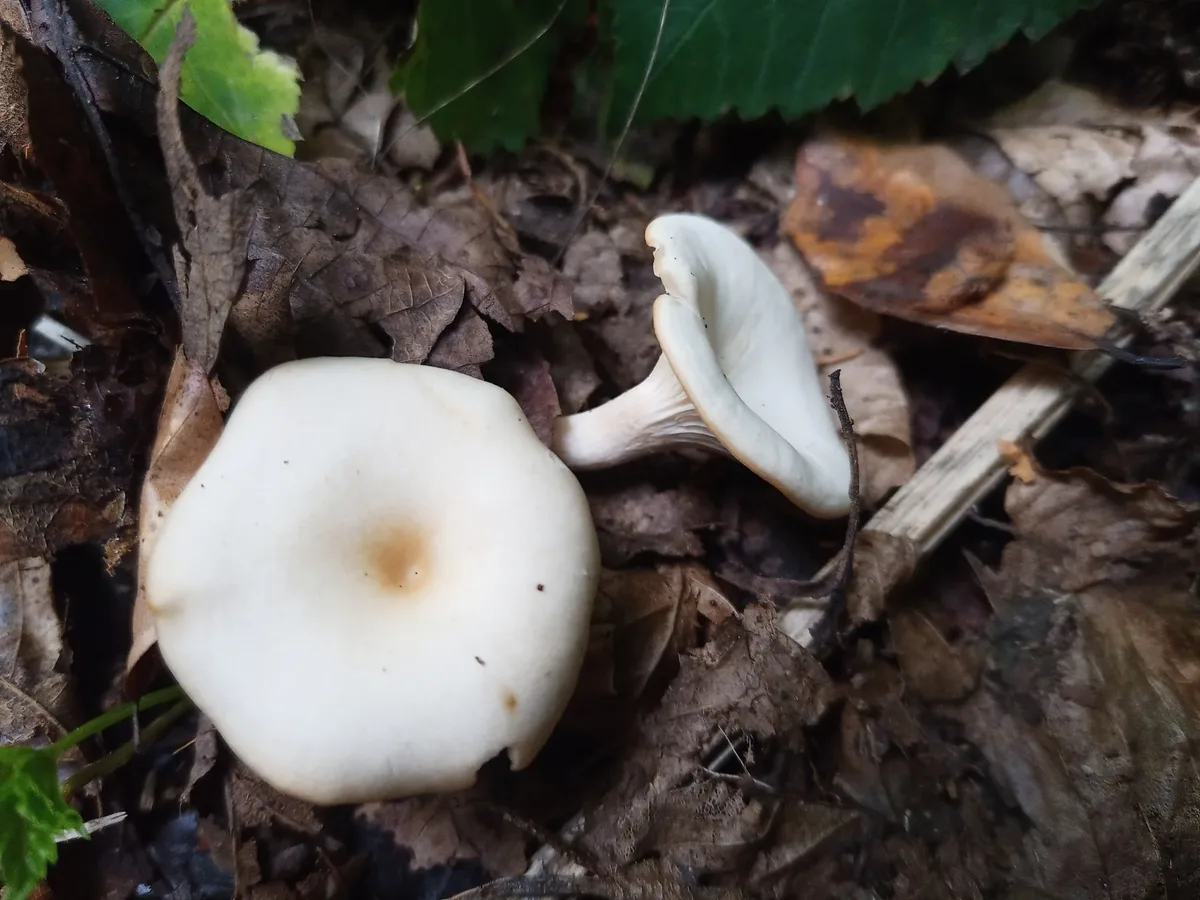 © Michal Honskus (CC BY)
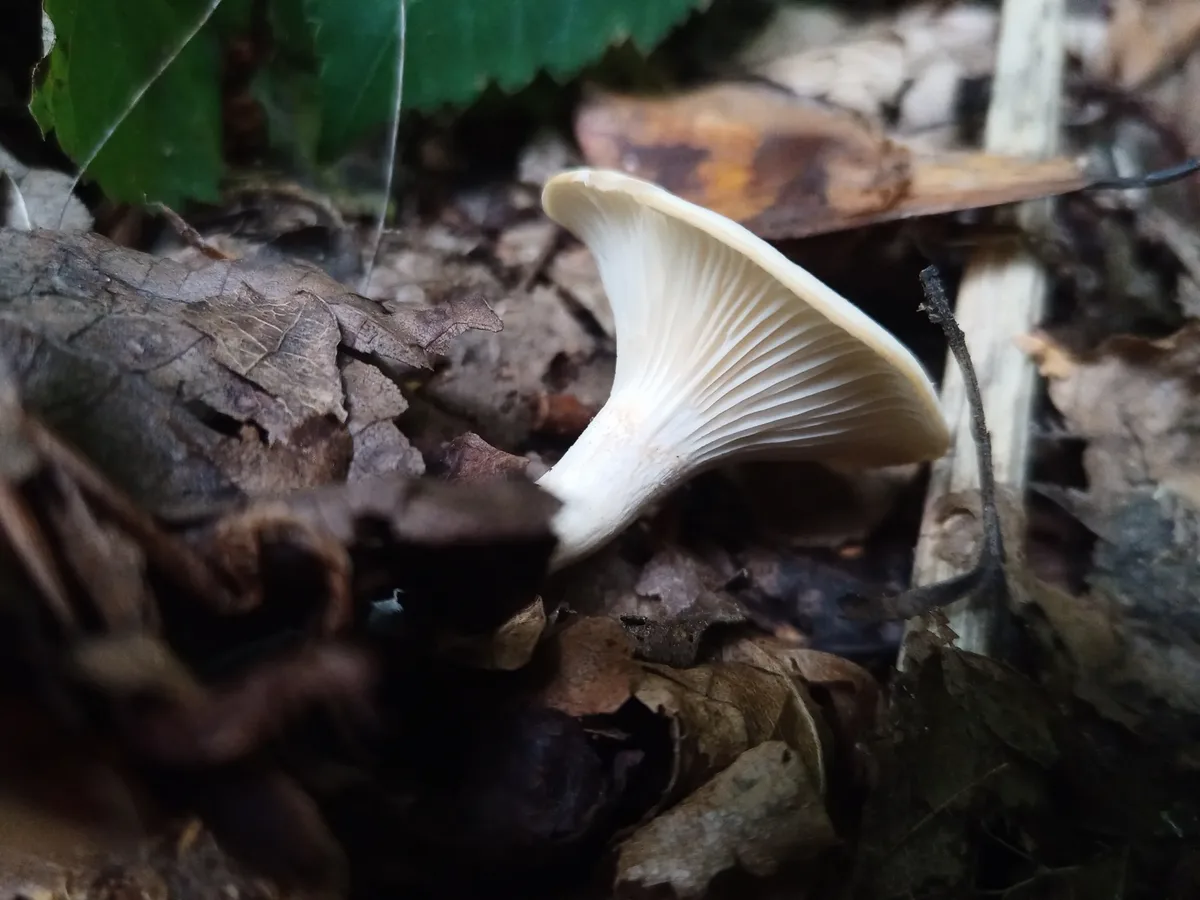 © Michal Honskus (CC BY)
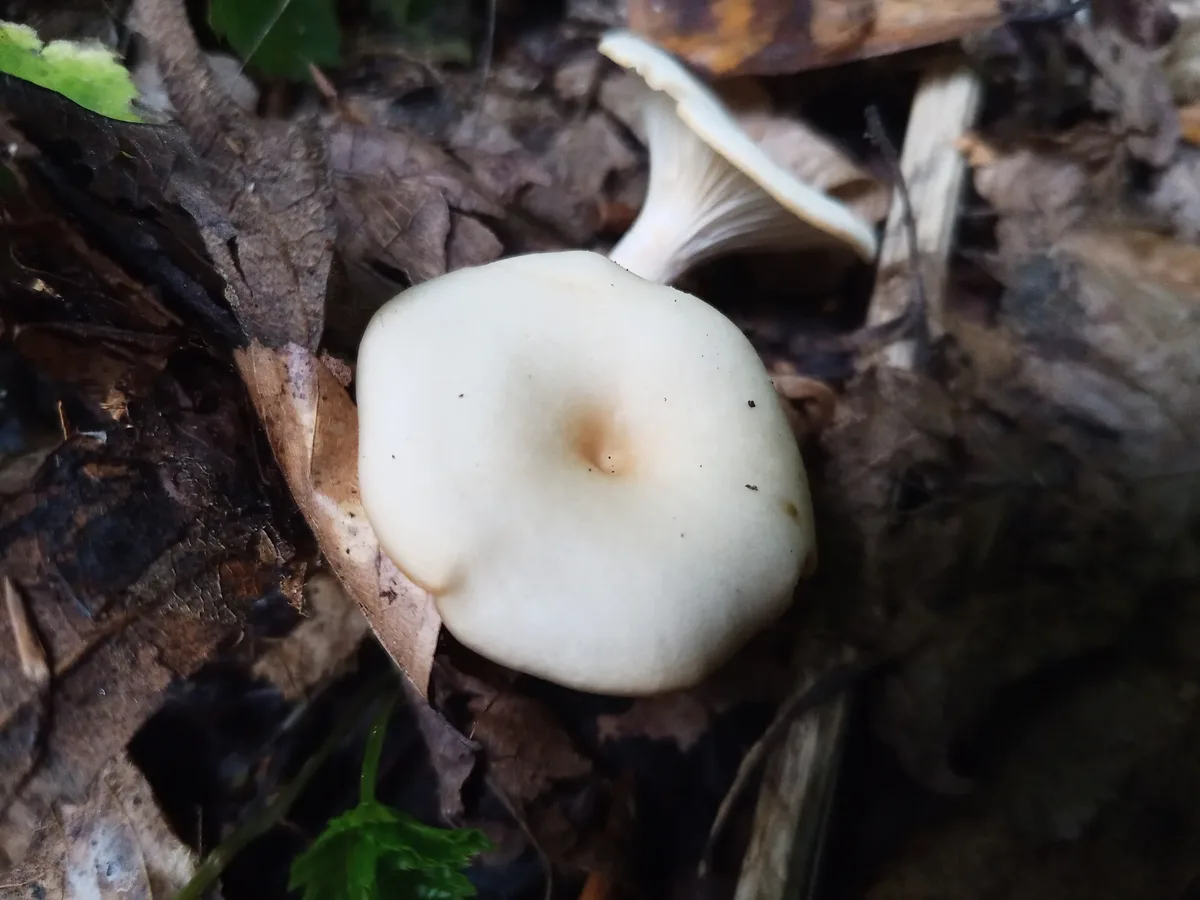 © Michal Honskus (CC BY)
 © norgram (CC BY)
 © norgram (CC BY)
 © rainerburkard (CC BY)
 © Beniamin Abramczyk (CC BY-SA)
 hhkaaks (CC0)hhkaaks (CC0)© Michal Honskus (CC BY)
Edible only with the right preparation - or safe for some people but not others. Learn the caveats first.
How to recognise it
Clitocybe phaeophthalma is a modest, medium-small funnel mushroom - nothing flashy, but with a set of consistent field marks that reward careful attention.
Cap
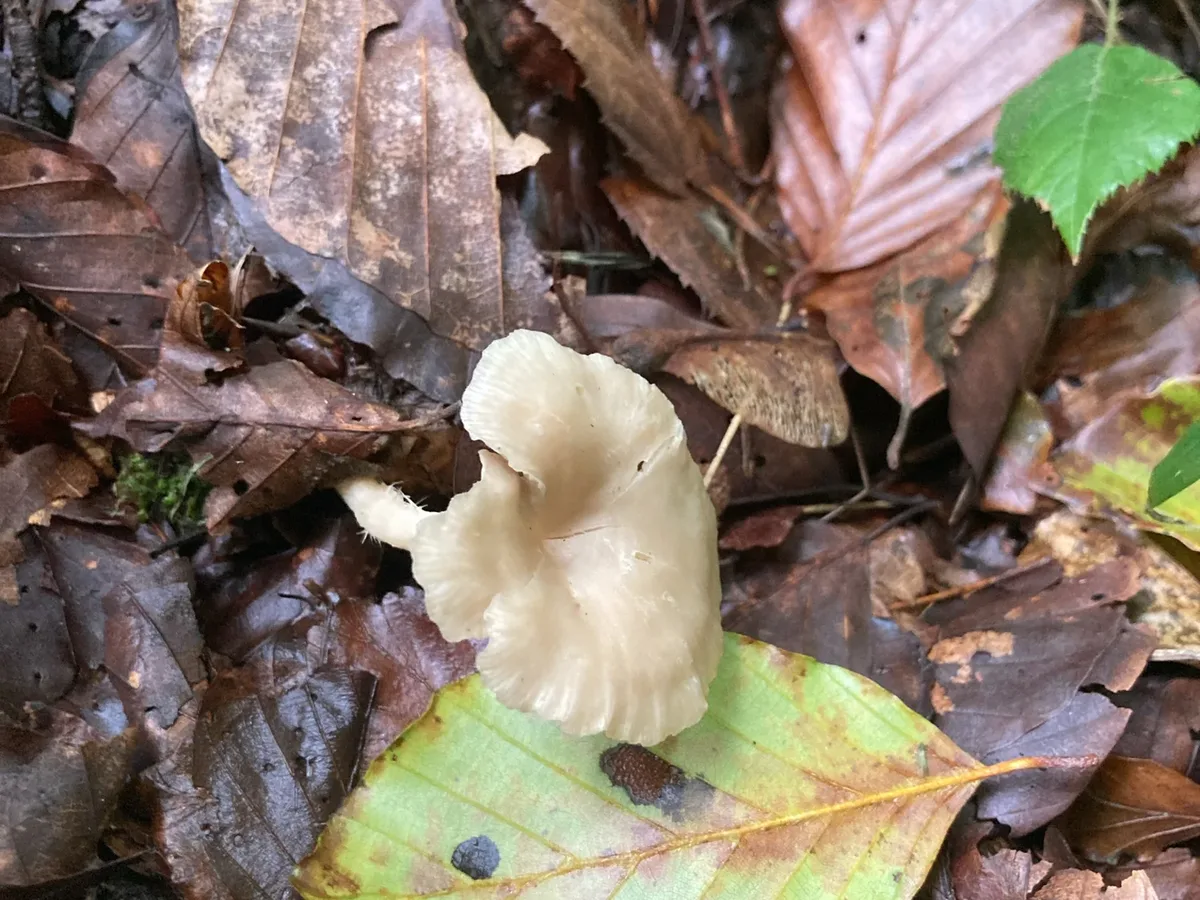
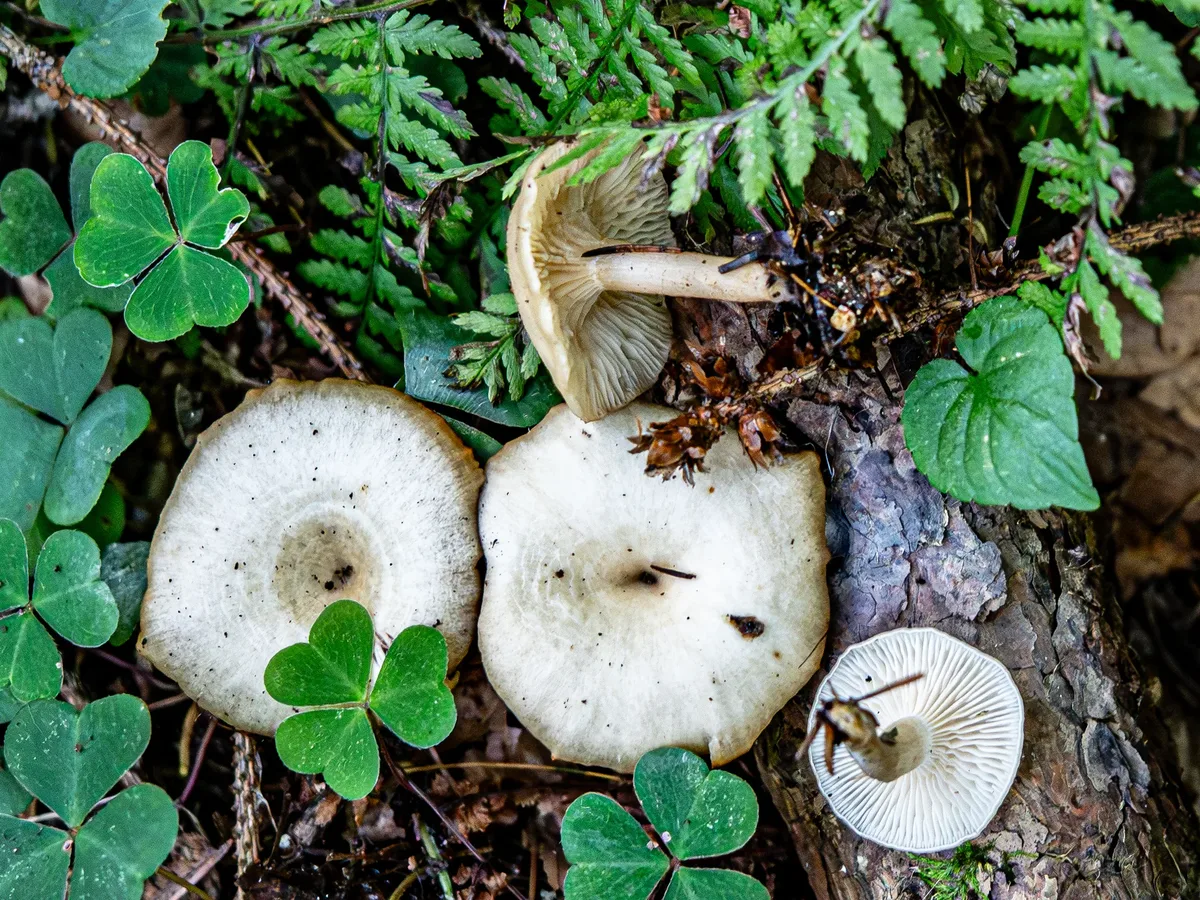
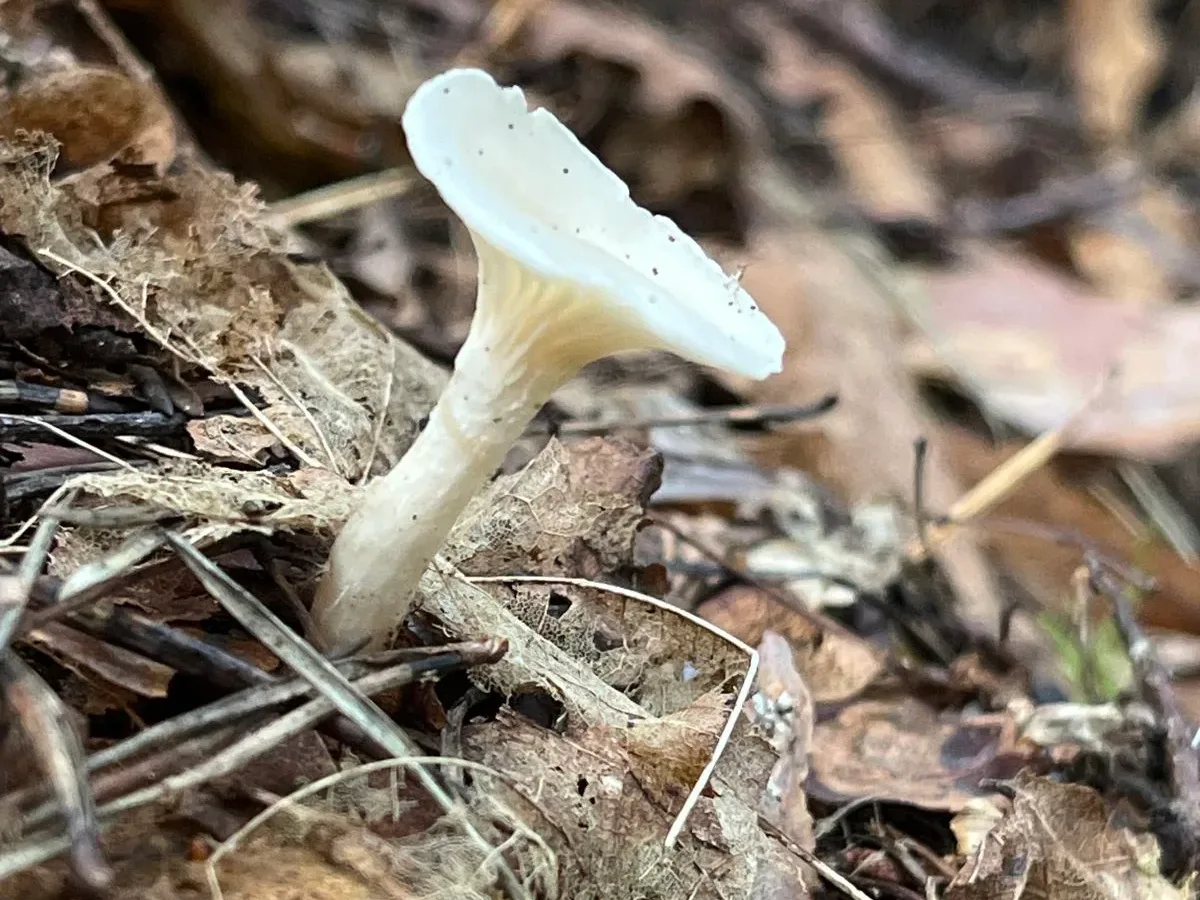
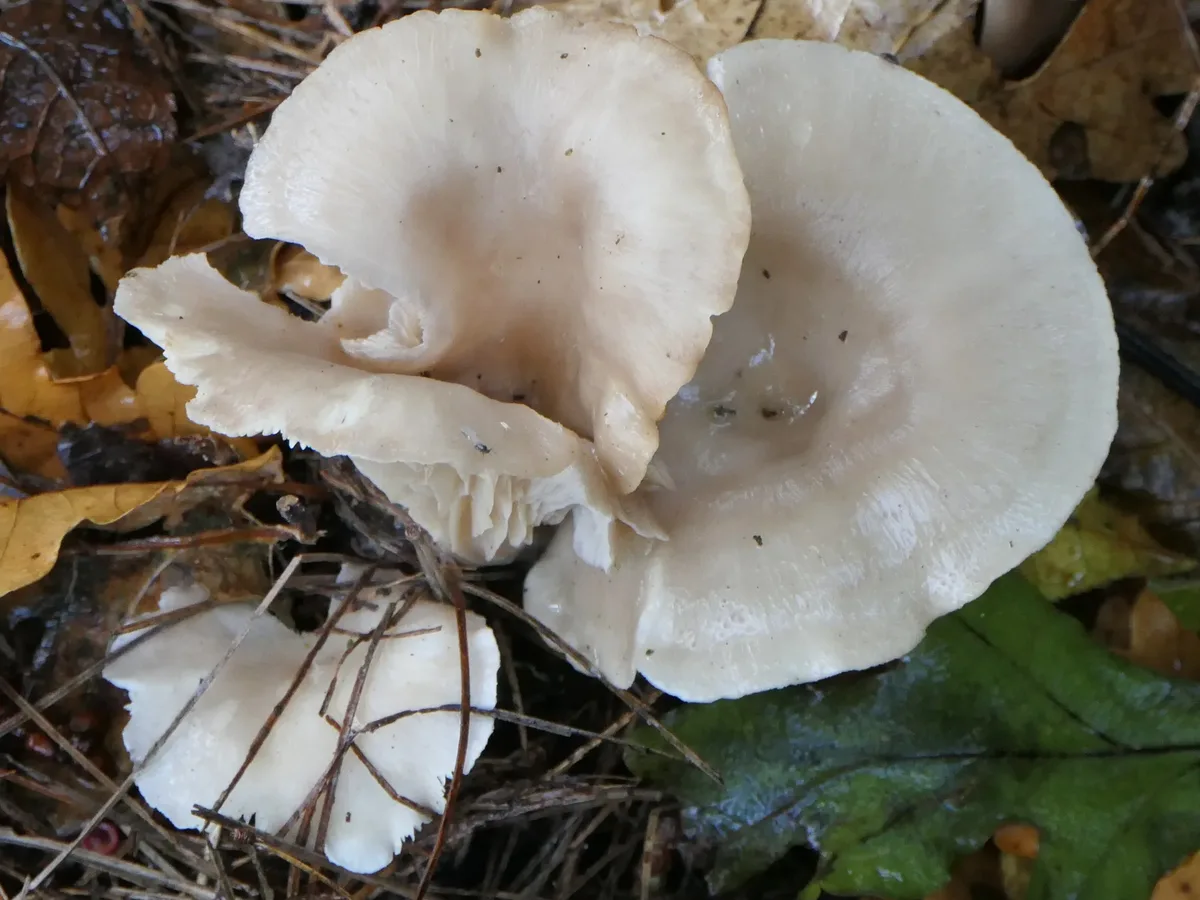
The cap begins convex and tightly incurved, gradually flattening into a shallow funnel 3-8 cm across; it holds that inrolled edge longer than many of its relatives.
The colour is pale cream to greyish-white for most of the cap, but the centre carries a persistent brownish-grey or sepia disc that contrasts with the paler edge - a bicoloured impression that, once you've clocked it, becomes a reliable pointer in the field.
In wet weather the surface picks up a slight tackiness.
Gills
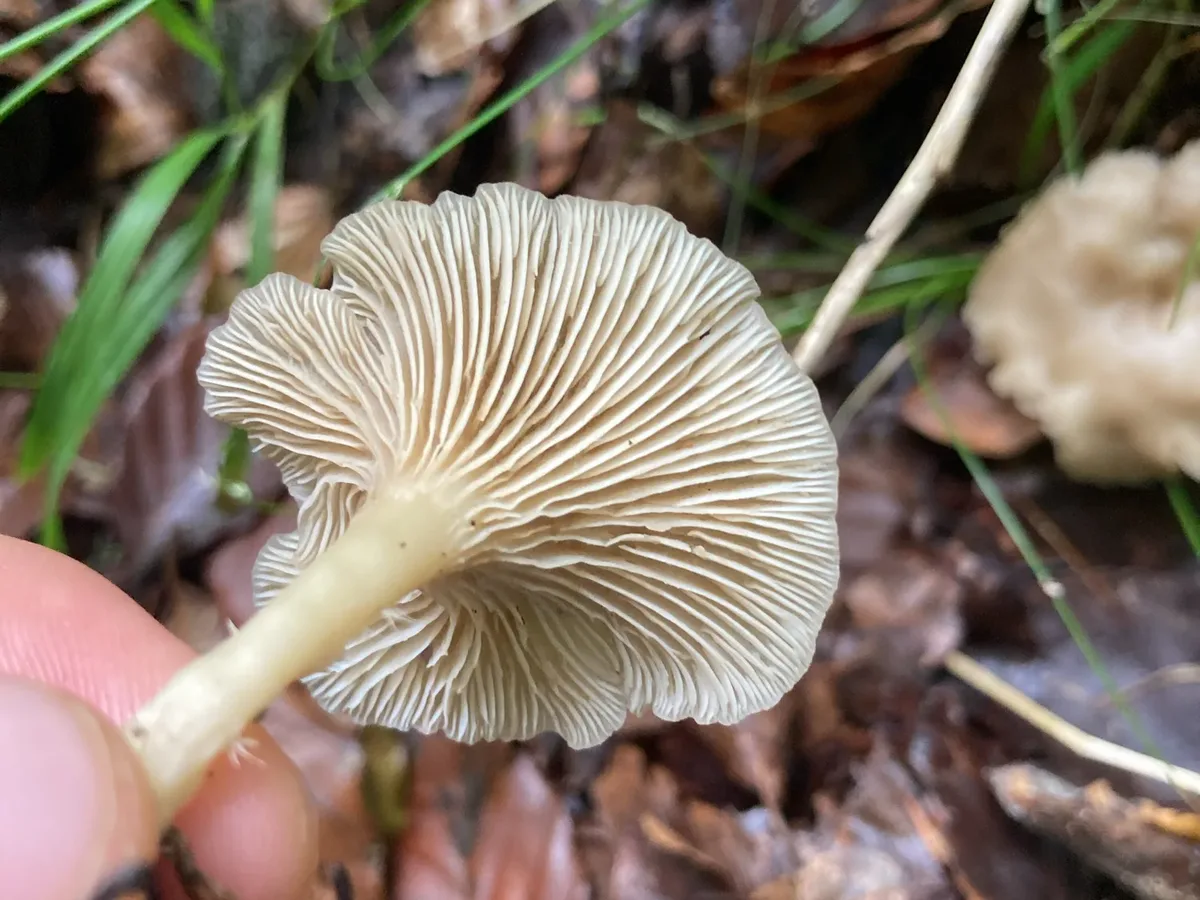
The gills bring you firmly into Clitocybe territory: white to cream, very crowded, narrow, and conspicuously decurrent - they flow down the stem in a way that gives the whole underside a swept, unified look. The spore print is white to pale cream.
Stem
The stem is slender, whitish-grey and fibrous, with no ring.
Smell & taste
The defining character is the smell: a strong, earthy, rank odour like a poultry yard or old chicken coop - sometimes edging into sweaty socks or stale grain. Once you have met it, it is unmistakable, and it is the single most useful confirmation of this species.
Why it's dangerous
The danger from this species is twofold:
- 1It is directly poisonous: its muscarine content causes genuine, sometimes serious, parasympathomimetic illness.
- 2More practically, the risk arises from misidentification: a forager who mistakes it for the edible Clitopilus prunulus in a garden or hedgerow setting may eat a substantial amount before symptoms begin, as the preparation and cooking process is identical.
The rapid symptom onset (under two hours) at least means the poisoning is recognised quickly. No deaths are specifically attributed to C. phaeophthalma in the literature, but muscarinic crises are medical emergencies in vulnerable individuals.
Treat any suspected ingestion as urgent and seek medical attention immediately; tell the clinician muscarinic poisoning is suspected (atropine antidote is available).
Toxin
Clitocybe phaeophthalma contains muscarine and/or muscarinic compounds - the same class of alkaloid toxin found in many poisonous Clitocybe species including Clitocybe dealbata and Clitocybe phyllophila.
Muscarine is a stable, heat-resistant toxin: it is not destroyed by cooking, so thorough preparation does not make this mushroom safe.
Muscarine acts as an agonist at muscarinic acetylcholine receptors, overstimulating the parasympathetic nervous system.
Symptoms
Muscarinic poisoning from Clitocybe phaeophthalma produces the classic SLUDGE syndrome:
- Salivation
- Lacrimation (tearing)
- Urination
- Defecation
- GI distress (nausea, vomiting, cramps, diarrhoea)
- Emesis
Profuse sweating (diaphoresis), bradycardia (slow heart rate), bronchospasm, miosis (constricted pupils) and hypotension may also occur.
Symptoms typically begin 15 minutes to 2 hours after ingestion, in contrast to the delayed onset of amatoxin poisoning. The onset is therefore rapid and the syndrome clearly parasympathomimetic.
Severity depends on the dose consumed; most victims recover within 6-24 hours with supportive care, but severe cases, particularly in the elderly or those with cardiac conditions, can be serious. Atropine is the specific antidote and is effective.
Staying safe
Clitocybe phaeophthalma is a poisonous species and must not be eaten. It contains muscarine (or muscarine-like compounds) and has caused documented muscarinic poisonings.
The primary danger is confusion with the edible Sweetbread Mushroom (Clitopilus prunulus), which shares the strongly decurrent white gills, white spore print and mealy odour. Inexperienced foragers attempting to collect C. prunulus in nitrogen-enriched ground have picked C. phaeophthalma by mistake.
Do not eat any funnel mushroom unless you are completely certain of its identity - the white-gilled, strongly-decurrent Clitocybe group contains several dangerous species and their separation requires careful, experienced assessment of smell, habitat and precise gill and cap characters.
Where & when it grows
Habitat
This species is a nitrogen-opportunist: it thrives wherever organic debris is accumulating and breakdown is active.
Classic spots include:
- garden compost heaps and enriched borders
- bases of old hedgerows
- roadside verges with decaying plant material
- woodland margins on chalk and limestone
- ground near old animal enclosures or poultry runs
It is less a deep-woodland species than a forest-edge and disturbed-ground one, and its tolerance of nitrogen-rich, humanised environments means it turns up in parks, allotments and kitchen gardens.
In natural settings it favours calcareous mixed deciduous or beech woodland. It appears in scattered groups or small troops rather than large fairy rings.
When
The season runs from late summer through autumn. First fruitings can appear in August during warm, damp spells, but the main flush is September and October.
Fruiting declines through November as temperatures drop, though occasional specimens persist into early winter.
Like most late-season saprotrophic Clitocybe species it responds to autumn rainfall after a dry summer, and flush timing tracks the first sustained cool-moist periods of early autumn.
How it grows
Fruiting bodies arise from mycelium threading through compacted, nitrogen-rich leaf mould and soil debris - quietly present underground, often for years, in the same enriched patch.
This species does not build the broad perennial rings of some larger Clitocybe relatives; instead it returns modestly to the same fertile ground season after season, sending up scattered fruitbodies as long as the substrate persists.
Once cool, damp autumn weather arrives, individual fruitbodies develop and mature over a few days.
Fruiting conditions
Flushes follow autumn rains as soil temperatures drop from summer highs; the species favours the first cool-moist spells of September and October. Enriched nitrogen-rich substrates allow fruiting across a wider temperature range than woodland-only species.
Look-alikes
The most important confusion is with the Sweetbread Mushroom, Clitopilus prunulus, which is edible and shares the same habitat, season, strongly decurrent white gills and white spore print.
Clitopilus prunulus has a notably larger, more irregular, wavy-margined cap in shades of white to ivory-grey with no darker disc at the centre, and its defining smell is mealy-sweet and floury (like damp meal or cucumber), quite different from the rank chicken-coop odour of C. phaeophthalma.
However, the smells can seem superficially similar to the inexperienced, and the gill attachment is nearly identical - this is why the confusion is genuinely dangerous.
Always assess the cap shape (C. prunulus caps are often irregular and wavy-edged), the smell (sweet-floury versus rank-farmyard), and if possible the spore deposit (both give white prints so that does not separate them).
Other confusion species include:
- Clitocybe phyllophila (Frosty Funnel) - also poisonous-muscarinic, white and frosted but smaller and lacking the brownish disc
- Clitocybe dealbata (Ivory Funnel) - very poisonous with muscarine, smaller, pure white throughout with no darker centre
- Lepista saeva / Lepista personata - distinctly lilac stems
- Clitocybe nebularis (Clouded Funnel) - larger and grey throughout with a more obviously mealy-sickly smell
Much larger (6-20 cm cap), distinctly cloud-grey throughout without a contrasting disc, with a stout swollen-base stem and a sweet-rancid mealy smell. Causes GI upset in many people. The difference in size and uniform grey colouring make this a straightforward separation for an attentive observer.
A smaller Clitocybe of similar pale colour but with a distinct aniseed-sweet smell; no rank farmyard note. Cap uniformly pale with no darker disc. Considered potentially mildly toxic; always confirm by smell before any further consideration.
Another poisonous-muscarinic species. White, frosted-looking cap in leaf litter; smaller than C. phaeophthalma; cap whitish throughout with a faintly frosted surface but lacking the warm brownish disc of C. phaeophthalma. The rank smell is less pronounced. Also dangerous - avoid all small pale funnels with decurrent gills.
Also poisonous-muscarinic; a small, pure white to ivory funnel mushroom with crowded decurrent gills, growing in grassy places, lawns and path edges. C. dealbata is smaller (2-5 cm cap) and uniformly white throughout with no darker disc; smell is mealy but less rank. Both are dangerous; telling them apart has no practical value for safety - neither should be eaten.
The most dangerous confusion: Clitopilus prunulus is edible and shares strongly decurrent white gills, white spore print and a mealy smell. However C. prunulus has a larger (5-15 cm), irregular, wavy-edged cap that is uniformly pale white-grey with no darker central disc, and its smell is distinctly sweet-floury (like fresh dough or cucumber) rather than the rank chicken-coop odour of C. phaeophthalma. Check for the darker bicoloured disc in the centre of the cap - absent in C. prunulus. Pick in known locations and never eat a funnel mushroom solely on gill characters.
A reference guide - never an edibility guarantee. When in doubt, leave it out.