Wood blewit
Clitocybe nudasyn. Lepista nuda, Tricholoma nudum, Rhodopaxillus nudus, Agaricus nudus
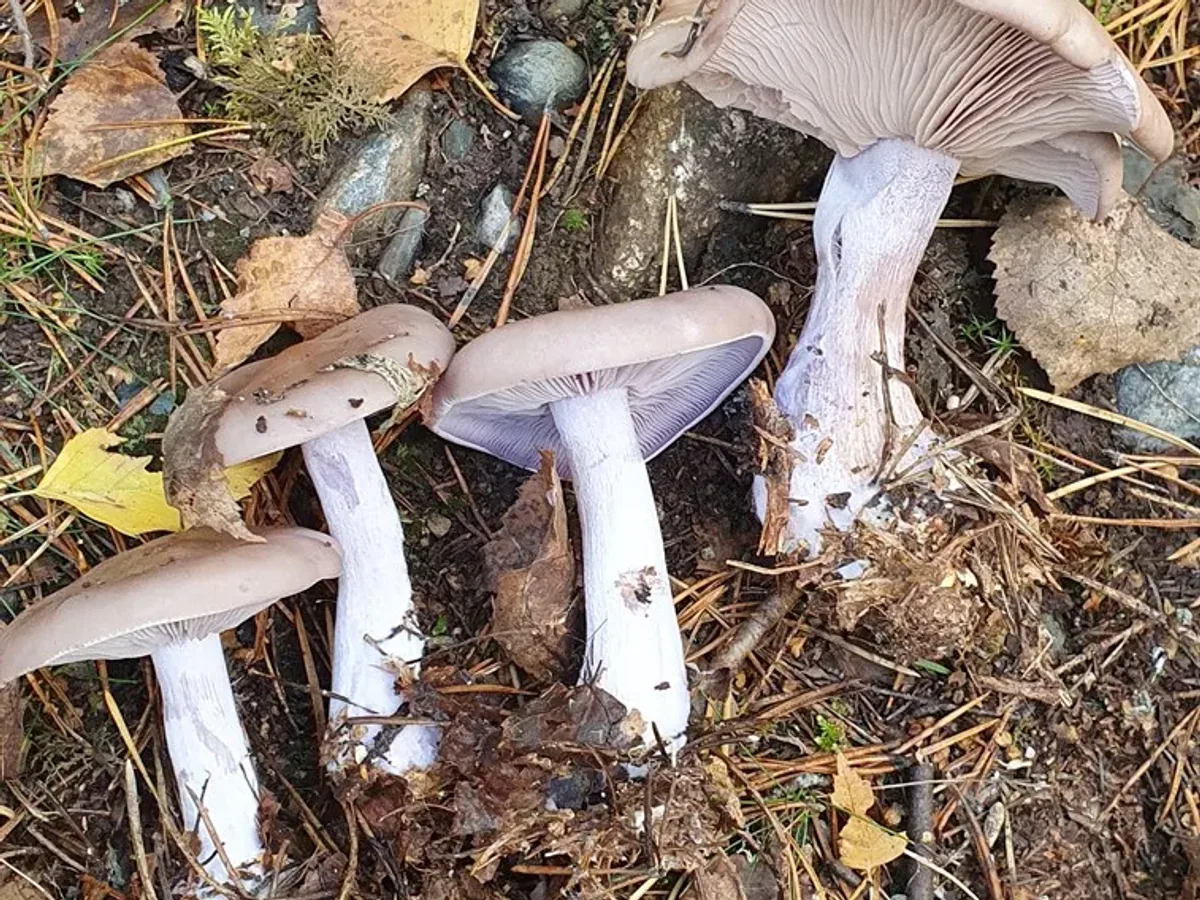 © Reidun Braathen (CC BY)
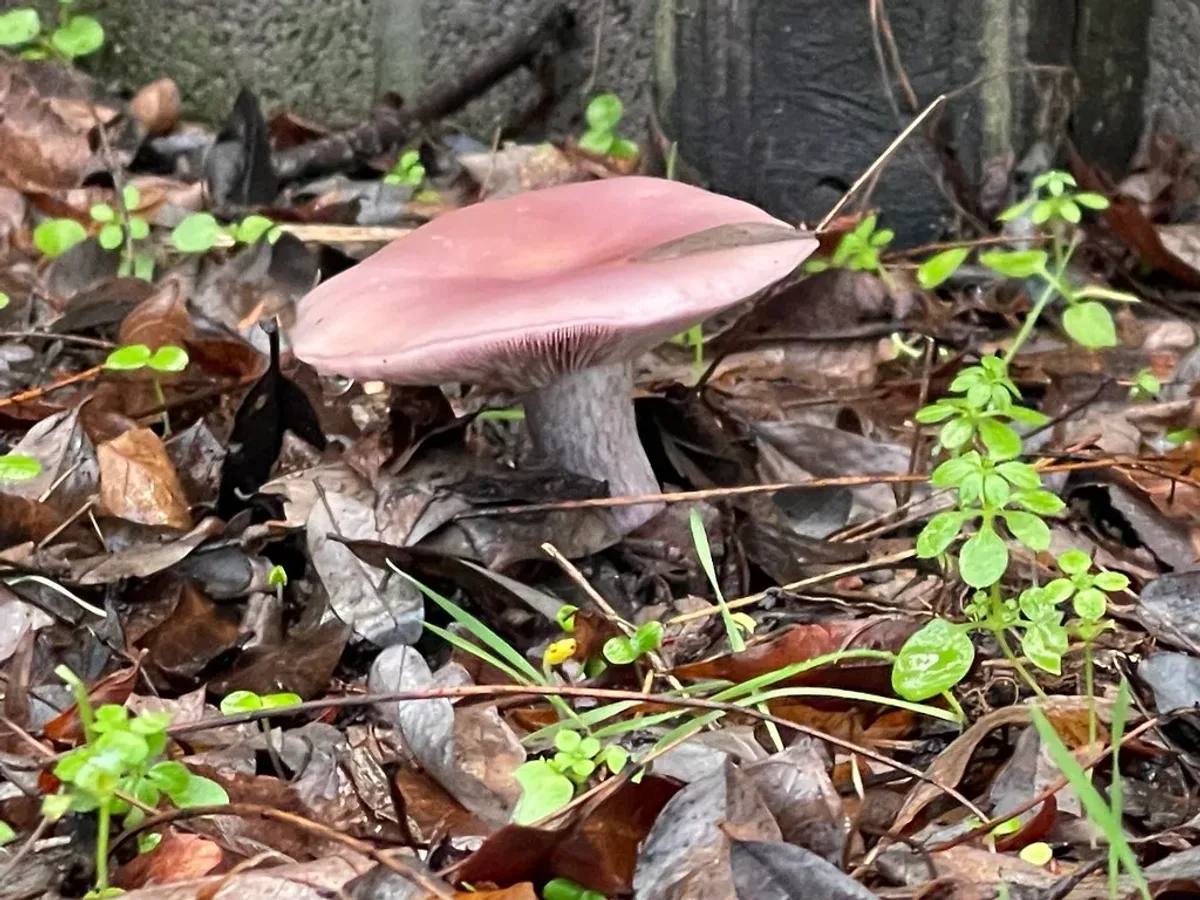 © sarahstierch (CC BY 2.0)
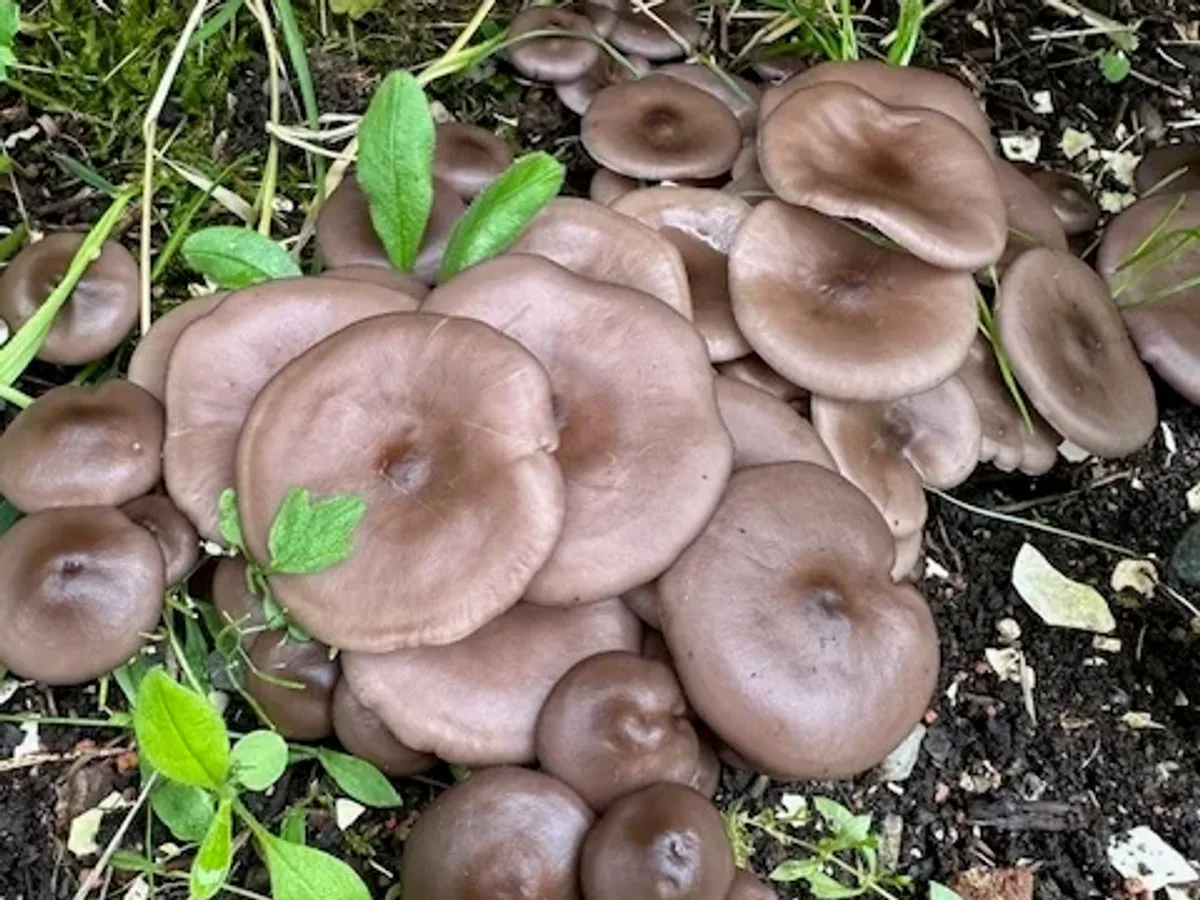 © Arne Reitan (CC BY)
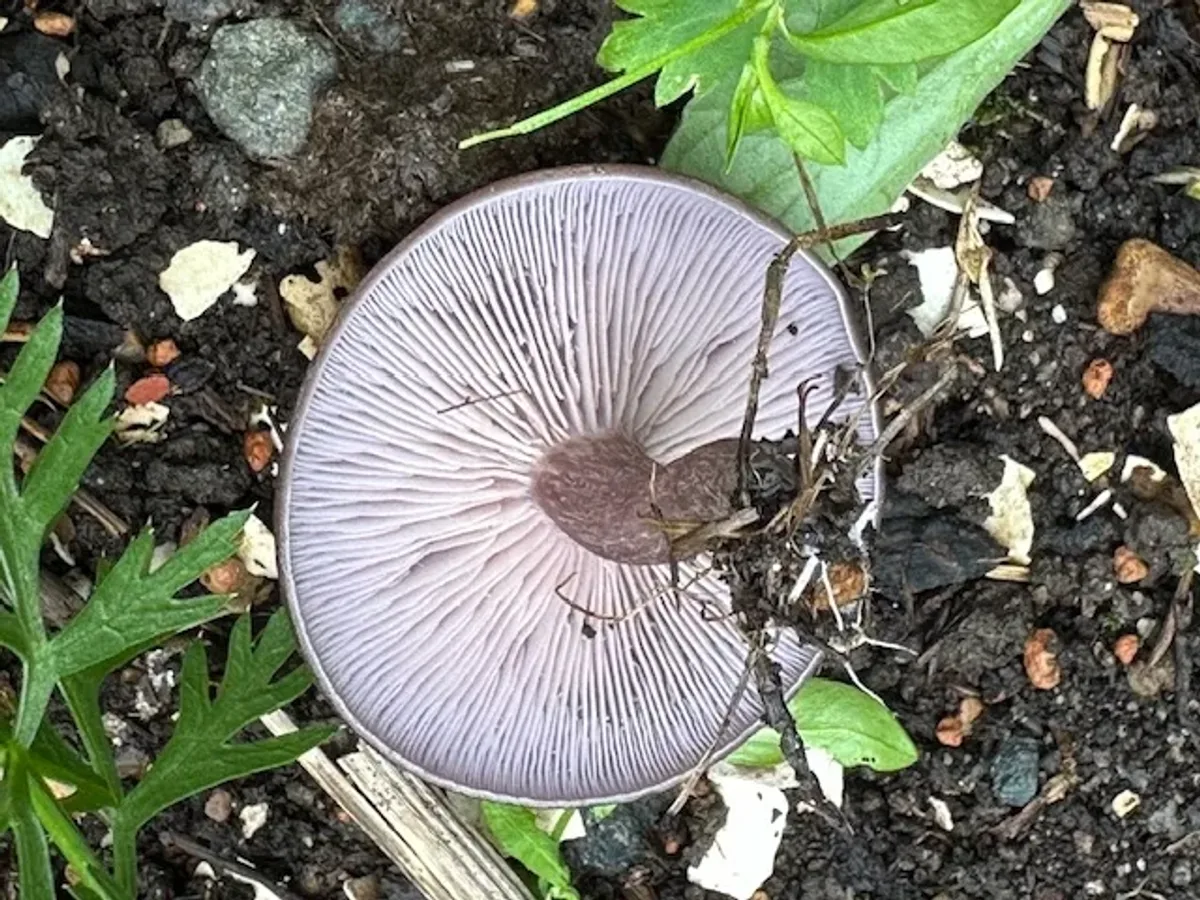 © Arne Reitan (CC BY)
 © Ole Christian Hagestad (CC BY)
 © Ole Christian Hagestad (CC BY)
 © Ole Christian Hagestad (CC BY)
 © Ole Christian Hagestad (CC BY)
 © Egil Østby (CC BY)
 © Nils Edvard Stokke (CC BY)
 © Cecilie Ness (CC BY)© Reidun Braathen (CC BY)© sarahstierch (CC BY 2.0)
Good to eat, once you have identified it with certainty and cooked it through.
Never eat a mushroom you are not 100% sure of - check the look-alikes below, and always cook wild mushrooms.
How to recognise it
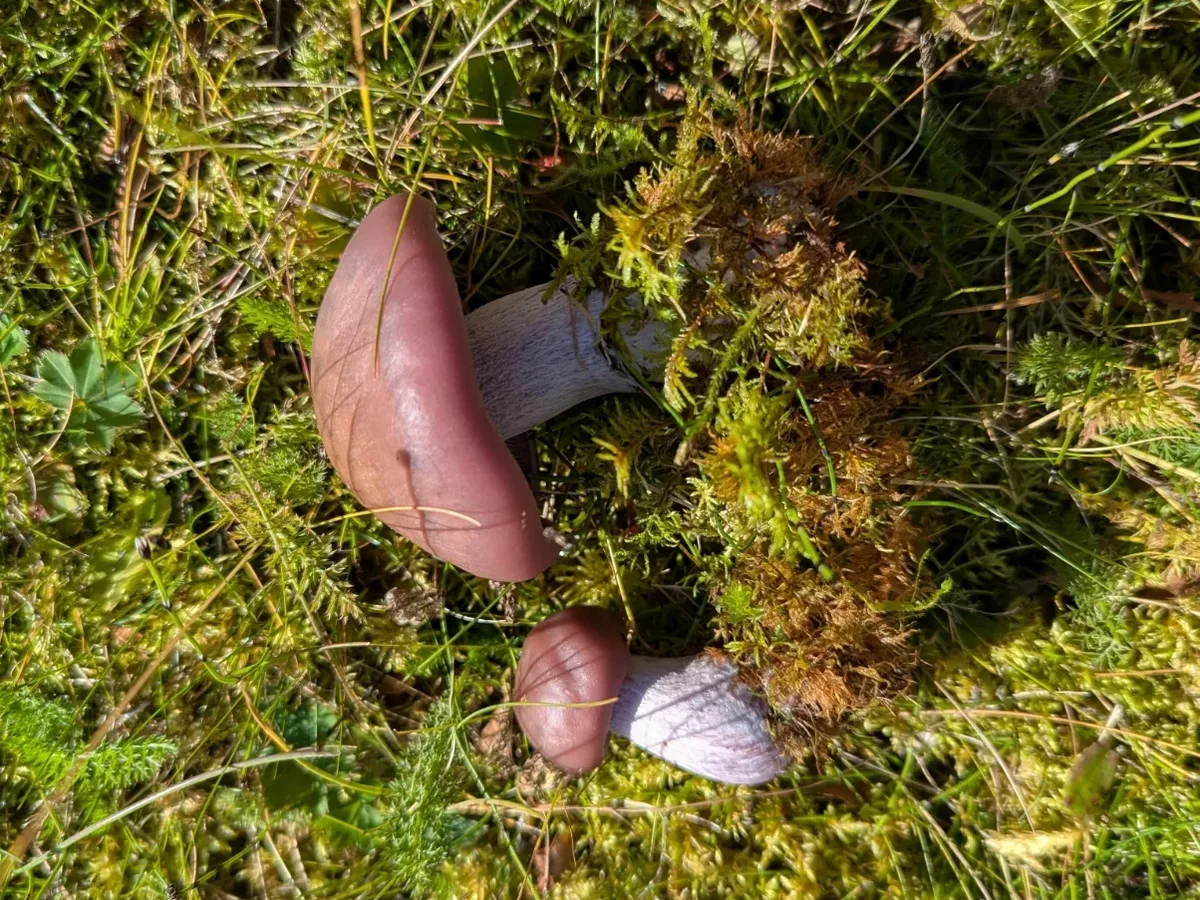
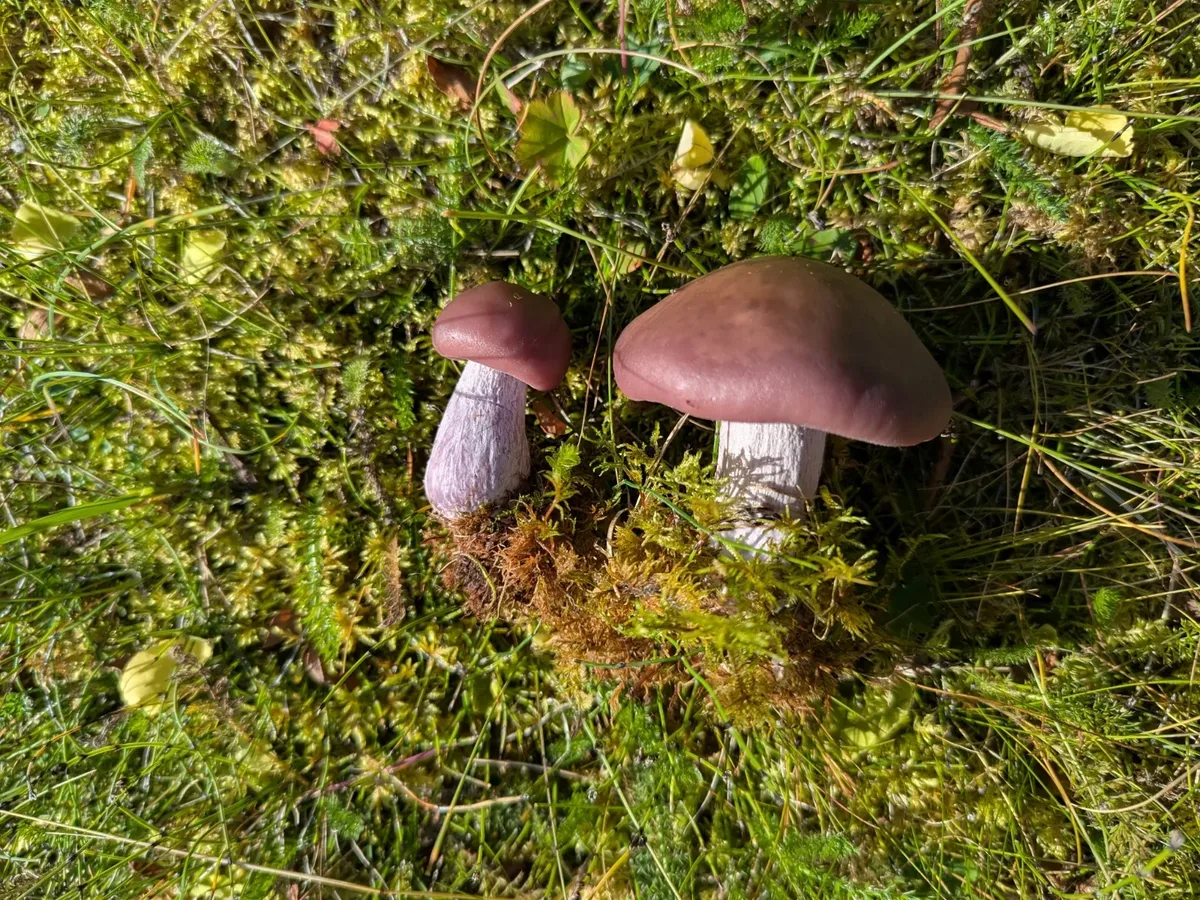
Clitocybe nuda is one of the most immediately recognisable edible fungi in temperate woodland owing to its vivid colouration.
Cap
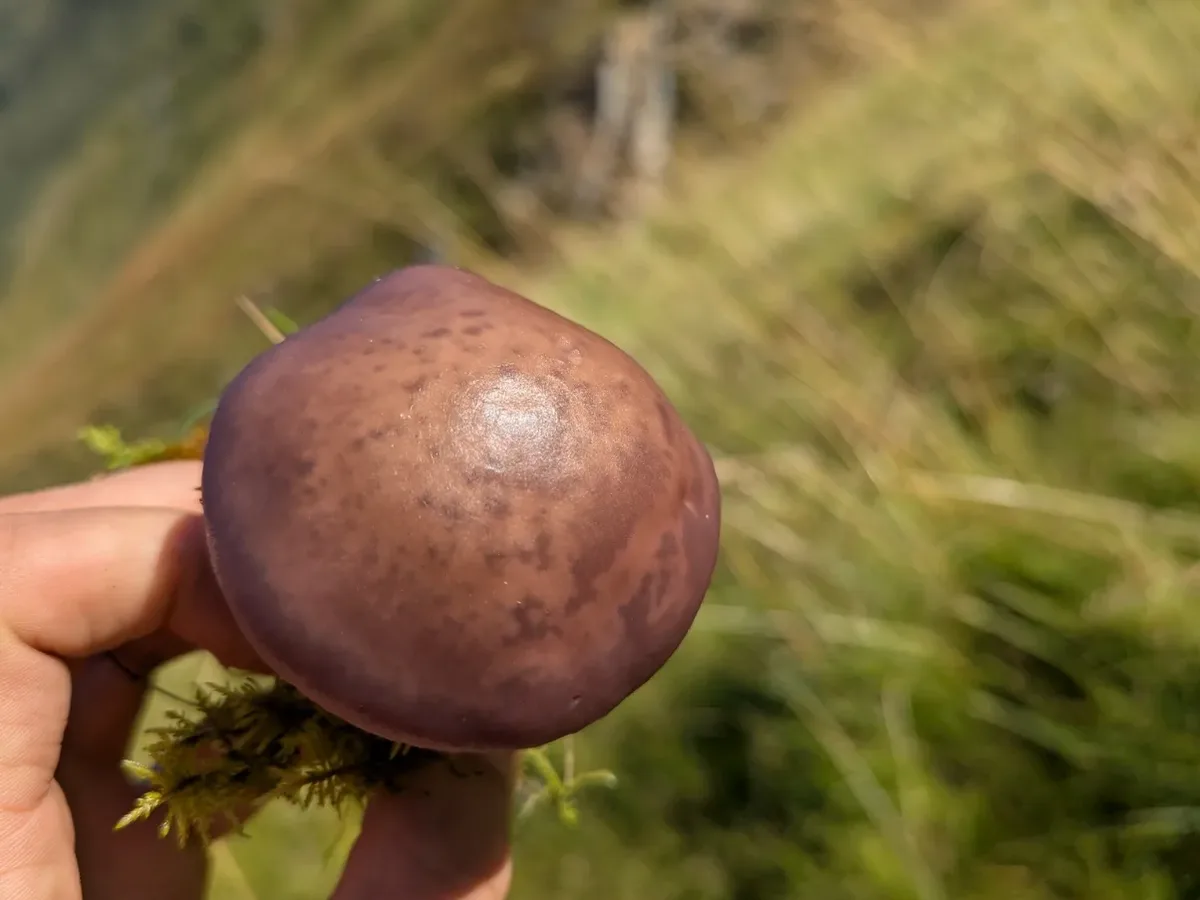
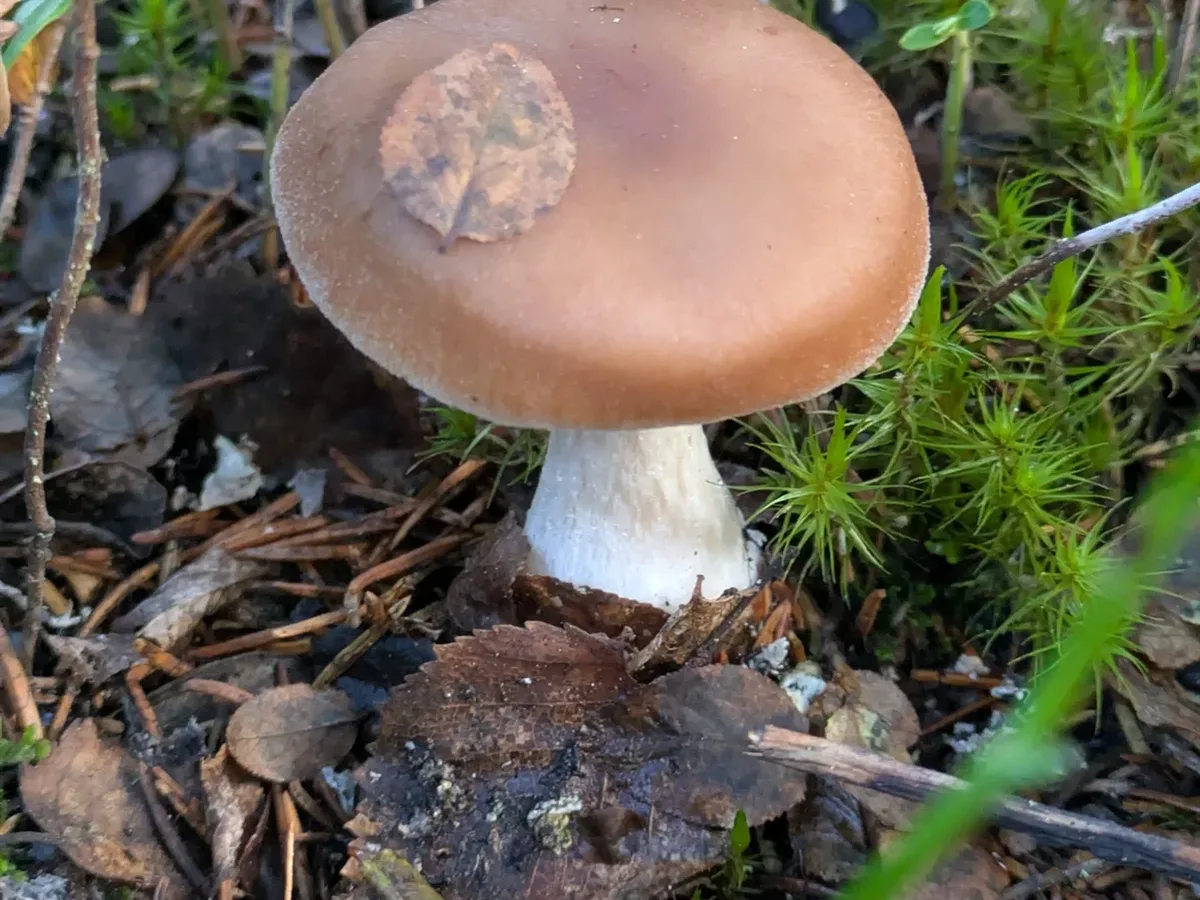
The cap reaches 6-15 cm in diameter and passes through several phases. In youth it is convex and deeply inrolled at the margin, intensely violet-blue all over.
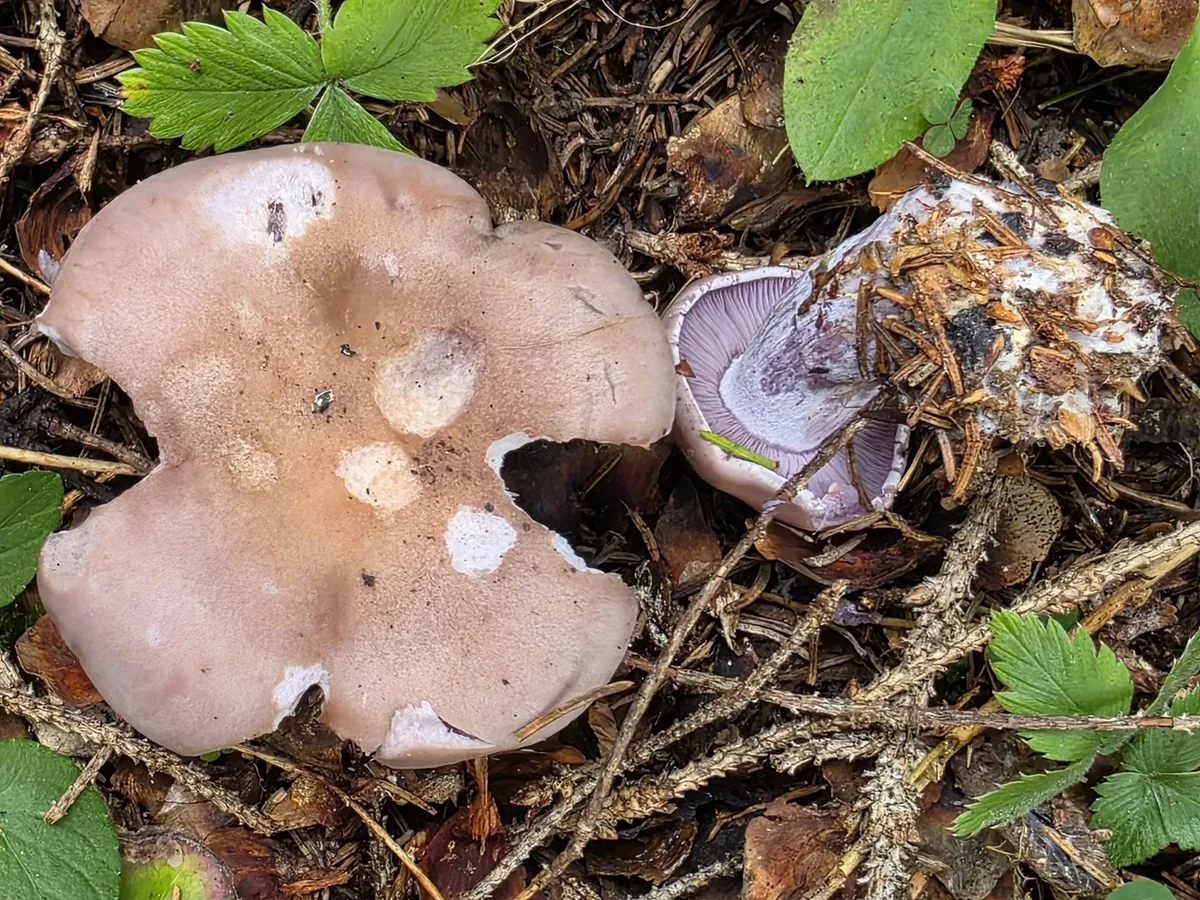
With age it flattens, the margin unfurls and often becomes wavy and lobed, and the colour shifts from violet through lavender to a warm buff-tan in dry conditions - yet a slight lilac wash usually persists, especially toward the margin.
The surface is completely bare (hence 'nuda'), smooth, and subtly greasy when wet. Critically, the colour is hygrophanous: a single cap may appear strongly violet on one side (where rain has fallen) and pale biscuit on the other, so always examine the cap from multiple angles.
Gills
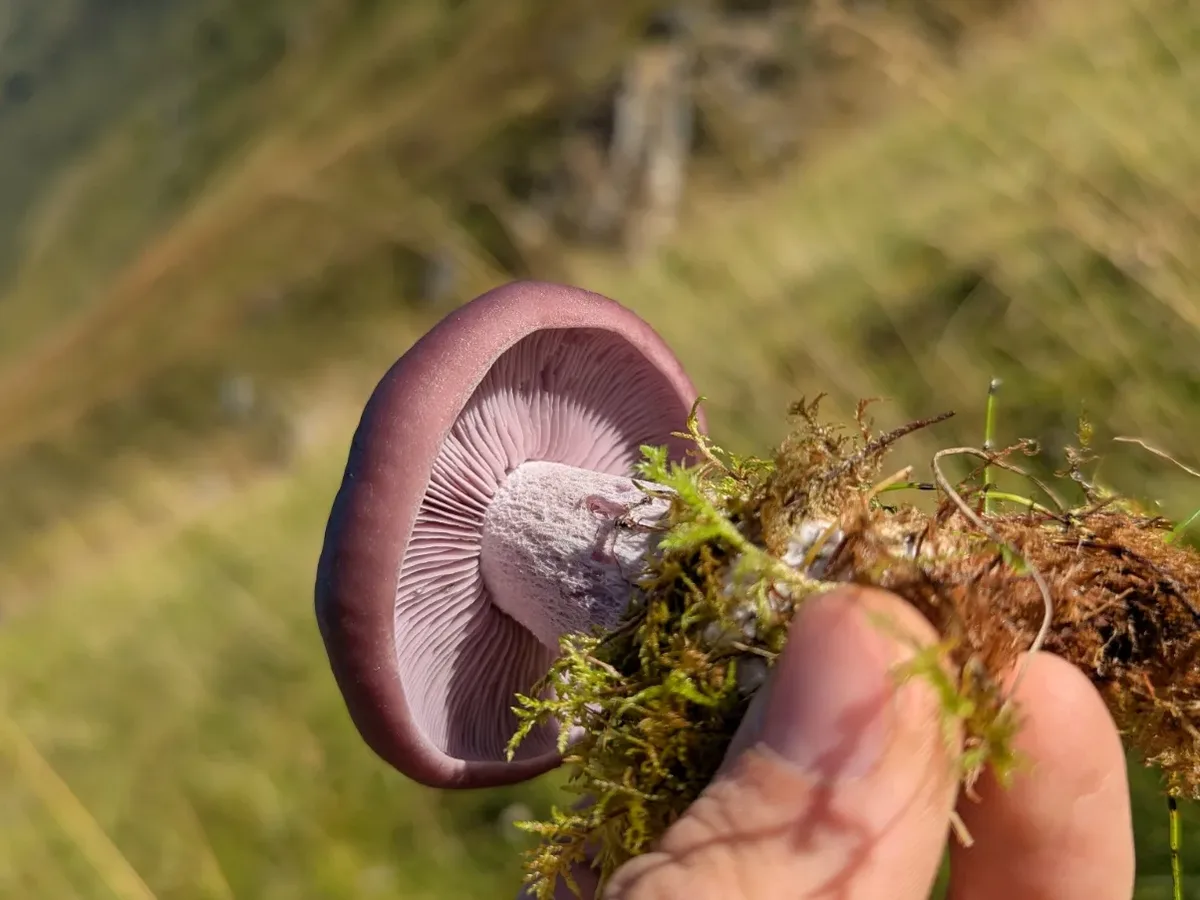
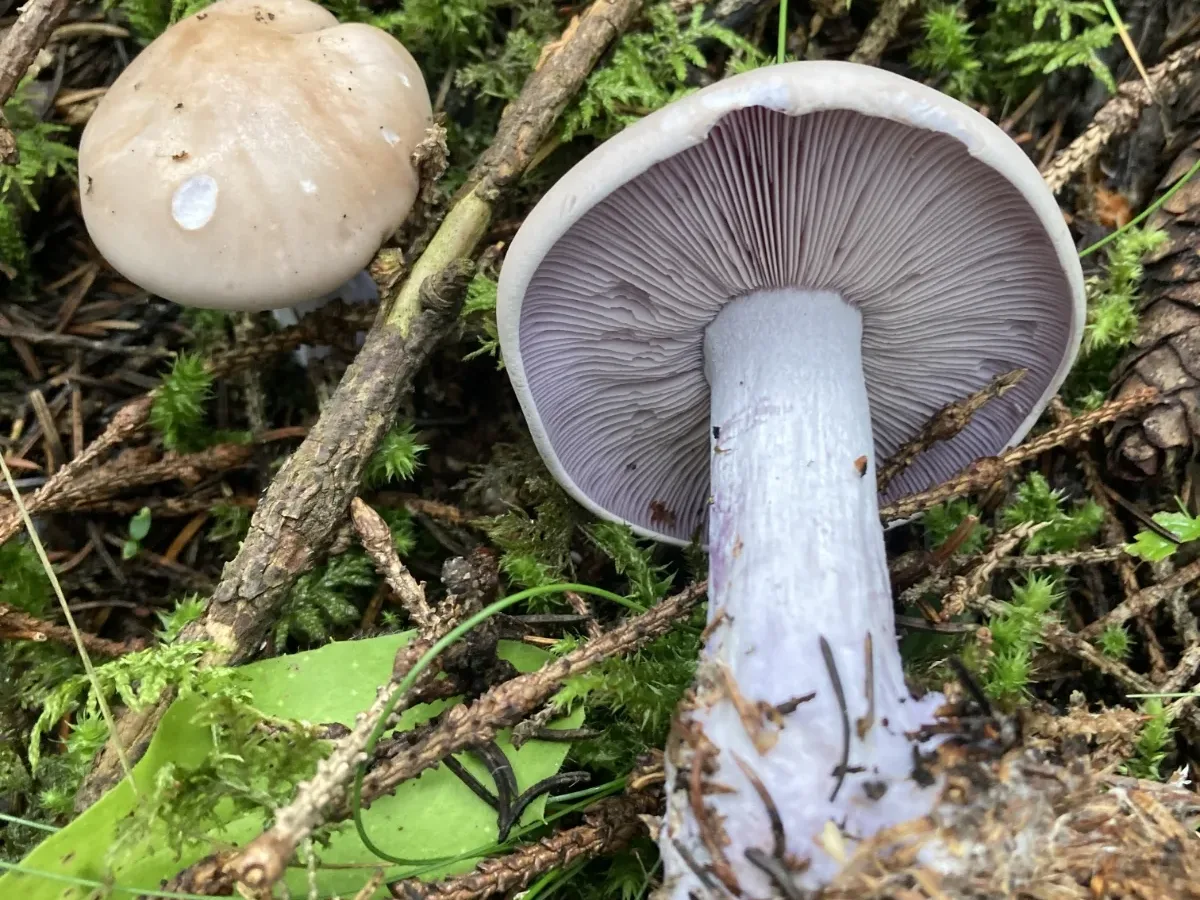
The gills are crowded and beautifully uniform lilac to blue-violet when fresh, gradually losing colour to pinkish-buff as the spores mature. They are notched where they meet the stem (sinuate).
Spore print pale pink to pinkish-buff; spores minutely roughened under the microscope.
Stem
The stem is stocky, often widened or club-shaped at the base, and coated in fine silky fibrils that give it a sheen. It remains stubbornly violet-lilac even when the cap has faded.
Flesh
The flesh is white or barely lilac, firm, and unchanging.
Smell & taste
The smell is highly distinctive: a sweet, floral, slightly citrus-perfume aroma frequently likened to frozen orange juice, lavender, or aniseed - this fragrance is one of the best field aids.
Where & when it grows
Habitat
Wood blewit is a saprotrophic decomposer that processes leaf litter, rotting wood fragments, compost, and organic debris in soil. It does not form mycorrhizal associations.
The species thrives wherever deep, moist, nitrogen-rich litter accumulates:
- under beech, oak, ash, or hornbeam in broadleaf woodland
- along hedgerows
- in old orchards
- in garden compost heaps (sometimes spectacularly productive)
- on wood-chip mulch paths
- in parkland lawns where leaf litter has built up around trees
It is less common in pure conifer stands, though it will occur in mixed woods.
Fairy rings and partial arcs form when the mycelium has fully colonised an area and continues expanding outward, often revealing the previous years' positions as concentric rings of old caps.
When
Late autumn to early winter is the defining window: October through December in most of temperate Europe, with peaks in November.
Blewits are famous for tolerating light frosts - they routinely fruit through the first sharp autumn frosts that kill most other fungi, and a brief hard freeze followed by a thaw can actually stimulate flushing.
In mild oceanic climates (Atlantic coast of France, Ireland, Britain) fruiting may extend into January or even February. By contrast, in continental climates with early severe winters the season may close abruptly in November.
In the Pacific Northwest of North America the season shifts slightly earlier, September-December.
How it grows
Grows singly, in small groups of 2-6, or in scattered troops and fairy rings.
Cap buttons emerge from the soil or litter with margins tightly incurved. The whole fruiting body is initially compact and squat before the cap expands and flattens.
Mycelium is sometimes visible as violet threads in disturbed litter around fruiting bodies - a useful confirmatory clue.
The species may produce multiple flushes over several weeks if moisture persists. In compost heaps it can be extraordinarily prolific, producing dense masses of fruitbodies over many seasons once established.
Fruiting conditions
Clitocybe nuda is exceptionally cold-tolerant, fruiting well into temperatures near freezing. Flushes are strongly triggered by autumn rainfall after summer drought, with mycelium requiring cool, moist conditions (soil temperature 4-10°C optimal). Unlike many autumn species, blewits continue fruiting through light frosts (-2°C overnight) provided the soil does not freeze deeply. A warm, wet October followed by a cold November often produces the most productive flushes.
Look-alikes
The most serious confusion is with Clitocybe nebularis (clouded funnel), which grows in similar habitats at the same season. Clouded funnel differs by:
- a pale grey-buff to whitish-grey cap with no violet tints
- crowded white to cream gills that run slightly down the stem (decurrent)
- a white stem with no blue colouration
- a rank, unpleasant mealy or rancid smell - never the sweet floral perfume of blewit
Clitocybe nebularis causes gastrointestinal poisoning in many people even after cooking and should be avoided.
Cortinarius species (webcaps), particularly in the violet-coloured group (e.g. Cortinarius violaceus, C. camphoratus, C. traganus), can share the lilac-purple colouration. But they possess a cobweb-like cortina (partial veil) connecting the cap margin to the stem when young, which leaves a rusty-brown fibrillose zone on the upper stem; their gills become rusty-brown from the spores; the spore print is rust-brown, not pink.
Some Cortinarius species, especially those in section Phlegmacium and the deadly Cortinarius orellanus / C. rubellus group, cause fatal kidney failure (orellanine toxin). Always check for rust-brown spore print. Cortinarius camphoratus and C. traganus share an aromatic but musty or goat-like smell rather than the fresh citrus-floral note of blewit.
Laccaria amethystina (amethyst deceiver) is a much smaller woodland species (cap 1-5 cm), brilliant violet-purple throughout, with widely spaced thick gills, a slender fibrous stem, and a white spore print - it is edible but so small it rarely causes confusion with the much larger blewit.
Entoloma species (pinkgills), particularly the deadly Entoloma sinuatum (livid pinkgill) and related taxa, have pink gills at maturity and a pink spore print, but the gills are typically not initially violet, caps are not hygrophanous violet, and many species have a mealy smell and are poisonous.
Faded or dried blewit caps that have lost their violet colour must not be confused with small white toxic funnels such as Clitocybe rivulosa (fool's funnel) or Clitocybe dealbata (ivory funnel), both of which contain muscarine and can be deadly - always verify violet tones remain somewhere on the specimen, especially on the stem.
Direct colour-for-colour confusion with blewit is unlikely: C. rubellus is tawny-orange to rust-coloured with no violet tones, whereas blewit is distinctly violet. Structural checks confirm separation: cortina present when young leaving a rusty fibrillose zone on the stem; gills rust-brown at maturity; spore print rust-brown (never pale pink). Causes fatal renal failure via orellanine nephrotoxin with delayed onset. The realistic Cortinarius confusion for blewit lies with violet-toned webcaps (e.g. C. camphoratus), not this tawny-orange species.
Direct confusion with blewit is unlikely due to contrasting colouration: C. orellanus is fox-red to tawny-orange with no violet tones. Structural checks confirm separation: cortina present when young; cap dry and fibrillose; gills widely spaced and rust-coloured; spore print rust-brown (never pale pink); smell faintly of radish, not sweet-floral citrus. Causes fatal nephrotoxic poisoning via orellanine with delayed onset (2-3 weeks). The realistic Cortinarius lookalike risk for blewit lies with violet-toned webcaps, not this orange-tawny species.
Much smaller (cap 1-5 cm, rarely to 6 cm); brilliant deep violet throughout including widely spaced, thick, waxy-looking gills; stem slender and fibrous; white spore print; no sweet citrus smell. Edible but easily distinguished by size.
Cap pale grey to grey-buff, never violet or blue; gills white to cream, slightly decurrent (running down the stem), not notched; stem white, lacking any blue or lilac; smell rank and mealy or unpleasant, never the sweet floral orange-citrus perfume of blewit; spore print pale cream (not pink). Causes gastrointestinal poisoning in many individuals even after cooking.
Small white to pale buff funnel-cap with white spore print and white gills; no violet colouration anywhere; musty or mealy smell; contains muscarine causing cholinergic syndrome (salivation, sweating, miosis, bradycardia) requiring medical attention - serious and potentially life-threatening in the elderly or those with cardiac conditions, but not an established cause of death in otherwise healthy adults. Faded or dried blewit caps that have lost violet colour must not be confused with this species - check the stem which retains lilac and take a spore print.
Lilac to violet cap and stem when young but with a strong goat-like or unpleasant skunky smell; cortina present; gills become rust-brown from spores; spore print rust-brown; flesh saffron-yellow in stem base. Unpalatable and mildly toxic.
Small white funnel-cap with a silky white surface, white gills, and white spore print; no violet at all; smell faintly mealy; contains muscarine causing cholinergic syndrome (salivation, sweating, miosis, bradycardia) requiring urgent medical attention - serious and potentially life-threatening in vulnerable individuals but not an established cause of death in healthy adults, and not equivalent in lethality to amatoxin-bearing species. Can grow in similar grassy and garden-edge habitats to blewit. A pale, fully-faded blewit must be confirmed by residual lilac on the stem and a pink (not white) spore print.
Smaller species with gills that become distinctly pink from the angular spores; spore print pink but spores angular (not smooth-ellipsoid as in Clitocybe); typically found on rotting wood; no floral smell. Poisonous.
Large pale ivory-cream cap with no persistent violet colouration; gills start yellowish then turn salmon-pink at maturity; spore print is pink but spores are angular; smell is rancid-mealy, not sweet-citrus floral; no violet stem. A severe GI toxin causing prolonged vomiting, diarrhoea, and abdominal pain requiring hospitalisation; particularly dangerous for vulnerable individuals - not an established cause of death in healthy adults but must be treated as a serious poisoning risk.
Cobweb-like cortina (partial veil) linking cap edge to stem when young; gills turn rusty-brown from spores at maturity; spore print rust-brown (never pale pink); cap deep inky violet with dry, granular-fibrillose surface; in conifer or birch woodland. Non-lethal but unpalatable and not recommended.
In the kitchen
Picking & cleaning
Choose firm, young specimens with caps still convex to flat and gills retaining good violet colour - older caps become soft, waterlogged, and develop a mealy or unpleasant smell.
Brush off leaf litter and cut the stem cleanly at ground level; the distinctive smell should be immediately apparent. Transport in a basket with good airflow to prevent sweating.
Reject any specimens that smell mealy, fishy, or unpleasant, as these may be mistaken for other Clitocybe species. Examine every single specimen collected for correct gills, stem colour, and smell before cooking, as lookalikes in the same environment are dangerous.
Blewits must always be cooked thoroughly - they are mildly toxic raw and can cause gastrointestinal upset in sensitive individuals even when slightly undercooked.
Cooking
Wood blewit is a versatile kitchen mushroom prized for its delicate floral aroma and firm, meaty texture.
Sautéing in butter over medium-high heat until golden brings out a nutty, slightly earthy flavour while driving off excess moisture - the violet colour mostly disappears on cooking, leaving an attractive pale tan.
Blewits pair well with cream sauces, shallots, garlic, and thyme. They are excellent in risotto, pasta, omelettes, and as a filling for pastry. The firm texture holds well in soups and stews without disintegrating.
Because their moisture content is relatively high, avoid crowding the pan; cook in batches. They dry adequately and can be reconstituted, though drying diminishes the floral aroma.
The distinctive perfume is strongest in fresh, young specimens. Blewits combine well with other robust autumn flavours - game, walnuts, squash, aged cheese.
Good to know
Clitocybe nuda must be cooked before eating - it contains mild toxic compounds destroyed by heat. Raw or undercooked blewits have caused gastrointestinal distress (nausea, vomiting, diarrhoea) and rare hypersensitivity reactions in some individuals. Always cook thoroughly.
The paramount safety concern is distinguishing blewit from several dangerous species:
- Clitocybe nebularis (generally toxic, same habitat and season)
- violet Cortinarius species (some lethally nephrotoxic with orellanine)
- Entoloma sinuatum (livid pinkgill, seriously poisonous)
Faded specimens must also be distinguished from deadly white muscarine-containing funnels (Clitocybe dealbata, C. rivulosa).
The triple-check for blewit identification is:
- 1violet to lilac cap and stem with hygrophanous fading
- 2sweet, floral, citrus-orange perfume
- 3pale pink-buff spore print with no rust-brown colouring
Never collect on smell alone - always perform a spore print if uncertain.
A reference guide - never an edibility guarantee. When in doubt, leave it out.