Clouded Funnel
Clitocybe nebularissyn. Agaricus nebularis, Lepista nebularis, Gymnopus nebularis, Omphalia nebularis, Clitocybe nebularis var. alba
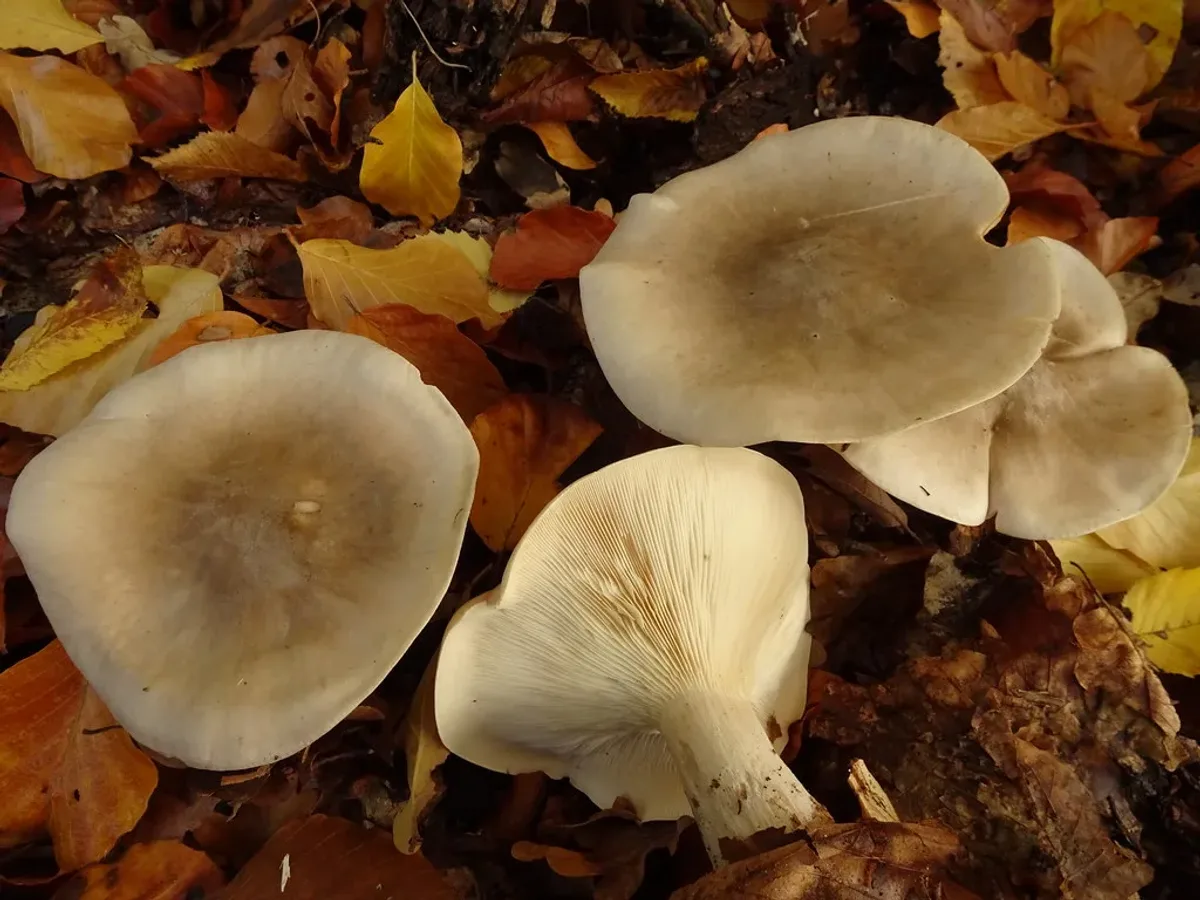 © Ephemeral Impressions (CC BY-SA 2.0)
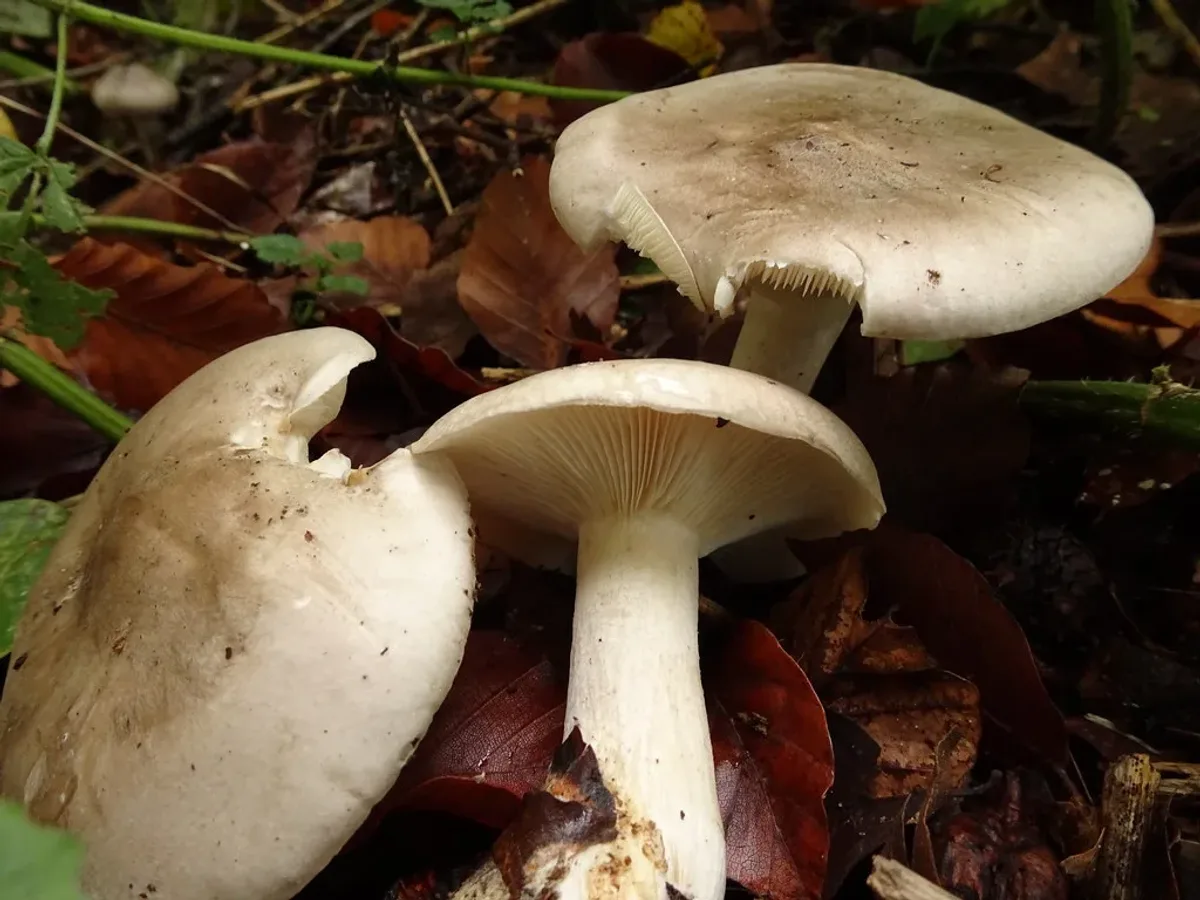 © Ephemeral Impressions (CC BY-SA 2.0)
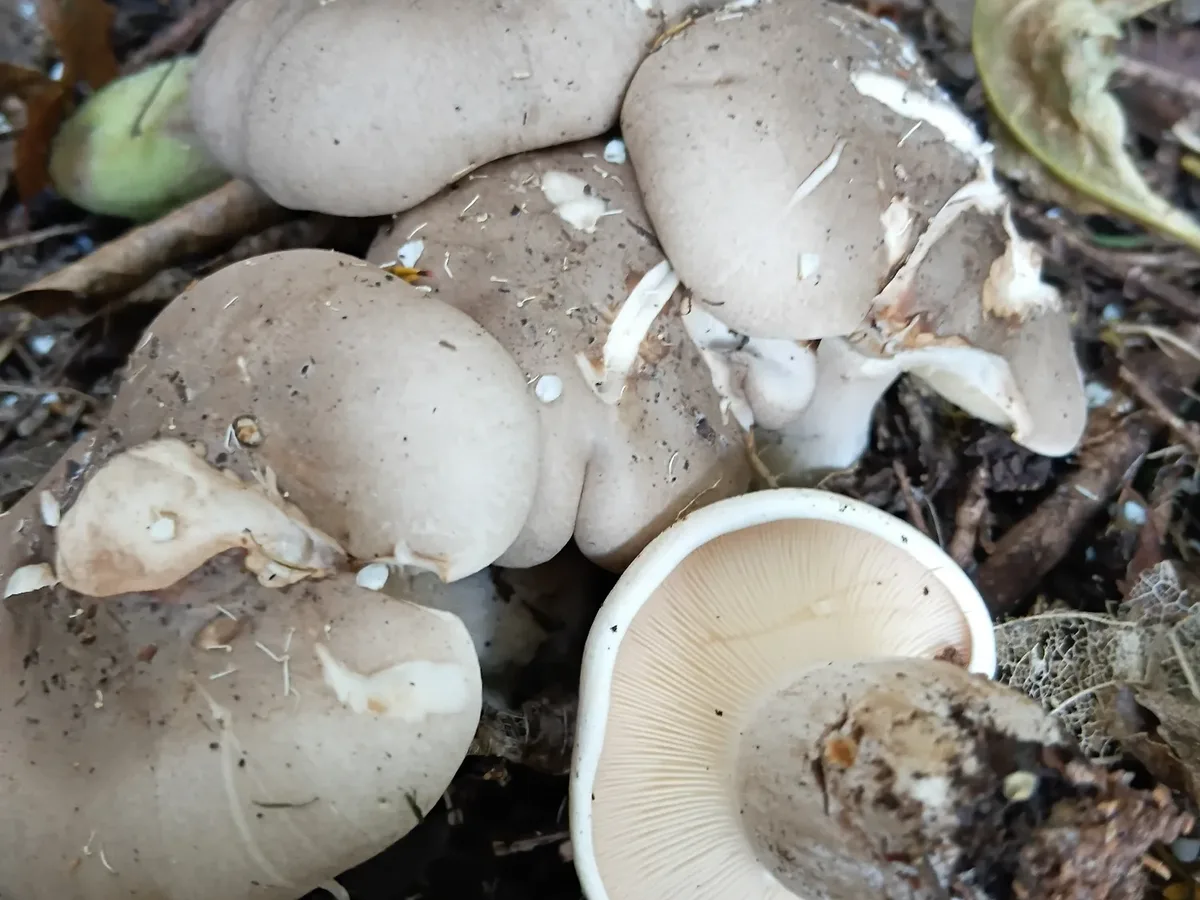 © Lee mayhem-bullock (CC BY)
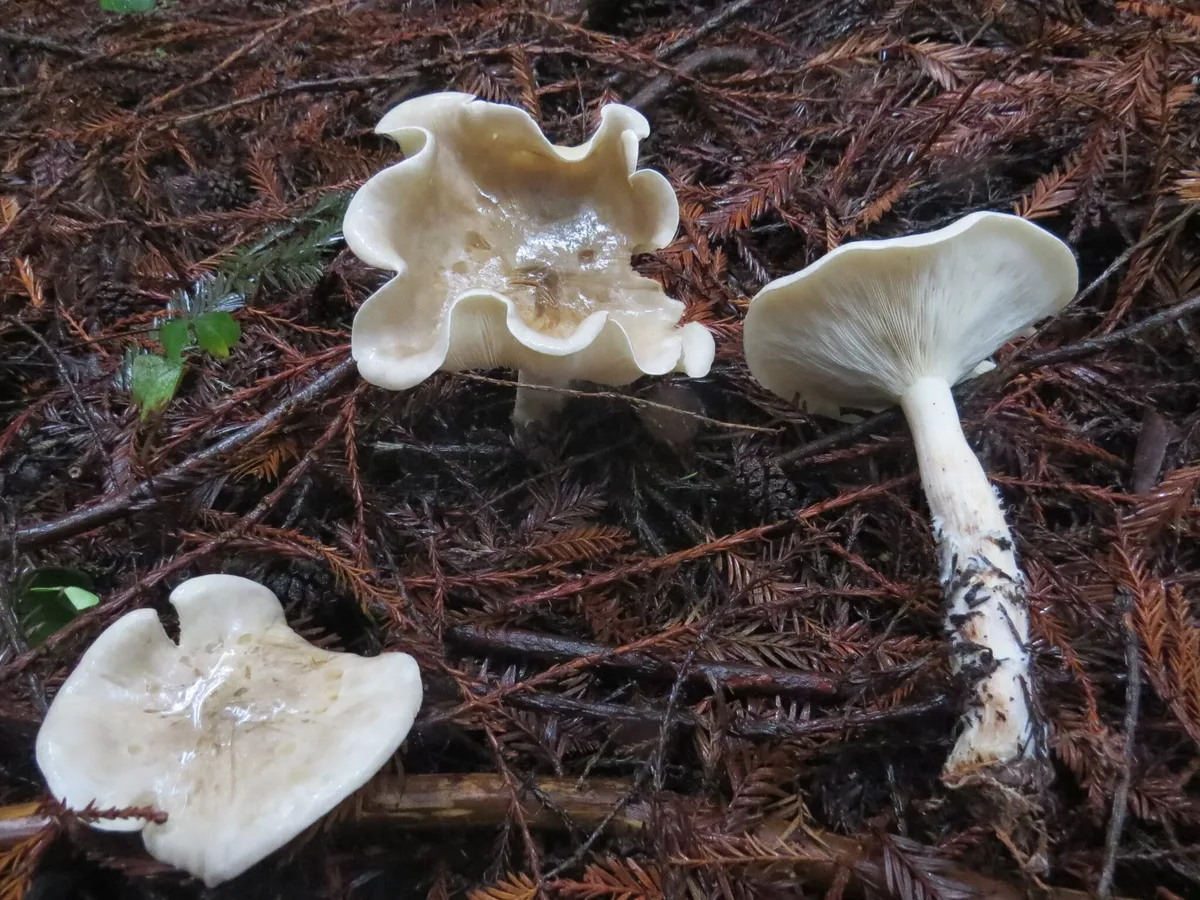 © Garth Harwood (CC BY)
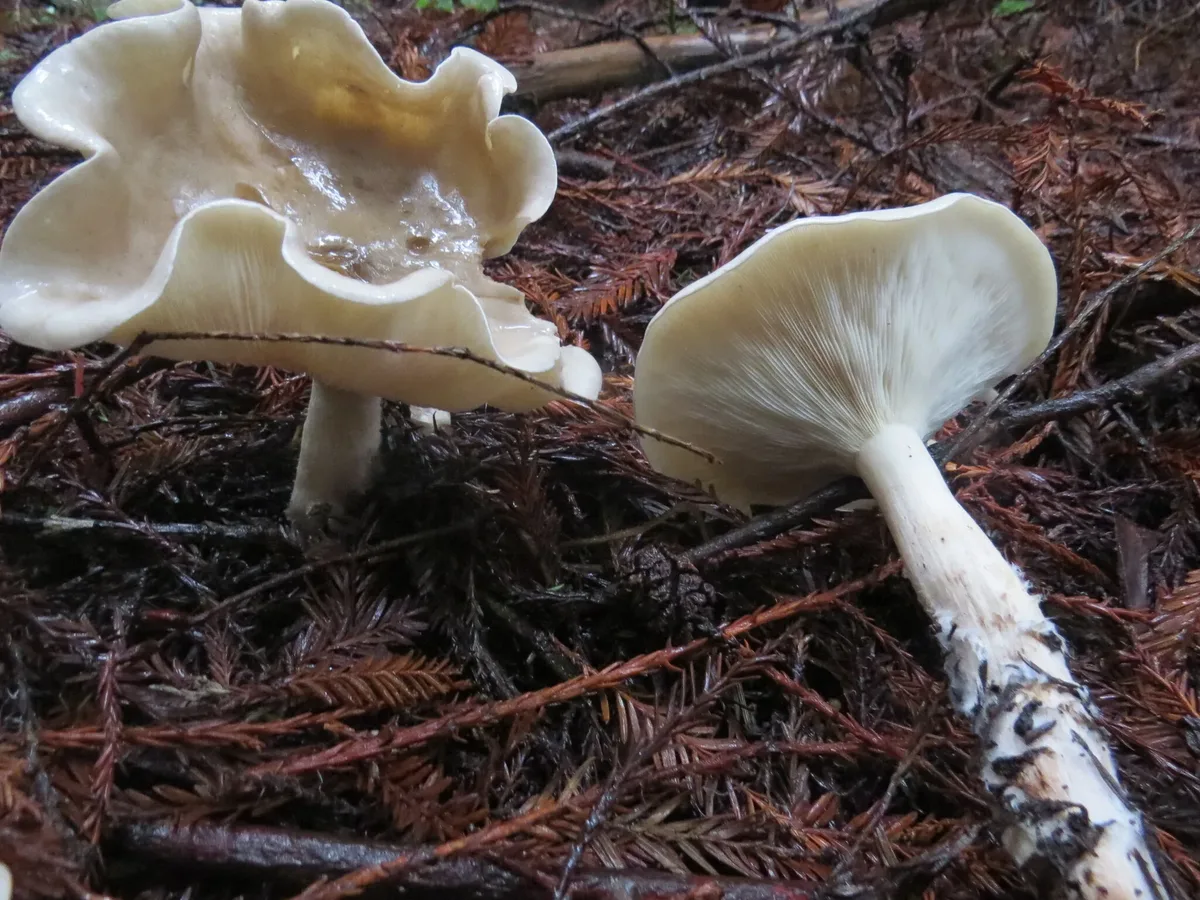 © Garth Harwood (CC BY)
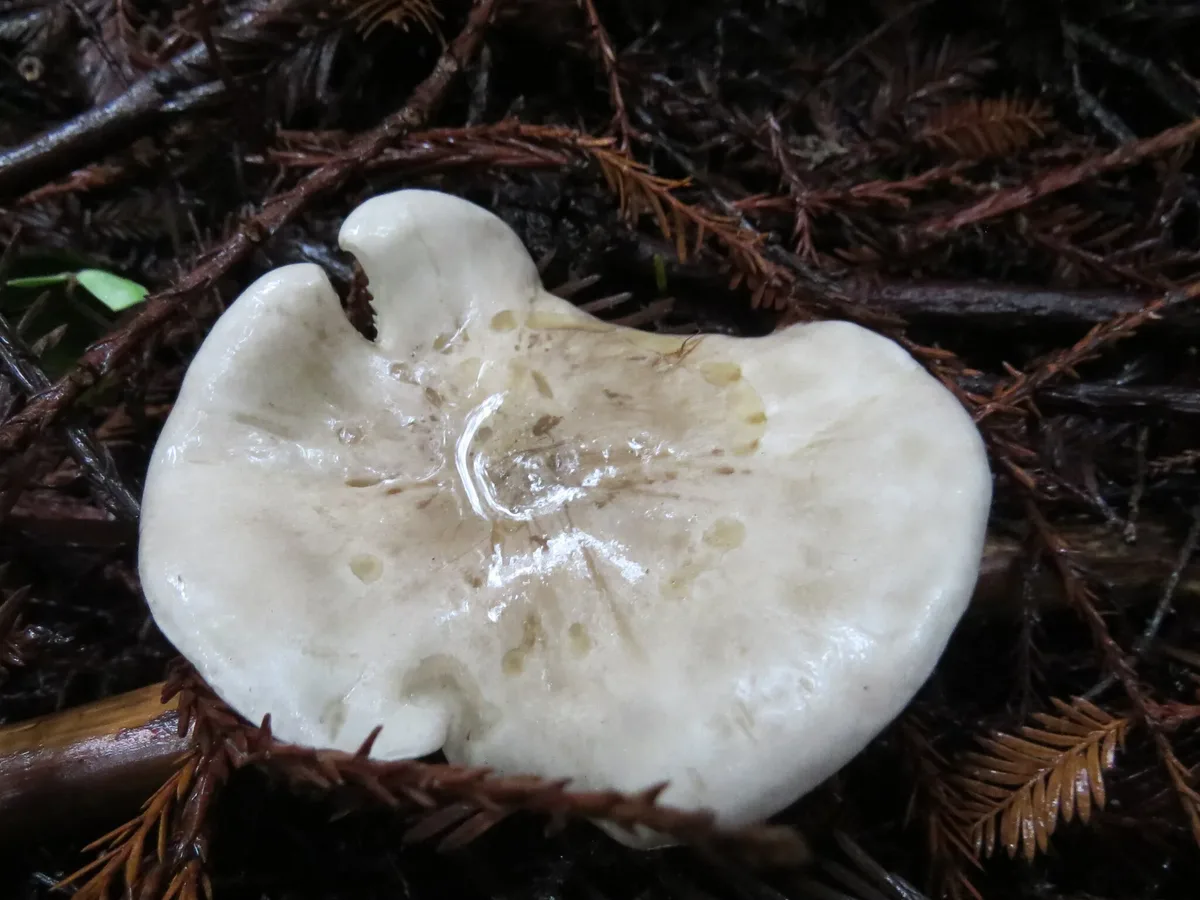 © Garth Harwood (CC BY)
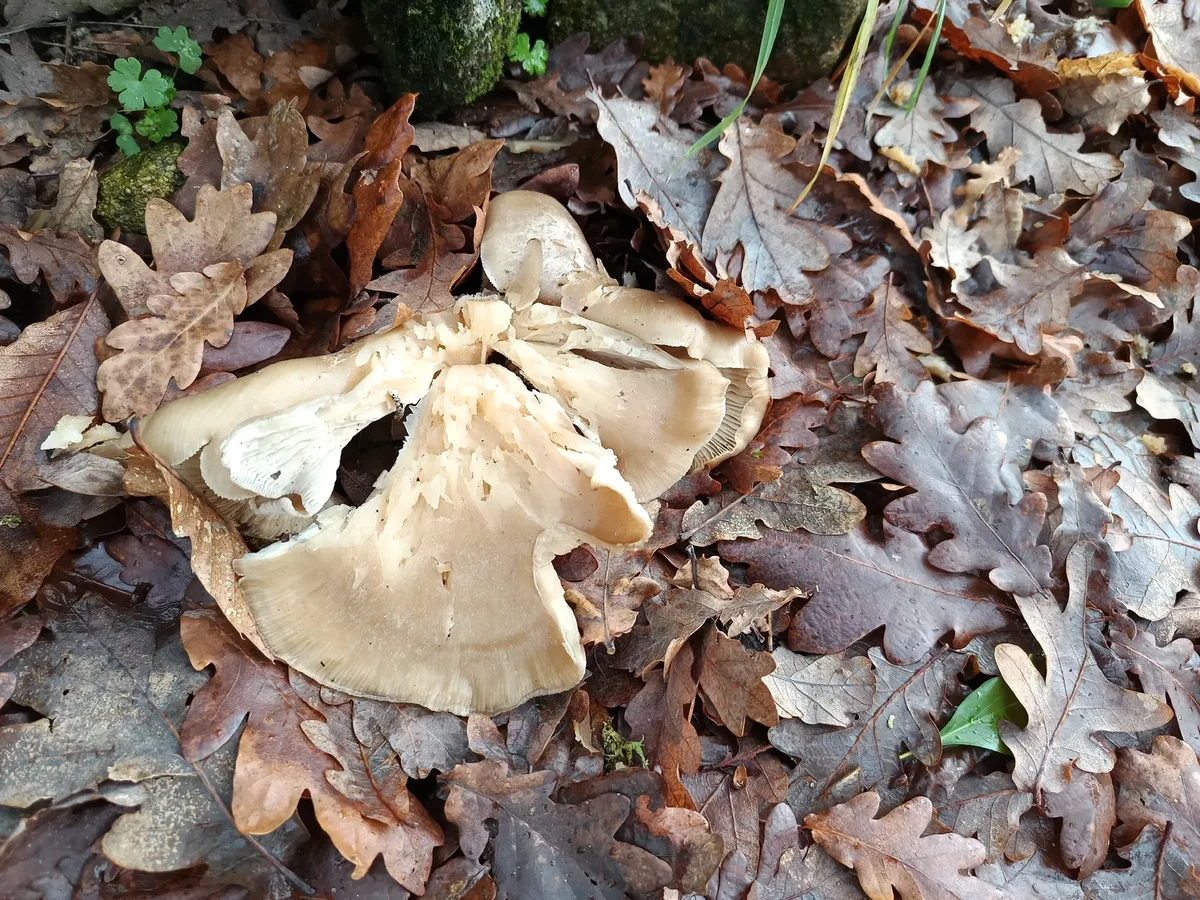 © Carl Ramirez (CC BY)
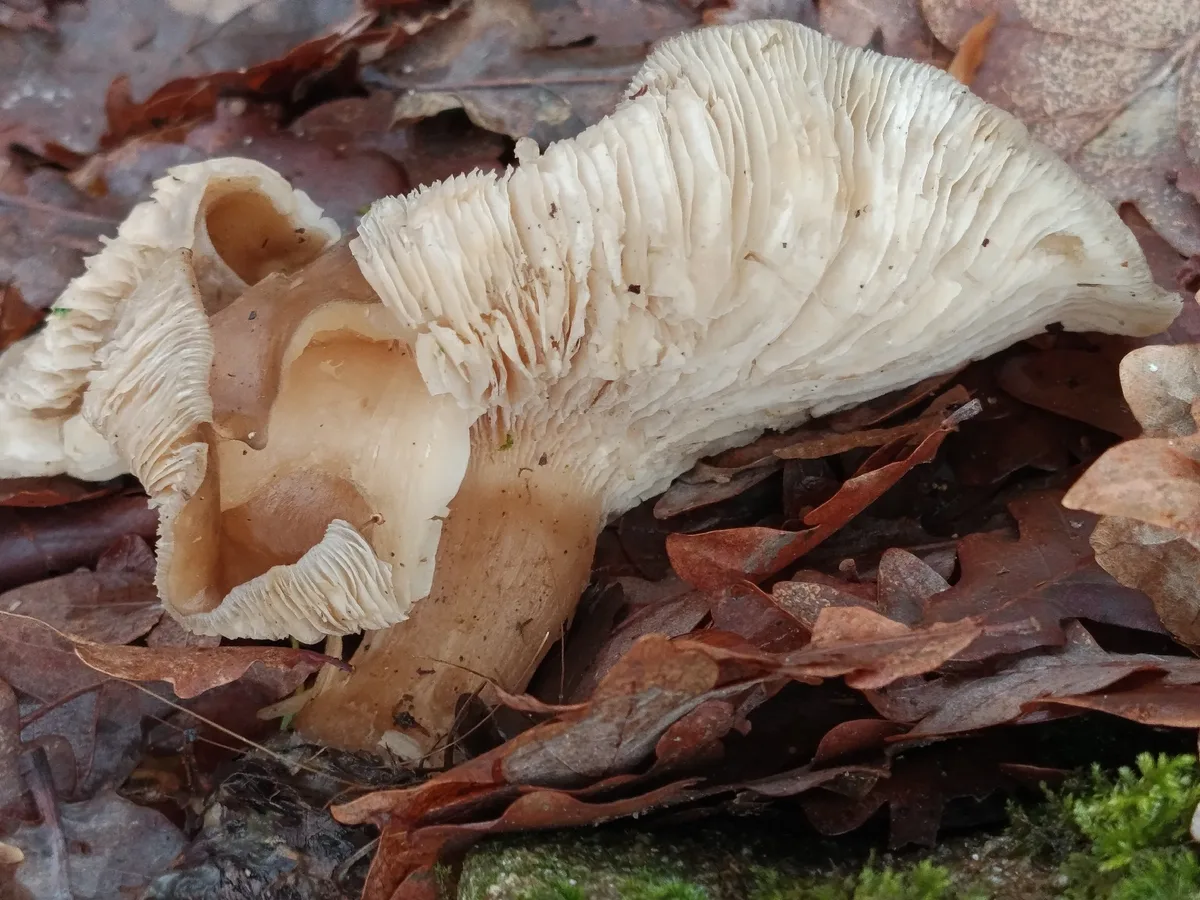 © Carl Ramirez (CC BY)
 © Carl Ramirez (CC BY)
 © Carl Ramirez (CC BY)
 © Ephemeral Impressions (CC BY-SA 2.0)© Ephemeral Impressions (CC BY-SA 2.0)© Ephemeral Impressions (CC BY-SA 2.0)
Edible only with the right preparation - or safe for some people but not others. Learn the caveats first.
Never eat a mushroom you are not 100% sure of - check the look-alikes below, and always cook wild mushrooms.
How to recognise it
The Clouded Funnel is one of the most conspicuous large gilled mushrooms of late autumn woodland.
Cap
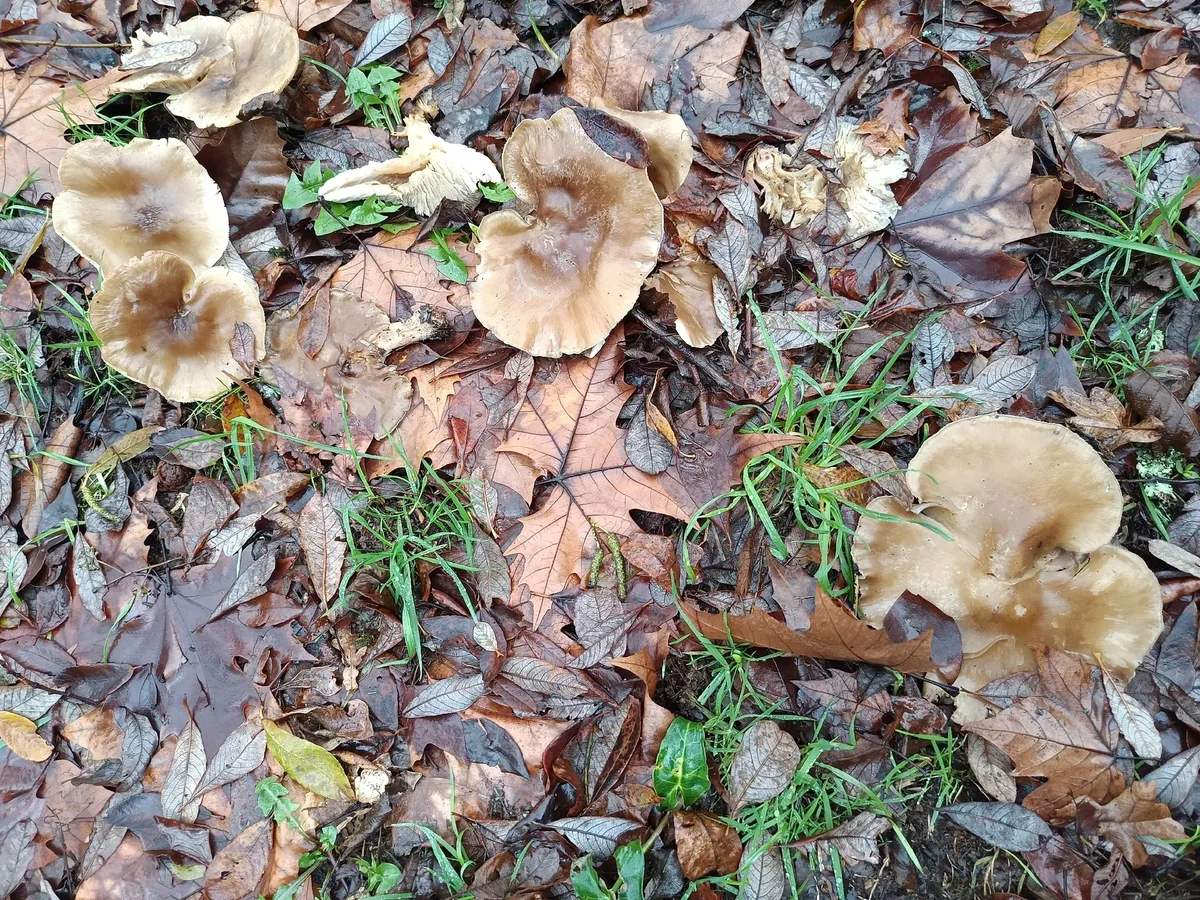
The cap reaches 6-20 cm and occasionally up to 25 cm across, beginning strongly convex with a tightly inrolled margin before flattening and developing a shallow central depression.
Its colour is a characteristic cloud-grey to ash-grey or brownish-grey, usually fading paler toward the rim, and the surface often carries a delicate frosted or 'clouded' bloom that gives the species its name.
Gills
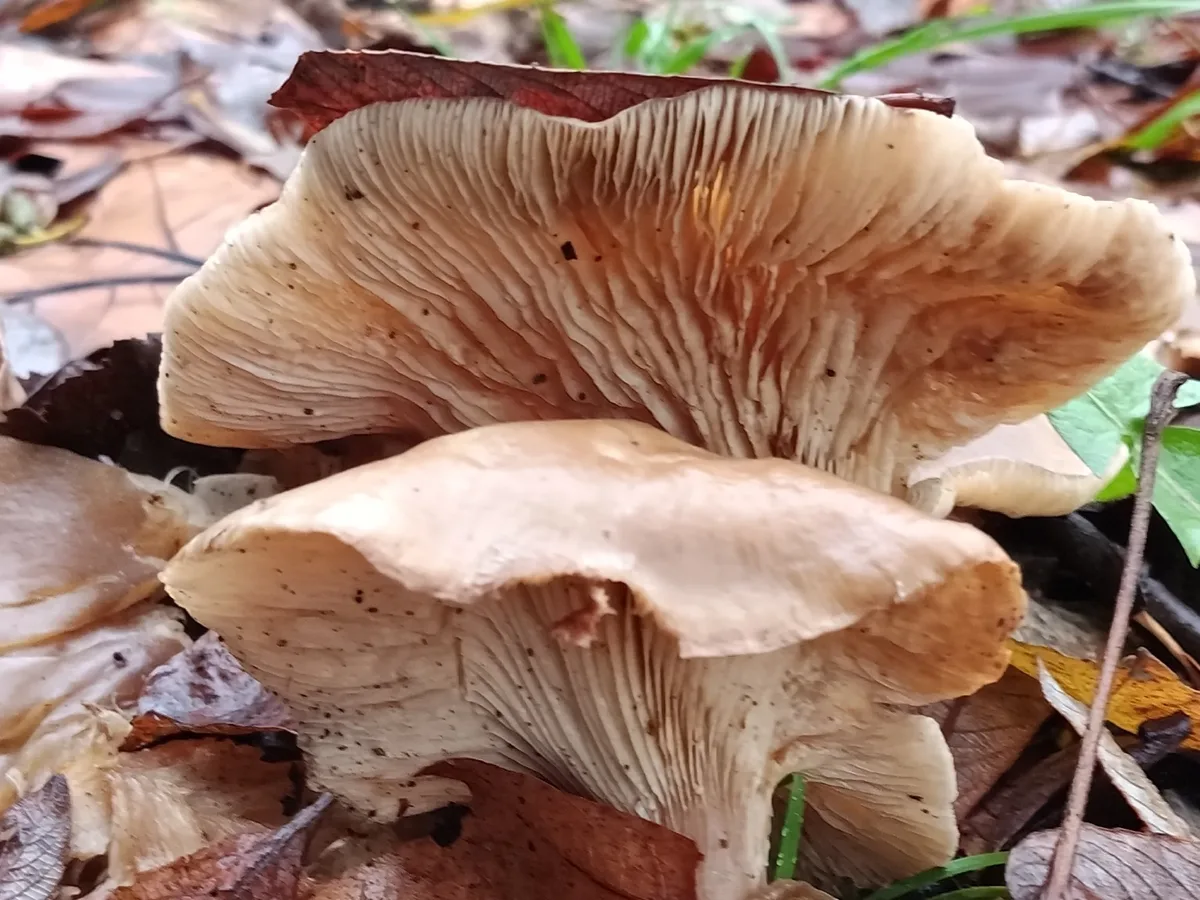
The gills are pale - white to cream or faintly yellowish - crowded, narrow and shortly decurrent. A useful field test is that they peel away from the cap flesh in a layer with surprising ease.
Stem
The stout stem is whitish-grey, fibrous, and noticeably swollen or club-shaped at the base, without any ring.
Flesh
The flesh is thick, firm and white.
Smell & taste
Above all, the mushroom has a strong, distinctive smell - sweetish yet mealy and somewhat rancid or sickly - which together with the cream spore print is the most reliable confirmation of identity.
Why it's dangerous
The intrinsic danger of C. nebularis is moderate - an uncomfortable but generally short-lived stomach upset that affects some people and not others.
The serious, potentially life-threatening danger is indirect: this species habitually shares its woodland-litter habitat, autumn season and pale colouring with the poisonous Livid Pinkgill (Entoloma sinuatum), which causes severe, prolonged gastroenteritis and has in rare documented cases proved fatal.
Confusing the two - or accidentally picking both together from the same ring - is the real hazard.
Take a spore print (cream vs. pink) and check the gill attachment whenever there is any uncertainty.
Toxin
Clitocybe nebularis contains several active compounds:
- Nebularine, a purine ribonucleoside with cytotoxic and antifungal properties
- Poorly characterised heat-labile (thermolabile) compounds that act as gastrointestinal irritants
- A clitocybe nebularis lectin (CNL)
The irritant fraction is the main cause of the digestive upset reported in a substantial minority of people.
Individual sensitivity varies widely - some tolerate it while others react to even small, well-cooked amounts.
Symptoms
Eating this mushroom causes a short-latency gastrointestinal syndrome: nausea, vomiting, abdominal cramps and diarrhoea typically begin from under one hour up to about four hours after the meal.
Symptoms are usually self-limiting and resolve within a day or so, but can be unpleasant and dehydrating.
There are no organ-failure or delayed effects from C. nebularis itself. However, the symptoms can mimic the early phase of far more dangerous poisonings, so medical attention should be sought if there is any doubt about what was eaten.
Staying safe
Although long eaten in parts of Europe, Clitocybe nebularis is best treated as a mushroom for experienced foragers only, and many authorities now advise against eating it at all.
A significant proportion of people suffer gastrointestinal upset from it even when it is well cooked, and reactions can be unpredictable and individual. It must never be eaten raw.
The far greater danger is misidentification: it grows side by side with the poisonous Livid Pinkgill (Entoloma sinuatum), so a careless basket can contain both. Beginners should not collect this species for the table.
If you choose to eat it, try only a small, thoroughly cooked portion the first time and never mix it with unknown caps from the same patch.
Where & when it grows
Habitat
This is a saprotrophic decomposer rather than a tree partner, living on dead buried plant material, leaf litter, needle duff and woody debris in the soil.
It thrives on the floor of both broadleaf and conifer woodland - beech, oak, spruce and pine are all common associates - and ventures readily into woodland margins, parkland, shrubberies, hedge bottoms and onto landscaping woodchip.
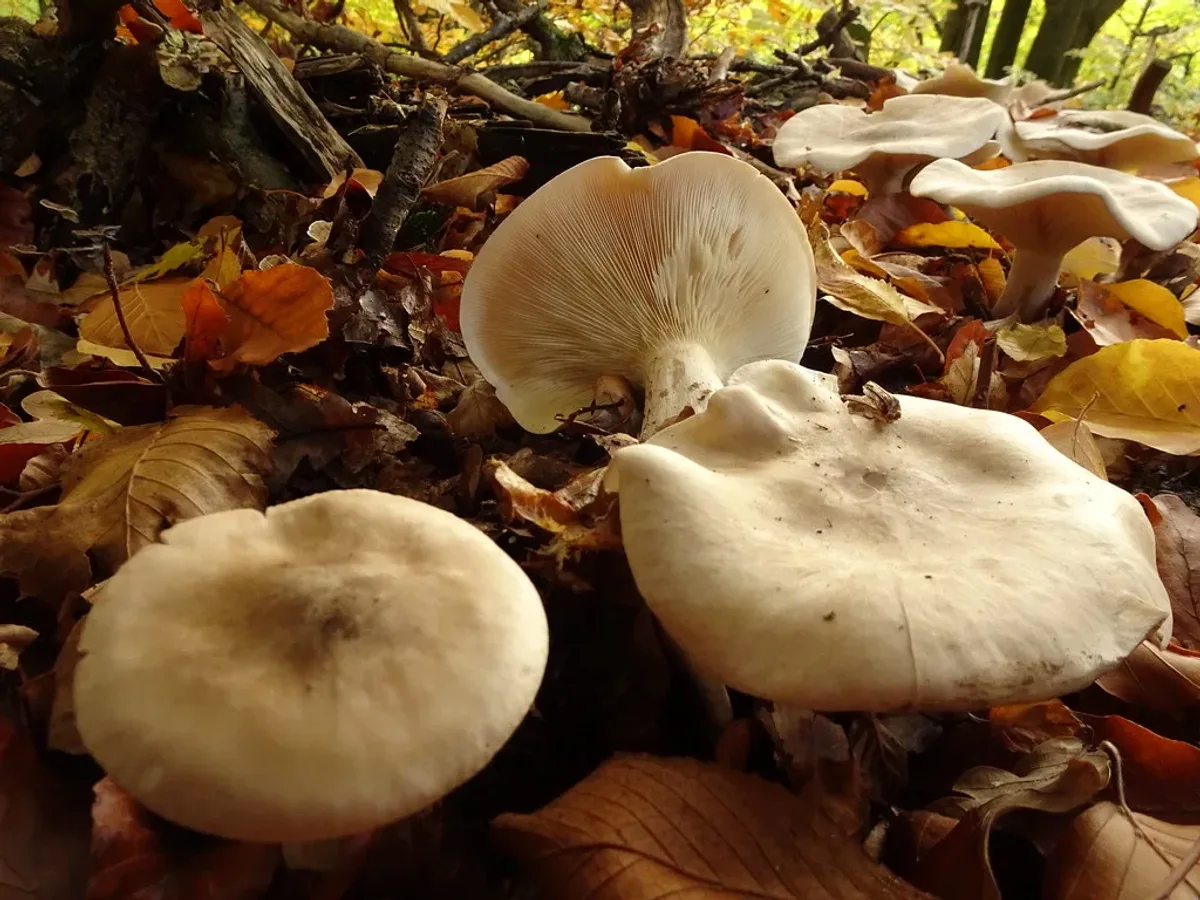
It is gregarious to the point of being theatrical, appearing in large troops, dense overlapping clusters and especially in sweeping arcs and full fairy rings that can stretch several metres across an autumn woodland floor.
When
The Clouded Funnel is a true late-season species - one of the last large gilled mushrooms to hold its ground before winter closes in.
It begins appearing in early autumn around September, builds steadily through October, and peaks in the damp, cooling weeks of mid- to late October when most summer mushrooms are long gone.
It keeps going through November and into December, often shrugging off the first light frosts.
In mild oceanic climates it can persist well into early winter, a stubborn presence in an otherwise quiet woodland.
How it grows
Clitocybe nebularis fruits from an extensive underground mycelial network that decomposes accumulated litter and humus.
Because that mycelium spreads outward year on year, the fungus tends to recur in the same place and to mark its growth as expanding rings and arcs - the classic fairy-ring habit.
Fruitbodies often emerge in great numbers after the cool, damp spells of autumn, sometimes carpeting a patch of woodland floor.
The species is also notable for producing the antifungal compound nebularine and an antibacterial lectin (CNL), part of its competitive chemistry in the crowded litter layer.
Fruiting conditions
A cool-loving late-autumn fruiter; flushes follow autumn rains as soil temperatures fall, often continuing through light frosts into early winter.
Look-alikes
The single most important confusion is with the Livid Pinkgill, Entoloma sinuatum, a seriously poisonous mushroom of similar size, pale colour and woodland habitat that frequently grows in the same places and even intermingled.
Entoloma sinuatum has a paler ivory cap, gills that mature from yellowish to salmon-pink (it has a pink spore print), and a more rancid-mealy smell. Crucially its gills are adnate/sinuate rather than the neatly decurrent, easily-peeled gills of the Clouded Funnel, and its spore print is pink, not cream.
Other grey funnel-caps in the genus and Lepista/Paralepista species can look broadly similar but lack the precise combination of large size, frosted grey cap, pale decurrent gills, swollen stem base, mealy-sickly smell and cream spore print.
The edible Wood Blewit (Lepista nuda) shares the late season and litter habitat but is lilac-tinged.
Always take a spore print when in any doubt - the cream print of C. nebularis versus the pink print of Entoloma is decisive.
Seriously poisonous and the critical confusion. Similar large size and pale colour, often in the same woodland and even intermixed, but cap is paler ivory-cream, gills mature yellowish then salmon-pink and are adnate/sinuate (not neatly decurrent and not easily peeled), and the spore print is PINK rather than the cream print of the Clouded Funnel. Smell is rancid-mealy. Always take a spore print: pink = leave it.
Much smaller, blue-green to grey-green, with a strong sweet aniseed smell - quite different from the mealy-rancid odour and larger grey body of C. nebularis.
POISONOUS - a whitish, frosted-looking funnel of litter that contains muscarine and has caused muscarinic poisonings (sweating, salivation, blurred vision). Smaller and white rather than the large cloud-grey body of C. nebularis. Several small white Clitocybe species are dangerously muscarinic, so any small white funnel must be distinguished with care and never eaten.
Also large and ring-forming in autumn litter, but pale buff-ochre to cream (not grey), with a deeply funnelled cap that often has a small central umbo, a tall stem and a sweetish smell; gills are strongly decurrent and white-cream. Edible but check the colour and shape.
Shares the late-autumn litter habitat but is distinctly lilac to violet (cap, gills and stem) when young, with a pinkish-buff spore print and a perfumed, not mealy-sickly, smell. Edible when thoroughly cooked (never raw).
A reference guide - never an edibility guarantee. When in doubt, leave it out.