Fragrant Funnel
Clitocybe fragranssyn. Agaricus fragrans, Omphalia fragrans, Clitocybe fragrans var. fragrans
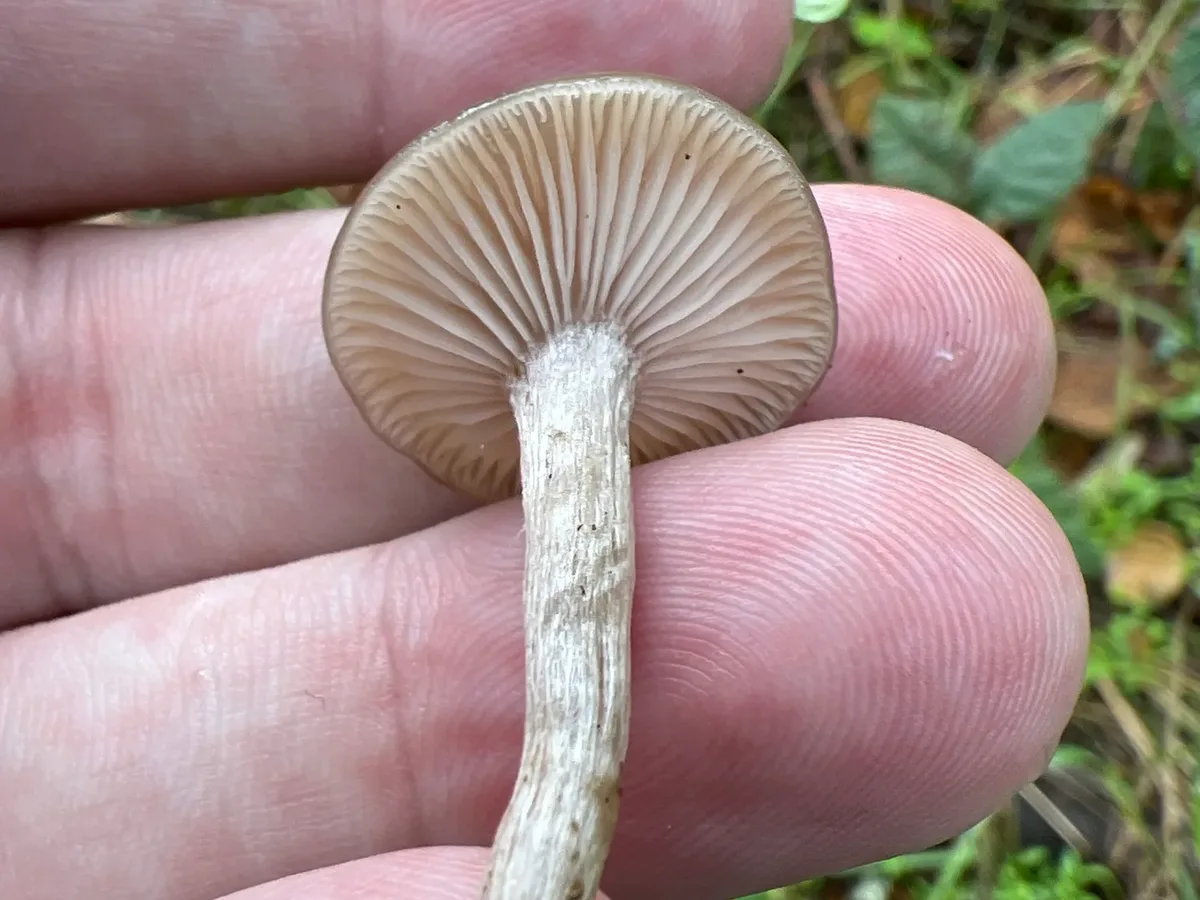 © Kyle McCann (CC BY 4.0)
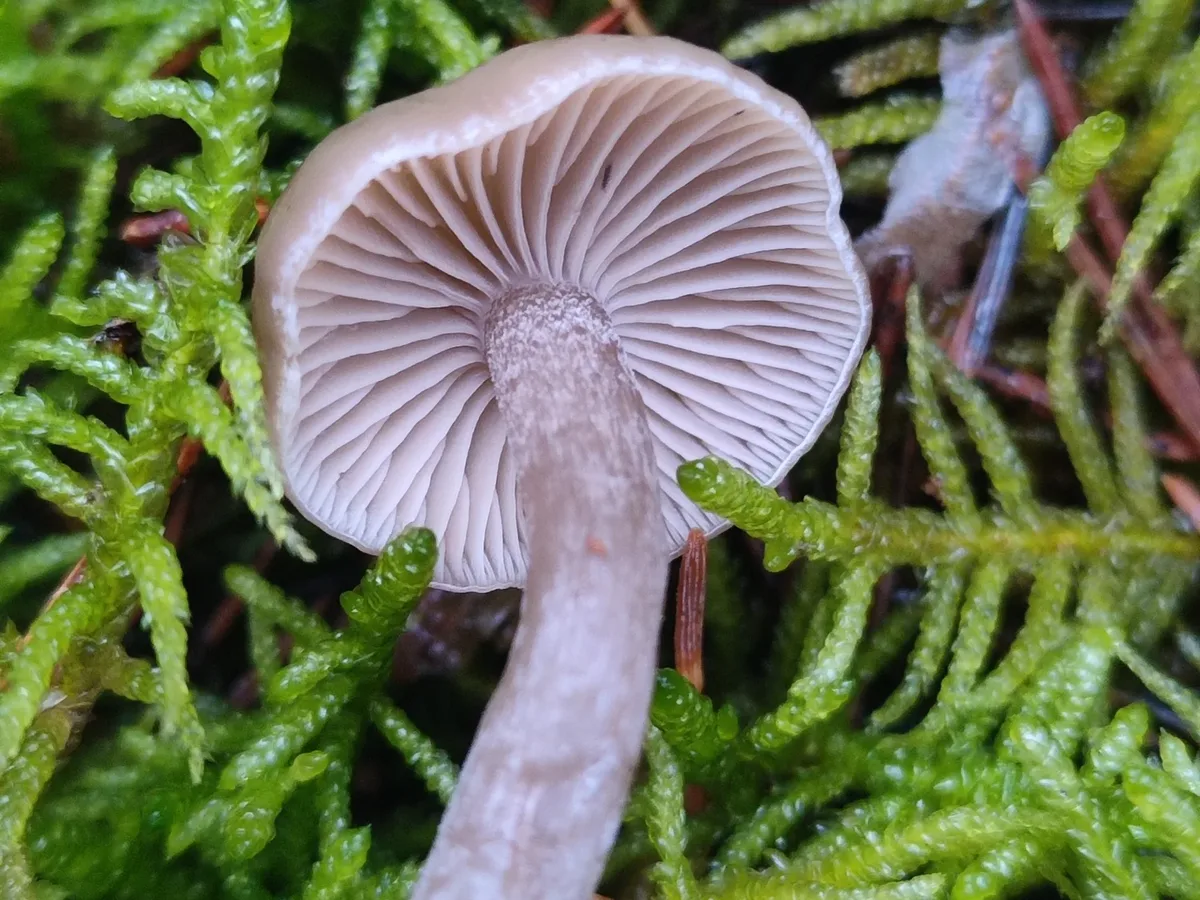 © victor laborde (CC BY)
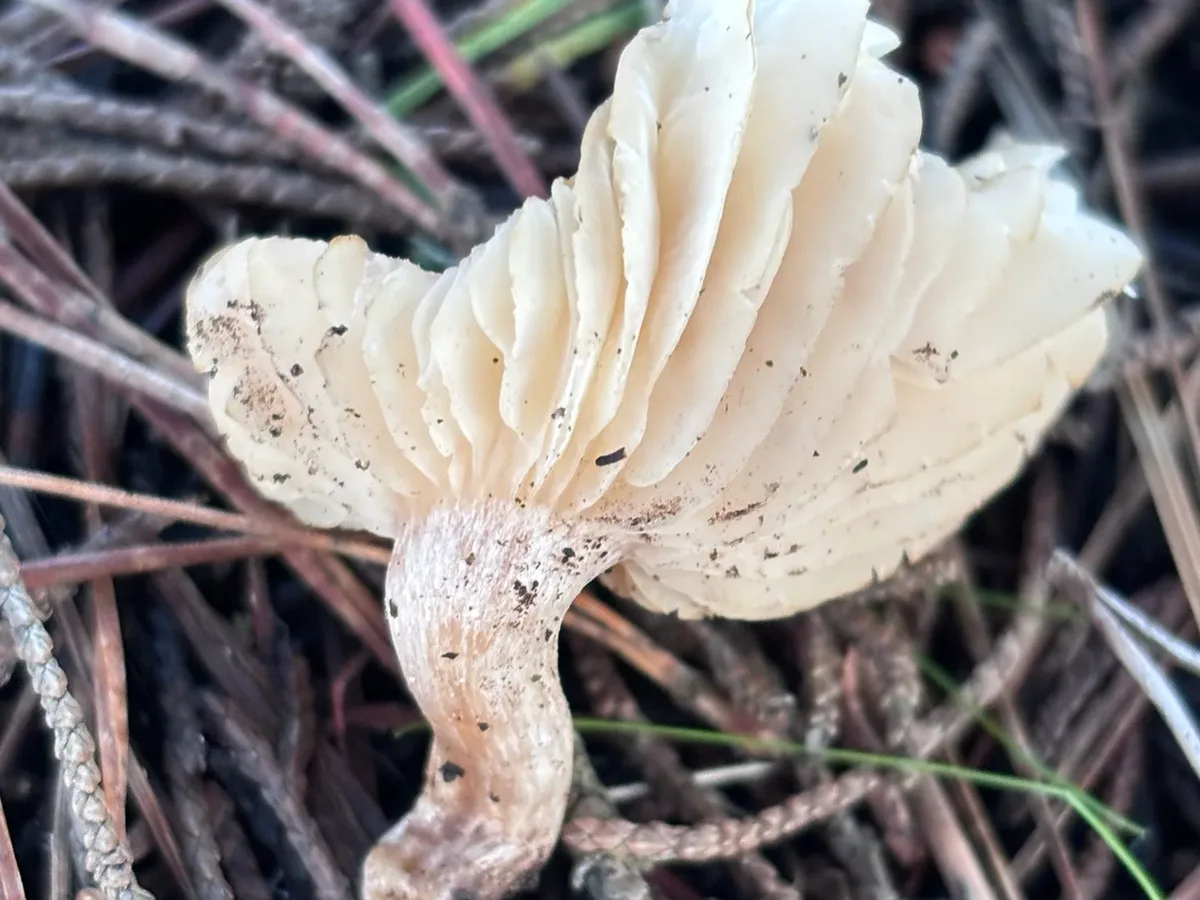 © reagan peschke (CC BY)
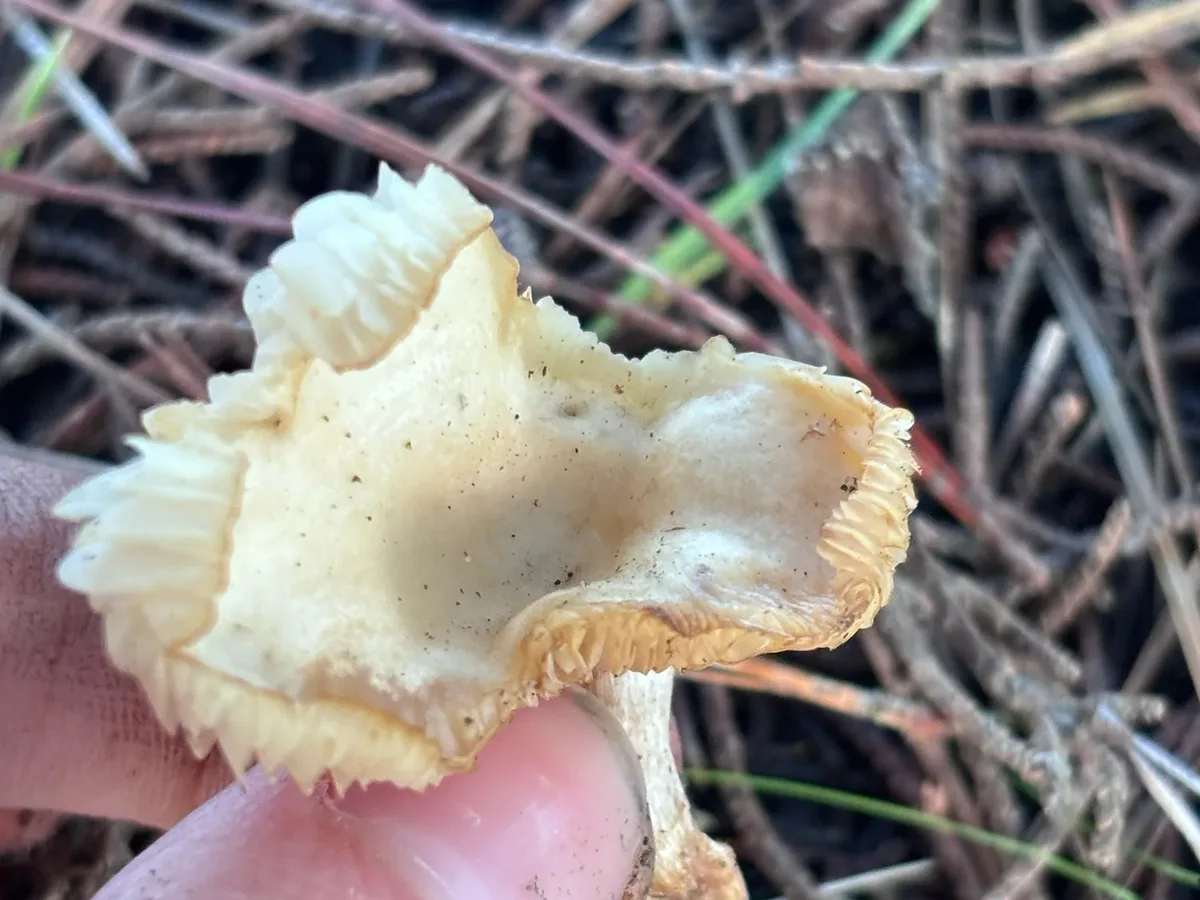 © reagan peschke (CC BY)
 © victor laborde (CC BY)
 © victor laborde (CC BY)
 © considerthelilies (CC BY)
 © considerthelilies (CC BY)
 © considerthelilies (CC BY)
 © victor laborde (CC BY)
 © victor laborde (CC BY)
 © Mary K. Hanson (CC BY 4.0)© Kyle McCann (CC BY 4.0)© victor laborde (CC BY)
Edible only with the right preparation - or safe for some people but not others. Learn the caveats first.
How to recognise it
The Fragrant Funnel earns its name before you even kneel down - the sweet, persistent scent of aniseed drifts up from the leaf litter well before the fruitbody comes into view.
Cap
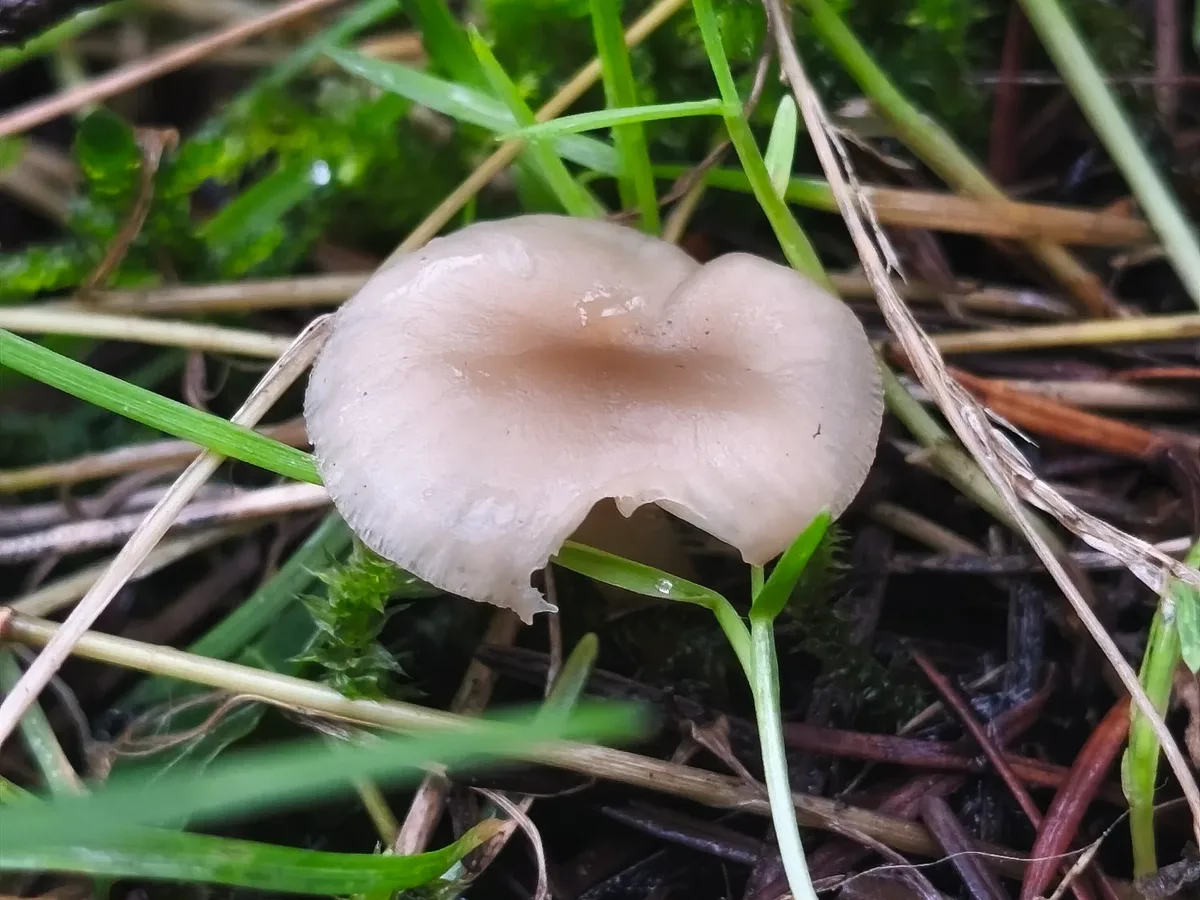
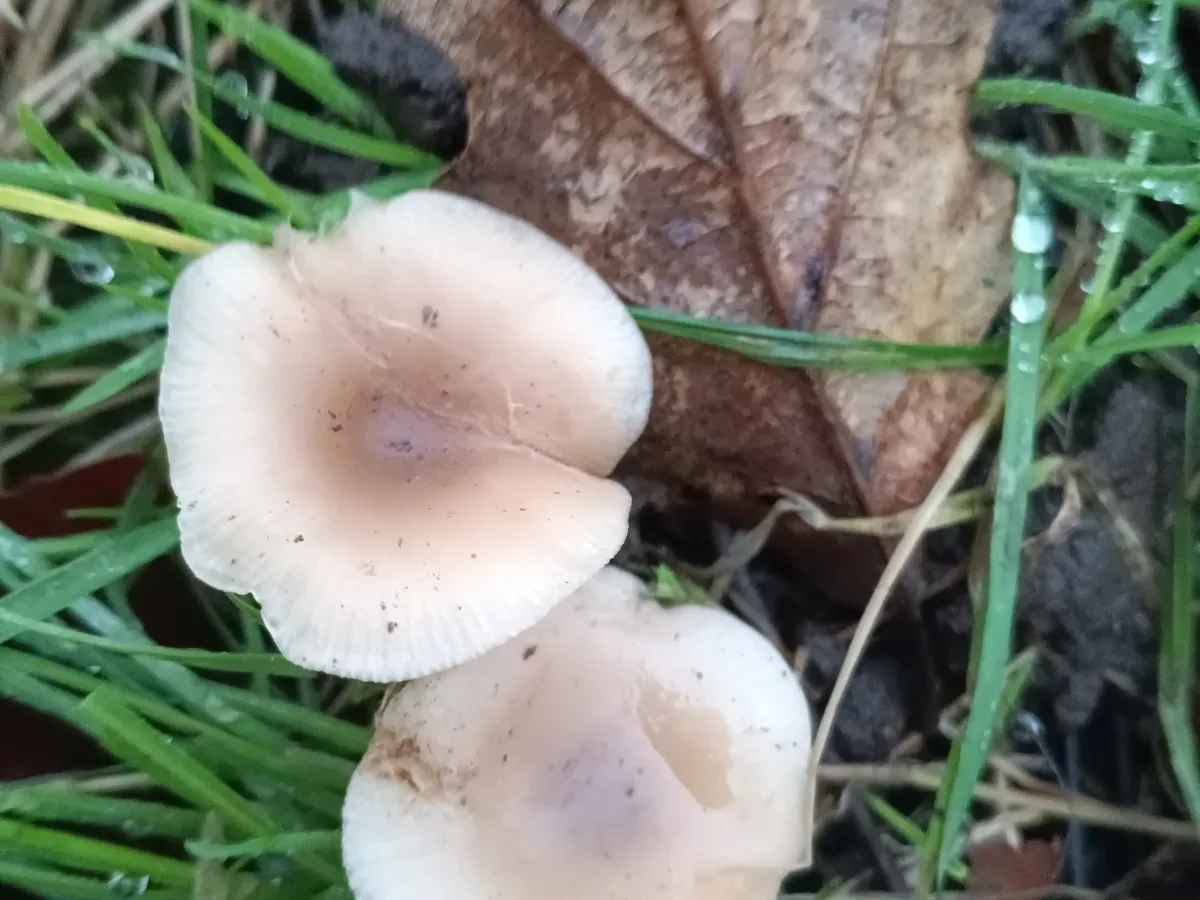
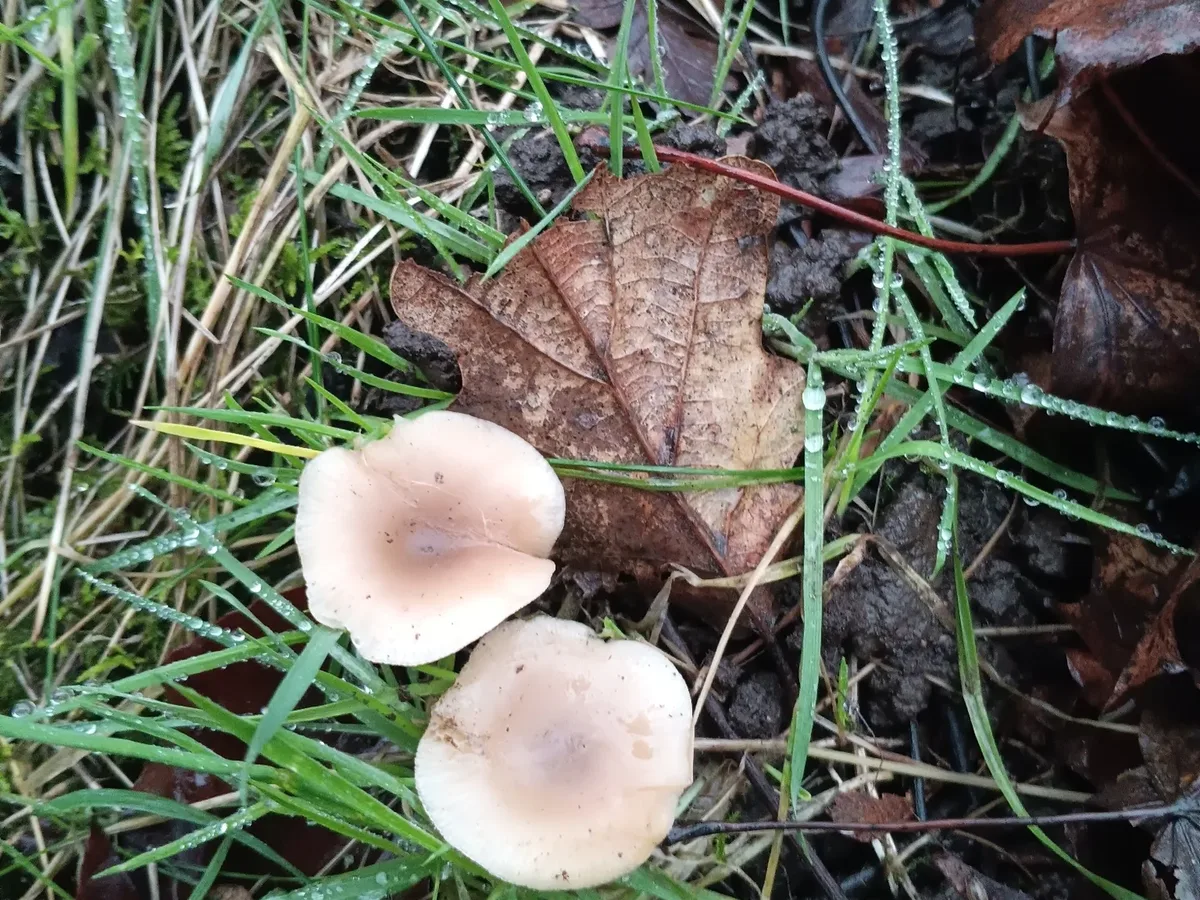
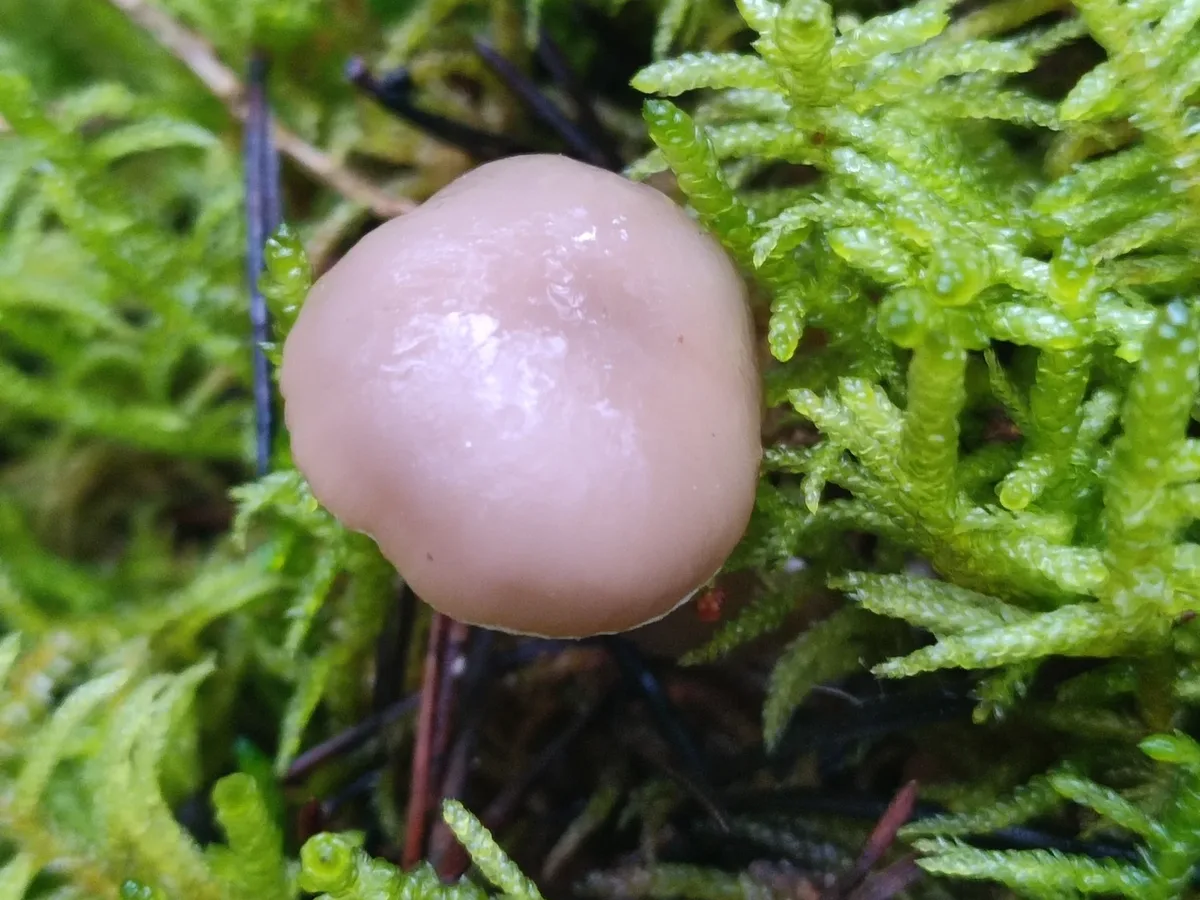
A slender white agaric, 2-6 cm across, that starts convex and gradually opens to a broad funnel or develops a central dip, with a thin, gently wavy margin.
One genuinely useful trait is its hygrophanous colour - whitish-ivory when dry but shifting to pale ochre or faintly tan when wet, so a damp specimen and a dry one from the same patch can look like different species. Worth keeping in mind when conditions change mid-foray.
Gills / Pores
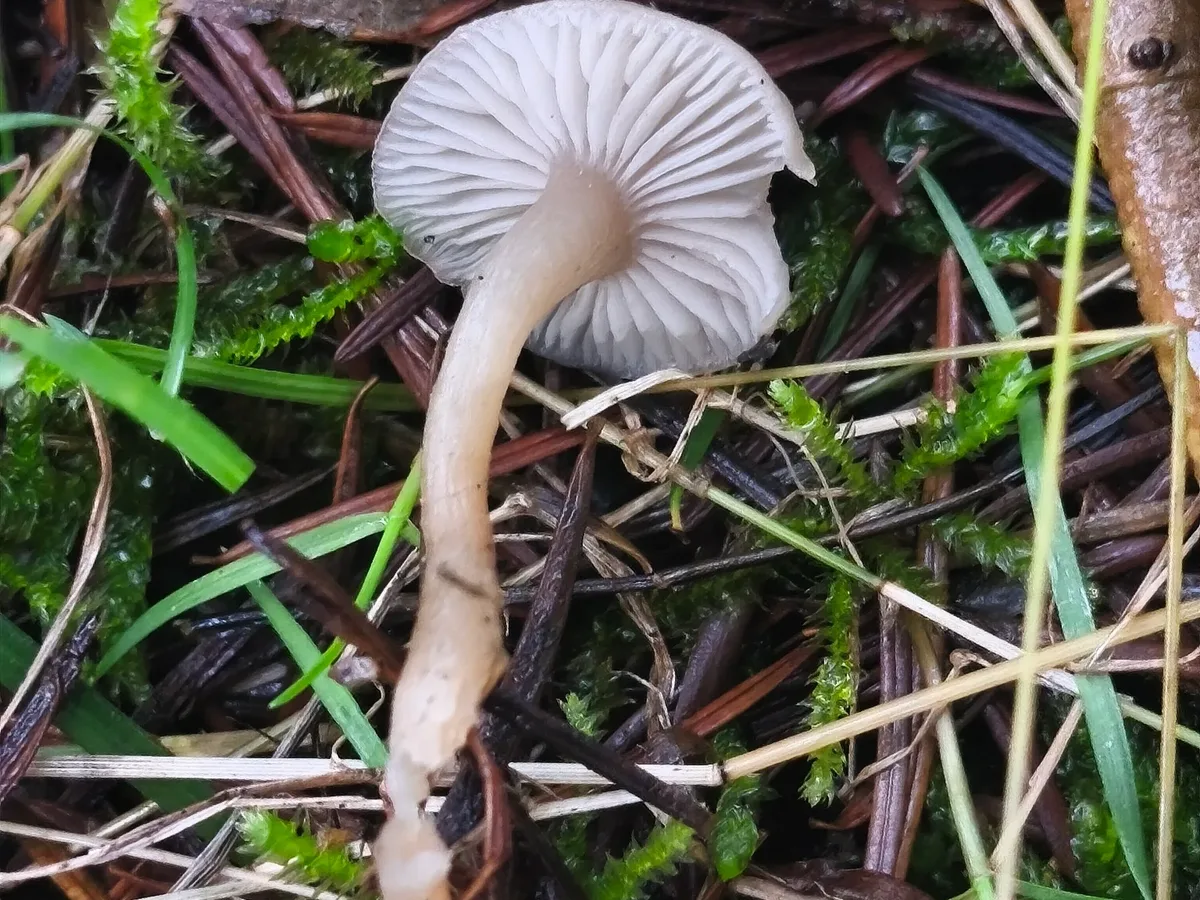
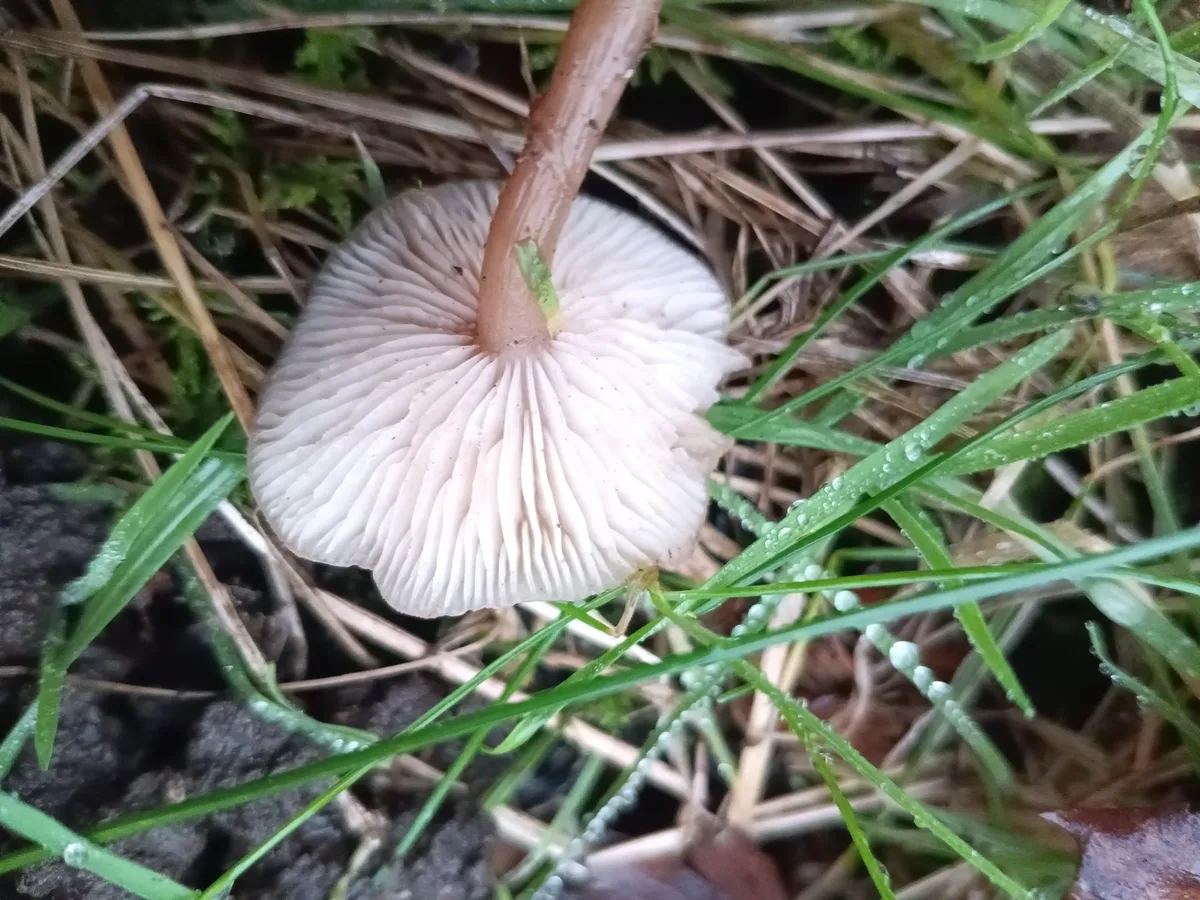
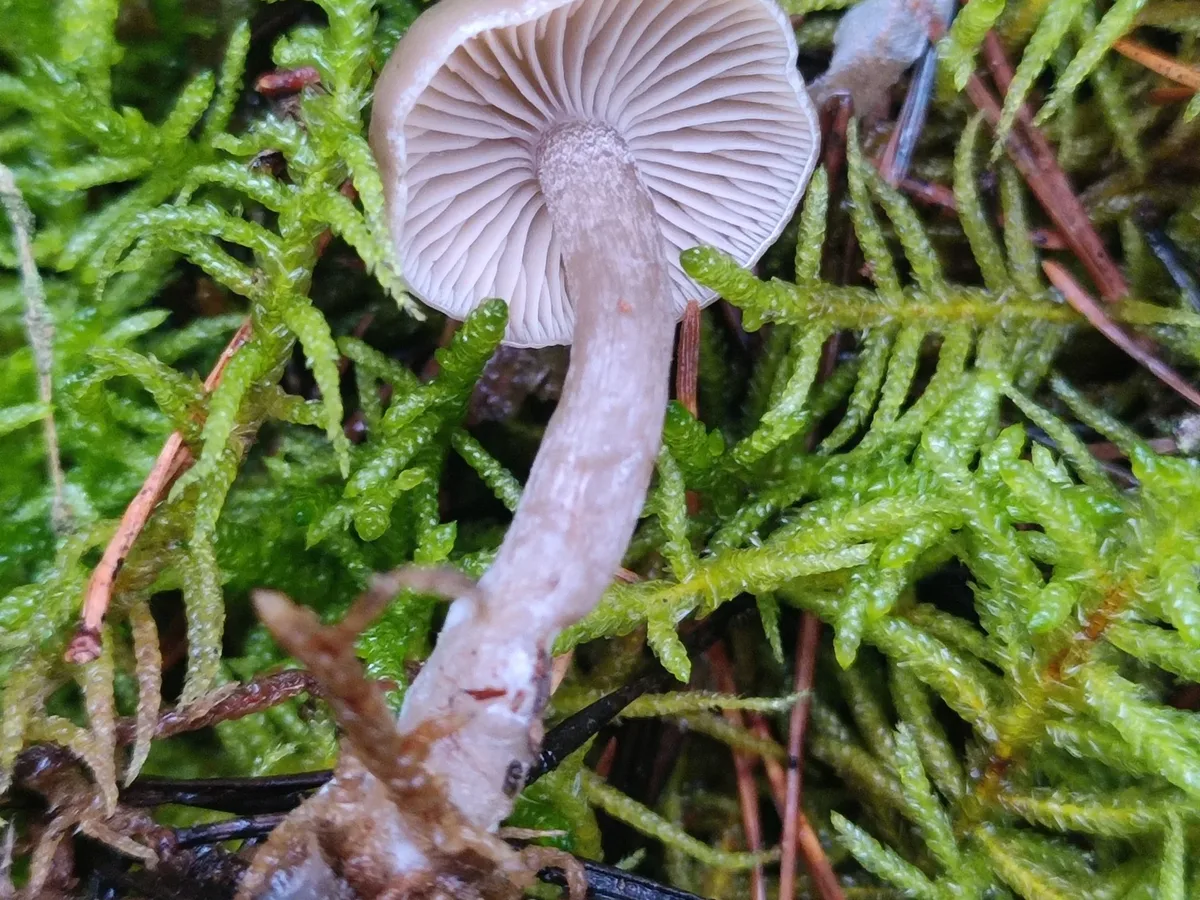
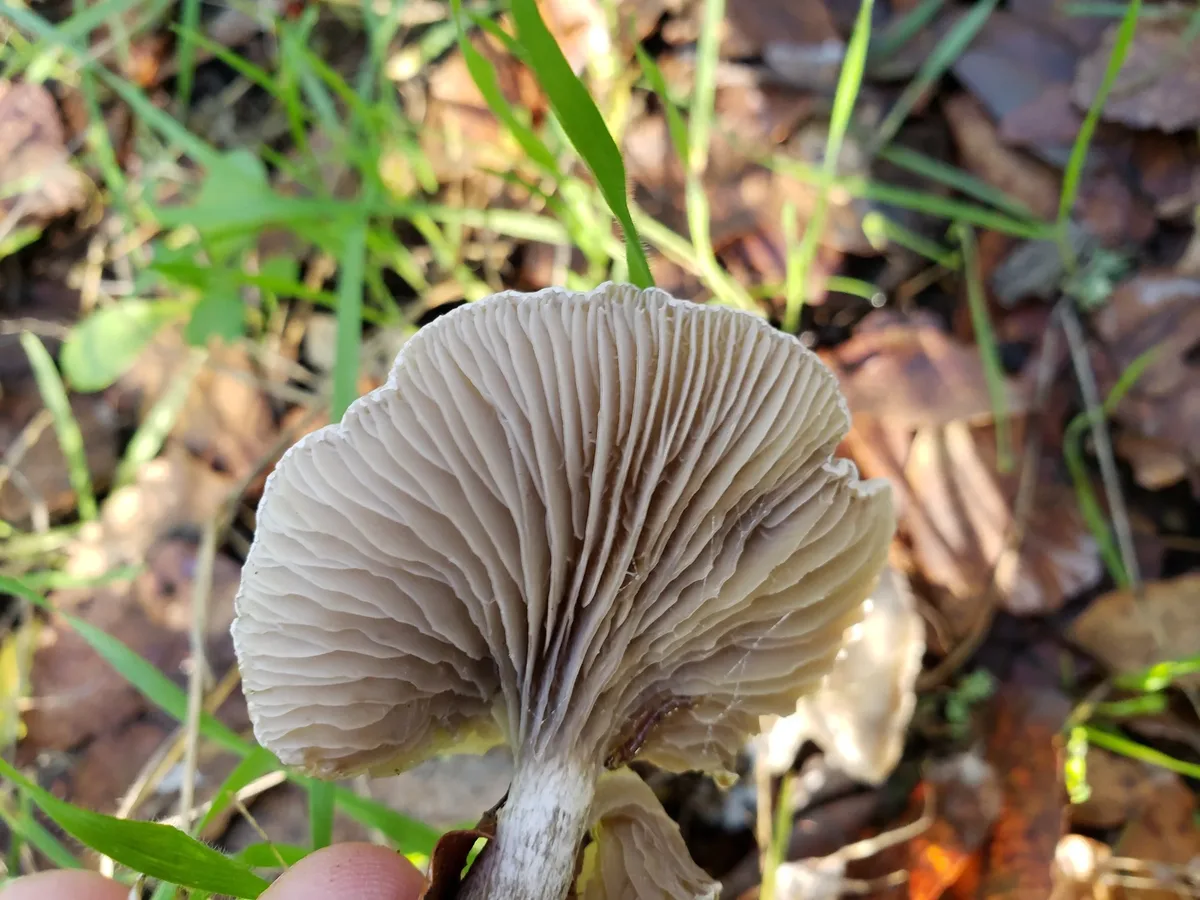
The gills are pale cream, closely packed, and run a short way down the stem (decurrent), a structural detail typical of the Clitocybe group.
Stem
The stem is slender and whitish, with no ring and no volva.
Spore print: white to very pale cream.
The key identification package: small white hygrophanous funnel-cap + crowded decurrent pale gills + no ring + strong sweet aniseed scent + white spore print.
Why it's dangerous
The direct danger is moderate - muscarinic poisoning from this species produces distinctly unpleasant and alarming symptoms but is rarely life-threatening in healthy adults when managed medically.
The indirect danger, however, is significant. The species is easily overlooked among woodland litter, resembles several other small pale funnels, and could be picked inadvertently alongside edible species - or confused for the edible Clitocybe odora if the colour difference (odora is blue-green-tinged) is not noticed on a faded or dry specimen.
Additionally, any small white funnel-cap from woodland litter is a category of mushroom that demands caution precisely because it includes several muscarinic species (C. fragrans, C. phyllophila, C. dealbata) that are not reliably distinguishable by scent alone.
If muscarinic poisoning is suspected, seek emergency medical care and bring a specimen or photograph for identification.
Toxin
Clitocybe fragrans contains muscarine, a quaternary ammonium compound that acts as a potent agonist at muscarinic acetylcholine receptors in the parasympathetic nervous system and other tissues.
Muscarine is water-soluble and heat-stable - it is not destroyed by cooking or drying. The muscarine concentration in Clitocybe fragrans is significant enough to cause symptomatic poisoning.
The toxin acts by mimicking acetylcholine at M1, M2 and M3 receptors, producing uncontrolled parasympathetic stimulation affecting glandular secretions, smooth muscle, and heart rate.
Symptoms
Muscarinic poisoning from Clitocybe fragrans has a short onset, typically 15 minutes to 2 hours after ingestion.
The clinical picture is the muscarinic (SLUD/SLUDGE) syndrome:
- Profuse sweating (diaphoresis)
- Salivation
- Lacrimation (watering eyes)
- Urinary urgency or incontinence
- Diarrhoea and gastrointestinal cramps
- Bradycardia (slowed heart rate)
- Miosis (pupil constriction)
Bronchospasm and bronchial secretion may cause breathing difficulty in severe cases.
Symptoms typically resolve within 6-24 hours and are rarely fatal in adults, but can be dangerous in the elderly, children, or those with heart or respiratory conditions.
The antidote is atropine, administered by medical personnel, which blocks muscarinic receptors.
Staying safe
Clitocybe fragrans is a toxic species and must not be eaten. It contains muscarine, a parasympathomimetic alkaloid that acts on muscarinic acetylcholine receptors and produces the characteristic muscarinic toxidrome.
There is no safe preparation method - muscarine is not destroyed by cooking. The species looks superficially similar to other small pale woodland funnels, and the identification must be made with care.
The strong anise scent is highly characteristic but is also shared by the edible Clitocybe odora, so the two species must be distinguished properly before any foraging decision is made.
Beginners should not eat any small white funnel-cap species from woodland litter.
Where & when it grows
Habitat
This is a decomposer that makes its living threading mycelium through accumulated organic matter on the woodland floor - not forming a root partnership with trees, but quietly breaking down the dead litter beneath them.
It favours cool, moist, sheltered spots where leaf mould and needle duff build up undisturbed:
- The deep duff under spruce and pine
- The thick humus of beech hollows
- Mixed woodland edges where shade keeps the substrate damp
It is not tied to any single host tree and appears wherever the litter conditions suit it. Once established, the mycelium can persist in the same patch for several successive autumns, sending up fresh troops of fruitbodies each season.
Unlike some larger funnel-cap relatives, it does not form the prominent fairy rings that might catch your eye from a distance.
When
Autumn is this species' time - beginning in late summer, with the first fruitings as early as August in warm years, and running through October into early November.
Peak abundance falls in September and October, when temperatures ease down and autumn rain saturates the litter.
The main trigger is a drop in soil temperature below roughly 14 °C combined with a period of decent rainfall; fruitbodies typically emerge one to two weeks after a significant soaking once that threshold is crossed.
In mild oceanic climates fruitings can linger into November, and in unusually wet summers a scattered flush is possible as early as July.
How it grows
The Fragrant Funnel spends most of its life invisibly, as mycelium threading quietly through the litter and humus layer, breaking down dead plant material.
The fruitbodies that briefly emerge are just the visible tip of that hidden network. Because the mycelium can persist for successive autumns, returning to a sheltered mossy hollow where you found it last year is often a reliable strategy.
Fruiting is triggered by the arrival of autumn: soil temperatures falling into the 8-14 °C range and a good soaking of rain typically bring up fruitbodies within one to two weeks.
The pale colour and low stature of the caps mean they can hide easily among fallen leaves until the aniseed scent gives them away.
Fruiting conditions
Flushes after autumn rains as soil temperature falls below about 14 °C; peak fruiting in September-October in central-west Europe.
Look-alikes
Several small white or pale funnel-caps occur in similar habitats and can present identification challenges.
- Ivory Funnel or Frosty Funnel (Clitocybe phyllophila) - also poisonous (muscarinic), white, funnel-shaped and litter-dwelling, but lacks the strong anise scent; its smell is mealy-faint rather than sweet.
- Fool's Funnel or Sweating Mushroom (Clitocybe dealbata) - very similar in stature and colour, also muscarinic-poisonous, but lacks the anise smell and grows in grassland (meadows, lawns) rather than woodland litter. It can be dangerously confused with the edible Fairy Ring Champignon (Marasmius oreades) in grassland settings, but the confusion with C. fragrans is in woodland contexts.
- Aniseed Funnel (Clitocybe odora) - closely comparable in odour and deserves careful comparison: it tends to be larger (cap 4-10 cm), more robustly built, and shows a distinctive blue-green to grey-green tinge on the cap, absent in the white C. fragrans. Older, faded odora specimens can lose some of that colour and overlap in appearance; odora is generally considered edible in small quantities when cooked, whereas C. fragrans must not be eaten.
- Mealy Plum (Clitopilus prunulus) - larger, has strongly sinuate to decurrent gills and a very different mealy smell, and is edible; confusions are mainly theoretical.
Small button-stage specimens with the ring not yet evident might superficially resemble other pale small agarics, but the decurrent gills and anise smell are distinctive.
The most important confusion: C. odora is also strongly anise-scented but is typically larger (cap 4-10 cm), more robustly built, and shows a characteristic blue-green to grey-green tinge on the cap that is absent in the white C. fragrans. Older or very dry specimens of odora can lose this greenish tint, so size, robustness and the more bluish-grey (never pure white) cap colour are the key separating characters. C. odora is generally considered edible in small cooked quantities; C. fragrans is toxic - do not eat C. fragrans on the grounds of confusion with odora.
Another muscarinic poisonous white funnel, but primarily a grassland species (lawns, meadows, roadsides) rather than a woodland litter species, and lacks any anise scent. The confusion with C. fragrans is mainly theoretical; the real danger of C. dealbata is being gathered with Marasmius oreades in grassland.
Also poisonous (muscarinic) and white/ivory funnel-shaped in woodland litter - the critical difference is smell: C. phyllophila has a faint, mealy or weakly fragrant odour, never the strong sweet aniseed scent of C. fragrans. Both are toxic; neither should be eaten.
Larger and more robust, with a strongly sinuate gill attachment and a distinctive mealy (floury bread) smell rather than anise. Edible and choice, but only for confident identifiers because of the Clitocybe confusion risk - C. fragrans is smaller, with a purely anise scent and decurrent gills.
A reference guide - never an edibility guarantee. When in doubt, leave it out.