Ivory Funnel
Clitocybe dealbatasyn. Agaricus dealbatus Sowerby (1799), Clitocybe cerussata var. dealbata, Omphalia dealbata, Clitocybe rivulosa (widely treated as the same species; C. dealbata is often regarded as a synonym or a nomen dubium under C. rivulosa)
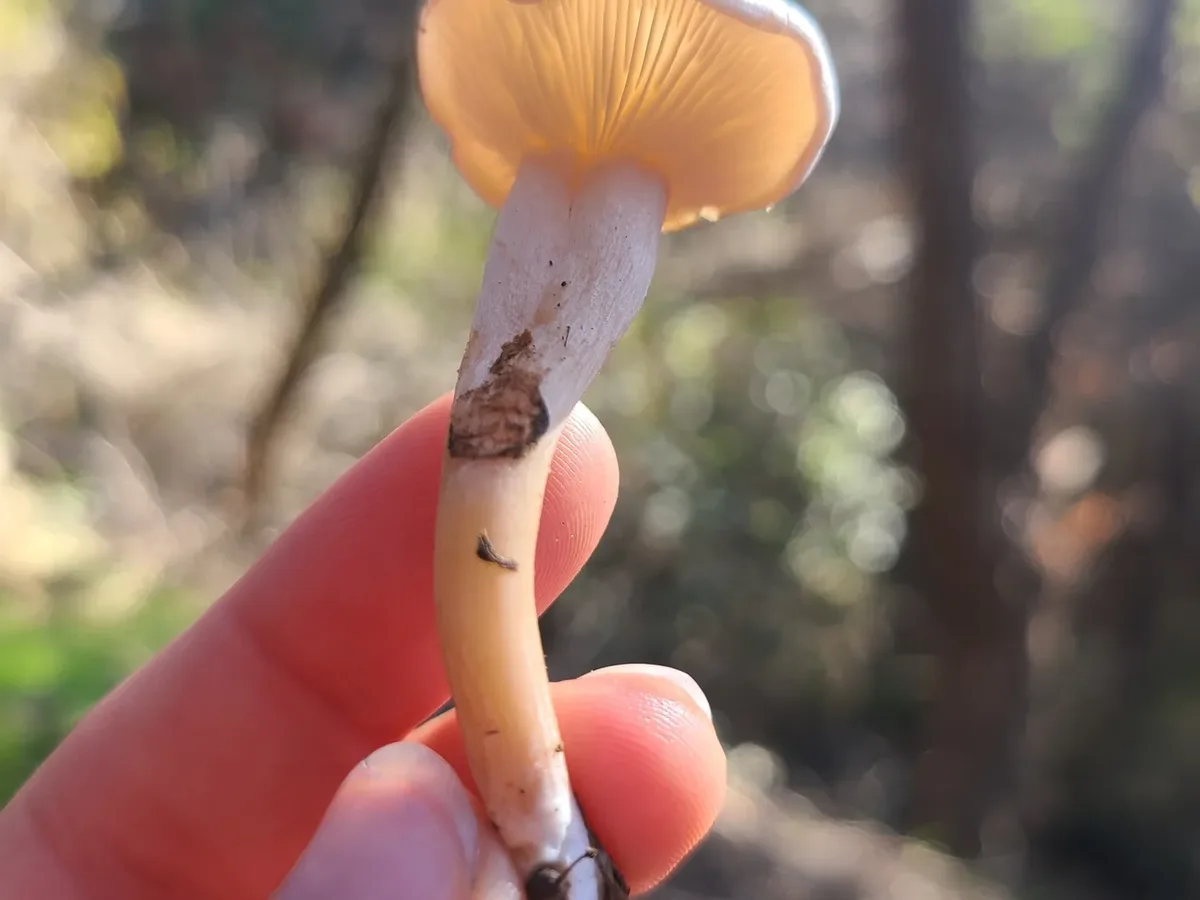 © Katerina (CC BY 4.0)
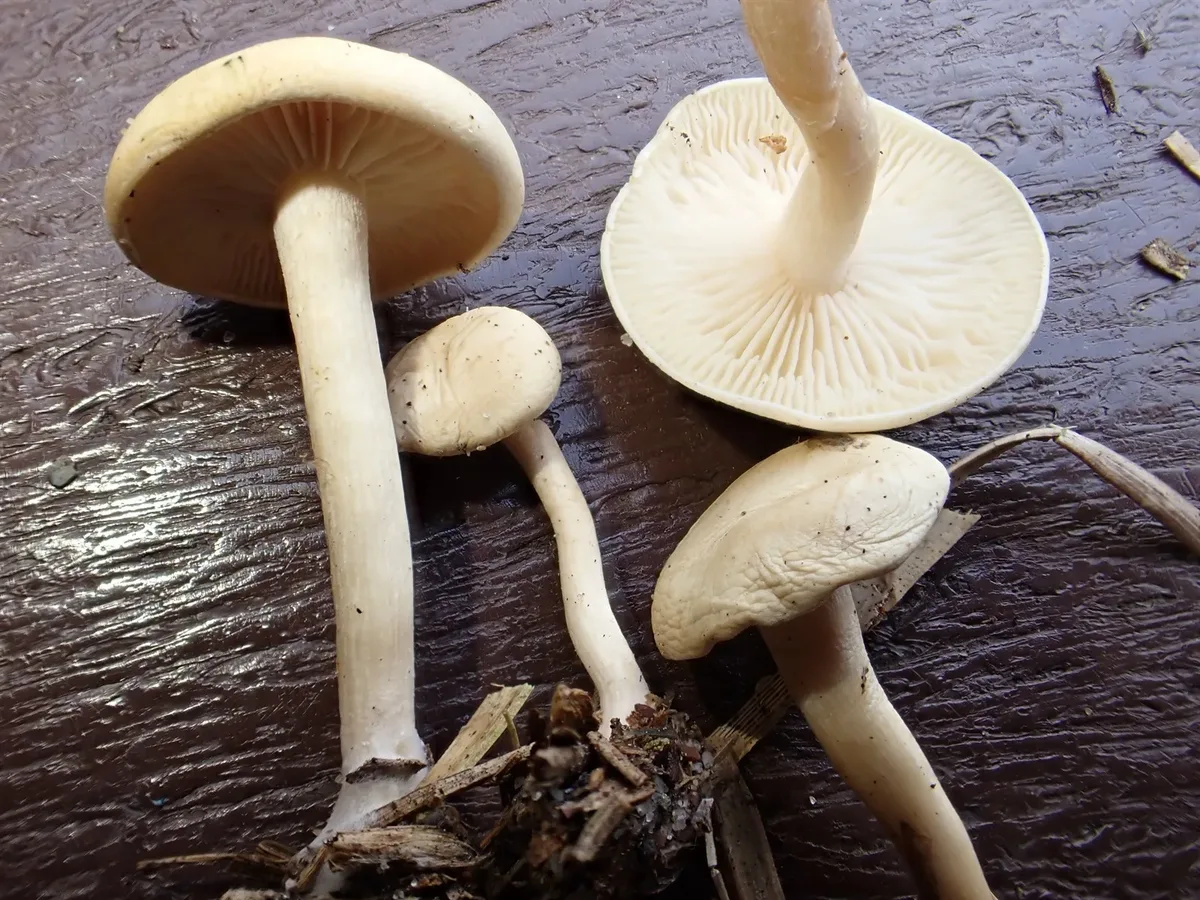 © Per Marstad (CC BY)
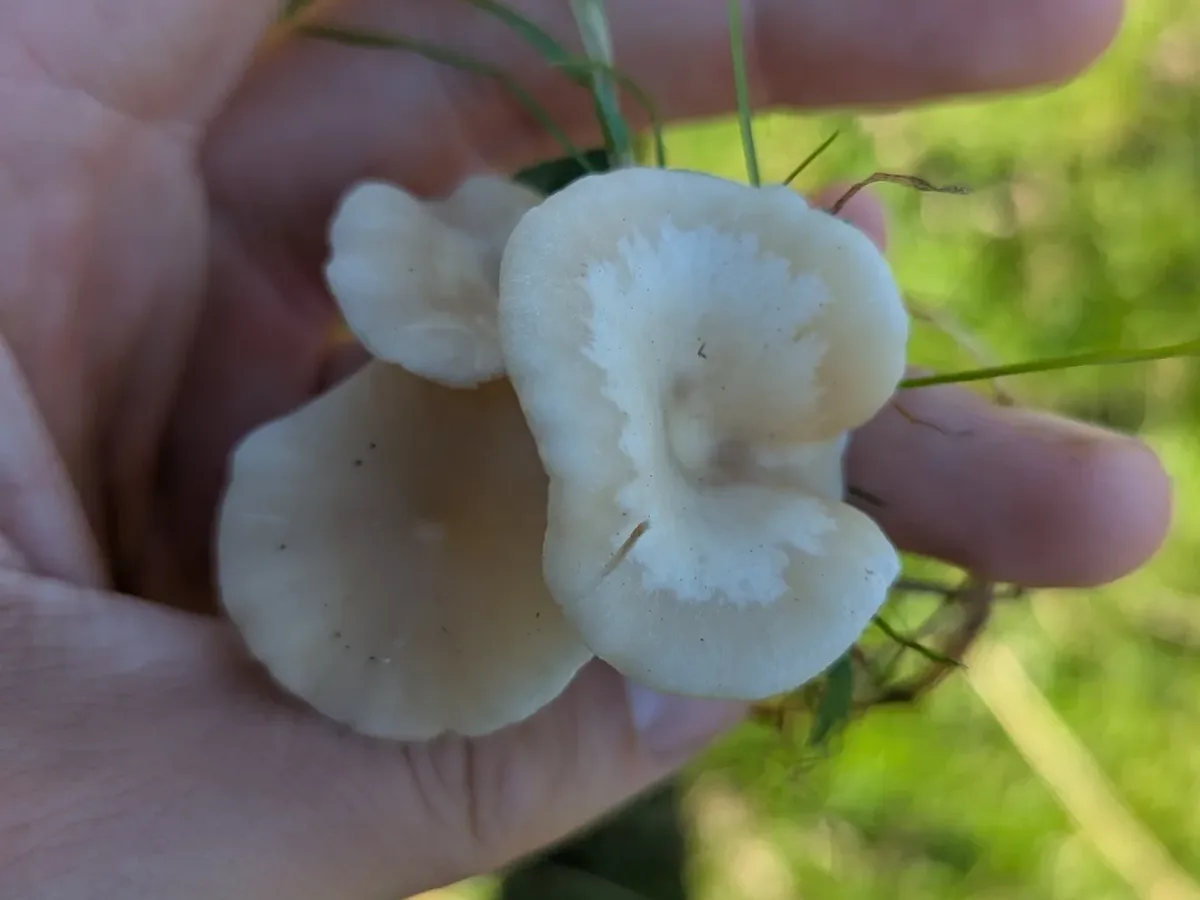 © Ole Christian Hagestad (CC BY)
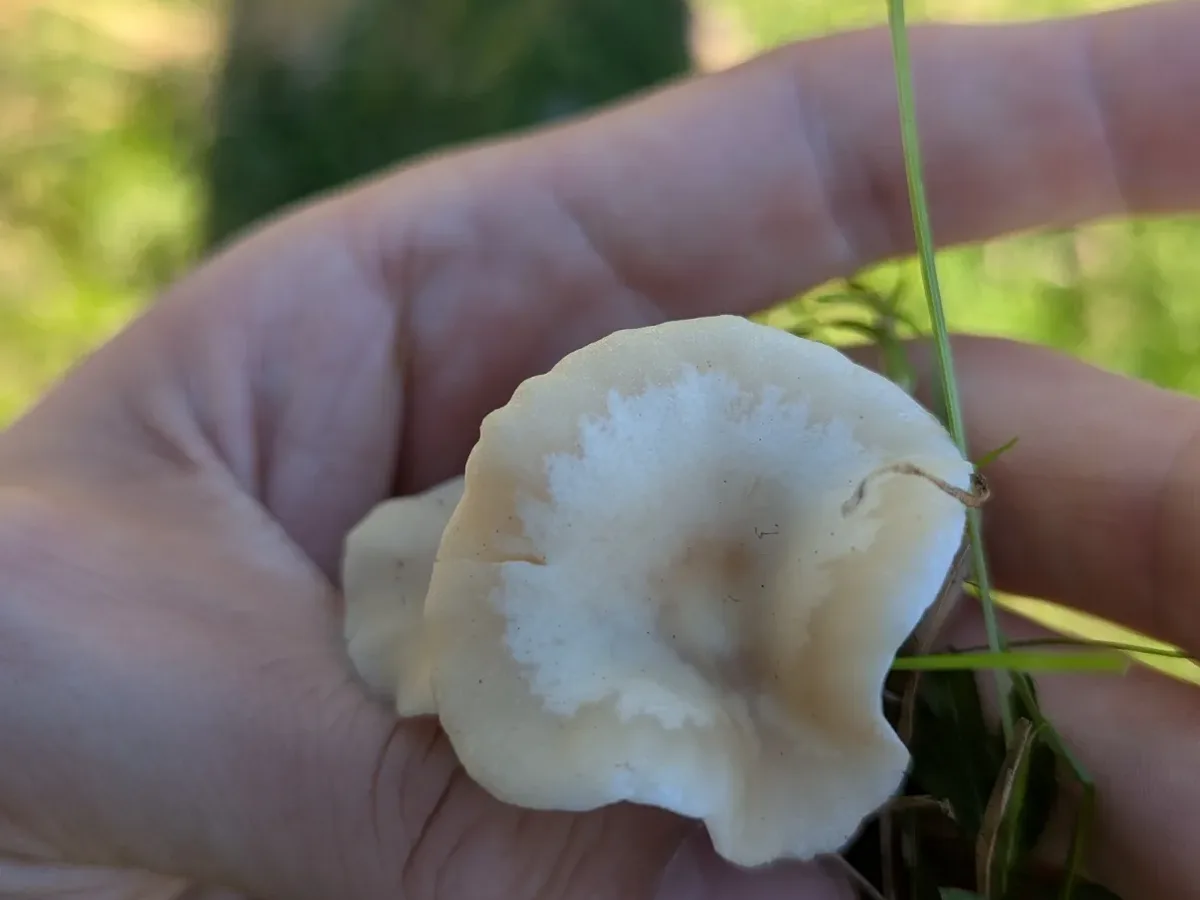 © Ole Christian Hagestad (CC BY)
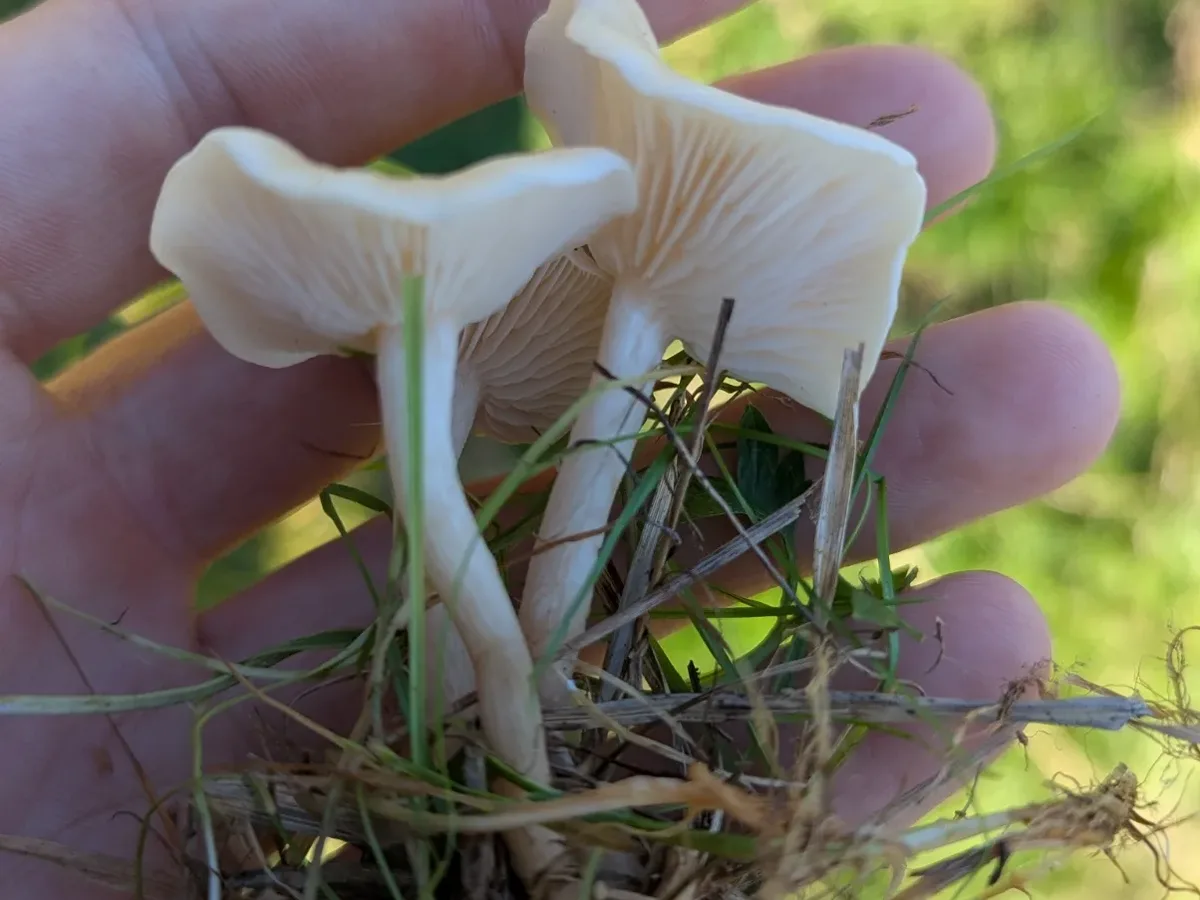 © Ole Christian Hagestad (CC BY)
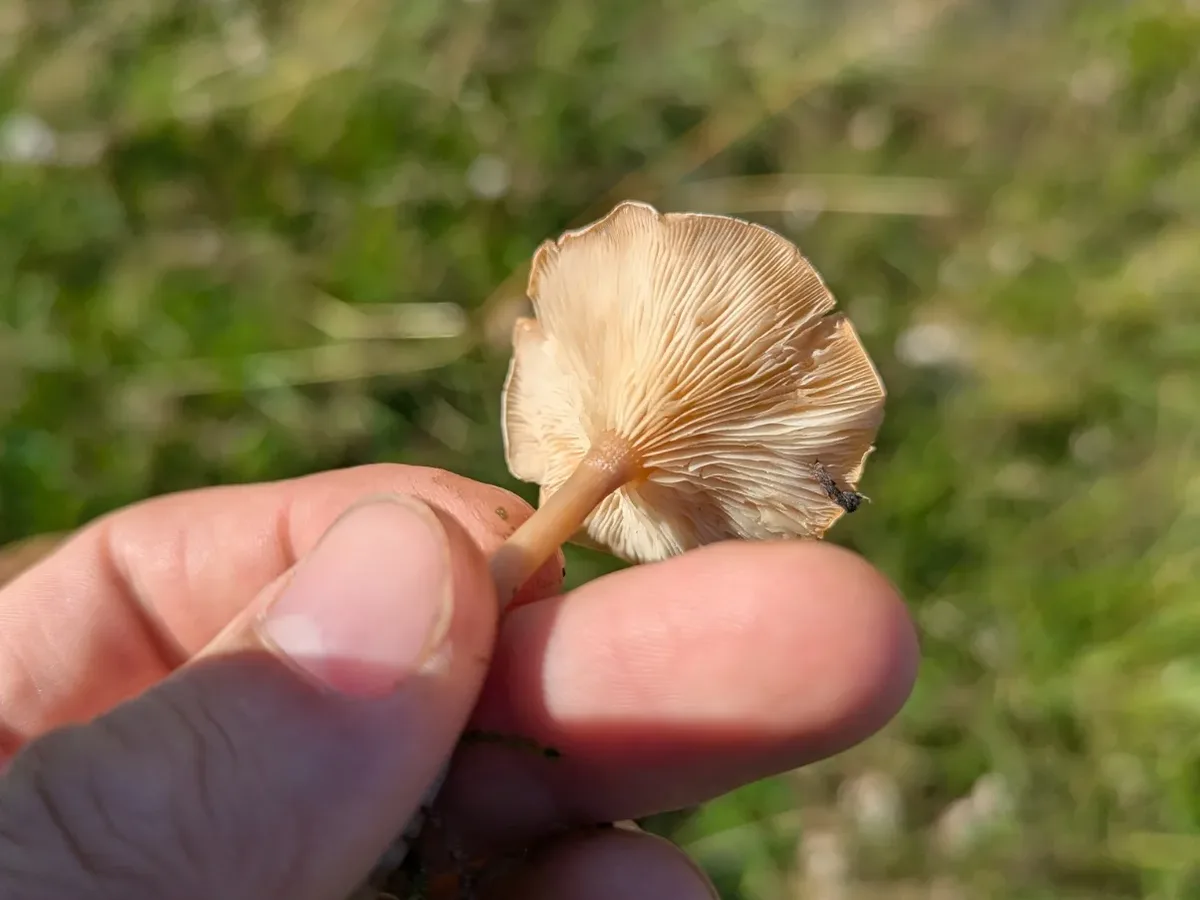 © Ole Christian Hagestad (CC BY)
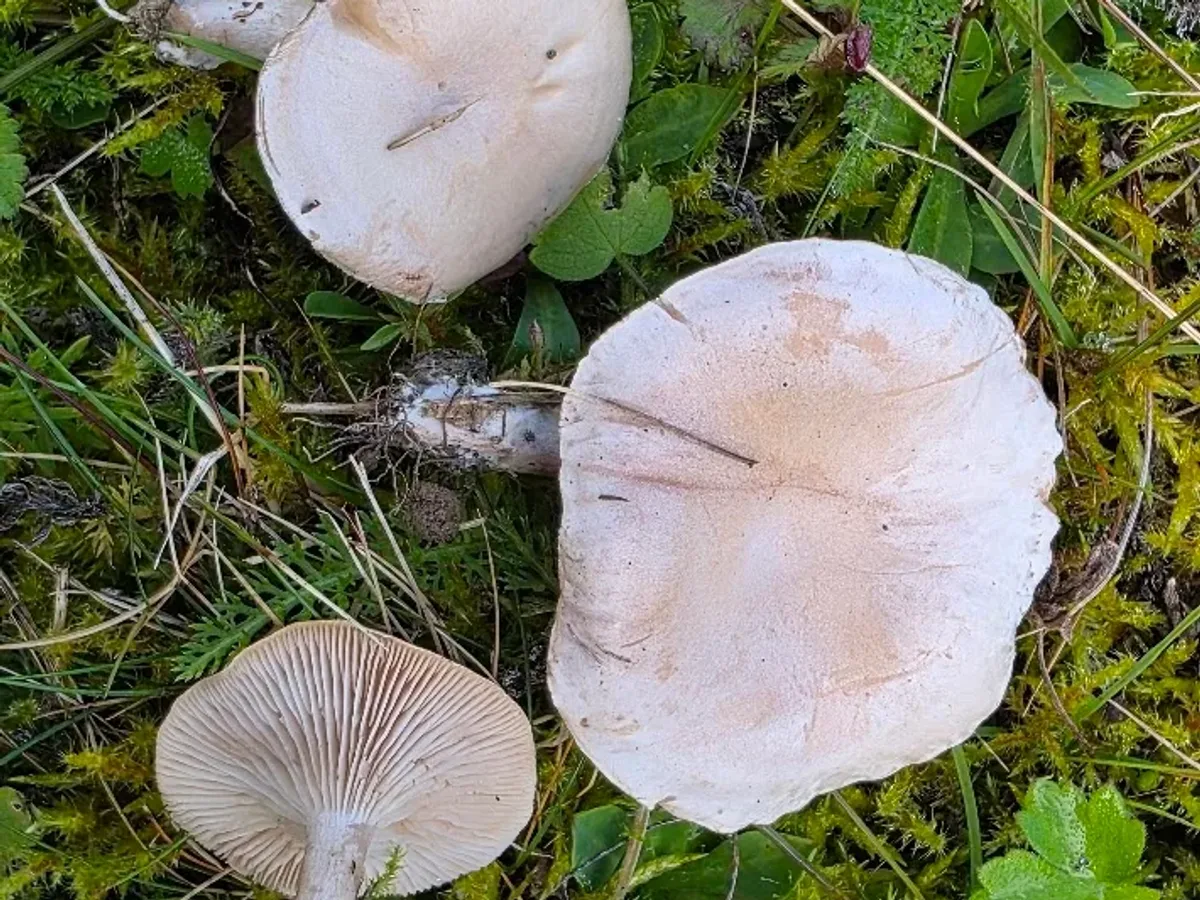 © Nina Fiskerstrand (CC BY)
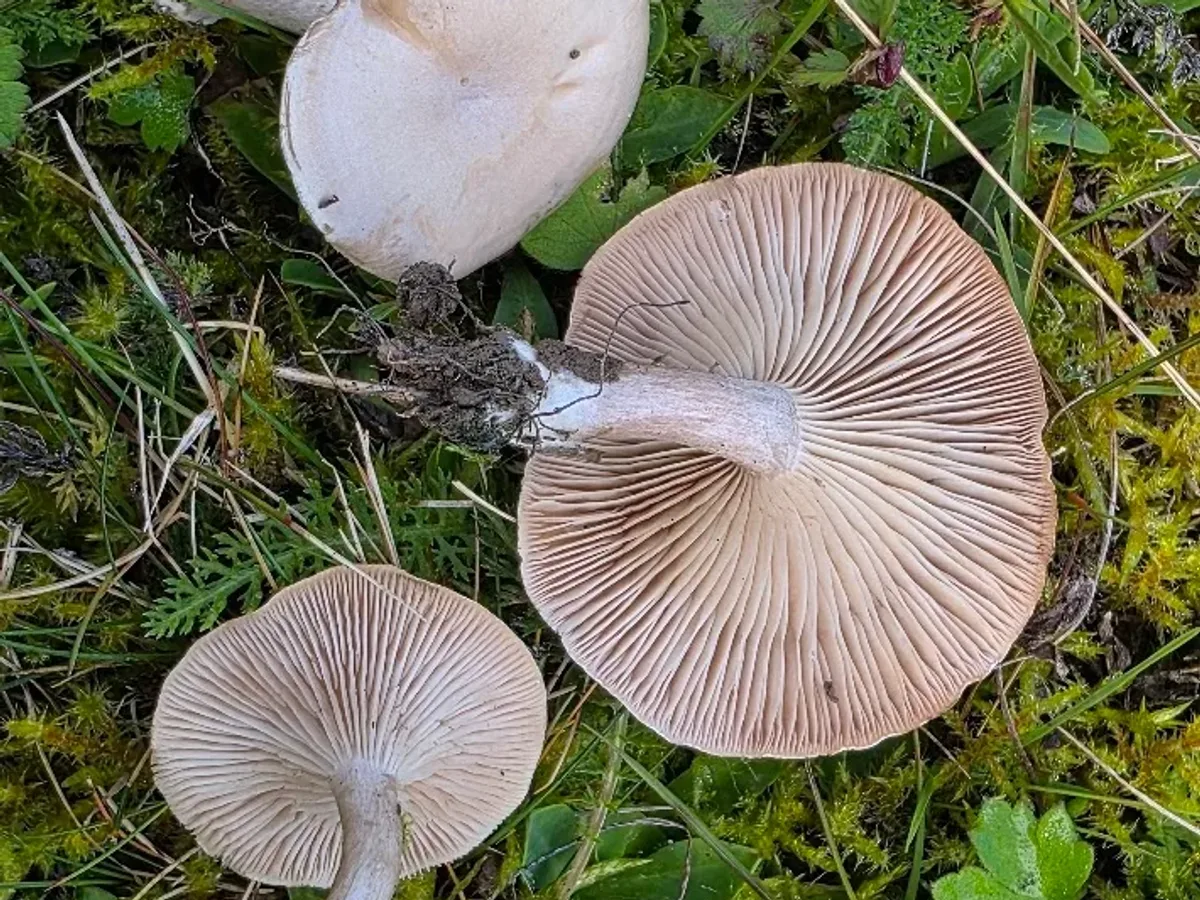 © Nina Fiskerstrand (CC BY)
 © Hilde Bye (CC BY)
 © Hilde Bye (CC BY)
 © Victoria M. (CC BY 4.0)© Katerina (CC BY 4.0)© Per Marstad (CC BY)
Edible only with the right preparation - or safe for some people but not others. Learn the caveats first.
How to recognise it
The Ivory Funnel is a small, unassuming, all-white mushroom that is easy to overlook and dangerously easy to mistake for harmless lawn fungi.
Cap
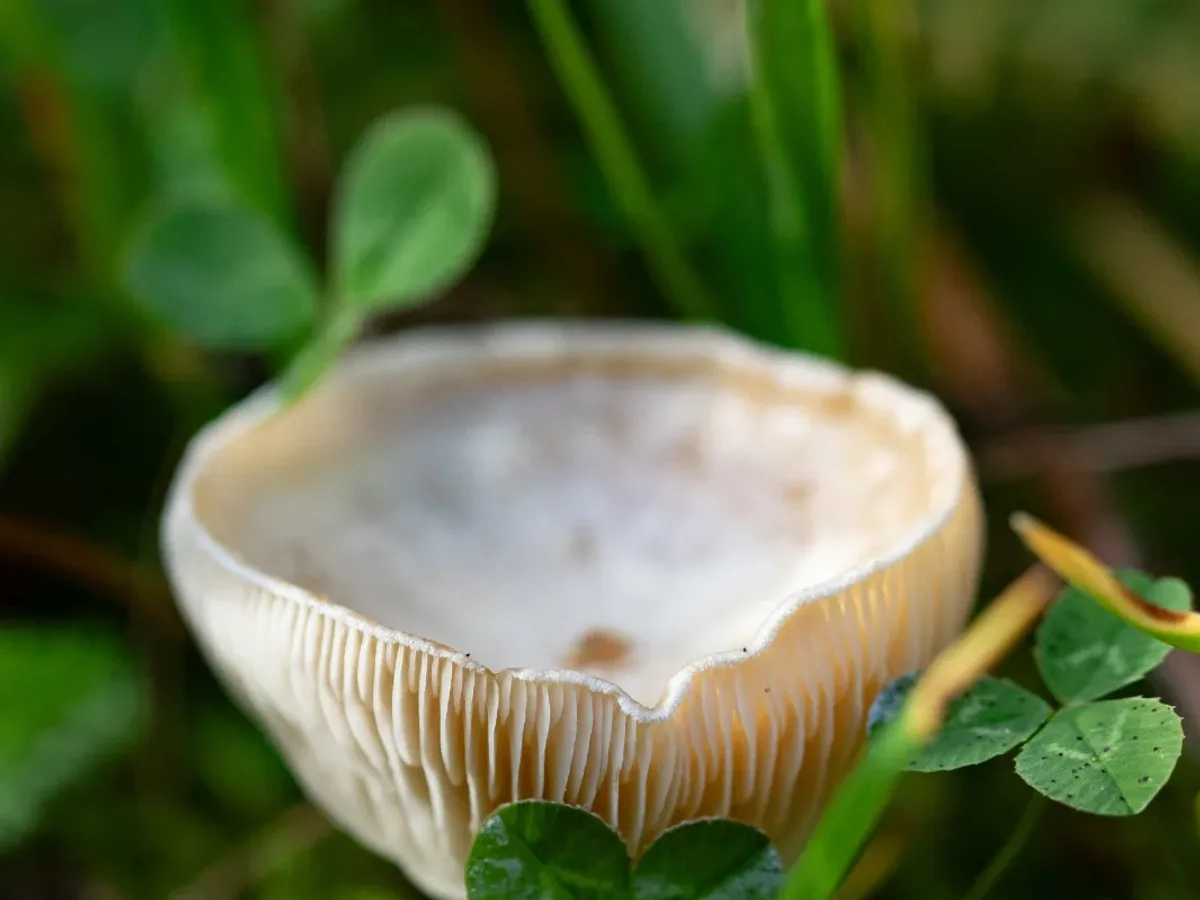
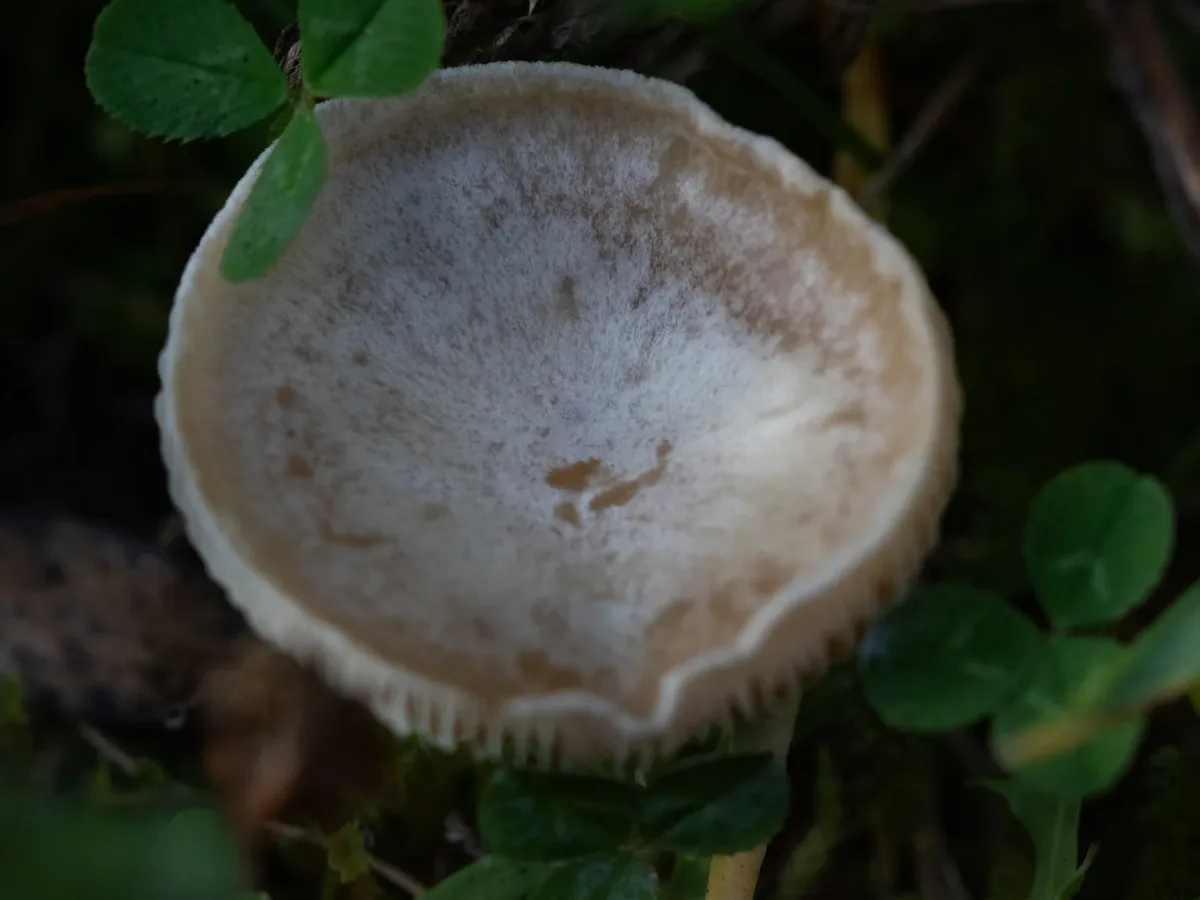
The cap is only 1.5-4 cm wide, beginning convex with a tightly inrolled rim and soon flattening, then sinking in the centre to form a shallow, broad funnel.
Its surface is dry and dull rather than shiny, with a fine felty or chalky-frosted bloom that gives it the 'whitewashed' look its name (dealbata, 'whitened') describes. In age it may crack into faint concentric zones or take on watermarked patches and a vague buff or pinkish tinge.
Gills
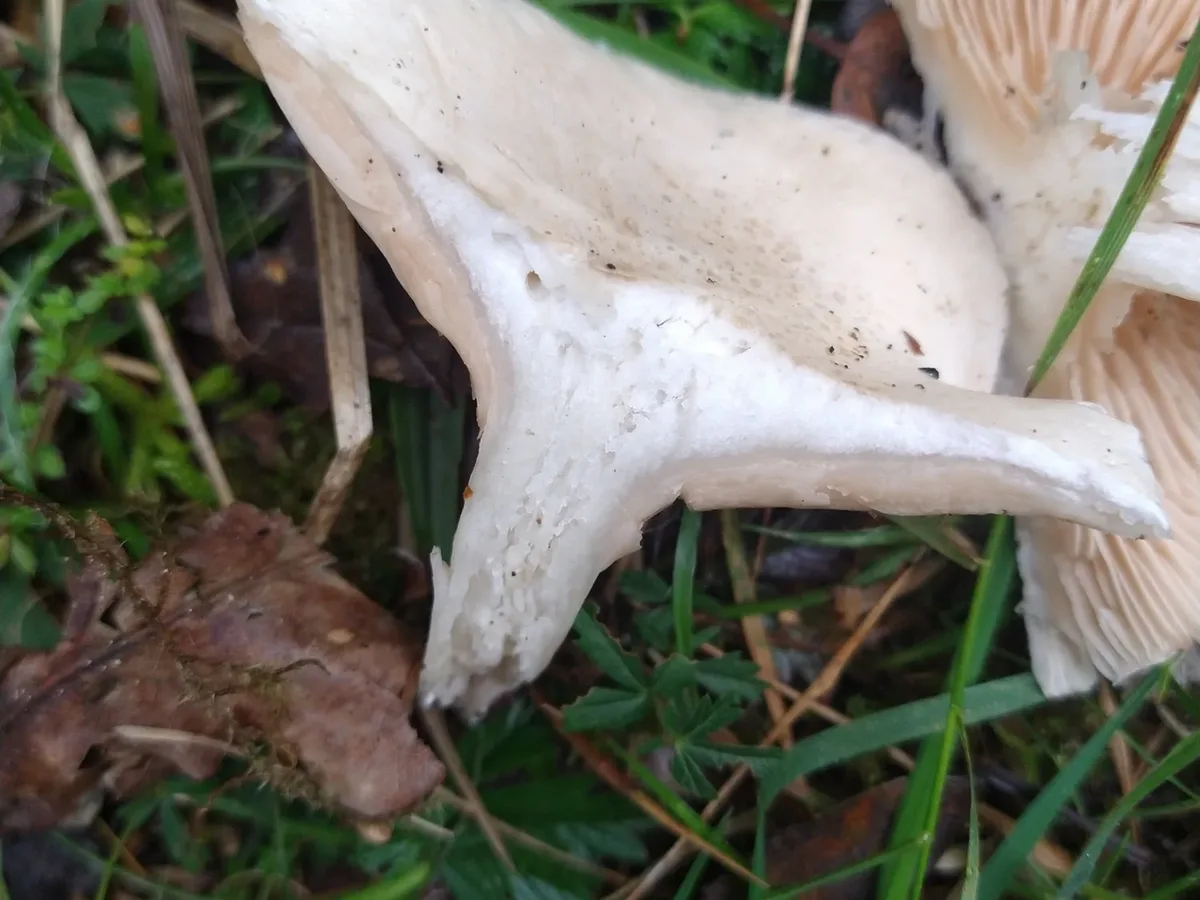
Underneath, the gills are white to dirty cream, crowded and narrow, and run a short way down the stem (adnate to slightly decurrent) - a classic Clitocybe trait.
Stem
The stem is short (2-4 cm), slim, the same ivory colour as the cap, dry, ringless, and usually has a slightly woolly base knitting it into the turf.
Flesh
The whole fungus is firm-fleshed but small, and the spore print is white.
Why it's dangerous
Most muscarine poisonings resolve within a few hours, but severe cases can progress to dangerous bradycardia, hypotension, respiratory distress from bronchospasm and bronchial secretions, and circulatory collapse.
Deaths are rare but have occurred, especially in children, the elderly, and those with heart or respiratory conditions. This should be treated as a genuine medical emergency.
The specific antidote is atropine, which reverses the muscarinic effects and is highly effective when given promptly - so rapid hospital treatment usually leads to full recovery.
If poisoning is suspected:
- Seek emergency care at once.
- Attempt no home remedies.
- Bring a sample of the mushroom for identification.
Toxin
Muscarine, a heat-stable alkaloid that directly stimulates muscarinic acetylcholine receptors of the parasympathetic nervous system.
Clitocybe dealbata (and its close relatives such as C. rivulosa, plus several Inocybe species) contains it in dangerously high concentration.
Muscarine is not destroyed by cooking, drying or freezing, and there is no safe dose.
Symptoms
Onset is fast - typically 15 to 30 minutes after ingestion (occasionally up to about 2 hours).
Symptoms are the classic muscarinic 'SLUDGE' / PSL cholinergic syndrome:
- Profuse Salivation
- Lacrimation (streaming eyes)
- Urination
- Diarrhoea
- Gastrointestinal cramping and Emesis (vomiting)
- Drenching Sweating (the species' nickname 'Sweating Mushroom')
- Blurred and watery vision
- Pinpoint (constricted) pupils
- Bronchial secretions and wheezing
- Slowed heart rate (bradycardia) and falling blood pressure
The intense sweating-salivation-lacrimation triad is highly characteristic of muscarine poisoning.
Staying safe
POISONOUS - contains the toxin muscarine.
Clitocybe dealbata is a recurrent cause of muscarine (cholinergic) poisoning precisely because it grows mixed in with popular edible lawn mushrooms. Serious cases occur, and rare deaths have been reported (chiefly in children, the elderly and people with heart or respiratory disease), though most patients recover fully with prompt treatment.
The cardinal safety rules:
- 1Never eat any small white or ivory funnel-shaped mushroom from grass.
- 2When collecting Fairy Ring Champignons or Field Mushrooms, examine and identify EACH cap individually rather than scooping handfuls.
- 3Anchor your ID on the combination of white spore print + crowded decurrent white gills + mealy smell + lawn habitat, and reject any 'Marasmius' or 'Agaricus' that shows those traits.
- 4Keep children and pets away from infested lawns.
If poisoning is suspected, seek emergency medical care immediately and bring a specimen.
Where & when it grows
Habitat
This is a grassland mushroom of human-modified, frequently disturbed turf.
Look for it in mown lawns, parks, sports fields, golf courses, road verges, churchyards, grazed pasture, dune grassland and grassy woodland margins. It thrives in short, nutrient-rich grass and is almost never found deep in woodland.
It is saprotrophic, feeding on dead grass and leaf litter rather than partnering with tree roots, which is why it can carpet a suburban lawn far from any trees.
It is widespread and abundant across temperate Europe and North America.
When
Fruiting runs from mid-summer into late autumn - roughly July to November in the temperate Northern Hemisphere - with the main flush in September and October.
It responds quickly to autumn rains and keeps producing until the first sharp frosts shut it down.
Because lawns are watered and mown all season, troops can appear sporadically over many weeks and reappear in the same patches year after year.
How it grows
Almost always gregarious, the Ivory Funnel comes up in dense troops, sweeping arcs and complete fairy rings, frequently dozens of fruitbodies at once across a lawn.
The same mycelial ring expands outward slightly each year, so a marked patch will reliably return.
Crucially, it shares its habitat - and its rings - with genuinely edible grassland species. Where you find one small white funnel you should expect many, and expect them tangled in among other lawn mushrooms.
Fruiting conditions
A grassland saprotroph that flushes after autumn rains on warm soils; troops and rings typically appear roughly 1-2 weeks after a good soaking once temperatures have eased from summer highs. Frost ends the season.
Look-alikes
The most dangerous confusions are with edible grassland mushrooms it grows beside.
- Fairy Ring Champignon (Marasmius oreades) is similar in size and also forms rings on lawns, but has a tan/buff (not chalky white) cap with a low central bump (umbo), widely spaced PALE gills that are free or barely attached (never decurrent), a tough pliant stem, and a sweet almondy smell - versus the Ivory Funnel's crowded, slightly decurrent gills and mealy smell.
- Miller / The Miller (Clitopilus prunulus) is also white with a mealy smell but has gills that turn PINK as the salmon-pink spores mature (Ivory Funnel keeps WHITE gills and a white spore print).
- Young Field Mushrooms (Agaricus species) can look pale but have PINK then chocolate-brown gills, a brown spore print and usually a ring.
- Several other small white Clitocybe and Leucocybe species (e.g. C. rivulosa, with which C. dealbata is often treated as conspecific, and C. phyllophila / cerussata) are equally or even more toxic and share the muscarine danger.
So a small white funnel-shaped lawn fungus should be assumed poisonous as a group.
Edible. Tan/buff cap with a low central bump, widely spaced pale gills that are free or barely attached (NOT decurrent), tough wiry stem that revives when wetted, sweet almondy smell. Ivory Funnel is chalky white with crowded slightly decurrent gills and a mealy smell. They share lawn rings, so check every cap.
Edible. Young buttons can look pale and grow on the same grass, but Agaricus has PINK then chocolate-brown gills, a dark brown spore print, and usually a ring on the stem. Ivory Funnel has white gills and a white spore print and never a ring.
POISONOUS, not edible - essentially the same hazard, often treated as the same species as or an indistinguishable sibling of the Ivory Funnel, equally rich in muscarine. Tends to show faint pinkish-buff watermarked zones on the cap. For safety, treat all small white-to-pinkish lawn funnels as one poisonous group.
POISONOUS, not edible. Several white Clitocybe/Leucocybe species are toxic (muscarine and related effects) and difficult to separate without a microscope. None should be eaten; a small all-white funnel-shaped cap with white spores is a danger signal, not a meal.
Edible. White with a strong mealy smell like the Ivory Funnel, but its gills age PINK and it gives a salmon-PINK spore print, whereas the Ivory Funnel keeps white gills and a white spore print.
A reference guide - never an edibility guarantee. When in doubt, leave it out.