Wrinkled coral
Clavulina rugosasyn. Clavaria rugosa, Clavulina rugosa var. rugosa
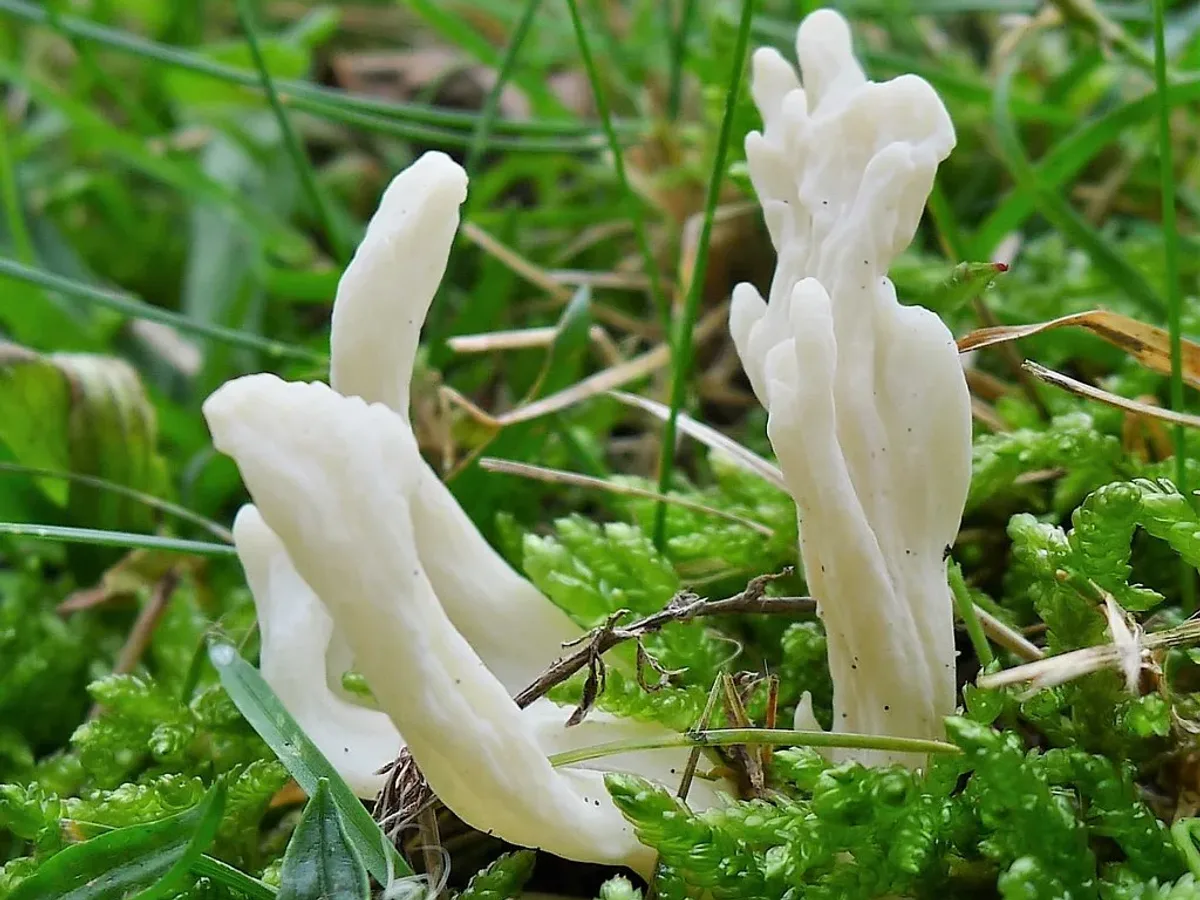 © gailhampshire (CC BY 2.0)
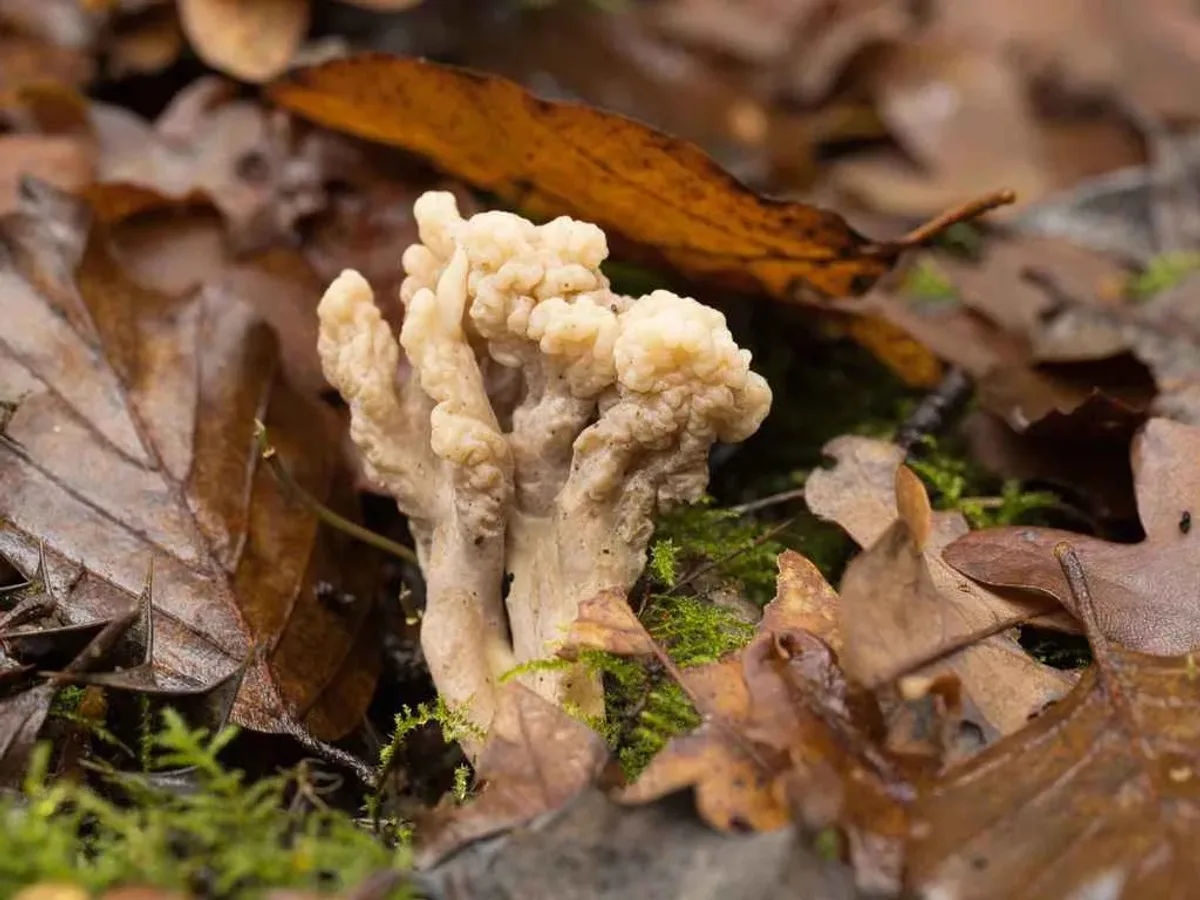 (c) Daniel Greenwood, some rights reserved (CC BY)
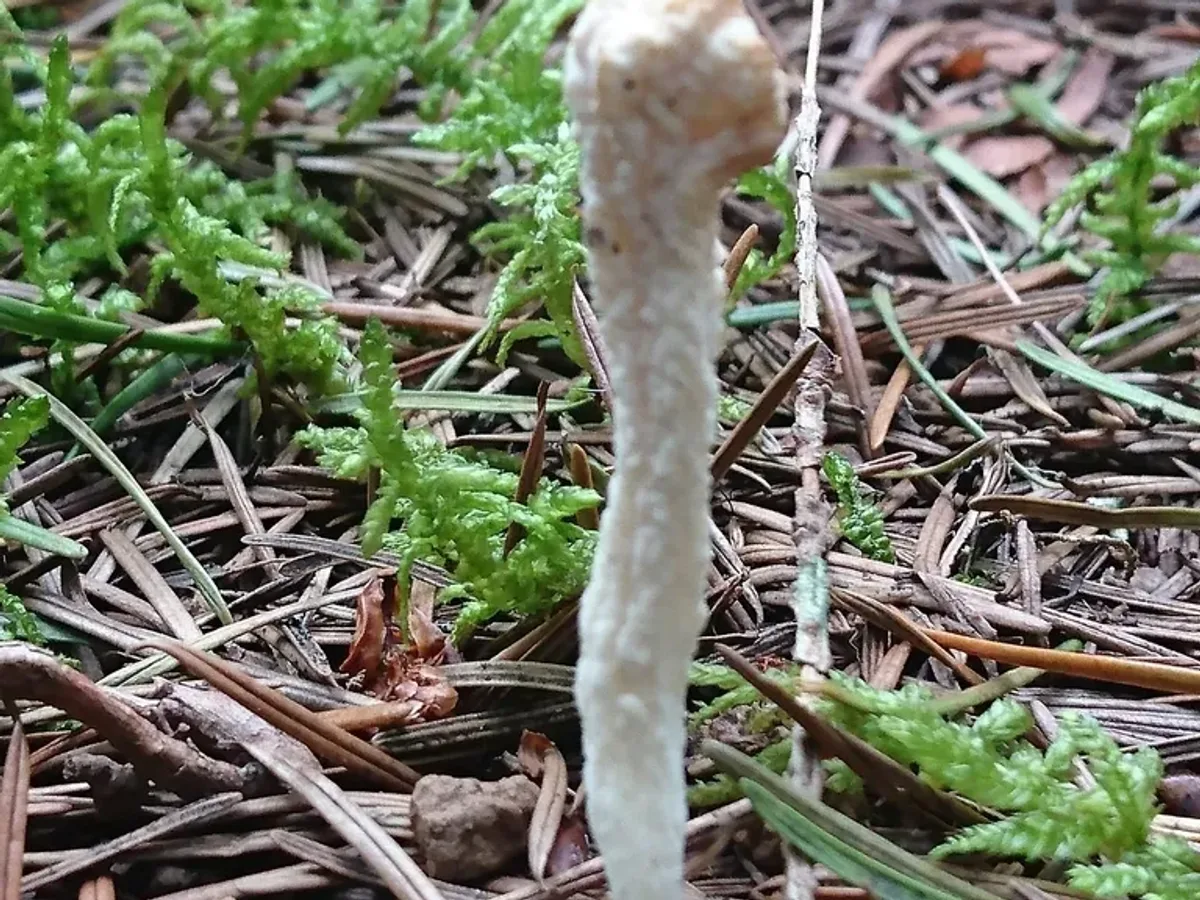 (c) Jose Castro, some rights reserved (CC BY)
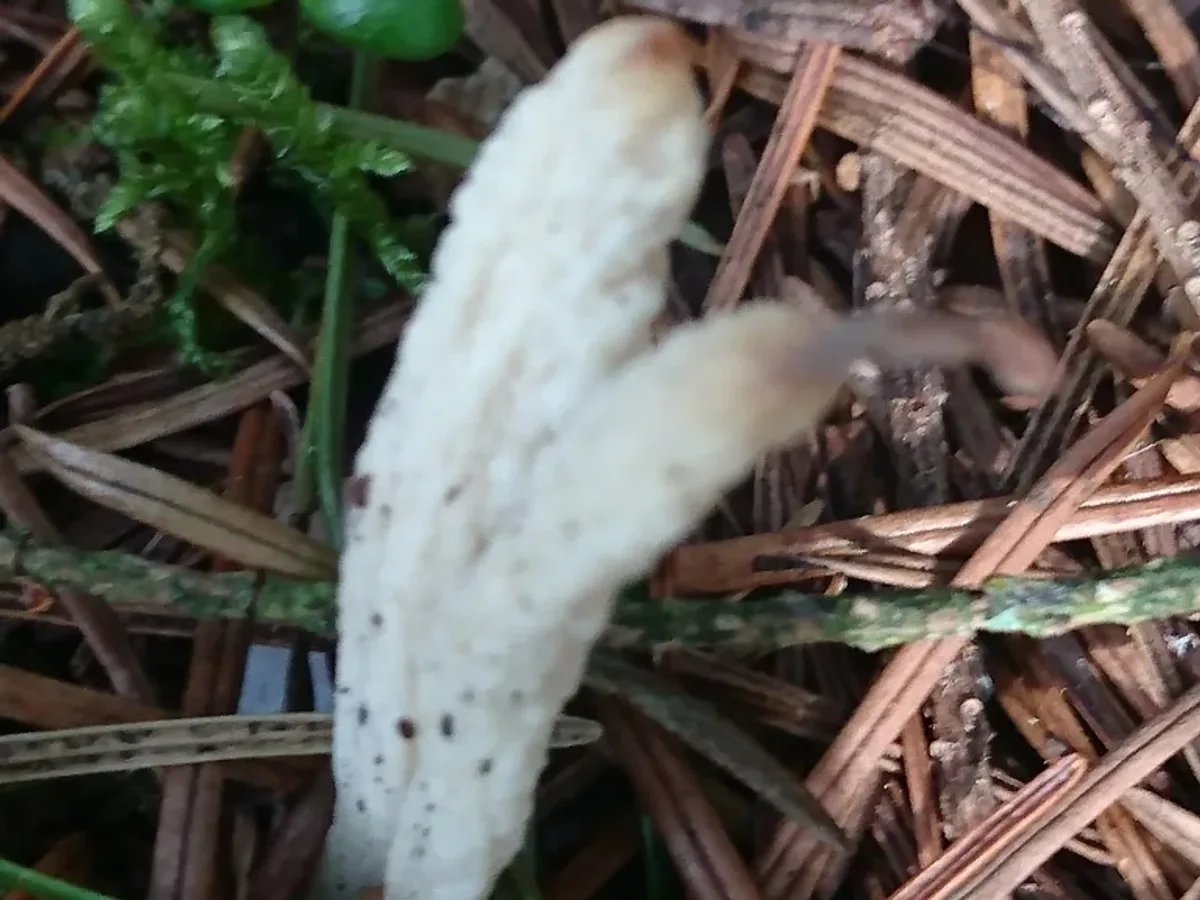 (c) Jose Castro, some rights reserved (CC BY)
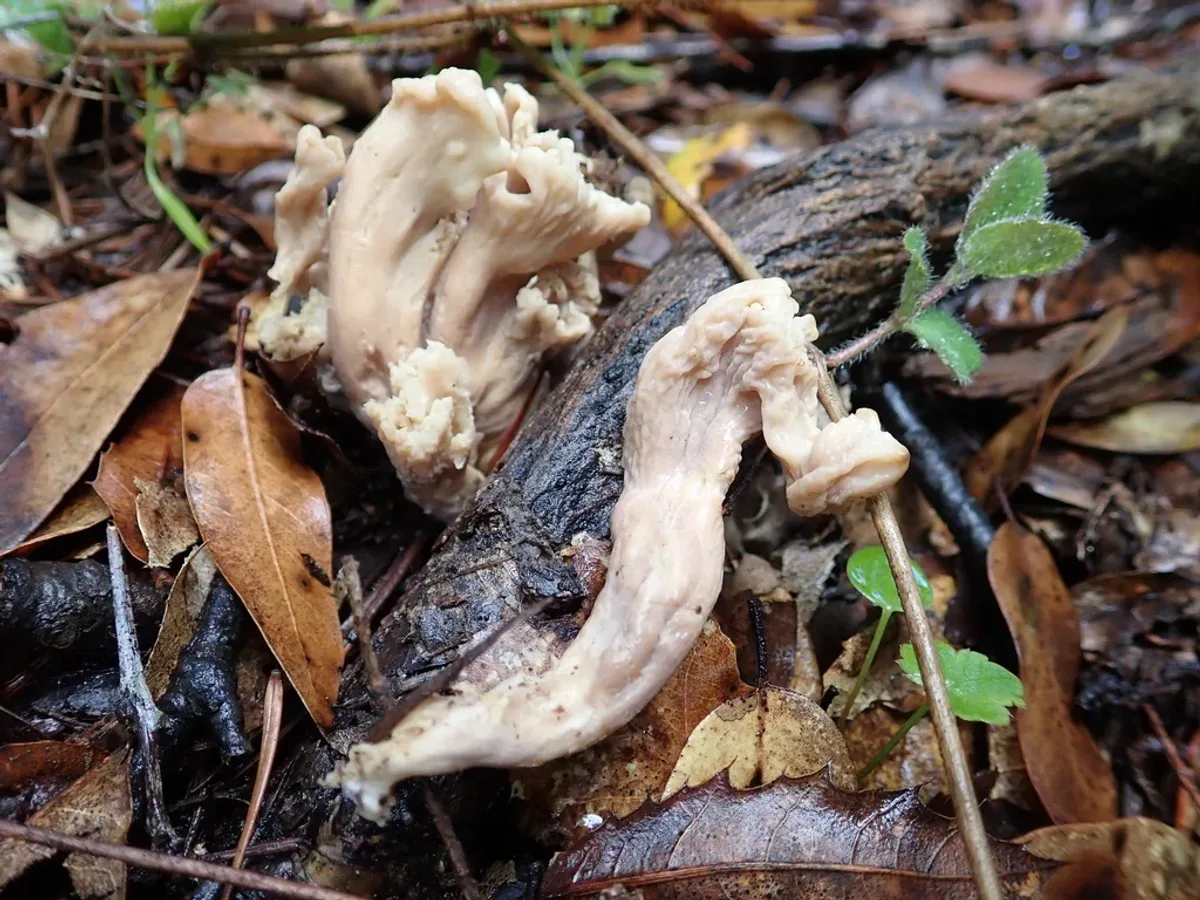 (c) reagan peschke, some rights reserved (CC BY)
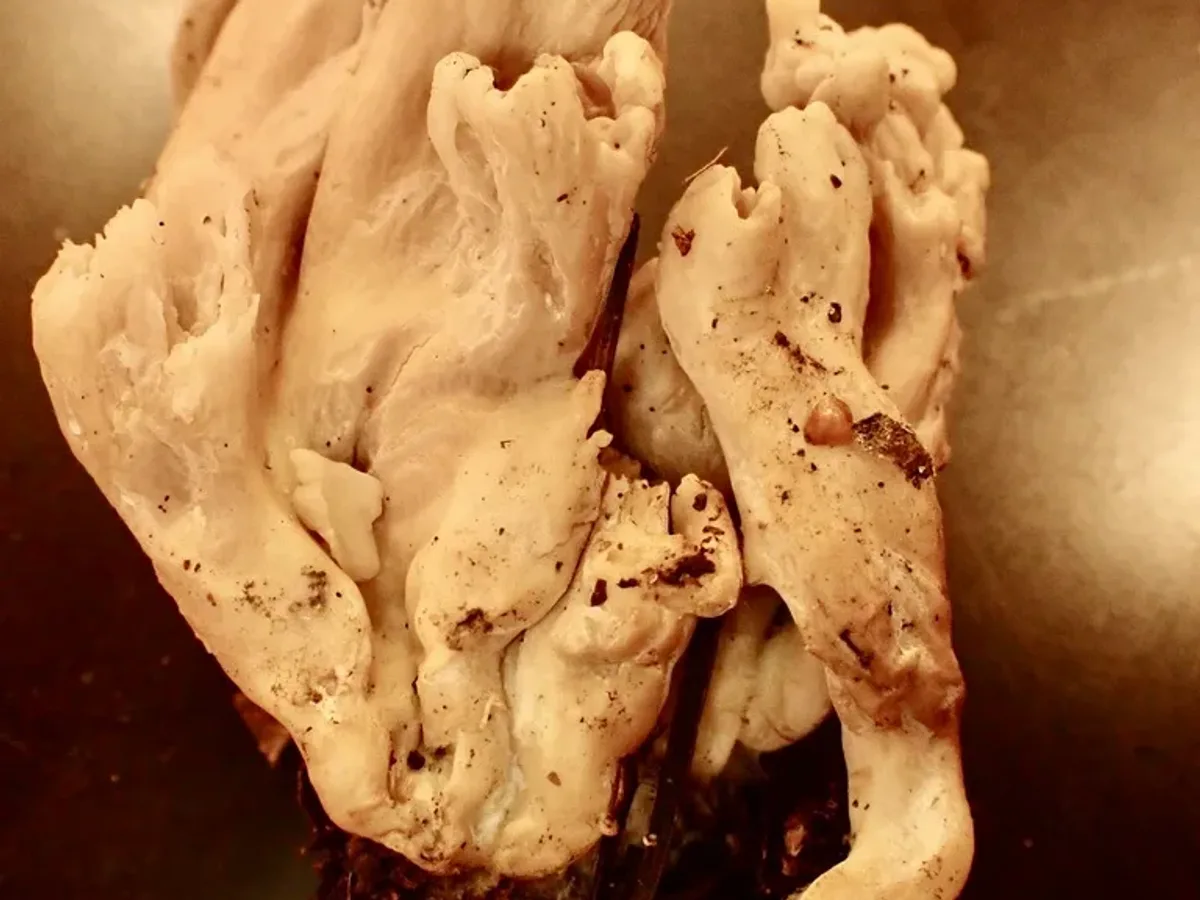 (c) reagan peschke, some rights reserved (CC BY)
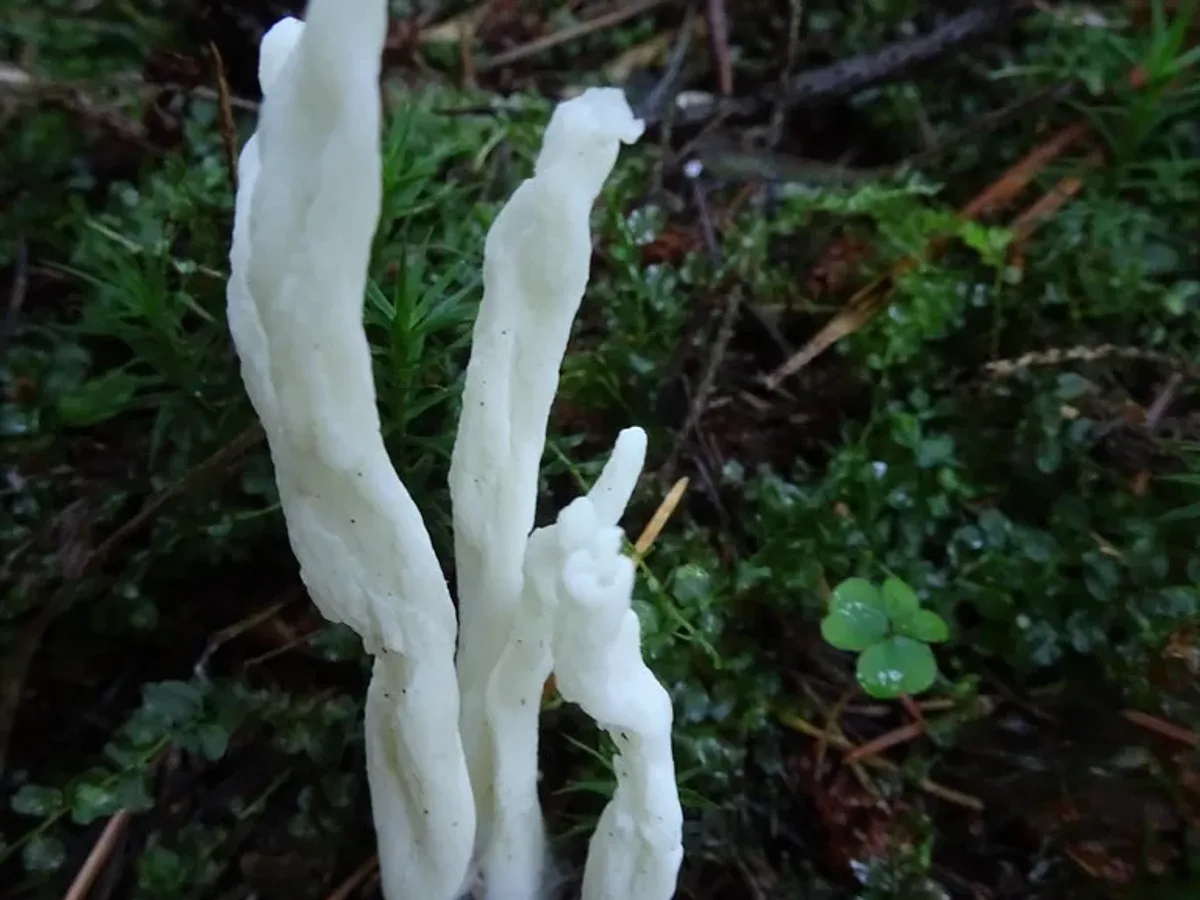 © Ephemeral Impressions (CC BY-SA 2.0)
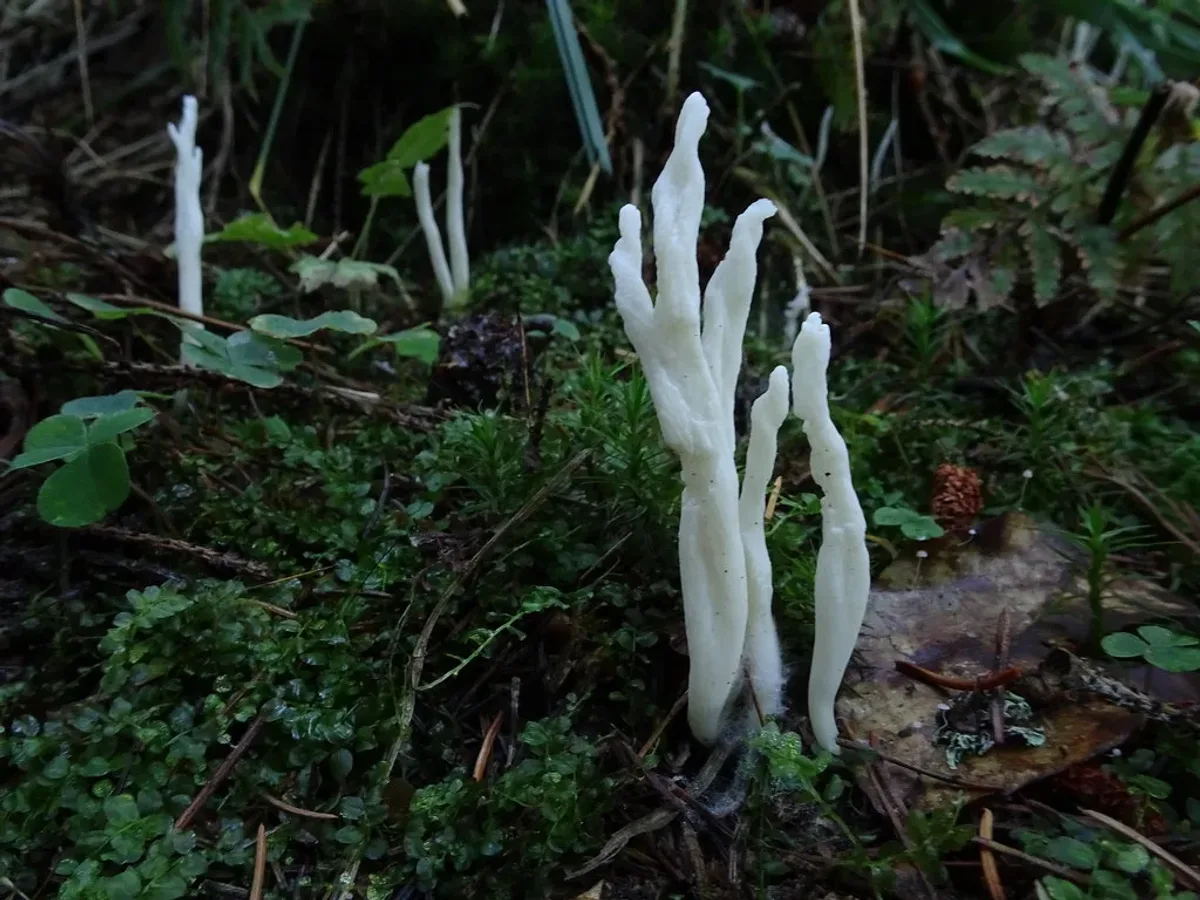 © Ephemeral Impressions (CC BY-SA 2.0)© gailhampshire (CC BY 2.0)(c) Daniel Greenwood, some rights reserved (CC BY)
Good to eat, once you have identified it with certainty and cooked it through.
How to recognise it
Among the coral fungi, Clavulina rugosa is the quiet outlier. Where its relatives throw up dense, tree-like clusters of branching arms, this species produces a single, mostly unbranched club - or at most a handful of thick, sparsely forked stems - rising straight from the forest floor.
What it lacks in branching complexity it makes up for in texture. The entire surface is strongly wrinkled, ridged, and furrowed lengthwise, creased into deep rugose folds that make it feel almost sculptural in the hand.
Fresh fruitbodies are white to pale cream or ivory, aging gradually toward pale buff or a faint yellowish hue, sometimes picking up light brown tones at the base. The tips are blunt or fork once or twice but never develop the tightly crested, comb-like points that mark the related Clavulina coralloides.
The flesh is white throughout, firm, and somewhat brittle - it does not change colour when cut. The smell is mild and barely detectable, faintly earthy or mildly floury, and the raw taste is mild to very slightly bitter.
Spore print white. Under a microscope, the 2-spored basidia are a defining trait of the genus Clavulina.
Some specimens develop greyish or brownish patches where the ascomycete parasite Helminthosphaeria clavariarum has taken hold, though the effect is usually less dramatic here than in C. coralloides.
Where & when it grows
Habitat
Wrinkled coral is an ectomycorrhizal species with a broad host range and a correspondingly wide geographical spread.
In the Pacific Northwest it inhabits mature and old-growth coniferous forests dominated by Douglas-fir, western hemlock, Sitka spruce, and western red cedar, growing from the deep duff and humus layers that accumulate in these stands. It favours moist, shaded microsites - the base of slopes, streamside terraces, and forest interiors where the soil remains damp well into autumn.
In European settings it is equally at home in beech, oak, and birch woodland on moderately acidic soils, often appearing along well-used forest paths where the soil is slightly compacted and humus accumulates at the edges.
It is not restricted to old growth but does best in undisturbed soils with continuous ectomycorrhizal networks. Usually found as solitary clubs or small groups of two to five fruitbodies growing close together from a shared mycelial mat.
When
In the Pacific Northwest the main fruiting season coincides with the autumn rains. Expect the first fruitbodies from late August or early September, with peak production from late September through October.
Fruiting continues into November and, in mild coastal years, into December. The timing is closely tied to the cumulative autumn rainfall: fruitbodies typically appear 7-18 days after soaking rains drive soil moisture up and soil temperatures drop below about 14 °C.
In Europe (central and northern) the season is broadly similar - July through November, peaking August-October. Late-season fruitbodies often persist after the first frosts, surviving moderate freezes in reasonable condition.
How it grows
Grows singly or in small groups from ectomycorrhizal mycelium in the forest soil. The fruitbody emerges directly from the duff, sometimes partly buried in needle litter.
Growth is moderate. Individual fruitbodies remain in good condition for one to three weeks under cool, moist conditions.
The species may return to the same patch in successive years, reflecting persistent mycelial networks. Unlike saprotrophic species it does not require a specific substrate decay stage - its distribution follows the host tree roots.
Fruiting conditions
Ectomycorrhizal autumn fruiter triggered by the onset of sustained autumn rains. In the Pacific Northwest, fruitbodies appear 7-18 days after cumulative rainfall exceeds 25 mm over 14 days and soil temperatures fall below 14 °C. Tolerates cool conditions down to about 5 °C; fruitbodies can persist through light frosts. Fruiting continues through the wet Pacific Northwest autumn and into early winter.
Look-alikes
Clavulina rugosa is relatively easy to identify, because its combination of near-unbranched club shape and strongly wrinkled surface is fairly distinctive among white coral fungi.
- Clavulina coralloides (crested coral) - the most likely confusion; much more densely and repeatedly branched, with branch tips bearing distinct comb-like crests. C. rugosa has neither the dense branching nor the cresting.
- Clavulina cinerea (ashy coral) - grey to pearl-grey overall and more branched; it lacks the rugose wrinkling.
- Clavariadelphus species (club corals) - also simple, unbranched clubs, but typically larger, more robustly fleshed, and often ochre to tan or yellow-orange, and belong to a different genus entirely; none are deadly.
- Ramaria pallida (pale coral) - much more densely branched, whitish to pale cream, and lacks the rugose texture; it causes gastrointestinal irritation but is not lethal. Avoid any pale, densely branched coral if unsure.
- Artomyces pyxidatus (crown-tipped coral) - has hollow stems and characteristic crown- or cup-shaped branch tips, and grows on decaying wood rather than from soil.
- Simple, unbranched grassland clubs (Clavaria fragilis, Clavulinopsis fusiformis) - narrower, more cylindrical, often growing in tight dense clusters in open grassland, and lack the forest habitat.
None of the realistic lookalikes in temperate North America or Europe are deadly.
C. cinerea is grey to pearl-grey overall and more branched than C. rugosa; it lacks the strongly wrinkled, rugose texture and is not cream-white.
Clavariadelphus species are also simple, unbranched clubs but are much larger (up to 30 cm), robustly fleshed, ochre to tawny-orange, and prefer calcareous soils under beech. The very different colour and massive size separate them from the slender, white C. rugosa.
C. coralloides is much more densely and repeatedly branched, forming an intricate coral-like cluster; its branch tips bear distinct comb-like crests absent in C. rugosa. C. rugosa is near-unbranched with a strongly wrinkled surface.
A. pyxidatus has hollow stems and distinctive crown- or cup-shaped branch tips; it grows on decaying wood rather than from soil, and is more branched than C. rugosa.
R. pallida is densely and repeatedly branched - much more elaborate than the near-unbranched C. rugosa - and lacks the strongly rugose (wrinkled) surface texture. It causes gastrointestinal poisoning but is not deadly. Never eat any pale coral that shows dense branching without positive ID.
C. fragilis and related grassland Clavaria species are narrow, cylindrical, smooth (not wrinkled) white clubs growing in tight clusters in open grassland - a completely different habitat from the forest floor preference of C. rugosa.
In the kitchen
Picking & cleaning
- Cut or twist cleanly at the base.
- Brush away adhering soil and litter in the field; the wrinkled surface can harbour grit, so a soft brush is useful.
- Collect only young, firm, cream-white fruitbodies - older, yellowing, or softened specimens have little culinary value.
- Carry loosely in a basket, as the brittle clubs break easily if bagged tightly.
- Check each club for parasite-induced greying (Helminthosphaeria); lightly affected tips can be trimmed, but heavily infected material is best discarded as it will be soft and unpleasant.
Because the species has minor culinary value, take only what you will use soon.
Cooking
Wrinkled coral is edible but regarded as a modest secondary foraged food rather than a prized delicacy. Young, fresh, ivory-white fruitbodies have a mild, slightly earthy taste and a firm, crisp texture that softens agreeably with heat.
Dry-fry in butter over moderate heat until lightly coloured and slightly crisped at the edges, then season simply with salt, black pepper, and fresh thyme or parsley.
It also works well:
- As a textural garnish in autumn soups, added in the final few minutes of cooking
- Briefly sautéed as a vegetable side
The strong wrinkling means grit can hide in the folds, so wash carefully or use a brush before cooking. Do not mix with intensely flavoured mushrooms; its mild character is easily overwhelmed. Best eaten the same day as harvest.
Good to know
Clavulina rugosa is considered edible, with no reported toxicity from correctly identified material. Its near-unbranched, strongly wrinkled form is reasonably distinctive, reducing the risk of confusion with more dangerous taxa.
The key safety check is to rule out pale, densely branched Ramaria species - particularly Ramaria pallida - which can cause gastrointestinal poisoning. These are separated by their much more elaborate branching and lack of rugose wrinkling.
There are no deadly lookalikes among white coral fungi of temperate North America or Europe. Raw material may cause mild digestive discomfort in sensitive individuals, so thorough cooking is always advisable.
As with any foraged mushroom, confirm positive identification using multiple characters before eating:
- Unbranched or very sparsely branched club form
- Strongly wrinkled surface texture
- White flesh
- Woodland ectomycorrhizal habitat
A reference guide - never an edibility guarantee. When in doubt, leave it out.