Crested coral
Clavulina coralloidessyn. Clavulina cristata, Clavaria coralloides, Clavaria cristata
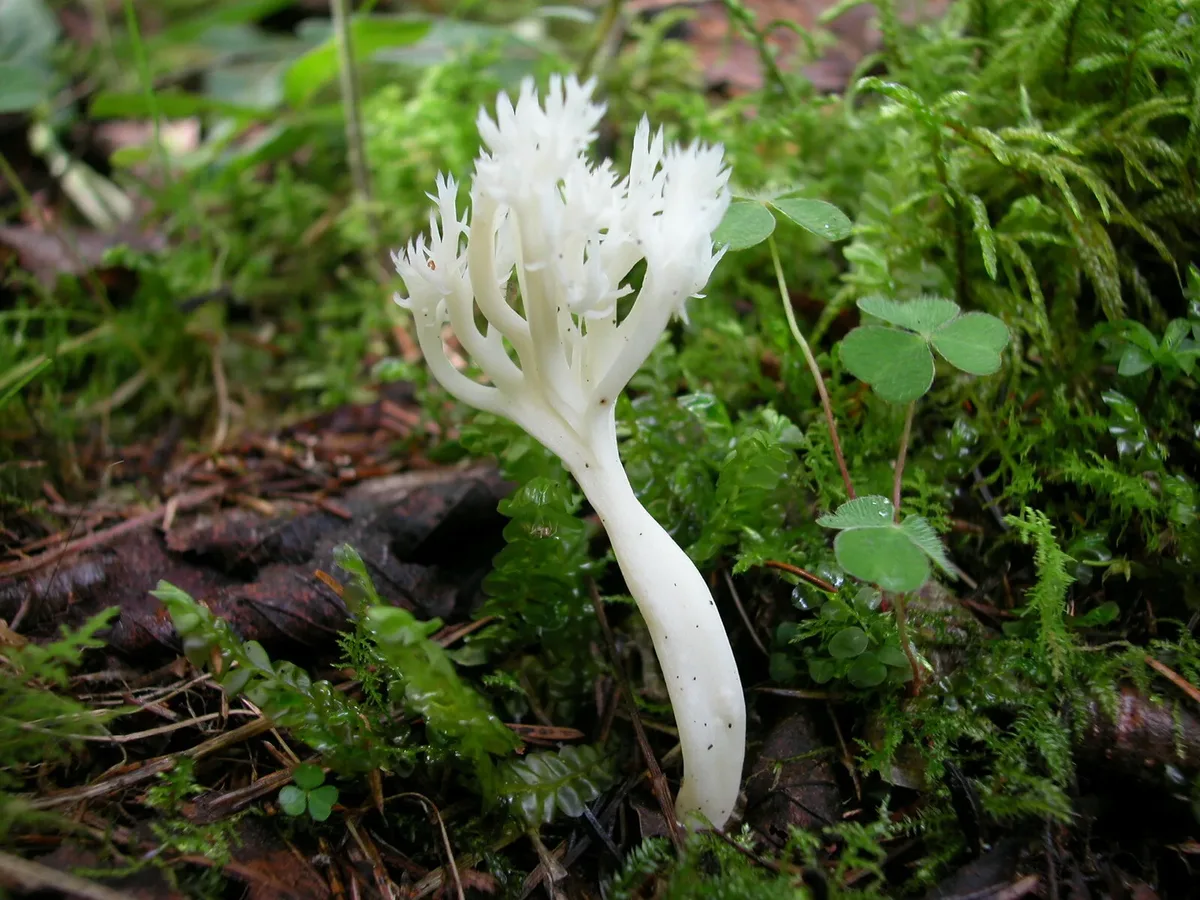 © Eugene Popov (CC BY 4.0)
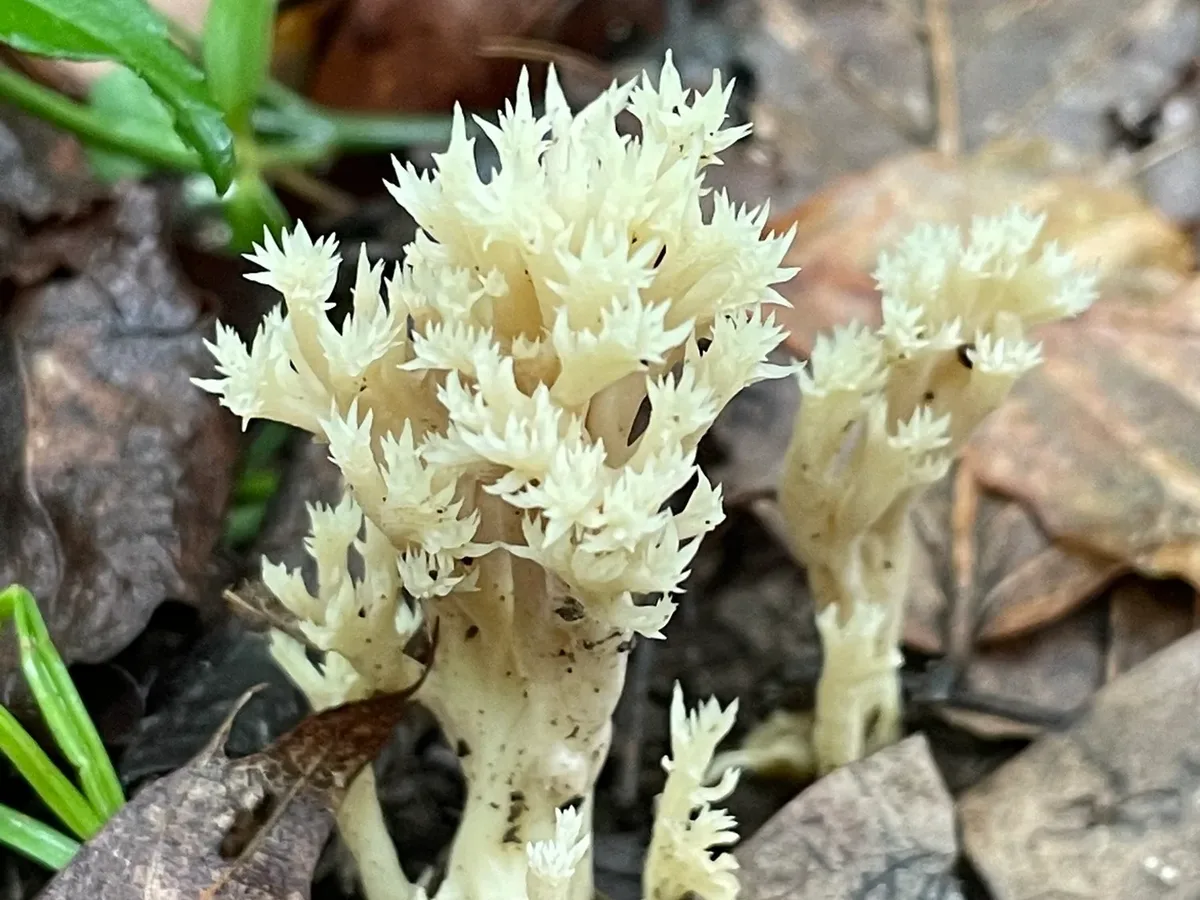 © Annie Weissman (CC BY 4.0)
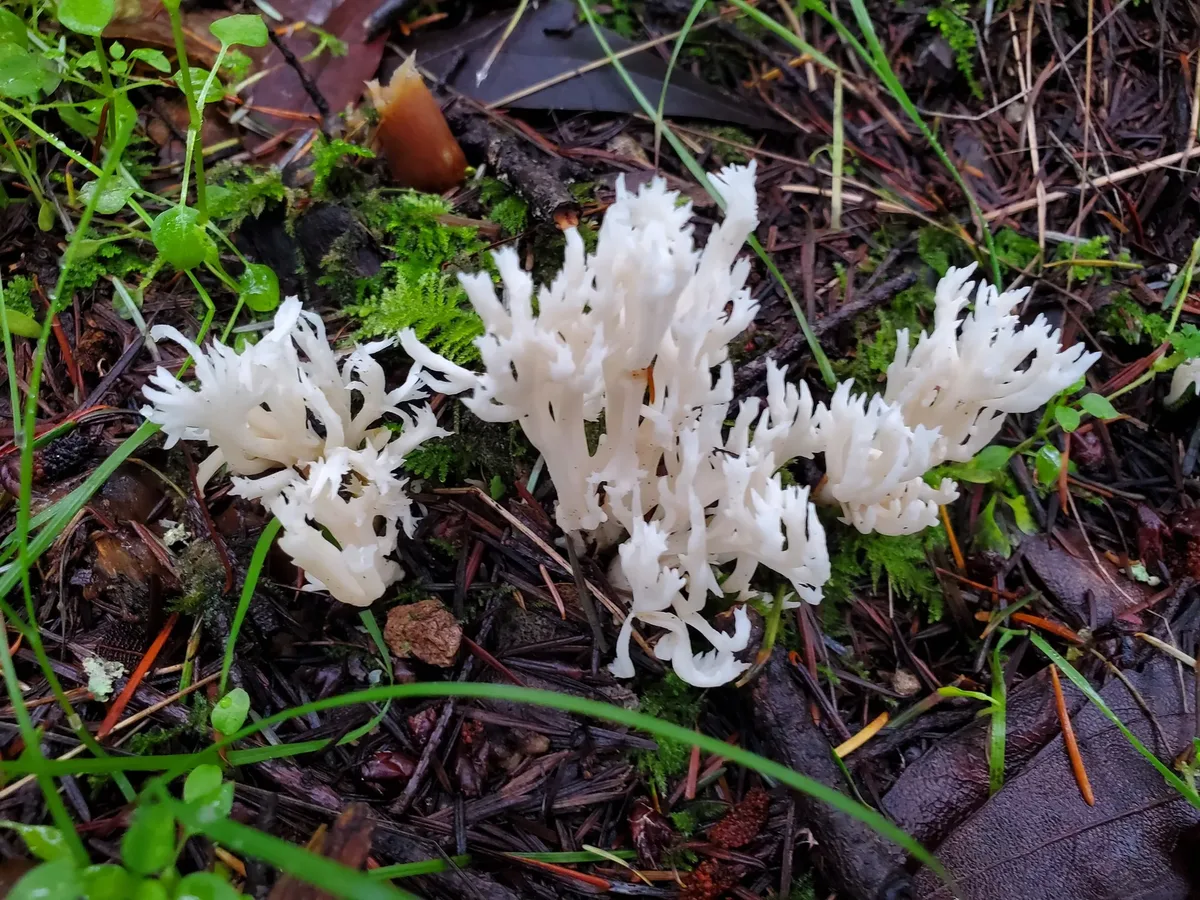 © Alex (CC BY)
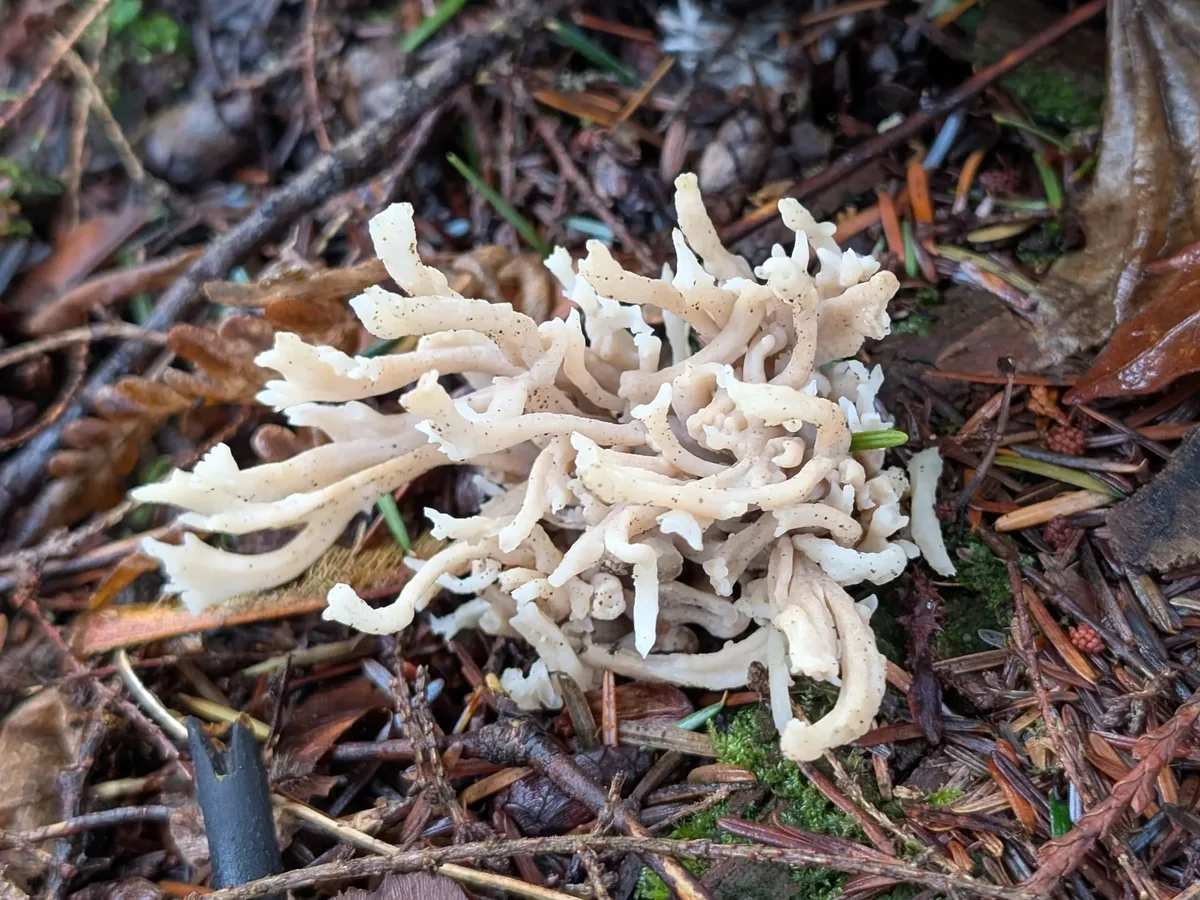 © Timothy McNitt (CC BY)
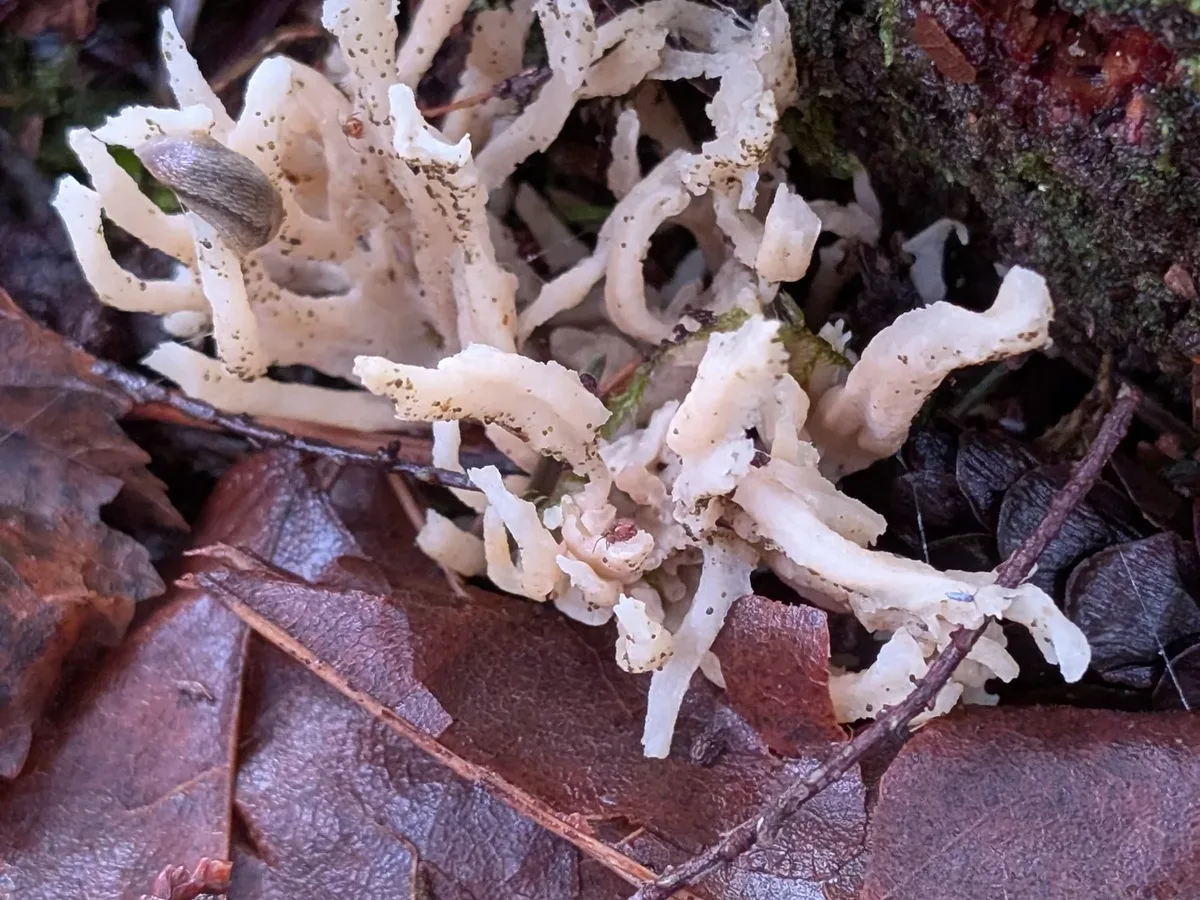 © Timothy McNitt (CC BY)
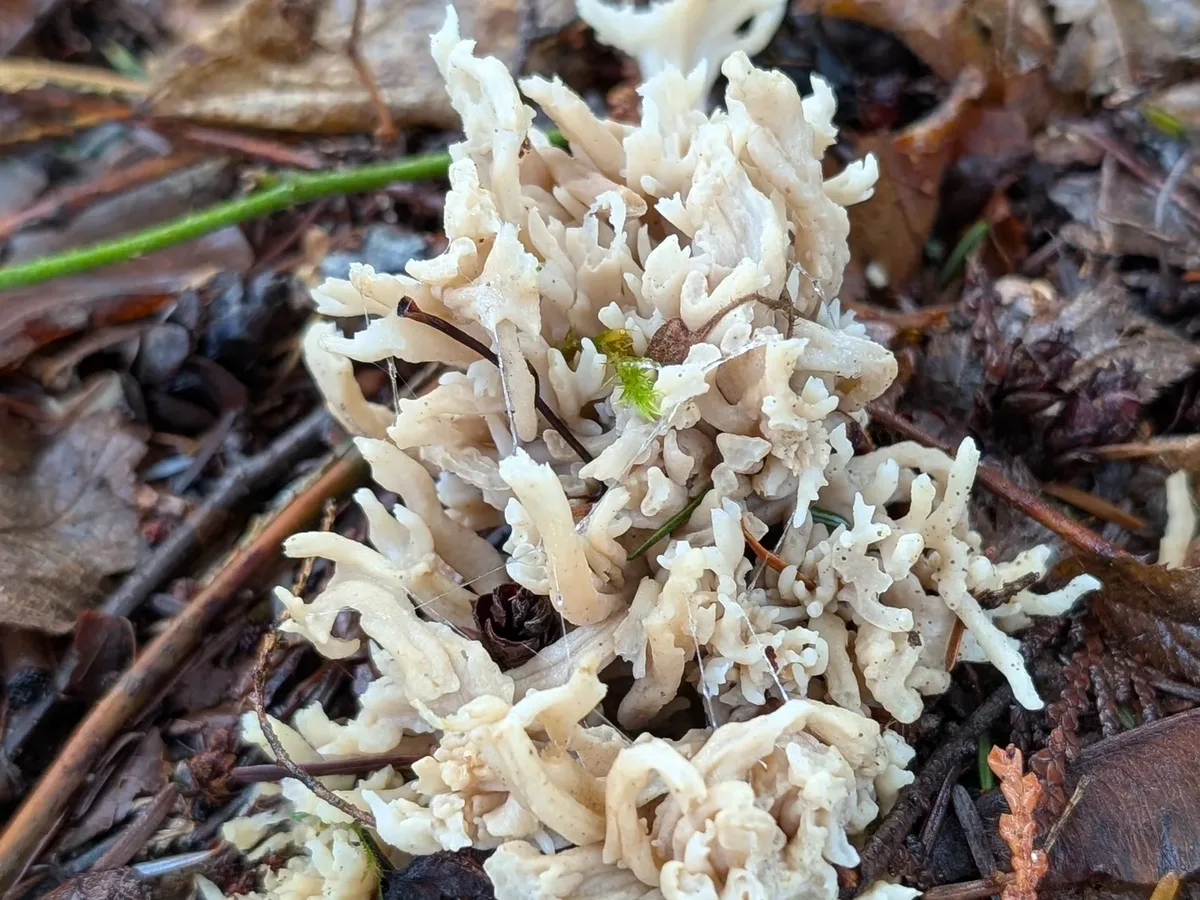 © Timothy McNitt (CC BY)
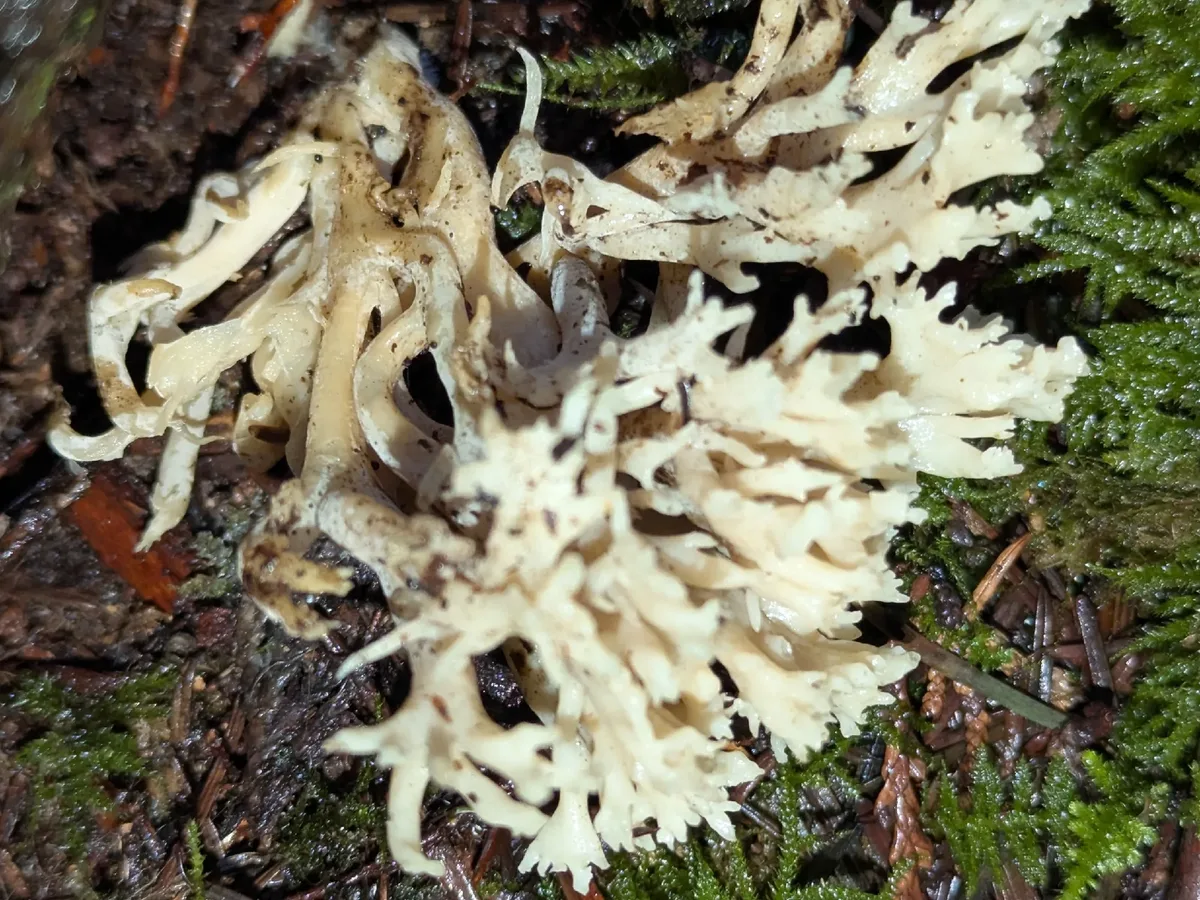 Ben Keen (CC0)
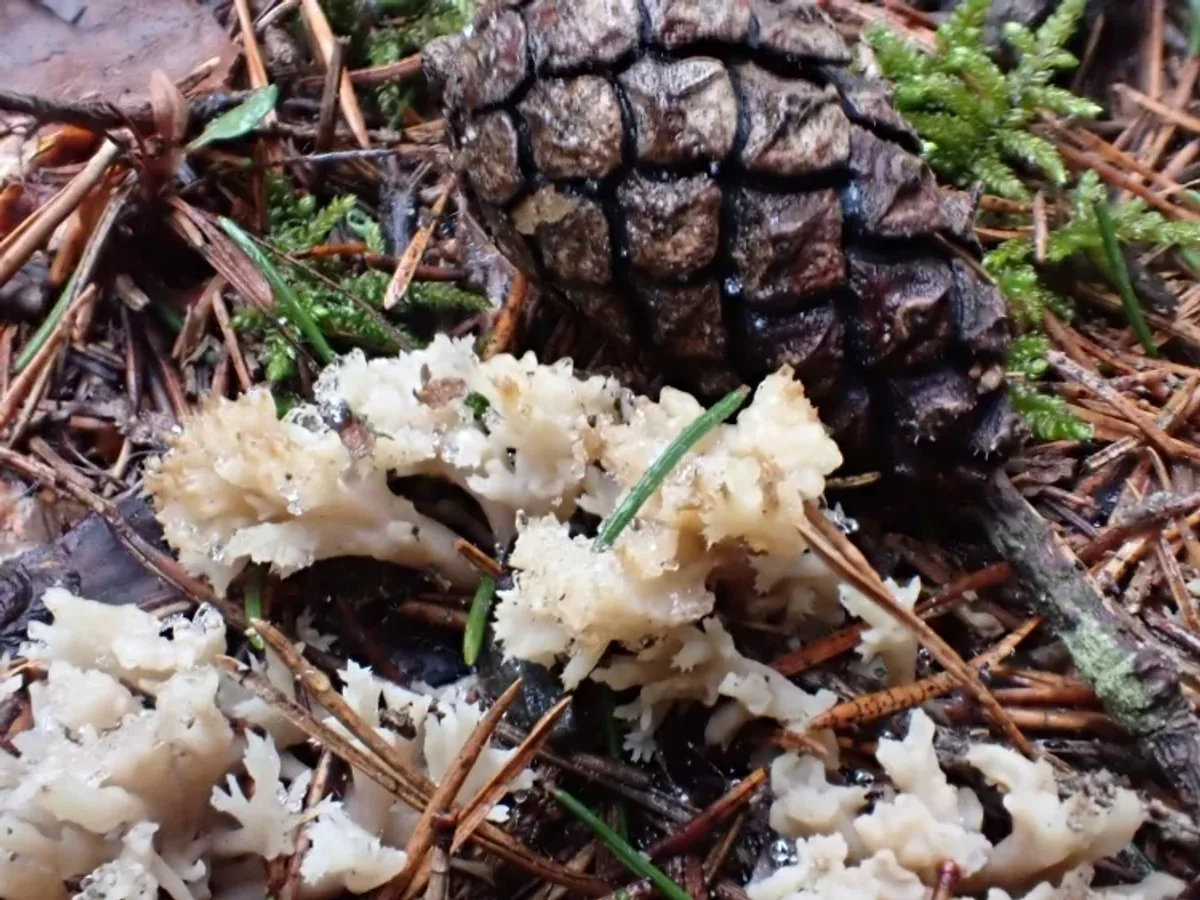 © Morten Pettersen (CC BY)
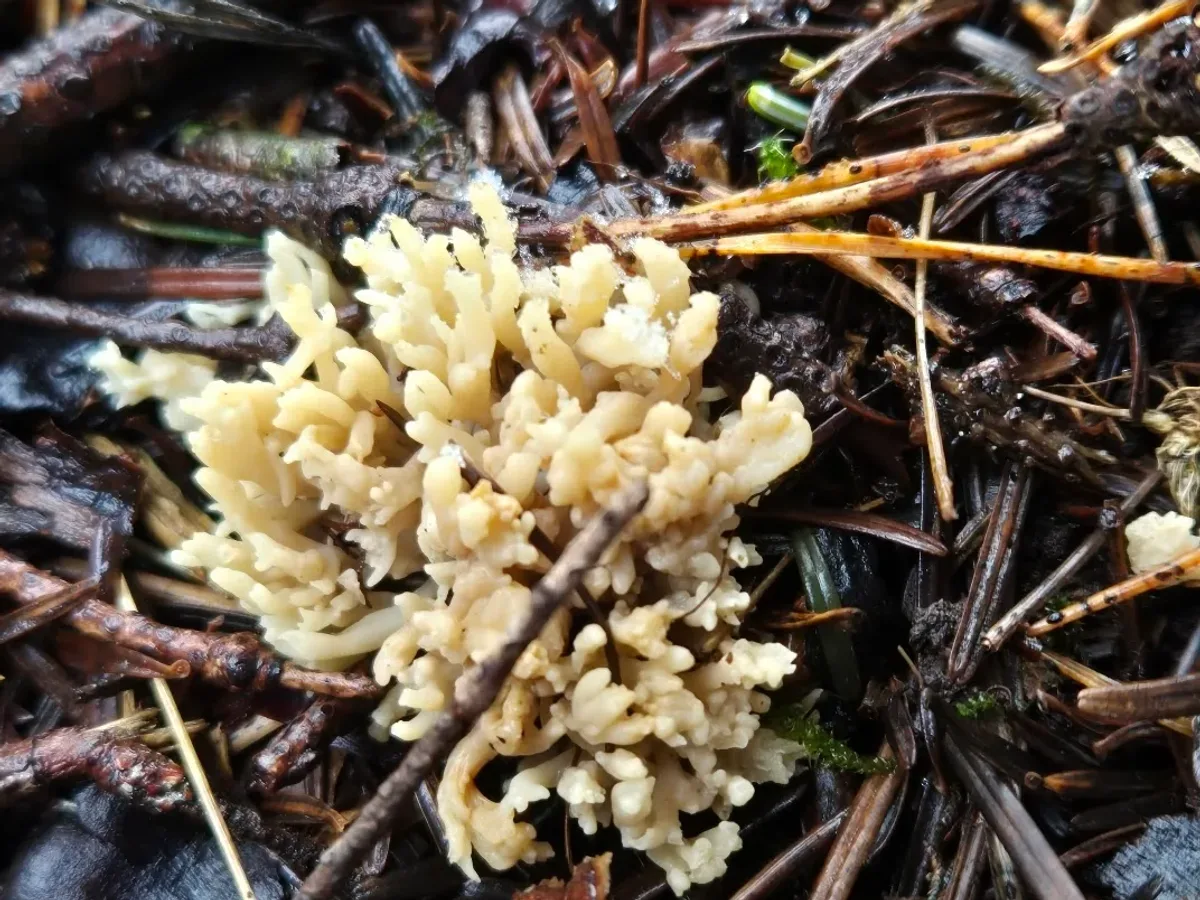 © Christina Hustvedt Myklebust (CC BY)© Eugene Popov (CC BY 4.0)© Annie Weissman (CC BY 4.0)
Good to eat, once you have identified it with certainty and cooked it through.
How to recognise it
Clavulina coralloides is one of the most immediately striking coral fungi in European forests. It looks, with startling accuracy, like a fragment of bleached branching coral that has somehow found its way from the seabed to the forest floor.
The entire fruitbody rises from a short, stout, white basal stump and divides repeatedly into an intricate lattice of upright branches.
When young and fresh the branches are white to pale cream, occasionally with a faint greyish or lavender cast, aging to ivory or pale buff.
The defining diagnostic feature is the branch tips: rather than rounding off or tapering to simple points, each tip breaks into irregular, comb-like crests - a tight cluster of short, sharp, toothlike projections.
This cresting distinguishes C. coralloides (= C. cristata) from most lookalikes and is worth checking carefully before collecting.
The flesh throughout is white, brittle, and somewhat chalky; it does not discolour when cut or broken.
Odour mild, faintly mealy or floury; taste mild to faintly bitter raw. Spore print white.
Note: specimens are frequently colonised by the micro-fungus Helminthosphaeria clavariarum, which turns the branch tips - and sometimes much of the fruitbody - grey, brown-grey, or near black, distorting them markedly.
Heavily infected material looks very different from pristine white forms and is easily mistaken for a different species. Despite this dramatic colour change, the underlying structure - crested tips where not destroyed, white basal flesh - remains diagnostic.
Where & when it grows
Habitat
A widespread and common species of temperate broadleaved and mixed forests.
It grows among leaf litter and decaying plant debris on humus-rich, moderately acidic soils, where its mycelium threads quietly through the duff layer in a long-running ectomycorrhizal partnership with the trees above.
Found in beech, oak, hornbeam, birch, and alder woodland across lowland and montane Europe, and equally at home in coniferous zones of spruce and pine.
Look along forest edges, tracksides, and in shaded grassy clearings within woods, often in small clusters of several fruitbodies emerging close together.
The exact host specificity and symbiosis details in Clavulina are still being clarified by molecular studies.
When
Fruitbodies appear from July in warmer districts, but the main season runs August through October across central and northern Europe.
Peak flushes typically follow warm, humid periods in late August and September. In favourable autumns fruitbodies persist into November. Rare in spring.
Look for the parasite-blackened forms well into October, as these linger after healthy white fruitbodies have decayed.
How it grows
Grows singly or in small groups of 2-6 fruitbodies rooted into the forest floor duff. It often returns to the same spot year after year, as the underground mycelium persists.
The coral-shaped fruitbodies can appear seemingly overnight after late-summer or autumn rain, rising from invisible threads of mycelium woven through the leaf litter.
Individual fruitbodies typically last one to three weeks under cool, moist conditions before wilting, collapsing, or being consumed by invertebrates.
Helminthosphaeria infection tends to spread from the tips downward as the season progresses.
Fruiting conditions
Flushes most reliably after warm, moist periods in late summer and autumn with at least 20 mm of rain in the preceding two weeks and soil temperatures between 8-18 °C. Flush lag is typically 5-14 days after adequate rainfall.
Look-alikes
Several other coral fungi can be confused with C. coralloides.
- Clavulina cinerea (ashy coral) is the most frequent; it has rounded or slightly irregular branch tips lacking obvious crests, and is overall a darker grey-white or pearl-grey - though the distinction breaks down in parasite-infected C. coralloides, which can turn similar shades.
- Clavulina rugosa (wrinkled coral) has few branches or sometimes an almost unbranched club shape, with strongly wrinkled, irregular surfaces; it lacks the fine crested tips.
- Ramaria and Ramariopsis species are often more richly branched and typically show yellowish, ochre, pink, or purple tints, and tend to grow as larger, denser clumps; they may have unpleasant or bitter tastes.
- Ramaria pallida is a pale, whitish coral that can resemble C. coralloides but causes gastrointestinal poisoning; it typically has more strongly developed branching and lacks crested tips.
- Artomyces pyxidatus (crown-tipped coral) has distinctive hollow stems and chalice- or crown-shaped tips; it grows on dead wood.
- Clavaria fragilis and related white Clavaria/Ramariopsis species are unbranched or only sparingly branched white clubs of grassland and lack the coral architecture.
None of the temperate European lookalikes are deadly, though some Ramaria species can cause gastrointestinal distress.
C. cinerea is grey to pearl-grey overall, with rounded or slightly irregular branch tips that lack the distinct comb-like crests of C. coralloides. Heavily parasite-infected C. coralloides can appear similarly greyish, making distinction difficult; check for any remaining crested tips and white interior flesh.
R. formosa is a much larger, denser coral, salmon-pink to pale orange-yellow, with rounded branch tips; it causes gastrointestinal poisoning. The strikingly different colour and much greater size separate it from C. coralloides.
R. botrytis has a thick white base and pale cream branches with distinctive vinaceous-pink to wine-red tips; it is much larger and heavier-fleshed than Clavulina coralloides.
A. pyxidatus has hollow stems and distinctively cup- or crown-shaped branch tips, and grows on decaying wood rather than soil.
R. pallida (= R. mairei) is a pale whitish to cream coral that can superficially resemble C. coralloides but causes gastrointestinal poisoning. It lacks crested branch tips, is typically more densely and robustly branched, and has a distinctive unpleasant or mealy odour. Always check for crested tips before collecting any white coral fungus.
C. fragilis and relatives are unbranched or barely branched white clubs found in grassland; they lack the coral branching architecture altogether.
C. rugosa is largely unbranched or sparsely branched, forming a wrinkled, club-like white structure; it lacks the dense, repeatedly forked branching and crested tips of C. coralloides.
In the kitchen
Picking & cleaning
- Twist or cut at the base.
- Remove any heavily parasitised (grey-black) material in the field - it is not harmful but is soft, unpleasant in texture, and adds nothing culinarily.
- Use a brush to remove adhering debris.
- Best collected when young and fully white: older specimens become tough and bitter.
- Avoid specimens from roadsides or contaminated soils.
- Transport in a wide basket rather than a bag to avoid crushing the delicate branches.
Cooking
Crested coral lacks the intense flavour of prized edibles and is regarded as a minor foraged vegetable rather than a gourmet find.
Young, white fruitbodies have a delicate, mild, faintly earthy taste. They are best used quickly after harvest, as they deteriorate rapidly.
Dry-fry in butter until lightly golden, then season with salt, pepper, and fresh herbs; the texture softens agreeably.
They work as a garnish, in omelettes, or as a light addition to autumn soups. Avoid mixing with strongly flavoured mushrooms that will overpower them.
Remove and discard any grey or black (parasitised) branches before cooking.
Good to know
Clavulina coralloides is considered edible but of minor culinary importance. There are no reports of poisoning from correctly identified material.
The main caution is accurate identification:
- Ensure crested tips are visible on at least some branches.
- Confirm the white basal flesh does not discolour.
The species has no deadly lookalikes in its native range.
The most important confusion risk is with pale Ramaria species (especially R. pallida / R. mairei and R. formosa), which can cause gastrointestinal poisoning. These lack the characteristic crested tips and are typically more robustly and densely branched.
Raw specimens may cause mild digestive upset in sensitive individuals; cooking is advisable.
A reference guide - never an edibility guarantee. When in doubt, leave it out.