Grey coral
Clavulina cinereasyn. Clavaria cinerea, Ramaria cinerea, Clavulina grisea
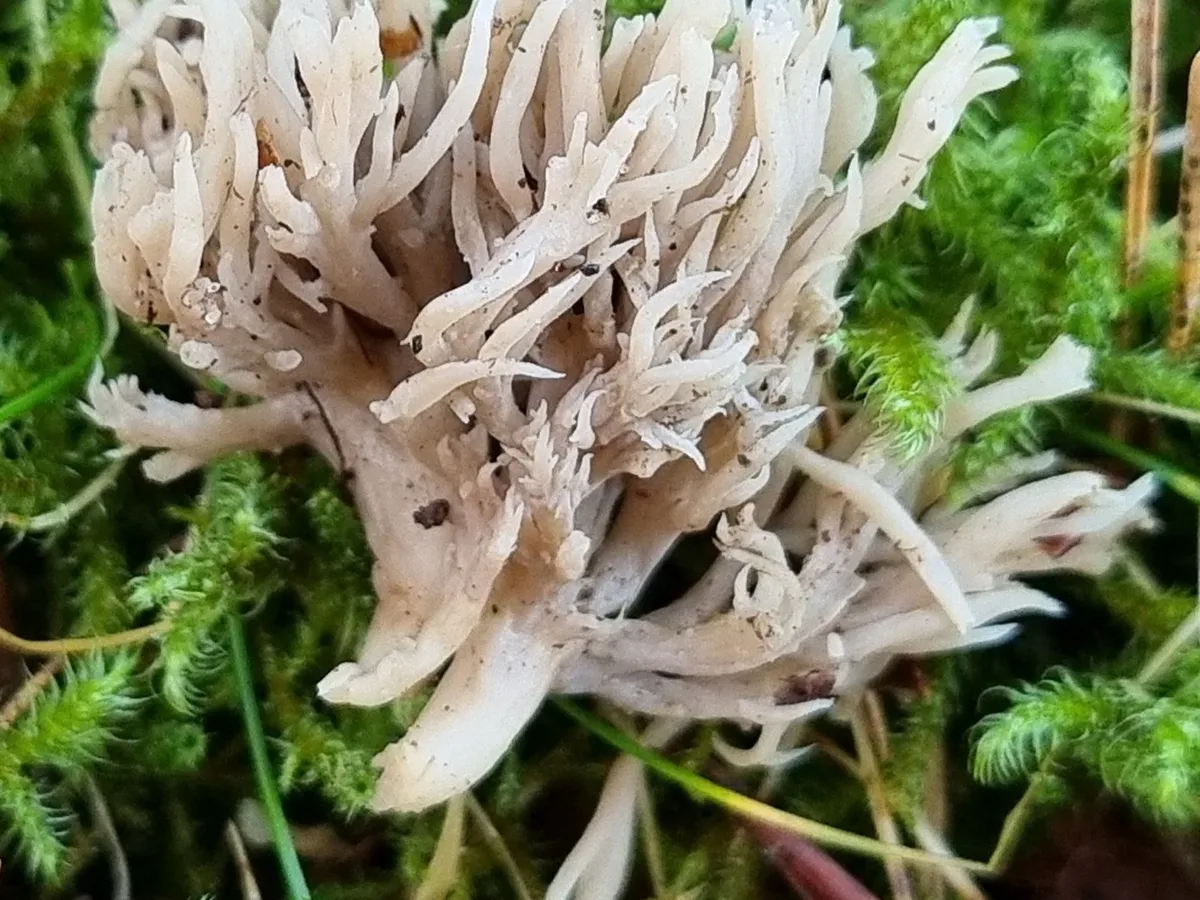 © Andrea Bender (CC BY)
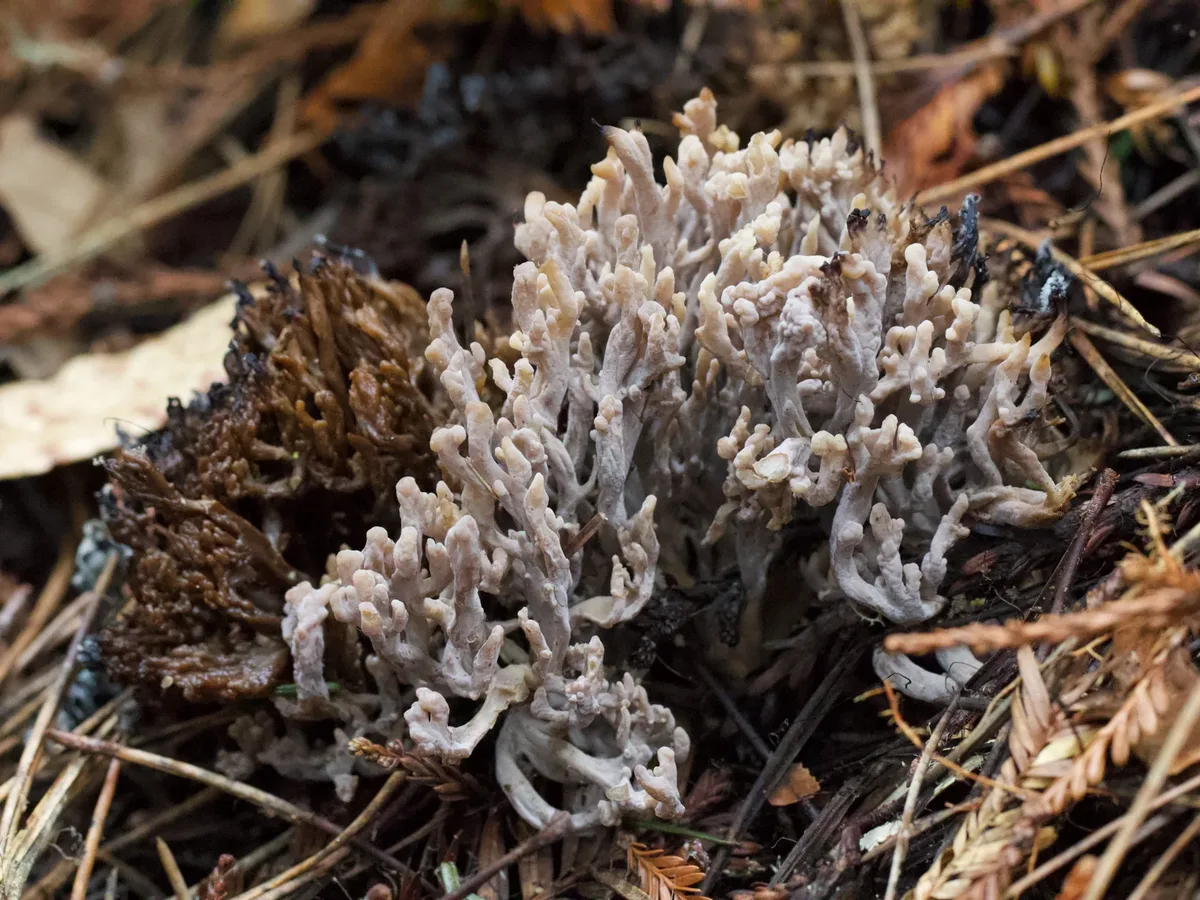 © Arvel Hernandez (CC BY)
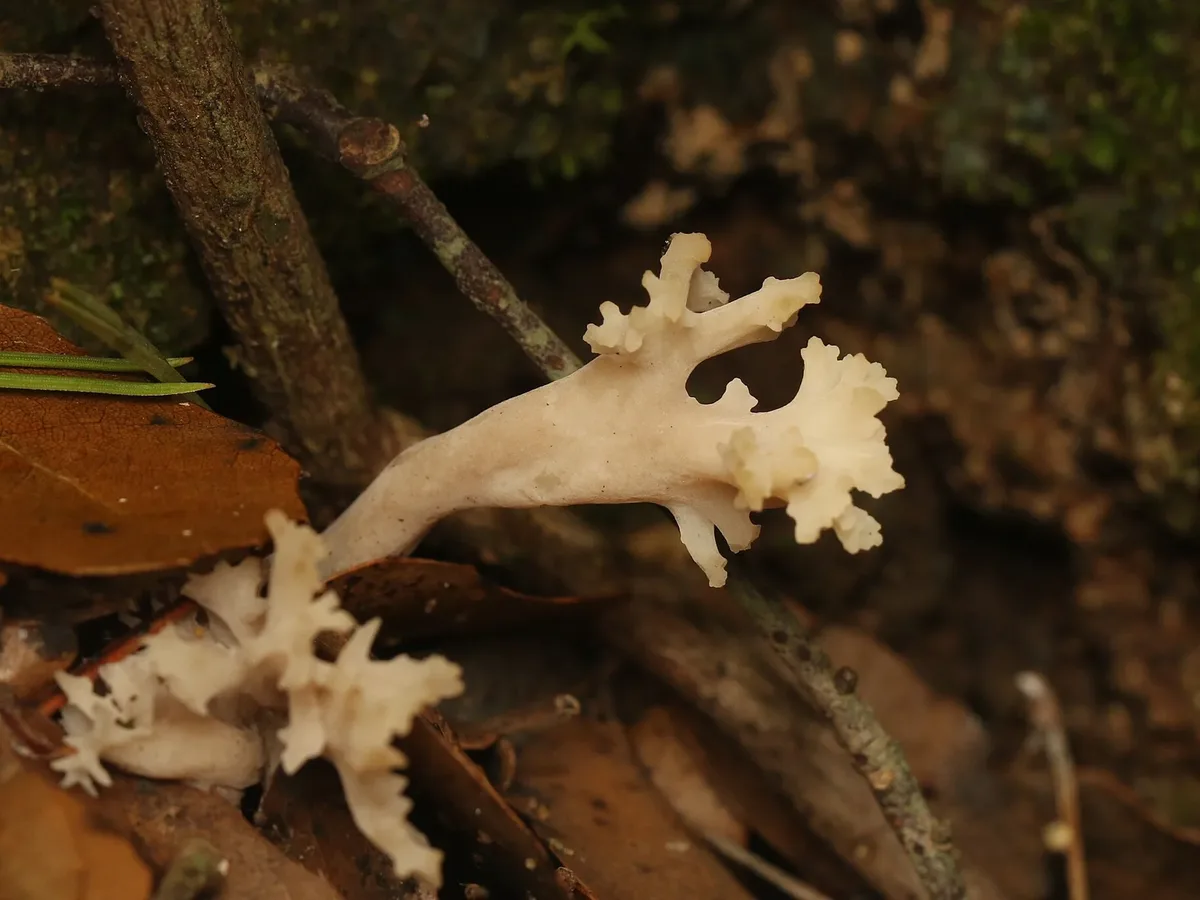 © Chaym Turak (CC BY-SA)
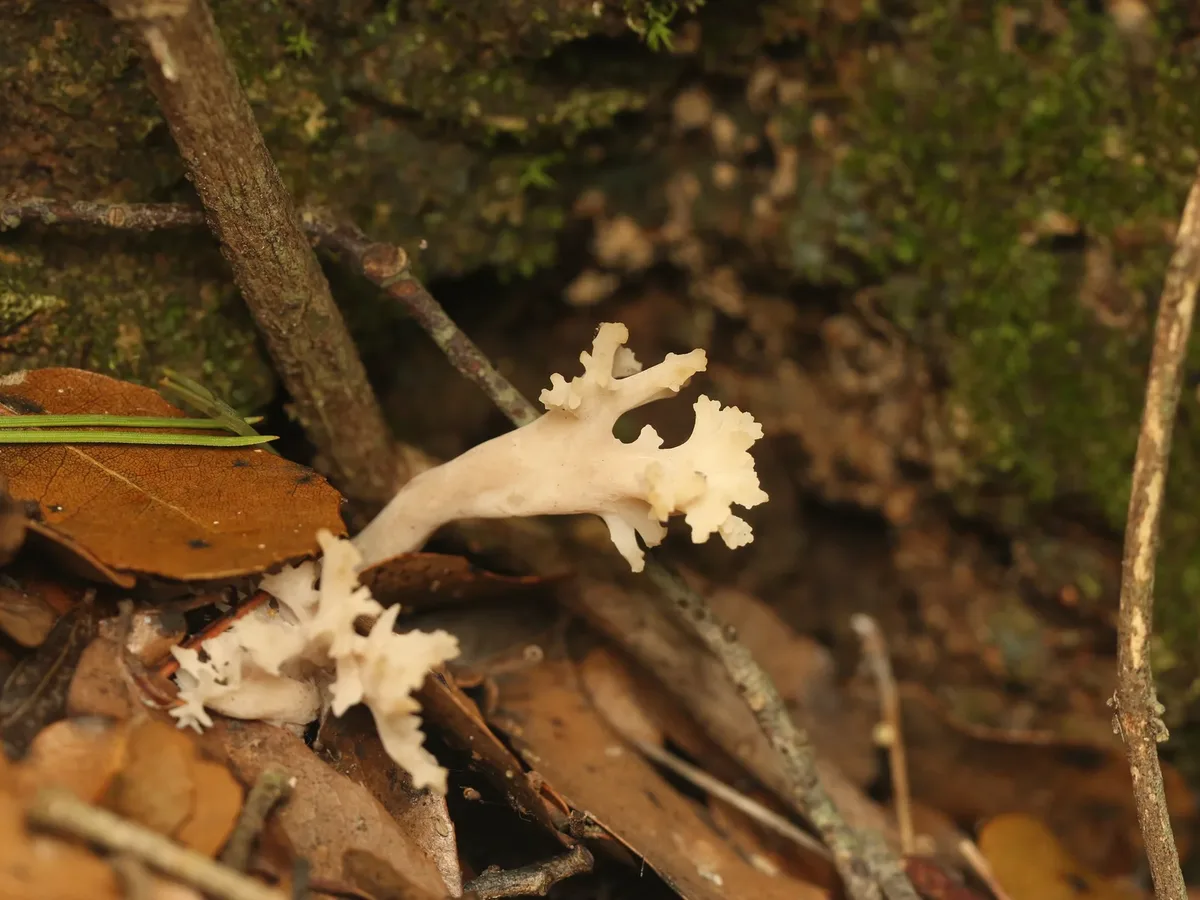 © Chaym Turak (CC BY-SA)
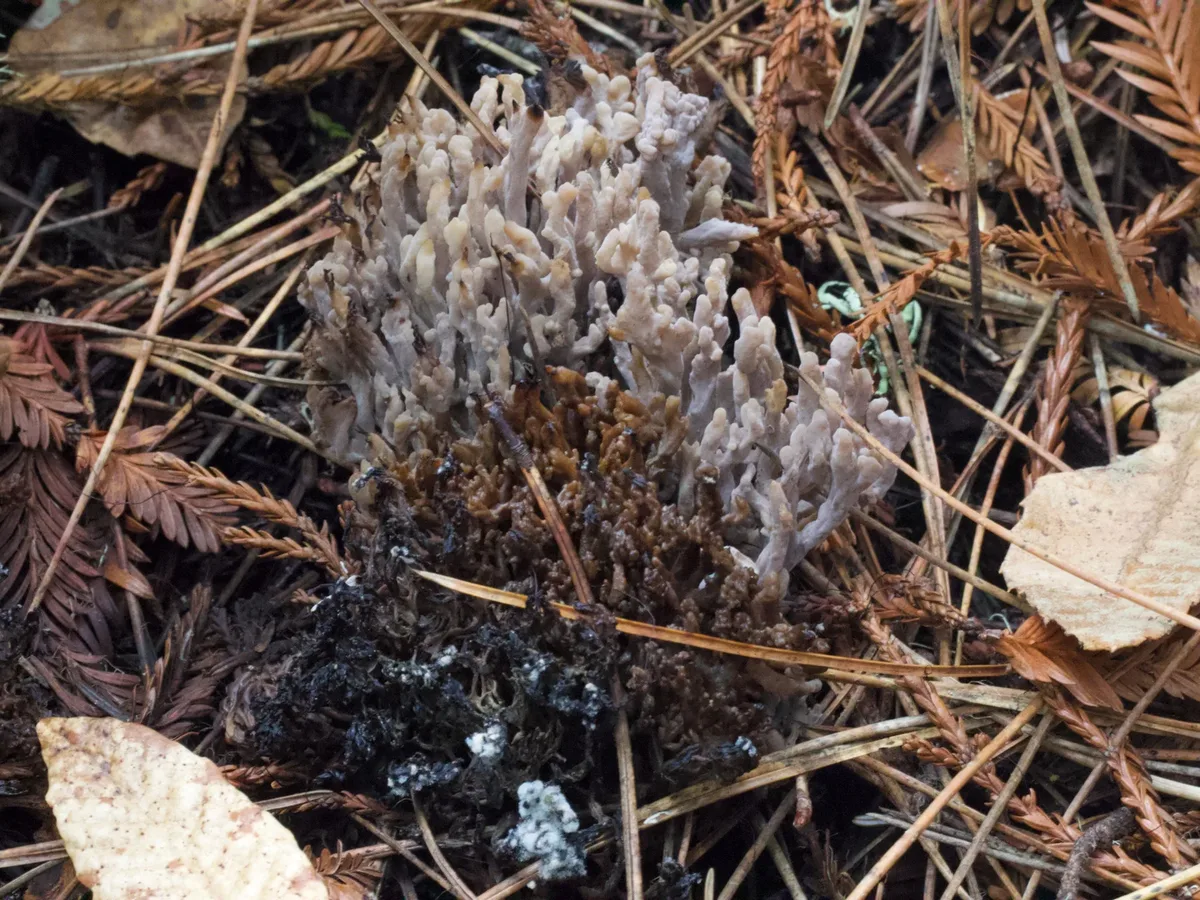 © Arvel Hernandez (CC BY)
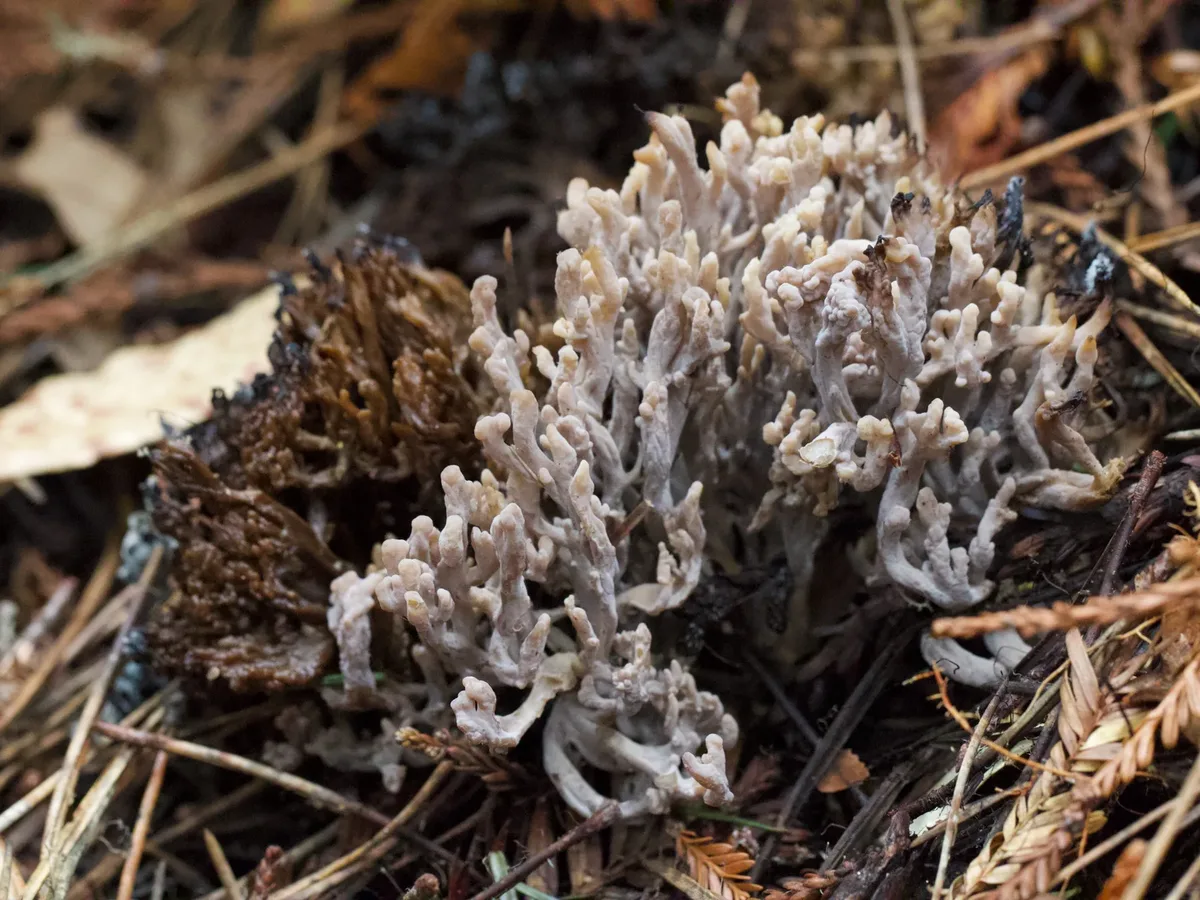 © Arvel Hernandez (CC BY)
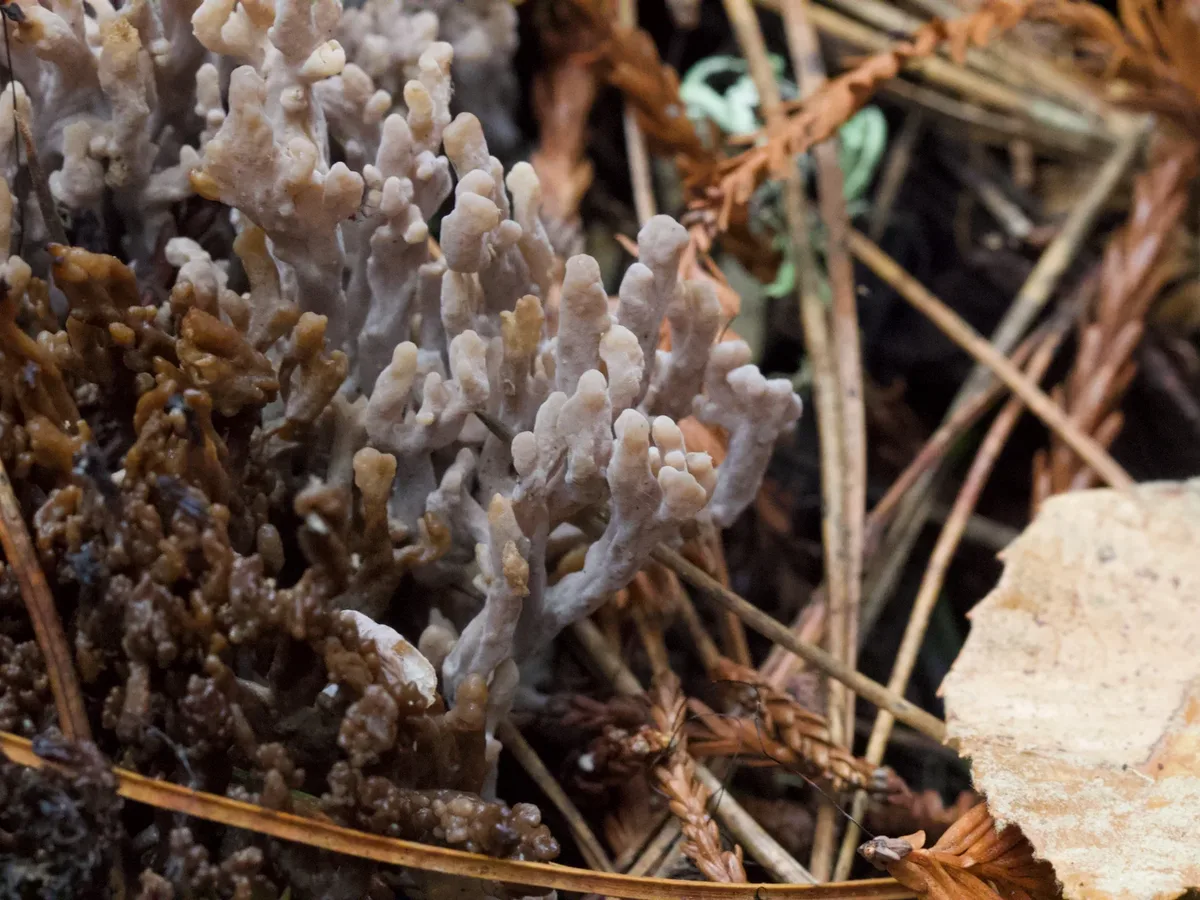 © Arvel Hernandez (CC BY)© Andrea Bender (CC BY)© Arvel Hernandez (CC BY)
Not poisonous, but not worth eating - too tough, bitter, or bland for the pot.
How to recognise it
Grey coral is a medium-sized, repeatedly branched fungus - 3-10 cm tall and 2-8 cm wide - that looks as though a piece of sea coral has quietly settled onto the forest floor.
From a short, stout base (0.5-2 cm thick, sometimes furrowed), it divides rapidly into numerous erect, rounded or flattened branches that subdivide two or three times further.
The colour throughout is a distinctive pale ash-grey to blue-grey; young, fresh fruitbodies often carry a faint violet-lavender tint that fades to dull brownish-grey with age or after handling.
Branch tips are blunt, slightly swollen, and generally paler or whitish - look for this pale-tipped detail as a quick field mark.
The outer branch surfaces are entirely fertile (no gills or pores anywhere) and smooth to finely wrinkled; a hand lens may show fine transverse wrinkling.
Flesh is white to pale grey inside, firm, brittle, and without any distinctive smell or taste. On handling or bruising, it discolours slowly to greyish-brown.
Spore print white; spores broadly ellipsoid to nearly round, smooth, 7-11 × 6-9 µm.
The most important microscopic character is the predominantly two-spored basidia - this separates the entire Clavulina genus from the similarly shaped Ramaria species (which always have four-spored basidia). Clamp connections are absent throughout.
Where & when it grows
Habitat
Grey coral lives as an ectomycorrhizal partner, threading its mycelium through the soil alongside the roots of a wide range of trees and exchanging nutrients in a partnership that can persist for many years beneath the leaf litter.
It is most typical of moist, humus-rich deciduous woodland - especially beech and oak forest - but shows up regularly under birch, hornbeam, and mixed stands that include spruce or pine. Path-side soil, forest clearings, and semi-open parkland with suitable hosts are all fair game.
It is not fussy about soil chemistry, occurring across neutral to mildly acidic ground, and ranges from sea level up to lower subalpine elevations, most abundantly at 100-800 m.
When
Grey coral starts appearing in midsummer - July in warm years - and builds steadily through August toward its peak in September and October. It holds on into November in mild seasons, retreating only when hard frosts settle in.
In the maritime west - Atlantic France, the British Isles, the Low Countries - the season tends to stretch at both ends.
Early autumn after a good spell of late-summer rain is the most productive time to look.
How it grows
Grows singly or in loose, scattered groups; rarely in large clusters. Each fruitbody arises from a buried or partly exposed base in mineral soil or well-decayed leaf litter.
Because the mycelial network persists underground from year to year, a productive spot will often fruit again in the same place the following autumn - worth noting in your journal when you find one.
In dry weather the branch tips tend to shrivel and discolour first, while the base holds on a little longer.
Fruiting conditions
Requires moderate autumnal rainfall after summer warmth; soil cooling to below 18°C and sustained moisture appear to trigger fruiting. Flushes typically emerge 7-18 days after significant rainfall events in late summer and autumn.
Look-alikes
Several similar coral fungi require careful comparison.
- Clavulina coralloides (crested coral, White coral) - usually whiter or cream-coloured, with distinctively crested, fringed, or toothed branch tips; can appear quite grey in shade, when ageing, or when infected by the parasite Helminthosphaeria clavariarum. Colour and tip morphology together separate them.
- Clavulina rugosa (wrinkled coral) - typically unbranched or only very sparingly branched, strongly longitudinally wrinkled, and usually paler whitish-cream.
- Ramaria species - generally more brightly coloured (yellow, ochre, tan, pink, or coral) and always have four-spored basidia; confirmation requires a microscope, but colour and habitat context help considerably.
- Ramaria fumigata - a close visual mimic: grey-violet to grey-brown branches with violet tints at the tips; also inedible and not dangerous.
- Ramaria pallida (pale coral) - whitish-cream to very pale grey, and causes gastrointestinal upset; avoid any pale coral where identification is uncertain.
- Clavaria zollingeri (violet coral) - distinctly violet-purple throughout, unbranched or very irregularly branched, occurring in unimproved grassland.
- Pterula species - much thinner-stemmed and less robust.
None of the European lookalikes of Clavulina cinerea are deadly or seriously toxic, though some Ramaria species (notably R. formosa and R. pallida) cause gastrointestinal illness.
Usually whitish to cream rather than grey; branch tips distinctively crested, toothed, or fringed under a hand lens. Ageing specimens or those infected by the parasite Helminthosphaeria clavariarum can look grey and overlap in colour; inspect tips carefully for any remaining crest structure.
Whitish-cream to very pale grey overall; may have a faint lilac or mealy smell; causes gastrointestinal upset if eaten. Lacks the true ash-grey colour of C. cinerea. Avoid all pale grey or whitish coral fungi in beech woodland if identification is uncertain.
Salmon-pink to coral-pink main branches with paler or yellowish tips; distinctly more colourful than the grey C. cinerea. Causes gastrointestinal upset if eaten - a useful reminder that the Ramaria group contains toxic members.
Violet-grey to greyish-purple with violet tips when young; basidia four-spored (microscope needed for certainty); generally larger and more robust than C. cinerea; inedible but not seriously toxic.
Intense violet-purple throughout; typically unbranched or loosely clumped single clubs rather than a true coral structure; occurs in unimproved grassland, not woodland.
Typically unbranched or sparsely branched, with pronounced longitudinal ridges and wrinkles running the length of the club; usually paler whitish-cream.
Pale yellow to ochre-yellow branches with yellower tips; substantially larger; entirely different colour. Edibility disputed - treated as suspect in some traditions.
In the kitchen
Picking & cleaning
Clavulina cinerea is generally considered inedible:
- Tastes bitter and astringent when raw
- Has thin, brittle branches with little flesh
- Has no established culinary use in any European tradition
Leave it for the forest. If you collect it as a voucher specimen or for photography, sever cleanly at the base with a knife to leave the mycelial mat intact.
Cooking
Not applicable. Clavulina cinerea has no established culinary use and is not recommended for eating.
Good to know
Clavulina cinerea is not toxic and no serious poisonings are documented, but it is bitter and unpalatable and should simply be left alone as an inedible species.
The most important caution with grey coral fungi is distinguishing them from Ramaria species, some of which cause gastrointestinal illness (notably Ramaria formosa and Ramaria pallida). No lookalike is deadly.
If any coral fungus smells strongly or shows intense yellow, pink, or salmon pigmentation, treat it with caution. If you are not confident in the identification, do not eat it.
A reference guide - never an edibility guarantee. When in doubt, leave it out.