Truncate club
Clavariadelphus truncatussyn. Clavaria truncata, Clavariadelphus truncatus (Quél.) Donk
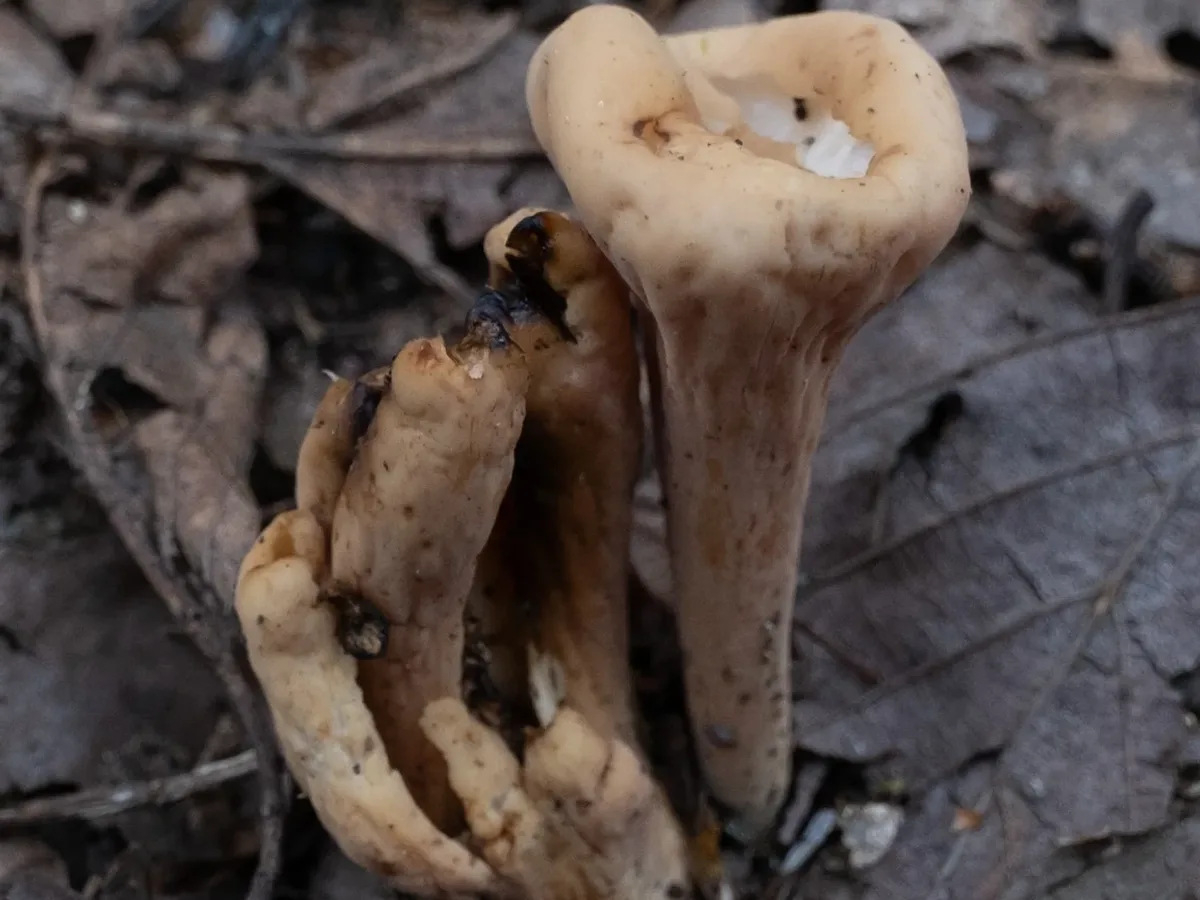 © Alex Abair (CC BY)
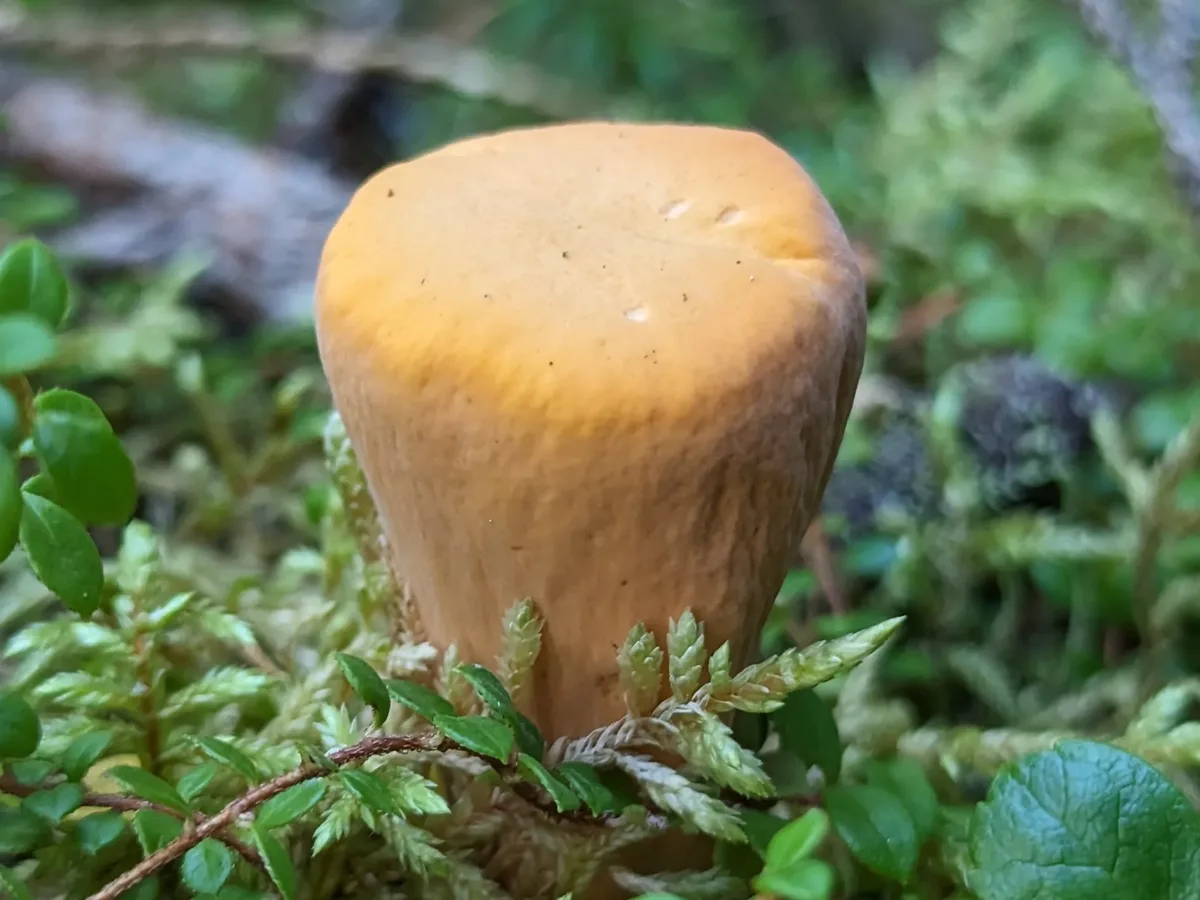 Ben Keen (CC0)
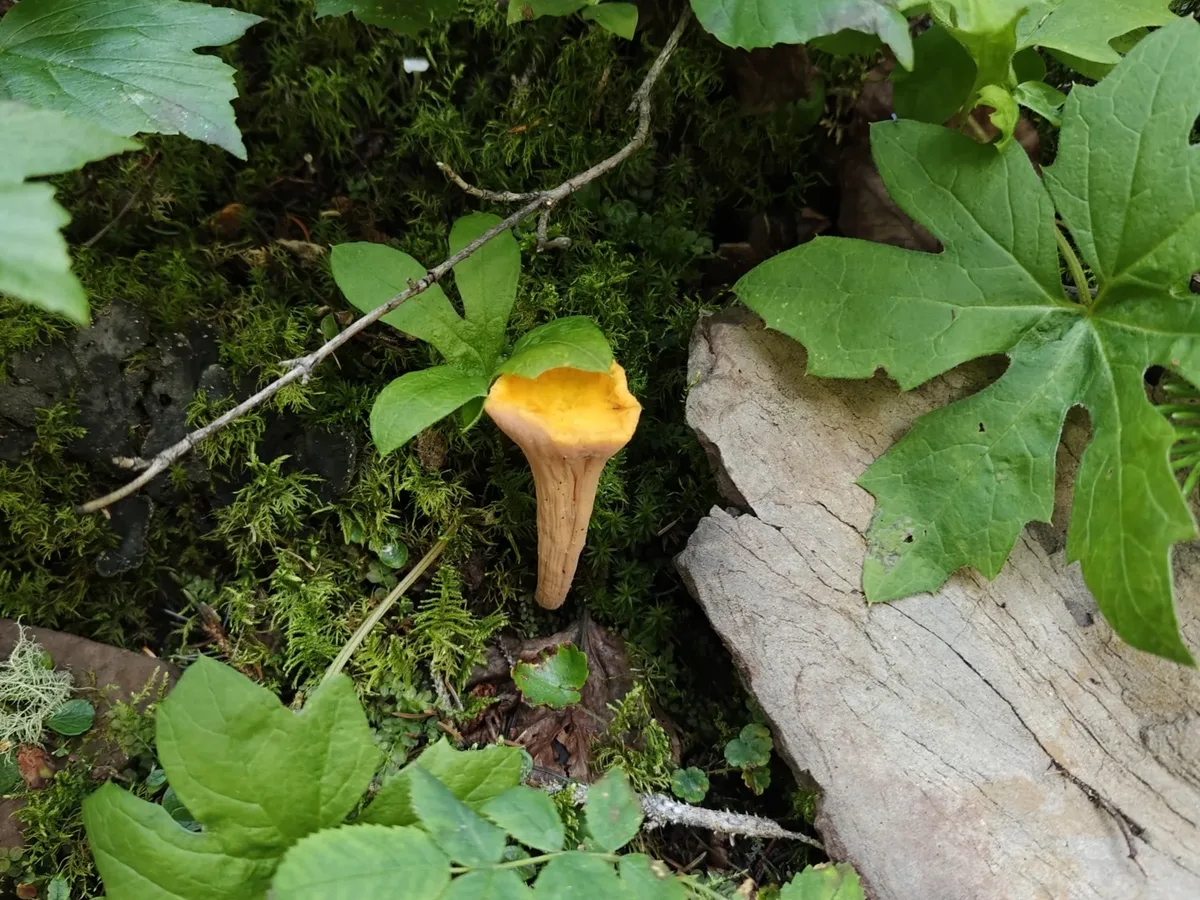 Callum McKenzie (CC0)
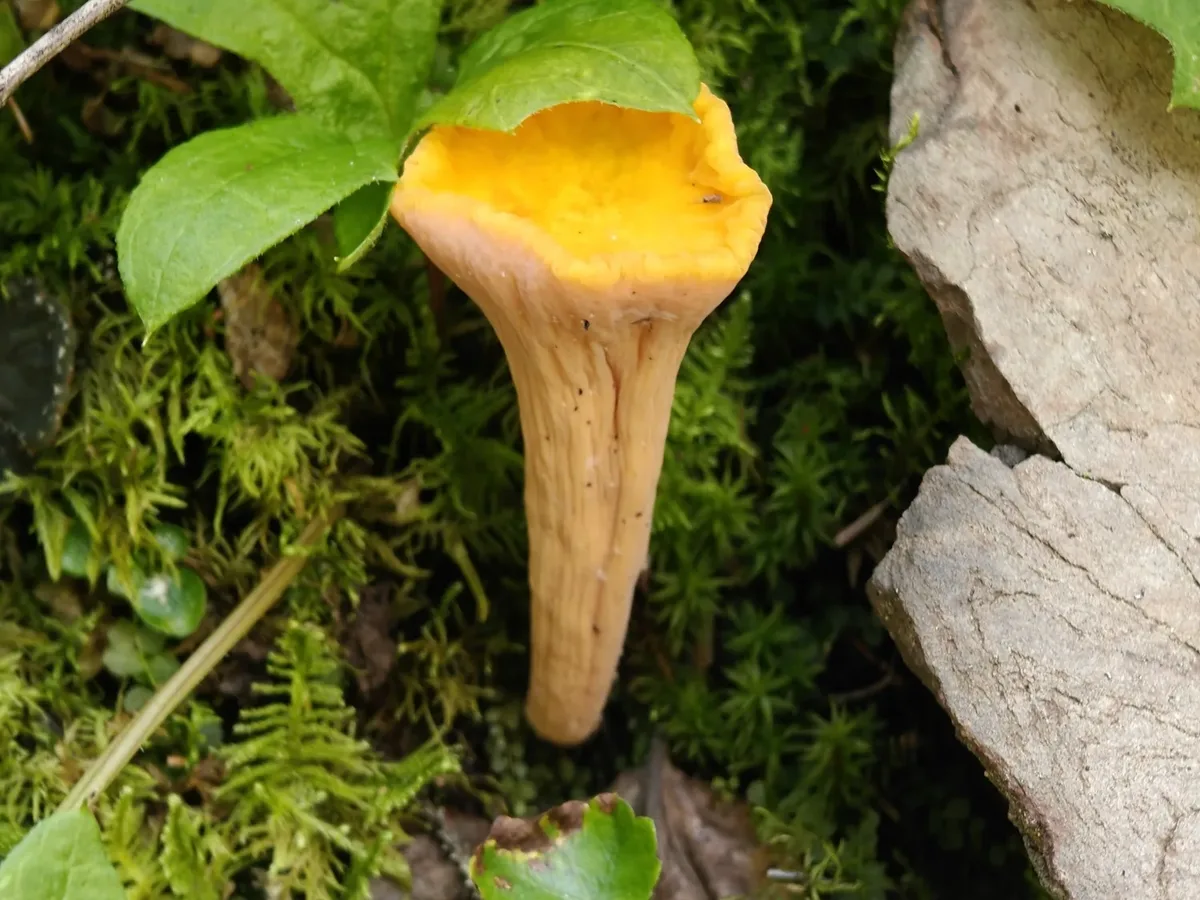 Callum McKenzie (CC0)
 © vuikaan (CC BY)
 © Alex Abair (CC BY)
 © Alex Abair (CC BY)© Alex Abair (CC BY)Ben Keen (CC0)
Good to eat, once you have identified it with certainty and cooked it through.
How to recognise it
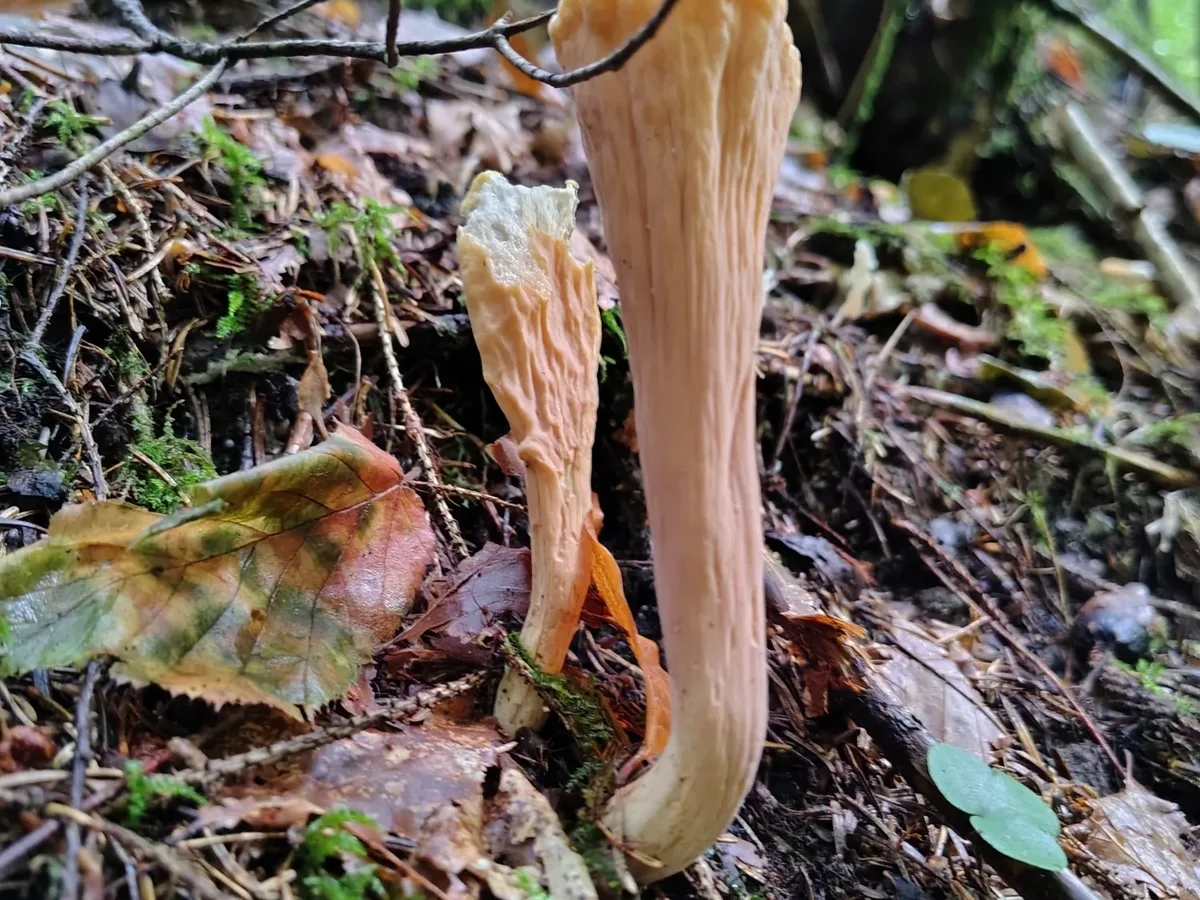
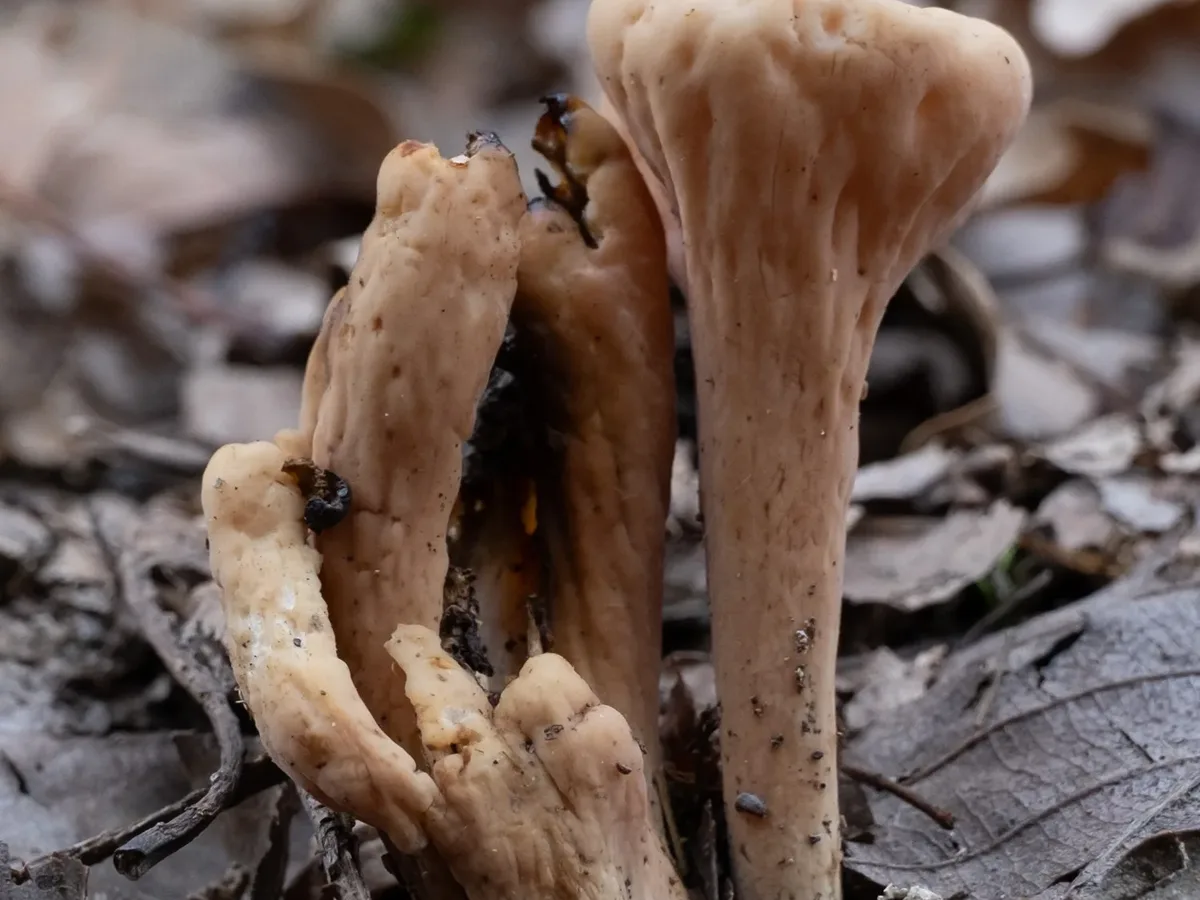
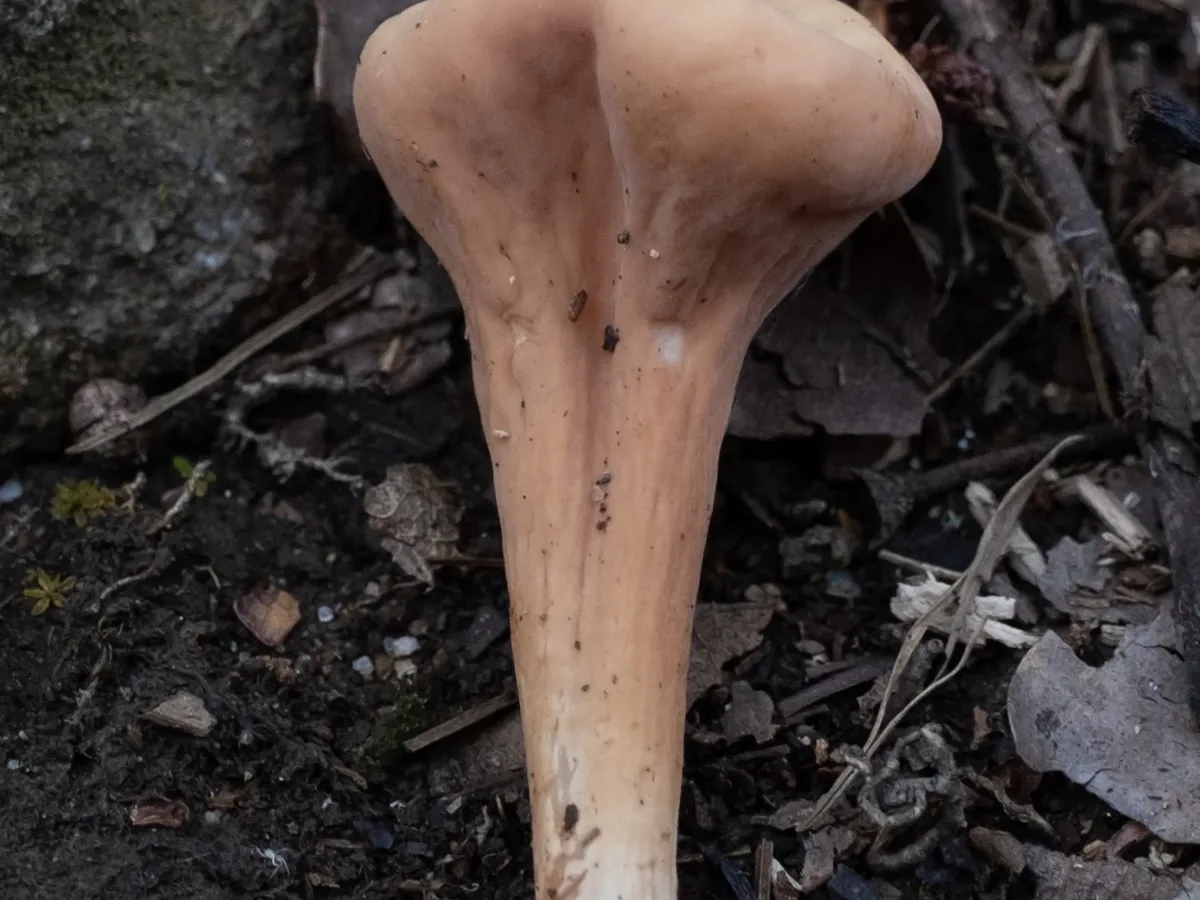
Among club fungi, Clavariadelphus truncatus is hard to mistake: it grows as a single, unbranched, fleshy club with a top that looks as though it has been cleanly levelled off - the flat or very gently convex apex that gives the species its name.
The fruiting body stands 6-20 cm tall and broadens to 2-6 cm across that distinctive flat crown, then tapers into a stout pale base.
Young clubs are pale ochre-yellow to orange-buff on top; with age the crown deepens through tawny-orange to amber-brown and may develop faint longitudinal wrinkles.
The sides run smooth to finely ribbed, ochre-flesh below grading to orange near the top.
Cut it open and the flesh is white to very pale yellowish throughout - firm, solid, compact, and unchanging on exposure.
The most memorable identification clue after the shape is taste: a pronounced sweetness, often compared to caramel or vanilla sugar, that sets it apart from nearly every other club fungus at a single lick.
Odour is mild and faintly pleasant. Spore deposit white to pale yellowish; spores ellipsoid, smooth, hyaline, 9-14 × 5-7 µm.
Where & when it grows
Habitat
Clavariadelphus truncatus lives its hidden life as an ectomycorrhizal partner of conifers - its mycelium threaded into the roots of firs (Abies spp.), spruces (Picea spp.), pines (Pinus spp.), and occasionally Douglas-fir (Pseudotsuga menziesii) or larches (Larix spp.), trading soil minerals for tree sugars in the quiet way the forest sustains itself.
It is a true creature of montane and subalpine conifer stands, emerging from humus-rich mineral soils and deep needle duff, occasionally over partially buried woody debris.
- In the Pacific Northwest look for it in old-growth or mature Abies concolor, A. magnifica, and mixed Picea-Abies forests at roughly 1,000-3,000 m elevation.
- In Europe it occurs in Picea abies and Abies alba forests of the Alps, Pyrenees, Carpathians, and Scandinavia.
Fruiting bodies appear singly or in loose groups of two or three.
It never grows on wood or dung and is absent from open grasslands or deciduous forests unless conifers are close.
When
The clubs emerge in late summer at higher elevations and keep appearing through autumn lower down, their timing driven by late-season rains soaking into still-warm mountain soil.
- In the Sierra Nevada and Cascades the main flush runs August to October, often following thunderstorm moisture.
- European alpine populations begin as early as July after snowmelt and carry on to October.
Subalpine stands at the upper end of the range fruit earliest; forests in the valley foothills can produce clubs into November in mild years.
A hard frost generally closes the season.
How it grows
Grows singly or loosely scattered across the forest floor - never in tight clusters.
Young clubs push up through the humus with a narrow, tapering tip that slowly broadens and flattens as the fruiting body matures. The signature flat crown becomes fully apparent only in older specimens.
Growth is unhurried, and prime clubs tend to be firm and upright. Very old or waterlogged specimens turn wrinkled and soft and are past their best.
The base is often buried just below the surface and typically shows pale whitish mycelial threads where it meets the soil.
Fruiting conditions
Requires sustained soil moisture from late-summer or early-autumn rains after the warm dry summer period in montane conifers. Soil temperatures of 8-18 °C are optimal; frosts terminate fruiting. Flush lag can be 1-3 weeks after significant rainfall.
Look-alikes
The most important confusion species are other Clavariadelphus species.
- Clavariadelphus pistillaris (giant club): broadly similar in stature but typically larger (up to 30 cm); the apex is rounded to bluntly pointed - NOT flat or truncated - and the flesh tastes distinctly bitter to mildly unpleasant. It is considered inedible. The two species often share the same forests and must be separated by apex shape and taste.
- Clavariadelphus ligula (strap coral): much smaller (2-8 cm), narrower, more cylindrical, with a rounded or tapered tip; an inedible species of similar conifer habitats.
- Clavariadelphus sachalinensis: a synonym or close relative differing in microscopic characters and largely overlapping in distribution and appearance - field separation is not critical since both are considered similarly edible.
- Ramaria species (branched corals): branch repeatedly and cannot be confused once examined carefully; some Ramaria are toxic.
- Clavulina cristata and related species: white, branched, and much smaller.
- Cudonia and Spathularia species: laterally compressed, spatula-shaped fruitbodies.
No deadly species is known to be a plausible field confusion species for C. truncatus under normal circumstances, provided the collector confirms the single unbranched club form and flat truncated apex.
Ramaria species branch repeatedly from a common base into multiple coral-like tips; they are never a single unbranched club. Some Ramaria (e.g., R. formosa) are toxic. Easy to separate from C. truncatus by branching habit.
White, repeatedly branched, and much smaller. Cannot be confused with the single large club of C. truncatus.
Spathularia and related genera produce laterally flattened, spatula-shaped or fan-shaped fertile heads on thin stems; much smaller and clearly non-club-shaped.
C. pistillaris is typically larger (to 30 cm), and the apex is rounded to bluntly pointed - never flat or truncated. Flesh tastes distinctly bitter to unpleasant, versus the sweet caramel flavour of C. truncatus. Both occur in similar conifer forests.
Much smaller (2-8 cm tall), narrower, and more cylindrical with a blunt or tapered tip. Never achieves the broad, flat-topped club shape of C. truncatus. Inedible due to mediocre taste.
In the kitchen
Picking & cleaning
Best collected when the club is firm and the apex is fully flattened but the flesh is still compact and white. Avoid specimens that are soft, discoloured brown-black at the base, or waterlogged.
Cut cleanly at the base with a knife; the soil left behind protects the mycelium.
Since Clavariadelphus truncatus is ectomycorrhizal and its populations appear to be relatively limited in some regions, harvest conservatively: do not take every specimen in a patch.
Clean off soil and debris in the field.
The flesh is somewhat fragile and bruises easily during transport; place upright in a basket rather than a bag.
Cooking
The flesh of Clavariadelphus truncatus has a mild, sweet, slightly earthy flavour.
It is best served simply: sliced into medallions and sautéed in butter until golden, seasoned with salt, pepper, and fresh thyme.
- Pairs well with cream sauces, pasta, risotto, or alongside grilled meats.
- The sweet notes also complement autumn vegetable dishes and pair interestingly with Gruyère.
Avoid cooking at excessively high heat, which can make the flesh rubbery; a gentle sauté over medium heat preserves the texture.
Drying reduces quality; the fresh mushroom is preferred. Pickling in light vinegar is practised in some European regions.
Good to know
Clavariadelphus truncatus is eaten without serious incident across its range; there are no documented serious toxicity cases.
The sweet taste is a useful secondary confirmation: if the club tastes bitter, suspect Clavariadelphus pistillaris (inedible, bitter) instead.
- As with all foraged fungi, eat a small test amount the first time and wait 24 hours before consuming larger quantities.
- Some individuals report mild gastric discomfort from large quantities.
- Not recommended raw in quantity.
- Ensure positive identification of the flat-topped apex before consuming.
A reference guide - never an edibility guarantee. When in doubt, leave it out.