Shaggy parasol
Chlorophyllum brunneumsyn. Lepiota rhacodes var. hortensis, Macrolepiota rhacodes var. hortensis, Macrolepiota brunnea, Lepiota brunnea (Favre & Maire) Bon, Lepiota hortensis (Pilát) Bon
 Kat (CC0)
 Alex Heyman (CC0)
 © Lisa Biasillo (CC BY)
 © Lisa Biasillo (CC BY)
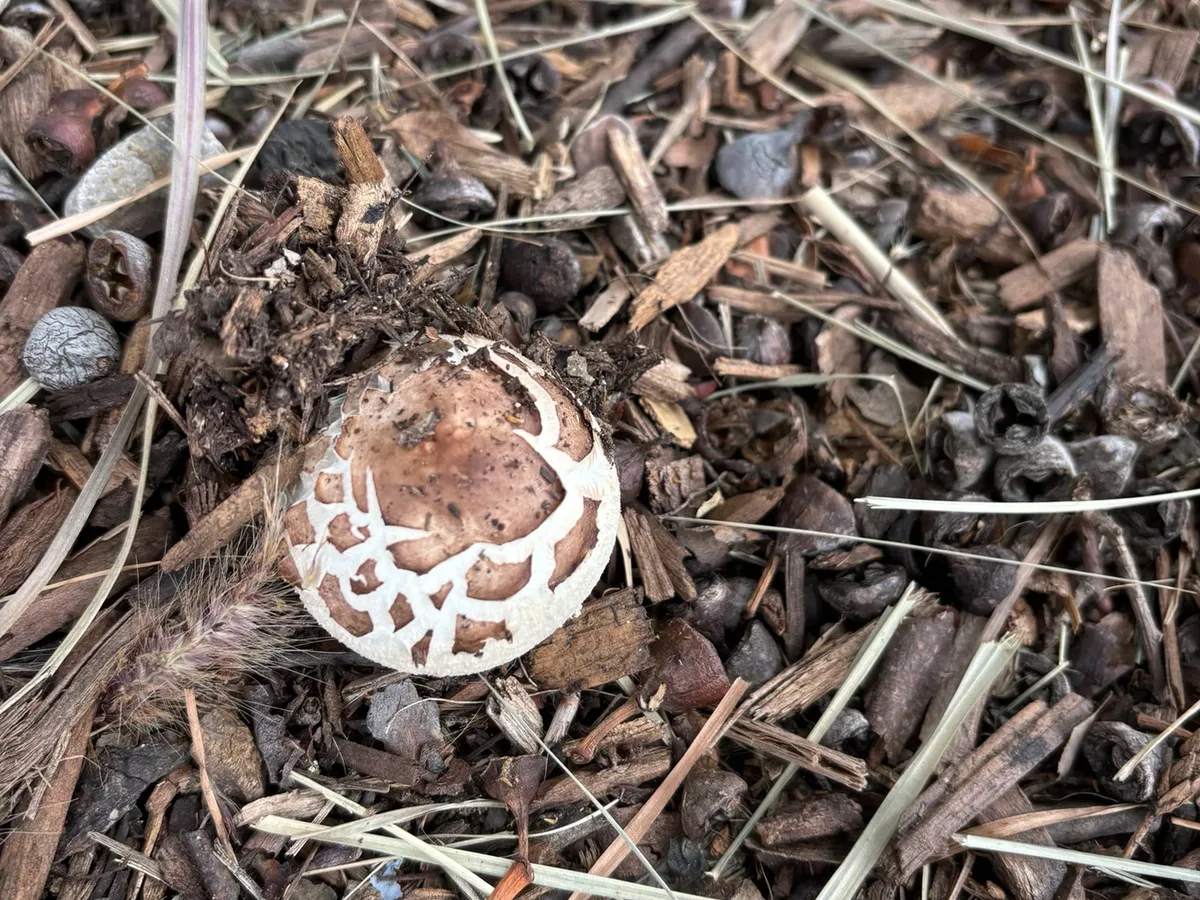 © Lisa Biasillo (CC BY)
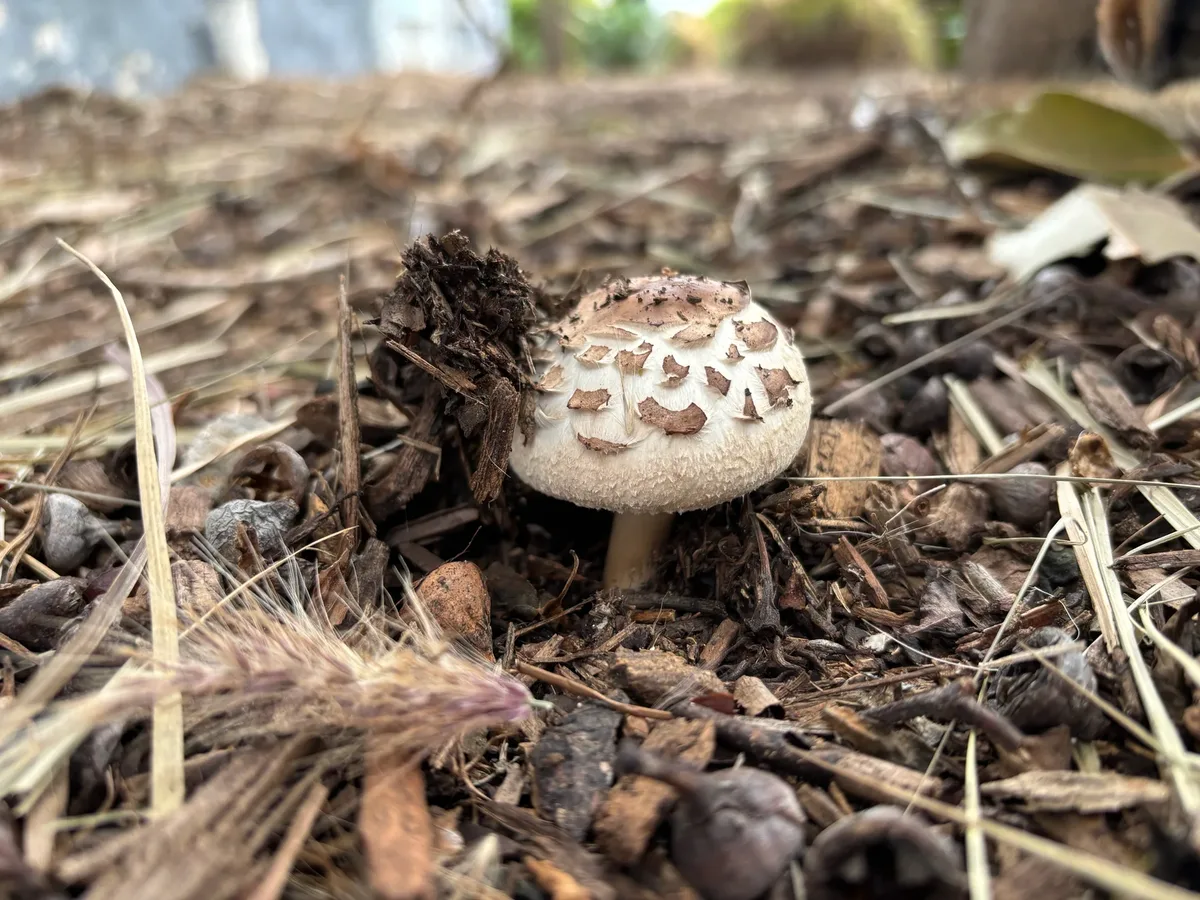 © Lisa Biasillo (CC BY)
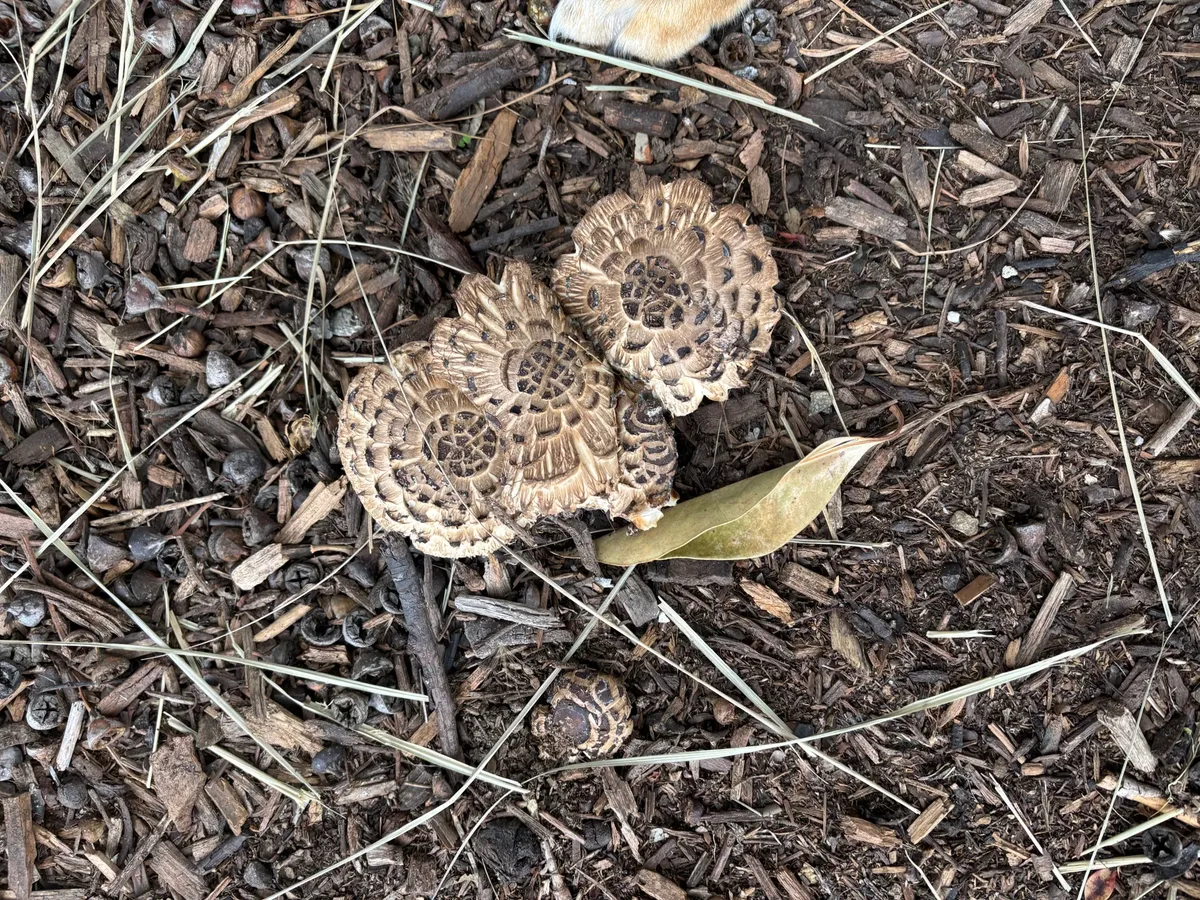 © Lisa Biasillo (CC BY)
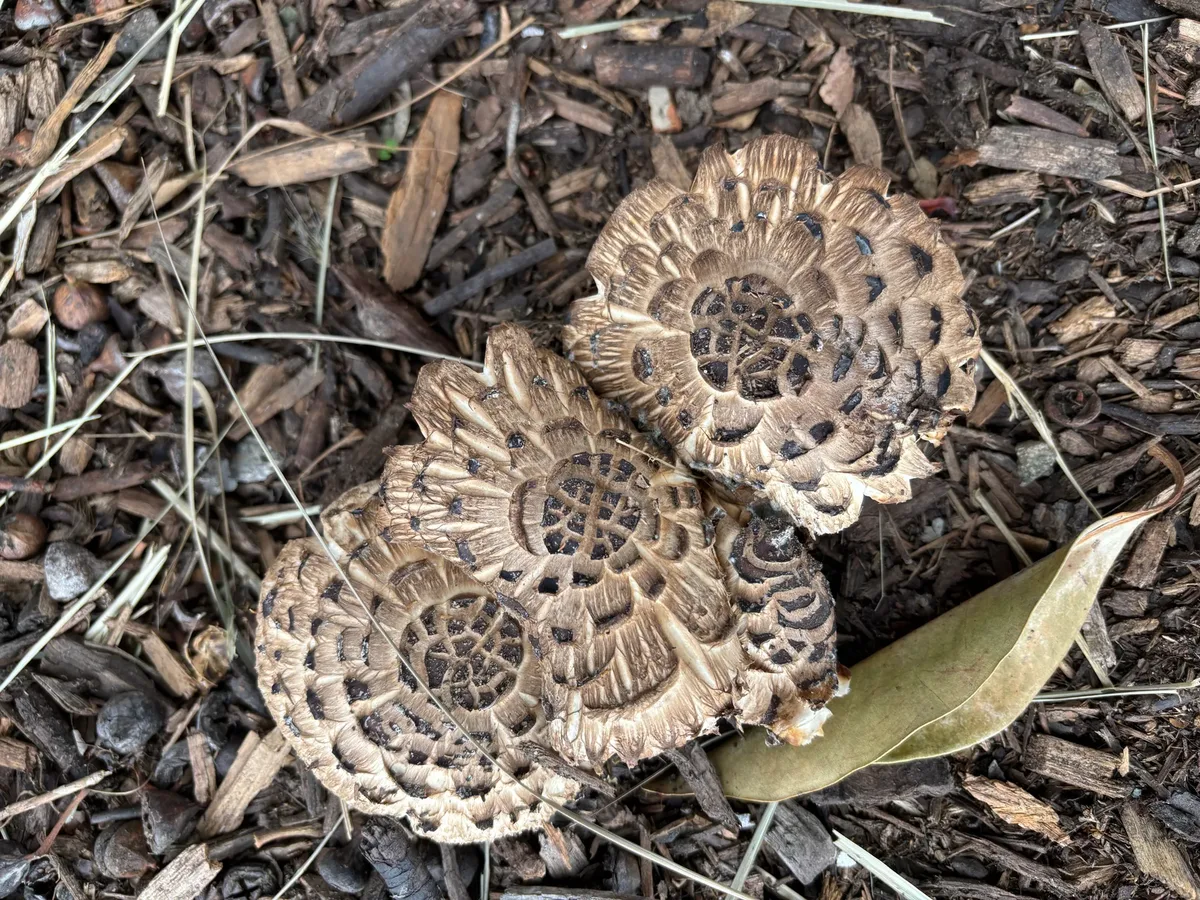 © Lisa Biasillo (CC BY)
 Emily Langdon-Lassagne (CC0)
 Emily Langdon-Lassagne (CC0)Kat (CC0)Alex Heyman (CC0)
Edible only with the right preparation - or safe for some people but not others. Learn the caveats first.
Never eat a mushroom you are not 100% sure of - check the look-alikes below, and always cook wild mushrooms.
How to recognise it
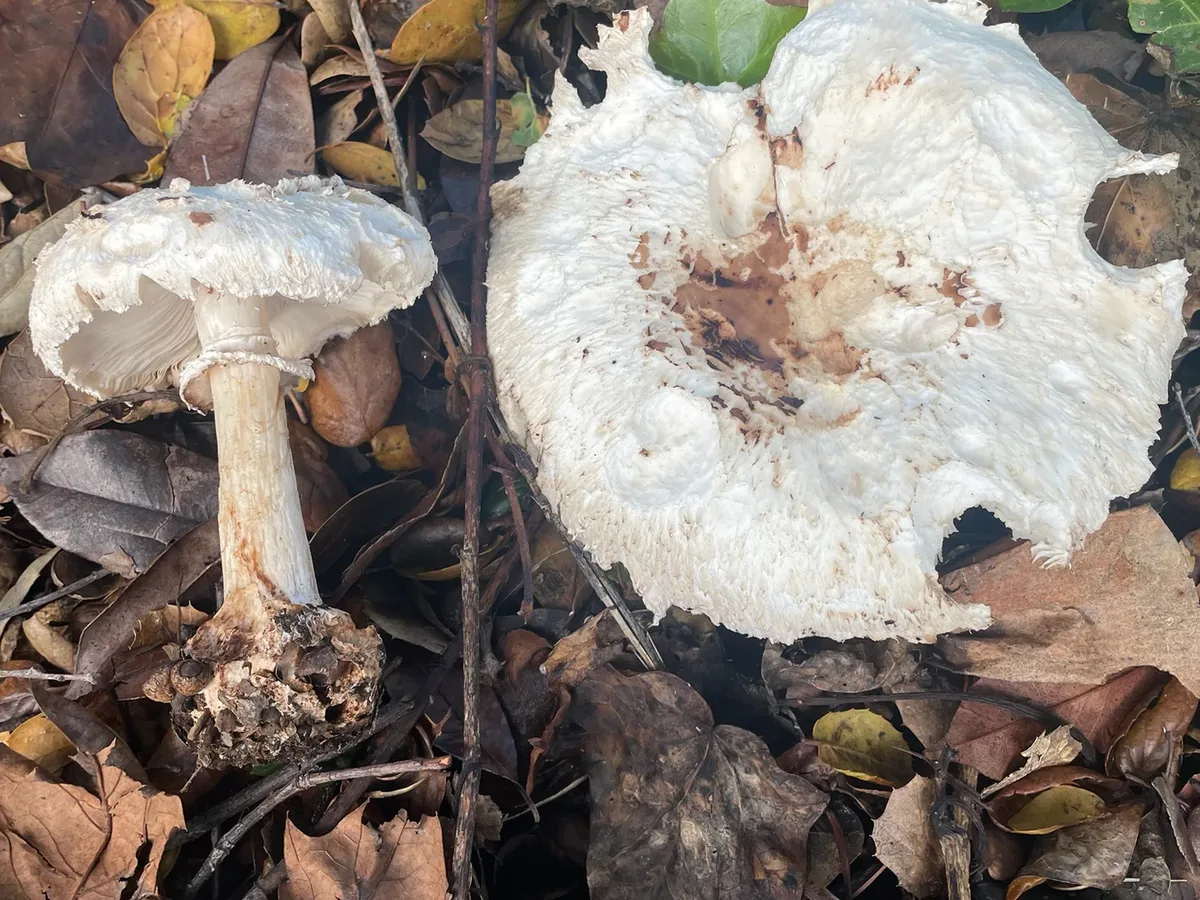
Chlorophyllum brunneum is a large, impressively shaggy parasol that earns its common name.
Cap
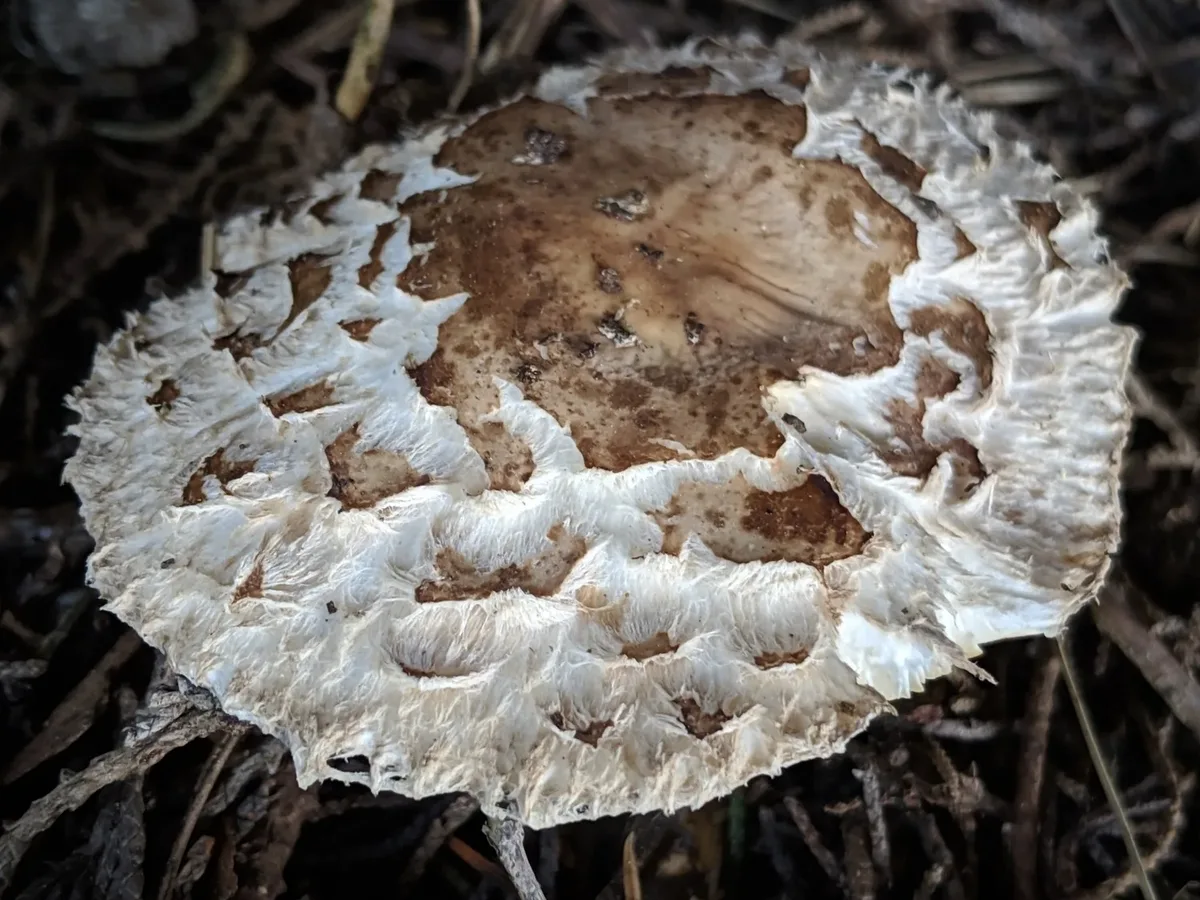
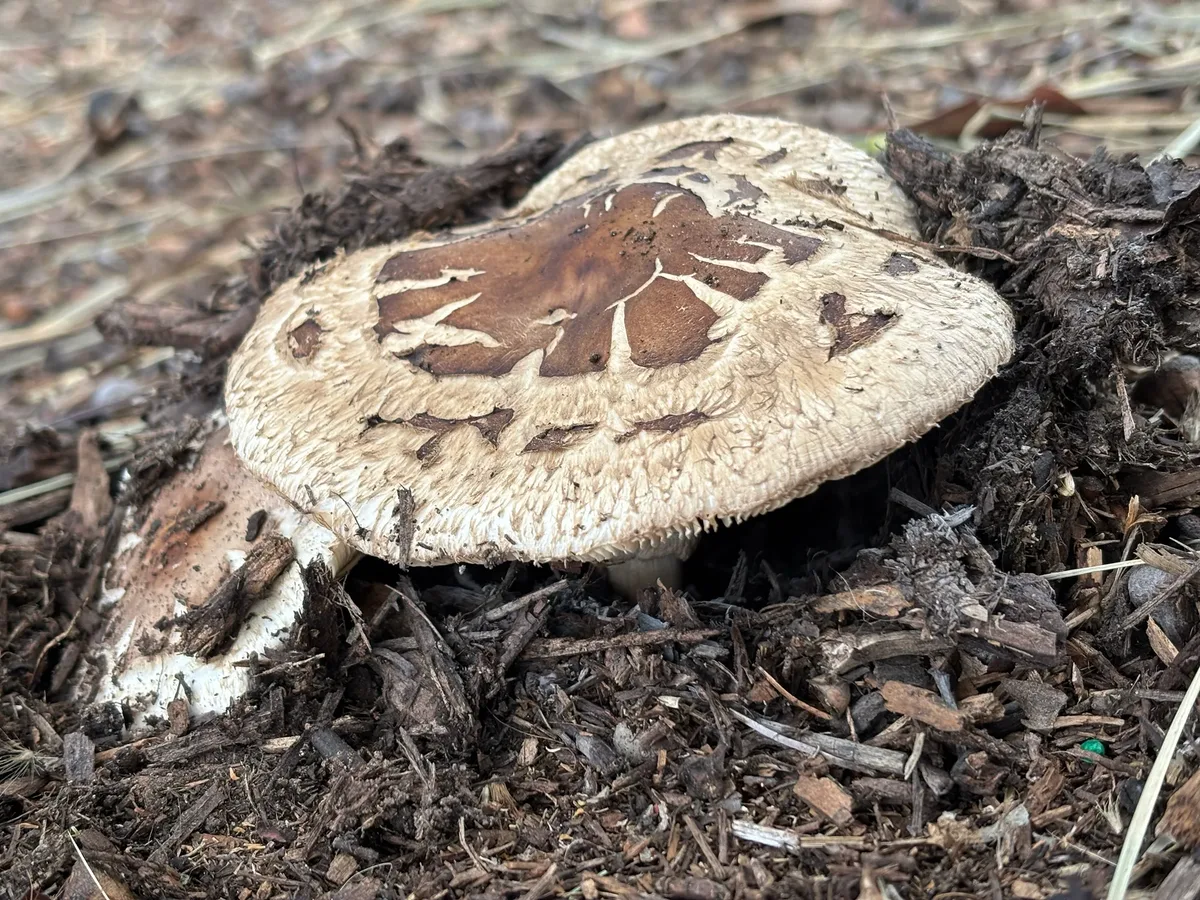
The cap starts as a pale, rounded button - almost egg-like - and expands to 8-20 cm, its surface splitting as it grows to reveal coarse, dark-brown, upturned scales against a whitish to buff background.
These scales are ragged and irregular, quite different from the neater plate-like pattern on Macrolepiota procera, and the brown central disc persists into maturity.
Stem
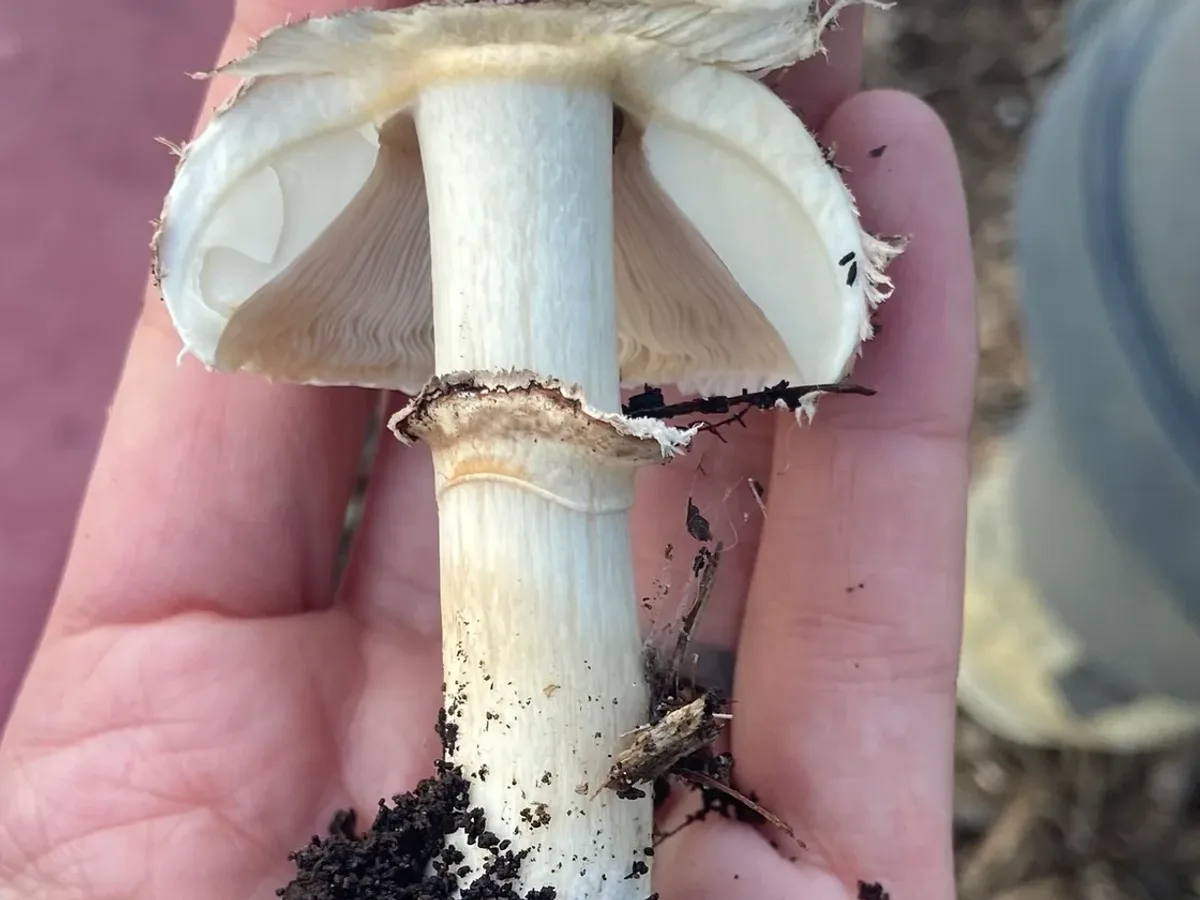
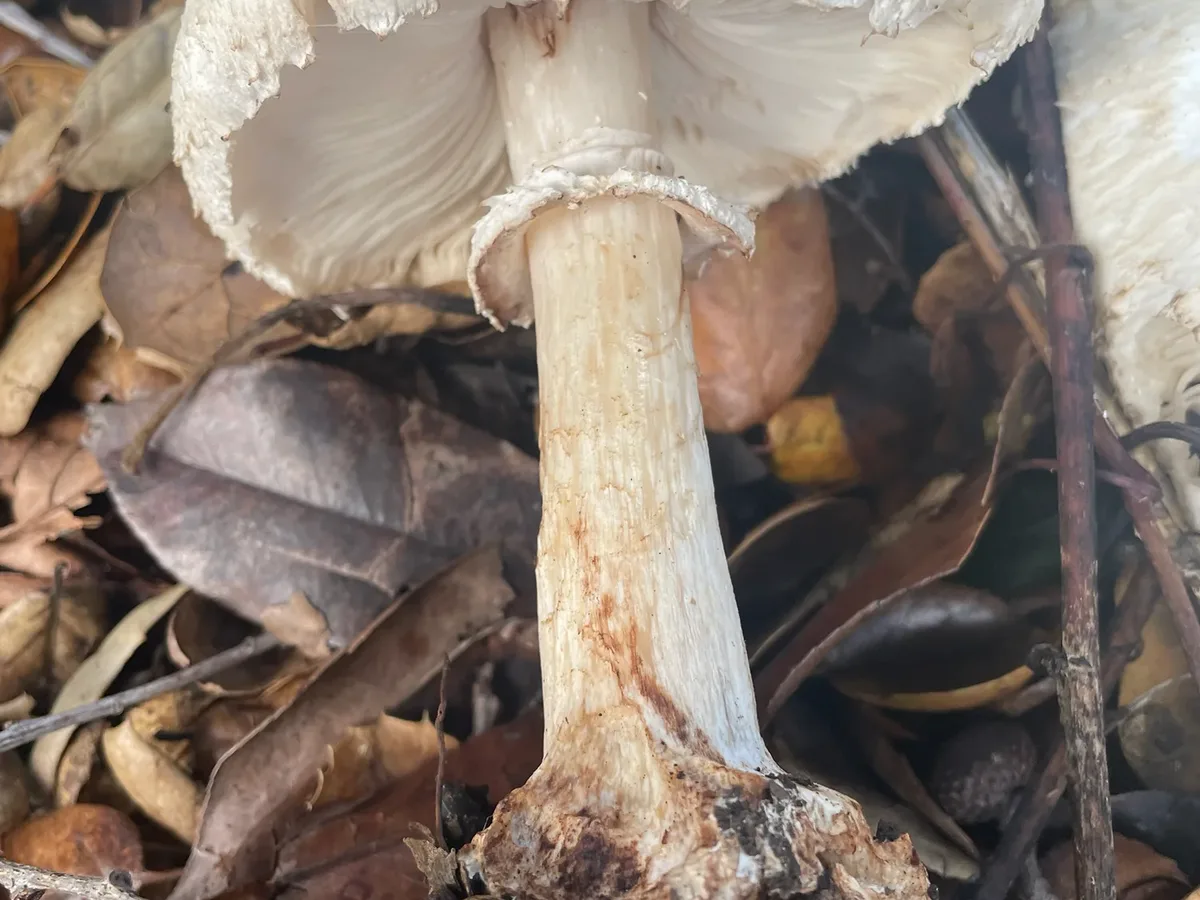
The stem is robust, hollow, and ends in a distinctly swollen basal bulb - more abrupt and pronounced than in M. procera or the closely related C. rhacodes - and carries a wide, fleshy, double ring that slides freely along the stem. Everything about the build says "large parasol."
Flesh
The defining character, though, arrives the moment you cut the flesh: within seconds, white tissue turns a vivid orange to saffron-red to brick-red, deepening over the next quarter of an hour.
This reddening - immediate and unmistakable - runs through cap, gills, and stem alike. It is both the most reliable identification marker for this species group and a clear reminder that this mushroom is not the straightforward edible it resembles.
Spore print is white.
Why it's dangerous
The principal dangers associated with C. brunneum are:
- 1Intrinsic GI toxicity causing illness in a large minority of consumers even after thorough cooking.
- 2Confusion with Chlorophyllum molybdites, a severely toxic GI toxin species that shares habitat and appearance.
- 3Risk of mixing with or confusing button-stage specimens with deadly Lepiota species (containing lethal amatoxins) or immature Amanita phalloides.
The reddening flesh and white spore print are essential confirmatory characters; the white spore print critically excludes C. molybdites.
Novice foragers should not collect this species.
Toxin
The specific toxicological compounds responsible for gastrointestinal illness in Chlorophyllum brunneum have not been completely characterised.
Current evidence points to heat-labile proteins - likely lectins or other protein-based GI irritants - as the primary cause, since thorough cooking reduces but does not fully prevent adverse reactions in susceptible individuals.
Some research has implicated specific glycoproteins in closely related Chlorophyllum rhacodes, which has been studied more extensively.
The reddening reaction of the flesh, while vivid and diagnostically useful, is caused by oxidative enzyme reactions and is unrelated to the GI toxicity.
Symptoms
Gastrointestinal symptoms typically onset within 30 minutes to 3 hours of ingestion and include nausea, vomiting, abdominal cramping, and diarrhoea.
Symptoms are generally self-limiting, resolving within 24-48 hours without specific treatment. No systemic toxicity or organ damage has been documented from C. brunneum poisoning.
Severity varies considerably between individuals - some people consume it repeatedly without ill effect while others react strongly.
If symptoms occur after eating a shaggy parasol, retain a specimen or photograph for identification to rule out the much more dangerous Chlorophyllum molybdites or deadly Lepiota species.
If onset is delayed beyond 6 hours, or if symptoms are severe or involve organ dysfunction, seek emergency medical care immediately, as this would indicate possible amatoxin poisoning from a misidentified Lepiota species.
Staying safe
Chlorophyllum brunneum is a safety-critical species that requires careful handling.
Although it has been eaten historically and is described as edible in older literature when thoroughly cooked, contemporary research and field reports consistently document gastrointestinal illness - nausea, vomiting, abdominal cramps, and diarrhoea - in a substantial proportion of consumers. Estimates range from 30% to over 50% of individuals reporting adverse reactions even from well-cooked specimens.
The responsible compounds have not been fully characterised but appear to be heat-labile proteins or glycoproteins in the flesh, as cooking reduces but does not eliminate the risk. Raw consumption reliably causes illness.
Two additional risks compound this intrinsic toxicity:
- 1The species can be confused with Chlorophyllum molybdites, which causes severe gastrointestinal poisoning and is the most common cause of mushroom poisoning in North America - always make a white spore print.
- 2Immature specimens or mixed baskets raise the risk of co-occurrence with deadly Lepiota species.
Most major modern European and North American foraging guides now advise against eating C. brunneum.
If attempting it:
- Confirm all identity features.
- Use only large well-developed caps.
- Cook thoroughly.
- Eat only a small test portion the first time.
Any nausea within 1-3 hours of eating should be taken as a signal to discard the remainder.
Where & when it grows
Habitat
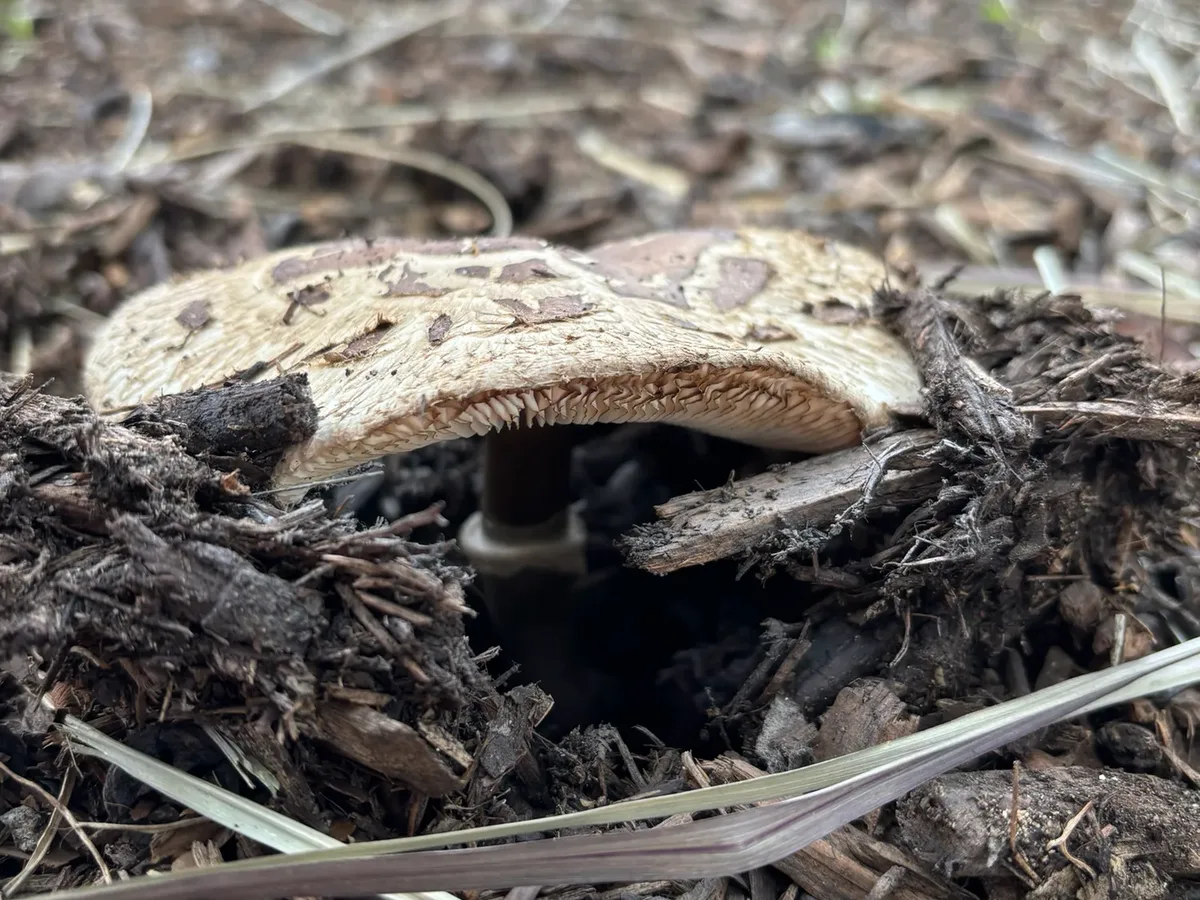
Chlorophyllum brunneum has made itself at home in the human-shaped landscape. Where Macrolepiota procera favours open meadows and forest clearings, this species thrives on rich, worked organic matter: compost heaps, wood chip garden paths, greenhouse floors, well-manured beds, and disturbed soil wherever organic mulch has been turned in.
In the Pacific Northwest it is a fixture of urban and suburban greenspaces, appearing reliably along ornamental garden borders, in park wood chip beds, and at the edges of maintained grounds where soil has been enriched.
This habitat preference is a useful field clue - a large shaggy parasol fruiting from a compost heap or a freshly mulched border is almost certainly C. brunneum.
It is saprotrophic, quietly breaking down buried organic debris, and typically fruits singly or in small scattered groups, occasionally forming partial arcs in lawn areas where mycelium has spread through uniform substrate beneath the surface.
When
In the Pacific Northwest (western Oregon, Washington, British Columbia), the main fruiting season runs from August through November, with peak abundance in September and October following the onset of autumn rains.
Warm, moist conditions after a summer dry spell trigger the most prolific flushes. In mild coastal zones the season may extend into December.
Fruiting bodies emerge rapidly - caps can expand from button to full size within 48-72 hours under optimal conditions of warmth and moisture.
How it grows
Saprotrophic; decomposes buried compost, wood chips, manure, and rich organic debris.
Emerges singly or in small scattered groups, sometimes in partial rings or arcs in lawns or garden beds where the mycelium has expanded outward through uniform substrate.
Growth is characteristically rapid during warm, humid spells: a button mushroom can reach full size in as little as 2-3 days, which means frequent visits to known sites are needed during peak season.
Fruiting conditions
Fruiting is triggered by warm moist conditions, typically 5-12 days after significant rainfall events when soil temperature is between 10-20 °C. In the Pacific Northwest, the transition from the summer dry season to autumn rains (typically September-October) produces the most prolific flushes. Garden and compost-heap specimens may also be triggered by irrigation during dry spells. Consecutive wet periods can produce multiple flushes from the same mycelium.
Look-alikes
The most important lookalikes for Chlorophyllum brunneum are:
- 1Chlorophyllum molybdites (Green-spored parasol) - the most dangerous confusion in North America and the primary reason to always make a spore print. C. molybdites is very similar in appearance, grows in lawns and parks, and causes severe gastrointestinal poisoning (the most common mushroom poisoning by volume in North America). The critical difference is the spore print and gill colour: in C. molybdites the gills turn distinctly green-grey to dull olive-green as spores mature, and the spore print is greenish-grey to olive, never white. In C. brunneum the spore print is always white and the gills remain cream to white. Making a spore print is non-negotiable before consuming any shaggy parasol. C. molybdites flesh also reddens but somewhat less vividly than C. brunneum, so the spore print is the key test.
- 1Chlorophyllum rhacodes (Shaggy parasol sensu stricto) - so similar that the two species were long treated as conspecific or as varieties. C. rhacodes has a less pronounced basal bulb, is more common in forest-edge situations rather than pure compost/garden habitats, and has microscopically smaller spores. Both redden on cutting. Both cause GI illness in a significant proportion of consumers. The distinction between them has little practical safety significance - treat them identically from a foraging perspective.
- 1Macrolepiota procera (Parasol mushroom, the choice edible) - critically, M. procera flesh does NOT redden on cutting; it stays white. This is the primary field distinction. M. procera also prefers open pasture, has a longer, more slender stem with more regular snakeskin banding, a more orderly scale pattern, and typically attains larger cap sizes. The reddening test on cut flesh is the single fastest and most reliable way to distinguish C. brunneum from M. procera.
- 1Deadly Lepiota species (Lepiota brunneoincarnata, L. helveola, L. subincarnata, L. josserandii) - these contain lethal amatoxins (alpha-amanitin) and cause fatal poisoning. They are typically much smaller (cap 2-6 cm) than C. brunneum (8-20 cm), and their scales and colouring differ, but they present a risk if small C. brunneum specimens are picked without careful size assessment, or if multiple species are mixed in a basket. NEVER collect any parasol-type mushroom with a cap under 6 cm.
- 1Amanita species in button stage - young Amanita buttons enclosed in a universal veil can superficially resemble parasol egg-stages. Always dig out the base: Amanita has a persistent volva (sack or cup) at the stem base and a bulbous, volva-enclosed stem - C. brunneum has a naked basal bulb without any volva. The reddening flesh test also provides rapid confirmation once any tissue is cut.
Much smaller (cap typically 2-5 cm, never approaching 8 cm+), with reddish-brown to flesh-pink colouring, concentric scale pattern, and no distinctive flesh reddening. Contains lethal amatoxins (alpha-amanitin). Distinguished from C. brunneum by size alone - never collect parasol-type mushrooms with caps under 6 cm, and ensure that only large single specimens from a known site are collected.
Young death cap buttons in their universal veil can superficially resemble parasol eggs. Excavate the base completely - Amanita phalloides has a persistent bag-like volva (sack) enclosing the bulbous stem base; C. brunneum has a naked basal bulb without any volva. The immediate flesh reddening when any tissue is cut also immediately excludes Amanita phalloides, which does not redden.
Small (cap 2-5 cm), pinkish-brown fibrous scales, thin ring, contains alpha-amanitin. Risk arises from mixed baskets or when small shaggy parasols are not carefully size-checked. The reddening flesh and large size of C. brunneum distinguish it unambiguously, but vigilance is needed.
Also reddens on cutting, but Agaricus sylvaticus has a brown spore print and pink gills that turn chocolate-brown - never free white gills. Much smaller (cap 5-10 cm), with a less shaggy surface and a thinner ring. No confusion risk once gills and spore print are checked.
The critical separator is the spore print: C. molybdites produces a greenish-grey to olive spore print and gills that turn distinctly dull green as spores mature. C. brunneum always produces a white spore print and gills remain white to cream. Both redden on cutting, but the flesh reddening is typically less vivid in C. molybdites. Always make a spore print overnight before consuming any shaggy parasol. C. molybdites causes severe gastrointestinal poisoning and is the most common mushroom poisoning in North America.
A choice edible, but the key difference from C. brunneum is that M. procera flesh does NOT redden or change colour on cutting - it remains white throughout. M. procera also has a more slender, proportionally longer stem, more regular and plate-like (not shaggy) scales, more vivid snakeskin banding on the stem, and grows in open pasture and meadows rather than compost and garden beds. Cut the flesh immediately: reddening = C. brunneum; staying white = M. procera.
Extremely similar; both redden on cutting and both cause GI illness in a proportion of consumers. C. rhacodes has a less pronounced basal bulb, tends to grow in forest edges and disturbed woodland rather than pure garden/compost habitats, and has slightly smaller spores microscopically. The distinction has no practical safety significance - treat identically.
A reference guide - never an edibility guarantee. When in doubt, leave it out.