Peppery bolete
Chalciporus piperatussyn. Boletus piperatus Bull., Suillus piperatus (Bull.) Kuntze, Ixocomus piperatus (Bull.) Quél.
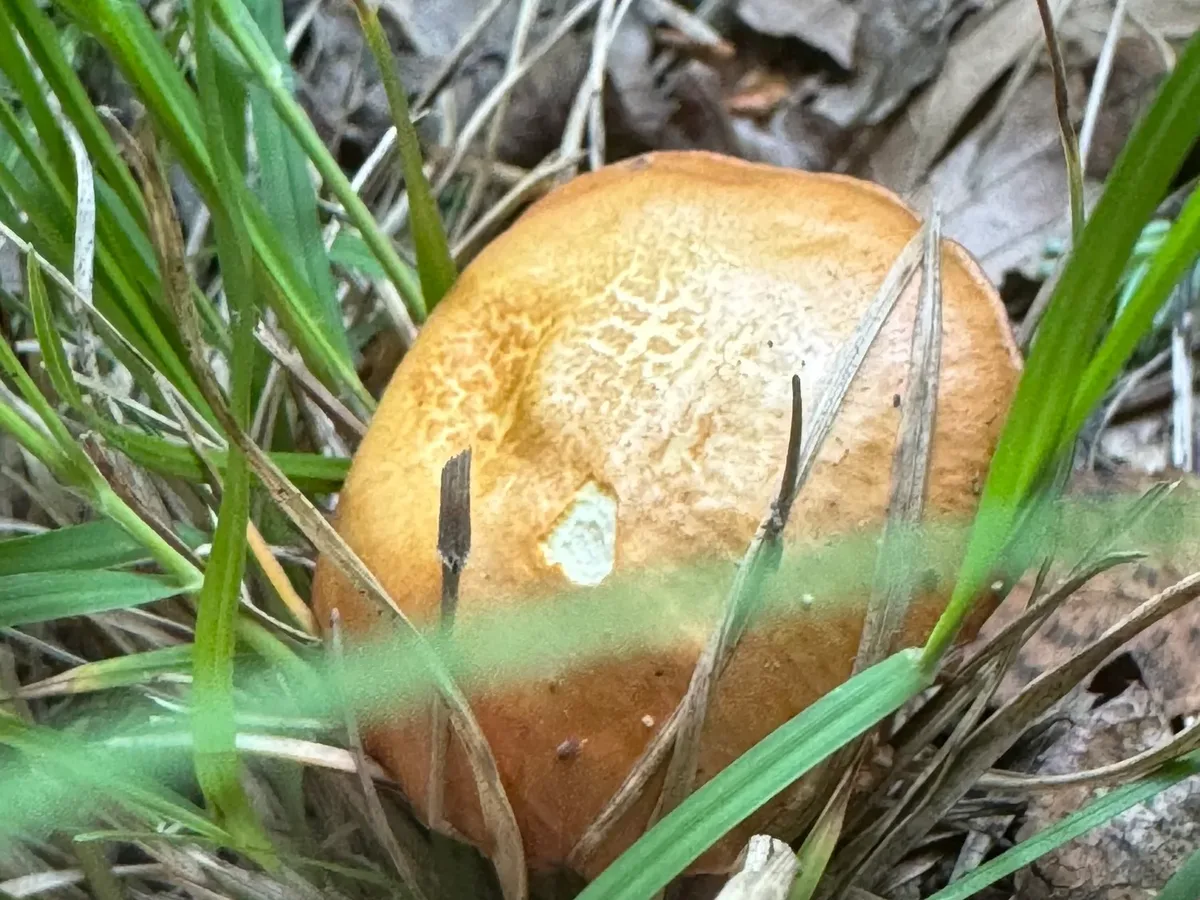 Garrett Taylor (CC0)
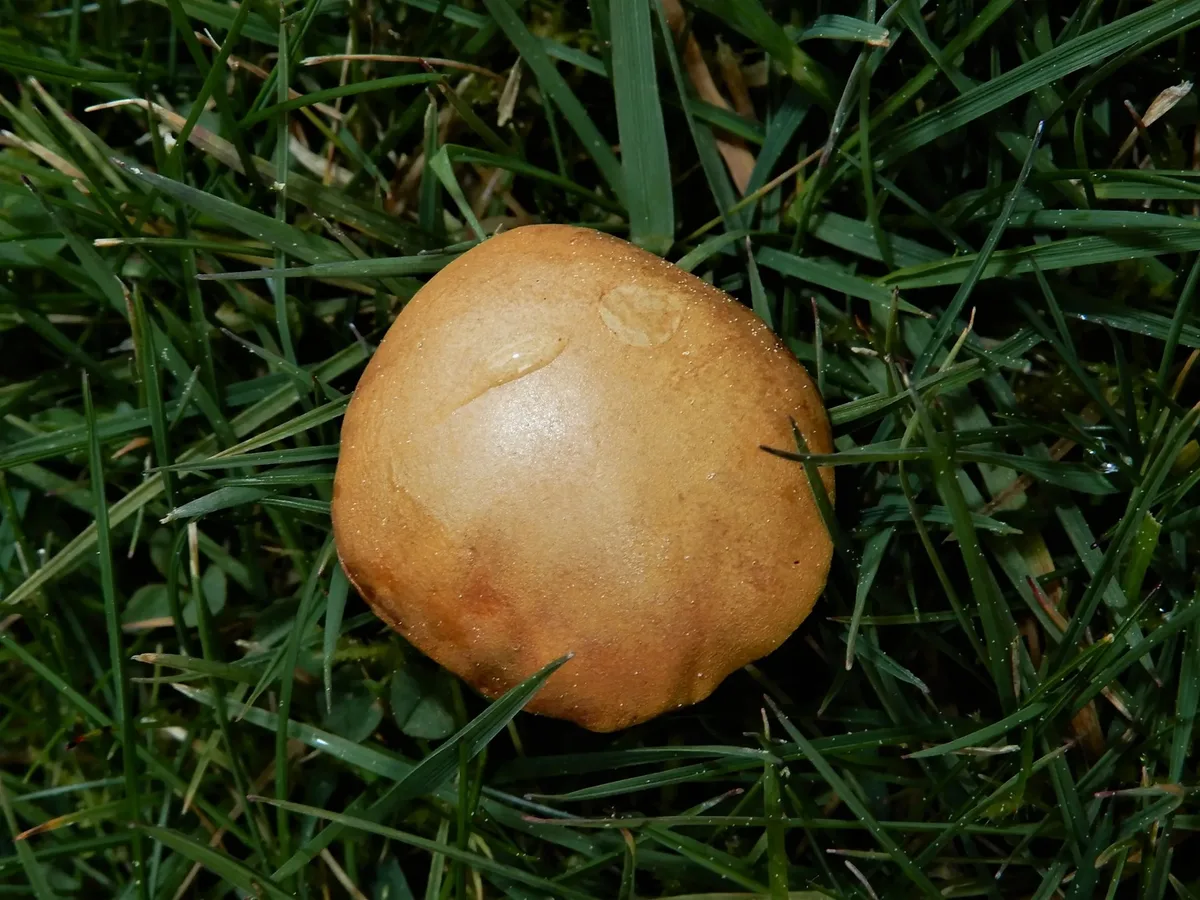 © Grey Smith (CC BY 4.0)
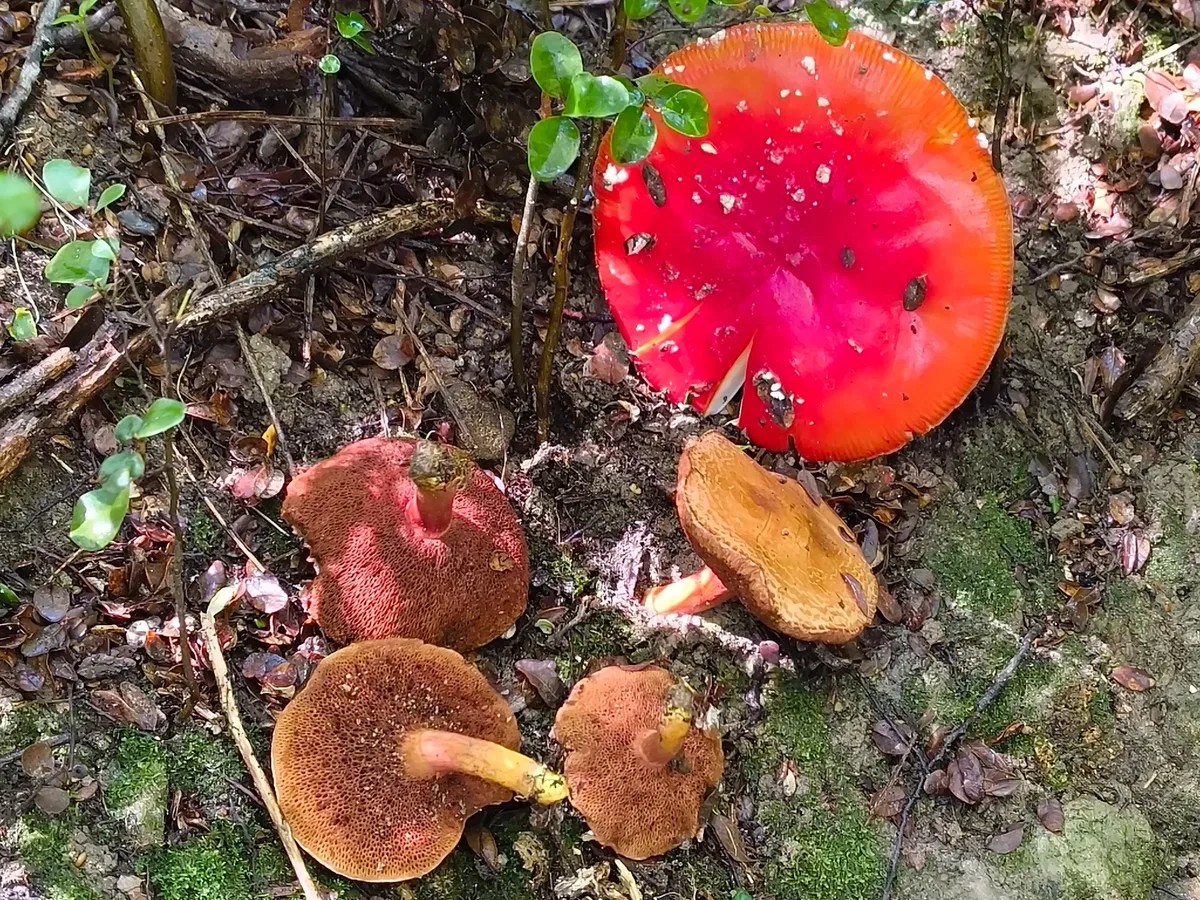 © Zac (CC BY)
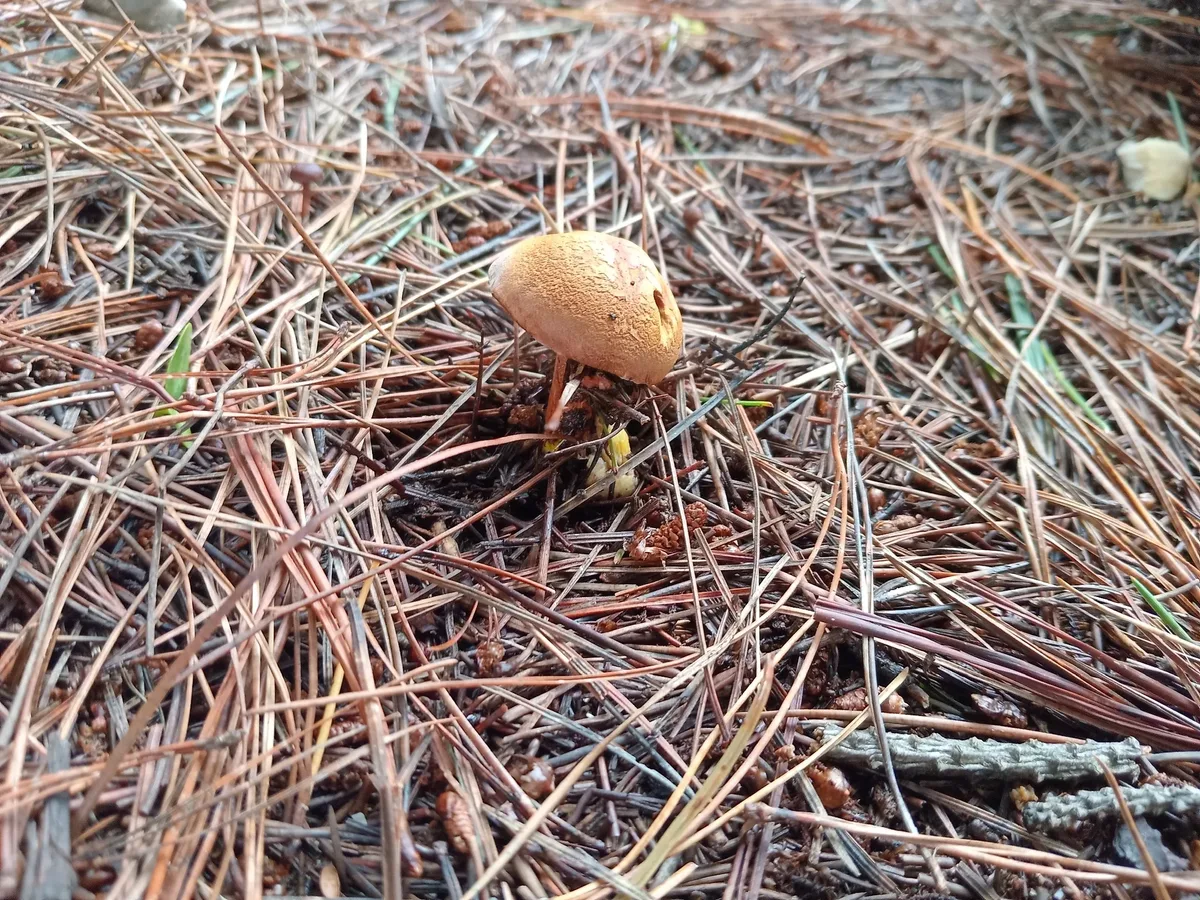 © Oscar Dennison (CC BY)
 © Oscar Dennison (CC BY)
 © Oscar Dennison (CC BY)
 © Oscar Dennison (CC BY)
 © kiwialli (CC BY)
 © John Barkla (CC BY 4.0)Garrett Taylor (CC0)© Grey Smith (CC BY 4.0)
Edible only with the right preparation - or safe for some people but not others. Learn the caveats first.
Never eat a mushroom you are not 100% sure of - check the look-alikes below, and always cook wild mushrooms.
How to recognise it
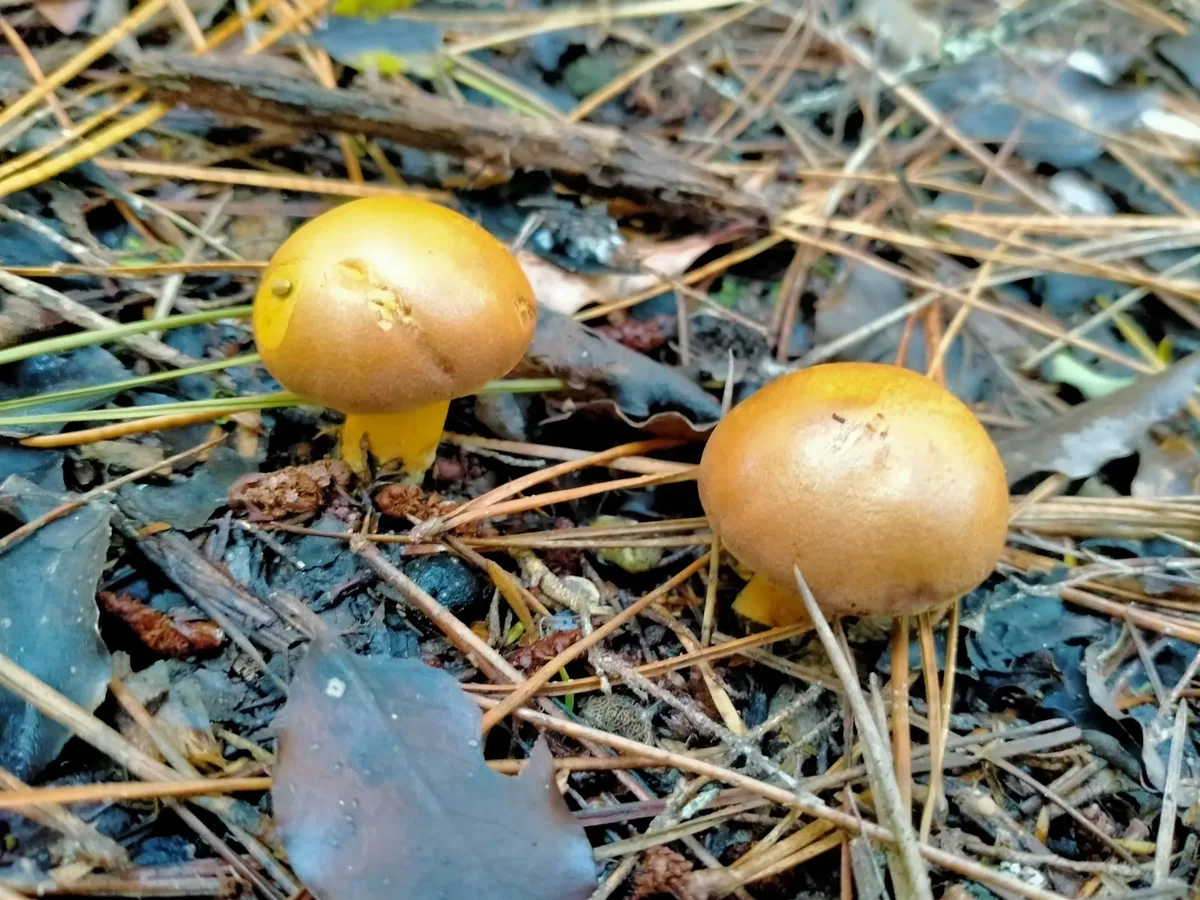
The peppery bolete is a small, subtly coloured mushroom that rewards close inspection.
Cap
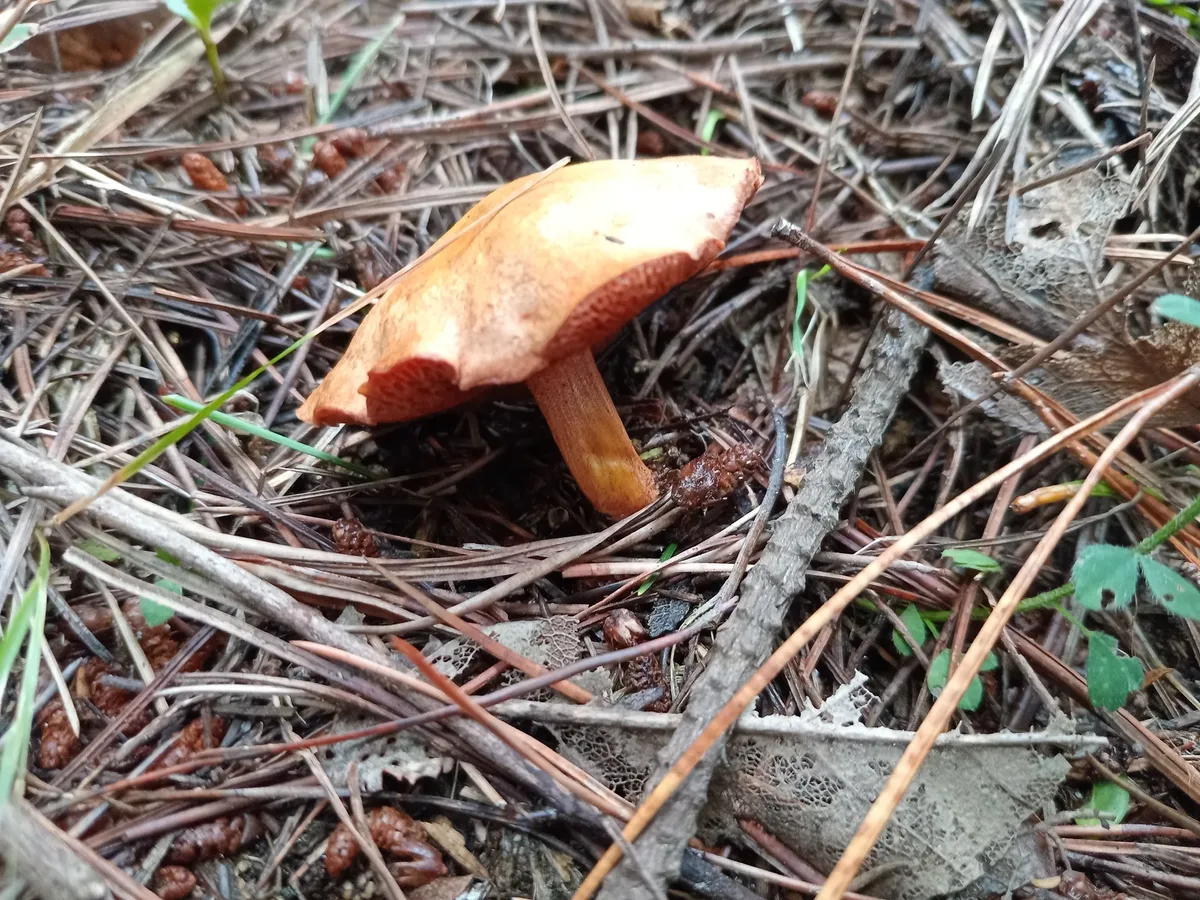
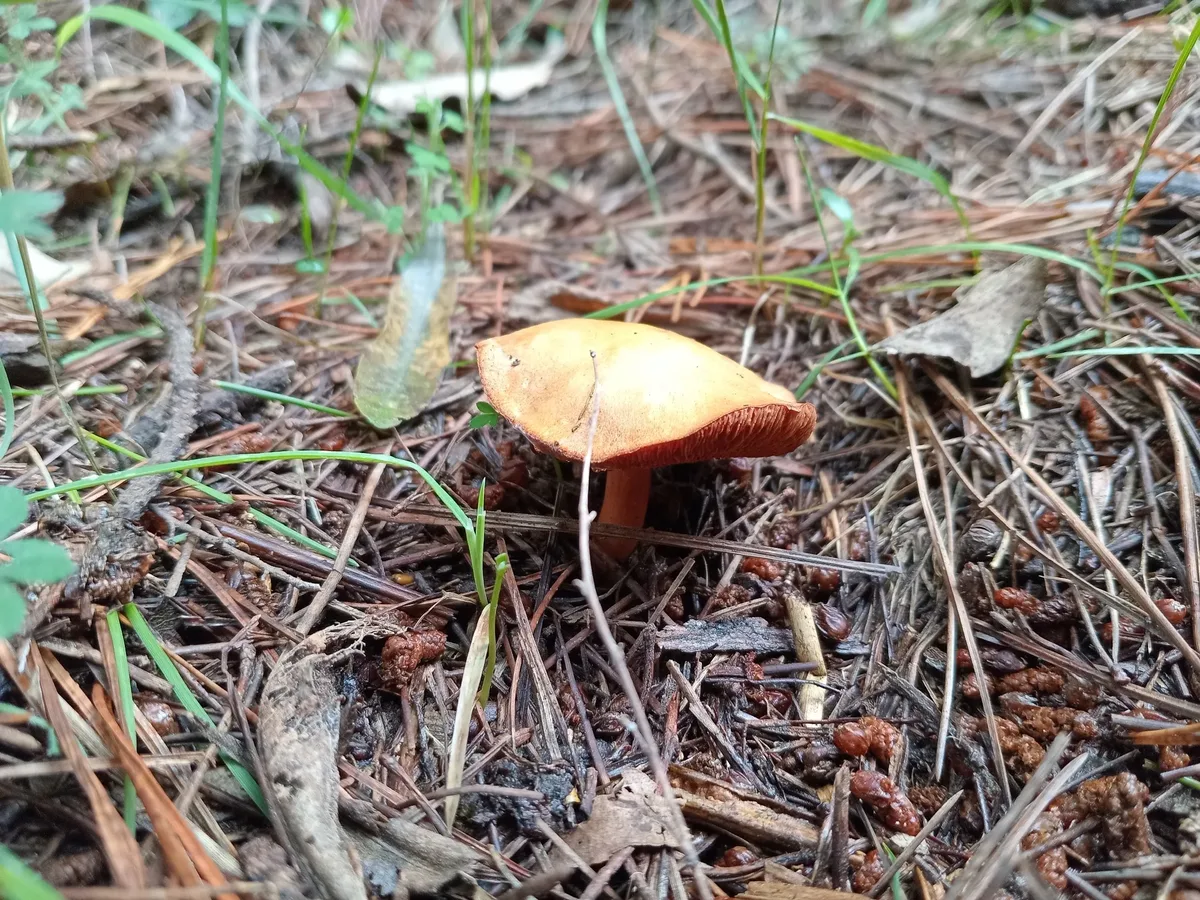
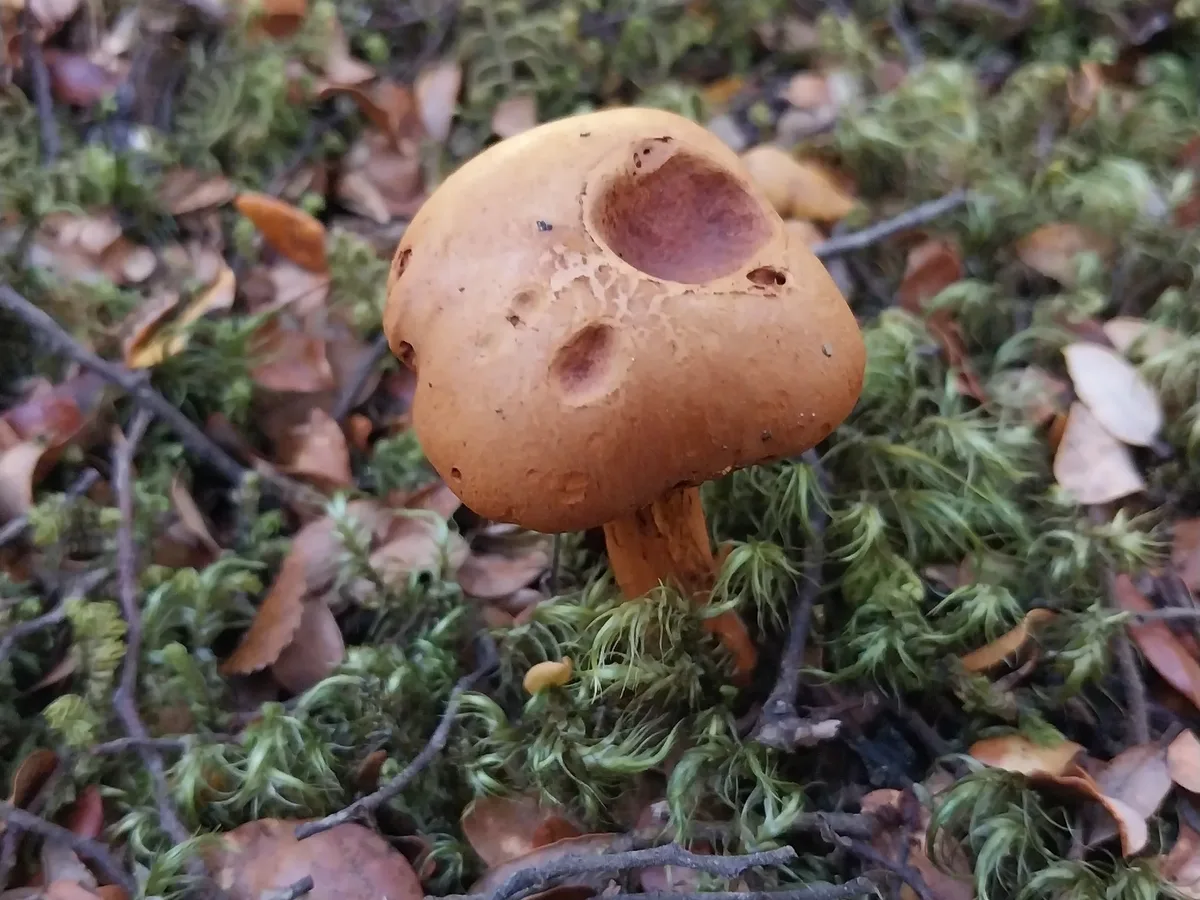
The cap (2-7 cm) is convex at first, flattening with age. Its surface is dry, smooth, and an even cinnamon to chestnut-brown or brick-red - often the same rich brown across cap, pores, and stem, giving the whole fruitbody a uniform warm-russet tone.
Pores
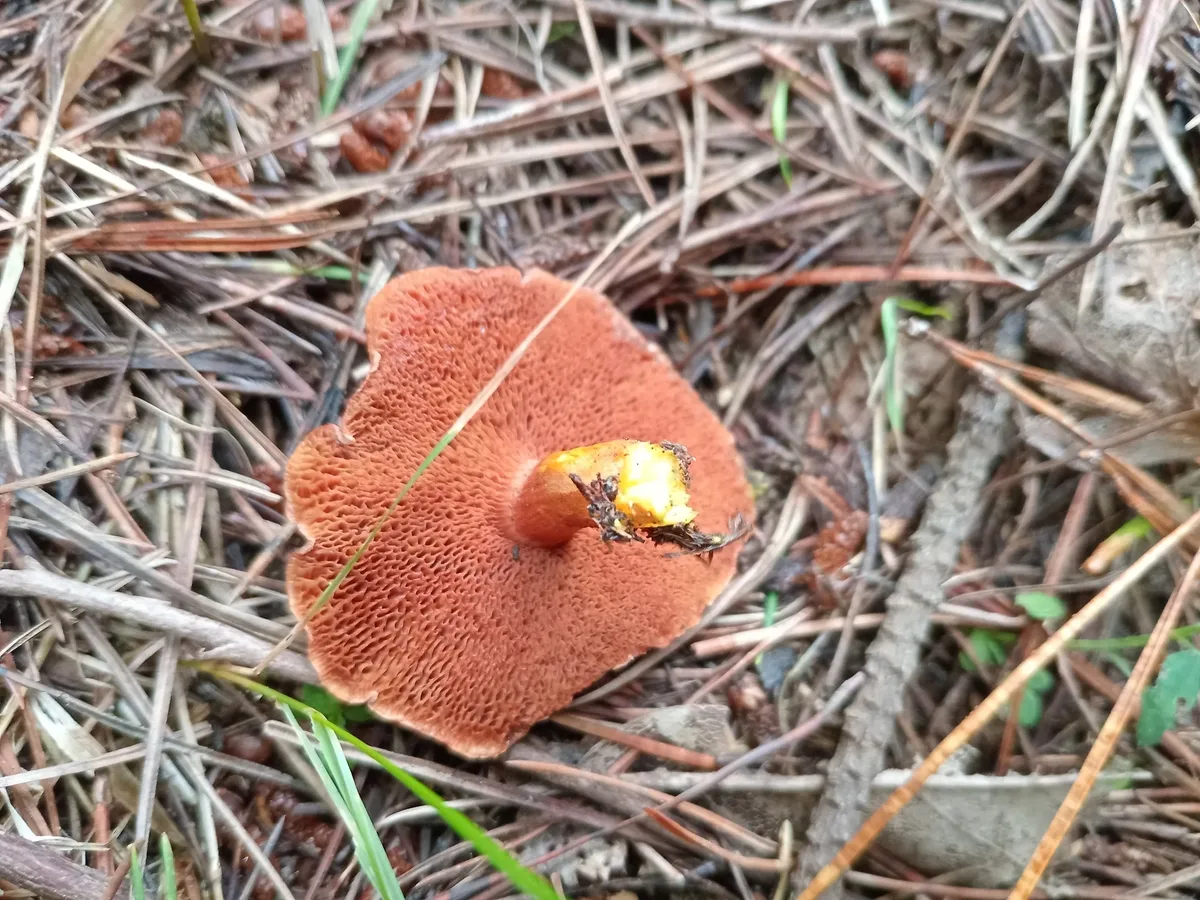
The pore surface is the most striking feature: the pores are small (1-2/mm), angular, and coloured a vivid rusty-red to blood-red, far richer than those of most other small boletes in the same habitat. The tubes themselves are cinnamon-coloured and 5-10 mm deep.
Stem
The stem is slender and proportionally long (3-7 cm × 0.5-1.5 cm), cylindrical, fibrous-striate, and generally concolorous with the cap or slightly paler.
Crucially, the base of the stem is almost always suffused chrome-yellow or lemon-yellow, and threads of bright yellow mycelium extend from it into the substrate.
Flesh
Cut the fruitbody: the flesh is pale to lemon-yellow throughout, deepening to chrome-yellow in the stem base. It does not blue.
Smell & taste
Touch the flesh to your tongue: the burning, peppery heat that follows within seconds is unmistakable and is the species' most reliable field character.
The spore print is cinnamon-brown.
Where & when it grows
Habitat
Chalciporus piperatus is an obligate ectomycorrhizal associate of pines, with Scots pine (Pinus sylvestris) its primary partner across most of its European and boreal range.
It favours acidic, sandy, or peaty soils in open pine woodland, heathland-with-pines, and mossy boreal forest.
Look for it at the base of older pine trunks, emerging through bilberry (Vaccinium myrtillus) carpets, heather (Calluna), or Pleurozium moss.
It is a consistent companion of Amanita muscaria and Suillus species, and is most productive in humid years following summer rain.
Occasional records exist under spruce and fir, but pine associations are strongly dominant.
It tolerates montane conditions and is found up to the subalpine pine limit in the Alps and Carpathians.
When
The main fruiting season runs from late July or August to November, peaking in late August through October across central and northern Europe.
In Scandinavia and the boreal zone it peaks in August-September; in maritime western Europe the season extends further into October.
Individual flushes track rainfall events: roughly one to three weeks after 15-25 mm of rain over warm soil (10-18 °C at 5 cm depth) is a reliable trigger.
It is among the later boletes to fruit in autumn and can be found into early November during mild years.
How it grows
Solitary or in small scattered groups of two to five fruitbodies, rarely gregarious.
Emerges directly from mineral soil or moss, often very close to the base of pine trunks, sometimes half-buried under humus or duff.
Growth is relatively slow compared with Suillus; the cap expands over several days.
Because the fruitbody is small and its colours blend with the forest floor, it is easily overlooked unless the vivid red pore surface catches the eye.
Fruiting conditions
Responds to late summer and autumn rain events on well-drained acidic soils; soil temperature window 10-18 °C at 5 cm depth is key. Lag after rainfall is typically 7-21 days. Drought suppresses fruiting completely.
Look-alikes
The main confusion species are other small, reddish-pored boletes in pine woodland.
Rubroboletus satanas (Satan's bolete) has red pores and can overlap in pine-oak or mixed woodland on calcareous soils. It is deadly poisonous.
Adult specimens are much larger (cap 8-30 cm) with a distinctly swollen barrel-shaped stem bearing a red network and a pale grey-white cap, and the flesh blues intensely when cut.
However, YOUNG specimens of satanas can be 5-8 cm and less obviously swollen - always check for immediate blueing of the cut flesh and the red stem network before concluding safety.
If a red-pored bolete blues at all when cut, treat it as satanas and discard it.
Other confusion species:
- Hortiboletus rubellus (ruby bolete) is similarly small and reddish but has a crimson-red to brick-red cap, blueing flesh (weakly but visibly), and less intensely burning taste; its pores are yellow-red to orange-red rather than the deeper rusty-red of C. piperatus, and it lacks the yellow stem-base mycelium.
- Xerocomellus chrysenteron (red-cracking bolete) has a cracking cap that reveals red flesh beneath, yellow flesh that blues faintly, and yellow pores that do not approach the rich rusty-red of C. piperatus.
- Suillus species share the pine mycorrhizal habitat but most are viscid, lack the burning taste, and have larger pores.
The key safety rule: if any bolete with red pores shows blueing of the flesh when cut, do not eat it.
Deadly poisonous. Adults are much larger (cap to 30 cm) with a swollen barrel-shaped stem bearing a red network and a pale grey-white cap. YOUNG specimens can be 5-8 cm with less obvious swelling - always test for blueing: cut the flesh and watch for immediate blue-green staining. If the flesh blues at all, discard immediately. C. piperatus flesh does not blue, and its cap is dull cinnamon-brown (not whitish-grey). Rubroboletus satanas favours calcareous soils under oak or mixed woodland, not purely pine heathland. Never eat any red-pored bolete that blues on cutting.
Tylopilus felleus shares bitter taste but has pink pores, a white to buff cap, a prominent reticulate stem, and non-acrid flesh that does not burn; it grows under both pines and broadleaves.
Suillus bovinus has a greasy to viscid cap surface, compound angular pores (maze-like), pale pinkish-buff to ochre pores, and lacks burning taste. Shares pine habitat but easily distinguished by viscid cap and large compound pores.
Cap cuticle cracks to reveal red sub-cuticle, yellow pores (not rusty-red), flesh yellows or blues faintly; lacks burning taste and yellow stem-base mycelium.
Ruby bolete has a vivid crimson to brick-red cap (not dull cinnamon-brown), flesh that blues weakly but visibly when cut, and a less intensely burning taste. Pores are orange-red to red, but slightly yellower than the rusty blood-red of C. piperatus. Lacks the chrome-yellow stem-base mycelium.
In the kitchen
Picking & cleaning
Twist gently at the base and check the yellow mycelium cords.
The small size and acrid taste make it unsuitable as a main edible, so selective picking for blending or drying as a spice is more practical than bulk harvesting.
Carry in an open basket. Clean in the field by brushing; the flesh is firm and does not need washing.
Cooking
In traditional Central and Eastern European foraging, small amounts of dried peppery bolete have been ground and used as a pepper substitute or spice in soups and stews - a practice recorded in Poland and the Czech Republic.
The burning compounds are volatile and largely disappear during drying and cooking, but even then the quantity must be minimal.
It is not a food fungus in the conventional sense and is best treated as a botanical curiosity.
If you choose to experiment:
- 1Dry thoroughly at low heat.
- 2Grind sparingly into a spice blend.
- 3Use no more than a pinch per serving.
Good to know
Chalciporus piperatus is not poisonous in the classical sense, but its extremely acrid taste makes it unpleasant and even distressing if consumed raw or in quantity.
Historical accounts of mild gastrointestinal upset after ingestion are noted in some European mycological literature, likely due to capsaicin-like irritant compounds.
The species should be regarded as inedible for practical purposes unless used in very small amounts as a dried spice. There are no documented fatalities.
The yellow-based stem and burning taste together provide a reliable identity check.
IMPORTANT: This species grows alongside Rubroboletus satanas (Satan's bolete) in some habitats - a deadly red-pored bolete.
Always verify that the flesh does NOT blue when cut before eating any red-pored bolete. Never eat any bolete raw.
A reference guide - never an edibility guarantee. When in doubt, leave it out.