Trumpet Chanterelle
Cantharellus tubaeformissyn. Craterellus tubaeformis, Cantharellus infundibuliformis, Merulius tubaeformis, Cantharellus tubiformis
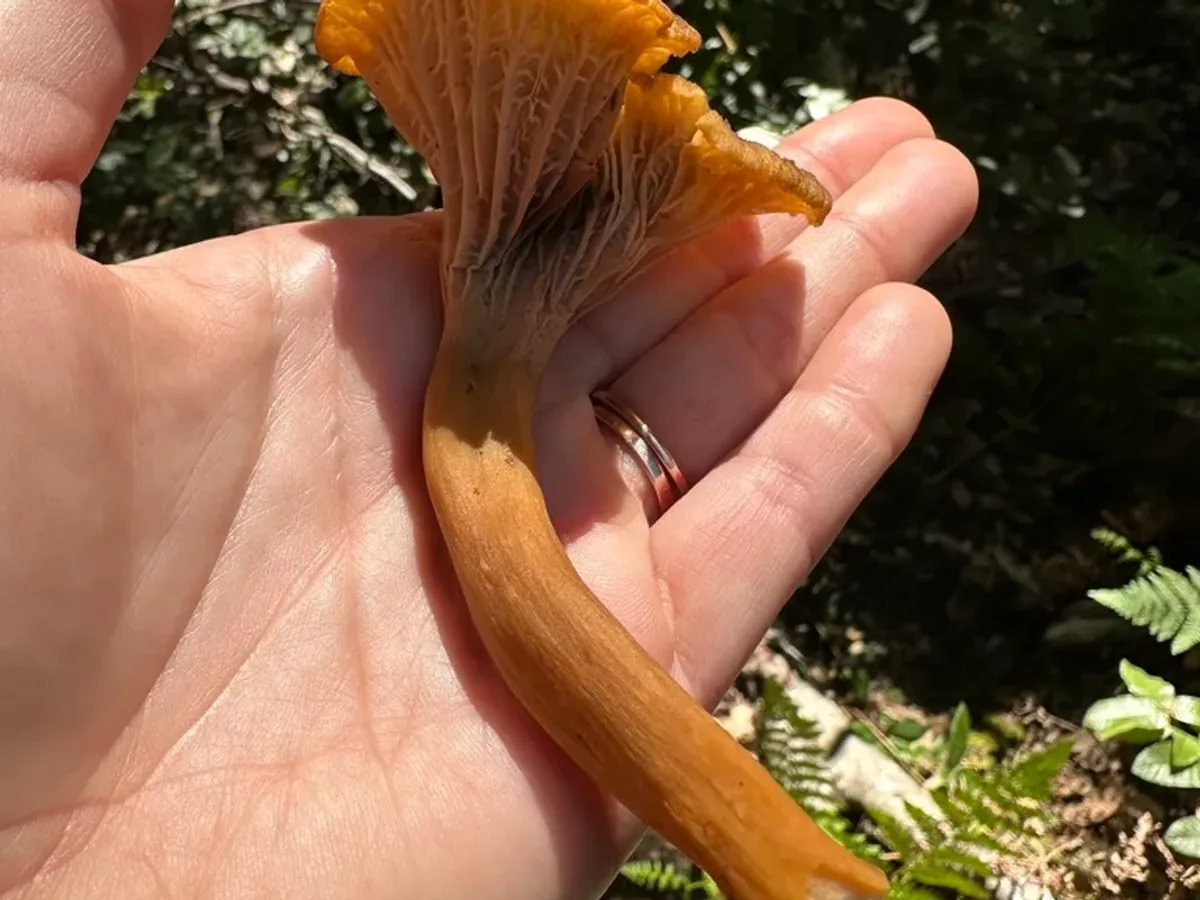 no rights reserved
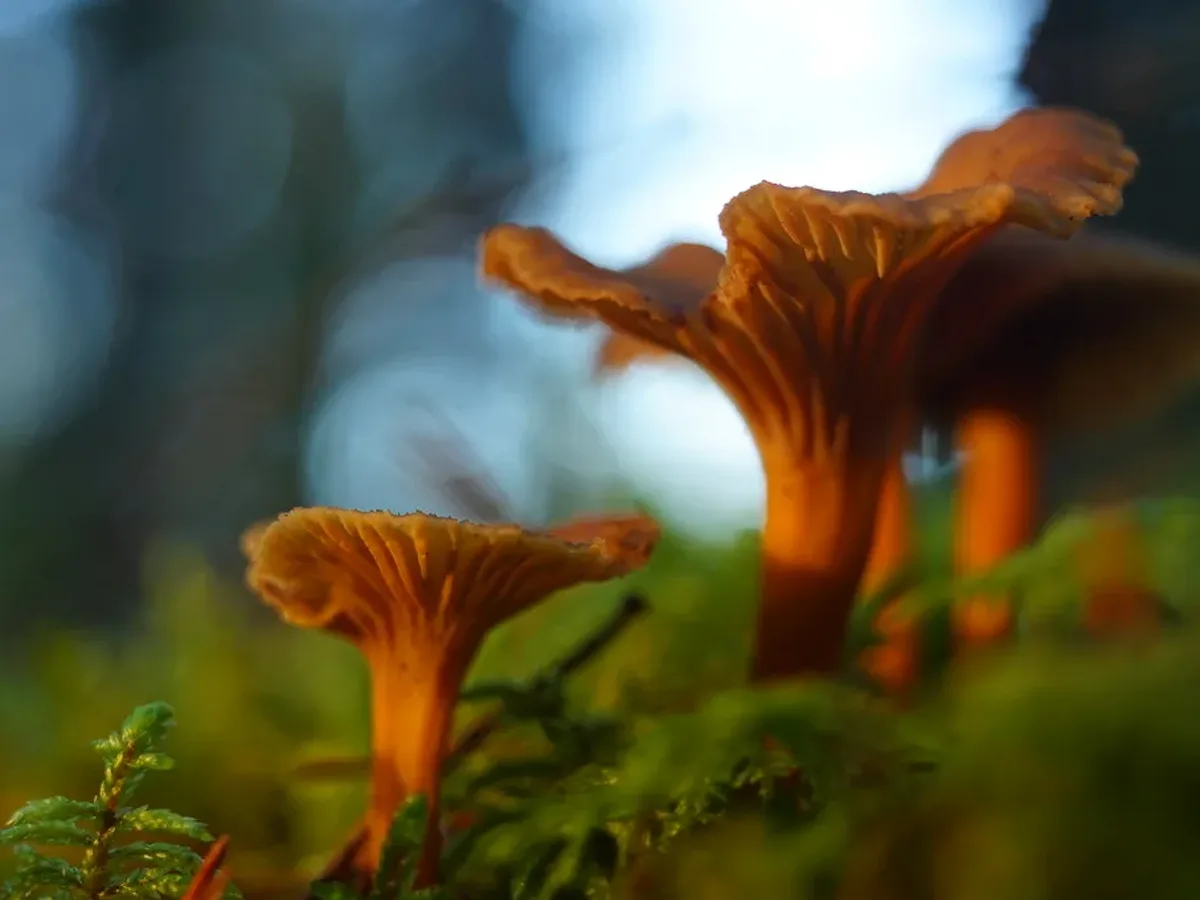 © Tero Karppinen (CC BY 2.0)
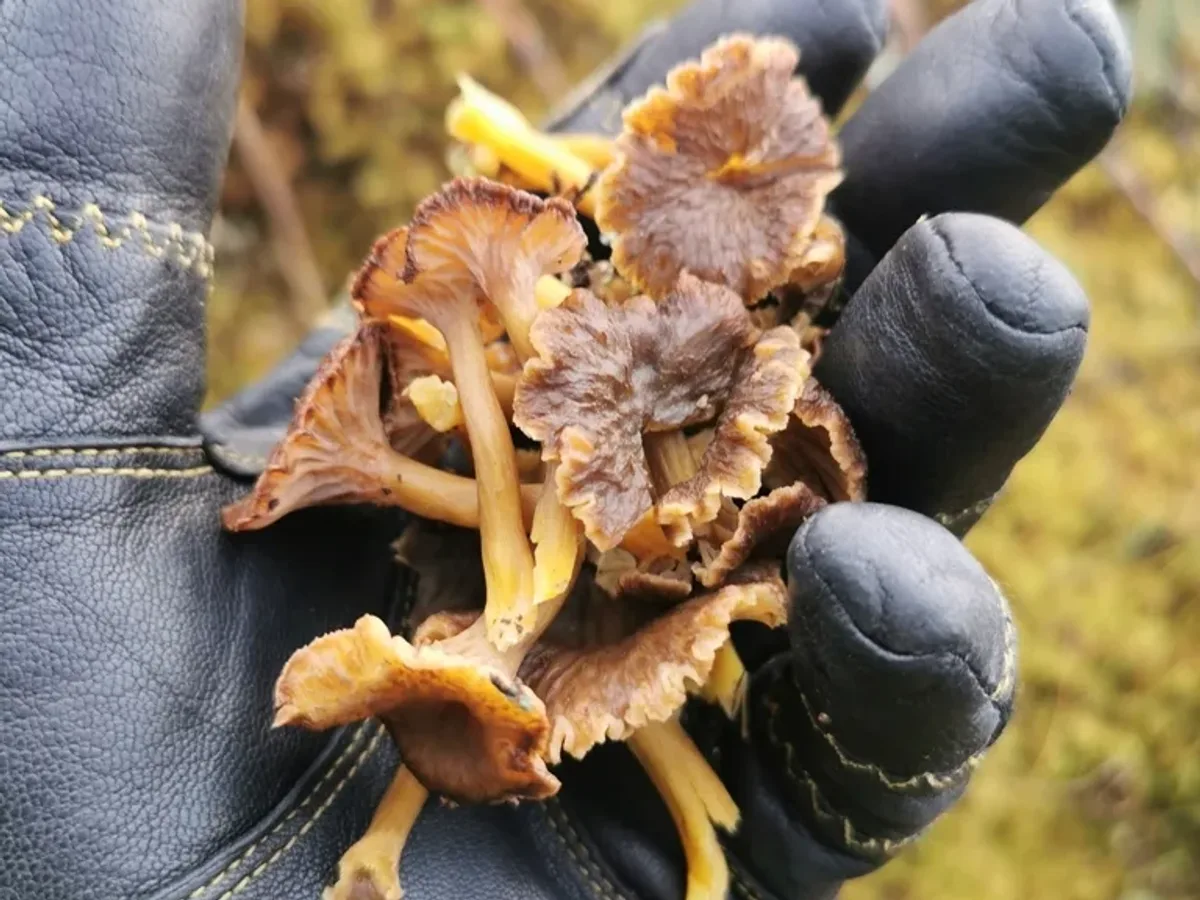 (c) Thor-Rune Hansen, some rights reserved (CC BY-SA)
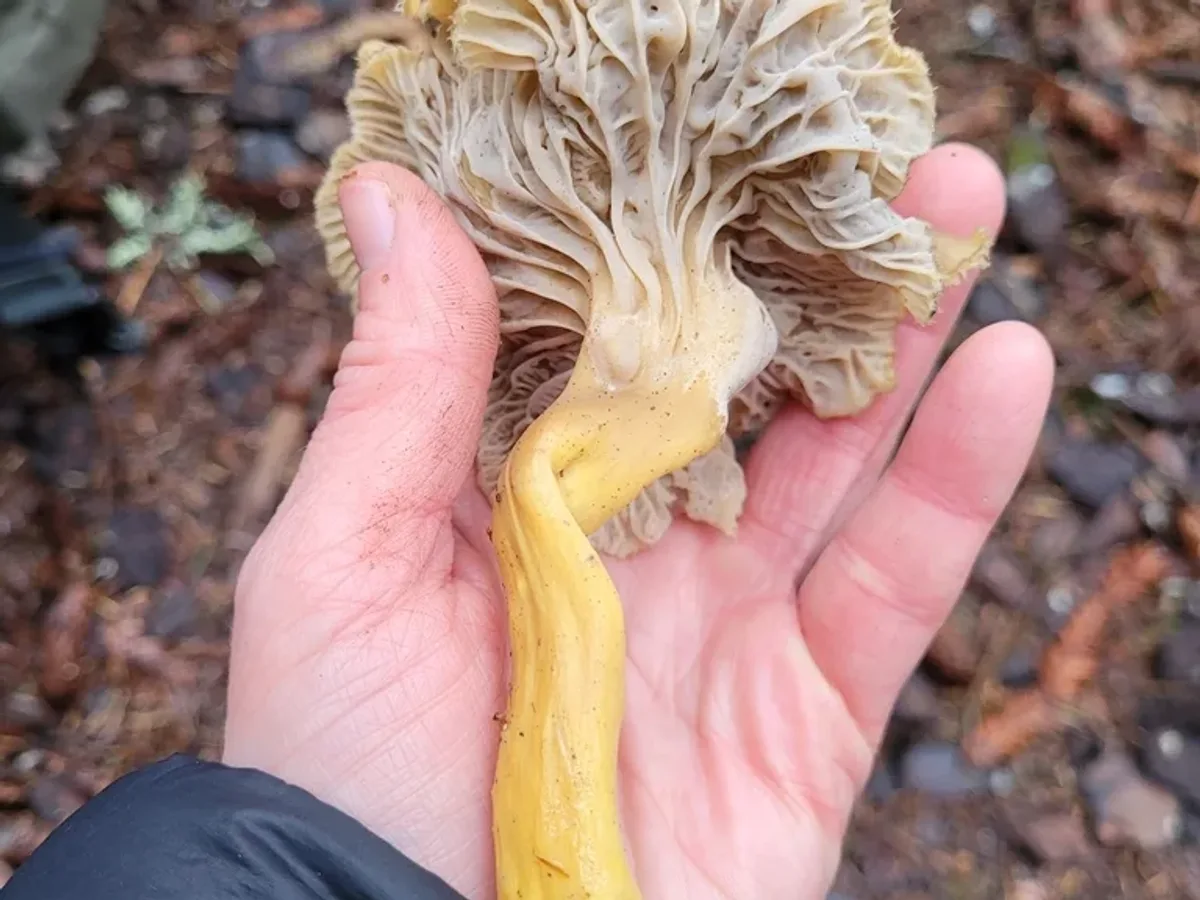 (c) Mandy Hackney, some rights reserved (CC BY)
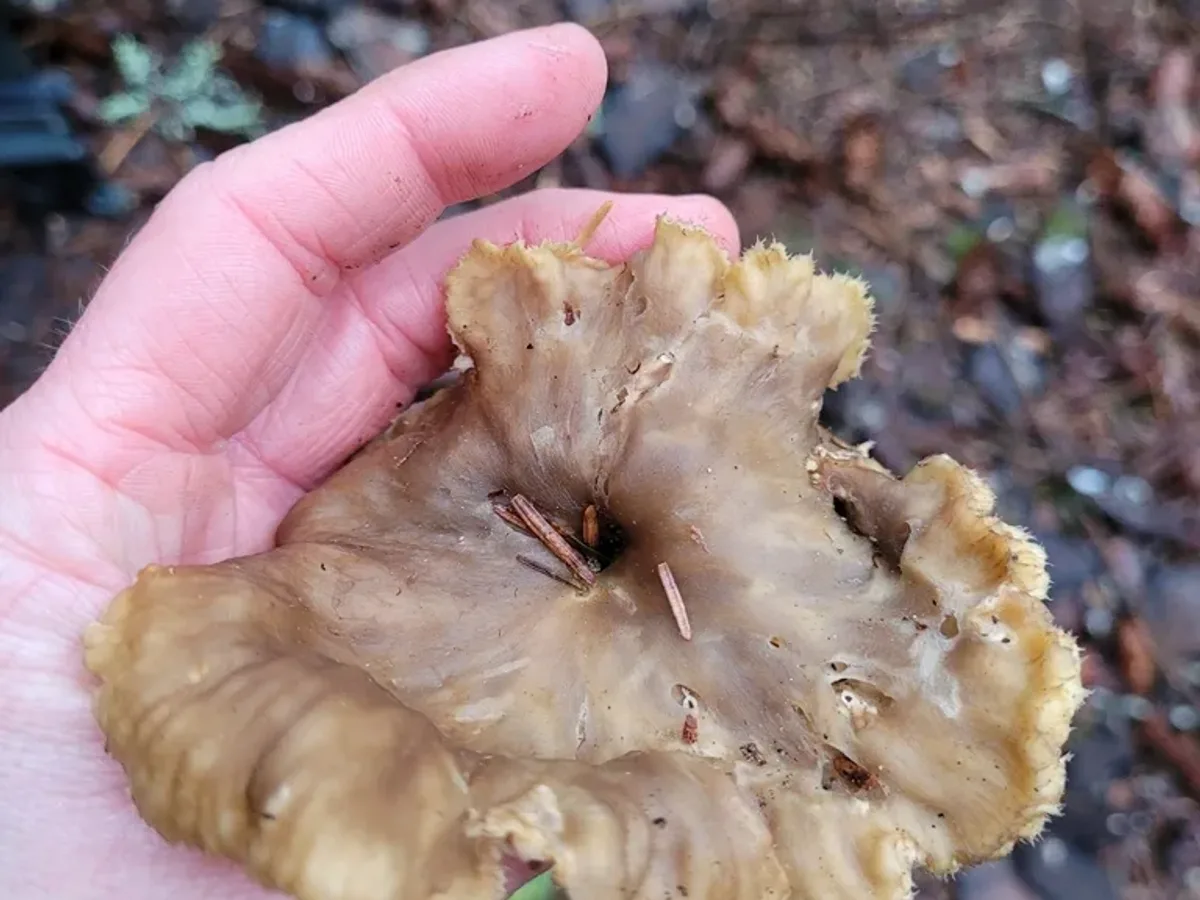 (c) Mandy Hackney, some rights reserved (CC BY)
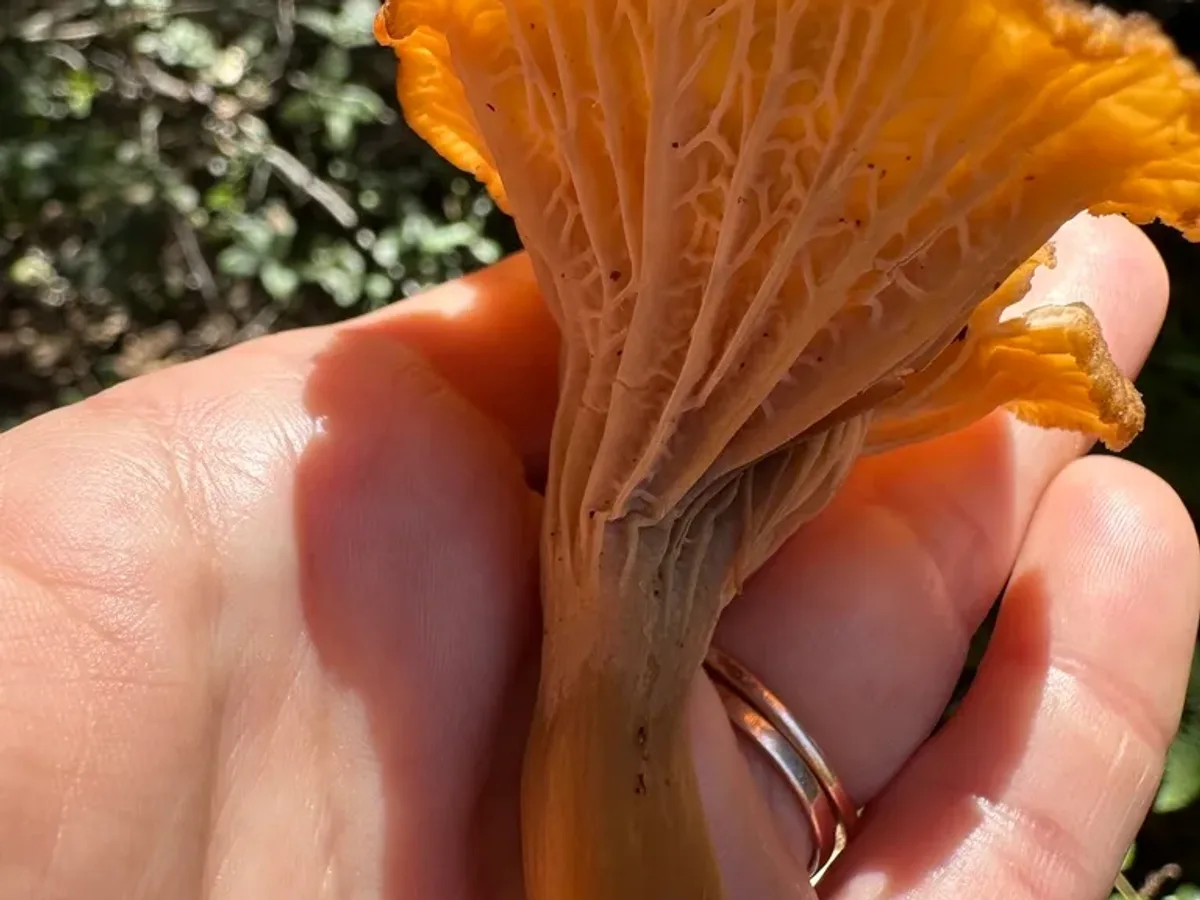 no rights reservedno rights reserved© Tero Karppinen (CC BY 2.0)
One of the best mushrooms you can bring home - once you are certain of the identification.
How to recognise it
The trumpet chanterelle is a small, delicate, two-toned mushroom that reads as a dark funnel perched on a glowing yellow stalk.
Cap
The cap is only 1.5-6 cm wide, thin and brittle, starting convex but quickly hollowing into a deep funnel whose centre is perforated right down into the hollow stem, so light can pass through.
Its surface is dry and minutely felted to slightly scaly, coloured yellow-brown, grey-brown to dark umber, often mottled, with a wavy, lobed, eventually split margin.
Gills / Pores
Crucially, the underside has no true bladed gills: instead there are shallow, blunt, repeatedly forking and interconnecting vein-like wrinkles that run a long way down the stem (decurrent false gills).
These veins are pale grey, grey-blue, lilac-grey or buff and frequently carry a faint frosted bloom.
Stem
The stem is the clincher: 3-8 cm tall, slender, hollow, tapering downward and a vivid egg-yellow to chrome-yellow that earns the names yellowfoot and yellowlegs.
Spore print is white to pale cream.
Modern field guides increasingly list it as Craterellus tubaeformis, the current accepted name; the older Cantharellus tubaeformis is the same mushroom.
Where & when it grows
Habitat
Look in cool, damp, mossy conifer and mixed forest on acidic, humus-rich ground. It is mycorrhizal, living in partnership with the roots of spruce, pine, fir and sometimes beech, birch and oak.
The best hunting grounds are:
- thick beds of feather moss and Sphagnum
- needle litter over buried rotting wood
- shaded banks
- the moist edges of ditches
- the soft mossy lips of forest paths
It shuns limestone soils.
Because it is small and dark-capped it hides easily against the forest floor; once you spot one, get down low and scan, as the troops are often enormous and the bright yellow stems give the rest away.
When
When the golden chanterelles of summer begin to fade, the trumpet chanterelle takes over.
It starts appearing around August, builds steadily to a strong peak from late September through November, and keeps going until heavy frosts shut things down.
In mild, oceanic climates and further south it can keep producing into December and occasionally January.
It tolerates the light frosts that finish off most other edibles, reliably carrying the foraging season deep into the cold months - reason enough to learn it well.
How it grows
Trumpet chanterelles are gregarious, almost never solitary. They erupt in scattered to densely packed troops, sometimes hundreds of fruitbodies threading through a single moss carpet or tracing a buried decaying root.
Below the surface, the mycelium that produces all this may have been threaded through the same patch of forest soil for many years, quietly tending its partnership with the tree roots - the fruitbodies you see are just its seasonal expression.
Fruitbodies last well, shrug off cool nights and keep emerging in successive flushes through a moist autumn.
The same productive patches reappear in the same spots year after year, making them well worth logging in a spot journal.
Fruiting conditions
A cool, moisture-loving late-season fruiter: needs sustained dampness in the moss layer and triggers on soaking autumn rains as soil temperatures fall through the 5-15 C band. Tolerates light frost and continues fruiting in cooler conditions than the golden chanterelle, with flushes appearing roughly one to two weeks after good rain.
Look-alikes
The trumpet chanterelle is one of the safer chanterelles to learn, but a few look-alikes deserve attention.
- The False Chanterelle (Hygrophoropsis aurantiaca) has true, thin, soft, repeatedly forking orange gills (not blunt veins) and a uniformly orange-brown colour without the bright yellow hollow stem. Its edibility is disputed and it causes gastrointestinal upset in some people, so it is best avoided, but it is not dangerous.
- Other Craterellus/Cantharellus such as the ashen chanterelle (Craterellus cinereus, formerly Cantharellus cinereus) and horn of plenty (Craterellus cornucopioides) are darker, greyer, with a darker non-yellow stem, and are equally edible.
- The most important caution is the Jack-o'-lantern (Omphalotus species), which has true sharp gills, grows in clumps on wood and is seriously toxic (severe vomiting and diarrhoea, rarely life-threatening through dehydration), but it is large, vivid orange and chiefly a warm-climate species, so confusion is unlikely for the careful picker.
No deadly look-alike has the trumpet chanterelle's exact combination of a small perforated dark funnel, blunt forking grey veins and a hollow yellow stem.
Darker grey to blackish with a grey, non-yellow stem and greyish veined hymenium; edible and a close relative (formerly Cantharellus cinereus), so a mix-up is harmless.
Has true, soft, thin, repeatedly forking orange gills (not blunt veins), a uniform orange to orange-brown colour throughout, and lacks the bright yellow hollow stem and dark perforated funnel cap. Edibility is disputed; it causes gastrointestinal upset in some people, so best avoided, but it is not dangerous.
Larger, solid (not hollow), uniformly egg-yellow with thick blunt decurrent ridges and a solid stem; a prime edible, so confusion is harmless.
Larger, trumpet-shaped, dark grey to black with a smooth to faintly wrinkled (almost veinless) outer surface and no bright yellow stem; an excellent edible, so confusion poses no risk.
Toxic (muscarine and illudin; causes severe vomiting and diarrhoea, generally not fatal but can be serious in children/elderly via dehydration). Has true thin sharp non-forking gills (often glowing faintly in the dark), grows in dense clumps directly on wood or buried roots, is large and a vivid uniform orange, and lacks the small dark perforated funnel and blunt veins. Warm-climate species; unlikely to grow with the trumpet chanterelle in cool mossy conifer woods.
In the kitchen
Picking & cleaning
Pick by pinching or cutting the stem near the moss. Because the cap is small you will gather many to fill a basket, so harvest into an open container that lets spores fall and debris drop through.
They are remarkably clean growers but moss and needles lodge in the funnel and false gills, so trim and shake in the field.
Take only firm, fresh specimens; the thin flesh dehydrates fast in dry spells and waterlogs in heavy rain. Leave the smallest button stages and any past their best.
This species dries beautifully and keeps its flavour, so surplus is never wasted.
Cooking
An excellent, versatile choice mushroom with a mild, fruity, slightly peppery flavour and pleasant chewy texture that holds up well to cooking.
The thin flesh means it cooks quickly: saute briskly in butter or oil to drive off the water it readily releases, then season.
It shines in cream sauces, omelettes, risotto, soups, on toast, and alongside game, and it pairs naturally with the late-autumn table.
One of the very best mushrooms for drying, as it rehydrates well and concentrates its aroma; it also freezes successfully after a brief dry saute.
Always cook fully; do not eat raw.
Good to know
This is a well-regarded, safe edible with no deadly mimics, but follow standard rules.
Confirm all features together:
- small hollow perforated funnel cap
- blunt forking vein-like (not bladed) false gills
- a bright yellow hollow stem
A white spore print supports the ID.
Avoid mushrooms with true thin sharp gills, clustered growth on wood, or strong unpleasant smells, which point to Hygrophoropsis or toxic Omphalotus instead.
As with all wild mushrooms, eat only thoroughly cooked, try a small portion first to rule out personal intolerance, and never eat raw. Collect from clean, unpolluted woodland away from roadsides.
A reference guide - never an edibility guarantee. When in doubt, leave it out.