Rainbow chanterelle
Cantharellus roseocanussyn. Cantharellus cibarius var. roseocanus
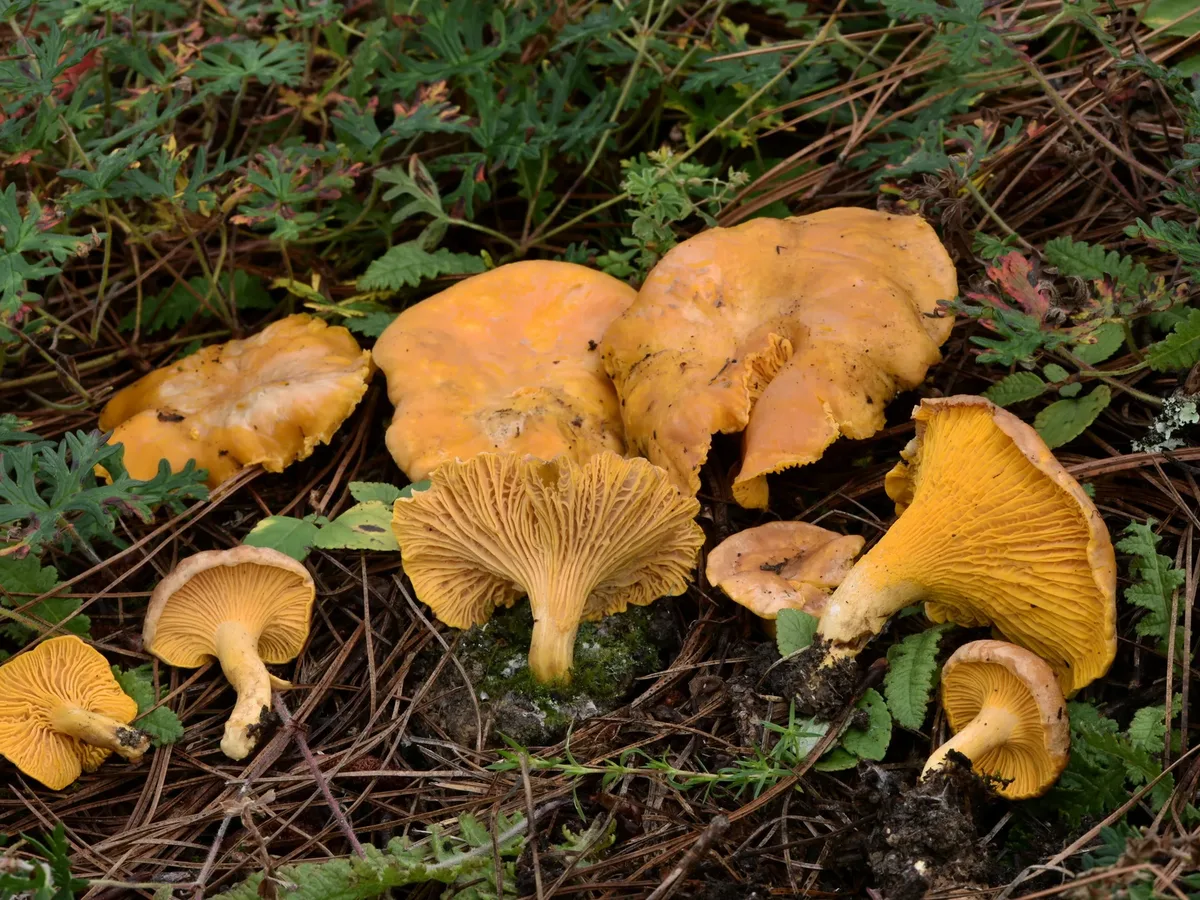 © Alan Rockefeller (CC BY 4.0)
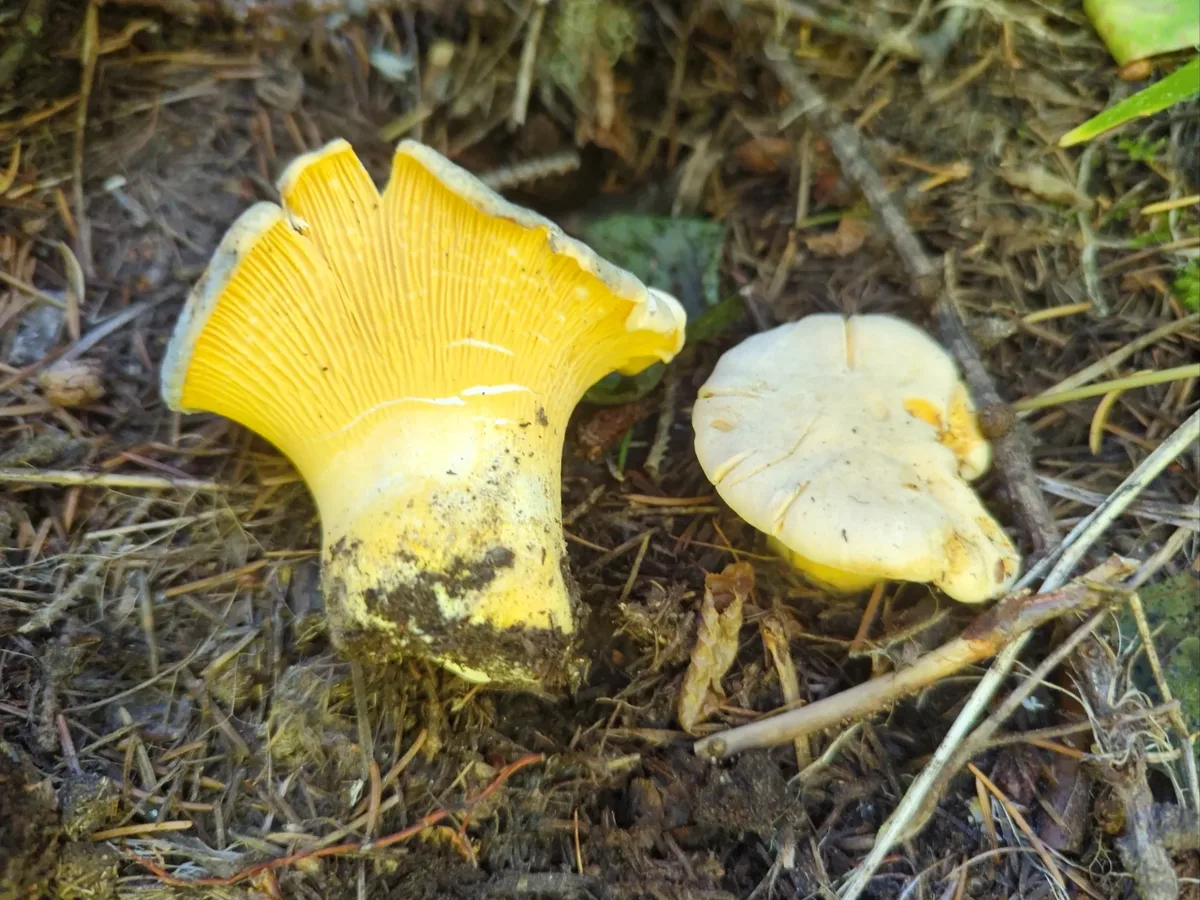 © Alan Rockefeller (CC BY 4.0)
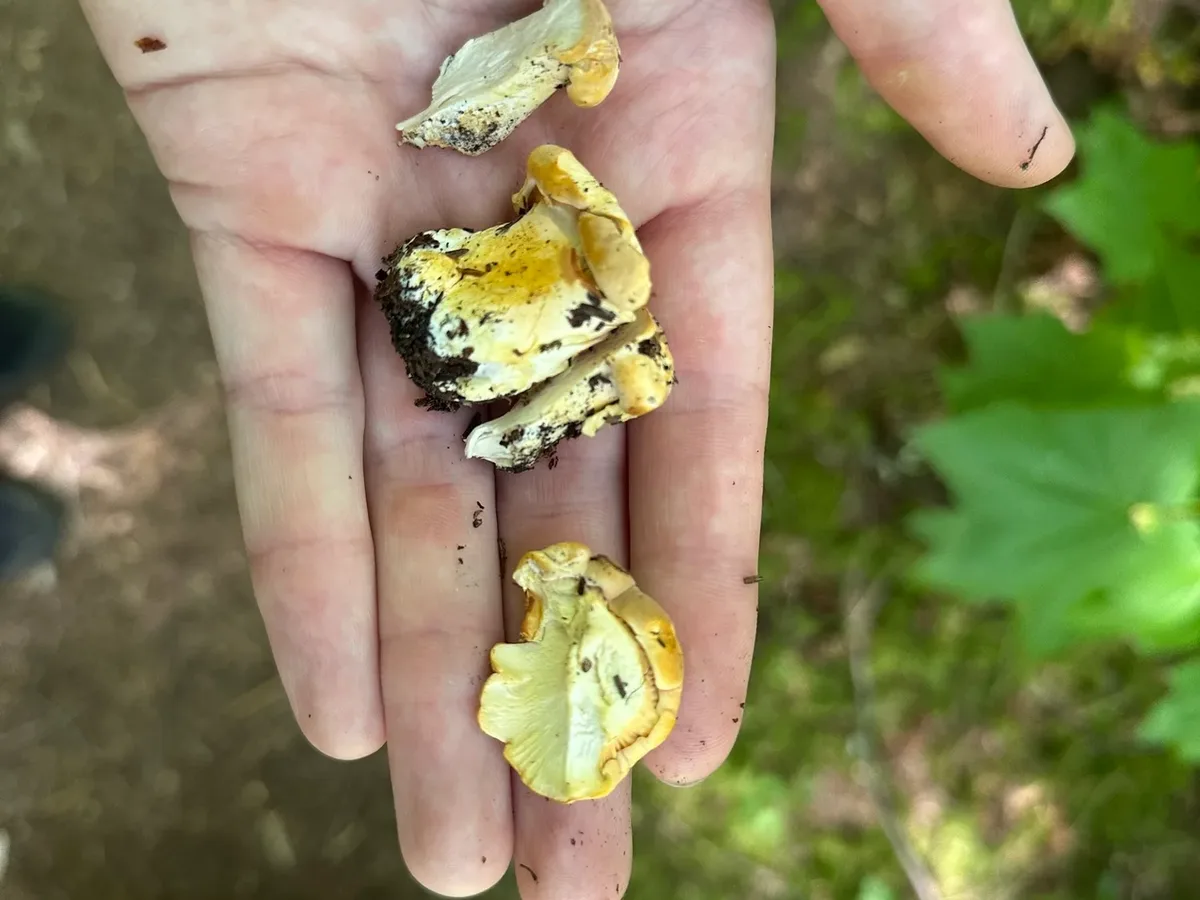 Tristan Lindgren (CC0)
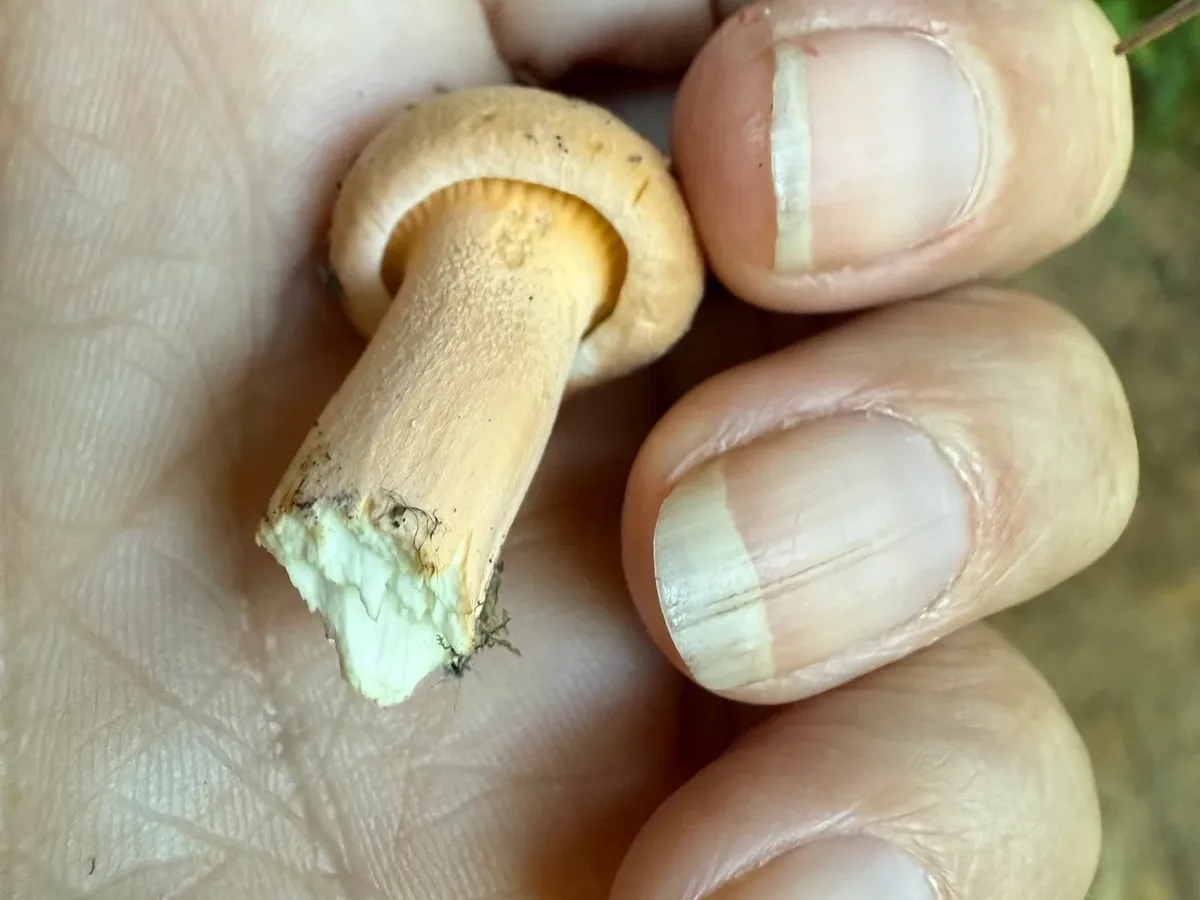 © Tara Severns (CC BY)
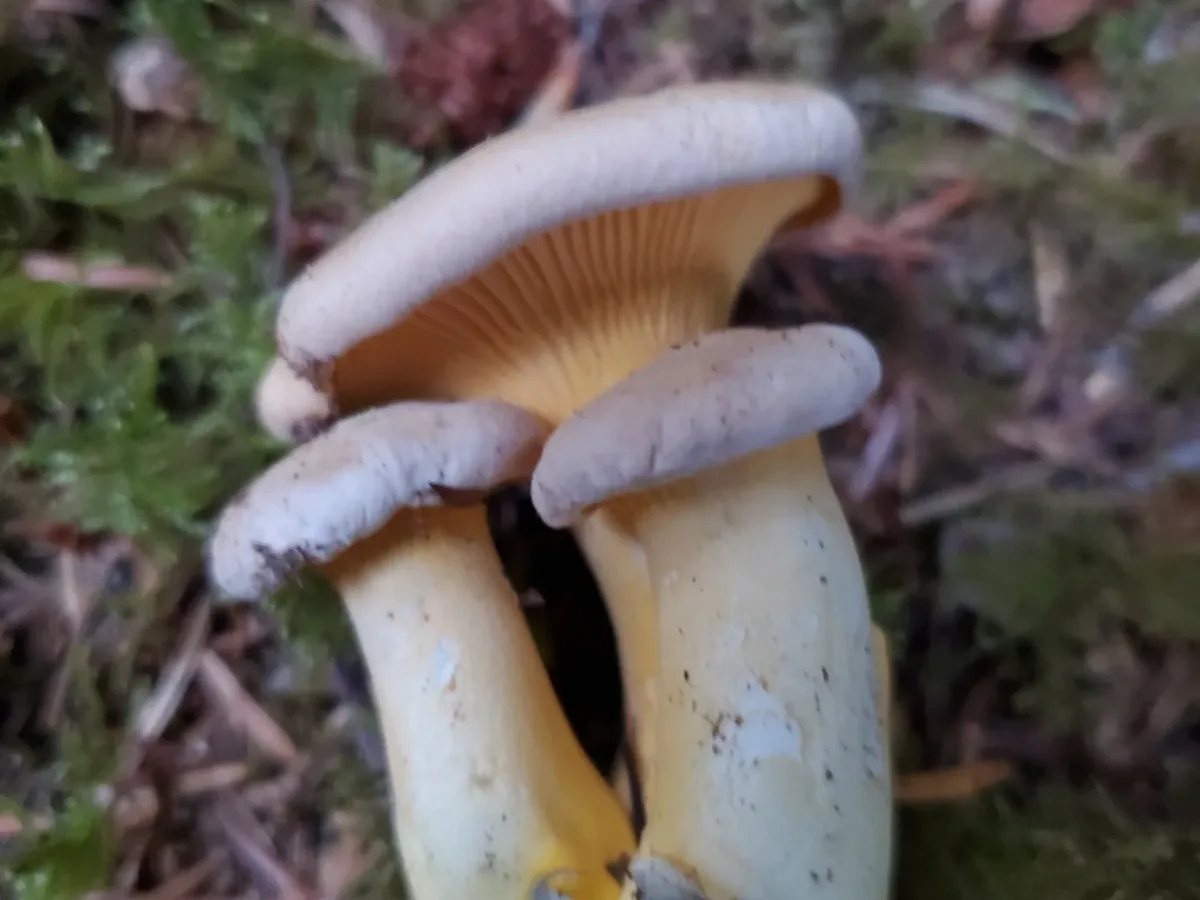 © Jonathan Curley (CC BY)
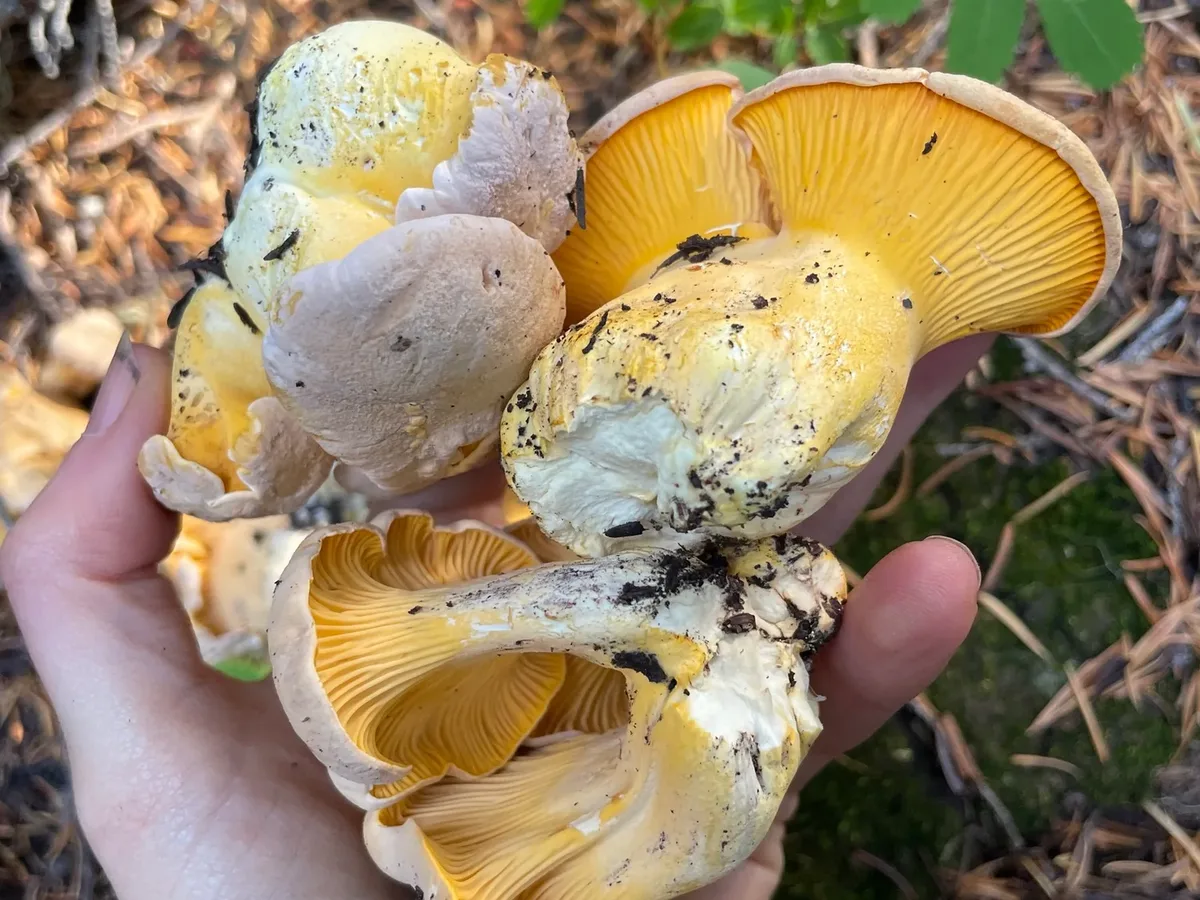 © Hilary Rose Dawson (CC BY)
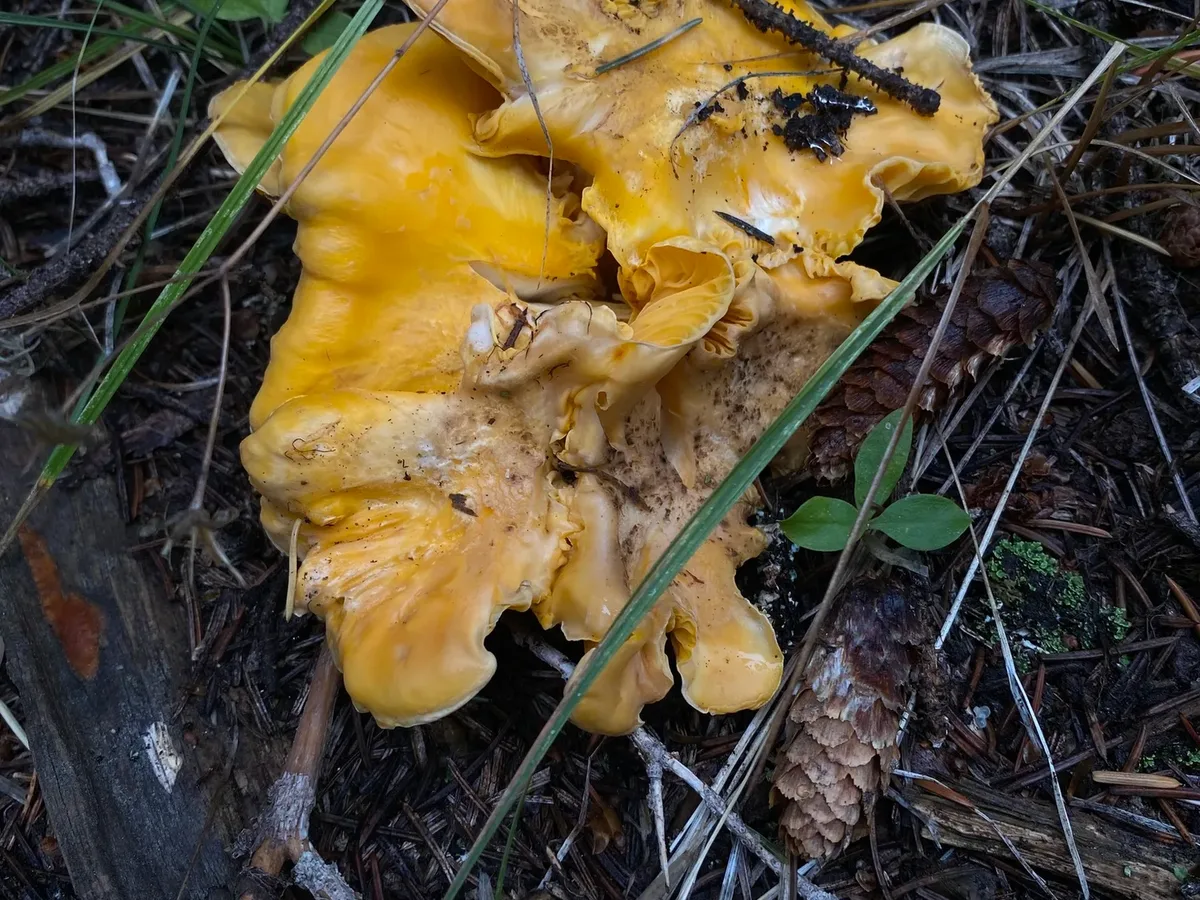 © Daniel Kennedy (CC BY)
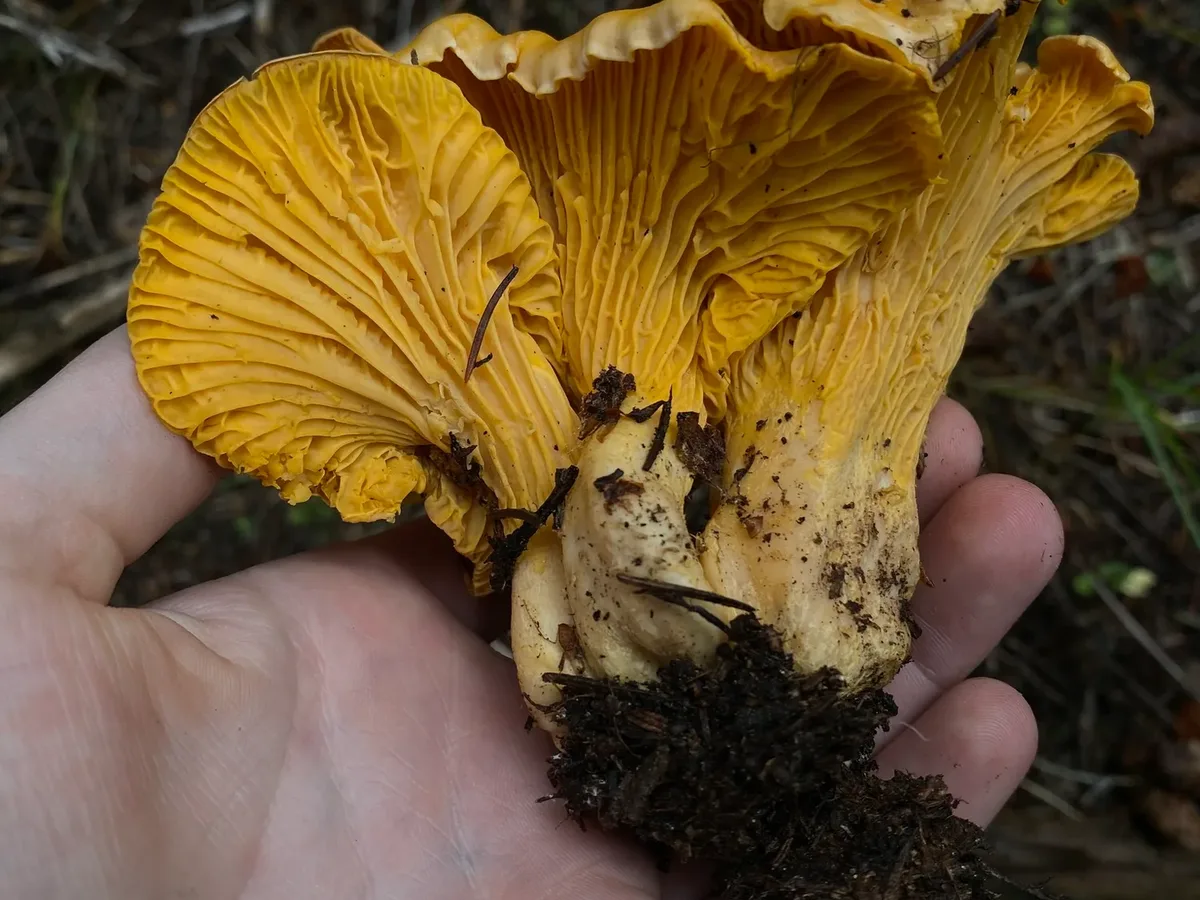 © Daniel Kennedy (CC BY)
 © Karen and Mike (CC BY)
 © Alan Rockefeller (CC BY 4.0)© Alan Rockefeller (CC BY 4.0)© Alan Rockefeller (CC BY 4.0)
One of the best mushrooms you can bring home - once you are certain of the identification.
How to recognise it
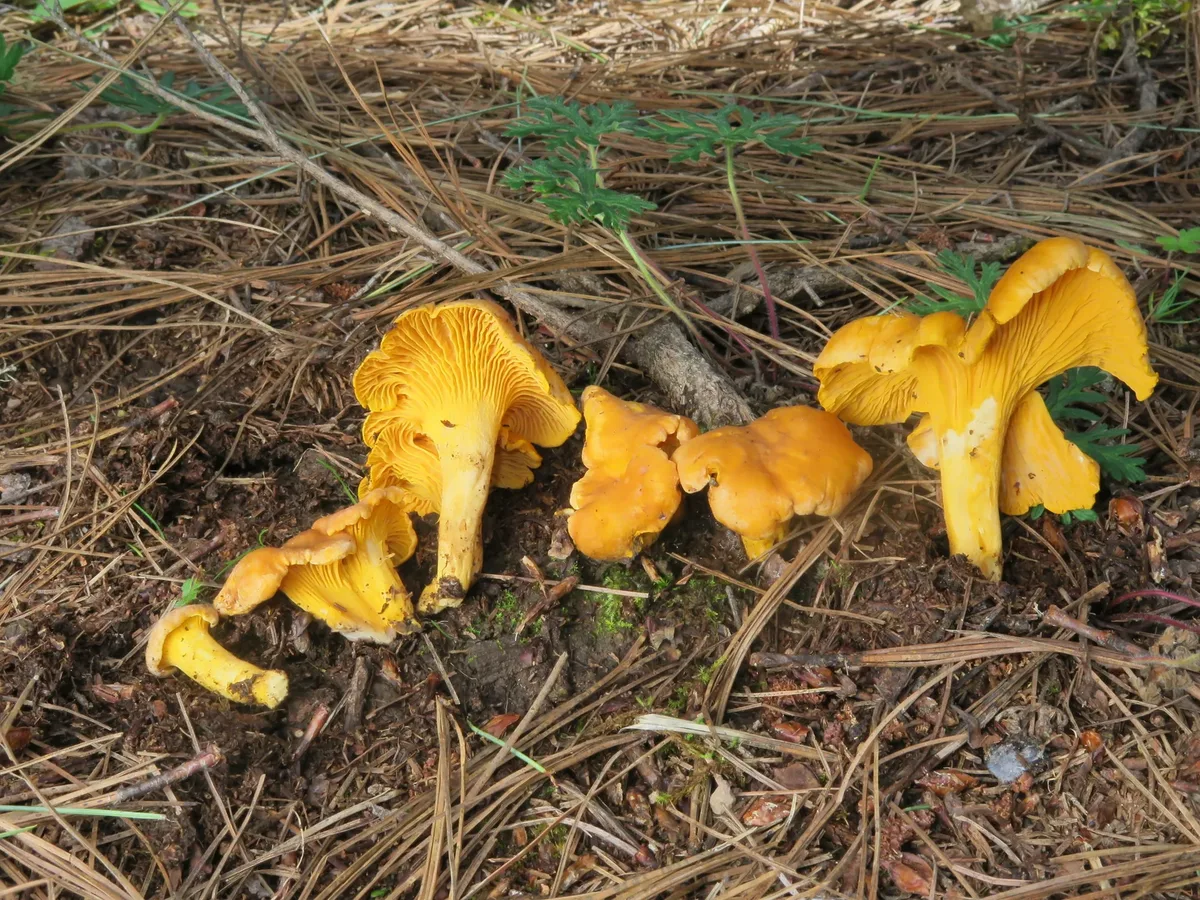
The rainbow chanterelle is a robust, fleshy mushroom with a look all its own.
Cap
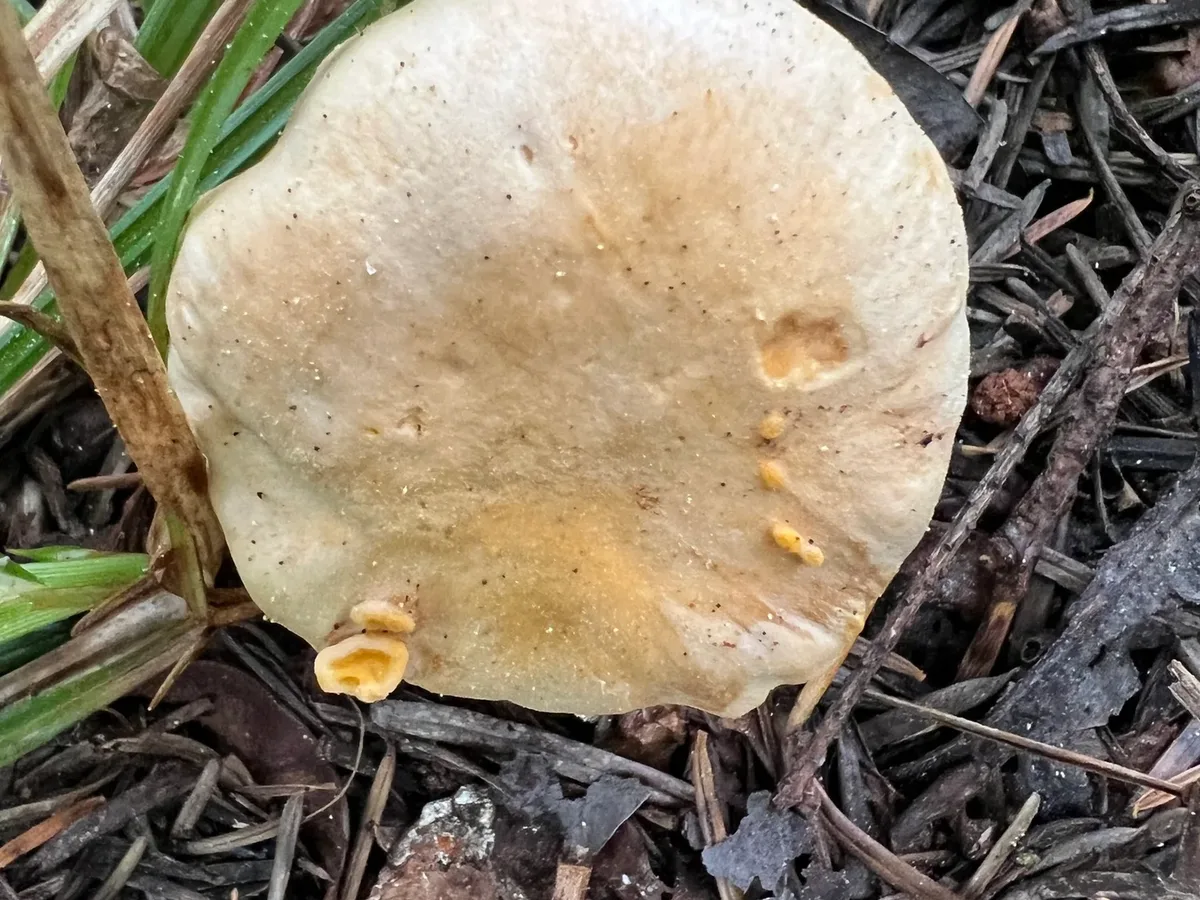
A golden egg-yolk to deep orange-yellow cap overlaid with a soft pinkish to salmon or apricot blush - that warm rosy cast is what separates it from its close relatives and gives the species its name.
Caps start convex to broadly humped, 3-12 cm across, then progressively flatten and develop the wavy, lobed, vase-shaped margin characteristic of mature chanterelles.
The surface is smooth, never scaly or slimy, and the colour is consistent across the disc without spots or zones.
Gills / Pores
Beneath the cap, look for the hallmark of all true chanterelles: repeatedly forking, blunt-edged ridges (pseudogills) that run well down the stout stem, pale cream-yellow when young and maturing to egg-yolk yellow.
These are not thin knife-blade gills - running a finger along them confirms their blunt, rounded feel.
Stem
The stem is solid throughout, 3-8 cm × 1-3 cm, smooth, firm, tapering toward the base, concolorous with the cap or slightly paler, often flushed pinkish near the apex.
Flesh
Flesh is thick, white to cream, unchanging when cut, with no latex.
Smell & taste
The apricot-fruity aroma is typically strong and distinctive, intensifying when the flesh is broken.
Spore print pale cream to very pale straw-yellow. Spores smooth, ellipsoid, 7-10 × 4-6 µm.
Where & when it grows
Habitat
Cantharellus roseocanus is a faithful companion of Sitka spruce in the great coastal rainforests of the Pacific Northwest, from the Kenai Peninsula of Alaska south through British Columbia, Washington, and Oregon into Humboldt County, California.
It grows directly from the dense accumulation of spruce needles, mosses, and humus beneath the host, often alongside other chanterelle species. Mature and old-growth forests are especially productive.
In British Columbia and Washington it also appears under Engelmann spruce at mid elevations and occasionally under lodgepole pine along the coast.
Unlike some chanterelles it tolerates very high rainfall and cool summer temperatures, thriving where Pacific maritime air keeps the forest perpetually moist. It often fruits in dense clusters or troops along creek margins and mossy flats within the forest.
When
The season opens in July across Alaska and northern British Columbia, then works its way south - August and September in Washington and Oregon, with the main flush typically cresting in late September and October.
A dry summer delays the first buttons; a warm, wet September can trigger exceptionally heavy crops that seem to appear almost overnight from the duff.
The season closes with the first hard frosts, though sheltered coastal sites often keep producing through November.
How it grows
Fruits singly to gregariously, frequently in loose scattered troops or dense clusters rooted in the spruce duff.
The mycelium is perennial, threading quietly through the same patch of forest soil for years - come back to a productive spot and it will likely reward you again.
Individual fruiting bodies emerge slowly over several days, expanding steadily across one to two weeks.
Young buttons are tightly involute and pure egg-yolk yellow; the pinkish tones deepen and the cap broadens and waves as the fruit body reaches full size.
Fruiting conditions
Fruiting is triggered by late-summer rainfall after a drier period; soil temperatures must remain cool (5-16 °C). A lag of one to three weeks typically follows significant rain events before buttons emerge. Persistent moisture rather than a single heavy rain is most reliable.
Look-alikes
- The western jack-o'-lantern mushroom (Omphalotus olivascens) is the primary dangerous lookalike in the region: it grows in tight clusters at or near wood, has true thin gills (not blunt ridges), is orange without pink tones, and is bioluminescent in fresh darkness.
- Hygrophoropsis aurantiaca (false chanterelle) has thin, crowded, true gills, a more intensely orange and often velvety cap, and lacks the apricot scent.
- Within Cantharellus, C. formosus (Pacific golden chanterelle) is the closest relative and overlaps in range; it typically lacks the rosy-pink cap flush and is primarily associated with hemlock and fir rather than Sitka spruce; both are equally choice edibles so confusion is not dangerous.
- Craterellus tubaeformis (yellowfoot) is much smaller, hollow-stemmed, and brown-capped.
- Turbinellus floccosus (scaly vase chanterelle) is vase-shaped with a scaly orange cap surface and may cause mild gastrointestinal upset.
- Galerina marginata and similar small deadly LBMs do not resemble this species.
Has thin, crowded, repeatedly forking true gills (not blunt ridges); cap often more intensely orange to orange-red with a velvety texture and incurved margin even in age; lacks apricot scent; flesh thin and insubstantial; causes mild gastrointestinal upset.
Very similar chanterelle co-occurring in the Pacific Northwest; typically lacks the rosy-pink to salmon flush on the cap; more closely associated with hemlock and fir rather than Sitka spruce; equally choice edible - confusion is gastronomically harmless.
Deep vase- to funnel-shaped with a scaly or shaggy orange-red cap surface; ridges are white and deeply decurrent; lacks the pinkish-golden smooth cap of C. roseocanus; may cause gastrointestinal upset in some people.
Grows in tight clusters at or near buried wood or tree bases (not from soil mycorrhizally); has true thin, crowded, knife-blade gills (not blunt forking ridges); orange without pink blush; bioluminescent in darkness; flesh does not smell of apricot. Causes severe gastrointestinal illness.
Much smaller; cap brown to grey-brown, not golden-yellow; stem yellow-orange but hollow; ridges grey-lilac; grows in sphagnum or wet moss; easily distinguished by size, colour, and hollow stem.
In the kitchen
Picking & cleaning
Harvest with a knife at the base, leaving the mycelium undisturbed in the duff. Brush debris with a soft brush in the field.
The flesh is firm and holds up well; caps do not need to be protected from stacking.
- Do not wash in the field - moisture hastens softening.
- Transport in a rigid basket or paper bag, never plastic.
- Trim the base cleanly.
- Refrigerate unwashed; best used within 5 days, though specimens keep well.
Drying concentrates flavour but diminishes the delicate texture.
Cooking
Rainbow chanterelle is a premium culinary mushroom. Its dense, meaty flesh holds up to high heat and does not disintegrate.
Sauté in unsalted butter over high heat, allowing the mushroom to release and then reabsorb its liquid (the 'dry sauté' method), to concentrate the delicate apricot-fruit flavour. Season simply with salt, pepper, and fresh thyme.
Excellent in cream sauces, risotto, pasta, omelettes, quiche, and as a garnish for game or poultry.
The flavour is more delicate than morels and holds less well with strong competing flavours; avoid overpowering with garlic or heavy spices.
Drying is possible and intensifies the scent, though some of the fresh bright flavour is lost.
Do not eat raw - cooking is recommended both for flavour and to break down minor irritants common to raw chanterelles.
Good to know
Cantharellus roseocanus is considered safe and choice when correctly identified. The critical safety points are:
- 1Confirm the pseudogills - blunt, forking, decurrent ridges, not knife-blade thin true gills.
- 2Note the distinctive apricot-fruity smell.
- 3Ensure the flesh is solid white with no colour change and no latex.
- 4Check that the cap shows the rosy-pink to salmon blush against a golden-yellow ground colour.
- 5Confirm the mushroom is growing from soil in a conifer (especially Sitka spruce) forest, not in clusters from wood.
Anyone unfamiliar with chanterelles should cross-check multiple field characters before consuming. As with all wild mushrooms, cook thoroughly before eating.
A reference guide - never an edibility guarantee. When in doubt, leave it out.