Pale chanterelle
Cantharellus pallenssyn. Cantharellus cibarius var. pallens
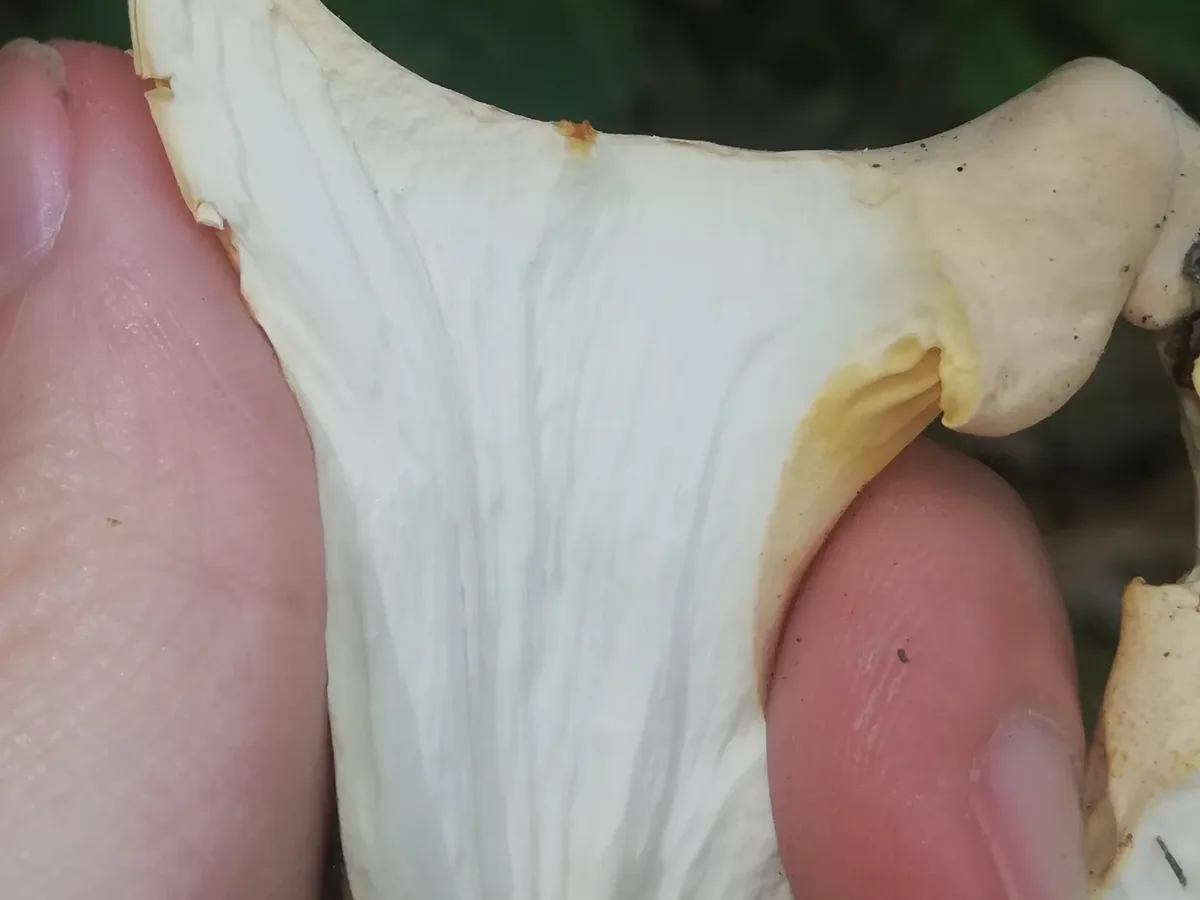 Thomas (CC0)
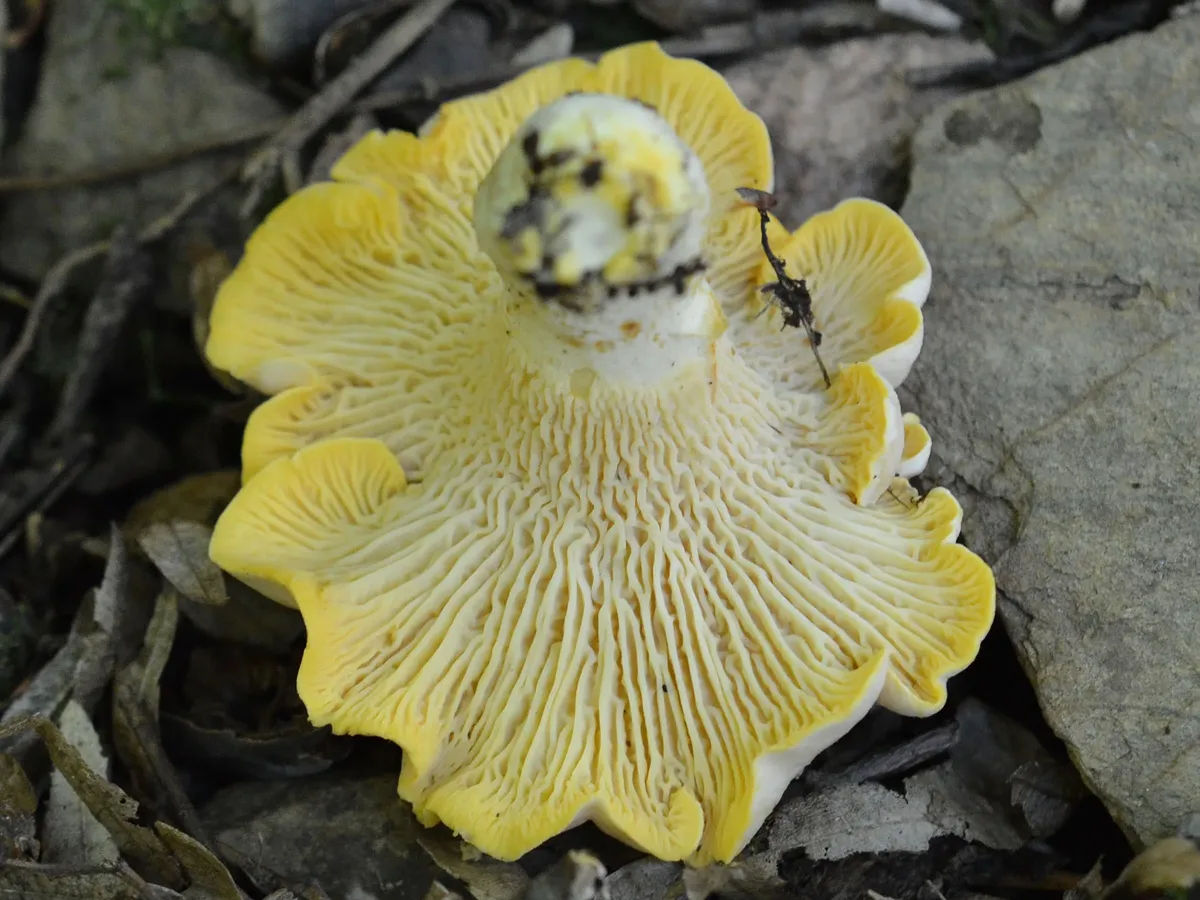 © Dimitǎr Boevski (CC BY 4.0)
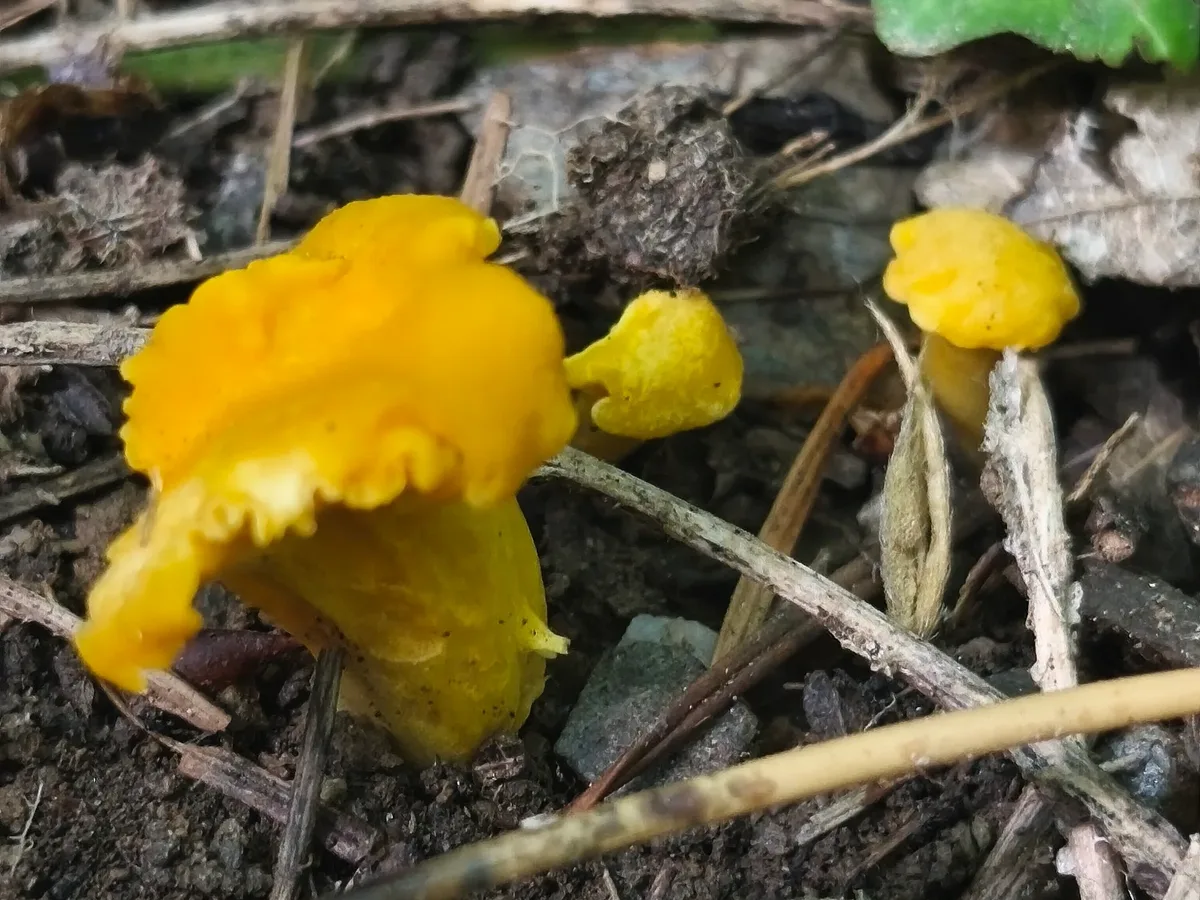 © victor laborde (CC BY)
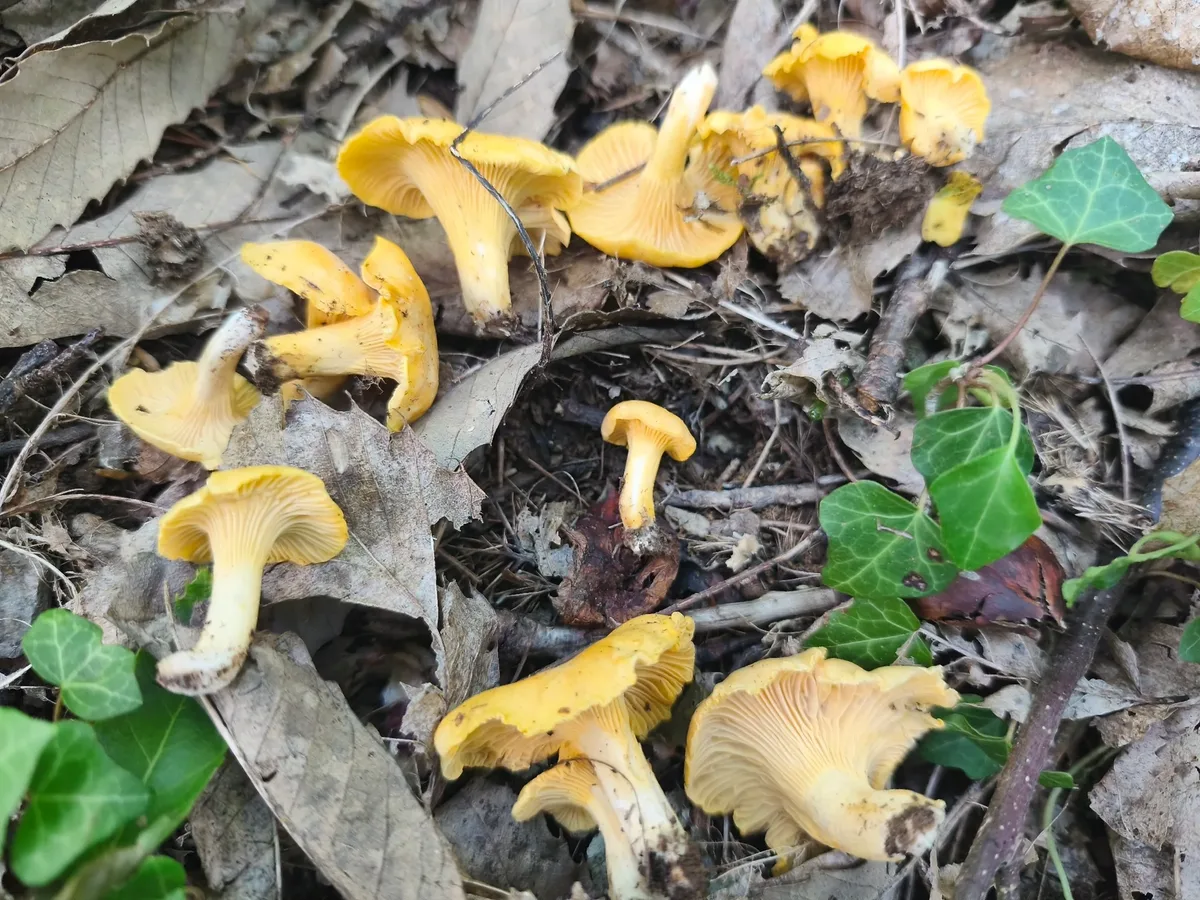 © victor laborde (CC BY)
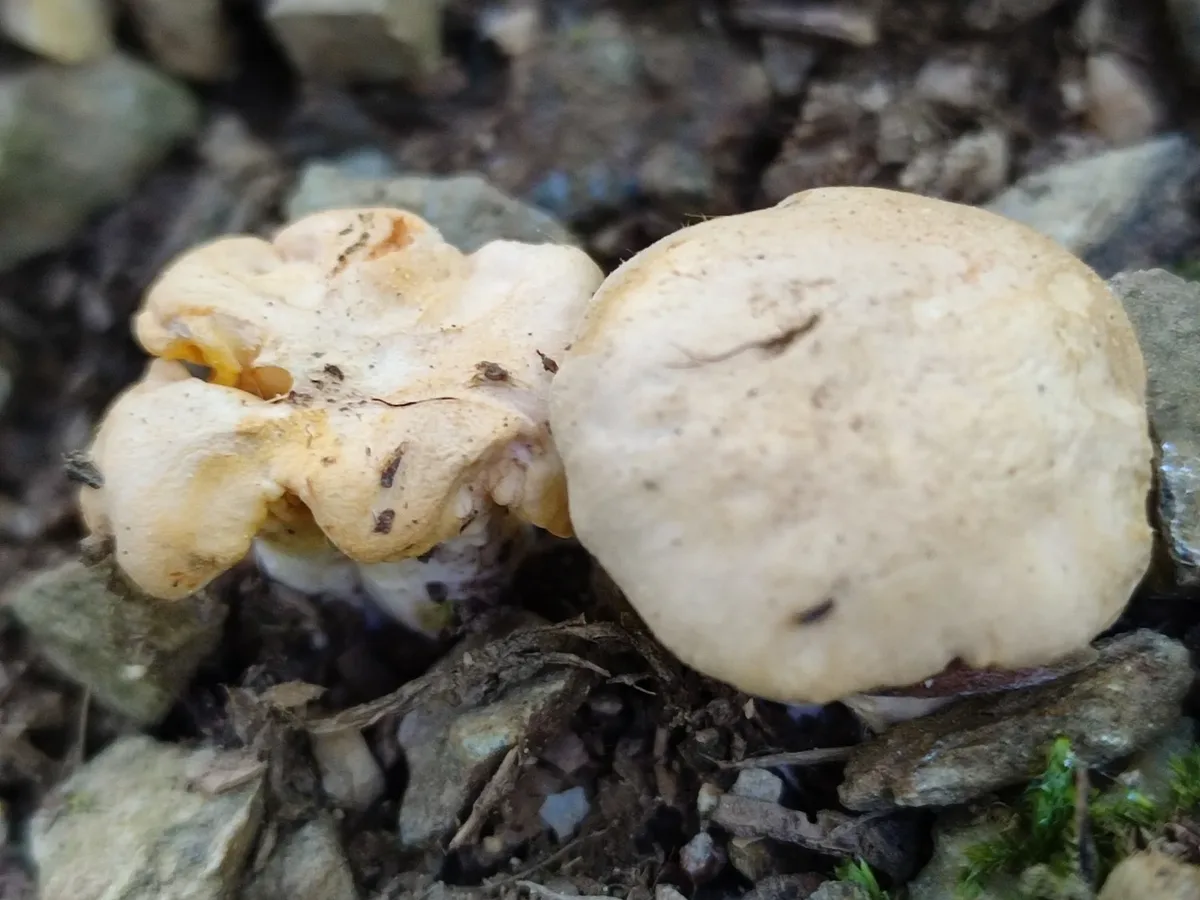 © victor laborde (CC BY)
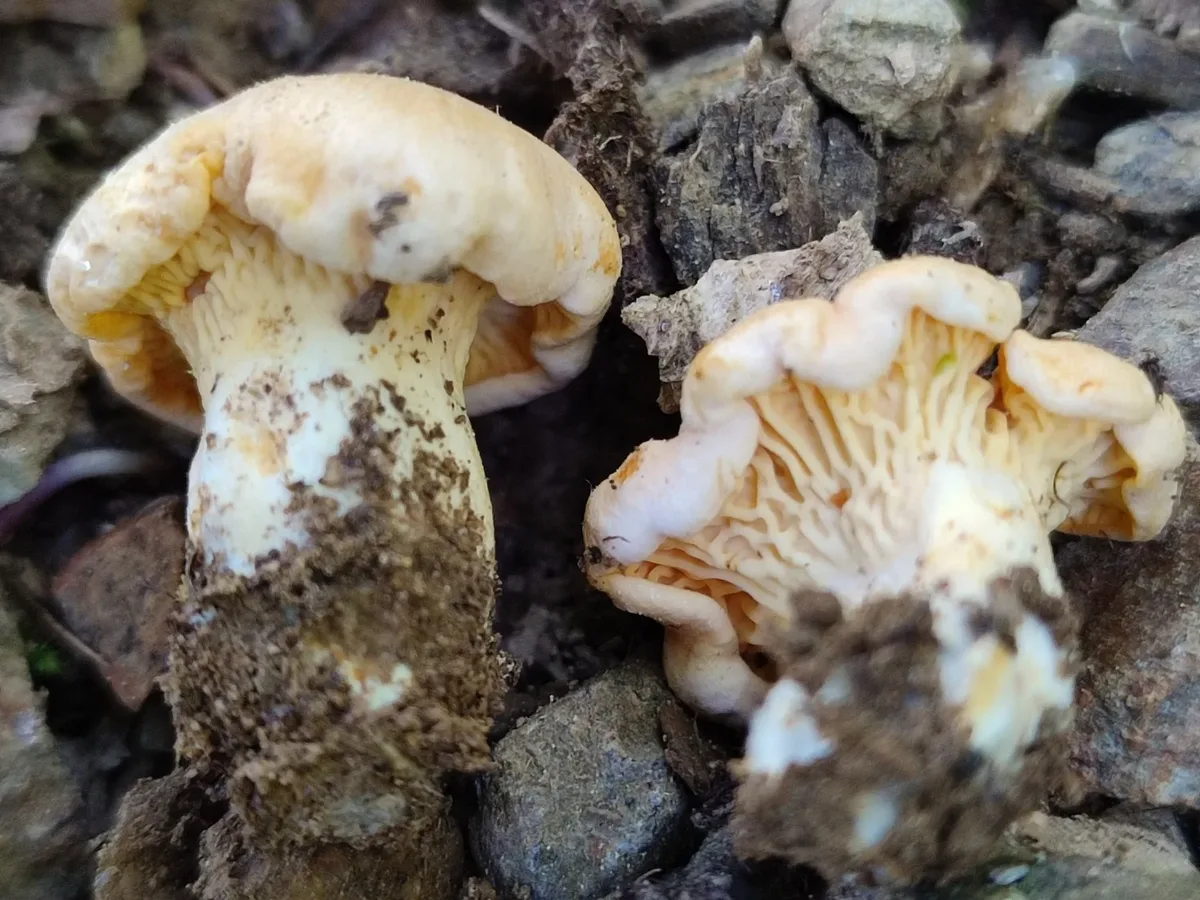 © victor laborde (CC BY)
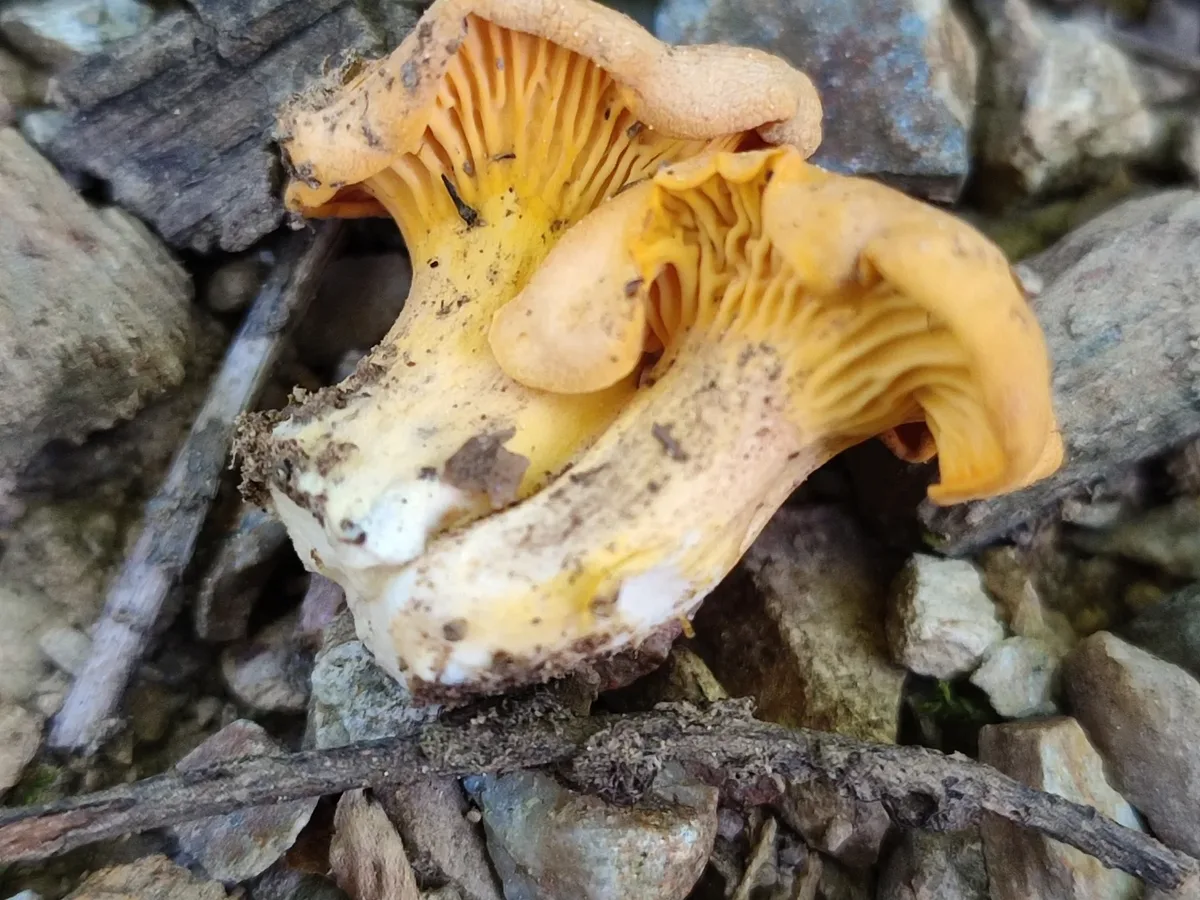 © victor laborde (CC BY)
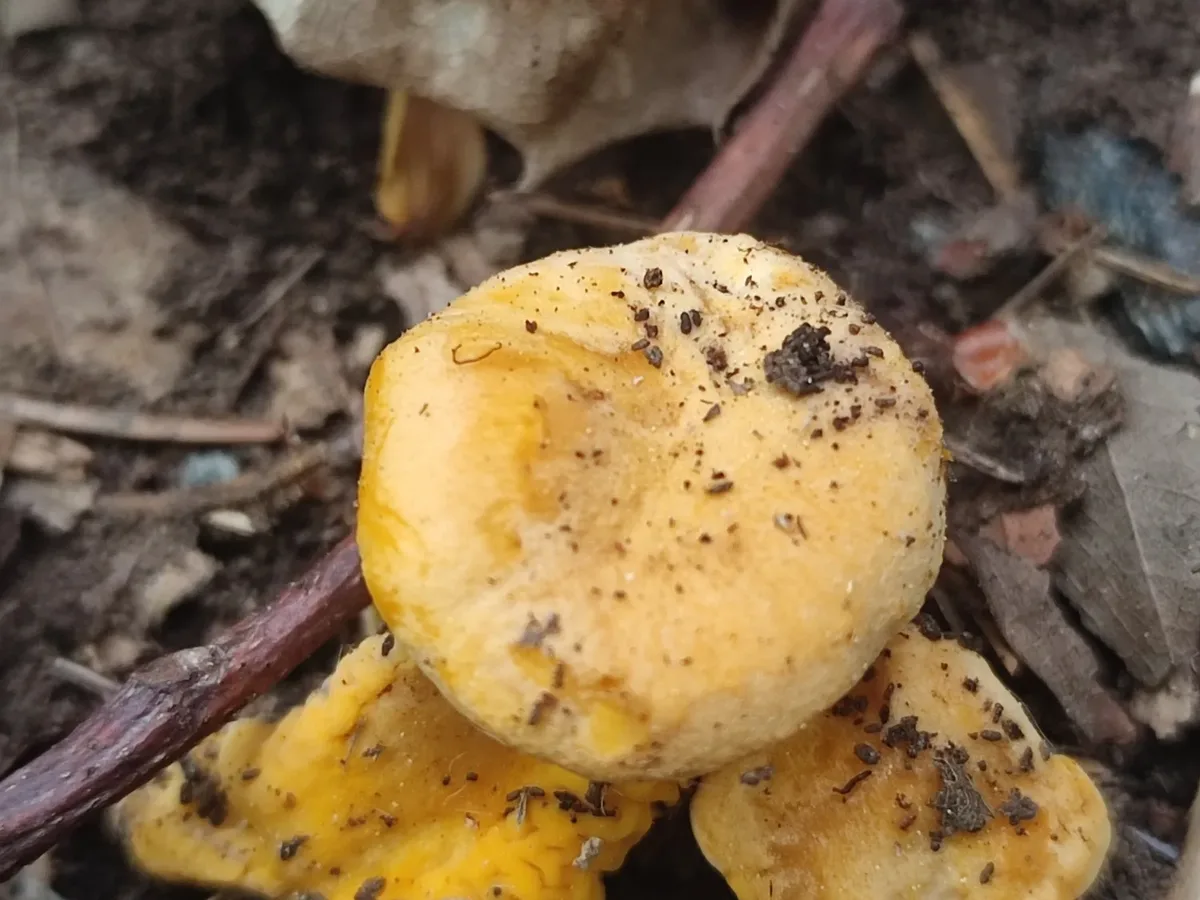 © victor laborde (CC BY)
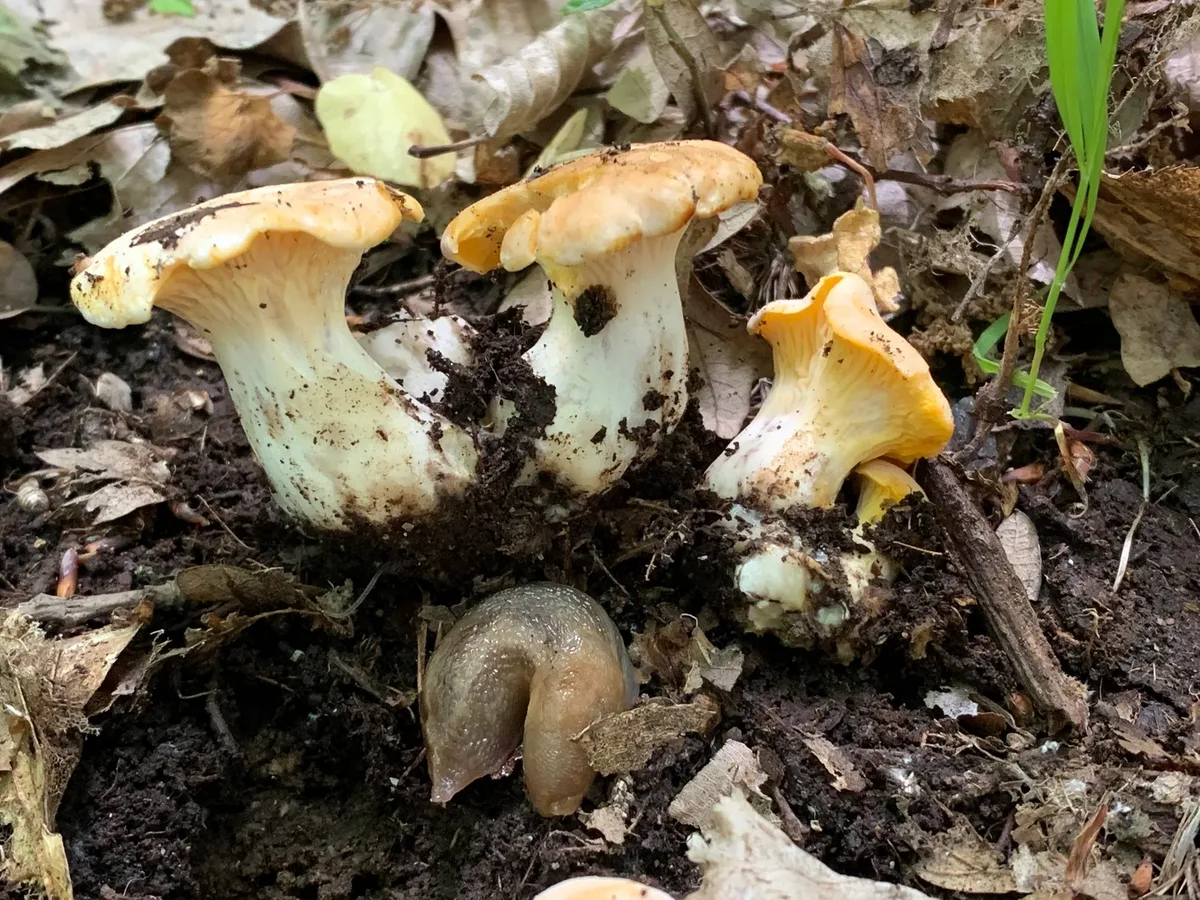 © Manuela Fiorini (CC BY)
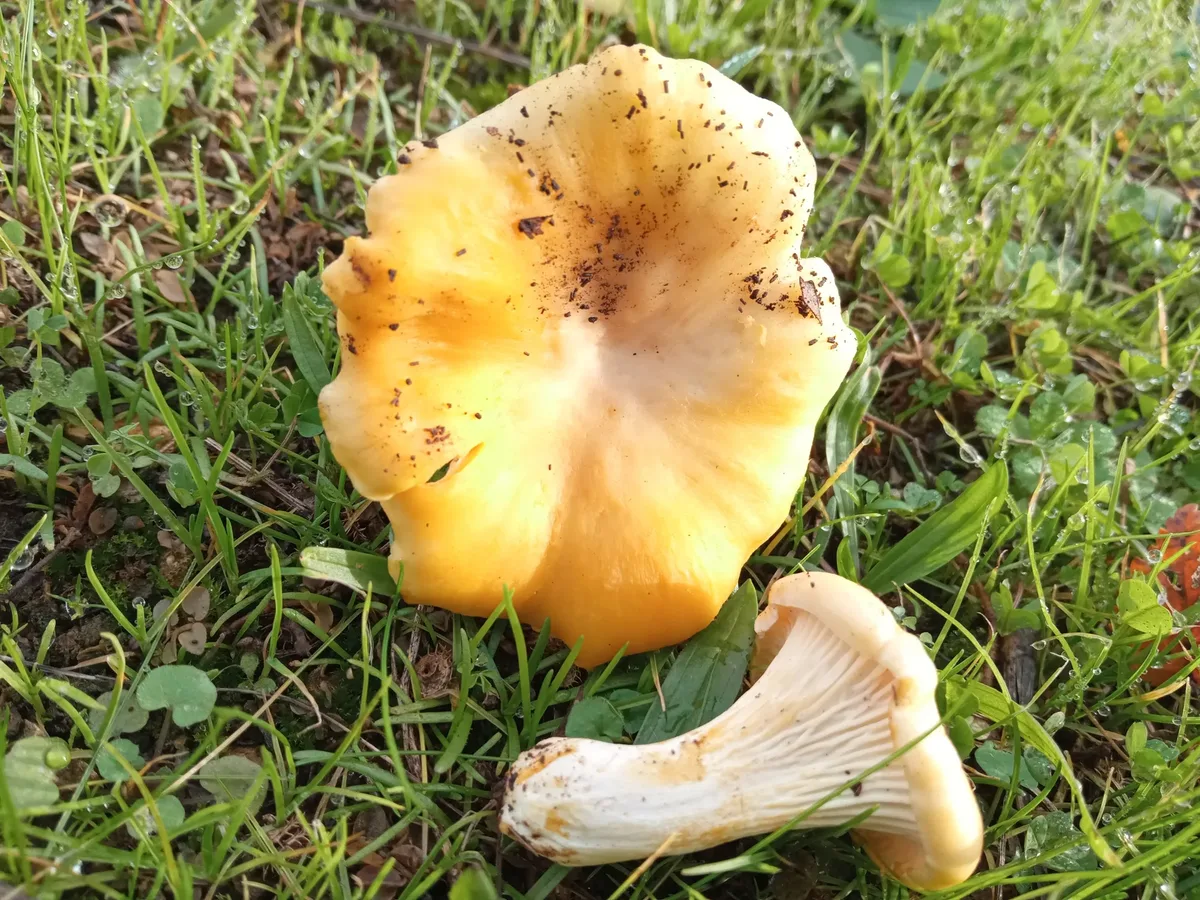 © Kristian Bosak (CC BY 4.0)Thomas (CC0)© Dimitǎr Boevski (CC BY 4.0)
One of the best mushrooms you can bring home - once you are certain of the identification.
How to recognise it
Think of the pale chanterelle as the cream-toned sibling of the golden chanterelle.
Cap
The cap measures 3-10 cm and develops the genus's characteristic uneven, wavy, uplifted margin. The surface is smooth and dry, pale cream to ivory or the faintest buff - never the strong egg-yellow of Cantharellus cibarius.
Gills / Pores
The most important feature is the underside: it carries blunt, repeatedly forked, ridge-like false gills that run down onto the stem (decurrent). These are paler than or equal in colour to the cap, never truly blade-like, and feel almost waxy to the touch.
Flesh
Cut the flesh crosswise: it is white to pale cream and firm, not discolouring. The flesh holds up well to insects - a welcome trait in a summer mushroom. Spore print pale cream to white.
Smell & taste
A faint apricot or fruity fragrance.
Where & when it grows
Habitat
Cantharellus pallens is a mycorrhizal partner of broad-leaved trees, living in a quiet chemical exchange with the roots of its host for years before a single fruitbody appears above ground.
In central and western Europe it grows predominantly under beech (Fagus sylvatica) and oaks (Quercus robur, Q. petraea), more rarely under hazel or hornbeam.
Old, humus-rich deciduous or mixed forest is its home - shaded, mossy floors and the edges of forest tracks are typical spots.
Unlike Cantharellus cibarius, which also fruits under conifers, C. pallens shows a stronger preference for deciduous woodland. Soils trend neutral to mildly calcareous, well-drained but moisture-retaining.
When
Fruiting spans June to November across most of its range, with the main flush concentrated in July through September. A second smaller flush can occur after autumn rains in October.
In the warmer, Atlantic-influenced west (coastal France, Iberian Atlantic coast) the season extends somewhat; at higher elevations or in Scandinavia it contracts to August-October.
How it grows
Grows gregariously, often in loose groups of several fruitbodies rising from the same mycelial network threading the soil beneath.
A productive patch tends to return year after year - the mycelium maintains its bond with the host tree roots. As long as those trees and that woodland floor remain undisturbed, the same spot can reward you for a decade or more.
That long, invisible partnership also means cultivation is currently impossible: no one has successfully grown chanterelles in controlled conditions.
Fruiting conditions
Mycorrhizal summer-to-autumn species. Fruiting is triggered by sustained warm rainfall after the soil has warmed above roughly 10 degrees C. A flush typically appears 7-14 days after adequate rainfall. Returns to productive patches year after year.
Look-alikes
The pale chanterelle cream colouring narrows the realistic confusion set compared with the golden chanterelle. The most important non-deadly confusion risks are pale Clitocybe species.
- Pale Clitocybe species - Clitocybe dealbata (ivory funnel) and Clitocybe phyllophila (frosty funnel) are creamy-white funnel-shaped mushrooms that contain muscarine and cause cholinergic poisoning (sweating, salivation, GI pain). Both have true, crowded blade-like gills - a sharp contrast to the blunt false-ridge underside of C. pallens; both also lack the fruity apricot scent.
- False chanterelle (Hygrophoropsis aurantiaca) - typically more orange and has thin, true gills, but albino or pale variants may cause momentary confusion; it is not considered deadly but can cause gastrointestinal upset.
- Jack-o-lantern (Omphalotus olearius) - in Mediterranean areas a more important confusion for golden chanterelles, but its warm orange colour and true gills make it less easily confused with the paler C. pallens.
Key confirmatory features for C. pallens:
- blunt, forking, decurrent ridges (not blade gills)
- fruity odour
- pale flesh that does not change colour
- mycorrhizal habitat under broad-leaved trees
Usually more orange than pale; has thin, crowded, forking but blade-like true gills. Can cause GI upset. Pale variants may cause momentary confusion but gill structure and absence of fruity odour distinguish it.
Larger pale Clitocybe with true gills and a mealy/floury odour rather than fruity. Muscarinic and dangerous; distinguished from C. pallens by gill structure and smell.
The closest relative and a potential misidentification in the other direction. C. cibarius is a stronger egg-yellow throughout cap, stem and ridges; C. pallens is consistently pale cream to ivory. Both are choice edibles, so confusion between them is harmless but worth knowing.
White to cream, funnel-shaped, but has true, crowded, blade-like gills (not blunt ridges), no fruity scent, and no mycorrhizal host association. Contains muscarine and causes cholinergic poisoning - a serious confusion risk.
In the kitchen
Picking & cleaning
- Cut or twist off at the base; avoid pulling up and disturbing the mycelium.
- Brush clean in the field - water makes them slippery and reduces shelf life.
Young, firm specimens keep well; larger, older caps develop more pronounced waves and can become tougher. In the basket they keep for two to three days refrigerated.
Cooking
The pale chanterelle has a milder, slightly more delicate flavour than the golden chanterelle but is used identically in the kitchen.
Fry in butter over moderate heat, first dry-frying to drive off moisture before adding fat. Excellent with eggs (omelette, scrambled), in cream sauces, risotto, and pasta.
Drying produces a tougher texture - powder-drying for seasoning is more successful. Freezing after a brief saute preserves quality well.
Good to know
Cantharellus pallens is a genuinely safe and excellent edible once you have learned to confirm the false-ridge underside.
The critical safety habit is always checking the hymenophore before eating: true gills in a pale funnel-shaped mushroom should immediately prompt caution, because several muscarine-bearing Clitocybe species share that growth form.
No lethal species is realistically confused with C. pallens in central and western European deciduous forest, but muscarinic Clitocybe species can cause serious illness and should be treated seriously.
Cook thoroughly before eating; like C. cibarius, this species should not be eaten raw in significant quantity.
A reference guide - never an edibility guarantee. When in doubt, leave it out.