Small chanterelle
Cantharellus minorsyn. Cantharellus minor Peck
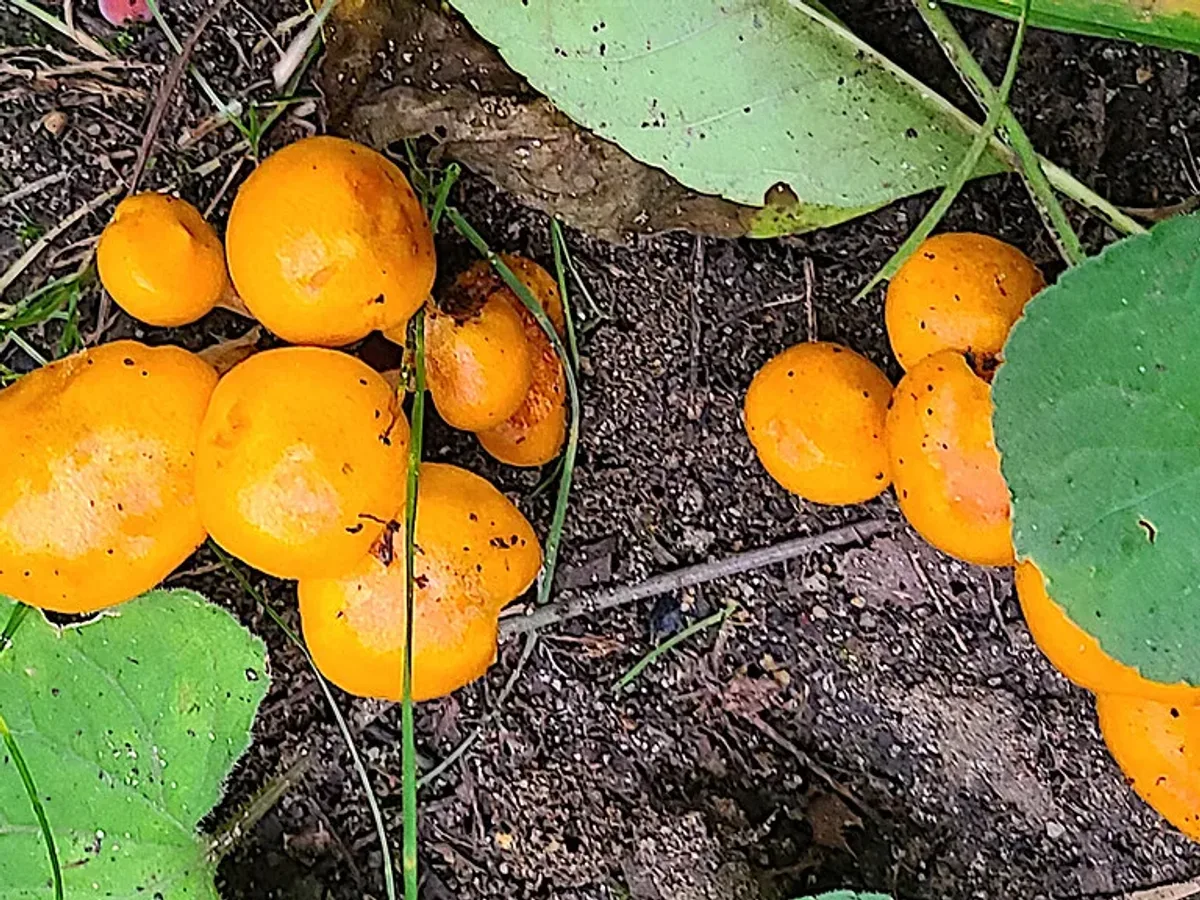 © Don Henise (CC BY 2.0)
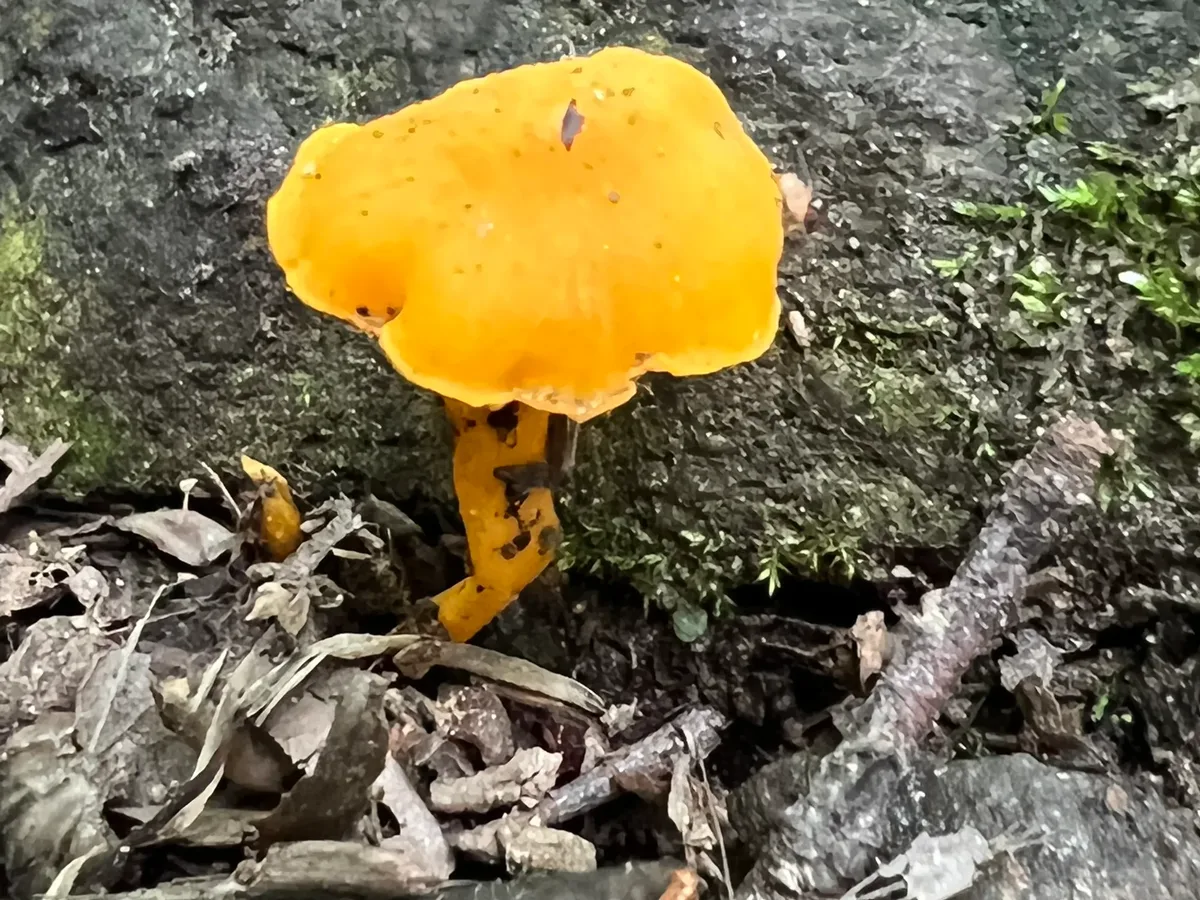 © Mark Richman (CC BY 4.0)
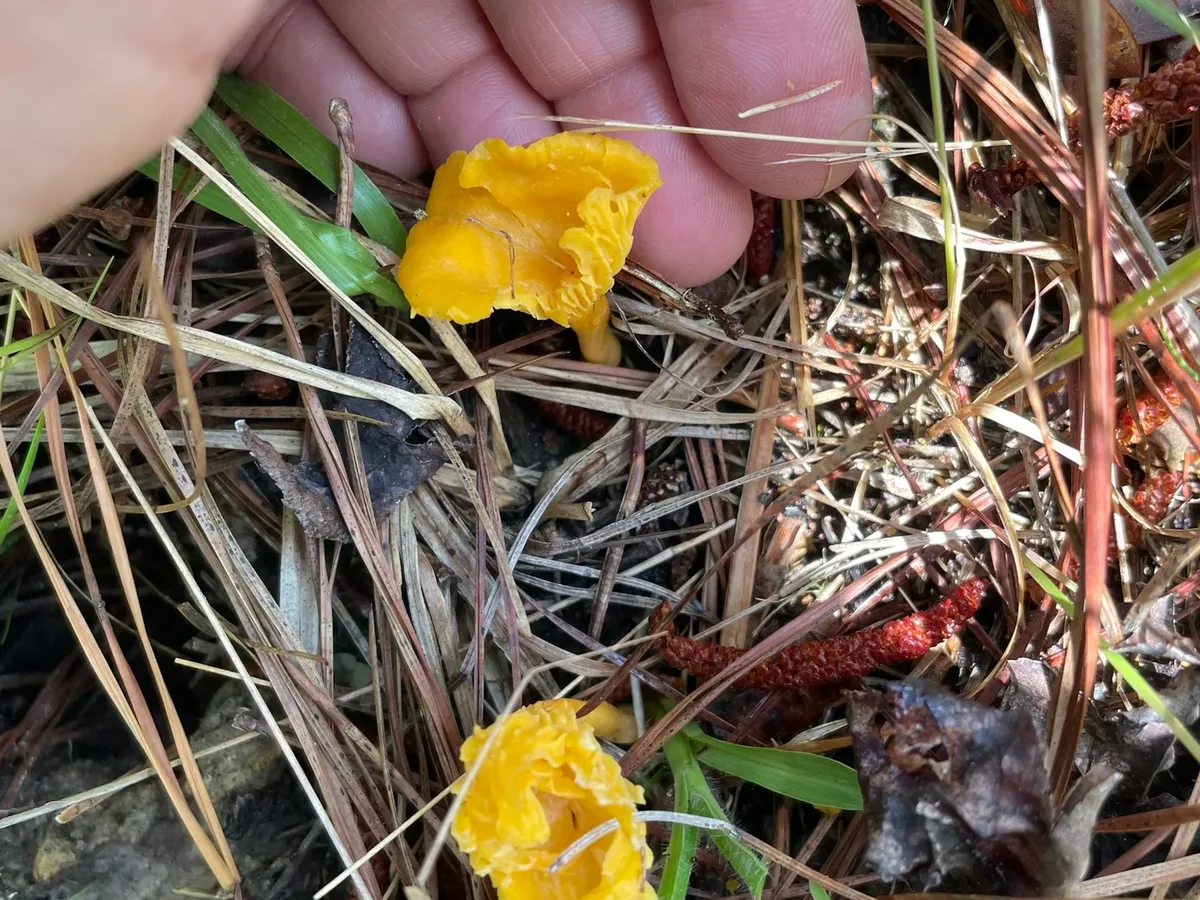 Becky Dill (CC0)
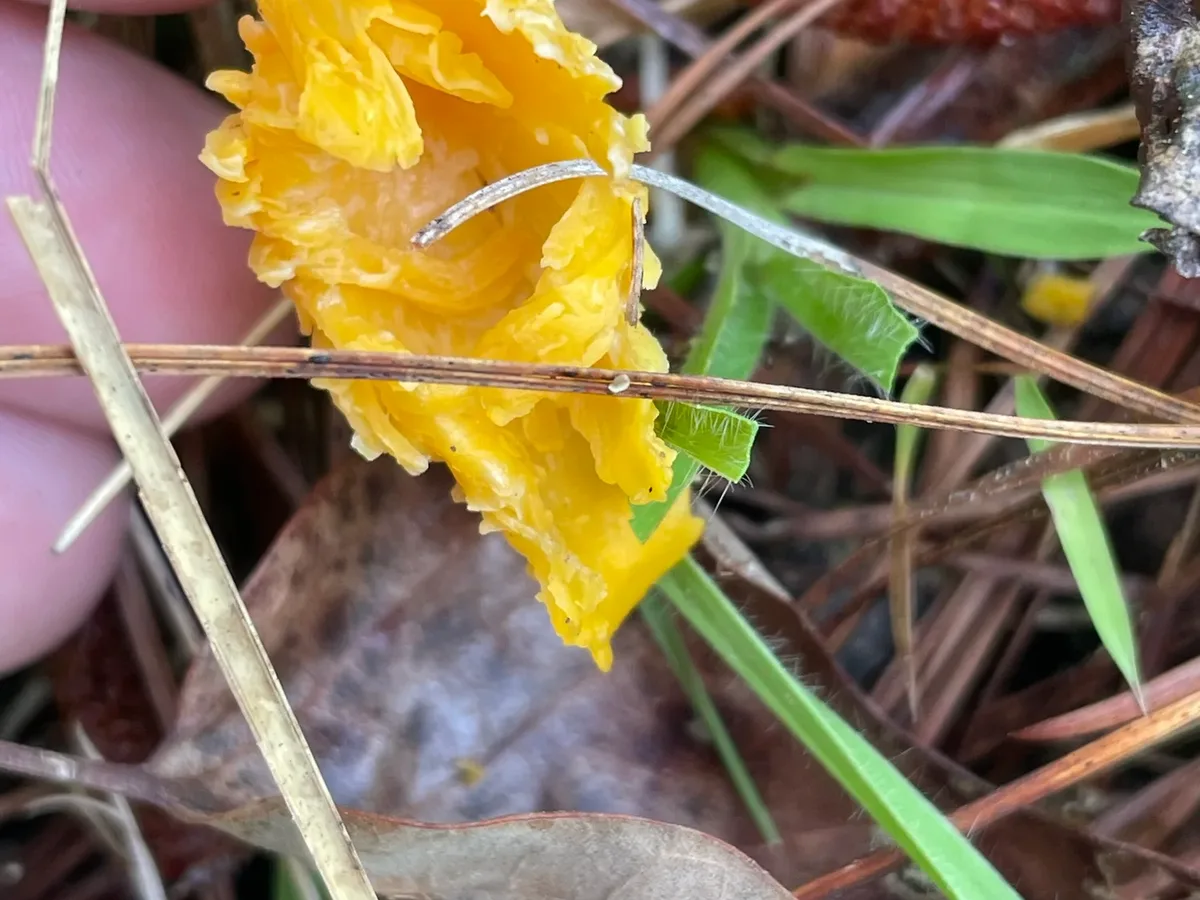 Becky Dill (CC0)
 Becky Dill (CC0)
 © ladyjanaye (CC BY)
 © Annie Weissman (CC BY)
 © Annie Weissman (CC BY)
 © Annie Weissman (CC BY)
 © Summit Metro Parks (CC BY)© Don Henise (CC BY 2.0)© Mark Richman (CC BY 4.0)
Good to eat, once you have identified it with certainty and cooked it through.
Never eat a mushroom you are not 100% sure of - check the look-alikes below, and always cook wild mushrooms.
How to recognise it
Cap
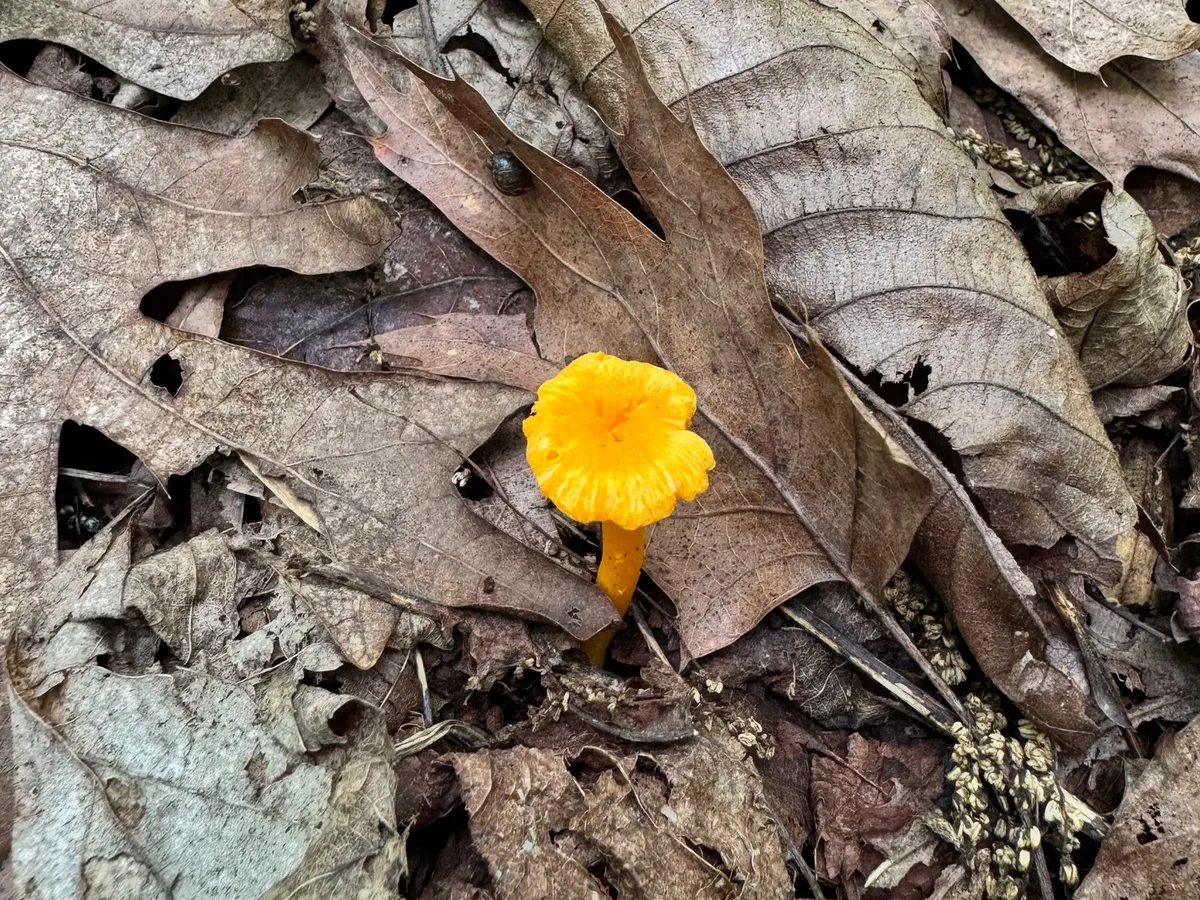
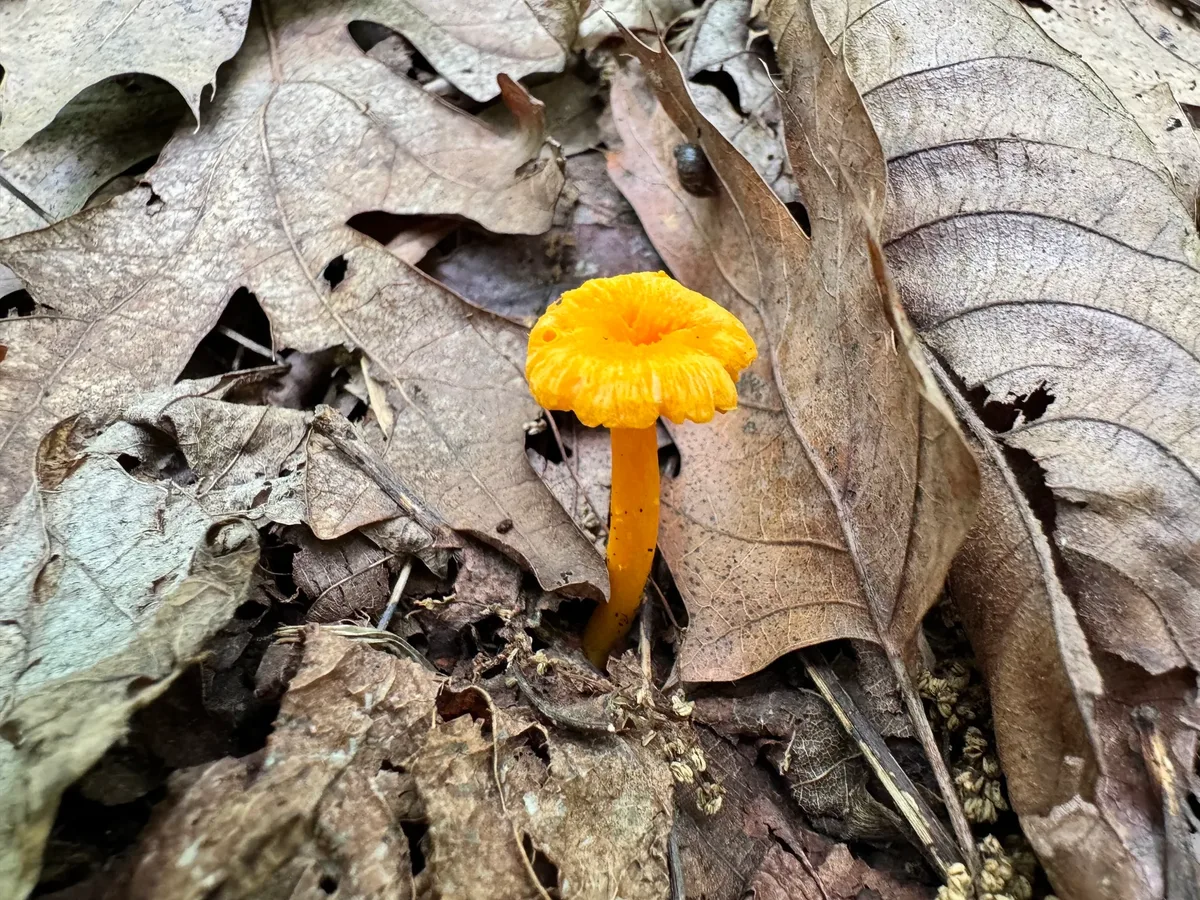
The small chanterelle is the pocket-sized cousin of the golden chanterelle, typically only 1-4 cm across. When young, the cap is convex to cushion-shaped; it quickly flattens, then hollows into a funnel or vase as the mushroom matures - a shape that, once you know it, is unmistakable in the leaf litter.
The surface is dry, smooth to very finely downy, and coloured a vivid egg-yolk yellow to orange-yellow. The centre may fade to pale ochre in older or drier specimens, while the wavy, lobed margin stays bright.
Gills
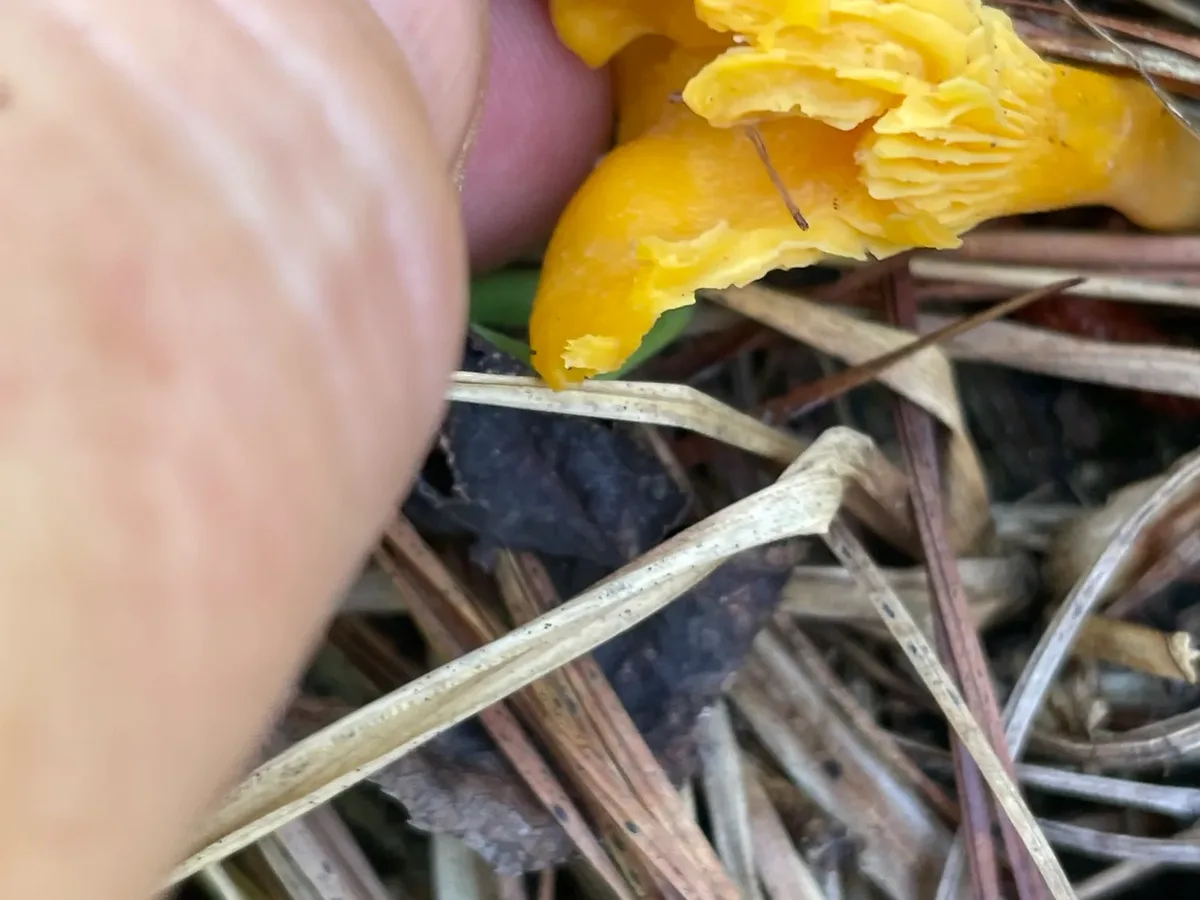
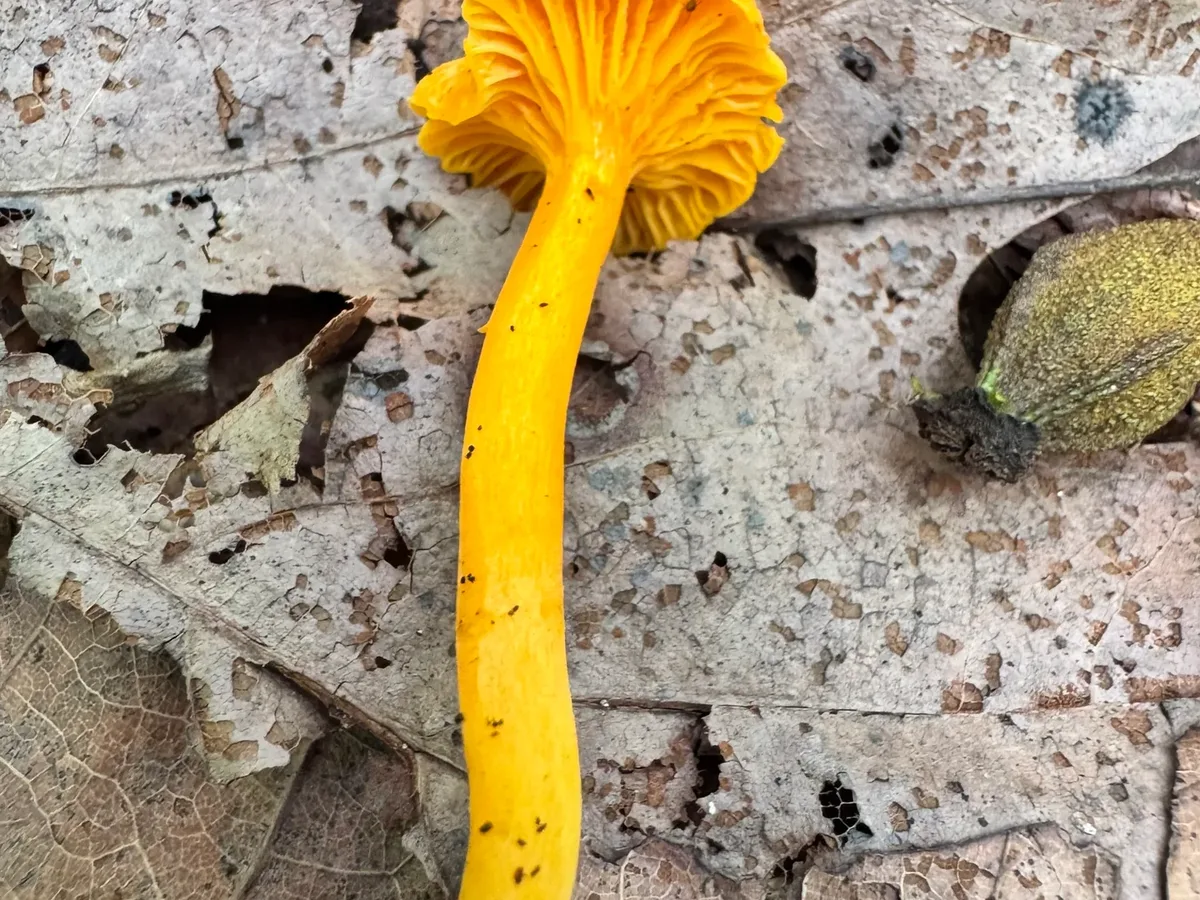
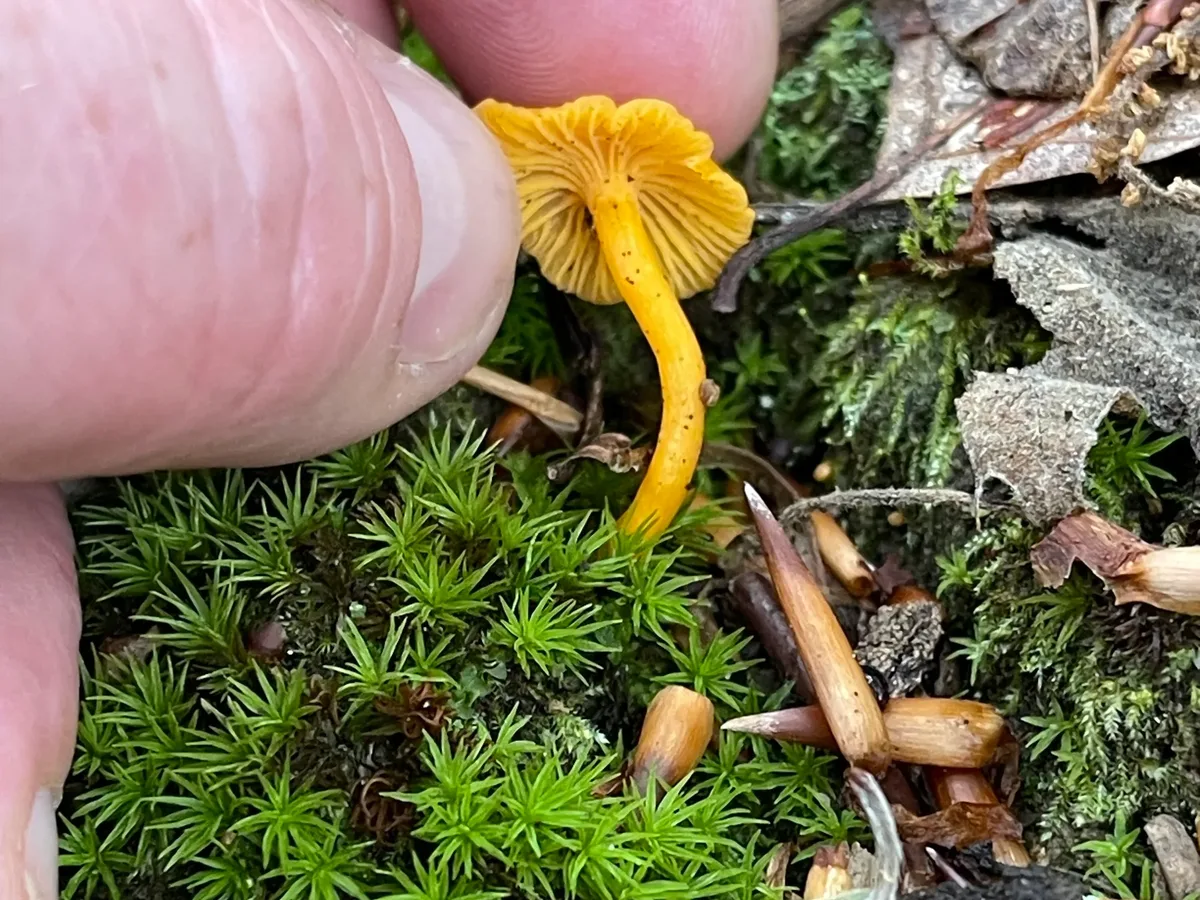
Flip it over and you find the one feature that never lies: not true blade-like gills but blunt, repeatedly forking ridges - the definitive chanterelle hallmark - pale to bright yellow, running well down the stem.
Stem
The stem is solid, smooth, 1.5-5 cm tall by 3-8 mm wide, roughly cylindrical or slightly tapering below, pale to bright yellow throughout and sometimes whitish at the base.
Flesh
Flesh firm, pale yellowish-white, not exuding liquid when cut.
Smell & taste
Smell pleasantly fruity-apricot. Spore print pale cream to pale yellow.
Where & when it grows
Habitat
The small chanterelle lives as a mycorrhizal partner - its mycelium quietly threaded through the roots of the trees above it, sometimes for years - before sending up fruitbodies when conditions are right.
It favours hardwoods and mixed hardwood-conifer forests: most reliable under oaks (Quercus spp.) in oak-pine or oak-hickory associations, but also found under beech (Fagus) and occasionally in pine-dominated stands.
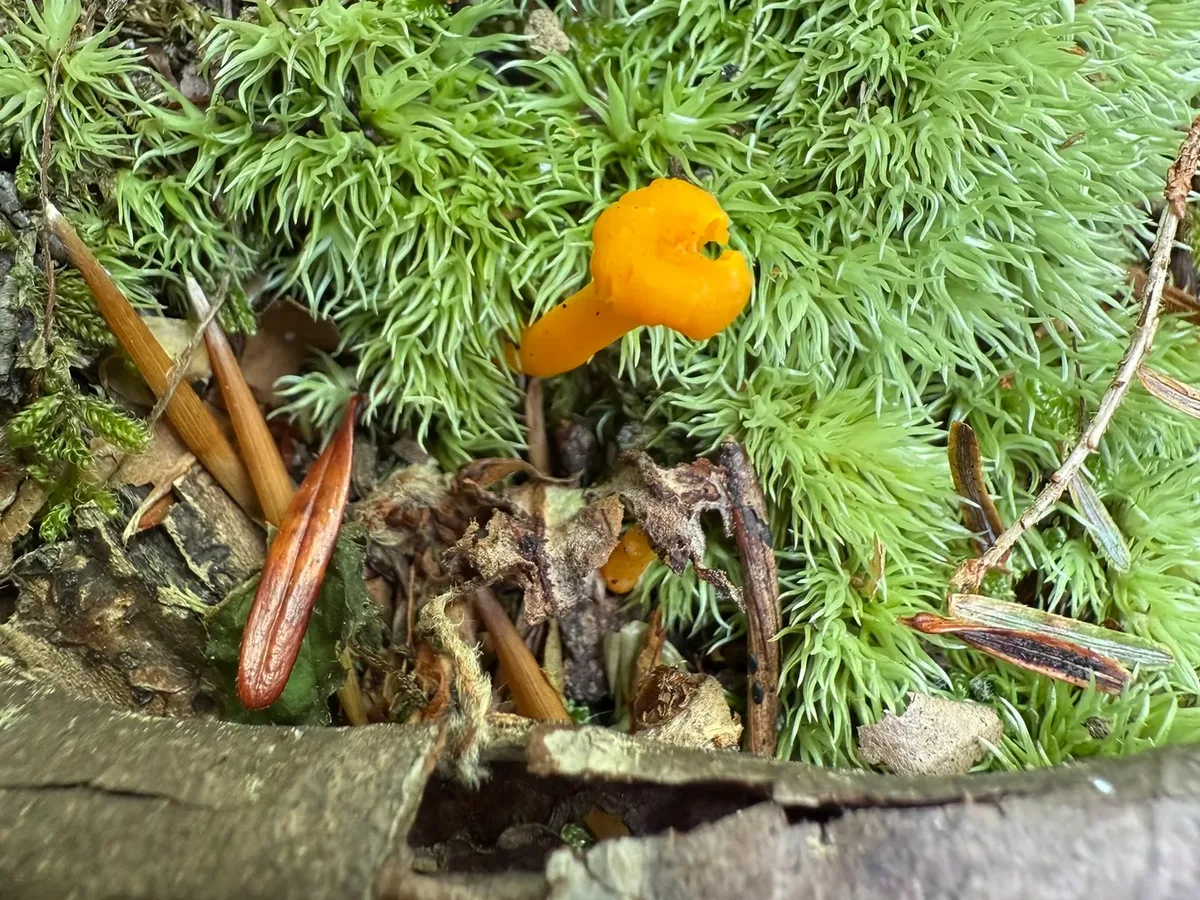
Look for it growing singly or scattered on the soil itself, among humus and fallen leaves, in shaded to partially shaded spots.
Warm, humid conditions are essential; the species fruits best after sustained summer rains when soil moisture is high. Found from sea level up to moderate elevations in the Appalachians.
When
A summer species in eastern North America. Fruitbodies begin appearing in June after the first warm rains - often the earliest chanterelle flush of the season - and peak through July and August.
Fruiting can stretch into September or October in the southern part of the range or during wet autumns.
It often shares the same woodland floor with the golden chanterelle (Cantharellus cibarius sensu lato), the smooth chanterelle (C. lateritius), and the cinnabar chanterelle (C. cinnabarinus), so a good summer oak wood can yield all four in a single outing.
How it grows
Fruits singly or in scattered groups - never in dense clusters - each fruitbody arising individually from the mycorrhizal network below.
Because they are so small, they hide easily among fallen leaves. Scan the leaf litter carefully and look for that flash of egg-yolk yellow.
A wet summer can bring multiple flushes, each triggered a few days after significant rainfall as the mycelium, already primed by warmth and moisture, pushes new fruitbodies to the surface.
Fruiting conditions
Flushes reliably after warm summer rains when soil temperatures are in the 15-24 °C range. In the northeastern US, peak fruiting coincides with July heat and humidity. Drought suppresses fruiting entirely; irrigation of forest soils does not reliably stimulate chanterelle fruiting as the mycorrhizal mycelium requires natural seasonal cues.
Look-alikes
The greatest danger in collecting Cantharellus minor is confusion with the poisonous jack-o'-lantern mushroom (Omphalotus illudens) and with the deadly Galerina marginata at small sizes, though Galerina typically grows on wood.
Small individuals of Omphalotus illudens - which also fruit in summer in eastern forests - can appear similar at a glance. Omphalotus illudens:
- has true, knife-blade-sharp gills (not blunt ridges)
- has gills that may glow faintly in the dark (bioluminescence)
- grows in dense clusters at the base of trees or from buried wood
- has a distinctly larger, more robust stature when mature
Chanterelles always have blunt, forking, ridge-like false gills and a fruity smell.
Another concern is Hygrophoropsis aurantiaca (false chanterelle), which has true, crowded, thin, forking gills, a downy orange cap, and often a more orange overall tone. It also lacks the fruity chanterelle odour and can cause gastrointestinal upset.
Within the genus, separation from the closely related golden chanterelle (Cantharellus cibarius sensu lato) is mostly academic from an edibility standpoint, but C. minor is consistently smaller and tends to show a brighter egg-yolk yellow colour. The cinnabar chanterelle (C. cinnabarinus) is distinctly reddish-orange to cinnabar red.
Deadly amatoxin-containing species. Galerina marginata is brown overall (not yellow-orange), has true gills (not ridges), a ring on the stem, a brown spore print, and typically grows on decaying wood (though small specimens can appear terrestrial in deep humus near wood). Completely different gestalt: never yellow, always brown-toned, always with true gills. The risk is higher for very small, immature chanterelles confused in haste - always confirm colour, false gills, and fruity smell.
Also edible. Distinguished by its vivid cinnabar-red to coral-red colour throughout, including gills, cap, and stem. C. minor is yellow to orange-yellow, not red. Both occur in similar eastern North American habitats.
Has crowded, thin, true gills (not blunt ridges) that fork repeatedly; cap is downy-fibrous and more orange; lacks the fruity chanterelle smell; stem is more slender and often curved. Can cause gastrointestinal distress and possible neurological symptoms in sensitive individuals.
Also edible and also with blunt forking false gills and fruity odour. Distinguished by significantly larger size (cap typically 4-12 cm), stouter stem, and often paler or deeper yellow tones. Separation is mainly academic as both are choice edibles.
Omphalotus illudens has true, sharp, blade-like gills (not blunt forking ridges), grows in dense clusters at tree bases or from buried wood, may show faint bioluminescence in the dark, and lacks the fruity apricot odour of chanterelles. It causes severe gastrointestinal poisoning but is not considered lethal to healthy adults. Key check: always confirm blunt, forking false-gill ridges in chanterelles.
Also edible. Has a nearly smooth to very shallowly ridged hymenium (far less pronounced false gills than C. minor), a slightly paler or more orange-tan cap surface, and typically grows larger. Both are excellent edibles found in eastern deciduous forests.
In the kitchen
Picking & cleaning
Harvest by gently twisting and pulling, or cutting cleanly at the base with a knife. Their small size means you will need to collect a fair number for a meaningful meal, so patience pays.
- Carry them in a basket with good airflow - sealed bags cause sweating and quick deterioration.
- Handle with care; the small caps bruise easily.
- A quick brush with your fingers removes most debris in the field.
- Use them fresh within a day or two.
Because these are small yellow-orange mushrooms growing in eastern summer woods, check every specimen carefully before it goes in the basket - size makes identification errors more likely.
Cooking
Small chanterelles are used similarly to the golden chanterelle, but their small size means they can be added whole to dishes, which is decoratively attractive.
They have the classic chanterelle flavour: mildly fruity, nutty, and richly savoury.
Best sautéed in butter over medium-high heat until any moisture evaporates and the ridges begin to caramelise lightly. Good in cream sauces, pasta, risotto, omelettes, and alongside eggs.
Avoid boiling or waterlogging; high, dry heat preserves texture and intensifies flavour. Can be dried for storage, though they lose their visual appeal.
Good to know
Cantharellus minor is edible and safe when correctly identified. The key safety step is confirming the blunt, forking, ridge-like false gills - not true gills - and the fruity odour.
Never collect small yellow-orange mushrooms from clusters at tree bases (jack-o'-lanterns).
Galerina marginata is a deadly amatoxin-containing species that must be excluded. It is:
- brown (not yellow-orange)
- has true gills and a ring on the stem
- typically grows on decaying wood
When in doubt about any specimen, discard it. Introduce new species to your diet in small quantities to rule out individual sensitivities.
A reference guide - never an edibility guarantee. When in doubt, leave it out.