Orange chanterelle
Cantharellus friesiisyn. Cantharellus amethysteus var. friesii
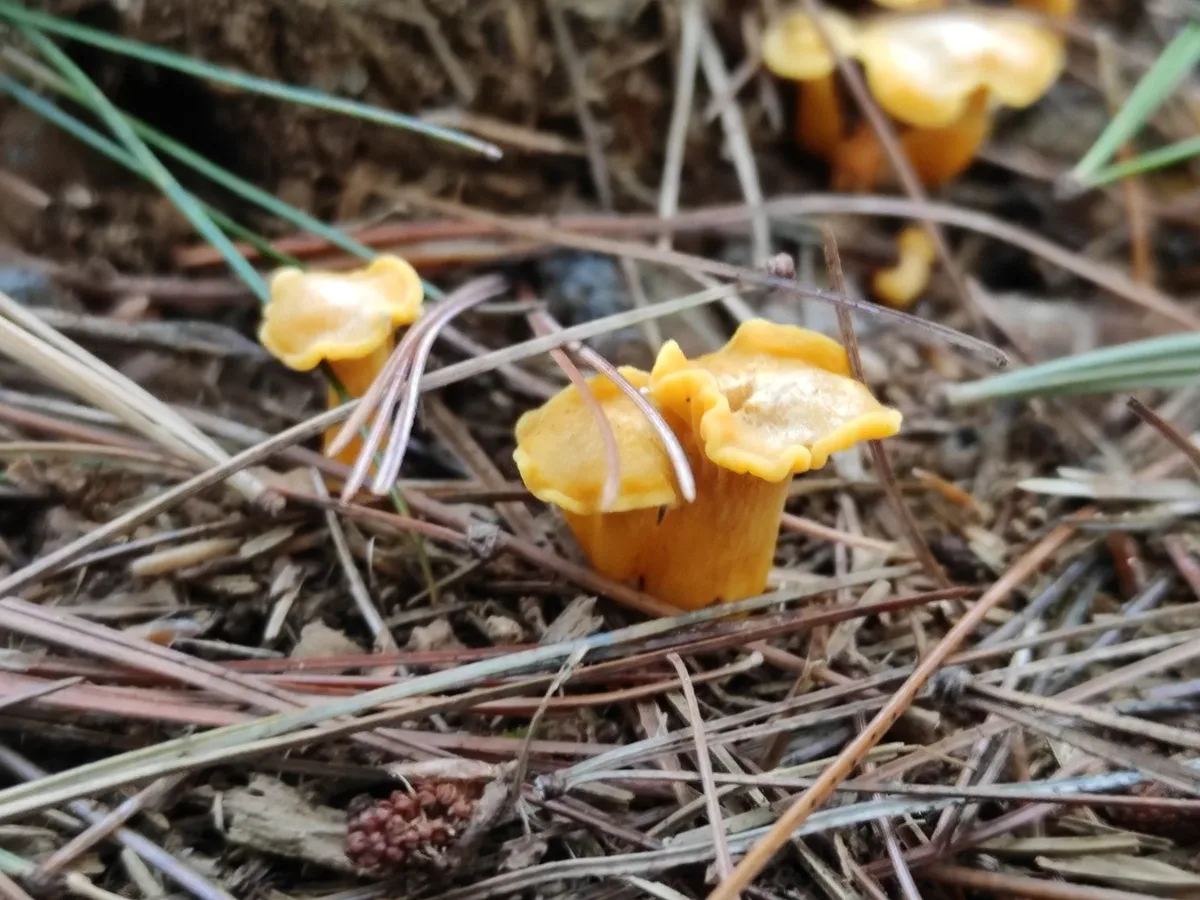 © Andrea Mologni (CC BY-SA 4.0)
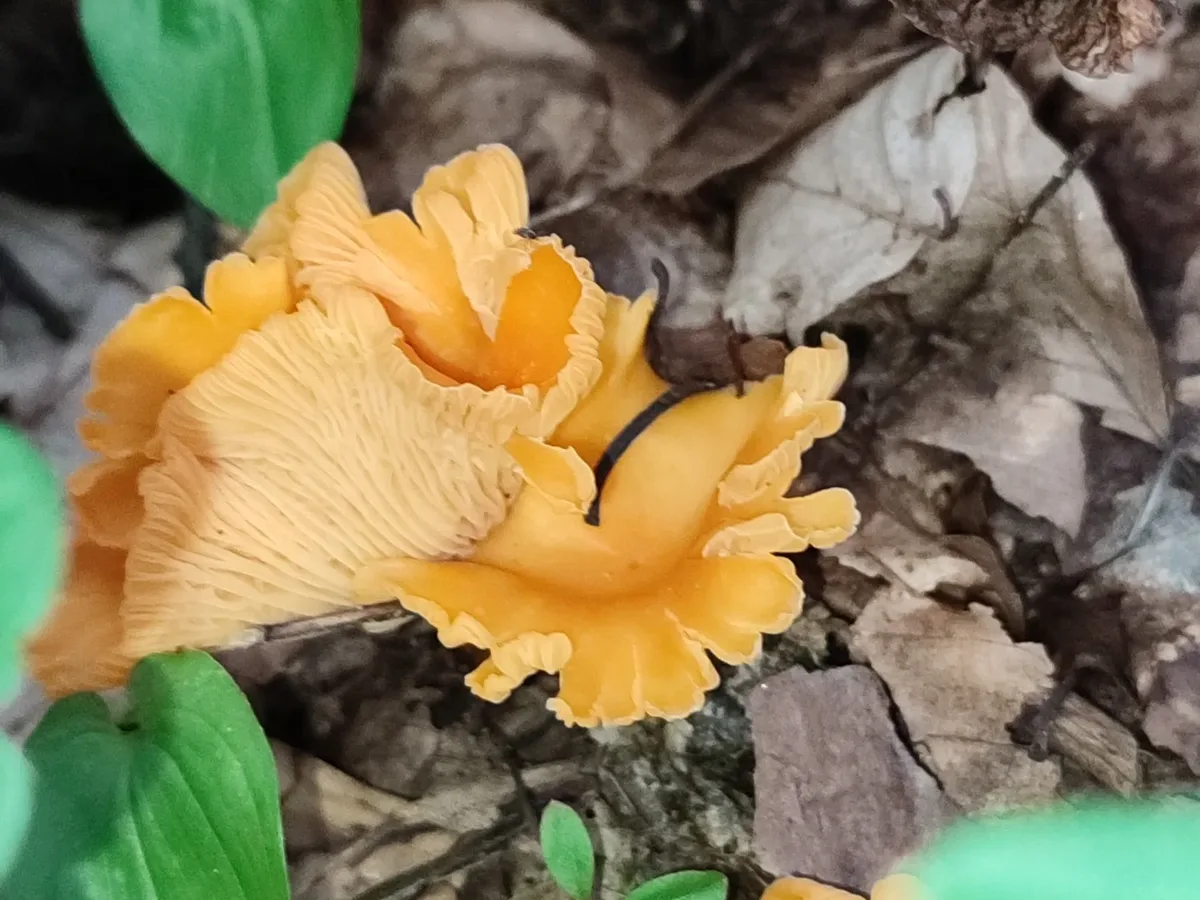 © Igor Balashov (CC BY 4.0)
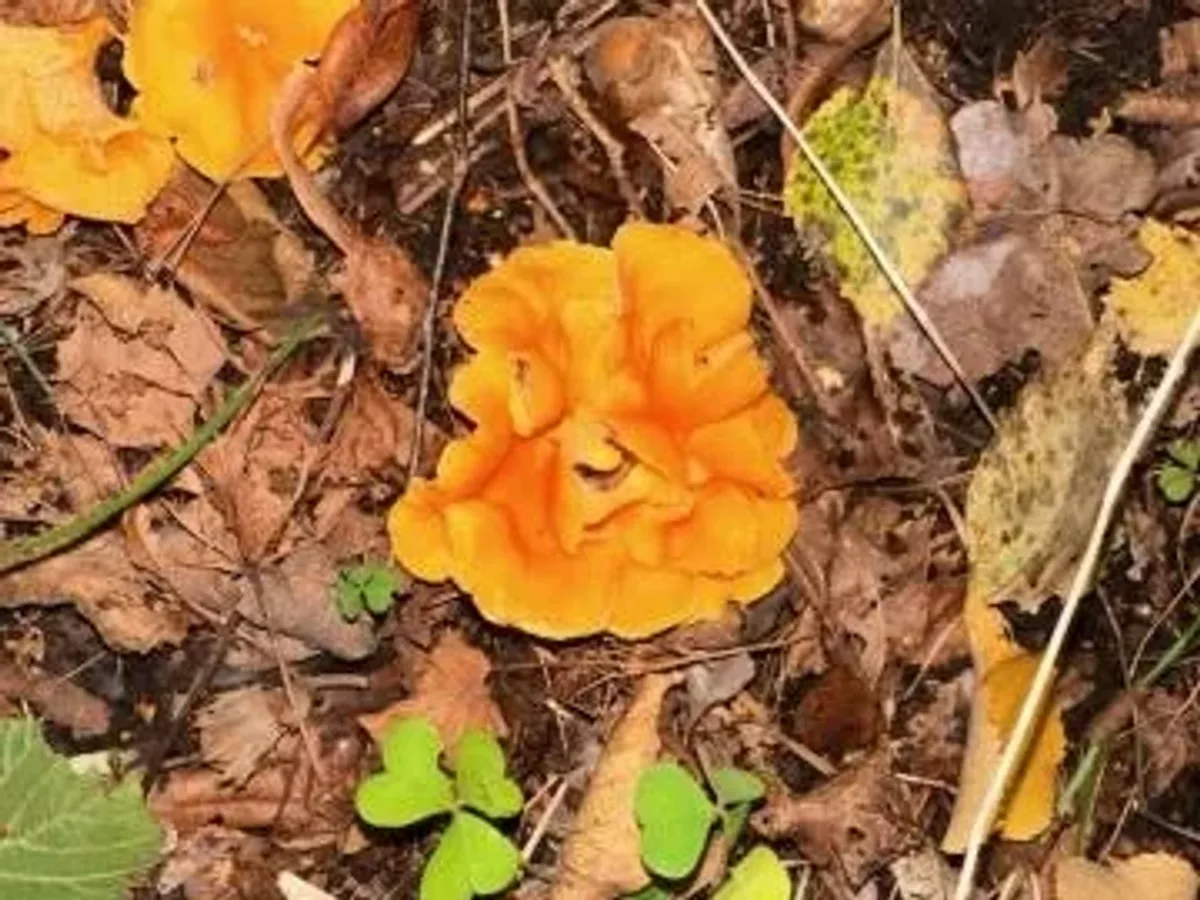 © Fenris Sterri (CC BY)
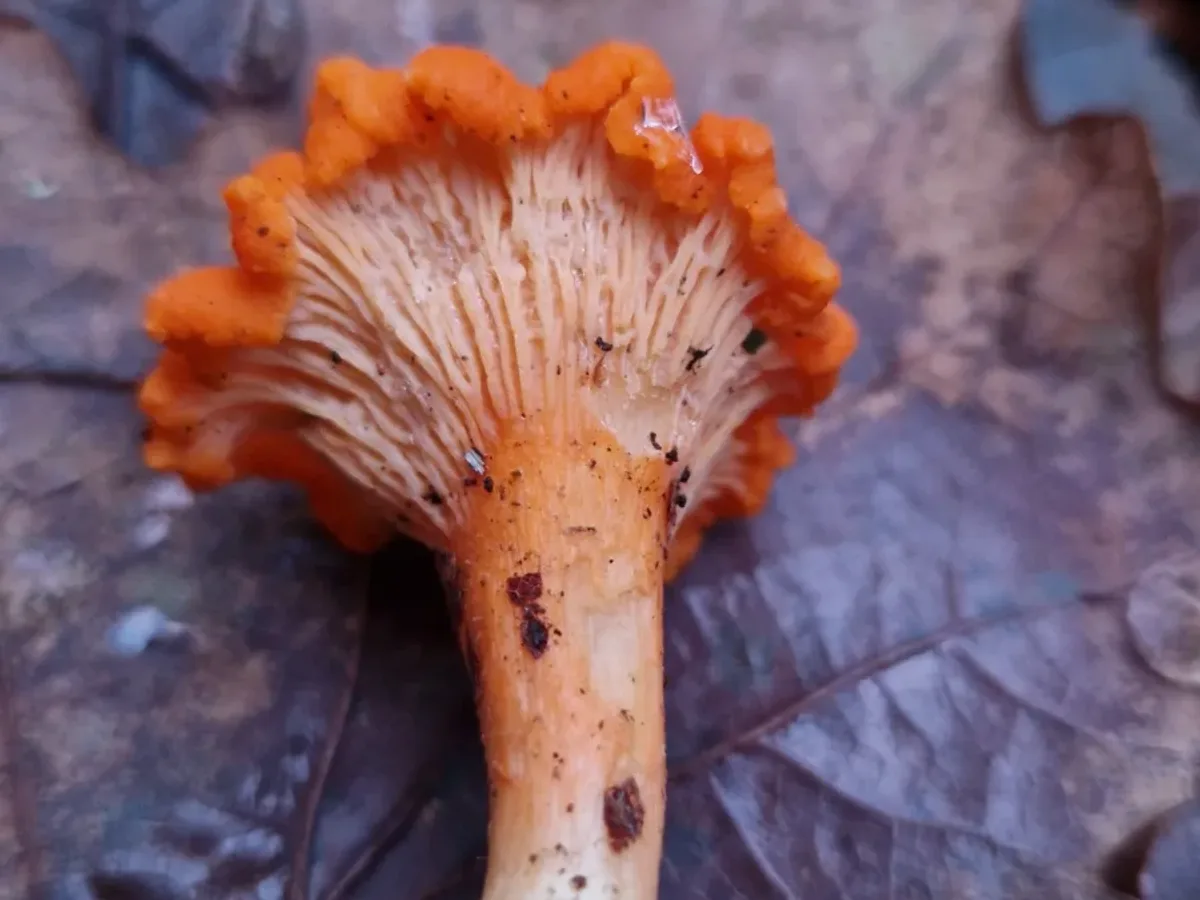 © Marita Fleseland (CC BY)
 © Marita Fleseland (CC BY)
 © Marita Fleseland (CC BY)
 © Marita Fleseland (CC BY)© Andrea Mologni (CC BY-SA 4.0)© Igor Balashov (CC BY 4.0)
One of the best mushrooms you can bring home - once you are certain of the identification.
Never eat a mushroom you are not 100% sure of - check the look-alikes below, and always cook wild mushrooms.
How to recognise it
Cantharellus friesii is the compact, intensely colored member of the chanterelle clan.
Cap
Caps typically 1.5-5 cm across, against the 10 cm that the golden chanterelle (Cantharellus cibarius) regularly achieves.
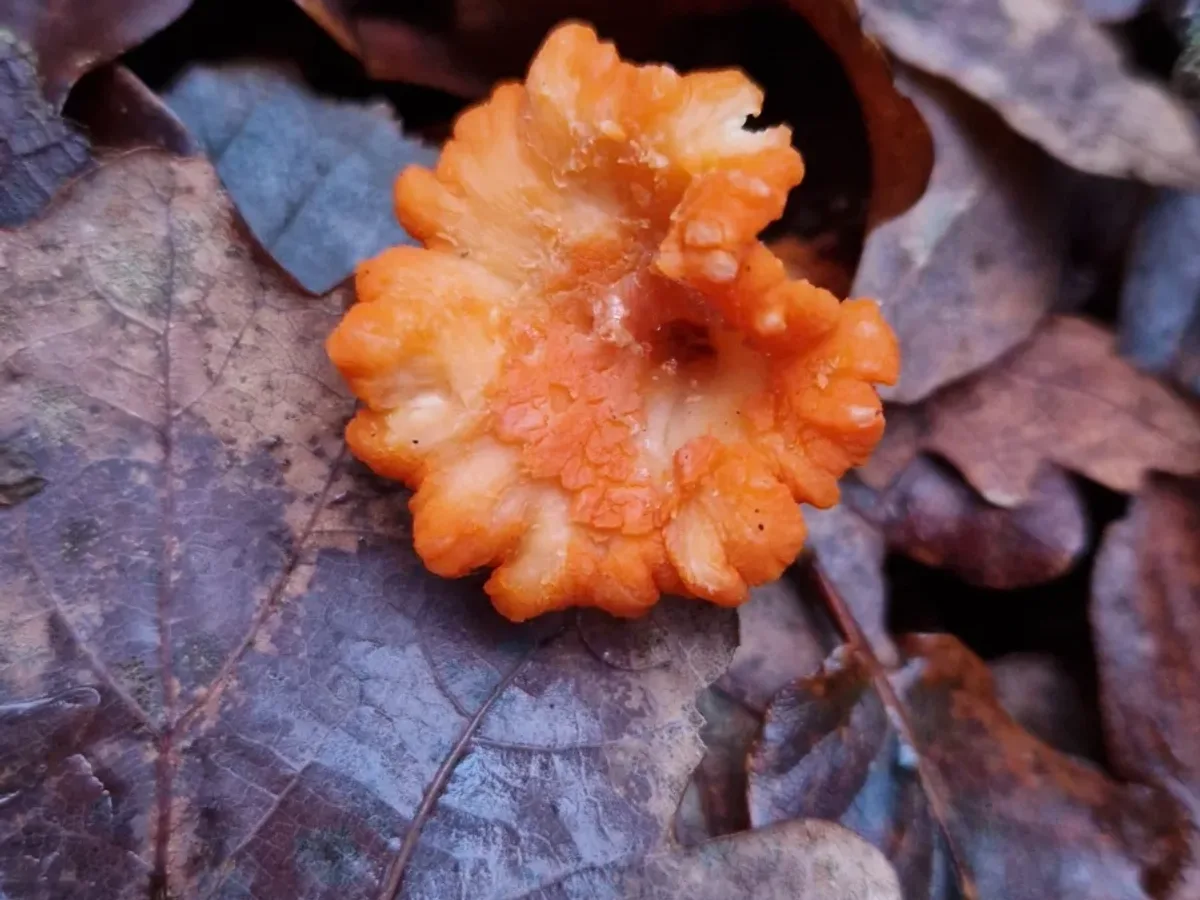
The first thing you notice is the color - a vivid deep orange to orange-yellow, one of the richest in the genus, noticeably deeper than the egg-yellow of C. cibarius.
Young caps are convex, quickly becoming irregular and funnel-like with a wavy, lobed, often downcurved margin.
Run a finger across the cap and the difference is immediate: the surface is finely velvety (tomentose), especially at the center, giving a slightly matte, almost suede-like texture in place of the smoother cap of C. cibarius - a useful field character.
Gills / Pores
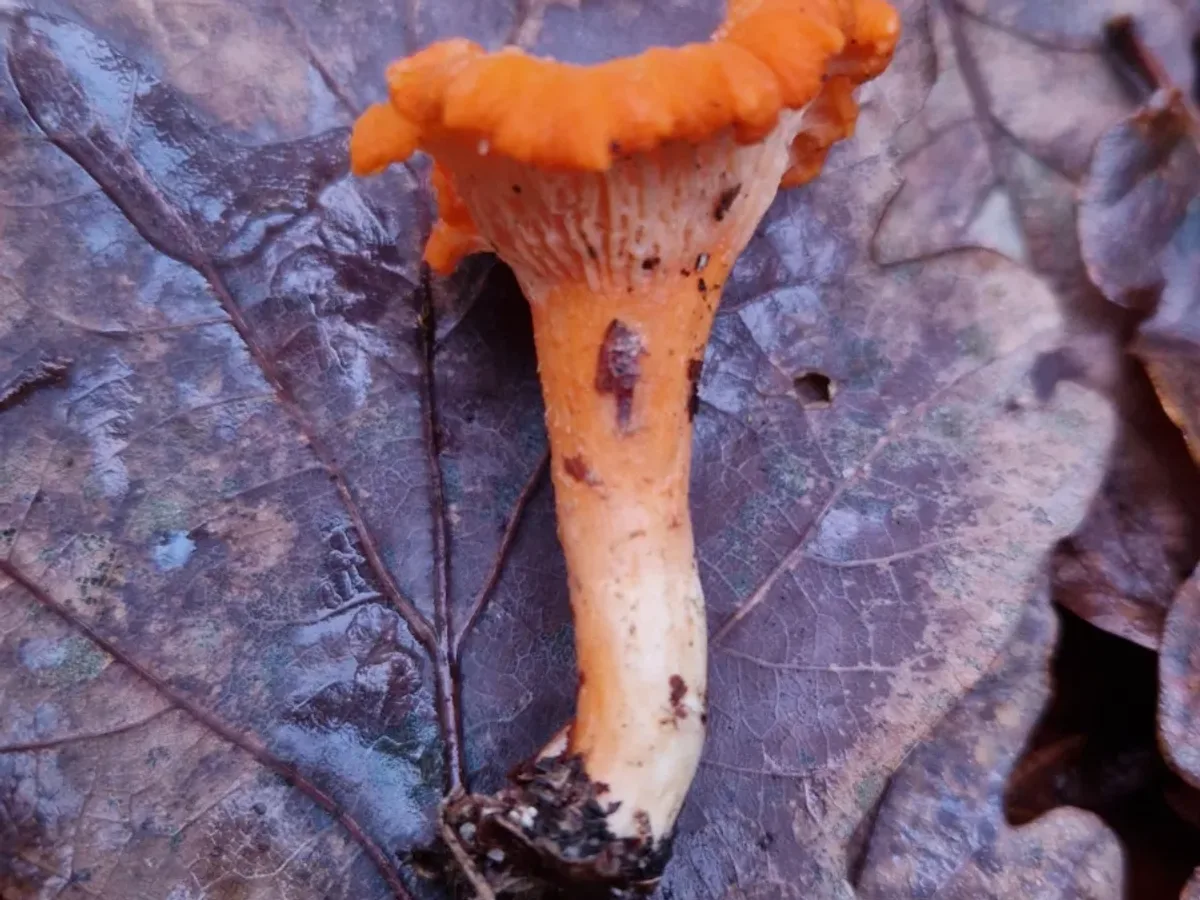
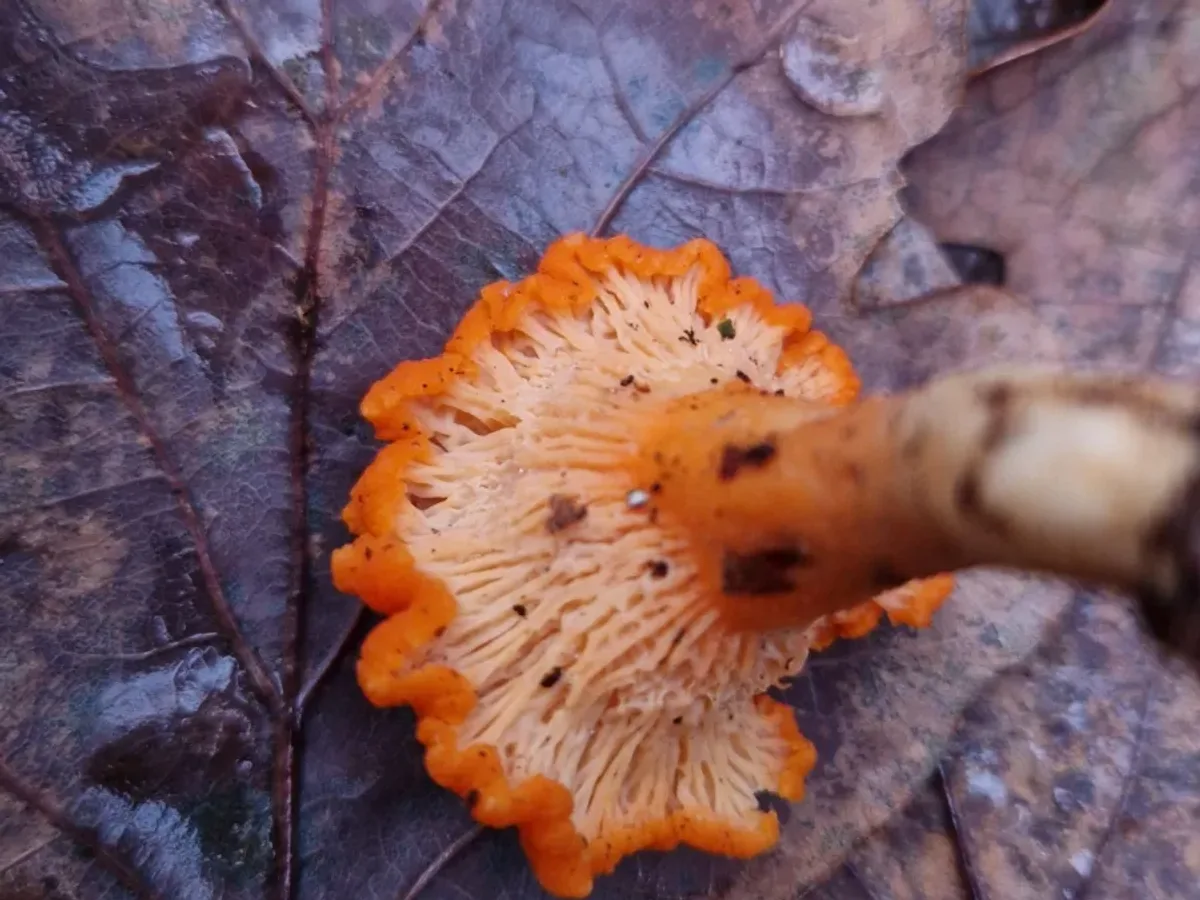
Like all true chanterelles, it carries blunt, shallow, forking ridges running down the stipe rather than blade-like gills; these ridges are orange, matching the cap.
Stem
Stipe solid and firm, 2-5 cm tall by 0.5-1.5 cm thick, often slightly paler orange at the base.
Flesh
Flesh white to very pale yellowish, firm, unchanging when cut or exposed to air.
Smell & taste
Scent faintly fruity, reminiscent of apricot, though sometimes less pronounced than in C. cibarius.
Spore print pale cream to pale ochre.
Where & when it grows
Habitat
Where the golden chanterelle ranges freely across mixed woodland, Cantharellus friesii keeps closer company with beech.
Its mycelium threads the roots of mature Fagus sylvatica in a partnership that outlasts individual fruiting seasons - when you find a good spot, it tends to come back.
Look in moist, humus-rich deciduous and mixed woodland on calcareous or mildly acid soils, in places with deep leaf litter and moss cover: sheltered valley hollows and north- or east-facing slopes where moisture lingers after rain.
Hornbeam and oak are secondary hosts. Pure conifer plantations are not its territory.
When
Fruiting runs from late July through November, with peak production in August, September, and October across central-western Europe.
Earlier than many autumn species, it can appear shortly after midsummer during warm wet years.
The season extends latest in maritime-influenced areas (Atlantic France, Belgium, southwest England), where it may persist into November.
How it grows
Mycorrhizal with beech and allied trees. The mycelium forms persistent networks with host roots, so productive spots return year after year.
Individual fruitings tend to be smaller in number than golden chanterelle flushes - scattered singles and pairs rather than large drifts - but repeat visits to known beech woods reliably yield the species.
Fruiting conditions
Mycorrhizal summer-to-autumn species; fruiting follows sustained summer rain once soil temperatures are above 12 °C, with a 1-2 week lag. Favors moist beech forest floors that retain humidity after rain. Soil temperatures above 20 °C with drought suppress fruiting.
Look-alikes
The golden chanterelle (Cantharellus cibarius) is the most likely confusion: it is larger, yellower rather than deep orange, and typically smoother (not velvety). Both are excellent edibles and the distinction matters mainly for scientific records, not safety.
The false chanterelle (Hygrophoropsis aurantiaca) is a more urgent confusion: it is bright orange and somewhat resembles Cantharellus friesii in color and size. However it has true thin, crowded, forking gills (blade-like, not blunt ridges), grows in coniferous litter, and can cause gastrointestinal upset.
The most dangerous lookalike is the jack-o'-lantern mushroom (Omphalotus olearius and related species): vivid orange, similar size and color, but it has true blade-like gills, grows in clusters from buried wood or tree roots (not from soil in open humus), and can glow faintly bioluminescent in darkness.
Omphalotus causes severe gastroenteritis. In Europe it is mainly a Mediterranean and south-Atlantic species (olive, oak, chestnut wood), but its range overlaps with central-western beech forests.
Always verify the ridge/gill character before eating any orange chanterelle-like mushroom.
Vivid orange with true, crowded, blade-like gills (not blunt ridges). Grows in clusters from buried wood or tree roots, not from open humus. May glow faintly bioluminescent in darkness. Causes severe gastroenteritis. Mainly Mediterranean but ranges into central Europe.
Closely related sister species with pale lilac to amethyst tints on the cap surface, especially when young, which Cantharellus friesii lacks. Also an edible chanterelle. Mainly a record-level distinction.
Very similar orange color and size but has true thin, crowded, blade-like forking gills - not blunt ridges. Grows mainly under conifers. Can cause gastrointestinal upset; treat as suspect.
Larger (3-10 cm cap), more egg-yellow than deep orange, smooth cap surface rather than velvety. Also an excellent edible; distinction is mainly of interest for records rather than safety.
In the kitchen
Picking & cleaning
Twist and pull, or cut at the base, leaving the mycelium intact.
The dense, firm flesh holds up well in a basket. Brush off leaf debris and soil in the field. Being small, they require less cleaning than larger chanterelles.
Eat within 3-4 days fresh; they sauté down considerably but retain excellent flavor.
Cooking
The flavor is essentially that of the golden chanterelle - fruity, peppery, nutty - in a more concentrated, intensely colored package.
Sauté in butter over moderate-high heat, starting dry to drive off moisture, then adding fat. Excellent with eggs, cream sauces, pasta, and risotto.
The vivid orange color is retained better than in C. cibarius, making these attractive garnishes.
Drying is possible but diminishes texture; freezing after blanching works better for preservation.
Good to know
Cantharellus friesii is a safe, well-regarded edible with no known toxins.
The critical safety check is to confirm you have blunt, forking, decurrent ridges - not true, blade-like gills - before eating. This single test eliminates the most dangerous look-alikes (Omphalotus).
Do not collect in polluted areas, as chanterelles are moderate heavy-metal accumulators in contaminated soils.
A few individuals experience mild digestive discomfort from large quantities of insufficiently cooked chanterelle; always cook thoroughly.
A reference guide - never an edibility guarantee. When in doubt, leave it out.