Appalachian chanterelle
Cantharellus enelensis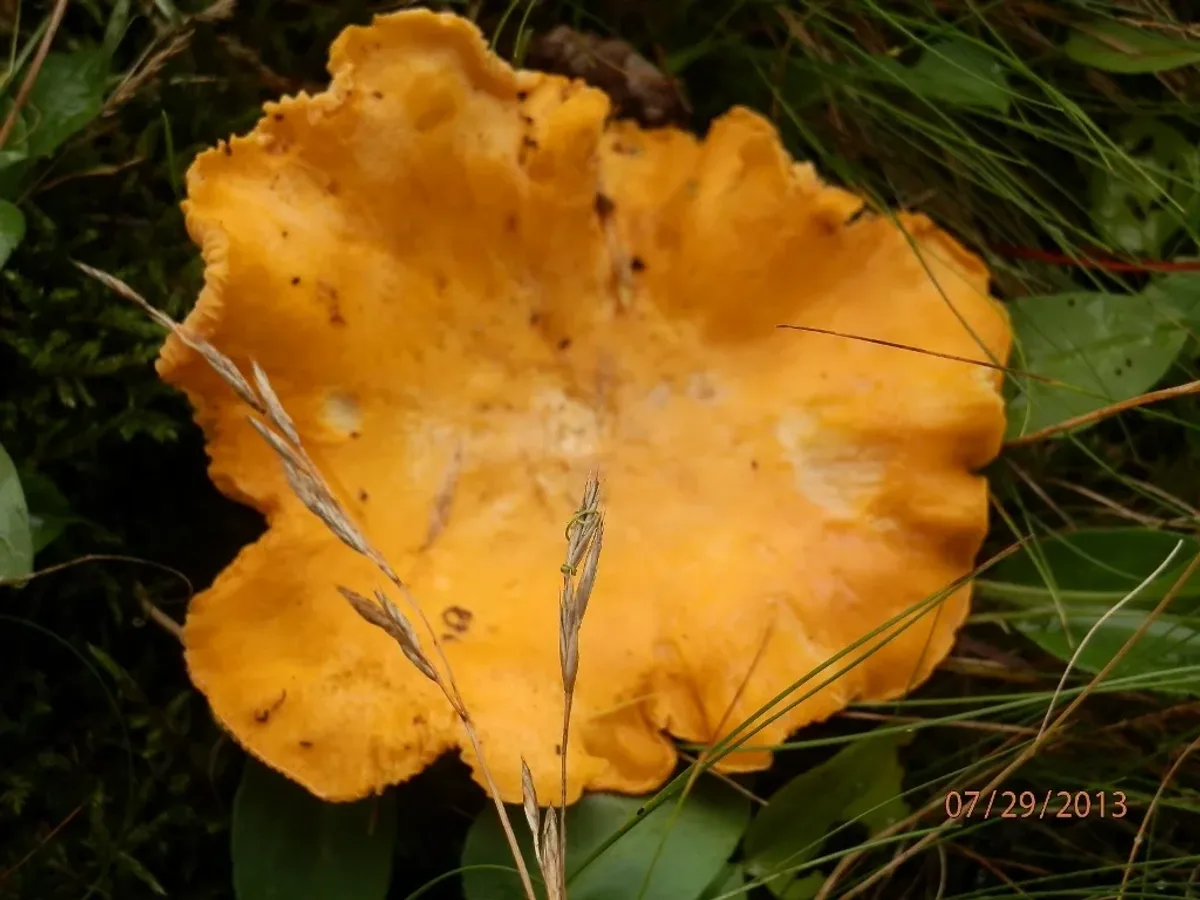 © pinonbistro (CC BY-SA 4.0)
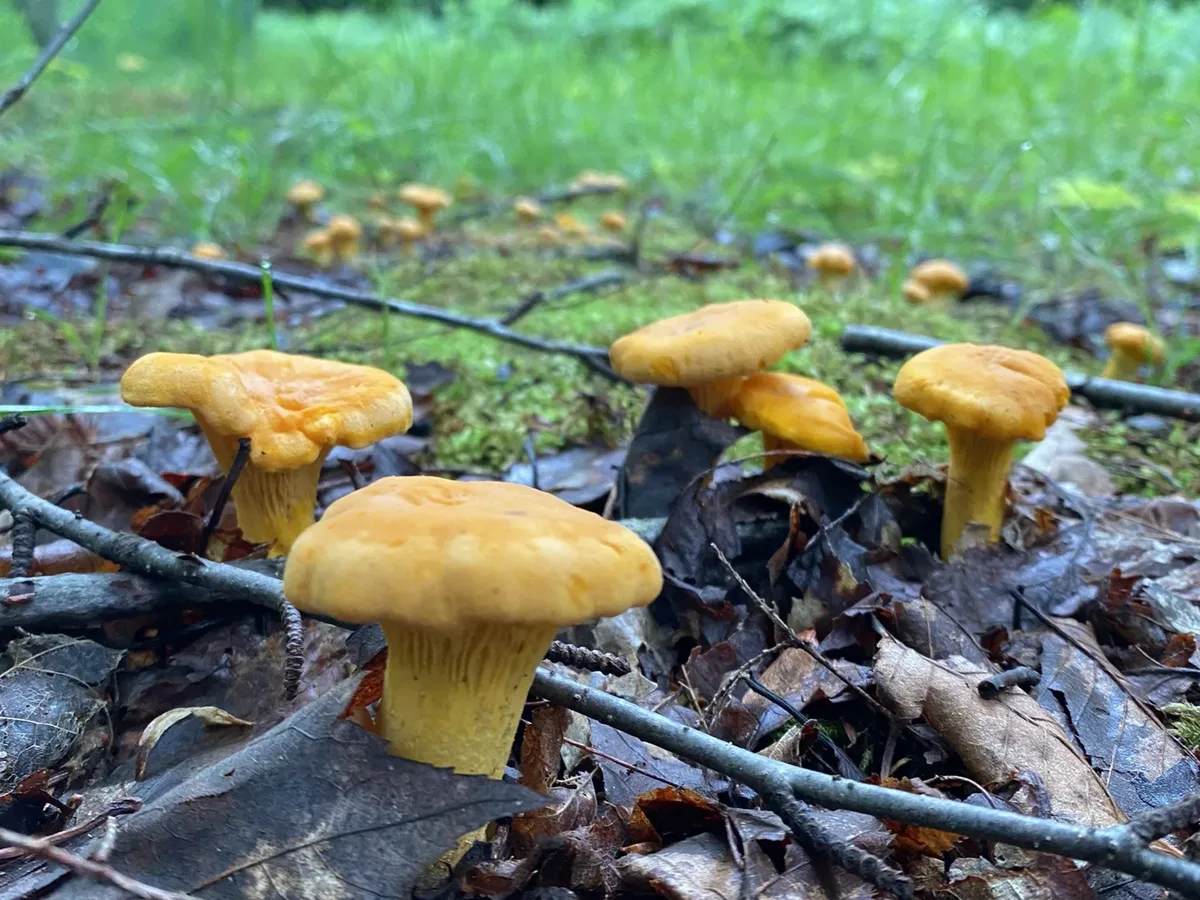 © Abby Ciona (CC BY)
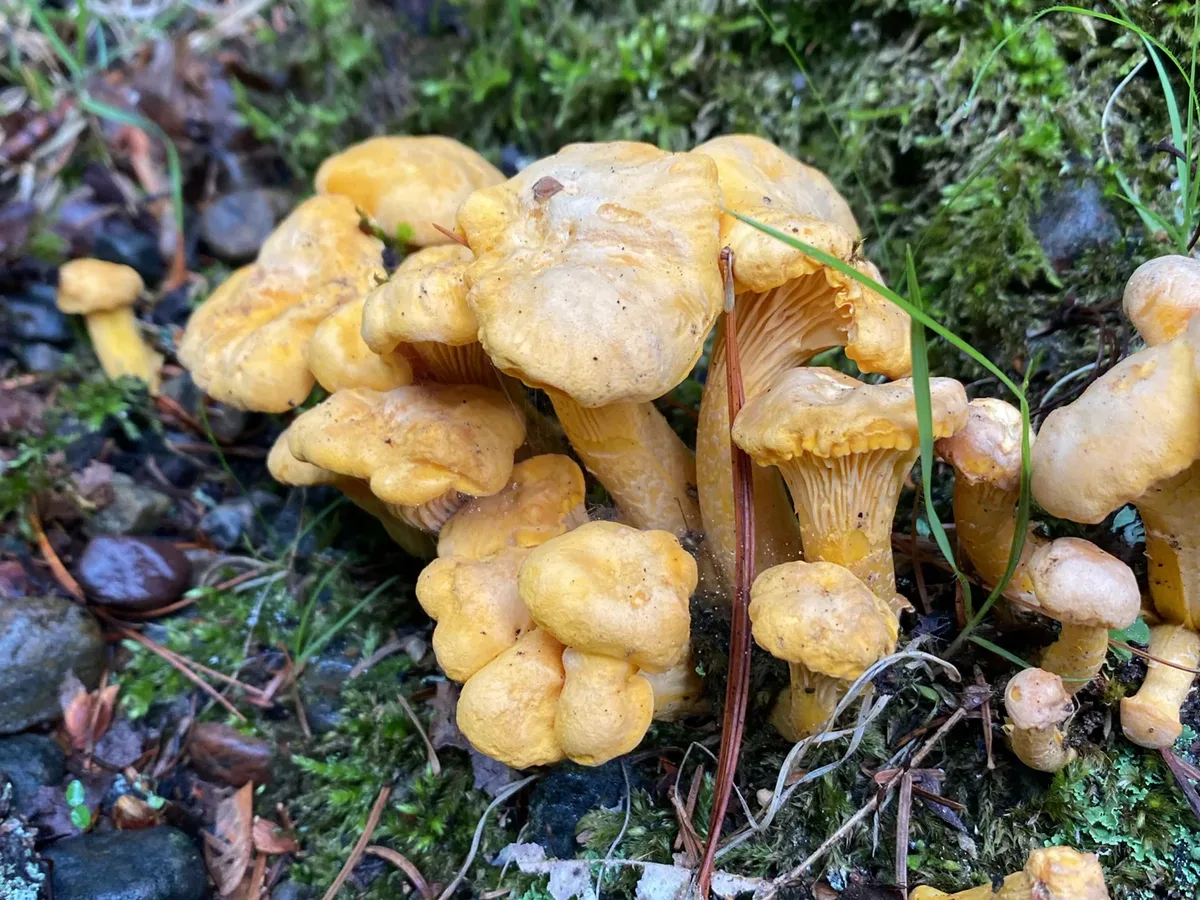 © Abby Ciona (CC BY)
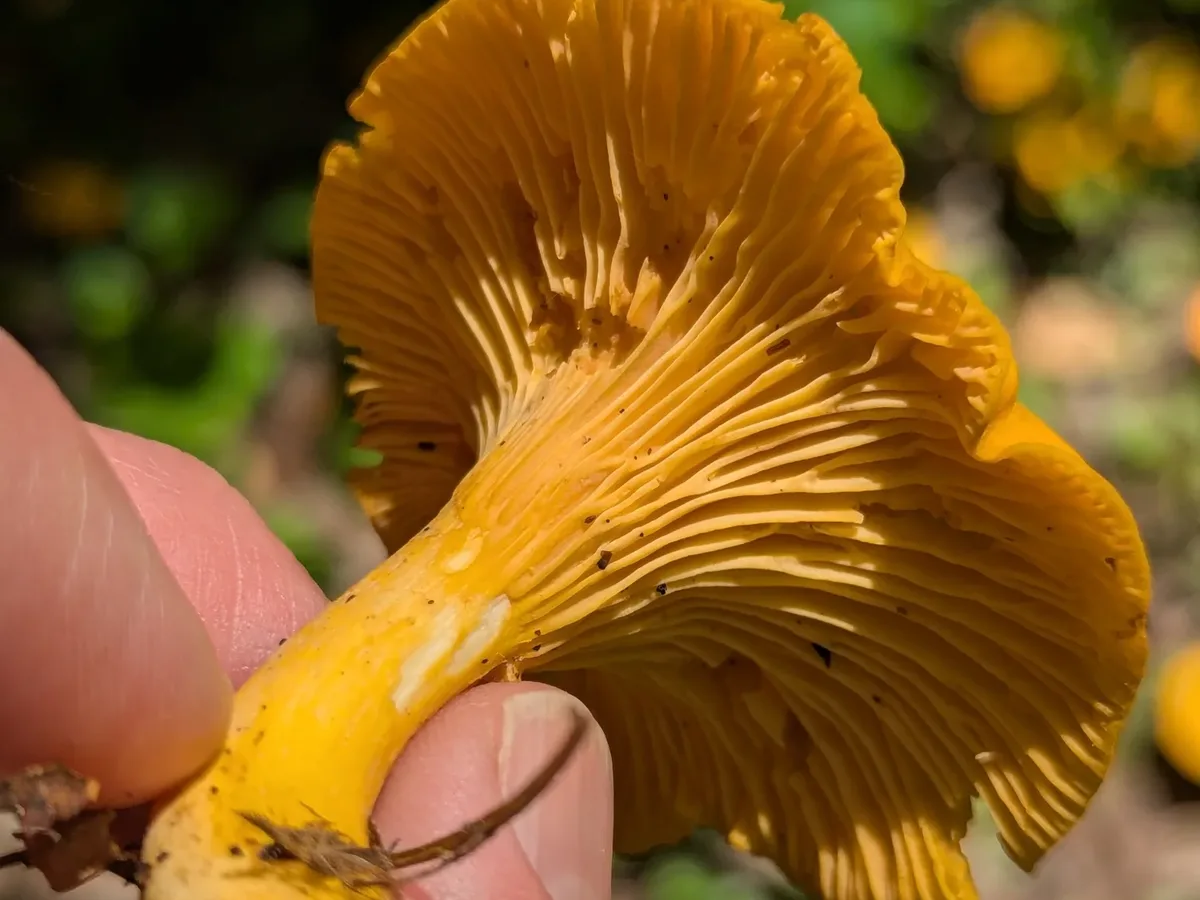 © Benoit Renaud (CC BY)
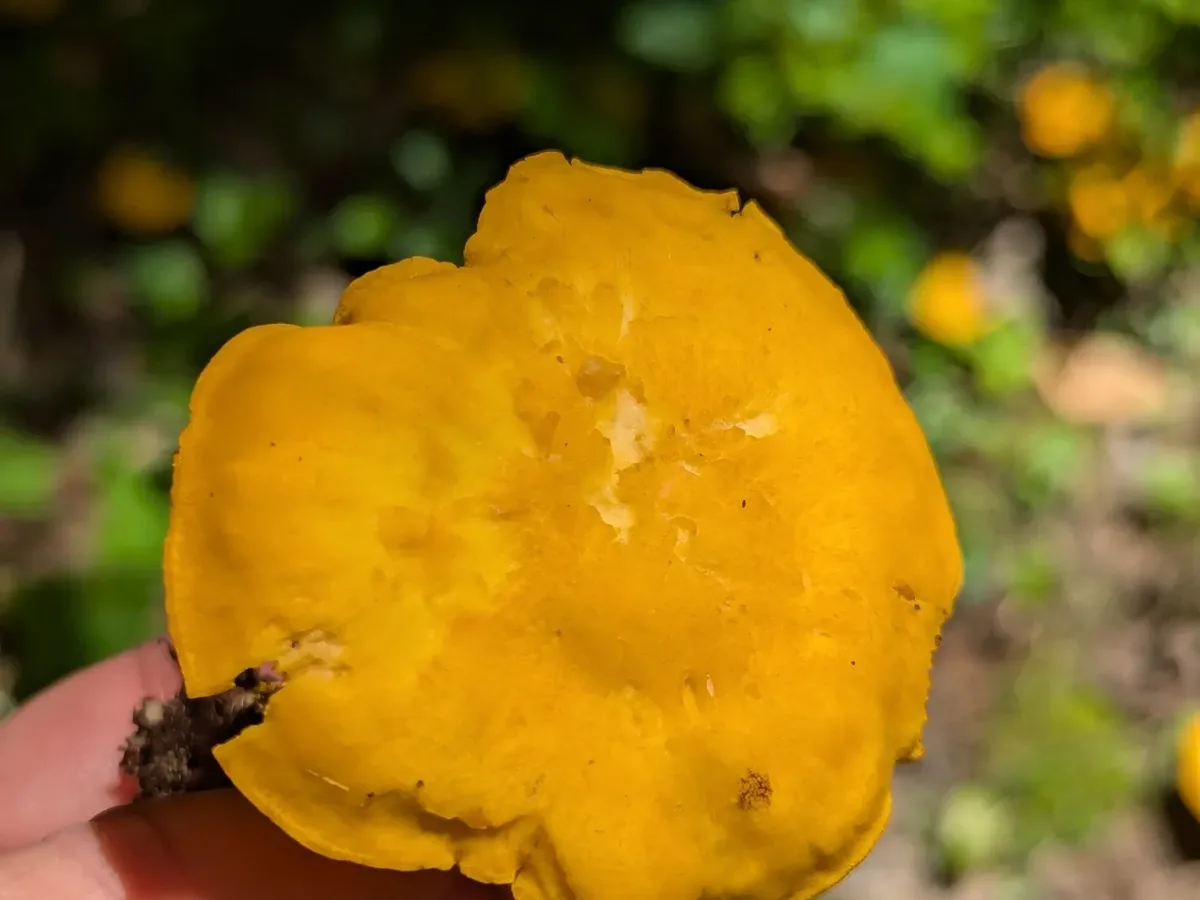 © Benoit Renaud (CC BY)
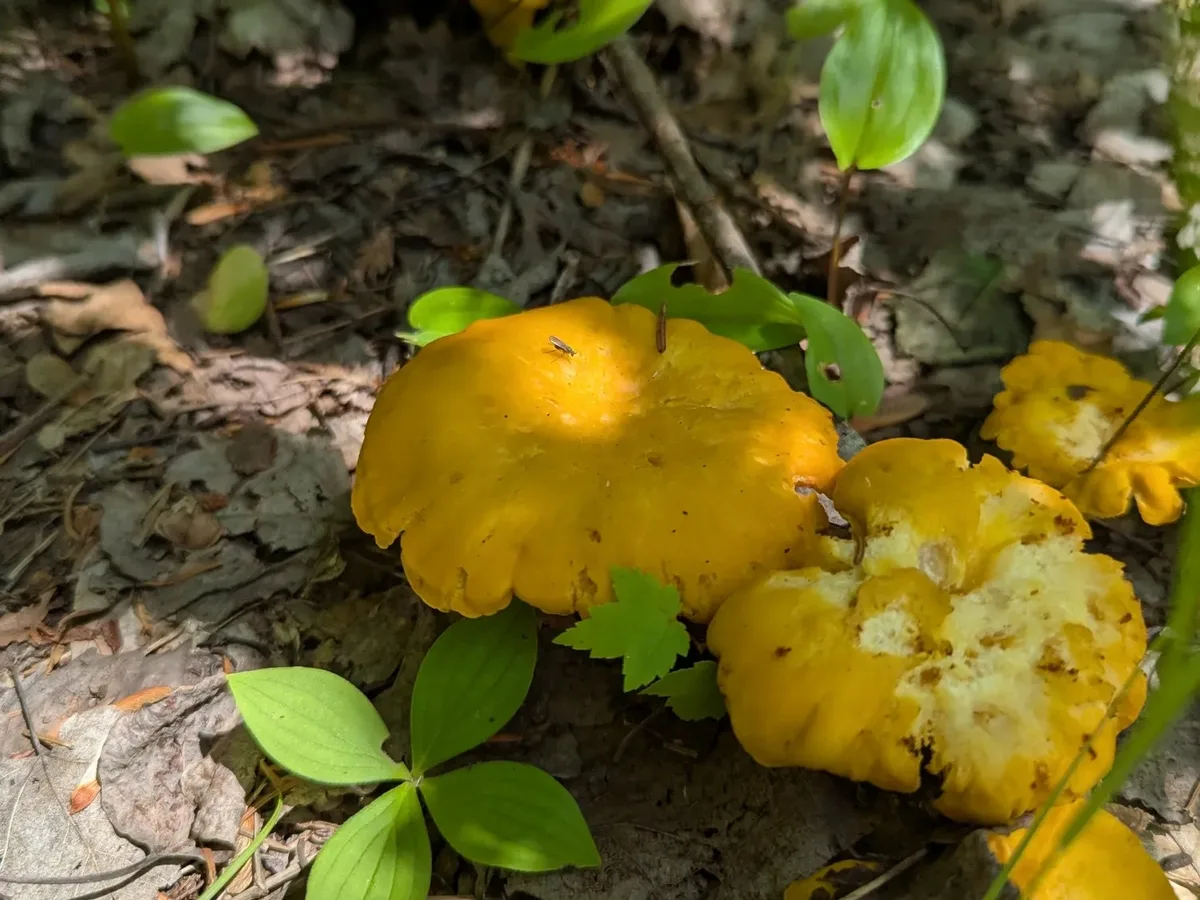 © Benoit Renaud (CC BY)
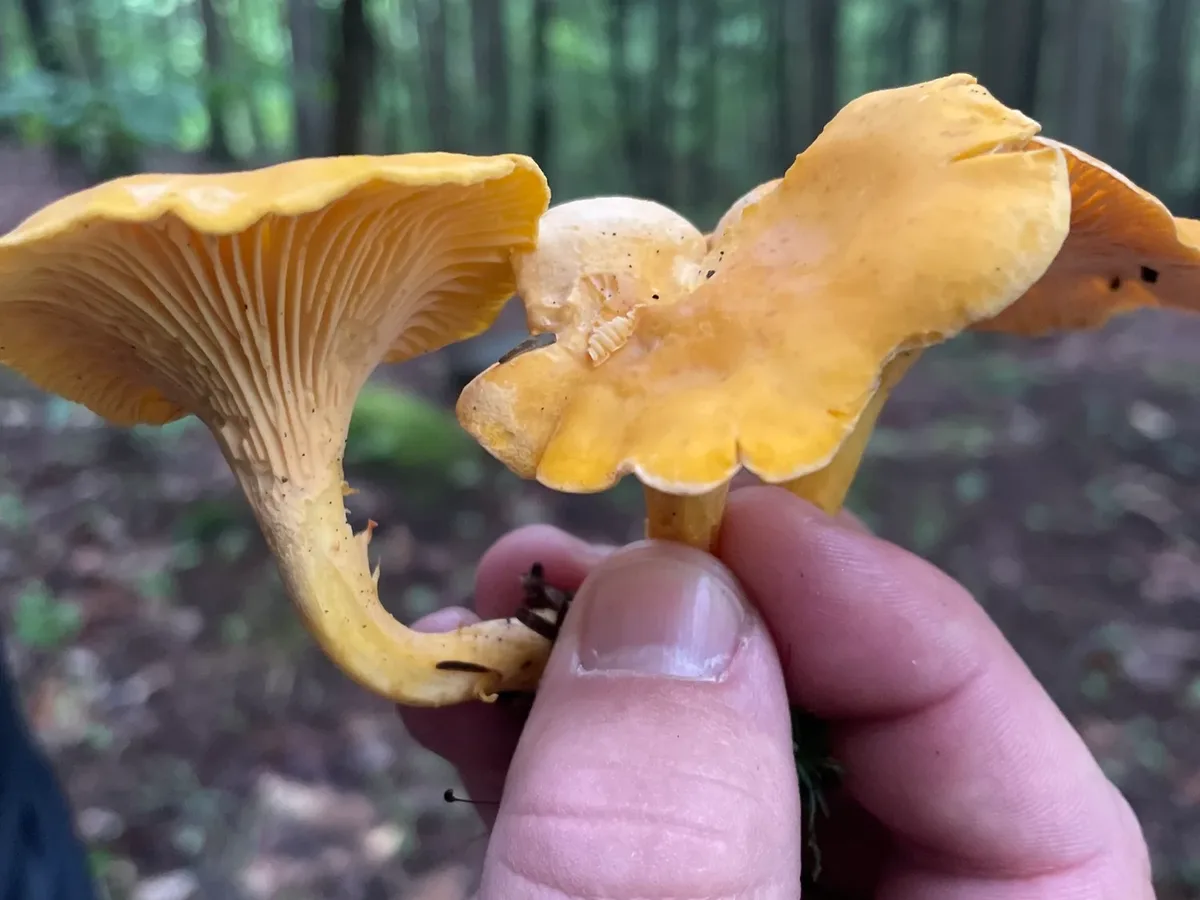 © Desiree L. Narango (CC BY)
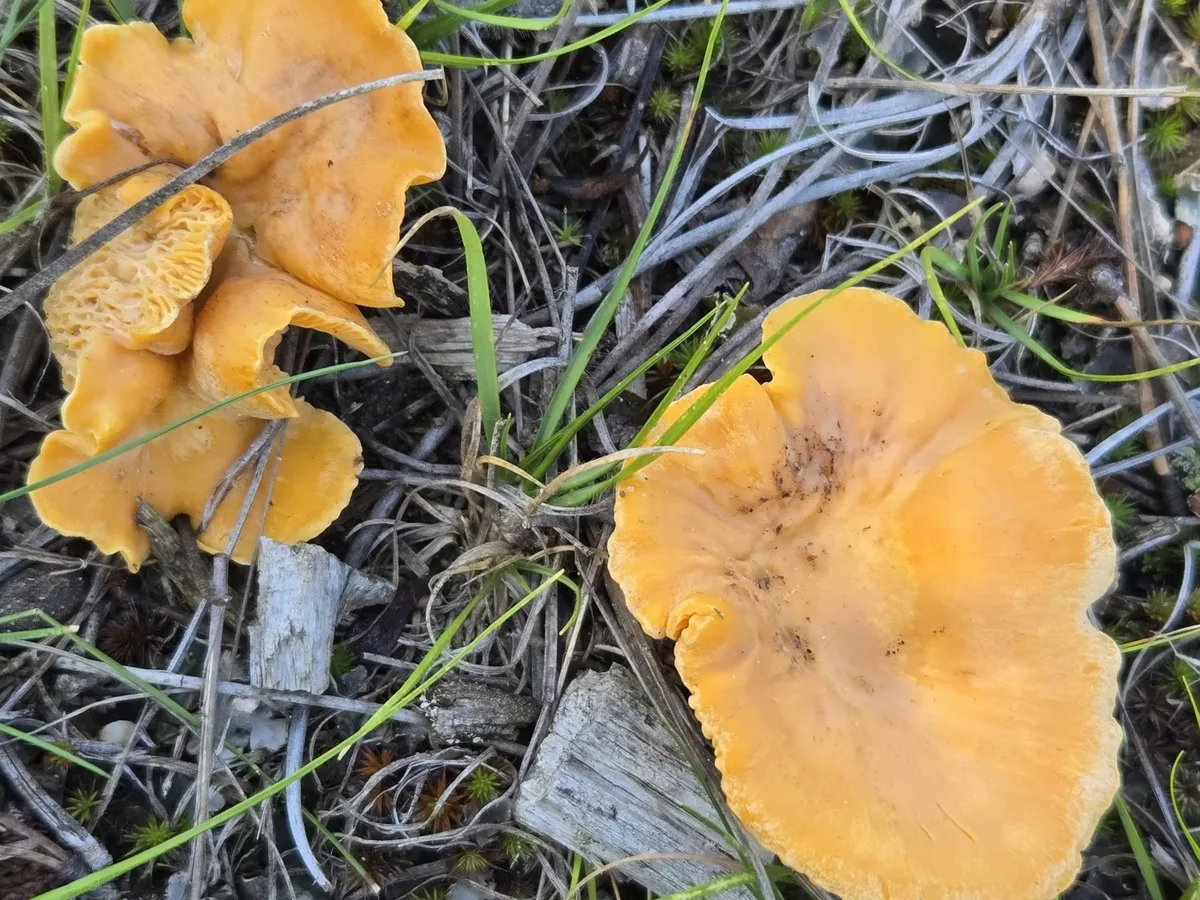 © Jo Roberts (CC BY)
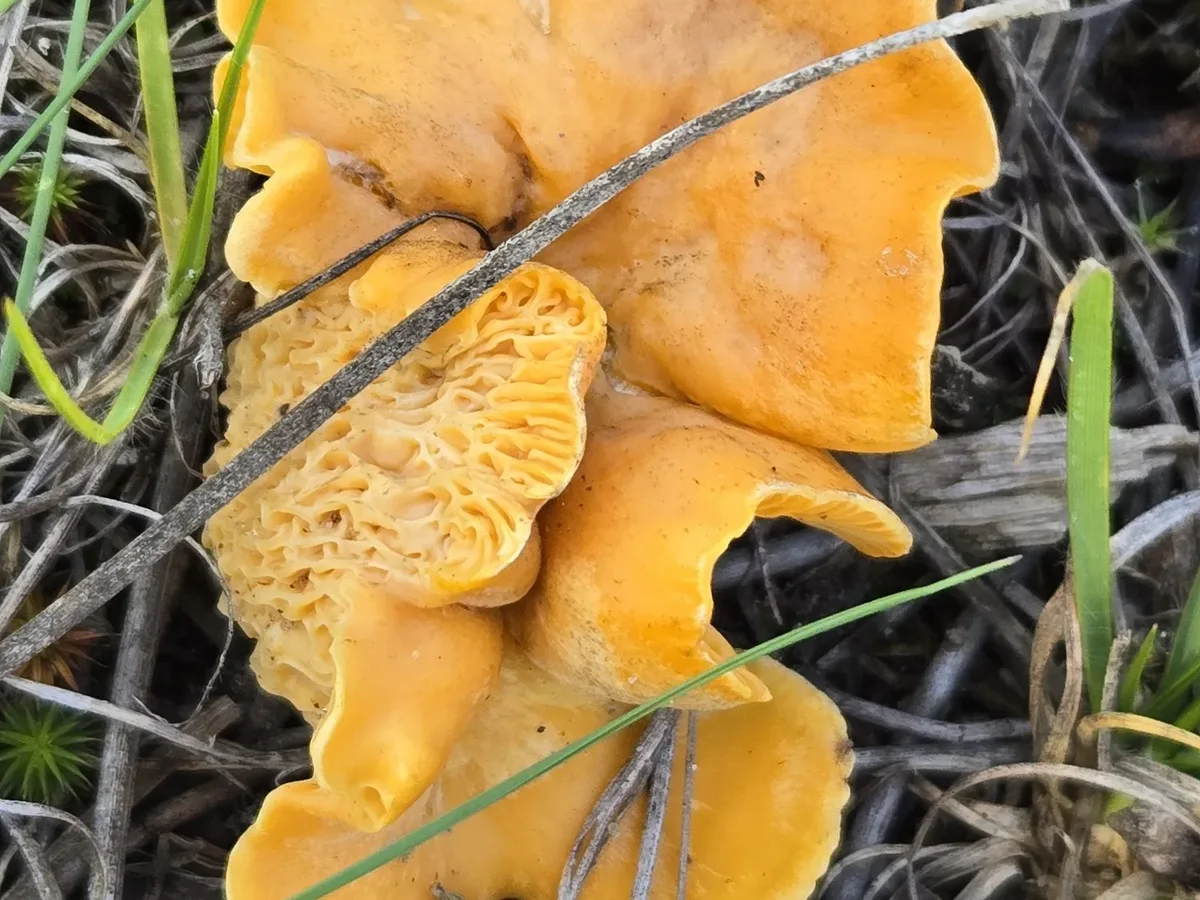 © Jo Roberts (CC BY)
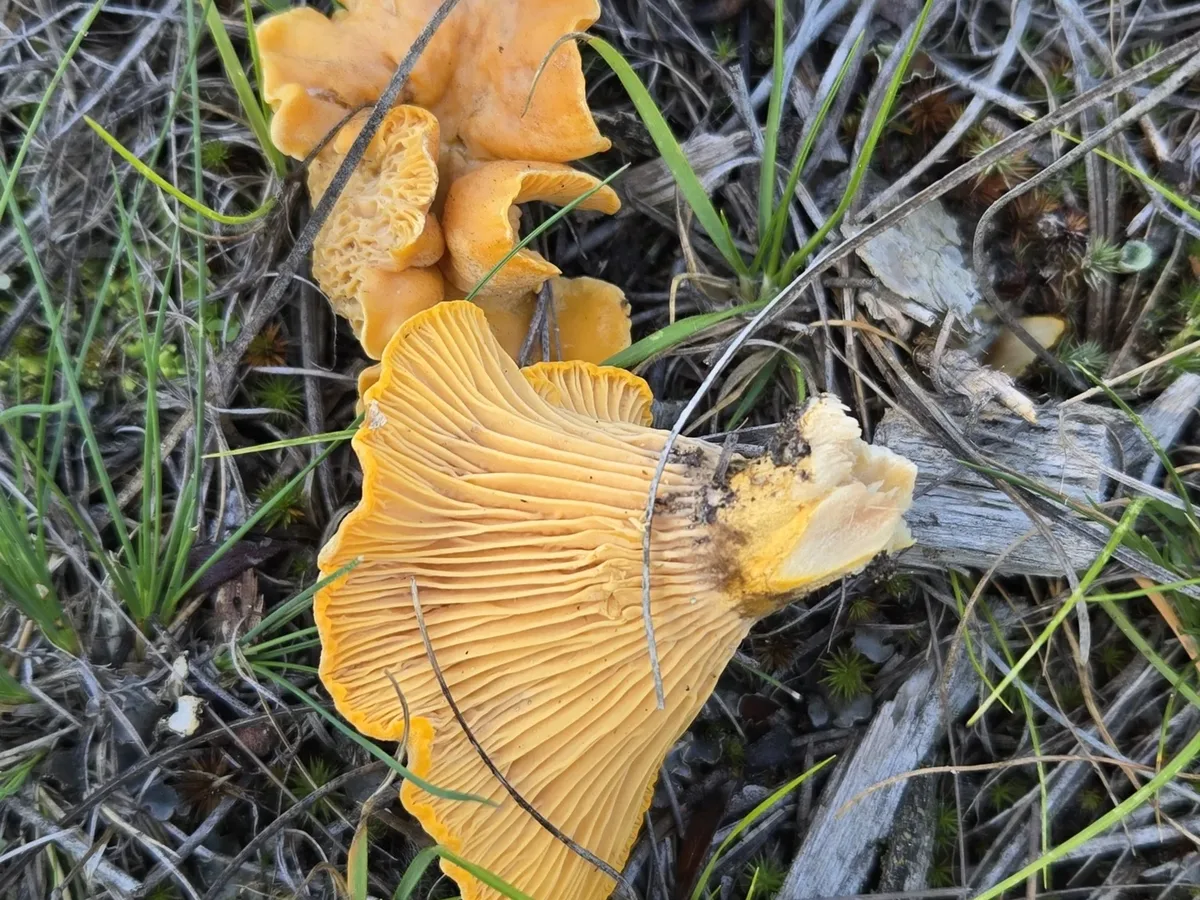 © Jo Roberts (CC BY)
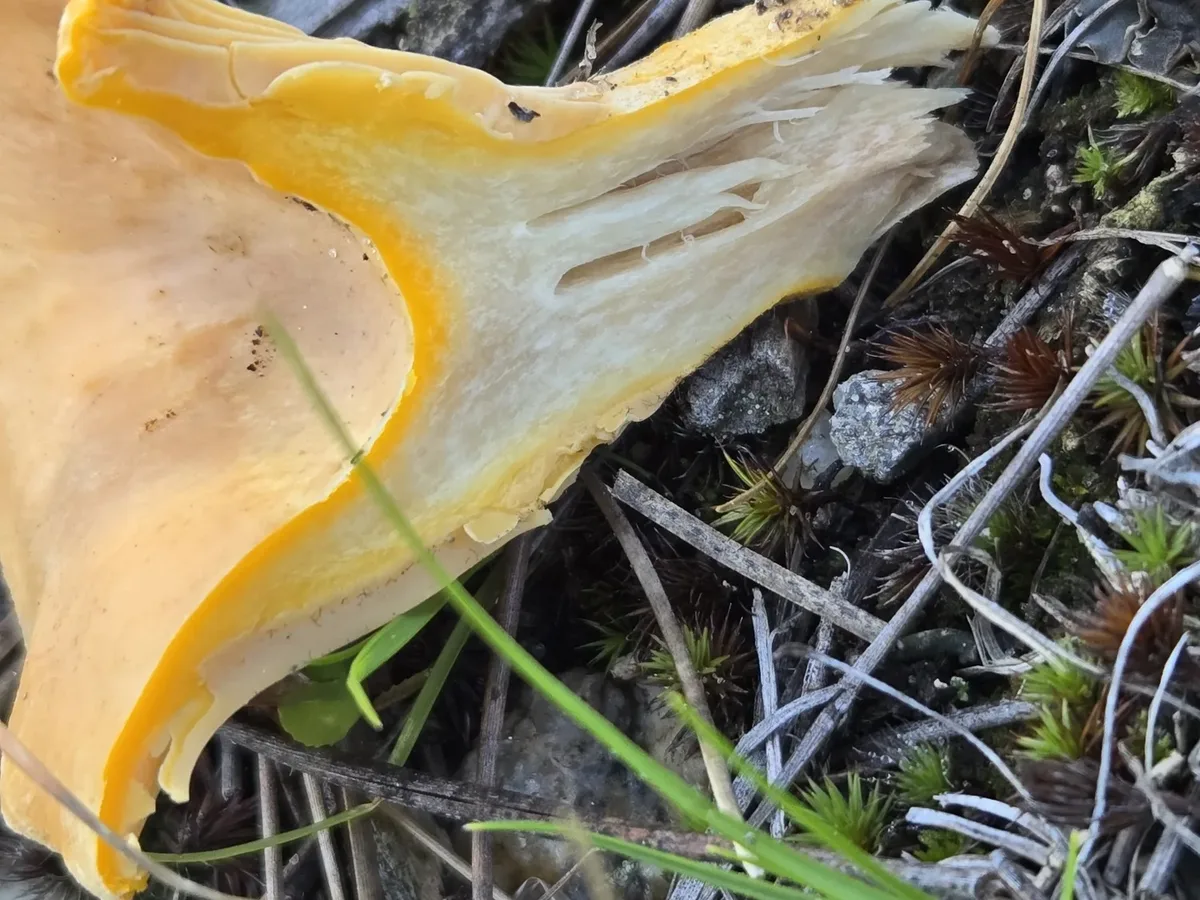 © Jo Roberts (CC BY)
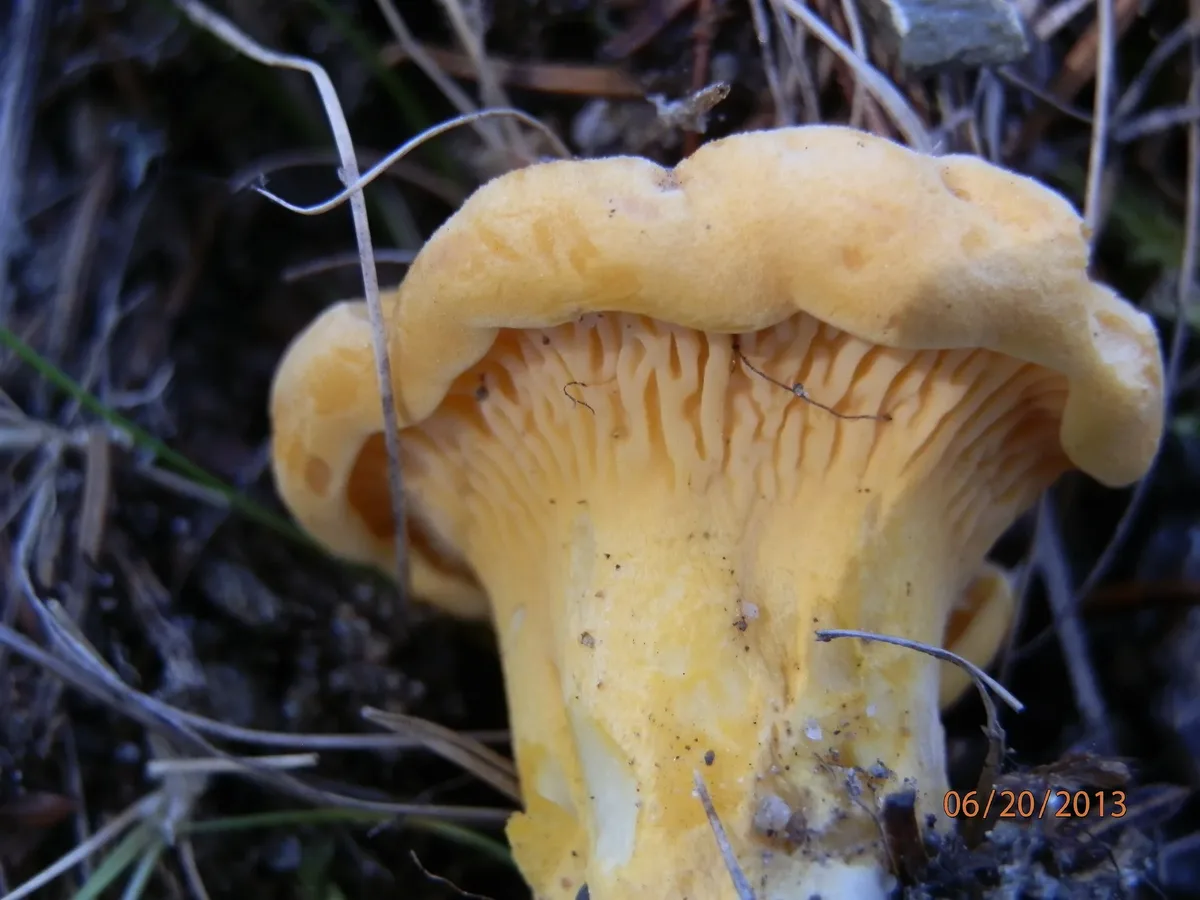 © pinonbistro (CC BY-SA 4.0)© pinonbistro (CC BY-SA 4.0)© Abby Ciona (CC BY)
Good to eat, once you have identified it with certainty and cooked it through.
Never eat a mushroom you are not 100% sure of - check the look-alikes below, and always cook wild mushrooms.
How to recognise it
Cantharellus enelensis belongs to the Cantharellus cibarius aggregate - a group of closely related golden chanterelles that was segregated into distinct species as molecular and morphological studies advanced in the 2000s and 2010s.
In the field it has the classic golden chanterelle gestalt. The overall colour is warm golden-yellow without any reddish, orange-red, or brown tones.
Cap
A smooth, egg-yolk to orange-yellow cap that begins convex and becomes irregularly wavy and funnel-shaped with age, measuring 3-8 cm across. The cap surface is dry and smooth.
Gills / Pores
The defining feature of any Cantharellus - and the critical safety feature - is the hymenium: the underside bears blunt, ridge-like, repeatedly forking folds that descend well down the stem. These are not true gills; they are blunt, rounded, and feel almost waxy to the touch, quite unlike the knife-blade-sharp, crowded gills of toxic lookalikes.
Flesh
The flesh is white to pale yellow and firm; when cut or broken it releases a pleasant fruity-apricot aroma.
Stem
The stem is solid and pale yellow throughout.
Where & when it grows
Habitat
This species occurs in the mixed hardwood and hardwood-dominated forests of the central Appalachian region of eastern North America, particularly in Tennessee and neighbouring states. Its range likely extends across adjacent areas of the mid-Atlantic and Southeastern US where similar forest types occur.
Like all chanterelles, it is an ectomycorrhizal species, forming a mutually beneficial root-symbiosis with its host trees, and cannot be cultivated on logs or artificial substrates.
Look for it on well-drained to moderately moist forest soils, beneath the closed canopy of oak-dominant or oak-beech forests, among leaf litter and duff.
Humid summer conditions are key: the species is absent from dry, open, or compacted soils.
When
Cantharellus enelensis is a summer-to-autumn chanterelle in eastern North America.
The first fruitbodies typically appear in June, after soil temperatures have warmed and summer rains begin.
Fruiting peaks in July and August when warm, humid conditions persist, and continues into September and October during wet autumns.
Multiple distinct flush events occur during a productive season, each triggered by significant rainfall followed by several days of warm weather.
How it grows
Grows singly or in scattered, loose groups on forest soil. It does not form dense clusters.
Because it is mycorrhizal, it recurs in the same areas year after year - experienced foragers learn reliable spots and return to them seasonally.
The fruitbodies develop slowly compared to many saprotrophic species and can persist for a week or more before deteriorating, making them worthwhile to seek even on less frequent forays.
Fruiting conditions
Like all Cantharellus in eastern North America, fruiting is driven by warm soil temperatures combined with adequate rainfall. The trigger is typically 25+ mm of rain over the preceding 14 days when soil is above 14 °C. The flush lag of 5-10 days after rain reflects the slow, steady development of chanterelle fruitbodies compared to faster-developing species. Drought effectively halts fruiting; a single heavy rain after a dry spell can produce a strong flush within a week.
Look-alikes
The most important dangerous confusion in eastern North American forests is with the jack-o'-lantern mushroom (Omphalotus illudens), a vivid orange, poisonous species that causes severe gastrointestinal illness.
Omphalotus can appear chanterelle-coloured at first glance, but always has true, sharp, blade-like gills (not blunt ridges), grows in dense clusters at or near the base of trees or from buried roots, and may show faint orange bioluminescence in complete darkness.
A more subtle confusion exists with Hygrophoropsis aurantiaca (false chanterelle / jack-o'-lantern lookalike), which has true, crowded, thin, repeatedly forking gills, a downy cap surface, and a more intensely orange colour throughout. It causes gastrointestinal upset.
The deadly Galerina marginata must always be excluded when collecting any small yellow-brown mushroom on or near decaying wood in the same forest. Galerina has true gills, a ring on the stem, a brown cap and gills, and contains lethal amatoxins.
While Galerina is an unlikely confusion for a typical golden chanterelle, it can occasionally co-occur in the same mossy or humus-rich ground near woody debris, and its danger warrants awareness.
A deadly amatoxin-containing species responsible for fatal poisonings. Galerina marginata is brown-capped (never yellow-orange), has true, sharp, brown gills, a membranous ring on the stem, a rusty-brown spore print, and typically grows on decaying wood - though it can fruit in humus-rich soil near buried wood in the same forest habitats as chanterelles. It is unlikely to be confused with a healthy golden chanterelle but must be excluded when collecting any small brownish mushroom in the same area. Key exclusion: chanterelles are yellow-orange with blunt ridges; Galerina is brown with true gills and a ring.
Also edible and also occurring in eastern North American hardwood forests. Distinguished immediately by its vivid cinnabar-red to coral-red colouration throughout cap, ridges, and stem. Cantharellus enelensis is golden-yellow to orange-yellow, not red. No confusion risk in practice.
Has crowded, thin, true gills that fork repeatedly (not blunt ridges); cap surface is downy-fibrillose to almost velvety, not smooth; colour is more uniformly intense orange throughout; lacks the fruity apricot odour; stem often curved or eccentric. Can cause gastrointestinal distress and possibly neurological symptoms. Feels and looks more 'furry' than a true chanterelle.
Also a choice edible. The broader Cantharellus cibarius sensu lato complex in eastern North America has been split into several species including C. enelensis. Separation among species in this complex is largely morphologically subtle (spore dimensions, colour nuances, geographic range) and is mostly academic from a safety or culinary standpoint - all members of the complex are edible choice species with the same blunt forking ridges and fruity odour.
Omphalotus illudens has true, sharp, blade-like gills (not blunt forking ridges), grows in dense clusters at the base of trees or from buried wood, can show faint orange bioluminescence in the dark, and has a robust, orange overall colouring. It causes severe gastrointestinal poisoning but is not typically fatal to healthy adults. Always confirm blunt, waxy false-gill ridges in Cantharellus and the solitary or scattered (not clustered) growth habit.
Also a choice edible with similar eastern North American distribution. Distinguished by its nearly smooth hymenium - the false gills are very shallow to almost absent, giving the underside a near-smooth appearance - and by its slightly more pale ochre-orange or tan tone. Both are excellent edibles and may co-occur in the same forest.
In the kitchen
Picking & cleaning
- Harvest by gently twisting and pulling to remove the whole fruitbody, or cut at the base.
- Carry in a basket or breathable container - avoid plastic bags, which cause sweating and rapid deterioration.
- Brush debris from each cap in the field with a soft brush or dry cloth.
- Store in the refrigerator for 3-5 days, wrapped loosely in paper.
Because chanterelles do not typically have prolific insect infestations, they are cleaner to process than many other wild mushrooms.
Collect only what you can use, and positively identify every specimen before putting it in your basket.
Cooking
Cantharellus enelensis has the classic chanterelle flavour: fruity, mildly peppery, nutty, and richly savoury, with a firm, meaty texture that holds up well to heat.
Avoid boiling or steaming - this waterlogs the flesh and dilutes the flavour.
The best method is to sauté in a wide, hot pan with butter or good-quality olive oil, cooking in a single layer over medium-high heat. Initially allow the fruitbodies to release their own moisture, then continue until that liquid evaporates and the ridges begin to caramelise lightly. Season with salt toward the end of cooking.
Excellent in pasta, risotto, cream sauces, scrambled eggs, or omelettes; pairs beautifully with thyme, shallots, white wine, and cream.
Can be dried and reconstituted for storage; flavour concentrates somewhat on drying.
Good to know
Cantharellus enelensis is edible and safe when correctly identified.
The safety protocol for all chanterelle identification rests on three checks:
- 1Confirm the hymenium consists of blunt, forking, ridge-like folds - NOT true sharp gills.
- 2Confirm the fruity-apricot odour.
- 3Confirm the fruitbody grows alone or scattered on the ground, NOT in dense clusters at tree bases.
These three features together reliably exclude the dangerous lookalikes. If a specimen has true, blade-like gills, discard it immediately.
Never collect chanterelles that you cannot examine closely and carefully. When trying any new edible mushroom species, eat a small portion first and wait 24 hours before consuming more.
A reference guide - never an edibility guarantee. When in doubt, leave it out.