Cinnabar Chanterelle
Cantharellus cinnabarinussyn. Cantharellus cibarius var. cinnabarinus, Craterellus cinnabarinus, Agaricus cinnabarinus
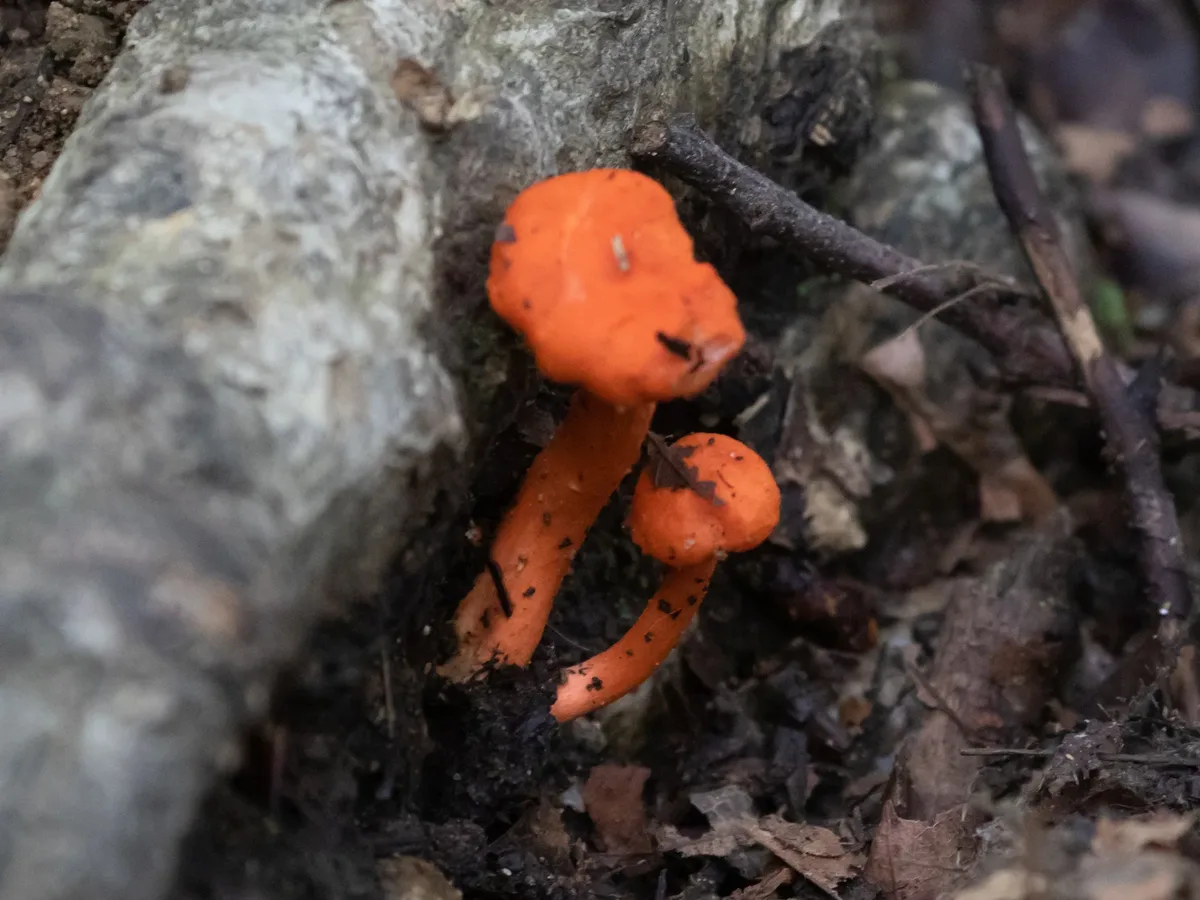 © Ryan F. Mandelbaum (CC BY 4.0)
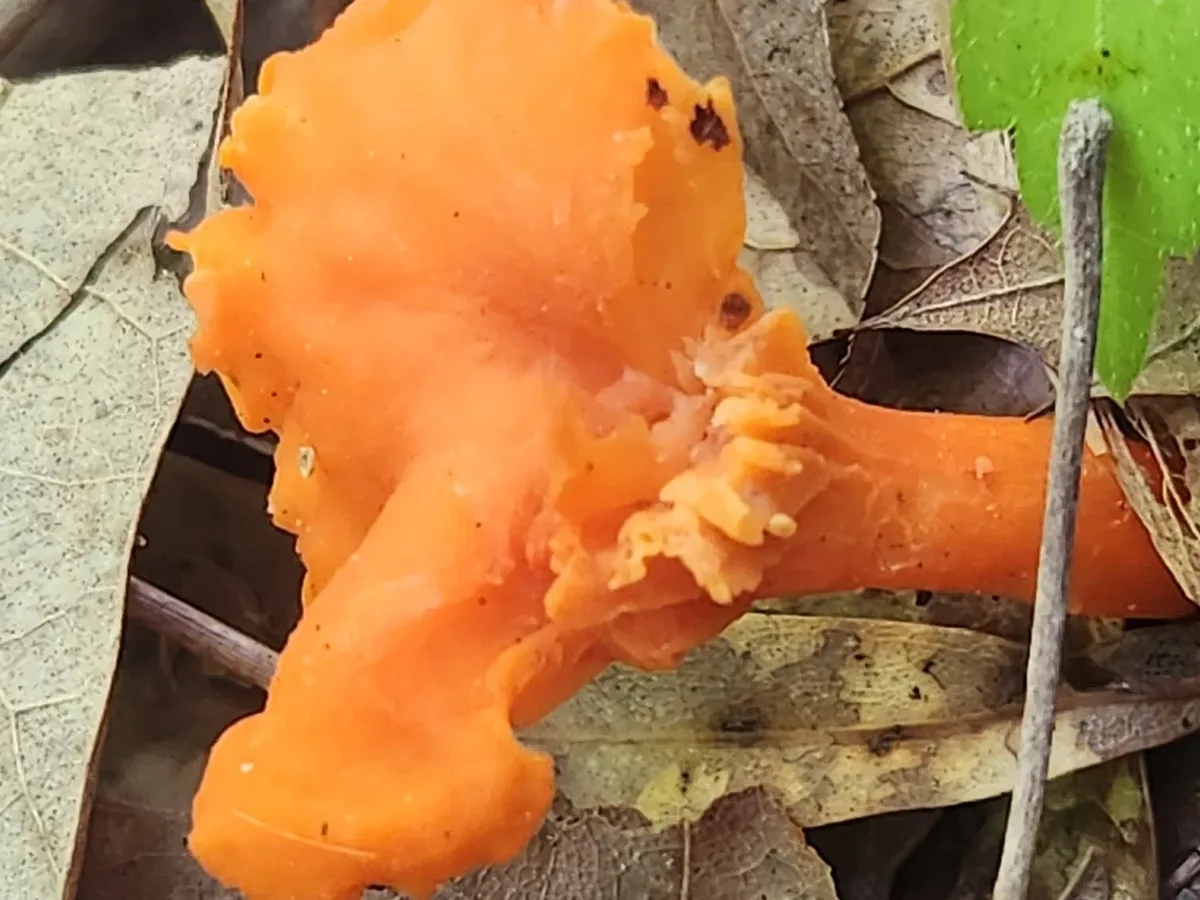 © Hila Taylor (CC BY)
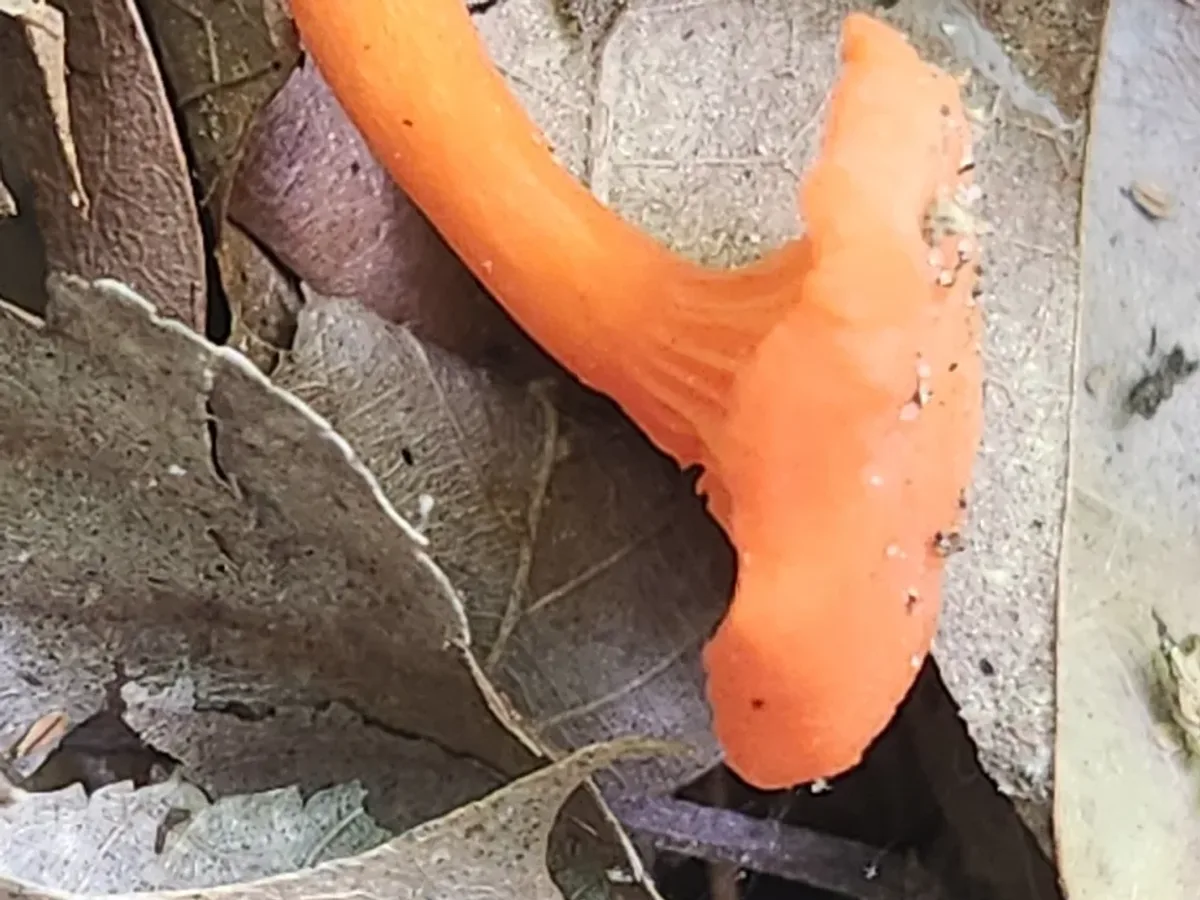 © Hila Taylor (CC BY)
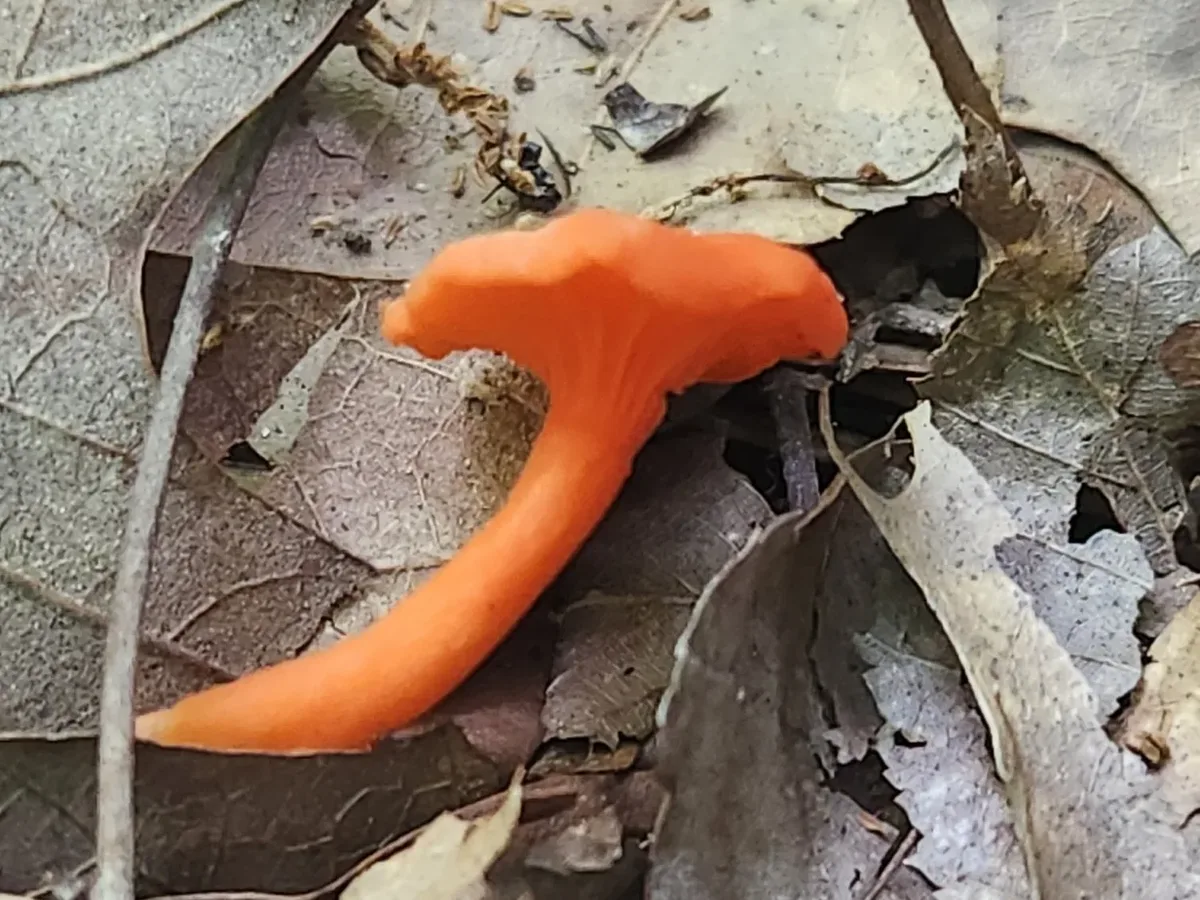 © Hila Taylor (CC BY)
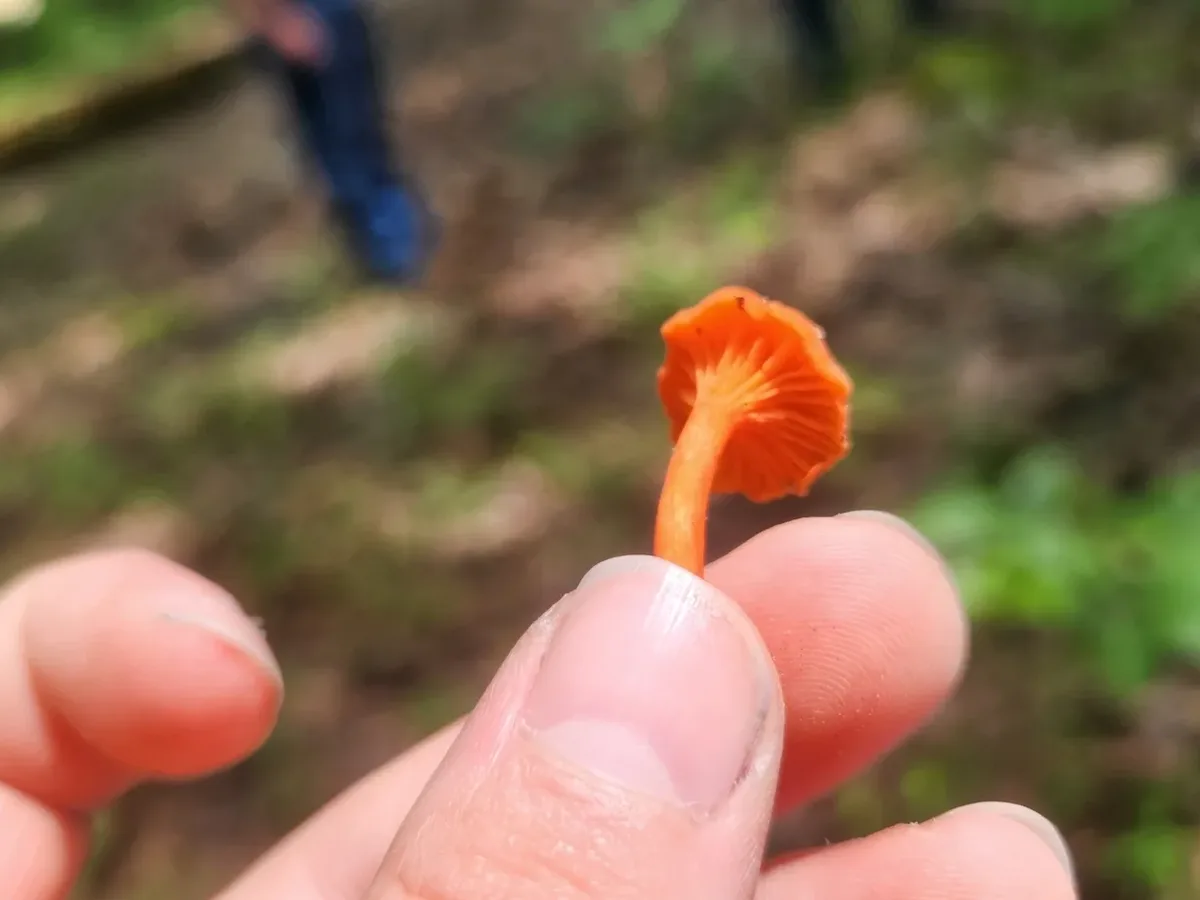 © Hila Taylor (CC BY)
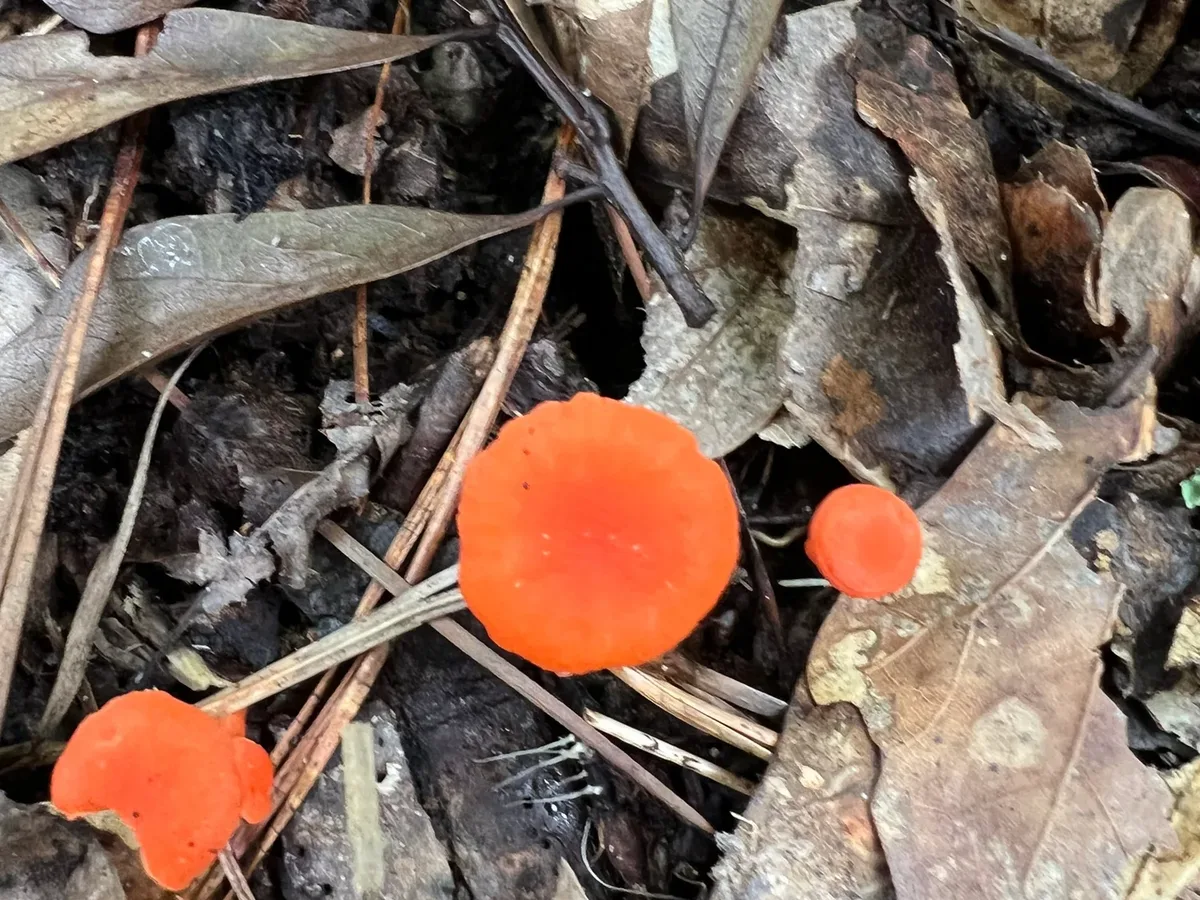 © Emma Walker (CC BY)
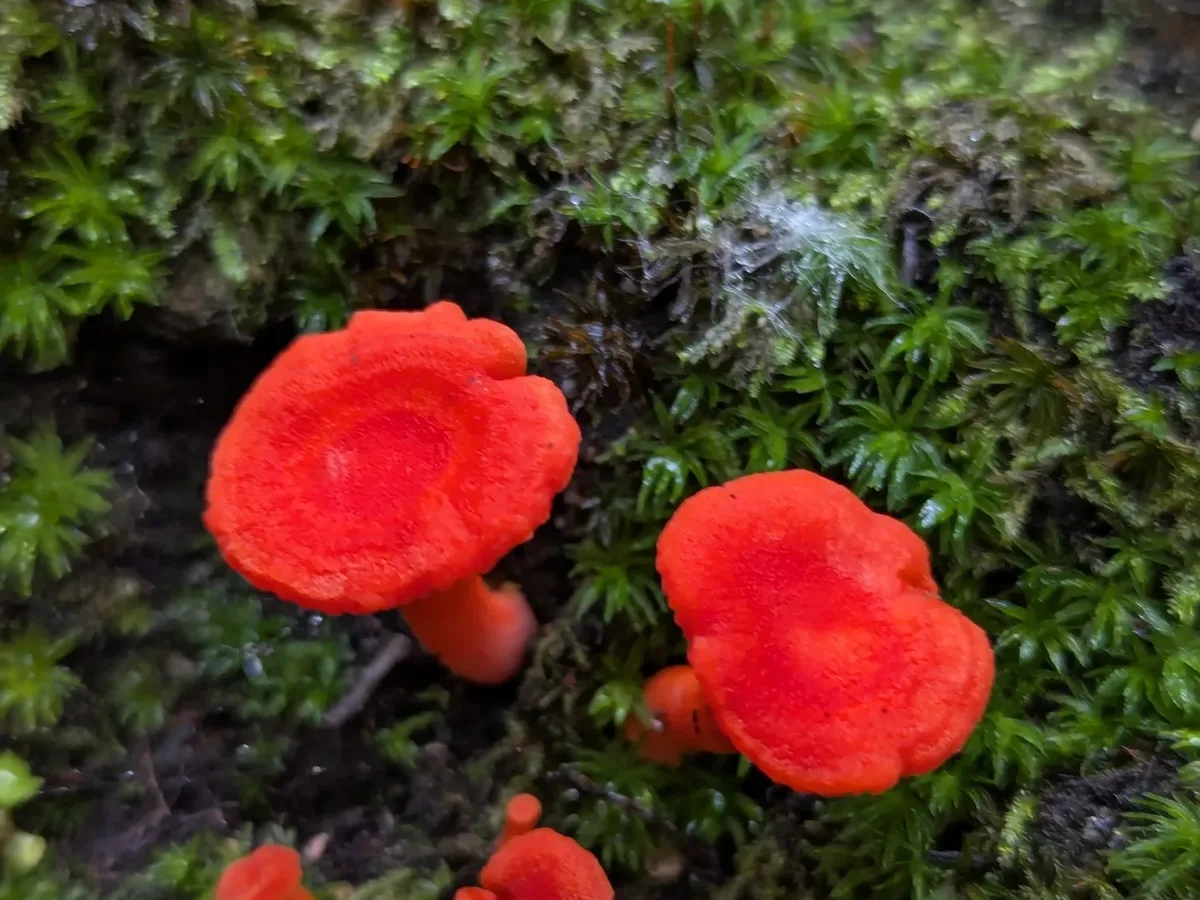 © Zihao Wang (CC BY)
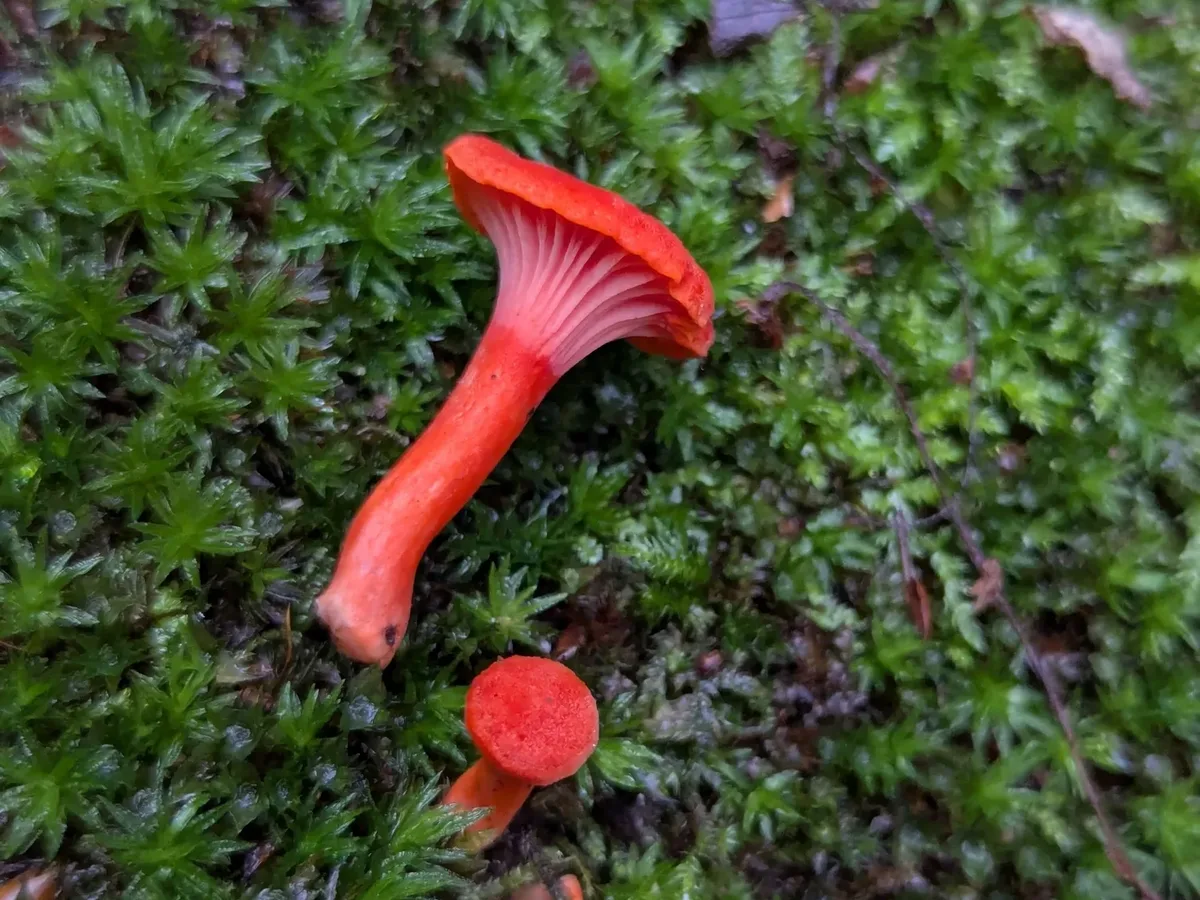 © Zihao Wang (CC BY)
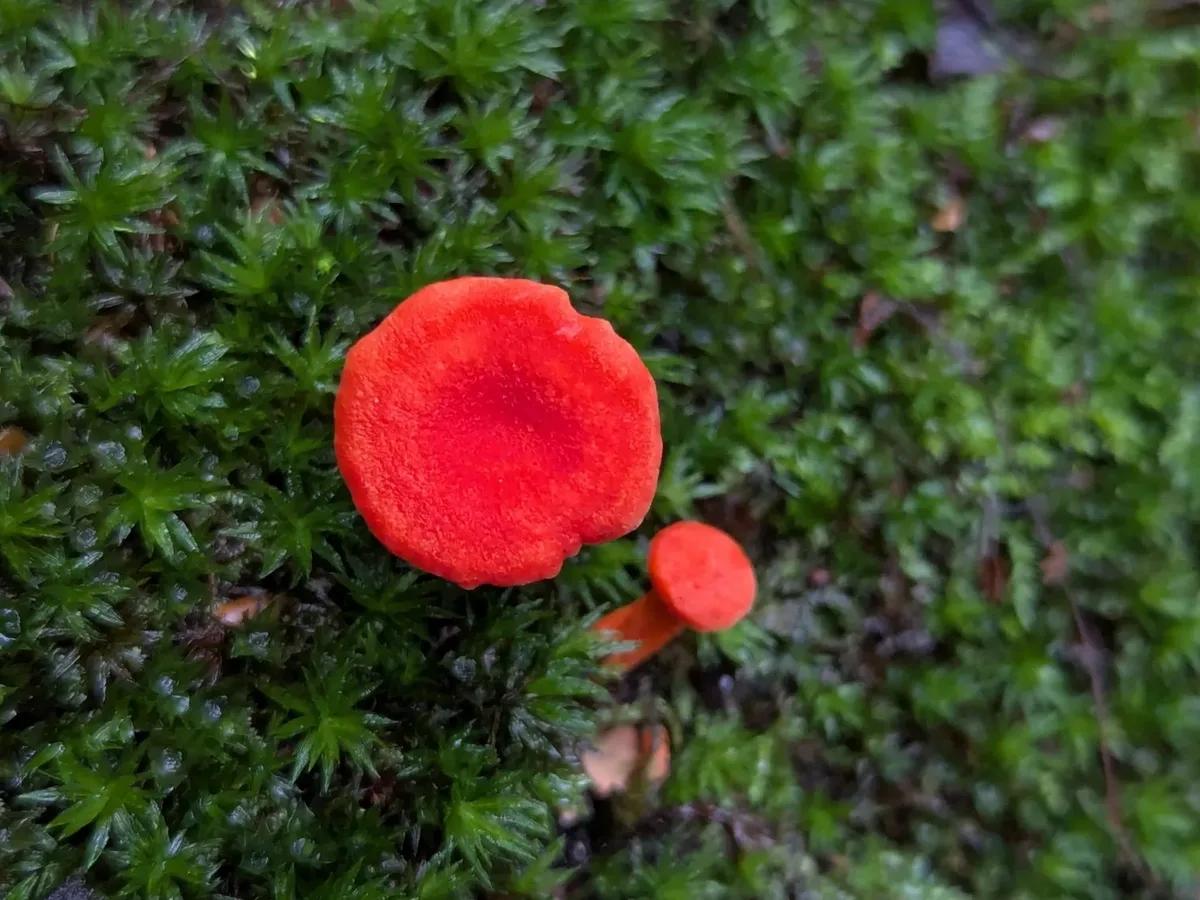 © Zihao Wang (CC BY)
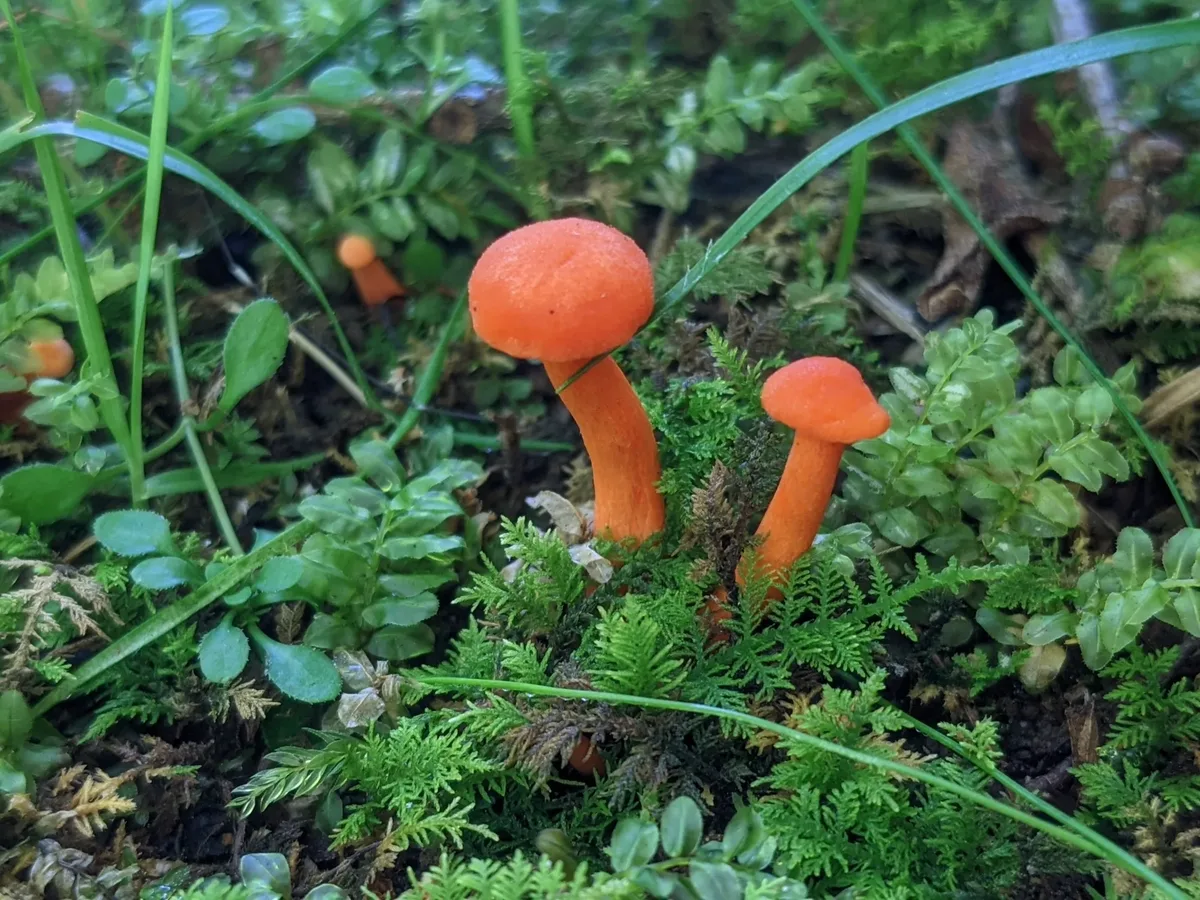 © Alina Martin (CC BY 4.0)© Ryan F. Mandelbaum (CC BY 4.0)© Hila Taylor (CC BY)
One of the best mushrooms you can bring home - once you are certain of the identification.
How to recognise it
The Cinnabar Chanterelle is one of the most beautiful and easily recognized of the eastern North American chanterelles. The whole mushroom is suffused with a striking, even cinnabar-red to pink-red or salmon-rose color - cap, fertile ridges, and stem all share the same vivid hue.
Cap
The cap is small, usually 1-4 cm across. It starts convex with the margin rolled under, soon flattening and developing a central depression, so mature specimens look shallowly vase- or trumpet-shaped, with a wavy, often lobed edge.
Gills
The most important feature to study is the underside. Instead of true gills, you find thick, blunt, widely spaced ridges (false gills) that fork repeatedly and are joined by little cross-veins, running down onto the stem (decurrent).
Run a fingernail across them - they are fused to the cap flesh and cannot be peeled away cleanly the way a real gill can.
Stem
The stem is slender, roughly equal, and the same pink-red as the rest.
Flesh
The flesh is thin, whitish inside, and firm but a touch brittle.
Crucially, a spore print taken on dark paper is pale pink to pinkish-cream, not white - a quiet but decisive diagnostic.
Where & when it grows
Habitat
This is a woodland mushroom of deciduous and mixed hardwood forests across eastern North America, from southern Canada down through the Appalachians and into the Gulf states.
It forms a mycorrhizal partnership with the roots of hardwood trees - oak and beech above all, but also hickory and maple - so it is always found growing from the soil among leaf litter, on mossy banks, and along the grassy edges of woodland trails. It is never found fruiting on wood.
It favors moist but well-drained ground and often appears in the same general areas, year after year, where the right trees grow.
When
Look for the Cinnabar Chanterelle in summer and early autumn, from roughly June through September, with the heaviest fruiting in July and August.
It is closely tied to warm, humid weather and summer rain: a flush of these little red trumpets often follows a few days after a soaking thunderstorm.
In the warm Southeast it can appear as early as May and linger into October.
It frequently fruits in the same season and habitat as the golden chanterelles, so a good chanterelle wood may yield both.
How it grows
Fruit bodies emerge singly, scattered, or in loose groups (gregarious) from the soil, pushing up through leaf litter and moss.
Because the fungus is mycorrhizal it cannot be cultivated commercially - it depends on living tree roots - so all specimens are wild-foraged.
Productive patches tend to recur in the same spots from one year to the next, making it worth noting good locations in a spot journal for future seasons.
Fruiting conditions
A warm-season, rain-triggered species. Fruiting flushes typically follow soaking summer rain by roughly 4-14 days once soils are warm (mid-teens to low-twenties Celsius). Sustained warmth plus humidity favors repeated flushes through July and August.
Look-alikes
Once you learn the combination of uniform pink-red color, thick blunt forked FALSE gills, growth from soil, and a pink spore print, this is a hard mushroom to confuse dangerously.
The most important confirmation is always the false gills: blunt, vein-like ridges that fork and cross and cannot be cleanly peeled, as opposed to the thin, sharp, knife-like true gills of an ordinary mushroom.
Several red or orange agarics can superficially resemble it:
- Waxcaps (Hygrocybe species such as H. cantharellus and H. punicea) have true, sharp, removable gills and are typically more waxy and brittle.
- The False Chanterelle (Hygrophoropsis aurantiaca) is more orange, larger, and has crowded, thin, repeatedly forked true gills.
- Red cup fungi (such as Scarlet Cup, Sarcoscypha) are cup-shaped, have no ridges or stem of this kind, and grow on dead wood and twigs, not soil.
- The notorious Jack-o'-Lantern (Omphalotus illudens) is far larger, deep orange, grows in dense clusters on or around wood and stumps, and has true gills.
None of these is deadly, but several will cause stomach upset, so confirming the false-gill texture and the soil habitat is essential.
More orange (not pink-red), usually larger, with crowded, thin, soft, repeatedly forked TRUE gills that are sharp-edged; often associated with conifers and woody debris. May cause mild gastric upset in some people.
Very similar small red cap but has TRUE gills - thin, sharp-edged, plate-like and removable - rather than the blunt, forked, cross-veined false ridges of the chanterelle. Waxy, brittle texture. Not toxic but not a chanterelle.
Much larger, deep orange, grows in dense clusters on or around wood, stumps and buried roots; has true, thin, sharp, non-forking decurrent gills (sometimes faintly glowing). Causes severe but non-fatal vomiting and cramps - never confuse with the small, soil-growing cinnabar chanterelle.
Bright red but shaped like a shallow cup or goblet with no gills or ridges, and grows on dead wood and fallen twigs rather than from the soil.
Larger, scarlet, with a waxy, greasy cap and true, sharp, widely spaced removable gills; flesh more brittle and watery. Lacks decurrent vein-like false gills.
In the kitchen
Picking & cleaning
Harvest with a knife, cutting or gently twisting the stem free at the base, or lift the whole small mushroom and trim the dirty stem base in the field.
Because the mushrooms are small and the flesh is thin, they are best collected when fresh, firm, and brightly colored; faded, soft, or insect-riddled specimens are not worth keeping.
Then, still in the field:
- brush off litter and grit
- place finds in an open basket so spores can disperse
- keep them dry - they do not store well when damp
Take only firm, bright specimens and leave smaller or older ones to mature and release spores.
Cooking
The Cinnabar Chanterelle is a fine edible with the mild, faintly fruity, slightly peppery flavor typical of chanterelles, though it is smaller and milder than the golden chanterelle.
Its bright color largely fades to a duller orange when cooked.
The firm, somewhat fibrous flesh holds up well to sautéing. Cook it gently in butter or oil, allowing the mushroom's own moisture to release and evaporate before browning, which concentrates the flavor.
Because the caps are small and thin, they cook quickly and are excellent added whole to mixed chanterelle dishes, omelets, cream sauces, and over pasta.
Like all chanterelles it should always be thoroughly cooked, never eaten raw, and it dries reasonably well for later use.
Good to know
Cantharellus cinnabarinus is widely regarded as a safe, choice edible, with no toxins documented in the scientific literature and no records of poisoning. There is no deadly lookalike for this species.
Nevertheless, the cardinal rule of chanterelle foraging applies: positively confirm the false gills - blunt, forked, cross-veined ridges that are part of the cap flesh and cannot be peeled off like true gills.
Combined with the false gills, these features make for a confident identification:
- uniform pink-red color
- growth from soil (never on wood)
- the pinkish spore print
As with any wild mushroom eaten for the first time, eat only a small, well-cooked portion to rule out individual intolerance, and never eat any chanterelle raw.
A reference guide - never an edibility guarantee. When in doubt, leave it out.