California golden chanterelle
Cantharellus californicus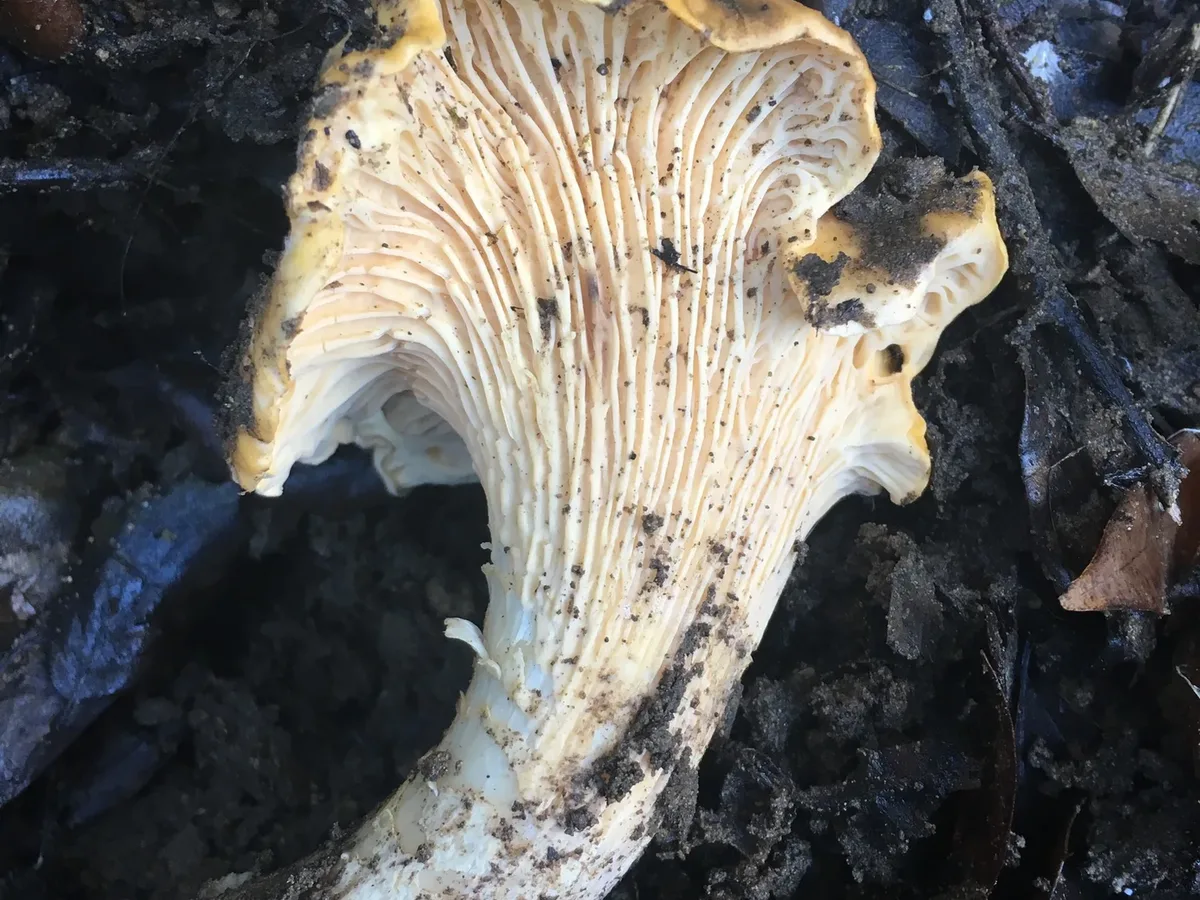 © Adam J. Searcy (CC BY 4.0)
 Chuck Wilson (CC0)
 Chuck Wilson (CC0)
 Chuck Wilson (CC0)
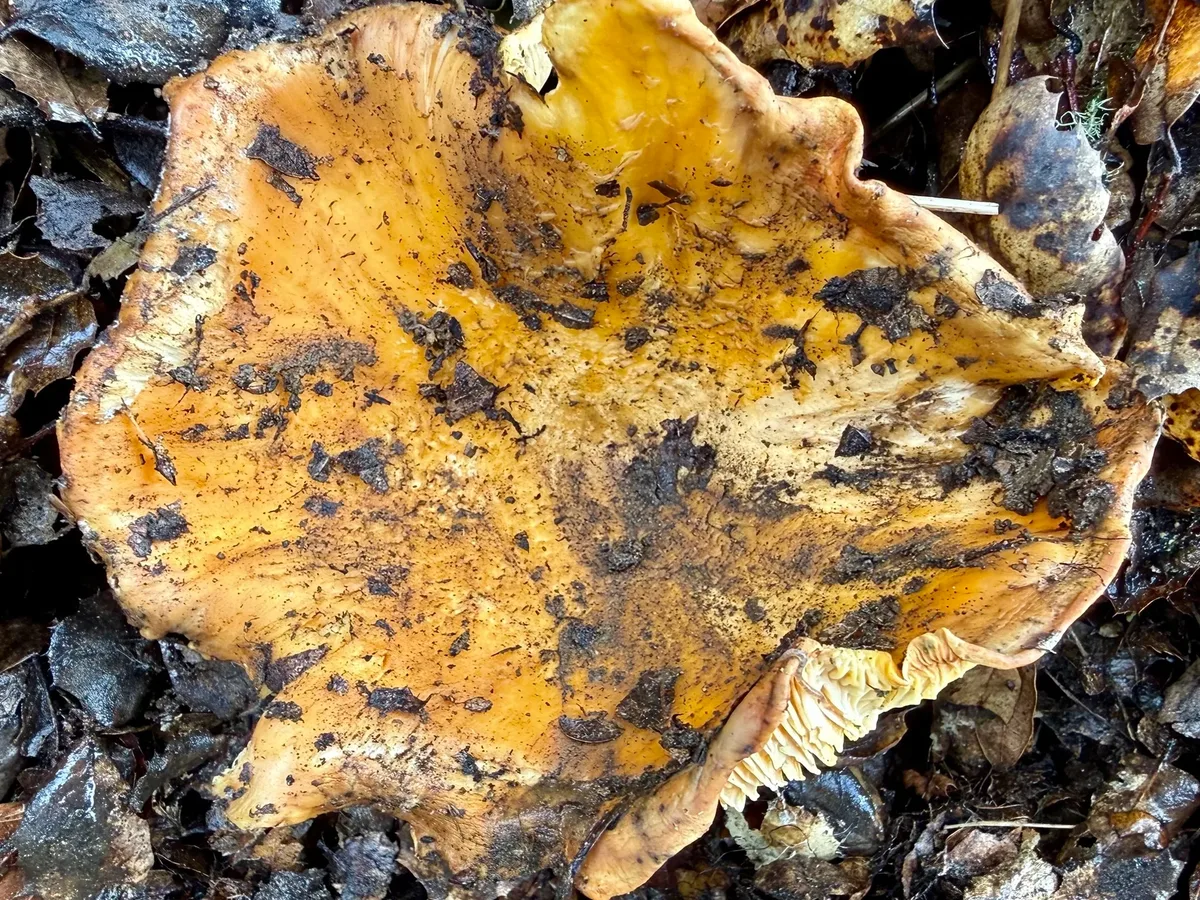 Chuck Wilson (CC0)
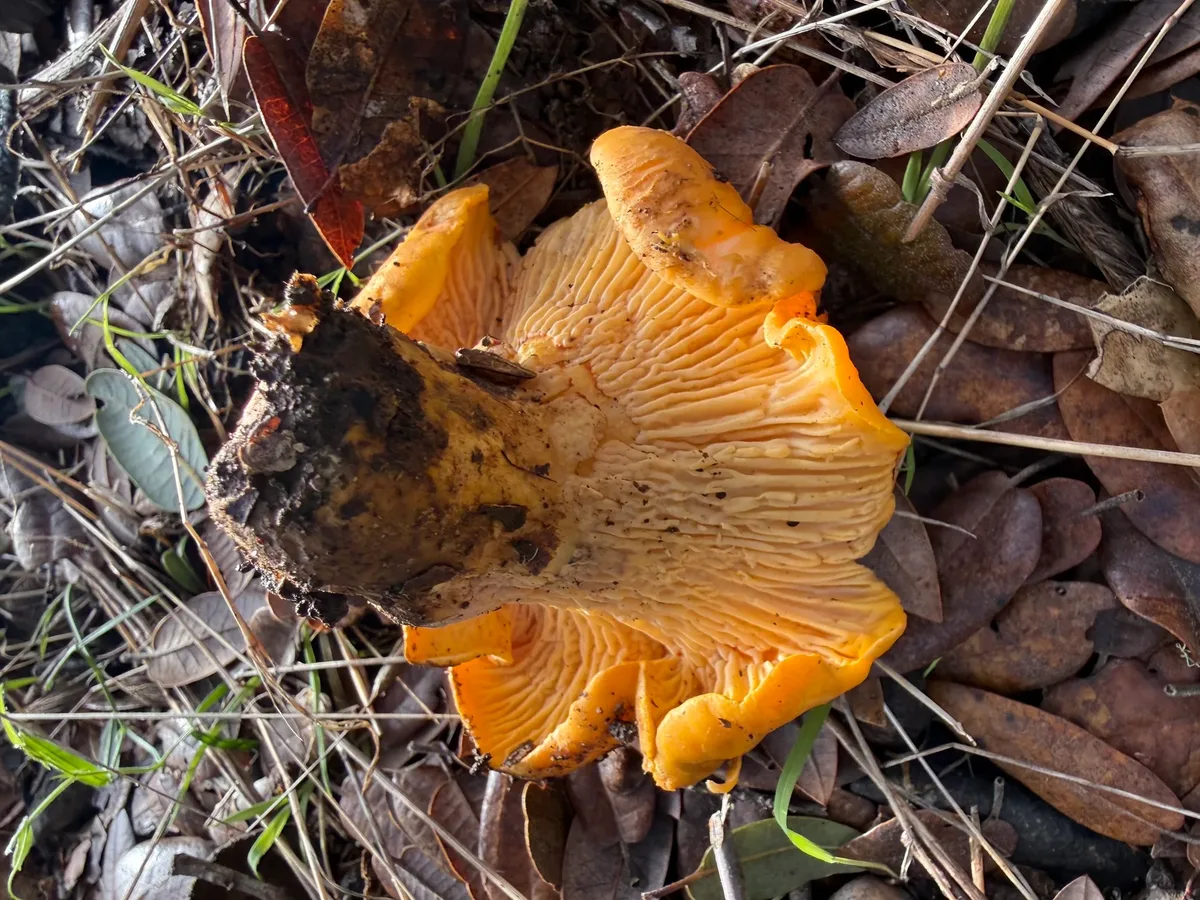 Chuck Wilson (CC0)
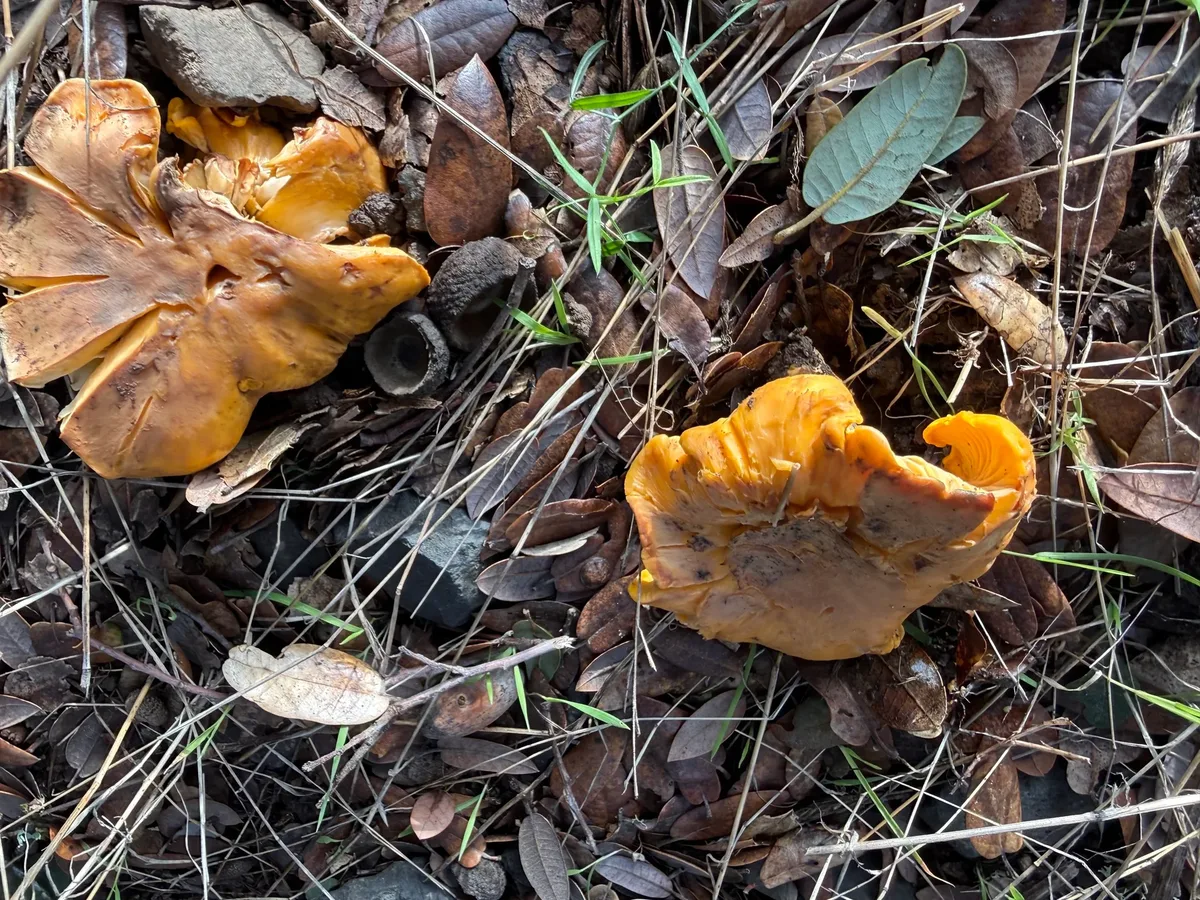 Chuck Wilson (CC0)
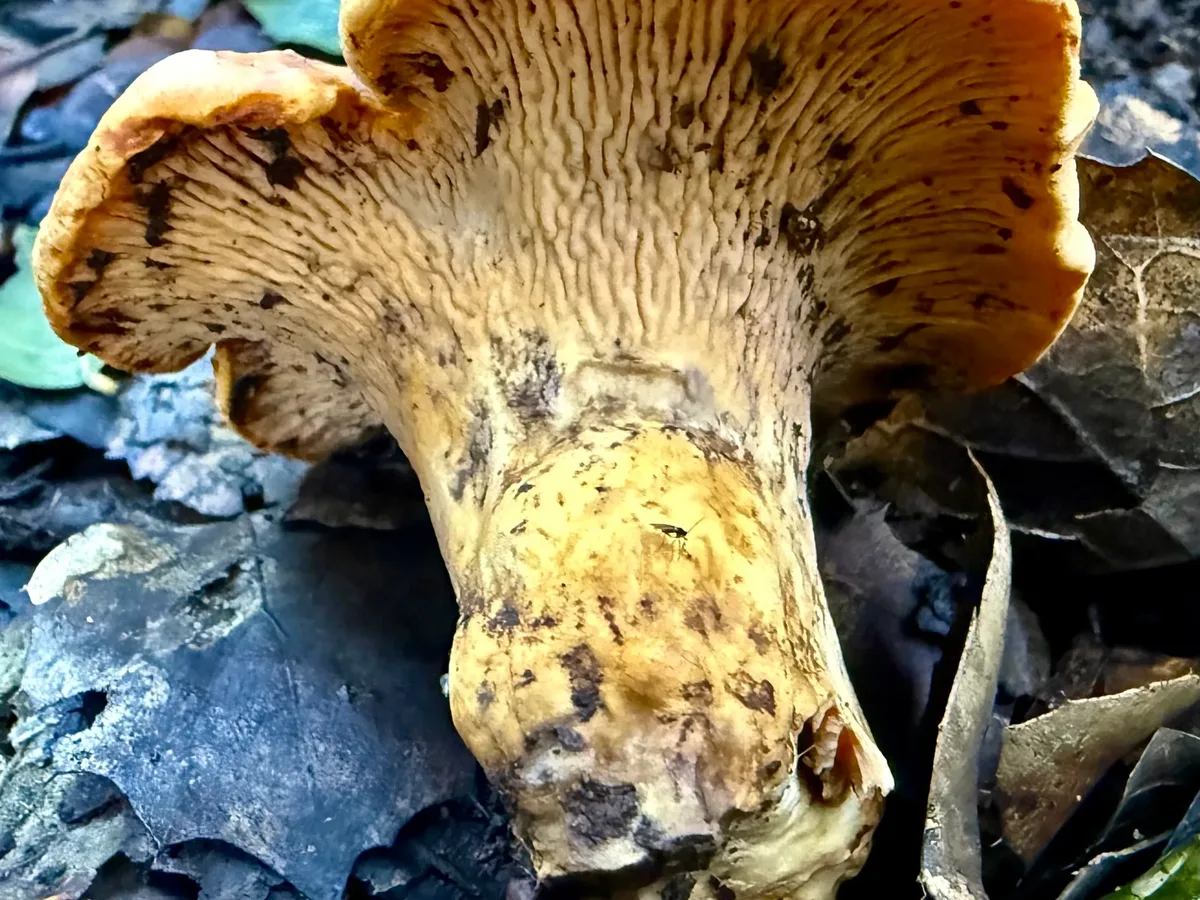 Chuck Wilson (CC0)
 Chuck Wilson (CC0)
 Chuck Wilson (CC0)© Adam J. Searcy (CC BY 4.0)Chuck Wilson (CC0)
One of the best mushrooms you can bring home - once you are certain of the identification.
How to recognise it
Cantharellus californicus is the largest chanterelle in North America and among the largest in the world.
Cap
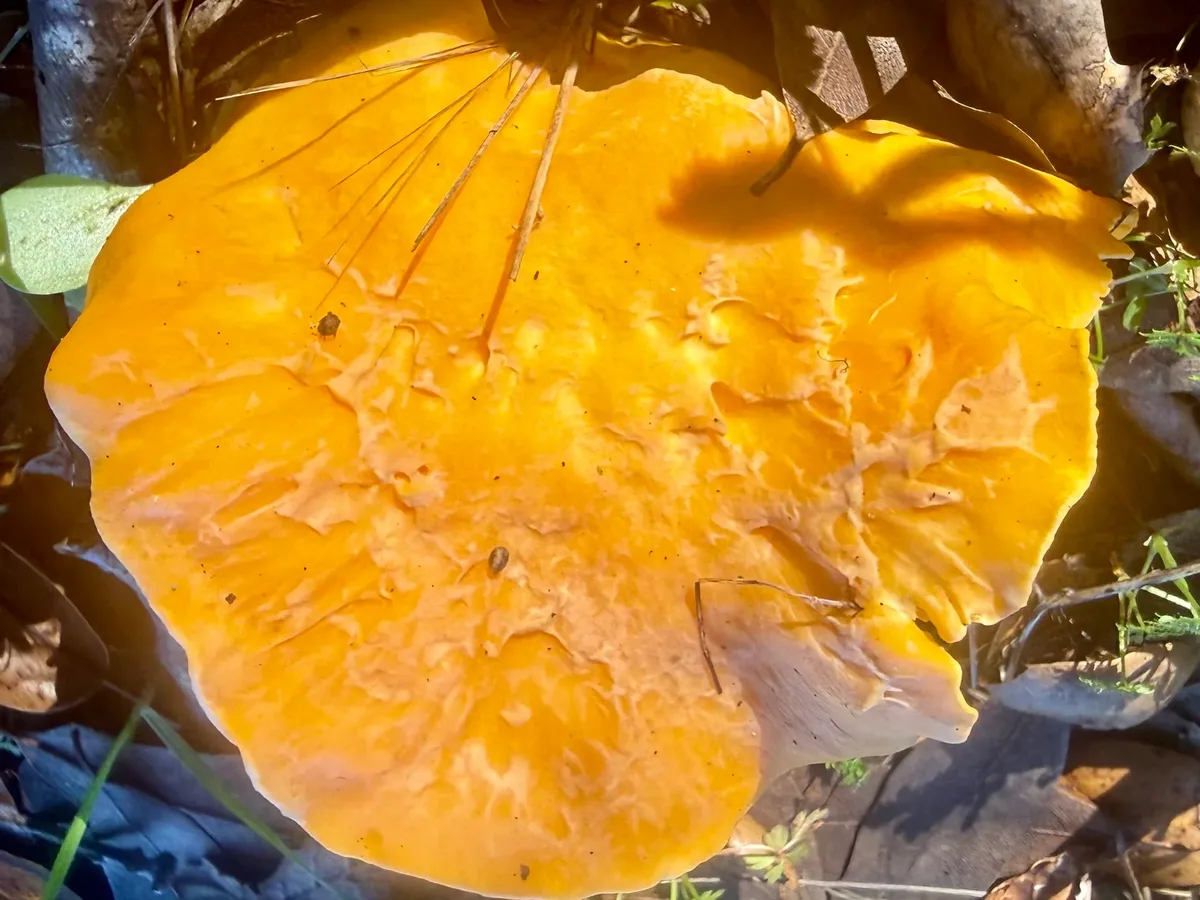
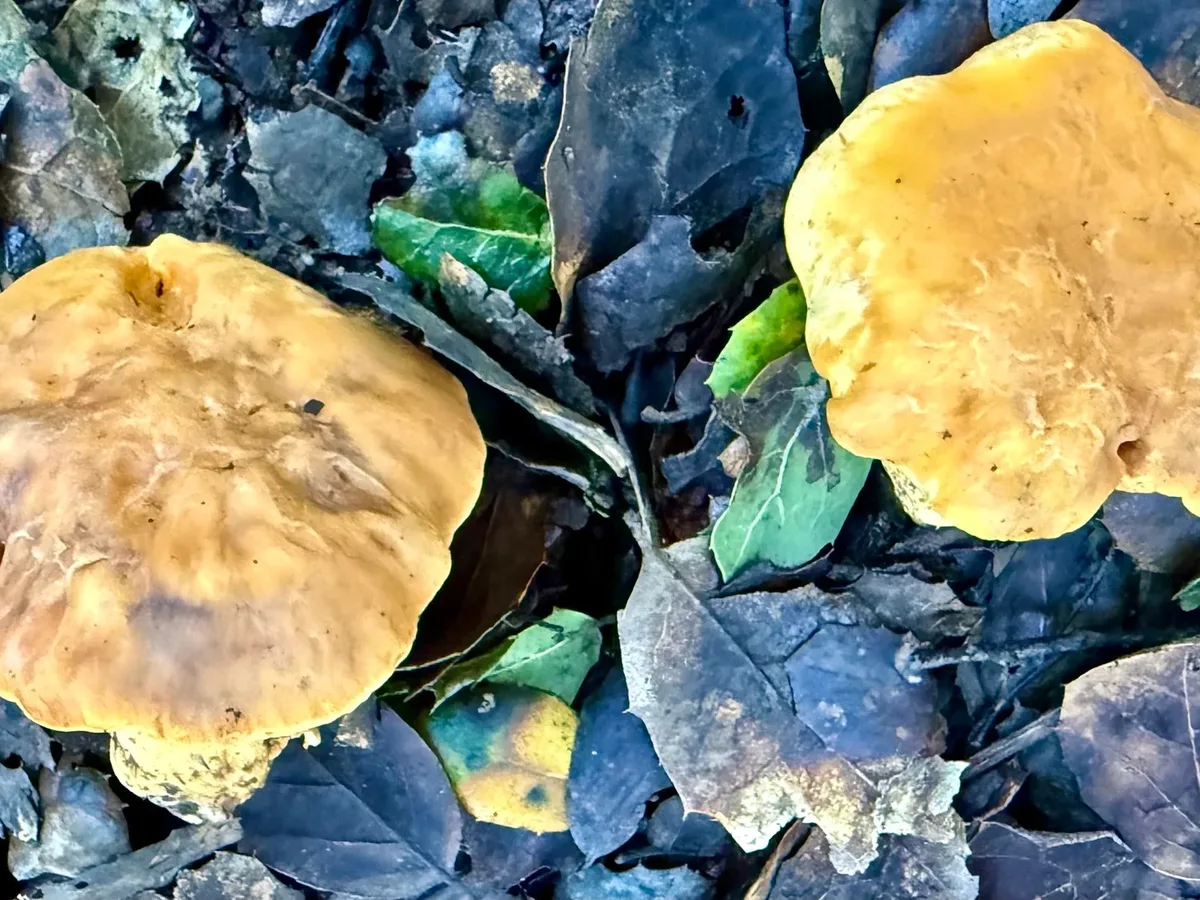
The cap typically measures 8-20 cm across and can reach 30 cm or more in exceptional specimens - a feature that immediately separates it from virtually every other golden chanterelle.
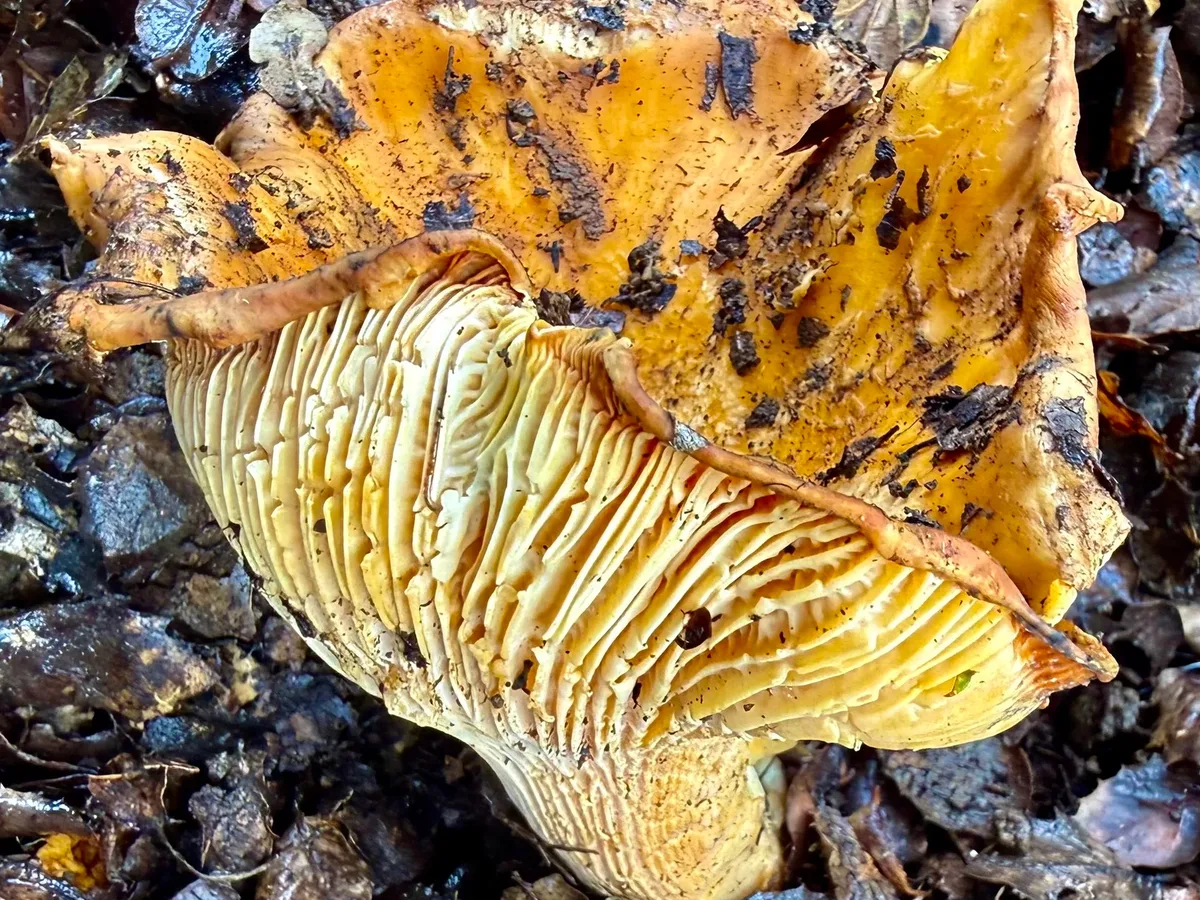
Young fruiting bodies are convex with a strongly inrolled margin; with age the cap becomes broadly depressed to vase-shaped with a deeply wavy, lobed margin.
The cap surface is dry to slightly felty, uniform deep egg-yolk yellow to golden orange-yellow.
Gills / Pores
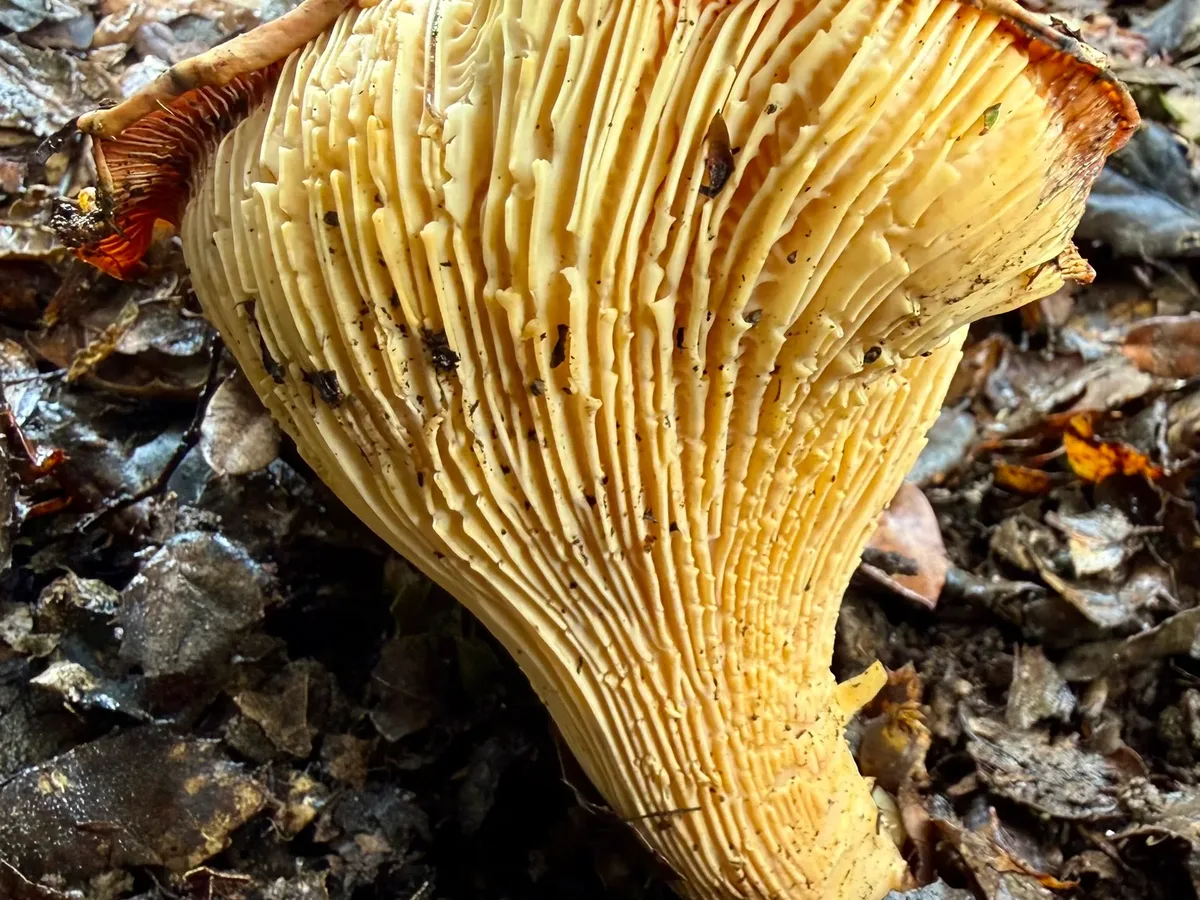
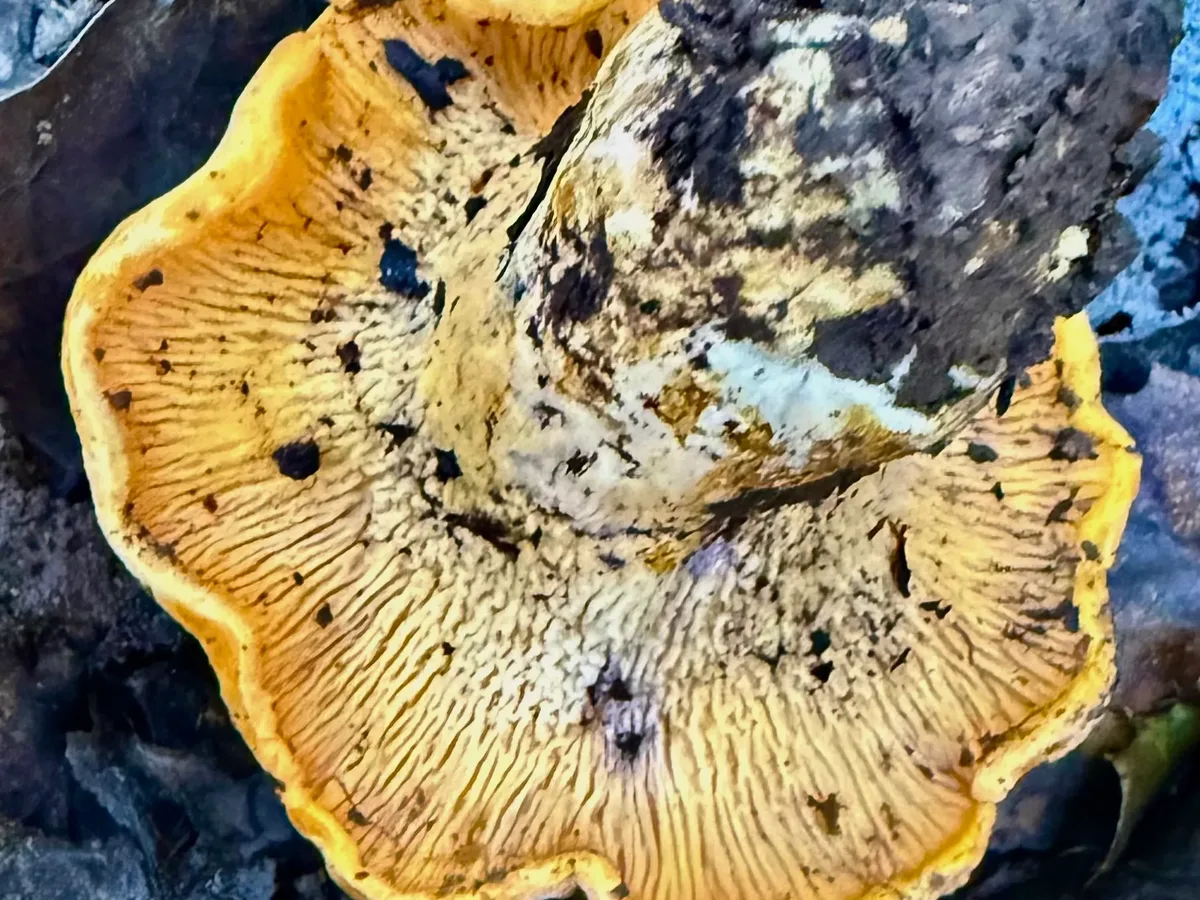
The false gills (hymenial ridges) on the underside are blunt, forked, and decurrent - running well down the thick solid stem.
These are the single most important field character: not sharp knife-blade gills but rounded, forking folds of tissue that cannot be snapped off cleanly.
Stem
The stem is robust, 3-8 cm tall and 2-5 cm wide, solid, pale yellow.
Flesh
Flesh is thick, white to very pale yellow, firm and dense.
Spore print pale yellow to cream.
Smell & taste
The classic fruity apricot scent is present, though often subtle in very large specimens.
Where & when it grows
Habitat
This species lives in a tight, exclusive partnership with oaks and will simply not appear under conifers. The host oaks are:
- Coast live oak (Quercus agrifolia)
- Valley oak (Q. lobata)
- Canyon live oak (Q. chrysolepis)
- California black oak (Q. kelloggii)
If you are not standing beneath an oak, move on.
Look in:
- Coast Range oak woodland
- Mixed evergreen forest with tanoak
- Sierra Nevada foothills oak savanna
- Oak chaparral margins
A mycelial network once established can maintain its partnership with a host tree for decades, and foragers who find a productive spot tend to return to the same oaks season after season.
When
First significant winter rains (typically late October to November) trigger the initial flush.
The main season runs November through February, with a possible late flush in March after late rains.
The trigger is cooling soil and re-wetting after summer dry-down. Once soil temperatures drop below roughly 15°C and at least 25 mm of rain have fallen over 10-14 days, fruiting bodies begin emerging within 7-14 days.
In drought years, the season may be very brief or effectively absent.
How it grows
Fruits singly to scattered - not in dense clusters like a wood-decay species.
What you see above ground is just the tip of a much older story. The mycelium threading the soil around an established oak can persist and fruit at the same spot for decades, making this one of the more reliably repeatable foraging finds on the California coast.
Individual fruiting bodies can be strikingly large; a single well-grown specimen may weigh 300-500 g.
Fruiting conditions
First winter rains after summer drought trigger fruiting once soil temperature falls below roughly 16°C; flush emerges 7-14 days after sufficient rainfall rewets the root zone. Drought years can suppress fruiting almost entirely.
Look-alikes
The main confusion risks are:
- 1Western jack-o'-lantern (Omphalotus olivascens) - POISONOUS (severe GI distress). Distinguished by true sharp gills (not blunt ridges), clustered growth from buried wood or root bases near oaks, lack of apricot scent, orange flesh that does not turn white on cutting, and - in complete darkness - faint bioluminescence. A forager who slices the stem and sees white solid flesh, then confirms forking blunt ridges rather than sharp gills, can exclude jack-o'-lantern confidently.
- 2False chanterelle (Hygrophoropsis aurantiaca) - causes GI upset in some people. Much smaller (cap rarely exceeds 6 cm), true thin gills that fork but are sharp and blade-like, often more orange-red than golden yellow.
- 3Pacific golden chanterelle (Cantharellus formosus) - fully edible and also choice, but smaller (cap 3-10 cm), associated strictly with Douglas fir and hemlock, not oak. In regions where both occur (Humboldt County area) they can be distinguished by tree partner and size.
There are no deadly species that a careful observer would realistically confuse with a large golden-ridged oak-associated chanterelle.
Much smaller (cap rarely exceeds 6 cm), more orange-red than golden yellow, with true thin forking gills rather than blunt ridges; can cause GI upset in some individuals.
Also choice edible but smaller (3-10 cm cap), associated with Douglas fir and western hemlock rather than oaks; predominantly found in Washington and Oregon rather than California.
Poisonous (severe GI distress, not fatal). Has true sharp gills rather than blunt forking ridges; grows in dense clusters from buried wood or root bases; flesh is orange throughout (not white); no apricot scent; bioluminescent in complete darkness.
In the kitchen
Picking & cleaning
The large, firm fruiting bodies travel exceptionally well.
- Cut cleanly at the base with a knife to leave the mycelium intact - do not pull or twist entire clumps.
- Brush off soil and leaf duff in the field.
Because of the very large cap size and thick flesh, cleaning is straightforward: slice through the cap and check the interior is white and sound (insect larvae occasionally inhabit very large specimens).
Carry in an open basket to allow spore dispersal.
A single productive patch under a mature coast live oak can yield several kilograms per visit.
Cooking
The thick, dense flesh holds up exceptionally well to heat.
- 1Dry-sauté in a hot dry pan (no oil or butter yet) with a pinch of salt until all released moisture has evaporated - this concentrates flavor and firms the texture.
- 2Then add butter, finish with garlic, shallot, and fresh thyme.
The large caps can be sliced into substantial pieces or even grilled whole as a vegetarian main. Works beautifully in pasta, risotto, omelets, and cream sauces.
The firm flesh also freezes well after the dry-sauté step - cool completely and freeze flat.
Good to know
An excellent choice edible with no known toxins.
The blunt-ridge structure is the single most reliable safety check: always confirm ridges (not gills) before eating. The habitat is equally diagnostic - if you are not standing under an oak tree, reconsider.
As a mycorrhizal species, C. californicus can accumulate trace heavy metals from the soil; avoid collecting from roadsides, industrial areas, or former mine sites.
In California coastal zones, check local regulations - some parks prohibit commercial collection.
A reference guide - never an edibility guarantee. When in doubt, leave it out.