Appalachian chanterelle
Cantharellus appalachiensis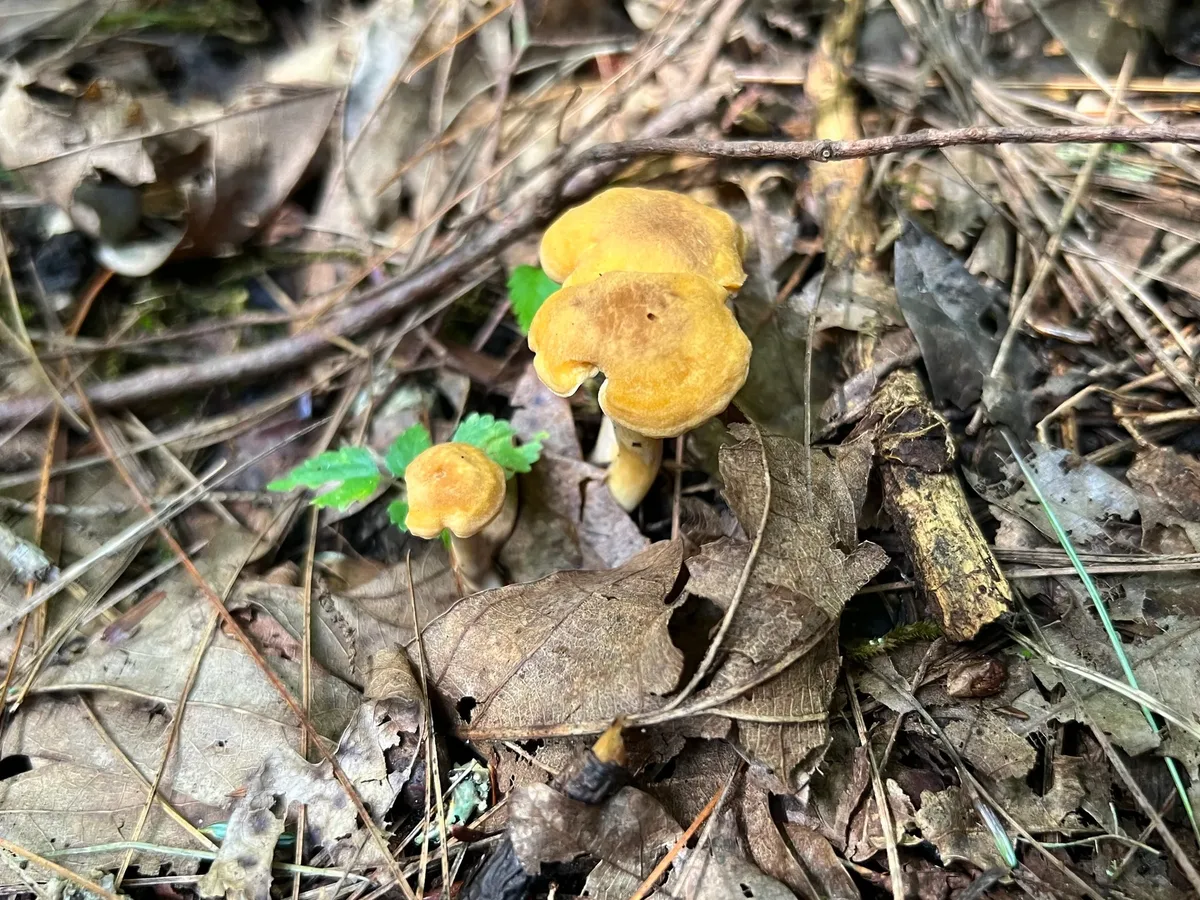 © Annie Weissman (CC BY 4.0)
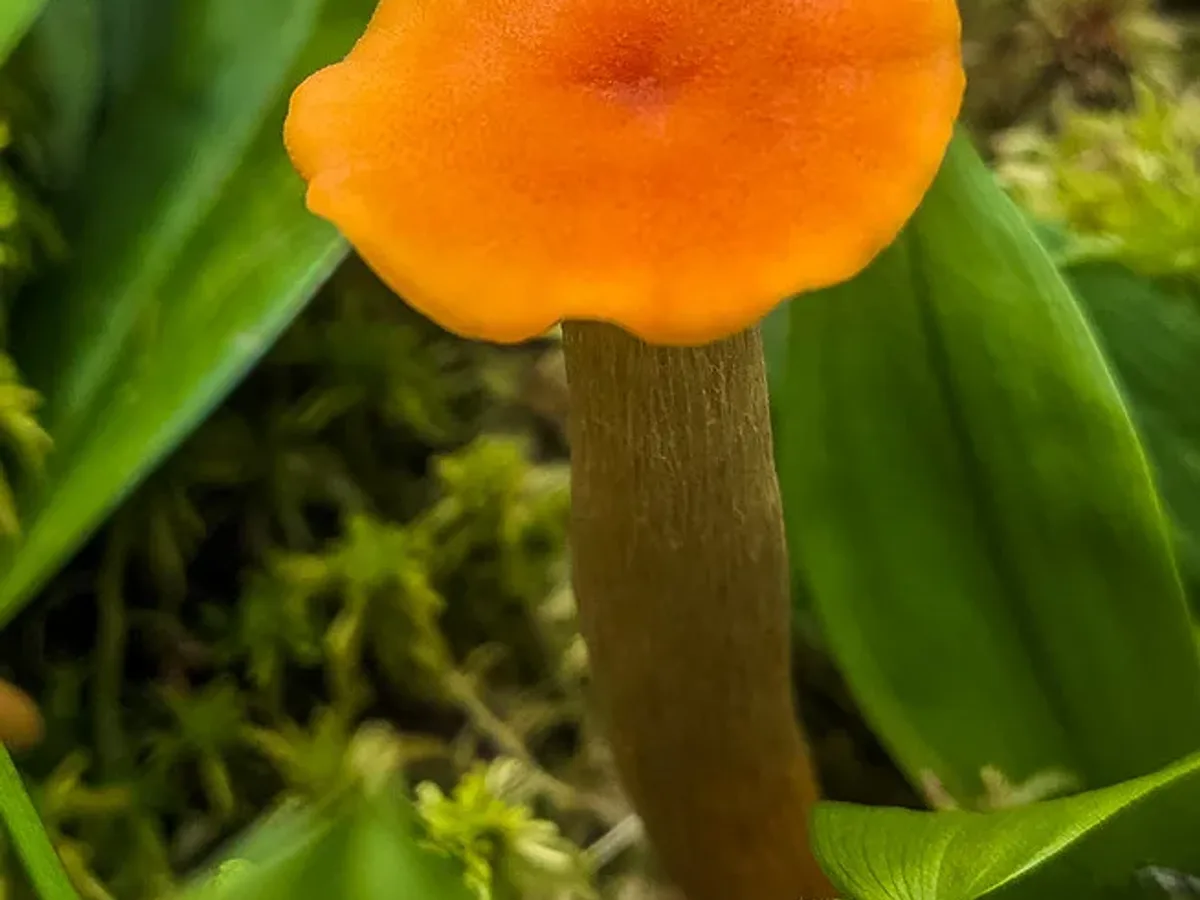 © wackybadger (CC BY-SA 2.0)
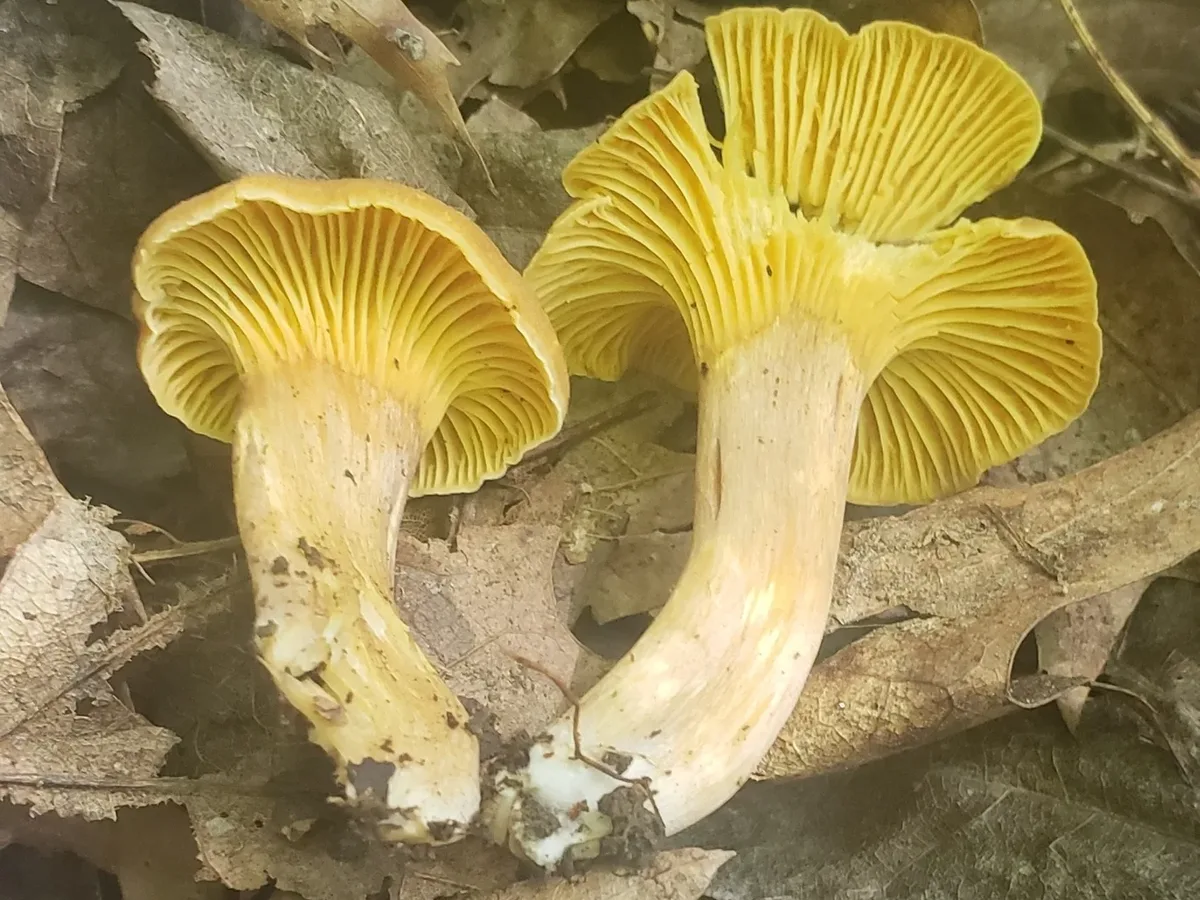 © Sarah Culliton (CC BY)
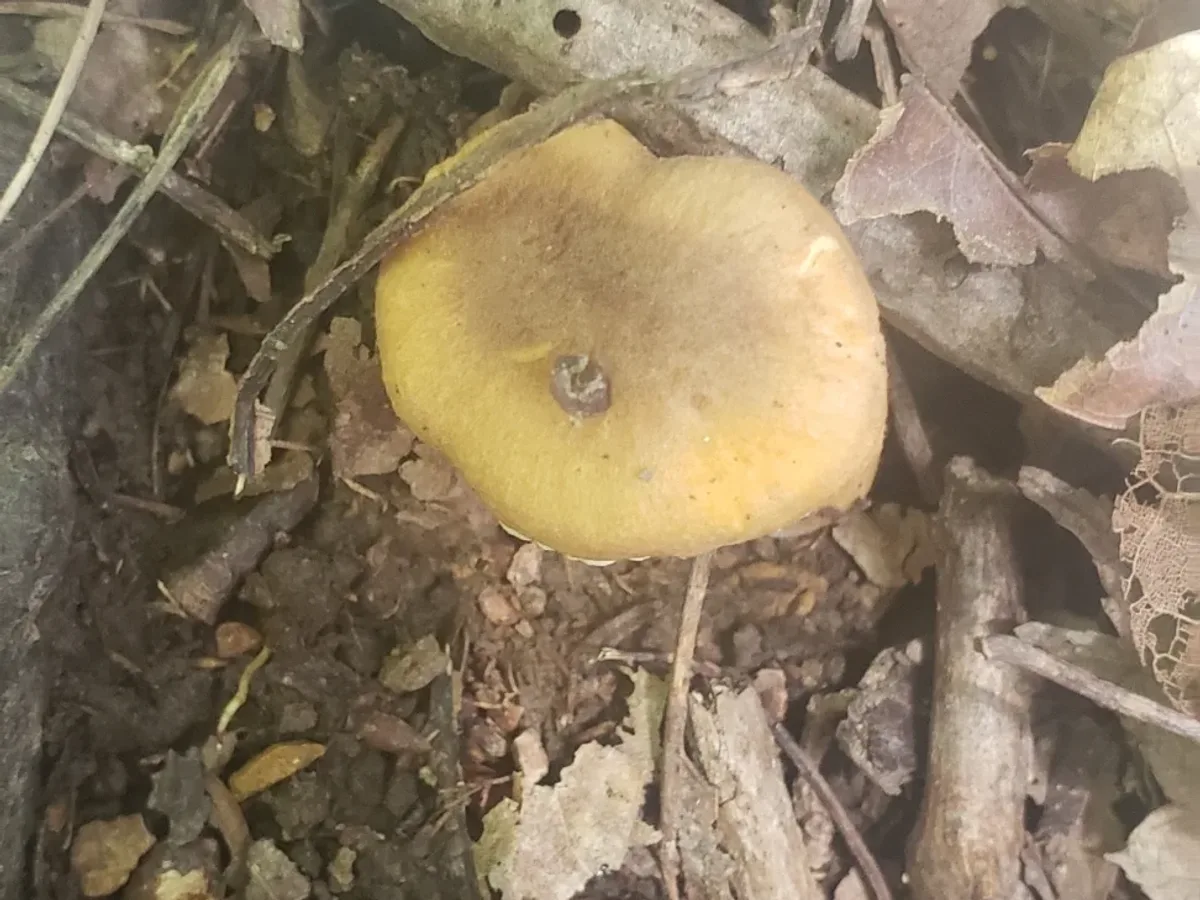 © Sarah Culliton (CC BY)
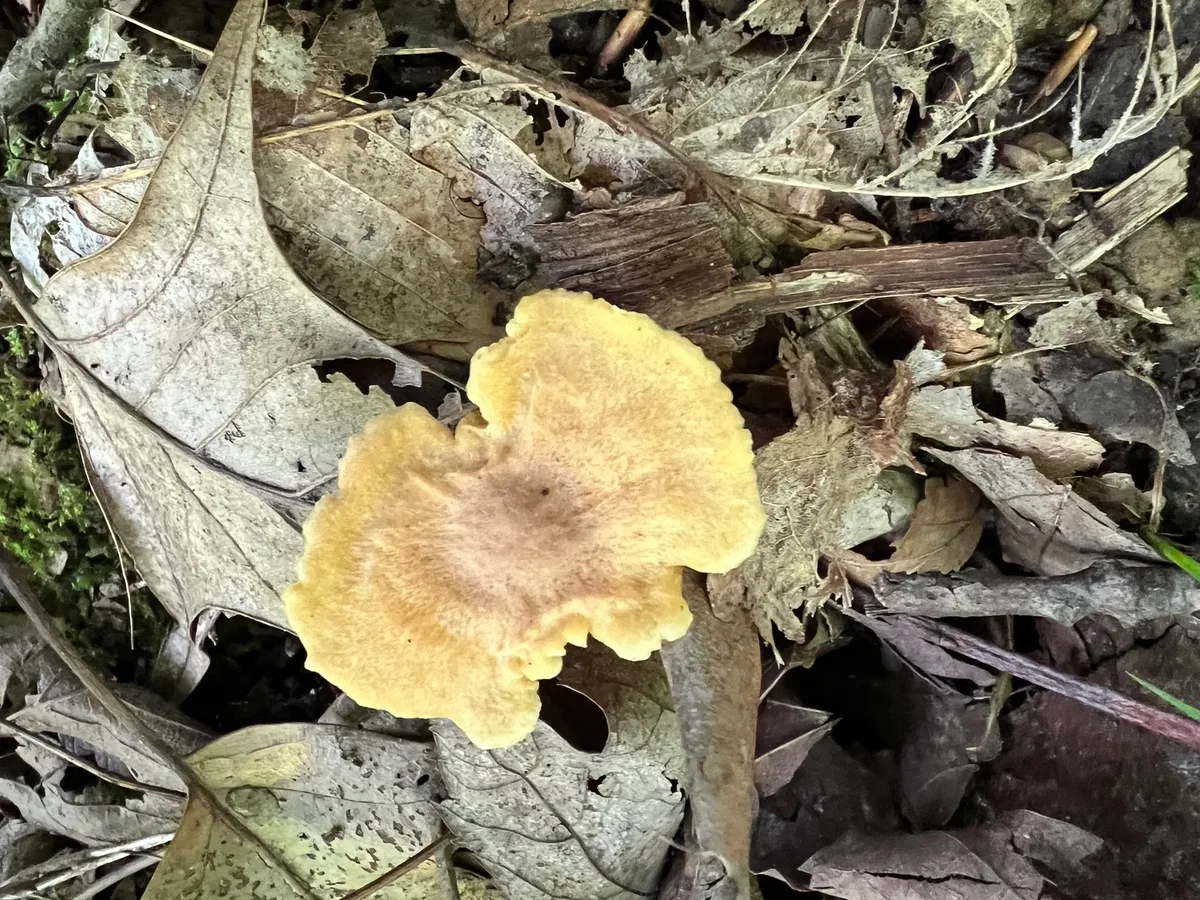 © Brian C. Hunt (CC BY)
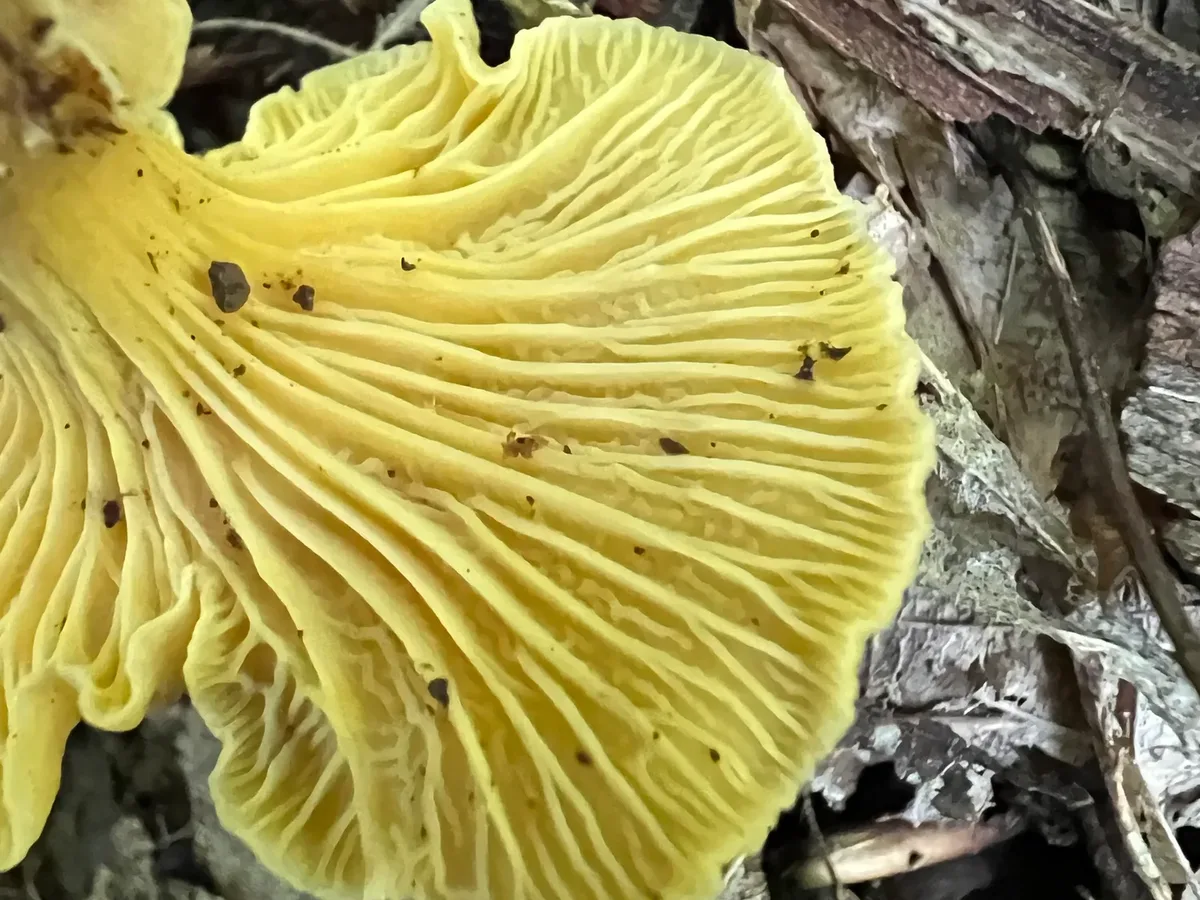 © Brian C. Hunt (CC BY)
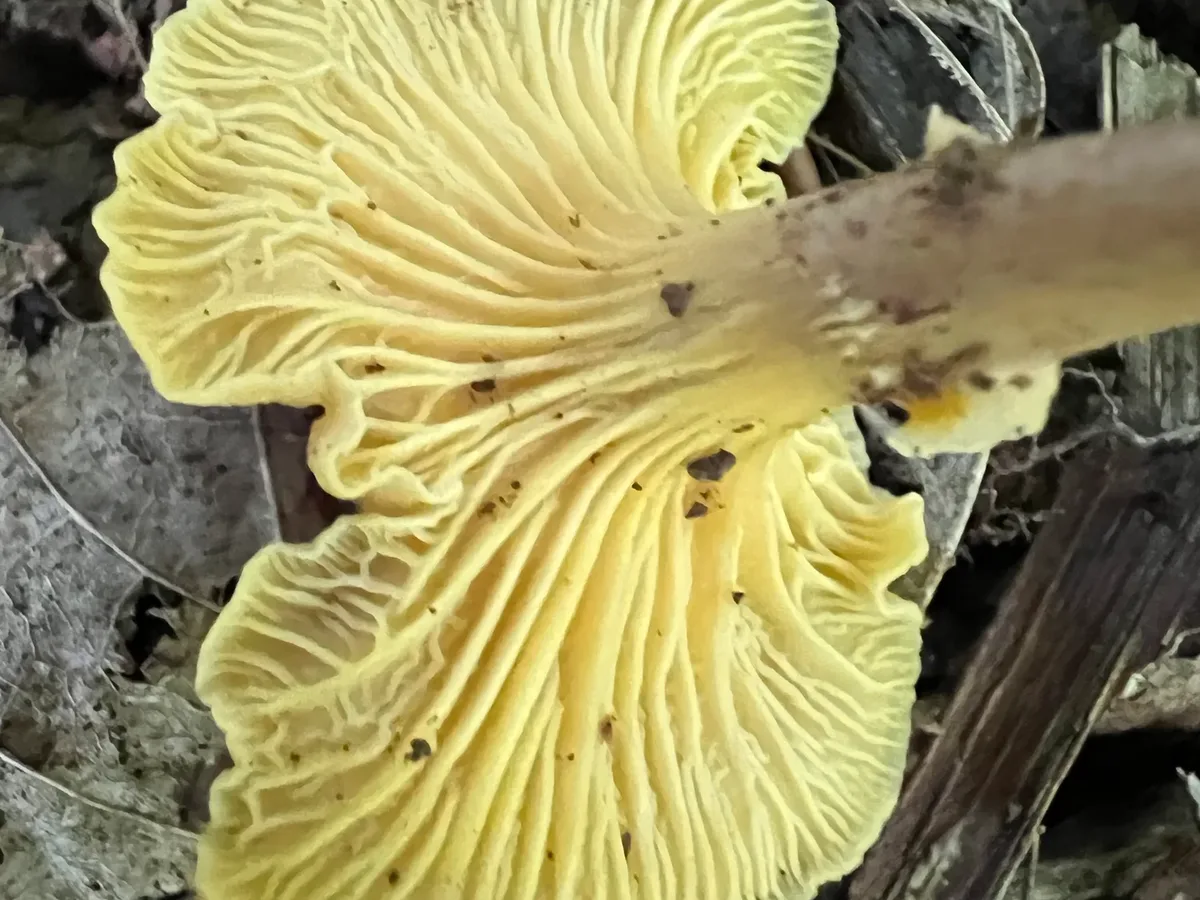 © Brian C. Hunt (CC BY)
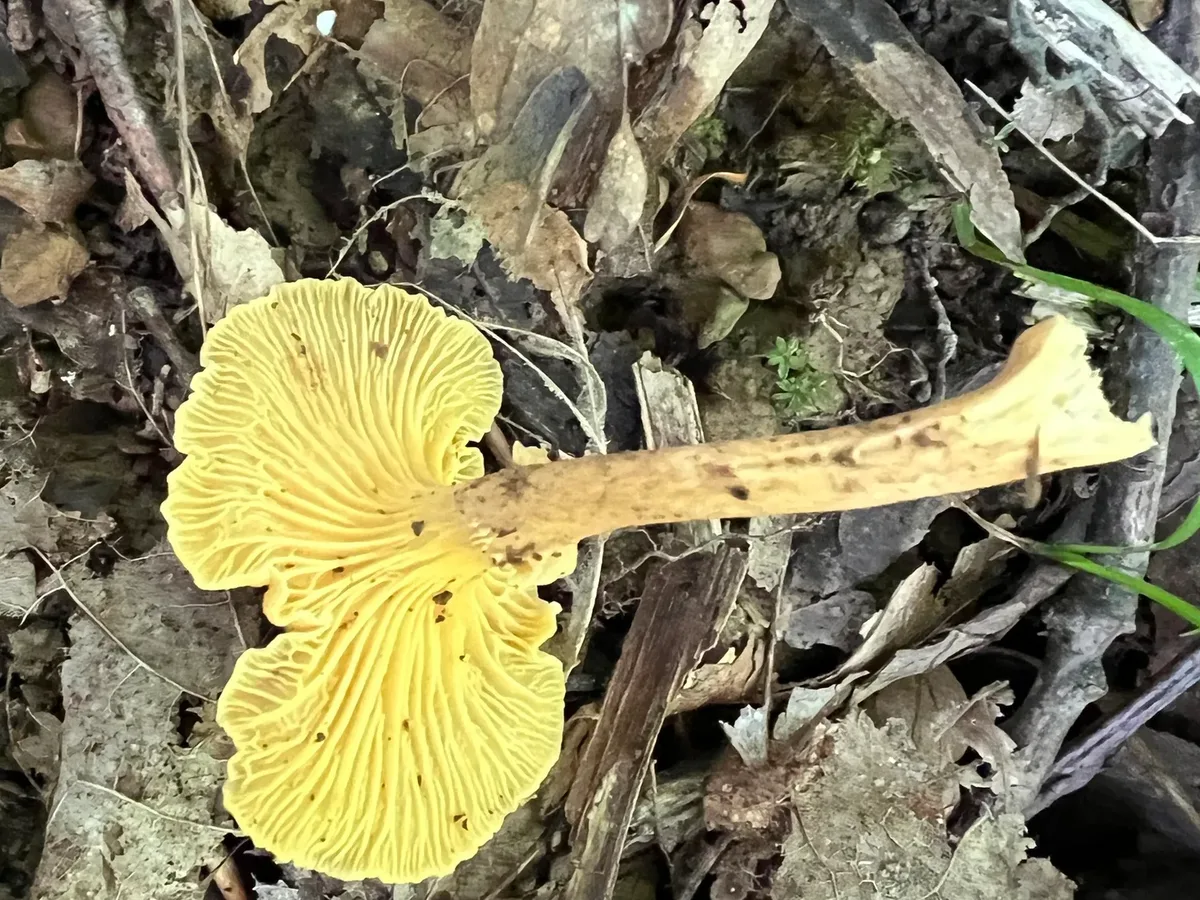 © Brian C. Hunt (CC BY)
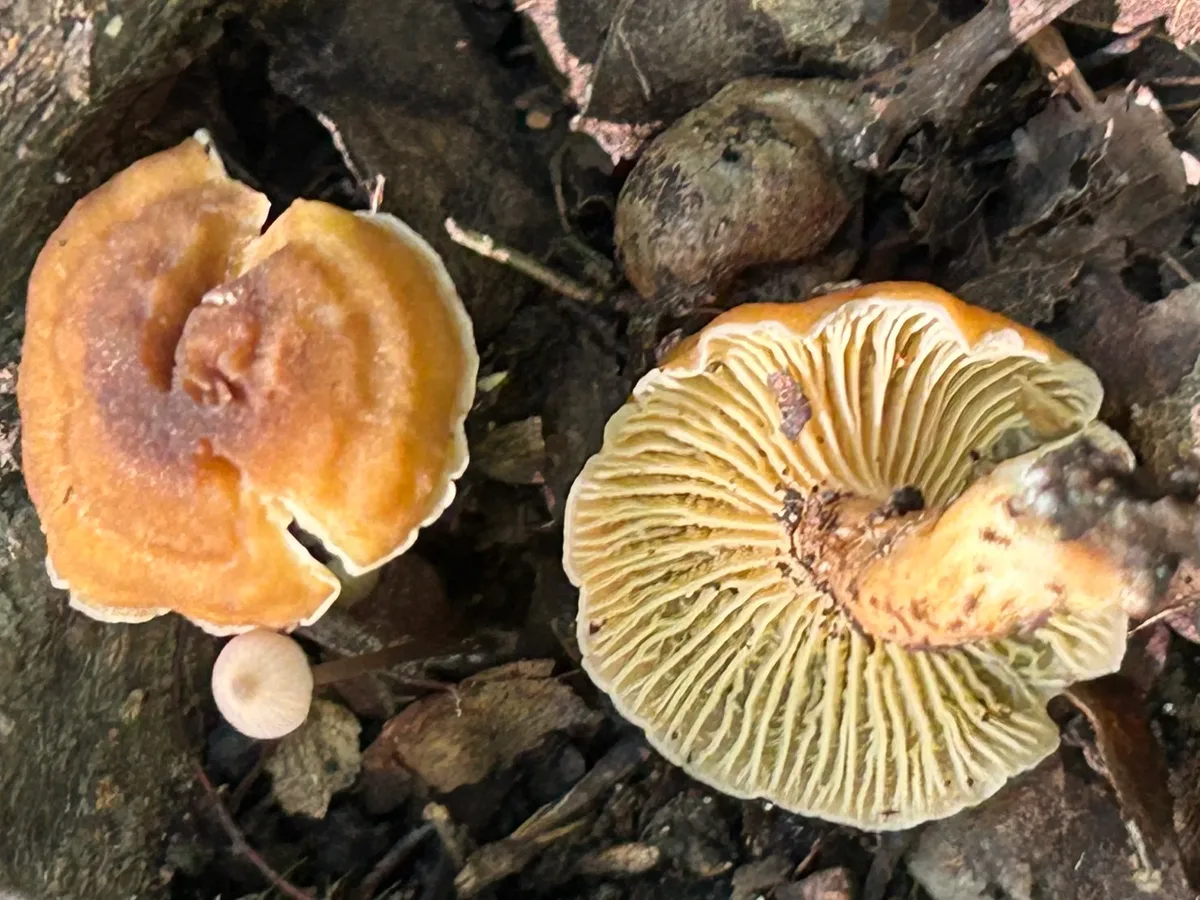 © martin_livezey (CC BY)
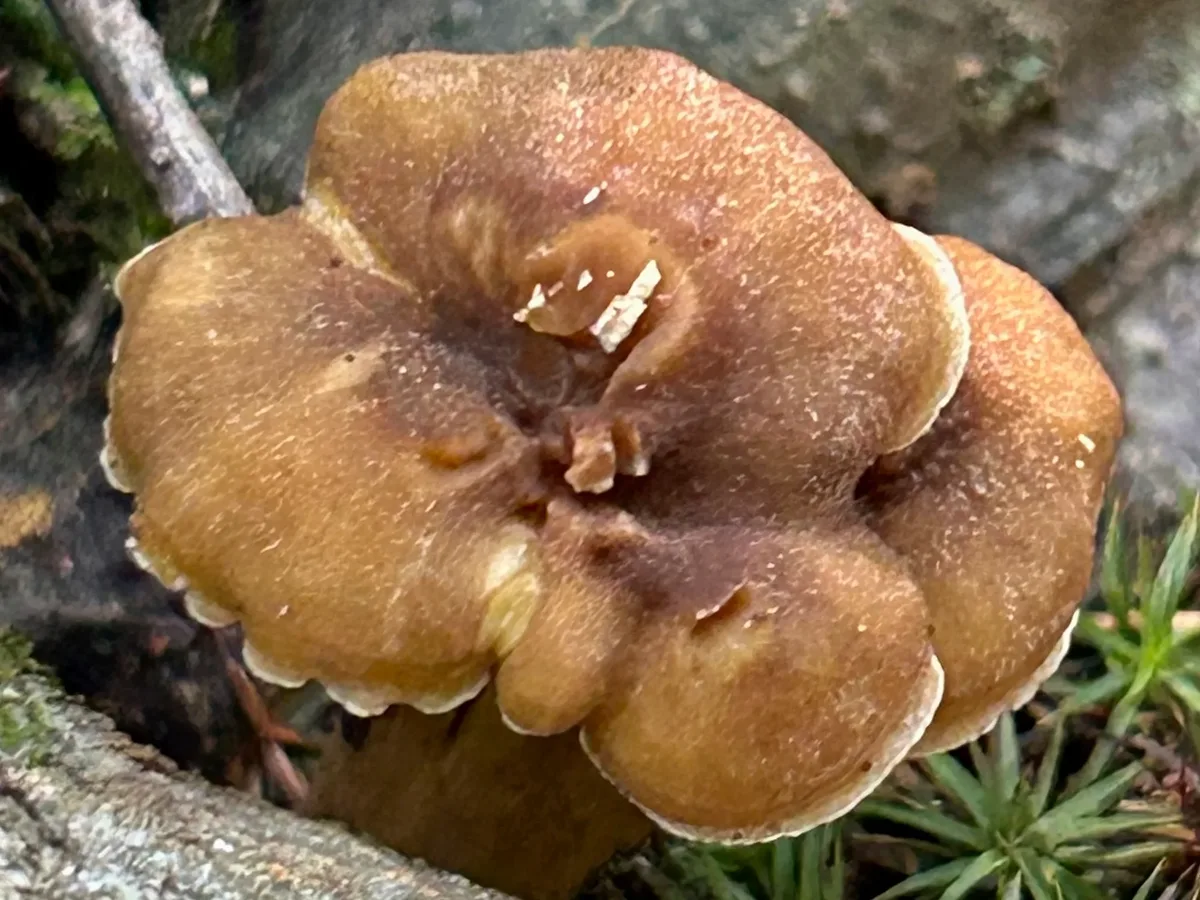 © martin_livezey (CC BY)
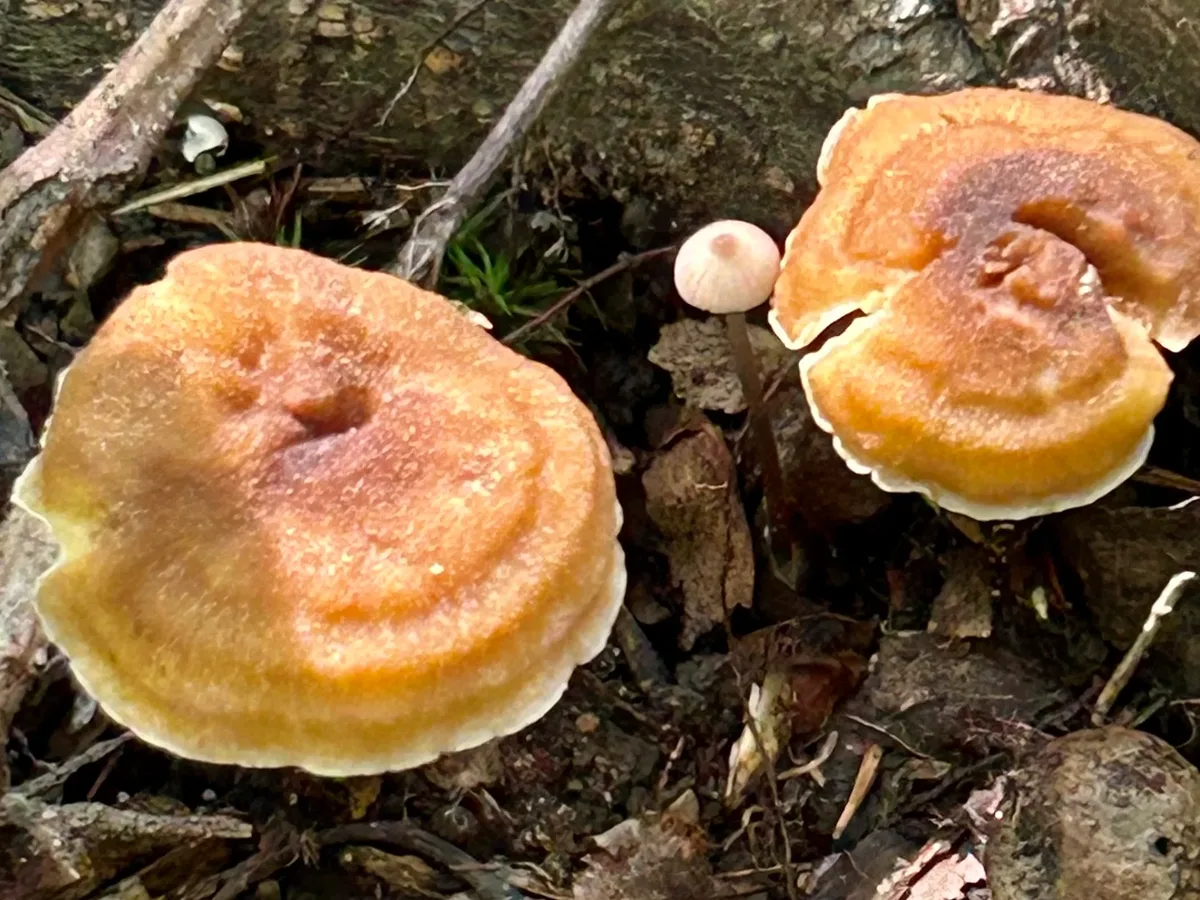 © martin_livezey (CC BY)
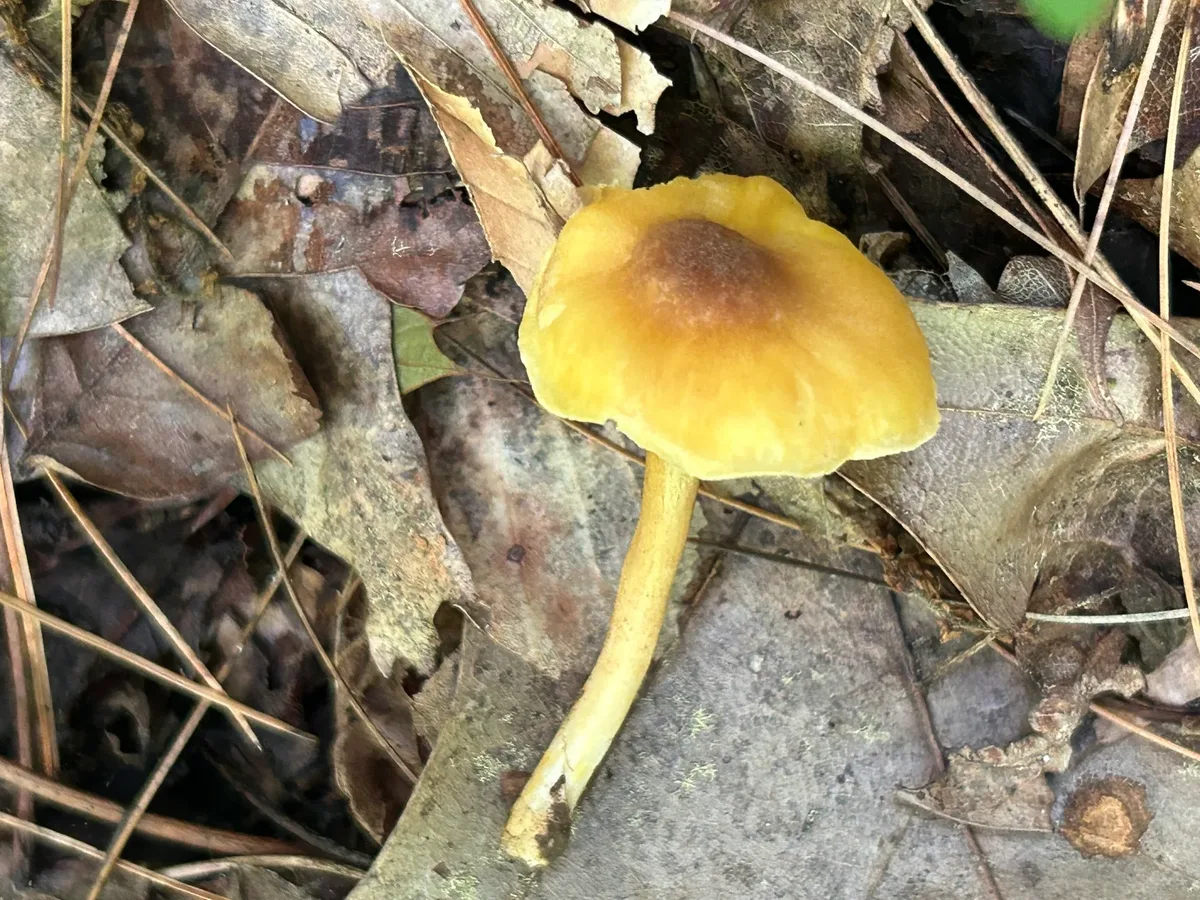 © Nat Gorka (CC BY)
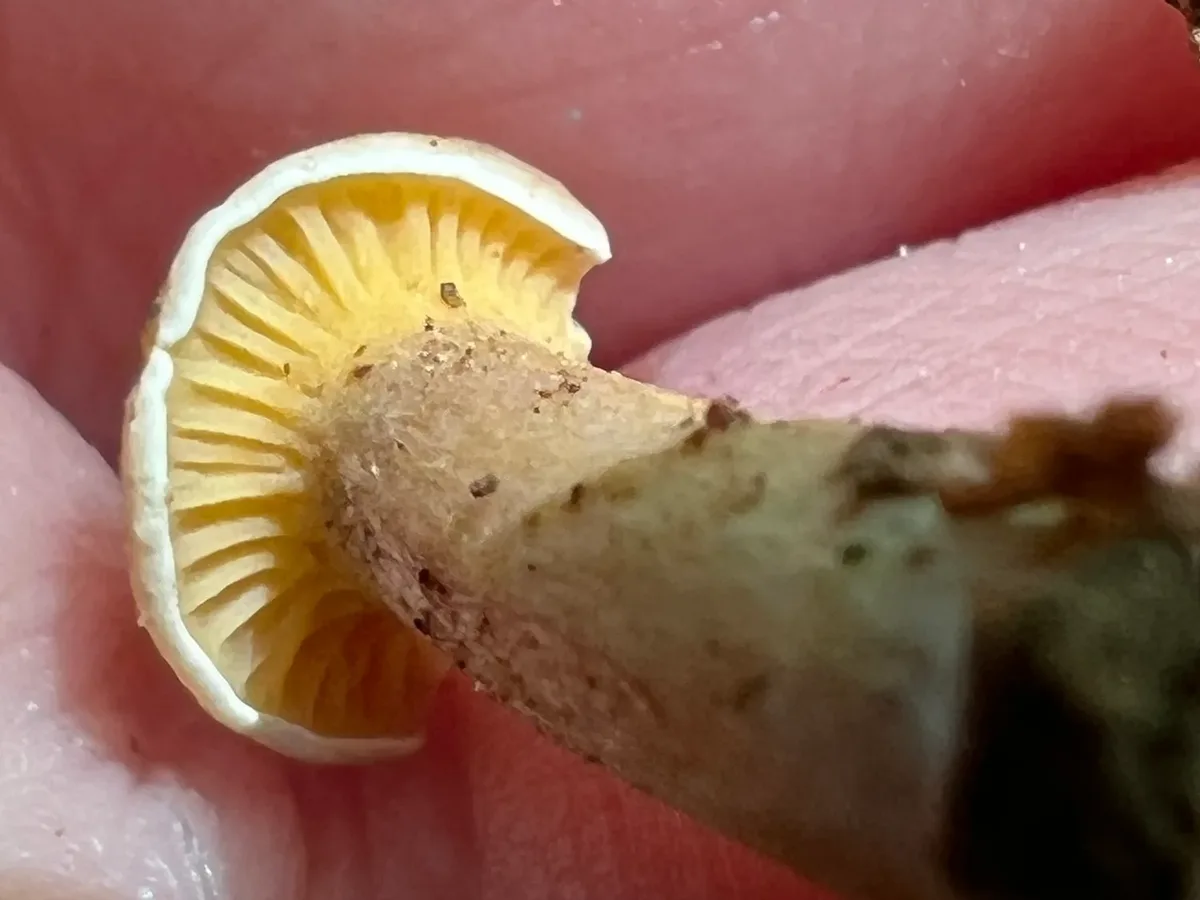 © Mark Richman (CC BY 4.0)© Annie Weissman (CC BY 4.0)© wackybadger (CC BY-SA 2.0)
One of the best mushrooms you can bring home - once you are certain of the identification.
How to recognise it
A small to medium chanterelle, often slightly paler and less vividly orange than the European golden chanterelle.
Cap
Typically 2-7 cm across, pale yellow to ochre-yellow. Convex when young, becoming broadly umbonate to shallowly funnel-shaped with a distinctly wavy, lobed margin at maturity.
Gills / Pores
The underside bears blunt, forking, decurrent ridges (false gills), the same pale yellow as the cap. They are never sharp, blade-like, or crowded like true gills. Running a fingernail across them reveals they are solid ridges, not thin plates.
Stem
Solid and concolorous.
Flesh
Does not stain or change color when broken.
Smell & taste
Aroma mild to fruity, reminiscent of apricot. Spore print pale yellow to cream.
Where & when it grows
Habitat
Grows on the ground in deciduous and mixed forest across the Appalachian Mountains from Georgia north through New York and New England. Strongly associated with oaks and American beech, which are its primary mycorrhizal partners.
Favors moist, humus-rich, acidic soils. Look in:
- sheltered hollows
- north-facing slopes
- along wooded stream banks
Because it is mycorrhizal (not saprotrophic), it grows directly from soil, never from wood, and it returns to the same productive spots year after year if the host trees remain undisturbed.
When
A summer mushroom, peaking from late June through early August at higher Appalachian elevations. Lower piedmont sites and southern foothills can push the season into September.
Fruiting is triggered by warm summer rains once soil temperatures climb above roughly 15°C - the mycelium has been there all along, waiting.
A flush typically appears 7-14 days after significant rainfall, so timing a trip after a good soaking rain is a reliable strategy.
How it grows
Solitary to scattered on the forest floor, emerging from humus. It never grows in clusters on wood - that growth habit is the jack-o'-lantern's, not a chanterelle's.
Because it forms a persistent mycorrhizal network, the same patches can be revisited reliably across many seasons.
Fruiting conditions
Summer rains with warm soils trigger fruiting across the Appalachian highlands; flush emerges 7-14 days after significant rainfall. Standard mycology estimate.
Look-alikes
The most important confusion species in eastern North America is the jack-o'-lantern mushroom (Omphalotus illudens). Both are orange-yellow and grow in similar hardwood forests, but the two are readily separated. Omphalotus:
- always grows in clusters, often at the base of trees or from buried roots
- has sharp, thin, true gills, not blunt ridges
- gills faintly bioluminesce in darkness
Chanterelles grow singly from soil. The false chanterelle or jack-o'-lantern-of-the-east should never be mistaken for C. appalachiensis by anyone who checks gill structure.
Hygrophoropsis aurantiaca (false chanterelle) is smaller, brighter orange, with thin forked true gills and a deeply inrolled cap margin; it causes GI upset.
Smaller yellow Cantharellus species such as C. minor are edible but undersized.
No deadly species is realistically confused with C. appalachiensis when ridge vs. gill structure is verified.
Brighter orange; has thin, densely forked true gills and a strongly inrolled cap margin, unlike the chanterelle's blunt ridges. Can cause GI upset.
Grows in dense clusters at the base of trees or from buried roots, never singly from soil; has sharp, thin, true gills (not blunt ridges); gills faintly bioluminesce in complete darkness. Poisonous - causes severe gastrointestinal distress.
Also edible, but very small (cap rarely exceeds 3 cm); otherwise shares the blunt-ridge character. Identification as either species is benign.
Edible; distinguished by a nearly smooth to very shallowly ridged hymenium (almost no forked ridges) and a tendency to appear in drier oak forest; also choice edible, so confusion is harmless.
In the kitchen
Picking & cleaning
Cut the stem cleanly at the base rather than pulling, to leave the mycorrhizal network intact. Brush debris away in the field.
The dense, dry flesh keeps well - store in a paper bag or basket, never a sealed plastic bag, which promotes rapid deterioration.
C. appalachiensis tends to be cleaner than many woodland mushrooms, but inspect the ridges for grit.
Cooking
Appalachian chanterelles are versatile and rewarding in the kitchen. Their flavor is milder and slightly more delicate than the European C. cibarius, with a pleasant fruity undertone.
Dry-sautéing is the recommended technique: place the sliced or torn mushrooms in a dry, hot pan with a pinch of salt and cook until they release and then reabsorb their moisture. This concentrates flavor and prevents waterlogging. Then add butter, shallots, or garlic and finish to taste.
They pair well with eggs, fresh pasta, cream sauces, and grilled meats. Chanterelles freeze adequately after dry-sautéing. Avoid boiling or steaming, which dilutes their flavor.
Good to know
Cantharellus appalachiensis is considered a safe, rewarding species for beginners willing to learn the single most important check: false gills (blunt forking ridges) vs. true gills (sharp blade-like plates). Once that distinction is internalized, chanterelle identification is reliable.
Always cook before eating - raw chanterelles can cause mild GI irritation in some individuals.
As a mycorrhizal species it can accumulate trace heavy metals from the soil. Avoid harvesting near:
- roadsides
- industrial sites
- abandoned mine tailings
Do not harvest from areas treated with herbicides or pesticides.
A reference guide - never an edibility guarantee. When in doubt, leave it out.