Western giant puffball
Calvatia boonianasyn. Handkea booniana
 The Fun Chronicles (CC0)
 Chuck Wilson (CC0)
 © Irina Mitine (CC BY)
 © Irina Mitine (CC BY)
 © Irina Mitine (CC BY)
 Alex Heyman (CC0)
 Alex Heyman (CC0)
 Alex Heyman (CC0)
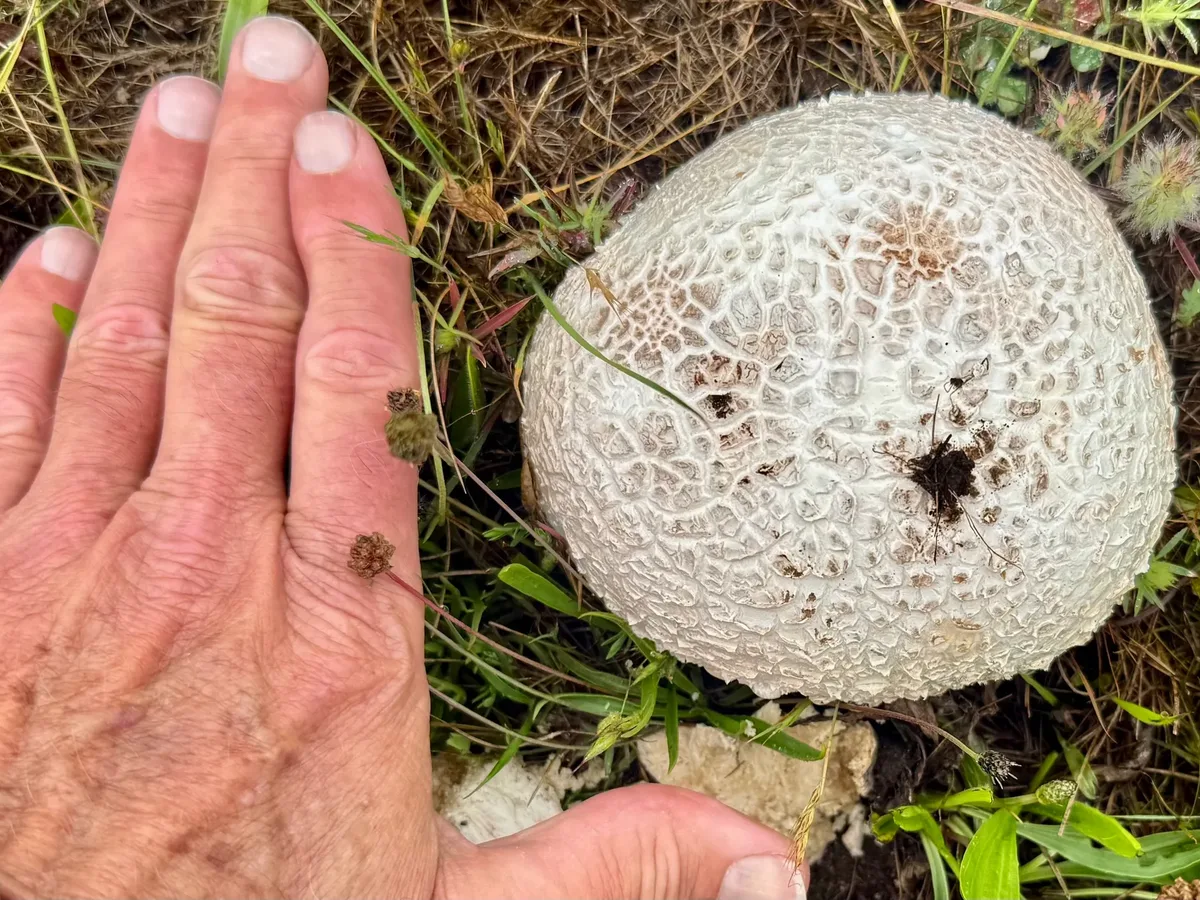 Chuck Wilson (CC0)
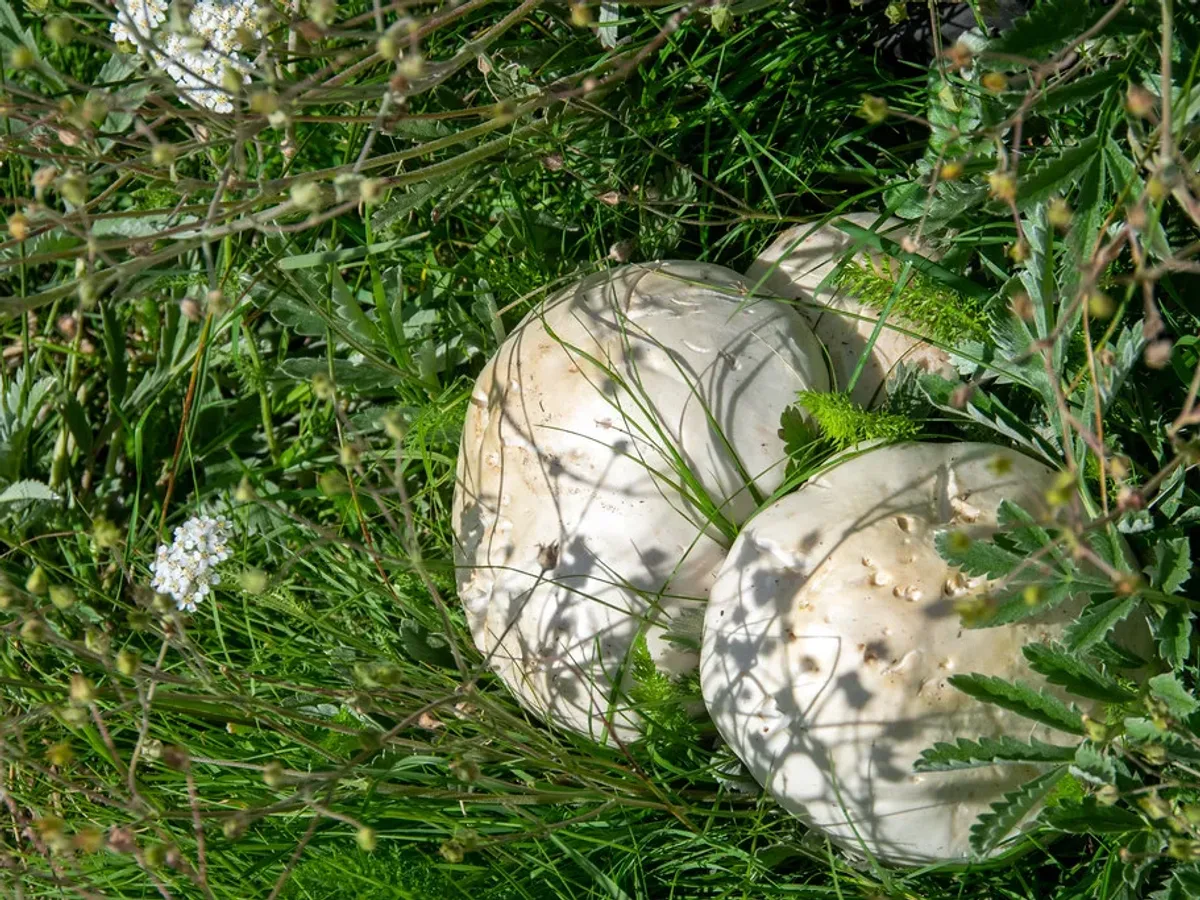 © Paul and Jill (CC BY 2.0)
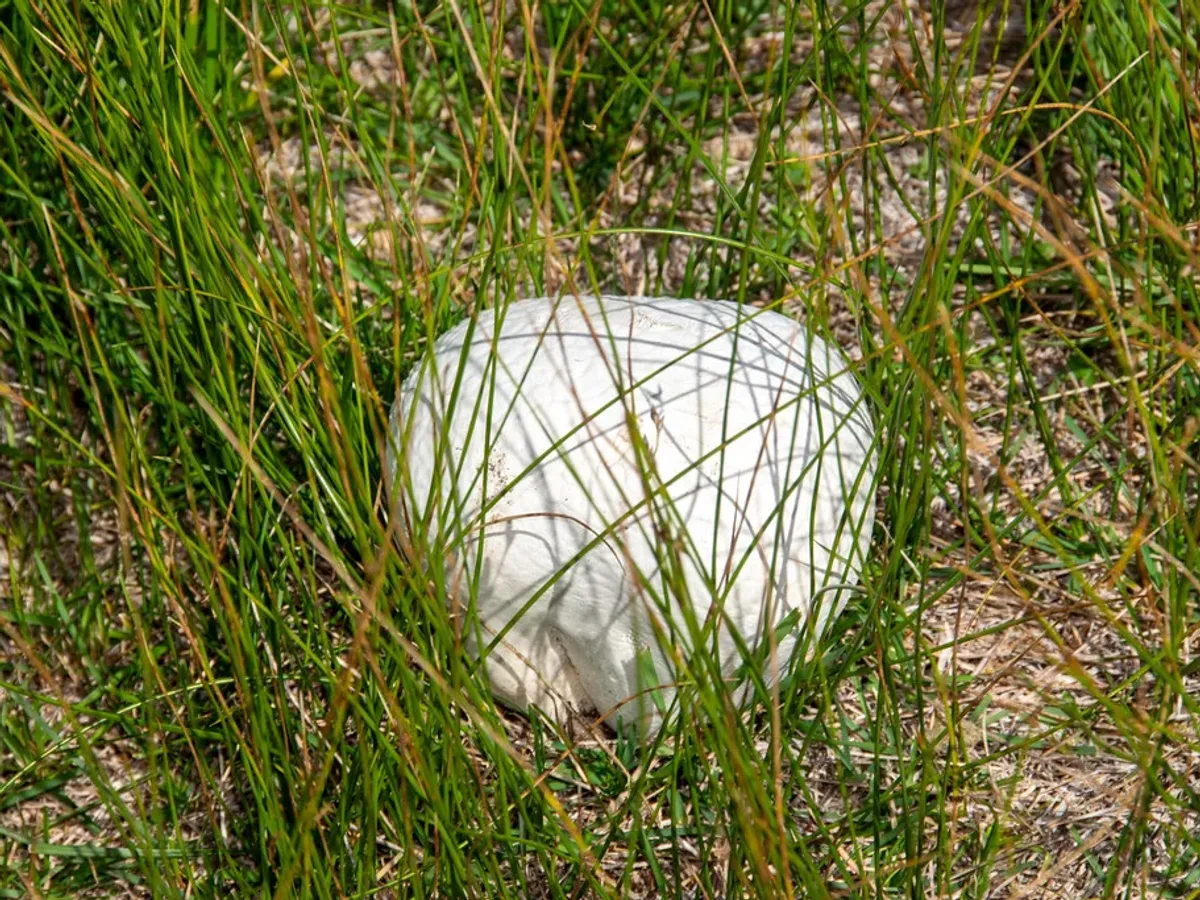 © Paul and Jill (CC BY 2.0)The Fun Chronicles (CC0)Chuck Wilson (CC0)
Good to eat, once you have identified it with certainty and cooked it through.
Never eat a mushroom you are not 100% sure of - check the look-alikes below, and always cook wild mushrooms.
How to recognise it
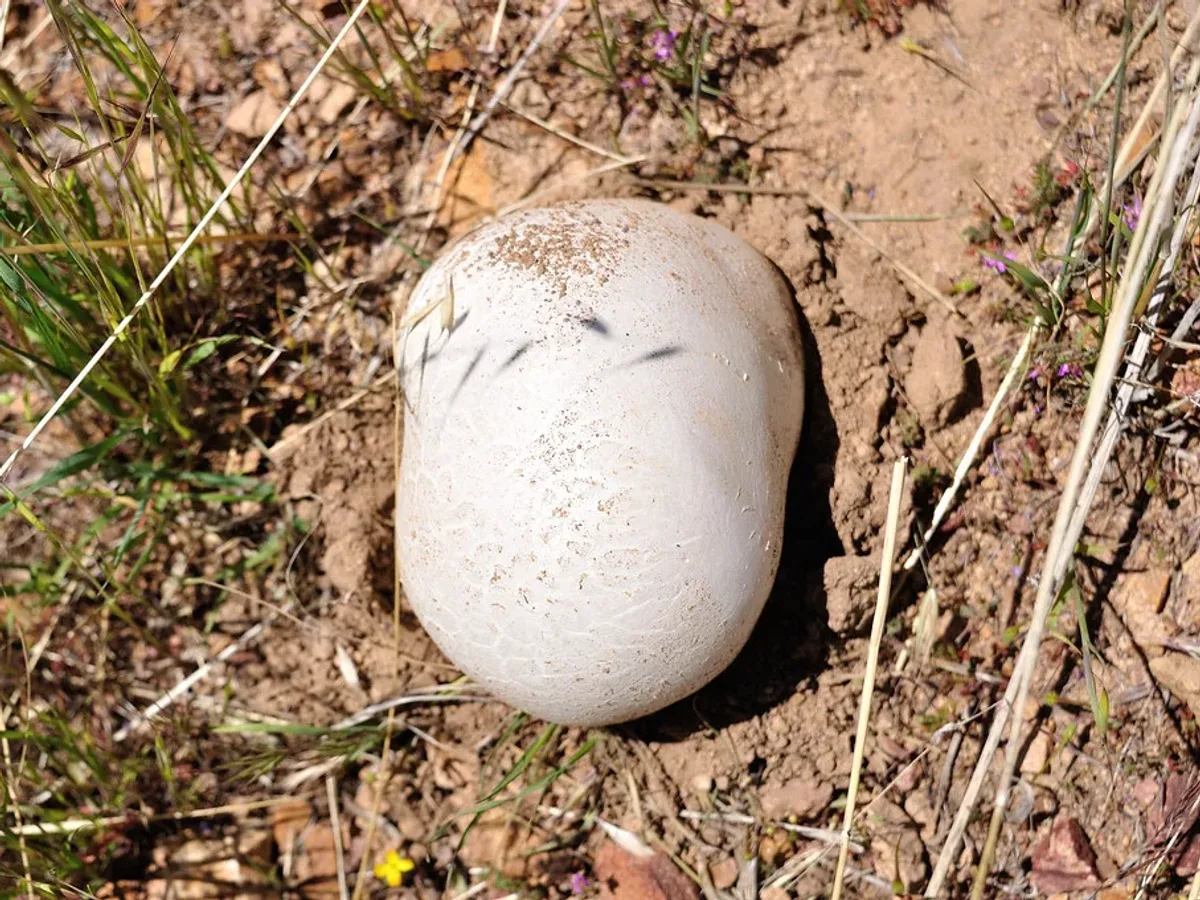
Calvatia booniana is among the largest fungi in North America and the largest puffball of the arid West, rivaling the better-known Calvatia gigantea of eastern grasslands.
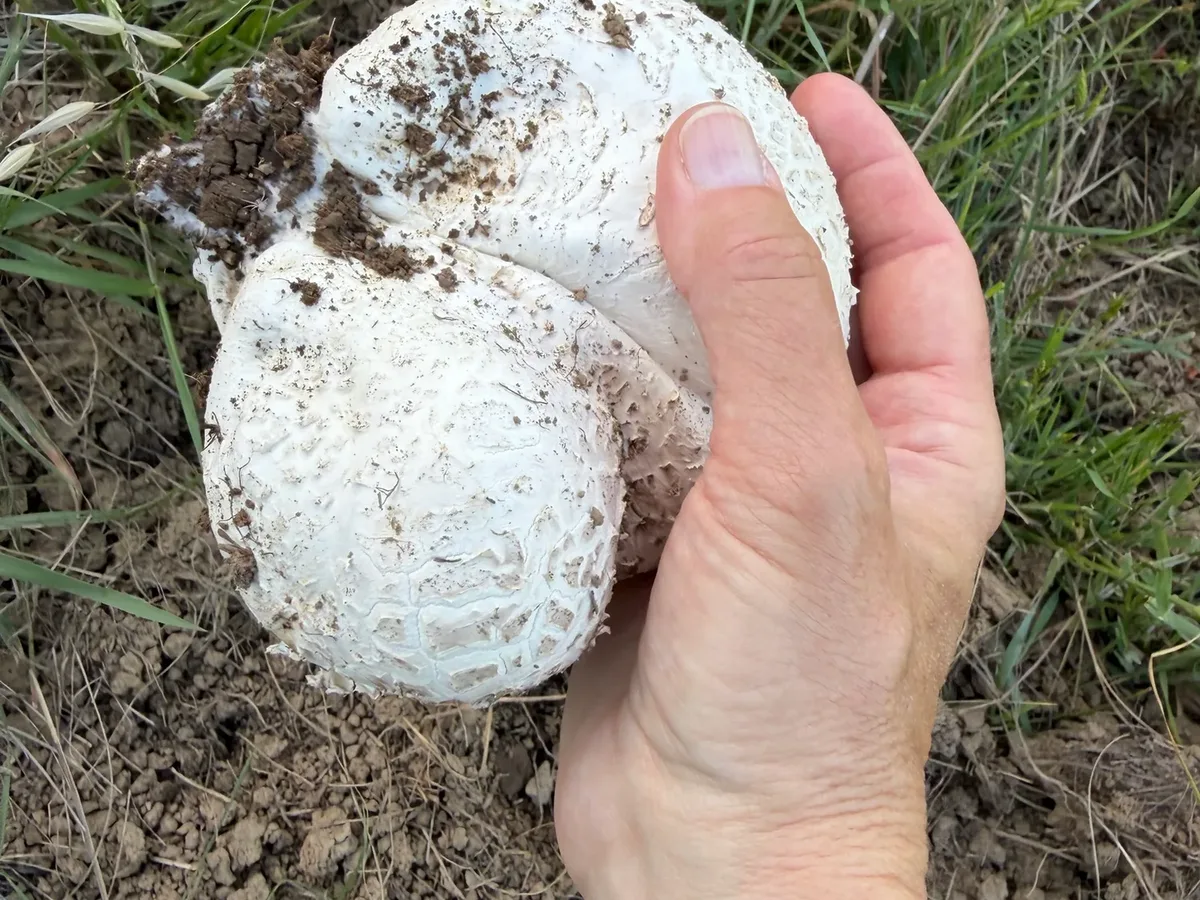
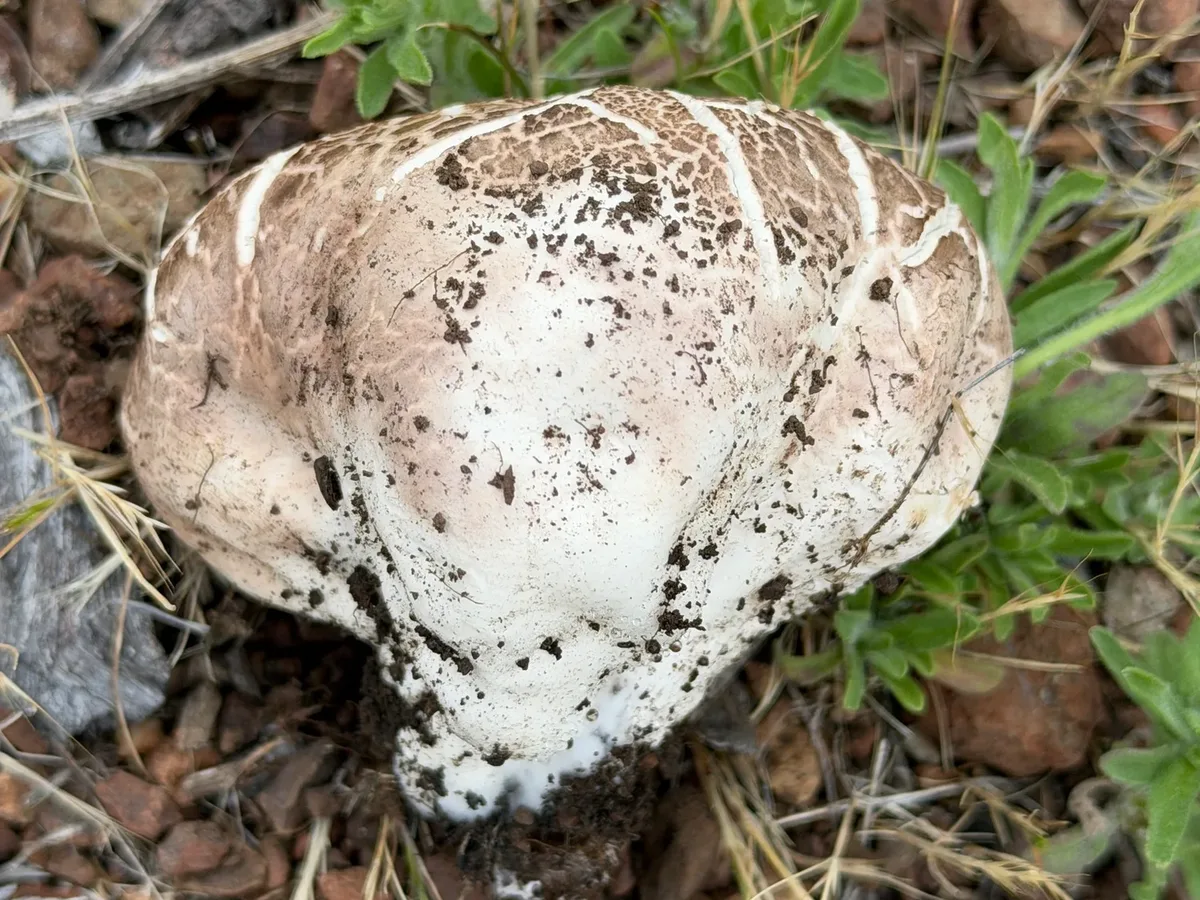
The fruiting body is an imposing globe or slightly flattened sphere, typically 15-50 cm across but documented to 70 cm or more.
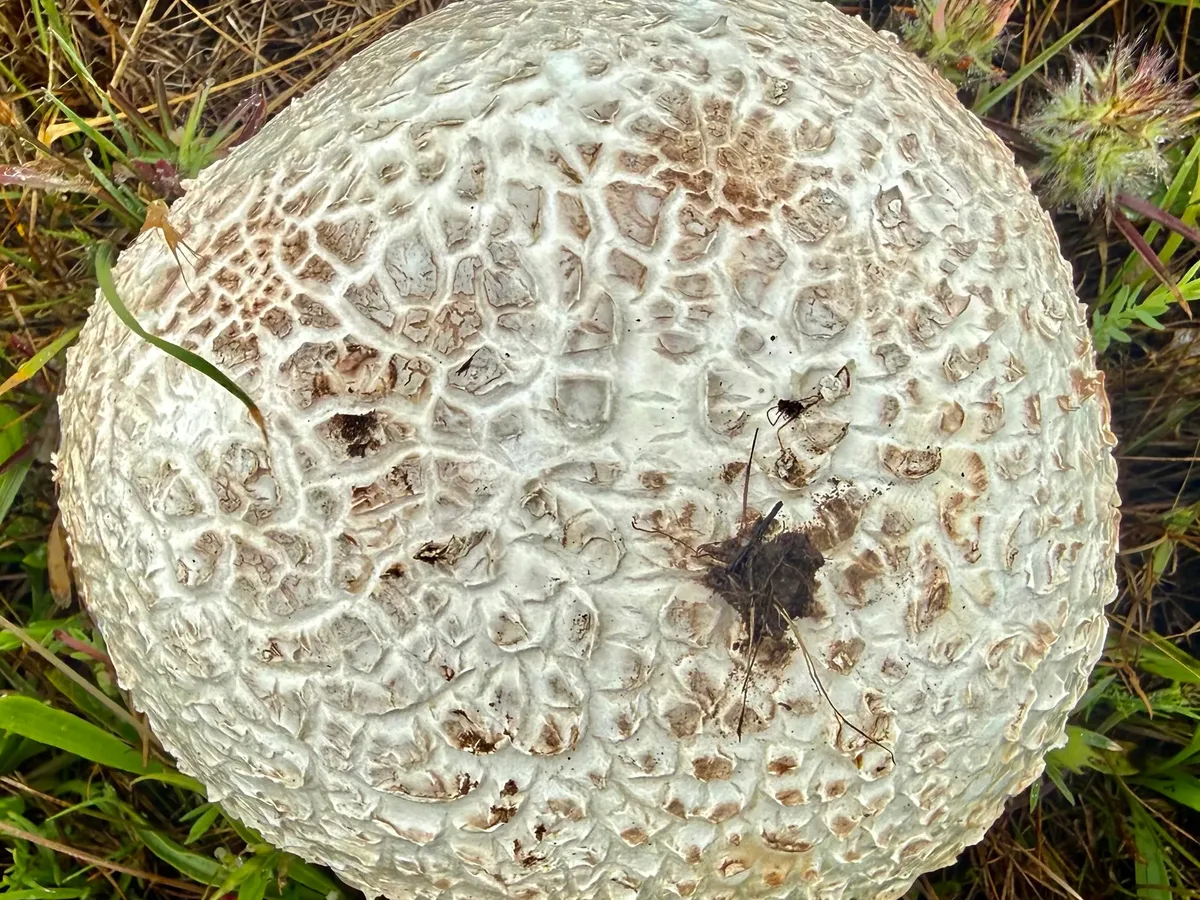
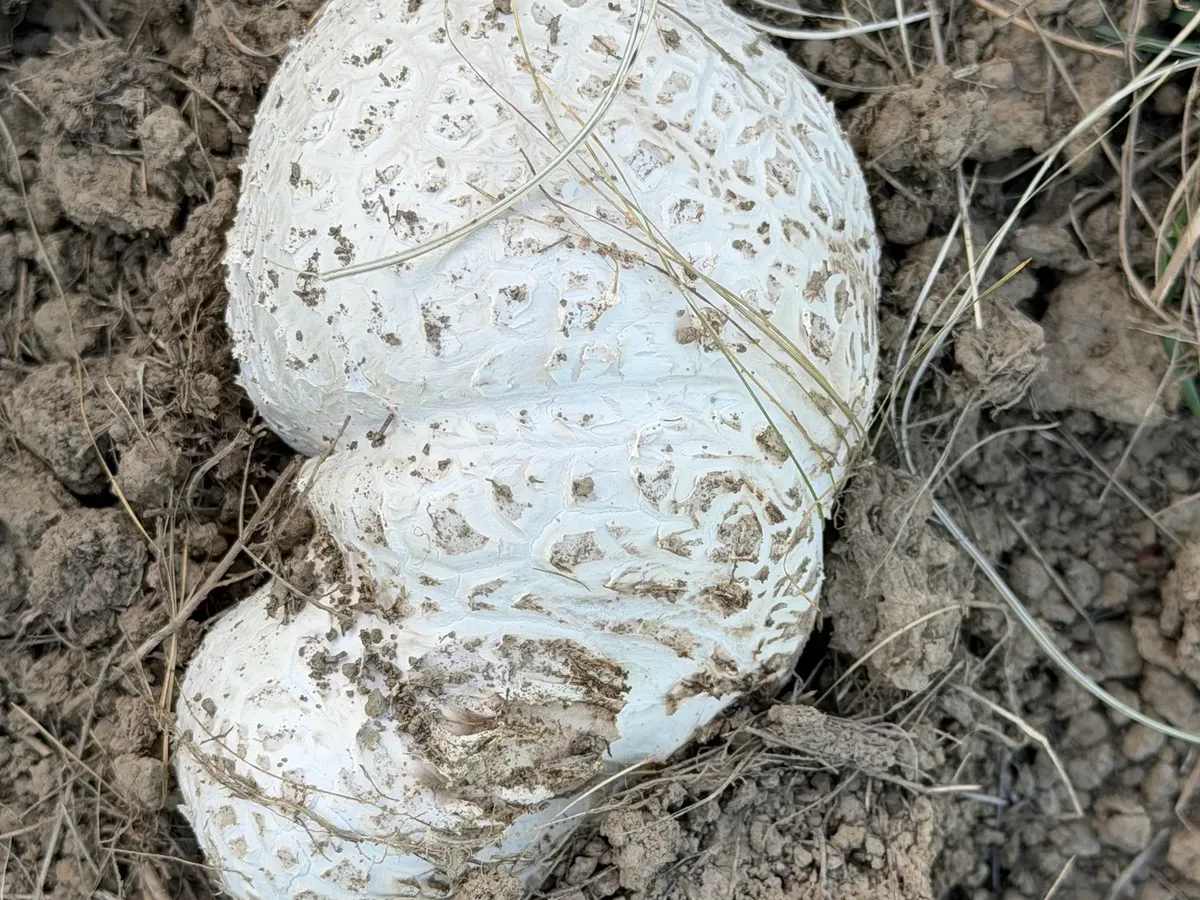
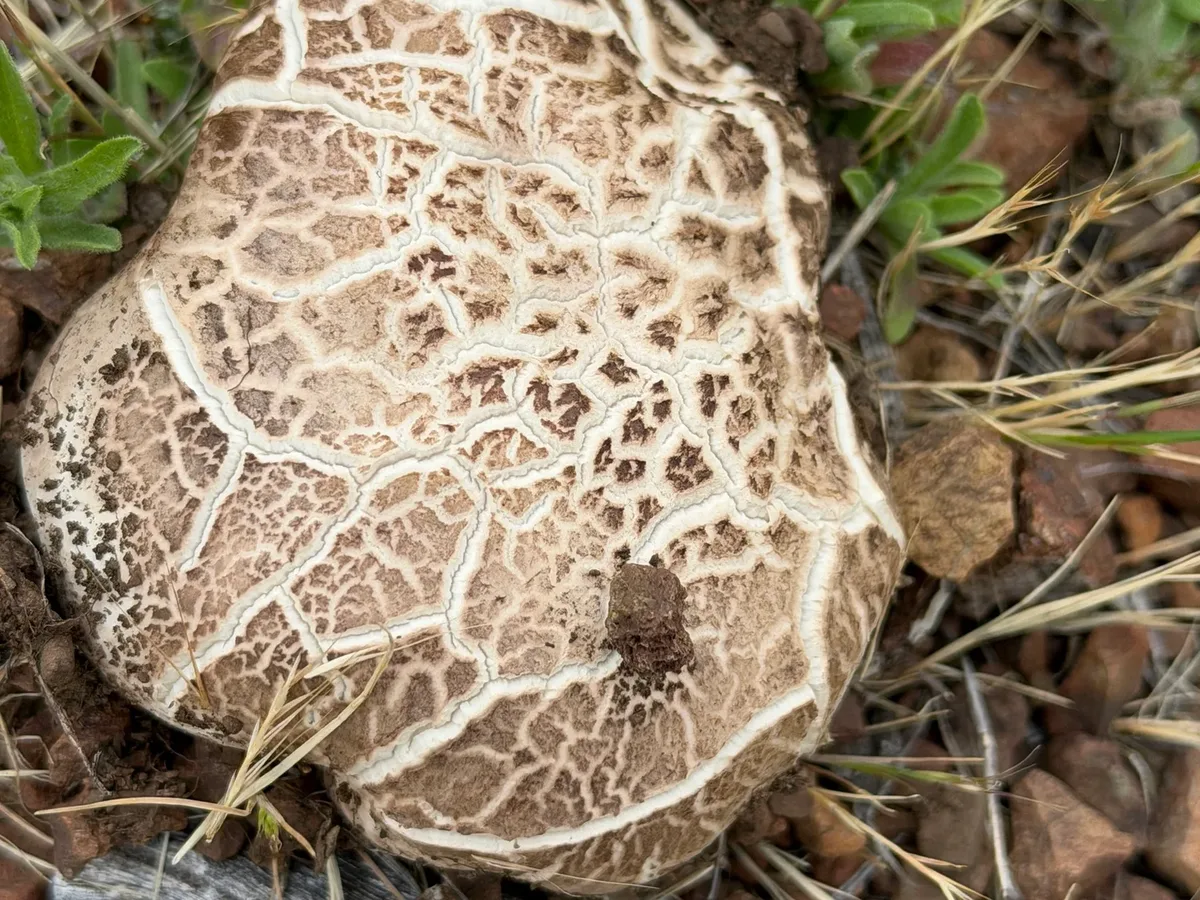
When encountered young and fresh, it is startlingly white - smooth to finely granular at first, then breaking up into a mosaic of polygonal scales or plate-like warts that give the surface a cracked, almost reptilian texture. Young specimens feel heavy and firm.
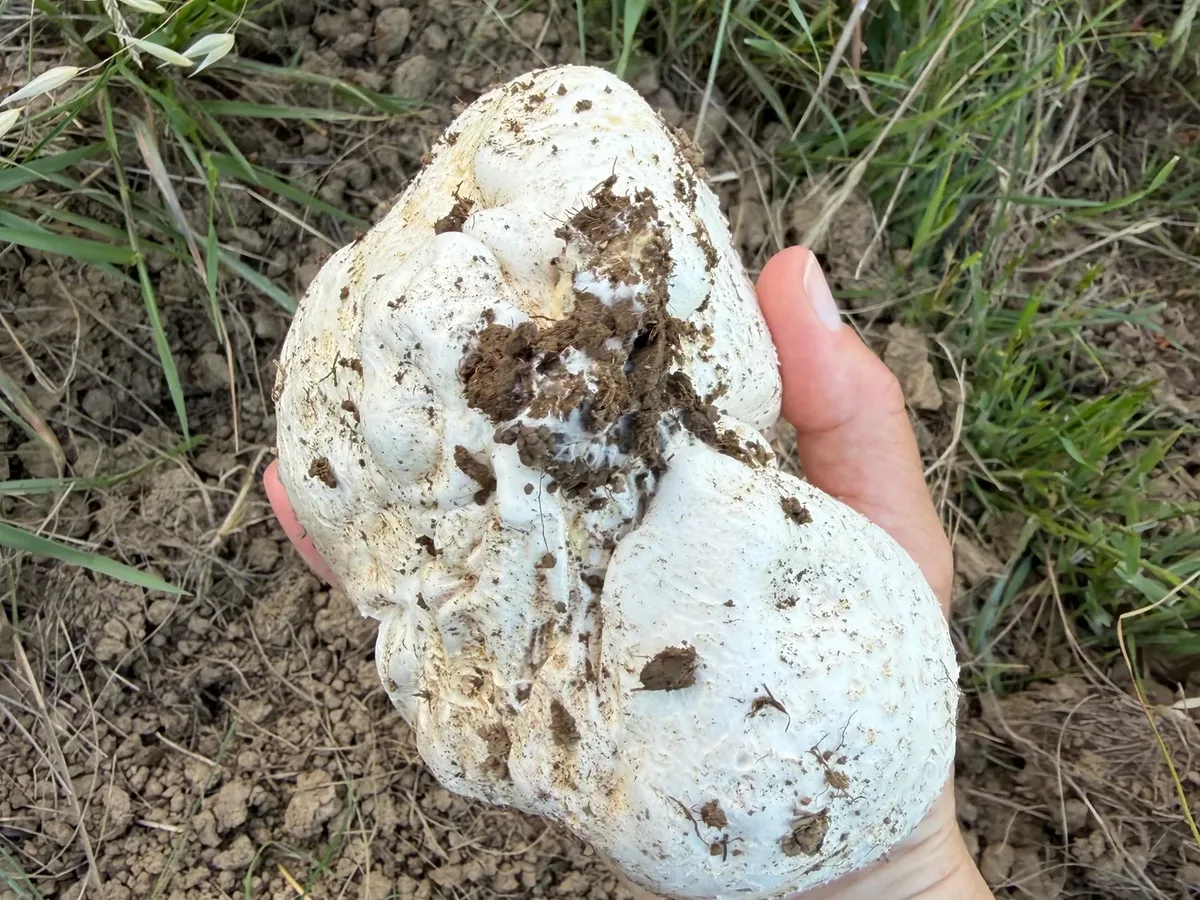
The base tapers into a thick sterile base (peridiopodium) that merges with mycelial strands anchoring it to soil.
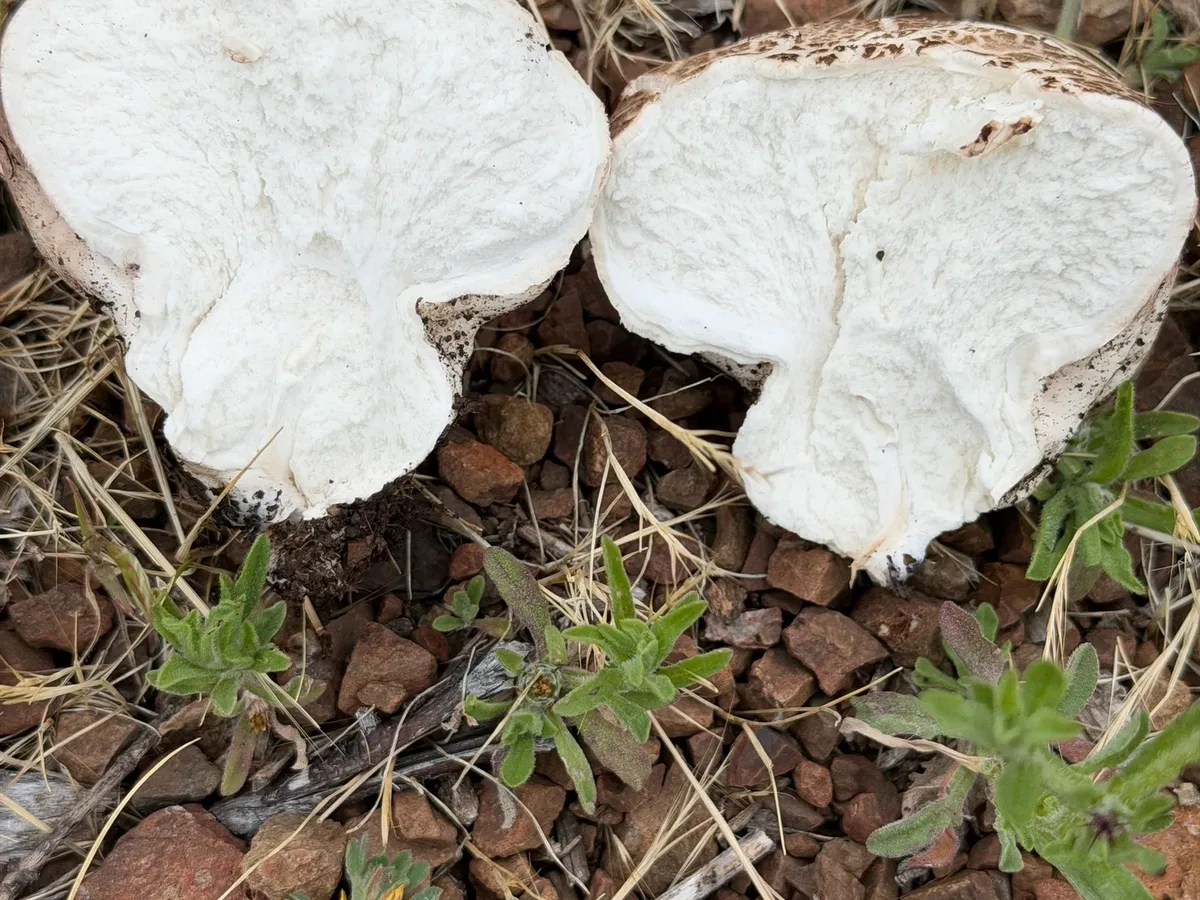
The key edibility test is to cut the specimen in half vertically: the interior must be completely white and homogeneous, like a dense white marshmallow or cream cheese, with absolutely no hint of yellow, green, or any internal structure that would suggest a cap, gills, or stem - the latter would indicate an immature Amanita button, which would be lethal.
As the puffball matures, the interior yellows, then turns olive and finally a dry, powdery purplish-brown as the spore mass (gleba) develops. The outer skin eventually ruptures and peels away from the top, releasing billions of spores.
Spores are globose, finely echinulate, 3.5-5.5 µm in diameter.
Where & when it grows
Habitat
Calvatia booniana is the giant puffball of the arid West, at home in wide-open country from British Columbia south through the Rockies to New Mexico and Arizona, and west across the Great Basin.
Look for it in sagebrush-bunchgrass steppe, mountain meadows, and along the margins of open ponderosa pine or juniper woodland - it is equally content on a sun-baked roadside or a grazed range flat.
Unlike most forest fungi, it has no tree partner: it is a saprotrophic decomposer, quietly breaking down buried organic matter and root debris in the soil.
It prefers well-drained sandy loams and silty clays, and handles the alkaline soils of the Basin and Range without complaint. Specimens have been found from valley floors around 500 m all the way up to subalpine meadows near 2800 m.
Fruiting bodies usually appear singly, though small groups or loose rings turn up in spots where organic matter has accumulated.
When
The fruiting window runs from June through October, shifting with elevation and latitude.
In the lower sagebrush flats of Nevada, Idaho, and eastern Oregon, puffballs appear after summer monsoon rains arrive in July and August.
Higher up, in the mountain meadows of Colorado, Wyoming, and Montana, the peak falls between late July and September.
A second flush sometimes follows autumn rains at lower elevations through October. Unlike some eastern relatives, Calvatia booniana rarely fruits in spring.
How it grows
Saprotrophic - the mycelium decomposes buried organic matter, humus, and root debris in soils.
Fruiting bodies develop rapidly after warm rains following dry periods, growing from a small button to full size in 4-10 days under optimal conditions.
The sterile base (peridiopodium) connecting the puffball to the soil is characteristic.
Mature specimens disintegrate from the top down, forming a 'puff' that releases spore clouds when disturbed. A single large specimen may contain trillions of spores.
Fruiting conditions
Fruiting strongly triggered by warm-season rainfall (summer monsoon or frontal precipitation) following a dry period. Best fruiting conditions: soil temperatures 12-22 °C, moderate moisture after dry spell. Semi-arid conditions mean fruiting events are episodic and can be separated by weeks of drought.
Look-alikes
The most dangerous lookalikes are button-stage Amanita species, particularly the deadly:
- Amanita bisporigera (destroying angel, widespread in North America)
- Amanita ocreata (western destroying angel, California to southern Oregon)
- Amanita phalloides (death cap, established in parts of the Pacific coast)
Amanita buttons are egg-shaped rather than perfectly round, and a vertical cut through the center will reveal the outline of a miniature cap, gills, and stem enclosed in the universal veil - never present in a true puffball. This cut is mandatory before eating any puffball.
Other Calvatia and Lycoperdon species can be confused with small or juvenile C. booniana:
- Calvatia gigantea is nearly identical but occupies moister eastern grasslands.
- Calvatia cyathiformis (purple-spored puffball) occurs in western grasslands and is also edible when white - same safety test applies.
- Lycoperdon perlatum and related hedgehog puffballs are much smaller (2-6 cm) with a distinct sterile base and spiny surface.
Scleroderma (earthballs) are smaller, harder, have a much thicker tough rind, and a dark marbled interior even when young - they are toxic.
None of these will produce a pure white, homogeneous interior identical to an edible C. booniana.
Young buttons can superficially resemble a small puffball, but vertical cross-section reveals a nascent cap, gills, and stem. Now established in parts of the Pacific coast via European tree plantings. Puffball interior is always uniformly white and textureless.
White Amanita buttons have an egg-like shape and cross-section shows internal cap, gill, and stem structure enclosed in a membranous veil - never present in a true puffball. Always bisect every puffball before eating. Contains lethal amatoxins.
Button-stage Amanita ocreata is enclosed in a white egg-like universal veil. A vertical cut reveals the outline of a cap, gills, and stem - features entirely absent in a true puffball. Amanita buttons are also more oval or egg-shaped and often partially buried. This cut is mandatory before eating any puffball.
Much smaller (3-12 cm), nearly round, with a very thick, tough yellowish-brown rind covered in coarse scales. Interior is dark purplish-black with white marbling even when young - never pure white. Toxic; causes gastrointestinal poisoning.
Club-shaped or irregular, with a chambered interior that shows distinct pockets filled with olive-brown spore masses. Outer surface is yellow-brown to blackish. Not pure white inside.
Nearly identical and also edible when white. C. gigantea occurs primarily in moister eastern North American grasslands and lawns, has a smoother surface when young, and lacks the prominent polygonal scaling of C. booniana. Both edible when interior is pure white - the same bisection test applies.
In the kitchen
Picking & cleaning
Harvest only specimens that are pure white throughout when cut in half - yellowing, greenish, or olive tones indicate inedibility.
- Use a long knife to bisect the puffball in the field before collecting.
- Young specimens with a firm, dense, evenly white interior are best.
- Carry in a mesh bag or breathable container to avoid sweating.
- Do not collect specimens in late stages of development.
- Brush off soil and debris; the outer skin peels away easily before cooking.
- Puffballs do not store long - use within 2-3 days or slice and freeze.
Cooking
Young Calvatia booniana is a versatile edible with a mild, pleasant flavor and dense, meaty texture.
Peel away the outer skin (exoperidium), slice into steaks 1-2 cm thick, and sauté in butter with garlic and fresh herbs - this is the classic preparation. The slices brown beautifully and develop a savory umami richness.
They can also be:
- breaded and pan-fried like schnitzel
- grilled over charcoal
- incorporated into stir-fries, soups, or omelets
- cut into cubes and used in place of tofu
The mild flavor makes it an excellent canvas for bold sauces.
Calvatia booniana does not dry or rehydrate well - freeze sliced for longer storage. Discard any portion that is not pure white.
Good to know
Calvatia booniana is regarded as a safe and choice edible when correctly identified in the button stage, but the mandatory bisection test is non-negotiable.
Deadly Amanita species button underground in a volva that can be mistaken for a young puffball before the egg is cut open. Never eat any puffball, regardless of size, without first bisecting it and confirming a pure white, structureless interior.
Additional cautions:
- Mature or even partially yellowing specimens must be discarded - they may cause gastrointestinal upset.
- Some individuals report mild GI sensitivity even to young specimens; moderation is advised when eating for the first time.
- Do not forage near roadsides with heavy traffic or areas sprayed with herbicides, as puffballs accumulate environmental contaminants.
- Always cook thoroughly; never eat raw.
A reference guide - never an edibility guarantee. When in doubt, leave it out.