St George's Mushroom
Calocybe gambosasyn. Tricholoma gambosum, Calocybe georgii, Lyophyllum gambosum, Agaricus gambosus, Tricholoma georgii, Calocybe georgii (Fr.) Kühner
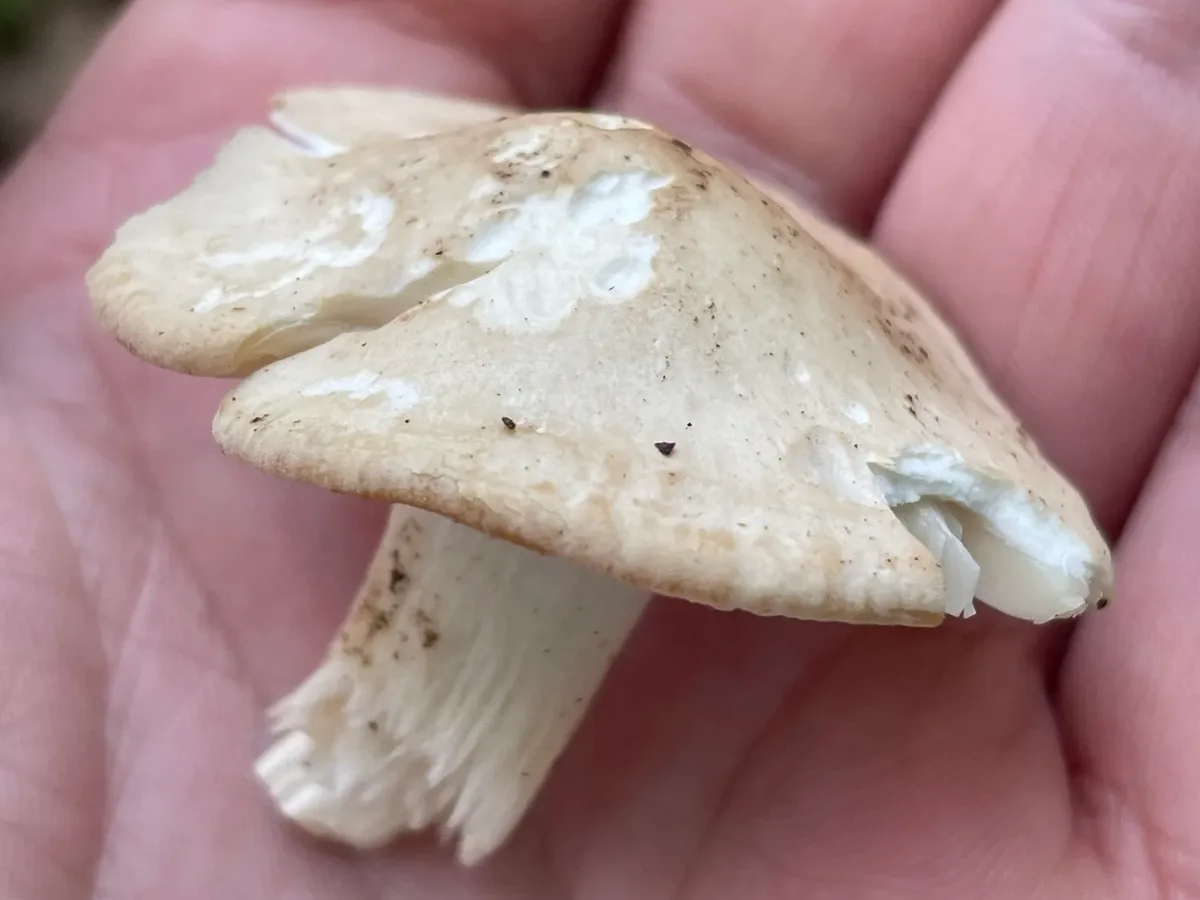 © Benjamin Flatt (CC BY 4.0)
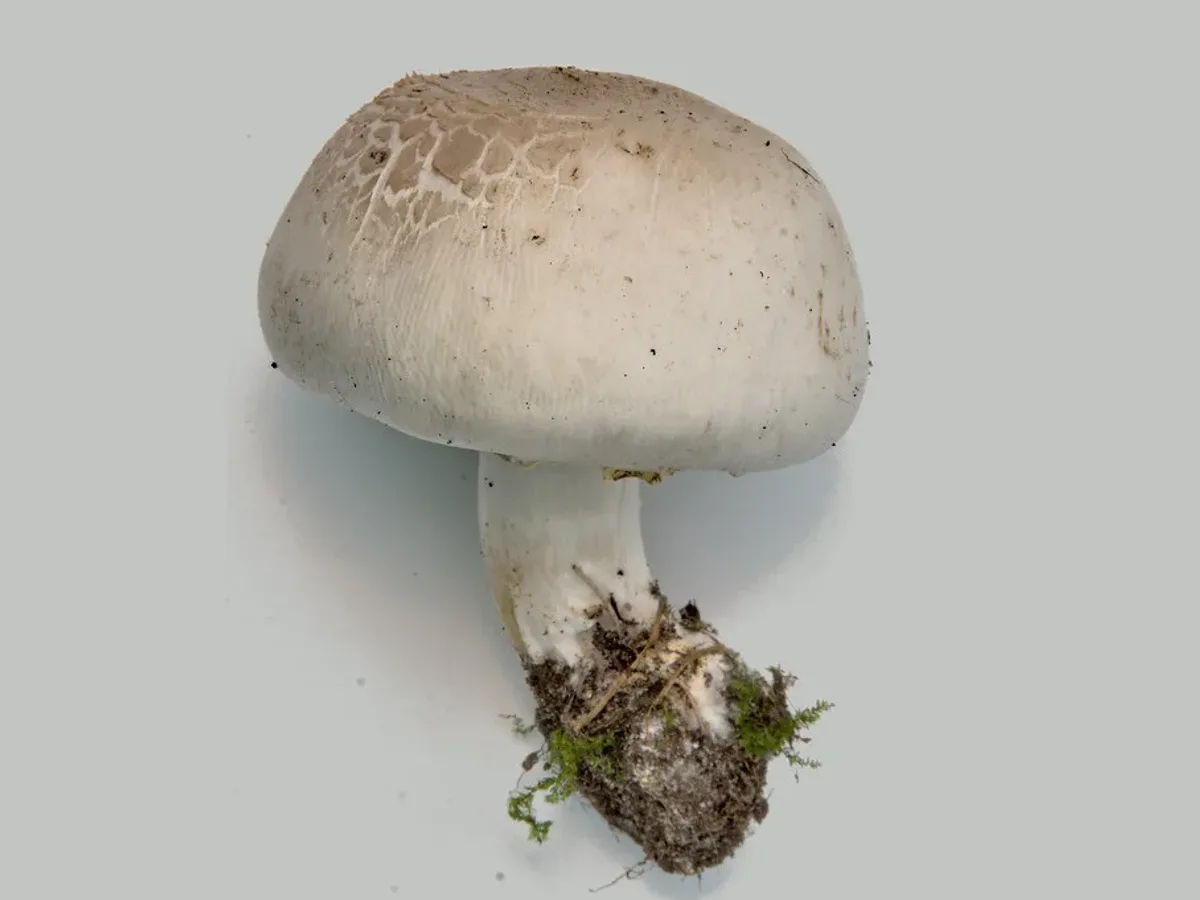 © MaximilianParadiz (CC BY 2.0)
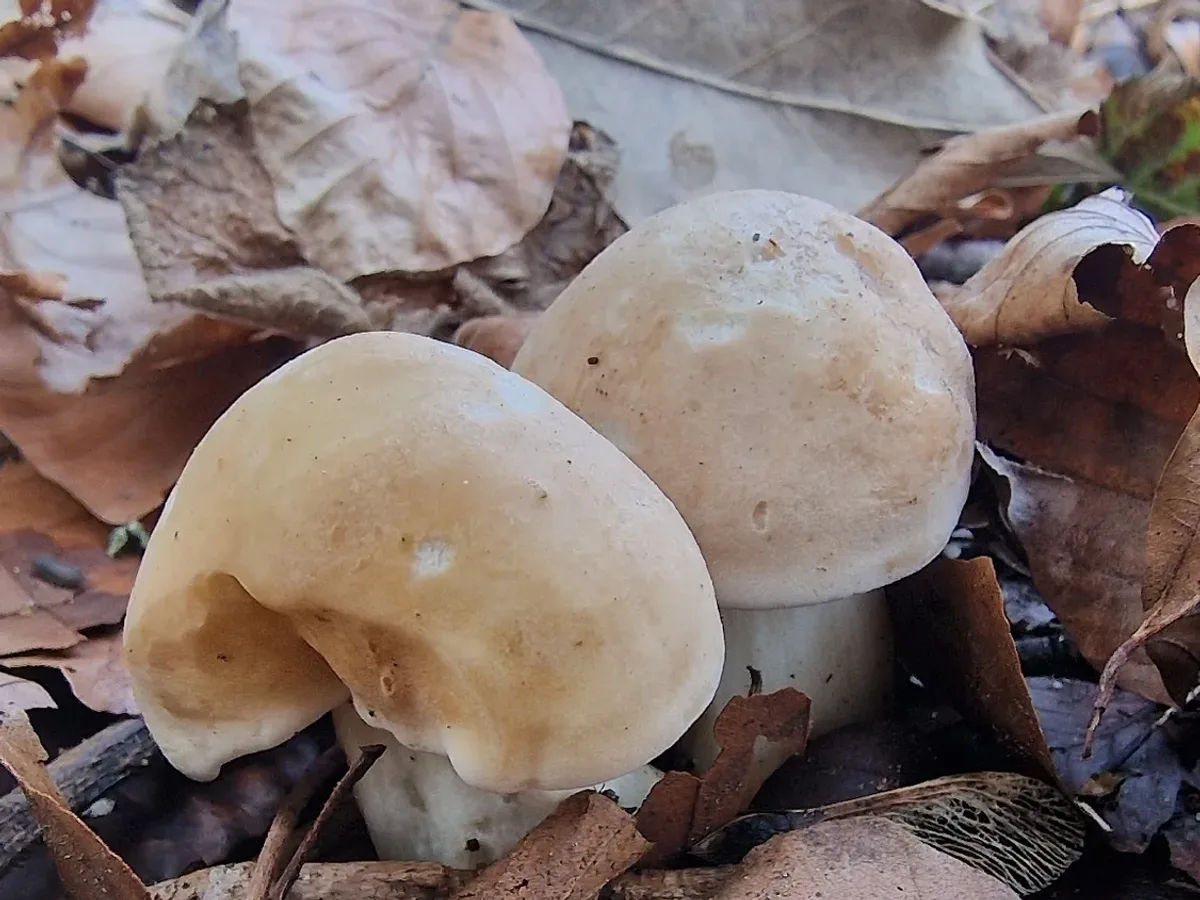 Rosie (CC0)
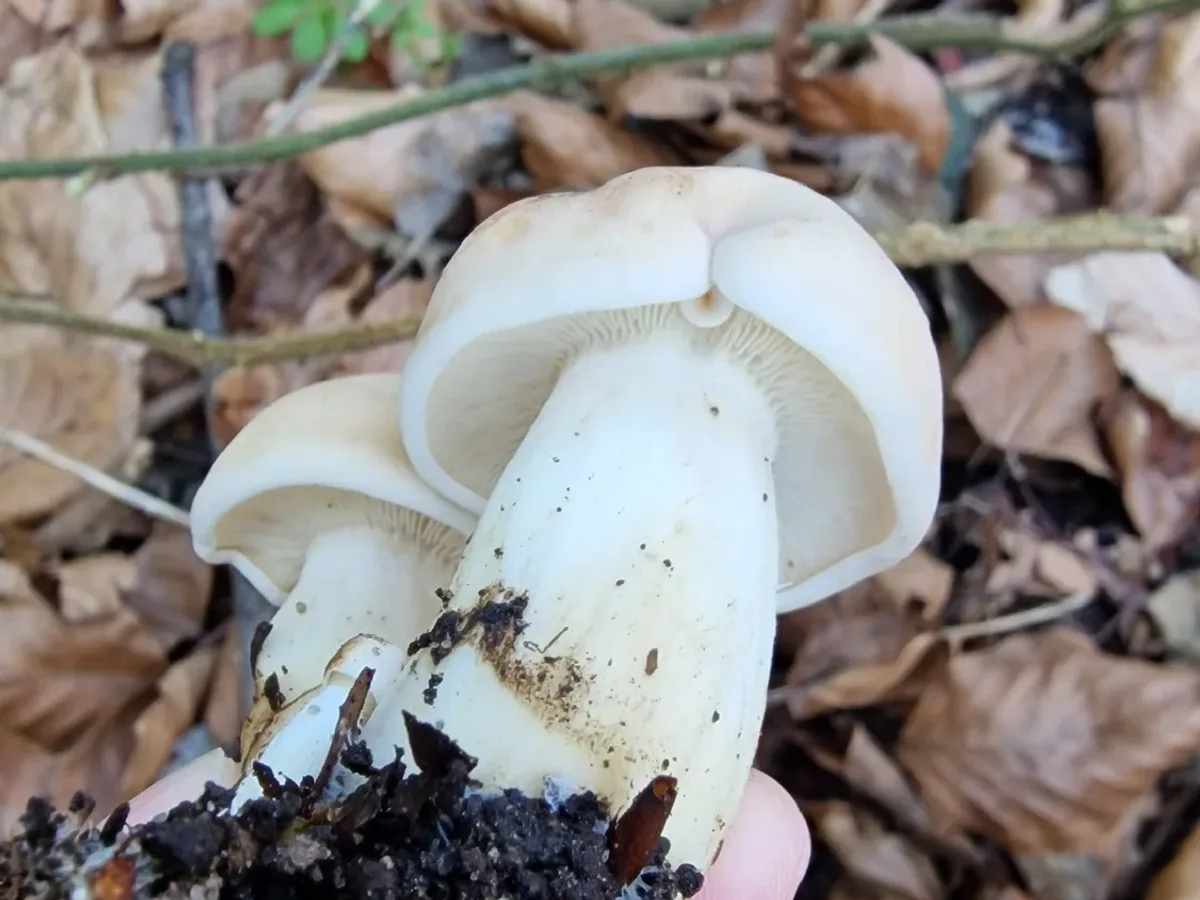 Rosie (CC0)
 © Cara Ennis (CC BY)
 © Cara Ennis (CC BY)
 © Cara Ennis (CC BY)
 © Cara Ennis (CC BY)
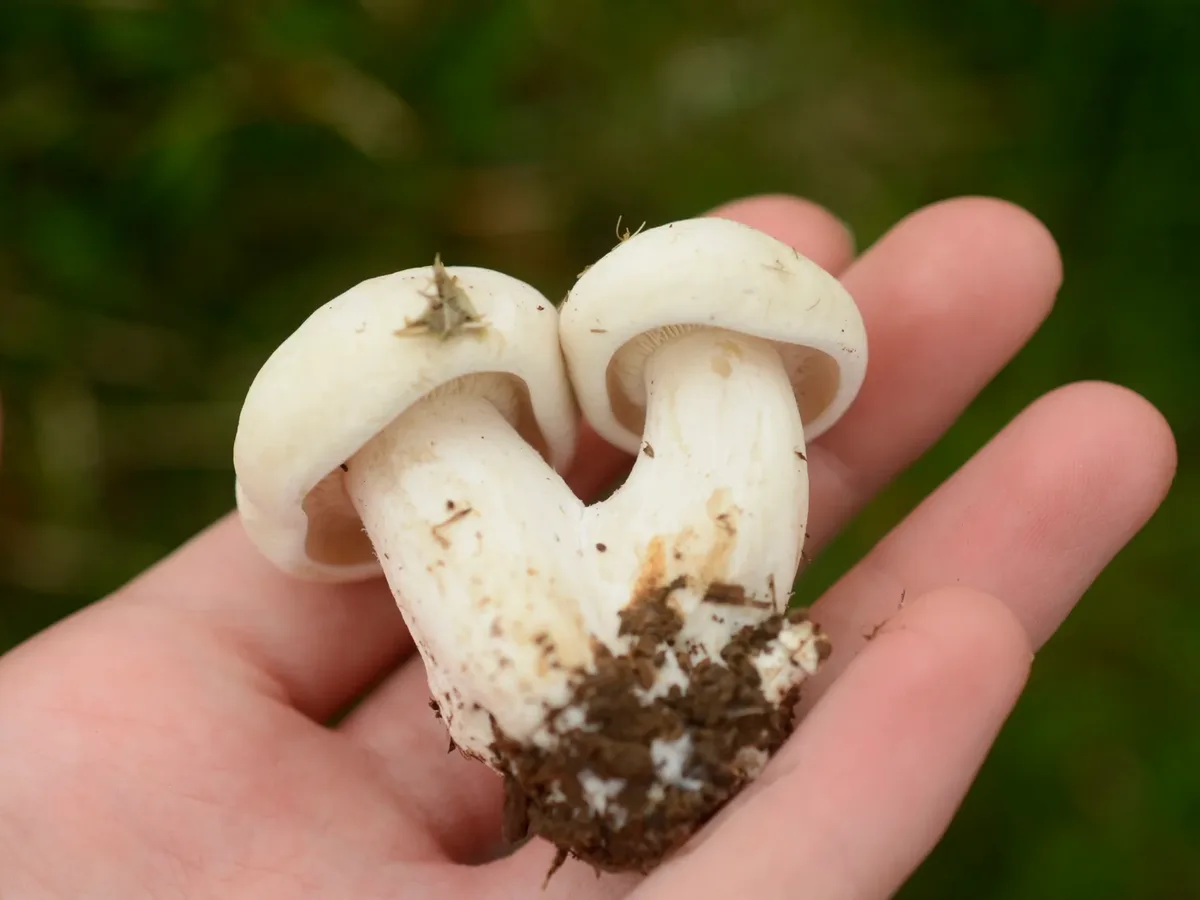 © Cara Ennis (CC BY)© Benjamin Flatt (CC BY 4.0)© MaximilianParadiz (CC BY 2.0)
One of the best mushrooms you can bring home - once you are certain of the identification.
Never eat a mushroom you are not 100% sure of - check the look-alikes below, and always cook wild mushrooms.
How to recognise it
St George's Mushroom is a solid, chunky, distinctly fleshy agaric - white to cream all over and impossible to miss in short spring turf.
Cap
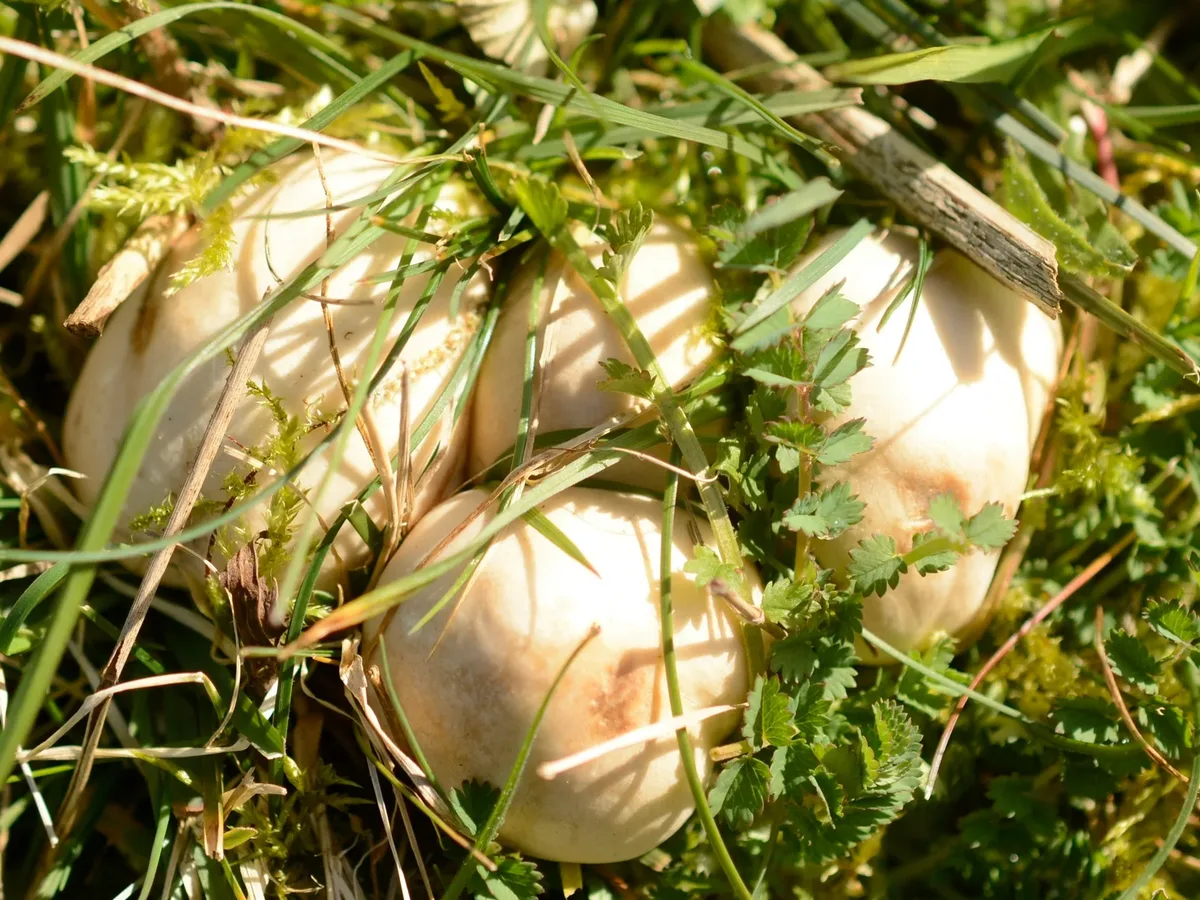
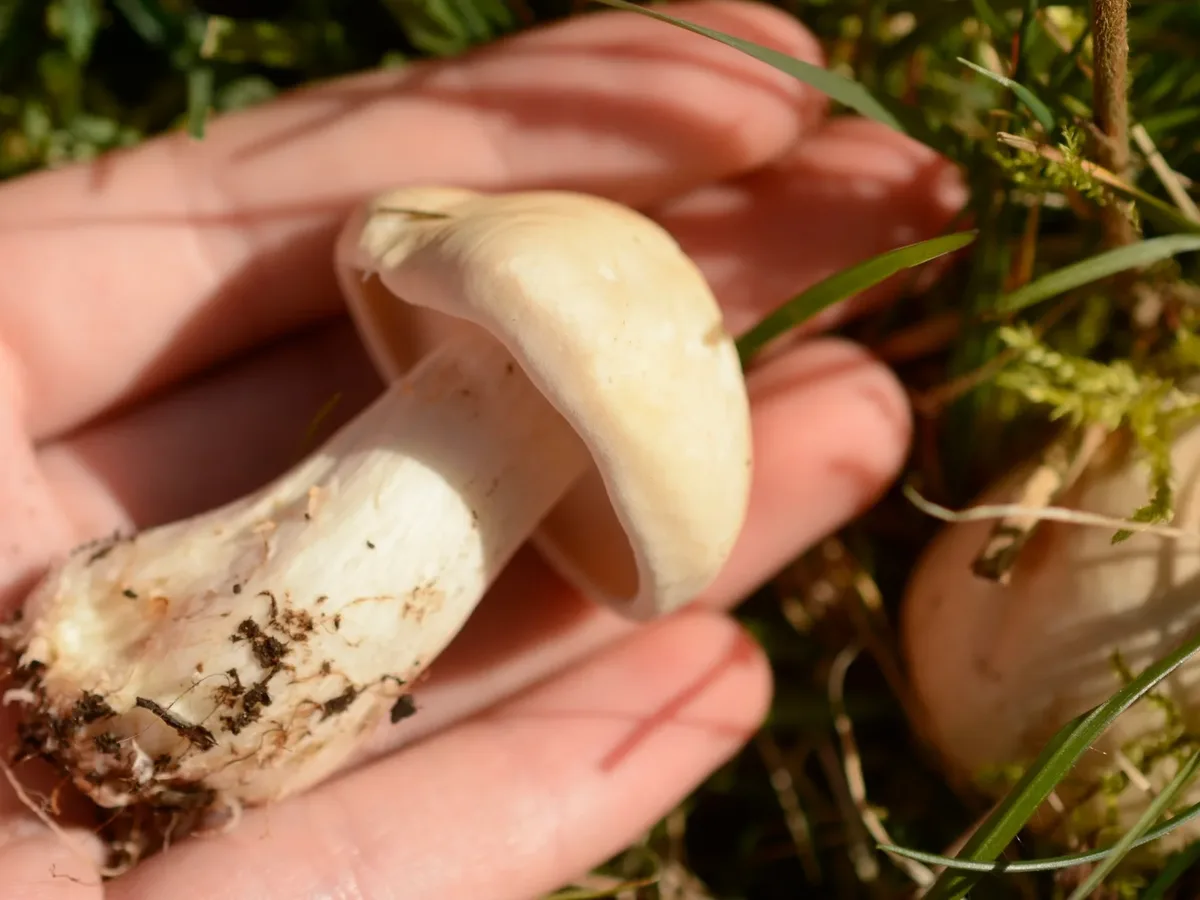
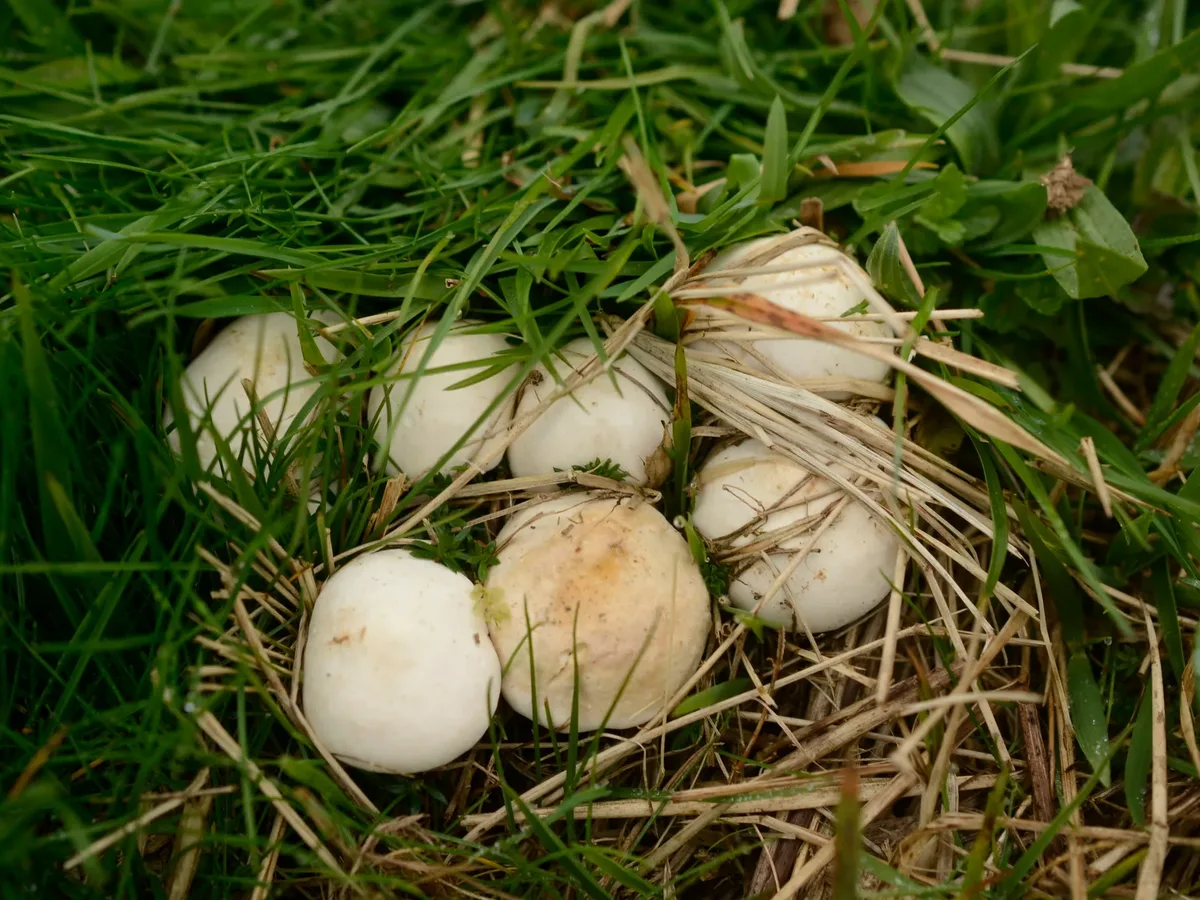
The cap is 5-15 cm (occasionally to 20 cm) wide, opening from a tight hemisphere with a strongly inrolled margin into a broad, often irregular, wavy or lobed convex shape.
The surface is dry, matt and smooth - sometimes finely felty or cracking in drought - and the colour drifts from pure white when young to cream, buff, pale ochre or faintly tan with age.
Gills
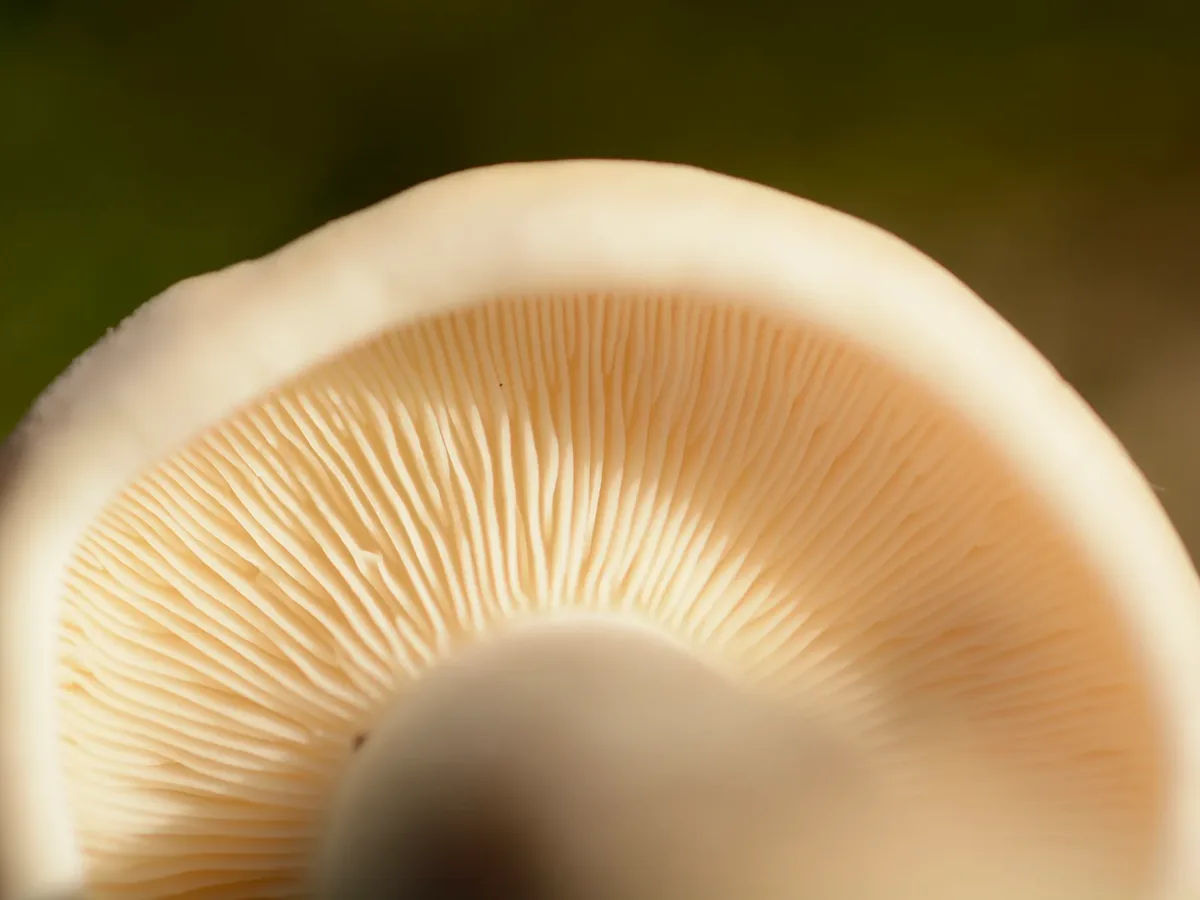
The gills are crowded to very crowded, narrow, and sinuate (notched where they meet the stem). They stay white to pale cream throughout and never turn pink or brown - a point worth checking closely before you eat.
Stem
The stem is short and stout (2-8 cm tall, 1-3 cm thick), solid and firm rather than hollow, white to cream, often slightly club-shaped or curved at the base, and carries neither a ring nor a volva.
Flesh
The flesh is thick, white and unchanging. The spore print is white.
Smell & taste
Above all, the whole mushroom carries a powerful, unmistakable mealy/farinaceous smell - like fresh stone-ground flour or cucumber and bread dough - and that smell is the single most dependable feature for confirming it.
Where & when it grows
Habitat
Look on the ground in nutrient-rich, frequently lime-rich (calcareous) soils in open, sunny places.
Its classic homes are short grassland - old unimproved pasture, chalk downland, meadows, lawns, churchyards, parkland, golf courses and road verges - and, very characteristically, the grassy fringes of hedgerows, scrub and woodland edges, especially near hawthorn and blackthorn. It dislikes deep shade.
It commonly grows in troops, arcs and fairy rings, and is strongly site-faithful: a productive ring or hedge bank will usually produce again in following springs, so it pays to map and return to known patches.
When
This is the great spring mushroom of European grassland. Its name commemorates St George's Day (23 April), and in much of its range it duly appears from late April through May, with a peak in early-to-mid May.
In warm southern and Mediterranean regions it can start in March; in cooler Nordic and upland areas it may not arrive until May and can linger into June or early July.
It is essentially a spring-only species - finding a large, firm, mealy-smelling white agaric in short turf at this time of year, when few competitors are about, is itself a strong pointer to its identity.
How it grows
Unlike most woodland fungi, Calocybe gambosa is saprotrophic rather than mycorrhizal. Its mycelium breaks down organic matter in grassland and hedge-bank soils rather than partnering with tree roots, though it shows a clear fondness for the grassy fringes of hawthorn, blackthorn and similar shrubs.
The mycelium is perennial and slowly expands outward through the turf year after year - which is why it so reliably forms fairy rings and arcs. A ring you find this spring may be the visible edge of an underground network that has been quietly enlarging for decades, its circumference marking out a lifetime's worth of slow, patient growth.
Fruiting is triggered by warming, moistening soils: a settled spell of mild, damp weather after April rains usually brings on a flush within a week or two.
Because the colonies are long-lived and site-faithful, a productive ring can be harvested sustainably over many seasons if you pick carefully and leave the mycelium undisturbed.
Fruiting conditions
Triggered by warming spring soils combined with adequate moisture; a settled mild, damp spell after April rains, with soil temperatures rising through roughly 8-16 °C, typically brings on a flush about 1-2.5 weeks later. Values are approximate field heuristics, not laboratory-validated thresholds.
Look-alikes
The most important danger is the deadly Livid Pinkgill / Livid Entoloma (Entoloma sinuatum, syn. E. lividum), a large, pale, mealy-smelling agaric of comparable size whose poisoning can be severe.
It is mainly a summer-to-autumn species of damp deciduous woodland and its grassy edges, but its size, pale colour and mealy odour make it the classic dangerous double for St George's Mushroom, and the seasons can overlap at the margins.
The decisive difference is the gills: Entoloma's gills are whitish or yellowish at first but turn distinctly PINK to salmon as the spores mature, and it has a PINK spore print, whereas Calocybe gambosa keeps white gills and a white spore print throughout.
Other risky springtime confusions to rule out:
- The highly poisonous Inocybe species, especially the Red-staining Inocybe (Inocybe erubescens, syn. I. patouillardii): it contains muscarine, grows in the same calcareous spring grassland and woodland edges, and is genuinely deadly. It is generally smaller and more slender, has a more silky-fibrillose, often radially split conical-to-flattened cap, frequently flushes red on bruising or with age, has a distinct (often fruity, unpleasant) smell rather than a clean mealy one, and has a dull brown spore print.
- Some white Clitocybe species (e.g. C. dealbata/C. rivulosa group): also occupy grassland but are far smaller, thinner, with decurrent gills running down the stem, and contain muscarine.
- Edible field/cultivated mushrooms (Agaricus): might be confused by colour, but Agaricus has free gills that turn pink then chocolate-brown, a ring on the stem, and a dark brown spore print.
- The Miller (Clitopilus prunulus): shares the mealy smell and white cap but has decurrent gills and a pinkish spore print.
Because several of these confusions are dangerous or lethal, never rely on one feature alone.
Some Cortinarius are deadly (orellanine). They differ by a rusty-brown spore print, a cobweb-like cortina or rusty-brown mature gills, and woodland (mycorrhizal) habitat. Any rusty/brown gill colour rules out St George's Mushroom.
DEADLY. Similar large size, pale colour and mealy smell. Mainly a summer-to-autumn species of damp deciduous woodland and grassy woodland edges, but it is the classic dangerous double and seasons can overlap. The decisive difference is the gills, which are whitish or yellowish at first but turn distinctly PINK to salmon as spores mature, and the spore print is PINK - Calocybe keeps WHITE gills and a WHITE spore print throughout. Always take a spore print if unsure.
DEADLY (high muscarine content). Shares calcareous spring grassland and woodland edges, fruiting at the same time. Usually smaller and more slender, with a silky-fibrillose, radially splitting conical-to-flattened cap, often flushing RED on bruising or with age, and a dull BROWN spore print versus Calocybe's white. Smell is distinct and unpleasant (often fruity), not a clean mealy odour.
Edible. Similar white colour but has FREE gills that turn pink then chocolate-brown, a ring on the stem, and a dark brown spore print - Calocybe has white gills, no ring and a white print. Also lacks the strong floury smell.
Seriously poisonous (muscarine). Much smaller and thinner, white to pale, growing in grassland and lawns; gills are DECURRENT (running down the stem) rather than sinuate/notched, and it lacks the strong floury smell. Calocybe is far more robust with adnexed gills.
Edible and also strongly mealy-smelling, so easily confused by odour. However it is smaller and more flimsy, with strongly DECURRENT gills and a PINKISH spore print (not white). A harmless confusion but worth distinguishing.
In the kitchen
Picking & cleaning
Cut or gently twist the mushroom at the base, leaving the perennial mycelium in the soil so the ring keeps producing in future years.
Choose young to middle-aged caps that are still firm and pale; very old specimens become soft, discoloured ochre and may be maggoty (the stout flesh is prone to fly larvae).
Always crush a piece of flesh and smell it - the strong, sweetish mealy/flour-and-cucumber odour must be clearly present. If it is faint, foul, fruity, radish-like or absent, do not eat the mushroom.
Check the gill colour at the moment of picking: confirm they are white to cream and not pink.
Carry finds in an open basket and inspect each one individually, never collecting by the handful, because the deadly lookalikes share its habitat and season.
Cooking
An excellent, much-sought culinary mushroom, especially esteemed in the Basque Country (as perretxiko), Italy and France, where it commands high prices in spring markets. The flesh is firm and substantial with a rich, savoury, mealy flavour and a pleasant texture that holds up well to cooking.
Always cook it thoroughly before eating.
It is superb:
- simply sautéed slowly in butter or good olive oil with a little garlic and parsley
- scrambled with eggs (a classic Basque dish)
- added to spring risottos, omelettes, stews, sauces and creamy soups
It also pairs beautifully with lamb and other spring meats.
Clean by brushing off soil and trimming the gritty stem base rather than washing, as the firm flesh can absorb water.
It dries reasonably and can be preserved, though it is at its finest fresh in season.
Good to know
Calocybe gambosa is a prized, choice edible - but it shares its season and grassy/hedgerow habitat with deadly and seriously poisonous mushrooms, so it must only be eaten when every diagnostic feature lines up.
The non-negotiable checks are:
- 1WHITE-to-cream gills that do NOT turn pink - take a spore print if in any doubt; it must be WHITE.
- 2A strong, pleasant MEALY/floury smell (not fruity, foul or radish-like).
- 3A solid stem with NO ring and NO volva.
- 4Spring season in grassland.
The most dangerous errors are mistaking it for the deadly Livid Pinkgill (Entoloma sinuatum), whose maturing gills and spore print are pink, or for the deadly Red-staining Inocybe (Inocybe erubescens), which flushes red and has a brown spore print.
If the gills look pink, the spore print is not white, the smell is wrong or foul, or you cannot positively confirm the species, DO NOT EAT IT.
As with any wild mushroom new to you, get a confirmed identification from an expert before your first taste, and try only a small portion the first time to rule out individual intolerance.
A reference guide - never an edibility guarantee. When in doubt, leave it out.