Bitter beech bolete
Caloboletus calopussyn. Boletus calopus, Boletus pachypus, Boletus olivaceo-viridis, Tubiporus calopus
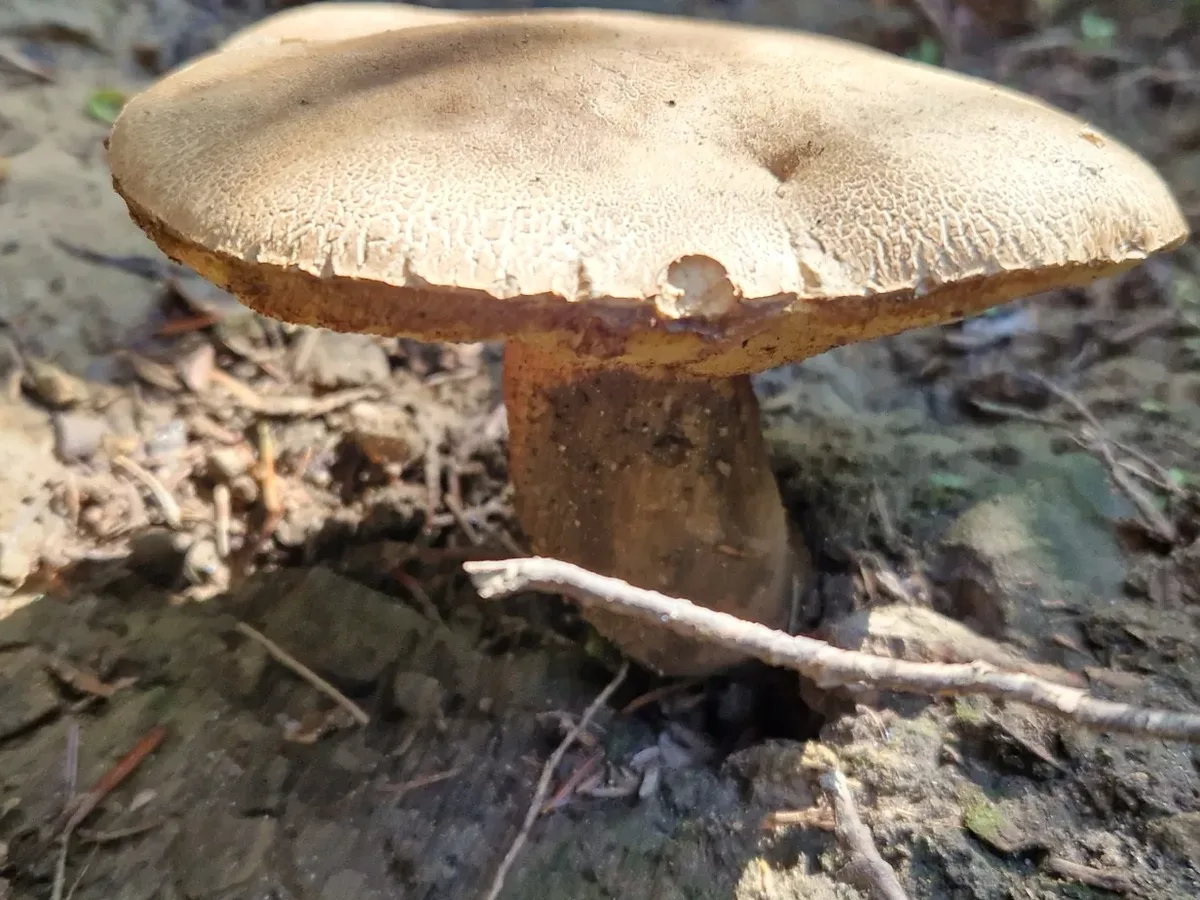 © Adam Górski (CC BY 4.0)
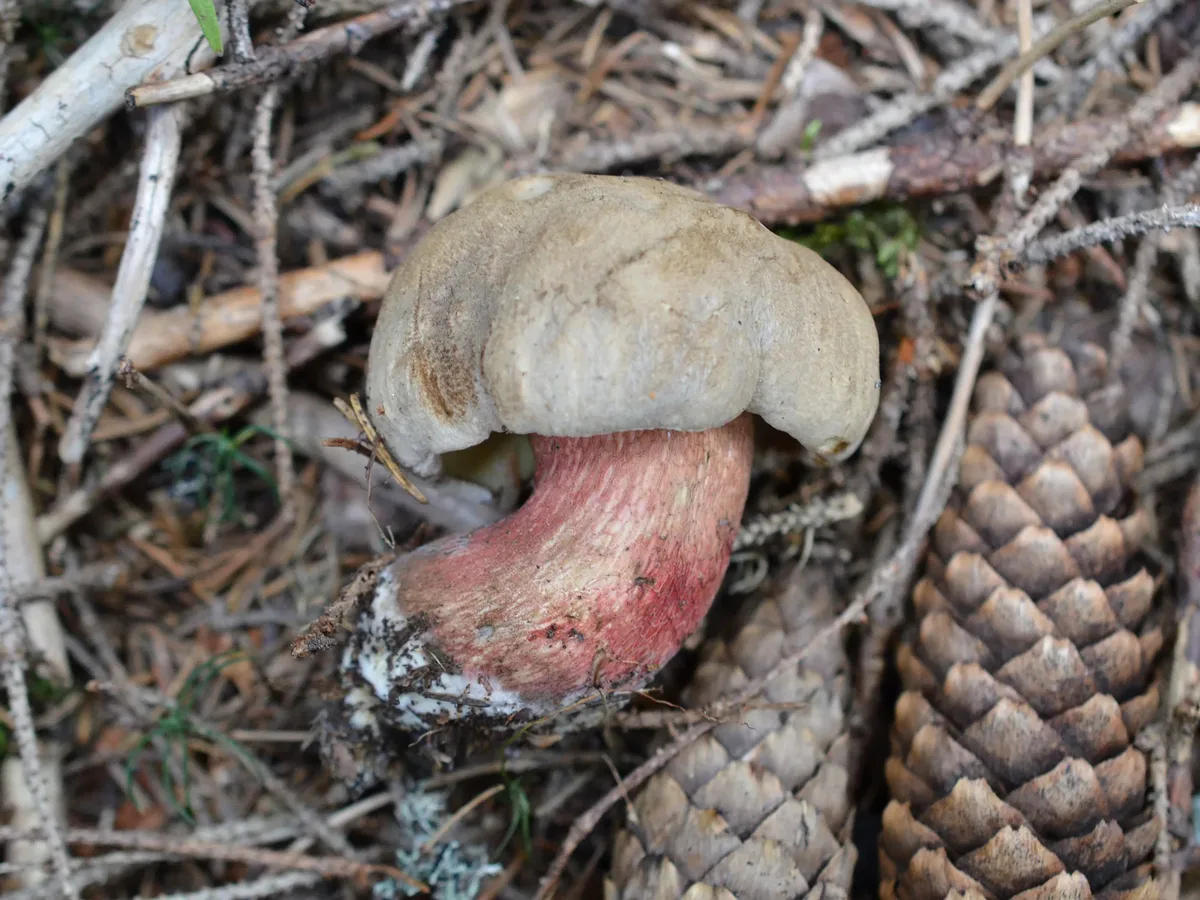 © Dimitǎr Boevski (CC BY 4.0)
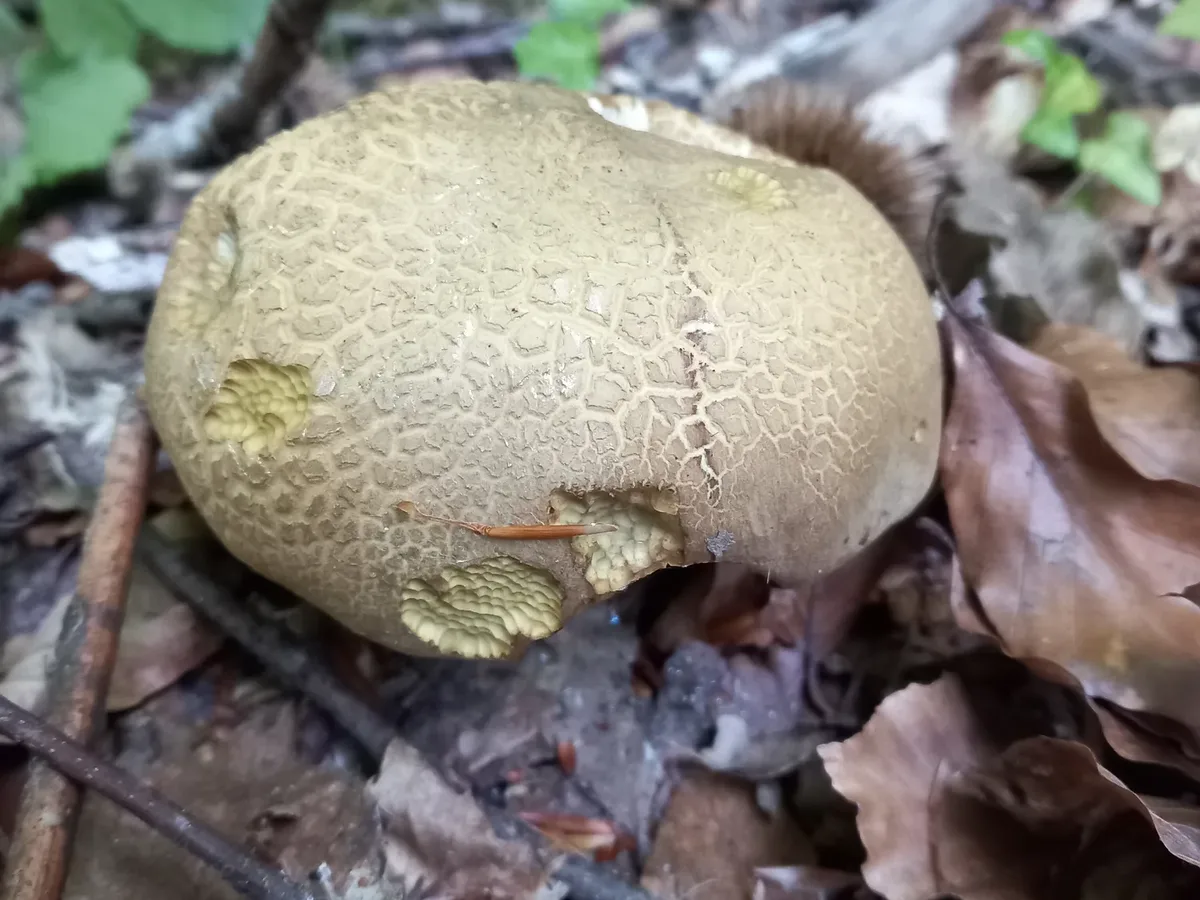 © fabrizio_mariani_montesorbo (CC BY)
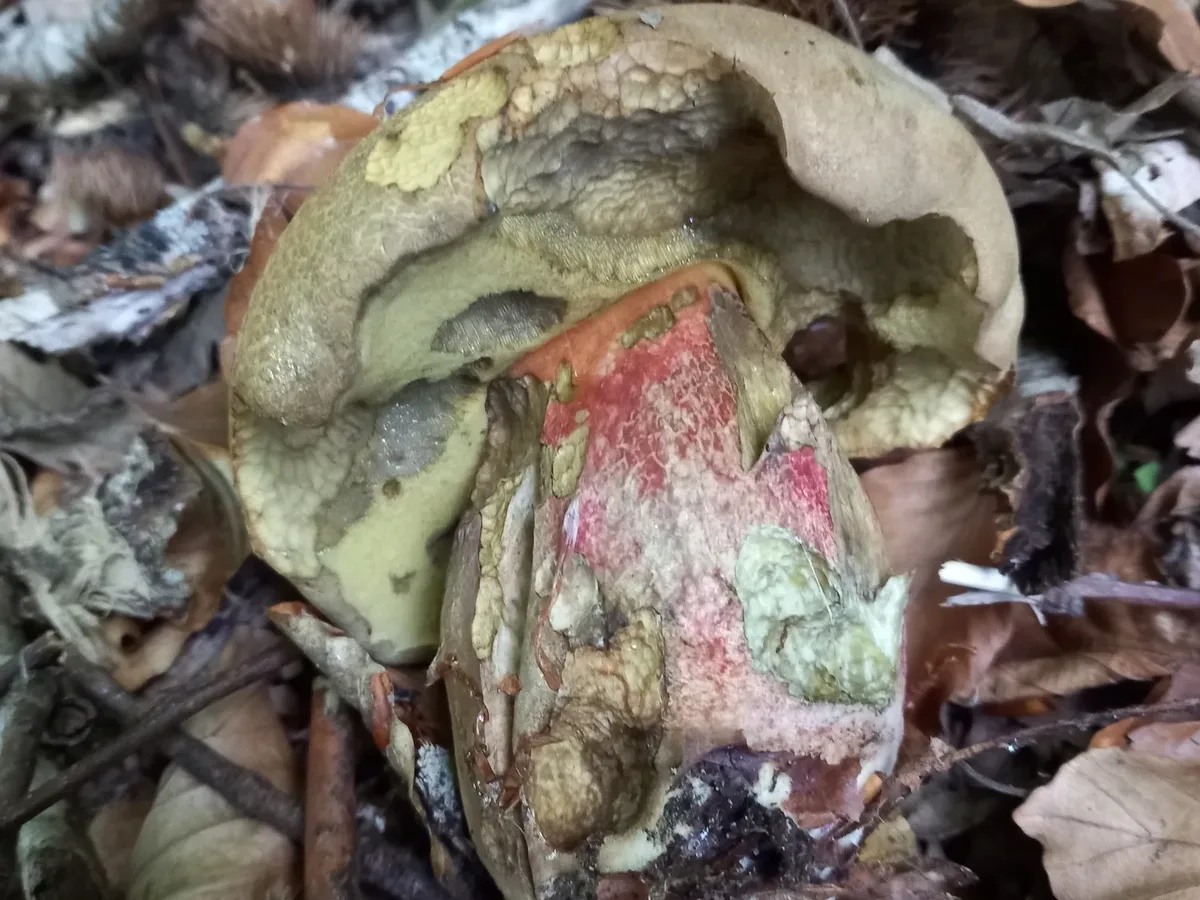 © fabrizio_mariani_montesorbo (CC BY)
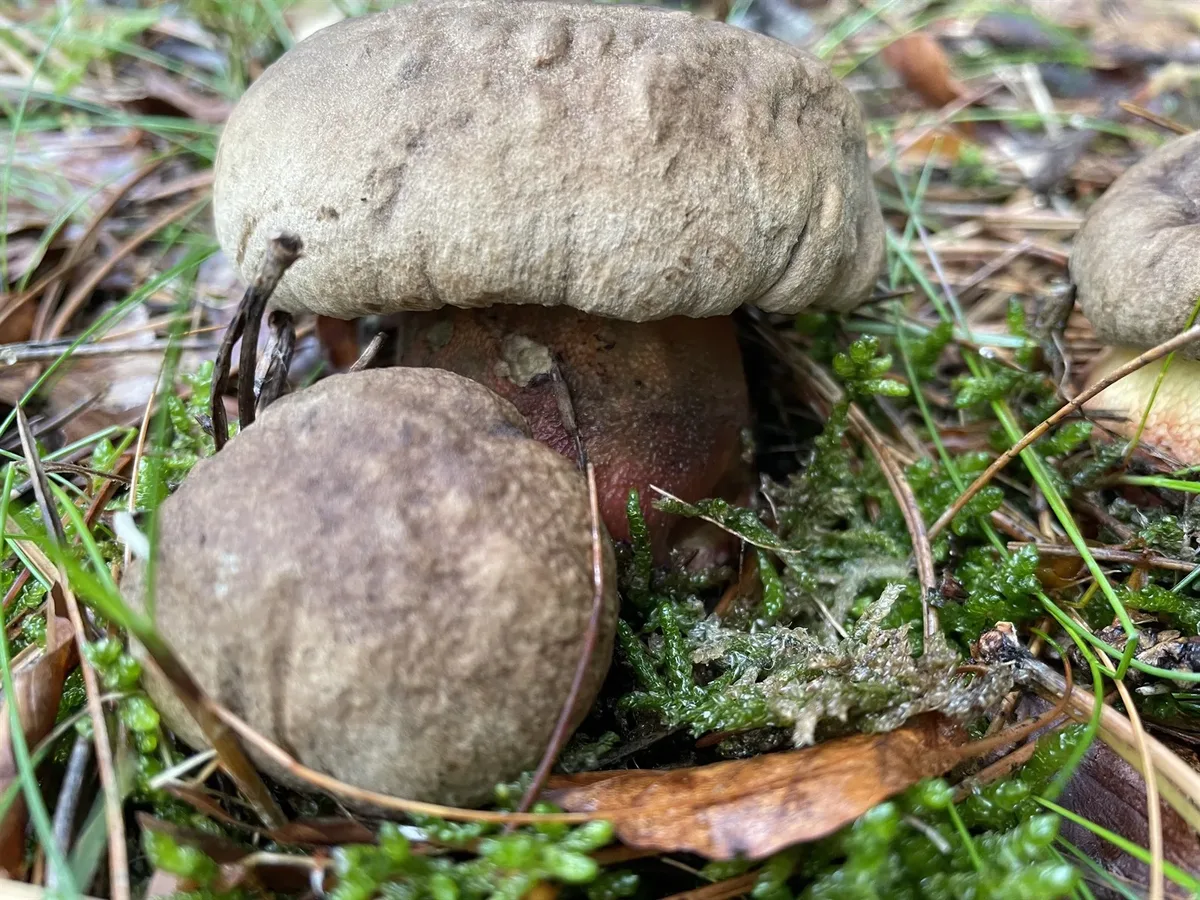 © Bjørn Eidhammer (CC BY)
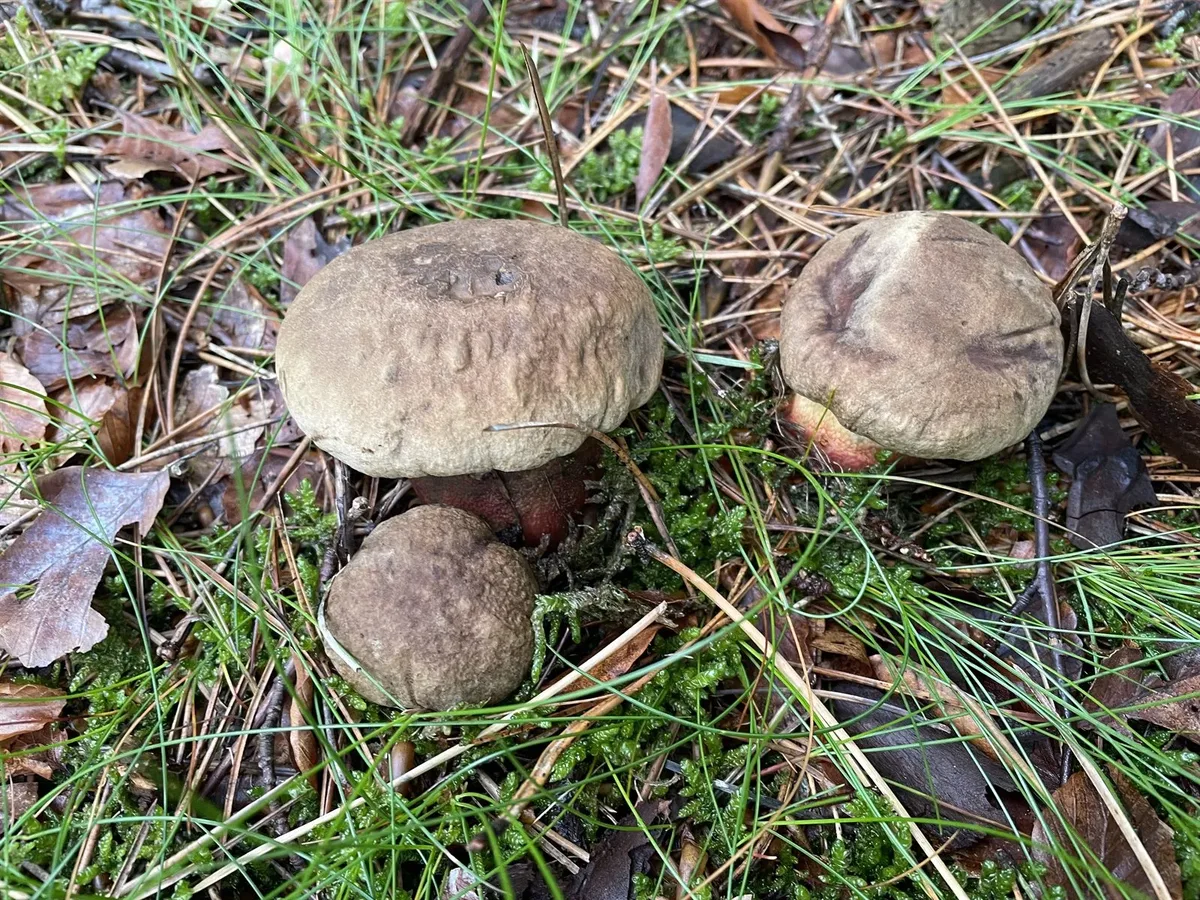 © Bjørn Eidhammer (CC BY)
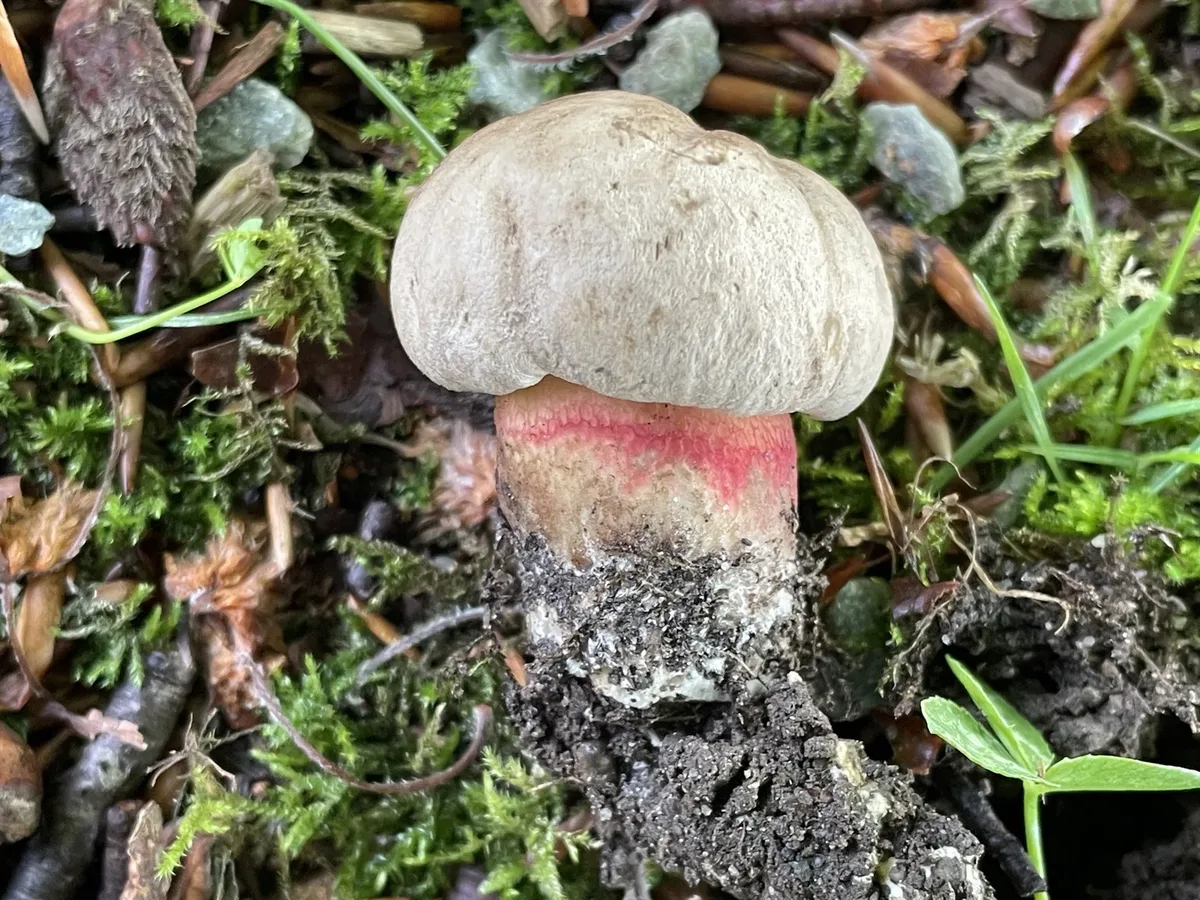 © Bjørn Eidhammer (CC BY)
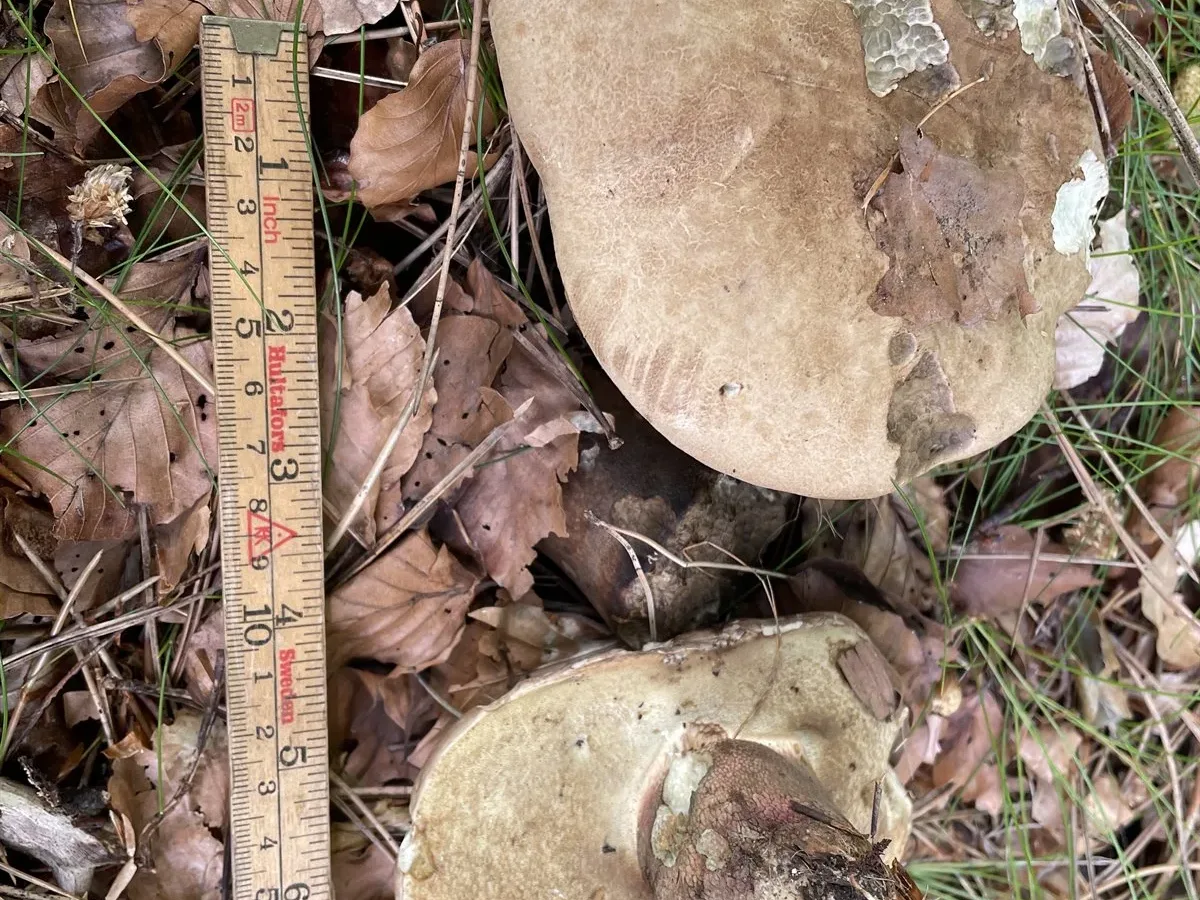 © Bjørn Eidhammer (CC BY)
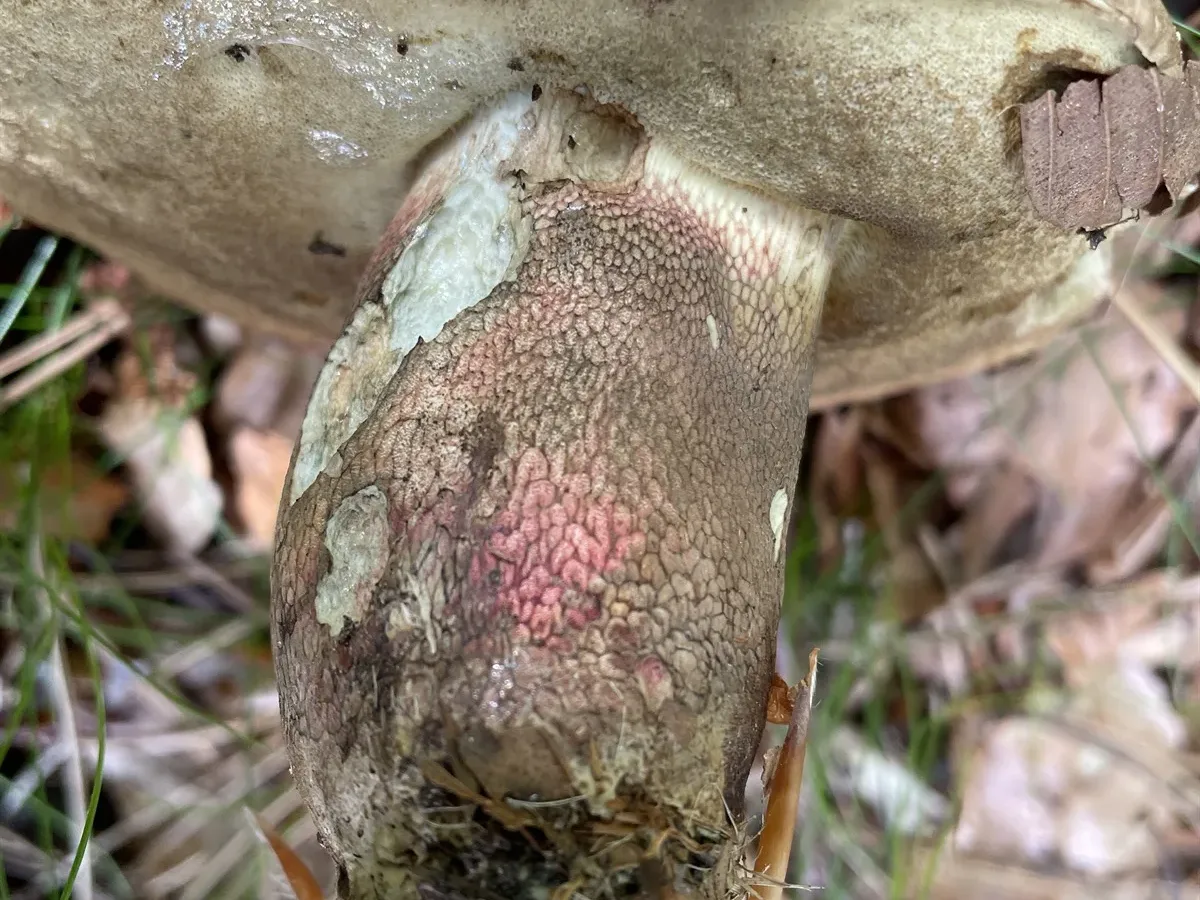 © Bjørn Eidhammer (CC BY)
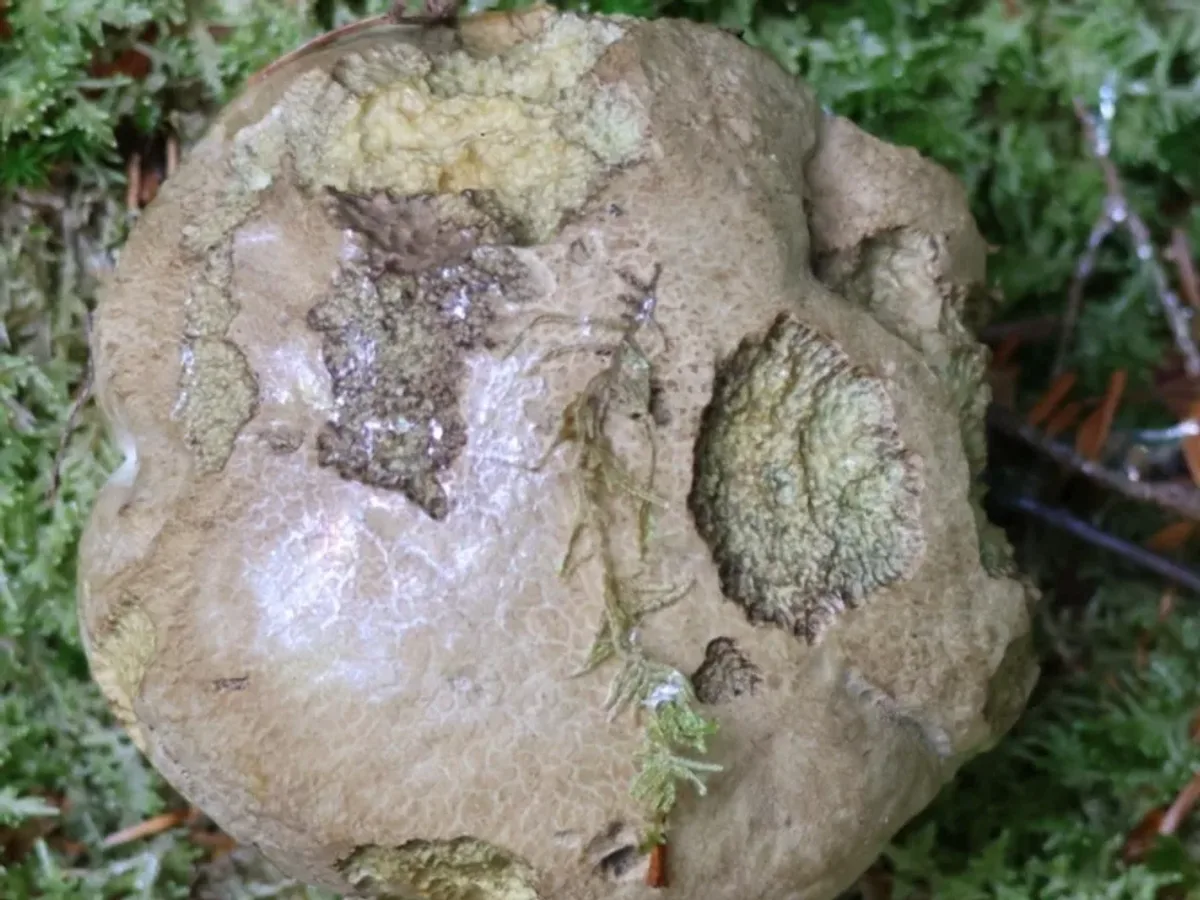 © ikelman (CC BY)
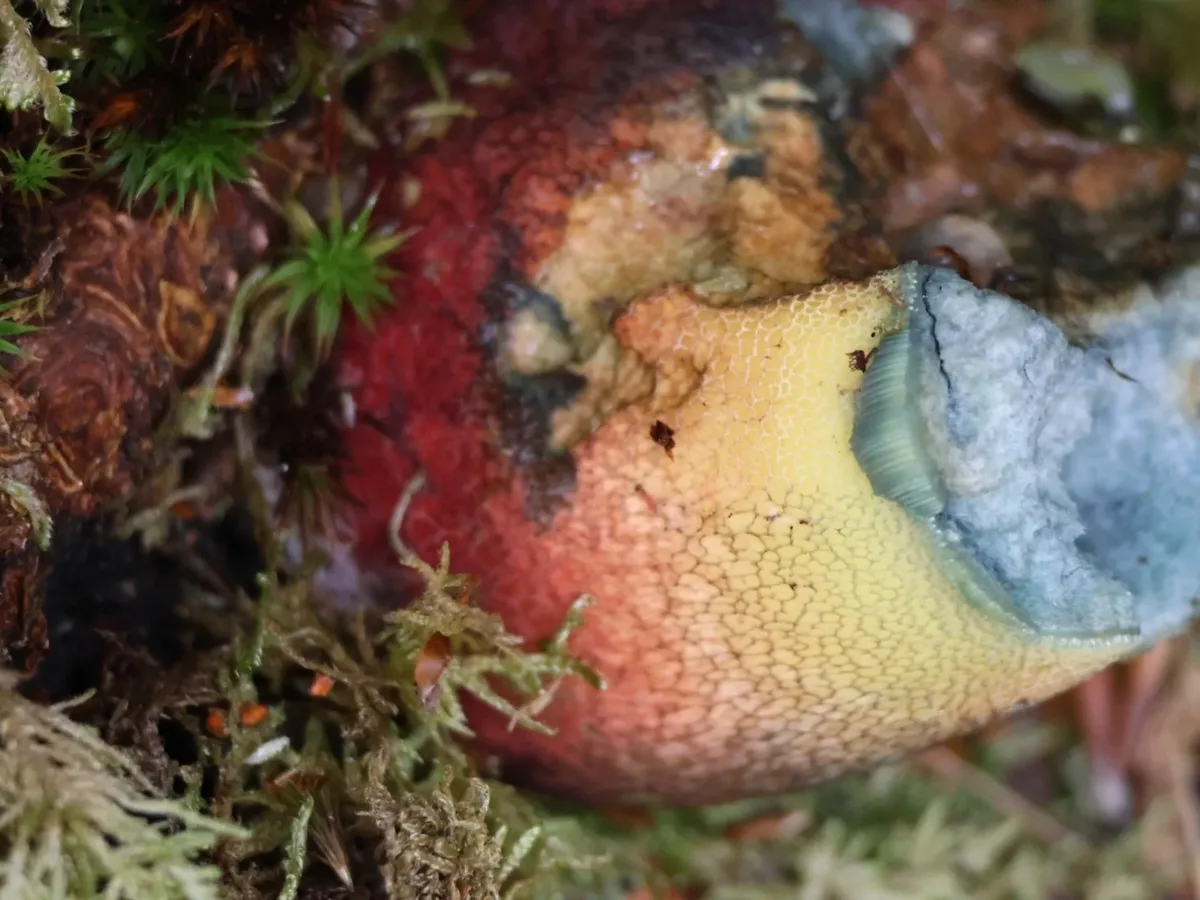 © ikelman (CC BY)
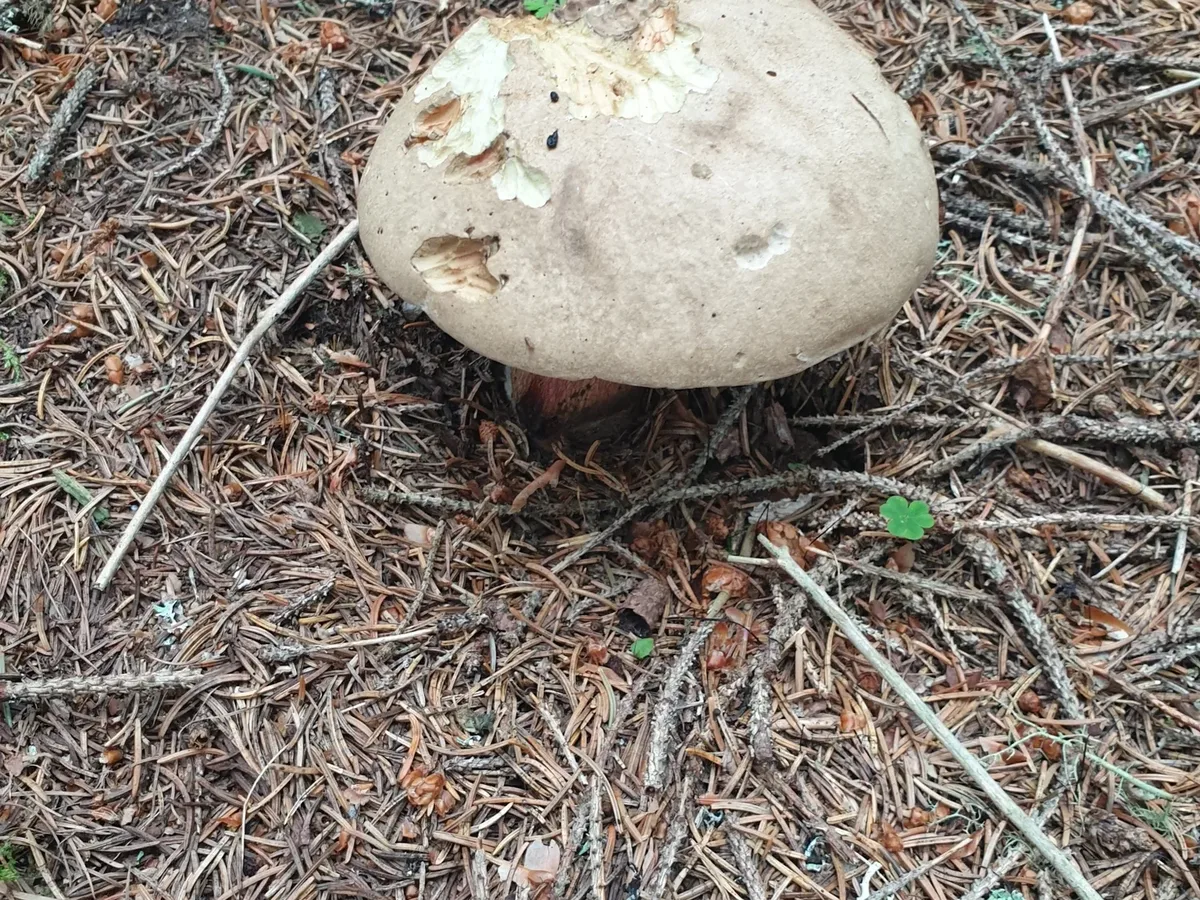 Thomas Hirsch (CC0)© Adam Górski (CC BY 4.0)© Dimitǎr Boevski (CC BY 4.0)
Not poisonous, but not worth eating - too tough, bitter, or bland for the pot.
Never eat a mushroom you are not 100% sure of - check the look-alikes below, and always cook wild mushrooms.
How to recognise it
Caloboletus calopus is a substantial, handsome bolete that announces itself through a striking combination of colours.
Cap
The cap reaches 6-18 cm and passes through a tightly convex young stage before flattening to a broad cushion. The surface is dry or barely moist, clothed in a short felt that wears to nearly smooth, and the colour runs from pale buff or cream-ochre through greyish-fawn to a dull olivaceous brown.
The margin may retain a slight inrolled lip even in old fruit bodies.
Pores
Beneath the cap the pore surface is lemon-yellow in young specimens - a vivid yellow that is almost sulphurous - gradually deepening to chrome-yellow and then olive-yellow in maturity.
The tubes are up to 20 mm deep, free or nearly so at the stem, and share the same bluing behaviour.
The critical and unmistakable reaction: press a pore surface or cut any part of the flesh and the tissue turns blue within 5-10 seconds, ranging from blue-green to deep indigo-blue.
Stem
The stem is the showpiece. It is stout and cylindrical to club-shaped, frequently swollen in the lower half, and on a ground colour that ranges from pale cream-yellow at the very apex through ochre-yellow in the middle to a brilliant carmine to blood-red over the lower half and base.
This red zone is overlain by a prominent, raised network (reticulum) of ridges that are the same crimson to scarlet as the stem background or slightly paler, giving a bold red-on-red reticulate pattern clearly visible to the naked eye.
Flesh
The flesh is white to cream throughout, with faint pale yellowish patches near the pore layer and around the reticulate stem surface; it turns blue instantly when cut, then gradually fades back to a greyish or brownish colour.
Smell & taste
The odour is mild and pleasant, recalling damp earth or mushrooms. The taste is intensely, persistently, and unambiguously bitter - a single bite is enough to condemn the whole collection.
Where & when it grows
Habitat
Caloboletus calopus is a beech-forest bolete at heart. It lives as an ectomycorrhizal partner of European beech (Fagus sylvatica), its underground mycelium threading the soil in a quiet exchange with beech roots that may persist for many years beneath the same canopy.
Its European distribution maps almost exactly onto the range of beech: it is especially at home in the montane beech forests of the Jura, Alps, Apennines, Pyrenees, Dinaric Alps, and Hercynian massifs, and it is a common sight in lowland beech and oak-beech woodland too.
At the northern edge of its range in Germany and Scandinavia it sometimes fruits under oak (Quercus) or hornbeam (Carpinus); in montane zones near the upper limit of beech it can also associate with Picea abies and Abies alba.
It favours loamy, moderately moist, slightly acidic to mildly calcareous soils and avoids sandy or waterlogged ground. Fruit bodies appear singly or in loose groups on the forest floor among leaf litter, rarely on mossy slopes.
When
Caloboletus calopus is a summer-to-autumn species in Europe, with its main fruiting window from June through October.
The first fruit bodies appear in warmer lowland sites after the summer solstice, most commonly in July; fruiting intensifies through August and September, which represent the reliable peak across most of the range.
October brings a declining tail of late-season fruit bodies, especially in sheltered valleys or during warm autumns.
Montane populations above 800 m may not fruit until August and peak in September. Cool spells with rain after dry spells reliably trigger flushes.
How it grows
Solitary to scattered, rarely in loose groups.
Like most large boletes, fruit bodies push up fast after warm rain - a tight, pallid button can expand to full size in 3-5 days under good conditions, the stem base often buried deep in leaf litter.
The mycelium beneath is perennial, quietly persisting from year to year, so a productive spot under an undisturbed beech is likely to fruit again in future seasons.
Fruiting conditions
Responds to warm summer rain; requires sustained soil warmth above 10 °C to initiate fruiting. In dry summers, flushes may be sparse or absent. Montane sites need longer post-rain lag at lower soil temperatures.
Handle with care
Toxin
The bitterness is attributed to non-volatile sesquiterpene compounds; the specific molecules have not been fully characterised in peer-reviewed literature.
No lethal or nephrotoxic compounds have been identified. Gastrointestinal irritants are present.
Symptoms
Consumption of significant amounts may cause nausea, vomiting, abdominal cramps, and diarrhoea within 1-3 hours.
The intense bitterness typically prevents accidental ingestion of large quantities. Symptoms are self-limiting in most reported cases.
Look-alikes
The combination of a beige-brown cap, lemon-yellow pores that blue strongly, and a carmine-red reticulate stem makes Caloboletus calopus fairly distinctive once learned.
The most dangerous confusion is with Rubroboletus satanas (Satan's bolete), which is severely poisonous and shares the red stem and bluing pores. It differs by:
- A distinctly pale, whitish to pale grey cap (never ochre-brown)
- A barrel-shaped to globose stem that is uniformly blood-red to scarlet over most of its surface with a coarser reticulum
- Vivid red to orange-red pores (not lemon-yellow)
- A strong unpleasant smell (rotten carrion to stale water) in mature specimens
- A preference for calcareous soils with oak and lime trees rather than beech
Other look-alikes:
- Neoboletus luridiformis (scarletina bolete): red to orange-red pores (not yellow), a stem covered in granular red dots rather than a raised reticulum, and no bitter taste - edible when thoroughly cooked.
- Suillellus luridus (lurid bolete): orange-red pores (not yellow), a stem with a coarse red reticulum but no lemon-yellow pores, and no bitter taste - edible only when thoroughly cooked and toxic raw.
- Boletus reticulatus (summer cep), a noble edible: a pale brown cap with a fine whitish reticulum over the entire stem, white pores that do not blue, and mild pleasant-tasting flesh.
- Boletus aereus (bronze bolete): a very dark cap and white to yellowish pores that barely blue.
None of the good edible ceps are bitter - tasting a small piece of raw flesh is always a wise final check.
Why it matters
The primary danger is misidentification as an edible cep (Boletus edulis group) by inexperienced foragers - the bitterness serves as an in-field safeguard.
The more serious indirect danger is confusion with Rubroboletus satanas (Satan's bolete), which causes severe, protracted gastrointestinal illness and has led to mass poisoning events (184 cases reported in southern France in a single summer).
Any bolete with a red or orange stem and strongly bluing pores must be identified to species before consumption. When in doubt, do not eat.
Satan's bolete has a whitish to pale grey cap (never ochre-brown), a more globose barrel-shaped stem that is uniformly blood-red over most of its surface, vivid blood-red to orange-red pores (not lemon-yellow), a fetid carrion-like smell in maturity, and grows primarily on calcareous soils with oak, hornbeam, and lime rather than beech. Caloboletus calopus always has a distinctly ochre-brown cap, lemon-yellow pores, and an intensely bitter taste - Satan's bolete has no such bitterness. Any confusion between these species is extremely dangerous - verify cap colour, pore colour, smell, and habitat before handling either.
Rubroboletus eastwoodiae of western North America is similar in build and colour to R. satanas but generally does not overlap geographically with C. calopus in Europe. European foragers are unlikely to encounter it, but if working in the Pacific Northwest the same identification logic applies: white to cream cap, strongly red pores and stem, fetid smell in age vs. brown cap and yellow pores in C. calopus.
Lurid bolete has orange to brick-red pores (not lemon-yellow), a stem with a coarse dark reddish reticulum over an orange-red to yellow-orange background but lacking the brilliant carmine-red of calopus. Flesh blues rapidly when cut. It is edible when thoroughly cooked but toxic raw. No bitter taste - the absence of bitterness in raw flesh is a critical safety point: if the raw flesh is bitter, it cannot be lurid bolete.
Boletus edulis has a brown to pale hazel cap, white to cream pores that never blue significantly, a pale cream stem with a fine white network, and mild, nutty-tasting white flesh that does not blue when cut. The stem is never red. Bitter taste and red stem instantly exclude C. calopus from this comparison.
Neoboletus luridiformis has vivid red to orange-red pores (not lemon-yellow), a stem covered in dense red granular dots or scabers rather than a raised reticulum, and flesh that blues extremely rapidly. It lacks the intense bitterness of C. calopus. Edible when well cooked but toxic raw.
Boletus reticulatus (summer cep) has a pale ochraceous to tan-brown cap with a fine white to cream reticulum over the entire stem, white to cream pores that do not blue, and mild pleasant-tasting flesh. Highly edible. Shares beech-forest habitat but is never bitter and never blues.
In the kitchen
Picking & cleaning
Caloboletus calopus should not be collected for eating. It is inedible due to intensely bitter compounds that survive cooking and can cause gastrointestinal distress.
Identification of the species is important primarily so that foragers can exclude it from the basket - particularly when gathering boletes in beech forest where edible species such as Boletus edulis, Boletus reticulatus, or Boletus aereus may be present nearby.
If collected for study, the red reticulate stem, bluing flesh, and bitter taste are all noted easily in the field.
Cooking
Not applicable. Caloboletus calopus is inedible and should not be eaten.
The bitter compounds are not destroyed by any cooking method including prolonged boiling, roasting, or pickling.
Good to know
Caloboletus calopus is inedible due to intensely bitter compounds (thought to be sesquiterpenes) that are heat-stable and survive all culinary preparation.
Eating significant quantities can cause gastrointestinal distress including nausea, vomiting, and diarrhoea; it is not considered lethally toxic in the quantities normally consumed by accident.
The critical safety hazard is confusion with Rubroboletus satanas, which causes severe gastrointestinal poisoning and has required hospitalisation in documented outbreaks. Any bolete with a red or orange stem and bluing pores must be verified carefully before consumption.
The bitter taste of Caloboletus calopus is a reliable rejection test - if a piece of raw flesh is tasted and is markedly bitter, discard the entire collection regardless of the visual appearance.
Always cross-check:
- Cap colour: ochre-brown = calopus; whitish-grey = satanas
- Pore colour: lemon-yellow = calopus; blood-red to orange-red = satanas
- Odour: mild = calopus; fetid in age = satanas
- Habitat: beech dominant = calopus; often oak-hornbeam-lime on chalk = satanas
A reference guide - never an edibility guarantee. When in doubt, leave it out.